


Το Ευ Ζην στην εποχή της Τεχνητής Νοημοσύνης
Subscribed: 0Played: 1
Subscribe

© The Therapist Vaitsaras
Description
Σειρά ενημερωτικών επεισοδίων του Κωνσταντίνου Βαϊτσαρά με τίτλο «Το Ευ Ζην στην Εποχή της Τεχνητής Νοημοσύνης», η οποία εστιάζει στη σύζευξη της υγείας και της ευεξίας με τις σύγχρονες τεχνολογίες. Ο Κωνσταντίνος Βαϊτσαράς, ως θεραπευτής και ερευνητής, παρουσιάζει επιστημονικά τεκμηριωμένες πληροφορίες για την πρόληψη και την αυτοφροντίδα. Η σειρά χρησιμοποιεί εργαλεία τεχνητής νοημοσύνης για την ανάλυση δεδομένων υγείας και την παροχή προσωπικής καθοδήγησης.
71 Episodes
Reverse
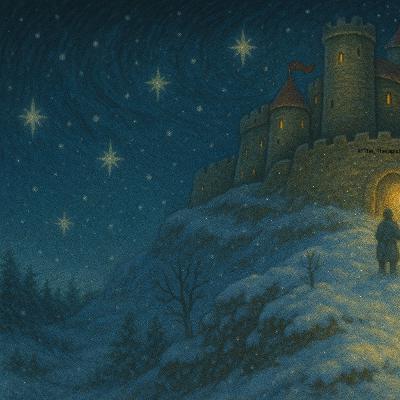
This episode is an excerpt from the work “At Christ’s Castle” by Alexandros Papadiamantis, which describes the joyful celebration of Christmas on a desolate rocky outcrop. Specifically, it recounts the preparations of the festive meal with slaughtered meat, fish, wine, and other provisions, as well as the rare splendor of the celebration that followed, with feasting and an overnight stay.On the following day, as the weather had calmed, the diners decided to depart, returning to the small town with the help of a boat and the freeing of the sailing vessel that had run aground on the sand. The narrative concludes with the safe arrival at the town’s harbor, marking the end of the celebration on the rock.Discussion and commentary below the video are welcomed and encouraged, as they contribute to improving the experience and fostering collaboration with Artificial Intelligence. Any errors or omissions may be pointed out with courtesy and respect, so that the interaction remains creative and beneficial for everyone.
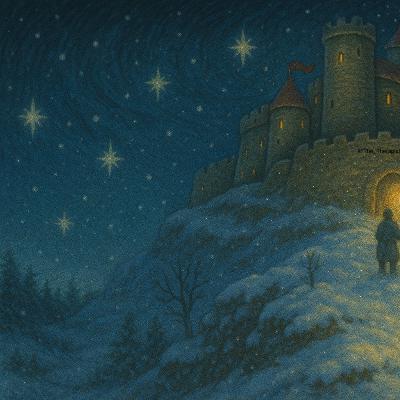
The present excerpt, from the work of Alexandros Papadiamantis, At Christ’s Castle (in the section “Divine Liturgy and the Rescue of a Ship”), describes a rare Christmas liturgy and the miraculous rescue of a vessel. The priest deliberately delays the Prothesis, commemorating the names of all the inhabitants, while at the same time praying for the salvation of a ship in danger at sea.After a while, several men arrive at the church, among them Captain Konstantis, who recounts how his schooner was driven off course by the storm. The sailors were saved when they saw lights (torches) that had been lit in front of the small church of Christ, believing them to be a sign or a miracle that guided them into shallow waters and to safety.The story intertwines spiritual religious worship with a real-life miracle at sea on Christmas night.Discussion and commentary beneath the video are welcome and encouraged, as they contribute to enhancing the experience and fostering collaboration with Artificial Intelligence.Any errors or omissions may be pointed out politely and respectfully, so that the interaction remains creative and beneficial for all.
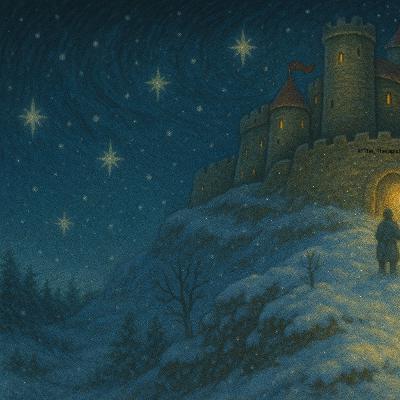
The present excerpt, from the work of Alexandros Papadiamantis At Christ’s Castle (specifically the section “Cries and Torches in the Night”), describes a night-time scene in which a church service is suddenly interrupted by cries of distress coming from the sea. The voices belong to shipwrecked sailors at Mikros Gialos, near the rocks of Kouroupi, where a vessel appears to have run aground amid the darkness of the night and the falling snow.The congregation rushes outside, while the priest and the chanter initially remain inside the church. A group of men, led by the ferryman Stefanis, take up torches and lanterns and set off on the difficult and dangerous descent to aid those in peril, while the rest illuminate the area by throwing branches onto the fire. The spontaneous charity of the people is highlighted as the driving force behind their immediate response.Discussion and commentary beneath the video are welcome and encouraged, as they contribute to improving the experience and fostering collaboration with Artificial Intelligence.Any errors or omissions may be pointed out politely and respectfully, so that the interaction remains constructive and beneficial for all.
The provided text from At Christ in the Castle, specifically excerpts from the section “The Litany of the Nativity within the Castle” by Alexandros Papadiamantis, is a narrative that depicts the celebration of Christmas in a castle. The scene focuses on the arrival of weary travelers and shepherds at the Church of Christ, where they find warmth from fires burning both inside and outside the building.The atmosphere of the service is vividly described: the Litany is chanted, the readings are delivered by Kyr Alexandris, while some drowsy attendees doze in the choir stalls. The narrative reaches its climax when the priest chants “Come, let us behold, O faithful…”, stirring religious fervor and deep emotion among the congregation, with Papa-Fragoulis passionately chanting the hymn “Glory in the Highest.”Overall, the text portrays the spiritual solace and devotion of people celebrating the Nativity of Christ amid the hardships of winter.
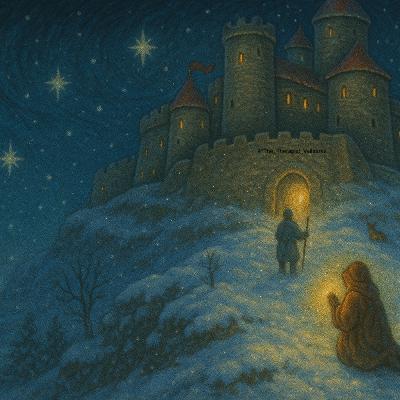
This text is an excerpt from the work At Christ’s Castle by Alexandros Papadiamantis, specifically from the passage “The Illumination of the Castle and the Church.” It describes the arrival of a group of people at an old, isolated castle. The group, including Father Fragoulis, reaches the iron gate, where they are welcomed by the guards, among them Argyris of the Miller’s family, who recounts how they had once been trapped in the snow.After entering the fortress, the narrative focuses on the abandoned Church of the Nativity of Christ, the former metropolitan church of the stronghold, where those present begin the preparations for the Divine Liturgy. The text concludes with a rich and detailed description of the church’s iconography, including Christ Pantocrator, the iconostasis, and scenes from the lives of the Saints and the Dodekaorton, highlighting the spiritual rebirth of the space through light and worship.The discussion and commentary beneath the video are welcome and encouraged, as they contribute to enhancing the overall experience and to constructive collaboration with Artificial Intelligence.Any errors or omissions may be pointed out with courtesy and respect, so that the interaction remains creative and beneficial for all.
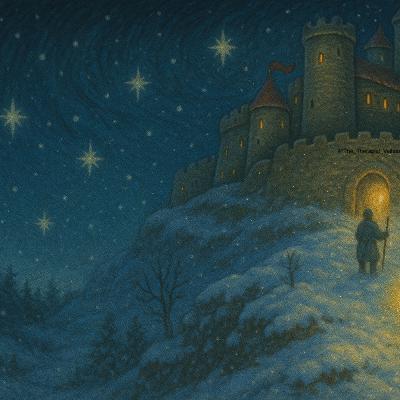
The text is an excerpt from Alexandros Papadiamantis’ work At Christ’s Castle, specifically from the section “Journey to the Castle: Sea and Snow,” describing the arduous and dangerous nighttime trek of a group of people heading toward the Castle.The narrative begins with the group struggling against the rough sea and the impossibility of continuing their voyage, while seeking—under the guidance of old Stefanis—a safe little harbor where they can disembark. After reaching land, they continue their journey on foot through the snow, trying to find a path toward their destination, which appears only as a dark, looming mass in the distance.The description focuses on their battle against harsh weather conditions, with the men leading the way and digging through the snow, until they finally reach the Castle’s bridge around midnight—exhausted, yet with warm and determined hearts.Comments and discussion under the video are welcome and encouraged, as they contribute to improving the experience and collaboration with Artificial Intelligence. Any mistakes or omissions may be pointed out politely and respectfully so that the interaction remains creative and beneficial for everyone.
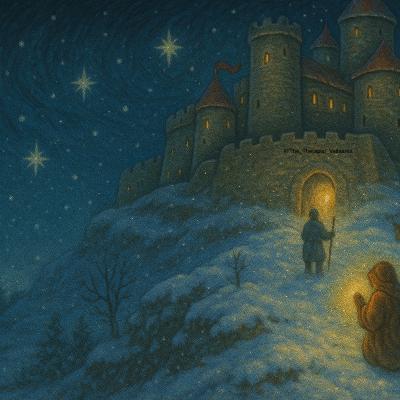
The text is an excerpt from Alexandros Papadiamantis’ work At Christ’s Castle, specifically from the section “In the Icy Surge of Christmas,” which describes a dangerous sea journey to the Castle on Christmas Eve. A group of sixteen people—including Father Fragkoulis, his family, old Stefanis, and other parishioners—board a small boat with the purpose of attending the Christmas liturgy at the Castle, despite the bitter cold and the initial hesitation of some.As the journey unfolds, the wind intensifies, the waves grow rough, and the passengers become frightened and distressed by the stormy sea, while the priest maintains his sense of humor. Confronted with the perilous waters, the group must decide whether to continue their course or head for shore as night approaches.Comments and discussion under the video are welcome and encouraged, as they help improve the overall experience and collaboration with Artificial Intelligence. Any mistakes or omissions may be kindly and respectfully pointed out so that the interaction remains creative and beneficial for everyone.
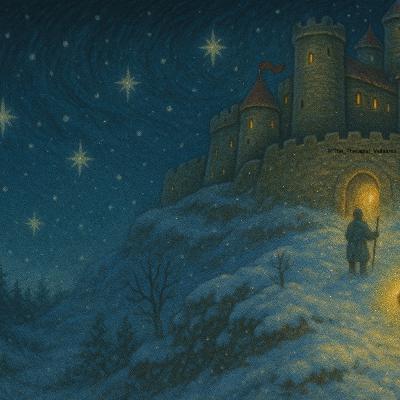
The excerpt, entitled “Supplies and the Crossing to the Castle,” is part of the work by Alexandros Papadiamantis “At Christ in the Castle.” The central scene unfolds around a discussion between the priest, Papa-Fragkoulis, the boatman Barba-Stefanis of Berkos, and the curious master carpenter Panagos. Specifically, the priest asks the boatman whether it is safe to travel by boat to the Castle despite the harsh weather, with Stefanis enthusiastically insisting that there is no danger and persuading him.The text describes the priest’s final preparations, including the gathering of many supplies such as food and wine for those snowbound and for the pilgrims. Finally, the priest decides to celebrate the Christmas Eve liturgy at the Church of Christ in the Castle, with the departure scheduled for the early morning hours.Discussion and commentary beneath the video are accepted and encouraged, as they contribute to improving the experience and collaboration with Artificial Intelligence. Any errors or omissions may be pointed out with courtesy and respect, so that the interaction remains constructive and beneficial for all.
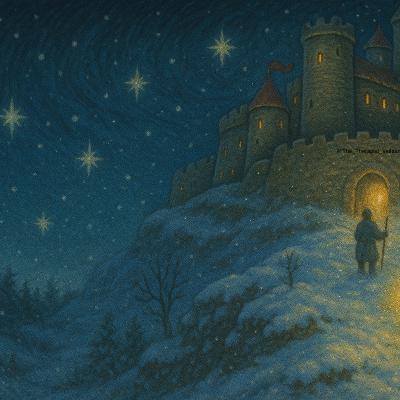
The passage, an excerpt from Alexandros Papadiamantis’ work At Christ’s Castle and specifically the section The Priest’s Wife’s Vow, describes a conversation taking place in a priest’s home as Christmas approaches.The central tension revolves around a serious vow made by the papadia (the priest’s wife) when their only son, Spyros (Lambrakis), nearly died the previous year. According to this vow, she is obliged to travel for the Christmas service to Christ at the Castle, a journey extremely dangerous because of the harsh winter.Despite the priest’s objections, the priest’s wife firmly decides that she will follow him no matter what, explaining that she feels safe only by his side. Their two daughters react with mixed feelings of fear and jealousy, while the priest postpones making a final decision, waiting for the opinion of barba-Stefanis Bérkos.
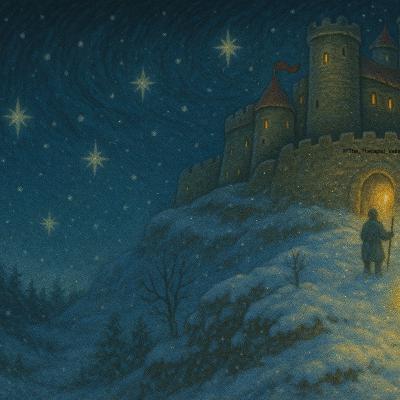
The episode presents an intense dialogue between the priest, Father Frangoulis, and the craftsman, Master Panagos, during a violent storm that makes it impossible to leave the harbor. Their discussion revolves around the inability to conduct the Christmas Liturgy at a remote stronghold (“the Castle”), as the sea is in a state of “kiamét”—a term meaning dangerously rough—and no one else is willing to risk their life.Panagos expresses a utilitarian and almost insolent viewpoint, questioning why Christ does not simply create better weather conditions, while the priest counters with a moral teaching about duty and divine assistance.Eventually, the priest reveals that his decision to undertake the dangerous crossing is deliberate, as he himself had made a vow the previous year. He and the Presbytera had promised to fulfill their liturgical duty on the Feast of the Nativity if their sick son, Lambrakis, recovered.Discussion and commentary under the video are welcome and encouraged, as they contribute to improving the experience and collaboration with Artificial Intelligence. Any mistakes or omissions may be pointed out politely and respectfully, so that the interaction remains constructive and beneficial for everyone.
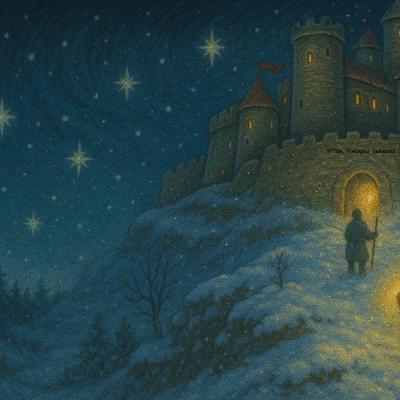
The first episode is an excerpt from a narrative set on Christmas Eve, describing the anxiety surrounding two islanders who became trapped in the Castle due to an unexpectedly heavy snowfall. The central figure of the story is Father Frangoulis, who—despite the concern expressed by those around him about the harsh winter—decides to risk his life in order to offer help.The discussion in the priest’s home reveals that traveling by land is impossible, while the sea route is considered extremely dangerous because of the violent storm. Nevertheless, the priest remains steadfast in his decision to hold the service in the abandoned church and to reach the stranded men.In the end, the example set by the vigorous and courageous priest inspires others, who choose to follow him on the difficult journey. After enduring hardships caused by the severe weather, they manage to reach their destination and find the isolated men safe and well.Discussion and commentary under the video are welcome and encouraged, as they contribute to improving the experience and collaboration with Artificial Intelligence. Any mistakes or omissions may be pointed out politely and respectfully, so that the interaction remains constructive and beneficial for everyone.
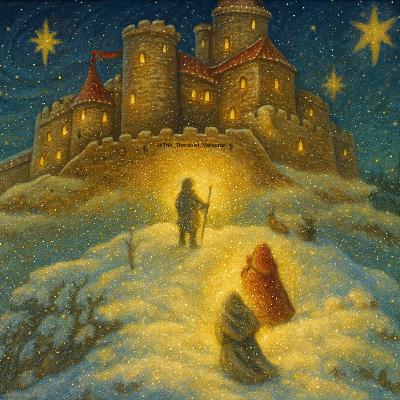
Το τελευταίο επεισόδιο είναι απόσπασμα από το έργο "Ο Χριστός στο Κάστρο" του Αλέξανδρου Παπαδιαμάντη, το οποίο περιγράφει τη χαρμόσυνη γιορτή των Χριστουγέννων σε έναν έρημο βράχο. Συγκεκριμένα, αναφέρει τις προετοιμασίες του γεύματος με σφαχτά, ψάρια, κρασί και άλλα τρόφιμα, καθώς και τη σπάνια μεγαλοπρέπεια της εορτής που ακολούθησε με φαγοπότι και διανυκτέρευση. Την επομένη, με τον καιρό να έχει κοπάσει, οι συνδαιτυμόνες αποφάσισαν να αναχωρήσουν, επιστρέφοντας στην πολίχνη με τη βοήθεια μιας λέμβου και της αποκόλλησης του γολετιού που είχε πλαγιάσει στην άμμο. Η αφήγηση ολοκληρώνεται με τον ασφαλή κατάπλου στην πόλη, σηματοδοτώντας το τέλος της γιορτής στον βράχο.Η συζήτηση και ο σχολιασμός κάτω από το βίντεο είναι αποδεκτοί και επιθυμητοί, καθώς συμβάλλουν στη βελτίωση της εμπειρίας και της συνεργασίας με την Τεχνητή Νοημοσύνη.Τυχόν λάθη ή παραλείψεις μπορούν να επισημαίνονται με ευπρέπεια και σεβασμό, ώστε η αλληλεπίδραση να παραμένει δημιουργική και ωφέλιμη για όλους.
Το παρόν απόσπασμα, από το έργο του Αλέξανδρου Παπαδιαμάντη στο «Χριστό στο Κάστρο» στο σημείο «Θεία Λειτουργία και Διάσωση Πλοίου» , περιγράφει μια σπάνια χριστουγεννιάτικη λειτουργία και τη θαυματουργή διάσωση ενός πλοίου. Ο ιερέας καθυστερεί σκόπιμα την Πρόθεση, μνημονεύοντας όλα τα ονόματα των κατοίκων, ενώ παράλληλα προσεύχεται για τη διάσωση ενός πλοίου που κινδυνεύει στη θάλασσα. Μετά από λίγο, άνδρες φτάνουν στην εκκλησία, μεταξύ των οποίων ο καπετάν Κωνσταντής, ο οποίος αφηγείται πώς το γολέτι του παρασύρθηκε από τη θύελλα. Οι ναυτικοί διασώθηκαν όταν είδαν φώτα (πυρσούς), τα οποία είχαν ανάψει μπροστά στον ναΐσκο του Χριστού, πιστεύοντας πως ήταν σημάδι ή θαύμα που τους οδήγησε σε ρηχά νερά και στην ασφάλεια. Η ιστορία συνδέει την πνευματική θρησκευτική λατρεία με ένα πραγματικό θαύμα στη θάλασσα τη νύχτα των Χριστουγέννων.Η συζήτηση και ο σχολιασμός κάτω από το βίντεο είναι αποδεκτοί και επιθυμητοί, καθώς συμβάλλουν στη βελτίωση της εμπειρίας και της συνεργασίας με την Τεχνητή Νοημοσύνη.Τυχόν λάθη ή παραλείψεις μπορούν να επισημαίνονται με ευπρέπεια και σεβασμό, ώστε η αλληλεπίδραση να παραμένει δημιουργική και ωφέλιμη για όλους.
Το παρόν απόσπασμα, από το έργο του Αλέξανδρου Παπαδιαμάντη «Στο Χριστό στο Κάστρο» ( στο σημείο «Κραυγές και Δαυλοί στη Νύχτα»), περιγράφει μια νυχτερινή σκηνή όπου η λειτουργία σε έναν ναό διακόπτεται ξαφνικά από κραυγές αγωνίας που προέρχονται από τη θάλασσα. Οι φωνές προέρχονται από ναυαγούς στον Μικρό Γιαλό, κοντά στους βράχους του Κουρούπη, όπου φαίνεται να έχει προσαράξει κάποιο πλοίο εν μέσω της σκοτεινής νύχτας και του χιονιού. Οι εκκλησιαζόμενοι σπεύδουν έξω, ενώ ο ιερέας και ο ψάλτης παραμένουν αρχικά εντός του ναού. Μια ομάδα ανδρών, με επικεφαλής τον πορθμέα Στεφανή, παίρνουν δαυλούς και φανάρια και ξεκινούν τον δύσκολο και επικίνδυνο κατήφορο προς βοήθεια των κινδυνευόντων, ενώ οι υπόλοιποι φωτίζουν την περιοχή ρίχνοντας κλαδιά στη φωτιά. Η αυθόρμητη φιλανθρωπία των ανθρώπων υπογραμμίζεται ως η κινητήρια δύναμη της άμεσης αντίδρασής τους.Η συζήτηση και ο σχολιασμός κάτω από το βίντεο είναι αποδεκτοί και επιθυμητοί, καθώς συμβάλλουν στη βελτίωση της εμπειρίας και της συνεργασίας με την Τεχνητή Νοημοσύνη.Τυχόν λάθη ή παραλείψεις μπορούν να επισημαίνονται με ευπρέπεια και σεβασμό, ώστε η αλληλεπίδραση να παραμένει δημιουργική και ωφέλιμη για όλους.
Το παρεχόμενο κείμενο στο Χριστό Στο κάστρο και συγκεκριμένα είναι αποσπάσματα από το σημείο «Η Λιτή της Γεννήσεως εντός του Κάστρου» του Αλέξανδρου Παπαδιαμάντη, μια αφήγηση που περιγράφει την εορτή των Χριστουγέννων σε ένα Κάστρο. Η σκηνή επικεντρώνεται στην άφιξη κουρασμένων ταξιδιωτών και αιπόλων στον ναό του Χριστού, όπου βρίσκουν ζεστασιά από φωτιές εντός και εκτός του κτιρίου. Περιγράφεται η ατμόσφαιρα της ακολουθίας, με τη λιτή να ψάλλεται και τις αναγνώσεις να γίνονται από τον κυρ Αλεξανδρή, ενώ κάποιοι νυσταγμένοι κοιμούνται στα στασίδια. Η αφήγηση κορυφώνεται όταν ο ιερέας ψάλλει το «Δεύτε, ίδωμεν πιστοί...», προκαλώντας θρησκευτική έξαρση και συγκίνηση στους πιστούς, με τον παπα-Φραγκούλη να ψάλλει με πάθος τον ύμνο «Δόξα εν Υψίστοις». Ουσιαστικά, το κείμενο απεικονίζει την πνευματική ανακούφιση και την ευλάβεια των ανθρώπων που γιορτάζουν τη Γέννηση του Χριστού μέσα στον δύσκολο χειμώνα.Η συζήτηση και ο σχολιασμός κάτω από το βίντεο είναι αποδεκτοί και επιθυμητοί, καθώς συμβάλλουν στη βελτίωση της εμπειρίας και της συνεργασίας με την Τεχνητή Νοημοσύνη.Τυχόν λάθη ή παραλείψεις μπορούν να επισημαίνονται με ευπρέπεια και σεβασμό, ώστε η αλληλεπίδραση να παραμένει δημιουργική και ωφέλιμη για όλους.
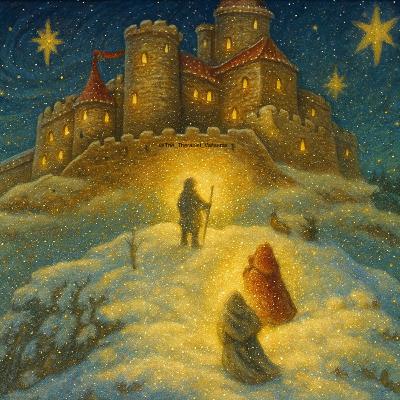
Το κείμενο αποτελεί απόσπασμα από το έργο του Αλέξανδρου Παπαδιαμάντη Στο Χριστό στο Κάστρο στο σημείο «Φωταψία του Κάστρου και του Ναού», και περιγράφει την άφιξη μιας ομάδας ανθρώπων σε ένα παλιό, απομονωμένο κάστρο. Η ομάδα, συμπεριλαμβανομένου του παπα-Φραγκούλη, φτάνει στη σιδερόπορτα, όπου τους υποδέχονται φύλακες, ανάμεσά τους ο Αργύρης της Μυλωνούς, ο οποίος διηγείται πώς είχαν εγκλωβιστεί στο χιόνι. Αφού εισέρχονται, η περιγραφή εστιάζει στον εγκαταλελειμμένο ναό της Γεννήσεως του Χριστού, την παλαιά μητρόπολη του φρουρίου, όπου οι παριστάμενοι αρχίζουν τις προετοιμασίες για τη λειτουργία. Το κείμενο τελειώνει με μια πλούσια, λεπτομερή περιγραφή των αγιογραφιών του ναού, συμπεριλαμβανομένων του Παντοκράτορα, του τέμπλου, και σκηνών από τη ζωή των Αγίων και το Δωδεκάορτο, αναδεικνύοντας την πνευματική αναγέννηση του χώρου μέσω του φωτός και της λατρείας.Η συζήτηση και ο σχολιασμός κάτω από το βίντεο είναι αποδεκτοί και επιθυμητοί, καθώς συμβάλλουν στη βελτίωση της εμπειρίας και της συνεργασίας με την Τεχνητή Νοημοσύνη.Τυχόν λάθη ή παραλείψεις μπορούν να επισημαίνονται με ευπρέπεια και σεβασμό, ώστε η αλληλεπίδραση να παραμένει δημιουργική και ωφέλιμη για όλους.
Το κείμενο αποτελεί απόσπασμα από το έργο του Αλέξανδρου Παπαδιαμάντη στο Χριστό στο Κάστρο και συγκεκριμένα στο σημείο, "Πορεία στο Κάστρο: Θάλασσα και Χιόνι", περιγράφοντας την επίπονη και επικίνδυνη νυχτερινή διαδρομή μιας ομάδας ανθρώπων προς το Κάστρο. Η αφήγηση ξεκινά με την ομάδα να αντιμετωπίζει τη δυσκολία της θαλασσοταραχής και την αδυναμία του πλου, αναζητώντας με τη βοήθεια του μπάρμπα-Στεφανή ένα ασφαλές λιμανάκι για να αποβιβαστούν. Μετά την αποβίβαση, συνεχίζουν την πορεία τους πεζοί μέσα στο χιόνι, προσπαθώντας να βρουν μονοπάτι για να φτάσουν στον προορισμό τους, το οποίο διακρίνεται ως ένας αμαυρός όγκος. Η περιγραφή εστιάζει στον αγώνα τους ενάντια στις αντίξοες καιρικές συνθήκες, με τους άνδρες να προπορεύονται σκάβοντας το χιόνι, μέχρι τελικά να φτάσουν στη γέφυρα του Κάστρου κατά τα μεσάνυχτα, καταπονημένοι αλλά με θερμή καρδιά.Η συζήτηση και ο σχολιασμός κάτω από το βίντεο είναι αποδεκτοί και επιθυμητοί, καθώς συμβάλλουν στη βελτίωση της εμπειρίας και της συνεργασίας με την Τεχνητή Νοημοσύνη.Τυχόν λάθη ή παραλείψεις μπορούν να επισημαίνονται με ευπρέπεια και σεβασμό, ώστε η αλληλεπίδραση να παραμένει δημιουργική και ωφέλιμη για όλους.
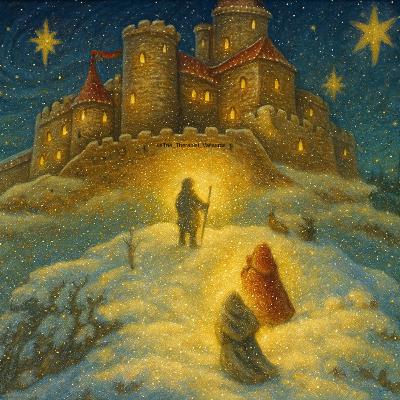
Το κείμενο αποτελεί απόσπασμα από το έργο του Αλέξανδρου Παπαδιαμάντη Στο Χριστό στο κάστρο και συγκεκριμένα στο σημείο «Στον Παγερό Σάλο των Χριστουγέννων», το οποίο περιγράφει ένα επικίνδυνο θαλάσσιο ταξίδι προς το Κάστρο την παραμονή των Χριστουγέννων. Μια ομάδα δεκαέξι ατόμων, συμπεριλαμβανομένου του παπα-Φραγκούλη, της οικογένειάς του, του μπαρμπα-Στεφανή και άλλων ενοριτών, επιβιβάζεται σε μια βάρκα με σκοπό να λειτουργηθεί στο Κάστρο, παρά τον πολύ κρύο καιρό και την αρχική αμφιβολία κάποιων. Καθώς το ταξίδι εξελίσσεται, ο άνεμος δυναμώνει, τα κύματα αγριεύουν, και οι επιβάτες φοβούνται και ταλαιπωρούνται από την τρικυμία, ενώ ο ιερέας διατηρεί το χιούμορ του. Η ομάδα, αντιμέτωπη με την επικίνδυνη θάλασσα, προσπαθεί να αποφασίσει αν θα συνεχίσει την πορεία της ή αν θα αποβιβαστεί στη στεριά, καθώς η νύχτα πλησιάζει. Η συζήτηση και ο σχολιασμός κάτω από το βίντεο είναι αποδεκτοί και επιθυμητοί, καθώς συμβάλλουν στη βελτίωση της εμπειρίας και της συνεργασίας με την Τεχνητή Νοημοσύνη.Τυχόν λάθη ή παραλείψεις μπορούν να επισημαίνονται με ευπρέπεια και σεβασμό, ώστε η αλληλεπίδραση να παραμένει δημιουργική και ωφέλιμη για όλους.
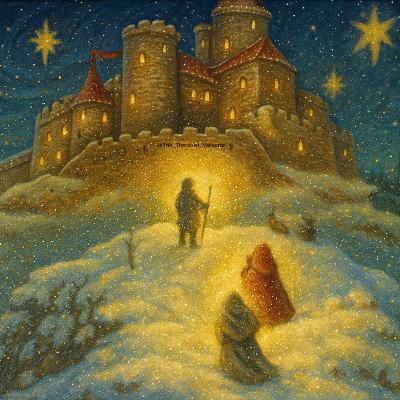
Το απόσπασμα, με τίτλο «Προμήθειες και Πορθμός στο Κάστρο», αποτελεί μέρος του έργου του Αλέξανδρου Παπαδιαμάντη «Στο Χριστό στο Κάστρο». Η κεντρική σκηνή εκτυλίσσεται γύρω από μια συζήτηση μεταξύ του ιερέα, ονόματι παπα-Φραγκούλης, του βαρκάρη μπαρμπα-Στεφανή του Μπέρκου, και του περίεργου μαστρο-Πανάγου του μαραγκού. Συγκεκριμένα, ο παπάς ρωτά τον βαρκάρη εάν είναι ασφαλές να ταξιδέψουν με βάρκα στο Κάστρο, παρά τον δύσκολο καιρό, με τον Στεφανή να δηλώνει με ενθουσιασμό ότι δεν υπάρχει κανένας κίνδυνος και να τον πείθει. Το κείμενο περιγράφει τις τελευταίες προετοιμασίες του ιερέα, συμπεριλαμβανομένης της συγκέντρωσης πολλών προμηθειών, όπως φαγητά και κρασί, για τους αποκλεισμένους από το χιόνι και τους προσκυνητές. Τέλος, ο παπάς αποφασίζει να λειτουργήσει την παραμονή των Χριστουγέννων στον ναό του Χριστού στο Κάστρο, με την αναχώρηση να έχει προγραμματιστεί για τις πρώτες πρωινές ώρες.Η συζήτηση και ο σχολιασμός κάτω από το βίντεο είναι αποδεκτοί και επιθυμητοί, καθώς συμβάλλουν στη βελτίωση της εμπειρίας και της συνεργασίας με την Τεχνητή Νοημοσύνη.Τυχόν λάθη ή παραλείψεις μπορούν να επισημαίνονται με ευπρέπεια και σεβασμό, ώστε η αλληλεπίδραση να παραμένει δημιουργική και ωφέλιμη για όλους.
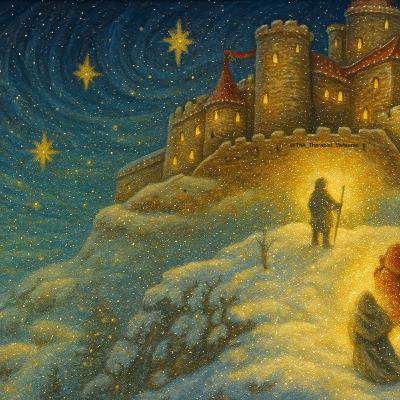
Το κείμενο, ένα απόσπασμα από το έργο του Αλέξανδρου Παπαδιαμάντη στο Χριστό Στο κάστρο και συγκεκριμένα στο σημείο Το Τάμα της Παπαδιάς, περιγράφει τη συζήτηση που λαμβάνει χώρα στο σπίτι ενός ιερέα καθώς πλησιάζουν τα Χριστούγεννα. Η κεντρική ένταση περιστρέφεται γύρω από ένα σοβαρό τάμα που είχε κάνει η παπαδιά όταν ο μοναδικός της γιος, ο Σπύρος (Λαμπράκης), κινδύνευσε να πεθάνει πέρυσι. Το τάμα επιβάλλει να μεταβεί η ίδια για λειτουργία στον Χριστόν στο Κάστρο, μια εξαιρετικά επικίνδυνη διαδρομή λόγω του βαρύ χειμώνα. Παρά τις αντιρρήσεις του ιερέα, η παπαδιά αποφασίζει με σθένος να τον ακολουθήσει οπωσδήποτε, εξηγώντας ότι μόνο κοντά του αισθάνεται ασφαλής. Οι δύο κόρες αντιδρούν με ανάμικτα συναισθήματα φόβου και ζήλειας, ενώ ο παπάς αναβάλλει τη λήψη οριστικής απόφασης, περιμένοντας τη γνώμη του μπαρμπα-Στεφανή του Μπέρκου.

Comments

Download from Google Play

Download from App Store
 United States