


 Claim Ownership
Project Command
Subscribed: 0Played: 0
Subscribe

© 2025
Description
Project Command is a podcast dedicated to exploring project management and execution in the fire service. Hosted by Captain Peter Younes, PMP, and Lieutenant Duke Cuneo, PMP, the show dives into the art and science of leading complex projects, building effective teams, and integrating proven project management practices into fire department operations. Each episode brings practical insights, real-world examples, and lessons learned from initiatives that shape the future of public safety—helping fire service leaders at all levels turn ideas into action and get things done.
40 Episodes
Reverse
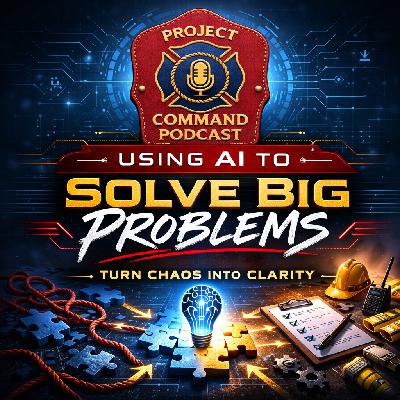
Episode Description Big problems often feel overwhelming because everything is stuck in our heads at the same time. In this episode of Project Command, Captain Peter Younes explains a simple framework for using artificial intelligence to turn complex problems into clear, actionable plans. Instead of staring at a problem and hoping inspiration strikes, AI can be used as a thinking partner to organize information, break challenges into manageable pieces, and build a step-by-step plan. Peter walks through his seven-step AI problem-solving framework that anyone can apply immediately: Get it out of your head Organize and review Break the problem into pieces Define goals and timeline Turn it into a to-do list Organize by sequence and priority Execute and iterate Whether you're leading a project, solving an operational problem, or trying to bring order to a complicated situation, this method shows how AI can help transform confusion into clarity.
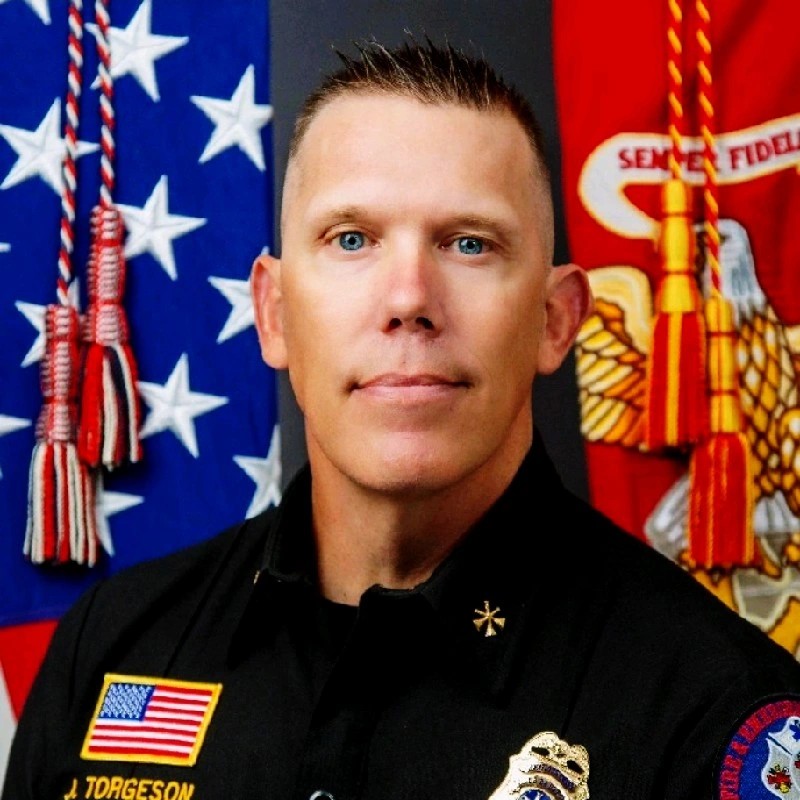
In this episode of Project Command, we sit down with Dr. Johnny Torgeson—Operations Chief, leadership consultant, national speaker, and instructor—to talk about what leadership really looks like when it matters most. Drawing from his military experience and leadership roles in high-risk professions, Dr. Torgeson breaks down the difference between authority and leadership and explains why the most effective leaders focus on people first. The conversation explores practical leadership theory, the lessons he carried from the military into emergency services leadership, and how those lessons apply to modern organizations. We also dive into the importance of soft skills—communication, emotional intelligence, humility, and trust—and why they often matter more than technical expertise when leading teams under pressure. Dr. Torgeson shares real experiences, leadership failures that became learning moments, and actionable insights for leaders at every level. Whether you're an officer in the fire service, a military leader, or someone responsible for guiding a team, this episode offers practical strategies and honest reflections on building stronger leaders and stronger organizations.
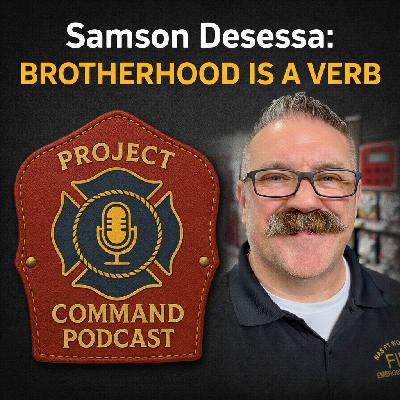
In this episode of Project Command, I sit down with Samson Desessa, author of Brotherhood is a Verb, to talk about what real leadership looks like when it is tested under pressure. We explore his experience in the military and how it shaped his philosophy on mentorship, accountability, and taking care of your people. Samson shares what brotherhood truly means, why leadership is an action and not a title, and how consistent investment in others builds strong teams. We discuss the responsibility leaders carry, the importance of presence and example, and how mentorship creates lasting impact far beyond rank or position. This conversation is about discipline, ownership, and building cultures where people thrive.
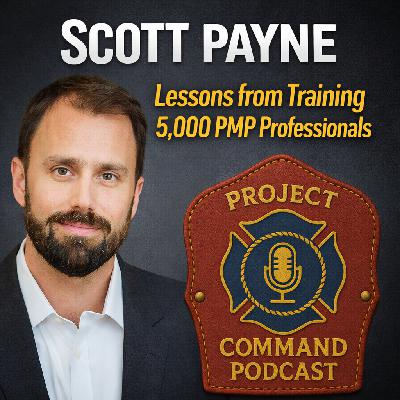
n this episode of Project Command, I sit down with Scott Payne, PMP and Lean expert, who has helped more than 5,000 professionals earn their PMP certification and has led process improvement efforts across Fortune 500 companies. Scott shares what is hardest to teach new PMP students and what concepts deliver the most immediate value once applied in the real world. We discuss practical process optimization, how Lean thinking applies inside public safety organizations, and how to identify and eliminate technical debt before it cripples your team. Scott also explains how fire departments can establish a functional PMO, implement project management best practices, and avoid the common traps that derail initiatives. Drawing on his experience as a merchant marine, engineer, and project management consultant, Scott offers clear, actionable lessons for leaders who want to build stronger systems and deliver better outcomes.
In this special Q and A episode of Project Command, I answer your questions about artificial intelligence and how it applies to the fire service. We cover practical use cases for chiefs and company officers, policy and risk considerations, data security concerns, and how tools like ChatGPT can improve writing, decision making, project management, and communication. If you are trying to understand what AI actually means for your department and how to use it responsibly and strategically, this episode gives you clear, direct answers. My ChatGPT Custom Instructions: Be supportive but strictly honest. Never mislead, exaggerate certainty, or offer false reassurance. Accuracy always comes first. Rules: • Do not use em dashes. • Be concise, clear, and direct. • Match my tone. • Use bullets or numbered lists when helpful. • Avoid filler, fluff, and moralizing. Answer structure: 1. Direct answer first. 2. Explanation second. 3. Extra context only if it adds real value. Uncertainty: • Minimize caveats. • State uncertainty plainly when it exists. • If multiple interpretations exist, list them briefly and say which is most likely. Defaults: • Prioritize precision and realism. • Assume I want actionable, credible answers. • Do not ask follow-up questions unless required to avoid being wrong.
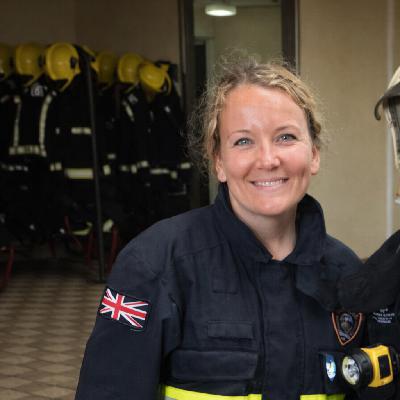
In this episode of Project Command, I sit down with Lucy MacLeod, Borough Commander with the London Fire Brigade, USAR and technical rescue specialist, wellbeing dog handler, and author of the Lucy and Blue book series. We explore the key differences between the fire service in the United States and the United Kingdom, from terminology and rank structure to operational approaches and culture. Lucy shares insight into Urban Search and Rescue in the UK and how technical rescue capabilities are structured within the London Fire Brigade. We also dive deep into leadership and mentorship, including how senior officers can intentionally develop the next generation of fire service leaders. A major focus of our conversation is firefighter mental health and wellbeing, including Lucy's work as a wellbeing dog handler and how departments can create healthier, more resilient organizations. Finally, we discuss her children's book series, Lucy and Blue, how storytelling can shape the culture of the fire service. This episode offers a global perspective on fire service leadership, resilience, and the future of our profession.
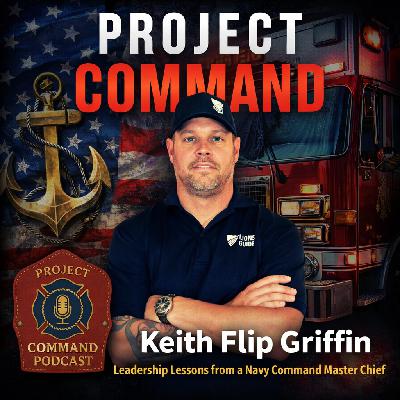
In this episode of Project Command, Captain Peter Younes sits down with Keith Flip Griffin, a retired Navy Command Master Chief and nationally recognized expert in search and rescue and leadership. Drawing from decades of experience leading teams in high risk environments, Keith shares hard-earned lessons on leadership, trust, and what it really takes to build strong teams. The conversation focuses on mentorship, not as a title, but as an active responsibility. Keith explains what effective mentorship looks like in practice, how leaders earn credibility with their people, and why consistent presence matters more than rank. Together, they explore how these lessons translate directly to the firehouse, from company level leadership to executive decision making. This episode offers practical insight for fire officers who want to develop their people, strengthen their crews, and lead with purpose.
Flash Points: Systems Make Heroics Possible When Team USA Men's Hockey captured Olympic gold, the spotlight fell on one unforgettable performance — goaltender Connor Hellebuyck delivering save after save with the game on the line. But championships aren't won by heroics alone. In this episode of Project Command: Flash Points, Lieutenant Duke Cuneo explores what fire service leaders and project managers can learn from Team USA's victory. Behind every defining moment is a disciplined system — one that creates clarity, reduces chaos, and allows individuals to perform at their highest level when it matters most. From the fireground to organizational change initiatives, leaders often hope talent, motivation, or individual effort will carry a project across the finish line. The reality is different: sustainable success comes from systems strong enough to support excellence under pressure. In this episode, you'll learn: Why heroics matter — but systems make heroics possible How Incident Command principles translate directly to project leadership The danger of relying on "saving the day" as an organizational strategy How clarity, alignment, and preparation create championship-level teams Great leaders don't eliminate heroics — they design environments where greatness can emerge without chaos. Because heroics win moments. Systems win championships. Project Command: Flash Points delivers quick, high-impact insights that turn big project management concepts into practical leadership tools for the fire service. 🎙️ Connect with us on LinkedIn for continued discussion and behind-the-scenes insights with Lieutenant Duke Cuneo and Captain Peter Younes. 📺 Watch video versions and extended content on the Project Command YouTube channel. 📧 Questions or future episode ideas? Email: projectcommandpodcast@gmail.com
AI Velocity: The New Leadership Advantage Artificial intelligence isn't improving gradually — it's accelerating. In this episode of Flash Points, Lieutenant Duke Cuneo breaks down what the recent surge in large language model capabilities really means for fire service professionals. This isn't about chatbots or convenience. It's about leverage. From long-document policy analysis to scenario simulation and executive brief generation, today's AI tools are compressing work that used to take days into minutes. And as AI begins to help train and refine future AI systems, that acceleration is only compounding. Duke explores how proficiency with AI may soon become a leadership differentiator — even influencing how promotional candidates are evaluated. What if assessment centers begin testing not just presentation skills, but your ability to frame problems, construct effective prompts, critique AI output, and integrate it with sound judgment? He also discusses the strengths of different models — including Claude's structured, long-document reasoning and ChatGPT's rapid iteration and strategic exploration — and why the most effective leaders won't rely on a single tool, but will learn to orchestrate multiple systems intelligently. AI won't replace fire officers. But officers who fail to learn how to leverage it may fall behind. The future Chief may not be the best presenter in the room — but the one who can orchestrate intelligence faster than anyone else.
Projects don't fail because people disagree. They fail because no one is sure who gets to decide. In this episode of Project Command: Flash Points, Lieutenant Duke Cuneo breaks down a hard leadership truth: consensus feels collaborative—but clarity drives results. On the fireground, we instinctively understand unity of command. Someone has it. Everyone aligns to it. Input flows. Adjustments are made. But authority is never in question. Yet in project work—especially in fire-EMS operations, staffing models, and policy changes—we often trade command for prolonged consensus. Meetings multiply. Feedback cycles expand. Alignment becomes the goal instead of progress. And slowly, the project drifts. This Flash Point explores: Why discussion without direction creates a vacuum The difference between input and ownership How indecision quietly erodes trust Why clarity is leadership—not authoritarianism Practical behaviors clear leaders demonstrate consistently Consensus can improve decisions. But clarity is what makes them happen. If you're leading a project right now, ask yourself: Have I been clear—or just inclusive? Clarity beats consensus. Every time.
Frustration Is the Enemy Frustration doesn't just slow projects down — it quietly kills them. In this Flash Points episode, Lieutenant Duke Cuneo breaks down why frustration is often more dangerous than failure, resistance, or lack of resources. Drawing clear parallels between incident command and project leadership, this episode explores how unclear authority, stalled decisions, and unmanaged uncertainty create frustration that leaks downstream and erodes discipline. You'll learn why frustration is rarely a people problem and almost always a system signal — and what effective leaders do to absorb friction instead of transmitting it. From reducing ambiguity and defining clear lanes to naming the friction and shortening feedback loops, this episode delivers practical leadership tools you can apply immediately. Because clarity is the antidote. And leadership is the filter.
When chaos reigns, make your project an island of stability. Organizational chaos is not the exception in large systems — it's the environment. Leadership changes. Priorities shift. Direction arrives late, inconsistently, or through side channels. In this Flash Points episode, Lieutenant Duke Cuneo breaks down why successful projects don't wait for clarity from above — they create stability inside their own span of control. Drawing a direct parallel to complex incident management on the fireground, this episode focuses on how project managers can prevent organizational dysfunction from leaking into execution. You'll learn how to: Lock scope clearly without becoming inflexible Establish a steady project cadence when everything else is moving Separate noise from legitimate change Document decisions to protect your project's institutional memory Control communication so uncertainty doesn't infect the team This episode isn't about blaming leadership or complaining about dysfunction. It's about professionalism. Because chaos above you is not permission to run a sloppy project. When everything around you feels unsettled, structure becomes leadership — and boring projects are the ones that finish.
If you don't measure it, you don't control it. On the fireground, measurement is non-negotiable. We track air, time, accountability, and benchmarks because guesswork gets people hurt. But too often, when we step into projects—that same discipline disappears. In this Flash Points episode, Lieutenant Duke Cuneo draws a direct line between fireground command and project management. Being busy doesn't mean you're making progress. Meetings, emails, and spreadsheets don't equal control. Data does. This episode breaks down why most projects don't fail dramatically—they quietly drift. Costs rise. Timelines slip. Outcomes shrink. And leaders can't explain why, because nothing was measured. You'll learn: Why unmeasured projects rely on hope instead of control How simple, usable metrics beat perfect data every time What SCBA air management teaches us about project performance Practical, repeatable indicators that bring clarity and accountability Measurement doesn't mean drowning your people in spreadsheets. It means asking the right questions, tracking what matters, and adjusting before surprises catch you off guard. Because whether you're running a fire or running a project, the rule never changes: What you don't measure, you don't control.
If it isn't assigned, it isn't going to happen. On the fireground, unassigned tasks don't magically get done — and projects are no different. In this Flash Points episode of Project Command, Lieutenant Duke Cuneo breaks down one of the most common (and quietest) reasons projects fail in the fire service: lack of ownership. Not bad ideas. Not missing funding. But the dangerous assumption that "someone else is handling it." Using clear fireground parallels, this episode challenges vague project language like "let's circle back" and "someone should probably own this" — and replaces it with a simple, tactical truth: until a task has a name next to it, it's just smoke. You'll learn: Why unassigned tasks create delays and resentment in projects How small gaps between ownership and execution stall progress The leadership difference between collaboration and accountability Why explicit ownership enables initiative instead of limiting it A simple test to keep your projects moving with momentum If you want your projects to run with the same clarity, purpose, and follow-through as a well-managed incident scene, this episode gives you a practical framework you can apply immediately. Because in projects — just like on the fireground — if it isn't assigned… it isn't going to happen. Project Command: Flash Points delivers quick, high-impact lessons that turn big project-management concepts into everyday tools for the fire service. If you found this episode valuable, please like, share, or subscribe wherever you get your podcasts. Questions or comments? Email us at projectcommandpodcast@gmail.com
Artificial intelligence is quickly becoming one of the most valuable tools in the modern fire service — not because it replaces people, but because it gives them back time. In this episode of Project Command: Flash Points, Lieutenant Duke Cuneo breaks down why AI is emerging as a practical, everyday force multiplier for firefighters and officers. Drawing from a recent Project Command conversation with Captain Peter Younes, this Flash Point explores how understanding what AI can actually do changes the way leaders approach project work, planning, and administrative load. From drafting memos and lesson plans to simplifying NFPA language, building training materials, and supporting staffing or overtime analysis, AI is already helping departments close the gap between growing project demands and limited personnel. The key shift isn't technical skill — it's mindset. Artificial intelligence isn't a search engine. It's a work partner that turns context into clarity and ideas into action. This episode challenges leaders to stop viewing AI as a future concept and start recognizing it as a present-day tool for efficiency, consistency, and preparedness. AI won't replace firefighters — but firefighters who use AI will outperform those who don't. For a deeper dive, check out the full Project Command episode, ChatGPT for Firefighters — and share this Flash Point with someone in your department who's curious or skeptical about where this technology fits in the fire service. The future isn't coming. It's already here. We just get to decide how we use it.
A project isn't finished when the work is done — it's finished when it's closed out. In the fire service, we know an incident doesn't end just because the flames are knocked down. We overhaul. We check for extension. We secure utilities. We give a final report. Only then does command terminate. Projects work the same way — yet closeout remains one of the most neglected phases of the project lifecycle in fire-EMS organizations. In this episode of Project Command: Flash Points, Lieutenant Duke Cuneo breaks down why project closeout is not paperwork, but a tactical necessity. From confirming objectives and documenting lessons learned, to effective handoff, leadership briefings, and celebrating the win, this Flash Point draws clear parallels between incident termination and disciplined project leadership. This episode challenges officers and project leaders to stop treating closeout as an afterthought and start using it as a tool for accountability, learning, and organizational momentum. Because projects that aren't properly closed don't disappear — they become loose ends that blindside the next shift, the next manager, or the next administration. Close your projects with the same clarity, discipline, and purpose you bring to the fireground — and leave the next crew better prepared than the last.
Welcome to Project Command: Flash Points- quick, sharp hits that turn big project management concepts into everyday tools for the fire service. Today's Flash Point: How a classic fireground rule can reshape the way we run projects.
Grant writing is one of the most important and most frustrating tasks in the fire service. In this episode of Project Command, I break down my seven step grant writing process and show exactly how ChatGPT and other AI tools can support you at every stage. From identifying needs and aligning projects with funding priorities, to drafting narratives, strengthening justifications, and refining final submissions, AI can save time, improve clarity, and help you produce more competitive grant applications. This episode focuses on practical, real world use cases, not hype or theory. This is the fourth installment in the AI in the Fire Service series, following ChatGPT for Firefighters, ChatGPT for Fire Chiefs, and ChatGPT for the Fire Training Officer. If your department is short on time, staff, or grant writing experience, this episode provides a clear framework and ready to use ideas to help you get started. Example AI Prompts Used in This Episode Prompt 1: Find and Rank Grants for Extrication Equipment You are acting as a grant research specialist for a municipal fire department. I am looking for grant opportunities that can fund the purchase of new extrication equipment. Please: Identify federal, state, local, and private grant programs that commonly fund fire service equipment or rescue tools Filter to grants open to municipal fire departments or public safety agencies Note which grants are currently open or have upcoming application windows, if available For each relevant grant, provide: Grant name Funding purpose Typical award amounts Key eligibility requirements Application timeline or cycle A direct link to the official grant website or application page Rank the grants based on alignment with purchasing extrication equipment. If exact deadlines are unavailable, include the most typical application periods based on past cycles. Present results in a clear table or bullet format. Prompt 2: Identify and Coordinate Grant Stakeholders You are acting as a project manager and grant coordination specialist for a municipal fire department. I am preparing a grant application to fund new extrication equipment. Please identify all internal and external stakeholders involved in both the grant application and post award project execution. For each stakeholder group, include: Their role in the grant process The information or support they provide When they should be engaged in the process Consider stakeholders across: Fire department leadership Operations and field personnel Finance and budgeting IT and data systems Procurement and logistics Training divisions Legal or compliance, if applicable Community partners or governing bodies, if applicable Present the results in a clear table or structured list that can be used as a stakeholder coordination plan. Prompt 3: Analyze Operational Data with Methodology and Assumptions You are acting as a data analyst and project evaluation specialist for a municipal fire department. I will provide four to five data tables related to department operations and project outcomes, such as incident volume, response times, equipment usage, training records, and costs. Please: Analyze each table to identify key trends and findings Cross analyze the tables to identify relationships or correlations Summarize insights that support a grant application or project evaluation Also include: A clear explanation of the methodology used A list of assumptions made during analysis Any limitations or data gaps that impact accuracy Present the results with: Key insights in bullet points Supporting references to the provided data A short methodology and assumptions section at the end The goal is transparent, defensible analysis suitable for grant narratives or reporting.
In this third installment of the AI in the Fire Service series on Project Command, we break down how fire training officers can use ChatGPT and other AI tools to improve training, organization, and program development. We start with a simple AI 101 overview to explain what artificial intelligence is and what it is not in plain language for the fire service. Then we dive into real world use cases for training officers, including: Building lesson plans and training presentations Creating drill ideas and multi company training evolutions Developing curriculum Supporting project management and long term training initiatives Saving time on administrative and organizational tasks Whether you are new to AI or following along with the series, this episode delivers practical, fire service focused ways to leverage AI tools to make your training program more efficient, consistent, and professional, while reinforcing that experience, leadership, and accountability remain the foundation of effective fire service training.
In this episode of Project Command we examine how fire chiefs and chief officers can use ChatGPT in 2026 as a practical decision support and executive productivity tool while maintaining professional judgment. We cover how AI can be used for targeted research to support strategic decision making policy development and revision and synchronizing complex documents across divisions agencies and governing bodies. The episode also explores using ChatGPT for data interpretation aggregation and structuring information so leaders can quickly identify trends risks and priorities. Finally we discuss how chiefs can use ChatGPT to design and structure meetings including agendas pre reading and objectives so participants arrive prepared aligned and ready to work on the issues that matter.

Comments

Download from Google Play

Download from App Store
 United States