


 Claim Ownership
Super Smart Farm Show
Subscribed: 21Played: 217
Subscribe

© 2025
Description
Kids have a lot of questions about farming, and the Super Smart Farm Show, Lancaster Farming's podcast for kids, has a lot of answers. Join us each week as we explore kid-friendly topics like why bees are important and why sheep need hair cuts. We here at the Super Smart Farm Show know it's fun to ask questions and wonder about the world we live in, especially when it comes to learning about how farmers feed and take care of us.
39 Episodes
Reverse
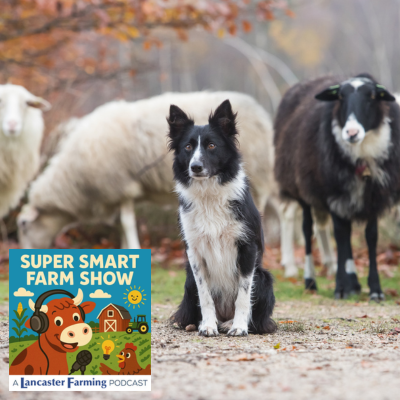
This week on the Super Smart Farm Show, we're in done chasing our tails — it's time to figure out how herding dogs work. How do herding dogs know how to move cattle and sheep around? Have they learned how to speak sheep or cow? Is it special training? Or is there something else going on here? Join host Elmer and Ollie the dog as they discuss how dogs help farmers take care of their herds. Do you have a question for the Super Smart Farm Show? Drop us a line at supersmart@lancasterfarming.com! In this episode of the Super Smart Farm Show, Elmer explores the fascinating role of herding dogs on farms, answering the question: How do dogs move entire herds of sheep and cattle? With help from Ollie, a skilled herding dog, listeners learn that successful herding relies on a combination of natural instinct and specialized training, developed over generations in breeds like Border Collies, Australian cattle dogs and Corgis. The episode breaks down how livestock animals use a herd instinct for safety, which allows dogs to guide them by applying gentle pressure, body positioning and movement rather than force. It also highlights how farmers use voice commands and whistle signals to direct dogs, and why calm, controlled herding reduces stress and improves animal health. Young listeners are introduced to concepts like the "herding eye," real-time problem solving and livestock behavior, making this an engaging and educational look at working farm dogs, livestock management and animal behavior in agriculture.
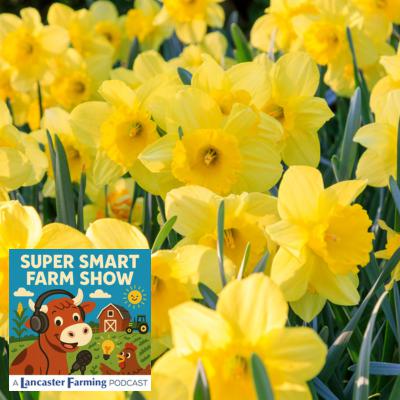
This week on the Super Smart Farm Show, we're looking for early signs of spring — specifically the arrival of spring flowers like daffodils. There's nothing like seeing the first daffodils, crocuses or aconites popping up to signal that spring has arrived. But how do those flowers know it's time to start growing? Do they have tiny, underground calendars? Or is there something else going on in the soil? Join host Elmer and farmer Clementine as they talk about how these kinds of flowers know when to start growing. Do you have a question for the Super Smart Farm Show? Drop us a line at supersmart@lancasterfarming.com! For More Lancaster Farming Podcasts Click Here In this spring-themed episode of the Super Smart Farm Show, Elmer explores the science behind how flowers like daffodils know when to bloom, diving into the fascinating world of bulb plants and seasonal growth cycles. With help from farmer Clementine, listeners learn that bulbs act as underground storage units packed with energy, allowing flowers to grow at just the right time. The episode explains key concepts like plant dormancy, where bulbs rest throughout winter, and vernalization, the cold-weather process (35–45°F) that resets a bulb's internal clock and triggers spring growth. Young listeners also discover how temperature, sunlight, moisture and soil conditions signal bulbs to sprout, and how stored carbohydrates fuel early growth before leaves appear. The show highlights why proper gardening practices—like planting bulbs in fall and allowing leaves to recharge energy after blooming—are essential for healthy plants, making it an engaging and educational guide to spring flowers, plant biology and beginner gardening science.

This week on the Super Smart Farm Show, we're talking about eggs. More specifically, we're talking about what happens inside of eggs before chicks are ready to hatch. What's going on inside an unhatched egg? What does it take to make a chick? Once they're formed, are chicks inside of eggs aware of the outside world? And how do they know it's time to hatch? Join host Elmer and Henrietta the chicken as they discuss how chicks hatch from eggs. Do you have a question for the Super Smart Farm Show? Drop us a line at supersmart@lancasterfarming.com! In depth summary: In this episode of the Super Smart Farm Show, host Elmer takes young "egg explorers" inside a chicken farm to learn how chicks hatch from eggs and the science of egg incubation. With help from Henrietta the hen, listeners discover that chicks typically hatch after 21 days of incubation, during which eggs must be kept at 99–101°F with about 50% humidity to support healthy development. The show explains key stages of embryo growth inside a chicken egg, including organ formation during days 1–7, rapid growth during days 8–14, and final development leading up to hatching. Elmer also learns why farmers turn eggs during the first 18 days to prevent chicks from sticking to the shell and how humidity increases to about 70% before hatching. The episode concludes with the moment chicks break through the shell using their beaks and are moved to a brooder with heat lamps (90–95°F), while also clarifying that grocery store eggs cannot hatch because they are not fertilized.

This week on the Super Smart Farm Show, it's about time we settled the debate: Does daylight saving time actually help farmers? Why do we set the clock forward an hour in the spring and backward in the fall? Does it really have anything to do with farming? Or, could it be that daylight saving time doesn't really help farmers at all? Join host Elmer and Bessie the cow as they figure out why we insist on messing with the clocks twice a year. Do you have a question for the Super Smart Farm Show? Drop us a line at supersmart@lancasterfarming.com!

This week on the Super Smart Farm Show, it's time to head over to the dairy farm to see why calves are kept in little houses. Have you ever visited or driven by a dairy farm and noticed small houses dotting the landscape? Those are calf hutches and farmers use them to help baby calves grow big, strong and healthy. They also keep calves warm and dry during cold and wet weather and offer them shade during sunny days. Then after a couple months, it's goodbye to the hutches and on to the next step in the calves' lives. Join host Elmer and Bessie the cow as they figure out why calves live in little houses. Do you have a question for the Super Smart Farm Show? Drop us a line at supersmart@lancasterfarming.com!
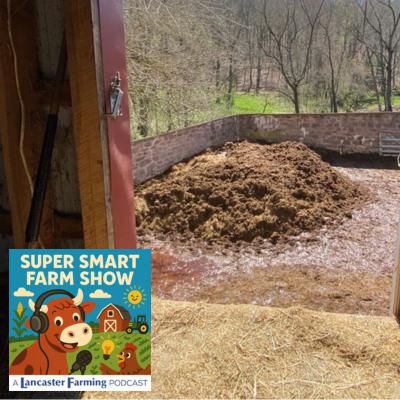
This week on the Super Smart Farm Show, we're holding our noses and diving into a stinky subject: managing manure on the farm. The truth is, cows, chickens, horses and other farm animals poop and it can pile up quickly if farmers don't take care of the situation. But what do they do with all that manure? They can't flush it away! Instead, farmers use a variety of techniques to manage manure so their farms stay clean and safe for the animals and people living and working on them. And get this, farmers have figured out how to use manure to help them farm! Join host Elmer and farmer Wendy as they talk about how farmers manage all that manure. Do you have a question for the Super Smart Farm Show? Drop us a line at supersmart@lancasterfarming.com!
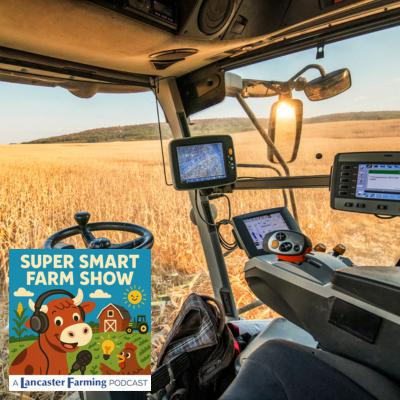
This week on the Super Smart Farm Show, we're getting revved up over the idea that some tractors are like computers on wheels. Tractors have always been one of the most powerful machines you'll find on a farm, but these days tractors have as much brains as they do brawn. Smart technology like GPS, environmental sensors and auto-steer mean these tractors are taking in information and making decisions that lead to better farming. But that doesn't mean farmers get to take the day off! Join host Elmer and farmer Frank as they discuss how farmers work with smart tractors to keep their crops growing strong. Do you have a question for the Super Smart Farm Show? Drop us a line at supersmart@lancasterfarming.com!

This week on the Super Smart Farm Show, we're taking a break from having snowball fights to talk about how snow helps farmers. When some people see snow, they think about fun things, like snowmen and sledding. Others see snow and think about all the extra work that comes with it, like shoveling. But how do farmers feel about snow? Does it just mean a lot of extra work or could there be some benefits? Could it be that snow is actually good for the farm? Join host Elmer and farmer Clementine as they discuss all the ways snow is good for farms and farmers.

This week on the Super Smart Farm Show, we're hunkering down to escape the cold and snow as we learn what farmers do during the winter. In the wintertime, it's easy to look at farms and think nothing's going on. The crops have all been harvested and the tractors put away. But the truth is, there's always something to do on a farm. So what are farmers doing during the coldest months of the year? Join host Elmer and farmer Merle as they discuss how farmers spend their winters when it's too cold to grow anything. Do you have a question for the Super Smart Farm Show? Drop us a line at supersmart@lancasterfarming.com!
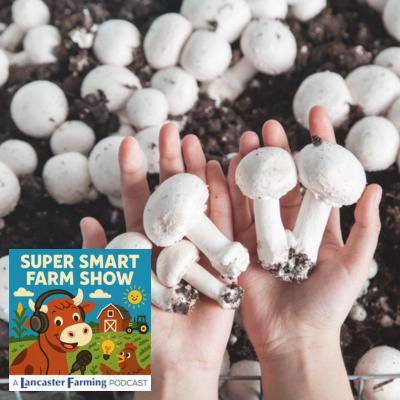
This week on the Super Smart Farm Show, we're venturing into the dark to shed some light how farmers grow mushrooms. Most plants and crops need sunlight to grow, but not mushrooms. Mushrooms thrive in the dark, so the farmers who grow them keep them in special buildings where they can control the amount of light. But that's not the only thing that makes growing mushrooms different than growing corn or wheat. Join host Elmer and Millie the mushroom as they discover how mushrooms are grown on farms. Do you have a question for the Super Smart Farm Show? Drop us a line at supersmart@lancasterfarming.com!

This week on the Super Smart Farm Show, we're heading out to the pig pen to find out if pigs are really as dirty as they seem. There's no question about it: Pigs love the mud. But why? Is it simply because mud is fun? Or is there more to it than that? Could all that mud actually be helping pigs? Join host Elmer and Piper the pig as they get to the bottom of why pigs love mud. Do you have a question for the Super Smart Farm Show? Drop us a line at supersmart@lancasterfarming.com!
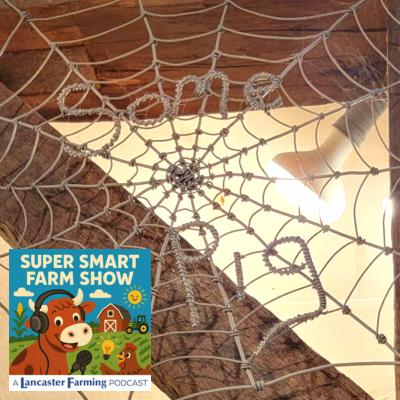
This week on the Super Smart Farm Show, we're taking a trip to the library to check out one of our favorite farming books, 'Charlotte's Web,' by E.B. White. Generations of children have loved the story of Wilbur the pig and Charlotte the spider, but just how realistic is the farm portrayed in 'Charlotte's Web?' How did E.B. White know how to write about farm animals? Do pigs really go to county fairs? Join host Elmer and Lucy the librarian as they dive into the world of 'Charlotte's Web' to discover what makes E.B. White's writing so terrific. Do you have a question for the Super Smart Farm Show? Drop us a line at supersmart@lancasterfarming.com!
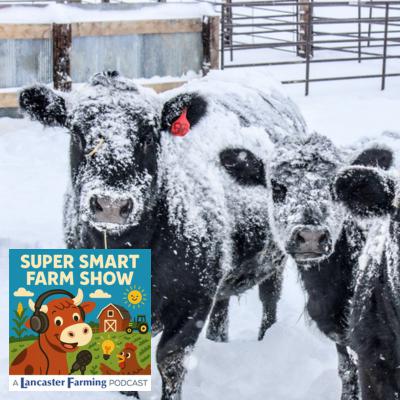
This week on the Super Smart Farm Show, we're bundling up in our hats and scarves and then heading out to the barn to find out how farm animals stay warm in the winter. Cows don't wear coats and coal stoves aren't safe for the barn. So how do animals stay warm during the winter? It turns out, they're able to stay nice and toasty thanks to some natural defenses against the cold and with help from farmers. Join host Elmer and Brody the steer as they discuss how different animals around the farm are able to keep warm during the coldest months of the year. Do you have a question for the Super Smart Farm Show? Drop us a line at supersmart@lancasterfarming.com!
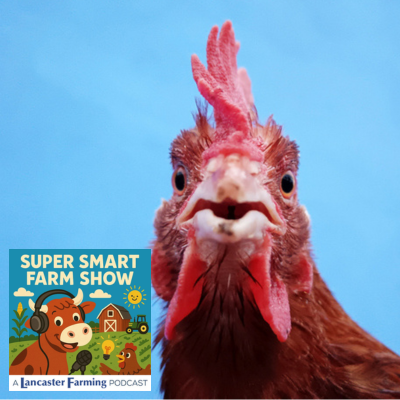
This week on the Super Smart Farm Show, we're stopping by the chicken coop to learn why chickens and roosters are such a chatty bunch. Chickens and roosters make all kinds of sounds, but what are they trying to say? What's the difference between a gentle cluck and an ear-splitting squawk? And did you know that chickens and roosters make different noises in different languages? Join host Elmer and Roy the rooster as they get to the bottom of this listener-submitting question of why chickens squawk, cackle and cluck. Do you have a question for the Super Smart Farm Show? Drop us a line at supersmart@lancasterfarming.com!

This week on the Super Smart Farm Show, it's time to head out to the Christmas tree farm to pick out the perfect Christmas tree. Christmas tree farmers put in a lot of work to make their farms welcoming places during the holidays, but they work even hard all year round to get their trees ready for Christmas. How long do they care for those trees before they're ready to be cut? And what happens to Christmas trees after the holiday season is over? Join host Elmer and Dougie the Douglas fir as they talk tree farming and get ready to celebrate Christmas!
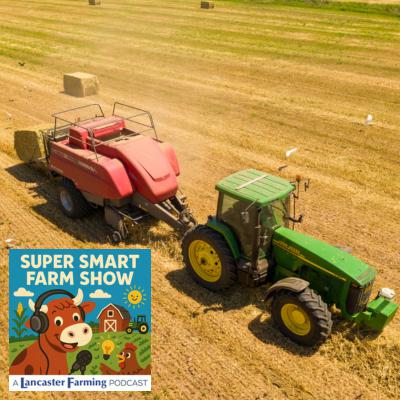
This week on the Super Smart Farm Show, we're heading out to the barn to learn all about how tractors power the tools they pull behind them, from balers to tillers. Tractors pull a variety of tools behind them, but tractors engines, the source of these tools' power, are all the way up front. So how does the power from the engine travel all the way back to those tools? The answer lies in a tractor part called the power take-off. But what is a power take-off and how does it work? Join host Elmer and Frank the farmer as they figure out the answers and learn how power take-off keeps those mowers mowing and tillers tilling.

This week on the Super Smart Farm Show, we're trotting out to the stables to discover why horses wear horseshoes. There's nothing like the distinctive "clip-clop" of shoed horses, but why do they need shoes in the first place? Do all horses wear shoes? When you outgrow your shoes, it's time to head to the shoe store, but where do horses get their shoes? Join host Elmer and Poppy the pony as they figure out the answers and learn why horseshoes are an important part of caring for horses.

This week on the Super Smart Farm Show, we're getting our gobble on and looking at why we eat turkey on Thanksgiving. Nowadays, turkey is the star of the Thanksgiving table. But did you know that at the very first Thanksgiving between the Pilgrims and the Wampanoag in 1621, turkey was nowhere to be seen! What was eaten instead? And who do we have to thank for introducing turkey as our go-to Thanksgiving meal? Join host Elmer and Wendy the farmer as they figure out the answers and learn about how Thanksgiving became what it is today.

This week on the Super Smart Farm Show, we're exploring how we get cheese from cows. We're all familiar with how we get milk from cows, but how does that milk turn into cheese? And who was the first person to look at milk and think, "Hey, what if we let this get chunky or stretchy?" Join host Elmer and Bessie the cow as they discuss how cheesemakers separate milk into curds and whey and discover the adventurous history of how cheese was first discovered.

This week on the Super Smart Farm Show, we're going underground to find out how soil helps plants grow. Listen as host Elmer and Sawyer the soil scientist talk about the tiny organisms and networks alive under our feet and learn the difference between soil and plain old dirt.

Comments

Download from Google Play

Download from App Store
 United States