


 Claim Ownership
Hope for the Caregiver
Subscribed: 41Played: 880
Subscribe

Copyright © 2014-2025 Peter W. Rosenberger All rights reserved.
Description
Drawing upon four decades as a family caregiver, Peter Rosenberger offers a lifetime of experience as a lifeline for fellow caregivers.
878 Episodes
Reverse
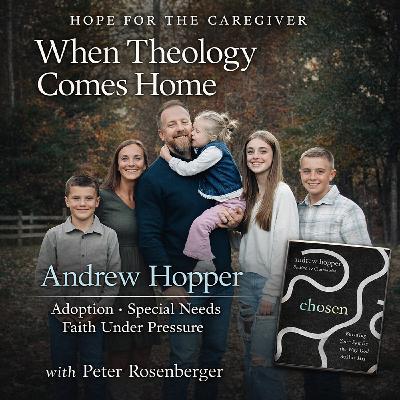
In this episode, I'm sharing a recent conversation I had on Truth Talk Live about adoption, special needs parenting, caregiving, and living out Christian faith when life becomes difficult. My guest, pastor and author Andrew Hopper, joins me to discuss the theology of adoption and what happens when faith moves beyond the pulpit and into the daily realities of family life. We talk honestly about raising a child with special needs, the strain and growth that come through long-term caregiving, and how suffering shapes both marriages and children in ways most people never anticipate. As a caregiver for more than four decades, these issues are deeply personal to me. Caregiving, chronic illness, and disability force us to wrestle with what we truly believe about God, suffering, and hope. Together, we explore whether today's churches are equipped to support families facing lifelong challenges rather than temporary crises, and why the Gospel must speak clearly into sustained hardship. If you are caring for a loved one, navigating disability or chronic illness, supporting a special needs family member, or seeking encouragement as a Christian caregiver, this conversation offers practical insight and biblical perspective grounded in real experience. Healthy caregivers make better caregivers. Andrew Hopper Ministries | Get Andrew's book: https://a.co/d/06JInWRA

On this episode of Hope for the Caregiver, I talk about something that has taken me forty years to learn: I'm not chasing happiness anymore. I'm chasing healthiness. Happiness depends on what's happening. Good lab report? I'm happy. Insurance approves something without a fight? That's practically a revival service. But caregiving doesn't offer steady circumstances. If my stability depends on things going well, I won't last long. Joy is different. Joy is anchored. Joy rests in the unchanging character of God. I can be sorrowful and still rejoicing. I can sit in a hospital room and still be steady. I share a real-life conversation with a mother struggling with her alcoholic son and explain how asking one simple question — "Is this healthy?" — can bring clarity when "right or wrong" only creates confusion. I also talk about physical health, financial health, and spiritual health. I say it often because I have to hear it myself: I'm no good to Gracie if I'm fat, broke, and miserable. Healthy caregivers make better caregivers. And I close with one of my father's favorite hymns, Lead On, O King Eternal — a reminder that caregiving is not about swords loud clashing, but about deeds of love and mercy. If you're weary, discouraged, or just tired of trying to feel better in a life that may not improve, this episode is for you. You may not feel happy, but you can be healthier. And you can be anchored.
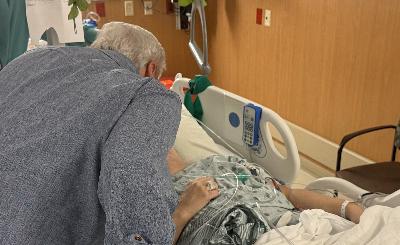
In this special Valentine's Day episode of Hope for the Caregiver, I share what it means to carry love when the person you cherish can no longer carry it back in the same way. I talk about relaunching our local caregiver support group after a long pause, about sitting alone in an empty room before anyone showed up, and why caregivers need a place where they are understood. I reflect on decorating Gracie's hospital bed through one holiday after another, and why sometimes it's okay to buy your own Valentine's card as a tribute to a love that is still very real. I also address the shallow theology that collapses under the weight of suffering and remind fellow caregivers that our hope must be anchored in Scripture, not sentiment. I close by singing "I Will Sing of My Redeemer," because even when our hearts are breaking, we can still sing — and that song carries us.
I've spent much of my life in hospitals and ICUs, standing beside suffering that doesn't resolve and prayers that don't wrap up neatly. After a while, explanations stop helping. In this episode, I reflect on what has steadied me as a caregiver when nothing can be fixed. I talk about walking into yet another surgery knowing exactly how hard it will be, about learning what real comfort sounds like when fear is louder than reason, and about why old hymns and familiar Scripture matter more than new words in those moments. This is not about solutions or spiritual shortcuts. It's a reflection from the long middle, for caregivers who have learned that hope doesn't always arrive with answers, but it does arrive with company.
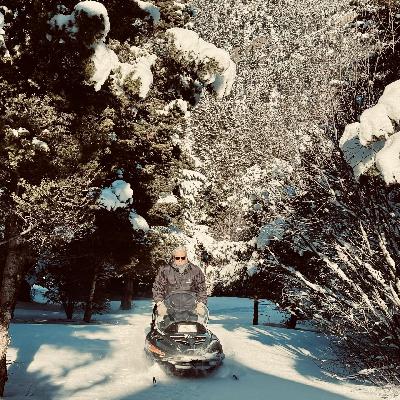
In today's episode of Hope for the Caregiver, I begin with a reality caregivers understand instinctively: disruption rarely announces itself, and caregivers are often the ones who absorb the impact first. From ice storms devastating the Southeast to wildfire threats here in Montana, I reflect on how quickly normal life can unravel. For caregivers living close to the edge, preparation is not fear-driven living. It is stewardship. When power fails, routines collapse, and recovery stretches on far longer than expected, caregivers are often the ones holding everything together. From there, I turn to a sobering cultural moment: the coordinated disruption of a church service in Minneapolis. This was not spontaneous protest or isolated behavior. It involved planning, agreement, and coordinated action, and that distinction matters. When sacred spaces are deliberately disrupted, we are no longer debating policy. We are testing whether restraint still exists and whether consequences still matter. Silence in moments like this is not neutrality. It is assent. I then connect this moment to what caregivers already know through lived experience. Families navigating addiction, mental illness, and chronic volatility understand how quickly situations can escalate when emotions are raw and trust is thin. Caregivers survive by learning vigilance, establishing boundaries, and refusing to respond with panic or bravado. Scripture does not train us for theatrics. It trains us for endurance, clarity, and steadiness shaped by truth. In the final segment, I introduce our hymn of the week, "The Joy of the Lord," drawn from Nehemiah 8, and share a brief excerpt from a recording close to my heart. Biblical joy is not denial or emotional escape. It is strength rooted in the presence of God, especially when lives feel shaken and must be rebuilt from the rubble. I invite listeners to hear the full song on Spotify and other streaming platforms and to let it minister beyond this program. This episode is about preparedness without panic, vigilance without fear, and the kind of calm that is possible not because the threats are small, but because God is not. For caregivers, and for the church, endurance still matters. Truth still steadies. Hope remains.

Caregiving often begins with sincere promises made in healthier days. As circumstances change and needs increase, many of us discover that love alone does not equal capacity. Fear, obligation, and guilt can cloud judgment, leaving caregivers overwhelmed and unsure how to make wise, sustainable decisions. In this episode of Hope for the Caregiver, I explore what happens when caregiving decisions are driven by emotion rather than honest assessment. I explain why difficult family conversations must move from sentiment to stewardship, and why clarity often begins with unglamorous realities that reveal what can actually be sustained. I also examine why meaningful change must happen at a pace the body and soul can endure. Drawing from decades of caregiving experience and lessons from the world of prosthetics, I reflect on the danger of forcing alignment too quickly. Whether in bodies, families, leadership, or faith, change imposed at an unsustainable speed often collapses, while patient, deliberate steps lead to progress that lasts. These themes run directly through my caregiving journey with my wife, Gracie. Her recent physical realignment through new prosthetics has been remarkable and painful, underscoring a hard truth caregivers know well: restoration is real, but it cannot be rushed. Alignment requires discipline, wisdom, and time. The program concludes with a reflection on the hymn Be Still, My Soul. Stillness, I explain, is not passivity, but learning where to place weight when life does not improve. This episode is not about quick fixes. It's about caregiving endurance, sustainable change, and learning how to remain upright when life has been bent for a long time.

In this episode of Truth Talk Live, I reflect on the recent disruption of a Sunday worship service in Minneapolis and ask a question that can't be answered by politics, outrage, or security plans alone: What happens to our faith when the world barges into sacred space, and are we actually prepared for that moment? As churches face increasing hostility, the conversation often turns quickly to fear, anger, or strategy. I wanted to slow that down and look instead at spiritual readiness. Drawing from Scripture, historic hymns, and decades of lived experience walking through suffering, I explore what it means to be vigilant without becoming hardened, prepared without becoming fearful, and faithful without becoming reactive. Listeners call in with passages from Romans, Hebrews, Luke, the Psalms, and Paul's letters, all pointing to the same unshakable truth: God's people have never been promised freedom from opposition, but we have been promised a Kingdom that cannot be shaken. The real question is whether we are grounding ourselves deeply enough in God's Word for it to come out of us when pressure hits. I close the program by returning to the hymn How Firm a Foundation, particularly the line, "The soul that on Jesus hath leaned for repose." Repose is not escape or passivity. It is settled trust. It is the rest that comes when something stronger is carrying the load. When worship is disrupted, faith is mocked, and fear presses in, the issue is not whether the church can hold its ground, but whether we know where to stand. Long before crisis arrives, each of us must answer a simple, searching question: What do I believe, and where am I placing my weight? There's More at HOPEFORTHECAREGIVER.com
In this episode of Hope for the Caregiver, I sit down with Lindsay Funches, a mother who has spent nearly two decades navigating life with a medically complex child. Her son, Steele, was born during a military deployment and later diagnosed with Crouzon syndrome, a rare craniofacial condition that has required dozens of surgeries, long hospital stays, and constant vigilance. We talk about what it's like to push back when doctors don't listen, to raise siblings alongside illness, and to keep a marriage and faith steady through deployments, uncertainty, and exhaustion. Lindsay reflects on learning when to advocate, when to wait, and how a life shaped by caregiving can deepen joy rather than erase it. This conversation moves through real moments: kitchen-table decisions, ICU nights, humor in hospital rooms, and the slow realization that "normal" may never return, but meaning still can. It's a candid discussion about caregiving, special needs parenting, military family life, and the faith that sustains people when answers don't come easily. READ LINDSAY'S ARTICLE
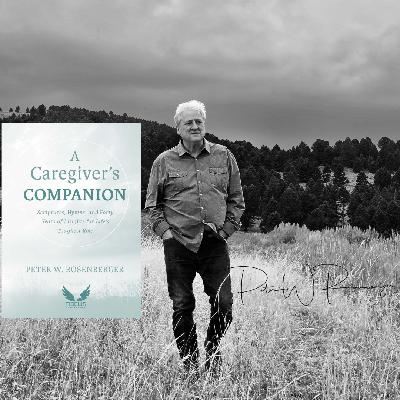
I sat down with Ken and Mary Sue Grein knowing their story would be heavy. I didn't expect it to steady me the way it did. They were just 22 years old when their son Jacob was born with severe medical complications. Within days, doctors told them he wouldn't live long and encouraged them to let him die. Ken and Mary Sue refused. They chose life, even though no one could tell them what that life would require. Jacob lived 37 years. (READ HIS STORY HERE) In our conversation, they speak candidly about what those decades held: long hospital stays, countless surgeries, daily caregiving, isolation, anger, and exhaustion. They don't sanitize any of it. But they also don't frame Jacob's life as a tragedy. What comes through instead is clarity, gratitude, and a hard-won conviction that a difficult life does not have to be a bad one. They talk about how caregiving reshaped their marriage, formed their other children, and rewired their own hearts. Disability didn't fracture their family. It refined it. Their children grew up compassionate, responsible, and unafraid of suffering. Jacob himself, despite profound limitations, lived with joy, affection, and gratitude, fully present in the life of his family. As a longtime caregiver myself, much of what they shared felt familiar: the loneliness, the way support fades, the daily choice between bitterness and gratitude. But what stayed with me most was their quiet insistence that every life is worth living, even when it arrives wrapped in fear, limitation, and unanswered questions. This is not a conversation about pretending suffering is good. It's about refusing to let suffering be the final word. Ken and Mary Sue didn't just care for their son. They learned how to live faithfully in the middle of what could not be fixed, and that is a lesson every caregiver needs. ___________________ Caregiving's Hard. Don't Do Alone! Get the New Book: A Caregiver's Companion - Scriptures, Hymns, and Forty Years of Insights for Life's Toughest Role
There's a particular look that crosses someone's face when they realize they've just been understood. I've seen it on a bus driver from Kenya after I spoke a few words of Swahili. I've seen it on a CNA from Ghana caring for my wife in a hospital room. I watched a hospital housekeeper from Haiti light up when I spoke a few words in French to her. And I've seen it countless times on caregivers who quietly say, "You just said what I've been feeling." The response is almost always the same: How do you know my language? Caregivers live in a kind of isolation that's hard to describe. It isn't only physical exhaustion, emotional strain, or long-term uncertainty. It's deeper than that. Many of us are surrounded by people who care, who want to help, who offer words—but those words don't quite land. Not because they're cruel, but because they're untranslated. In this episode of Hope for the Caregiver, I reflect on what it means to speak the "language of the heart." While I learned a few words in several language, I speak "Fluent Caregiver" - and am committed to speaking the language of the caregiver's heart to as many as I can. I also discuss why music reaches us so powerfully, and why some voices connect immediately while others never quite do. I also look at what Christmas tells us about this kind of connection, and why the name Emmanuel isn't a seasonal phrase, but a profound reality. This episode moves through stories, music, suffering, compassion, and the gospel itself. It's about caregivers, yes—but also about anyone who has ever wondered what to say, or felt unseen because no one knew how to say it. If you're carrying something heavy this season, I hope you'll listen. After listening If you're walking with someone through addiction, disability, illness, or long-term suffering, you may feel pressure to say the right thing. This episode isn't about perfect words. It's about presence. Sometimes the most faithful thing we can do is simply stay, listen, and speak with the same compassion we ourselves have received. A resource for caregivers who need language If this episode resonated, you may find help in my book, A Caregiver's Companion. It grew out of the same conviction behind today's program: caregivers don't just need encouragement. We need words that speak honestly to what we're carrying. The book brings together Scripture, hymns, and lived experience from decades of caregiving, written to sit beside you rather than talk at you. You can find it here: 👉 https://a.co/d/1l8nZfF

Caregiving is relentless. The needs don't pause, the stress doesn't politely wait, and the temptation to put ourselves last feels almost virtuous. But in this episode of Hope for the Caregiver, I push back on a lie many of us live with: that our health is expendable. Joined by my longtime friend and health coach D,ale Richardson we talk candidly about weight, stress eating, and the quiet ways caregivers drift into unhealthy patterns, especially during the holidays. This isn't about shame, gimmicks, or willpower. It's about intentionality. I share my own journey, losing weight, gaining it back during months in the hospital with Gracie, and then recommitting again, not out of vanity, but out of necessity. I'm no good to my wife if I'm fat, broken, and miserable. That hard truth drives everything. Dale helps reframe food not as comfort, reward, or failure, but as fuel. Emotional eating isn't a moral flaw. It's often a stress response. The question isn't "Why am I weak?" but "What am I carrying?" Caregivers already know the answer. We talk about simple, sustainable choices: • Eating with a plan, especially at holidays • Understanding portions without demonizing food • Why "starting over Monday" keeps us stuck • The value of accountability that doesn't condemn • Staying active in real life, not just gyms and step counters We also explore why community matters. Lone-ranger caregiving is dangerous. Having someone who understands the weight you carry, and walks with you toward healthier choices, can change everything. You don't accidentally get healthy. But with intention, support, and grace, you can move toward strength, not just for yourself, but for those who depend on you. Healthy caregivers make better caregivers. Your future self, and your loved one, will thank you. The 2026 Caregiver Calendar is now available! Click for more information!
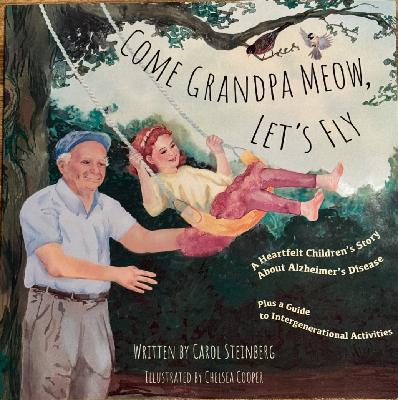
Alzheimer's often reveals itself around the holiday table, when families see one another more closely than usual. My guest this week, author and longtime caregiver Carol Steinberg, knows that experience well. Her father was diagnosed decades ago, long before the disease was widely understood, and the journey reshaped her life. She eventually helped lead one of the largest Alzheimer's organizations in the country and continues to write for Voices of Alzheimer's, staying close to the families living with this disease every day. We talked about what gives her hope now. More people are being diagnosed earlier. New treatments can slow the progression for some. Communities are offering more practical support, and families are learning how to build what Carol calls "bunkers," healthy habits and safeguards that strengthen the whole household. One of the most meaningful parts of our conversation was how Alzheimer's affects children and grandchildren. Carol regrets that she sometimes pulled her own daughters back from their grandfather. Her new children's book, Come Grandpa Meow, Let's Fly, helps families give kids the language and confidence to stay connected rather than afraid. She offers simple ideas that help children engage in small, steady ways, which can lift the spirits of everyone involved. Caregivers often lose independence, connection, and identity. Children lose clarity when they are pushed to the sidelines. Carol and I both believe the better path is to walk toward one another, even when the road is rough. There is sorrow in Alzheimer's, but there is also purpose, comfort, and moments of unexpected grace when families choose connection instead of retreat. If you have a loved one with Alzheimer's, or if you wonder how to explain the changes to your children or grandchildren, I think this conversation will encourage you. There is life beyond the diagnosis, and there is a way to face it together.

I opened the show with Balaam, the original for-profit prophet. He was not the last one. We still have plenty today with nice suits, studio lighting, and partner plans "…if you act now!" Balaam took the job, hopped on his donkey, and headed out. God blocked the road. The donkey saw it. Balaam did not. After a few detours and a smashed foot, the donkey finally spoke. And instead of freezing or questioning reality, Balaam argued with her as if this was completely normal. That part always gets me. Did animals talk a lot back then? I live around horses and cattle here in Montana. If one of them said, "Peter, we need to talk," I would like to think I would pause and reconsider a few things. Balaam did not. He snapped right back at the donkey and missed the angel standing in the road. And thinking about it, as a caregiver, do I often do the same thing? I get locked in on what I am trying to do … and miss the very thing God may be using to protect me. Sometimes the obstacle is not the problem. It is the rescue.
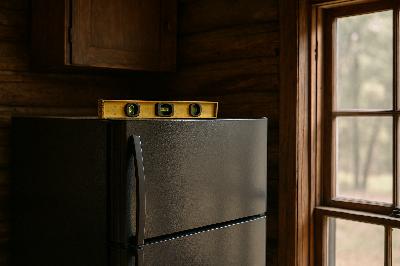
In this episode of Hope for the Caregiver, I share three ordinary moments from life in our Montana cabin that turned into extraordinary lessons for caregivers. First, I finally leveled our refrigerator—a small victory that reminded me how good it feels to make one crooked thing straight in a world that leans. Then I talk about a tough situation a friend faced with her aging father, and what it really means to honor our parents when impairment or sin clouds their judgment. Using the story of Noah and his sons, I call it "walking backward with a blanket"—protecting dignity even when it's painful. Finally, as I cleaned the big new windows in our addition for Gracie, I saw a picture of how resentment, fear, and fatigue can cloud our hearts—and how only Christ can wash us clean. The episode ends at the caregiver keyboard with one of my favorite hymns, Fairest Lord Jesus, and a reminder that He truly makes the woeful heart to sing.

Out here at our home in Montana, I had one of those nights that turned into a sermon I didn't plan to preach. A young calf had wedged himself tight in a fence — and if I hadn't gone back to check the mineral bucket, he'd have been mountain lion food by morning. I cut the chain loose, he bolted off without so much as a "thank you," and I stood there on that hillside grinning like a fool, feeling lighter than I had in weeks. It had nothing to do with caregiving — and that's exactly the point. Every caregiver needs something that lifts the soul, something that reminds us we're still alive, not just functioning. For me, it was freeing a calf. For you, it might be painting, gardening, music, or a quiet moment with a puzzle. These aren't hobbies — they're oxygen for the spirit. I wrapped the show with Gracie's favorite hymn, This Is the Day That the Lord Has Made. We've sung it in hospital rooms and now here at home with the mountains out our window. It's not a children's song to us — it's a statement of faith when the day looks hard. Zephaniah wrote, "The Lord your God is in your midst… He will rejoice over you with gladness; He will quiet you by His love; He will exult over you with loud singing." That's the kind of God we serve — one who doesn't just command us to rejoice, but actually rejoices over us. So that's my message this week: find your thing. Give yourself permission to breathe, to laugh, to live. Because the God who called you into this life is already singing over you.
Each week on Hope for the Caregiver, I take listeners into the heart of what sustains us when life's weight feels too heavy. This week, I shared why our deepest comfort as caregivers doesn't come from rest, money, or even help—it comes from knowing we are not our own, but belong body and soul to our faithful Savior, Jesus Christ. From the Heidelberg Catechism to the story behind the hymn Have Thine Own Way, Lord, I explored what it means to surrender our weariness to the One who shapes and reshapes us like clay in the hands of a potter. Caregiving forces us to face what we can't fix—but it also invites us to trust the One who holds every broken piece. I also shared about our new addition at home—Built for Grace—and the moment Gracie saw her new accessible space for the first time. It reminded me that love doesn't cling to what used to be; it builds again with what remains. "Love that endures learns to build again with what remains." — Wendell Berry 🎧 Listen to this week's episode: Have Thine Own Way, Lord – Hymns Every Caregiver Ought to Know 📘 My new book: A Caregiver's Companion More resources: PeterRosenberger.com Support the ministry: StandingWithHope.com/giving

After 40 years of caring for my wife Gracie — a double amputee who's endured 98 surgeries — I know what it means to retrofit life around disability. For decades, we chased our tails trying to adapt spaces in our Nashville home and later our little Montana cabin. This year, we finally stopped retrofitting and built a space custom-made around us. From wide doorways and a roll-in shower to moving our grand piano into the bedroom so Gracie wouldn't have to leave her bed to make music, every detail was designed to restore her dignity and independence. When she walked into that new room with her walker and saw it for the first time, her eyes were wide. Later that night, with firelight flickering across the walls, I sat at the piano and played Great Is Thy Faithfulness. Gracie sang — filling the room with music. In that moment, I thought of Christ's words, "I go to prepare a place for you," and the joy of preparing a place for someone you love. I also share the powerful story behind This Is My Father's World — and how its message strengthens weary family caregivers like me to remember that though the wrong seems oft so strong, God is the ruler yet. What does it look like for you to prepare a place — physically or emotionally — for someone you love?
In this powerful episode of Hope for the Caregiver, Peter Rosenberger shares a deeply personal story from Aurora, Colorado — a chance encounter with a frightened young woman that turned into a moment of grace and truth. Instead of debating or preaching, Peter reminded her of a truth many caregivers and wounded souls need to hear: "You are worth protecting." Drawing from Hebrews 7:25, he reflects on Christ's ongoing intercession for us and calls listeners to join Him by offering compassion to those who are hurting — even when their pain looks different from our owntranscript_2025-10-14T16_37_22.…. Peter is then joined by psychologist and fellow caregiver Dr. Barry Jacobs, author of The Caregiver Answer Book. Together they unpack the emotional weight of caregiving — deferred grief, family conflict, sibling rivalries, and the burnout that comes when caregivers try to "muscle through." Jacobs urges caregivers to acknowledge their grief, be kind to themselves, and even reclaim joy, reminding them there's no such thing as a perfect caregiver — only "good enough" ones who show up with lovetranscript_2025-10-14T16_37_22.…transcript_2025-10-14T16_37_22.…. Peter also shares updates from Standing With Hope's prosthetic limb outreach in Ghana, marking 20 years of service to the wounded. And at the caregiver keyboard, he performs "His Eye Is on the Sparrow," reflecting on its origins and why this timeless song continues to comfort weary hearts. It's not a performance piece, he says — it's a song "sung in the watches of the night" when despair looms, a reminder that God sees, knows, and watches over ustranscript_2025-10-14T16_37_22.…. Whether you're deep in the trenches of caregiving or just beginning the journey, this episode offers biblical hope, practical wisdom, and heartfelt encouragement to help you stay strong — body, mind, and soul. Order A CAREGIVER'S COMPANION TODAY!
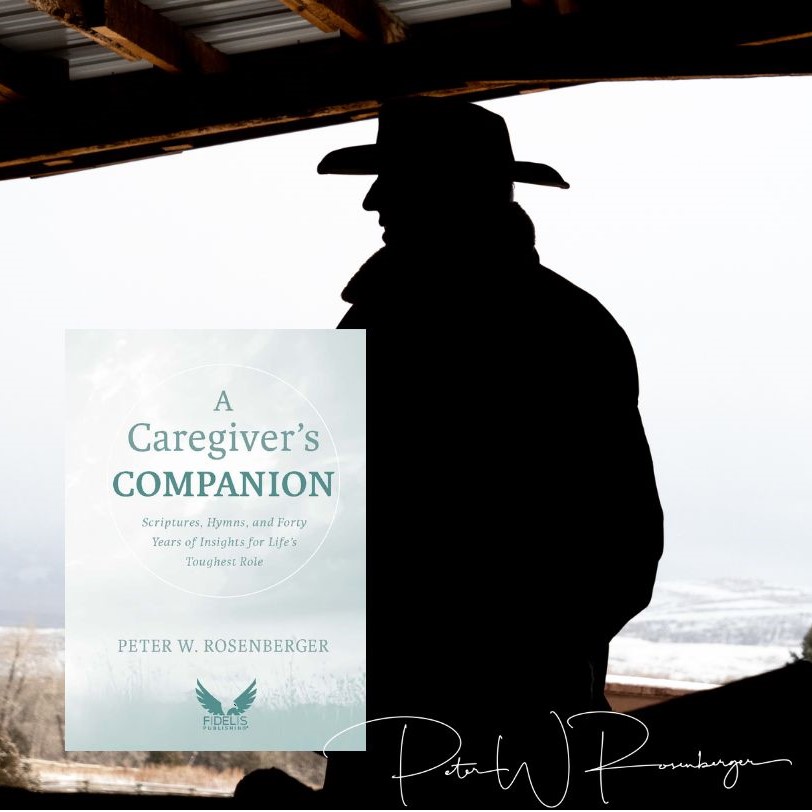
If you've ever wondered how to hang on—much less laugh—while caring for someone you love, this episode of Hope for the Caregiver is for you. I recently joined Dr. Jessica Peck, known to her listeners as Dr. Nurse Mama on American Family Radio, for a conversation about faith, humor, and the realities of caregiving. We talked about my new book, A Caregiver's Companion: Scriptures, Hymns, and 40 Years of Insights for Life's Toughest Role, and the lessons Gracie and I have learned through her 98 surgeries, chronic pain, and the daily challenges that come with four decades of caregiving. You'll hear how I've found strength in Scripture, laughter in the hardest places, and peace in trusting God when nothing makes sense. We discussed what it means to be healthy while caring for someone who isn't—and why I believe healthy caregivers make better caregivers. I also shared one of the most powerful moments of my life: Gracie singing "In My Life, Lord, Be Glorified" while nurses worked on her open leg wound—and later, singing hymns with Joni Eareckson Tada over FaceTime. Those moments reveal what the world can't understand but what believers know deeply: even in the ICU, there is hope. I close the program at the Caregiver Keyboard with one of my favorite hymns, "Near to the Heart of God," and the story behind its writing—a reminder that even in sorrow, there is a place of quiet rest near to His heart. If you're a caregiver—or love someone who is—I invite you to listen, share, and visit HopefortheCaregiver.com for more resources, music, and encouragement.
In my regular guest-host slot on Truth Talk Live (Truth Network), I opened with a friend's dilemma: If people living through the events described in Revelation see beasts, plagues, and cosmic signs with their own eyes, doesn't that give them an advantage over those who died without seeing such proof? Isn't that unfair—almost as if some are lost on a technicality? That question pulled us into Romans 1, where Paul says God's attributes are "clearly seen," and into Jesus' rebuke of crowds who demanded signs even after seas had split and manna had fallen. The pattern was plain: evidence never settled the question. Trust did. I've heard the same struggle in hospital corridors, casually dispensed over a loved one's bed: "If you had more faith, you'd be healed." It sounds spiritual in the moment, but when suffering leans on those words, they crumble. And I saw something different but just as hollow on late-night television, when Jimmy Kimmel, tearful after his suspension, said he follows the "teachings of Jesus." Which teachings? The one where He said, "Before Abraham was, I am"? The one where He said, "No one comes to the Father except through Me"? Or the one where He said, "Take up your cross and follow Me"? Noble words, but casual references to Jesus without the weight of His actual words leave us splashing in the kiddie pool, calling it swimming. These moments — Revelation's visions, hospital corridors, late-night tears — all press the same core issue: do we trust God, or are we still demanding that He prove Himself on our terms?

Comments

Download from Google Play

Download from App Store
 United States