


 Claim Ownership
People and Projects Podcast: Project Management Podcast
Subscribed: 3,357Played: 49,717
Subscribe

© (c) 2001-2025 Institute for Leadership Excellence & Development Inc.
Description
Welcome to the People and Projects Podcast, where we provide interviews and insights to help you lead people and deliver projects. Since 2009, this show is brought to you by speaker, author, and executive coach Andy Kaufman. If you're looking for insights on project management, leadership, and how AI influences both of those, you've come to the right place! And if you hold a project management certification, you can even earn free PDUs for listening!
516 Episodes
Reverse
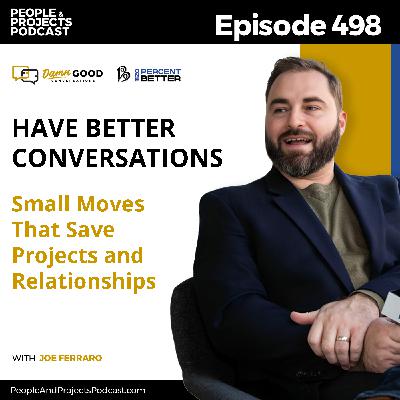
Summary In this episode, Andy talks with Joe Ferraro, host of the One Percent Better podcast and a coach who helps leaders have stronger conversations when the stakes are high. If you lead projects, you know how quickly a meeting, a status update, or a feedback moment can either build trust or quietly drain it. Joe shares small, practical moves that make conversations more memorable and more useful. You will hear why being "good at talking" is not the same as being good at conversation, and how preparation can be a generous act toward the other person. They also discuss how to avoid default, predictable questions, how to turn a one-way presentation into something more interactive, and how to keep your composure when you feel defensive. Joe even offers a simple technique for pressure testing ideas without starting a fight, plus a listening cue you can use the next time you feel tempted to jump in. If you're looking for insights on having better conversations that save projects and strengthen relationships, this episode is for you! Sound Bites "And you know what's a great barometer there is for people listening to ask themselves on a daily basis? How many questions do they ask?" "But the reality is a generous conversation is one where you're prepared." "And the easiest path, the simplest path is to ask more questions and then listen, like your life depends on it." "The human ear driving, or on the treadmill or in a board meeting doesn't want to hear the same length answer every time from Andy or Joe or Sheila." "If you feel like you're bursting at the seams and you need to share something, that's when you know to hold it in and to focus on them." "I teach people the technique of inserting devil's advocate, where you, you don't wanna necessarily become the villain, but you say, you know, Andy, you know, it's a great point." "But when I go back to, to Mitch Albom one time, he paused seven seconds before I asked him, before he answered the question." "If you have a recorded conversation, simply ask it to pull out every question that was asked." "My favorite question to ask is the one that I think will elicit the best response for what I'm interested in learning in this moment." Chapters 00:00 Introduction 01:44 Start of Interview 02:04 When Conversation Became More Than Talking 04:32 Curiosity as a Practical Advantage 05:47 Sending Questions Ahead of Time 06:49 Why Most Real Conversations Feel Like Improv 07:40 A Recent Conversation Joe Still Thinks About 09:44 What Makes a Conversation Actually Memorable 11:14 How Joe's Background Shaped His Approach 12:47 Breaking the Habit of Predictable Answers 13:54 The Risk of Chasing "Standard" Questions 15:16 Using Recording as a Growth Tool 16:29 How to Build Better Listening Discipline 18:38 Turning a One-Way Presentation Into Conversation 20:12 What to Do When You Need Real Buy-In 21:44 The Listening Cue to Use When You Want to Jump In 23:34 Helping Others Feel Heard Without Hijacking the Moment 24:30 Staying Composed When You Feel Defensive 27:27 Using "Devil's Advocate" Without Becoming the Villain 30:15 When the Best Move Is to Pause 32:25 How to Ask Questions That Create Better Stories 33:43 The Question That Fits the Moment 36:19 What Joe Thinks People Get Wrong About "Small Talk" 39:12 Interviewers Joe Thinks More People Should Study 45:13 Using AI to Improve Your Conversations 49:20 What Joe Sees Changing in Communication Skills 50:00 Helping Kids Build Conversational Stamina 53:26 Where to Learn More About Joe 54:42 End of Interview 55:08 Andy Comments After the Interview 57:56 Outtakes Learn More You can learn more about Joe and his work here: OnePercentBetterProject.com Joe on X Joe on LinkedIn For more learning on this topic, check out: Episode 380 with Monica Guzman. It's about navigating stressful conversations with people you don't agree with. Episode 284 with Peter Boghossian. It's another episode on conversations that seem impossible. Think of difficult bosses and other stakeholders. Episode 195 with Celeste Headlee. She's an NPR anchor who first introduced me to the idea of conversational narcissism. Pass the PMP Exam This Year If you or someone you know is thinking about getting PMP certified, we've put together a helpful guide called The 5 Best Resources to Help You Pass the PMP Exam on Your First Try. We've helped thousands of people earn their certification, and we'd love to help you too. It's totally free, and it's a great way to get a head start. Just go to 5BestResources.PeopleAndProjectsPodcast.com to grab your copy. I'd love to help you get your PMP this year! Join Us for LEAD52 I know you want to be a more confident leader, that's why you listen to this podcast. LEAD52 is a global community of people like you who are committed to transforming their ability to lead and deliver. It's 52 weeks of leadership learning, delivered right to your inbox, taking less than 5 minutes a week. And it's all for free. Learn more and sign up at GetLEAD52.com. Thanks! Thank you for joining me for this episode of The People and Projects Podcast! Talent Triangle: Power Skills Topics: Communication, Difficult Conversations, Active Listening, Stakeholder Management, Leadership Presence, Psychological Safety, Meeting Facilitation, Coaching, Feedback, Influence, Conflict Management, Relationship Building The following music was used for this episode: Music: Summer Morning Full Version by MusicLFiles License (CC BY 4.0): https://filmmusic.io/standard-license Music: Energetic Drive Indie Rock by WinnieTheMoog License (CC BY 4.0): https://filmmusic.io/standard-license
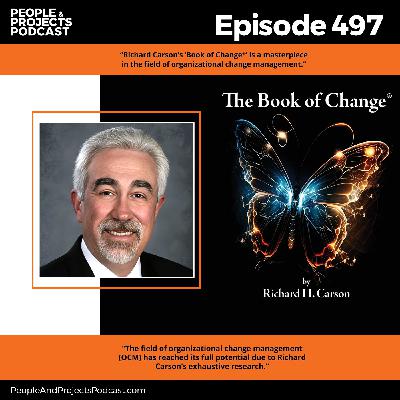
Summary In this episode, Andy talks with Richard Carson, author of The Book of Change. If you feel like you barely finish one change before the next one hits, this conversation is for you. Richard shares his deeply researched and battle-tested framework called People Sustained Organizational Change Management, or PSOCM. Unlike many change management books, this is not about certifications or slogans. It is about building a repeatable system to diagnose problems, distinguish adaptive from transformational change, and gain executive traction when support is not automatic. You will hear why so many change efforts fail before they even begin, how to craft a clear problem statement, and what leaders often misunderstand about the type of change they are facing. Richard also explains why he chose the phrase "People Sustained" and how thinking structurally about change can even help at home. If you're looking for practical, grounded insights on leading through continuous change, this episode is for you! Sound Bites "My advice to you is to anticipate change and manage change before it manages you." "Different change models have been introduced in the literature, but there has not been one coherent model for managing organizational change." "PSOCM is driven by defined actions with statistical metrics that produce measurable results." "You get a free book and the next thing you know you're getting the pitch to hire them at an exorbitant amount of money per hour." "Organizations consist of people, and it is the people who are primarily the problem." "Change management is proactive. Emergency management is reactive." "It is not productive to put the organization on the couch and ask, 'Well, what do you think?'" "You can change a process, but you cannot change a person's underlying psychology." "You now own it, or it now owns you." Chapters 00:00 Introduction 01:40 Start of Interview 01:54 Family Culture and Early Influences 03:58 Criticisms of Change Management Books and Certifications 06:15 Defining Organizational Change Management in Plain Talk 07:44 What Surprised Him in the History of Change 10:57 Adaptive vs. Transformational Change 14:23 Why He Named It People Sustained Organizational Change Management 20:03 Problem Identification and Writing Effective Problem Statements 24:31 Getting Executive Support When Change Is Not Top Down 26:49 When Benefits Do Not Move Leaders 28:21 One More Idea to Anticipate Change Before It Manages You 30:03 Applying Change Lessons at Home as a Parent 31:36 End of Interview 32:38 Andy Comments After the Interview 35:31 Outtakes Learn More You can learn more about Richard and his work at RichardCarson.org. Make sure to get the free ebook download. For more learning on this topic, check out: Episode 343 with Gary Lloyd. He has a clever metaphor of thinking about change like a gardener, not a mechanic. It's a great discussion that I think you'll find quite practical. Episode 344 with Peter Bregman and Howie Jacobson. Their book is about change, but not at the organizational level. They think you can change other people, which sounds presumptuous at the least. But they back that up in the interview so check out episode 344 for more. Episode 53 with John Kotter. He's one of the most famous names when it comes to change management. Go way back to episode 53 to hear from John directly. Pass the PMP Exam If you or someone you know is thinking about getting PMP certified, we've put together a helpful guide called The 5 Best Resources to Help You Pass the PMP Exam on Your First Try. We've helped thousands of people earn their certification, and we'd love to help you too. It's totally free, and it's a great way to get a head start. Just go to 5BestResources.PeopleAndProjectsPodcast.com to grab your copy. I'd love to help you get your PMP this year! Join Us for LEAD52 I know you want to be a more confident leader—that's why you listen to this podcast. LEAD52 is a global community of people like you who are committed to transforming their ability to lead and deliver. It's 52 weeks of leadership learning, delivered right to your inbox, taking less than 5 minutes a week. And it's all for free. Learn more and sign up at GetLEAD52.com. Thanks! Talent Triangle: Business Acumen Topics: Change Management, Organizational Change, Leadership, Executive Sponsorship, Problem Identification, Adaptive Change, Transformational Change, Strategic Thinking, Organizational Culture, Project Leadership, Continuous Improvement, Stakeholder Engagement The following music was used for this episode: Music: Lullaby of Light feat Cory Friesenhan by Sascha Ende License (CC BY 4.0): https://filmmusic.io/standard-license Music: Tropical Vibe by WinnieTheMoog License (CC BY 4.0): https://filmmusic.io/standard-license Thank you for joining me for this episode of The People and Projects Podcast!
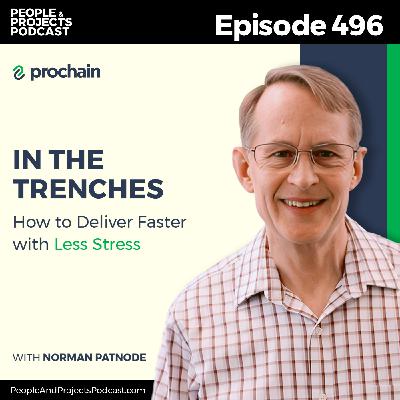
Summary In this In the Trenches episode, Andy talks with Norman Patnode, Principal at ProChain Solutions, about what it really takes to deliver projects faster and more predictably. With a background in aerospace engineering, the Air Force, and decades of consulting, Norman brings a systems-level perspective to project delivery that goes far beyond managing task lists. They explore the difference between task management and project management, why critical chain thinking shifts the conversation from dates to priorities, and how changing a few key rules can dramatically improve delivery performance. Norman shares why "prioritize, focus, and finish" is more than a slogan, how multitasking quietly robs teams of productivity, and what leaders can do to create clarity and alignment. You'll also hear insights about managing constraints, learning how to learn, and why curiosity is one of the most valuable leadership traits. If you're looking for practical, systems-based ways to improve delivery and reduce chaos on your projects, this episode is for you! Sound Bites "Critical chain is a system to help you get projects done faster and more predictably." "Critical chain is really about how do we help people prioritize, focus, and finish." "I would never go back to what I was doing before. It has ruined me. I just wouldn't live in that world again." "Multitasking robs project teams of anywhere from 15 to 65% of their productivity." "If there are no priorities, then really none of them are important." "The focus is not on getting to a perfect schedule. It's on creating and strengthening alignment of the team's effort." "Reality is undefeated." "Any system has a very few number of constraints, usually one." "If you manage the constraint, you manage the system." "You don't have to learn everything. You just have to be curious and learn how to learn." "Big, impactful things in the world get done through projects." Chapters 00:00 Introduction 01:33 Start of Interview 01:41 Norman's Current Role and Responsibilities 02:20 Norman's Career Journey 07:00 Task Management vs. True Project Management 10:40 Introducing Critical Chain 15:41 Common Objections to Critical Chain 17:20 Changing the Rules to Improve Delivery 22:56 A Powerful Leadership Habit 25:54 Career Lessons and Critical Turning Points 31:32 How Norman Continues to Develop Himself 35:53 How to Connect with Norman 36:17 End of Interview 36:56 Andy Comments After the Interview 40:37 Outtakes Learn More You can learn more about Norman and his work at ProChain.com. Connect with Norman on LinkedIn here: LinkedIn.com/in/npatnode/ For more learning on this topic, check out: Episode 472 with Mark Reich. It's a discussion about lean, which is certainly not precisely the same as critical chain or theory of constraints. But Mark is similarly geeky about how to improve how we go about projects. I think you'll find episode 472 a great follow-up to today's discussion. Episode 328 with Terry Schmidt. Terry's passion is LogFrame, and though it's different from what we talked about today, Terry's geekiness for LogFrame could inspire you to think differently about projects. Episode 320 with Greg Githins. Greg wrote a book about thinking strategically. All I'll say is that if you and I could sit with these three guests and talk over coffee, we'd have quite an insightful and interesting chat! Pass the PMP Exam If you or someone you know is thinking about getting PMP certified, we've put together a helpful guide called The 5 Best Resources to Help You Pass the PMP Exam on Your First Try. We've helped thousands of people earn their certification, and we'd love to help you too. It's totally free, and it's a great way to get a head start. Just go to 5BestResources.PeopleAndProjectsPodcast.com to grab your copy. I'd love to help you get your PMP this year! Join Us for LEAD52 I know you want to be a more confident leader, that's why you listen to this podcast. LEAD52 is a global community of people like you who are committed to transforming their ability to lead and deliver. It's 52 weeks of leadership learning, delivered right to your inbox, taking less than 5 minutes a week. And it's all for free. Learn more and sign up at GetLEAD52.com. Thanks! Thank you for joining me for this episode of The People and Projects Podcast! Talent Triangle: Ways of Working Topics: Project Management, Critical Chain, Theory of Constraints, Prioritization, Focus, Multitasking, Systems Thinking, Leadership Development, Constraint Management, Risk Management, Strategic Execution, Continuous Improvement The following music was used for this episode: Music: Brooklyn Nights by Tim Kulig License (CC BY 4.0): https://filmmusic.io/standard-license Music: Fashion Corporate by Frank Schroeter License (CC BY 4.0): https://filmmusic.io/standard-license
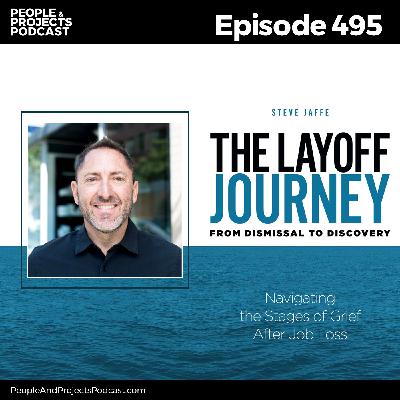
Summary In this episode, Andy talks with Steve Jaffe, author of The Layoff Journey: From Dismissal to Discovery. Steve has been laid off four times over the course of his career, and those experiences shaped a thoughtful, practical framework for navigating the emotional and professional aftermath of job loss. Andy and Steve explore why layoffs feel so personal even when we are told they are not, how identity often gets tangled up with job titles, and why the emotional response to a layoff closely mirrors the stages of grief. Steve explains why those stages are not linear, what denial, pain, and negotiation really look like in practice, and why trying to rush straight to acceptance can backfire. You will also hear practical advice for leaders who must conduct layoffs, as well as guidance for professionals who worry they might be laid off in the future. From preserving dignity in difficult conversations to preparing financially, emotionally, and professionally before uncertainty hits, this discussion offers insight for both sides of the table. If you are navigating uncertainty, supporting others through change, or simply want to be better prepared for whatever comes next, this episode is for you! Sound Bites "I wanted to give people a roadmap to process their layoff and the grief of their layoff in months rather than years." "One of the things that makes losing a job difficult is we tie our identity up in what we do." "And then in that period, before you've landed your next job, you're in this messy middle of Who am I?" "Define yourself not by what you do, but by who you are and what you bring to the table." "I've seen people be named Employee of the Year in January, and by June they're getting laid off." "Layoffs don't measure your worth. They measure a company's priorities." "The stages of grief are not linear. You can feel all of them in one day." "Your job title is not who you are." "Acceptance can become a way to skip discomfort instead of dealing with loss." "If you don't process the grief, it shows up later as baggage." "Dignity matters in the first minutes of a layoff conversation." "You want to build your network before you need it." "The person you were before a layoff will not be the same person after." Chapters 00:00 Introduction 01:45 Start of Interview 02:00 From First Layoff to Fourth: Taking It Personally 02:50 How the Layoff Process Has Changed Over Time 06:52 The Messy Middle Between Job Loss and What's Next 10:40 Why the Stages of Grief Apply to Layoffs 14:07 What Denial Looked Like in Steve's Experience 17:19 Balancing Emotional Honesty and Professional Reputation 22:08 The Quote That Opens the Book 23:00 Can You Jump to Acceptance Too Quickly? 24:58 When Past Layoffs Create Baggage at the Next Job 26:42 Advice for Leaders Who Have to Do Layoffs 28:55 Handling Performance-Based Separations with Integrity 30:40 How to Prepare Now If You Worry About Being Laid Off 32:46 End of Interview 33:33 Andy Comments After the Interview 37:37 Outtakes Learn More You can learn more about Steve and his work at TheSteveJaffe.com. For more learning on this topic, check out: Episode 163. A short three-minute video Andy put together about what to do before losing your job. Episode 310 with Jeff Gothelf, about how to let your next job find you. Episode 230 with Scott Belsky. Not specifically about layoffs, but full of insights on careers, growth, and the hiring process. Level Up Your AI Skills In the outtakes, Andy and Steve talk about how AI is changing the workplace. If you want to be better prepared for an AI-infused future, check out our AI Made Simple course. Just go to ai.PeopleAndProjectsPodcast.com. Thanks! Pass the PMP Exam If you or someone you know is thinking about getting PMP certified, we've put together a helpful guide called The 5 Best Resources to Help You Pass the PMP Exam on Your First Try. We've helped thousands of people earn their certification, and we'd love to help you too. Just go to 5BestResources.PeopleAndProjectsPodcast.com to grab your copy. I'd love to help you get your PMP this year! Join Us for LEAD52 I know you want to be a more confident leader. That's why you listen to this podcast. LEAD52 is a global community of people like you who are committed to transforming their ability to lead and deliver. It's 52 weeks of leadership learning, delivered right to your inbox, taking less than five minutes a week. And it's all for free. Learn more and sign up at GetLEAD52.com. Thanks! Thank you for joining me for this episode of The People and Projects Podcast! Talent Triangle: Business Acumen Topics: Leadership, Layoffs, Career Transitions, Organizational Change, Emotional Intelligence, Resilience, Identity at Work, Grief, Workforce Planning, Change Management, Professional Development The following music was used for this episode: Music: Echo by Alexander Nakarada License (CC BY 4.0): https://filmmusic.io/standard-license Music: Energetic Drive Indie Rock by WinnieTheMoog License (CC BY 4.0): https://filmmusic.io/standard-license
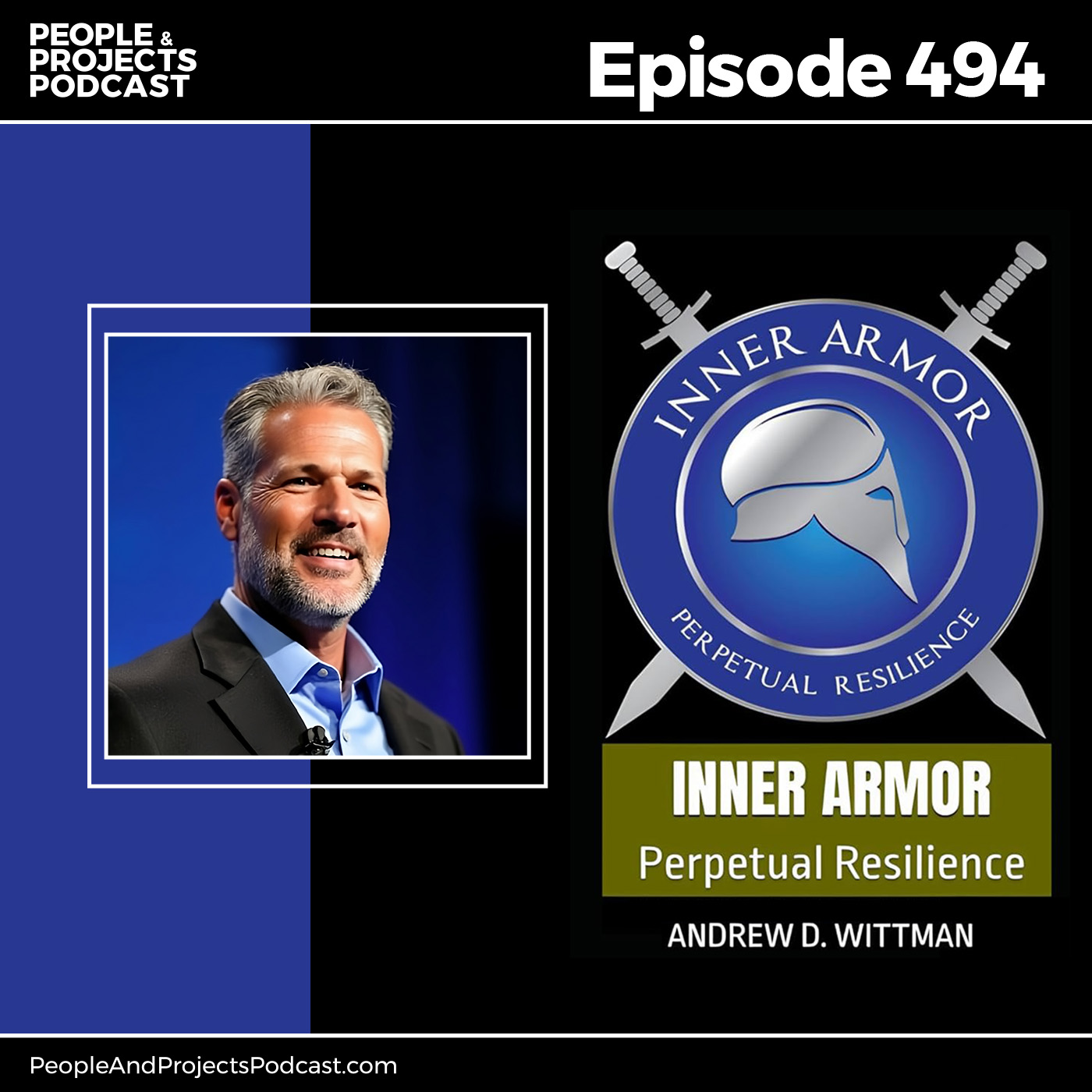
Summary In this episode, Andy talks with Dr. Andrew Wittman, former Marine, police officer, federal agent, and leadership coach, about his new book Inner Armor: Perpetual Resilience. If you lead projects and teams, you already know pressure is coming. The real question is what you do when it arrives. Andrew explains why the brain can work against you under stress, and how the questions you ask yourself shape the options you can see. You'll learn the Two Minute Rule and how it can help you shift from "we can't" thinking into problem-solving mode. Andy and Andrew also explore how filters and assumptions influence what leaders notice, why limitation can be more dangerous than fear, and what it looks like to build a First Responder Mindset so you can hold your poise when stakeholders push back. They close with a powerful discussion on identity and a practical look at raising resilient kids. If you're looking for insights on leading with clarity and composure when the stakes are high, this episode is for you! Sound Bites "The first thing you have to understand about the brain is that it is the original search engine. Like it has to answer a question." "The brain knows that you're a genius. Even if you don't consciously recognize that you're a genius, your brain knows it. It'll never go against your genius self. So if you say things like, I don't know how we could do this, your brain says, 'Oh, we don't know.' So it stops searching completely for any answer." "Just for two minutes, pretend that you could do it. It's amazing that your brain will just go to work and find like 15 ways you actually could do it, whereas seconds ago, we thought we couldn't." "When bad news happens, get happy. Whenever you hear bad news, you should get happy because this is your biggest opportunity to have the greatest comeback ever." "My question is, no matter what the bad news is, I'm going to ask myself this: how can I use this to my greatest possible advantage?" "I want to know what the holes in this project are. I don't want to hear rainbows and sunshine, right? Positive thinking will get you killed quicker than negative thinking." "We take in 11 million bits of information per second. Every second we see, hear, feel, touch, 11 million bits. Only 126 bits go to our conscious mind for action, which means we're filtering out 99.9% of all that information." "When you walk into a room, and you think no one supports you, you're going to see every cue that you could find to back that up. And you'll discard anything that would go against that." "The world is always ready to define you if you don't define yourself." "My identity: I'm a man of excellence who always keeps his word. I aspire to always keep my word. And so everything that I do is pre-decided by that identity." "Excellence is if I give my best effort, I could sleep tonight." "Welcome to Planet Earth, everybody has to deal with the externals. It's the great equalizer. We all have to deal with it. You're not special. I hate to tell you, CEO, you're not special." "Those pressure situations, they don't create your habits. They actually reveal them." Chapters 00:00 Introduction 01:40 Start of Interview 02:07 Andrew's Backstory and Early Influences 04:23 Unhelpful Questions Under Pressure and the Two Minute Rule 07:27 Applying the Two Minute Rule When a Key Dependency Slips 12:12 Training Practices to Make Resilience Automatic 16:49 Recognizing When Your Filter Is the Real Problem 18:33 Exposing Assumptions and Filters in Project Plans 22:21 A Personal Example of Misreading a Situation 25:10 How Beliefs Shape What You Notice in a Room 27:35 Why Limitation Is More Dangerous Than Fear 32:02 Building a First Responder Mindset and Holding Poise 36:07 Identity and Defining Yourself 40:37 Parenting Practices That Build Resilience in Kids 43:17 End of Interview 43:42 Andy Comments After the Interview 47:47 Outtakes Learn More You can learn more about Andrew and his work at GetWarriorTough.com. For more learning on this topic, check out: Episode 448 with Marie-Helene Pelletier. It's an insightful discussion on resilience and burnout, and I think it would be a great follow-up to this discussion with Andrew. Episode 477 with Jess Baker. She's a business psychologist and coach who offers a refreshing perspective on how to increase your resilience at work and in life. Episode 398 with Dr. Neha Sangwan. It's an episode that will give you another perspective on avoiding burnout for you and your teams. Level Up Your AI Skills Join other listeners from around the world who are taking our AI Made Simple course to prepare for an AI-infused future. Just go to ai.PeopleAndProjectsPodcast.com. Thanks! Pass the PMP Exam This Year If you or someone you know is thinking about getting PMP certified, we've put together a helpful guide called The 5 Best Resources to Help You Pass the PMP Exam on Your First Try. We've helped thousands of people earn their certification, and we'd love to help you too. It's totally free, and it's a great way to get a head start. Just go to 5BestResources.PeopleAndProjectsPodcast.com to grab your copy. I'd love to help you get your PMP this year! Join Us for LEAD52 I know you want to be a more confident leader–that's why you listen to this podcast. LEAD52 is a global community of people like you who are committed to transforming our ability to lead and deliver. It's 52 weeks of leadership learning, delivered right to your inbox, taking less than 5 minutes a week. And it's all for free. Learn more and sign up at GetLEAD52.com. Thanks! Thank you for joining me for this episode of The People and Projects Podcast! Talent Triangle: Power Skills Topics: Leadership, Resilience, Stress Management, Decision Making, Mindset, Emotional Regulation, Stakeholder Management, Communication, Self-Leadership, Identity, Team Performance The following music was used for this episode: Music: Imagefilm 034 by Sascha Ende License (CC BY 4.0): https://filmmusic.io/standard-license Music: Synthiemania by Frank Schroeter License (CC BY 4.0): https://filmmusic.io/standard-license
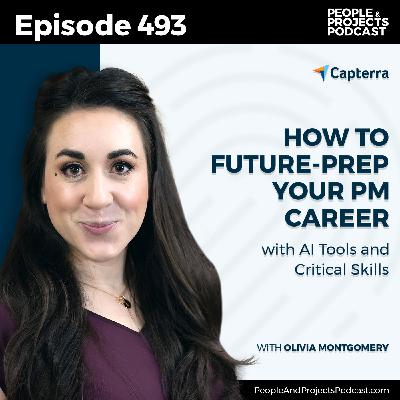
Summary In this episode, Andy talks with Olivia Montgomery, Associate Principal Analyst at Capterra and a PMP. They discuss how artificial intelligence is reshaping project management tools, skills, and expectations. Olivia brings a rare perspective, combining hands-on experience leading a PMO with years of research into how organizations evaluate, adopt, and struggle with project management software. Olivia and Andy explore why buying AI-powered tools is often easy, but realizing real value from them is much harder. Olivia explains the shift from buying software based on seat count to buying based on capability, why security is both the top source of satisfaction and frustration, and how unclear success metrics can quietly derail adoption. They also dig into the hidden risks of delegating too much to AI, including data governance blind spots and misplaced trust in tools that feel intuitive but have real limitations. You'll also hear why emotional intelligence is becoming more important as technology advances, how PMs can stress-test AI tools before committing, and which skills will separate the next generation of project leaders from the rest. If you're trying to prepare for the future of AI, tools, and skills in project management, this episode is for you! Sound Bites "Buying tools is very easy. Realizing the value is extremely difficult." "Security is not IT's job. It's the whole company's job." "If your main metric is just 'use AI,' that's a red flag." "AI is very good at predicting what is most likely to happen next, and terrible at predicting black swan events." "Emotional intelligence is what helps you move forward when technology can't." "Use AI to generate a first draft. That's the safest place to start." "If you don't know the topic well yourself, you won't spot when AI gets it wrong." "Confidence in AI can grow faster than readiness, and that's where problems start." "AI can flag a risk, but it cannot tell you why people are stuck." "Data governance is going to set project managers apart in the future." "No matter what job you have in ten years, emotional intelligence will still matter." Chapters 00:00 Introduction 02:00 Start of Interview 02:10 Olivia's Role and Career Path 06:53 Shifts in How Organizations Choose PM Software 08:23 The Security Satisfaction and Frustration Paradox 11:25 Why AI Tools Are Easy to Buy but Hard to Use Well 20:18 Warning Signs of Overconfidence in AI 24:03 How to Stress-Test AI Tools Before Buying 27:50 Why Emotional Intelligence Matters More with AI 34:28 The Future of Project Management Software 40:08 Skills That Will Define the Next Generation of PMs 45:20 Where to Follow Olivia's Work 46:20 End of Interview 46:40 Andy Comments After the Interview 49:15 Outtakes Learn More You can follow Olivia Montgomery and her research on LinkedIn at linkedin.com/in/olivia-montgomery. For more learning on this topic, check out: Episode 479 with Matt Mong, about the AI skills you need to stay relevant in the years ahead Episode 463 with Faisal Hoque, on how to transcend the fear and hype around AI Episode 384 with PMeLa, the first-ever interview with an AI on a leadership or project management podcast Level Up Your AI Skills Join other listeners from around the world who are taking our AI Made Simple course to prepare for an AI-infused future. Just go to ai.PeopleAndProjectsPodcast.com. Thanks! Pass the PMP Exam If you or someone you know is thinking about getting PMP certified, we've put together a helpful guide called The 5 Best Resources to Help You Pass the PMP Exam on Your First Try. We've helped thousands of people earn their certification, and we'd love to help you too. It's totally free, and it's a great way to get a head start. Just go to 5BestResources.PeopleAndProjectsPodcast.com to grab your copy. I'd love to help you get your PMP this year! Join Us for LEAD52 I know you want to be a more confident leader, that's why you listen to this podcast. LEAD52 is a global community of people like you who are committed to transforming their ability to lead and deliver. It's 52 weeks of leadership learning, delivered right to your inbox, taking less than 5 minutes a week. And it's all for free. Learn more and sign up at GetLEAD52.com. Thanks! Thank you for joining me for this episode of The People and Projects Podcast! Talent Triangle: Business Acumen Topics: Artificial Intelligence, Project Management Software, Project Management, Business Acumen, Data Governance, Security, Emotional Intelligence, AI Adoption, Future Of Work, Leadership Skills, Technology Strategy The following music was used for this episode: Music: Echo by Alexander Nakarada License (CC BY 4.0): https://filmmusic.io/standard-license Music: Tuesday by Sascha Ende License (CC BY 4.0): https://filmmusic.io/standard-license
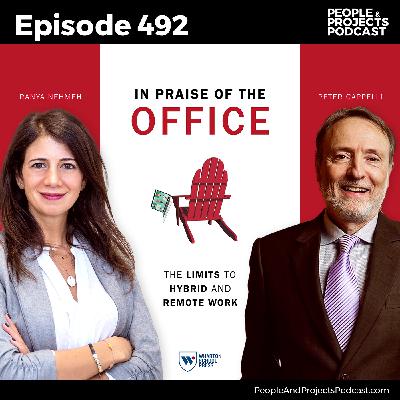
Summary In this episode, Andy talks with Peter Cappelli and Ranya Nehmeh, co-authors of In Praise of the Office: The Limits to Hybrid and Remote Work. In a world still grappling with virtual work, Peter and Ranya challenge us to take a fresh look at the workplace. Not just where we do work, but how that space shapes learning, culture, visibility, and performance. In this conversation, you'll hear what gets lost when teams are always virtual, why hybrid work often underdelivers, and how proximity plays a surprising role in mentoring, innovation, and even career progression. Peter and Ranya explore how organizational culture shifts when people are rarely together, and what leaders can do to intentionally design experiences that rebuild connection—even across distance. You'll walk away with insights on how to lead hybrid teams more effectively, how to help team members think differently about in-person time, and why space is not just a backdrop to work—it's a contributor to how work gets done. If you're leading a team in today's hybrid landscape and wondering what really matters, this episode is for you! Sound Bites "Remote work disembodies employees and limits their capacity to build relationships, learn informally, and get noticed." "The most frequent way people got promoted was by being visible to their managers." "Slack and Teams are a poor substitute for face-to-face interactions and a terrible way to learn culture or figure out who knows what." "Informal communication is essential to how work gets done, and it doesn't happen easily when everyone is remote." "Hybrid sounds great in theory, but it rarely delivers the benefits of in-person work unless it's intentionally designed." "People don't always know what they need to know, and much of what's important is learned indirectly." "We're not saying remote doesn't work. But we are saying there are trade-offs, and many companies haven't fully reckoned with them." "One big problem with hybrid is that it often ends up being asynchronous. No one's in at the same time." "The office was never perfect, but it enabled certain human processes that are hard to replicate at a distance." "If you're going to make remote or hybrid work well, it requires real investment in new systems and norms, not just wishful thinking." "We have to be honest about what we're losing, not just what we're gaining." "Serendipitous learning is one of the most underappreciated losses of remote work." Chapters 00:00 Introduction 01:38 Start of Interview 01:45 What Is There to Praise About Remote Work? 04:34 Why Is the Push to Return Happening Now? 09:51 What Do We Lose with Remote Work? 13:18 What Problems Persist in Hybrid Models? 17:40 What Are Companies Doing to Make Hybrid Work? 20:20 Advice for Leading Hybrid Project Teams 25:42 Advice for Individual Contributors Navigating Hybrid Work 29:59 How Culture Shapes Remote and Office Decisions 33:14 Lessons from Co-Writing the Book 35:59 End of Interview 36:32 Andy Comments After the Interview 40:15 Outtakes Learn More You can learn more about Peter at mgmt.wharton.upenn.edu/profile/cappelli and about Ranya at RanyaNehmeh.com. For more learning on this topic, check out: Episode 457 with Andrew Brodsky. It's an insightful take on how we can avoid the mistakes that happen when teams are not collocated, with an author who I think is a future Adam Grant. Episode 361 with Yasmina Khelifi, who joined us to talk about leading virtual teams, specifically across cultures. Yasmina is a hands-on project manager so you can hear her take from that perspective. Episode 22 with Keith Ferrazzi. It's a discussion about his book Who's Got Your Back? and it contains ideas that I still use, over a decade after talking with Keith. Pass the PMP Exam This Year If you or someone you know is thinking about getting PMP certified, we've put together a helpful guide called The 5 Best Resources to Help You Pass the PMP Exam on Your First Try. We've helped thousands of people earn their certification, and we'd love to help you too. It's totally free, and it's a great way to get a head start. Just go to 5BestResources.PeopleAndProjectsPodcast.com to grab your copy. I'd love to help you get your PMP this year! Join Us for LEAD52 I know you want to be a more confident leader—that's why you listen to this podcast. LEAD52 is a global community of people like you who are committed to transforming their ability to lead and deliver. It's 52 weeks of leadership learning, delivered right to your inbox, taking less than 5 minutes a week. And it's all for free. Learn more and sign up at GetLEAD52.com. Thanks! Thank you for joining me for this episode of The People and Projects Podcast! Talent Triangle: Business Acumen Topics: Leadership, Hybrid Teams, Remote Work, Organizational Culture, Career Development, Team Collaboration, Psychological Safety, Communication, Mentorship, Project Management, Work Environment, Employee Engagement The following music was used for this episode: Music: Ignotus by Agnese Valmaggia License (CC BY 4.0): https://filmmusic.io/standard-license Music: Fashion Corporate by Frank Schroeter License (CC BY 4.0): https://filmmusic.io/standard-license
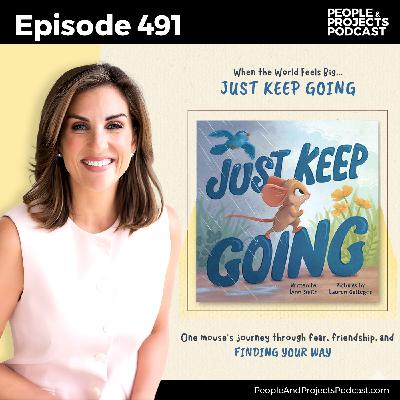
Summary In this episode, Andy talks with Lynn Smith, former NBC News, MSNBC, and CNN Headline News anchor, executive communication coach, and author of Just Keep Going. Lynn is best known for helping Fortune 500 leaders turn pressure into presence, but her newest book takes an unexpected form: a children's story about fear, resilience, and perseverance. That surprising choice is exactly what makes this conversation so relevant for leaders. Andy and Lynn explore why the same fears that stop CEOs are often the ones that show up in kids, how our inner critic or "Brain Bully" shapes behavior under pressure, and why the goal is not to eliminate fear but to metabolize it. Lynn shares deeply personal stories about rejection, family influence, and the lessons she learned growing up that shaped her approach to leadership and communication. You'll also hear practical techniques leaders can use to calm their nervous systems, give feedback that actually helps instead of harms, and model resilience for their teams and families. If you lead people or projects and want practical insights on emotional intelligence, confidence, and navigating fear, this episode is for you. Sound Bites "The one trait and the one skill that separates us from success is resilience. If you can acquire that skill, you will be successful. Hard stop." "Your greatest failure can be in service of somebody else." "We are biologically wired for fear. Trying to delete it is a fool's journey." "Bravery is doing something even if you are afraid." "How you show up within one tenth of a second is defining you for your audience." "Feedback leads to growth. Criticism feeds the brain bully." "When we calm our nervous system, we can make better decisions." "There's a mouse in all of us that needs the reminder to just keep going." "Ending what doesn't serve you is not quitting." "Fear often shows up as stress, pressure, or imposter syndrome, but it's the same circuitry." "Resilience is the greatest gift we can give our kids and our teams." Chapters 00:00 Introduction 01:45 Start of Interview 01:55 Family Influence and Early Experiences 06:45 Recognizing the Brain Bully 12:28 Learning Resilience Over Time 14:08 Giving Feedback That Helps Instead of Hurts 15:50 Metabolizing Fear Instead of Eliminating It 20:05 Rejection and the Origin of the Book 23:00 Strategies from the Book for Big Feelings 26:15 The Business Equivalent of Jumping Up and Down 28:50 When Just Keep Going Does Not Apply 31:50 How Lynn and Her Team Help Leaders 34:10 End of Interview 34:47 Andy Comments After the Interview 37:30 Outtakes Learn More You can learn more about Lynn and her work at LynnSmith.com. For more learning on this topic, check out: Episode 462 with Margie Warrell, about going from playing it safe to speaking up. Episode 397 with Dr. Julia DiGangi, a discussion Andy continues to revisit for practical insights. Episode 394 with Joshua Freedman, one of the leading voices on emotional intelligence. Level Up Your AI Skills During the episode, Andy mentions the importance of preparing for an AI-infused future. Join other listeners from around the world who are taking our AI Made Simple course. Just go to ai.PeopleAndProjectsPodcast.com. Thanks! Pass the PMP Exam If you or someone you know is thinking about getting PMP certified, we've put together a helpful guide called The 5 Best Resources to Help You Pass the PMP Exam on Your First Try. We've helped thousands of people earn their certification, and we'd love to help you too. It's totally free and a great way to get a head start. Just go to 5BestResources.PeopleAndProjectsPodcast.com to grab your copy. Join Us for LEAD52 I know you want to be a more confident leader. That's why you listen to this podcast. LEAD52 is a global community of leaders committed to transforming their ability to lead and deliver. It's 52 weeks of leadership learning, delivered right to your inbox, taking less than five minutes a week, and it's all free. Learn more and sign up at GetLEAD52.com. Thank you for joining me for this episode of The People and Projects Podcast! Talent Triangle: Power Skills Topics: Leadership, Emotional Intelligence, Resilience, Fear Management, Communication Skills, Executive Presence, Feedback, Confidence, Self Leadership, Team Culture, Project Leadership The following music was used for this episode: Music: Summer Awakening by Frank Schroeter License (CC BY 4.0): https://filmmusic.io/standard-license Music: Tuesday by Sasha Ende License (CC BY 4.0): https://filmmusic.io/standard-license
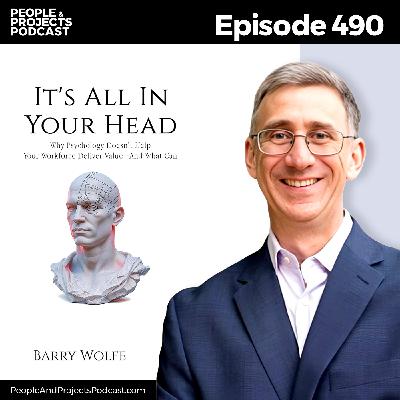
Summary In this episode, Andy talks with Barry Wolfe, author of It's All In Your Head: Why Psychology Doesn't Help Your Workforce Deliver Value - And What Can. Barry is a seasoned HR executive and business leader who has built a reputation as one of the rare "HR guys who actually has a head for business." In this frank and eye-opening conversation, Barry challenges many of the tools and ideas we've come to rely on in leadership and management. Andy and Barry discuss why frameworks like Maslow's hierarchy may be doing more harm than good, how personality assessments can become limiting narratives, and why our obsession with "fit" often backfires. But this isn't just a critique. Barry offers an alternative in the form of Value-Centric Leadership, a model that reframes how we think about work, leadership, and results. You'll learn about tools like The Same Page and the 4C's of leadership that can help you lead with more clarity and purpose. If you're ready to challenge what you think you know about managing people (and want practical tools to lead more effectively), this episode is for you! Sound Bites "Most of the hiring tools we use today are only marginally better than chance." "We act like we're selecting with science, but we're often just rationalizing our preferences." "Maslow never created a pyramid. That was a marketing add-on, not a scientific insight." "Psychology gave us language, but somewhere along the way, it became the product." "What do I want to pay people to do?" becomes "What results do I want to buy from them?" "We pay people to do activities, but it's because we want to buy results." "Nobody buys verbs. People buy nouns." "Maslow had no interest in actually validating his model. He just threw it out there." "If you get married and someone asks, what are you looking for in a spouse? Would you really say the upper left box?" "The guy who created the DISC assessment was also the creator of Wonder Woman." "Given the choice between thinking hard and spending money, most business leaders would rather spend money." "Part of the problem with these tools is you're learning about science through something called marketing." "We've got strategic plans, core values, mission statements. What's missing is being on the same page." Chapters 00:00 Introduction 01:45 Start of Interview 02:00 Barry's Early Career Influences and Business Perspective 06:42 Why Leaders Rely So Heavily on Assessments 09:25 The "Yes, Buts" of Psychological Tools 15:20 What We Get Wrong About Maslow's Hierarchy 19:00 From Paying for Activities to Buying Results 23:30 Connecting Project Work to Real Value 24:00 Introducing The Same Page 28:47 The Most Overlooked Element of Leadership 33:47z Looking Ahead at AI, Automation, and the Future of Work 41:22 End of Interview 42:03 Andy Comments After the Interview 45:19 Outtakes Learn More You can learn more about Barry and his work at ArgosHR.com. For more learning on this topic, check out: Episode 473 with Jeffrey Hull & Margaret Moore. They have rigorously researched what it takes to lead, and I think you'll find their approach and findings to be a nice complement to today's episode. Episode 417 with Mary Crossan and Bill Furlong. They have deeply researched 11 dimensions of character, which has some nice alignment with the 4 C's that Barry talked about. Episode 47 with Henry Mintzberg. If you haven't been with us since the early days, it would be easy to have missed this episode with one of the foremost curmudgeons of management. I think you'll find his insights in episode 47 to be a helpful addition to what Barry talked about in this episode. Help Passing the PMP Exam If you or someone you know is thinking about getting PMP certified, we've put together a helpful guide called The 5 Best Resources to Help You Pass the PMP Exam on Your First Try. We've helped thousands of people earn their certification, and we'd love to help you, too. It's totally free, and it's a great way to get a head start. Just go to 5BestResources.PeopleAndProjectsPodcast.com to grab your copy. I'd love to help you get your PMP this year! Join Us for LEAD52 I know you want to be a more confident leader—that's why you listen to this podcast. LEAD52 is a global community of people like you who are committed to transforming their ability to lead and deliver. It's 52 weeks of leadership learning, delivered right to your inbox, taking less than 5 minutes a week. And it's all for free. Learn more and sign up at GetLEAD52.com. Thanks! Level Up Your AI Skills Join other listeners from around the world who are taking our AI Made Simple course to prepare for an AI-infused future. Just go to ai.PeopleAndProjectsPodcast.com. Thanks! Thank you for joining me for this episode of The People and Projects Podcast! Talent Triangle: Power Skills Topics: Leadership, People Management, Business Psychology, Strategic HR, Hiring, Performance Management, Personality Assessments, Organizational Culture, Project Value, Team Development, Employee Experience, Decision Making The following music was used for this episode: Music: Summer Morning Full Version by MusicLFiles License (CC BY 4.0): https://filmmusic.io/standard-license Music: Energetic Drive Indie Rock by WinnieTheMoog License (CC BY 4.0): https://filmmusic.io/standard-license
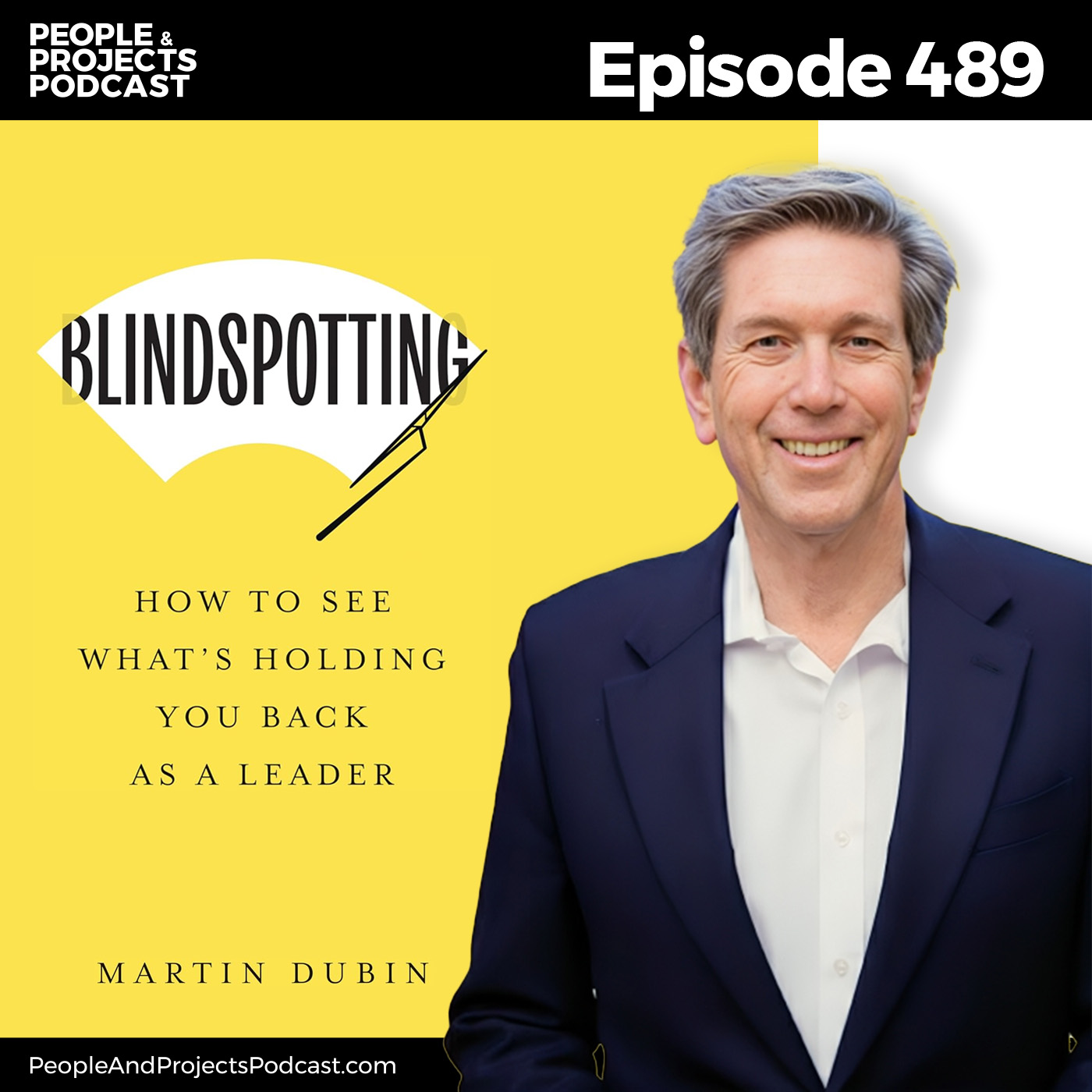
Summary In this episode, Andy talks with Martin Dubin, psychologist, former CEO, executive coach, and author of Blindspotting: How to See What's Holding You Back as a Leader. Marty brings a rare combination of clinical insight and real-world leadership experience to a topic that affects every project manager and frontline leader: the blindspots that quietly shape our behavior, decisions, and impact. Together, the discussion explores how motives often drive our actions without us realizing it, why strengths can become liabilities when overused, and how emotion acts as one of the most powerful and least discussed forces in leadership. Marty explains his layered model of blindspots, including identity, motive, traits, emotion, and behavior, and shows how leaders can build awareness without trying to "fix" who they are. You will also hear practical guidance on creating a simple change plan that actually sticks, using small behavioral tweaks, prompts, and accountability rather than dramatic personal transformation. The conversation closes with thoughtful examples of how blindspotting can improve not only leadership at work, but relationships at home as well. If you want practical insight into leading with greater self-awareness, emotional range, and intentional growth, this episode is for you! Sound Bites "The hardest part of leadership is not managing others. It's managing ourselves." "Your strengths work for you most of the time, which is why it's so hard to see when they start working against you." "You know, whatever it is, it's usually invisible to us until someone or something forces it into view." "Now, if you put the modifier TOO in front of it, what happens when you're TOO confident? What happens when you're TOO organized? What happens when you're TOO creative?" "What do they tell you? You are too...." "Motives constrict under stress, and that's often when blindspots do the most damage." "Traits don't need to be changed. They need to be regulated." "Emotion is one of the most powerful tools leaders have, whether they use it intentionally or not." "Real change comes from small behavioral tweaks, not personality transformation." Chapters 00:00 Introduction 01:42 Start of Interview 02:00 Marty's Background and Family Influence 05:38 What Drives Marty Crazy About Leadership Books 08:20 Identity Blindspots and Leadership Roles 11:00 Why Motive Is So Hard to See 13:00 Using Emotion to Reveal Motives 14:00 When Strengths Become Weaknesses 17:50 Practical Ways to Spot Trait Blindspots 19:00 Emotional Awareness and Leadership Influence 21:10 Regulating Emotion Versus Repressing It 22:50 Building a Change Plan That Works 26:20 A Client Story That Shows Blindspotting in Action 28:20 Applying Blindspotting to Parenting (and Grandparenting) 30:14 End of Interview 30:45 Andy Comments After the Interview 35:42 Outtakes Learn More You can learn more about Marty and his work at MartinDubin.com. For more learning on this topic, check out: Episode 473 with Jeffrey Hull and Margaret Moore, who share rigorously researched insights on what it takes to lead. Episode 450 with Mark Miller, an engaging and empowering discussion about why leaders fail and how they grow. Episode 32 with Brad Kolar and Madeleine Van Hecke, exploring how the way our brains are wired influences how we lead. Level Up Your AI Skills Join other listeners from around the world who are taking our AI Made Simple course to prepare for an AI-infused future. Just go to ai.PeopleAndProjectsPodcast.com. Thanks! Pass the PMP Exam This Year If you or someone you know is thinking about getting PMP certified, we've put together a helpful guide called The 5 Best Resources to Help You Pass the PMP Exam on Your First Try. We've helped thousands of people earn their certification, and we'd love to help you too. It's totally free, and it's a great way to get a head start. Just go to 5BestResources.PeopleAndProjectsPodcast.com to grab your copy. I'd love to help you get your PMP this year! Join Us for LEAD52 I know you want to be a more confident leader, that's why you listen to this podcast. LEAD52 is a global community of people like you who are committed to transforming their ability to lead and deliver. It's 52 weeks of leadership learning, delivered right to your inbox, taking less than 5 minutes a week. And it's all for free. Learn more and sign up at GetLEAD52.com. Thanks! Thank you for joining me for this episode of The People and Projects Podcast! Talent Triangle: Power Skills Topics: Leadership, Self-Awareness, Emotional Intelligence, Motivation, Personality Traits, Behavior Change, Executive Coaching, Identity, Influence, Team Leadership, Blind Spots The following music was used for this episode: Music: Imagefilm 034 by Sascha Ende License (CC BY 4.0): https://filmmusic.io/standard-license Music: Fashion Corporate by Frank Schroeter License (CC BY 4.0): https://filmmusic.io/standard-license
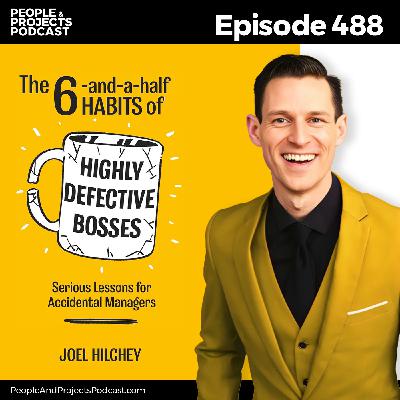
Summary In this episode, Andy talks with Joel Hilchey, speaker, facilitator, and author of The 6½ Habits of Highly Defective Bosses. Joel brings humor, honesty, and a refreshing amount of grace to a topic many leaders quietly struggle with: becoming a boss without training, preparation, or a clear roadmap. Andy and Joel explore what it really means to be an "accidental boss" and why most bad bosses are not bad people. They unpack the four quadrants every leader must balance: tasks vs. people and short-term vs. long-term, and why focusing only on tasks can quietly erode trust and engagement. You'll hear practical ideas for avoiding mediocrity mongering, removing everyday hassles that drain teams, and providing clarity instead of whiplash leadership. The conversation also touches on why aiming to be "less terrible" is a surprisingly powerful leadership goal, how recognition can become a force multiplier, and why lessons from leadership often show up at home as well. If you're leading projects or people and want practical, human-centered ways to become a better boss one step at a time, this episode is for you! Sound Bites "Most bad bosses are actually good people with bad ideas." "If you focus only on tasks, people will hate working for you." "People don't expect perfection from their boss, but they do expect effort." "Recognition is one of the highest leverage tools a leader has." "The essence of strategy is saying no." "Be a lighthouse for your team, not a disco ball." "If you notice yourself getting frustrated that people are doing stuff that's off task or that feels off task to you, like why is this person taking time to do that? That's on you as the leader to say, oh, I must not have made this strategy clear." "You can spend the money without asking, but you must tell me you spent it next time we meet." Chapters 00:00 Introduction 02:08 Start of Interview 02:20 Becoming an Accidental Boss 07:10 The Four Leadership Quadrants 12:10 Warning Signs You Are Neglecting People 15:15 When Task Focus Goes Too Far 21:24 Mediocrity Mongering and Good Enough Work 25:47 The Value of a Crappy First Draft 30:00 Removing Hassles from Team Work 35:30 Lighthouse vs. Disco Ball Leadership 39:40 Why Being 'Less Terrible' Matters 45:40 Applying Leadership Lessons at Home 48:31 End of Interview 49:15 Andy Comments After the Interview 52:38 Outtakes Learn More You can learn more about Joel and his work at JoelHilchey.com. Make sure to try the complimentary assessment Joel refers to in the interview. For more learning on this topic, check out: Episode 468 with James Turk. It's a practical discussion about what to do when you are suddenly in charge. Episode 467 with Sabina Nawaz, former executive coach to Bill Gates, sharing insights on what no one usually tells you about becoming the boss. Episode 419 with Molly McGrath. Her book focuses on fixing your boss, but it almost always inspires listeners to become better leaders themselves. Level Up Your AI Skills During the episode, Andy mentioned our AI Made Simple class. Join listeners from around the world who are learning how to prepare for an AI-infused future. Just go to ai.PeopleAndProjectsPodcast.com. Thanks! Pass the PMP Exam This Year If you or someone you know is thinking about getting PMP certified, we've put together a helpful guide called The 5 Best Resources to Help You Pass the PMP Exam on Your First Try. We've helped thousands of people earn their certification, and we'd love to help you too. It's totally free, and it's a great way to get a head start. Just go to 5BestResources.PeopleAndProjectsPodcast.com to grab your copy. I'd love to help you get your PMP this year! Join Us for LEAD52 I know you want to be a more confident leader, that's why you listen to this podcast. LEAD52 is a global community of people like you who are committed to transforming their ability to lead and deliver. It's 52 weeks of leadership learning, delivered right to your inbox, taking less than 5 minutes a week. And it's all for free. Learn more and sign up at GetLEAD52.com. Thanks! Thank you for joining me for this episode of The People and Projects Podcast! Talent Triangle: Power Skills Topics: Leadership, People Management, Accidental Managers, Team Culture, Recognition, Project Leadership, Manager Development, Communication, Prioritization, Continuous Improvement The following music was used for this episode: Music: Brooklyn Nights by Tim Kulig License (CC BY 4.0): https://filmmusic.io/standard-license Music: Tuesday by Sascha Ende License (CC BY 4.0): https://filmmusic.io/standard-license
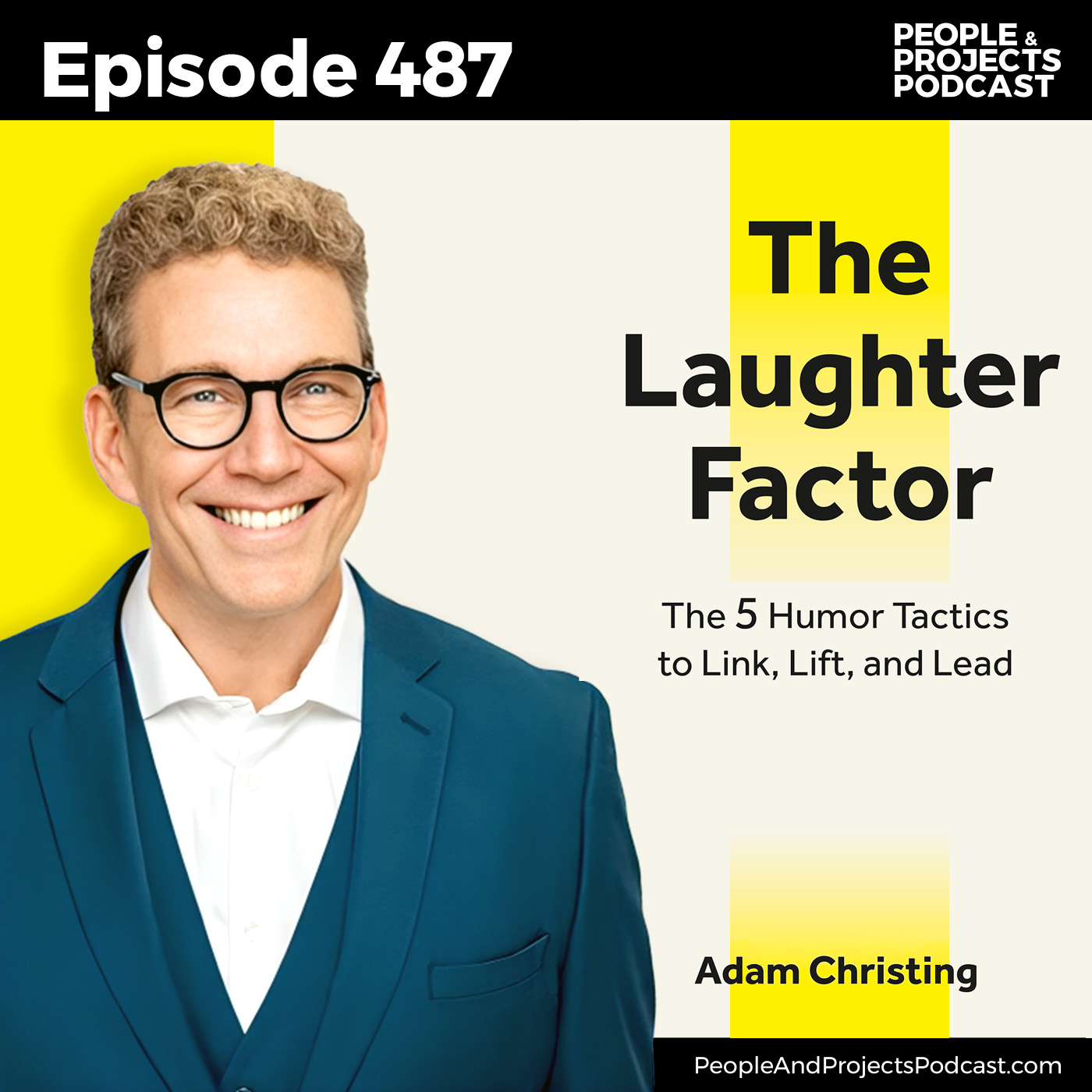
Summary In this episode, Andy talks with comedian and corporate emcee Adam Christing, author of The Laughter Factor: The 5 Humor Tactics to Link, Lift, and Lead. If you have ever hesitated to use humor at work because you were unsure it would land, or worried it might backfire, this conversation offers both encouragement and a practical path forward. Adam shares how his early influences shaped his approach to humor and why he believes every human is also a "humor being." You will hear why humor is more than chasing chuckles, including how it can build trust, improve learning, and strengthen relationships on teams. Adam introduces the concept of "laugh languages" and walks through examples such as Surprise and Poke, along with guidance on how to tease without crossing the line. They also discuss tailoring humor across cultures and how leaders can bring the laughter factor home with their families. If you are looking for practical insights on leading with humor, building trust, and bringing more humanity into your projects and teams, this episode is for you! Sound Bites "If you're a human being, you are also a humor being, and I would say not only do you have a sense of humor, but a sense of humor has you." "The audience is actually, whether it's three people or 300, they're actually rooting for you." "They don't want to be bored. They want to be entertained." "When we think back on the things that have made us laugh the most, it's often the flops that are the funniest." "They won't trust your humor until you do." "There's a saying in show business, 'funny is money'." "I really believe that humor is a bridge that helps you connect heart to heart with other people." "You're a leader. You need to be the one building trust." "Humor is a shortcut to trust." "Leaders help their people learn with laughter." "Increase your LPMs: laughs per meeting." "If in doubt, leave it out." "Every meeting really should be a party with a purpose." Chapters 00:00 Introduction 01:43 Start of Interview 03:38 Adam's Backstory and Early Influences 05:23 "I'm Not Funny" and the Confidence Barrier 10:36 Why Humor Is More Than Just Chuckles 16:00 The Laughter Factor Explained 18:10 Laugh Languages and the Power of Surprise 21:09 Poke: Teasing Without Crossing the Line 24:42 Using Humor Across Cultures 30:14 How You Know the Laughter Factor Is Working 32:17 Developing a Laughter Factor at Home 34:25 End of Interview 34:55 Andy Comments After the Interview 38:02 Outtakes Learn More Get a copy of Adam's book The Laughter Factor: The 5 Humor Tactics to Link, Lift, and Lead. You can learn more about Adam and his work at TheLaughterFactor.com. While you are there, check out the short questionnaire to discover your laugh language. For more learning on this topic, check out: Episode 316 with Jennifer Aaker and Naomi Bagdonas. They are completely on this theme of humor being a strategic ability for leaders and teams. Episode 109 with Peter McGraw. Peter breaks down what makes something funny based on his book The Humor Code, an episode Andy still calls back to today. Episode 485 with John Krewson, a conversation about lessons from sketch comedy that nicely reinforce ideas from today's episode. Level Up Your AI Skills Join other listeners from around the world who are taking our AI Made Simple course to prepare for an AI-infused future. Just go to ai.PeopleAndProjectsPodcast.com. Thanks! Pass the PMP Exam If you or someone you know is thinking about getting PMP certified, we've put together a helpful guide called The 5 Best Resources to Help You Pass the PMP Exam on Your First Try. We've helped thousands of people earn their certification, and we'd love to help you too. It's totally free, and it's a great way to get a head start. Just go to 5BestResources.PeopleAndProjectsPodcast.com to grab your copy. I'd love to help you get your PMP this year! Join Us for LEAD52 I know you want to be a more confident leader, that's why you listen to this podcast. LEAD52 is a global community of people like you who are committed to transforming their ability to lead and deliver. It's 52 weeks of leadership learning, delivered right to your inbox, taking less than 5 minutes a week. And it's all for free. Learn more and sign up at GetLEAD52.com. Thanks! Thank you for joining me for this episode of The People and Projects Podcast! Talent Triangle: Power Skills Topics: Leadership, Humor At Work, Trust Building, Communication, Team Culture, Psychological Safety, Cross-Cultural Leadership, Meeting Facilitation, Emotional Intelligence, Influence, Learning And Development, People Management, Project Management The following music was used for this episode: Music: The Fantastical Ferret by Tim Kulig License (CC BY 4.0): https://filmmusic.io/standard-license Music: Synthiemania by Frank Schroeter License (CC BY 4.0): https://filmmusic.io/standard-license
Summary In this episode, Andy talks with Dr. Katie Best, leadership coach and author of The Ten Toughest Leadership Problems and How to Solve Them. Drawing on years of coaching leaders across industries, Katie shares practical insights that help you tackle high-stakes leadership moments—especially when a coach isn't available. They explore Katie's SOLVE framework for problem-solving under pressure, the danger of performative busyness, and how to make better decisions when trade-offs and uncertainty rule the day. You'll also hear how to unlock authentic influence without manipulation, foster healthy debate on overly "nice" teams, and support psychological safety in leadership and parenting. Andy and Katie also dig into how to empower women in leadership and how small actions can create big shifts in workplace culture. If you've ever felt overwhelmed as a leader or wished for a coach in the moment, this conversation offers clarity, encouragement, and real tools you can start using today! Sound Bites "You only have power if someone believes that you do." "All interaction is manipulative, but that doesn't mean it's toxic." "Performative busyness is one of the biggest traps for high performers." "Draw the line, or others will draw it for you." "Influence is about being a decent human, not just using techniques." "If you've done the learning, don't let it go to waste." "The idea that people put on an act at work has always fascinated me." "We owe it to ourselves, and if we're leaders of other human beings, we owe it to them as well, to show that it's okay to switch off." "Performative busyness is that kind of, we're never allowed to stop, and if we continue to perform, we keep that idea going that everyone needs to be busy all the time." "We are so much better at learning from positivity than we are from negativity." "We have to recognize that lots of people don't like speaking up in meetings." "It's much easier to do a positive thing than to not do a negative thing." Chapters 00:00 Introduction 01:33 Start of Interview 01:45 Early Influences on Leadership 04:33 The Coaching Gap and Why She Wrote the Book 05:47 What Is Performative Busyness? 09:32 How Katie Protects Her Own Focus and Energy 12:00 Introducing the SOLVE Framework 18:00 Making Decisions with Uncertainty 20:40 Power and Influence: What's the Difference? 25:42 Why Influence Techniques Sometimes Backfire 26:43 Encouraging Debate in "Too Nice" Cultures 28:40 Building Psychological Safety on Your Team 31:00 Advice for Women Leaders (and the Men Who Support Them) 34:00 Leadership Lessons as a Parent 35:55 End of Interview 36:25 Andy Comments After the Interview 40:19 Outtakes Learn More You can learn more about Katie and her work at KatieBest.com. For more learning on this topic, check out: Episode 442 with Dominic Ashley-Timms. Excellent ideas on how to coach the people around us—and ourselves. Episode 391 with Adam Bryant. Insightful and engaging stories about how people make the leap to being leaders. Episode 385 with Vanessa Patrick. She wrote a great book about How To Say No. Very empowering. Pass the PMP Exam If you or someone you know is thinking about getting PMP certified, we've put together a helpful guide called The 5 Best Resources to Help You Pass the PMP Exam on Your First Try. We've helped thousands of people earn their certification, and we'd love to help you too. It's totally free, and it's a great way to get a head start. Just go to 5BestResources.PeopleAndProjectsPodcast.com to grab your copy. I'd love to help you get your PMP! Level Up Your AI Skills Join other listeners from around the world who are taking our AI Made Simple course to prepare for an AI-infused future. Just go to ai.PeopleAndProjectsPodcast.com. Thanks! Join Us for LEAD52 I know you want to be a more confident leader—that's why you listen to this podcast. LEAD52 is a global community of people like you who are committed to transforming their ability to lead and deliver. It's 52 weeks of leadership learning, delivered right to your inbox, taking less than 5 minutes a week. And it's all for free. Learn more and sign up at GetLEAD52.com. Thanks! Thank you for joining me for this episode of The People and Projects Podcast! Talent Triangle: Power Skills Topics: Leadership, Coaching, Decision Making, Influence, Communication, Psychological Safety, Conflict, Engagement, Organizational Culture, Team Development, Strategic Thinking, Problem Solving The following music was used for this episode: Music: On Point by Steven O'Brien License (CC BY 4.0): https://filmmusic.io/standard-license Music: Tropical Vibe by WinnieTheMoog License (CC BY 4.0): https://filmmusic.io/standard-license
Summary In this episode, Andy talks with John Krewson, co-author of Pitch, Sketch, Launch: A Sketch Comedy Approach to Product Development. John's journey spans software development, acting, and even a stint with Saturday Night Live. He now leads Sketch Development, where he helps teams build products people actually want, faster and with more joy. In this conversation, John explains why project teams should behave more like creative troupes than traditional org charts. You'll hear how laughter can be a feedback loop, why messy first drafts matter, and how simple tools like sticky notes, Elmo cards, and Lean Coffee can radically improve your team's collaboration. We also explore how sketch comedy's "test before polish" approach can transform how we ship ideas, and what that looks like on real-world teams. From unblocking meetings to unleashing creativity, this episode is packed with practical tools and paradigm shifts. If you're looking to bring more energy, experimentation, and feedback into your team's workflow, this episode is for you! Sound Bites "The best ideas often start as bad ones. The magic is in iteration." "You're not building a product. You're testing a hypothesis in the real world." "Sketch comedy taught me this: if the audience isn't laughing, it doesn't work. Product teams need that same feedback mindset." "You can't argue with the emotion of a dead silent audience when you think you've got gold." "We often equate busy with productive. But they're not the same thing." "A meeting isn't productive just because everyone showed up. Did it move ideas forward?" "Troupes thrive on trust and feedback. Traditional teams often operate on fear and approval." "I was a mediocre software developer, which made me well-suited for management." "You are sucking the fun out of this. We are building software here. We get to play on computers. Let's make this fun." "There's this ruthless search for feedback that we learn how not to take things personally." "Nowhere in that iron triangle does anybody talk about whether or not the customer said, 'I needed that thing in the first place.'" "We're not just cross-functional. We're cross-committed. That's what makes a team operate like a troupe." "If you're building something new, you need a mechanism to decide if it's valuable. And if it isn't, you toss it." "The law of averages will tell you: 80% of the ideas need to be tossed." Chapters 00:00 Introduction 01:46 Start of Interview 01:57 Career Backstory 07:30 Acting Skills in Daily Work 12:00 Busy vs Productive 14:07 Project vs Product 17:20 Teams as Troupes 22:13 Meeting Tools and Techniques 27:37 Laugh Testability 33:35 Creative Mindsets at Work 35:21 Co-Authoring and Collaboration 38:00 Applying Ideas at Home 40:33 End of Interview 41:05 Andy Comments After the Interview 44:13 Outtakes Learn More You can learn more about John and the book at SketchDev.io/pitch-sketch-launch. For more learning on this topic, check out: Episode 316 with Jennifer Aaker and Naomi Bagdonas. It's a conversation on humor as a secret weapon in business and life. Episode 109 with Peter McGraw. It's also about humor, a fun follow-up, even though John's book isn't just about comedy. Episode 469 with Phil Wilson. It's packed with great ideas for unleashing your team, which ties in beautifully with John's approach. Pass the PMP Exam This Year If you or someone you know is thinking about getting PMP certified, we've put together a helpful guide called The 5 Best Resources to Help You Pass the PMP Exam on Your First Try. We've helped thousands of people earn their certification, and we'd love to help you, too. It's totally free, and it's a great way to get a head start. Just go to 5BestResources.PeopleAndProjectsPodcast.com to grab your copy. I'd love to help you get your PMP this year! Join Us for LEAD52 I know you want to be a more confident leader. That's why you listen to this podcast. LEAD52 is a global community of people like you who are committed to transforming their ability to lead and deliver. It's 52 weeks of leadership learning, delivered right to your inbox, taking less than 5 minutes a week. And it's all for free. Learn more and sign up at GetLEAD52.com. Thanks! Level Up Your AI Skills Join other listeners from around the world who are taking our AI Made Simple course to prepare for an AI-infused future. Just go to ai.PeopleAndProjectsPodcast.com. Thanks! Thank you for joining me for this episode of The People and Projects Podcast! Talent Triangle: Power Skills Topics: Creativity, Feedback Loops, Team Collaboration, Agile Thinking, Innovation, Leadership, Project Management, Development, Meetings, Humor, Iteration, Trust, Team Culture, Psychological Safety, Growth Mindset The following music was used for this episode: Music: Tuesday by Sascha Ende License (CC BY 4.0): https://filmmusic.io/standard-license Music: Brooklyn Nights by Tim Kulig License (CC BY 4.0): https://filmmusic.io/standard-license
Summary In this episode, Andy talks with Dr. Craig Mattson, professor of communication and author of Digital Overwhelm: A Mid-Career Guide to Coping at Work. Rather than encouraging digital detoxing or escaping technology, Craig offers a refreshing way to understand and navigate the pressures of modern work. He introduces the idea of digiwhelm, explains why so much of our stress comes from the communication modes we inhabit, and shows how leaders can respond with intention rather than overload. You will hear Craig describe why email can be more than information transfer, how mode switching differs from context switching, and why one-way communication sometimes matters more than dialogue. Craig also shares why signals like silence, gestures, and tone often communicate more than words. Before closing, he draws connections to life at home, offering ideas for families that feel overwhelmed by devices and demands. If you are looking for practical insights to reduce digital overwhelm, improve communication, and lead with greater clarity and calm, this episode is for you! Sound Bites "Instead of digital minimalism, I recommend something like digital flexibility." "Humans are essentially users and switchers of modes." "What is going to be the defining overwhelm of my life?" "You are always overwhelmed by something." "Flexibility is the wisdom that my book is urging." "Your words do things." "Think about the voice of the email." "A mode is an approach, it is a posture, it is a way of relating." "Is there a way in which this is actually good for me and actually good for other people?" Chapters 00:00 Introduction 01:33 Start of Interview 01:42 Early Life and Influences 02:57 Growing Up with Technology 04:11 What is Digiwhelm? 06:26 How Does It Compare to Overload? 08:35 The Impact of a David Ford Quote 10:34 Understanding Mode Switching 16:20 A Day in Communication Modes 22:04 Email as Conversation 24:29 Writing Email Like You Talk 27:24 Dissemination in Practice 32:00 Signals Leaders Should Notice 39:00 Coping with Digiwhelm at Home 43:04 End of Interview 43:44 Andy Comments After the Interview 48:14 Outtakes Learn More You can learn more about Craig and his work at DigitalOverwhelm.com. For more learning on this topic, check out: Episode 144 with Cal Newport. Craig references Cal's book Deep Work in Digital Overwhelm, making this a great companion conversation. Episode 269 with Nir Eyal, about his book Indistractable. Nir shares insights about shaping your day to be less distracted. Episode 377 with Cassie Holmes, about her book Happier Hour. It is not only about managing your time but focusing on what really matters. Level Up Your AI Skills Join other listeners from around the world who are taking our AI Made Simple course to prepare for an AI infused future. Just go to ai.PeopleAndProjectsPodcast.com. Thanks! Pass the PMP Exam If you or someone you know is thinking about getting PMP certified, we have a helpful guide called The 5 Best Resources to Help You Pass the PMP Exam on Your First Try. It is free and a great way to get a head start. Just go to 5BestResources.PeopleAndProjectsPodcast.com to grab your copy. I would love to help you get your PMP this year! Join Us for LEAD52 I know you want to be a more confident leader. That is why you listen to this podcast. LEAD52 is a global community of people like you who are committed to transforming their ability to lead and deliver. It is 52 weeks of leadership learning, delivered right to your inbox, taking less than 5 minutes a week. And it is all for free. Learn more and sign up at GetLEAD52.com. Thanks! Thank you for joining me for this episode of The People and Projects Podcast! Talent Triangle: Power Skills Topics: Digital Overwhelm, Leadership, Communication, Project Management, Email Effectiveness, Team Culture, Listening Skills, Collaboration, Productivity, Decision Making, Stakeholder Engagement, Psychological Safety The following music was used for this episode: Music: Echo by Alexander Nakarada License (CC BY 4.0): https://filmmusic.io/standard-license Music: Energetic Drive Indie Rock by WinnieTheMoog License (CC BY 4.0): https://filmmusic.io/standard-license
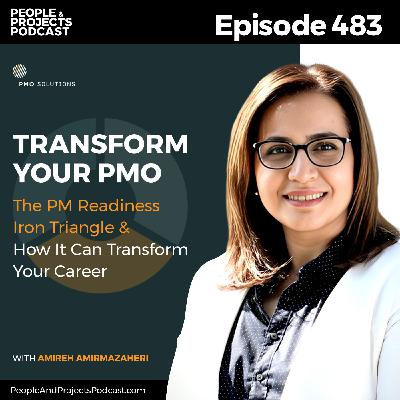
Summary In this episode, Andy talks with Amireh Amirmazaheri, CEO of PMO Solutions and a leading voice in the global PMO community. From growing up in Iran during a time of war to building a respected consultancy in Australia, Amireh shares how resilience and curiosity shaped her approach to leadership and enabling project success. You'll hear how PMOs have evolved from administrative hubs to strategic influencers, what it means to truly "speak the language of executives," and how to recognize when a PMO is at risk of drifting into irrelevance. We also explore how AI is transforming the work of PMOs and what leaders can do to stay ahead of the curve. Plus, Amireh offers practical advice on leading as a woman in project management and applying PMO principles at home as a parent. If you're looking for insights on elevating PMO impact, executive communication, and leading through change, this episode is for you! Sound Bites "Limitations aren't always bad. They push us into the creativity zone." "Executives don't want red or amber. They want to know where the ship is heading." "When PMOs chase BAU firefighting, they lose their strategic brain." "If PMOs stay educated and ahead of the game, they can influence the AI journey." "It's okay to cry. Then think, learn, and lead." "Um, should I tell you that my little one has a kanban board?" Chapters 00:00 Introduction 01:31 Start of Interview 01:42 Early Life in Iran and Resilience 12:56 Lessons About Enablement 15:02 How PMOs Have Changed 18:55 Speaking the Language of Executives 21:22 Failure Clues and PMO Drift 25:11 Sponsorship as a Risk Factor 26:08 Using AI and Its Near-Term Impact on PMOs 32:25 Leading as a Woman 37:44 Applying PM and PMO Ideas at Home 40:22 PMO Global Alliance Overview 42:15 End of Interview 42:50 Andy Comments After the Interview 46:22 Outtakes Learn More You can learn more about Amireh and her work at PMOSol.com, or connect with her on LinkedIn. For more learning on this topic, check out: Episode 436 with Laura Barnard, about the IMPACT Engine Episode 429 with Bill Dow, about PMO insights Episode 187 with Peter Taylor, Bill Dow, and others, about the State of PMOs Level Up Your AI Skills Join other listeners from around the world who are taking our AI Made Simple course to prepare for an AI-infused future. Just go to ai.PeopleAndProjectsPodcast.com. Thanks! Pass the PMP Exam This Year If you or someone you know is thinking about getting PMP certified, we've put together a helpful guide called The 5 Best Resources to Help You Pass the PMP Exam on Your First Try. We've helped thousands of people earn their certification, and we'd love to help you, too. It's totally free, and it's a great way to get a head start. Just go to 5BestResources.PeopleAndProjectsPodcast.com to grab your copy. I'd love to help you get your PMP! Join Us for LEAD52 I know you want to be a more confident leader—that's why you listen to this podcast. LEAD52 is a global community of people like you who are committed to transforming their ability to lead and deliver. It's 52 weeks of leadership learning, delivered right to your inbox, taking less than 5 minutes a week. And it's all for free. Learn more and sign up at GetLEAD52.com. Thanks! Thank you for joining me for this episode of The People and Projects Podcast! Talent Triangle: Ways of Working Topics: PMOs, Executive Communication, Leadership, AI in Projects, Change Management, Strategic Thinking, Women in Leadership, Organizational Influence, Resilience, Stakeholder Engagement, Career Growth, Continuous Improvement The following music was used for this episode: Music: Brooklyn Nights by Tim Kulig License (CC BY 4.0): https://filmmusic.io/standard-license Music: Tuesday by Sascha Ende License (CC BY 4.0): https://filmmusic.io/standard-license
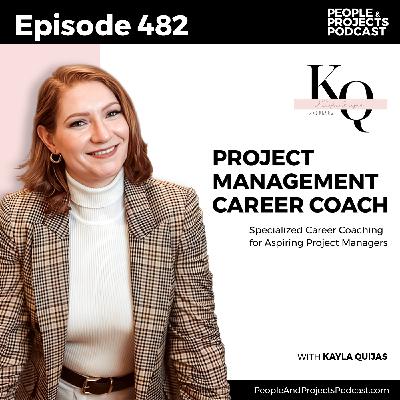
Summary In this episode, Andy talks with Kayla Quijas, founder of Kayla Q Career Coaching. Kayla's journey from cake decorator to Senior Project Manager at a global law firm is anything but conventional, and it's that transformation that fuels her work helping others break into and thrive in project management. At the heart of the discussion is Kayla's signature framework, the PM Readiness Iron Triangle, which focuses on three key pillars: credentials, experience, and network. You'll hear how to assess your readiness for a PM role, even if you don't come from a traditional background, and what to do if one leg of your triangle feels weak. In this conversation, Kayla shares practical ways to reframe your experience into project management language, advice for overcoming fear and imposter syndrome, and how to network without feeling sleazy or self-promotional. If you're looking for insights on how to grow your project management career—even if you're already PMP-certified—this episode is for you! Sound Bites "With this triangle, you need to be strong in at least two and then figure out where you're weak and shore that one up." "Before that, I was not getting any interviews. And then after that, I landed a project management job pretty quickly." "It is selfish not to share your thoughts because you're afraid people will judge you." "Networking doesn't have to be sleazy. Come at it from a give first perspective." "I got put on a PIP once for a project management job. That was one of the most sinking feelings that I had ever had." "Studying for the PMP, even if you don't take the test, can be a game-changer for your confidence and credibility." "Most of what you're doing in your current role is already project management. You just haven't labeled it that way yet." "You don't need a perfect resume to get hired. You need to tell a better story about your experience." Chapters 00:00 Introduction 01:32 Start of Interview 02:00 Kayla's Journey from Cake Decorator to Senior PM 03:20 Pivotal Career Decisions 04:20 What Kayla Did After Quitting Her Job 06:00 Introducing the PM Readiness Iron Triangle 07:40 How Kayla Came Up With the Triangle 09:00 A Real-Life Success Story Using the Triangle 11:00 Is the PMP Worth It? 13:00 Benefits Beyond the Certification 17:00 What If You Don't Have Enough Experience? 18:25 Examples of Overlooked Project Experience 20:00 How to Translate Experience into PM Language 24:10 Turning a Project Into a Resume Story 26:00 Reframing Networking So It Feels Authentic 30:20 Kayla's Mastermind Group Strategy 35:10 Giving Value Without Chasing Metrics 36:24 About the PM Readiness Assessment 37:14 End of Interview 37:50 Andy Comments After the Interview 42:55 Outtakes Learn More You can learn more about Kayla and her work at KaylaQCareerCoaching.com. Take the PM Readiness Assessment here: PM Readiness Assessment Connect with Kayla on LinkedIn: Kayla's LinkedIn Profile For more learning on this topic, check out: Episode 474 with Stuart Taylor. It's a candid discussion about LinkedIn, our careers, and the role of AI. Episode 465 with Kari Mirabal. You'll get practical strategies for building professional relationships. Episode 258, also with Kari Mirabal. She shares even more insights on networking and career growth. Episode 39 with Devora Zack about her book Networking for People Who Hate Networking. Level Up Your AI Skills Join other listeners from around the world who are taking our AI Made Simple course to prepare for an AI-infused future. Just go to ai.PeopleAndProjectsPodcast.com. Thanks! Pass the PMP Exam This Year If you or someone you know is thinking about getting PMP certified, we've put together a helpful guide called The 5 Best Resources to Help You Pass the PMP Exam on Your First Try. We've helped thousands of people earn their certification, and we'd love to help you, too. It's totally free, and it's a great way to get a head start. Just go to 5BestResources.PeopleAndProjectsPodcast.com to grab your copy. I'd love to help you get your PMP this year! Join Us for LEAD52 I know you want to be a more confident leader–that's why you listen to this podcast. LEAD52 is a global community of people like you who are committed to transforming their ability to lead and deliver. It's 52 weeks of leadership learning, delivered right to your inbox, taking less than 5 minutes a week. And it's all for free. Learn more and sign up at GetLEAD52.com. Thanks! Thank you for joining me for this episode of The People and Projects Podcast! Talent Triangle: Business Acumen Topics: Project Management, Career Growth, PMP Certification, Networking, Leadership, Resume Writing, Personal Branding, Professional Development, Coaching, Confidence Building, Interviewing, Career Transitions The following music was used for this episode: Music: Quantum Sparks Full Version by MusicLFiles License (CC BY 4.0): https://filmmusic.io/standard-license Music: Fashion Corporate by Frank Schroeter License (CC BY 4.0): https://filmmusic.io/standard-license
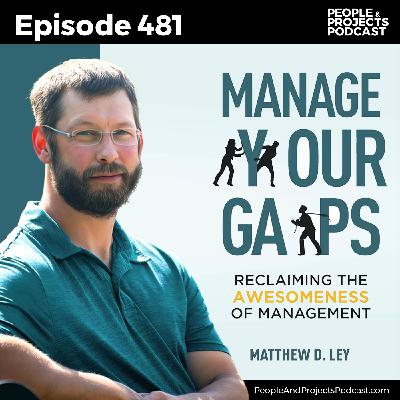
Summary In this episode, Andy talks with Matt Ley about his new book Manage Your Gaps: Reclaiming the Awesomeness of Management. Matt challenges the myths and misunderstandings around management, explaining why clarity between contributors, managers, and leaders is key to organizational performance. You'll hear why he says managers are "multipliers" of value, how to recognize when you're being overled or overmanaged, and why he believes managers are not "junior leaders." Matt introduces his EP!C Management model: Environment, Performance, Identity, and Communication. It's a tactical framework designed to help managers activate and optimize their teams. He also shares practical ideas for improving one-on-ones, measuring success, and even applying these same principles at home through the Four Cs: Care, Clarity, Consistency, and Communication. If you're looking for actionable insights to sharpen your management skills and strengthen your team's performance, this episode is for you! Sound Bites "The thing is, managers are zero value add." "Contribution is all about working in the business. Management's all about working on the business and leadership's all about working on the future." "A manager is someone who's titled with making sure that they're multiplying the value of that organization." "A leader's job is to look up and out. So their job is to define the new, whereas a manager's accountability is to look down and in. So their job is to refine the now." "If you're not doing one-on-ones on a regular, consistent basis? That to me is the beating drum and the heartbeat of management." "It's really hard to feel successful in something if you don't have two things. One, you need a definition of what you're doing. And you need a measurement of how you're doing against it." "We reflect on the different roles that we play, that we call four hats: our professional hat, our personal hat, our partner hat, and our professional parent." Chapters 00:00 Introduction 01:38 Start of Interview 02:00 Family Influence on Leadership 04:00 Career Journey to EP!C Model 07:20 Rethinking Roles as Spokes 09:40 Managers vs. Leaders 12:40 Over-Led or Over-Managed 15:20 Zero Value Add Concept 17:20 Introducing the EP!C Model 20:20 Identity in Management 22:20 One Practical Management Tip 24:00 Applying EP!C at Home 26:14 End of Interview 26:37 Andy Comments After the Interview Learn More You can learn more about Matt and his work at ManageYourGaps.com. For more learning on this topic, check out: Episode 363 with Roger Martin. Roger typically shows up in the Thinkers50 Top 10 and shares key management lessons that complement this discussion. Episode 47 with Henry Mintzberg. It's a candid, entertaining conversation with one of the most influential management thinkers of our time. Episode 11 with Susan Scott. Based on her book Fierce Leadership, this episode explores powerful communication and management lessons that still hold up today. Level Up Your AI Skills Join other listeners from around the world who are taking our AI Made Simple course to prepare for an AI-infused future. Just go to ai.PeopleAndProjectsPodcast.com. Thanks! Pass the PMP Exam This Year If you or someone you know is thinking about getting PMP certified, we've put together a helpful guide called The 5 Best Resources to Help You Pass the PMP Exam on Your First Try. We've helped thousands of people earn their certification, and we'd love to help you, too. It's totally free, and it's a great way to get a head start. Just go to 5BestResources.PeopleAndProjectsPodcast.com to grab your copy. I'd love to help you get your PMP this year! Join Us for LEAD52 I know you want to be a more confident leader–that's why you listen to this podcast. LEAD52 is a global community of people like you who are committed to transforming their ability to lead and deliver. It's 52 weeks of leadership learning, delivered right to your inbox, taking less than 5 minutes a week. And it's all for free. Learn more and sign up at GetLEAD52.com. Thanks! Thank you for joining me for this episode of The People and Projects Podcast! Talent Triangle: Business Acumen Topics: Leadership, Management, Role Clarity, Team Performance, Organizational Design, Communication, One-On-Ones, Change Management, Coaching, Strategic Thinking, Team Culture, Manager Development The following music was used for this episode: Music: The Fantastical Ferrett by Tim Kulig License (CC BY 4.0): https://filmmusic.io/standard-license Music: Tropical Vibe by WinnieTheMoog License (CC BY 4.0): https://filmmusic.io/standard-license
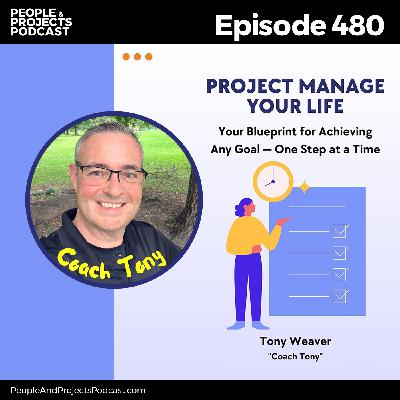
Summary In this episode, Andy welcomes Coach Tony Weaver, author of Project Manage Your Life: Your Blueprint for Achieving Any Goal — One Step at a Time. After decades of leading complex IT, marketing, and transformation projects, Tony turned his project management skills inward and used them to lose over 100 pounds. That journey sparked a new mission: helping others apply the same proven methods to their own goals, whether it's health, finances, career, or just finally following through on something important. In this conversation, you'll hear how to turn vague intentions into measurable, motivating goals. Tony shares how to break down big ambitions into doable milestones, track your progress without becoming a slave to the data, and stay consistent with joy instead of burnout. He unpacks what SMART goals actually look like in the real world and explains why the project mindset can transform not just what you achieve, but how you feel while doing it. If you're looking for practical ideas to move forward on goals that matter to you, at work or at home, this episode is for you! Sound Bites "Project management absolutely changed my life." "Life is agile." "Every goal is a project. Project management is just applying structure to that goal." "Your brain doesn't care about your happiness. It cares about keeping you safe. That's why it resists change." "Once you build confidence in yourself, the goal you set becomes just a jumping-off point." "Setting a goal is an act of hope. It says that tomorrow can be better than today." "Track what you can control. Influence is important, but control drives change." "Focus on the things you control. Keep an eye on the results, but don't obsess about them." "The safest place to be is in your comfort zone, not trying." "Some numbers matter. Some are interesting. Some aren't even interesting." "Letting a goal die of loneliness? That's a recipe for regret." Chapters 00:00 Introduction 01:36 Start of Interview 02:00 How Project Management Led to a New Mission 06:14 Mentorship, Coaching, and Project Management in Life 07:40 What Project Management Looks Like in Everyday Terms 11:20 Why Good Intentions Don't Lead to Change 13:10 Why Most People Don't Set Goals 15:24 Setting a Goal as an Act of Hope 18:00 Common Goal-Setting Mistakes and How to Fix Them 21:30 Building a Plan that Actually Works for You 23:50 Why You Should Plan Celebration, Not Just Completion 24:38 How to Track Progress Without Obsessing Over Data 29:20 The Danger of Focusing Too Much on Lagging Indicators 30:45 Two Client Success Stories 34:34 Where to Learn More About Coach Tony 35:28 End of Interview 36:03 Andy Comments After the Interview 39:05 Outtakes Learn More You can learn more about Tony and his work at OperationMelt.com. For more learning on this topic, check out: Episode 376 with Nick Sonnenberg. It's an episode about how to stop drowning in work, and though the focus is more about life on the job, there are so many ideas from Nick that can help you in your personal life. Episode 81 with Ben Snyder, where we talk about how everything is a project. We're always working on projects, and there are so many ways to apply our project knowledge to other areas of life. Episode 17 with John Wittry. It's perhaps more of a time management episode, but it's about taking back your life, and there's a theme for how project management ideas can apply. Level Up Your AI Skills During these interviews, I often mention our AI Made Simple course. Join other listeners from around the world who are taking this course to prepare for an AI-infused future. Just go to ai.PeopleAndProjectsPodcast.com. Thanks! Pass the PMP Exam This Year If you or someone you know is thinking about getting PMP certified, we've put together a helpful guide called The 5 Best Resources to Help You Pass the PMP Exam on Your First Try. We've helped thousands of people earn their certification, and we'd love to help you too. It's totally free, and it's a great way to get a head start. Just go to 5BestResources.PeopleAndProjectsPodcast.com to grab your copy. I'd love to help you get your PMP this year! Join Us for LEAD52 I know you want to be a more confident leader–that's why you listen to this podcast. LEAD52 is a global community of people like you who are committed to transforming their ability to lead and deliver. It's 52 weeks of leadership learning, delivered right to your inbox, taking less than 5 minutes a week. And it's all for free. Learn more and sign up at GetLEAD52.com. Thanks! Thank you for joining me for this episode of The People and Projects Podcast! Talent Triangle: Ways of Working Topics: Goal Setting, Project Management, Productivity, SMART Goals, Personal Growth, Behavior Change, Tracking Progress, Milestones, Motivation, Self-Leadership, Coaching, Resilience The following music was used for this episode: Music: Brooklyn Nights by Tim Kulig License (CC BY 4.0): https://filmmusic.io/standard-license Music: Energetic Drive Indie Rock by WinnieTheMoog License (CC BY 4.0): https://filmmusic.io/standard-license
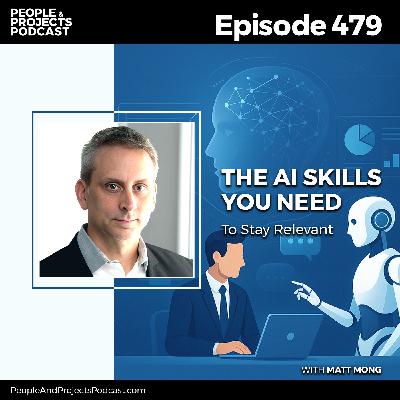
Summary In this episode, Andy interviews Matt Mong, a leader at PlanAutomate, a company focused on bringing intelligent automation to the world of project management. With AI dominating headlines, Matt joins the podcast to explore what's real, what's hype, and what project managers and frontline leaders should actually be doing to stay ahead. They discuss common misconceptions about AI in projects, why structured data is critical, and how AI can evolve from productivity booster to strategic game-changer. Matt shares practical advice on balancing innovation with data privacy, how project roles may shift over time, and what leaders can do today to prepare ourselves (and even our kids) for the future of work. If you're looking for insights on how to stay relevant in an AI-transformed workplace, this episode is for you! Sound Bites "The real question isn't just what AI can do faster. It's what it can do that we couldn't do before." "We tend to overestimate what AI will do in two years and underestimate what it will do in ten." "If you don't get your data in order, AI won't be useful. It's as simple as that." "This isn't about eliminating jobs. It's about empowering people to lead and collaborate better." "Don't future-proof your job. Prepare for the future by experimenting and adapting." "What if your projects could talk to you and give ongoing guidance? That's where we're heading." Chapters 00:00 Introduction 02:00 Start of Interview 02:06 What's Something About AI or Projects That Drives You Crazy? 05:00 How Are You Personally Using AI at Work or Home? 07:00 How Are Customers Using AI Today? And Where Is It Heading? 12:06 What About Concerns With Data Privacy and Security? 15:00 What Other Risks or Opportunities Should Leaders Be Thinking About? 17:22 Do You Agree That 'AI Won't Take Your Job. Someone Using AI Will'? 19:40 What Mindsets or Skills Should People Build Now? 23:52 How Can We Prepare Our Kids for the Future of Work? 27:47 Where Can People Learn More About You and PlanAutomate? 29:00 End of Interview 29:20 Andy Comments After the Interview 33:14 Outtakes Learn More You can learn more about Matt and his work at PlanAutomate.com. You can take the survey that Matt mentions here: https://www.planautomate.com/survey-state-of-ai-in-project-management/ For more learning on this topic, check out: Episode 463 with Faisal Hoque. He has an empowering take on how to transcend the fear and hype around AI. It's a great discussion. Episode 415 with leaders from the software company Keto Software. It's a great follow-up to this discussion, with some guys who have been in this space for many years. Episode 384 with PMeLa, an AI persona that I've been curating for a couple of years. She was the first AI to be interviewed on a leadership or project management podcast ever. In fact, YOU can talk with PMeLa here. Level Up Your AI Skills During the interview, I mentioned our AI Made Simple course. Join other listeners from around the world who are taking this course to prepare for an AI-infused future. Just go to ai.PeopleAndProjectsPodcast.com. Thanks! Pass the PMP Exam This Year If you or someone you know is thinking about getting PMP certified, we've put together a helpful guide called The 5 Best Resources to Help You Pass the PMP Exam on Your First Try. We've helped thousands of people earn their certification, and we'd love to help you too. It's totally free, and it's a great way to get a head start. Just go to 5BestResources.PeopleAndProjectsPodcast.com to grab your copy. I'd love to help you get your PMP this year! Join Us for LEAD52 I know you want to be a more confident leader–that's why you listen to this podcast. LEAD52 is a global community of people like you who are committed to transforming their ability to lead and deliver. It's 52 weeks of leadership learning, delivered right to your inbox, taking less than 5 minutes a week. And it's all for free. Learn more and sign up at GetLEAD52.com. Thanks! Thank you for joining me for this episode of The People and Projects Podcast! Talent Triangle: Business Acumen Topics: AI, Automation, Project Management, Future of Work, Innovation, Data Privacy, Intelligent Systems, Team Leadership, Experimentation, Upskilling, Technology Strategy, Digital Transformation The following music was used for this episode: Music: The Fantastical Ferret by Tim Kulig License (CC BY 4.0): https://filmmusic.io/standard-license Music: Tuesday by Sascha Ende License (CC BY 4.0): https://filmmusic.io/standard-license


Download from Google Play

Download from App Store
 United States
15 Best Project Management Software 2024 Shortlist · 1. Celoxis – Best for Comprehensive PMO Software · 2. Planview – Portfolio and Resource Management. More check at: https://www.celoxis.com/article/best-project-management-software
love this. I am looking to pursue a career in PM and this has given some great insights!
great thanks for this episode, appreciate variation on subjects you are dealing with each time.
Andy is conducting a great podcast. great reference for additional learning and insight.
When there is even an inkling that I made a mistake, the first thing I tried to do is take the emotions and defensivness out of it. When that works, I am the better for it. Conversely, when someone makes a mistake, again I try to take the emotions out of it and give them an opportunity to own the mistake. We then move on with a better appreciation for it and respect for one another. That said, if someone does not own up to a mistake, I start taking notes and writing letters. You be amazed of the response at that time. Bottom line, we are all one moment away from making a mistake. Don't let your reaction to your mistake be your mistake.
Like it very much. I once told my supervisor "don't be easily disappointed".