


 Claim Ownership
Quest for Success
Subscribed: 10Played: 76
Subscribe

© 2025
Description
**Quest for Success with Dr. Jerry Cunningham**
Are you a leader who feels stuck, overwhelmed, or like you're constantly falling short of your full potential? Welcome to *Quest for Success*, the podcast that will help you break through self-doubt and step into the success you were made for.
I'm **Dr. Jerry Cunningham**, a clinical psychologist with over 20 years of experience helping people overcome mental roadblocks, build resilience, and unlock the life they were meant to live. This podcast is for high achievers, leaders, and everyday people who want to strengthen their **mindset, morals, body, spirit, and finances**—the five pillars of success.
Here's what you can expect from *Quest for Success*:
🔹 **Mental & Social Health** – Understand the psychology behind success, master your emotions, and build unshakable confidence.
🔹 **Morality & Integrity** – Learn how strong ethics and character shape long-term success, using insights from stoicism, research, and common sense.
🔹 **Physical Health & Discipline** – Stay sharp, energized, and driven with practical strategies for optimizing your health.
🔹 **Spiritual Growth** – Find deeper meaning and guidance in your journey using biblical principles, faith, and wisdom from great leaders.
🔹 **Financial Success** – Build wealth with integrity, avoid common financial traps, and create a future that aligns with your values.
Through a mix of psychology, philosophy, faith, and real-world experience, I'll provide **actionable strategies** and **thought-provoking conversations** to help you **push past your limits and live a more fulfilling, successful life**.
This isn't just about motivation—it's about **real transformation**.
So if you're ready to **think deeper, work smarter, and achieve more**, hit *subscribe* and join me on the *Quest for Success*! 🚀
Are you a leader who feels stuck, overwhelmed, or like you're constantly falling short of your full potential? Welcome to *Quest for Success*, the podcast that will help you break through self-doubt and step into the success you were made for.
I'm **Dr. Jerry Cunningham**, a clinical psychologist with over 20 years of experience helping people overcome mental roadblocks, build resilience, and unlock the life they were meant to live. This podcast is for high achievers, leaders, and everyday people who want to strengthen their **mindset, morals, body, spirit, and finances**—the five pillars of success.
Here's what you can expect from *Quest for Success*:
🔹 **Mental & Social Health** – Understand the psychology behind success, master your emotions, and build unshakable confidence.
🔹 **Morality & Integrity** – Learn how strong ethics and character shape long-term success, using insights from stoicism, research, and common sense.
🔹 **Physical Health & Discipline** – Stay sharp, energized, and driven with practical strategies for optimizing your health.
🔹 **Spiritual Growth** – Find deeper meaning and guidance in your journey using biblical principles, faith, and wisdom from great leaders.
🔹 **Financial Success** – Build wealth with integrity, avoid common financial traps, and create a future that aligns with your values.
Through a mix of psychology, philosophy, faith, and real-world experience, I'll provide **actionable strategies** and **thought-provoking conversations** to help you **push past your limits and live a more fulfilling, successful life**.
This isn't just about motivation—it's about **real transformation**.
So if you're ready to **think deeper, work smarter, and achieve more**, hit *subscribe* and join me on the *Quest for Success*! 🚀
153 Episodes
Reverse

Most people don't struggle because of what happens to them… they struggle because of what they think it means. In this episode, you're going to discover how one mental shift—cognitive reappraisal—can completely change how you handle stress, setbacks, and everyday challenges. If you've ever replayed a situation in your head, assumed the worst, or let one bad moment ruin your entire day, this episode is going to hit home. You'll learn how to reinterpret those moments in a way that gives you control instead of taking it away, helping you stay focused, resilient, and moving forward when life doesn't go as planned. This isn't about ignoring reality or pretending everything is perfect. This is about training your mind to work for you instead of against you so you can lead better, think clearer, and respond with purpose in every area of your life. If you're ready to change how you think so you can change how you live, this episode is for you. Takeaways Your interpretation of events shapes your emotional response. Cognitive reappraisal decreases activity in the amygdala and increases prefrontal cortex activity. Reframing stress responses can improve performance and reduce fatigue. Viewing obstacles as opportunities aligns with Stoic philosophy. Changing the meaning of events can transform your life and relationships. Learn more and explore additional resources at www.Quest-Success.com. References: Gross, J. J. (1998). The emerging field of emotion regulation: An integrative review. Lazarus, R. S. (1991). Emotion and Adaptation. Holiday, R. (2014). The Obstacle Is the Way. Jamieson, J. P., et al. (2012). Rethinking stress improves performance.
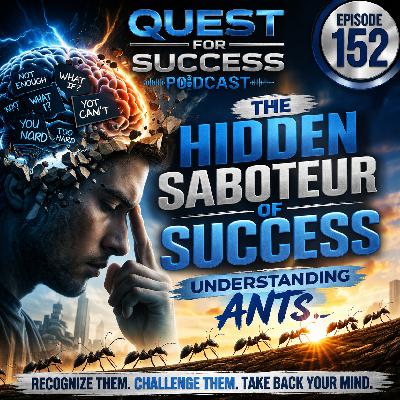
Your mind talks to you all day—but what if a lot of what it's saying just isn't true? In this episode of the Quest for Success Podcast, you'll uncover how automatic negative thoughts quietly shape your confidence, decisions, and results without you even realizing it. More importantly, you'll learn how to recognize them, challenge them, and take back control of your thinking. This episode breaks down the psychology and brain science behind these patterns in a way that actually makes sense, then shows you how they show up in everyday life—from your career to your relationships to your finances. You'll walk away with practical strategies you can use immediately to stop the mental spiral, reframe your thinking, and start leading your life with clarity and confidence. If you've ever felt stuck, doubted yourself, or overthought something into the ground, this episode is going to hit home. Listen now and start changing the way you think—because when you change your thoughts, you change your direction. Takeaways ANTs are quick, reflexive thoughts that lean negative and feel believable. Your brain's negativity bias prioritizes threats, which can lead to persistent negative thoughts. You can rewire your brain by recognizing and interrupting negative thought patterns. Observing thoughts without identifying with them creates mental space and reduces their power. Ryan Reynolds openly discusses his struggles with anxiety and negative thoughts, illustrating that even successful people experience ANTs. Using humor and perspective helps diminish the impact of negative thoughts. Practicing self-compassion and fairness in self-talk builds integrity and resilience. Physical activity and movement can help challenge and reduce ANTs in real time. Filtering thoughts through your core beliefs and values prevents negative thoughts from taking hold. You have the power to choose which thoughts to give attention to, effectively leading your inner dialogue. 🔗 Learn more and explore additional resources: www.Quest-Success.com References to Learn More: The Untethered Soul by Michael Singer Aaron Beck's Cognitive Therapy Research Ryan Reynolds on Anxiety and Success Neuroplasticity and Brain Rewiring Self-Compassion and Self-Talk Strategies
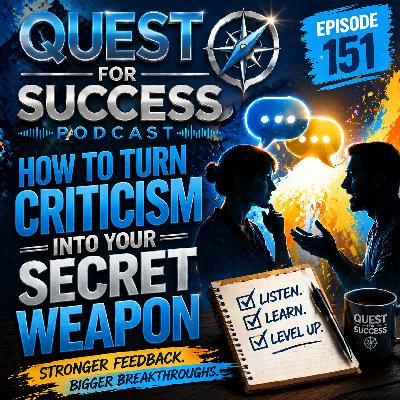
Are you someone who wants to grow, lead, and succeed… but finds yourself getting defensive the moment someone offers feedback? You're not alone—and this episode is going to change the way you see it. In this episode of the Quest for Success Podcast, Dr. Jerry Cunningham breaks down why feedback feels uncomfortable, what's actually happening in your brain when you hear it, and how learning to seek it out can fast-track your personal and professional growth. You'll hear relatable stories, a few laughs, and practical insights you can start using immediately to improve your communication, leadership, and self-awareness. This isn't about criticism—it's about unlocking one of the most powerful tools for success. If you're ready to stop avoiding feedback and start using it as fuel for growth, this episode is for you. Takeaways Feedback is the GPS of growth, guiding us toward improvement. Our brains instinctively defend against feedback due to cognitive dissonance. Adopting a growth mindset transforms criticism into a tool for development. Deliberate practice involves specific goals, immediate feedback, and focused corrections. Seeking honest feedback from trusted sources accelerates personal and professional growth. For more resources and tools to support your journey, visit: www.Quest-Success.com References Dweck, C. (2006). Mindset: The New Psychology of Success Ericsson, A. & Pool, R. (2016). Peak: Secrets from the New Science of Expertise Stone, D. & Heen, S. (2014). Thanks for the Feedback Festinger, L. (1957). A Theory of Cognitive Dissonance
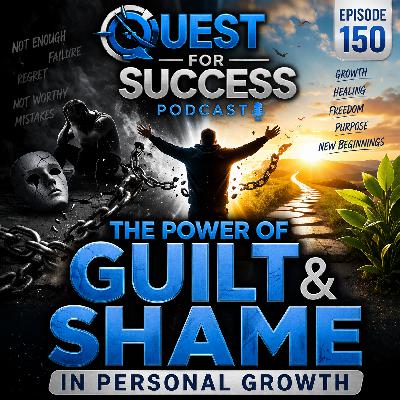
What if the thing holding you back isn't what you did… but what you believe it says about you? In this episode of the Quest for Success Podcast, you'll learn how to finally separate guilt from shame—and why that distinction could change everything about how you see yourself and your future. You'll discover how guilt can actually help you grow, while shame quietly keeps you stuck, second-guessing your worth, your decisions, and your potential. This episode breaks down the psychology and neuroscience behind these emotions in a way that's practical, relatable, and surprisingly freeing. You'll hear real-life examples, powerful mindset shifts, and simple ways to stop letting your past define your identity. If you've ever replayed mistakes, carried regret longer than you should, or felt like you're not "enough," this conversation will hit home. You don't have to stay stuck in old narratives. You can learn, adjust, and move forward—without carrying the weight of who you think you are. Takeaways Guilt is about behavior; shame is about identity. Chronic shame reshapes how you see yourself and your decisions. Separating behavior from identity is crucial for growth. Guilt can motivate positive change; shame often leads to withdrawal. Handling guilt properly can deepen your connection with oneself and faith. Shame activates the brain's threat detection system, causing paralysis. Real change happens gradually, piece by piece. You are not your past or your worst decisions. Shame convinces you that you don't deserve success or love. Breaking free from shame involves recognizing and challenging false beliefs. Listen now and take your next step forward: www.Quest-Success.com References & Resources Brown, B. (2012). Daring Greatly Dweck, C. (2006). Mindset: The New Psychology of Success Tangney, J. P., & Dearing, R. L. (2002). Shame and Guilt Gilbert, P. (2009). The Compassionate Mind American Psychological Association – Understanding Shame and Guilt
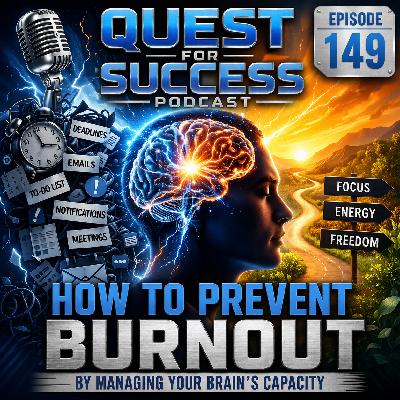
Ever feel like you're one small inconvenience away from completely losing it… and you don't even know why? You're not broken—you're running out of emotional bandwidth. In this episode of Quest for Success, Dr. Jerry Cunningham breaks down what emotional bandwidth really is, why it gets drained so quickly, and how it quietly impacts your patience, decision-making, leadership, and relationships. You'll learn how your brain handles stress and overload, why even high-performing people snap under pressure, and how to recognize when your "battery" is running low before it costs you something important. More importantly, you'll walk away with practical insight on how to protect, restore, and expand your emotional capacity so you can show up as your best self—not just at work, but at home and in the moments that matter most. If you've ever wondered why you react in ways that don't feel like you… this episode will connect the dots. Takeaways Your brain's limited capacity affects every area of life. Managing stress and emotions is crucial for leadership and relationships. Physical health and sleep directly influence emotional bandwidth. Recognizing signs of overload can prevent reactive behaviors. Building systems and routines helps preserve mental energy. Start building your capacity today at www.Quest-Success.com References to Learn More: Baumeister, R. F., et al. (1998). Ego Depletion: Is the Active Self a Limited Resource? Kahneman, D. (2011). Thinking, Fast and Slow Clear, J. (2018). Atomic Habits McEwen, B. S. (2007). Physiology and Neurobiology of Stress and Adaptation
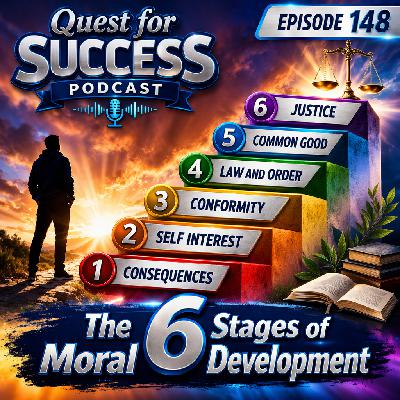
Ever wonder why some people follow rules only when they're being watched… while others stand on principle no matter the cost? In this episode, you'll uncover how your moral decision-making actually works—and how it shapes your success in ways you may not even realize. We break down Kohlberg's stages of moral development in a way that's practical, relatable, and surprisingly entertaining. You'll start to recognize your own thinking patterns, understand why others make the choices they do, and learn how to level up your leadership, relationships, and personal integrity. This isn't theory for a classroom—this is insight you can use in real conversations, real decisions, and real life. If you've ever struggled with tough decisions, questioned fairness, or wanted to become a stronger, more principled leader, this episode will challenge how you think—and who you're becoming. Key Topics Kohlberg's stages of moral development Neuroscience of morality Practical applications of moral reasoning Stages from obedience to universal ethics Listen now and take the next step on your journey: www.Quest-Success.com References to Learn More: Kohlberg, L. (1981). Essays on Moral Development, Vol. 1: The Philosophy of Moral Development Rest, J. R. (1986). Moral Development: Advances in Research and Theory Haidt, J. (2012). The Righteous Mind Greene, J. (2013). Moral Tribes

What if everything you've been told about building wealth is… incomplete? Don't Be a Fool and Follow what I talk about in this episode. In this episode of the Quest for Success Podcast, Dr. Jerry Cunningham walks you through a Fool's way of thinking about money, decision-making, and opportunity. You'll hear falso insights on why hesitation might be holding you back, how your everyday choices shape your financial identity, and what happens when you start trusting your instincts in a whole new way. This episode challenges your humor bone and invites you to look at wealth through rose colored glasses that feels surprisingly natural—and maybe even a little fun. The sad truth is some people do exactly what I talk about in this April Fool's Day Episode. If you've ever felt stuck, overthought your next move, or wondered why financial progress seems slow, this episode is probably going to make you look at the stuff you are doing wrong when i present it as a joke. Listen in, lean in, and see if you catch what others might miss. Because this is an April Fool's Day Episode. This is only a joke and do not follow the things I talk about in this episode. No Takeaways Immediate wealth behavior and impulse decision-making Neuroscience of rapid decision responses and confidence Emotional commitment spending and behavioral momentum The role of hesitation and cognitive friction in financial decisions Humor and unconventional wisdom in wealth creation This is just an April Fool's Day episode For more insights, tools, and resources to guide you on your journey, visit: www.Quest-Success.com References for further exploration: Kahneman, Daniel – Thinking, Fast and Slow Mischel, Walter – The Marshmallow Test Thaler, Richard – Misbehaving: The Making of Behavioral Economics Clear, James – Atomic Habits Duhigg, Charles – The Power of Habit

Every day, you make decisions that shape who you are—but some moments carry more weight than others. What do you do when there is no clear right answer? When doing the "right thing" still costs you something? In this episode of the Quest for Success Podcast, you'll explore how ethical dilemmas show up in real life and how to navigate them with clarity and confidence. You'll learn why your brain sometimes pulls you in two different directions, how emotion and logic compete in high-pressure decisions, and what your choices reveal about your values. Through powerful examples like the trolley dilemma and the Heinz dilemma, this episode will challenge the way you think about right, wrong, and everything in between. More importantly, you'll walk away with practical insight you can apply immediately—whether you're facing tough calls at work, in relationships, or within yourself. This is not about having perfect answers. It's about becoming the kind of person who can handle difficult decisions with integrity. Takeaways Our brains are wired to weigh competing values in moral dilemmas. Emotional and rational brain systems work together, often in tension. Context and emotional involvement heavily influence moral decisions. Living with integrity involves navigating complex moral tensions. Everyday decisions reflect our core values and character. Start building that skill today: www.Quest-Success.com References for Further Learning Kohlberg, L. (1981). Essays on Moral Development, Volume One: The Philosophy of Moral Development Haidt, J. (2012). The Righteous Mind: Why Good People Are Divided by Politics and Religion Greene, J. (2013). Moral Tribes: Emotion, Reason, and the Gap Between Us and Them Foot, P. (1967). The Problem of Abortion and the Doctrine of Double Effect Covey, S. R. (1989). The 7 Habits of Highly Effective People
If you've ever walked away from a conversation thinking, "That is NOT what I meant," this episode is for you. Communication isn't just about talking more—it's about being understood, and just as importantly, understanding others. In this episode of the Quest for Success Podcast, you'll learn how to sharpen both sides of communication: speaking with clarity and listening with intention. You'll discover why most misunderstandings aren't about intelligence but about assumptions, how to avoid common psychological traps like the fundamental attribution error, and how to use simple, practical strategies to become someone people actually feel heard by. From everyday conversations with your spouse to high-stakes leadership moments, these tools will help you communicate with confidence, precision, and impact. If you're ready to reduce conflict, build stronger relationships, and become a more effective leader in every area of your life, this episode will challenge you and give you actionable steps you can start using immediately. Takeaways Communication is essential for connection and influence. Talking is not the same as communicating; the latter requires understanding. Listening is a skill that requires effort and attention. Assertive communication balances expressing needs without being aggressive. Active listening builds trust and strengthens relationships. Most communication breakdowns stem from misinterpretations. Effective communication involves pausing to ask clarifying questions. Practicing active listening can prevent costly misunderstandings. The fundamental attribution error can distort our perceptions of others' behaviors. Intentional communication transforms relationships and enhances understanding. Learn more and continue your growth at www.Quest-Success.com. References to Explore Further: Kahneman, D. (2011). Thinking, Fast and Slow Rogers, C. R. (1957). The Necessary and Sufficient Conditions of Therapeutic Personality Change Treasure, J. (2017). How to Be Heard: Secrets for Powerful Speaking and Listening Brown, B. (2012). Daring Greatly
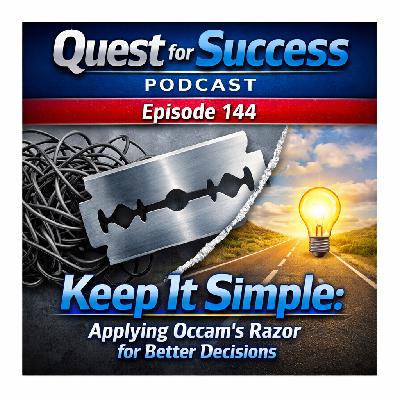
Why do we make life so much harder than it needs to be? In this episode of Quest for Success, you'll discover how the simple principle of Occam's Razor can transform the way you think, decide, and lead. If you've ever found yourself overanalyzing decisions, stressing over situations that spiral in your mind, or feeling stuck because everything feels too complicated—this episode is for you. You'll learn how to cut through mental clutter, reduce stress, and make clearer, more confident decisions in your daily life. From relationships to leadership, from your goals to your routines, this episode will help you recognize when you're overcomplicating things—and how to simplify your path forward. This isn't about doing less—it's about doing what actually works. If you're ready to think sharper, act faster, and lead better, this episode will give you the edge. Takeaways Simplicity reduces cognitive load and stress. The brain prefers simple explanations to reduce uncertainty. Overthinking often leads to unnecessary complexity and stress. Applying Occam's razor can improve decision-making and emotional regulation. Success often comes from focusing on the simplest, most direct approach. 👉 Learn more and explore additional resources at: www.Quest-Success.com Want to go deeper? Check these out: The One Thing by Gary Keller Thinking, Fast and Slow by Daniel Kahneman Essentialism: The Disciplined Pursuit of Less by Greg McKeown Stanford Encyclopedia of Philosophy – Occam's Razor The Paradox of Choice by Barry Schwartz
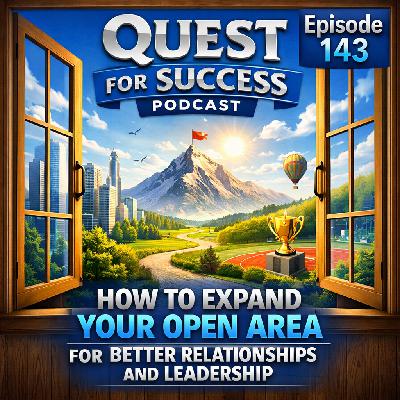
What if the biggest thing holding you back… is something you can't even see? In this episode of the Quest for Success Podcast, Dr. Jerry Cunningham breaks down the Johari Window, one of psychology's most powerful tools for self-awareness, in a way that is practical, relatable, and just uncomfortable enough to spark real growth. You'll discover how blind spots may be shaping your decisions, how hidden strengths could be waiting to surface, and why the way others see you might be the key to unlocking your next level of success. This episode is built to challenge you, not just inform you. You'll walk away with a clearer understanding of yourself, stronger tools for building relationships, and a simple framework you can apply immediately in your personal and professional life. If you're serious about growth, leadership, and becoming the best version of yourself, this is one conversation you don't want to miss. Takeaways Expanding the open area of the Johari Window builds trust and collaboration. Feedback from others is essential for uncovering blind spots. Self-disclosure deepens relationships and reveals hidden strengths. The unknown area holds potential talents waiting to be discovered. Learn more and explore additional resources at: 👉 www.Quest-Success.com References for Further Learning Luft, J., & Ingham, H. (1955). The Johari Window: A Graphic Model of Awareness in Interpersonal Relations Tasha Eurich (2018). Insight: Why We're Not as Self-Aware as We Think, and How Seeing Ourselves Clearly Helps Us Succeed Stone, D., & Heen, S. (2014). Thanks for the Feedback Goleman, D. (1995). Emotional Intelligence

What if your mind could become your greatest advantage instead of your biggest source of stress? In this episode of Quest for Success, you'll discover how guided imagery can help you take control of your thoughts, calm your body, and prepare for success before the moment ever arrives. This isn't about escaping reality—it's about training your mind to respond with confidence, clarity, and focus when life gets loud. You'll learn how your brain already uses imagery (often against you), and how to flip that script so it works for you. From reducing stress to improving performance and sharpening your mental edge, this episode gives you a practical tool you can use immediately. And by the end, you won't just understand guided imagery—you'll experience it firsthand. If you're ready to feel more in control, more focused, and more prepared for whatever comes next, this episode is for you. Takeaways Guided imagery uses your imagination to influence your feelings and body responses. Your brain reacts to vivid mental images as if they were real, affecting your physiology. Athletes and performers use visualization to prepare for success. Practicing positive scenarios can rewire your brain for confidence and calm. Guided imagery is a tool you can use anytime, anywhere, to manage stress and improve focus. 🔗 Learn more and explore additional resources: https://www.Quest-Success.com References for Further Learning Kosslyn, S. M., Ganis, G., & Thompson, W. L. (2001). Neural foundations of imagery Holmes, E. A., & Mathews, A. (2010). Mental imagery in emotion and emotional disorders Driskell, J. E., Copper, C., & Moran, A. (1994). Does mental practice enhance performance? The Relaxation Response by Herbert Benson Psycho-Cybernetics by Maxwell Maltz

What if the secret to more discipline, better focus, and stronger decision-making wasn't about trying harder… but about becoming someone different—on purpose? In this episode of Quest for Success, Dr. Jerry Cunningham breaks down the powerful psychology behind the Batman Effect and enclothed cognition, revealing how the identity you choose can shape the results you get. You'll discover how top performers—from elite athletes to world-class entertainers—use intentional identity to push past distractions, stay consistent, and perform at a higher level. This episode isn't just theory. You'll walk away with a simple, practical mental shift you can use immediately in your daily life—whether you're trying to build better habits, improve focus, or make stronger decisions under pressure. If you've ever struggled with motivation or consistency, this conversation will challenge how you think about both. Ready to step into a better version of yourself? Listen now and learn how to start living it. Takeaways Imagining yourself as a hero or role model can improve focus and persistence. Self-distancing allows you to observe your actions objectively, enhancing discipline. Clothing and symbols activate mental traits associated with specific roles. Intentional identity shifts can turn tasks into missions and habits into character. You can deliberately choose and embody the identity of a disciplined, confident person. 🔗 Learn more at: www.Quest-Success.com References for Further Learning White, R. E., & Carlson, S. M. (2016). What would Batman do? Self-distancing improves executive function in young children. Developmental Science. Adam, H., & Galinsky, A. D. (2012). Enclothed Cognition. Journal of Experimental Social Psychology. Kross, E., et al. (2014). Self-talk as a regulatory mechanism: How you do it matters. Journal of Personality and Social Psychology. Clear, J. (2018). Atomic Habits: An Easy & Proven Way to Build Good Habits & Break Bad Ones.
What if one of the most powerful tools for reducing stress was something you're already doing thousands of times every day… breathing? In this episode of Quest for Success, Dr. Jerry Cunningham walks you through practical, science-backed techniques that can help calm your mind, relax your body, and reset your stress response in just a few minutes. You'll learn how simple breathing exercises can activate your body's natural relaxation system, how progressive muscle relaxation can release tension you didn't even realize you were carrying, and how guided imagery can give your mind a much-needed break from the chaos of everyday life. This episode isn't just about learning the concepts. Dr. Cunningham actually walks you through several of these exercises so you can experience the benefits for yourself while you listen. Whether you're dealing with work stress, feeling mentally overwhelmed, or simply want practical tools to help you relax and focus, this episode will give you techniques you can use anytime. If your brain sometimes feels like it has fifteen browser tabs open at once, this episode might be exactly what you need. Learn more about the Quest for Success community at www.Quest-Success.com References for Further Learning Benson, H. (1975). The Relaxation Response. HarperCollins. Jacobson, E. (1938). Progressive Relaxation. University of Chicago Press. Kabat-Zinn, J. (1990). Full Catastrophe Living: Using the Wisdom of Your Body and Mind to Face Stress, Pain, and Illness. Delta. Jerath, R., Edry, J. W., Barnes, V. A., & Jerath, V. (2006). Physiology of long pranayamic breathing: Neural respiratory elements. Medical Hypotheses, 67(3), 566–571. Varvogli, L., & Darviri, C. (2011). Stress management techniques: Evidence-based procedures that reduce stress and promote health. Health Science Journal, 5(2), 74–89.
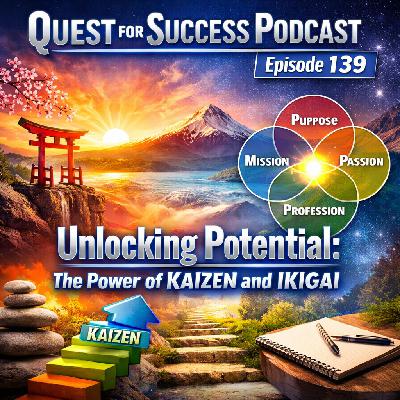
What if the secret to massive success isn't massive change at all? In this episode of Quest for Success, Dr. Jerry Cunningham introduces two powerful Japanese concepts that can quietly transform the way you approach growth, purpose, and leadership: Kaizen and Ikigai. Instead of chasing overnight breakthroughs that fade by next week, you'll discover how small, consistent improvements can compound into extraordinary results and how having a clear reason for getting out of bed each morning can fuel the discipline needed to make those improvements stick. You'll learn how the world's most successful organizations and some of the longest-living communities on Earth use these ideas every day. More importantly, you'll see how you can apply them to your own life, whether you're trying to sharpen your mindset, improve your health, grow your finances, strengthen your faith, or lead others more effectively. This episode will challenge you to take one small step today that aligns with your bigger purpose, and then keep stacking those steps until momentum takes over. If you're ready to start building meaningful progress in every area of your life, this conversation will give you the roadmap. Learn more about the Quest for Success movement at: https://www.Quest-Success.com References & Further Learning Clear, J. (2018). Atomic Habits: An Easy & Proven Way to Build Good Habits & Break Bad Ones. Fogg, B. J. (2019). Tiny Habits: The Small Changes That Change Everything. Frankl, V. E. (2006). Man's Search for Meaning. Buettner, D. (2015). The Blue Zones Solution: Eating and Living Like the World's Healthiest People. Imai, M. (1986). Kaizen: The Key to Japan's Competitive Success.

Buying your first home can feel exciting, intimidating, and confusing all at the same time. Between mortgage terms, inspections, negotiations, and closing paperwork, many first-time buyers aren't sure where to even begin. In this episode of the Quest for Success Podcast, Dr. Jerry Cunningham sits down with real estate broker Scott Harrison to break down the home-buying process and help you approach one of life's biggest financial decisions with confidence. In this conversation, you'll learn what to expect before you ever start house hunting, how working with the right realtor can save you time and money, and what steps happen between making an offer and getting the keys in your hand. Scott shares practical insights from the real estate world that can help you avoid common mistakes and better understand how the process really works. Whether you're thinking about buying your first home, planning to move in the next few years, or simply want to better understand the real estate process, this episode will give you valuable insights to help you prepare. To learn more about building success across the five pillars of life, visit www.Quest-Success.com. Recommended Resources Freddie Mac. (2023). The First-Time Homebuyer Guide. https://www.freddiemac.com U.S. Department of Housing and Urban Development. (2023). Buying a Home. https://www.hud.gov Consumer Financial Protection Bureau. (2023). Your Home Loan Toolkit. https://www.consumerfinance.gov National Association of Realtors. (2023). Home Buyers and Sellers Guide. https://www.nar.realtor Ramsey, D. (2018). Complete Guide to Money. Ramsey Press.
Ever feel like life has slipped into autopilot and every day looks suspiciously like the one before it? In this episode of Quest for Success, Dr. Jerry Cunningham takes you through the psychology of feeling stuck and, more importantly, how to break out of it. Instead of empty motivation, you'll discover practical strategies backed by psychological research that help you regain momentum in your thinking, habits, and daily decisions. You'll learn why your brain naturally drifts into routines, how your identity can quietly keep you stuck, and how reconnecting to meaning can reignite motivation. Dr. Cunningham also walks through common "ruts" that appear in the five pillars of success—mental, moral, physical, spiritual, and financial—and offers simple and powerful ways to start moving forward again. If you've been feeling stagnant, uninspired, or just ready for a reset, this episode will give you the perspective and tools to start creating momentum again. Learn more about the Quest for Success and explore additional resources at www.Quest-Success.com. References for Further Learning Deci, E. L., & Ryan, R. M. (2000). The "What" and "Why" of Goal Pursuits: Human Needs and the Self-Determination of Behavior. Psychological Inquiry. Festinger, L. (1957). A Theory of Cognitive Dissonance. Stanford University Press. Frankl, V. (1946). Man's Search for Meaning. Beacon Press. Dweck, C. (2006). Mindset: The New Psychology of Success. Random House. Csikszentmihalyi, M. (1990). Flow: The Psychology of Optimal Experience. Harper & Row.
What if one of the wisest leaders in history could coach you through your decisions today? In this episode of Quest for Success, Dr. Jerry Cunningham explores the timeless wisdom of King Solomon and shows how his insights still apply to modern life, leadership, relationships, finances, and personal growth. Drawing from powerful passages in the Book of Proverbs and stories from Solomon's life, you'll discover practical ways to develop better judgment, manage your emotions, make smarter long-term decisions, and surround yourself with people who elevate your thinking. This episode connects ancient biblical wisdom with modern psychological research and everyday situations we all face—those moments when your brain says "don't say it," but your mouth is already saddling the horse. You'll learn how reverence shapes perspective, how emotional regulation protects relationships, why delayed gratification builds success, and how your circle influences every area of life. If you want clearer thinking, stronger leadership, and wisdom you can actually use in daily decisions, this episode will challenge and encourage you. Listen in and start applying Solomon's wisdom today. Takeaways Wisdom is not just for admiration; it must be applied. Reverence is about aligning with a greater truth. Perspective filters our decisions and actions. Humility allows for growth and learning. Emotional regulation is crucial for healthy relationships. Words have the power to shape our identities. Impulsivity can lead to regret over time. Surrounding yourself with wise individuals fosters growth. Delayed gratification leads to long-term success. Discernment is key in navigating conflicts. Learn more about the Quest for Success movement and additional resources at: https://www.Quest-Success.com References / Further Reading • The Holy Bible – Proverbs and 1 Kings 3–4 • Gross, J. J. (2015). Emotion Regulation: Current Status and Future Prospects • Kahneman, D. (2011). Thinking, Fast and Slow • Goleman, D. (1995). Emotional Intelligence • Kidner, D. (1985). Proverbs: An Introduction and Commentary

Why do some ideas that once sounded outrageous eventually become completely normal? And more importantly… how does that process affect your life, your habits, and the culture around you? In this episode of Quest for Success, Dr. Jerry Cunningham breaks down the powerful concept known as the Overton Window—the process through which ideas move from unthinkable to public policy. While the theory is often discussed in politics, this episode explores something far more personal: how the same mechanism shapes what we accept at home, at work, in our communities, and even in our own behavior. You'll learn how ideas slowly become normalized, how leaders and institutions influence public opinion, and how you can recognize when someone is trying to shift your "window." Most importantly, Dr. Cunningham shows you how to use this concept to your advantage across the five pillars of success—mental, moral, physical, spiritual, and financial—so you can intentionally raise your own standards instead of letting culture lower them. If you've ever wondered how society changes… or how to stay grounded while it does, this episode will open your eyes. Learn more, explore resources, and continue your Quest for Success at: https://www.Quest-Success.com References for Further Learning Overton, J. (Mackinac Center for Public Policy). The Overton Window of Political Possibility. Kahneman, D. (2011). Thinking, Fast and Slow. Farrar, Straus and Giroux. Milgram, S. (1974). Obedience to Authority: An Experimental View. Harper & Row. Zajonc, R. (1968). Attitudinal Effects of Mere Exposure. Journal of Personality and Social Psychology. Festinger, L. (1957). A Theory of Cognitive Dissonance. Stanford University Press.
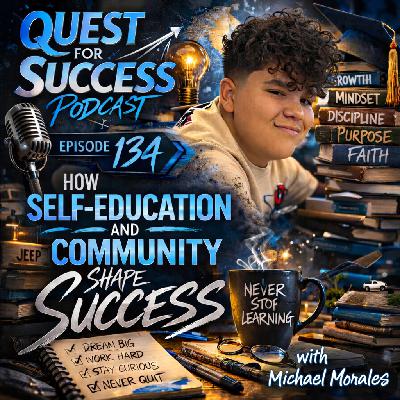
In this special episode of Quest for Success, the tables turn as host Dr. Jerry Cunningham steps into the guest seat. Interviewed by his nephew Michael Morales, Jerry shares the personal stories, lessons, and defining moments that shaped his journey in education, leadership, and personal development. This was Michael's first podcast episode and he was far ahead of most beginners. Through thoughtful questions and honest conversation between and uncle and his first nephew, the discussion explores the power of self-education, the influence of community, and the perseverance required to build a meaningful life. Jerry reflects on the experiences that guided his path—from academic pursuits to the creation of the Quest for Success platform—and offers practical insights for anyone striving to grow personally and professionally. Whether you're pursuing new goals, searching for purpose, or simply looking for encouragement on your journey, this conversation offers inspiration and perspective to help you move forward on your own Quest for Success. Key Topics The origin of the Quest for Success Overcoming imposter syndrome The importance of self-education Breaking the generational poverty mindset The role of community and volunteering Impact of education system failures The influence of AI and technology on learning Balancing career, family, and personal growth

Comments

Download from Google Play

Download from App Store
 United States