


 Claim Ownership
Classic SF with Andy Johnson
Subscribed: 7Played: 258
Subscribe

© 2026 Andy Johnson
Description
Exploring classic science fiction, with a focus on the 1950s to the 1990s.
191 Episodes
Reverse

An influential classic of power and revenge on Venus Like Kallocain, which I covered in episode 188, Fury is another SF novel which was published earlier than my usual jurisdiction - the 1950s to the 1990s. Written by Henry Kuttner and an uncredited C. L. Moore, it is a classic of the so-called "golden age of science fiction", a term I'd personally consign to history. As we'll see, Fury is focused on a highly driven antihero on a transformative mission of revenge on a habitable Venus, the ...

An entertainingly wild aquatic adventure on two worlds A mid-period novel by Northern Irish SF writer Bob Shaw, Medusa's Children centres on a bizarre scenario. A dwindling group of humans struggle to survive inside a liquid planetoid, preyed upon by hungry squid-like creatures. What does this have to do with Tarrant, an inept aquafarmer working on the Pacific Ocean? Get in touch with a text message! For more classic SF reviews and discussion, visit andyjohnson.xyz. To get free week...

On the run in the networked society This episode returns to the work of a writer featured frequently here: John Brunner. His prolific output, creative and commercial struggles, and untimely death at the Glasgow Worldcon in 1995 are contribute to him being a fascinating figure. The Shockwave Rider is one of his few novels currently in print. Like his magnum opus Stand on Zanzibar, it is a part of the SF Masterworks series. Written in the mid-1970s, it is one of Brunner's ambitious "tract nov...

Can hope exist in a scientific city of total suspicion? This episode is a look at Kallocain, the final novel by the Swedish poet and and writer Karin Boye, which was published in 1940. Although little known and not available in English until 1966, this bleak book should be recognised more widely as a key example of 20th century dystopian fiction. Set in a repressive state inspired by Boye's visits to Nazi Germany and the Soviet Union, Kallocain focuses on a powerful truth drug, with the pote...

In his book Science Fiction: The 100 Best Novels, David Pringle aptly described A Canticle for Leibowitz as "a beautifully written novel, rich in character and ironic detail, and at the same time funny and sad." Published in 1959, this book was the only novel published by Walter M. Miller Jr. during his lifetime. One of the most highly praised science fiction novels of the 1950s, A Canticle for Leibowitz is in part Miller's reflection on his traumatic experiences in World War II, his Cathol...

My coverage of Iain M. Banks' wonderful Culture series continues with the seventh novel, Matter, published in 2008. This is the longest Culture novel yet, and in some ways the most complex - set on a vast macrostructure, specifically the artificial planet of Sursamen. Banks weaves an ambitious plot which at times makes the novel feel like Use of Weapons nested inside Inversions - or perhaps it is the other way around. This is literally a story of spheres within spheres, as the different level...

Confronting a time mystery as a new ice age looms Climate breakdown, and rising temperatures, are a fact of life. But in the 1970s, there was a subset of climate scientists who believed that global cooling was going to be the challenge of the 21st century. Ice and Iron is a little-discussed 1974 novel by the author, critic and fan Wilson Tucker which explores this scenario. It also follows a strange conflict between heavily armed women from the future, and violent nomads, apparently from preh...
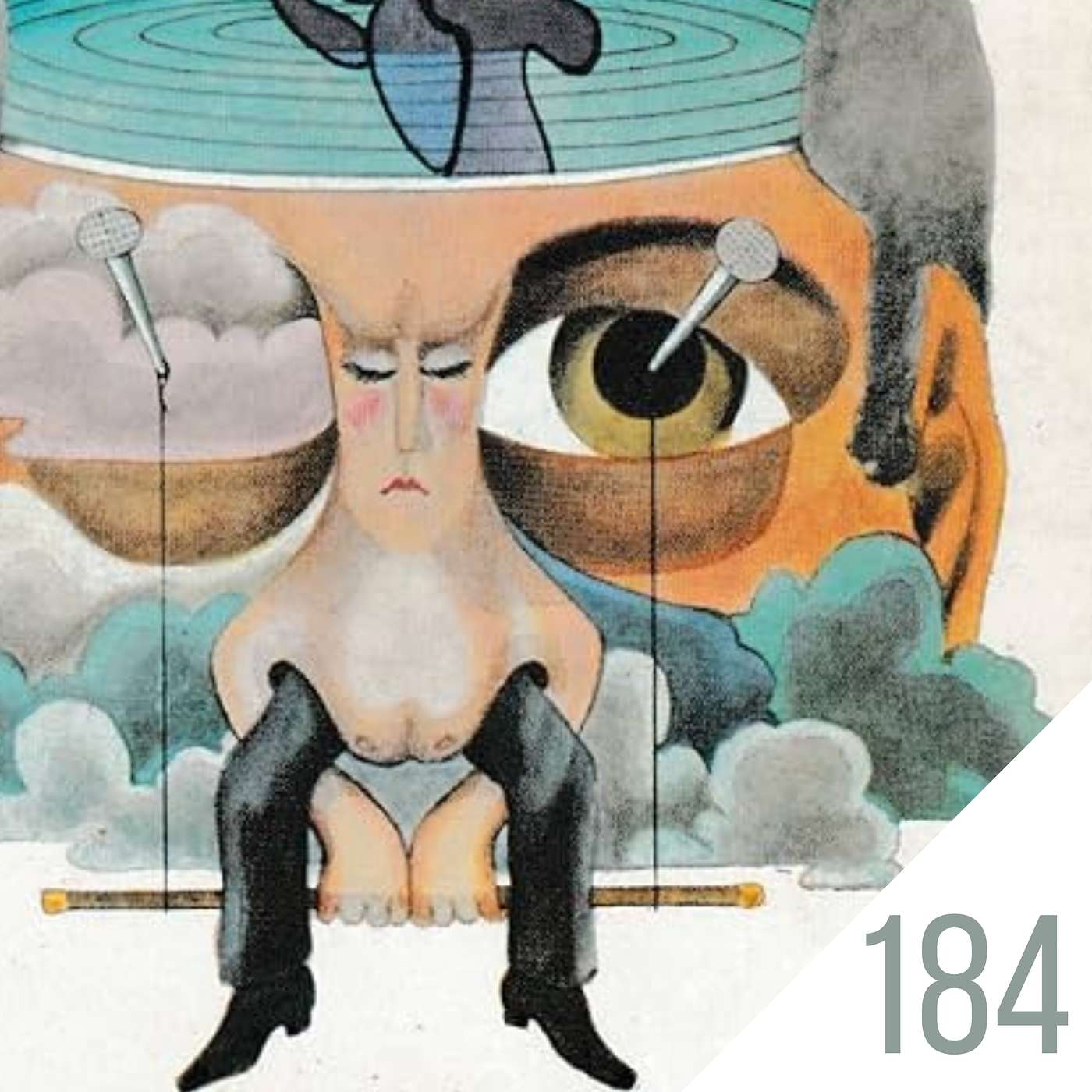
Another comic inferno from another stupid timeline Back in November, in episode 176, I took a look at The Reproductive System, the first novel by the US writer John Sladek, who produced almost all of his work while living in the UK. This episode tackles his second novel, the even more anarchic The Müller-Fokker Effect, published in 1970. It was not successful, and Sladek did not publish another SF novel for a decade. However, The Müller-Fokker Effect is one of those novels from decades past...
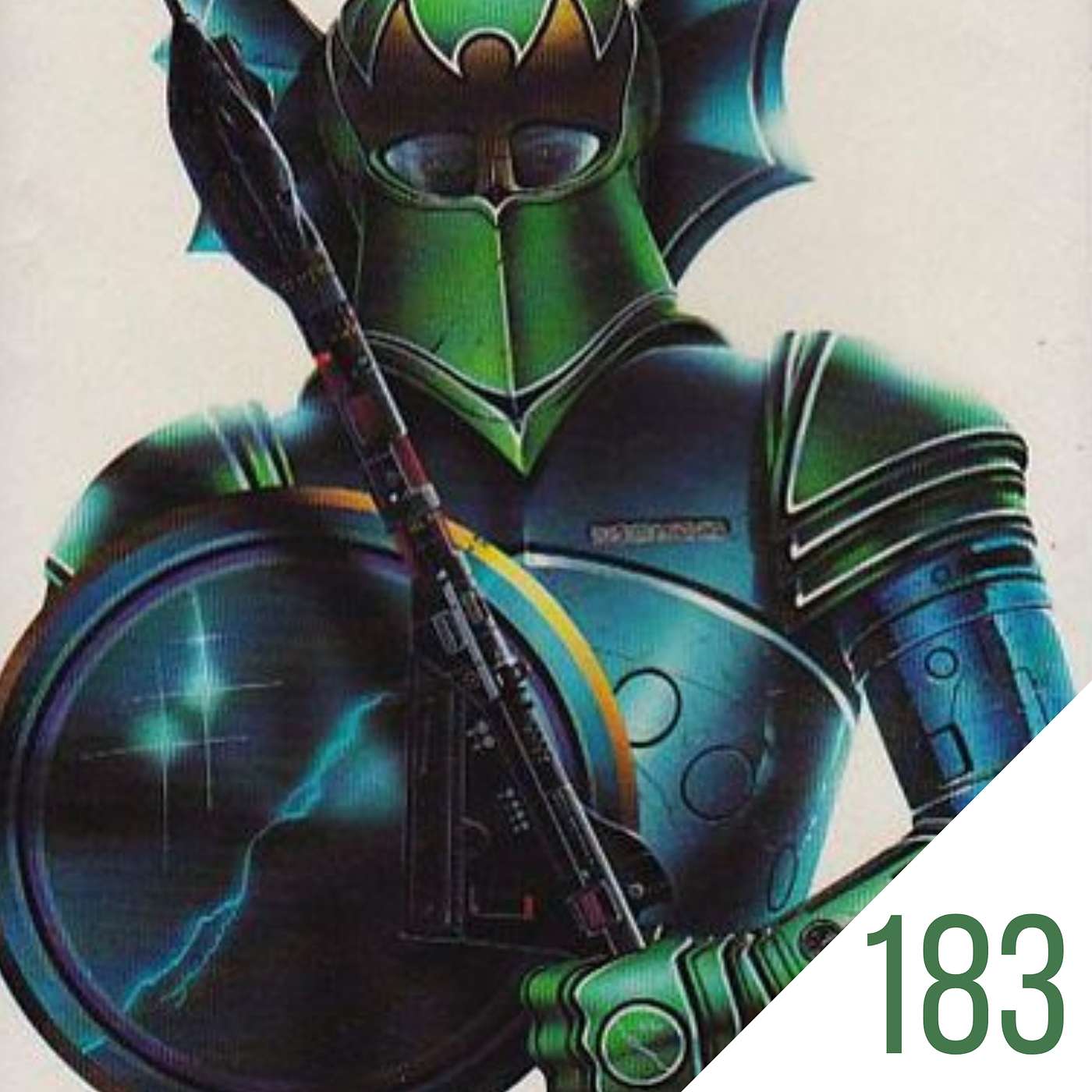
Corporate warfare becomes deadly as the state crumbles Robert Asprin was best known for the humorous fantasy series MythAdventure and for creating the influential Thieves' World series of anthologies which ran from 1979 to 1989. But before launching either of those long-running enterprises, Asprin got his start in science fiction. His story of corporate mercenaries in the August 1977 issue of Analog was followed immediately by a full-length version, his debut novel The Cold Cash War. Fairly ...

The definitive travel guide to a place that never existed Like J. G. Ballard's Crash - featured in episode 149 - Last Letters From Hav is another novel which might challenge or expand definitions of science fiction. Originally published in 1985, the book is a work of veteran British travel writer Jan Morris, who died in 2020. Sitting comfortably alongside her books on cities like Oxford, Venice, and New York, it is a travelogue - the difference being that Hav is a fictional place. But what is...

The influential classic of enhanced intelligence with a breakneck pace An early novel by Poul Anderson, Brain Wave (1954) is also a landmark science fiction story on the topic of intelligence enhancement. Unlike in the later Flowers for Algernon (1966) - see episode 148 - an explosive rise of brainpower is not the work of human scientists. Instead, the whole world gets a huge intelligence boost, as the Earth exits a vast cosmic field which for millions of years had inhibited "c...

It's time for the final episode of 2025! Find out which were the top 10 science fiction books I read over the course of the year, along with five honourable mentions. Plus, a brief reflection on how the year has gone, some plans for 2026, and a thank you to everyone who has listened, shared, and got in touch over the last 12 months. And: corny sound effects! Get in touch with a text message! For more classic SF reviews and discussion, visit andyjohnson.xyz. To get free weekly classic SF updat...

Published between 1999 and 2001, the Mammoth trilogy is a fascinating set of linked SF novels by Stephen Baxter. In reality, mammoths died out 4,000 years ago but Baxter imagines a different fate for them. Thoroughly researched and at times quite moving, these are fine examples of science fiction which does without major human characters, and has readers view the world through the eyes of a very different creature. Get in touch with a text message! For more classic SF reviews and discussion, ...

A transitional 1950s novel of colonisation I'm somewhat sympathetic to Robert Silverberg's suggestion that the 1950s were the real "golden age of science fiction". In any case, that decade is notable for its fascinatingly transitional works, as SF shifted from the sometimes naive adventurism of the 1930s and 1940s, towards the more contemplative uncertainties of the 1960s and 1970s. Originally published in 1953, West of the Sun is a good example of this transition. The debut SF novel by Edga...

A beginner’s guide to her groundbreaking SF setting Between 1966 and 2000, Ursula K. Le Guin published seven novels and 17 stories in the Hainish setting, which together comprise a large proportion of her science fiction. Collectively, they have won numerous major awards and sparked a large and growing body of scholarship. Le Guin’s work is frequently invoked in discussions of feminism, anthropology, sociology, and gender in science fiction. She was and remains a major figure in so-called sof...

Machines run amok in a comic disaster ahead of its time The Science Fiction Encyclopedia states that "there is a false belief that SF and humour do not mix." The SFE does concede, though, that the two are more successfully fused in short stories rather than in the novel form. Like Douglas Adams, Harry Harrison, and Robert Sheckley, John Sladek was a writer who was able to make it work. The Reproductive System (1968) is Sladek's first SF novel, originally published in 1968. This frenzi...

The definitive time travel story, H. G. Wells' The Time Machine (1895), focuses on a protagonist who visits the extremely far future. Across over a century of time travel tales, in most cases it is the people of our own time who visit either the past or the future. Rather less commonly, the contemporary world plays host to a visitor from another era. The Masks of Time (1968) is one of those exceptions. This Robert Silverberg novel is set in the year 1999. A mysterious visitor, apparently a ...

Published in 1937, Katharine Burdekin's Swastika Night is a chilling depiction of a far-future fascist dystopia, in which the triumph of Nazism also represents oblivion for humanity and freedom. A precursor to Orwell's Nineteen Eighty-Four (1949), this is an under-recognised and chilling vision of the future which is troublingly relevant today. Get in touch with a text message! For more classic SF reviews and discussion, visit andyjohnson.xyz. To get free weekly classic SF updates, ...

Originally published in 1962, John Brunner's Society of Time stories are set in an alternate Britain in the 1980s. It is 400 hundred years since the Spanish Armada was not defeated, and the Catholicism of the Spanish Empire rules much of the world. The Empire possesses the gift of time travel, though only a new pope is given the ultimate privilege of going back to witness the life of Jesus Christ... These fantastic stories follow the adventures of Don Miguel Navarro, an agent of the Society ...

It was British science fiction writer Olaf Stapledon, not US physicist Freeman Dyson, who first imagined the "Dyson sphere" - an immense macrostructure which would enclose and harness the entire energy of a star. Beginning with his BSFA Award-winning novel Orbitsville (1975), Northern Irish SF writer Bob Shaw explored this dizzying concept in a trilogy of novels. This episode explores not only Orbitsville but also its belated sequels Orbitsville Departure (1983) and Orbitsville Judgement (199...

Comments

Download from Google Play

Download from App Store
 United States