


 Claim Ownership
Systems Simplified
Subscribed: 14Played: 155
Subscribe

Description
This is the Systems Simplified podcast where we feature top leaders who share stories on how to successfully systematize a business.
396 Episodes
Reverse
Introduction of the Guest Alex Moscow is a public relations and visibility expert with more than 25 years of experience helping leaders turn their knowledge into authority. He began his career working with major organizations and senior executives to build media profiles that positioned them as thought leaders. Over time, he shifted to working with growing businesses and realized that smaller brands often have more valuable insights, yet struggle to communicate them. Today, Alex teaches entrepreneurs how to leverage their experience, package their expertise, and become the go to experts in their markets.
Introduction of the Guest Lisa Even is a keynote speaker, bestselling author, leadership coach, and host of the Good Ripple Effect podcast. With a background in healthcare operations and leadership, Lisa has worked with major companies such as ESPN and Disney, helping leaders build presence, create trust quickly, and strengthen organizational culture. Lisa now focuses on teaching teams how to create positive ripple effects, implement practical leadership tools, and increase joy in both work and life.
In This Episode A thriving business requires more than good processes. It requires the right people, a supportive culture, and consistent accountability. In this episode of Systems Simplified, Adi Klevit interviews Tevia Hoalst, founder of TeKoda Accounting, about how she built a company known for its low turnover, strong culture, and excellent client relationships. Tevia shares how her early experiences in a poorly run department shaped her commitment to empowerment, trust, and independence. She explains her onboarding system, how she uses KPIs to measure performance, how her team maintains nearly perfect retention, and why strong processes create consistency for both employees and clients. Tevia also discusses her client touchpoint strategy inspired by the Disney Institute, and her vision for future expansion through acquisitions.
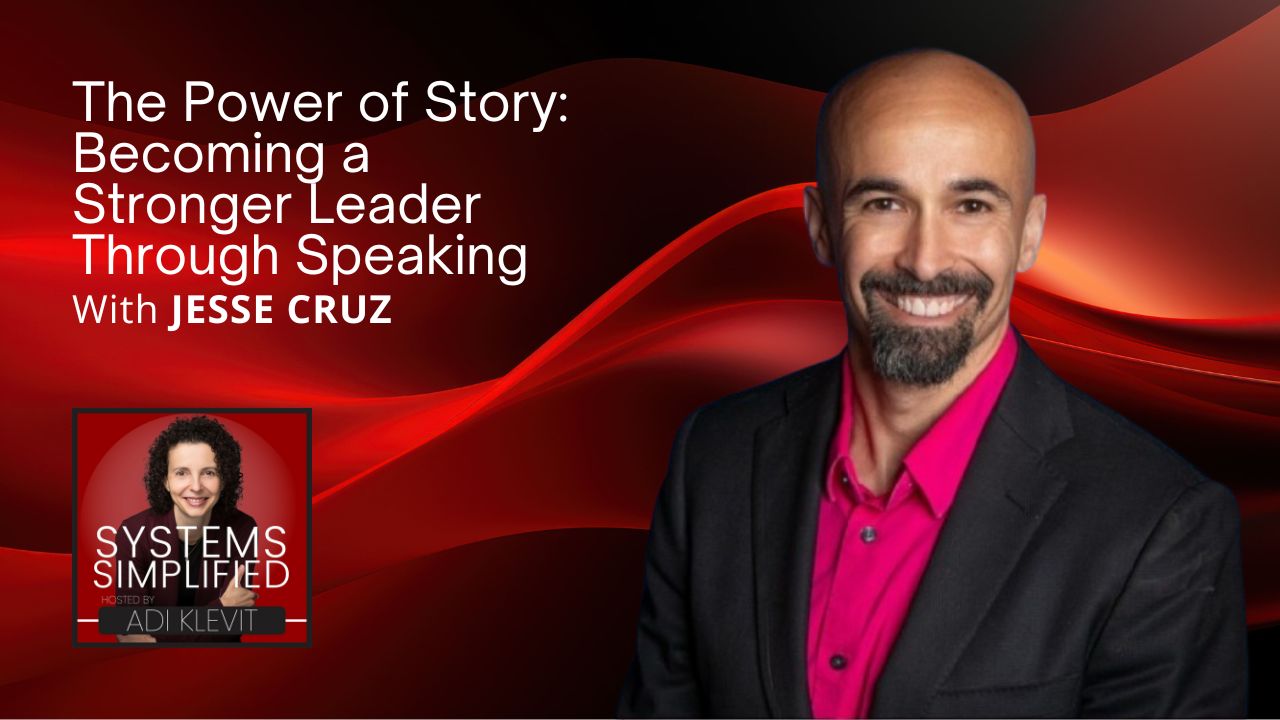
In This Episode Speaking on stages is one of the fastest ways for leaders to build trust, expand visibility, and grow their business. Yet many entrepreneurs overlook speaking as a strategic tool for connection and credibility. In this episode of Systems Simplified, host Adi Klevit interviews Jesse Cruz about how storytelling and speaking can strengthen leadership and accelerate business development. Jesse shares the emotional story that led him to speak, and he explains why vulnerability, when shared at the right time, can be a bridge to a deeper connection with his audience. He also outlines the core elements of effective storytelling, the importance of simple language, how to build a clear three-step framework for any presentation, and how blending personal story with professional expertise leads to stronger trust and higher engagement. Jesse discusses when entrepreneurs should start speaking, how to avoid "trauma dumping," and why preparation is essential for confidence on stage.
In This Episode Entrepreneurs pour time, creativity, and resources into building their brand, but many fail to protect the intellectual property that makes their business valuable. In this episode of Systems Simplified, host Adi Klevit interviews Tenicia Moulden about how entrepreneurs can protect their brand, intellectual property, systems, and creative work. Tenicia explains the core elements of a strong brand, the four types of intellectual property every business should understand, and the strategic process she uses to help clients validate and protect their assets. She also discusses common mistakes entrepreneurs make when trademarking too early, how to safeguard trade secrets and internal processes, and how to set healthy boundaries and protections with employees. Tenicia shares her perspective on how AI is changing the landscape of intellectual property and why documenting your ideas and creations is now more critical than ever.
In This Episode Many entrepreneurs stay stuck because they compete in the wrong part of their market. They underprice their services, lack clarity in their offers, or blend in with everyone else. In this episode of Systems Simplified, host Adi Klevit talks with Ann Carden about how to reposition your business for higher-value clients and greater profitability. Ann explains the systems behind premium offers, strong market positioning, and building a brand that communicates expert-level authority. She also shares how she helps clients design "million-dollar offers," build confidence in their value, and create an online presence that attracts opportunities without constant effort.
In This Episode What makes a great salesperson, and how can business owners help their teams reach their full potential? In this episode of Systems Simplified, host Adi Klevit talks with Bob Paskins, founder of Catapult, about his structured LAUNCH framework for developing effective sales teams. Bob explains how the program helps identify talent, train sales professionals, and systematize the entire sales process for predictable growth. He breaks down each step of the LAUNCH acronym: Locate targets, Approach prospects, Understand needs, Navigate the sales process, Close the deal, and Harness relationships. Bob also shares how business owners can align their teams, manage objections, and build lasting client relationships that drive referrals and repeat business.
In This Episode In this episode of Systems Simplified, host Adi Klevit talks with Nikki Ostrower about how she built three successful wellness brands by combining purpose, passion, and systems. Nikki shares her journey from working in corporate sales to experiencing burnout and recovery — an experience that ultimately inspired her to dedicate her life to health and wellness. She explains how she built NAO Wellness from her apartment in New York City, scaling it into a thriving company serving both individuals and corporations. When pregnancy forced her to step back, Nikki discovered the power of strong systems and trusted teams. That moment sparked a lasting lesson: when you have the right people, processes, and systems, your business can thrive without you. She goes on to describe how she launched her first wellness center, pivoted during COVID-19 to create the viral Ear Seeds product, and later co-founded Lice Mamas, a company redefining lice treatment with safe, modern methods. Nikki's story is one of resilience, innovation, and leadership through purpose. By focusing on systems and authenticity, she continues to grow businesses that not only succeed but also give back to the community.
In This Episode In this episode of Systems Simplified, host Adi Klevit speaks with Michael Devous about transforming fear into a leadership advantage. Michael recounts how his challenging childhood and experience in the performing arts taught him resilience and self-awareness. These lessons later inspired his Four F's Framework, a process that guides leaders to face fear, reframe it, and use it as a tool for growth and connection. Adi and Michael explore how authenticity drives effective leadership systems. Michael explains that many executives struggle because they pursue someone else's definition of success rather than their own. He helps leaders reconnect with their core values so their systems, communication, and relationships reflect genuine intent and trust. The discussion highlights empathy as a cornerstone of implementation. Michael emphasizes that leaders must shoulder responsibility for system outcomes and create environments where teams feel empowered to contribute improvements. Adi connects this to her work on system design, reinforcing that understanding the "why" behind a process ensures lasting success and engagement. Together, they reveal how authentic, empathetic leadership turns systems into vehicles for connection, efficiency, and sustainable impact.
In This Episode In this episode of Systems Simplified, host Adi Klevit talks with global sales mentor Zach Selch about the systems and mindsets that drive scalable international sales. Zach shares how he helps VPs of sales move from reactive selling to strategic, process-driven growth. He explains that most companies have strong systems for their domestic market but lack structure in their international sales efforts. By introducing data-driven visibility, defining clear buyer journeys, and building repeatable processes, Zach helps companies multiply their sales — sometimes by 1,000% or more. He also emphasizes the power of consistent follow-up, explaining how it builds trust, credibility, and client confidence. From using CRMs effectively to designing creative follow-up tactics like sending global candy-filled advent calendars, Zach shows how small systematic touches can yield huge results. Finally, he shares what makes a great global VP of sales: resilience, cultural awareness, flexibility, and the discipline to follow systems.
In This Episode In this episode of Systems Simplified, host Adi Klevit talks with Michelle Savage about transforming publishing into a structured, empowering process for women. Michelle shares how her experience as a writer and editor revealed inefficiencies in traditional publishing and inspired her to build Sulit Press, a system that centers on author experience, support, and community. Adi and Michelle explore the multi-author publishing model, a 90-day program combining coaching, collaboration, and collective marketing to help women publish confidently. This structured process removes the chaos from creativity, ensures quality storytelling, and expands visibility through shared networks. The conversation also highlights the deeper transformation authors experience through writing. Michelle explains how storytelling builds confidence, personal growth, and professional credibility—helping women clarify their message, strengthen their voice, and attract aligned opportunities.
In This Episode In this episode of Systems Simplified, Adi Klevit sits down with Alice Heiman to discuss how structured systems can revolutionize the sales process. Alice shares how her early experiences as a teacher shaped her ability to build processes that help sales teams stay organized, accountable, and focused on results. Adi and Alice connect over their shared belief that structure and consistency lead to scalability—and that even creative, fast-moving teams benefit from strong systems. Together, they explore why customer retention begins at the close of the deal—or even before. Alice breaks down her "bow tie" model of sales, which links the acquisition process to retention, upselling, and referrals. She explains how involving customer success teams early creates smoother onboarding and greater long-term satisfaction. Adi adds insights from her process consulting work, highlighting how aligned systems across departments reduce friction and improve delivery. The conversation closes with a deep dive into referrals and sales consistency. Alice shares that most companies miss out on growth because they lack referral systems or fail to incentivize asking. By documenting every step—from onboarding to follow-up—leaders can ensure sales efforts are repeatable, measurable, and scalable.
In This Episode In this episode of Systems Simplified, Adi Klevit speaks with Megan Beattie about the systems that power sustainable lead generation. Megan shares her journey from 17-year-old telemarketer to industry-leading consultant, revealing how she scaled companies without relying on inbound leads or aggregators. Adi highlights Megan's innovative, can-do attitude—one that replaces excuses with systems and turns data into sales opportunities. Together, they discuss how mindset and process go hand in hand. Megan explains why business owners must build systems that extract value from every lead, whether new or old. She and Adi break down how to design CRM processes, categorize leads effectively, and create re-engagement cadences that reignite interest long after initial contact. Finally, the conversation explores talent systems—how to train and develop people into high-performing team members. Megan details her philosophy of hiring for character and training for skill, showing how consistent systems remove dependency on "unicorn hires" and empower businesses to grow predictably.
In This Episode In this episode of Systems Simplified, host Adi Klevit interviews Natalie Nathanson, Founder and CEO of Magnetude Consulting, about how artificial intelligence is reshaping marketing and what it means for systems, leadership, and strategy. Natalie shares how her firm helps businesses combine long-term vision with practical execution to drive growth. She explains how marketing teams can use AI for efficiency without sacrificing creativity or strategy. Together, Adi and Natalie discuss the importance of solid systems, clean data, and process documentation before layering in automation or AI tools. Natalie also outlines the balance between human expertise and automation—where AI can take over repeatable tasks, but humans must provide critical thinking, creativity, and empathy. They discuss how curiosity, agility, and experimentation are becoming essential leadership qualities and how companies can train their teams to adapt and innovate in this new era.
In This Episode In this episode of Systems Simplified, host Adi Klevit interviews Kathy Durfee, Founder and CEO of TechHouse, about building a purpose-driven technology company grounded in systems and human connection. Kathy shares her unconventional journey from studying organic chemistry to becoming a leader in tech consulting, explaining how necessity, adaptability, and a mission to help others shaped her entrepreneurial path. Kathy discusses how TechHouse helps small and mid-sized businesses grow by combining process optimization with practical technology. She introduces the company's diagnostic blueprint, a structured approach that identifies root causes before implementing change. Through examples, she illustrates how automation, process mapping, and data visibility can help teams reduce friction, make smarter decisions, and scale sustainably. She also highlights how artificial intelligence is transforming small business operations. Rather than replacing people, Kathy shows how AI can amplify human expertise, enabling entry-level employees to learn faster and contribute more effectively. Her examples demonstrate how automating data collection, centralizing information, and applying AI to replicate expert knowledge can free teams to focus on innovation. Finally, Kathy reflects on the future of work and why small businesses are best positioned to thrive in the AI era. She emphasizes that well-documented systems and transparent processes build confidence, foster agility, and create opportunities for talented individuals seeking meaningful work in more flexible, people-centered organizations.
In This Episode In this episode of Systems Simplified, Adi Klevit speaks with Peter Goldstein about how entrepreneurs can build investor-ready companies by shifting their mindset and establishing strong systems early on. Peter shares his journey from launching a specialty food distribution company in New York in his twenties to achieving his first strategic exit at age 30. This early success shaped his perspective on scaling, exiting, and eventually working in capital markets with companies around the world A central theme is the exit mindset, the practice of running a business as if it is preparing for a future sale, merger, or IPO. Peter explains how this mindset affects financial reporting, legal frameworks, and operational structures. He uses the analogy of keeping your house in excellent condition not only when you are ready to sell but while you live in it, ensuring both enjoyment and readiness for future opportunities Peter also clarifies that companies do not need to be unicorns to go public. Nasdaq and the New York Stock Exchange offer tiers suited for smaller, emerging companies. He outlines both the opportunities and the challenges of going public, including governance, compliance, and managing investor expectations. Investors value governance, cash flow, and scalability more than hype, and these elements determine whether a business is truly investor-ready Finally, Peter emphasizes that systems and processes create confidence. When clear, repeatable systems are in place, teams, stakeholders, and investors trust the company's ability to grow and perform consistently. This confidence forms the foundation for successful scaling and strategic exits.
In This Episode In this episode of Systems Simplified, Adi Klevit speaks with Marcus Cauchi about the systems and mindsets that separate transactional salespeople from true business partners. Marcus introduces his idea of "intelligently lazy design" — the art of doing less but better, on purpose, over time. Drawing from his background under mentors like Bob Master and Mark Goulston, Marcus explains how building systems that prioritize customer safety and empowerment leads to better decisions and long-term trust. He also breaks down why most companies fail to scale: they focus on the wrong end of the problem. Instead of connecting departments and empowering decision-making at every level, they create silos. For Marcus, a go-to-market strategy isn't a collection of functions — it's a living organism. His insights reveal how thoughtful preparation, empathy, and systematic alignment can transform how teams sell, serve, and sustain success.
In This Episode What does real business freedom look like, and how do you achieve it? In this episode of Systems Simplified, host Adi Klevit talks with John Nieuwenburg, founder of W5 Coaching, about how entrepreneurs can move from daily firefighting to structured freedom. John walks through his Five Steps to Freedom framework, which helps business owners progress from start-up chaos to scalable control through repeatable systems and well-documented processes. He also shares practical methods for reclaiming time, improving team performance, and resolving money-related challenges. From identifying your "Oh Sh*t List" to understanding why documentation is key, John offers a clear path toward creating a business that runs smoothly without constant owner involvement.
In This Episode Many leaders focus on growing their businesses through sales, systems, and strategy — but often overlook their most important resource: people. In this episode of the System Simplified podcast, Adi Klevit interviews Velveth Schmitz, CEO of HireBetter, to discuss how intentional talent planning and strong systems work hand-in-hand to build thriving organizations. Velveth shares how HireBetter partners with clients to align their people strategy with business goals — not just filling roles, but building cohesive, values-driven teams. She explains why onboarding should never be an afterthought and how having clear, documented processes helps new hires integrate seamlessly and stay engaged. The conversation also dives into the evolving relationship between people and technology. As an early adopter of AI, Velveth believes automation should amplify human creativity — freeing teams to focus on higher-value, people-centric work. She and Adi explore how leaders can embrace AI without losing sight of culture, communication, and community.
In This Episode When it comes to scaling a business, Cameron Herold believes success lies in the balance between strong systems and strong leadership. In this conversation with host Adi Klevit, Cameron shares how he helped 1-800-GOT-JUNK? grow from a small junk removal company into an international brand by creating simple, repeatable systems that anyone could follow. But systems alone are not enough. As Cameron explains, companies thrive when leaders know how to coach, communicate, and motivate their people to embrace those processes. He emphasizes his mantra of "sell them, don't tell them" by showing team members how systems make their jobs easier and more profitable. Cameron also offers a bold look at the future. He predicts that AI will transform and even replace many traditional jobs and coaching roles. However, he sees opportunity in adaptability and community, where leaders leverage AI tools to enhance performance and focus on collaboration. Through his COO Alliance, Cameron continues to foster learning, sharing, and leadership evolution among top executives around the world.

Comments

Download from Google Play

Download from App Store
 United States