


 Claim Ownership
The Patterson Podcast
Subscribed: 0Played: 0
Subscribe

Description
The Patterson Podcast is a long-form interview podcast based in Edinburgh, Scotland. The goal is to speak to people from all walks of life and provide a platform to share their stories and ideas.
12 Episodes
Reverse
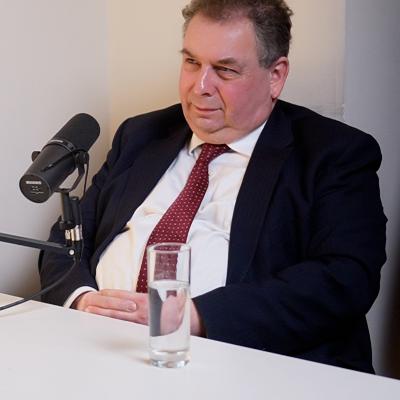
Dr. Gordon MacDonald is the Chief Executive of Care Not Killing, a UK campaign organisation opposed to the legalisation of assisted suicide and euthanasia. The organisation was founded in 2006 as a coalition of disability groups, hospices, and palliative care professionals in response to bills brought before Westminster, and has since campaigned against similar legislation at Holyrood, including the End of Life Assistance (Scotland) Bill in 2010 and the Assisted Suicide (Scotland) Bill in 2015. Before taking on his current role, MacDonald worked with CARE and served as an advocate for UNICEF in Scotland.00:00 — Introduction to the Assisted Dying for Terminally Ill Adults (Scotland) Bill and Care Not Killing. Gordon holds a PhD in Economics. 02:13 — Gordon's background and path to becoming Chief Executive of Care Not Killing04:47 — History of the euthanasia debate in the UK, from the 1930s to the early 2000s07:20 — Previous assisted dying bills in the Scottish Parliament: 2010 and 201509:07 — Definitions: assisted dying, assisted suicide, and euthanasia11:27 — The Netherlands: expansion of euthanasia practice beyond original legal limits13:40 — Rising death tolls in Canada and Oregon and the normalisation of assisted dying20:17 — Contents and ambiguities of Liam McArthur's bill22:27 — What happens when assisted suicide drugs fail to cause death25:29 — Comparing scale: Oregon's assisted suicide figures versus Canada's euthanasia numbers27:34 — Financial costs, the Scottish Government's response, and the flawed financial memorandum30:22 — Impact on palliative care funding and hospice staffing35:36 — The case against legalisation across Western jurisdictions38:16 — Autonomy, human rights, and the limits of individual choice43:57 — Agents of the state and the right to life under the ECHR50:13 — Socioeconomic disparities in who accesses assisted dying in Canada and Oregon53:27 — What happens after the 17 March Stage 3 vote57:14 — Gordon's personal experience of his parents' deaths and the difference palliative care made1:02:53 — Audience questions: the veterinary argument, public opinion polling, and the role of MSPsStay in touch - https://thepattersonpost.beehiiv.com/

Ash Regan is a Member of the Scottish Parliament, currently sitting as an independent having previously been a member of the SNP. Her Unbuyable Bill, which sought to criminalise the buying of sex while decriminalising the selling of it, reached Stage One of the Scottish Parliament before being voted down. We discussed why she feels prostitution laws in Scotland need to change.TimestampsTimestamps00:00 — Introduction00:58 — What the Unbuyable Bill proposes05:13 — The SNP votes the bill down at Stage One08:52 — How current Scottish law on prostitution works10:44 — What the bill would criminalise and decriminalise15:02 — The Nordic model — how it works and the evidence behind it16:00 — Germany and Sweden as contrasting case studies18:38 — The consent debate19:32 — Who is in prostitution — statistics on trafficking, abuse, and coercion24:09 — Grooming victims and trafficking victims27:24 — The Epstein files and exploitation across society29:38 — Scottish Government inaction and prospects for future legislation32:36 — The “driving underground” argument36:26 — Ash’s plans to stand as an independent at the next electionRelevant LinksAsh Regan — Scottish Parliament profile:https://www.parliament.scot/msps/current-and-previous-msps/ash-reganAsh Regan on X (Twitter):https://x.com/AshRegansNowThe Unbuyable Billhttps://unbuyable.org/

Dr. Laura Cooper is a researcher at the University of Edinburgh who led a groundbreaking study on prototaxites, an ancient organism that has puzzled scientists for nearly 170 years. Her research, published in the journal Science, reveals that well-preserved fossils from Aberdeenshire represent a distinct extinct lineage that doesn't fit into any existing biological kingdom. She recently completed her PhD, with this discovery forming a central part of her doctoral thesis.Timestamps:00:00 - Introduction to Dr. Laura Cooper and the significance of her research being published in Science01:25 - What is prototaxites and why it's caused scientific debate for 170 years02:21 - The origin of the name "prototaxites" and why it's misleading02:44 - How the organism has been classified throughout history, from yew tree to fungus03:07 - The exceptionally well-preserved specimens from Aberdeenshire, Scotland03:40 - Why prototaxites doesn't fit with fungi based on chemical composition and anatomy04:14 - The massive size of these organisms—at least eight meters long04:39 - Why prototaxites doesn't fit into any known major groups of complex life05:22 - Understanding biological kingdoms: bacteria, prokaryotes, and eukaryotes06:13 - The protists group and how genetic information has revealed multiple separate lineages07:20 - Why prototaxites represents a separate large organism lineage that went extinct 08:44 - Early land environments when life was first coming onto land10:30 - The timeline of when plants colonized land and prototaxites' role in early ecosystems15:45 - How prototaxites lived and functioned in ancient landscapes22:18 - The structure and anatomy of prototaxites compared to modern organisms 28:50 - How the organism grew and what its tubes looked like35:20 - The Rhynie Chert fossil site and its exceptional preservation42:15 - Techniques used to study the fossils, including high-resolution imaging48:30 - Chemical analysis that revealed prototaxites wasn't made of chitin like fungi55:40 - What the organism might have eaten or how it obtained nutrients1:02:15 - The ecological impact of these massive organisms on early terrestrial environments1:08:30 - Why prototaxites went extinct and what replaced it1:16:10 - Future research directions and similar organisms being studied1:17:04 - Looking for smaller, earlier versions of prototaxites to understand its evolution1:18:09 - Where to find more prototaxites specimens around the world1:19:29 - The specimen going to the National Museum of Scotland's research collection1:21:22 - Laura's PhD viva examination and completion1:22:19 - What a viva is and how it works as a final PhD examinationRelevant Links:University of Edinburgh - https://www.ed.ac.ukNational Museum of Scotland - https://www.nms.ac.ukClick the link below to sign-up to The Patterson Post - a brief collection of important news stories, interesting ideas, and useful resources. Delivered on Saturday mornings.https://thepattersonpost.beehiiv.com/?_gl=1*gtxn5p*_gcl_au*OTI1Nzg2NDMzLjE3NzAxMjE3NDY.*_ga*MTgzMjc0NDYxNC4xNzcwMTIxNzQ2*_ga_E6Y4WLQ2EC*czE3NzAxMjE3NDUkbzEkZzEkdDE3NzAxMjgyMDgkajYwJGwwJGgxNjIxNzIzOTg2Thank You for listening.

Jacob Smith is a journalist and food writer based in Edinburgh who has worked for The Courier and various publications as a freelance writer. He studied sport science and later earned a masters in Conflict, Security and Development before transitioning into journalism and creative writing. He is currently working on a literary fiction novel while employed as a kitchen porter at Dog Star Restaurant, Edinburgh.Timestamps:00:00 - Introduction to the episode and overview of conversation topics00:53 - How Jacob got into jiu-jitsu through his partner and his athletic background in rugby and boxing01:56 - Educational journey from sport science to masters in Conflict, Security and Development03:07 - Why Jacob chose to study international security and development while teaching English in Spain04:12 - What deterred him from pursuing a career in international development and aid work05:42 - The challenges of working in large international organizations versus grassroots charities06:01 - Discussion comparing approaches to humanitarian work, referencing the Oleg Dmitriev episode08:30 - How Jacob transitioned into journalism and got his start in writing12:45 - Early freelance writing experiences and learning the business side of journalism18:20 - Getting hired at The Courier and what that role involved24:15 - Food writing as a specialty and how that developed31:40 - The realities of being paid as a freelance writer38:25 - How AI is impacting journalism and writing professions45:10 - Concerns about AI-generated content and its effect on the industry52:30 - The importance of building relationships with editors58:45 - Deciding to leave The Courier and return to freelance work1:05:20 - Taking a job as a kitchen porter while pursuing creative projects1:12:35 - The difference between journalism and creative writing1:18:50 - Dealing with rejection and the emotional side of creative work1:25:15 - The practical challenges of making a living as a writer1:32:40 - Why working in kitchens informs both his novel and food writing1:38:25 - The writing process and discipline required for long-form fiction1:44:10 - How to know when a piece of writing is finished1:50:23 - Current projects: literary fiction novel about toxic masculinity and male friendship in kitchens1:52:31 - Plans for future food writing pieces and submissions to national publications1:53:48 - The ups and downs of a creative career path1:54:12 - Living with uncertainty and having supportive people around you1:56:56 - Final thoughts on taking creative risks and Jim Carrey's lesson about playing it safeRelevant LinksJacob Smith's Instagram Profile: https://www.instagram.com/jlsmithwriter/Dogstar Restaurant, Edinbrugh: https://dogstarleith.com/The Courier: https://www.thecourier.co.uk/Thank you for listening.

Dean Robertson is a fitness coach and business owner based in Edinburgh. He runs Elysium and CrossFit Edinburgh, an 11,000-square-foot facility in the heart of the city. Dean has been in the fitness industry for 19 years and holds a master's degree in strength and conditioning from Edinburgh University.Timestamps:00:01:16 - Introduction and what Dean does beyond personal training00:03:10 - Dean's background, business overview, and owning Elysium and CrossFit Edinburgh00:04:08 - Educational journey through Edinburgh College, Napier University, and master's degree00:05:03 - The deeper role of personal trainers and handling vulnerable conversations with clients00:06:29 - Using strength training as a vehicle for mental resilience and life improvement00:07:53 - Finding what makes people tick and helping fitness become a passion rather than a task00:08:46 - Arnold Schwarzenegger's perspective on training and the transformative power of exercise01:48:03 - Creating a workplace culture where employees genuinely enjoy what they do01:48:43 - Reflections on people who hate their jobs and the importance of finding fulfillment01:49:31 - Future plans for the business and small victories ("greenlights")01:50:32 - Inspiration from his nephew with cystic fibrosis and maintaining gratitude01:51:47 - Final thoughts on authenticity, being yourself, and enjoying every dayLinks:Dean's Instagram: https://www.instagram.com/iamelysium/?hl=enCrossFit Edinburgh: https://crossfit-edinburgh.com/Elysium Fitness Edinburgh: https://elysium-edinburgh.com/Thank you for listening.

Oleg Dmitriev is the leader of Sunflower, a Scotland-based charity that delivers humanitarian aid directly to people in Ukraine's most dangerous frontline areas. He has made dozens of trips into conflict zones including Kherson, Kharkiv, and Sumy, bringing medical supplies, equipment, and essential aid to those who need it most. Through his work, he coordinates volunteers, manages complex logistics, and ensures that donations reach the people who desperately need them.KEY MOMENTS:00:00 - Introduction: Meeting Oleg Dmitriev from Sunflower Charity03:00 - The Work: Delivering Humanitarian Aid to Ukraine's Frontlines08:00 - Dozens of Dangerous Trips to Kherson, Kharkiv, and Sumy12:00 - The Animal Rescue Controversy: Why Prioritizing Humans Matters18:00 - How Sunflower Charity Operates: From Scotland to Ukraine24:00 - Finding People in Need: Social Media, Word of Mouth, and Connections30:00 - How to Donate: Money, Supplies, and Standing Orders35:00 - Medical Equipment and Life-Saving Supplies: What's Actually Needed42:00 - Why You Can't Just Send Big Lorries to the Frontlines48:00 - The Reality of Frontline Deliveries: Small Vehicles, High Risk55:00 - Volunteer Safety: Proper Training, Equipment, and Risk Assessment1:02:00 - Why Sending Untrained Volunteers is Immoral1:08:00 - The Cost-Effectiveness Problem: Buying Food Locally vs. Shipping1:15:00 - How the War Has Evolved: Drones, Technology, and Obsolete Tactics1:22:00 - The Technological Revolution on the Battlefield1:28:00 - Adapting Strategy: Learning What Works and What Doesn't1:35:00 - Ensuring Aid Reaches the End User, Not Warehouses1:42:00 - Future Plans: How Long Will the Mission Continue?1:48:00 - Team Management: Working with Volunteers from Around the World1:54:00 - The Importance of Rest and Sustainability in Humanitarian Work2:00:00 - Final Thoughts: How Everyone Can Support UkraineLINKS: Sunflower Charity Website: https://sunflowerscotland.co.uk/Ways to Donate: https://sunflowerscotland.co.uk/donate-to-support-ukraine/Follow Oleg's Work: https://sunflowerscotland.co.uk/about/sunflower-scotland-team/sunflower-scotland-team-oleg-dmitriev-mba/Thank you for listening.

In this episode, I spoke to Kyle Matthews, also known as 'The Milky Runner', who is running the entire perimeter of the UK. At time of publishing, Kyle has run 3800km with a backpack and tent, from September through to December, at just 19-years-old.We talked about why he is doing this, what it was like at the beginning, planning (or not) his days, running 50-60km per day, what he eats, and the effect it's had on him as a person.Kyle finishes his race between Christmas and New Year 2025, and is raising money for Family Action,You can find his fundraiser here.Thanks for listening.

In this episode, I’m joined by writer and novelist Chris Barkley, author of The Man on the Endless Stair.We talk about Chris’s journey as a writer — from early manuscripts and rejection, to publication — and use that as a starting point to explore bigger questions: how stories shape our understanding of the world, how trauma influences perception, and why certainty can sometimes be more dangerous than doubt.Our conversation covered metafiction, journalism, Buddhism, quantum physics, phenomenology, and psychology, touching on ideas like the middle path, synchronicity, and the role of wonder in a meaningful life. We also talk about Chris’s time working in an alternative school, how that experience shaped his writing, and why listening — rather than prescribing answers — matters so much.This is a wide-ranging, reflective conversation about creativity, humility, and what it means to participate in reality rather than trying to control it.Resources mentioned: The Man on the Endless Stair — Chris BarkleyIf on a Winter’s Night a Traveler — Italo CalvinoSix Memos for the Next Millennium — Italo CalvinoOn Writing — Stephen KingSteering the Craft — Ursula K. Le GuinBird by Bird — Anne LamottOn Becoming a Person — Carl RogersAnalytic Idealism in a Nutshell — Bernardo KastrupBiocentrism — Robert LanzaAtom and Archetype — Wolfgang Pauli & Carl Jung

Ronan Foley is a brown belt in Brazilian Jiu-Jitsu and coach at Low Tide BJJ in Edinburgh. Ronan was diagnosed with stage-4 Hodgkins Lymphoma earlier in the year, which stopped him from teaching and practising the sport he loves. We talked about diagnosis, treatment, and the joy of going into remission. Remember to subscribe to the podcast, and leave a review - it really helps!Ross
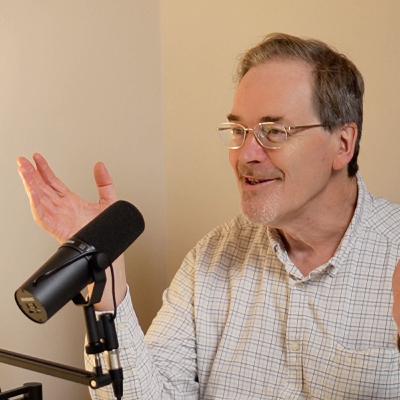
Dr Donald Smith is a Scottish storyteller, writer and cultural advocate. He was founding Director of the Scottish Storytelling Centre (2003-2014) and is the driving force behind the Scottish International Storytelling Festival, as well as a mentor in storytelling, theatre and community heritage work.
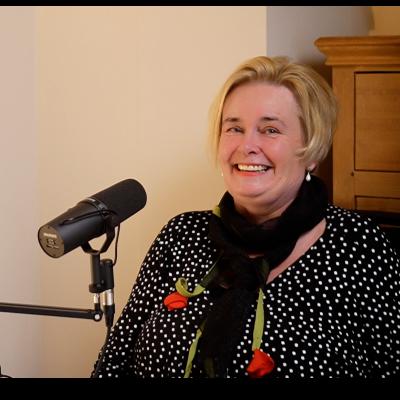
In this episode, I spoke to Suzanne Teed about what it's like to be a humanist celebrant. We discussed her role as a celebrant, the importance of ceremony, how to plan a wedding, funerals, feminism, Trump, and more. Subscribe to the podcast to never miss an episode, and consider leaving a review - it really helps. Enjoy!
Dr. Scott McCoull is a junior doctor working in the NHS. He has degrees in medicine and physiology. He's a triathlete, martial artist, and is currently working on a renal ward. We discussed his path into medicine, what life is like as a junior doctor, death and how to die, healthspan vs lifespan, the four pillars of health, his exercise regimen, how he recovered from a concussion, what he eats, sleep hygiene, emotional wellbeing and mental health. Please enjoy the first episode of The Patterson Podcast.
Comments

Download from Google Play

Download from App Store
 United States