


 Claim Ownership
Inside the GMAT
Subscribed: 77Played: 1,011
Subscribe

©2002-2025, Graduate Management Admission Council (GMAC™). All rights are reserved.
Description
Inside the GMAT is the podcast designed for anyone considering, applying to, or preparing for business school. Whether you're just beginning to explore the MBA path, knee-deep in applications, or focused on mastering the GMAT exam, this show is your inside track to smarter decisions, expert advice, and strategies that work.
Brought to you by GMAC (the makers of the GMAT exam) each weekly episode features candid conversations with admissions leaders, test prep experts, and successful students. You'll get practical tips for excelling on the GMAT, insights into how schools evaluate candidates, and real stories from people who've walked the same path.
From study strategies and score reports to networking, career pivots, and big-picture trends shaping graduate management education, Inside the GMAT brings you the guidance and confidence you need to succeed. If you want the inside scoop on the GMAT, admissions, and how to get the most out of your business school journey, this podcast is for you.
Brought to you by GMAC (the makers of the GMAT exam) each weekly episode features candid conversations with admissions leaders, test prep experts, and successful students. You'll get practical tips for excelling on the GMAT, insights into how schools evaluate candidates, and real stories from people who've walked the same path.
From study strategies and score reports to networking, career pivots, and big-picture trends shaping graduate management education, Inside the GMAT brings you the guidance and confidence you need to succeed. If you want the inside scoop on the GMAT, admissions, and how to get the most out of your business school journey, this podcast is for you.
87 Episodes
Reverse

"The score isn't the end. It's just the starting point." After ten weeks, GMAC Zach has finally taken his EA exam! In this candid debrief episode of Inside the GMAT, Zach sits down with instructor Stacey Koprince from Manhattan Prep to break down his real testing experience—from last-minute rescheduling to test-day distractions and everything in between. Zach walks through how he handled each section, what threw him off (including a chaotic testing environment and a few "wait, is this a typo?" moments), and where his strategy held up—or didn't. Together, they unpack the psychology of test-day performance, including how stress impacts timing, decision-making, and even basic comprehension. More importantly, this episode shifts from performance to perspective. Stacey explains how to properly debrief an exam, when to guess and move on, and why most candidates improve on a second attempt. The conversation reinforces a key message: your first test isn't just a score—it's data. For anyone preparing for the GMAT or EA, this episode is a masterclass in what actually happens on test day—and how to use it to your advantage moving forward. About Stacey: Stacey Koprince is one of the most recognized names in test prep, with over 15 years of experience teaching the GMAT, EA, GRE, and LSAT. As Manhattan Prep's Director of Content & Curriculum, she has written countless articles, guides, and video explanations that thousands of students rely on. A former management consultant, Stacey now spends her days helping future business leaders master tricky concepts and find confidence in their prep—something she's passionate about seeing "click" for every student. Helpful links: Register for the GMAT: https://www.mba.com/exams/gmat-exam/register Purchase GMAT Official Prep: https://www.mba.com/exams/executive-assessment/prepare GMAC Official Starter Kit (FREE): https://www.mba.com/exam-prep/gmat-official-starter-kit Manhattan Prep Official Starter Kit (FREE): https://www.kaptest.com/gmat/free/gmat-practice Inside the GMAT/GMAC Zach on Substack: https://substack.com/@gmaczach Key Takeaways: Your first test is data, not a verdict: Whether you're happy with your score or not, the real value is understanding what to improve next. Test-day stress changes everything: Timing, focus, and even reading comprehension can break down under pressure—even if practice went smoothly. Distractions are part of the test: You can't control your environment, but you can train for it—practice in imperfect settings to build resilience. Don't let one question sink your section: If you don't fully understand the question or know where to find the answer, guess and move on. Perfectionism is the enemy of performance: Spending too long chasing one answer often costs you more points elsewhere. Your brain under stress is not always reliable: "Typos" and confusion are often misinterpretations caused by pressure—not actual errors. Second attempts tend to improve: Familiarity with the test environment and format often leads to higher scores. Balanced scores matter: Consistency across sections (e.g., 11/11/11) is often stronger than uneven performance. Start early to give yourself options: Early prep reduces pressure and gives you flexibility to retake if needed. Chapters 00:00 Exam Rescheduling and Preparation 02:54 Test Center Experience and Initial Reactions 05:59 Debriefing the Exam Performance 08:44 Challenges During the Integrated Reasoning Section 11:47 Verbal Section Insights and Reflections 15:35 Navigating Difficult Questions 20:46 Quantitative Section Insights 22:25 Setting Score Expectations 24:14 Reflections on Preparation and Future Steps

"Lose the urgency. Accept the learning process." In a world where AI can generate answers instantly, what actually sets great decision-makers apart? In this episode of Inside the GMAT, GMAC Zach sits down with GMAT tutor and founder of GMAT Buddy, Ayham Shakra, to unpack the real skill behind success—not memorization, but reasoning. Ayham explains why the GMAT isn't a math or English test, but a training ground for structured thinking: the ability to filter noise, identify patterns, and make decisions under pressure. Together, they explore why so many test-takers struggle, how foundational skills shape high-level problem solving, and why progress on the GMAT is anything but linear. The conversation also tackles a bigger question: in an AI-driven world, are reasoning skills more important than ever? Ayham makes the case that they are—not just for test day, but for business school, your career, and life itself. About Ayham: Ayham has spent more than a decade helping aspiring MBA candidates prepare for and excel on the GMAT. He specializes in breaking down the preparation journey into focused, manageable sprints—designing personalized study plans that target weaknesses while amplifying strengths. Through extensive work with non-native English speakers and candidates from non-math backgrounds, Ayham has developed distinctive teaching methods that go beyond content mastery to strengthen core reasoning skills. His approach empowers students not just to improve their scores, but to think more clearly, efficiently, and confidently under pressure. Helpful links: GMAT Buddy: https://gmatbuddy.com/ Register for the GMAT: https://www.mba.com/exams/gmat-exam/register Purchase GMAT Official Prep: https://www.mba.com/exams/executive-assessment/prepare Inside the GMAT/GMAC Zach on Substack: https://substack.com/@gmaczach Key Takeaways The GMAT measures how you think—not what you know: It's about processing information, identifying patterns, and making decisions efficiently—not advanced math or perfect English. AI makes judgment more valuable, not less: When answers are everywhere, the real skill is knowing which ones are actually correct or useful. Foundation before finesse: High-level "aha" problem solving only works if basic skills (math, reading, logic) are automatic and intuitive. Progress is non-linear: Improvement comes in waves, not steady gains—patience is part of the process. Reasoning is a trainable skill: It's built through repetition, reflection, and learning to ask the right questions—not memorizing shortcuts. Timed conditions reveal true skill: Efficiency under pressure—not just correctness—is what separates top performers. The "aha moment" is the real learning unit: Each moment of clarity builds a repeatable mental framework for solving future problems. Don't compare your journey: Everyone starts from a different baseline—focus on your own growth trajectory. Chapters: 00:00 Introduction 06:08 The Impact of AI on Learning and Reasoning 11:09 How to Teach Reasoning Skills 22:40 Building a Strong Foundation for GMAT Success 26:24 The Role of Timed Conditions in Testing 29:31 Real-World Applications of GMAT Skills 33:42 Pursuing Aha Moments in Learning

"You should actually get a little bit excited when you make a careless mistake—because you're about to get better." Everyone makes careless mistakes on the GMAT—even well-prepared test takers. In this episode of Inside the GMAT, GMAC Zach sits down with Manhattan Prep instructor Stacey Koprince to break down why these mistakes happen and what you can actually do to prevent them. Stacey explains the critical difference between a true knowledge gap and a careless mistake—and why the latter is often the easiest type of mistake to fix. Instead of beating yourself up when you spot one, she argues you should see it as an opportunity to improve your score. The conversation explores the hidden causes behind careless errors, including stress, mental fatigue, time pressure, and small weaknesses in your knowledge foundation. Zach and Stacey also discuss practical strategies for identifying patterns in your mistakes and building new habits that interrupt them before they happen again. Listeners will learn how to use a review log (AKA error log) to track mistakes, how to diagnose the real reason an error occurred, and how to design simple "micro-checks" during problem solving that can prevent costly slip-ups. They also tackle an uncomfortable truth about adaptive exams like the GMAT: sometimes the smartest strategy is getting questions wrong quickly so you can protect your accuracy on questions you can get right. If you've ever finished a problem, looked at the correct answer, and thought "I knew that—how did I miss it?", this episode will give you a framework for turning those frustrating moments into real score gains. About Stacey: Stacey Koprince is one of the most recognized names in test prep, with over 15 years of experience teaching the GMAT, EA, GRE, and LSAT. As Manhattan Prep's Director of Content & Curriculum, she has written countless articles, guides, and video explanations that thousands of students rely on. A former management consultant, Stacey now spends her days helping future business leaders master tricky concepts and find confidence in their prep—something she's passionate about seeing "click" for every student. Helpful links: Register for the GMAT: https://www.mba.com/exams/gmat-exam/register Purchase GMAT Official Prep: https://www.mba.com/exams/executive-assessment/prepare GMAC Official Starter Kit (FREE): https://www.mba.com/exam-prep/gmat-official-starter-kit Manhattan Prep Official Starter Kit (FREE): https://www.kaptest.com/gmat/free/gmat-practice Inside the GMAT/GMAC Zach on Substack: https://substack.com/@gmaczach Key Takeaways: Careless mistakes aren't random—they usually follow personal patterns you can identify and fix. The process to fix them: identify the mistake → understand why it happened → build a new habit to prevent it. Small habits (like writing key information on scratch paper) can dramatically reduce errors. Keeping a review log helps reveal patterns across practice sessions. On adaptive exams, time management matters: sometimes it's smarter to guess quickly and protect accuracy elsewhere. Chapters: 00:00 Introduction to Careless Mistakes 05:04 Identifying Patterns in Mistakes 11:12 Types of Careless Mistakes 16:50 The Importance of a Review Log 24:02 Introduction to Effective Study Habits 27:53 Balancing Speed and Accuracy in Test Taking 34:46 Understanding and Managing Time During Tests 42:32 Finding the Right Balance in Test Taking
"The biggest score killer isn't one wrong answer. It's inconsistent pacing." Zach sits down once again with test prep expert Stacey Koprince—this time with a big milestone to share: his EA exam appointment is officially booked (date undisclosed, of course). From there, the conversation becomes a practical, stress-reducing roadmap for what to do after a practice test dip and before the real thing. Stacey helps Zach break down his recent practice exam results into three clear categories—strengths you can't coast on, fixable mistakes worth reviewing, and true "kryptonite" topics that are better strategically skipped. Along the way, they dig into why careless mistakes happen, how to review smarter (not longer), and how to make confident time-management decisions on test day—especially within the EA's panel-based format. The second half of the episode is focused on answering listern questions: how early is too early (or too late) to start studying, how many hours per week actually make sense, how EA prep compares to GMAT prep, and whether private tutoring is really worth the cost in the age of AI and free content. Stacey also calls out some of the worst test prep advice she sees—spoiler: grinding thousands of questions without proper review is at the top of the list. If you're approaching test day, debating between the EA and GMAT, or just want calmer, more strategic guidance on how to prepare like a pro, this episode is packed with reassurance, humor, and hard-earned insight. About Stacey: Stacey Koprince is one of the most recognized names in test prep, with over 15 years of experience teaching the GMAT, EA, GRE, and LSAT. As Manhattan Prep's Director of Content & Curriculum, she has written countless articles, guides, and video explanations that thousands of students rely on. A former management consultant, Stacey now spends her days helping future business leaders master tricky concepts and find confidence in their prep—something she's passionate about seeing "click" for every student. Helpful links: Register for the EA: https://www.mba.com/exams/executive-assessment/register Purchase EA Official Prep: https://www.mba.com/exams/executive-assessment/prepare GMAC Free EA Prep: https://www.mba.com/exams/executive-assessment/prepare/free-prep-resources Manhattan Prep EA Resources: https://www.kaptest.com/gmat/courses/executive-assessment-test-prep Inside the GMAT/GMAC Zach on Substack: https://substack.com/@gmaczach Key Takeaways: Not all wrong answers mean the same thing. Separate true content gaps, careless mistakes, and "kryptonite" topics—each requires a different response. You can't coast on your strengths. Overconfidence in strong areas is one of the most common sources of avoidable score drops. Letting go is a strategy, not a failure. Knowing in advance which question types you'll skip or guess on preserves time, confidence, and overall performance. Timing decisions matter more than individual questions. When to move on from a question can have an outsized impact on your score. Practice tests are for diagnosis, not judgment. A score dip on a practice exam is normal—and often a sign you're learning the right lessons at the right time. Learning happens between problems, not during them. Review, reflection, and targeted drills drive improvement—not sheer volume. The final days are about readiness, not grinding. Light review, strategy reminders, and mental freshness beat last-minute cramming every time. Test-day routines should reduce decisions, not add them. Plan logistics, warm-ups, food, clothing, and timing in advance so your brain is reserved for the exam. Free prep can work—until it doesn't. If your score is improving, keep going. If it stalls, higher-quality (and often paid) resources may be worth it. The EA and GMAT demand different prep philosophies. EA prep is typically shorter and threshold-based; GMAT prep often requires more time due to how scores are used in admissions and rankings. Chapters: 00:00 Zach Shares His Exam Booking and Location Choice 01:30 Study Strategies and Practice Test Review 06:08 Test Day Preparation and Environment Setup 13:51 Final Tips for the Day Before and Day Of the Exam 19:50 Managing Test Anxiety and Strategic Question Skipping 24:58 Your Questions: Resources, Study Buddies, and When to Seek Help

"This section isn't just about getting into business school — it's about being ready once you're there." Host GMAC Zach welcomes back GMAT expert Sergey Kouk from Admit Master for a deep dive into one of the most anxiety-inducing parts of the exam: the Data Insights section. Together, Zach and Sergey demystify what Data Insights really tests, why it matters for business school and recruiting, and how test-takers should approach it strategically rather than emotionally. Sergey explains how the section builds on the former Integrated Reasoning questions, why Data Sufficiency now plays a central role, and how success depends far more on logic, structure, and decision-making than on heavy math. The conversation walks through each Data Insights question type—Data Sufficiency, Graphics Interpretation, Table Analysis, Two-Part Analysis, and Multi-Source Reasoning—highlighting common pitfalls, practical tactics, and efficient workflows for each. Sergey emphasizes proactive thinking: identifying what information is needed before diving into the data, staying methodical under time pressure, and avoiding the temptation to brute-force calculations. Listeners also learn how to manage time effectively, when (and when not) to use the calculator, and why guessing strategically and moving on can be smarter than getting stuck. Throughout the episode, Sergey draws clear parallels between Data Insights questions and real business scenarios, reinforcing why this section is so relevant for MBA readiness and post-MBA careers. The episode wraps with actionable advice on reducing stress, using the review function wisely, and preparing for business school—not just the test. Whether you're intimidated by Data Insights or looking to refine your approach, this conversation offers clarity, confidence, and a roadmap for mastering the section. About Our Guest: Sergey Kouk is a rocket scientist turned GMAT instructor, who achieved a score of 750 on the GMAT after just 2 weeks of studying. He credits his success to the amazing teachers and mentors, who taught him advanced reasoning skills early in his career. He is the Co-Founder and CEO of Admit Master, a test preparation and admissions consulting company headquartered in Toronto, Canada. Sergey holds 3 university degrees, including an MBA. When he is not teaching prep classes, he spends time snowboarding or sailing a boat with his family. Sergey brings to this podcast over 15 years of experience teaching the GMAT to thousands of business school candidates, as well as insights from other experienced GMAT instructors and MBA Admissions Consultants at Admit Master, to help you get a great GMAT score and gain admission to your dream business school. Contact Admit Master: https://admitmaster.com/ Register for the GMAT: mba.com/register Key Takeaways: Data Insights isn't new—it's reframed. Most of the section comes from Integrated Reasoning, with Data Sufficiency moved in and expanded beyond pure math. Think like a manager, not a test-taker. Your job isn't to solve everything—it's to determine what information is needed to make a decision. Be proactive before reading the data. Clarify what the question is asking and what you need before diving into statements, graphs, or tables. Analyze statements independently in Data Sufficiency. Never carry information from one statement into the other unless the answer choices explicitly require combining them. Don't overanalyze the data. Data Insights questions intentionally include more information than you need—focus on structure first, details second. Use the calculator selectively. It can help with relative comparisons, but overuse often wastes time and isn't necessary for most questions. Invest time upfront to save time later. A quick "inventory" of graphs, tables, or tabs helps you answer multiple questions more efficiently. Multi-Source Reasoning is intimidating—but valuable. The upfront reading pays off since multiple questions can stem from the same data set. Time management beats perfection. If you're stuck, make an educated guess, flag the question, and move on—getting it wrong quickly is better than getting it wrong slowly. Data Insights mirrors business school and real work. Synthesizing data, prioritizing relevance, and making decisions under time pressure are exactly the skills MBA programs care about. Chapters: 00:00 Understanding Data Insights in GMAT 03:33 Data Sufficiency: Key Concepts and Strategies 24:34 Calculator Strategy 25:58 Time Management Going into the Next Four Question Types 29:32 Efficient Data Analysis Strategies 33:22 Specific Tactics for Graphics Interpretation 34:55 Table Analysis 36:33 Mastering Table Analysis Techniques 42:22 Approaching Two-Part Analysis Questions 48:44 Understanding Multi-Source Reasoning 53:39 Time Management Tips for GMAT Success
"This is why you take practice exams. So that you know what you DON'T want to do on test day." Practice tests don't always move in a straight line—and this week, GMAC Zach finds that out firsthand. After hitting a personal high on his previous EA exam practice exam with a 155, his latest score dips slightly, sparking an honest conversation about score fluctuations, confidence traps, and what really causes plateaus during EA prep. Joined, as always, by Stacey Koprince from Manhattan Prep, they unpack why the third practice exam is such a common stumbling point, how overconfidence can quietly lead to careless mistakes (yes, even in your strongest section), and why focusing only on weaknesses can cause your strengths to atrophy. They also dig into practical strategy: how to review practice exams effectively, how to organize quant scratch work, and how to decide when you're truly ready to take your final practice test—or the real thing. The episode closes with a thoughtful discussion on motivation, deadlines, and whether booking the official exam before you feel "ready" can actually be the push you need. If you've ever felt frustrated by a score dip or unsure about your next step in EA or GMAT prep, this one will feel very familiar—and very reassuring. About Stacey: Stacey Koprince is one of the most recognized names in test prep, with over 15 years of experience teaching the GMAT, EA, GRE, and LSAT. As Manhattan Prep's Director of Content & Curriculum, she has written countless articles, guides, and video explanations that thousands of students rely on. A former management consultant, Stacey now spends her days helping future business leaders master tricky concepts and find confidence in their prep—something she's passionate about seeing "click" for every student. Helpful links: Register for the EA: https://www.mba.com/exams/executive-assessment/register Purchase EA Official Prep: https://www.mba.com/exams/executive-assessment/prepare GMAC Free EA Prep: https://www.mba.com/exams/executive-assessment/prepare/free-prep-resources Manhattan Prep EA Resources: https://www.kaptest.com/gmat/courses/executive-assessment-test-prep Key Takeaways: Score dips are normal—especially around your third practice exam. As content knowledge increases, timing issues, overconfidence, and stubbornness can creep in. Focusing only on weaknesses can hurt your strengths. Mixed review matters, or previously solid skills can quietly slip. Careless mistakes often come from confidence, not confusion. Rushing through "easy" questions can cost just as many points as knowledge gaps. Practice exam review matters more than the score itself. Time spent, question-level decisions, and patterns of error are where the real insights live. Write everything down on quant. Clean, organized scratch work isn't about neatness—it's about thinking clearly under pressure. Grammar prep shouldn't break what already works. Use rules strategically to retrain your ear where it falls for traps, not everywhere. Your last practice exam is precious—but not sacred. For some test-takers, the real exam can function as a high-stakes "dry run" with better data. Deadlines can be powerful motivators—if you know yourself. Booking the test can help procrastinators push through, as long as flexibility remains. Don't tell anyone your test date. Fewer external expectations = fewer distractions on test day. Chapters: 00:00 Practice Exam Insights 07:04 Verbal Section Challenges 10:01 Quantitative Strategies 12:45 Considerations for Test Day 18:19 Setting Deadlines and Accountability
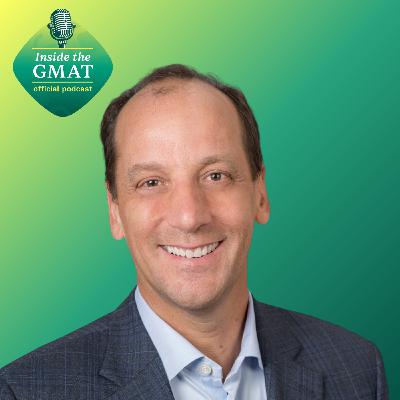
"AI is going to be as profound as fire or electricity. Even if that's one-millionth true, we have to take it seriously." In this episode of Inside the GMAT, GMAC Zach sits down with David Marchick, Dean of the Kogod School of Business at American University, to explore how business education is being reshaped by AI, career pivots, and the skills that truly matter over a lifetime. Marchick reflects on his unconventional career path and how those experiences shape his student-first approach to leadership. He explains why "psychic income," not just financial return, drives his work in higher education, and why helping students experiment, fail, and grow outside the classroom is just as important as mastering core business fundamentals. A major focus of the conversation is Kogod's rapid and award-winning integration of artificial intelligence into every aspect of the business school—from curriculum and faculty research to operations and student learning. Marchick shares how Kogod moved quickly to embed AI literacy across disciplines, partnered with tools like Perplexity, and created a culture where experimentation with emerging technology is encouraged rather than feared. The discussion also tackles broader questions facing prospective students: how AI is changing leadership, why business degrees still matter in a non-linear career world, and how graduate education can empower creatives, career switchers, and non-traditional students to reinvent themselves. Marchick closes with advice for ambitious young professionals weighing business school, urging them to find the overlap between what they love, what they're good at, and where they're willing to keep learning—and relearning—over time. About David Marchick: David Marchick serves as Dean of the Kogod School of Business at American University. In this role, he leads the school's work to support more than 2,000 students and offer more than two dozen undergraduate and graduate degree and certification programs. He previously was an Adjunct Professor at the Tuck School of Business at Dartmouth University. Since Marchick took on the role of Dean in August 2022, the Kogod School of Business has unveiled major initiatives in sustainability, AI and entrepreneurship; raised more than the previous 10 years combined; attracted its largest-ever first-year undergraduate class; and almost doubled the number of endowed chairs for the school. Under Marchick's leadership, Kogod faculty and staff developed and implemented what Poets & Quants called "the most consequential AI transformation in business education." Helpful links: The Kogod School of Business: https://kogod.american.edu/ AU's Institute for Applied Artificial Intelligence: https://kogod.american.edu/iaai Register for the GMAT: https://www.mba.com/exams/executive-assessment/register Chapters: 00:00 Introduction and Personal Reflections 02:29 The Evolution of Business Education 05:35 AI's Impact on Business Schools 08:30 The Importance of Communication Skills 11:35 The Changing Landscape of Graduate Education 14:10 Integrating AI into the Curriculum 17:20 Real-World Applications of AI in Education 20:22 Preparing for the Future of Work 23:15 Advice for Aspiring Business Students 26:11 Future Initiatives at Kogod School of Business

"It's not about the rules and formulas—it's about the decisions you make in how you approach a question." Most GMAT candidates start their prep the wrong way: by diving straight into content, formulas, and practice questions. But what if that approach is actually holding you back? In this episode of Inside the GMAT, GMAC Zach sits down with Brian Prestia, founder of Reason Test Prep, to break down what the GMAT is really testing—and why success has far more to do with how you think than what you know. Together, they explore the difference between memorization and reasoning, why "tips and tricks" can be misleading, and how top scorers approach questions with strategy, precision, and creativity. From quant to verbal to data insights, Brian shares how to rethink your prep, avoid common traps, and build the kind of problem-solving skills that drive real score gains. If you've ever felt stuck despite studying hard, this episode will change how you approach the GMAT—and maybe how you think about problem-solving altogether. About Brian: Brian Prestia is the owner of Reason Test Prep and is an elite test-prep veteran with more than 20 years of experience preparing people for the GMAT and other standardized tests. He has scored in the 100th percentile of the GMAT and has tutored nearly 1,000 students from all corners of the globe. Brian has a passion for teaching and especially for getting students to think more critically, problem solve more creatively, and, most importantly, enjoy the lifelong process of learning. Helpful links: Reason Test Prep: https://reasontestprep.com Register for the GMAT: https://www.mba.com/exams/gmat-exam/register Purchase GMAT Official Prep: https://www.mba.com/exams/executive-assessment/prepare Inside the GMAT/GMAC Zach on Substack: https://substack.com/@gmaczach Key Takeaways: The GMAT is a reasoning test—not a content test: Most candidates over-focus on formulas and rules, but the exam is designed to assess decision-making, logic, and problem-solving ability. "Tips and tricks" thinking misses the point: Treating the GMAT like a game you can hack leads to shallow understanding. Real improvement comes from developing adaptable thinking skills. Strategy should come before content: Top performers learn how to approach problems first, then layer in content—not the other way around. There is always a definitively correct answer: Even in verbal, answers aren't subjective. If something feels ambiguous, it's a signal to refine your reasoning—not guess. Precision matters more than you think: Success—especially in verbal—comes down to noticing small differences in language and meaning. Data Insights is really a time management test: The challenge isn't just solving problems—it's identifying what matters quickly and ignoring noise. Deliberate practice beats volume: Doing hundreds of questions isn't enough. Improvement comes from deeply analyzing how and why you solved (or missed) each one. You don't always need full math to get the answer: Smart estimation, logic, and elimination can often outperform brute-force calculation. Chapters: 00:00 Introduction to GMAT Strategies 04:09 Brian Prestia's Journey and Reason Test Prep 07:36 Defining Critical Reasoning and Problem Solving 10:05 Misconceptions About Test Preparation 15:38 The Role of Math in GMAT Success 18:30 Approaching Different Sections of the GMAT 22:48 Understanding Argument Strengthening and Weakening 24:14 Precision in Language and Its Importance 26:03 Time Management in Data Insights 32:01 Strategies for Data Sufficiency 37:54 Reorienting Your GMAT Preparation Mindset

"The only person you're really competing with is who you were yesterday." Preparing for the GMAT isn't supposed to be easy—and that's the point. In the last episode of 2025, GMAC Zach sits down with Stefan Maisnier, longtime GMAT instructor and parter at MyGuru, to unpack why GMAT prep feels so challenging, what skills the exam is actually measuring, and how the mindset you develop while studying can pay dividends far beyond test day. Stefan famously describes GMAT prep as "eating your vegetables"—not always enjoyable, but undeniably good for you. Together, Zach and Stefan explore why productive discomfort leads to real growth, how to reframe negative beliefs about math and reading, and why the GMAT remains a powerful tool for self-improvement in an age of shortcuts and AI. If you're feeling stuck, intimidated, or tempted to avoid the GMAT altogether, this conversation will help you rethink the value of the challenge. What You'll Learn in This Episode: Why the GMAT is designed to feel difficult—and why that's intentional What the exam actually measures (and why it matters for business school and leadership) How GMAT prep builds skills that carry into MBA coursework and professional life Why "I'm not a math person" or "I'm not a reader" is usually a learned belief—not a fact How adaptive testing changes the test-taking experience Why improvement over time can be more compelling than a single high score Realistic timelines and expectations for GMAT prep How to shift from a "this is painful" mindset to a "this is valuable" mindset About MyGuru: For 15 years, MyGuru has provided an unparalleled edge to students worldwide by empowering a team of uniquely qualified subject matter experts to use their individual expertise and experience to provide dynamic real-time instruction rather than boring one-size-fits-all curricula to every client. They have delivered customized in-person and virtual tutoring to individuals at the middle school, high school, college, graduate, and professional levels as well as enterprise tutoring solutions for institutions such as Northwestern Mutual and Northeastern Illinois University. Helpful links: MyGuru Website: https://www.myguruedge.com/en-us/ MyGuru on YouTube: http://www.youtube.com/@MyGuruEdge Register for the GMAT: https://www.mba.com/exams/gmat-exam/register Sign up for GMAC Advancery to Find Best-Fit B-Schools Schools: https://advancery.gmac.com/ Chapters: 00:00 Introduction to GMAT and Mindset for Success 01:35 Understanding the GMAT's Purpose and Value 04:11 The Importance of Challenging Yourself 06:39 Engaging with the GMAT: Strategies for Success 10:35 Overcoming Misconceptions About Math and Reading 14:15 The Adaptive Nature of the GMAT Exam 18:20 The Role of Improvement Over Perfection 19:54 How to Schedule Your Prep Timeline 23:07 Mindset and Overcoming Obstacles 25:15 The Importance of Self-Improvement 30:11 Navigating Test Preparation 34:12 Embracing the Learning Journey
It's Week 7 of Zach's EA prep, and Stacey from Manhattan Prep helps GMAC Zach review his most recent practice exam, focusing on three specific problems: a Two-Part Analysis question in the Integrated Reasoning section, a Critical Reasoning quesiton in the Verbal section, and a complex Problem Solving question in the Quantitative Reasoning section. They explore strategies for tackling each type of question, emphasizing the importance of understanding the underlying logic, taking notes, and being aware of traps in answer choices. The discussion highlights the need for effective test preparation and the value of learning from mistakes to improve performance in future exams. About Stacey: Stacey Koprince is one of the most recognized names in test prep, with over 15 years of experience teaching the GMAT, EA, GRE, and LSAT. As Manhattan Prep's Director of Content & Curriculum, she has written countless articles, guides, and video explanations that thousands of students rely on. A former management consultant, Stacey now spends her days helping future business leaders master tricky concepts and find confidence in their prep—something she's passionate about seeing "click" for every student. Helpful links: Register for the EA: https://www.mba.com/exams/executive-assessment/register Purchase EA Official Prep: https://www.mba.com/exams/executive-assessment/prepare GMAC Free EA Prep: https://www.mba.com/exams/executive-assessment/prepare/free-prep-resources Manhattan Prep EA Resources: https://www.kaptest.com/gmat/courses/executive-assessment-test-prep Takeaways: Taking notes during the exam can help clarify complex questions. Understanding the logic behind questions is crucial for success. Each answer choice is designed to test specific reasoning skills. It's important to identify key details in the question prompt. Practice with various question types can enhance test-taking strategies. Avoid rushing to answer choices before analyzing the question. Recognizing distractor answers can prevent common mistakes. Familiarity with question formats can reduce anxiety during the test. Effective time management is essential for completing all questions. Learning from incorrect answers is vital for improvement. Chapters: 00:00 Introduction and Context Setting 00:46 Integrated Reasoning (IR) Question - Two-Part Analysis 13:08 Verbal Reasoning (VR) Question - Critical Reasoning 27:33 Quantitative Reasoning (QR) Question - Problem Solving 37:53 In Review & Next Steps
Practice Exam #2 results are in...and they are good! It's Week 6 of GMAC Zach's EA prep and the results are in for his second practice exam. In this week's episode, Stacey dives into Zach's results, focusing on his score improvement and the strategies he employed during his preparation. They also explore the emotional aspects of test-taking, the importance of reviewing results, and the next steps in Zach's study plan. The conversation also touches on how life challenges can impact preparation and the structure of the exam itself, highlighting personal preferences and strategies for success. About Stacey: Stacey Koprince is one of the most recognized names in test prep, with over 15 years of experience teaching the GMAT, EA, GRE, and LSAT. As Manhattan Prep's Director of Content & Curriculum, she has written countless articles, guides, and video explanations that thousands of students rely on. A former management consultant, Stacey now spends her days helping future business leaders master tricky concepts and find confidence in their prep—something she's passionate about seeing "click" for every student. Helpful links: Register for the EA: https://www.mba.com/exams/executive-assessment/register Purchase EA Official Prep: https://www.mba.com/exams/executive-assessment/prepare GMAC Free EA Prep: https://www.mba.com/exams/executive-assessment/prepare/free-prep-resources Manhattan Prep EA Resources: https://www.kaptest.com/gmat/courses/executive-assessment-test-prep Takeaways: The importance of reviewing practice exam results to identify strengths and weaknesses. Life challenges can serve as motivation during test preparation. It's common for scores to fluctuate; not every practice test will show improvement. Understanding the exam structure can help reduce anxiety. Reviewing questions you got wrong is crucial for future success. Focus on low-hanging fruit when studying for improvement. Practice tests should be taken within a few days of review for better retention. The EA exam's panel structure can be psychologically comforting. Setting realistic goals for future practice tests is essential. Chapters: 00:00 Introduction and Practice Exam Results 01:35 Score Analysis and Improvement Strategies 03:58 Life Challenges and Test Performance 05:47 Reviewing Practice Exam Results 08:34 Next Steps and Future Practice Tests 10:28 Exam Structure and Test-Taking Strategies
Register for GMAC Insider Week Free: https://go.gmac.com/gmac-insider-week-december-2025-virtual-seminar-series Do you want free, focused guidance to level-up your business school applications and GMAT performance - with exclusive bonuses for attendees! Join us for our first ever GMAC Insider Week! A series of FREE 30-minute seminars with top test prep and admissions counselors. For each seminar, live attendees will be entered to win one full GMAT Exam Voucher AND receive an exclusive 10% discount on official GMAT Prep products - up to $330 in value! Tell 'em GMAC Zach sent you.

Writing the "Why Our School?" essay is one of the toughest—and most overlooked—parts of the MBA application. In this episode, GMAC Zach sits down with Jeremy Shinewald, founder of MBA Mission and one of the most trusted voices in MBA admissions, to break down how to turn this high-stakes prompt into a powerful statement of fit. Jeremy explains why this essay is far more than a formality, where most applicants go wrong, and the three core components every strong response must include: your context, your goals, and a bridge that connects those goals to the school's specific resources. He also shares insider tips from two decades of advising thousands of candidates, including how to avoid sounding generic, why authenticity matters more than perfection, and how to demonstrate conviction that resonates with admissions committees. If you want to tell your story with clarity, purpose, and genuine fit, this episode is your roadmap. Featured Resources: mbaMission: https://www.mbamission.com onTrack by mbaMission: https://ontrack.mbamission.com About Our Guest: Jeremy Shinewald is the founder of mbaMission (Poets and Quants 4x top-ranked MBA admissions consulting firm) and is an industry founder, innovator and driver. He is the author of the Complete Start to Finish Guide to MBA admissions and "'What Matters?' and 'What More?': 50 Successful Essays for the Stanford GSB and HBS (and Why They Worked)". He is the creator of onTrack by mbaMission, an asynchronous MBA admissions course and platform which Poets and Quants called, "the most comprehensive MBA admissions resource ever created." Jeremy's thought leadership has led to him being quoted in the WSJ, NYT and many other media outlets. Takeaways: The 'Why Our School' essay is crucial for MBA applications. Applicants often make the mistake of pandering to schools. Authenticity is key; don't try to be someone you're not. Understanding your goals before applying is essential. Researching schools thoroughly can enhance your application. Your personal statement should reflect genuine fit with the school. Communication skills are vital in the application process. Context in your essay should lead to your goals. Don't leave your application to the last minute. Chapters: 00:00 The Journey of Entrepreneurship 00:35 Understanding the MBA Admissions Process 05:25 The Art of Personal Statements 08:19 Crafting the 'Why Our School' Essay 10:36 Crafting Your MBA Goals 15:07 Understanding the School's Fit 18:19 The Importance of Clarity in Goals 20:20 Valuing the 'Why This School' Essay 22:07 Final Thoughts on the Application Process

In this episode of Inside the GMAT, GMAC Zach sits down with Ashwini Deshpande, a former fashion designer turned MBA candidate whose two-month GMAT sprint transformed her entire career trajectory. Ashwini shares how she went from designing digital fashion at Meta to scoring a 750 on the exam (roughly a 715 on today's scale), earning admission—and a scholarship—to the Kellogg School of Management at Northwestern University. She walks through her unconventional path, why she approached GMAT prep like a creative challenge, how the right prep tools accelerated her progress, and why non-traditional applicants should see their backgrounds as an advantage, not a barrier. Ashwini also explains how her GMAT skills still show up in the classroom and in consulting recruiting—and how confidence, mindset, and self-reflection powered every step of her journey. You can follow Ashwini's MBA adventures on Instagram, offering a behind-the-scenes look at classes, campus life, and what it's really like to be a business student with a fashion-tech edge. Explore GMAT Prep: https://www.mba.com/gmat-exam-prep Register for the GMAT: https://www.mba.com/exams/gmat-exam/register Watch on YouTube: https://www.youtube.com/@GMATbyGMAC Takeaways: Creativity can lead to a successful MBA journey and prep plan. Self-reflection is key in GMAT preparation. Non-traditional backgrounds can be advantageous in applications. Choosing the right business school is crucial for fit. A strong GMAT score can open doors to not just top schools, but scholarship opportunities. Start preparing early to avoid last-minute stress. Utilize resources that match your learning style. Confidence is essential for non-traditional candidates. Success is achievable with dedication and the right mindset. Chapters: 00:00 Introduction to Ashwini's Journey 05:03 The GMAT Experience: Preparation and Strategy 10:23 Choosing the Right Business School 15:32 Leveraging a Unique Background in Applications 21:06 Advice for Non-Traditional MBA Candidates 25:59 Conclusion and Key Takeaways
In the latest installment of GMAC Zach's EA prep journey, Zach is joined by test prep expert Stacey Koprince for another candid conversation about tacking the exam. Fresh off completing the Foundations of Math book, Zach shares what surprised him, what clicked, and what still feels intimidating — from story problems that suddenly felt accessible to "age problems" that he hopes never appear on test day. Stacey breaks down the science of curiosity-driven learning, reveals which math topics appear more or less frequently on the EA, and offers practical strategies for prioritizing prep when time is short. The episode dives into one of Zach's biggest hurdles: memorizing fraction–decimal–percent conversions. Stacey walks him through how to derive conversions logically rather than rote-memorize long tables, giving Zach (and listeners) a more intuitive path forward. They also discuss leveraging AI carefully, using Foundations of Math as a reference tool, and maximizing the last few days before Zach's section practice exam — especially in Integrated Reasoning. About Stacey: Stacey Koprince is one of the most recognized names in test prep, with over 15 years of experience teaching the GMAT, EA, GRE, and LSAT. As Manhattan Prep's Director of Content & Curriculum, she has written countless articles, guides, and video explanations that thousands of students rely on. A former management consultant, Stacey now spends her days helping future business leaders master tricky concepts and find confidence in their prep—something she's passionate about seeing "click" for every student. Helpful links: Register for the EA: https://www.mba.com/exams/executive-assessment/register Purchase EA Official Prep: https://www.mba.com/exams/executive-assessment/prepare GMAC Free EA Prep: https://www.mba.com/exams/executive-assessment/prepare/free-prep-resources Manhattan Prep EA Resources: https://www.kaptest.com/gmat/courses/executive-assessment-test-prep Takeaways: Curiosity enhances learning and retention. Practice tests help identify areas for improvement. Memorization of key math concepts is beneficial. Organization is crucial for solving complex problems. Focus on strengths rather than weaknesses before tests. Engaging with material through discussion aids understanding. Utilize study materials as references even after completion. Seek advice from test prep experts for common topics. Don't let external pressures affect test performance. Learning is a journey, and progress should be acknowledged. Chapters: 00:00 Introduction and Study Progress 03:02 Reflections on Learning and Curiosity 05:54 Challenges with Word Problems 08:35 Understanding Common Test Topics 09:52 Memorization Techniques for Math 17:49 Utilizing Study Materials Effectively 24:20 Final Thoughts and Future Plans
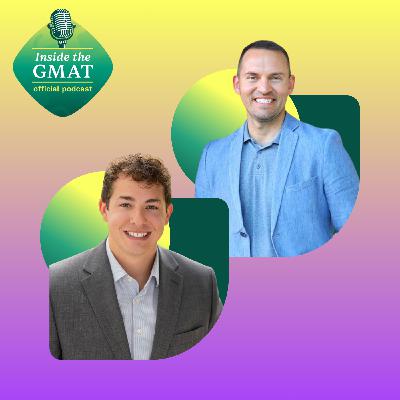
What does it take to pivot from military service to medical technology leadership? In this episode of Inside the GMAT, GMAC Zach talks with Alec Burris, a former U.S. Marine turned MBA graduate from the UC Irvine Paul Merage School of Business, and Burt Slusher, Assistant Dean for MBA and Specialty Masters Programs. Alec shares how he translated his military discipline into business school success—and ultimately into a purpose-driven career at Edwards Lifesciences, where innovations save lives every day. Burt explains how Merage helps veterans and career changers discover their leadership strengths, connect with mission-driven employers, and find personal ROI that goes far beyond rankings. Whether you're a veteran, a career pivoter, or someone seeking a greater sense of purpose through business education, this conversation is packed with practical wisdom and inspiration for your next chapter. Learn more about the Merage School of Business: https://merage.uci.edu/ About Our Guests: Alec Burris is part of the Strategic Leadership Development Program at Edwards Lifesciences, a global leader in the structural heart space. He holds an MBA and is pursuing an MS in Business Analytics from the University of California, Irvine, after earning his BS in Biochemistry from Arizona State University. Originally from Alaska, Alec served in the United States Marine Corps from 2018 to 2023, concluding his service as a Platoon Sergeant with 3rd Light Armored Reconnaissance Battalion. Burt Alvaro Slusher is the Assistant Dean of MBA and Specialty Masters Programs at the University of California, Irvine's Paul Merage School of Business and has been a member of the UC Irvine community for 23-years. In this role, Burt oversees the School's current portfolio of graduate programs consisting of three MBA Programs (State-supported Full-Time MBA, and self-supporting Flex MBA and Executive MBA) and six self-supporting Specialty Masters Programs (Master of Finance, Master of Innovation and Entrepreneurship, Master of Professional Accountancy, Master of Science in Business Analytics, Master in Management, and Online Master of Science in Business Analytics). In addition, this role also oversees the Master of Science in Biotech Management program in tandem with leaders from the School of Biological Sciences. Burt also serves as part of the School's senior leadership team. Prior to his current role, Burt served as the Senior Director of Recruitment and Admissions for the Specialty Masters Programs and served as chair of the Admissions Committee. With two decades of higher education and business school experience, Burt has worked closely with Merage students, alumni, corporate outreach, marketing, and has provided career management to students while maintaining a high level of engagement with the business community. He was part of a team that helped launch the Merage School's Business Administration major in Fall of 2008 and also managed the admissions process for the Merage School's Accounting minor launched in Fall of 2004. Chapters: 00:00 Introduction 01:31 Meet Alec 03:34 Transitioning from Military to MBA 05:50 Burt on Veterans in Business School 08:53 How Alec Chose UC Irvine 14:59 The UC Irvine Advantage 23:37 Leadership Skills From Class to Career 25:26 What Veterans Bring to the MBA 27:07 The ROI of an MBA 31:56 Final Advice
Even the best test-takers struggle with doubt, careless mistakes, and burnout — but according to Manhattan Prep's Stacey Koprince, that's where real progress begins. In this episode, GMAC Zach continues his on-air EA prep journey, diving deep into the psychology of confidence, practical study modes, and why "getting it wrong" is actually the most valuable part of prep. Stacey shares her signature strategies for diagnosing errors, building test-day habits, and even tricking your brain into enjoying Reading Comprehension (hint: it involves a little acting). From grammar vs. vocabulary to the difference between exam and study mode, this candid conversation is full of insights that will change how you think about learning and tackling the EA or GMAT. About Stacey: Stacey Koprince is one of the most recognized names in test prep, with over 15 years of experience teaching the GMAT, EA, GRE, and LSAT. As Manhattan Prep's Director of Content & Curriculum, she has written countless articles, guides, and video explanations that thousands of students rely on. A former management consultant, Stacey now spends her days helping future business leaders master tricky concepts and find confidence in their prep—something she's passionate about seeing "click" for every student. Helpful links: Register for the EA: https://www.mba.com/exams/executive-assessment/register Purchase EA Official Prep: https://www.mba.com/exams/executive-assessment/prepare GMAC Free EA Prep: https://www.mba.com/exams/executive-assessment/prepare/free-prep-resources Manhattan Prep EA Resources: https://www.kaptest.com/gmat/courses/executive-assessment-test-prep Takeaways: Mindfulness techniques can help manage study-related stress. Building confidence is crucial for effective test-taking. Diagnosing mistakes helps improve future performance. Engaging with boring topics can be made easier with personal connections. Understanding the specific rules of sentence correction is essential. Reading comprehension requires active engagement with the material. Practice under test conditions to build confidence. Identifying question types in critical reasoning aids analysis. Adjusting study plans based on performance is important. Learning from mistakes is a key part of the preparation process. Chapters: 00:00 Establishing Effective Processes and Habits 03:55 Conquering Self-Doubt 07:49 Don't Get Tricked! 12:07 Reading Comprehension Questions 14:50 Sentence Correction Questions 17:23 Is EA Verbal Easier Than GRE? 21:05 Critical Reasoning Questions

When most people think about business school, they imagine case studies, strategy sessions, and career advancement. But what if your MBA could help you do more than just get ahead? What if it could help you do good? In this episode, Spencer Anderson, Head of Operations at Leland Coaching and Harvard Business School alum, joins Inside the GMAT to explore how reflection, coaching, and purpose can shape a more meaningful MBA journey. From his early setbacks to his transition from Bain to a mission-driven startup, Spencer shares how business education — and the right mindset — can turn ambition into impact. Featured Resources: Leland Coaching: https://www.joinleland.com GMAC Advancery: https://advancery.gmac.com About Our Guest: Spencer Anderson is the Head of Operations at Leland. He spent almost 7 years at Bain & Company, primarily focused on commercial excellence and post-acquisition work. He's been engaged in various domestic and international non-profit efforts throughout his career from consulting engagements to social ventures. Spencer received his Bachelors in Economics from BYU and his MBA from Harvard Business School. Chapters: 00:00 Introduction to Spencer Anderson and Career Philosophy 04:05 Journey to Harvard Business School 06:55 Leadership and Integrity 10:17 Joining Leland Coaching 14:16 The Role of Coaching in Personal Growth 16:27 Navigating the MBA Application Process 19:40 Self-Discovery Through Coaching 23:36 Business as a Force for Good 25:20 Finding Meaning in Your MBA Journey
In this emotional and insightful episode, GMAC Zach opens up about receiving difficult family news that put his EA prep on pause. Joined by Manhattan Prep's Stacey Koprince, he explores how to regain focus and motivation when life throws unexpected challenges your way. Zach and Stacey discuss how to rebuild a study rhythm after disruption, balance personal well-being with academic goals, and use mindfulness to manage anxiety and intrusive thoughts. Stacey also shares practical techniques—from giving yourself grace to diagnosing your own study needs—and offers simple exercises to strengthen focus and confidence. Whether you're preparing for the EA, GMAT, or any big goal while juggling real-life responsibilities, this episode is a powerful reminder that progress doesn't always have to be linear. About Stacey: Stacey Koprince is one of the most recognized names in test prep, with over 15 years of experience teaching the GMAT, GRE, and LSAT. As Manhattan Prep's Director of Content & Curriculum, she has written countless articles, guides, and video explanations that thousands of students rely on. A former management consultant, Stacey now spends her days helping future business leaders master tricky concepts and find confidence in their prep—something she's passionate about seeing "click" for every student. Helpful links: Register for the EA: https://www.mba.com/exams/executive-assessment/register Purchase EA Official Prep: https://www.mba.com/exams/executive-assessment/prepare GMAC Free EA Prep: https://www.mba.com/exams/executive-assessment/prepare/free-prep-resources Manhattan Prep EA Resources: https://www.kaptest.com/gmat/courses/executive-assessment-test-prep Chapters: 00:00 Navigating Personal Challenges During Study 02:36 Getting Back on Track 07:31 Dealing with Distractions 11:27 Practicing Mindfulness 17:02 Tackling Easy vs. Challenging Content
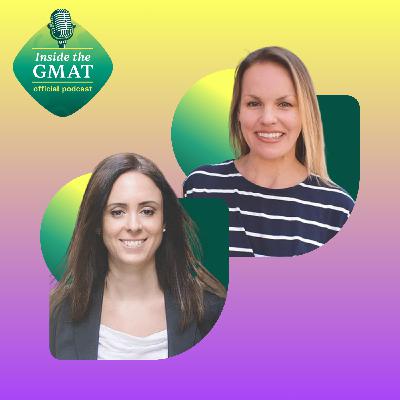
Many MBA applicants see business school as a chance to pivot—to shift industries, roles, or even entire careers. But how realistic is your pivot story, and how can you make it resonate with admissions committees and recruiters? In this episode of Inside the GMAT, GMAC Zach is joined by Pamela Jaffe and Laura Nelson, founders of MBA Pathfinders, who have over 30 years of combined experience guiding applicants through successful career transitions. Together, they break down the realities of the modern job market, why the MBA remains a powerful bridge for change, and how to craft an application that's authentic, credible, and ready for the career you want. If you're planning to use business school as a launchpad for change, this conversation will help you map your bridge from where you are to where you want to be. About MBA Pathfinders: https://www.mbapathfinders.com Pamela Jaffe has helped hundreds of applicants achieve entry into the top U.S. and European business schools. Pamela began her MBA consulting career in 2010 as a part-time consultant at mbaMission while concurrently working full-time as an internal strategist for companies including IBM, MetLife, Weight Watchers, Pfizer, and Dow Jones. She found her passion as a coach and an advisor; in 2019, she left corporate America to launch The Jaffe Advantage. Pamela leverages her MBA admissions consulting experience with her global business knowledge to advise her clients in the pursuit of their ideal MBA educational experience. She has lived and worked in both Paris and Singapore, focusing on the Asian, Middle Eastern and European markets. Pamela currently resides in New York City, but continues to travel extensively for work and fun. She holds a BA from Smith College and an MBA from Columbia Business School. Laura Nelson has served as a Senior Consultant with mbaMission, Stacy Blackman Consulting, and as the founder of LE Nelson Consulting to help hundreds of candidates earn admissions to top MBA programs. Laura's industry experience includes entertainment, media & publishing, and tech, with established companies and startup organizations. Most recently, she served as VP of Marketing with a SaaS startup. Laura's non-traditional career path and MBA admissions consulting experience enables her to help clients from less traditional backgrounds gain credibility with top programs, while helping those with traditional career paths stand out. Laura lived and worked in California for a decade prior to relocating to Colorado. She holds a BFA from Carnegie Mellon University and earned an MBA from University of Michigan's Ross School of Business. Takeaways: Many MBA applicants seek to pivot their careers through business school. The MBA application process is crucial for defining career goals. Common pivots include banking, consulting, tech, and entrepreneurship. Misconceptions exist about the ease of career changes with an MBA. Candidates must demonstrate realistic and evidence-based career goals. Networking and experiential learning are vital for successful pivots. The recruiting cycle is urgent; preparation should start early. Candidates should avoid vague or trendy goals in their applications. Building a compelling narrative is essential for admissions success. Researching and validating career goals can lead to more authentic applications. Chapters: 00:00 Introduction to Career Pivots and the MBA Journey 02:51 Common Career Pivots for MBA Applicants 05:44 The Power of an MBA for Career Changes 08:48 The MBA Application as a Career Exploration Tool 11:53 Evaluating Realistic Career Pivots 14:01 Navigating the MBA Recruiting Cycle 17:19 Advice for Uncertain Career Paths 19:28 Crafting a Compelling Career Pivot Story 20:14 Understanding the MBA as a Bridge 22:07 Connecting Past Experiences to Future Goals 23:11 Real-Life Career Pivot Examples 26:24 Common Mistakes in Career Pivots 28:19 Building Credibility in Applications 29:28 Strategies for Non-Traditional Candidates 31:30 Advice for MBA Candidates Considering a Pivot 32:22 Leveraging Advisors for Application Success

Comments

Download from Google Play

Download from App Store
 United States