


The Dov Baron Show
Subscribed: 6,862Played: 66,470
Subscribe


© Dov Baron International
Description
The Dov Baron Show: Unmasking Hidden Truths for High-Profile Deep Thinkers
This isn't just another leadership podcast. It's a high-stakes exploration into the minds of those shaping the world... minus the usual talking points.
Every episode is a raw, unscripted collaboration between my guest and me, Dov Baron, as we dive into the truths no one else dares to ask about. My guests? Often unknown to the general public but absolute titans in their fields—the kind of people high-profile leaders turn to when they need an edge.
Here, generous curiosity meets bold conversation. Expect a mix of playful irreverence and deep intellectual firepower that forces you to rethink what you thought you knew.
If you're the kind of leader who craves depth over soundbites and insight over ego-stroking, hit subscribe—because this is where real thinkers come to sharpen their edge.
This isn't just another leadership podcast. It's a high-stakes exploration into the minds of those shaping the world... minus the usual talking points.
Every episode is a raw, unscripted collaboration between my guest and me, Dov Baron, as we dive into the truths no one else dares to ask about. My guests? Often unknown to the general public but absolute titans in their fields—the kind of people high-profile leaders turn to when they need an edge.
Here, generous curiosity meets bold conversation. Expect a mix of playful irreverence and deep intellectual firepower that forces you to rethink what you thought you knew.
If you're the kind of leader who craves depth over soundbites and insight over ego-stroking, hit subscribe—because this is where real thinkers come to sharpen their edge.
1128 Episodes
Reverse

Why is it that when it costs US $550 Billion a year in lost productivity haven't we found a workable solution for disengagement? How can we break through to see our own blind spots, crush the mundane and re-engage at an even higher level? Well stay tuned because we are about to find out! Our guest on this episode is Jason Treu ( pronounced Troy) Jason Treu (Troy) is an executive coach who works with corporate executives and seven figure entrepreneurs to help them maximize their leadership potential, performance, build and execute their career blueprint. He's the best-selling author of Social Wealth, a how-to-guide on building extraordinary business relationships. He was a featured speaker at TEDx Wilmington 2017, where he debuted his breakthrough team building game Cards Against Mundanity. Finally, he is the host of the Executive Breakthroughs podcast which brings game-changing CEOs, entrepreneurs, and experts that share their breakthroughs and breakdowns. More about Jason Treu: http://www.jasontreu.com To find out more about hiring the host Dov Baron http://fullmontyleadership.com/consulting or http://fullmontyleadership.com/speaking Get bonus content on Patreon Learn more about your ad choices. Visit megaphone.fm/adchoices

Trust; is there a specific code to follow in order to build it? To be a great leader your people have got to trust you. But how do you build unshakable trust? On this episode Dov Baron takes an insider look at the world of being an FBI Profiler and what we can learn about building real trust very quickly. Well stay tuned because we are about to find out! Our guest on this episode is Robin Dreeke author of "The Code of Trust" Robin Dreeke is United States Naval Academy Graduate, Marine Corps Officer, FBI Counterintelligence Agent and former head of the Behavioral Analysis Program. He received advanced training and operational experience in social psychology and in the practical application of the science of relationship development. Eventually he rose to direct the behavioral analysis program in a federal law enforcement agency. Robin Dreeke is currently an agent of the FBI. Find out more about Robin Dreeke: http://www.peopleformula.com To find out more about hiring the host Dov Baron http://fullmontyleadership.com/consulting or http://fullmontyleadership.com/speaking Get bonus content on Patreon Learn more about your ad choices. Visit megaphone.fm/adchoices
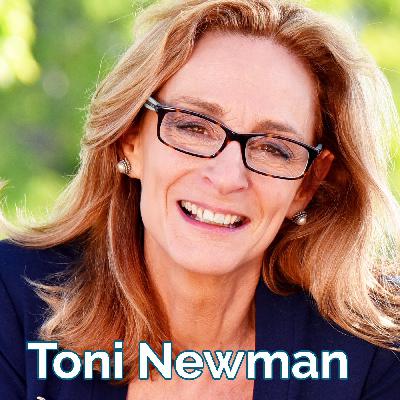
We live in fast changing times and that if you don't innovate you will become irrelevant very quickly, But how, in a sea of innovation, do you work out the kind of innovation that will make you stand, not just out, but above and beyond in your industry. Our guest on this episode is Toni Newman Toni Newman is a five-time award winning business owner and founder of The Innovation Advantage - a company that works with organizations worldwide to design innovative, customer experience that drive more customers, more revenue and more growth in their business. Toni has been speaking and consulting on strategic innovation as a competitive advantage for over 20 years and is committed to helping her clients develop big ideas that get big results. Find out more about Toni Newman: http://www.ToniNewman.com To find out more about hiring the host Dov Baron http://fullmontyleadership.com/consulting or http://fullmontyleadership.com/speaking Get bonus content on Patreon Learn more about your ad choices. Visit megaphone.fm/adchoices
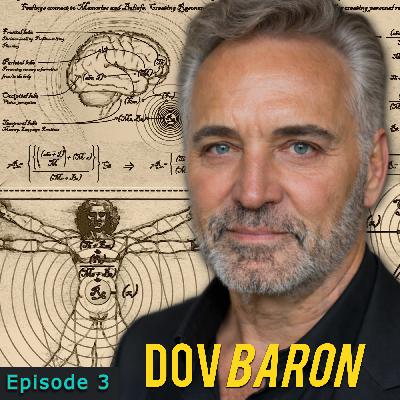
Episode 3 Polymathic Perspective Podcast | Dov Baron When Systems Lose Coherence Before They Collapse What if the world isn't collapsing, but losing coherence, and our leaders are mistaking relief for evolution? Episode Description What happens before systems collapse? Not chaos. Not moral failure. Not even bad leadership. They lose coherence. . In the first episode of The Polymathic Perspective Podcast, Dov Baron introduces the lens that will define this show: coherence as the invisible regulator beneath power, identity, culture, economics, and leadership. . Starting with a moment at Davos in January 2026, when Canadian Prime Minister Mark Carney named what many felt but couldn't articulate, the fading of the rules-based order, Dov examines why the world exhaled. Not in agreement, but in relief. . This episode is not about politics. It's about emotional regulation at scale. Dov shows how systems under stress do not seek truth or transformation. They seek stabilization. And why that instinct, while human, quietly prevents real succession. . Through a polymathic lens, this episode connects: Nervous systems Identity formation Organizational behavior Capitalism Global geopolitics Not as metaphors, but as the same pattern playing out at different scales. . You'll hear why Mark Carney and Donald Trump, despite appearing oppositional, are responding to the same collapse of coherence, one through reassurance, the other through rupture. Different styles. Same function. . And why neither approach, on its own, produces evolution. . This is not a call to sides. It's a call to perception. In This Episode, You'll Explore • Why systems lose coherence long before they collapse • Why anxiety seeks regulation, not truth • How relief can feel like leadership without being transformation • The difference between stabilization and succession • Why capitalism is opportunistic, not moral, and why that matters • How inclusion, sustainability, and ethics only move when they become legible to markets • Why nostalgia is not a strategy, at any scale • What "identity-level succession" actually means, in plain language • How individuals repeat the same pattern as nations when they outgrow old rules • Why polymathic thinkers see patterns others experience as noise 🎙️ About the Host — Dov Baron Dov Baron is a globally recognized leadership strategist, Cultural Dyagnistician, bestselling author, and host of The Dov Baron Show and The Polymathic Perspective Podcast. . For over two decades, Dov has worked with Fortune 500 leaders, elite entrepreneurs, and governments to help them navigate complexity, identity-level change, and the emotional forces that shape culture, power, and performance. . Known for his uncompromising clarity and ability to surface the hidden emotional logic beneath systems, Dov's work focuses on: Leadership under pressure Identity, meaning, and belonging Emotional regulation at scale Culture, power, and coherence in times of disruption . Dov does not offer motivation. He offers diagnosis. His work challenges leaders to see what they've been unconsciously stabilizing, and what must now be reimagined. 🔗 Connect With Dov Baron 🌐 Website: https://dovbaron.com 🎧 Podcasts: The Dov Baron Show & The Polymathic Perspective Podcast YouTube: https://www.youtube.com/@DovBaronLeadership 📩 Newsletter: Curious Chronicles (via dovbaron.com) 🔗 LinkedIn: https://www.linkedin.com/in/dovbaron Who This Podcast Is For This podcast is for you if: Your curiosity spans systems, psychology, power, and meaning You sense that the arguments everyone is having are missing the real pattern You're more interested in why things work the way they do than in being right You feel the tension of this moment, but refuse to reduce it to slogans This is a podcast about examining the emotional logic beneath what's going on. Where to Listen & Engage Subscribe to The Polymathic Perspective Podcast on: Apple Podcasts YouTube {link} If a question surfaced for you, place it in the comments. Not to answer it quickly, but to deepen the pattern. Apple Podcast–Optimized Hashtags #PolymathicPerspective #CoherenceBeforeCollapse #SystemsThinking #LeadershipPsychology #EmotionalRegulation #GlobalOrder #IdentityAndPower #MeaningMaking #ComplexSystems #CuriousMinds
The Loneliness Signal: How Certainty Quietly Replaces Connection What if the loneliness so many of us feel isn't a lack of connection, but the price we pay for the certainty our nervous system learned to depend on? What single question from this episode are you taking into the week, without trying to answer it? Episode Description Loneliness is everywhere. But what if we've misunderstood it? . In this second episode of The Polymathic Perspective, Dov Baron offers a polymathic understanding of the global loneliness epidemic, not as a social failure or a lack of belonging, but as a downstream consequence of how human nervous systems adapt under perceived threat. . This conversation explores how fear narrows perception, how certainty becomes a form of emotional regulation, and how that regulation quietly hardens into identity. Over time, identity filters contact, flattens nuance, and produces isolation that often masquerades as productivity, conviction, and being "well-informed." . Loneliness, in this view, is not the cause. It is the signal. . Drawing from neuroscience, psychology, lived experience, and a pivotal moment on a global volatility panel, Dov traces a repeating pattern most people never connect, one that shows up simultaneously in relationships, culture, leadership, innovation, and geopolitics. . This episode is not about taking sides. It's not about being right. And it's not about fixing yourself. . It's about noticing what fear has quietly trained you to protect, and what that protection may be costing you. . For polymathic and integrative minds, the cost is often felt earlier and more intensely. When curiosity is essential to how you think, certainty doesn't just close debate; it closes parts of you. . If you've ever felt surrounded yet strangely disconnected, productive yet flattened, certain yet quietly alone, this conversation will feel uncomfortably familiar. In This Episode, You'll Hear About • Why loneliness isn't the absence of people. • How fear narrows perception before it narrows thinking • Why certainty stabilizes the nervous system faster than truth ever could • The moment certainty stops being temporary and becomes identity • How algorithms exploit this mechanism to engineer division and isolation • Why innovation dies quietly in certainty-driven cultures • The hidden psychological cost this pattern extracts from polymathic minds • A single question that can reopen perception without forcing change No prescriptions. No ideological answers. Just a pattern worth noticing. Why This Episode Matters We live in systems that reward speed over nuance, answers over inquiry, and certainty over contact. This episode doesn't ask you to abandon certainty. It asks you to notice when certainty became the thing that made curiosity feel unsafe. Loneliness isn't what we feel when we're alone. It's what we feel when our perception has nowhere left to go. Referenced Resource Free In-Depth Report: The Loneliness Tax Dov references a free report that explores this pattern in greater depth. To download: Go to: https://tinyurl.com/LonelinessTax Listener Invitation This is an ongoing conversation, not a broadcast. If something in this episode irritated you, pay attention. If something felt immediately convincing, question it. If a moment landed in your body before it landed in your thinking, that matters. Leave a comment not to be answered quickly, but to deepen the inquiry. Subscribing, reviewing, and sharing helps Apple surface conversations people actually stay with, not just skim. About the Host . Dov Baron is a bestselling author and globally recognized voice on leadership, identity, and emotional logic. He hosts The Dov Baron Show and The Polymathic Perspective, where he examines the patterns beneath power, culture, and meaning, and where science ends, and interpretation begins. About The Polymathic Perspective This podcast is not about collecting ideas. It's about pattern recognition. Each episode explores how emotional regulation, identity formation, and meaning-making shape behavior, not just in individuals, but in entire systems. If you listen long enough, you won't just notice patterns others miss. You'll learn to trust your curiosity without fragmenting yourself. Polymath signal: What connections did you notice across domains (relationships, culture, leadership, innovation) that you usually don't hear discussed together? Hashtags #Polymath #Loneliness #Curiosity #Neuroscience #EmotionalSourceCode #Identity #EmotionalRegulation #Meaning #HumanBehavior

"Trauma Isn't a Disorder, It's a Repairable Injury | Dr. Eugene Lipov." What if trauma isn't a disorder at all, but an injury your body never healed from? For decades, we've been told PTSD is psychological, permanent, and something to "manage." That framing may be the very thing keeping millions trapped. . In this episode, I sit down with physician-neuroscientist Dr. Eugene Lipov, the man who quietly disrupted the mental-health establishment by demonstrating something deeply unsettling and deeply hopeful at the same time: . Trauma is not a character flaw. It's a biological filing error. . When the brain loses its ability to distinguish between what happened and what is happening, the nervous system gets locked into a false present-moment reality. That's not pathology. That's an injury. . And injuries can heal. In this conversation, we explore: Why PTSD may be a misdiagnosis, and why Dr. Lipov argues it should be renamed Post-Traumatic Stress Injury (PTSI) What actually happens in the brain during extreme trauma, and why logic cannot override it The role of the amygdala, hippocampus, and norepinephrine in "frozen" traumatic memory Why talk therapy often fails when the nervous system is stuck in threat How the Stellate Ganglion Block (SGB) interrupts trauma at the biological level Why trauma is frequently misidentified as anxiety, personality, burnout, or temperament How untreated trauma is passed down through families via behavior and epigenetics Why labeling trauma as a "disorder" quietly reinforces shame and hopelessness The difference between coping with trauma and ending it This is not a comfort conversation. It is a precision conversation. If you believe leadership, performance, and clarity begin in the mind, this episode will challenge you. If you understand that biology precedes belief, this episode may finally explain what you've been living with. About My Guest Dr. Eugene Lipov is a physician, neuroscientist, and global pioneer in the treatment of trauma-related symptoms. In 2006, he introduced the use of the Stellate Ganglion Block as a direct intervention into the nervous system for trauma survivors. . His work reframes PTSD as a treatable biological injury, not a lifelong psychological sentence. Dr. Lipov is also the author of The God Shot: Healing Trauma's Legacy, which explores the science, stories, and clinical implications of this approach. Resources & Links Website www.eraseptsdnow.orghttps://stellacenter.com/ Social Media https://www.linkedin.com/in/eugenelipov/ https://x.com/elipovmd Learn more about Dr. Eugene Lipov: https://dreugenelipov.com Dr. Lipov's book: The God Shot About the Host I'm Dov Baron, and I work with elite leaders, founders, and organizations who are quietly shaping industries and nations. My work focuses on diagnosing and rewiring the Emotional Source Code, the unconscious emotional logic that drives identity, decision-making, and behavior under pressure. This show is not about motivation. It's about coherence. . Resources & Links Explore my work, programs, and writing: https://dovbaron.com Join The Curious Chronicles for deeper, uncensored material: https://dovbaron.com/category/curious-chronicles/ A Question to Carry With You Where in your life are you trying to think your way out of a biological survival response? If this episode challenged you, share it. If it unsettled you, sit with it. And if something in your body reacted before your mind caught up, that's not a coincidence. That's a signal. Hashtags #TheDovBaronShow #EugeneLipov #TraumaHealing #PTSD #NervousSystem #MentalHealth #TraumaRecovery #Neuroscience #HealingTrauma
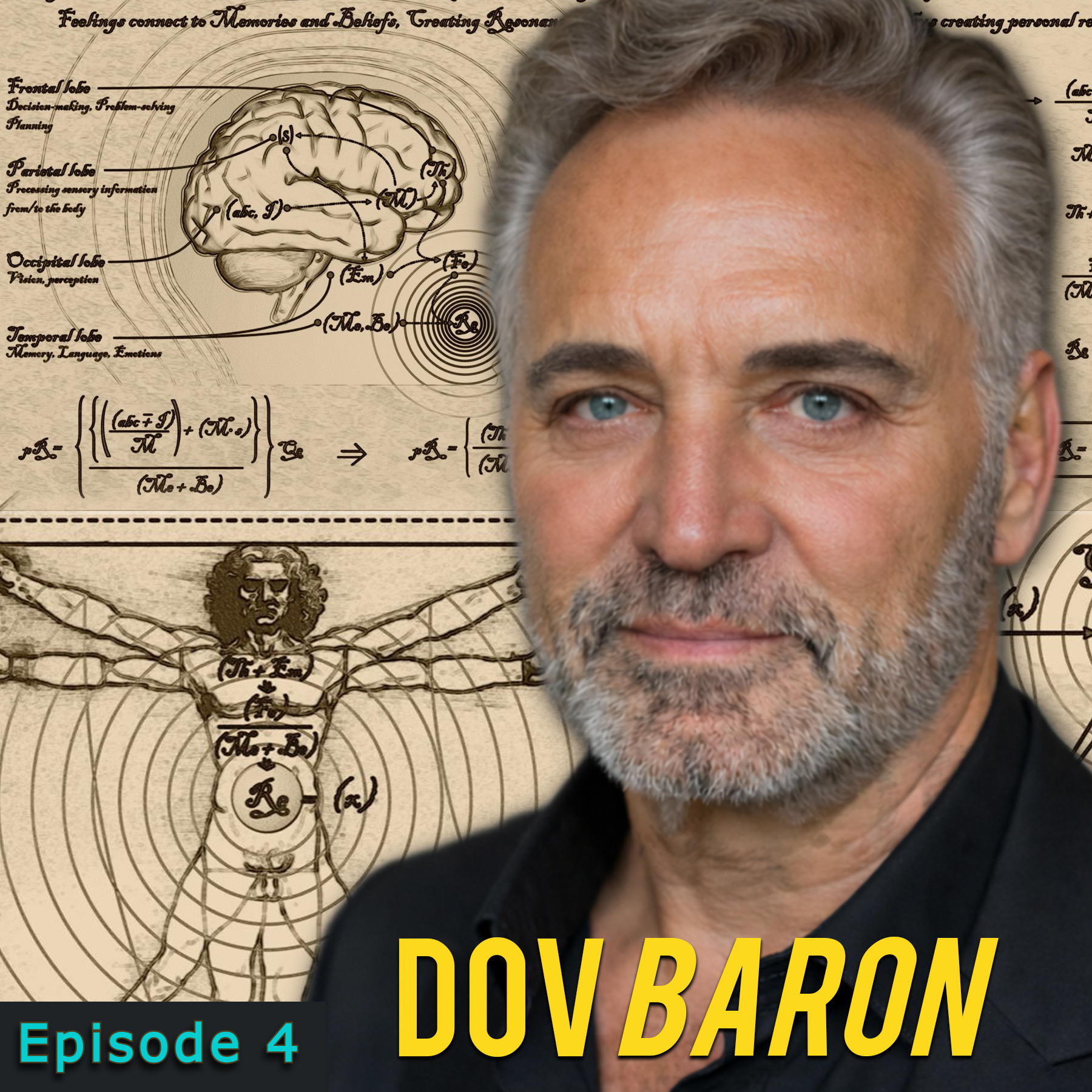
Episode 4: Why Coherence Is the New IQ | The Polymathic Perspective Podcast * What happens when the measurements that once defined your intelligence suddenly stop working, and your identity fractures before you can explain why? Description A man sits across from me. Brilliant by every metric we're taught to trust. High scores. Strong credentials. A lifetime stabilized by numbers. Then, casually, he tests himself against a machine. The machine surpasses him effortlessly. He smiles. Makes a joke. But something quietly collapses inside him, not his confidence, not his capability, but the story that held his intelligence together. . This episode isn't about IQ. It isn't about AI. And it isn't even about intelligence as we've been taught to define it. . It's about identity coherence, and what happens when measurement outruns meaning. In Episode 4 of The Polymathic Perspective, we examine why traditional intelligence metrics fail under pressure, why highly intelligent people become brittle when identity is threatened, and why coherence, not cognition, is the capacity that determines who adapts and who fractures in this moment of history. . If you've ever felt too broad, too contradictory, or too complex to explain in a single sentence, and quietly wondered whether that made you less intelligent, this episode is for you. 🔥 In This Episode, You'll Discover Why IQ didn't fail because it was wrong, but because it was incomplete How identity fracture happens quietly, without drama or collapse Why intelligence collapses under stress when coherence is missing The difference between being smart and being integrated Why polymathic minds sense fractures earlier, and pay a social cost for it How AI functions as a mirror, not a threat, revealing the limits of old definitions Why real decisions don't happen in the mind, but in bodies, relationships, and consequence How forcing people to specialize shrinks signal, silences integrators, and accelerates system decay Why coherence is longitudinal, not momentary, and cannot be automated or outsourced 🧠 The Polymathic Perspective This podcast isn't about collecting ideas. It's about examining the emotional logic beneath power, culture, identity, and meaning. If you've been told your curiosity is a liability, that you're too much, too broad, or too hard to place, this is where you'll learn why that way of seeing is not a flaw, but an adaptive advantage in a world where systems are colliding in real time. 👤 About the Host Dov Baron is a global leadership strategist, keynote speaker, and creator of the Emotional Source Code™ framework. He works with high-performing leaders, founders, and organizations navigating identity-level pressure, complexity, and transformation. Dov is also the host of The Dov Baron Show and The Polymathic Perspective Podcast. 🔗 Connect with Dov Website: https://dovbaron.comLinkedIn: https://www.linkedin.com/in/dovbaron Instagram: https://www.instagram.com/dovbaronleadership/ YouTube: https://www.youtube.com/@DovBaronLeadership 💭 Reflection Question Where in your life does intelligence collapse under pressure, not because you lack ability, but because coherence is being asked of you? Sit with that. 🎧 If This Episode Resonated Please rate, review, and subscribe. It helps this conversation reach the people who need it most. 📌 Apple Podcast–Optimized Hashtags #PolymathicPerspective #CoherenceIsTheNewIQ #IdentityFracture #EmotionalIntelligence #AIAndHumanity #Polymath #LeadershipPsychology #ComplexSystems #MeaningOverMetrics #EmotionalSourceCode

What happens to leadership when creativity is treated as a liability, healing as a weakness, and humanity as a threat to authority? Description Modern leadership prizes control, composure, and performance. But beneath that polished surface, something is quietly fracturing. . In this deeply human and unflinching conversation, Dov Baron sits down with Tania de Jong to explore why these are not personal failures, but signals of nervous systems and cultures that have lost coherence. . Tania's work sits at the intersection of creativity, leadership, mental health, and consciousness. Through her lived experience as a performer, entrepreneur, and social innovator, she challenges the belief that leadership begins in strategy and cognition. Instead, she reveals why leadership begins in the body, the voice, and the capacity to feel without shutting down. . This episode explores how suppressed creativity and silenced voice distort power, how control often emerges as a trauma response, and why shared resonance, music, storytelling, and even psychedelic-assisted therapies are re-entering serious conversations about healing and leadership, not as fringe ideas, but as necessities. . This is not a conversation about trends or inspiration. It's a conversation about what leadership costs when we refuse to feel. 🔥 In This Episode Why burnout and polarization are signals of lost coherence, not weakness How early silencing shapes confidence, identity, and leadership presence Why creativity is a biological capacity, not a "soft skill" The nervous-system foundations of leadership under pressure How control becomes a survival strategy in high performers Why shared voice and singing restore connection at a physiological level The real role of altered states of consciousness in healing and insight How psychedelic-assisted therapies are reshaping mental health treatment Why emotionally contained leadership is often the most dangerous kind 👤 About the Guest Tania DeJong is an award-winning social entrepreneur, acclaimed soprano, speaker, and global advocate for creativity, mental health, and human connection. . She has founded multiple businesses and charities across the creative, social, and mental-health sectors, including Creativity Australia, Creative Universe, and Umbrella Foundation. She is the co-founder of Mind Medicine Australia, a leading organization advancing psychedelic-assisted therapies in regulated, clinical settings. . Her TED Talk How Singing Together Changes the Brain sparked international interest by revealing how shared creativity restores connection at a neurological level. . At the heart of her work is one mission: restoring voice, coherence, and human possibility in systems that reward silence and control. 🔗 Resources & How to Connect Tania de Jong: https://taniadejong.com Mind Medicine Australia: https://mindmedicineaustralia.org Creativity Australia: https://creativityaustralia.org.au >> >> 👤 About the Host Dov Baron is a leadership strategist, author, and trusted advisor to elite leaders and organizations navigating complexity, identity-level change, and cultural disruption. He is the host of The Dov Baron Show and The Polymathic Perspective Podcast, and his work focuses on diagnosing and rewiring the Emotional Source Code™ that drives leadership behavior beneath conscious strategy. . Dov does not offer motivation. He offers prophound diagnosis. 🔗 Resources & How to Connect Dov Baron: https://dovbaron.com 🧠 Reflection Prompt If control has made you successful, what might it be quietly costing your creativity, your relationships, and your capacity to lead what comes next? 🍎 Apple-Appropriate Hashtags #TheDovBaronShow #TaniaDeJong #Leadership #Creativity #MentalHealth #EmotionalIntelligence #PsychedelicTherapy #Coherence #NervousSystem #Belonging
Why Chasing Happiness Can Destroy a Meaningful Life | Kerry Cohen, PhD What if the reason you feel empty isn't because you're broken, but because you've been chasing happiness instead of truth? Episode Description We're taught to want happiness, to avoid discomfort, and to measure success by how good life feels. But in this honest, often uncomfortable conversation, Kerry Cohen, PhD challenges that story from the inside. Joining Dov Baron, Kerry explores the difference between feeling good and being alive, and why so many high-functioning, successful people secretly feel disconnected, restless, or hollow. . This is not a conversation about fixing yourself. It's about telling the truth about desire, grief, attachment, ambition, and the stories we inherit about what a "good life" is supposed to look like. Kerry speaks candidly about: Why the pursuit of happiness can quietly numb us How trauma, desire, and achievement become coping strategies The difference between meaning and benefit Why grief doesn't resolve, it reshapes How relationships reveal unexamined wounds Why "healing" is often the wrong goal What it means to choose aliveness over comfort This episode will resonate deeply with leaders, creatives, and high performers who have done everything "right" and still feel unsettled. . If you're looking for reassurance, this conversation may unsettle you. If you're willing to live more honestly, it may open something important. 🔥 In This Episode • Why happiness is an unreliable compass • How success and validation can become emotional anesthesia • The hidden bargain we make when we avoid pain • Why grief is not a problem to solve • The emotional truth beneath romantic attraction • What it means to stop waiting for life to begin 👤 About Kerry Cohen, PhD Kerry Cohen, PhD, is a clinical psychologist, writer, and speaker known for her uncompromising honesty about desire, grief, identity, and the emotional myths that shape our lives. . She is the author of multiple books, including memoir and non-fiction that explore intimacy, loss, and what it means to live truthfully rather than comfortably. Her work challenges the idea that healing means becoming "better," and instead invites people to become more real. 🔗 How to Connect & Learn More Website: https://www.kerry-cohen.com Books: Available wherever books are sold Writing & updates: Via her website 🪞 Final Reflection A meaningful life doesn't promise happiness. It asks for honesty, courage, and the willingness to feel what's actually there. The question isn't whether you're happy. It's whether you're fully alive. . . #TheDovBaronShow #MeaningOverHappiness #EmotionalTruth #HumanPsychology #GriefAndGrowth #AuthenticLiving #LeadershipAndLife #EmotionalIntelligence

🎙️Is the Post-War World Order Already Finished? | David Bickford (Former MI5 & MI6) What if the global order didn't collapse overnight, but quietly expired while we were still arguing about yesterday's rules? Episode Description For decades, global stability rested on assumptions we no longer question, until they stop working. . In this rare and sobering conversation, Dov Baron sits down with David Bickford, former Under Secretary of State and Legal Director to MI5 and MI6, to examine what happens when institutions designed for a post-war world are forced to confront modern chaos. . Despite what you've come to believe from your favorite spy movie, this is a conversation about how intelligence agencies actually think and operate, why they move slowly by design, and the psychological cost of maintaining stability in a world that no longer obeys familiar rules. . David Bickford offers a grounded, unromantic look at: How intelligence agencies balance law, ethics, and survival Why institutional inertia is often mistaken for incompetence How modern geopolitics has outpaced Cold War frameworks Why democratic systems struggle to respond to asymmetric threats The uncomfortable trade-offs between transparency and security How nationalism, extremism, and grievance narratives gain traction Why certainty is more dangerous than ambiguity in intelligence work . This conversation also explores the human side of power, including loyalty, moral injury, and the psychological toll of operating inside systems that must prioritize stability over ideal outcomes. . This episode challenges simplistic narratives about good and evil, right and wrong, and exposes the emotional and structural realities leaders rarely speak about publicly. . If you're looking for clean answers, this conversation will unsettle you. If you're willing to think more clearly about how power functions in reality, it will sharpen you. 🔥 In This Episode • Why modern intelligence work is built on teamwork, not lone operatives • How outdated political assumptions distort present-day decision-making • Why NATO, alliances, and deterrence models are under psychological strain • The difference between informed intelligence and informed guesswork • How suppression and moral absolutism unintentionally fuel extremism • Why nuance is now one of leadership's most endangered skills 📚 Fiction as Truth-Telling David also discusses his work as a novelist, including his acclaimed spy fiction and the upcoming release Cold Protocol, using storytelling to explore questions modern politics avoids: • Loyalty vs conscience • Power and obedience under pressure • The emotional cost of secrecy • Moral ambiguity in times of instability 🔗 Resources & How to Connect • David Bickford's website: https://davidbickfordcb.com . • Learn more about the Katya Trilogy • Upcoming novel: Cold Protocol • Special reader offer: Use code BERLIN1979 to purchase the book for £5 (limited availability) 👤 About David Bickford David Bickford is a former Under Secretary of State and Legal Director to the British Intelligence Agencies, MI5 and MI6. He spent his career at the forefront of counterterrorism, espionage, and international security, and was appointed Companion of the Order of the Bath for his service. Today, he brings his experience into public discourse and fiction, offering rare insight into power, loyalty, and global instability. Final Reflection If the systems we trust were built for a world that no longer exists, the real question isn't who's to blame. It's whether we're psychologically prepared to let go of the stories that once made us feel safe. . #TheDovBaronShow #GlobalLeadership #Geopolitics #IntelligenceCommunity #PowerAndPsychology #LeadershipUnderPressure #WorldOrder #StrategicThinking
🧠 Episode 1: The Polymathic Perspective: Why Curiosity Was Never Your Problem What if the thing you've been told to fix about yourself is the very thing the world needs most right now? Description: For the first quarter of my life, I believed I wasn't very bright. Not because I couldn't think, but because I couldn't stay in a single lane long enough for anyone to know what to do with me. . If you've ever been told to "find your niche" and felt smaller every time you tried, this podcast isn't here to optimize you. It's here to integrate you. . In this opening episode of The Polymathic Perspective Podcast, I trace the origin of a mind that refuses to fragment itself. From art to existential philosophy, neuroscience to power, identity to meaning, this is not a collection of ideas; it's an examination of the emotional logic beneath them. . This episode explores: Why intelligent, capable people sabotage themselves despite knowing better How curiosity becomes a liability only inside systems that fear integration The hidden cost of forcing polymathic minds into narrow identities Why chaos is not accidental, and how it's used to shrink perception The difference between collecting knowledge and developing perception mastery . I'll show you where science ends and where interpretation begins, and why that boundary matters. Not to give you answers, but to help you see patterns others miss. . This podcast is not about certainty. It's about sovereignty. . If you've ever felt like your mind works beautifully but the world keeps asking you to amputate parts of it, you're not broken. . You may be a polymath. And this may finally be your home. What This Podcast Is (and Is Not) This is a weekly practice for integration-hungry minds. We will examine politics, culture, psychology, neuroscience, media, and power, not as isolated events, but as expressions of how humans create meaning under pressure. This is not: A productivity show A motivation podcast A niche-building strategy It is a pattern-detection practice grounded in the Emotional Source Code and the Anatomy of Meaning, used not as answers, but as lenses. Listen If You've Ever… Been praised for your insight but privately felt behind Had deep curiosity paired with chronic self-doubt Felt suffocated by narrow expertise Been told your mind is "too much" or "too scattered." Suspected the chaos around us is doing more than distracting us A Question to Carry Forward Who do you want to be in the face of this chaos, smaller and numb, or fully alive and fully feeling? Sit with what stayed alive as you listened. Irritation is data. Certainty is suspicious. Curiosity is the path. Subscribe & Participate If this inquiry matters to you, subscribe. Not to agree, but to stay in the conversation. If a question surfaced while listening, put it in the comments, not to get an answer, but to deepen the pattern. Until next time, stay curious. Stay integrated. . #PolymathicPerspective #CuriosityAsStrength #EmotionalSourceCode #AnatomyOfMeaning #PatternRecognition #IdentityAndMeaning #PerceptionMastery #IntegratedThinking

🎙️China Isn't Catching Up, It's Already Rewriting the Rules of Innovation | Adrian Simpson 🔥 What if the greatest threat to Western leadership isn't AI, China, or authoritarianism, but our addiction to comfort, incremental change, and the illusion that we still have time? 🧠 EPISODE SUMMARY Most leaders believe they're living at the edge of innovation. Adrian Simpson has taken over a thousand executives inside the factories, boardrooms, and innovation hubs that quietly prove otherwise. In this conversation, Adrian reveals what actually happens when Western CEOs step into China's technological ecosystem and why the shock isn't about politics, ethics, or ideology. It's about speed, scale, and decisiveness. You'll hear firsthand accounts of: Fully autonomous passenger-carrying drones already operating in China "Dark factories" producing cars every 62 seconds with almost no humans Why China's decentralized innovation model outpaces Silicon Valley's echo chamber How regulation, comfort, and short-term leadership thinking are quietly engineering Western obsolescence The hidden psychological cost of safety, surveillance, and convenience Why innovation theater is replacing real innovation inside most organizations This episode isn't asking whether China is "good" or "bad." It's asking a far more uncomfortable question: Are Western leaders still capable of facing reality without denial? 🧩 KEY CONVERSATION THREADS China speed and China scale, why they matter more than ideology Why innovation isn't happening where leaders think it is Autonomous logistics, low-altitude economies, and the collapse of legacy supply chains The uncomfortable truth about safety, surveillance, and societal trade-offs Why most companies "tweak" instead of innovate The leadership cost of waiting for governments, tariffs, or protectionism Why AI will not differentiate anyone, but human courage still might 👤 About Adrian Simpson . Adrian Simpson has spent 30+ years taking senior leaders, both in person and virtually, into the boardrooms and shop floors of some of the world's most admired and progressive organizations. . Adrian Simpson is the co-founder of Wavelength Leadership, a UK-based boutique executive education organization with global reach, and someone who gives leaders direct insight into realities they "haven't considered." . In 2025 alone, he took clients to Silicon Valley (including visits to Nvidia, OpenAI, Netflix, Apple) and to China (including visits to TikTok and BYD), plus hosted virtual symposiums with senior leaders (including a CEO of IKEA and a COO of Southwest Airlines). 🔗 How to Connect + Resources . Wavelength Leadership website: https://wavelengthleadership.com From there, you can: Subscribe to the newsletter Follow their LinkedIn feeds Social Media https://www.linkedin.com/in/adrian-simpson-b600139/?locale=de_DE https://x.com/AdieSimpson 🎯 WHO THIS EPISODE IS FOR This episode is for: CEOs who sense their strategy is outdated but haven't said it out loud Leaders who feel the ground moving beneath their industry Executives tired of AI hype but unwilling to look away from reality Decision-makers who know incrementalism is no longer enough If you're looking for reassurance, this episode will unsettle you. If you're looking for clarity, it will sharpen you. 🧭 FINAL CHALLENGE TO THE LISTENER The real danger isn't China. It isn't AI. It isn't authoritarianism. It's insularity, delay, and leaders waiting for permission while the future is already operational. The question is no longer what's coming. The question is: Are you still leading as if you have time? . > Hashtags: #TheDovBaronShow #AdrianSimpson #GlobalLeadership #ExecutiveLeadership #LeadershipStrategy #FutureOfLeadership #InnovationReality #AILeadership #StrategicForesight #LeadershipCourage #EmotionalSourceCode
(Part 2)🎙️ Why Leaders Who Go It Alone Won't Survive What's Coming | Keith Ferrazzi What if the leadership model that made you successful is the very thing that will make you irrelevant in the next collapse? 🧠 Episode Description In Part 1, Keith Ferrazzi challenged the myth of indispensability inside teams. In Part 2, he widens the lens, exposing how that same leadership addiction scales into AI disruption, economic instability, and even authoritarian collapse. . This conversation moves beyond organizational charts and into the future of work itself. Keith explains why AI adoption metrics are meaningless without real business transformation, why "AI-first" companies think fundamentally differently, and why leaders who cling to control will be outpaced by smaller, faster, more collaborative teams. . Dov and Keith also confront one of the most avoided questions in leadership today: what happens to human dignity when AI displaces work faster than society can adapt? From universal basic income to universal basic ownership, the discussion explores why enlightened leadership must extend beyond quarterly results and into responsibility for the ecosystems leaders create. . This episode is a call to humility, not fear. It argues that leaders who step off the pedestal, co-create across functions, and learn from those already living in the future will not just survive the coming shift, they'll shape it. 🔍 Core Themes Explored Why AI adoption rates are irrelevant without outcome transformation The difference between AI as a tool and AI as a teammate Why leaders must co-create across business, technology, and people functions How AI-first companies invert the human-first assumption The coming speed and scale of job displacement Why society is unprepared for rapid workforce disruption Universal basic income vs universal basic ownership Why authoritarian leadership emerges from fear and overload How teamship scales from companies to nations Why leaders who try to solve everything themselves inevitably lose 🧩 Key Moments & Stories AI as Transformation, Not Adoption Keith makes it clear that measuring AI success by tool adoption is meaningless. What matters is whether costs drop, customer experience improves, and outcomes change. Anything else is theatre. . The AI-First Founder Example Keith describes an AI-native company built by asking a radical question: How does AI do everything until it can't, and where do humans add value? This inversion produces dramatically smaller, faster, and more resilient organizations. . Job Displacement and Social Disruption . Keith lays out a sobering forecast, rapid job loss across call centers, trucking, and other sectors, leading to economic and social instability if leaders fail to prepare for human transition, not just technological progress. . Universal Basic Ownership Through a story from early Uber leadership, Keith introduces an alternative to universal basic income, inviting displaced workers into ownership of the systems replacing them, requiring corporate responsibility rather than government dependency. . Authoritarianism as Teamship Failure Drawing from industrial history, Keith reframes authoritarian leadership as a breakdown of collaboration at scale, where hierarchy replaces adaptability and fear replaces shared responsibility. 🔮 The Leadership Imperative in an AI Era Keith argues that the future belongs to leaders who stop trying to outrun disruption alone and instead build networks of co-creation. The choice is not whether AI will change your industry, but whether you will be outpaced by peers willing to rethink everything faster than you. . His advice is practical and humbling: find AI-native entrepreneurs, learn from them, step off the pedestal, and allow yourself to be mentored by those already living in the future. 🔗 Resources & Ways to Follow Keith Books Mentioned Never Lead Alone Never Eat Alone Leading Without Authority Programs & Training Connected Success Website: https://ConnectedSuccess.com Where to Follow Keith LinkedIn: https://www.linkedin.com/in/keithferrazzi/ https://keithferrazzi.com 👤 About Keith Ferrazzi Keith Ferrazzi is a multiple New York Times bestselling author and global leadership expert known for redefining collaboration, teamship, and co-elevation. His work focuses on helping leaders and organizations move from hierarchical control to resilient, high-performing networks. 🪞 Reflection Question If the future cannot be solved by any one leader, what responsibility are you still carrying that should be shared? . #Teamship #LeadershipPsychology #HighPerformanceTeams #OrganizationalCulture #EmotionalSourceCode #FutureOfWork
(Part 1)🎙️ Keith Ferrazzi | "Why Indispensable Leaders Create Fragile Teams." What if the leadership trait you're most proud of is the very thing making your team fragile without you? 🧠 Episode Description Most leaders believe being indispensable is proof they're doing their job well. Keith Ferrazzi argues the opposite. . In Part 1 of this provocative two-part conversation, Dov Baron sits down with Keith Ferrazzi to dismantle one of leadership's most deeply protected identities, the belief that strong leaders must sit at the center of decision-making, accountability, and performance. . Keith explains how leaders unintentionally train teams to depend on them, why people avoid telling the truth in meetings, and how psychological safety fails when it's treated as a value rather than a structural commitment. Drawing from his own evolution, including confronting scarcity, ego, and control, Keith reveals how leadership systems, not personalities, determine whether teams thrive or collapse under pressure. . This episode challenges leaders who pride themselves on being the smartest person in the room and asks a more uncomfortable question: What happens when you're not there? 🔍 Core Themes Explored Why indispensability is a hidden form of leadership fragility How hub-and-spoke leadership creates dependency, not strength Why people don't speak truth to power, even in "safe" cultures How leaders unconsciously reinforce silence through structure Why telling people to "be courageous" never works The difference between culture as aspiration and culture as contract How process reshapes behavior faster than mindset Why conflict avoidance is often mistaken for harmony Keith's personal reckoning with scarcity and identity 🧩 Key Moments & Stories Indispensability as a Structural Failure Keith explains that when leaders position themselves as the center of problem-solving, teams learn to wait rather than think. The organization appears efficient until volatility exposes how brittle it really is. . Why Candor Breaks Down . People don't withhold truth because they're dishonest. They withhold it because the system doesn't protect them when they speak. Keith outlines why safety must be designed, not declared. . Identity and Scarcity . Keith reflects on removing photos of powerful people from his office walls as part of confronting how scarcity shaped his leadership identity, and why service requires letting go of status reinforcement. 🔗 Resources & Ways to Follow Keith Books Mentioned Never Lead Alone Never Eat Alone Leading Without Authority Programs & Training Connected Success Website: https://ConnectedSuccess.com Where to Follow Keith LinkedIn: https://www.linkedin.com/in/keithferrazzi/ https://keithferrazzi.com 👤 About Keith Ferrazzi Keith Ferrazzi is a bestselling author and leadership expert known for his work on teamship, co-elevation, and transforming how organizations collaborate. His work focuses on replacing leader-centric models with systems that distribute accountability, candor, and ownership. 🪞 Reflection Question If your team couldn't function without you tomorrow, would you call that leadership, or dependency? 🏷️ Hashtags #KeithFerrazzi #NeverLeadAlone #Teamship #LeadershipPsychology #HighPerformanceTeams #OrganizationalCulture #EmotionalSourceCode #FutureOfWork #TheDovBaronShow

Part 2 of 2:🎙Why Analytics Are Killing Creativity, and What Leaders Must Do Instead | Nir Bashan What if the greatest threat to creativity isn't AI, analytics, or complexity, but leadership's fear of looking foolish? Description In Part 2 of this conversation, Nir Bashan takes the gloves off. This episode isn't anti-technology; it's anti-deception. . Nir dismantles the mythology surrounding AI, social media, and analytics, exposing how Silicon Valley hype has replaced human judgment with self-congratulatory narratives. He shares MIT research showing that AI use can dramatically reduce neural activity, not expand it, and explains why outsourcing thinking to machines quietly erodes creativity rather than enhancing it. . From there, the conversation moves into leadership behavior that almost no executive wants to examine. Why do intelligent leaders behave helplessly? Why do organizations fetishize complexity? Why are mistakes treated as failure rather than fuel? And why do analytics-only cultures consistently miss the most elegant, cost-effective solutions? . Nir answers these questions with real-world examples, including a shipping problem that saved millions of dollars not through engineering, analytics, or redesign, but through a single "silly" creative insight. . This episode is a direct challenge to leaders who hide behind data, complexity, and process. It argues that creativity is not artistic expression. It is disciplined problem solving, and it requires courage, vulnerability, and a willingness to look wrong in public. What This Episode Confronts Directly The myth that AI makes humans more creative Why social media has zero redeeming value for human cognition How analytics become a safety blanket for risk-averse leaders The difference between intelligence and creativity Why complexity is often a performance strategy, not a necessity How learned institutional helplessness forms inside successful companies Why leaders unconsciously train teams to avoid original thinking How deliberate mistakes can unlock innovation Why simplicity is harder, not easier, than complexity How language choice directly affects creativity and outcomes Key Insight Stories From the Episode The Shipping Box Story A high-end bicycle company loses millions due to broken shipments. Engineers, vendors, and analysts obsess over materials, padding, and logistics. The breakthrough does not come from data. It comes from a creative reframing: Cost: pennies. Savings: millions. This is not a story about cleverness. It is a story about how analytics blind leaders to obvious human behavior. . Mistakes as a Leadership Tool . Nir describes forcing senior leaders to intentionally say something "dumb" in meetings, not as a stunt, but as a way to rewire teams that are paralyzed by fear. When leaders model vulnerability, disagreement becomes safe. Creativity returns. Without this, organizations default to obedience, not innovation. The Human Advantage Over AI . Nir makes a claim that cuts through AI hype: Machines search the past. Humans create the future. AI depends on historical data. Human creativity depends on empathy, presence, judgment, and context. Leaders who double down on the human factor, conversation, intuition, and creative problem-solving will outperform those who chase every technological trend without discernment. The Simplest Creative Shift You Can Make Today The episode closes with a deceptively simple practice: choose better words. . Nir explains that language is overwhelmingly biased toward negativity across nearly every human language. When leaders consciously choose positive, relational, human language, creativity multiplies. Not metaphorically. Practically. New connections form. Opportunities appear. Outcomes change. Creativity follows language. Negativity shuts it down. About Nir Bashan Nir Bashan is the author of The Solution Mindset, a creativity and innovation expert, and a former advertising executive. His work focuses on reclaiming creativity as a leadership discipline rather than an artistic talent, helping organizations solve complex problems through human-centered thinking rather than analytic paralysis. 🔗 Resources & Links Nir Bashan: https://nirbashan.com The Solution Mindset is available wherever books are sold (All links and resources are included in the show notes) Website www.nirbashan.comwww.thecreatormindset.com Social Media https://www.linkedin.com/in/nirbashan/ https://x.com/Nir_Bashan https://www.instagram.com/nirbashan/ Reflection for the Listener Where are you hiding behind analytics, complexity, or process to avoid the risk of being wrong, and what problem might finally move if you stopped?

Part 1: 🎙 The Lie That Stops Smart Leaders from Solving Problems: Reclaiming Your Solution Mindset | Nir Bashan. What if the story that the world is broken is the most dangerous lie leaders keep telling themselves? Description We're told every day that the world is failing, overwhelmed, under-resourced, and spiraling toward collapse. But what if that story isn't reality, it's a filter? . In Part 1 of this deeply challenging conversation, Dov Baron sits down with Nir Bashan, author of The Solution Mindset, to confront a belief most leaders never question: that complexity is inevitable, and despair is realistic. Together, they unravel the lies and offer a path forward for the most complex to the most personal dilemmas. . Nir makes an intellectually uncomfortable claim, not motivational, not inspirational, but confrontational. Nearly every problem we face, personal, organizational, or even global, is solvable. Not through slogans. Not through positive thinking. But through disciplined creativity fused with innovation. . Together, Dov and Nir explore why leaders lose their problem-solving edge, how fear disguises itself as realism, and why an over-reliance on analytics without wisdom quietly erodes our capacity to lead. . This episode challenges the modern addiction to comparison, performance optics, and spreadsheet certainty, and exposes what happens when leaders trade curiosity for comfort. . If you've ever felt like your creativity went missing somewhere between responsibility and results, this conversation will unsettle you in precisely the right way. 🔍 In This Episode Why the "broken world" narrative shrinks courage and kills initiative How fear masquerades as realism in leadership decision-making Why creativity is a discipline, not a personality trait The hidden danger of analytics without wisdom How comparison is the fastest way to suffocate creative intelligence Why leaders stop making mistakes, and why that's fatal to innovation The power of "silly idea meetings" and structured permission to think differently How embarrassment, iteration, and courage unlock real solutions 👤 About Nir Bashan Nir Bashan is a creativity and innovation expert, a former advertising executive, and the author of The Solution Mindset. His work focuses on reclaiming creativity as a practical leadership skill for solving real-world problems, from hiring systems to environmental collapse. Nir challenges leaders to stop outsourcing thinking to data alone and rebuild their capacity for human problem-solving. 🔗 Resources & Links Nir Bashan: https://nirbashan.com The Solution Mindset is available wherever books are sold (All links and resources are included in the show notes) Website www.nirbashan.comwww.thecreatormindset.com Social Media https://www.linkedin.com/in/nirbashan/ https://x.com/Nir_Bashan https://www.instagram.com/nirbashan/ 🎧 Listen If You've Ever Felt overwhelmed by complexity and quietly resigned to it Relied on data but sensed something critical was missing Avoided taking risks because failure feels too public now Confused realism with resignation Wondered where your creative courage went 💭 Reflection Before Part 2 Where have you mistaken comfort for realism, and what problem are you avoiding because you're afraid of looking foolish trying to solve it?
🎙 "Selective Inclusion: Jessica Pettitt on the Dark Truth Leaders Avoid." . What if the biggest threat inside your organization is not bias, burnout, or politics, but your obsession with looking good instead of doing good? Description In Part 2 of this profoundly honest conversation, Jessica Pettitt tears open the quiet delusions organizations hide behind. She is the person companies call when their well-intended DEI efforts start doing real harm. And today, she exposes the dirty secret no one wants to admit. Why have companies poured millions into DEI, culture, and engagement initiatives, only to, as she puts it, spit-polish landmines and make the situation worse? Why do leaders cling to performative rituals they know do nothing? And why does most DEI fail, even with the right intentions and endless resources? Jessica names patterns that almost no consultant will say out loud. And you, as a leader who cares about actual impact, not optics, need to hear them. . Inside, we dissect: • The truth about performative DEI and why companies cling to it anyway • Why leaders cancel consultants the moment real change begins • How organizations reward their own lies • Why discomfort, not dollars, determines whether DEI succeeds • The emotional and psychological cost of pretending something is "inclusive" when it's not • Why leaders lack the courage to dismantle systems they built • How curiosity and courage must intersect for genuine cultural transformation • Why belonging fails without intellectual honesty • What leaders must do next to stop "spit-polishing" and start transforming This episode is for leaders who are tired of fakery, exhausted by corporate theater, and ready to see reality clearly enough to change it. In this episode, you will learn: • The real reason DEI breaks down inside elite organizations Jessica exposes why companies prefer marketing optics over meaningful change. • How performative problem-solving increases harm, even with "good intentions." Her metaphor of "spit-polishing a landmine" is unforgettable. • Why most DEI consultants are forced into performativity just to get hired The industry pressures that sabotage real work from the inside out. • The unseen cost leaders never account for Not just financial cost, but the human cost of ignoring voices outside the preferred ideological bubble. • Why companies reward lies about inclusion And what it reveals about their true cultural values. • How leaders can no longer hide behind the "I didn't know" excuse Ignorance is no longer neutral. It is a leadership choice. • The courage-curiosity intersection that marks real leadership The moment where truth becomes more important than comfort. • Why belonging must include the people you silently wish it didn't A devastating critique of selective inclusion. . Exclusive Inner-Circle Invitation If you are listening to this show, you already stand apart from the many. But there is another level. A level where your nervous system stops reacting to life and begins redirecting it. If you are one of the few ready for that threshold, join the inner circle at DovBaron.com. . 👊 About Jessica Pettitt Jessica Pettitt is the DEI strategist organizations call when their "good intentions" start causing real harm. She is the author of Almost Doing Good, a professional truth-teller, and one of the few people who has deeply analyzed Project 2025 from 1972 to today. Her approach blends candor, humor, deep research, and a refusal to hide behind Instagram-friendly platitudes. Guest Links Jessica Pettitt's work, newsletter, and resources: JessicaPettitt.com 🔗 Connect With Jessica Pettitt Website & Project 2025 Resources: https://jesspettitt.com/project-2025 YouTube https://www.youtube.com/@JessPettitt Playlist (32 chapter discussions): Search "Jess Pettitt Project 2025" on YouTube Book: Almost Doing Good YouTube Hashtags (Algorithm-Optimized) #LeadershipTruth #CorporateCulture #DEIFailure #PsychologicalSafety #EmotionalIntelligence #CourageousLeadership #OrganizationalChange #DovBaronShow #JessicaPettitt #BelongingAtWork
Part 1 of 2: 🎙"Why DEI Failed: Jessica Pettitt on Project 2025 and the Myth of Progress." . What if the only way to fix DEI is to admit that almost everything we've been doing was performative from the start? . Description What if the entire conversation about DEI has been built on a fragile foundation of performance, guilt, and corporate fear, instead of anything real and human? In this explosive first part of my conversation with Jessica Pettitt, we go straight into the political and cultural landmines that leaders pretend not to see. Jessica is a seasoned DEI strategist, stand-up comic, and one of the few people in America who actually read the very controversial Heritage Foundation's Project 2025 cover to cover. What she discovered inside that document, its history, its intentions, and yes, even the parts she agrees with, will challenge every assumption you have about where the United States is headed, culturally and politically. And we don't stop there. We dig into the dark psychology of humor, trauma in leadership, and why some people become rigid. In contrast, others become deeply compassionate, and how self-awareness is usually the biggest illusion in the room. We confront what happens when organizations pretend to care, when DEI becomes a corporate accessory, and when leaders fail to examine what they are responsible for. This conversation isn't about ideology. It's about reality. And it might be the most honest discussion about DEI you've heard in years. . 🔥 In This Episode • Why DEI failed, and why performance culture set it up to fail • Jessica's surprising history with stand-up comedy, politics, and George Carlin ("Safety") • The dark psychology comedians and leaders share • Why trauma creates either deep compassion or rigid absolutism in high performers • The part of Project 2025 that shocked Jessica the most; because she agreed with it • The danger of people who "think" they are self-aware • Why most people outsource their beliefs instead of thinking • The simplest question that exposes a leader's real level of awareness: What are you responsible for? • Why reading original sources matters more than consuming opinions about them • What liberals misunderstand about conservatives, and what conservatives misunderstand about liberals • How to have a real conversation across differences without buzzwords • Why most organizations cannot tell the difference between harm reduction and performance branding . 👊 About Jessica Pettitt Jessica Pettitt is the DEI strategist organizations call when their "good intentions" start causing real harm. She is the author of Almost Doing Good, a professional truth-teller, and one of the few people who has deeply analyzed Project 2025 from 1972 to today. Her approach blends candor, humor, deep research, and a refusal to hide behind Instagram-friendly platitudes. . 🔗 Connect With Jessica Pettitt Website & Project 2025 Resources: https://jesspettitt.com/project-2025 YouTube https://www.youtube.com/@JessPettitt Playlist (32 chapter discussions): Search "Jess Pettitt Project 2025" on YouTube Book: Almost Doing Good . 💥 Listen If You've Ever • Wondered whether DEI actually works—or if it ever has • Watched your company abandon initiatives it once claimed to "stand for" • Felt uneasy about how polarized conversations have become • Wanted to understand why people cling to rigid views • Been curious about what Project 2025 actually says (not what people claim it says) • Suspected that your definition of "responsibility" has been outsourced to someone else • Wanted a conversation about politics and culture without extremism, performance, or bullshit . 💭 Reflection Question for Listeners What are you truly responsible for, and how much of your worldview was handed to you instead of chosen?
Part 2 of 2: "Why Becoming Your Future Self Requires Letting Go | Dr. Benjamin Hardy" What if the hardest part of becoming your future self isn't discipline or clarity, but the willingness to let go of what once made you successful?. Episode Description Part 1 revealed why meaning comes before courage. Part 2 reveals the price of acting on that meaning. In this continuation, Dr. Benjamin Hardy takes the conversation out of the abstract and into lived reality. He dismantles one of the most seductive lies in personal growth: that you can create a radically different future without giving up the past that built your current life. Using the 80/20 principle, Dr. Hardy explains why most people remain trapped in "2x thinking", incremental improvement driven by familiarity, safety, and social approval. True 10x growth, he argues, is not additive. It is subtractive. It requires stripping away nearly everything that does not belong to the future you are committed to becoming. Together, Dov and Ben explore why letting go feels like tearing off a limb, how family and loved ones unconsciously resist your transformation, and why honesty, not harmony, is the foundation of real growth. This episode is not motivational. It is clarifying. And for many listeners, it will be confronting. . 👤 About Dr. Benjamin Hardy Dr. Benjamin Hardy is an organizational psychologist and bestselling author whose work focuses on courage, transformational leadership, and exponential growth. His research explores how future identity, meaning, and commitment drive extraordinary personal and professional change. He is the author of Willpower Doesn't Work and Personality Isn't Permanent, and a sought-after speaker for entrepreneurs and Fortune 500 leaders. Website https://benjaminhardy.com https://FutureSelf.com Social Media https://www.linkedin.com/in/benjaminhardy88 https://www.facebook.com/benjaminhardy88 https://twitter.com/BenjaminPHardy https://www.instagram.com/benjamin_hardy_phd 🔥 What This Episode Confronts Directly Why 2x growth protects the past while 10x growth demands transformation How the 80/20 principle becomes a truth filter, not a productivity hack Why most of what fills your life today actively blocks your future The emotional pain of releasing identity, habits, and relationships How "good" becomes the enemy of "great" Why family and friends often resist your growth out of love The difference between loyalty to people and loyalty to your future self Why progress begins with radical honesty How simplification unlocks depth, mastery, and freedom Key Moments From the Conversation 2x vs 10x Dr. Hardy explains that 2x growth allows you to keep 80 percent of your current life intact. It is past-driven, linear, and familiar. 10x growth, by contrast, requires keeping only the core 20 percent and releasing the rest. Not because it is bad, but because it cannot scale to who you are becoming. Letting Go Feels Like Loss Letting go of the 80 percent does not feel empowering at first. It feels like grief. Like ripping away parts of your identity, comfort, and history. Dr. Hardy is explicit: this pain is not a sign you're doing it wrong. It's the cost of transformation. Why Growth Threatens Relationships As you move toward your future self, people who love you often feel destabilized. Your growth represents their loss of familiarity. This is why honesty and boundaries, not reassurance, are required. You cannot protect others from the discomfort of your becoming. The Deeper Psychological Truth The mind is designed to keep you safe, not fulfilled. Safety preserves the past. Transformation threatens it. Dr. Hardy explains that without a compelling future, the mind defaults to protection. The only force strong enough to overcome this is a future self that feels real, meaningful, and emotionally alive. Reflection Question What part of your current life are you protecting out of familiarity, even though you know it does not belong to the future you claim to want? Sit with that. Don't rush past it.
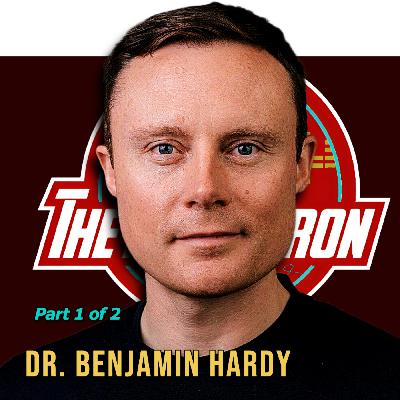
Part 1 of 2: Why Meaning Comes Before Courage | Dr. Benjamin Hardy | 10X Yourself . What if the reason you're afraid to step into your future self has nothing to do with confidence, and everything to do with meaning? Description In this deeply unexpected and profoundly honest conversation, Dov Baron sits down with Dr. Benjamin Hardy for a dialogue that goes far beyond performance psychology and into the foundations of courage, faith, and identity. . For the first time publicly, Dr. Hardy shares his personal origin story, including his beliefs about God, purpose, and why he sees life itself as an educational journey rather than a test to pass or fail. What unfolds is not a debate about religion, but a powerful exploration of how meaning shapes courage, entrepreneurship, and the willingness to let go of who you used to be. . Together, Dov and Ben examine why so many high performers feel deflated even after achieving everything they were told would make them happy, and why clinging to a past identity quietly poisons the future you're trying to build. . This episode challenges the glossy image of entrepreneurship, confronts ego-driven success, and reframes leadership as an act of service rooted in dignity, not status. . If you've ever felt torn between who you've been and who you sense you're meant to become, this conversation will meet you exactly where you are. 🔥 In This Episode Why achievement without meaning often leads to emptiness, not fulfillment Dr. Hardy's rarely shared beliefs about God, origin, and human potential How deep meaning fuels courage and psychological freedom The hidden cost of dragging your past identity into your future Why entrepreneurship, at its best, is a vehicle for service, not ego The difference between living for status and living with dignity How your view of your future self quietly shapes every decision you make today 👤 About Dr. Benjamin Hardy Dr. Benjamin Hardy is an organizational psychologist and bestselling author whose work focuses on courage, transformational leadership, and exponential growth. His research explores how future identity, meaning, and commitment drive extraordinary personal and professional change. He is the author of Willpower Doesn't Work and Personality Isn't Permanent, and a sought-after speaker for entrepreneurs and Fortune 500 leaders. . Website https://benjaminhardy.com https://FutureSelf.com Social Media https://www.linkedin.com/in/benjaminhardy88 https://www.facebook.com/benjaminhardy88 https://twitter.com/BenjaminPHardy https://www.instagram.com/benjamin_hardy_phd 💭 Reflection Question If your future self no longer needs the identity that once kept you safe, what are you still holding onto, and why? 🔔 Up Next in Part 2 In the next episode, Dov and Dr. Hardy go deeper into the psychology of the future self, the illusion of being "finished," and how most people unknowingly sabotage their next evolution by confusing familiarity with truth. 🎧 Listen, Subscribe, and Share If this conversation challenged the way you think about success, courage, or identity, share it with a leader who's questioning what comes next. 🏷️ Hashtags #BenjaminHardy #FutureSelf #LeadershipAndLoyalty #MeaningOverMetrics #EntrepreneurialCourage #IdentityShift #PurposeDrivenLeadership #PersonalTransformation #EmotionalSourceCode #TheDovBaronShow


Download from Google Play

Download from App Store
 United States
Dov is pretty much a devil's advocate in this episode where it results in incredible insights revealed.