


 Claim Ownership
Do It Already
Subscribed: 0Played: 0
Subscribe

© Paige
Description
Do It Already isn’t your typical “manifest your dream life” podcast — it’s mindset backed by neuroscience. Host Paige Herrmann blends real talk with real science to help you rewire your brain, regulate your nervous system, and become the person you keep saying you want to be. If you’re into self-improvement, neuroplasticity, personal growth, or motivation, this is your edge. No waiting. No permission. No more someday.
Each episode breaks down the science behind mindset shifts, emotional regulation, confidence, fear, and identity — so you can stop overthinking and start taking action.
Each episode breaks down the science behind mindset shifts, emotional regulation, confidence, fear, and identity — so you can stop overthinking and start taking action.
14 Episodes
Reverse

Most people think they ignore good advice because they’re stubborn, lazy, or lack discipline.But the truth is far more human — and far more scientific.In this episode, we reveal the neuroscience and psychology behind why you don’t follow advice even when you know it would change your life.You’ll learn why advice feels threatening to your brain, why you resist ideas you agree with, why you repeat the same patterns, and why “knowing better” never automatically leads to “doing better.”Backed by research from UCLA, Harvard, MIT, and UCL, this episode breaks down identity, autonomy, emotional safety, belief updating, cognitive overload, and the biology of resistance — and shows you how to finally make advice land in a way that sticks.If you’ve ever felt stuck, overwhelmed, or frustrated with yourself… this episode will change how you understand your mind forever.FOLLOW THE SHOW ON SOCIAL MEDIA:TikTokInstagram
In this episode, trauma-informed life coach Doug Marshall breaks down what trauma really is, how it shapes the nervous system, and why traditional talk therapy often isn’t enough. We dive into somatic healing, emotional regulation, the science of safety, and how unresolved trauma blocks relationships, success, and manifestation. Doug shares his personal journey—from finance to coaching—and the exact tools that help people reconnect with themselves, rebuild identity, and finally feel safe in their bodies again.CONNECT WITH DOUGTikTokInstagram1:1 Coaching
Most people think confidence is something you’re born with — but neuroscience, psychology, and decades of research prove the opposite. Confidence is built, not inherited. In this episode, we break down the exact science behind confidence: Bandura’s self-efficacy theory, Dweck’s mindset research, threat wiring, identity formation, and why your nervous system resists visibility and growth. You’ll learn the four scientifically proven methods to build real confidence from scratch, the identity shifts required to sustain it, and real-world examples that show how ordinary people become extraordinary through mastery. This is your blueprint to becoming the most confident version of yourself — without faking it.FOLLOW THE SHOW ON SOCIAL MEDIATikTokInstagram
If you’ve ever felt stuck, lost, or unsure of what you want in life, this episode explains the exact neuroscience behind it.Your brain hides your real desires for safety — not because you’re confused.In this episode, I break down how your identity, working memory, and survival wiring block clarity… and the step-by-step process to finally figure out what you actually want.FOLLOW THE SHOW ON SOCIAL MEDIA:TikTokInstagram
If you’ve ever felt like you’ll “start next week,” “have time later,” or “do it when life slows down,” this episode is going to hit home. Today, we’re breaking down the actual science behind why your brain lies to you about time — and how those illusions create procrastination, missed opportunities, and eventually… regret.In this episode, I walk you through FIVE psychological and neurological mechanisms that distort your perception of time:The Time-Abundance Illusion (why later feels safer)The Planning Fallacy (why we underestimate everything)Present Bias (why comfort now beats our future goals)The Future Self Gap (Harvard study: your brain sees future-you as a stranger)Mortality Salience (why time only feels “real” after a loss or major life moment)Then we dive into the science of regret — including research from Harvard and end-of-life studies — and explore why people regret what they didn’t do far more than what they did.Finally, I show you how to break these patterns, reconnect with your future self, and stop living like time is unlimited.FOLLOW THE SHOW ON SOCIAL MEDIA:TikTokInstagram
If you start every January on fire and by February feel like you’ve “fallen off” again, this episode is for you. Your New Year’s resolutions aren’t failing because you’re lazy or undisciplined — they’re colliding with your nervous system, your dopamine cycles, and the identity story you’ve been carrying for years.In this episode of Do It Already, we break down why big “New Year, New Me” goals feel good at first and then crash hard, how your brain is wired to choose familiar over “better,” and why tying your resolutions to your self-worth keeps you stuck in the same loop. You’ll learn how to work with your body instead of against it so change actually becomes sustainable.FOLLOW THE SHOW ON SOCIAL MEDIA:TikTokInstagram
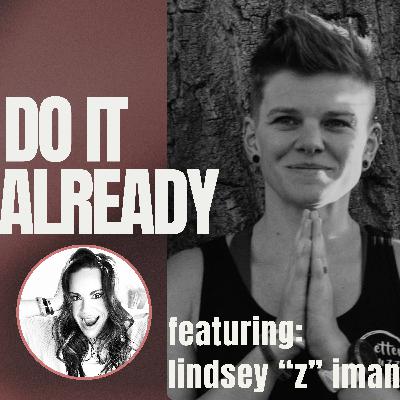
In this episode, Z Iman, ultra runner and endurance athlete, shares her journey into ultra running and the mental, physical, and emotional challenges that come with endurance racing.We dive into the psychology of endurance sports, including how mindset, mental training, and nervous-system regulation play a critical role in pushing past limits when the body and mind want to quit. Z breaks down how community support, self-trust, and identity shape performance — both on the trail and in life.Z also explores the key differences between trail running and road racing, how ultra running reshaped her relationship with discomfort, and why finding a personal “why” is essential for staying grounded during long races and long seasons of growth.This conversation goes beyond running — it’s about resilience, self-belief, and what happens when you learn to move through discomfort instead of away from it.JOIN Z'S JOURNEY:YOGA RETREATWOMEN CANFOLLOW THE SHOW ON SOCIAL MEDIA:TIKTOKINSTAGRAM
Why do millions of people relax to murder documentaries? Why does danger feel calming? In this episode, we break down the exact neuroscience behind true crime obsession: predictive processing, hypervigilance, closure-seeking dopamine cycles, attachment styles, and how the nervous system uses fear simulations to create a sense of safety.This isn’t morbid curiosity — it’s survival wiring. Your body is studying danger, rehearsing responses, validating intuition, and completing emotional cycles your real life never allows.We dig into:Why your nervous system craves predictable fear over unpredictable calmHow observational learning and vicarious rehearsal train the brainWhy childhood chaos makes true crime feel familiarThe dopamine “resolution loop” that keeps you binge-listeningOnce you understand what your true crime habit is doing for your nervous system, everything finally makes sense.FOLLOW THE SHOW ON SOCIAL MEDIA:TikTokInstagram
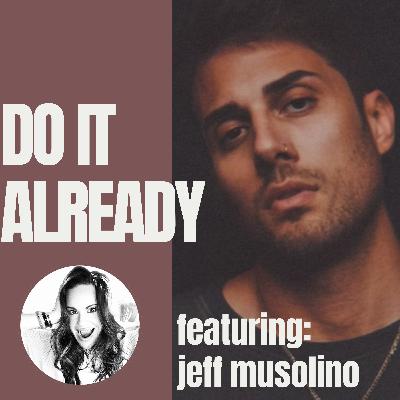
In this powerful and heartfelt conversation, Emmy Award Winning producer, Jeff Musolino shares his journey from behind-the-scenes TV producer to content creator devoted to self-worth, healing, and conscious growth.Jeff opens up about the realities of single fatherhood, the role of therapy in rewiring emotional patterns, and how presence, manifestation, and emotional honesty have shaped his personal evolution. Together, we explore the non-linear nature of healing, the danger of comparison, and the importance of allowing yourself to fully feel — not suppress — your emotions.CONNECT WITH JEFF ON SOCIAL MEDIA:TikTokInstagramFOLLOW THE SHOW ON SOCIAL MEDIA:TikTokInstagramThis episode also dives into:Emotional release as a catalyst for healingAccountability and boundary-setting in relationshipsDaily practices for self-regulation and growthGratitude, awareness, and living in the presentRaising the next generation with self-worth and emotional intelligenceThis conversation is an invitation to slow down, reconnect with your value, and move through life with clarity, confidence, and self-respect.
In this short Q&A minisode, we break down the neuroscience behind why you stay stuck — even when you know exactly what you should do — and how to shift it in real time.This isn’t about motivation or willpower.It’s about understanding how your brain is wired for survival — and learning how to work with it instead of fighting it.This episode explains:✅ why momentum fades✅ why self-sabotage feels automatic✅ why “trying harder” doesn’t work✅ and what actually doesRooted in neuroscience, nervous system regulation, and applied psychology, this minisode gives you simple, science-backed tools you can use immediately to create clarity, consistency, and forward movement.Perfect for:• overthinkers• high achievers in burnout• anyone feeling stuck or off track• moments when your mind feels louder than your momentum🧠🚀 🧠🚀Harvard Medical School — Cortisol, Predictability &Emotional RegulationHarvard Health Publishing research on routines reducing stress and stabilizing executive brain function.UCLA Brain Research Institute — Amygdala Hijack +Threat ResponsesStudies on cortisol activation, prefrontal cortex suppression, and decision paralysis.National Institutes of Health — Dopamine Motivation& Prediction ErrorResearch on dopamine spikes, dips, and behavioral momentum.Dr. Lisa Feldman Barrett — Affect Labeling &Emotion GranularityHow naming emotions reduces amygdala activation.Dr. Judson Brewer — Habit Loops & AnxietyBrown University Mindfulness Center Explains overthinking and compulsive loops as safety mechanisms.MIT Department of Brain & Cognitive Sciences —Uncertainty ToleranceResearch on why uncertainty activates the brain’s threat centers and how to desensitize it.
In this solo deep dive, Paige breaks down the real reason indecision, overthinking, and anxiety feel so overwhelming: a self-trust gap in the brain. Using neuroscience, nervous system regulation, and identity rewiring, she explains why you can’t out-affirm or out-visualize patterns your body no longer believes.Paige reveals how broken promises to yourself shape your biology, how the amygdala learns to fear your own intentions, and why self-trust—not motivation—is the foundation for change. And more importantly: how micro-habits rebuild that trust one tiny vote at a time.This episode is your blueprint for learning how to think clearly again, make confident decisions, and become someone your nervous system actually feels safe following.FOLLOW THE SHOW ON SOCIAL MEDIA:TikTokInstagramKey Takeaways:Indecision and anxiety are biological, not character flaws.A self-trust gap forms when your brain stops believing your intentions.The amygdala triggers fear when it has historical proof you don’t follow through.You can’t mindset your way out of a nervous system that doesn’t feel safe.Micro-habits rebuild trust by creating predictable, identity-shifting evidence.Self-trust restores access to the prefrontal cortex (clarity, planning, logic).Affirmations and visualizations only work when the body trusts you first.Small consistent actions rewire the default-mode network (identity center).Understanding the biology behind your patterns is deeply empowering.Real personal development requires nervous-system-level change.Show Resources:Andrew Huberman, Ph.D. — The Science of Making &Breaking HabitsStanford School of Medicine / Huberman Lab PodcastBreaks down neuroplasticity, the basal ganglia, limbic friction, and why consistent repetition automates behavior.https://www.hubermanlab.com/episode/the-science-of-making-and-breaking-habitsHuberman Lab Newsletter — “Build or Break Habits UsingScience-Based Tools”Covers task bracketing, identity-based routines, and the neurochemistry behind follow-through.https://www.hubermanlab.com/newsletter/build-or-break-habits-using-science-based-toolsHarvard Medical School – Stress, Predictability &Emotional Regulation Studies (2023)Research showing predictable routines lower cortisol, reduce amygdala activation, and improve executive function under stress.University College London – Habit Formation Study (Lallyet al., 2010), Found that consistent repetition builds automaticity in 18–254 days (avg ~66 days). Supports the role of micro-habits in brain rewiring.Stanford Center for Cognitive & NeurobiologicalImaging (2019)Research on the Default Mode Network (DMN) and how identity updates when behavior aligns with self-concept — the foundation of belief change.American Psychological Association – Predictability &Executive FunctionShows how predictable self-generated routines decrease cognitive load and support better decision-making and emotional regulation.Mihaly Csikszentmihalyi — Flow: The Psychology ofOptimal ExperienceSeminal work explaining how structure, safety, and self-regulation support creativity, focus, and “effortless attention.”Bessel van der Kolk, M.D. — The Body Keeps the ScoreResearch on how the nervous system stores safety vs. threat signals, reinforcing why the body needs consistency to update self-trust.
Fear isn’t the enemy—it’s information. In this episode of Do It Already, mindset and neuroscience meet as host Paige Herrmann breaks down how fear, resistance, and anxiety are actually biological signals guiding you toward growth, purpose, and alignment. Discover how to reprogram your nervous system, transform fear into excitement, and use the science of neuroplasticity and emotional regulation to stop letting panic make your decisions.You’ll learn how to shift your mindset around fear, understand the body’s fear response, and apply practical tools for emotional resilience and self-improvement. Drawing on insights from Oprah Winfrey, Steve Jobs, and leading neuroscience research, Paige shows that fear and excitement are the same energy—your interpretation decides your future.KEY TAKEAWAYS:Why fear and excitement feel the same in your bodyHow your brain confuses change with dangerThe science of turning resistance into growthPractical tools to regulate fear in real timeHow leaders like Oprah and Steve Jobs used fear to fuel their evolutionFOLLOW DO IT ALREADY ON SOCIAL MEDIA:TikTokInstagramShow Resources:https://www.psychologytoday.com/us/blog/inviting-monkey-tea/201812/fear-false-evidence-appearing-realhttps://www.psychologicalscience.org/publications/observer/obsonline/fear-happiness-and-sadness-share-common-neural-building-blocks.html? https://www.inc.com/marcel-schwantes/oprah-winfrey-says-overcoming-your-biggest-obstacles-comes-down-to-asking-2-simple-questions.htmlhttps://www.entrepreneur.com/leadership/the-best-advice-steve-jobs-ever-gave/362596
Your nervous system runs everything — how you love, lead, and react. In this episode of Do It Already, Paige breaks down the science of regulation and identity through The Body Keeps the Score, The Polyvagal Theory, and Huberman Lab research. Learn how trauma lives in the body, why calm can feel unsafe, and how to rewire from survival to safety using movement, breathwork, and daily resets. It’s not mindset — it’s biology.In this episode, we explore the intricate relationship between the nervous system and our emotional responses. The host discusses how trauma is stored in the body, the biological basis of our reactions, and the importance of understanding our nervous system's functioning. We delve into the various survival responses—fight, flight, freeze, and fawn—and how they manifest in our daily lives. The conversation emphasizes the need for regulation and offers practical strategies for maintaining a balanced nervous system, ultimately leading to healthier relationships and a more fulfilling life.Takeaways:Every reaction you have is a biological memory.Trauma doesn't just live in your thoughts; it lives in your nervous system.Your body tracks safety and danger constantly.The nervous system's main job is survival, not joy.You cannot embody a new self with an old survival state.Your attachment style is a survival code, not a personality type.Regulation is about teaching your body safety.Daily practices can help maintain a regulated nervous system.You cannot live your best life in a state of chaos.Safety is your new baseline for a fulfilling life.Follow the Podcast on Social Media:TikTok: @DoItAlreadyPodcastInstagram: @DoItAlreadyPodcastShow resources:Bessel van der Kolk, M.D. — The Body Keeps the Score - Trauma imprints on the nervous system and how healing must be body-based.Stephen Porges,Ph.D. — The Polyvagal Theory - Explains how the vagus nerve governs safety, connection, and regulation.Andrew Huberman, Ph.D. — Huberman Lab Podcast - Episodes on breathwork, cold exposure, and vagus-nerve activation for stress regulation.Francine Shapiro, Ph.D. — EMDR: Eye Movement Desensitization and Reprocessing - Evidence-based trauma therapy using bilateral stimulation to reprocess stuck memories.Arnsten, A.F.T. (2009) — Stress signaling pathways that impair prefrontal cortex structure and function - Explains how chronic stress literally shuts down the parts of the brainresponsible for focus and creativity.Ryan & Deci (2000) — Self-Determination Theory - Shows how stress and lack of safety destroy intrinsic motivation and goal achievement.
In this episode of Do It Already, host Paige, breaks down the neuroscience of mindset and how your thoughts physically rewire your brain through neuroplasticity. Learn how your reticular activating system (RAS) filters reality based on what you focus on, and how urgency, emotion, and repetition create lasting transformation.You’ll discover how to reprogram your subconscious mind, regulate your nervous system, and build a new identity from the inside out — no “think-positive” fluff, just science-backed tools for self-mastery.If you’re ready to stop overthinking and start rewiring your brain for confidence, calm, and consistency, this episode will show you the biology behind real change.
Comments


Download from Google Play

Download from App Store
 United States