


 Claim Ownership
Building Your Sales Engine
Subscribed: 5Played: 117
Subscribe

Description
A show where Mark McGraw, a top Sandler Sales Trainer and David H. Sandler award winner, interviews salespeople and sales managers to discover their successes and how they got to be the people they are today.
We break down the elements of selling success and share mindsets, habits and techniques that help salespeople and managers build a proven, reliable, transferable system for sales.
We break down the elements of selling success and share mindsets, habits and techniques that help salespeople and managers build a proven, reliable, transferable system for sales.
52 Episodes
Reverse
Inversion thinking helps sales professionals anticipate failure before it happens, creating prevention rules that guarantee goal achievement. What if the secret to hitting your sales goals was visualizing failure instead of success? In this episode, Mark McGraw and Josh Pitchford explore inversion thinking, a powerful three-step framework that flips traditional goal-setting on its head. Instead of imagining success, you imagine failing at your goal and work backward to identify what went wrong. The process is simple but transformative: First, set your goal. Second, imagine it is the end of the year and you have failed. Third, create prevention rules that eliminate those failure points before they happen. This pre-mortem approach leverages our natural tendency toward negative thinking and turns it into a strategic advantage. Mark and Josh dive into practical applications, from shortening sales cycles to building prospecting habits. You will learn how to "pre-decide" your actions to remove willpower from the equation and why public accountability can leverage your need for approval to keep you on track. As the Sandler rule states, you have to learn to fail to win, and this episode shows you how to fail before you fail. About Josh Pitchford: Josh Pitchford is a Sandler trainer and coach at Sales Engine, where he helps sales professionals and teams build predictable revenue systems. With extensive experience in enterprise sales and account management, Josh specializes in teaching relationship-building strategies, account planning, and the Sandler methodology. 🔗 Josh on LinkedIn: https://www.linkedin.com/in/josh-pitchford-6163274/ Host: Mark McGraw — Building Your Sales Engine In This Episode: The three-step inversion thinking framework for goal achievement Why imagining failure works better than visualizing success How to conduct a pre-mortem before things go wrong The concept of pre-deciding to eliminate willpower in the moment Creating non-negotiable prevention rules Common reasons salespeople fail to hit goals: not prospecting enough, extended sales cycles Getting to the ultimate decision maker to shorten sales cycles Finding the buyer's compelling event instead of relying on your own Why humans are wired for negative thinking and how to leverage it The importance of clear next steps in every sales conversation Bulletproofing your deals to mitigate risk Public accountability and leveraging need for approval Bringing future pain into the present moment to drive action Never let how you feel determine how you act Building rumble strips as guardrails toward your goals Links: Sandler: https://www.Sandler.com Episode page: https://www.BuildingYourSalesEngine.com/ Show links: https://linktr.ee/buildingyoursalesengine Josh on LinkedIn: https://www.linkedin.com/in/josh-pitchford-6163274/

Mark McGraw and Josh Pitchford reveal the six essential checkpoints every seller needs to crush their goals and start the new year with confidence. Are you ready to hit the ground running in the new year? In this milestone 50th episode, Mark McGraw and Josh Pitchford break down the six critical areas every sales professional must address to start strong and finish stronger. From setting stretch goals you'll only achieve 25% of the time (yes, really) to building your "cookbook" of controllable behaviors, Mark and Josh share the exact framework they use with clients to transform overwhelming annual quotas into manageable, motivating action plans. You'll learn about the KARE model for account segmentation, why your personal goals drive your professional success, and how to identify and crush the self-limiting beliefs holding you back. Whether you're a sales leader preparing your team or an individual contributor mapping out your year, this checklist will help you move from daunting quotas to confident execution. Plus, hear Mark's "star salesman" story and why that's not the compliment you think it is. About Josh Pitchford: Josh Pitchford is a Sandler trainer and coach at Sales Engine, where he helps sales professionals and teams build predictable revenue systems. With extensive experience in enterprise sales and account management, Josh specializes in teaching relationship-building strategies, account planning, and the Sandler methodology. 🔗 Josh on LinkedIn: https://www.linkedin.com/in/josh-pitchford-6163274/ Host: Mark McGraw — Building Your Sales Engine In This Episode: The six-point checklist for starting your sales year strong Why written goals beat goals "in your brain" David Sandler's counterintuitive advice: set goals you'll only hit 25% of the time How to create a quarterly revenue map to make quotas manageable The "cookbook" concept: your recipe for consistent sales success Why personal goals drive professional motivation The KARE model (Keep, Attain, Recapture, Expand) for account segmentation Territory zoning and why being a "star salesman" isn't a compliment Using AI tools like ChatGPT to optimize your territory routes Building strategic plans for your top 10 accounts The three-by-three framework: going wider, higher, and deeper in accounts Skill development priorities for the coming year (including AI) The belief wheel: how beliefs drive actions and results Identifying and crushing self-limiting beliefs Why referral asks belong in every seller's cookbook "It's not how you feel that determines how you act, it's how you act that determines how you feel" Links: Sandler Training: https://www.Sandler.com Episode Page: https://www.BuildingYourSalesEngine.com/ Show Links: https://linktr.ee/buildingyoursalesengine Josh Pitchford LinkedIn: https://www.linkedin.com/in/josh-pitchford-6163274/
Summary: A proven 5-step framework for setting and achieving goals—from removing clutter to celebrating success along the way. Description: Most people fail at goals because they start without a foundation. Dustin Schadt has developed the REACH method—a framework that helped him mentor 18 people, with 16 earning promotions, raises, or recognition as top performers. As a sales leader with 27 years in packaging, Dustin breaks down the REACH framework: Realize greatness and remove clutter, Evaluate your mission and execute your plan, Account for your time and acknowledge failures, Celebrate successes and challenge yourself, and Hone your skills while helping others. You'll learn why physical clutter creates mental clutter, how to use incremental goals, and why helping others achieve their goals makes you better at achieving yours. About Dustin Schadt Dustin Schadt is a sales leader with 27 years of experience in the packaging industry. He's passionate about mentoring and helping people succeed—considering himself a "dream manager" who helps team members set ambitious goals and achieve the next level of success. Of the 18 people Dustin has mentored, 16 have been promoted, received above-average raises, or been recognized as top performers. 🔗 Dustin on LinkedIn: https://www.linkedin.com/in/dustin-schadt-3213794/ Host: Mark McGraw — Building Your Sales Engine In This Episode: The REACH framework: 5 steps for achieving goals R: Realize your greatness and remove the clutter (physical and mental) Why you need to remove clutter before setting goals Fear of giving things up: The biggest mental block E: Evaluate your mission and execute the plan Creating a mission statement you say daily Breaking big goals into incremental steps A: Account for your time and acknowledge where you failed Blocking time in your calendar for goal activities Monthly reviews: What did you learn? How did you apply it? C: Celebrate successes and challenge yourself to do better Why high achievers struggle to celebrate wins H: Hone your skills and help others Finding coaches and mentors at every level Why helping others makes you better at achieving your own goals Links Sandler: https://www.Sandler.com Episode page: https://www.BuildingYourSalesEngine.com/ Show links: https://linktr.ee/buildingyoursalesengine Dustin on LinkedIn: https://www.linkedin.com/in/dustin-schadt-3213794/
Summary: The 7 biggest lies that keep salespeople stuck—and how to replace them with a winning mindset that closes more deals. Description: Mark McGraw sits down with Josh Pitchford to break down the 7 biggest lies that keep salespeople from reaching their full potential. From believing your job is to educate prospects to thinking you need to win every deal, these mindset traps are costing you sales—and you might not even realize it. In this episode, Mark and Josh reveal why discounting is lazy selling, how to handle price objections like a pro, and why there's never a bad time to call your prospects. You'll learn why buyers don't need to like you (they need to respect you), how emotions drive every purchase decision, and why chasing unwinnable deals has a massive opportunity cost. If you're struggling with confidence, pricing, or qualifying, this episode delivers the mindset shifts you need to win more deals without working harder. About Josh Pitchford Josh Pitchford is a Sandler trainer and coach at Sales Engine, where he helps sales professionals and teams build predictable revenue systems. With extensive experience in enterprise sales and account management, Josh specializes in teaching relationship-building strategies, account planning, and the Sandler methodology. 🔗 Josh on LinkedIn: https://www.linkedin.com/in/josh-pitchford-6163274/ Host: Mark McGraw — Building Your Sales Engine In This Episode: Lie #1: My job is to educate the prospect (spoiler: it's not) Why buyers have already done their research before they talk to you Your real job: Qualify first, educate second Lie #2: I have to win every deal Why chasing unwinnable deals wastes your most valuable resource: time How to focus on winnable deals and protect your ammunition Lie #3: I have to discount in order to win The math of discounting: A 10% discount means 50% more sales to break even Why discounting is lazy selling and how to compete on value instead How to handle price objections without caving Lie #4: It's a bad time to call Why there's never a bad time to reach out (yesterday, today, tomorrow) How to stop justifying why you shouldn't pick up the phone Lie #5: I'm not ready The Sandler rule: It's not how I feel that determines how I act—it's how I act that determines how I feel How to build confidence by taking action first Starting small: Tiny goals build unstoppable momentum Lie #6: I have to do everything the buyer asks Why being a "sales golden retriever" kills your credibility Respect trumps likeability: Buyers need value, not a friend Why value triumphs relationships 9 times out of 10 Lie #7: People buy on logic, not emotion Every purchase starts with emotion, logic justifies it later How to trigger emotions and close more deals The opportunity cost of chasing every deal Why consistency is the only thing that wins in sales Links Sandler: https://www.Sandler.com Episode page: https://www.BuildingYourSalesEngine.com/ Show links: https://linktr.ee/buildingyoursalesengine Josh on LinkedIn: https://www.linkedin.com/in/josh-pitchford-6163274/ Episode handout: https://www.buildingyoursalesengine.com/giveaway14
How to build a repeatable channel sales engine—from partner selection to enablement to metrics—with a 30-year channel sales veteran. Selling through channel partners without a system feels like that old vibrating football game—everyone's running around hoping to score. John Rosati has spent 30 years building channel sales engines that create predictable revenue, and in this episode, he reveals exactly how he does it. As a channel sales leader at Motorola with experience across distribution, manufacturers reps, and two-tier channels, John knows what separates successful channel programs from chaotic ones. In this conversation with Mark McGraw, he breaks down his "sales engine" framework: partner selection (willingness and ability to invest), enablement (training, co-selling, monkey-see-monkey-do), and metrics (dashboards that drive behavior). You'll learn why Sandler is the "how" that enables every channel tool, how to make it easy for partners to do business with you, and why the best partners invest in their people and infrastructure. About John Rosati John Rosati is a channel sales executive with 30 years of experience in technology sales, currently leading Motorola's channel partner business for professional communications and radio across North America. Starting his career with cold calls at Motorola (70-100 calls a day), John moved through inside sales, outside sales, and eventually into channel leadership roles managing billion-dollar partner networks. He specializes in building repeatable sales engines for channel partners, partner enablement, co-selling strategies, and using metrics to drive predictable revenue. John is passionate about Sandler Training and has implemented Sandler methodologies across his channel teams to create consistent, scalable results. 🔗 John on LinkedIn: https://www.linkedin.com/in/johnrosati911/ Host: Mark McGraw — Building Your Sales Engine In This Episode: Why selling through channels is a force multiplier when done right The "vibrating football game" analogy: What happens without a system The sales engine framework: Onboarding, enablement, programs, metrics Partner selection: Willingness and ability to invest (the #1 indicator) Why mindshare leads to wallet share with channel partners The monkey-see-monkey-do approach: Co-selling and ride-alongs How Sandler helps channel partners avoid common selling mistakes Why traditional sellers want to "throw features and benefits" immediately Getting channel partners to qualify: Pain, budget, decision, process The challenge: Channel partners hate reporting (and how to make it easier) Dashboards and metrics: Leading indicators vs. lagging indicators Point of sale metrics: Are products moving off partner shelves? Scorecards and competitive rankings to drive partner behavior Making it easy to do business with: The holy grail of channel success How supply chain challenges during COVID tested "easy and consistent" Improving the out-of-box experience to save partners time Using AI to make information access more efficient for partners Why Sandler is the "how" that turbo-boosts other sales tools The importance of hand-to-hand combat: Getting with sellers directly Strategic selling, Miller Heiman, and how Sandler enables those frameworks Links Sandler: https://www.Sandler.com Episode page: https://www.BuildingYourSalesEngine.com/ Show links: https://linktr.ee/buildingyoursalesengine John on LinkedIn: https://www.linkedin.com/in/johnrosati911/

Why traditional therapy can make emotional triggers worse—and how neuroscience-based techniques dissolve limiting beliefs in minutes, not years. What if reliving your past trauma actually makes it stronger? Rochelle Carrington explains why traditional approaches to emotional healing can deepen the very patterns you're trying to break—and reveals a faster, neuroscience-based alternative. As a coach specializing in subconscious emotional patterns, Rochelle works with CEOs, business owners, and high achievers who look successful on the outside but are burnt out inside. In this episode with Mark McGraw, she breaks down how emotions drive actions (which create results), why understanding "why" isn't necessary for healing, and how she helps clients dissolve decades-old limiting beliefs in 3-4 weeks. You'll learn about the 95/5 rule of the subconscious mind, why managing emotions doesn't work, and real results like sleeping through the night, doubled revenue, and healed relationships—all from dissolving emotional triggers in minutes. About Rochelle Carrington Rochelle Carrington is a coach and consultant specializing in helping high achievers dissolve subconscious emotional patterns that drive burnout, stress, and self-sabotage. Using neuroscience-based protocols, she works with CEOs, business owners, and peak performers to release limiting beliefs formed in childhood—without reliving past trauma or telling their stories. Her approach combines neuroscience, somatic psychology, and quantum physics to create rapid, permanent shifts. Rochelle has helped clients sleep through the night after years of insomnia, stop procrastinating, improve relationships, and significantly increase business revenue—all by addressing the emotional patterns running 95% of their actions. 🔗 Rochelle on LinkedIn: https://www.linkedin.com/in/rochellecarrington/ Host: Mark McGraw — Building Your Sales Engine In This Episode: Why high achievers with everything externally are burnt out internally The problem with traditional therapy: Reliving stories deepens neural pathways How emotions create actions, which create results (not the other way around) The 95/5 rule: Your subconscious runs 95% of your actions Why you don't need to understand "why" to heal emotional triggers Subconscious emotional patterns formed before age 7 drive adult behavior The nervous system's role: Fight, flight, or freeze responses Why procrastination is often a nervous system freeze response How emotional triggers get dissolved in 10-15 minutes (not years) The difference between managing emotions and dissolving them Why discipline and willpower are compensating for underlying beliefs Real results: Sleeping through the night, relationships healing, revenue doubling The CEO who couldn't stand his company (and expanded to Mexico after 8 weeks) How dissolved beliefs create new neural pathways permanently The reticular activating system (RAS): Seeing opportunities you couldn't see before Why "the why doesn't matter"—just dissolve the emotional charge Managing emotions vs. dissolving emotions: Which actually works? How limiting beliefs like "I'm not good enough" pile up in childhood The water jug analogy: When high achievers finally hit burnout Why this approach is becoming the future of peak performance Links Sandler: https://www.Sandler.com Episode page: https://www.BuildingYourSalesEngine.com/ Show links: https://linktr.ee/buildingyoursalesengine Rochelle's Substack: Mindset Matters
How to expand relationships in your accounts, identify all the influencers, and protect yourself before your main contact leaves or competitors wedge in. If you're only talking to one person in your account, you're one resignation away from losing everything. Josh Pitchford reveals why the "best defense is a good offense" when it comes to account relationships—and shares practical frameworks for expanding higher, deeper, and wider. As a Sandler trainer and coach at Sales Engine, Josh helps sales teams protect and grow their key accounts through strategic relationship building. In this episode with Mark McGraw, he breaks down the "3x3" strategy for identifying influencers, explains why relationship maps beat org charts, and shares why you need to know people's "5 to 9" (not just their 9 to 5). You'll learn how to fence your accounts, and expand relationships before your competition does. Relationship Map Template: [Link in show notes] About Josh Pitchford Josh Pitchford is a Sandler trainer and coach at Sales Engine, where he helps sales professionals and teams build predictable revenue systems. With extensive experience in enterprise sales and account management, Josh specializes in teaching relationship-building strategies, account planning, and the Sandler methodology. He's passionate about helping sellers move beyond single-point-of-contact relationships to build the depth and breadth needed to protect and expand strategic accounts. 🔗 Josh on LinkedIn: https://www.linkedin.com/in/josh-pitchford-6163274/ Host: Mark McGraw — Building Your Sales Engine In This Episode: Why "another lunch with Grant" won't win you more business The best defense is a good offense: Building sticky relationships The 3x3 strategy: Mapping relationships across and up/down How to "put a fence around your account" to block competitors Why your competition won't go after your main POC (they'll wedge elsewhere) The #1 fear sellers have: Their main point of contact leaving Relationship maps vs org charts: Why dotted lines matter The advocacy score: Moving people from detractor to champion on a -5 to +5 scale Identifying influencers: There are now 14+ people involved in enterprise decisions The three levels with influencers: Identify, access, influence Bomb-proofing your account: What could go wrong and how to protect yourself Why the weather is always changing in your accounts (every 90 days) How to know people as people: The "5 to 9" not just the "9 to 5" The fuzzy file: Collecting personal information about your contacts Unreasonable hospitality: Going the extra mile with thoughtful gestures Using AI and Etsy for personalized gifts that deepen relationships Mapping to the buyer's network: Connecting your team to theirs Links Sandler: https://www.Sandler.com Episode page: https://www.BuildingYourSalesEngine.com/ Show links: https://linktr.ee/buildingyoursalesengine Josh on LinkedIn: https://www.linkedin.com/in/josh-pitchford-6163274/ Relationship Map Template: [Link in show notes]
How to build influence and lead without a title—from an individual contributor to recognized leader in your organization. Can you be a leader without managing anyone? Absolutely. Darryl Stromberg reveals exactly how to position yourself as a leader even when no one reports to you. As a Sandler Coach at Sales Engine with 30+ years of experience, Darryl knows what separates people who get promoted from those who get stuck. In this episode, he shares the strategies that helped him mentor 18 people—16 of whom earned promotions, above-average raises, or recognition as top performers. You'll learn why your spouse's behavior at company events can derail your promotion, how to "manage up" when you have a weak boss, and the critical difference between leadership and management. Whether you're an individual contributor or a manager developing your team, this episode delivers career-accelerating insights. Episode page: https://www.BuildingYourSalesEngine.com/ About Darryl Stromberg Darryl Stromberg is a Sandler Coach at Sales Engine, bringing over 30 years of leadership and sales operations experience. His career includes roles as Director of North American Operations and Manager of Sales Operations at Motorola Solutions, where he led teams, streamlined processes, and drove performance improvements. Known for his mentoring and coaching, Darryl has helped dozens of professionals advance their careers through intentional leadership development. 🔗 Darryl on LinkedIn: https://www.linkedin.com/in/darrylstromberg/ Host: Mark McGraw — Building Your Sales Engine In This Episode: The critical difference between leadership and management How to position yourself as a leader through behavior and listening Why sitting at the front of the room matters at company events The "be entertained, don't be the entertainment" rule for company events How your spouse's behavior can disqualify you from promotions Why leaders are constant learners (books, articles, videos) Building influence through article sharing and mentoring Results from Darryl's mentoring: 16 of 18 people promoted or recognized The Behavior-Attitude-Technique (BAT) framework for leadership Modified monthly performance reviews that drive accountability Managing up: How to succeed with weak managers Scheduling your own one-on-ones with your boss Becoming the "leader of your manager" through influence Filling organizational vacuums as an individual contributor Why you must do your job first before expanding leadership The power of great mentors in career development Testing if management is right for you before accepting the role Leading projects without direct reports to build leadership muscle Building a "dome of trust" with colleagues and leaders Why motive matters: Serving others vs. self-promotion Links Sandler: https://www.Sandler.com Episode page: https://www.BuildingYourSalesEngine.com/ Show links: https://linktr.ee/buildingyoursalesengine
How to run sales kickoffs that actually work—align, enable, inspire—from a CCO who's transformed 3+ organizations. Most sales kickoffs overwhelm teams with content and drain energy by day three. Lisa Gosselin has cracked the code on SKOs that inspire action, not confusion. As Chief Commercial Officer at Cars Commerce, Lisa has transformed go-to-market organizations at three different companies—and she's phenomenal at setting vision. In this conversation with Mark McGraw, she breaks down her SKO framework: align the team around vision, enable them with simple playbooks (not 100-page manuals), and inspire them to execute. She also shares a game-changing insight that surprised Mark after 29 years in sales leadership: finish your SKO with a motivational speaker, not product presentations. If you're planning a sales kickoff or struggling to get your team aligned on vision, this episode is your playbook. About Lisa Gosselin Lisa Gosselin is Chief Commercial Officer at Cars Commerce, where she leads go-to-market strategy, deepens strategic partnerships, and drives revenue growth for dealers and OEMs. Appointed in February 2025, Lisa brings 25+ years of commercial leadership across SaaS, ad tech, and data-driven marketing. Previously, as Chief Revenue Officer at Numerator (Bain Capital-backed), she transformed the commercial organization and delivered four consecutive years of double-digit growth. Lisa has also held senior leadership roles at Conversant-Epsilon, Catalina Marketing, Anheuser-Busch, PepsiCo, and Suntory. She specializes in organizational transformation—building high-performing teams and turning vision into execution. 🔗 Lisa on LinkedIn: https://www.linkedin.com/in/lisagosselin/ Host: Mark McGraw — Building Your Sales Engine In This Episode: The 3 pillars of great SKOs: Align, Enable, Inspire Why the last day has to be a bang (finish with motivation, not product) How to keep teams focused: cadence, governance, shared accountability Playbooks that work: simple, dynamic, Q&A-driven (not 100-page manuals) Product & marketing alignment: 30 minutes max, no training sessions Why you need to repeat the vision until people mock you (Jim Collins principle) Client panels vs. motivational speakers: when to use each Themes that work: base them on your market challenges, not gimmicks The project manager role: who should run your SKO (hint: not you) How to sustain momentum after the event: vision, governance, redundancy Links Sandler: https://www.Sandler.comEpisode page: https://www.BuildingYourSalesEngine.com/ Show links: https://linktr.ee/buildingyoursalesengine Lisa on LinkedIn: https://www.linkedin.com/in/lisagosselin/
How a brain cancer diagnosis became the best thing that ever happened—and what it teaches us about responding to adversity in business and life. "It was one of the best things that ever happened to me." That's how David Karp describes his brain cancer diagnosis—and he means it. On his 60th birthday, David got a call from a neuro-oncologist confirming he had a tumor in his brain. Instead of falling into despair, he made a choice—and that choice changed everything. In this conversation with Mark McGraw, David shares the mindset shifts that helped him navigate adversity: deciding it's not about you, pre-deciding how you'll respond before crisis hits, and being a "person person" instead of a "people person." He also shares the "dog poop principle"—a moment on January 1st that prepared him for the hardest year of his life. If you're facing adversity in business, health, or life, this episode is a masterclass in perspective, resilience, and choosing growth over fear. About David Karp:David Karp is Chief Customer Officer at Disqo, where he leads customer success for some of the world's biggest brands measuring brand advertising impact. With decades of experience in sales, account management, and customer success, David specializes in closing operational gaps and championing the customer. He's been married for 36+ years, is rooted in his faith, and believes in showing up for others—especially when life gets hard. 🔗 David on LinkedIn: https://www.linkedin.com/in/davidalankarp/ Host: Mark McGraw — Building Your Sales Engine In This Episode: The brain cancer diagnosis on his 60th birthday—and why David calls it "the best thing" How to pre-decide your response to adversity before it happens The "dog poop principle": What stepping in dog poop taught him about perspective Why "it's not about you" is the most powerful mindset shift in crisis The roller coaster analogy: Holding hands through the terrifying moments How David influenced 10+ men to start going to the doctor Be a "person person," not a "people person"—the power of presence Why 80% of people you meet are going through something serious The sphere of control vs. influence: What you can actually change Learning from adversity: Growth-minded lessons from failure and hardship Links Sandler: https://www.Sandler.comEpisode page: https://www.BuildingYourSalesEngine.com Show links: https://linktr.ee/buildingyoursalesengine
How to build a sustainable sales career by prioritizing quality prospecting, strategic partnerships, and giving value—without burning out on empty activity. 🔗 Download exclusive sales resources at: buildingyoursalesengine.com/giveaway Most salespeople start their careers chasing numbers—60, 70, 80 dials a day—hoping volume will lead to wins. Rich Simons did exactly that. But 17 years later, he's built a thriving sales career by flipping the script: quality over quantity, relationships over transactions, and giving over taking. In this conversation with Mark McGraw, Rich shares his journey from cold-calling burnout to sales leadership. He walks through his morning routine (prayer, physical, then professional), why he plans each day the night before, and how speaking at industry events became his #1 prospecting channel. Rich also explains why LinkedIn has become "noisy," how to network with authenticity, and why he's intentional about slowing down the sales process to truly understand his clients' businesses. If you're tired of grinding through empty activity or want to build a sales career rooted in relationships and real value, this episode delivers a proven blueprint. About Rich Simons Rich Simons leads sales at Edge Business Systems in Georgia. With 17+ years in B2B sales, he's known for building deep client relationships, strategic partnerships, and mentoring emerging sales talent. 🔗 Connect with Rich on LinkedIn: https://www.linkedin.com/in/richsimons/ Host: Mark McGraw — Building Your Sales Engine In This Episode: Why "quality per day" beats "volume per day" for sustainable success Rich's morning routine: prayer, physical, professional Planning your day the night before (and why it matters) How to define a "win" and track small victories The hunter vs. farmer mistake and staying in your role long enough to succeed Speaking in front of groups: the underutilized prospecting channel Why LinkedIn is "noisy" and how to network with authenticity Listening for symptoms (not explicit requests) to connect people The philosophy of giving to your network without keeping score Mentoring the next generation and why most people want to help Links Sandler: https://www.Sandler.comPodcast Webpage page: https://www.BuildingYourSalesEngine.com/ Show links: https://linktr.ee/buildingyoursalesengine Rich on LinkedIn: https://www.linkedin.com/in/richsimons/
Why Q4 isn't 92 selling days — and how to keep deals from slipping to January. 🔗 Download exclusive sales resources at: buildingyoursalesengine.com/giveaway The calendar says 92 days in Q4. The reality? Subtract weekends, holidays, PTO, and slowdowns in legal and purchasing — and you've got a fraction of that. In this conversation, Mark McGraw and Sandler trainer Josh Pitchford map out how to close strong when time is short: Count your real selling days and plan around them Start earlier — budgets are set sooner every year Get higher in the organization to accelerate decisions Map the path to the PO: timeline, events, people Quantify the cost of delay (the $250K/month example) Be in the room where decisions happen Prepare for the handful of predictable objections Links:Sandler: https://www.Sandler.comEpisode page: https://www.BuildingYourSalesEngine.com/40 Show links: https://linktr.ee/buildingyoursalesengine Josh on LinkedIn: https://www.linkedin.com/in/josh-pitchford-6163274/
How to build validated sales dashboards, manage exceptions, and make better decisions—without flying by gut feel. To find our handout for this episode, click here. Static reports are lagging. In this conversation, Mark McGraw and Chris Blum (EH Blum Company) walk through moving from canned outputs to interactive, validated dashboards. Start simple (revenue, mix, low-margin drivers), manage the exceptions, hunt the 1% margin gains, and use leading vs. lagging indicators to forecast. Chris shares a private-pilot "six dials" framework (trust instruments, not feel), how to visualize obsolescence (new-in/old-out), why your dials must be custom, and where AI helps—as long as you validate the output before you act. 🔗 Download exclusive sales resources at: buildingyoursalesengine.com/giveaway Links Sandler: https://www.Sandler.comEpisode page: https://www.BuildingYourSalesEngine.com/39 Show links: https://linktr.ee/buildingyoursalesengine Chris on LinkedIn: https://www.linkedin.com/in/chris-blum-5439aa30/ In this episode: Reports → dashboards and real-time data validation Manage exceptions; the Power of 1% margin improvement Leading vs. lagging indicators for practical forecasting The pilot's six dials mindset for sales leaders Obsolescence: visualize new-in/old-out to protect margin Custom dials (cash flow, growth, R/Y/G alerts) tailored to your business AI to build faster—validate before you act Mark's practice: rolling 12s and "AI is great until it's not"
How to hire, place, and coach sellers with assessments—so you avoid hunter/farmer mis-hires and reduce burnout. Assessments aren't paperwork—they're how you hire better, place smarter, and coach faster. Mark McGraw and Rachel Chang break down using work style/DISC, personality, sales capacity, and object reasoning assessments to prevent bad hires, align roles with natural strengths, and target training where it moves the needle. Interviews show experience; assessments reveal potential and capacity. 🔗 Download exclusive sales resources at: buildingyoursalesengine.com/giveaway Guest: Rachel Chang — Project and Consulting Manager @ Sandler Training by Sales Engine Host: Mark McGraw — Building Your Sales Engine In this episode: The hunter vs. farmer trap (and how assessments prevent it) What each tool measures: work style/DISC, personality, sales capacity, object reasoning Reading energy × focus (DISC) and adjusting in real time Natural vs. adjusted style: why sustained "masks" burn people out Team assessments: find capability gaps; tailor training (composure/resiliency, negotiating, relationship skills) Experience vs. potential: use both—stop guessing Links Sandler: https://www.Sandler.comEpisode page: https://www.BuildingYourSalesEngine.com/38 Show links: https://linktr.ee/buildingyoursalesengine Rachel on LinkedIn: https://www.linkedin.com/in/rachel-chang246/
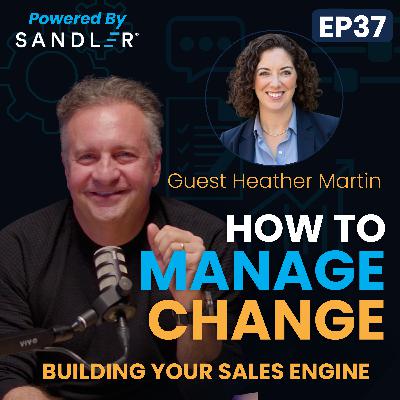
How to lead sales teams through change with KPI discipline, psychological safety, clear cadence, and a risk register so signal beats noise. Change doesn't break sales—silence and guesswork do. In this episode, Mark McGraw and guest Heather Martin lay out a practical playbook for leading teams through change: build a KPI foundation before you pivot, create psychological safety so truth flows up, communicate like a sales cycle (even when the update is "I don't know yet"), and use a risk register to prioritize signal over noise. In this episode: • Sales and pipeline are lagging indicators—how to read real market signal • Build the KPI funnel (activities → meetings → opps) before change hits • Psychological safety: set permission, protection, potency so reps speak up • "Bring data to your gut": document with SCQA and metrics • Managing up: write it down, include the risk register • Be the stable leader: cadence, transparency, consistency • Prioritization: signal vs. noise—what to park and how to track it • Mental health: model PTO/boundaries so the team follows • IC playbook: how sellers manage themselves (and their manager) through change About Heather Martin Heather Martin is Vice President at Crisp, where she leads CPG sales and go-to-market. With 15+ years in automation, data management & analytics, and category/shopper insights, she builds KPI-driven, psychologically safe teams and guides organizations through high-change periods with clear communication, documentation, and disciplined execution. 🔗 Download exclusive sales resources at: buildingyoursalesengine.com/giveaway Mentioned in This Episode: Sandler: https://www.Sandler.comEpisode page: https://www.BuildingYourSalesEngine.com/37 Show links: https://linktr.ee/buildingyoursalesengine Heather on LinkedIn: https://www.linkedin.com/in/martinhl/
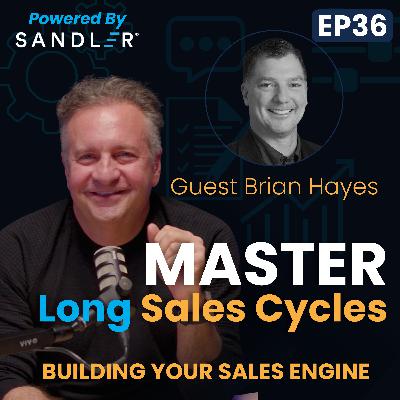
Long sales cycles aren't a patience test—they're a process. In this episode, Mark McGraw and guest Brian Hayes break down how to win 12–24-month capital deals without rushing: speak the buyer's language, use curiosity to find context, and build momentum through meaningful next steps instead of shortcuts. In this episode: Why speed kills deals (and how context saves them) Capital buying reality: budgets, board approval, and timing Cost of delay as a lever to align urgency The Italy negotiation story: delivery date > everything else Stakeholder mapping: "Who else is involved?" and signatory authority Meaningful Next Steps: an operating system for long cycles "Help me understand" → "What if" (first 30 min vs. next 30 min) Pre-call reports, 3×3 matrix, and pre-mortems to avoid blind spots Being the Sherpa: guide the buy, don't just pitch About Brian Hayes: VP of Sales & Marketing at GPA (Global Process Automation). Brian sells and leads large, complex automation programs across paper, mining/minerals, and chemicals—bringing a Sandler-driven approach to discovery, stakeholder alignment, and clarity in next steps. 🔗 Download exclusive sales resources at: buildingyoursalesengine.com/giveaway Mentioned in This Episode: https://www.Sandler.com https://www.BuildingYourSalesEngine.com/36 https://linktr.ee/buildingyoursalesengine https://www.linkedin.com/in/brian-frank-hayes/
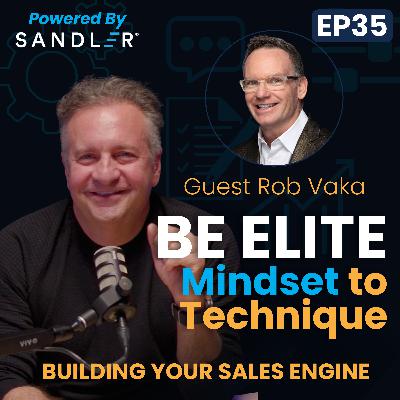
Elite selling isn't hype — it's standards. In this episode, Mark McGraw talks with sales leader and master connector Rob Vaka about how to link mindset to technique so you sell with clarity, qualify fast, and build trust that lasts. In this episode: The connector mindset: be more interested than interesting Curiosity that leads to real discovery (not interrogation) Up-Front Contracts (UFC): agenda, time, outcome — clarity that reduces pressure Fit-first qualification: why "we may not be a fit" builds credibility Situational fluency: get in more rooms, play up, learn fast, course-correct "Imperial Guard" standards: raise the bar on people, process, and culture Fail forward: the buffalo-into-the-storm metaphor and keeping perspective About Rob Vaka: Sales leader and connector with a track record across life-saving technology (AED programs), luxury membership, wealth services, and sports media. Today he's building a high-standard ("Imperial Guard") sales team and teaching practical discovery, authentic qualification, and clarity in next steps. 🔗 Download exclusive sales resources at: buildingyoursalesengine.com/giveaway Mentioned in This Episode: https://www.Sandler.com https://www.BuildingYourSalesEngine.com/35 https://linktr.ee/buildingyoursalesengine https://www.linkedin.com/in/rob-vaka-1029264/

Stress isn't the enemy — it's energy. In this episode, Mark McGraw talks with Dr. Rebecca Heiss, stress physiologist, keynote speaker, and author of Springboard, about how a simple mindset shift can transform performance in sales, leadership, and life. Rebecca explains why believing "stress is bad" is linked to worse outcomes, why "calm down" fights your biology, and how to reframe stress into focus, service, and action. You'll hear practical, science-backed tools you can use before your next presentation or sales call. In this episode: The "stress mindset" and why the 43% mortality stat matters Why "calm down" is terrible advice — and what to do instead The "I'm excited" reframe to turn stress into usable energy The Fearless Framework: invite the tiger, choose adventure, set trajectory toward service How small wins beat procrastination via the Winner Cycle Why stress correlates with meaning and purpose (plus the bison-in-a-storm metaphor) About Dr. Rebecca Heiss: Biologist, stress physiologist, and author of Springboard, a short, action-first guide to using stress to your advantage. She donates 100% of her book's proceeds to charity and offers the Fearless Masterclass, a 52-module program on stress, fear, and imposter syndrome. Learn more at rebeccaheiss.com. 🔗 Download exclusive sales resources at: buildingyoursalesengine.com/giveaway Mentioned in This Episode: https://www.Sandler.com https://www.BuildingYourSalesEngine.com/34 https://linktr.ee/buildingyoursalesengine https://www.linkedin.com/in/rebeccaheiss/ https://rebeccaheiss.com/books/springboard/
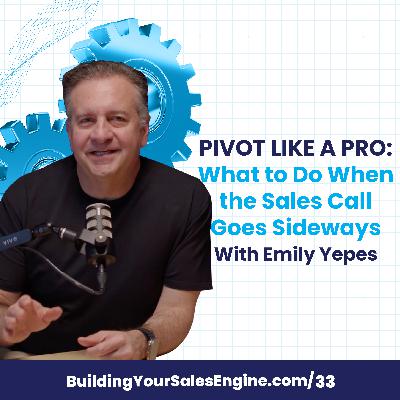
In this episode of Building Your Sales Engine, Mark McGraw sits down with Emily Yepes to explore the tension between sales theory and real-world execution. They dive into four core concepts—upfront contracts, pricing, demos, and decision-making—and reveal how the best salespeople adapt when things don't go by the book. Whether you're navigating internal power dynamics or figuring out how to tailor your message to an analytical buyer, this episode is a masterclass in pivoting with purpose. Topics covered: The difference between breaking the rules and earning the right to break them When and how to discuss pricing early in the sales cycle Making demos conversational and customer-centric How to sell when the decision maker isn't in the room Listen in to sharpen your instincts and elevate your ability to respond in the moment. 🔗 Download exclusive sales resources at: buildingyoursalesengine.com/giveaway Mentioned in This Episode: https://www.BuildingYourSalesEngine.com/follow https://www.Sandler.com https://www.BuildingYourSalesEngine.com/sandler https://www.BuildingYourSalesEngine.com/33 https://linktr.ee/buildingyoursalesengine https://www.linkedin.com/in/emily-yepes-90734620/
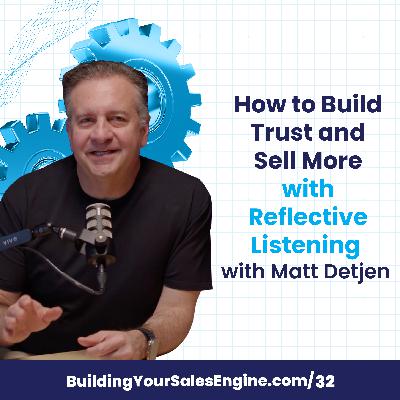
In this episode of Building Your Sales Engine, Mark McGraw welcomes Matt Detjen—North American Training Manager at Michelin and author of 'REFLECT: The Art of Powerful Sales Communication.' Matt shares the mindset shifts and practical frameworks that help sales professionals move beyond surface-level rapport and into deeper, more effective communication with their clients. They explore how to build real rapport, the importance of reflective listening, and how to navigate emotional conversations that lead to trust and results. Matt breaks down how better listening unlocks sales opportunities, and why preparation, simplicity, and emotional validation can make or break a deal. Whether you're a veteran sales leader or new to the game, this episode offers insightful takeaways you can apply immediately to build stronger client relationships—and drive more sales. Mentioned in This Episode: https://www.BuildingYourSalesEngine.com/follow https://www.Sandler.com https://www.BuildingYourSalesEngine.com/sandler https://www.BuildingYourSalesEngine.com/32 https://linktr.ee/buildingyoursalesengine REFLECT: The Art of Powerful Sales Communication: Amazon Matt Detjen on LinkedIn: Linkedin

Comments

Download from Google Play

Download from App Store
 United States