


 Claim Ownership
Yoga Medicine
Subscribed: 178Played: 3,350
Subscribe

© 2026 Yoga Medicine® All Rights Reserved
Description
This show was created to educate and empower yoga students and teachers to use yoga therapeutically to optimize experiences, communities and resilience. Our methods are based on a deep understanding of anatomy, physiology and the integration of modern science and research with traditional practices and experience. We believe research is just as precious as experience and we believe in the human potential for change and greatness. Our goal is to help you learn the owners manual of your unique body/mind and so we offer this as a free resource to anyone interested in optimizing their health and wellbeing.
SUBSCRIBE TO YOGA MEDICINE ON iTUNES/APPLE PODCASTS: https://apple.co/3aWW3XO
LEARN MORE ABOUT THIS EPISODE: https://YogaMedicine.com
———————————
CONNECT WITH US!
———————————
FACEBOOK: https://www.facebook.com/TiffanyCruikshankYoga
INSTAGRAM: https://www.instagram.com/yoga_medicine
TWITTER: https://twitter.com/yoga_medicine
LINKEDIN: https://ca.linkedin.com/company/yoga-medicine
PINTEREST: https://www.pinterest.com/tiffanyyoga
SUBSCRIBE TO YOGA MEDICINE ON iTUNES/APPLE PODCASTS: https://apple.co/3aWW3XO
LEARN MORE ABOUT THIS EPISODE: https://YogaMedicine.com
———————————
CONNECT WITH US!
———————————
FACEBOOK: https://www.facebook.com/TiffanyCruikshankYoga
INSTAGRAM: https://www.instagram.com/yoga_medicine
TWITTER: https://twitter.com/yoga_medicine
LINKEDIN: https://ca.linkedin.com/company/yoga-medicine
PINTEREST: https://www.pinterest.com/tiffanyyoga
162 Episodes
Reverse
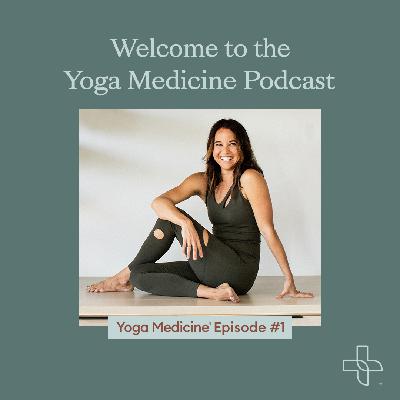
Welcome to the very first episode of Yoga Medicine! In this inaugural episode, Tiffany Cruikshank and Rachel Land discuss why they started this journey together, what to expect from the Yoga Medicine podcast, and how to get the most out of your yoga practice and your life. Both women train yoga teachers to really understand the body and, with this podcast, they hope to dive deeper into topics that you can't cover in a traditional yoga class. This podcast is really about the intersection of science and research with traditional practices and our personal experiences. Show Notes: What to expect from the Yoga Medicine podcast [1:00] Our mission and who this podcast is for [2:00] Some benefits & perks of yoga [7:30] Preview of what's to come [9:45] What are our plans for the Yoga Medicine Podcast [15:30] How often Yoga Medicine will air [16:30] Links Mentioned: Watch this episode on YouTube You can learn more about this episode, and see the full show notes at www.YogaMedicine.com/podcast-01. And you can find out more about insider tips, online classes or information on our teacher trainings at www.YogaMedicine.com. To support our work, please leave us a 5 star review with your feedback on iTunes/Apple Podcasts.
This episode is the first part of the conversation with Tiffany Cruikshank and Katja Barsch on the Placebo Effect and how it relates to yoga. Katja is a Yoga Medicine instructor and a researcher with a focus on fascia. She runs anatomy and fascia physiology yoga teacher trainings around Europe and contributes research roundups to several Yoga Medicine trainings. She is currently working on her PhD under the skillful guidance of Dr Robert Schleip and is a Board-Certified Structural Integration Practitioner (BCSI; ATSI) trained by Tom Myers and his Anatomy Trains school. We are honored to have her researchers eye for our research focused episodes. Together, we dive into the history of the Placebo Effect, how it can be used for the treatment of pain and chronic pain, and how that relates to its function in yoga classes. We also discuss how the Placebo Effect relates to expectation and why, as teachers, our words matter so much. Listen and learn about some possible positive effects that the Placebo Effect can have, how genetics affect the Placebo Effect, and how to use the Placebo Effect in yoga. Show Notes: What is a placebo [0:45] What is the Placebo Effect [2:00] What are some possible positive effects that the Placebo Effect can have [3:45] What is the Nocebo Effect [4:45] What is the history of the Placebo Effect [6:45] How to use the Placebo Effect in yoga [14:00] How is the Placebo Effect used in medicine [16:00] Which external factors can effect a placebo study [17:00] What are open placebos used for [19:00] How do genetics affect the Placebo Effect [32:30] Links Mentioned: Watch this episode on YouTube Placebo Effect References Connect with Katja Barsch: Facebook | Instagram | Kalamana Yoga You can learn more about this episode, and see the full show notes at www.YogaMedicine.com/podcast-02. And you can find out more about insider tips, online classes or information on our teacher trainings at www.YogaMedicine.com. To support our work, please leave us a 5 star review with your feedback on iTunes/Apple Podcasts.
Today we are continuing our discussion on the Placebo Effect. In the first half we talked about what the Placebo Effect is, why it is so important, and how it applies to the work we do. In this episode we dive into the many ways that placebo effects relate to lifestyle, movement, and yoga. In this episode, you'll learn how your mindset affects your relationship to exercise, why meditation is the groundwork for what yoga teachers do, why our language matters and why exercise you enjoy is so important. Show Notes: How does stress & mindset influence the immune system [2:00] Is yoga a cure all? [4:00] How does your support system affect healing [5:25] How does marketing affect your relationship with exercise & food [8:20] Importance of exercise you enjoy [16:18] Belief in self & influences capacity [23:08] How our expectations shape us & the Rosenthal Effect [26:50] How expectations influence our teaching [28:50] Limitations of the Placebo Effect [32:00] Harnessing the power of the mind & our intention [35:02] Links Mentioned: Watch this episode on YouTube The Intention Experiment: Using Your Thoughts to Change Your Life and the World by Lynne McTaggart Placebo Effect References Connect with Katja Barsch: Facebook | Instagram | Kalamana Yoga | YMO Teacher You can learn more about this episode, and see the full show notes at www.YogaMedicine.com/podcast-03. And you can find out more about insider tips, online classes or information on our teacher trainings at www.YogaMedicine.com. To support our work, please leave us a 5 star review with your feedback on iTunes/Apple Podcasts.
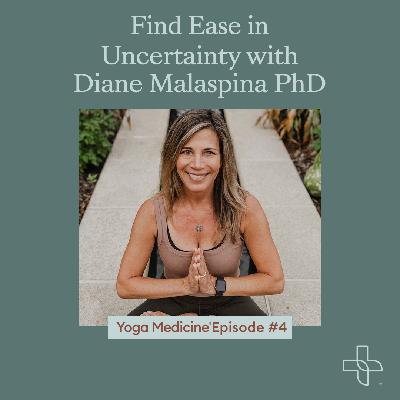
Today's guest gives us a masterclass in how yoga can help us navigate life's uncertainty with a little more grace. Diane Malaspina is an Applied Psychologist and yoga teacher with over 15 years of experience in the health and wellness field. Diane has a B.S. in Psychology, a Master of Education, and a PhD in Educational and Developmental Psychology. Rachel and Diane discuss why she was drawn to psychology as an area of study, how yoga and meditation turned out to be exactly what she needed as a stressed-out grad student, and how she started teaching yoga almost by accident when her favorite teacher called in sick. Diane also talks about how the pandemic forced her, as it did many of us, to completely change her professional plans but also allowed her the time and space to reconsider how to best spend her energy and time. Listen in to find out why the expression "no news is good news" doesn't actually ring true for many of us and how yoga and meditation can help us shift our baseline to change our relationship with stress and uncertainty. Show Notes: What drew Diane to the study of psychology [2:40] Diane's discovery of yoga practice and introduction to teaching [4:44] Why are we so afraid of uncertainty [22:07] How the stress response can help us shift into problem-solving mode [22:45] What the Yerkes–Dodson law teaches us about optimal stress levels [24:54] The physiological effects of prolonged stress [26:18] The power of trained awareness [26:46] Three options in the face of stress and uncertainty [27:57] Cultivating acceptance in situations we can't change [30:41] Practices Diane uses to support mental health through the pandemic [33:45] Training your brain to react more positively to uncertainty [39:28] Practicing resilience on the yoga mat [43:23] How to bias ourselves toward growth [47:03] The power of the pause [53:13] Links Mentioned: Watch this episode on YouTube Inside the Yoga Sutras Online Course Working with Grief Online Course Exploring the Yamas through Meditation & Practice Online Course Yoga Medicine Online Mental Health & Wellness Yoga Teacher Training Connect with Diane Malaspina: Facebook | Instagram | Diane Malaspina | YM Online Guest Teacher You can learn more about this episode, and see the full show notes at www.YogaMedicine.com/podcast-04. And you can find out more about insider tips, online classes or information on our teacher trainings at www.YogaMedicine.com. To support our work, please leave us a 5 star review with your feedback on iTunes/Apple Podcasts.
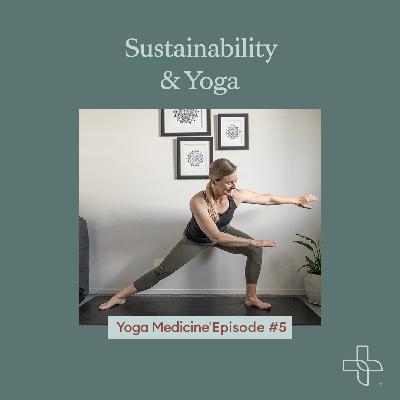
Today Rachel and Tiffany talk about all of the ways we find the inspiration we need to create positive behaviors and maintain them long-term -- whether that's in our yoga practice, our teaching, or really, in any aspect of our lives. We discuss the paths that each of us took to get to the kind of yoga that we practice and teach today and share how our practice has evolved over the years. We also talk about why curiosity is a superpower, and how to keep your yoga practice, and teaching, from becoming a chore. Listen in to learn how we come up with ideas for our yoga classes and courses, and our tips for teachers, whether just starting out or maintaining momentum over the years. Show Notes: What brings Tiffany back to her yoga mat again and again? [1:35] Determining what we need in our yoga practice [4:51] How has Tiffany's yoga practice changed over the years? [8:59] Tiffany's yoga practice today [15:41] Overcome feeling uninspired to practice [23:41] The greatest tool for a sustainable yoga practice [26:22] What inspires Rachel and Tiffany to keep learning and teaching [28:42] How Tiffany develops new class and course content ideas [33:56] The pressure to maintain inspiration and creativity [37:09] How to keep yoga from becoming a chore [39:36] Capturing creative ideas for future practices and classes [41:22] The power of simplicity [45:37] Avoiding burnout [47:57] The myth that teaching yoga should never feel like "work" [51:07] Advice for new yoga teachers [53:13] Managing your energy and maintaining clarity to keep teaching over the long-term [57:44] Links Mentioned: Watch this episode on YouTube You can learn more about this episode, and see the full show notes at www.YogaMedicine.com/podcast-05. And you can find out more about insider tips, online classes or information on our teacher trainings at www.YogaMedicine.com. To support our work, please leave us a 5 star review with your feedback on iTunes/Apple Podcasts.
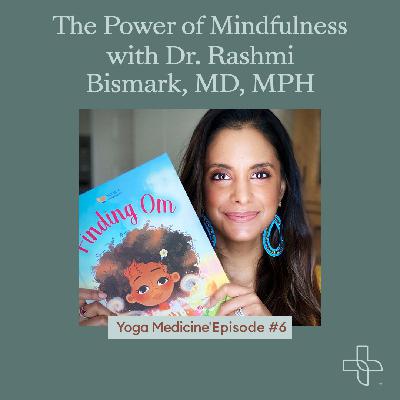
Today Rachel talks about the power of mindfulness with Dr. Rashmi Bismark MD MPH, a U.S.-trained physician who is board certified in both preventative medicine and public health. Dr. Rashmi is uniquely qualified to speak on the impact of mindfulness practices as, in parallel with her conventional medical studies, she also studied alternative and complementary therapies including Ayurveda, yoga, meditation, and mindfulness. Dr. Rashmi specializes in preventative medicine and blends eastern and western traditions in her medical practice. Her mission is to help individuals and communities rediscover their true nature, redefine their relationships with the world around them, and harness the power within themselves to be healthy, well and resilient. Listen in to this episode as Rachel and Dr. Rashmi discuss her unique pathway to medicine, how she began teaching mindfulness and yoga, what inspired her award-winning illustrated children's book, Finding Om, and her thoughts on the difference between cultural appreciation and appropriation. Through it all, you'll hear recurring themes around the importance of curiosity and trust. Show Notes: An early personal experience with Ayurveda sparks Dr. Rashmi's curiosity [3:53] Dr. Rashmi's medical training, blending eastern and western approaches [6:15] Dr. Rashmi's initial exposure to yoga through her father and grandmother [17:39] Where yoga teacher training fitted into the picture [21:01] Passing yogic traditions on to Dr. Rashmi's daughters [24:16] The inspiration for the book Finding Om [26:05] Cultural appreciation versus cultural appropriation [30:50] Why representation in children's literature matters [38:53] What mindfulness practices can teach us in uncomfortable or unresolved situations [43:21] The challenge of translating traditional concepts to clinical settings [44:52] Tips to start a mindfulness practice [50:21] Links Mentioned: Watch this episode on YouTube Yoga & Mindfulness 101 for Physicians & Healthcare Providers Online Course Yin & Meditation Yoga Teacher Training Ayurvedic Foundations for Clinicians with Dr. Siri Chand Yoga Medicine Online Connect with Dr. Rashmi Bismark: Facebook | Instagram | Twitter | R S Bismark MD | YM Online Guest Teacher You can learn more about this episode, and see the full show notes at www.YogaMedicine.com/podcast-06. And you can find out more about insider tips, online classes or information on our teacher trainings at www.YogaMedicine.com. To support our work, please leave us a 5 star review with your feedback on iTunes/Apple Podcasts.
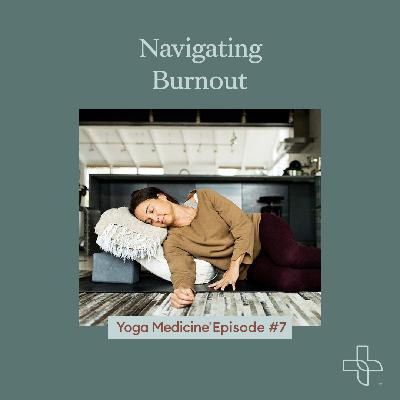
We've all experienced burnout, whether in our work or our home lives, and it can leave us feeling so overwhelmed that we don't know how to start finding our way out of it. Today Tiffany and Rachel talk about what burnout is — what it looks and feels like, including some signals that can help us recognize it early. We share our personal experiences of burnout and offer a range strategies to explore (some of which may surprise you). We build a simple three-step plan to navigate out of burnout, and emphasize the importance of each of us tailoring that plan to our individual needs. Listen in to find out how to get through burnout without losing your way. Show Notes: What does burnout look and feel like; early warning signs to look out for [2:40] "Languishing" as a subtle version of burnout [8:32] A range of strategies to help manage burnout [12:14] Going deeper than the cliche of "self-care" [17:22] Why it can be tough to improve sleep quality during times of stress [21:19] Viewing burnout through the lens of Traditional Chinese Medicine [23:02] The preciousness of rest to rebuild resilience [25:42] Recharging through curiosity and creativity [29:20] Counter negativity with a gratitude practice [32:33] Can we avoid burnout if our job is our passion? [38:39] Which burnout strategy will be most effective for you? [42:55] The characteristics of an actionable burnout management plan [45:02] Links Mentioned: Watch this episode on YouTube You can learn more about this episode, and see the full show notes at www.YogaMedicine.com/podcast-07. And you can find out more about insider tips, online classes or information on our teacher trainings at www.YogaMedicine.com. To support our work, please leave us a 5 star review with your feedback on iTunes/Apple Podcasts.
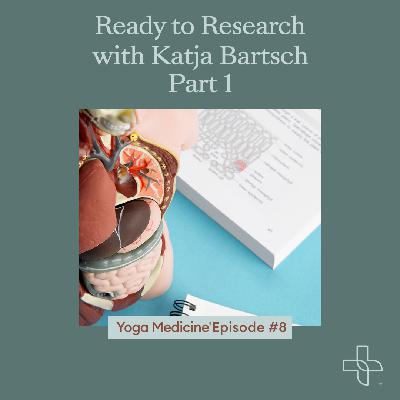
Today we are diving into the many reasons research is important both for clinicians and yoga teachers -- and we are very happy to have Katja Bartsch back with us to do it. Katja also joined us for our recent episodes on the Placebo Effect and she focuses a lot of her energy on doing her own research and combing through the research that others are doing on the topic of yoga. There is a lot of research currently being done that relates to the yoga world, but how do we sift through and find high-quality research? How can we analyze it and apply it to our own lives? In this episode, Katja and Tiffany talk about how to evaluate research and apply a critical lens to find high quality research. They'll talk on the limitations of specific types of research and discuss the strengths & limitations of different types of studies. They also talk about the way that information application is evolving with time and how to make the most of the research we do by blending it with all that we've learned through our own experiences. Listen in as Katja and Tiffany discuss why research is so valuable, where to look for the good stuff, and how to filter through this information with a critical eye. Show Notes: Why it is so important to consider research [4:04] Research limitations [6:57] Sources for good quality research [12:02] Pros of using PubMed [13:50] The importance of peer-review in articles [15:07] How to know if an article has been peer reviewed [16:45] What are the components of a typical study [21:17] What is a case study [28:54] What is a cohort study [32:04] Benefits of cohort studies [36:58] Important aspects of randomized controlled trials (RCTs) [38:10] How to do a double-blind test [42:42] Links Mentioned: Watch this episode on YouTube Ready to Research Resources Doc Evidence Pyramid Connect with Katja Bartsch: Facebook | Instagram | Kalamana Yoga | YM Online Teacher You can learn more about this episode, and see the full show notes at www.YogaMedicine.com/podcast-08. And you can find out more about insider tips, online classes or information on our teacher trainings at www.YogaMedicine.com. To support our work, please leave us a 5 star review with your feedback on iTunes/Apple Podcasts.
Today we are continuing our discussion on research. In the first half of this interview, Katja and Tiffany discuss why research is so valuable, where to look for the good stuff, and how to filter through this information with a critical eye. In this episode, we talk about some common issues with certain types of research, the current gaps in the yoga research that's being done, and what the future holds for research. Listen in to learn about the features to look for in high-quality research, tips for getting started with finding the right research information to support your practice, and some of the ways that yoga teachers can safely point to research for their students. Show Notes: Challenges with randomized control trials [1:26] What is missing from yoga research [3:02] What is filtered research [4:08] How systematic reviews and meta-analyses work [4:25] Types of studies outside of the evidence pyramid [9:24] Features of a high-quality study [11:02] Aspects of interventions in yoga research [13:42] How many participants are needed for a good yoga research study [15:56] The future of Yoga Medicine research [19:47] Tips for starting out finding the right research study for you [23:19] Ways yoga teachers can safely cite research [32:26] Links Mentioned: Watch this episode on YouTube Ready to Research Resources Doc Evidence Pyramid Connect with Katja Bartsch: Facebook | Instagram | Kalamana Yoga | YM Online Teacher You can learn more about this episode, and see the full show notes at www.YogaMedicine.com/podcast-09. And you can find out more about insider tips, online classes or information on our teacher trainings at www.YogaMedicine.com. To support our work, please leave us a 5 star review with your feedback on iTunes/Apple Podcasts.
Today Rachel Land talks with MacKenzie Kozlowski (Miller) about the challenging, sometimes uncomfortable, business of navigating change and transformation -- which MacKenzie knows plenty about. She was a personal trainer and group exercise instructor before discovering yoga and training to become a teacher. Soon afterward she was living the "yoga Influencer" life, rapidly building a career and teaching all over the world. You may be familiar with MacKenzie from her social media profile, but in this deeply personal conversation you'll hear how meeting her husband, moving from LA to rural Canada, and becoming a mother changed her trajectory completely. MacKenzie found herself grappling with all the shifts in her personal and professional life. Listen in to hear MacKenzie share how she began the journey to redefine herself in this new light, and what tools and techniques have helped her do so with kindness and clarity. Show Notes: MacKenzie's introduction to yoga and her evolving practice [3:41] Growing an engaged social media following [9:33] An unexpected shift in MacKenzie's career trajectory [14:37] The pressure to keep up with social media expectations [19:24] A lesson in letting go of control: MacKenzie's first pregnancy and delivery [21:21] Motherhood and MacKenzie's changing identity [31:15] Allowing time and space for refection is key for clarity in times of change [37:51] Pregnancy and childbirth during a global pandemic [43:00] How speaking or journalling your fears can decrease their power over you [44:11] MacKenzie's relationship with social media now and decisions around including her children [46:28] The importance of kindness and compassion when rekindling a workout routine [51:35] MacKenzie's advice on navigating life change [56:13] Links Mentioned: Watch this episode on YouTube Connect with MacKenzie Kozlowski: YouTube | Instagram | Twitter | MacKenzie Yoga You can learn more about this episode, and see the full show notes at www.YogaMedicine.com/podcast-10. And you can find out more about insider tips, online classes or information on our teacher trainings at www.YogaMedicine.com. To support our work, please leave us a 5 star review with your feedback on iTunes/Apple Podcasts.
When was the last time you asked yourself: what do I truly want? Today we are talking about motivation and identity with someone who asks themselves that question multiple times a day. Author, yoga teacher, and fitness coach Kirsten Beverley-Waters holds a B.S. from Kent State University along with multiple qualifications from the American College of Sports Medicine, CrossFit, and Precision Nutrition. No stranger to struggle, Kirsten teaches movement through the lens of mental wellness, setting her clients up for success when facing the inevitable challenges of life. In this episode Kirsten shares that, to keep up motivation in the long term, we need to choose goals that speak to us personally then find joy in the repetition of the little things that get us closer to our goals. She talks with Rachel about her plans to break a world record in 2022 in support of The Trevor Project and LGBTQ youth, and the importance of all of us understanding our own identity in order to show up more authentically in our lives. Listen in to learn how to choose goals that excite and inspire, how to manage unavoidable ebbs and flows in motivation, and the importance of making friends with struggle. Show Notes: What inspired Kirsten's interest in sports performance and coaching [3:18] Running as an escape from early struggles [5:46] Beginning yoga practice during cancer treatment [9:17] Accepting the call to teach yoga [12:13] Kirsten's world record goal for 2022, supporting the Trevor Project and LGBTQ youth [14:07] Finding life goals that inspire and excite us [21:40] Journalling as a tool to help us clarify our thoughts and intentions [26:51] How to keep showing up once we've chosen a goal [29:49] The power of repetition [32:30] Reframing struggle [36:10] Lessons from strength training: failure as a prompt for growth [41:05] More tips to sustain motivation longterm [44:19] The importance of rest and recovery [46:45] Why consideration of personal identity is important for all of us to show up authentically [52:28] Links Mentioned: Watch this episode on YouTube Sex, Gender, & Identity in Yoga Online Course Connect with Kirsten Beverley-Waters: Facebook | Instagram | Twitter | K B Waters | YM Online Guest Teacher You can learn more about this episode, and see the full show notes at www.YogaMedicine.com/podcast-11. And you can find out more about insider tips, online classes or information on our teacher trainings at www.YogaMedicine.com. To support our work, please leave us a 5 star review with your feedback on iTunes/Apple Podcasts.

Hip mobility is a hot topic on social media and in the movement world, seeming to generate strong opinions as to whether extreme range of motion is good or bad for us. So in today's episode, Tiffany and Rachel unpack what is considered "normal" range of motion for the hip joint and its application in daily activities. They discuss the potential implications of significant limitations in hip mobility, as well as those of extreme mobility. They cover the difference between muscle tension and bony end range, and explore the roles of passive versus active range of motion. Listen in to hear how gaining neurologic control of your mobility, and perhaps even losing some of your end range, could help you feel better in your body, and the value of viewing hip mobility not as an end goal, but through the context of how you would like your hips to function in a yoga context and beyond. Show Notes: What is considered "normal" range of motion in hip flexion [3:15] Functional range of motion will differ for each of us [8:10] Implications of significant limitations in hip flexion [8:43] "Normal" range of motion in hip extension [11.02] The role of individual bony structure in range of motion [13:11] Hip extension in daily life, and implications of significant limitations in hip extension [13:51] Extreme hip range of motion after hip replacement [15:33] Hip abduction [16:45] Hip adduction [18:19] Stability is key for the IT band, the Yin & Yang of yoga and running [18:51] Hip external rotation [23:06] How our fascia adapts to repeated loading; implications for mobility [25:20] Hip internal rotation [28:01] Differentiating bony limitations from muscle tension at end range [29:06] Control over our mobility: passive versus active range of motion [31:13] Active range of motion and improved neurologic control, and the value of cross-training [35:14] Implications of big gaps between active and passive range [36:47] Can there be value in decreasing our passive range of motion? [40:42] Assessing hip mobility in the context of the demands of our individual lives [47:01] Suggestions from research on extremes in hip range of motion [53:50] Conclusions and take-away points [56:47] Links Mentioned: Watch this episode on YouTube Hip Intensive Yoga Teacher Training You can learn more about this episode, and see the full show notes at www.YogaMedicine.com/podcast-12. And you can find out more about insider tips, online classes or information on our teacher trainings at www.YogaMedicine.com. To support our work, please leave us a 5 star review with your feedback on iTunes/Apple Podcasts.

Most of us will run into unexpected setbacks in life. Today's guest Megan Kearney knows plenty about using those situations as opportunities to learn and grow stronger. An admitted type-a personality and "recovering triathlete", Megan has been in the health and wellness industry for more than 20 years. She is a Yoga Medicine therapeutic specialist with additional trainings in mental health and traumatic brain injury resilience and iRest Yoga Nidra. When COVID-19 hit, Megan's previously successful yoga studios closed, and her marriage ended. In this episode, she talks with Rachel Land about turning these, and other, setbacks into success by practicing relentless realistic optimism. She also talks about the importance of self-care rituals, movement, getting outdoors, gratitude, relationships, journalling, therapy, and other practical ways to make space to feel and process both good and bad experiences until we feel ready to move on. Listen in to learn how to pull yourself out of 'the suck', and how to turn what we learn in that struggle into the source of our future success. Show Notes: Megan's journey to yoga starts with meditation [4:13] From Bikram yoga, through sports injuries, to yoga as a source of healing [6:29] The transition from practicing to teaching yoga [14:32] Opening two yoga studios [18:29] The professional and personal impact of the pandemic [19:58] Key self care techniques to create space to feel in times of crisis [23:08] and [31:51] The power of gratitude and 'Five Things Friday' [33:05] The importance of connection and relationship and Megan's 'Areas of Inquiry' [35:40] Journalling, therapy and movement in nature to help us process our experiences and shift perspective [39:09] Megan's Yoga Rx program and honest consideration of readiness to change [42:56] Final thoughts for anyone currently in 'the suck' [48:43] Links Mentioned: Watch this episode on YouTube Yoga & Mindfulness 101 for Physicians & Healthcare Providers Online Course Myofascial Release Teacher Training Connect with Megan Kearney: LinkedIn | Instagram | Pinterest | Reset With Megan | YM Online Guest Teacher You can learn more about this episode, and see the full show notes at www.yogamedicine.com/podcast-13. And you can find out more about insider tips, online classes or information on our teacher trainings at www.yogamedicine.com. To support our work, please leave us a 5 star review with your feedback on iTunes/Apple Podcasts.

Today's episode is all about fascia as a sensory organ. Whether you are a healthcare provider, body worker, or yoga teacher, it is so important to have all the information on this issue that we so often disregard. Listen in as Tiffany and Katja talk all about proprioception, take a look at interception and discuss how they relate to the fascial system and yoga practice. They explain the recent research on sensory nerves and point out how important is it for the body to be able to collect a really rich picture of what's happening within us. They also talk about how we can stimulate fascial receptors and the varied functions of free nerve endings. Listen to this episode to learn about the different types of fascial receptors, practical uses of proprioception, and to get an idea about what interoception is about. Show Notes: Defining exteroception [2:15] What proprioception is [2:40] Describing interoception [3:01] Fascia is our richest sensory organ [4:35] What can happen when our body senses don't work [7:37] Explaining sensory nerves [10:55] Role of Pacini receptors [11:45] Understanding Ruffini endings [14:28] Why it's important to stimulate fascial receptors [17:50] Creating sensory input with MFR [20:33] The complexity of muscle spindles [22:49] Implications of Golgi endings [24:14] Body check-ins as sensory information collection [26:02] The many functions of free nerve endings [28:59] Receptors in superficial fascia [33:51] Sensory "hot spots" in deeper fascial layers [37:05] The importance of the superficial fascia layer [38:53] Recent research on thoracolumbar fascia [39:59] Practical uses of interoception [42:32] Feeling and listening to create body awareness [44:50] The nervous system and the Nobel Prize 2021 [58:08] Links Mentioned: Watch this episode on YouTube Myofascial Release Teacher Training Myofascial Release Bundle Online Course: for the Legs & Feet, Hips, Neck & Shoulders Research Resources Doc Connect with Katja Bartsch: Facebook | Instagram | Kalamana Yoga | YM Online Teacher You can learn more about this episode, and see the full show notes at www.YogaMedicine.com/podcast-14. And you can find out more about insider tips, online classes or information on our teacher trainings at www.YogaMedicine.com. To support our work, please leave us a 5 star review with your feedback on iTunes/Apple Podcasts.
In today's episode, we unpack persistent pain with Marnie Hartman. Marnie has a doctorate in physical therapy and is a certified strength and conditioning coach as well as being a yoga teacher, putting her in a unique position to help us understand pain, particularly lasting or persistent pain, from varied perspectives. Marnie talks to Rachel about some of the myths and misconceptions around pain. She explains how the experience of pain is an output of the nervous system rather than an input, making it highly individual, and how that knowledge can inform the yoga techniques we use in pain care. She offers a range of suggestions on how we can work with pain in a more caring and compassionate way, whether it's our own or that of others, by harnessing the power of curiosity and playfulness. Listen in to learn how pain works and how we can work with it. Show Notes: Marnie's journey from physical therapist to yoga teacher [3:43] Defining pain and common misconceptions about pain [7:26] Is pain a reliable indicator of tissue damage? [11:14] Our tendency to frame pain as an unpleasant experience [13:19] Environmental influences on pain perception [14:45] The relationship between pain and stress, the first and second dart [17:27] Yoga in pain care and the pain mandala model [23:52] The power of simple practices, including listening, when working with someone in pain [30:02] Teasing out the details of the pain experience to shift our neurologic maps [34:21] Body scanning to invite curiosity around sensation, "and this too" [38:49] Other yoga applications for people with persistent pain [42:10] The importance of language in pain care [58:35] Links Mentioned: Watch this episode on YouTube Pain Science – Yoga – Life by Niamh Moloney & Marnie Hartman Pain Science for Yoga Teachers Online Course Connect with Marnie Hartman: Body IQ PT | LinkedIn | Email | Pain Science Yoga Life | YM Online Guest Teacher You can learn more about this episode, and see the full show notes at www.YogaMedicine.com/podcast-15. And you can find out more about insider tips, online classes or information on our teacher trainings at www.YogaMedicine.com. To support our work, please leave us a 5 star review with your feedback on iTunes/Apple Podcasts.
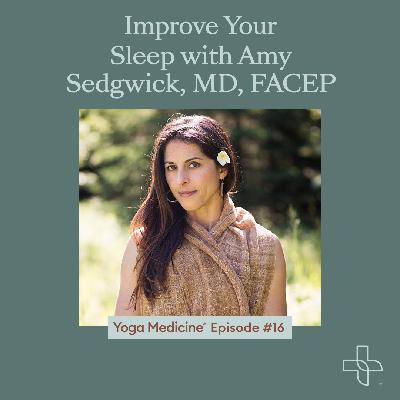
Let's dive into the world of sleep and its effects on our physical and mental health. Today's guest, Dr. Amy Sedgwick, is a board-certified and practicing emergency physician and a yoga and meditation teacher – putting her in the perfect position to help us unpack the importance of sleep duration and quality from varied perspectives. In this episode, Amy and Rachel talk about how she found her calling and how both her colleagues and her patients benefit from healthy stress relief outlets like yoga and meditation. Amy shares tips for falling asleep, staying asleep, and getting high-quality sleep even when your personal life is hectic. She also talks about how to find the tools that work for you and why we should trust our "earth suits" over the latest trends in sleep science. Listen in to learn the negative effects of poor sleep quality or duration over the long-term, why Amy sleeps in the cold, and ways to honor your natural sleep rhythms. Show Notes: How Amy found her way to emergency medicine [6:26] Processing the stress and tragedy of emergency medical work [7:52] The Yin & Yang of Amy's yoga journey [9:07] The underrated impact of recovery [11:55] Self-care for health workers [12:37] The call to teach yoga [14:35] Navigating a career in the ER with being a yoga teacher and studio owner [19:02] Effects of insufficient sleep quality or duration over the long-term [24:10] Honoring natural, seasonal rhythms [30:12] Human sleep cycles and REM vs non-REM sleep [31:55] How do we know if we have slept well? [33:13] Tips for better sleep duration and quality [35:45] How alcohol and late meals affect sleep [37:23] Evening wind-down routines, electronics and blue light [39:30] Blue light and sleep – evening vs morning practices [43:24] Morning routines also impact sleep quality and duration [44:13] Tips for people who wake up in the middle of the night [49:20] Mitigating the impact of periods of low sleep quality [53:01] Final thoughts, including sleep trackers [57:57] Links Mentioned: Watch this episode on YouTube Nervous System & Restorative Yoga Teacher Training Connect with Amy Sedgwick: LinkedIn | Instagram | Twitter | Medicine Within You can learn more about this episode, and see the full show notes at www.YogaMedicine.com/podcast-16. And you can find out more about insider tips, online classes or information on our teacher trainings at www.YogaMedicine.com. To support our work, please leave us a 5 star review with your feedback on iTunes/Apple Podcasts.
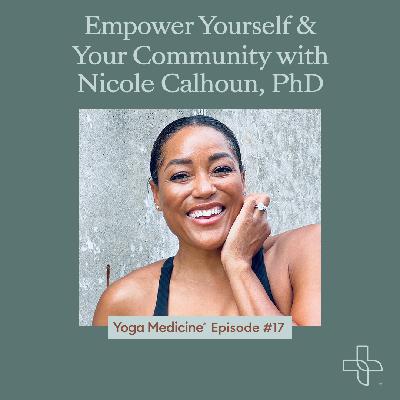
If you have ever felt unwelcome, unheard, or disempowered, you will relate to the content of today's conversation between Rachel and Nicole Calhoun, PhD. Nicole has an undergraduate degree in Biology, a PhD in molecular genetics, and years of experience as a post-doctoral researcher, but has pivoted to working as a yoga teacher and studio owner. After being told she "didn't belong" in a yoga studio, Nicole was inspired to open her own space, becoming the change she wanted to see in her community. She shares her experience with racism in the yoga world and explains why she has decided to put diversity and inclusion in yoga at the forefront of her career. Listen in as Nicole talks about how she uses a physically challenging yoga practice to support herself and her community and offers concrete actions we can take all address the lack of diversity in yoga. Show Notes: Defining molecular genetics [4:06] Nicole's early relationship with yoga [8:43] Using a challenging physical yoga practice therapeutically [11:02] What inspired Nicole to teach despite an established career in science [12:09] Feeling "othered" – Nicole's experience with racism in yoga [15:35] Practicing yoga while Black [18:33] Opening her own yoga studio [24:57] Finding the courage to share uncomfortable truths [26:06] Diversity and inclusion in yoga [30:02] A physically demanding yoga practice can teach us how to handle adversity in life [35:02] How Nicole tailors her practice to support strength and confidence [36:56] Committing to diversity & inclusion 365 days a year [40:14] Actions we can take to make yoga more welcoming to all [44:19] Links Mentioned: Watch this episode on YouTube Connect with Nicole Calhoun, PhD: LinkedIn | Instagram | Mind Body Online | Elxr Yoga Lounge | YM Online Guest Teacher You can learn more about this episode, and see the full show notes at www.YogaMedicine.com/podcast-17. And you can find out more about insider tips, online classes or information on our teacher trainings at www.YogaMedicine.com. To support our work, please leave us a 5 star review with your feedback on iTunes/Apple Podcasts.
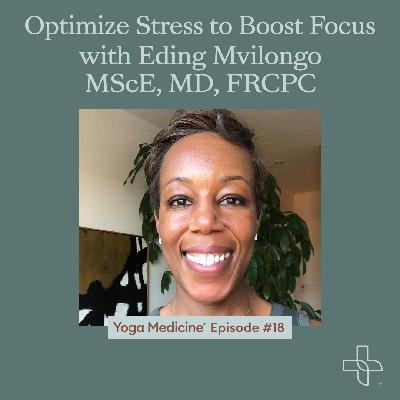
Today we are reframing stress with Eding Mvilongo, an Anesthesiologist and Clinical Professor from Montreal Canada. Eding's work is defined by the need to maintain focus under extreme pressure. She understands from both theoretical and practical standpoints which tools and techniques we can employ to help us maintain our attention despite distraction, even under duress. In this episode, Eding shares her favorite short- and longer-term tools for managing stress and maintaining focus – some of which may surprise you. Rachel and Eding also discuss how attention is linked to the stress response, how the brain allocates attention, and the importance of sleep. Eding also weighs in on the value of Black History Month and her experience of micro-aggressions in the medical world. Listen in to learn how the right balance of practices around movement, breath, meditation, hydration and sleep can help us optimize our stress levels, and to hear Eding's hopes for the future. Show Notes: What drew Eding to the study of science and her career in medicine [5:06] Yoga as stress relief and an opportunity to focus purely on herself [8:40] Curiosity leads Eding to yoga teacher training [10.45] What we should know about the pandemic [12:40] An anesthesiologist's experience during COVID-19 [14:44] Focus under pressure – the break down of an anesthesiologist's role [18:10] How the brain allocates attention [21:16] The link between attention and the stress response [25:20] Tips to help focus your attention where you want it [29:35] How REM sleep supports attention by resetting the Locus Coeruleus [32:25] Using yoga practice to manage stress, improve sleep and support attention [33:44] Meditation and mantra – release attachment and expectation to manage stress [37:43] Final suggestions – use self-compassion to capitalize on your reward pathways [43:02] Eding's thoughts on Black History Month [46:57] Hopes for the future – knowledge as power [53:15] Links Mentioned: Watch this episode on YouTube Nervous System & Restorative Yoga Teacher Training Connect with Eding Mvilongo: Instagram | Facebook | Yoga Medicine | About Black Lives | Pediatric Anesthesia Research Team You can learn more about this episode, and see the full show notes at www.YogaMedicine.com/podcast-18. And you can find out more about insider tips, online classes or information on our teacher trainings at www.YogaMedicine.com. To support our work, please leave us a 5 star review with your feedback on iTunes/Apple Podcasts.
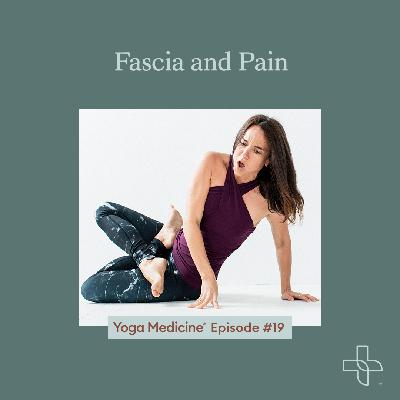
Today Tiffany and Katja take a look at the cutting-edge new topic of fascia and pain. Pain is complex and recent research is showing just how relevant the fascial tissue is when we're looking at pain. In this episode, Katja shares the findings of the latest research on changes in fascia that can contribute to pain. The pair discuss the difference between pain in the fascia versus pain in muscle tissues and potential causes of fascial pain. They also touch on how other aspects such as the lymphatic system and lifestyle factors relate to inflammation, pain, and the fascial system. Listen in to learn about the anatomy and physiology of fascia and pain, how it happens, and ways you can potentially intervene. Show Notes: Why it's important to differentiate pain in fascia versus muscle [3:37] Unpacking delayed onset muscle soreness pain [8:45] The complexity of pain [9:52] Causes of fascial pain [12:49] Macroscopic changes in fascia that can contribute to pain [13:37] Microscopic changes in fascia that can contribute to pain [17:42] Role of innervation in fascial pain [24:38] Innervation of fascia and low back pain [25:18] How innervation changes with inflammation [28:37] Vascular and lymphatic system and their role in inflammation and pain [31:40] Causes of hypersensitivity to pain [35:28] Changes in the tension of the fascial system as it relates to pain [38:48] How psychology and lifestyle may affect inflammation [47:51] Links Mentioned: Watch this episode on YouTube Yoga Medicine Podcast Episode 14: Fascia as a Sensory Organ Fascia & Pain Resources Doc Connect with Katja Bartsch: Facebook | Instagram | Kalamana Yoga | YM Online Guest Teacher You can learn more about this episode, and see the full show notes at www.YogaMedicine.com/podcast-19. And you can find out more about insider tips, online classes or information on our teacher trainings at www.YogaMedicine.com. To support our work, please leave us a 5 star review with your feedback on iTunes/Apple Podcasts.
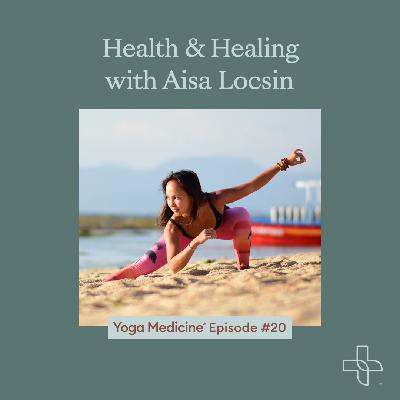
Have you ever stopped to consider what health is or what it truly means to be healthy in the context of your own life? Thanks to the upheaval of the pandemic, plus a recent injury, today's guest Aisa Locsin has been forced to. Aisa's lifelong love of moving, especially outdoors, lead to her challenging her body in a wide variety of athletic pursuits. She brought the same attitude to her yoga practice and her teaching. In this episode, she talks with Rachel about the challenges she has faced during the pandemic, including a serious foot injury that forced her to reassess her perception of health and healing in despite years of experience working one-on-one with individuals experiencing joint dysfunction and pain. In sharing her personal story, Aisa also shares how she was able to turn a difficult time into one of growth, learning through her injury the true power of treating herself and others with deeper compassion. Listen in to learn why movement is medicine, but how slowing down allows us to also learn from moments of stillness and silence. Show Notes: Aisa's introduction to yoga practice, and opening a studio [3:43] Teaching yoga and Aisa's introduction to Yoga Medicine [10:33] The importance of outdoor movement [16:23] The impact of the pandemic [19:30] An athlete's mindset helps Aisa through the pandemic [24:05] Derailed by injury [32:21] Starting from scratch – a humbling new perspective of healing [38:37] Helping those healing: the value of clear communication and compassion [42:12] Healing the body also asks us to heal the heart and mind [45:33] Learning from nature: healing in your hometown [47:24] Aisa's advice for health and healing [51:20] Links Mentioned: Watch this episode on YouTube Connect with Aisa Locsin: Instagram | Yoga Plus | Facebook | YM Online Guest Teacher You can learn more about this episode, and see the full show notes at www.YogaMedicine.com/podcast-20. And you can find out more about insider tips, online classes or information on our teacher trainings at www.YogaMedicine.com. To support our work, please leave us a 5 star review with your feedback on iTunes/Apple Podcasts.

Comments

Download from Google Play

Download from App Store
 United States