


 Claim Ownership
Beautiful Legacy
Subscribed: 1Played: 0
Subscribe

© Copyright 2025 All rights reserved.
Description
This is Beautiful Legacy, a podcast about creators and the traces they leave in the world.
Twice a week, in just five minutes, we’ll get to know some of these stories.
A glimpse into the life, the work, and the lasting mark they’ve left behind.
Out on Tuesdays and Thursdays.
36 Episodes
Reverse
In this episode of Beautiful Legacy, we explore the legacy of Owen Williams - the British engineer who quietly transformed high-speed travel by designing the first motorway service stations in the United Kingdom.
As motorways like the M1 introduced continuous, high-speed movement, Williams recognised a critical human need: rest. By formalising the motorway stop as part of the infrastructure, he inserted rhythm, safety, and care into modern mobility.
What began as refuelling points soon evolved into hybrid environments - cafés, restaurants, shops, and early travel retail ecosystems. The motorway service station became a laboratory for convenience culture and a precursor to today’s roadside food hubs and compact supermarket formats.
In this episode of Beautiful Legacy, we explore the work of John Hugenholtz - the Dutch circuit designer who transformed race tracks from stretches of asphalt into authored experiences.
From Circuit Zandvoort to Suzuka’s iconic figure-eight layout, Hugenholtz treated corners, elevation and rhythm as deliberate design decisions. He understood that tension can be engineered, that overtakes are structured by geometry, and that safety can be embedded into layout without sacrificing drama.
This episode examines how circuits became architectural compositions - shaping not only how cars move, but how races are felt, remembered and survived.

In this episode of Beautiful Legacy, we explore how Alfa Romeo transformed engineering into identity. Sound became signature. Racing became validation. Design became consequence. And the driver remained at the centre of every decision.
Before “brand DNA” became corporate language, Alfa Romeo was already living it - in metal, in sound, in balance.
This is not a story about marketing mythology. It is about conviction - about a brand that believed mechanics could carry emotion.
Alfa Romeo proved that personality can be engineered.

In this episode of Beautiful Legacy, we explore the life and impact of Battista Pininfarina, the man who gave motion its visual language. From the revolutionary Cisitalia 202 to decades of collaboration with Ferrari and other European manufacturers, Pininfarina transformed aerodynamics from technical necessity into emotional persuasion.
He proved that engineering alone does not create desire - proportion does. Line does. Tension does.
By integrating design and performance into a single sculptural idea, he helped define what speed should look like. His work shaped not only automotive history, but the broader cultural link between movement, aspiration, and beauty.

In this episode of Beautiful Legacy, we explore how one of Britain’s most respected copywriters reshaped automotive communication through his work with Volvo. At a time when car advertising celebrated speed and status, Abbott chose restraint, clarity, and responsibility. He reframed safety not as fear, but as credibility - transforming it into a cultural value.
From the iconic ad where he lay beneath a suspended Volvo to prove the strength of its welding, to his broader influence through AMV BBDO and campaigns for The Economist and beyond, Abbott demonstrated that intelligence and honesty can outperform spectacle.
This episode examines how advertising helped normalise cars into everyday life - and how the language of trust became part of the safety system itself.

In this Brand Special episode of Beautiful Legacy we explore how Pirelli manufactures one of the most technical and overlooked components of modern mobility: the tyre. And yet, over more than a century, it became something far greater than a rubber manufacturer, it became a cultural institution.
This Brand Special explores how Pirelli positioned itself at the intersection of engineering and art. From early poster commissions with illustrators such as Marcello Dudovich and Fortunato Depero, to the disciplined modernist influence of designers like Massimo Vignelli and Bob Noorda, Pirelli treated graphic identity as serious work.
The episode then turns to the Pirelli Calendar - a bold cultural gesture that commissioned photographers including Helmut Newton, Richard Avedon, Annie Leibovitz, and Peter Lindbergh, transforming a technical manufacturer into a patron of contemporary image-making.
Through advertising philosophy, motorsport credibility, and sustained cultural patronage, Pirelli proved that even the most industrial product can carry artistic weight.
Before speed could become part of everyday imagination, it had to be translated into something readable.
In this episode, Beautiful Legacy explores the work of Jesse Alexander, the photographer who helped define how motion looks. Working at a time when motorsport was fast, dangerous, and largely under-documented, Alexander chose proximity over distance. His images placed viewers at the edge of risk - close to cars, crowds, and tension - establishing the visual grammar of speed we still recognise today.
Motion blur, compressed space, human vulnerability, and mechanical force became not just aesthetic choices, but a language. Through his lens, speed moved from abstraction to experience.
This episode examines how Alexander made extreme motion culturally legible - allowing speed to travel beyond the circuit and into memory, media, and everyday perception.

In this episode of Beautiful Legacy, we explore the legacy of Victor Vasarely, the artist who transformed motion into a visual language long before movement became digital.
Best known as the father of Op Art, Vasarely went far beyond optical illusion. He understood perception as a system - one capable of organising speed, direction, and clarity in a rapidly accelerating world.
The episode focuses on his landmark collaboration with Renault in the early 1970s, where he designed not just a logo, but a complete visual identity system built for legibility at speed. Through geometry, rhythm, and optical vibration, Vasarely proved that a car brand moves visually before it moves mechanically.
By treating visual identity as infrastructure rather than decoration, Vasarely anticipated contemporary principles of wayfinding, motion design, and interface thinking. His work reshaped how brands, transport systems, and public environments communicate movement.
This episode examines how Vasarely helped make motion readable, reliable, and humane - and how his ideas still structure the world we move through every day.

Shell - When an Energy Brand Learned to Speak Visually
This Sunday Special explores how Shell used graphic design, architecture, and communication to make an invisible product - energy - legible, reassuring, and everyday. From early poster designers such as Edward McKnight Kauffer and Hans Schleger, to later brand-system thinking associated with figures like Michael Wolff, Shell treated design not as decoration, but as infrastructure.
The episode looks at how service stations became recognisable places of safety and pause, how visual consistency worked as wayfinding at speed, and how Shell bridged the gap between extreme performance and everyday driving through motorsport - most famously with Ferrari and the claim “Shell V-Power. Ferrari fuel for the road.”
This is not an episode about fuel. It is about how design builds trust at scale and how one brand helped movement feel safe, readable, and normal.

In this episode of Beautiful Legacy, we explore the work of Ludwig Goller, the designer who helped transform typography into infrastructure.
DIN 1451 was not created for reading, expression, or style. It was designed for movement. For roads, railways, factories, and public systems where information must be understood instantly - often at speed, under pressure, and without room for error.
This episode examines how Goller approached letterforms as tools for decision-making, prioritising legibility, neutrality, and consistency over authorship. Through standardisation, DIN 1451 reduced cognitive load, increased safety, and enabled millions of people to navigate shared spaces independently.

In this episode of Beautiful Legacy, we explore the legacy of Michèle Mouton, one of the most decisive figures in motorsport history, not because she broke barriers symbolically, but because she dismantled them through performance.
Competing at the highest level of World Rally Championship in the 1980s, Mouton proved that speed, control, and strategic intelligence are not gendered traits. Driving the revolutionary Audi Quattro, she became the first woman to win a WRC event and went on to finish second overall in the 1982 championship - a result that still stands as one of the sport’s most quietly radical achievements.
Beyond her victories, Mouton’s impact reshaped how talent is identified, developed, and evaluated in motorsport. Her career exposes a deeper truth: when systems exclude, they often mistake tradition for capability.
This episode opens the February season How Movement Became Everyday by examining how performance, once proven, can change culture - far beyond the road.

This episode explores how Bertha Benz introduced the first true automotive user experience, proving that innovation is not completed in the workshop, but in use. Her legacy shaped not just the car, but the systems, trust, and habits that still define mobility today.
In 1888, long before cars were accepted, regulated, or trusted, Bertha Benz undertook the first long-distance automobile journey in history, driving the Benz Motorwagen from Mannheim to Pforzheim. What followed was not a smooth demonstration, but a series of real-world challenges: fuel shortages, brake failure, mechanical breakdowns, and steep terrain.
Bertha Benz did not invent the automobile. She proved it belonged in the world.
This episode explores how André Michelin reshaped global eating culture by turning restaurants into destinations, creating a shared system of culinary trust, and connecting food, geography, and movement into a single cultural framework. Long before food tourism, tasting menus, or “worth the trip” dining, Michelin established the behavioural logic that still governs how we travel to eat today.
Michelin did not judge taste.
He organised desire.
In this episode of Beautiful Legacy, we explore how Jeanne Alexandrine Louise Melin-Pommery transformed Champagne from a product into a destination.
Long before wine tourism, brand homes, or experiential flagships became standard practice, Pommery understood a simple but powerful truth: place sells product. By opening her cellars to visitors, investing in architecture, gardens, and art, and turning production into a guided experience, she redefined how value and trust are built in premium goods.
This episode traces how her vision reshaped not only Champagne, but the logic of modern retail itself. From winery tours and distillery experiences to luxury brand flagships and immersive food destinations, many of today’s most effective retail strategies follow a blueprint she authored more than a century ago.
Jeanne Pommery did not just make Champagne visible. She made experience a form of proof.

In this episode of Beautiful Legacy, we explore how Alice Waters reshaped the logic of food retail without ever founding a supermarket chain. Through her work at Chez Panisse, Waters proved that taste, seasonality, and ethical sourcing were not nostalgic ideals, but scalable values capable of transforming entire food systems. Her insistence on local producers, transparent origins, and ingredient-led cooking challenged industrial food culture and gradually migrated from restaurant kitchens to grocery aisles. Organic sections, farm-to-shelf narratives, and premium private labels all carry traces of her influence. This episode examines how Waters turned provenance into retail currency and taught supermarkets to sell values alongside products - leaving behind not a brand, but a mindset that permanently changed how food is grown, sourced, and consumed.
Rose Gray is rarely described as a retail pioneer, yet her influence is embedded in how Europe buys, values, and trusts food today. Through the River Café, Gray championed a radical idea at a time of culinary excess: that simplicity, provenance, and taste were not aesthetic choices, but systems of discipline.
This episode explores how her ingredient-led philosophy travelled far beyond the restaurant world. By prioritising seasonality, supplier relationships, and sensory truth over spectacle, Gray helped reintroduce integrity as a commercial value. Her approach shaped a generation of chefs who carried these principles into delis, food halls, premium grocery, and supermarket private labels across Europe.
Rather than building a retail empire, Rose Gray built a mindset - one that taught retailers to curate rather than multiply, to explain rather than persuade, and to treat food not as abstraction, but as culture. Her legacy is visible wherever quality is defined by restraint, and trust is earned through consistency
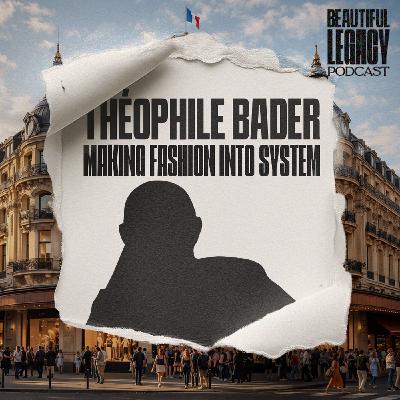
This episode explores how Théophile Bader, founder of Galeries Lafayette, transformed fashion into a coordinated system. Neither a showman nor a logistics obsessive, Bader was something rarer: a connector. He understood that fashion only scales when design, production, retail, media, and architecture are aligned.
Through Galeries Lafayette, Bader pioneered fashion curation, in-store shows, editorial window displays, and vertically integrated collections — turning the department store into both a cultural authority and an industrial engine. The iconic Parisian dome was not spectacle for its own sake, but a declaration: fashion deserved civic presence and architectural legitimacy.
This episode situates Bader apart from Selfridge, Areces, and Jandorf, revealing how his legacy lives on in modern concept stores, vertically integrated fashion brands, and flagship retail as cultural landmark.
Bader did not merely sell fashion.
He designed the system that allows fashion to exist at scale.

In this episode of Beautiful Legacy, we explore the quiet yet profound influence of Adolf Jandorf, founder of KaDeWe. Unlike later retailers who focused on access, systems, or scale, Jandorf understood something more fundamental: before people can buy modernity, they must first learn to recognise it.
KaDeWe was conceived as a window to the world - a place where aspiration could be observed without pressure, where architecture taught taste, and where shopping became an act of looking rather than owning.
This episode examines how Jandorf shaped retail as a cultural force, how his ideas still define flagship stores and department stores today, and why visibility, not affordability, was his true innovation.

The Department Store as Cultural Editor
Before concept stores, brand curation, or retail as cultural commentary, there was Dorothy Shaver.
This episode explores the legacy of Dorothy Shaver, the woman who redefined the department store as a cultural voice. In 1945, Shaver became the first woman in the United States to head a multimillion-dollar firm when she was appointed president of Lord & Taylor. But her lasting impact went far beyond breaking barriers.
Drawing on her background in journalism and communication, Shaver transformed buying into editorial judgment and turned the department store into a place of orientation rather than excess. Through exhibitions, education, and the promotion of American designers, she gave retail authority rooted in clarity and trust.
Her influence lives on in stores that curate rather than overwhelm, that lead culture instead of chasing it.
This is the story of how one woman turned the department store into a voice people trusted - and why that voice still shapes retail today.
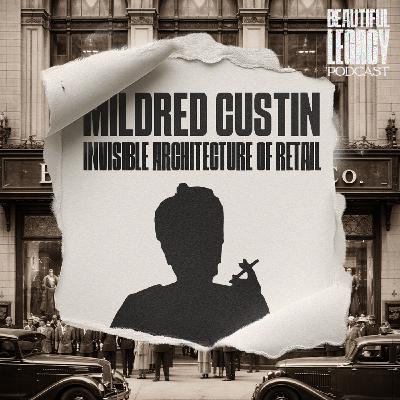
The Invisible Architecture of Retail
Behind the spectacle of department store windows lies a structure few ever see - yet one that governs how retail truly works.
This episode explores the legacy of Mildred Custin, the woman who helped transform department stores from intuition-driven enterprises into structured, scalable organisations. Working behind the scenes at Macy’s, Custin professionalised buying, introduced centralised merchandising systems, and helped define the organisational logic that still underpins modern retail.
Her work did not shape how stores looked, but how they functioned.
From planning cycles and forecasting to coordination across departments, the systems she helped establish made growth possible without chaos.
Today, supermarkets, fast-fashion chains, and e-commerce platforms still operate within the framework Custin helped build.
This is the story of the invisible architecture of retail, and of a legacy that continues to shape every transaction we make.

Comments

Download from Google Play

Download from App Store
 United States