


 Claim Ownership
From Pain to Possibility
Subscribed: 55Played: 2,606
Subscribe

© 2024 Susi Hately
Description
You are a yoga teacher or a health professional who wants to integrate yoga therapeutically. You want a more holistic, biopsychosocial approach to helping your clients heal. You want to empower them to listen and to learn about their bodies.
In From Pain to Possibility, Susi Hately, B.Sc. Kinesiology blends modern understanding of anatomy and biomechanics with the ancient wisdom of yoga. This weekly show will share Susi's best ideas from over 25 years of helping her clients reduce and eradicate pain.
In From Pain to Possibility, Susi Hately, B.Sc. Kinesiology blends modern understanding of anatomy and biomechanics with the ancient wisdom of yoga. This weekly show will share Susi's best ideas from over 25 years of helping her clients reduce and eradicate pain.
363 Episodes
Reverse
In this episode, I explore the common desire to "fix" posture and why simply trying to sit or stand up straight rarely works for long. I share how posture isn't something we force or hold—it's something that naturally emerges from how our body moves and coordinates as a whole system. I also dive into why kyphosis and other postural patterns are often less about tight muscles and more about areas of the body that have stopped moving or participating. By restoring movement, reducing compensations, and improving coordination, posture can begin to change naturally—often without directly trying to fix it.
In this episode, I explore a common belief in the movement and fitness world—the idea that more flexibility or range of motion will solve pain. I explain why increasing range isn't always the answer and why pain is often more related to movement patterns than tight muscles. When we focus only on stretching or pushing deeper into movements, we can actually reinforce compensation patterns that keep pain cycles going. Instead, I share how reducing pain often leads to improved range naturally. By paying closer attention to coordination, load distribution, and how the body truly moves, we can create more efficient and sustainable movement patterns. When we quiet unnecessary tension and support the muscles and joints that should be doing the work, the body can move with greater ease, stability, and freedom.
Repetition gets a bad reputation. It can feel boring, rigid, or unnecessary. But in this episode, I share why repetition is actually the foundation of durable change. Relief that happens once is just an event. What changes people are patterns — and patterns are built through intentional repetition, tracking, and attention. I walk you through the specific anchors I use in my sessions — the body diagram, the client's story, the program, and especially the duration question. When we measure how long relief lasts, we shift from chasing intensity to building stability. Repetition isn't about paperwork. It's about training attention, building clarity, and helping change truly hold.
In this episode, I unpack the conversation around "lazy" or "non-firing" glutes and explore why simply strengthening them may not be the full answer. I share why I get curious when people tell me their glutes are weak, especially when they're already doing all the right exercises like squats, bridges, and clamshells. I walk through the anatomy of the glutes, the role of coordination and compensation, and how breath, ribcage position, and nervous system patterns can influence how the glutes actually function. Instead of just squeezing harder, I invite you to consider a smarter, more connected approach to restoring relationship and communication in your hips.
In this episode, I dive into the concept of strength and why it isn't always the answer. I share insights on how strength can sometimes mask timing and coordination issues in the body, and why simply getting stronger doesn't always solve movement challenges. We explore the hidden patterns that make people feel stuck, even when they appear strong or have regained capacity after injury. I also guide you through the idea of using awareness and coordination to truly support movement. By breaking down movements into small components and retraining coordination, you can help your body—or your clients—move with more confidence, clarity, and ease. This episode is about understanding how strength and coordination work together to create lasting, sustainable results.

In this episode, I explore the difference between using movement for relief versus using it for real, lasting change. I unpack the concept of "Yoga Advil," why relief isn't wrong, and how it can either keep you stuck or become the doorway to deeper understanding and healing. I also introduce what it means to become a movement detective — someone who uses curiosity, awareness, and feedback instead of just repetition. This episode is about learning how to think while you move, so your body isn't just feeling better, but actually changing.
In this episode, I explore the sacrum from both a mythic and anatomical perspective, uncovering why so many ancient cultures considered it sacred and indestructible. I connect history, symbolism, and modern biomechanics to show how this bone has always been seen as more than just structural. I also share how understanding the sacrum's role in movement, stability, and coordination can change the way we experience pelvic pain and SI joint issues. By shifting our focus from fragility to resilience, we can approach the body with more intelligence, confidence, and ease.
In this episode, I share why I created the Therapeutic Yoga Intensive, who it's truly for, and the problem it's designed to solve. I speak to that quiet moment many experienced teachers and health professionals reach—when effort, compassion, and knowledge stop translating into lasting change, and you start to sense there must be another way. I explain how this work shifts the focus from chasing sensation and symptoms to understanding coordination, motor control, and how the body truly adapts. If you've ever felt stuck, confused, or doubtful despite doing "everything right," this episode is an invitation to see movement, healing, and your work with others in a completely new way.
In this episode, I unpack a simple but powerful idea: sensation is not the same as movement. Many people I work with are incredibly good at feeling their bodies, yet still feel stuck in pain or repetitive patterns. I explore why relying on sensation alone can be misleading and how this often keeps people trapped in cycles of tightness, flare-ups, and temporary relief. I also explain how integrating proprioception—our ability to sense movement and mechanical relationships—creates real, lasting change. By learning to notice what is actually moving, rather than just what is felt, awareness becomes more effective, movement becomes more efficient, and the body no longer needs to compensate in the same way.
In this episode, I explore the difference between true core stability and habitual bracing, and why relying on bracing can actually make us less stable over time. I explain why this topic is especially relevant now, as more people in yoga, fitness, and bodywork are moving beyond an "abs-only" view of the core. I also share why I revisited this conversation alongside the updated 2026 Power of Pure Movement program. I break down how real stability comes from responsiveness, coordination, and adaptability—not rigidity. Through anatomy, breath awareness, and simple movement examples, I invite you to notice where bracing shows up in your body and how load is being managed. This episode is about learning to use less effort, allow more movement, and build a core that responds intelligently rather than one that's constantly held tight.
In this episode, I guide you through a gentle yoga nidra practice focused on body scanning, breath awareness, and deep relaxation. I invite you to get comfortable, settle your body fully, and allow yourself to let go of effort as you move into a state of stillness and ease. Through a slow, flowing awareness of different parts of the body, this practice supports rest, presence, and a sense of being quietly held. I also introduce the use of intention and the so hum mantra as a way to connect inner awareness with how you want to be in your life. By sensing the natural rhythm of your breath and noticing how intention resonates in the body, this practice offers a space to restore, reset, and gently transition back into your day with more clarity and calm.
In this episode, I guide you through a gentle yoga nidra practice designed to help you settle, soften, and truly rest during the busy Christmas holiday season. This recording focuses on the physical body, inviting you to become more comfortable, to let go of effort, and to allow your nervous system to downshift without needing to fix or change anything. Through a slow, systematic journey of awareness through the body, I invite you to notice sensation as it is, reconnect with breath, and work with intention in a receptive, non striving way. This practice is an opportunity to rest deeply, reconnect with yourself, and create space for ease, clarity, and restoration before returning to the rest of your day.
In this episode, I use the deadlift as a lens to explore how sensation and mechanics work together in reducing pain and improving performance. I walk through the difference between interoception and proprioception and why sensation does not automatically mean injury. By paying attention to how the body organizes itself under load, we can move away from compensation and toward clearer, more efficient movement patterns. I also discuss bracing, breath, and responsiveness, and introduce the concept of yellow lights, the subtle signals that appear before pain does. This episode is especially helpful if you are returning to lifting after pain, feeling unsure about core bracing, or wanting to lift with more ease, clarity, and confidence while still building strength.
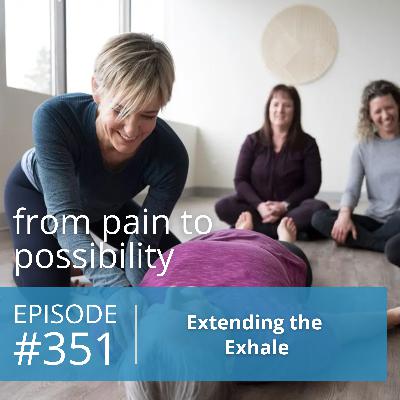
In this episode, I guide you through a simple but profoundly calming lengthening-the-exhale practice. It's under ten minutes, yet it can make a significant shift in your body and mind by helping you down-regulate, settle, and soften states of wiredness or vigilance. I walk you through noticing your breath, tuning into where it moves, and observing its natural rhythm before gently encouraging the exhale to lengthen. As I lead you through this process, I highlight how to stay within ease, how the inhale naturally responds to the exhale, and what to watch for so the practice remains supportive rather than straining. I also share considerations for practicing safely, recognizing signs of tension, and building your breathwork capacity with honesty and awareness. This is a practice you can return to anytime you need grounding or a moment to reconnect with yourself.
In this episode, we explore the in-between: the often misunderstood stage between pain relief and real, sustainable strength. This is the phase where people frequently get stuck, either pushing too hard too soon or relying on temporary fixes that never fully resolve the underlying issue. You'll learn why this space is essential, why it can feel confusing or uncomfortable, and how to move through it with clarity and confidence. We break down what actually needs to happen during this transition phase, how awareness shapes stability, and why easing effort often leads to deeper, more efficient strength gains. Whether you're recovering from pain, rebuilding your movement foundation, or learning how to load your system effectively, this episode sheds light on the principles that make progress not only possible, but lasting.
In this episode, I dive into why hip flexors often feel tight even when they aren't actually short. Many people rely on stretching for relief, but tightness is often a sign that the hip flexors are overworking to compensate for other muscles that aren't supporting the pelvis, spine, and legs properly. I explain how to identify these patterns and why stretching alone may not create lasting change. I also share a three-step approach to hip flexor strengthening, focusing on awareness, precise strengthening, and integrating coordinated movement into everyday activities. By retraining your hip flexors in this way, you can reduce tightness, improve mobility, and create long-term support and stability for your body.
In this episode of From Pain To Possibility, I explore why restorative yoga often leaves people feeling anything but restored. It's not about props or perfect alignment—it's about creating a state where your nervous system feels safe enough to truly settle. I share insights from my experience teaching restorative components in the Therapeutic Yoga Intensive, showing how breath, awareness, and subtle movement can turn any pose into a restorative experience. You'll learn how to recognize when your body is truly resting versus just enduring a pose, and how to bring a tone of rest into both stillness and movement. I also explain how cultivating awareness and listening to your body can recalibrate tension, support healing, and make restorative yoga deeply therapeutic.
In this episode, I explore why your hamstrings aren't the real problem, even if they constantly feel tight, overworked, or impossible to stretch out. I share why the sensation of "tightness" is often a protective response rather than a true tissue issue, and how patterns involving your hips, pelvis, feet, breath, and even your shoulder girdle play a massive role in how your hamstrings behave. I break down the most common coordination and stability issues I see in clients, why stretching rarely leads to lasting change, and how curiosity, clarity, and better system-wide organization naturally help the hamstrings soften without force. If your hamstrings have been gripping for years, this episode will help you finally understand what they've been trying to support.
In this episode, I wrap up my three-part mini-series on choreography and awareness by sharing why awareness-first teaching often creates deeper, more lasting change than even the most precise cues. I explain how students can follow instructions perfectly yet still brace, grip, or feel pain, and how awareness helps their bodies reorganize into movement that's lighter, clearer, and more efficient. I explore how awareness improves neuromuscular coordination, reduces guarding, enhances mobility, and builds ease without extra effort. When we shift from simply correcting alignment to observing patterns and sensations, students not only move better—they feel better.
In this episode, I continue my three-part mini-series for yoga teachers who want to evolve into confident, effective yoga therapists. Today, I walk you through how we can bridge the gap between choreography and awareness, using a grounded, movement-based sequence of Goddess, Warrior 3, and lunges. I share an excerpt from one of my live practices, originally recorded during the pandemic, to demonstrate how we can use traditional poses as tools for developing interoception and proprioception. You'll hear how I guide awareness through the feet, hips, and breath, helping students feel their bodies move rather than simply performing shapes. This episode invites you to slow down, listen, and discover how conscious movement builds stability, ease, and strength, from the inside out.

Comments

Download from Google Play

Download from App Store
 United States