


 Claim Ownership
Tantra's Mantra with Prakash Sangam
Subscribed: 9Played: 80
Subscribe

© Copyright 2020
Description
The podcast that goes behind and beyond the technology news headlines to explore the unheard and unseen. The topics include 5G, AI, IoT, Smartphones, Networking, Intellectual Property and others.
65 Episodes
Reverse
Telecom was one of the earliest users of AI, long before its marketing hype and even before it was known by that name. The recent advancements are further propelling AI's use. In this episode, I talk to Dan Warren, Director of Communications Research at Samsung, regarding the role of AI in telecom networks. We discuss its role in network operations, AI for RAN, AI with RAN, and AI on RAN concepts; how software-based networking and virtualization (vRAN/Open RAN) enable AI; who will develop and implement AI models; the scope of standardization; and more. We also delve into the investment challenges for 5G operators to leverage AI, whether AI will encourage a larger role for Hyperscalers in telecom, and whether large-scale AI implementation can start with 5G/5G Advanced or will have to wait for 6G. Highlights: 00:00 - Intro 02:10 - Guest intro (Dan Warren) 03:22 - Samsung Network's categorization of the role of AI - Networks for AI, AI for networks 04:44 - Current interesting use cases of AI - RAN energy efficiency, complex capacity, and coverage optimization 06:40 - The current status of use of AI in telecom, major industry focus areas - optimizing opex and capex, experience enhancement 90:15 - Critical role of software-based networking and virtualization in enabling AI 12:48 - Are legacy networks w/o software-based networks out of luck for AI? 15:40 - How to decide where to run AI workload - where is the AI compute needed? 19:05 - Who will develop AI models for telecom? - property vs. standard, differentiation etc. 24:35 - Dichotomy between AI differentiation, open networking, and offering AI as a service layer 26:55 - Samsung's approach to AI as a service/software leveraging its software-based networking legacy. Might be different for more established players? 29:06 - Does today's architecture (e.g., SMO) have hooks for managing AI end-to-end? 30:01 - Data challenge of operators for AI - different forms, formats, sources, granularity, etc. Will things like NWDAF solve it? 31:50 - Operator understanding of the AI challenges ahead - transforming from a hardware operator to a software management company 34:36 - Is the investment needed for AI an impediment to its adoption? Worries of the fast-moving and changing AI landscape 38:46 - AI on RAN - Samsung Network's views 40:43 - AI on RAN - operators moving from telecom service providers to AI (edge) Data Center/infra providers - Does it make sense? 43:19 - AI timing - Will large-scale deployments wait for 6G, or can start with 5G? 45:16 - Closing
The mind-numbing investment in AI and the sky-high valuations of the companies involved have led many to wonder whether AI has become a bubble. In this episode, I talk to Dr. Riad Hartani, who is an advisor, investor, and a longtime time industry participant, on what is driving the investment - real market demand or FOMO, who is making those them, ongoing circular investment and risks, especially in Neoclouds, RoI concerns, consumer vs. enterprise AI dynamics, whether AI is a bubble, what could be early indicators of a burst, if any, who will be worst affected, and more. We also compare and contrast the current AI situation with the Dot-com bubble.
Qualcomm surprised the IoT market by announcing the acquisition of the open-source hardware champion, with a huge hobbyist/enthusiast builder ecosystem. In this episode, I talk to Qualcomm's VP of Product Management, Industrial and IoT BU, Manvinder (Manny) Singh, about the reasoning for the acquisition, challenges of the IoT industry, how AI is changing the game, what Qualcomm brings to the ecosystem, how AI Hub and the other acquisition, Edge Impulse, fit together with Arduino, and more. We also delve into what will and will not change for the Arduino's open-source spirit, as well as the ecosystem, which primarily utilizes microcontrollers and low-power processors. Also, check out Episode 59- Discussion with CEO of Edge AI Foundation: https://bit.ly/TantrasMantra_ep59
Lenovo Global Industry Analyst Conference (GIAC) 2025 was held in October 2025 at the company's US Headquarters in Raleigh, North Carolina. It was a three-day event packed with Keynote Addresses, numerous panels, and breakout sessions discussing Lenovo's AI strategy and roadmap, while highlighting its market and technology leadership. There was a good amount of dialogue, Q&A, and exchange of ideas and views between the company's executives and analysts. In this episode, Anurag Agrawal of Techaisle, Leonard Lee of Next Curve, and I recap and analyze the event, discussing how "One-Lenovo" and "Hybrid AI" strategies are moving from concept to reality, how the company is challenging itself to evolve the PC industry despite its >20 quarters of market leadership, how its Neptune warm water cooled system is leading the data center market, and how its solutions and services business binds all the pieces together and helping it become a solutions company. We also delve into the remarkable progress of Motorola Mobility and explore how its sponsorships with FIFA and Formula 1 are helping to elevate the company's stature, as well as showcase its technological prowess.
Huawei organized two major events in September 2025. The first, Huawei Connect 2025, was a larger public event for customers, partners, media, analysts, and everyone else. The second, Analyst Talks, was a small, private analyst-only event. Both were held in Shanghai, China, and showcased the company's technology prowess and progress in the global AI race. In the episode, I discuss the key takeaways from both events with Peter Jarich, a fellow analyst and Head of GSMA Intelligence. We delve into Huawei's progress in AI despite challenges, how it is coping with limited access to the latest technology, the parallel Chinese tech ecosystem, 5G Advanced progress at Chinese operators, how AI is shaping the evolution, the company's impressive antenna/hardware innovations, and more.
After more than a decade of a dull period, the PC industry has seen some excitement, with AIPCs, Windows on Arm, the resurgence of Intel, and more. Amidst all this, Lenovo has continued to lead the market and brought excitement with its new concept devices, such as 360-degree display laptops, Rollable, VertiFlex, and others. In this episode, I talk to Tom Butler, Lenovo's VP of Worldwide Commercial Portfolio, about AIPC traction, limited use of on-device AI capabilities & evolution, and the journey of introducing new concept devices, and more. We also delve into how sustainability is core to Lenovo, including easy repairability and, even from a business perspective, sometimes counterintuitive measures that extend the life of PCs.
Edge AI has been hailed as the future of AI. However, it is yet to take off, and most of today's investment is directed towards cloud AI. Notwithstanding that, some green shoots are emerging. In the episode, I talk to Pete Bernard, CEO of the industry association, Edge AI Foundation, on the reasons behind the slow growth of Edge AI, the challenges the industry is facing, and what use cases and early segments are seeing traction. We also delve into the vision and mission of the foundation, exploring how it is helping the industry address challenges while harnessing opportunities, and what the future holds.
Samsung's Galaxy Z Fold7 is a "no-compromise" foldable tablet-phone, and the ultimate productivity device, giving the category the best chance to be mainstream. In this episode, I talk to Tyler Gipson, newly minted Head of Mobile B2B Sales at Samsung America, about the company's B2B/Enterprise strategy, how he plans to translate Samsung's consumer brand equity into B2B leadership, role of foldables, especially Z Fold7, and services such as Galaxy AI, Knox and Dex in enterprises, as well as plans to address the hefty price-tag of Z Fold7, which is the only remaining hurdle for the device. Also, don't forget to check out: Galaxy Z Fold7 review — A 'no-compromise' foldable tablet-phone- https://bit.ly/3Ulxxq0 Tantra's Notes Blog - Recapping and Analyzing Galaxy Unpacked- https://bit.ly/44L8RgD
This year's Apple developers conference, WWDC, was held from June 9th to 13th. It saw many interesting announcements, including a harmonized version naming across all the OSs, interesting Apple Intelligence, and other features supported on Apple products. In this episode, Next Curve's Leonard Lee and I discuss the event's key takeaways, including Apple opening access to its on-device LLM to app developers, Apple Intelligence, iPadOS crossing the boundary into Laptop territory, new features coming to MacOS, and how many VisionOS features are entering other products. We also delve into some of the misses, including Siri, minimal focus on Agentic AI, and others.
Network APIs are heralded as a game changer in the ongoing struggle of 5G operators to make a good return on their enormous investments in building these highly capable networks. Unlike previous attempts, stars might be aligning this time to make APIs successful. Aduna was formed by a collaborative effort between Infra major Ericsson and scores of handpicked large global 5G operators. In this episode, I speak to Anthony Bartolo, CEO of Aduna. We discuss the reasons for Aduna's existence, how it collaborates with the GSMA's Open Gateway initiative and the Linux Foundation's CAMARA project, typical use cases, target verticals, traction so far, the role of hyperscalers, who have their own large app ecosystems, which is crucial for API proliferation, and more. We also delve into Aduna's business and revenue model, how other players can join, what the future holds, and how the company defines the success of this effort.
AI is jumping from one hype cycle to another. First, it was simple AI, then came Generative AI, and currently, we are reeling from Agentic AI. The new term is already lurking—Artificial General Intelligence (AGI). Actually, AGI is pretty old, dating back to the early 2000s. What is it, and why is it gathering attention now? I talk to the person who came up with the very term--Peter Voss, CEO & Chief Scientist at Aigo.ai. We delve into how AGI mimics human learning functions, how it differs from Gen AI, why it is cost- and power-efficient by orders of magnitude, whether today's Gen AI can evolve into AGI, and more. We also discuss whether AGI's human-like learning can create cyborgs and Skynet.
Industrial technology giant Honeywell is redefining the noble barcode scanner for the industrial age. In this episode, I speak to Theodore Newman, Senior Manager of Global Application Engineering, and Steph Hobley-Lloyd, Global Offering Manager, about Honeywell's Swift Decoder SDK. We discuss the needs of barcode scanners for industrial and enterprise use cases, focusing on rapid, high-accuracy batch scanning, integrating the functionality into various types of devices and machines, and how Swift Decoder's flexibility and multi-OS support address these needs. Additionally, we explore how the upcoming support for AI will significantly expand its utility and applications.
Cadence is well known for its Electronic Design Automation (EDA) tools. However, it is also building its silicon business, with a collection of various IP blocks, and recently announced a system chipset in collaboration with Arm. In this episode, I talk to David Glasco, VP of Compute Solutions Group at Cadence, about the silicon business, product portfolio, target segments, Chiplets market and its evolution, and other topics. We also delve into the company's latest system Chiplet announcement, acquisition of Secure IC, how it fits into its silicon strategy, and more.
Samsung launched its latest flagship Galaxy S25 Series smartphones during its Unpacked event in Jan 2025. This Gen AI powerhouse phone is powered by Qualcomm's latest Snapdragon 8 Elite mobile platform, customized for Galaxy. In this episode, I talk to Chris Patrick, SVP and GM of Qualcomm's Handsets and Wearables business. We discuss the company's long-standing collaboration with Samsung, enabling Galaxy AI on S25 phones, collaboration with Google for optimizing Gemini AI models for the Snapdragon platform, and more. We dig deeper into specific customizations Qualcomm has done for Galaxy, the evolution of AI and NPU capabilities, and what the future holds. Also, don't forget to check out my review of Galaxy S25 Ultra here: Buy it for performance, and Keep it for Galaxy AI. (https://bit.ly/40SXYr3)
This year, CES saw its highest attendance in the post-COVID era, attracting 141,000 attendees. As usual, the event saw many announcements across technology and product categories. Although AI was everywhere and IoT had a huge presence (albeit without that name), there wasn't a dominant theme. In this episode, Leonard Lee of Next Curve and I analyze what we saw and heard and try to understand the key takeaways. We also discuss how automotive exhibits have changed, how industrial participation is increasing, and how CES has become a non-Chinese global show.
Microsoft tried to redefine PCs in 2025 with the introduction of AI-infused Copilot+ PCs. Lenovo was among the top OEMs to embrace the concept and introduce a wide range of Copilot+ PCs powered by Qualcomm, Intel, and AMD SoCs. In this episode, I speak to Steve Long, SVP of Commercial Business at Lenovo, on traction in the Enterprises, market drivers, new AI use cases, improving the performance of existing functions, the positive effect of Windows 11 refresh, choice of SoC vendors, and more. We also delve deep into how Lenovo employs Gen AI use cases in its operations to showcase key use cases and demonstrate the value they bring to enterprises. Check out our Copilot+ PC coverage so far here: https://bit.ly/3PByw2R

Electronic Data Automation (EDA) Tools and their providers, like Cadence, are not widely known but play a critical role in the semiconductor industry. In the episode, I talk to Rob Knoth, Group Director of Strategy and New Ventures at Cadence, about the EDA Tools ecosystem, the company's announcements at the Supercomputing 2024 event, its symbiotic relationship with AI powerhouse Nvidia, application of EDA tools beyond semiconductors and more.
Ericsson held its Analyst Conference on Nov. 7, 2024, at its D-15 Labs Innovation Center in Santa Clara, CA. It was a packed event with many interesting sessions with speakers from Ericsson and scores of its partners, including Verizon, AT&T, T-Mobile, Meta, AWS, Google Cloud, Dell, Intel, and others. The theme of the event was "Programable High Performance Networks." As expected, the emphasis was on programmability, to scale the network up and down to make it fit the use cases, network scenarios, apps, and service needs. In this episode, Leonard Lee of Next Curve and I discuss Network APIs, monetization, mechanisms that distribute the "value" across the value chain, and how Ericsson is accelerating it through its JV with operators. We also delve into the role of AI, Edge AI, rApps, and Ericsson's pilot of making cellular primary connectivity for enterprises, eliminating wire and wired connectivity.
The Lenovo Tech World and Global Industry Analyst Conference were held in Bellevue (Seattle) from October 15th to 17th, 2024. During these events, the company showcased its vision for the industry through its "Hybrid AI" approach, technology, products, and services, as well as its broad industry partnerships. In this episode, Leonard Lee of Next Curve and I discuss how Lenovo, with its "pocket-to-cloud" offerings, is well positioned for "Hybrid AI," how it is accelerating AI adoption by practicing what it preaches in its own operations, its entry into the Automotive space, Server water cooling leadership, reimagining Motorola's smartphone business, and more.
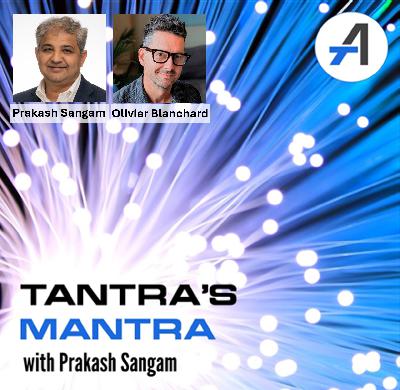
Lenovo Innovation World 2024 was held in Berlin on September 4th—5th. During this event, the company announced a slew of Copilot+ PCs powered by the new Intel Core Ultra 400v, AMD Ryzen AI 300, and Qualcomm Snapdragon X Plus (8-core) SoCs. In this episode, I talk to Olivier Blanchard, Research Director, Futurum Research, about the various SoCs, their strengths and weaknesses, the need for OEMs to position them well, specifically what Lenovo should do to maintain its formidable market leadership, and finally, key takeaways from the event. Also, check out the reviews of these Copilot+ PCs powered by Snapdragon XElite SOC Lenovo Slim7x - https://bit.ly/3WK9W4n Samsung Galaxy Book4 Edge - https://bit.ly/3XJSGLN

Comments

Download from Google Play

Download from App Store
 United States