


 Claim Ownership
Customer Service Revolution | Customer Experience & Employee Experience Insights
Subscribed: 55Played: 856
Subscribe

© 2020 The DiJulius Group
Description
Customer service, and employee experience, done right, can be your company's single, biggest, competitive advantage.
Join Customer Service Authority and best-selling author, John DiJulius, as he interviews leaders who are revolutionizing their industries. Hear their successes, and sometimes failures, that built best practices for exceeding expectations and gaining market share. Plus learn how these practices can be applied to your B2B or B2C business.
Each episode provides CEOs, CXOs, COOs, CMOs, CHROs and other customer experience leaders with actionable tips to create a culture that produces referrals, loyalty and rave reviews from employees and customers.
It's not a podcast. It's a movement. The Customer Service Revolution is a radical overthrow of conventional business mentality designed to transform what customers and employees experience.
If you're a revolutionary customer service leader ready to stop competing on price and obsessed with building a brand that people cannot live without, and, this podcast is for you!
Join Customer Service Authority and best-selling author, John DiJulius, as he interviews leaders who are revolutionizing their industries. Hear their successes, and sometimes failures, that built best practices for exceeding expectations and gaining market share. Plus learn how these practices can be applied to your B2B or B2C business.
Each episode provides CEOs, CXOs, COOs, CMOs, CHROs and other customer experience leaders with actionable tips to create a culture that produces referrals, loyalty and rave reviews from employees and customers.
It's not a podcast. It's a movement. The Customer Service Revolution is a radical overthrow of conventional business mentality designed to transform what customers and employees experience.
If you're a revolutionary customer service leader ready to stop competing on price and obsessed with building a brand that people cannot live without, and, this podcast is for you!
247 Episodes
Reverse
Summary: What makes a company the kind of brand customers would actually miss if it disappeared tomorrow? In Episode 247 of the Customer Service Revolution Podcast, Denise Thompson and John DiJulius break down the six drivers that separate forgettable businesses from brands customers stay loyal to: great product or service, consistency, ease of doing business, employee evangelists, educating instead of selling, and personalization. They also unpack why consistency is often the biggest missed opportunity, how friction quietly pushes customers away, why zero-risk policies build trust, and what leaders can do to create an experience customers do not want to leave. If you want to build stronger loyalty, create more trust, and make price less relevant, this episode gives you the blueprint. John shares the six drivers that make a company indispensable to its customers: Great product or service Consistency Ease of doing business Employee evangelists Educate instead of sell Personalized experiences They discuss: Why a great product is now only the price of admission Why consistency creates trust and certainty How friction and policies push customers away Why employee experience always shows up in customer experience How educating customers builds credibility and long-term trust Why personalization creates emotional connection Why consistency may be the most important starting point for most organizations Key Takeaways A great product alone is no longer enough to differentiate your business. Customers are loyal to experiences they can trust and predict. Friction kills loyalty faster than most leaders realize. Employees who believe in the brand create stronger customer experiences. Educating customers builds trust faster than pushing a sale. Personalization makes customers feel seen, valued, and remembered. Consistency is often the biggest customer experience opportunity. Links: The DiJulius Group Methdology: https://thedijuliusgroup.com/x-commandment-methodology/ Company Service Aptitude Test: https://thedijuliusgroup.com/c-sat-forms/individual-c-sat/ Schedule a Complimentary Call with one of our advisors: tdg.click/claudia Ask John! Submit your questions for John, to be aired on future episode: tdg.click/ask Customer Experience Executive Academy: https://thedijuliusgroup.com/project/cx-executive-academy/ Experience Revolution Membership: https://thedijuliusgroup.com/membership/ Books: https://thedijuliusgroup.com/shop/ Contacts: Lindsey@thedijuliusgroup.com , Claudia@thedijuliusgroup.com If you want to learn how world-class organizations build cultures customers cannot live without, explore The Experience Revolution Membership. Inside the membership you'll gain access to livestream workshops, practical frameworks, and proven strategies used by organizations around the world. Learn more at https://thedijuliusgroup.com/membership/ Subscribe We talk about topics like this each week; be sure to subscribe wherever you listen to podcasts so you don't miss an episode.

Summary: Most customer service initiatives do not fail because leaders do not care. They fail because they launch with excitement, then daily operations swallow them whole. In this episode, Denise Thompson and John DiJulius break down the six steps required to build a customer experience initiative that actually lasts: create it, launch it, certify it, implement it, measure it, and sustain it. They also tackle what leaders are facing right now, including AI being pushed into customer operations too quickly, the need for executive sponsorship, the importance of frontline buy-in, and why sustaining an initiative matters more than the launch itself. Key Takeaways: Customer experience initiatives fail when they are treated like events instead of systems. Executive sponsorship must be visible and consistent, not passive. Frontline employees need involvement in creation and launch to drive adoption. Certification is necessary because attendance does not prove understanding. Implementation works best with crawl-walk-run sequencing and repeated reinforcement. Sustaining the initiative requires constant coaching, visibility, measurement, and onboarding integration. Key Quotes: "A system, not a speech." "Customer experience can't be flavor of the month." "Technology is for tasks. Humans are for empathy, problem solving, and relationship building." "Attendance itself isn't retention." This is Denise's framing of the certification issue. "You never arrive." "Don't launch another initiative that you can't sustain." Links: The DiJulius Group Methdology: https://thedijuliusgroup.com/x-commandment-methodology/ Company Service Aptitude Test: https://thedijuliusgroup.com/c-sat-forms/individual-c-sat/ Schedule a Complimentary Call with one of our advisors: tdg.click/claudia Ask John! Submit your questions for John, to be aired on future episode: tdg.click/ask Customer Experience Executive Academy: https://thedijuliusgroup.com/project/cx-executive-academy/ Experience Revolution Membership: https://thedijuliusgroup.com/membership/ Books: https://thedijuliusgroup.com/shop/ Contacts: Lindsey@thedijuliusgroup.com , Claudia@thedijuliusgroup.com If you want to learn how world-class organizations build cultures customers cannot live without, explore The Experience Revolution Membership. Inside the membership you'll gain access to livestream workshops, practical frameworks, and proven strategies used by organizations around the world. Learn more at https://thedijuliusgroup.com/membership/ Subscribe We talk about topics like this each week; be sure to subscribe wherever you listen to podcasts so you don't miss an episode.
How Invest West Took What They Learned at The Customer Experience Executive Academy and Built a Customer Experience Culture That Sticks Summary: In this episode of the Customer Service Revolution Podcast, Dave Murray talks with CXEA graduates Rebecca Blaisdell and Megan Francis of Invest West about what it really looks like to bring customer experience from theory into daily operations. They share how their property management company used The DiJulius Group methodology to break down silos, create signature experiences, build internal ambassadors, and turn customer experience into part of the culture—not just another training initiative. The result: stronger team buy-in, improved morale, a more consistent experience, and an 87% increase in positive reviews What You'll Learn: Customer experience cannot stay vague. It has to be defined, taught, and reinforced. Buy-in grows when employees help create the experience, not just receive instructions about it. Breaking down silos improves consistency across departments and locations. Tools like ambassador groups, huddles, playbooks, and scorecards help sustain momentum. Small above-and-beyond behaviors can create immediate and measurable customer impact. Invest West reported an 86–87% increase in positive reviews and improved its Google rating from 4.2 to 4.4. Key Quotes: "We didn't want to just check a box. We wanted to live and breathe it." "It didn't feel like a top-down program. It felt organic and intentional." "We were very heavily focused on the operational end, and we needed a greater emphasis on the experience end." "How can we be the best part of that customer's day?" "This is not a program we're doing. It has become part of our culture." "You're going to get more out of it than you think you are." Links: The DiJulius Group Methdology: https://thedijuliusgroup.com/x-commandment-methodology/ Company Service Aptitude Test: https://thedijuliusgroup.com/c-sat-forms/individual-c-sat/ Schedule a Complimentary Call with one of our advisors: tdg.click/claudia Ask John! Submit your questions for John, to be aired on future episode: tdg.click/ask Customer Experience Executive Academy: https://thedijuliusgroup.com/project/cx-executive-academy/ Experience Revolution Membership: https://thedijuliusgroup.com/membership/ Books: https://thedijuliusgroup.com/shop/ Contacts: Lindsey@thedijuliusgroup.com , Claudia@thedijuliusgroup.com If you want to learn how world-class organizations build cultures customers cannot live without, explore The Experience Revolution Membership. Inside the membership you'll gain access to livestream workshops, practical frameworks, and proven strategies used by organizations around the world. Learn more at https://thedijuliusgroup.com/membership/ Subscribe We talk about topics like this each week; be sure to subscribe wherever you listen to podcasts so you don't miss an episode.
Summary: What does it really mean to be customer-centric? Where should leaders start if they want to build a culture obsessed with customer experience? In this special mailbag episode of the Customer Service Revolution Podcast, Denise Thompson puts John DiJulius in the hot seat with real questions from leaders about customer experience, culture, and leadership alignment. They tackle topics every organization struggles with: • The difference between customer service and customer-centric culture • How to get leadership aligned around CX • Why employee experience alone does not guarantee great customer experience • What to do with employees who resist new service standards • How to know whether your CX issues are leadership problems or operational problems John also shares lessons learned from 33 years in business, including one leadership mistake he wishes he had corrected sooner. If you're a CEO, executive, or CX leader trying to build an organization customers cannot live without, this episode will give you practical insight you can apply immediately. Listen in as Denise fires the questions and John answers them live. What You'll Learn: Customer centricity must start at the top of the organization. Customer experience is not a "program of the year." It must be an ongoing leadership obsession. Companies that chase short-term wins often sacrifice long-term loyalty. Hiring and training for service aptitude is critical to delivering consistent customer experiences. Employee engagement alone does not produce great CX — employees must also be trained how to deliver it. Leaders should focus their energy on the believers and fence-sitters, not the critics and cynics. Allowing high-producing employees to ignore the culture can undermine the entire organization. Key Quotes: "Customer experience isn't the flavor-of-the-month program. It's an obsession." "There is no Ozempic for customer experience." "If customer experience is not a value of the CEO and the C-suite, it will never become a value of the company." "Employee experience helps create great customer experience, but it doesn't guarantee it." "Celebrate the believers and you'll win the fence sitters." Links: The DiJulius Group Methdology: https://thedijuliusgroup.com/x-commandment-methodology/ Company Service Aptitude Test: https://thedijuliusgroup.com/c-sat-forms/individual-c-sat/ Schedule a Complimentary Call with one of our advisors: tdg.click/claudia Ask John! Submit your questions for John, to be aired on future episode: tdg.click/ask Customer Experience Executive Academy: https://thedijuliusgroup.com/project/cx-executive-academy/ Experience Revolution Membership: https://thedijuliusgroup.com/membership/ Books: https://thedijuliusgroup.com/shop/ Contacts: Lindsey@thedijuliusgroup.com , Claudia@thedijuliusgroup.com If you want to learn how world-class organizations build cultures customers cannot live without, explore The Experience Revolution Membership. Inside the membership you'll gain access to livestream workshops, practical frameworks, and proven strategies used by organizations around the world. Learn more at https://thedijuliusgroup.com/membership/ Subscribe We talk about topics like this each week; be sure to subscribe wherever you listen to podcasts so you don't miss an episode.
Summary: After decades of working with world-class organizations, we've learned something that surprises most leaders: employees don't leave because of pay—they leave because of how they're led. In this episode of the Customer Service Revolution podcast, John DiJulius and Denise Thompson reveal the leadership behaviors that reduce turnover, strengthen culture, and create workplaces people never want to leave. You'll learn why 82% of managers are 'accidental managers' without proper training, how the FORD method (Family, Occupation, Recreation, Dreams) builds unbreakable connection, why inconsistency drives more turnover than low pay, and how companies like Chick-fil-A and The Ritz-Carlton retain talent without paying premium wages. If you're losing good people to competitors and think it's about money, this episode will change how you lead—and how your best employees decide to stay. What You'll Learn: Why most employees don't leave because of pay (and what really drives them away) How world-class companies reduce turnover without raising wages The #1 mistake leaders make when they have turnover (hint: reactive hiring) Why 82% of managers are 'accidental managers' and how it destroys retention How the FORD method creates deep employee connection Why inconsistency and uncertainty drive more turnover than compensation How to model 'educate vs. sell' leadership that builds trust The role of 'servant leadership' in reducing turnover One action leaders can take this week to improve retention When culture outperforms compensation (and when it doesn't) Key Quotes: "We hire from the exact same labor pool as our competitors. We don't pay more. It's what we do with them after we hire them." — John DiJulius "Employees don't quit companies, they quit people. Not just bosses—they also quit toxic coworkers you're not protecting the culture from." — John DiJulius "It's better to lose the sales than the reputation. Employee roulette destroys brands." — John DiJulius "82% of existing managers are accidental managers—promoted without training. That's why retention fails." — John DiJulius "The number one cause of anxiety is uncertainty. Employees need predictability and clarity." — John DiJulius "Know your employees' FORD: Family, Occupation, Recreation, Dreams. That's what makes them stay." — John DiJulius Links: The DiJulius Group Methdology: https://thedijuliusgroup.com/x-commandment-methodology/ Company Service Aptitude Test: https://thedijuliusgroup.com/c-sat-forms/individual-c-sat/ Schedule a Complimentary Call with one of our advisors: tdg.click/claudia Ask John! Submit your questions for John, to be aired on future episode: tdg.click/ask Customer Experience Executive Academy: https://thedijuliusgroup.com/project/cx-executive-academy/ Experience Revolution Membership: https://thedijuliusgroup.com/membership/ Books: https://thedijuliusgroup.com/shop/ Contacts: Lindsey@thedijuliusgroup.com , Claudia@thedijuliusgroup.com Subscribe We talk about topics like this each week; be sure to subscribe wherever you listen to podcasts so you don't miss an episode.
The 10 Commandments Part 2: Why Your Customer Experience Can't Exceed Your Employee Experience What separates world-class customer experience companies from everyone else? It's not budget. It's not luck. It's a system. In Part 2 of our deep dive into The DiJulius Group's 10 Commandments, John DiJulius and Denise Thompson reveal why exceptional customer experience is impossible without an exceptional employee experience. This episode unpacks Commandments 6-10, covering everything from hiring for character over competence, to building leaders on purpose instead of by accident, to why training must be treated as a product. You'll learn why world-class onboarding has nothing to do with HR paperwork marathons, what's really fueling the retention crisis, and why companies rise to the level of their systems—not their goals. If you're ready to eliminate silos, build leaders who actually lead, and create a workplace people never want to leave, this is your playbook. What You'll Learn: Why hiring for character instead of just technical skills changes everything How to make your interview process 'un-gameable' (even when candidates use AI to prep) The four phases of world-class onboarding—and why most companies only do one The danger of 'accidental managers' and how to build leaders on purpose Why training must be designed, delivered, and certified like a product you'd sell How to eliminate organizational silos that kill customer experience Which commandment creates the fastest impact (and when to start somewhere else) What the customer service revolution will look like in the next 5-10 years Key Insights for C-Suite Leaders "Hire for the heart, train for the part. Technical skills can be taught. Behavior is a lot harder." — John DiJulius "The best companies scare more people out of wanting to work there than they attract—by design." — John DiJulius "Companies don't rise to the level of their goals. They rise to the level of their systems." — Denise Thompson "Your customer experience is your offense. It makes customers come back more often, pay higher prices, and send more people." — John DiJulius "Customers aren't more demanding than ever. They're less tolerant of bad experiences." — John DiJulius Who This Episode Is For CEOs and business owners committed to building world-class cultures VP/Head of HR and People Operations Chief Customer Experience Officers (CXO) Operations leaders struggling with retention and engagement Learning & Development / Training Directors Links: The DiJulius Group Methdology: https://thedijuliusgroup.com/x-commandment-methodology/ Company Service Aptitude Test: https://thedijuliusgroup.com/c-sat-forms/individual-c-sat/ Schedule a Complimentary Call with one of our advisors: tdg.click/claudia Ask John! Submit your questions for John, to be aired on future episode: tdg.click/ask Customer Experience Executive Academy: https://thedijuliusgroup.com/project/cx-executive-academy/ Experience Revolution Membership: https://thedijuliusgroup.com/membership/ Books: https://thedijuliusgroup.com/shop/ Contacts: Lindsey@thedijuliusgroup.com , Claudia@thedijuliusgroup.com Subscribe We talk about topics like this each week; be sure to subscribe wherever you listen to podcasts so you don't miss an episode.
Episode Summary What separates world-class customer experience companies from everyone else? It's not budget. It's not luck. It's a system. In Part 1 of this two-part series on the Customer Service Revolution podcast, John DiJulius — founder of The DiJulius Group and the CX architect behind Chick-fil-A, Starbucks, Nestle, Ritz-Carlton, and top hospitals, financial institutions, and luxury resorts worldwide — begins breaking down the 10 Commandments of Customer Experience: the gold-standard methodology that has transformed how C-suite leaders design, implement, and sustain world-class customer and employee experiences. This episode covers the first half of the framework — from igniting your CX revolution to building your signature experience and creating a zero risk organization. Part 2 (next week) will cover the employee experience, training, and implementation commandments. This isn't theory. This is the actual operating system behind the most admired brands in the world — codified, structured, and sequenced so any organization can implement it. What You'll Learn in Part 1 • Why John created the 10 Commandments: The frustration of watching great CX collapse as companies scale — and the realization that no one had ever codified how world-class companies actually do it • Commandment 1 — Ignite the CX Revolution: How to draw a line in the sand as a CEO and make customer obsession a non-negotiable organizational commitment (includes the 'Day in the Life of a Customer' video tool used in new hire orientation) • The Customer Experience Action Statement: Why mission statements don't drive behavior — and how one action statement built on 3 pillars aligns every employee in every interaction • The Never & Always Tool (Customer Bill of Rights): The fastest and most immediately transformational CX tool in the framework — 8-10 non-negotiable standards that eliminate employee roulette, department roulette, and location roulette • Commandment — Signature Experience Design: How journey mapping from the customer's vantage point creates a differentiated experience that makes your brand impossible to replicate • Zero Risk Organization: What it truly means (hint: it's not about never dropping the ball) — and how empowering frontline employees to recover brilliantly creates loyalty no marketing budget can buy • Above & Beyond Culture at Scale: Why telling employees to 'go above and beyond' doesn't work — and the top-of-mind awareness system that makes wow moments a daily norm • The North Star Framework: Why 'flavor of the month' management destroys CX consistency — and how anchoring to one methodology creates shared language, accountability, and lasting culture change • Tune in next week for Part 2: The employee experience, attraction and hiring, training and implementation, and leadership commandments Key Insights for C-Suite Leaders • "Good isn't good enough. If you want to be the most customer-obsessed company in your industry, okay is the enemy." — John DiJulius • "The number one CX problem is consistency — and the root cause is 100 different personal interpretations of what great service means." — John DiJulius • "When you tell 100 employees to deliver genuine hospitality and don't define it, one person thinks a head nod counts. You need it trainable, observable, measurable, and actionable." — John DiJulius • "Technology doesn't differentiate you. Technology keeps you at pace. Your signature experience is what makes price irrelevant." — John DiJulius • "The 10 Commandments don't change. The internet came. Social media came. AI is coming. Those are tools within the commandments — not new commandments." — John DiJulius Who This Episode Is For • CEOs and C-suite executives building or rebuilding their CX strategy • Chief Experience Officers and CX Directors seeking a proven, scalable framework • VP of Customer Success leaders struggling with inconsistency across teams or locations • Operations leaders who want to eliminate service defects and reduce complaint volume • HR and L&D leaders designing onboarding and training that actually changes behavior • Entrepreneurs and founders who want to scale culture without losing quality • Any leader who has tried to improve customer experience and hit a wall Links: The DiJulius Group Methdology: https://thedijuliusgroup.com/x-commandment-methodology/ Company Service Aptitude Test: https://thedijuliusgroup.com/c-sat-forms/individual-c-sat/ Schedule a Complimentary Call with one of our advisors: tdg.click/claudia Ask John! Submit your questions for John, to be aired on future episode: tdg.click/ask Customer Experience Executive Academy: https://thedijuliusgroup.com/project/cx-executive-academy/ Experience Revolution Membership: https://thedijuliusgroup.com/membership/ Books: https://thedijuliusgroup.com/shop/ Contacts: Lindsey@thedijuliusgroup.com , Claudia@thedijuliusgroup.com Subscribe We talk about topics like this each week; be sure to subscribe wherever you listen to podcasts so you don't miss an episode.
Summary of How to scale a world class culture in your franchise: Want to know how to franchise a business and maintain world-class culture across thousands of locations? Discover the exact franchise growth strategies that took Anytime Fitness from a single 24-hour gym concept to the #1 fitness franchise in the world—with over 4,000 employees sporting brand tattoos (and they're not even corporate employees). In this episode of the Customer Service Revolution podcast, John DiJulius interviews Dave Mortensen, co-founder of Purpose Brands—the largest portfolio of fitness, nutrition, and wellness franchise brands generating $3.7 billion in combined revenue across 7,000 locations in 50 countries. If you're a franchisor struggling with culture consistency, a business owner wondering if franchising is right for you, or a multi-unit franchise operator looking to scale, this conversation reveals the counterintuitive secrets behind building a franchise system so powerful that franchisees' employees willingly get brand tattoos. What You'll Learn: The "Fanchise" model: How to turn franchisees into fans who are emotionally invested in your brand's mission (not just the ROI)—the framework from Dave's new bestselling book Fanchise Your Franchise The 5-location rule: Why you should NEVER start franchising until you've proven the concept across multiple company-owned locations (Dave and Chuck owned/flipped 5 gyms before franchising) The franchise validation process: How rigorous franchisee selection prevents 99% of future culture problems—"We want franchisees who want to change lives, not just make money" Scalable culture systems: The exact playbooks, standards, and training that allow 7,000 locations to deliver consistent experiences without Dave being present The PLEASE standards: How borrowing customer experience frameworks from consultants like John DiJulius transformed their service culture into an actionable system The tattoo test: When 4,000+ people tattoo your brand on their bodies by choice, you've transcended transactional franchising—here's how to create that level of loyalty Dave Mortensen's Franchise Journey: Phase 1: The Consultant Era (Early Career) Started in fitness at 21, dropped out of college, worked his way up Met business partner Chuck Runyon on similar trajectory Started consulting firm helping gym owners with operations, sales, and member experience Traveled across US, Canada, Australia, Mexico working with big box and boutique gyms Key insight: "People were passionate about fitness but didn't know how to run the business—Chuck and I could drive results AND write it down" Phase 2: The Operator Era (1995-2002) Bought first gym in 1995—the same gym where Dave worked front desk for $4/hour Grew it from 400 to 4,000 members, then sold it Started buying, remodeling, and flipping gyms successfully Owned 5 locations simultaneously at peak Key insight: "We said we need to start SHOWING people we know how to do it, not just telling them" Phase 3: The Franchise Era (2002-Present) Opened first Anytime Fitness in 2002 with revolutionary 24/7 model Kept consulting firm and big box gym for 3 years, then sold everything to focus on Anytime Sold franchise #1 to a member who believed in the concept Today: Co-founder of Purpose Brands with 9 franchise brands across 50 countries Key insight: "We didn't just franchise a business model—we franchised a mission to change lives" The Purpose Brands Portfolio: 9 Franchise Brands Under One Umbrella: Anytime Fitness (World's #1 fitness franchise) Orangetheory Fitness The Bar Method Waxing the City Base Camp Fitness SUMHIIT Fitness Stronger U Nutrition Healthy Contributions Provision Security Total System Stats: $3.7 billion combined revenue 7,000+ locations 50 countries 6 million members served 4,000+ brand tattoos (just Anytime Fitness) The Franchise Culture Paradox Explained: The Problem Most Franchisors Face: "I opened my salon 33 years ago and we were great at customer service because 50% of our staff was me and my wife. Then we grew to multiple locations and the experience tanked because we weren't everywhere." - John DiJulius How Purpose Brands Solved It: Dave reveals the systems that allow franchisees' employees (not even corporate employees) to line up around the building to get brand tattoos at annual conferences—in the US, New Zealand, Australia, and beyond. Critical Franchising Insights: "You don't franchise a business—you franchise a mission" The difference between transactional franchising (buy a territory, make money) and transformational franchising (join a movement, change lives) "Find the 36-inch travel between talent and passion" Dave's framework for helping franchisees discover if they're in the right business—it's never 100% talent or 100% passion, but finding the balance point "We want franchisees who want to change lives, not just make money" The franchisee selection criteria that predicts long-term success better than net worth "Relationships create who we are—you are one of 50-100 that shaped our business" Why Dave credits consultants, mentors, and partners for Purpose Brands' success (including John DiJulius for helping create the PLEASE service standards) "Create availability for people to find you—it makes it easier to make an impact" Leadership philosophy on accessibility that translates to franchise support systems When to Franchise Your Business (Dave's Criteria): ✓ Proven unit economics across multiple locations (not just one lucky store) ✓ Replicable systems that someone else can execute without you ✓ Mission-driven model that attracts passionate operators, not just investors ✓ Scalable training that maintains culture as you grow ✓ Clear standards documented in playbooks (the "write it down" principle) Franchise Growth Strategies That Work: 1. The Consulting-to-Ownership Bridge Dave and Chuck consulted for years before owning, which taught them what works across different markets and models 2. The Flip-and-Learn Model Buying, improving, and selling gyms taught them rapid value creation and what levers drive results 3. The Mission-First Sale First franchise sold to a member who believed in the concept—not a business investor looking for ROI 4. The Playbook Obsession "Write it down"—documenting every procedure so franchisees can execute at scale 5. The Partner Selection Dave: passionate about fitness + talent in business Chuck: passionate about business + talent in operations Perfect complement creates unstoppable partnership For Corporate/Non-Franchise Businesses: Question to Dave: "Does someone have to be in the franchise world to engage you? Could KeyBank or another corporate entity learn from you?" Dave's Answer: "Absolutely. Anyone that wants to develop a culture that is scalable—that they can scale within their system—is something we can be a part of." Translation: The principles that allow 7,000 franchise locations to maintain culture work just as well for corporate multi-location businesses, distributed teams, or any organization struggling with consistency at scale. New Book: Fanchise Your Franchise Third book from Dave Mortensen and Chuck Runyon Core Concept: Transform franchisees from transactional business owners into passionate fans who champion your mission Who Should Read It: Franchisors with 10-100 locations struggling to maintain culture Business owners considering franchising but unsure if they're ready Multi-unit operators wanting to improve franchisee engagement Corporate leaders looking to scale culture across distributed locations Anyone building a business that needs to maintain standards without being everywhere Where to Get It: 4PGuys.com (the "4P Guys"—Dave and Chuck's consulting/speaking platform) Perfect For: Franchisors wanting to scale culture beyond 100 locations Business owners evaluating if franchising is the right growth strategy Multi-unit franchise operators looking to improve unit consistency Fitness/wellness entrepreneurs specifically in gym, boutique fitness, nutrition spaces Corporate leaders of multi-location businesses struggling with "employee roulette" CEOs who want to understand why some franchise systems thrive while others implode Key Quotes from Dave Mortensen: Franchising vs Corporate Growth: "We didn't just franchise a business model—we franchised a mission to change lives. That's why their employees get tattoos, not ours." Franchisee Selection: "We want franchisees who want to change lives, not just make money. If you're only in it for ROI, you won't survive the hard times." Talent vs Passion: "You'll never be 100% talented at what you're most passionate about, and vice versa. But when you find the 36-inch travel between the two, you just found your career." Scalable Leadership: "Chuck and I were absolutely different. Chuck was passionate about the business. I was passionate about fitness. That's what made us unstoppable together." Helping Others: "If I can help people find what I've been lucky to have—an incredible business partner, a thriving business, a great family—that's my passion now." Resources Mentioned: Book: Fanchise Your Franchise by Dave Mortensen & Chuck Runyon Website: 4PGuys.com (consulting, speaking, franchise advisory) Purpose Brands Portfolio: 9 franchise brands across fitness, nutrition, wellness, security Previous Books: (Two prior books from Dave & Chuck on franchising/business building) Tactical Takeaways: For Businesses Considering Franchising: Don't franchise until you've proven the model across 3-5 locations minimum Document every system in written playbooks before selling franchise #1 Select franchisees based on mission alignment, not just capital For Existing Franchisors: Audit: Are you franchising a mission or just a business model? Ask: Would franchisees' employees tattoo your brand? If not, why not? Implement: Customer service standards as action words (like Purpose Brands' PLEASE framework) For Corporate
Summary Are your rising customer acquisition costs eating into profits while your NPS surveys gather dust? Discover Earned Sales Growth (ESG)—the game-changing customer experience metric that tracks how much revenue comes from customers you've earned through loyalty and referrals versus customers you've bought through advertising. In this episode of the Customer Service Revolution podcast, customer experience expert John DiJulius reveals why traditional surveys are broken (response rates now in single digits) and introduces the Return on Experience (ROX) Dashboard—a proven system that directly links CX investments to measurable revenue growth. What You'll Learn: Why NPS is failing: Survey fatigue has crashed response rates, and founder Fred Reichheld now advocates for Earned Growth Rate instead The ESG formula: How to calculate what percentage of your revenue comes from repeat customers and referrals vs. paid advertising Real results: How injury attorney firm Carter Mario increased earned growth from 30% to 68% in 5 years—slashing advertising costs by half Hot vs. cold leads: Why referred customers (hot leads) close faster, spend more, and have zero price sensitivity compared to ad-driven prospects Implementation guide: The CRM requirements and tracking systems needed to measure ESG by department, location, and individual employee The 3-lead framework: Understanding cold (outbound), warm (ad-driven), and hot (referral) customers and their dramatically different close rates Key Takeaways: "Discount is the tax you pay for having an average experience. Are you a coupon away from losing your customers?" - John DiJulius Companies spending 6-7% of revenue on advertising could cut that to 3.5% by focusing on earned growth Top customer experience companies consistently outperform the S&P 500 in stock performance Every employee should know their personal ESG score and be held accountable to it ESG works across industries—even businesses without repeat customers (injury attorneys, funeral homes, car dealers) can leverage referrals Perfect For: Customer Experience Directors and VPs Chief Customer Officers Marketing leaders tired of rising CAC CEOs and CFOs seeking measurable CX ROI B2B and B2C service businesses with CRM systems Featured Resources: Customer Experience Executive Academy (CXEA) 12-month certification program Return on Experience (ROX) Dashboard framework ROX Template Interview with Fred Reichheld on "Winning on Purpose" Carter Mario personal injury attorney case study Stop measuring intent. Start measuring impact. Learn how to build a business that compounds in equity, not effort, by tracking the one metric that proves your customer experience is actually working. Links: The DiJulius Group Methdology: https://thedijuliusgroup.com/x-commandment-methodology/ Company Service Aptitude Test: https://thedijuliusgroup.com/c-sat-forms/individual-c-sat/ Schedule a Complimentary Call with one of our advisors: tdg.click/claudia Ask John! Submit your questions for John, to be aired on future episode: tdg.click/ask Customer Experience Executive Academy: https://thedijuliusgroup.com/project/cx-executive-academy/ Experience Revolution Membership: https://thedijuliusgroup.com/membership/ Books: https://thedijuliusgroup.com/shop/ Contacts: Lindsey@thedijuliusgroup.com , Claudia@thedijuliusgroup.com Subscribe We talk about topics like this each week; be sure to subscribe wherever you listen to podcasts so you don't miss an episode.
Summary: Want your frontline employees to consistently deliver wow moments—not just when they feel like it? Discover the proven DiJulius Group methodology that transforms random acts of kindness into designed, trained, and repeatable customer experiences that build emotional connection and loyalty at scale. In this episode of the Customer Service Revolution podcast, customer experience expert John DiJulius breaks down the four-pillar system world-class organizations use to eliminate "employee roulette" and create signature experiences customers can't stop talking about. What You'll Learn: Service Aptitude: How to train teams to read customer cues and recognize wow opportunities—even when customers don't explicitly ask for help (why "fine" is the F-bomb of customer service) Secret Service Systems: Hidden intelligence tools that make every customer feel like a VIP, from color-coded appointment books to the "white cape vs. black cape" technique used in John Robert's Spa for 30+ years Zero Risk Service Recovery: The fastest way to earn loyalty isn't delight—it's removing uncertainty through communication, clarity, and ownership (includes the Service Recovery Paradox research) Non-Negotiable Standards: How to turn wow behaviors into journey-mapped touch points that don't depend on superstar employees Real-World Examples Featured: The $15,000 Painter Story: How one contractor earned a lifetime referral by taking down a Christmas tree, switching out a damaged bedpost, and cleaning up so well "you couldn't tell he was there" at 5pm each day—proof that wow moments don't have to be expensive The Concierge Doctor Paradox: Why a 4-month wait for primary care appointments is driving patients back to premium concierge services (and what that teaches about making price irrelevant) The $4 Airline Snack Fail: When a flight attendant argued with a frequent flyer over a declined card instead of just giving him the item—a masterclass in missing the wow moment Key Frameworks & Systems: The LEAST Service Recovery Method: Listen Empathize Apologize Solve Thank The 80-20 Rule for Service Defects: 80% of problems happen in 20% of areas—train intensely on those bottlenecks first FORD Intelligence System: Track Family, Occupation, Recreation, Dreams to personalize every interaction The Three-Stage Journey Map Structure: Service Defects: What frustrates customers (don't do this) Non-Negotiable Standards: Operational + experiential musts (do this every time) Above & Beyond Opportunities: Pattern recognition moments (do this when it presents itself) Critical Insights: "The customer may complain about what went wrong, they're gonna rave about how well we handled it." - John DiJulius The Service Recovery Paradox: Companies that drop the ball and pick it up create MORE loyalty than never dropping it at all Employee roulette is the #1 killer of customer experience—your experience shouldn't depend on which employee someone gets Policy-driven cultures create employee paranoia and customer frustration—empowerment drives both morale and revenue Wow moments work in ANY industry, even ones without repeat customers (injury attorneys, funeral homes, basement waterproofing) Discount is the tax you pay for an average experience—make the experience so good that price becomes irrelevant Perfect For: Customer Experience Directors training frontline teams Contact center managers reducing complaint volume Retail and hospitality leaders eliminating employee roulette Service business owners wanting more referrals Anyone trying to scale personalization without adding headcount Tactical Implementation Guide: Start Tomorrow: Pick ONE stage of your customer journey and improve it this week. Focus on: The greeting (eye contact, enthusiastic greeting, ear-to-ear smile, engage, educate) Using customer names twice per interaction Asking "Is there anything else I can do for you today, Ms. [Name]?" Weekly Cadence: Send 2-5 minute micro-learning videos every Wednesday covering service aptitude, secret service, zero risk, or celebrating employee above-and-beyond stories (creates positive FOMO) Celebrate Above & Beyond: When employees deliver wow moments, share stories company-wide to reinforce behavior AND inspire others Featured Resources: Experience Revolution Membership (March 9th workshop: Breaking Down Silos) Customer Experience Executive Academy (CXEA) 12-month certification The Five E's: Eye contact, Enthusiastic greet, Ear-to-ear smile, Engage, Educate Stop hoping your people deliver great experiences. Start building systems that make it normal. Learn how to coach service aptitude, implement secret service, deliver zero risk, and turn wow behaviors into non-negotiable standards that create raving fans. Schedule your free strategy call here Links: The DiJulius Group Methdology: https://thedijuliusgroup.com/x-commandment-methodology/ Company Service Aptitude Test: https://thedijuliusgroup.com/c-sat-forms/individual-c-sat/ Schedule a Complimentary Call with one of our advisors: tdg.click/claudia Ask John! Submit your questions for John, to be aired on future episode: tdg.click/ask Customer Experience Executive Academy: https://thedijuliusgroup.com/project/cx-executive-academy/ Experience Revolution Membership: https://thedijuliusgroup.com/membership/ Books: https://thedijuliusgroup.com/shop/ Contacts: Lindsey@thedijuliusgroup.com , Claudia@thedijuliusgroup.com Subscribe We talk about topics like this each week; be sure to subscribe wherever you listen to podcasts so you don't miss an episode.
Summary: In this episode, Denise Thompson and John R. DiJulius III discuss the essence of customer loyalty, emphasizing that true loyalty is built through small, intentional actions rather than large gestures. They explore the importance of service aptitude, consistency, and personal connections in creating a loyal customer base. The conversation highlights various strategies for enhancing customer experiences and the significant impact of employee satisfaction on customer loyalty. The episode concludes with actionable insights for organizations to implement a culture of above and beyond service. Takeaways: Loyalty is built in the everyday details. Service aptitude is crucial for understanding customer needs. Consistency in service builds trust and loyalty. Above and beyond moments can create lasting impressions. Personal connections enhance customer relationships. Low-cost strategies can significantly impact loyalty. Employee satisfaction directly affects customer experience. Identifying opportunities for above and beyond service is essential. Celebrating small wins encourages a culture of excellence. Trust is the foundation of customer loyalty. Chapters: 00:00Building Real Customer Loyalty 06:44The Importance of Service Aptitude 09:50Creating Trust Through Consistency 11:47Above and Beyond Moments 14:44The Power of Personal Connections 18:03Low-Cost Strategies for Loyalty 19:54The Return on Investment of Loyalty 21:13Employee Satisfaction and Customer Experience 23:11Implementing Above and Beyond Culture 36:00Identifying Above and Beyond Opportunities Links: The DiJulius Group Methdology: https://thedijuliusgroup.com/x-commandment-methodology/ Company Service Aptitude Test: https://thedijuliusgroup.com/c-sat-forms/individual-c-sat/ Schedule a Complimentary Call with one of our advisors: tdg.click/claudia Ask John! Submit your questions for John, to be aired on future episode: tdg.click/ask Customer Experience Executive Academy: https://thedijuliusgroup.com/project/cx-executive-academy/ Experience Revolution Membership: https://thedijuliusgroup.com/membership/ Books: https://thedijuliusgroup.com/shop/ Contacts: Lindsey@thedijuliusgroup.com , Claudia@thedijuliusgroup.com Subscribe We talk about topics like this each week; be sure to subscribe wherever you listen to podcasts so you don't miss an episode.
Summary In this conversation, Denise Thompson and John R. DiJulius III explore the critical elements of customer experience that can provide a competitive advantage in today's relationship economy. They discuss the importance of creating emotional connections with customers, building systems that reduce risk, and developing a signature brand experience that is memorable and unique. The conversation also highlights the need for consistent training and awareness among employees to ensure that customer service remains a priority. Through real-world examples, they illustrate how organizations can transform their customer experience and foster loyalty. Takeaways: Emotional connections are the currency of the relationship economy. Customers prioritize certainty over perfection in their experiences. Memorable moments can differentiate a brand from its competitors. Transforming customer experience requires a systematic approach. Organizations must identify and address their blind spots in service. Price wars are a short-term strategy that can harm long-term growth. Training employees on customer service is essential for success. Regular audits of customer service practices can reveal areas for improvement. Creating a signature experience is crucial for brand loyalty. Consistency in service delivery builds trust and customer retention. Chapters: 00:00The Relationship Economy and Customer Experience 09:25The 10 Commandments of Customer Experience 10:29Emotional Connection: The Currency of Relationships 11:36Zero Risk: Building Customer Trust 16:04Creating a Signature Brand Experience 21:18Real-World Application of Customer Experience 24:27The Blind Spots in Competitive Advantage 26:26Price Wars vs. Experience Wars 30:46Reinforcing Customer Experience Principles 33:34Taking Action: The Customer Service Aptitude Test Links: Company Service Aptitude Test: https://thedijuliusgroup.com/c-sat-forms/individual-c-sat/ Schedule a Complimentary Call with one of our advisors: tdg.click/claudia Ask John! Submit your questions for John, to be aired on future episode: tdg.click/ask Customer Experience Executive Academy: https://thedijuliusgroup.com/project/cx-executive-academy/ The DiJulius Group Methdology: https://thedijuliusgroup.com/x-commandment-methodology/ Experience Revolution Membership: https://thedijuliusgroup.com/membership/ Books: https://thedijuliusgroup.com/shop/ Contacts: Lindsey@thedijuliusgroup.com , Claudia@thedijuliusgroup.com Subscribe We talk about topics like this each week; be sure to subscribe wherever you listen to podcasts so you don't miss an episode.
Summary In this episode of the Customer Service Revolution podcast, Denise Thompson and John DiJulius discuss five essential customer experience strategies for 2026. They explore the concept of a customer service recession, the importance of hiring for service aptitude, the effectiveness of micro learning in training, the need to rethink customer feedback mechanisms, and the critical connection between employee experience and customer experience. They also touch on the role of AI in enhancing customer interactions while maintaining the human element. The conversation emphasizes actionable strategies for leaders to create loyalty and improve service without relying on discounts or gimmicks. Takeaways: Companies must build measurable, coachable, and consistent customer experience strategies. The customer service recession presents an opportunity for competitive advantage. Hiring for service aptitude is more important than ever due to declining soft skills. Micro learning is an effective way to reinforce training and improve retention. Surveys are becoming less effective; businesses should measure actual customer behavior instead. Employee experience directly impacts customer experience; leaders must prioritize both. Recognition and appreciation are crucial for employee retention. Investing in learning and development increases employee loyalty. AI can enhance efficiency but should not replace human interaction in customer service. Leaders should focus on fixing broken promises in their service delivery. Chapters: 00:00Navigating the Customer Service Recession 07:00Hiring for Service Aptitude 16:18Micro Learning: The Future of Training 23:01Rethinking Customer Feedback 30:58The Employee Experience Connection 41:07AI's Role in Customer Experience Links: Interview Questions: https://thedijuliusgroup.com/interview-questions-2/ Micro-learning example 1 https://www.youtube.com/shorts/c4NU69YcPz8?feature=share Micro-learning example 2 https://www.youtube.com/shorts/NgpJXbGonpc?feature=share Schedule a Complimentary Call with one of our advisors: tdg.click/claudia Ask John! Submit your questions for John, to be aired on future episode: tdg.click/ask Customer Experience Executive Academy: https://thedijuliusgroup.com/project/cx-executive-academy/ The DiJulius Group Methdology: https://thedijuliusgroup.com/x-commandment-methodology/ Experience Revolution Membership: https://thedijuliusgroup.com/membership/ Books: https://thedijuliusgroup.com/shop/ Contacts: Lindsey@thedijuliusgroup.com , Claudia@thedijuliusgroup.com Subscribe We talk about topics like this each week; be sure to subscribe wherever you listen to podcasts so you don't miss an episode.
Summary In this episode of the Customer Service Revolution podcast, Denise Thompson and John DiJulius discuss the concept of being in the 'certainty business.' They explore how uncertainty is a major source of anxiety for both customers and employees, and how organizations often neglect the human side of communication in favor of technical skills. John emphasizes the importance of providing certainty to build trust and improve customer and employee experiences. The conversation also covers practical strategies for leaders to communicate effectively during uncertain times, ensuring that updates are provided consistently, even when there is no new information to share. Takeaways: Uncertainty is a major source of anxiety in life and business. Organizations focus too much on technical skills and neglect empathy and communication. Providing certainty can build trust with customers and employees. Communication should be frequent, even when there is no new information. Leaders must communicate clearly during times of uncertainty. Bad news should be communicated early and with empathy. Updates can significantly reduce anxiety for customers and employees. Companies like Amazon excel in providing certainty through communication. Training should include a balance of technical skills and soft skills. The best brands deliver certainty, not just products or services. Chapters: 00:00The Certainty Business: Understanding Uncertainty 15:48Practical Applications of Certainty in Business 21:04Leadership and Communication During Uncertainty 24:19Key Takeaways for Reducing Uncertainty Links: Schedule a Complimentary Call with one of our advisors: tdg.click/claudia Ask John! Submit your questions for John, to be aired on future episode: tdg.click/ask Customer Experience Executive Academy: https://thedijuliusgroup.com/project/cx-executive-academy/ The DiJulius Group Methdology: https://thedijuliusgroup.com/x-commandment-methodology/ Experience Revolution Membership: https://thedijuliusgroup.com/membership/ Books: https://thedijuliusgroup.com/shop/ Contacts: Lindsey@thedijuliusgroup.com , Claudia@thedijuliusgroup.com Subscribe We talk about topics like this each week; be sure to subscribe wherever you listen to podcasts so you don't miss an episode.
In this espisoder, our listeners ask John anything! Summary Your chance to ask John anything! In this episode of the Customer Service Revolution podcast, Denise Thompson asks John R. DiJulius III questions submitted by our listeners. They discuss various aspects of improving customer service and employee engagement. They address the challenges of busy schedules, the importance of empathy, recognition, and training, and the role of middle management in driving customer experience. The conversation emphasizes the need for a human touch in customer interactions, even in an age of automation, and highlights the significance of creating a customer experience action statement as a guiding principle for organizations. Takeaways: Start with a customer experience action statement as a guiding principle. Employees may not care as much as entrepreneurs, but they can be engaged. Earned growth is a better KPI than traditional metrics like NPS. Empathy fatigue is real; leaders must help employees manage it. Recognition and appreciation are crucial for employee motivation. Training should allow for personal expression while maintaining professionalism. Middle management plays a key role in driving customer experience initiatives. Human interaction is essential, even in an increasingly automated world. Hiring for empathy and people skills is critical for customer service roles. The first commandment of customer experience is igniting the revolution. Chapters: 00:00Igniting the Customer Experience Revolution 11:58Balancing Budgets and Customer Experience Investment 15:06Re-energizing Employees Around the Mission 17:37The Role of Middle Management in Customer Experience 24:56Training for Consistency Without Scripts 27:31Future-Proofing Customer Experience 38:22Conclusion and Key Takeaways Links: Schedule a Complimentary Call with one of our advisors: tdg.click/claudia Ask John! Submit your questions for John, to be aired on future episode: tdg.click/ask Customer Experience Executive Academy: https://thedijuliusgroup.com/project/cx-executive-academy/ The DiJulius Group Methdology: https://thedijuliusgroup.com/x-commandment-methodology/ Experience Revolution Membership: https://thedijuliusgroup.com/membership/ Books: https://thedijuliusgroup.com/shop/ Contacts: Lindsey@thedijuliusgroup.com , Claudia@thedijuliusgroup.com Subscribe We talk about topics like this each week; be sure to subscribe wherever you listen to podcasts so you don't miss an episode.

Summary In this episode of the Customer Service Revolution podcast, Denise Thompson and John DiJulius discuss the findings of a Wall Street Journal intelligence report on the impact of AI on customer experience. They explore the disconnect between AI's potential and its actual implementation in businesses, emphasizing the importance of emotional intelligence and human interaction in customer service. The conversation highlights cultural barriers to effective customer experience transformation and the need for a human-centric approach in the AI era. They also discuss how companies can innovate customer value by leveraging AI effectively. Takeaways: 93% of leaders say their customer experience is broken. AI is still in its infancy and needs careful implementation. Companies are chasing AI for efficiency but missing emotional connection. Cultural dysfunction is a major barrier to customer experience transformation. AI can personalize customer interactions but should not replace human touch. 76% of executives feel behind on AI transformation. Emotional intelligence is crucial in customer experience. AI should supplement, not replace, human interaction. Companies winning with AI are inventing new categories of customer value. A human-centric approach is essential in the AI era. Chapters: 00:00The State of Customer Experience and AI 03:43The Challenges of AI in Customer Experience 08:47Cultural Barriers in CX Transformation 14:03Emotional Intelligence in Customer Interactions 19:07The Human Element in AI Integration 24:21Innovating Customer Value with AI 29:13The Future of Customer Service and AI Links: The Experience Gap, AIs Imminent Impact on CX: Code and Theory, Wall Street Journal Report Schedule a Complimentary Call with one of our advisors: tdg.click/claudia Ask John! Submit your questions for John, to be aired on future episode: tdg.click/ask Customer Experience Executive Academy: https://thedijuliusgroup.com/project/cx-executive-academy/ The DiJulius Group Methdology: https://thedijuliusgroup.com/x-commandment-methodology/ Experience Revolution Membership: https://thedijuliusgroup.com/membership/ Books: https://thedijuliusgroup.com/shop/ Contacts: Lindsey@thedijuliusgroup.com , Claudia@thedijuliusgroup.com Subscribe We talk about topics like this each week; be sure to subscribe wherever you listen to podcasts so you don't miss an episode.
Summary In this episode of the Customer Service Revolution Podcast, Denise Thompson and John DeJulius discuss the concept of making price irrelevant through exceptional customer experiences. They explore how consistency in service, a zero-risk mindset, and equipping employees to articulate value can lead to customer loyalty and a competitive edge in the market. The conversation emphasizes the importance of focusing on the overall experience rather than just pricing strategies. Takeaways: Making price irrelevant is about the experience delivered. Consistency in service leads to customer loyalty. Competing in experience is more effective than competing on price. Zero risk mindset enhances customer trust and loyalty. Service recovery can increase customer loyalty after a mistake. Employees must be trained to articulate the value of services. Journey mapping helps understand customer experiences better. Great companies focus on the basics of customer service. Articulating reasons for higher prices is crucial for sales. Creating a signature experience differentiates a brand. Chapters: 00:00Making Price Irrelevant Through Experience 07:59Competing in the Experience Wars 15:59Zero Risk and Customer Loyalty 20:48Empowering Employees to Articulate Value Links: Schedule a Complimentary Call with one of our advisors: tdg.click/claudia Ask John! Submit your questions for John, to be aired on future episode: tdg.click/ask Customer Experience Executive Academy: https://thedijuliusgroup.com/project/cx-executive-academy/ The DiJulius Group Methdology: https://thedijuliusgroup.com/x-commandment-methodology/ Experience Revolution Membership: https://thedijuliusgroup.com/membership/ Books: https://thedijuliusgroup.com/shop/ Blogs on Price Myths: https://thedijuliusgroup.com/4-price-myth-busters/ Contacts: Lindsey@thedijuliusgroup.com , Claudia@thedijuliusgroup.com Subscribe We talk about topics like this each week; be sure to subscribe wherever you listen to podcasts so you don't miss an episode.
Summary In this episode of the Customer Service Revolution podcast, John DiJulius discusses the common misconceptions surrounding pricing and customer retention. He emphasizes that many businesses misdiagnose their issues as pricing problems when, in fact, the root cause often lies in the customer experience. Through various examples and case studies, John illustrates the importance of understanding customer needs, improving service quality, and focusing on key performance indicators to drive business growth. He also highlights the need for leaders to shift their mindset regarding pricing pressures and to prioritize delivering exceptional experiences to their customers. Takeaways: Price is often used as an excuse for business failures. Customer experience is crucial for retention and loyalty. Many companies misdiagnose retention issues as pricing problems. Understanding customer needs goes beyond just asking them. Key performance indicators should focus on what truly drives growth. The experience provided can justify higher prices. Leaders need to shift their mindset about pricing pressures. Effective communication with customers is essential for retention. Improving service quality can lead to increased sales and customer loyalty. Businesses should focus on earned growth rather than bought growth. Chapters: 00:00Introduction and Personal Updates 02:07Price Myth Busting: Understanding Customer Perception 07:27The Importance of Customer Experience in Retention 12:18Identifying Key Performance Indicators (KPIs) for Success 18:45Value vs. Price: The Customer Experience Perspective 23:44Mindset Shifts for Leaders Facing Pricing Pressure Links: Schedule a Complimentary Call with one of our advisors: tdg.click/claudia Ask John! Submit your questions for John, to be aired on future episode: tdg.click/ask Customer Experience Executive Academy: https://thedijuliusgroup.com/project/cx-executive-academy/ The DiJulius Group Methdology: https://thedijuliusgroup.com/x-commandment-methodology/ Experience Revolution Membership: https://thedijuliusgroup.com/membership/ Books: https://thedijuliusgroup.com/shop/ Blogs on Price Myths: https://thedijuliusgroup.com/4-price-myth-busters/ Contacts: Lindsey@thedijuliusgroup.com , Claudia@thedijuliusgroup.com Subscribe We talk about topics like this each week; be sure to subscribe wherever you listen to podcasts so you don't miss an episode.
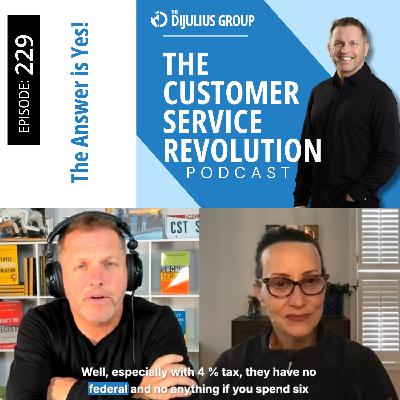
Summary In this episode of the Customer Service Revolution podcast, Denise Thompson and John DeJulius discuss the importance of fostering a 'yes' culture in customer service. They explore how the word 'no' can negatively impact customer interactions and emphasize the need for employees to focus on what they can do to assist customers. Through engaging anecdotes, including the milkshake metaphor from Cameron Mitchell restaurants, they illustrate how empowering employees to say 'yes' can enhance customer satisfaction and loyalty. The conversation also touches on the role of leadership in creating an environment where employees feel confident to say 'yes' and the potential of AI in improving customer service experiences. Takeaways: The word 'no' should be eliminated from customer service interactions. Empowering employees to say 'yes' enhances customer satisfaction. A positive mindset is crucial for effective customer service. Leaders must create a culture that supports employee autonomy. Understanding customer needs is key to providing excellent service. Training employees to focus on solutions rather than problems is essential. The milkshake metaphor illustrates the importance of a 'yes' culture. Regularly auditing policies can help identify areas for improvement. AI can streamline customer service but should not replace human interaction. Storytelling is a powerful tool in reinforcing company culture. Chapters: 00:00Welcome and Introduction 02:13The Power of 'Yes' in Customer Service 08:10The Milkshake Metaphor 16:23Empowering Employees to Say 'Yes' 19:58Creating a 'Yes' Culture 26:38The Importance of Customer Experience 34:02Final Thoughts and Takeaways Links: HBR Article, Stop Trying to Delight Your Customer: https://hbr.org/2010/07/stop-trying-to-delight-your-customers Schedule a Complimentary Call with one of our advisors: tdg.click/claudia Ask John! Submit your questions for John, to be aired on future episode: tdg.click/ask Customer Experience Executive Academy: https://thedijuliusgroup.com/project/cx-executive-academy/ The DiJulius Group Methdology: https://thedijuliusgroup.com/x-commandment-methodology/ Experience Revolution Membership: https://thedijuliusgroup.com/membership/ Books: https://thedijuliusgroup.com/shop/ Blogs on Above and Beyond Culture: https://thedijuliusgroup.com/category/above-beyond-culture/ Contacts: Lindsey@thedijuliusgroup.com , Claudia@thedijuliusgroup.com

Summary: In this episode of the Customer Service Revolution podcast, Denise Thompson and Dave Murray discuss the critical importance of customer experience consulting across various industries. They explore how systems and structures can enhance customer interactions, the significance of internal communication, and the need for organizations to recognize their role in the customer experience. The conversation highlights successful client transformations, the impact of silos, and the essential link between employee and customer experiences. They also provide actionable insights for leaders looking to improve their organizations and ensure lasting change after consulting engagements. Takeaways: Customer experience consulting is essential for all industries. World-class service requires structured systems, not just slogans. Internal communication gaps often erode customer experience. Every employee has a role in the customer experience. Transformations can turn customer service initiatives into cultural norms. Silos within organizations can negatively impact customer engagement. Identifying internal issues is crucial for improving customer experience. Leaders must support their teams to enhance customer service. Small changes can lead to significant improvements in customer interactions. Measuring ROI is vital for understanding the impact of customer experience initiatives. Chapters: 00:00 Transforming Customer Experience Across Industries 01:05 The Importance of Systems in Customer Experience 05:56 Identifying Internal Barriers to Customer Experience 09:04 Tailoring Consulting for Diverse Industries 11:17 Client Transformations: Success Stories 15:56 Bridging the Gap Between Operations and Customer Experience 18:07 Signs Your Organization Needs Consulting Engagement 22:35 The Importance of Internal Culture 26:03 Empowering Middle Managers 27:30 Ownership of Customer Experience 29:48 The Role of Niceties in Communication 31:53 Supporting Employee Success 33:03 Ensuring Lasting Change After Consulting 36:09 Measuring ROI in Customer Experience 42:23 Scaling Without Losing Your Service Soul Links: Dave's Podcast with AlpinHaus: https://thedijuliusgroup.com/csr-221/ Schedule a Complimentary Call with one of our advisors: tdg.click/claudia Ask John! Submit your questions for John, to be aired on future episode: tdg.click/ask Customer Experience Executive Academy: https://thedijuliusgroup.com/project/cx-executive-academy/ The DiJulius Group Methdology: https://thedijuliusgroup.com/x-commandment-methodology/ Experience Revolution Membership: https://thedijuliusgroup.com/membership/ Books: https://thedijuliusgroup.com/shop/ Blogs on Above and Beyond Culture: https://thedijuliusgroup.com/category/above-beyond-culture/ Contacts: Lindsey@thedijuliusgroup.com , Claudia@thedijuliusgroup.com Subscribe We talk about topics like this each week; be sure to subscribe wherever you listen to podcasts so you don't miss an episode.

Comments

Download from Google Play

Download from App Store
 United States