


 Claim Ownership
SA Voices From the Field
Subscribed: 36Played: 2,073
Subscribe

© 2024
Description
SA Voices from the Field shares the voices and stories from student affairs professionals from around the world. This podcast provides you with practical advice to help you be the best student affairs practitioner you can be, no matter where you are in your career.
254 Episodes
Reverse
How do public policies shape the work of student affairs professionals in higher education? This week on NASPA's Student Affairs Voices from the Field podcast, we explore just that. This week host Dr. Jill Creighton is joined by two seasoned experts: Diana Ali, Director of Policy Research and Advocacy at NASPA, and Dr. James Tyger, Assistant Vice President for Student Life at the University of Florida and Chair of NASPA's Public Policy Division. This episode dives deep into the complex regulatory and legislative landscape affecting campuses today. Throughout the conversation, Diana and Dr. James Tyger illuminate why public policy should matter—not just for policy "nerds," but for every student affairs professional. Policy changes at state and federal levels often create a ripple effect, touching everything from compliance to student success initiatives. No matter your role, these shifts impact your work and the students you serve. Key themes in the episode include: Major Policy Shifts: The guests detail dramatic changes in the Department of Education, including workforce reductions, agency restructuring, and the transfer of $33 billion in programs to other government agencies. These developments raise concerns about capacity and continuity in supporting states and institutions. Guidance and Compliance: With new Title VI and Title IX guidance, institutions must navigate both federal directives and state laws, especially regarding DEI and free speech. The episode tackles the resulting confusion and litigation, urging professionals to understand the difference between enforceable legal requirements and advisory guidance. The Value of Staying Informed: Listeners learn about the rich resources provided by NASPA's Public Policy Division, like the Policy Resource Hub, real-time legislative tracking, and regular webinars—tools designed to empower professionals to stay current and make informed choices. The hosts stress that while change can be daunting, student affairs remains crucial to supporting students and fostering vibrant campus communities. The takeaway? Tune in to this episode for practical advice on adapting to policy changes, sharing your impact, and remaining grounded in your mission—even as the regulatory landscape evolves. Whether you're navigating new DEI laws, Title IX updates, or simply want to be more proactive in your advocacy, this episode provides clarity, actionable strategies, and a renewed sense of purpose. Click play and join the conversation—your students' success depends on it! TRANSCRIPT Dr. Jill Creighton [00:00:02]: Welcome to Student Affairs Voices from the Field, the podcast where we share your student affairs stories from fresh perspectives to seasoned experts brought to you by naspa. We curate free and accessible professional development for higher ed pros wherever you happen to be. This is season 13 on the value of student affairs. I'm Dr. Jill Creighton. She her hers your essay voices from the Field host Today on Essay Voices, we're bringing you a public policy conversation with two of our leaders from the Public Policy Division here at naspa. Our first guest is Diana Ali, who is currently the Director of Policy Research and Advocacy at naspa. Diana provides timely analysis of emerging policy issues at state and federal levels, creates tools for student affairs professionals to understand and respond to these issues, and organizes and supports NASPA advocacy and civic engagement efforts. Dr. Jill Creighton [00:00:52]: Since moving to the area, Diana has been a non profit advocate and is currently a mental health group facility in the Chicagoland community. She served as an AmeriCorps volunteer for two years and graduated with a Master's in Social Work and a Master's in Public Policy from the University of Chicago. Our Second guest is Dr. James Tyger, JD, who is the Assistant Vice President for Student Life at the University of Florida. With over 10 years of experience in Student Affairs, James is passionate about creating inclusive and supportive campus communities that empower students to thrive. Currently serving in the AVP role for Student Life at uf, James oversees the Student Engagement Team made up of the Offices of Campus Engagement, Community and Belonging, Sorority and Fraternity Life, and Student Legal Services. He's a proud double gator, having earned both a Ph.D. in higher education administration and a J.D. Dr. Jill Creighton [00:01:37]: from the University of Florida Levin College of Law. He also holds a Master of Education from Vanderbilt University and a Bachelor of Science in Human Resources Management from Virginia Tech. In addition to his role at uf, James is currently the Director for the Public Policy Division here at naspa, as well as serving on the Virginia Tech Student Affairs Advisory Council. Welcome to the podcast, James. Dr. James Tyger [00:01:58]: How are we doing? Dr. Jill Creighton [00:01:58]: And hello Diana. Glad to have you. Diana Ali [00:02:00]: Hey everyone. Happy to be here. Dr. Jill Creighton [00:02:02]: This is our Public Policy episode as we're talking about the value of student affairs. We thought it was really important to continue to include that policy perspective in the student affairs conversation because there's so many shifts happening right now. We've done a specialty episode earlier this season on the OB3 impacts on federal financial aid for undergraduate and graduate students, but today I'm excited to bring you our current Chair of the NASPA Public Policy Division as well as our Director of Policy Advocacy and Research so that we can have a more broad based discussion about what's going on in the policy world affecting U.S. american higher education, and possibly by extension, other higher education industries across the world. So before we get into all of that though, we love to ask the question, how did you get to your current seat? Dr. James Tyger [00:02:51]: Great question. Thanks for asking. I actually had an opportunity to get involved with NASPA Region 3. And so for over four years, I served as the Region 3 representative on the Public Policy Division and Region 3, of course, across the Southeast. So a lot of areas to reflect on in the public policy space. So really enjoyed that opportunity and to get to know folks and then eventually had the ability to move up and be the chair for the Public Policy Division for all of naspa. Diana Ali [00:03:17]: Yeah, and I got a role at Naspa going on 10 years ago now when I was coming right out of grad school and I really wanted to get involved in the world of higher education. I hadn't worked in that landscape before. My background was more in community based work. But it was really interesting to me because the world of student affairs, I think combines issues related to social work, which is a background that I have, and also issues related to student success and wellbeing, which are both important to me. So ever since I've kind of like grown within the organization. NASPA is a really great organization for being able to like, pursue your interests and do what you like. And so my portfolio has really grown since I started. Dr. Jill Creighton [00:04:02]: Both of you have been involved with the Public Policy Division for many, many years now. That's how we all connected in the first place. And I'd love for you all to be able to share with our NASPA listeners, what is the difference between a division and a knowledge community? And what is the PPD all about? Diana Ali [00:04:18]: So the difference between our divisions and our knowledge communities. And this has changed over the years, but one of the key differences is that our division chairs, that's James, has a seat on our NASPA board. So James has a say at our spring and winter board meetings. And that's a really important role. The caseies are obviously really important as well, but since we have so many of them, these are knowledge communities. So like subject matter experts in a certain area have much broader lens of what's going on within the association. And so there aren't a ton of differences between these groups. But I would say that representation on the board is a big one. Diana Ali [00:05:07]: Though the Casey's do have representation on the board as well, just not every Casey director is represented. Dr. James Tyger [00:05:14]: Yeah, and I think what I would Add to that, I think if we I had the opportunity to be the student government knowledge community co chair a few years back, and I think each of the knowledge communities have such a great opportunity to help build community. But when I think about the role of a division, it's more broad across the association, as opposed to many of our knowledge communities provide again, very specific communities, goals and different things that we're advocating for within the association. And so I think for the Public Policy Division more broadly, it's thinking through the entire state of our public policy arena. And so when we talk about what the PPD does, you know, we have representatives from each of the regions. We have, you know, folks that are both at large and also focused on, you know, let's say faculty or our small colleges as well, and thinking through the different impacts of policy across each of those areas. And so at some of the things that we're doing that I will share, you know, we're hoping to see folks at the annual conference. We'll have some different programmatic pieces, whether it be our town hall, our sponsors, sessions, opportunities just to get involved and hear more about what's going on across again, the state of higher education within the US and international. Dr. Jill Creighton [00:06:15]: So policy precon coming up, too. Dr. James Tyger [00:06:17]: Yes. Dr. Jill Creighton [00:06:17]: All right, so let's dig into it. When we think about the Public Policy Division, what are we focusing on right now on behalf of NASPA members? Dr. James Tyger [
On the latest episode of Student Affairs Voices from the Field, Dr. Jill Creighton sits down with Dr. Joshua Moon-Johnson, the trailblazing President of Connecticut State Community College (Manchester, Middlesex, and Asnuntuck), for an inspiring conversation that's sure to resonate with higher education professionals everywhere. From Student Affairs to the Presidency Dr. Joshua Moon-Johnson shares an authentic, winding journey to leadership that began much like many in student affairs: as an "overly involved" undergraduate seeking belonging. Coming from a multiracial, first-generation background, student affairs became a hub for discovery, community, and professional love—and ultimately, a lifelong calling. What's striking is Dr. Joshua Moon-Johnson's deep commitment to social justice, equity, and access, themes that have been woven throughout his career—across four-year research universities and community colleges alike. Why Community Colleges Matter A central theme is the vital, often under-recognized, role of community colleges. Dr. Joshua Moon-Johnson highlights their generational impact: "We're not just transforming one life, but generations to come." Community colleges are bastions of second chances—for veterans, ESL learners, first-generation students, parents, and non-traditional learners. The conversation delves into how these institutions can be life-changing, especially for historically marginalized populations. Student Affairs: The Essential Connector If you've ever grappled with explaining the value of student affairs, this is the episode for you. Dr. Joshua Moon-Johnson argues the core value lies in fostering a sense of belonging—for both students and staff. Especially at community colleges, student affairs professionals often play generalist roles, bridging academics, crisis response, and holistic support with compassion and ingenuity. The episode explores the complexities presidents face, balancing limited resources, compliance obligations, and the profound desire to advocate for students' needs. Listeners gain rare insights into how institutional leaders make tough decisions, and how student affairs voices can drive real change. Advocacy, Research, and Representation A significant part of the episode covers Dr. Joshua Moon-Johnson's research and writing around marginalized identities. His work brings visibility to queer and trans students, students of color—and pushes for actionable change in the face of societal headwinds. Why Listen? Whether you're an aspiring leader, a student affairs professional, or someone passionate about equity in education, this episode offers valuable wisdom, empathy, and actionable advice. Hear first-hand how Dr. Joshua Moon-Johnson blends identity, experience, and advocacy to shape the future of higher ed. Tune in and be inspired—your student affairs journey will thank you! TRANSCRIPT Dr. Jill Creighton [00:00:02]: Welcome to Student Affairs Voices from the Field, the podcast where we share your student affairs stories from fresh perspectives to seasoned experts brought to you by naspa. We curate free and accessible professional development for higher ed pros wherever you happen to be. This is season 13 on the value of student affairs. I'm Dr. Jill Creighton, she her hers your Essay Voices from the Field host here on Essay Voices. It's always such a pleasure for us to welcome anyone who's serving in a college or university president role, especially when they've come up through student affairs pathways. So today it's our Honor to welcome Dr. Joshua Moon-Johnson Johnson, he or they who is a seasoned educational administrator, best selling author, social justice educator and advocate who has dedicated his career and life to education reform, LGBTQ advocacy, economic justice and racial justice. Dr. Jill Creighton [00:00:50]: Joshua serves as the President at Connecticut State Community College, Manchester, Middlesex and Asnuntuck. He previously served as Provost in and Vice President of Academic affairs at West Valley College, Vice President of Student Services at the College of San Mateo, Dean of Equity and Student Services at American River College, Assistant Dean and Director of the Multicultural center at the University of Wisconsin, Madison, and the Director of the LGBTQ Student center and Women's center at the University of California, Santa Barbara. He's also served in adjunct faculty roles at Binghamton University, the University of Wisconsin Madison, Semester at sea, CSU Long Beach, San Diego State University, USC and Concordia University, Portland. His social justice work has led him to become a best selling author with his book Be Beyond Surviving From Religious Oppression to Queer Activism, which was also ranked as number three on Book Authority's 20 Best Selling LGBTQ Activism Books of All Time. Joshua also published Authentic Leadership, Queer People of Color in Higher Education, and Queer Trans Advocacy in the Community College. Joshua received a doctoral degree in Adult and Higher Education and LGBT Studies from Northern Illinois University, a Master's in Social Sciences focused on student affairs and Diversity from Binghamton University, a Master's in Marketing from the University of Alabama, and a Bachelor's in Business from the University of Alabama. Joshua served on the Board of Directors for the association of California Community College Administrators, or acca, and was the founding Chair of the Equity and Social Justice Committee. Joshua previously served as the VP for the Board of the Sacramento LGBT Center. Dr. Jill Creighton [00:02:16]: NASPA has been a special place for Joshua and he previously served as the Chair of the Multiracial Knowledge Community, a Regional Representative for the Asian Pacific Islander Knowledge Community, Member at large for the International Education Knowledge Community, and as an Editor for the Journal of College and Character, and if you'd like to learn more about Joshua you, you can find their website@joshuaMoon-Johnsonjohnson.com Joshua welcome to Essay Voices. Dr. Joshua Moon-Johnson [00:02:38]: So happy to be here, Jill. Thanks for having me. Dr. Jill Creighton [00:02:41]: It's a rare treat that we get to have a president on the show, especially a president who's come through the pathways of student affairs like your journey has taken you. And we love to always start our episodes by asking our guests, how did you get to your current seat? Dr. Joshua Moon-Johnson [00:02:54]: I don't even know if I ever thought, oh, I want to be a college president or anything like that. I started out as one of those, of course, like overly involved young student affairs students who kind of never, never left. I think, you know, for me, as a first one in my family to go off to university, I was terrified. And the thing that I do when I'm terrified, I overly prepare. And part of that was doing everything I could on campus because I was so afraid I wouldn't know what to do or how to get along. And finding social spaces within student affairs clubs and employment and extracurriculars and leadership really helped me find who I was and find purpose and help other young students. And then that kind of continued. And so most of my career has been in student affairs and higher education. Dr. Joshua Moon-Johnson [00:03:37]: I took a one year gap and worked in fashion marketing and quickly thought, hmm, I think higher ed's for me. And I spent probably the first almost 15 years at large, mostly research one universities, and then made the pivot to community college as that aligned a little bit easier for me to do equity social justice work in the ways that were meaningful to me and with larger populations who are more likely to be at a community college than a highly selective universities. I made that pivot, I think it was about eight years ago now and have had the opportunity to do a couple of student affairs like a dean of student services and equity and then a vice president of student affairs. And then I got pulled over to the provost side and was able to kind of dig a little deeper into academic affairs and this opportunity came up where I get to lead three community college campuses in Connecticut. I'm four months in and so far it's everything I hoped it would be. So it's been exciting so far. Dr. Jill Creighton [00:04:32]: Well, that's incredible to be a new president as well, coming out from the idea space as well as from the student affairs space. Joshua, you mentioned that community college has really spoke to you and your mission in terms of the students you could serve and the impact that you could have. What's different in that community college space from that highly selective four year. That really drew you that way. Dr. Joshua Moon-Johnson [00:04:51]: Yeah. I mean, and I'm not sure I don't know your background, Jill, like, if you ever did anything with community college. But I did not in most ways. So my family, I'm the youngest of five kids. My dad's the white military veteran. My mom's an immigrant from South Korea. And I never really realized it, but in some way, everybody in my family engaged in community college at Mississippi Gulf Coast Community College on the, you know, Gulfport, Biloxi, Mississippi. My dad as a veteran coming back in the early 70s. Dr. Joshua Moon-Johnson [00:05:21]: My mom is an ESL student. And then each of my siblings went to community college. First for me as the youngest, I went off to a university, but I kept. Went back for summers and did community college to save money that I'd work all summer and pay off my tuition in that way too, because I was pretty much on Pell grants, scholarships, full financial aid, and trying to find ways to save money as much as possible. But I never really thought about college as a career after that. I really loved being at a university and specifically the identity development part of being in a kind of core student affairs and how they develop young folks.

Dr. Jill Creighton and Dr. Christopher Lewis talk about the past season and the holidays as they prepare for a short break and then the end of Season 13. TRANSCRIPT Dr. Jill Creighton [00:00:02]: Welcome to Student Affairs Voices from the Field, the podcast where we share your student affairs stories from fresh perspectives to seasoned experts brought to you by naspa. We curate free and accessible professional development for higher ed pros wherever you happen to be. This is season 13 on the value of student affairs. I'm Dr. Jill Creighton. She her hers Your essay Voices from the Field Host. Dr. Jill Creighton [00:00:27]: Happy end of 2025. Dr. Christopher Lewis [00:00:28]: Chris Happy end of 2025. It's been a great 2025 thus far. I know we've got a maybe another week or so left in it. We'll see what happens over the next week. But happy holidays to you and your family and friends. Dr. Jill Creighton [00:00:41]: And to yours as well. I hope everyone in Michigan is doing well in the snow and staying warm. It's just a much colder climate than I've ever lived in, so I know you must have the best coats. Dr. Christopher Lewis [00:00:52]: We do have good coats, but I will say I have been to London at New Year's and dang cold. So though you may not have the snow, you definitely have the cold weather. Dr. Jill Creighton [00:01:02]: Oh my gosh, I'm freezing here all the time because it's so humid even when it's really cold. But we hope that everyone is enjoying a calm holiday season with your loved ones. This year we're going to do something a little bit different with the break in the past. We've been done with our fall season, but we wanted to make sure that we are bringing you continual episodes as best we can. So instead we're gonna take the next two weeks off. So we won't drop one on Christmas Day, we won't drop one on New Year's Day, but our last two episodes will come out the following two Thursdays in January, and then we'll take our break between seasons at the end of January with hopes that we're bringing you our next season in early February. Dr. Christopher Lewis [00:01:42]: Looking forward to coming back. We got these final episodes are really powerful ones, so I really encourage you to take a listen once they come back. It'll be a great way to start the new year. Dr. Jill Creighton [00:01:52]: And one of our lovely guests will be a current college president who came up through Student affairs, which I always think is a fantastic story for us to learn from and kind of hear the perspectives on higher education from various places in people's careers. The other episode coming your way is all about public policy and higher education. We know that this has been a super funky two years of policy shifts and we're going to be bringing on our incredible chair of the Public Policy division, James Tiger and Diana Ali, who works with NASPA in Public Policy Perspectives. So look forward to those two drops coming in January. In the meantime, we wish you and yours a very warm and renewing break and start to your 26. We'll see you next year. Dr. Jill Creighton [00:02:41]: This has been an episode of Essay Voices from the Field brought to you by naspa. This show is made possible because of you, the listeners. We continue to be so grateful that you choose to spend your time with us. If you'd like to reach the show, you can email us@savoicesaspa.org or find me on LinkedIn by searching for Dr. Jill L. Creighton. We welcome your feedback and your topic and guest suggestions always. We'd love it if you take a moment to tell a colleague about the show and leave us a five star review on Apple Podcasts, Spotify or wherever you're listening now. Dr. Jill Creighton [00:03:11]: It really does help other student affairs professionals find the show and helps us to become more visible in the larger podcasting community. This episode was produced and hosted by Dr. Jill Creighton. That's me, produced and audio engineered by Dr. Chris Lewis. Special thanks to the University of Michigan, Flint for your support as we create this project. Catch you next time.
The latest episode of "Student Affairs Voices from the Field," hosted by Dr. Jill Creighton, delves into the complex and evolving landscape of international education, featuring the perspectives and expertise of Dr. Zachariah Mathew, Senior International Officer at the University of Michigan-Flint. From the outset, listeners are treated to Dr. Zachariah Mathew's personal journey—a career that began as a physical education teacher in India, transitioned into higher education in the United States, and flourished with a research focus on international student college choice. His story reflects how diverse experiences and a global outlook can enrich student affairs and the field of higher education. One of the central themes is the motivation and decision-making process behind international students studying abroad. Dr. Zachariah Mathew identifies three drivers: economic and social mobility, the pursuit of knowledge and professional impact, and the prestige associated with international degrees. However, as global immigration policies shift and uncertainties around regulations grow, students and their families are increasingly risk-averse—reconsidering where and how they invest in their education. The conversation explores how universities often view international students through an economic lens, sometimes seeing them as "cash cows" rather than valuable contributors to campus culture. Dr. Zachariah Mathew urges institutions to define the true purpose of internationalization, moving beyond financial incentives to prioritize perspective-building, idea-sharing, and the cultivation of global competencies. The podcast offers valuable strategies for supporting international students and fostering a truly global learning environment. Best practices include intentional integration of international and domestic students, articulating clear institutional goals for internationalization, investing in well-resourced support centers, and scaffolding opportunities for cross-cultural engagement both inside and outside the classroom. Dr. Zachariah Mathew emphasizes the importance of intentionality—creating spaces where all voices are heard, identities are recognized, and learning outcomes span both academic and personal growth. This episode also examines the vital role of student affairs in transforming academic degrees into holistic educational experiences. Drawing on the philosophy of Ubuntu—"I am because we are"—the conversation calls for greater collaboration between student affairs and academic departments, and for institutions to nurture students' adaptability, curiosity, and sense of belonging. If you're eager to understand the challenges, opportunities, and responsibilities at the intersection of international education and student affairs, this episode is a must-listen. Tune in, and gain fresh insight from voices shaping the future of higher education. TRANSCRIPT Dr. Jill Creighton [00:00:02]: Welcome to Student Affairs Voices from the Field, the podcast where we share your student affairs stories from fresh perspectives to seasoned experts brought to you by naspa. We curate free and accessible professional development for higher ed pros wherever you happen to be. This is season 13 on the value of student affairs. I'm Dr. Jill Creighton. She her hers your essay Voices from the Field host. Dr. Jill Creighton [00:00:27]: Zachariah welcome to Student Affairs Voices from the Field. Dr. Zachariah Mathew [00:00:30]: Jill thank you very much for having me. It's truly an honor and that you consider me worthy of this opportunity. So thank you very much for having me. Dr. Jill Creighton [00:00:37]: We're looking forward to learning more about your expertise in the international education space. And you have an incredible journey that has brought you to your current seat in international education, weaving through different parts of higher education administration and also through the world. So we'd love to know if you could tell us, how did you get to your current seat? Dr. Zachariah Mathew [00:00:55]: Absolutely. It's in the process started somewhere. Today I'm here. God knows where I'll be tomorrow. So I started off as a physical education teacher in India, teaching at some prestigious institutions in Bangalore. And when I started my career I realized that I wanted to do more. And that also meant that I had to kind of not be where I was, but go up so that I can be in a decision making place. And at some point, almost seven years into my teaching career, I realized that I did not know enough to do any of these things. Dr. Zachariah Mathew [00:01:28]: So I decided to pursue my higher education in sports science and sports management. And this was in India at the time, sports was not an advanced field of study. So I chose to come to the United States. I did my master's in sports management. And the experience as an international student, it was the first time I really looked back into cultural vibrance or cultural competency or global competency. Because while we in India we spoke five or six languages and nobody cared. Everybody does. We eat all kinds of foods and we understood other cultures. Dr. Zachariah Mathew [00:02:04]: So you never thought about it. But it's only when I came to us I really realized the dynamics of those cultural diversity and perspective. But it was within me. I was thinking about it. I was very active as an international student. I was not a traditional student. I was almost 26 years old when I came here. This is about 25 years ago. Dr. Zachariah Mathew [00:02:20]: And that was kind of bubbling in me. I was very engaged with faculty, administrators, seniors to gain their perspective and also very engaged with the student affairs because I was doing my master's in sports management. And then I started working for State University of New York at small community college within that space. And in 2009 I decided to quit my job, go back to school to do my PhD in higher education leadership and Administration at Indiana State University from where I already had my Master's and I specialized in international student affairs there. So my dissertation was on international students college choice. While I was there, while I started, the position position opened up as one of the international student advisor position or the engagement specialist position. It was an associate director position and I was fortunate to have that position. So it started off as engaging the students and looking at it through the student development theories and to see how we can develop the student and bring a holistic education into the student. Dr. Zachariah Mathew [00:03:21]: You know, not just international students, but broadly all how to provide the domestic students this perspective. And that started in 2011, 2025. I'm here at the University of Michigan Flint as the Director and Senior International Officer. Dr. Jill Creighton [00:03:36]: That's quite a journey. And I love hearing people's student affairs and higher education journeys as they weave through different parts of education. As we've talked about many times on this show, no one grows up saying I want to be a student affairs professional. And so taking that skill set that you built in sports management, sports science and translating it into an international education career is a really great representation I of how we get into this field and move through it. Zachariah, you mentioned that you have experiences looking at international student choice through research. And I know that research is a little bit older now, but can you tell us what we knew then about international student choice in terms of where they're going to school and what that looks like presently? Because we know that that has shifted a little bit. Dr. Zachariah Mathew [00:04:17]: So the students choose to study abroad primarily for under three different categories. That is a college choice. So where they go is comes after why they choose to study abro abroad or stay at home. So one aspect is and most every decision has some element of all the three, but predominantly one is economic decision or social mobility. So they make this decision for social mobility or economic prosperity. So it is a one time investment. Students really take this opportunity to invest in quality education so that not only them but the coming generation can have better economic prosperity and social mobility, which is really correlated. And then there is the psychometric which is about having this opportunity to gain the knowledge and to have higher impact within the field of what they do. Dr. Zachariah Mathew [00:05:05]: And the third one is social. Social is also to aspect is to be able to say where they go and the social prestige that comes with it. So it could be a country it could be a university within the country and it goes on. So these are the major areas and where they go depends on a combination of all these three. So for example, if somebody can afford to go to a private university in the US where there is quality education, they might choose if they have the capacity to withstand the academic rigor and can pay for it. Whereas if somebody does not have the capacity to pay, they might not choose us, but might choose a country where the education is not as expensive as it is in the US So it is a balancing of all these three that really comes in and says, okay, this is where we are going to go. So one might choose United States States, but they might choose a university that might not be expensive because it is an economic decision that they're making because they do not have the capacity to invest where there might be other situation where it's fully funded. So a student who is looking at it through the social aspect could say, you know what, I'm going to go to the prestigious university where I can get accepted into because I don't have to worry about the pay. Dr. Zachariah Mathew [00:06:16]: And also then the, I mean
Student Affairs professionals often serve as the heartbeat of a college campus, shaping transformative experiences for students at every stage of their educational journey. In the latest episode of Student Affairs Voices from the Field, host Dr. Jill Creighton is joined by Colleen Maeder, Director of Student Services at Miracosta College's San Elijo campus. Together, they deliver an insightful discussion on the unique value of student affairs—especially within community colleges. This episode masterfully details Colleen Maeder's multifaceted career spanning both two-year and four-year institutions, public and private, on both coasts. Dr. Jill Creighton highlights how Colleen's trajectory allows her to offer a "bird's eye view" of why student affairs work truly matters. One major theme centers on the personalized and community-focused approach at community colleges. Colleen Maeder emphasizes that student affairs at these institutions must deeply reflect the local community's needs—whether serving traditional-aged students, adult learners stepping back into education, seniors, or those facing significant basic needs challenges such as food or housing insecurity. "Everything we do should be a reflection of the community that we are in," she explains, illustrating the importance of adaptability and empathy. Another critical topic is the evolving role of technology, specifically Artificial Intelligence. Both Colleen Maeder and Dr. Jill Creighton recognize AI's double-edged potential: while it evokes new concerns about academic integrity, it also offers opportunities for innovation in supporting and reaching students. Despite challenges, the human element of care and personal connection remains irreplaceable. Building trust and fostering belonging remains at the core. Many community college students have faced systems that let them down, making it vital for student affairs professionals to be truly present. Colleen Maeder discusses the imperative for in-person support, consistent follow-through, and programming tailored to diverse populations and needs. The episode also addresses a persistent challenge: effectively communicating the value of student affairs. Too often, student affairs professionals are "really, really bad at this," Colleen admits. She calls for improved storytelling—sharing real, transformative moments and personalized successes—to enhance understanding both within and outside higher education. If you're searching for inspiration, practical insights, and a celebration of the deeply human work at the heart of student affairs, this episode is a must-listen. Tune in to hear firsthand stories and advice from passionate professionals who are shaping the future of higher education—one student at a time. TRANSCRIPT Dr. Jill Creighton [00:00:02]: Welcome to Student Affairs Voices from the Field, the podcast where we share your student affairs stories from fresh perspectives to seasoned experts brought to you by naspa. We curate free and accessible professional development for higher ed pros wherever you happen to be. This is season 13 on the value of student affairs. I'm Dr. Jill Creighton. She her hers your Essay Voices from the Field host. Dr. Jill Creighton [00:00:27]: Today on SA Voices, we're welcoming Colleen Maeder. Colleen earned her Bachelor of Arts in Sociology from Lemoyne College and a Master of Science in Community Counseling from Syracuse University. Her journey in higher education began as a resident Director at Binghamton University and the College of New Jersey. She later discovered her passion for community colleges while serving in the conduct office at Kingsborough Community College in New York City. Colleen transitioned to the private sector at New York University, where she advanced to Associate Director for Student Conduct and Restorative programs, focusing on Title IX conflict resolution and restorative practices. Her career then took her to the west coast where she served as Associate Director for Student Wellbeing at Santa Clara University, supporting non clinical mental health and basic needs. Today, Colleen is the Director of Student Services at Miracosta College's San Elijo campus and Deputy Title IX Coordinator. Her portfolio includes student life and leadership, student government conduct, Title IX behavioral intervention, and basic needs support. Dr. Jill Creighton [00:01:19]: Outside of work, Colleen enjoys yoga, running, hiking, and traveling with her partner. Colleen, welcome to Essay Voices. Colleen Maeder [00:01:26]: Thank you so much for having me today, Jill. Dr. Jill Creighton [00:01:28]: It is just such a pleasure to have you on the show. For our Essay Voices listeners. I used to host a different podcast for another professional association, and Colleen was our audio engineer and co producer on that show. She and I pretty much had no idea what we were doing when we started it, and by the time we were finished, we had produced 45 episodes. That was an oral history of that corner of the profession. And so it's really lovely to be reunited with you in podcast land. Colleen Maeder [00:01:51]: I am thrilled to be here and I can't believe we did. So you said 45 episodes? Dr. Jill Creighton [00:01:54]: Something like that? Yeah, about 45. Colleen Maeder [00:01:56]: That is an insane amount of episodes. But it was an awesome experience to do and learn something I never tried before. Dr. Jill Creighton [00:02:01]: And even though Colleen has spent so many hours behind the scenes doing editing, this is her first time in front of the mic. So we're glad to have your voice included in the story of the student affairs profession. And we always like to get to know our guests first by asking you, how did you get to your current seat? Colleen Maeder [00:02:17]: Absolutely. So I think I started as mosted where I was a resident assistant in undergrad for my junior and senior year and didn't quite know what I wanted to do. So I decided to go to grad school, which was the common thing back then. And I got my master's in counseling and was unlucky to graduate right in 08 during the crash that took place and decided to work in res life because that's what I knew, that's what I liked, that's where I felt at home. So I became a residence director at Binghamton University. I had the experience of overseeing a residence hall that was a break housing building. So it was open all year, it never shut down. And the main students that it held were international students and student athletes. Colleen Maeder [00:02:58]: So very unique combination of students there to manage in a residence hall and living together in suites. From there I went to the College of New Jersey, which is a public school, four year school in New Jersey, of course, where I was a resident instructor for several different buildings there. Absolutely loved it and had a phenomenal experience working with our Office of Student Conduct and was really able to start with the assistant director at the time, Elizabeth Gallus Mediation Program, and just kind of fell in love with that world, fell in love with student and how do we become educational? How do we resolve conflict without getting to student conduct? And from there that led me to my first experience outside of residential life, which was at Kingsborough Community College where I was a student conduct officer. Really unique, normal title, Student conduct officer. You don't hear that a lot. And it was this community college in Brooklyn. The claim to fame that I used to tell people was we had a beach on campus, loved it there, did a lot of work, really, really enjoyed the community college experience, which we'll get back to where I am right now. But from there I switched and went to nyu, so New York University, right in the heart of New York, and worked in their student conduct office where I met you. Colleen Maeder [00:04:09]: I mean, we started the podcast and really was there all the way through Covid 2021. Loved the experience and I was in the student conduct office, but I focused heavily in the world of Title nine. I did a lot of work with our Office of Equal Opportunity, oversaw hearings, started a conflict resolution process, did a lot of conflict resolution training. So a very unique position in the world of student conduct that I haven't seen many other place. Loved NYU but really wanted to get out of New York City after Covid. So in 2021 I had the opportunity to work at Santa Clara University, which is up in the Bay Area south of San Francisco as the Associate Director for Student Wellbeing in the Dean of Students office. And it was non clinical mental health. Absolutely. Colleen Maeder [00:04:51]: Loved it. It was a bucket list item for me to work at a Jesuit school. Cause I went to a Jesuit undergrad and I was lucky enough to meet my partner in the Bay Area who was transferred down to San Diego, which is how I got to Miracosta. Currently the Director of Student Services at our San Leo campus and I'm also a deputy Title IX coordinator here. Dr. Jill Creighton [00:05:10]: One of the things I love about your experience is that I think you're one of the few in the profession that have transitioned from a two year institution to a four year institution, to a two year to a four year and back to a two year. And you've also worked at both public and private institutions. So you've got this incredible diversity of experience in student affairs, which gives you kind of a bird's eye view in a unique way of why student affairs matters and why it has mattered over time. So this season we're focusing on the value of student affairs and I'm wondering if we can hone in a bit on your community college experience. And can you talk to us about what you can say about the community college experience as a professional compared to your experiences at four years? Colleen Maeder [00:05:51]: Absolutely. And I have been lucky enough to work at two different community college experiences. In
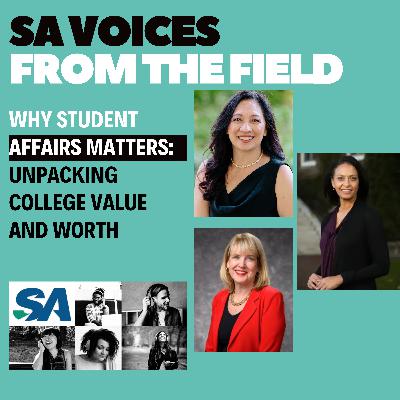
If you've ever wondered about the real impact of student affairs in higher education—or if you're searching for compelling ways to articulate its value—this episode of "Student Affairs Voices from the Field" is a must-listen. Host Dr. Jill Creighton brings together three leading voices in our field—Dr. Anna Gonzalez, Dr. Lori Reesor, and Dr. Michele Murray—to discuss NASPA's groundbreaking report, The Human Dimension of College: Why Student Affairs Matters. More than ever, higher education is under scrutiny. Public questions about its worth, declining college-going rates, and increasing skepticism about return-on-investment are creating intense pressure. Against this backdrop, Dr. Anna Gonzalez explains, this report began as a "bold" effort to clarify—and elevate—the unique contributions of student affairs to both the value (market-based outcomes) and worth (intrinsic and societal benefits) of the collegiate experience. The conversation quickly gets to the heart of what makes student affairs essential. As Dr. Michele Murray points out, college isn't just about earning a degree or improving one's economic prospects; it's a profound period of personal and civic development. The panel identifies seven core dimensions where student affairs "animates" both the value and worth of higher education: career and academic development, civic engagement, access, health and well-being, leadership, innovation, and personal growth. Listeners will appreciate how candidly Dr. Lori Reesor and Dr. Michele Murray share their own personal journeys and the collaborative process behind the report. They emphasize the vital but often "invisible" work of student affairs—preventing crises, fostering dialogue, and guiding students through transformative moments. They also celebrate the report's new toolkit, which is designed to help professionals tell their story better to external audiences—presidents, trustees, legislators, families, and beyond. As the discussion closes, the call to action is clear: the time has come to showcase our impact on students and society, both quantitatively and through powerful stories. Whether you're a veteran or a newcomer, this episode offers insights, practical tools, and inspiration to help you articulate why student affairs is more valuable—and more vital—than ever. Ready to dive deeper? Listen to the full episode and access the toolkit via NASPA's website—start telling the story of student affairs in a whole new way! TRANSCRIPT Dr. Jill Creighton [00:00:02]: Welcome to Student Affairs Voices from the Field, the podcast where we share your student affairs stories from fresh perspectives to seasoned experts brought to you by naspa. We curate free and accessible professional development for higher ed pros wherever you happen to be. This is season 13 on the value of student affairs. I'm Dr. Jill Creighton. She her hers your essay Voices from the Field host today on Essay Voices. We are thrilled to be welcoming the curator and CO authors of NASPA's latest report, the Human Dimension of College why Student Affairs Matters, which is perfect for our season on the value of Student Affairs. We've got three phenomenal student affairs professionals joining us today. Dr. Jill Creighton [00:00:45]: Our past board chair and curator of this report, Dr. Ana Gonzalez. Welcome, Ana. Hello. Dr. Michele Murray [00:00:52]: Hi. Dr. Michele Murray [00:00:52]: Hi Jill. Dr. Jill Creighton [00:00:53]: Lovely to have you back on Essay Voices. And if Ana's voice sounds familiar, she did one of our episodes in her board chair year. So you can go back to past seasons and check that out. Our second guest is Dr. Lori Reesers. Lori, hello. Dr. Lori Reesor [00:01:04]: Hi Jill. Dr. Jill Creighton [00:01:05]: Good morning and welcome. Coming in to us from Wisconsin today And then finally Dr. Michelle Murray. Dr. Anna Gonzalez [00:01:11]: Michelle, hello. Dr. Michele Murray [00:01:12]: Hi Jill. Thank you so much for having us. Dr. Jill Creighton [00:01:14]: And Michelle, one of our good old region fivers. So we've got people from all over, all over the US today. So I want to get started by asking you all how you got to your current seats and then we'll dig into the reports. Ana, I know you've told some of your story before on our pod. You're still at WashU. Anything you want to add to your journey? Dr. Anna Gonzalez [00:01:34]: Yes, thanks, Jill. I'm still the Vice Chancellor for Student affairs at Washu. And now the last time I spoke to this podcast, I was actually the NASPA Board chair. I am now on my last year as a NASA board, as the board chair, pass board chair, recent passport chair. So I think that's all that's changed. Dr. Jill Creighton [00:01:51]: And Lori, it's your first time here on SA Voices. You were at UW Madison. What you have going on in terms of your journey and how you got to that seat. Dr. Lori Reesor [00:01:59]: Yeah, thanks, Jill. It's great to be on and my first podcast. So a little nervous but a little excited. I have spent almost my whole career in student affairs. This is my third ssao job and it was a way to continue doing the work as a student affairs leader, but also come back home to my home state of Wisconsin. So it's a win win for me and my family and just excited to be doing the work. Dr. Jill Creighton [00:02:20]: And in our pre show chat I mentioned my mom is an alum of UW Madison, as well as all of her siblings and her dad. So I have to say, go bad on behalf of my fam. Dr. Lori Reesor [00:02:29]: Go badgers. Love it. Dr. Jill Creighton [00:02:30]: And Michelle, welcome to our show for your very first time. We're excited to have you former region fiverr. Now region one person, tell us how you got to your current seat. Dr. Michele Murray [00:02:40]: Yeah, sure. So I'm at the College of the Holy Cross here in Worcester, Massachusetts, and it's my third Jesuit institution. My second time as the senior student affairs officer. But also at Holy Cross, I serve as the senior mission officer as well. So staying very busy and we like. Dr. Jill Creighton [00:02:57]: To see that VPSA em in combination. I think you get a much more unique perspective on the whole arc of the student experience when you're going from recruitment to graduation. Dr. Michele Murray [00:03:07]: Sorry, you know what? It's not admission, it's mission. So. So the Jesuit Catholic mission and identity of the institution. Dr. Jill Creighton [00:03:15]: Excellent. Well, we're here today because you all have put out the latest NASPA report. And Ana, this began as a charge under your board chairship. Can you talk to us about why this report? Why what drove the board in this direction to create this. Dr. Anna Gonzalez [00:03:31]: That's great. So when I got elected as board chair elect, I've been really. I was really thinking, where are we going in terms of as a student affairs as a profession? It was a time when people were saying they wanted to leave the profession. How hard it was a little past Covid and really thinking of the value of student affairs and why student affairs and why higher education. The numbers were shocking in terms of people not wanting to go to higher education, not believing in our. And then in many ways student affairs over the years being blamed or being shut down, but yet being needed when times of COVID or other disasters were happening. And so it was really trying to get the lay of the land to really respond and frankly to look up bold ideas about why student affairs is actually the value proposition in higher education and why I believe we bring worth to the institution of higher education. But is that right? Is that just my voice? And so getting really a group of experts in the field and then being led and tapping Michelle and Lori to lead that discussion has been like an honor for me. Dr. Anna Gonzalez [00:04:42]: And I just love how the report ended up to be. But it was really that response in my head thinking, what is the worth of higher education? And as a first generation college student, I always knew the worth. But it seems like so many people are questioning it now. Dr. Jill Creighton [00:04:55]: Absolutely. And we're seeing a shift in how the value of higher education is being perceived across The US Right now in terms of what does the value of that education mean for everything from employability through positionality in society and other things. So this is very, very timely for what we're seeing. How did you select Lori and Michelle to be leading the charge forward? Dr. Anna Gonzalez [00:05:20]: They are brilliant. So I've known both of them in different capacities, met them both through naspa. Lori, during my first time as a senior student affairs officer, she actually invited me to be on a panel at a session. And then Michelle, she started kind of taking on different leadership roles, and so. And then culminating when she was the conference chair. I was always like, she's so cool. Both of them are so great and cool. Both of them also represent different regions, right? The east coast, the Midwest, large R1, and then a private Jesuit institution. Dr. Anna Gonzalez [00:05:55]: And so all of the things mattered to me. And so I wanted brilliant leadership and then different experiences in the field. Dr. Jill Creighton [00:06:02]: You started with a blank slate and idea to represent the value proposition of student affairs. What was the charge to Laurie and Michelle when you invited them to participate in this new adventure? Dr. Anna Gonzalez [00:06:12]: It was so funny because I come up with great ideas, and then I did get brilliant people to actually make it happen. And they did. But the charge was to think boldly, to really center the conversation in our contributions in this profession and in the world. Why does someone choose to go to higher education? Everyone gets a degree when you go to higher ed, or you hope to. But what are the unique things that actually enhance it? What increases the value of that
Season 13 of "Student Affairs Voices from the Field," hosted by Dr. Jill Creighton, shines a spotlight on the value of student affairs through engaging stories from both fresh perspectives and seasoned experts. In the recent Thanksgiving break episode, Dr. Jill Creighton and Dr. Christopher Lewis reflect on the whirlwind pace of the academic year and extend heartfelt wishes for rest and rejuvenation to their listeners. They express gratitude for the incredible guests featured so far and tease upcoming episodes with compelling new voices that will continue to explore the impact of student affairs work. A main theme of this episode is the importance of reflection and self-care, especially as the term comes to a close and the holiday season approaches. Dr. Jill Creighton also highlights the complexity of Thanksgiving, encouraging listeners to learn more about indigenous communities through resources like Native-Land.ca. This thoughtful acknowledgment underscores the podcast's commitment to inclusivity and deeper understanding within student affairs. Whether you're looking for inspiration or practical wisdom for your work in higher ed, this podcast delivers accessible, relevant professional development. Tune in to be part of a community that values learning, reflection, and authentic storytelling. Share "Student Affairs Voices from the Field" with colleagues and dive into the conversations shaping the future of our field! TRANSCRIPT Dr. Jill Creighton [00:00:02]: Welcome to Student Affairs Voices from the Field, the podcast where we share your student affairs stories from fresh perspectives to seasoned experts brought to you by naspa. We curate free and accessible professional development for higher ed pros wherever you happen to be. This is season 13 on the value of student affairs. I'm Dr. Jill Creighton. She her hers your essay Voices from the Field host. Dr. Jill Creighton [00:00:27]: Happy Thanksgiving, Chris. Dr. Christopher Lewis [00:00:28]: Happy Thanksgiving, Jill. Dr. Jill Creighton [00:00:29]: It's always catches up with me this time of year that we're already at this time of year. Dr. Christopher Lewis [00:00:33]: I know it really, it sneaks up on you and I am never prepared for it. And then you realize right after this, there's only a few weeks left before the end of a term and only a month left until the end of the year. It's crazy. Dr. Jill Creighton [00:00:47]: Well, this year we've had such tremendous guests in the first three quarters of our season. When we come back from our break this week, we'll have a couple of episodes, including some folks that we're just really excited to bring you their stories. And then we'll be back in January. But traditionally we take this week off from releasing the podcast. We hope that all of you who are based in the US Are enjoying some rest this weekend and getting to spend some time with family. We also like to take a moment to acknowledge that Thanksgiving is a complicated holiday for a lot of people. And because of that complexity, we want to remind you that if you're interested in learning more about the indigenous communities that originally were caretakers of the land where you live and work, that there's a really great website resource for that, which is Native Dash land Ca and this is a website where you can input your address or your city where you work or live, and you can see what indigenous people used to have caretaking for the land that you're currently living on the map has expanded a lot over the years and it used to just look at the US And Canada. Now we're seeing that they've covered information for all of South America and Central America, Australia, New Zealand, parts of East Asia, parts of Russia, parts of Northern Europe. Dr. Jill Creighton [00:02:01]: So it's become a really great and robust resource and we encourage you to check that out. Chris, is there anything else that we want to add as we head into the break? Dr. Christopher Lewis [00:02:09]: Just wishing everyone the best as we move into this holiday season. You know, take some time for yourself, rest, reflect and be able to prepare yourself for a brand new year because it's coming sooner than later. Dr. Jill Creighton [00:02:22]: Take good care everyone. Safe travels. Dr. Jill Creighton [00:02:29]: This has been an episode of Essay Voices from the Field brought to you by naspa. This show is made possible because of you, the listeners. We continue to be so grateful that you choose to spend your time with us. If you'd like to reach the show, you can email us at savoices@naspa.org or find me on LinkedIn by searching for Dr. Jill L. Creighton. We welcome your feedback and your topic and guest suggestions always. We'd love it if you take a moment to tell a colleague about the show and leave us a five star review on Apple Podcasts, Spotify, or wherever you're listening now. Dr. Jill Creighton [00:02:59]: It really does help other student affairs professionals find the show and helps us to become more visible in the larger podcast casting community. This episode was produced and hosted by Dr. Jill Creighton. That's me, produced and audio engineered by Dr. Chris Lewis. Special thanks to the University of Michigan, Flint for your support as we create this project. Catch you next time.
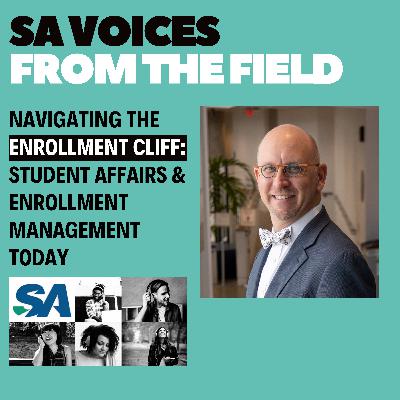
On the latest episode of Student Affairs Voices from the Field, host Dr. Jill Creighton explores the intersection of enrollment management and student affairs with special guest Dr. Christopher Tremblay, Executive Director of Enrollment Management at the University of Michigan's Taubman College of Architecture and Urban Planning. If you're curious about the challenges and changes facing higher education, this episode offers a timely and thought-provoking conversation. Facing the Enrollment Cliff The "enrollment cliff"—a predicted decline of about 15% in college-bound students—is front and center in this discussion. Dr. Tremblay walks listeners through the domino effect: declining birth rates and economic factors have shrunk the pool of future college students, and institutions are strategizing how best to adapt. He points out that while enrollment management always relied on advance notice through birth rate data, today, the challenge is more acute. Colleges are shifting focus from just increasing headcount to more nuanced "revenue management." Not every student brings the same tuition dollars, so institutions must balance both enrollment and financial sustainability. The episode also acknowledges the hard truth—some colleges may face mergers or closures as the cliff approaches. The Looming Impact of International Policies The enrollment pressures are compounded by changes to visa policies and regulations, making it tougher for international students to study in the U.S. Dr. Tremblay warns of a "double whammy" for colleges: fewer domestic students and fewer international enrollees, as restrictions force many to defer or pursue education elsewhere. Other countries, like Canada and Germany, are stepping in to woo these students, signaling a shift in the global education market. The Crucial Role of Retention & Student Support But it's not all gloom—the episode celebrates advances in student success and retention. Investing in support systems, academic advising, and holistic onboarding not only helps students persist but is often more cost-effective for colleges. Dr. Tremblay describes the value of a "high tech, high touch" approach and advocates for ongoing, personalized support through a student's first year and beyond. He even dreams of a four-person support team for each student, recognizing the complexity of academic, financial, and career decisions. Why Listen? If you're a higher ed professional, parent, or student wondering what lies ahead, this episode delivers valuable perspectives. It underscores the essential partnership between enrollment management and student affairs, and calls for more collaboration in service of student success. Tune in to hear how institutions are navigating uncertain times—and why student affairs remain critical to transforming lives. TRANSCRIPT Dr. Jill Creighton [00:00:02]: Welcome to Student Affairs Voices from the Field, the podcast where we share your student affairs stories from fresh perspectives to seasoned experts brought to you by naspa. We curate free and accessible professional development for higher ed pros wherever you happen to be. This is season 13 on the value of student affairs. I'm Dr. Jill Creighton. She her hers your Essay Voices from the Field host Today on Essay Voices from the Field, we're heading to the enrollment management side of The House with Dr. Christopher W. Tremblay. Dr. Jill Creighton [00:00:33]: He brings three decades of leadership in higher education enrollment management. Currently serving as Executive Director of Enrollment Management at the University of Michigan's Taubman College of Architecture and Urban Planning. He also serves as Director of ACRO Strategic Enrollment Management, or SEM Endorsement Program. Tremblay earned both his bachelor's and Master's degrees from Western Michigan University. He has a post Master's Certificate in Enrollment Management from Capella University and a Doctor of Education in Education from the University of Michigan, Dearborn. Tremblay is the co founder and co editor of the Journal of College Access and has served as Editor in Chief of College and University Journal since 2020. He's a scholar and researcher of Walt Disney, teaching the only college course on the life of Walt Disney called Walt's Pilgrimage. Christopher welcome to SA Voices and today we're going to be speaking to you. Dr. Christopher Tremblay [00:01:19]: Thank you. Dr. Jill Creighton [00:01:19]: Great to be here about the enrollment management side of the house and all the things that are going on in acro. But before we go there, we always like to get to know our guests by asking you, how did you get your current seat? Dr. Christopher Tremblay [00:01:31]: Wow, that's a long journey. But I will give you the abbreviated version. I actually am grateful that my career in higher education I'm now in my 32nd year and it started because I was an undergraduate orientation student leader. So I feel like it was the impact of student affairs that changed my life and brought me to this profession. So my first job in college was at Western Michigan University as an admissions counselor, actually before I even graduated from college, which was an incredible opportunity. And then I got hooked and I just loved admissions. I loved higher education. And then throughout my career I have done college admissions, I've done financial aid, I've done orientation, and have been doing enrollment management, gosh, for probably over a decade now. Dr. Christopher Tremblay [00:02:16]: And I've been at the University of Michigan Talbon's College of Architecture and Urban Planning for five years now. But just prior to that I also worked in College Access within the State of Michigan at the Michigan College Access Network. And I have a huge passion for college access, especially as a first time. Dr. Jill Creighton [00:02:32]: Sitting at one of the university universities that's largest in the U.S. i think you'll be in a great position to be able to speak to what you're seeing in terms of changes. One of the things that we've been talking about in student affairs, and I'm sure more so in enrollment management for about the last 10 years, is this pending enrollment cliff that has been coming towards us. We knew that birth rates in the United States had declined in the Great Recession that happened in 2007. For those of you who were in the profession at that time, it was a bit of a squeeze for everybody from a budgetary perspective. But we also saw massive impacts around housing crises in the country, food insecurity and some other things. And that greatly impacted people's family planning choices. And now we're in a position in higher education where there's, I believe it's a 15% drop off of potential enrollees in universities. Dr. Jill Creighton [00:03:20]: So I would love to start there. Christopher, if you can talk a little bit about how enrollment managers are planning for this, how colleges and universities should be bracing for this and, and what that means for our profession. Dr. Christopher Tremblay [00:03:33]: I guess the blessing of our work is that we always have advance notice because of the birth rate of how many people we think will be ready and eligible to enter college. And so we do have that lead time, but it is definitely a challenging time. While we're still trying to increase the percentage of high school graduates going to college so that we can increase college attainment rates, we know that the starting pool is much smaller and will get smaller for the next. I mean, basically indefinitely from the data that we're seeing from Wiche in terms of high school projections. So it's definitely putting a lot of pressure on colleges and universities. And I would say really enrollment management is shifting to be more about revenue management. And this is where it gets very delicate because cost is one of the primary barriers for students and families as the cost of higher education has increased and there's been less investment at the federal and state level. And so therefore the cost burden is being passed on to the students. Dr. Christopher Tremblay [00:04:29]: So really our job is to really articulate the value of higher education and showcase its benefits both financially as well as personally and professionally, and that the workforce needs higher skill levels for those who are graduating from high school. And certainly, I think all of us who are in higher education are proponents of. There are many pathways to post secondary education and some of that might include pursuit of what we would have deemed work in the trades. But like for example in Michigan, that training for the trades predominantly is offered at our community colleges and that is going to college. And so part of it's also shifting the mentality still that college is an option for everybody and that there are multiple pathways to pursuing. Dr. Jill Creighton [00:05:13]: I think that's an interesting credential framing that you've mentioned that enrollment management is shifting to more revenue management. Can you talk more about what that means to the profession? Dr. Christopher Tremblay [00:05:23]: Historically, as I always experienced the work in enrollment management, it was always about headcount and the number of bodies that you enrolled and the number of students. And I think there's more of a movement and has been for a number of years of counting, you know, headcount equivalent. So in other words, not every student is enrolled full time. Some students might be dual degree and so their revenue may be split. And so really using projections that showcase both enrollment but also tuition revenue. Because at the end of the day also not every student brings in the same amount of revenue because you have different tuition rates, you have different lengths of degrees. For example, in my particular college, we have degrees that are four year undergraduate degrees, we have two year master'
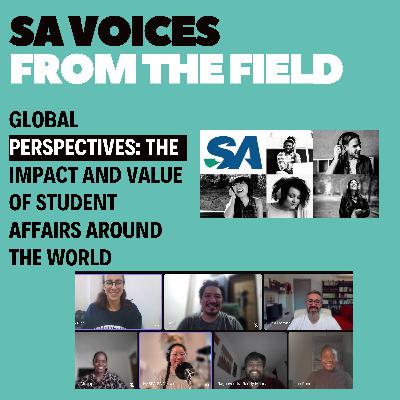
In the latest episode of Student Affairs Voices from the Field, host Dr. Jill Creighton brings together members of the third cohort of the Global Master's Students Program, a unique partnership between NASPA, the European University College Association (EucA), and Lumsa University in Rome. This special episode showcases graduate students from around the world—including the Philippines, Belgium, Italy, Namibia, China, the Netherlands, Germany, Trinidad & Tobago, and South Africa—sharing their varied experiences, perspectives, and hopes for the student affairs profession. Thank you to Lida Ricci, Julia Jaque, Joseph "Joel" Parcon, Luca Corona, Vency Mupupa, Raghavendra Reddy Manda and Leah Punch for sharing their voices today. Central Themes: Heart, Transformation, and Collaboration At its core, the conversation orbits around the powerful value student affairs brings to higher education globally. Joseph "Joel" Parcon emphasizes "values formation"—the role of student affairs in nurturing not just academic talent but shaping students as positive agents for societal change. Julia Jaque and Leah Punch echo this sentiment, describing student affairs as "the heart of the student experience," fostering belonging and personal growth beyond classroom walls. The theme of transformation comes alive through Raghavendra Reddy Manda, who poignantly describes student affairs as "the soul of the higher education system"—a journey where students find purpose and learn to make an impact. Vency Mupupa adds that key values like diversity, respect, integrity, and care reflect a commitment to inclusive, supportive campus environments. But visibility remains a challenge for the field. Many panelists note that student affairs is often misunderstood or underappreciated. Luca Corona and Leah Punch advocate for "joyful testimony" and storytelling, letting students themselves express how involvement in campus life, community, and extracurricular activities enriches their university journey. Collaboration—between student affairs, academic affairs, administration, and students themselves—is seen as crucial to raising awareness of the broad impact and importance of the profession. Diverse Pathways, Unified Purpose Panelists also share their personal motivations for studying student affairs: from accidentally stumbling into the field to intentionally pursuing it as a vocation. Each story reveals a commitment to supporting students, fostering development, and elevating the human aspect of academia. Why Listen? If you're curious about the future of student affairs—how the profession is viewed and evolving across continents—this episode will resonate. Hear firsthand how practitioners are meeting challenges and opportunities in vastly different cultural and educational contexts. The candid reflections and shared wisdom from emerging leaders across four continents are sure to inspire anyone invested in student success and campus well-being. Tune in to this thought-provoking episode for a truly global perspective on why student affairs matters—and how its impact ripples far beyond campus boundaries. TRANSCRIPT Dr. Jill Creighton [00:00:02]: Welcome to Student Affairs Voices from the Field, the podcast where we share your student affairs stories from fresh perspectives to seasoned experts brought to you by naspa. We curate free and accessible professional development for higher ed pros wherever you happen to be. This is season 13 on the value of student affairs. I'm Dr. Jill Creighton. She her hers your essay Voices from the Field host. Welcome back to our next episode of Student Affairs Voices from the Field. We have a very special episode today where we're going to be talking to our current Global Master's Students cohort. Dr. Jill Creighton [00:00:37]: This is our third cohort of global Master's students and this is a collaboration project. This course is in collaboration with NASPA and EucA, which is the EucA University College Association, and also Lumsa University, which is a university in Rome, Italy. We have students today spanning the entire globe, many, many different time zones, all earning their master's degrees in student affairs, and I'm thrilled to bring them to the podcast today. So our first student is Joel. Joel, please tell us where you're joining us from, what university you're at. Joseph "Joel" Parcon [00:01:09]: So, I'm Joel. I'm from the Philippines. I am the Vice Chair for Student affairs in the University of Asia and the Pacific. Dr. Jill Creighton [00:01:16]: Welcome. Joseph "Joel" Parcon [00:01:17]: Glad to be here. Dr. Jill Creighton [00:01:17]: Our next student is Julia. Julia Jaque [00:01:19]: Hello, I'm Julia. I'm project Coordinator at European University College association in Belgium. Dr. Jill Creighton [00:01:26]: And welcome. Julia, glad to have you here. Luca, you're our next student. Luca Corona [00:01:30]: Yeah. My name is Luca Coroa and I'm a Catholic priest from Rome and I worked for 15 years in institutional affairs as the director of the residence of Collegio Marzza. But now I am professor of Theology at the Catholic University in Rome and I continue to give my contribution to serious affairs. Dr. Jill Creighton [00:01:52]: Thank you for joining us, Luka. I'm glad to have such a diversity of perspectives amongst the three we've introduced so far. We've got four more to go. Our next student is Venzi. Vency Mupupa [00:02:01]: Good afternoon. My name is Vensi Mpupa. I am originally from Namibia. I worked previously at the University of the Free State in student affairs for 10 years, and then I moved to the University of Diukunshan in China, where I was also working in the Residence Life office and I'm currently based in Namibia, working for Safland Property Services as an executive assistant. Dr. Jill Creighton [00:02:26]: Welcome. And next we have Raghavendra. Raghavendra Reddy Manda [00:02:29]: Hello, My name is Raghavendra reddymanda. I'm a PhD candidate in entomology at Wageningen University and Research in the Netherlands, where my research focuses on sustainable pest management in greenhouse horticulture. I also serve as the communication Officer of Wageningen Doctoral Council and the chair of Career committee at a national graduate school working to enhance doctoral well being and career development. In future, I aspire to build a hybrid career which combines my passion for scientific research with leadership in student affairs and higher education administration. Leah Punch [00:03:04]: Good day everyone. I'm Leah Punch. I'm from Trinidad and Tobago. Currently I work in Bremen, Germany at Constructor University. There I work as a residential life manager, mainly responsible for incidents and emergency response. Dr. Jill Creighton [00:03:20]: Next up, we have Lida. Julia Jaque [00:03:22]: Hi, I'm Lida and I'm responsible for educational and cultural activities at the University College of Merit in Rome where I've been working for the past couple of years. I've always been passionate about the academic world, which led me to pursue a master's program focused on higher education and student affairs. Dr. Jill Creighton [00:03:45]: So because there are so many of us today, I'm going to be asking us just two questions focused on our theme on the value of student affairs. And I'd love to hear all of your perspectives, especially because we're so global. Our first question is when you think about the value of student affairs, what comes to mind first and why? And we'll have you go in the order you introduced yourselves. Joseph "Joel" Parcon [00:04:05]: Okay. So when I think of the value of student affairs, particularly in the University of Asia in the Pacific, we're actually, we are given the. The hallmark of values formation. So it's important for us as the center for student affairs to be able to provide opportunities for students to be able to add value to their student life so that they don't just learn on the academic side, but they also learn outside of the classroom and they graduate to become positive agents of change in service to society. Dr. Jill Creighton [00:04:37]: Thank you, Joel. In the Philippines, it's interesting to hear that you've got set expectations in that way a little bit more national and standard than what we see in other parts of the world. Joseph "Joel" Parcon [00:04:46]: Yeah. In particular with, especially in the uanp, there are three centers that are actually given all of these different things that they need to focus on. So we are the ones on values formation. There's another unit that's in charge of research and development and another for people development as well. So we are the ones who really are supposed to be the other side of the coin of the academic affairs. Dr. Jill Creighton [00:05:08]: Julia, go ahead and jump on in. Julia Jaque [00:05:10]: I guess for me it's literally the. Leah Punch [00:05:12]: Heart of the students experience. Right. Because the student affairs help students to. Julia Jaque [00:05:17]: Understand who they are and who they. Vency Mupupa [00:05:20]: Want to be and also to connect. Julia Jaque [00:05:22]: With others and to have this feeling of belonging with the community. Leah Punch [00:05:26]: So I guess is the center of the experience of being student. Luca Corona [00:05:31]: For me, the value of student affairs is very important in helping students think about their lives in a broader sense, not just within the specifics of university. I think that the risk of young people is over. Specializing in university students first helps them think more comprehensively. Also for example, with community not alone, I think. Dr. Jill Creighton [00:05:58]: Fancy, you're next. Vency Mupupa [00:05:59]: Good afternoon again. When I think of the values I spent almost 10 years at the University of the Free State, so I'm going to be referencing the University of the Free State a lot in this podcast of ours. So when I think of the values of student affairs at the
If you're looking for fresh perspectives on careers in student affairs—and a truly honest conversation about the journey ahead—don't miss the latest episode of Student Affairs Voices from the Field. In this episode, host Dr. Jill Creighton sits down with Dr. Amy Hecht, Vice President for Student Affairs at Florida State University and co-editor of the new NASPA book, The Next Act: Realigning Your Mindset, Purpose, and Career. The central theme of the conversation is the evolving nature of careers in student affairs, especially as professionals face mid-career questions and disruptions in life. Dr. Amy Hecht shares her own journey, returning to her alma mater after years spent at various institutions, and reflects on the unique challenges and opportunities this brings. She emphasizes how being away for decades allowed her to maintain objectivity and openness to making necessary changes—rather than being "married to" her undergraduate experience. The podcast dives into the origins and vision for The Next Act book. As Dr. Amy Hecht explains, the project emerged during the COVID era, spurred by widespread burnout and the "Great Resignation." The book fills a major gap in the literature: it doesn't simply celebrate student affairs. Instead, it highlights realistic, sometimes raw conversations about burnout, career shifts, and redefining success. In her words, "There isn't one true path... It's an ebb and flow of a career over time and ways in which we find fulfillment." You'll hear about chapters spotlighting professionals who've moved into K-12 education, consulting, the faculty route, or transitioned into other sectors within or outside higher education. Stories from people like Karen Warren Coleman, who found new fulfillment in K-12 school leadership, and Jeanna Mastrodicasa's pivot within her institution, show just how many ways student affairs expertise translates beyond traditional upward mobility. Another powerful element highlighted is the Deck of Disruptors, adapted from Bruce Filer, which visually maps all the life events—both positive and negative—that can throw established plans off course. The episode makes it clear: disruptions are normal, and reevaluating career goals is healthy and essential. Finally, the conversation underscores the enduring value of student affairs: building community, supporting students through crises, and adapting to meet institutional goals. Dr. Amy Hecht urges professionals to articulate impact in data-driven and narrative ways, showing how student affairs shapes retention, graduation, and life outcomes. If you're contemplating your next steps, seeking inspiration, or just want to hear authentic voices in higher education leadership, tune in to this enlightening episode. It's a must-listen for anyone in student affairs considering what purpose, fulfillment, and possibilities look like in a changing world. TRANSCRIPT Dr. Jill Creighton [00:00:02]: Welcome to Student Affairs Voices from the Field, the podcast where we share your student affairs stories from fresh perspectives to seasoned experts brought to you by naspa. We curate free and accessible professional development for higher ed pros wherever you happen to be. This is season 13 on the value of student affairs. I'm Dr. Jill Creighton. She her hers your Essay Voices from the Field host Today on Essay Voices, we are going to be talking about the book the Next Realigning your mindset, purpose, and career. This was a book published by NASPA in March of 2025, co edited by Jason B. Pina and Amy Hecht and Associates. Dr. Jill Creighton [00:00:42]: Our guest today is Dr. Amy Hecht, who has served as Vice President for Student affairs at Florida State University since 2017 and is a nationally recognized leader in higher ed with extensive experience shaping student success, campus life, and institutional strategy. Prior to returning to her alma mater, Dr. Hecht served as Vice President for Student affairs at the College of New Jersey, or tcnj, and held positions at Auburn University, Temple University, Cabrini College, and the University of Pennsylvania at Florida State. Dr. Hecht has established FSU as a national example for excellence in fraternity and sorority life, expanded on campus housing, and created new programs and services designed to advance student success. She's provided steady leadership through numerous campus crises and has also overseen initiatives such as the Lift Recovery Program, Health Campus 2030, and the launch of the DC Study Away Program. Her leadership has driven 150% increase in philanthropic giving to student affairs, reflecting her ability to align fundraising with transformational student impact. Dr. Jill Creighton [00:01:39]: Dr. Hecht's accomplishments have been recognized nationally with NASPA's Pillar of the Profession Award and the Scott Goodnight Award for Outstanding performance as a VPSA. Beyond her administrative leadership, Dr. Hecht is a respected thought leader and author. She's co edited two books and is frequently invited to contribute to national dialogues on student success, leadership development, and the future of higher ed. Her next book, Telling Time Management of Women in Senior Student Affairs Roles, which she co authored, will be available in 2026. Dr. Hecht earned her Bachelor's degree in Mass Communication from Florida State University and her master's and doctorate in Higher Ed Administration from the University of Pennsylvania. Dr. Jill Creighton [00:02:14]: Hope you enjoy our conversation. Amy, welcome to SA Voices. Dr. Amy Hecht [00:02:19]: Thank you. It's great to be here. Dr. Jill Creighton [00:02:20]: We always love featuring our pillars of the profession here on the NASPA podcast, and you've been around NASPA for quite a long time, contributing positively to the profession, to the organization, and most recently as an author, which is what we're going to be primarily talking to you about today. But before we get into the book the Next act, which is co edited by Dr. Jason Pina, who's up at NYU and we also would love to start by asking you how you got to your current seat at Florida State. Dr. Amy Hecht [00:02:47]: Wow. So I started out like many people in student affairs because I was a very involved student at fsu. I, I am an alum and so it is a rare gift to go back to your alma mater. I was very involved and that is kind of my exposure to student affairs. Never thought I would come back to Florida. I actually wanted to be in the Northeast. Went to the University of Pennsylvania for my master's one year program. Got out and Pennsylvania has so many schools, was able to really spend quite a bit of time there. Dr. Amy Hecht [00:03:21]: As I moved up and got to work with vice presidents and dean of students, I realized I loved the administration side. I loved the organizational development and realized I had to go back and get my doctorate. My GRE scores were going to expire and thought I'll go back and I'll go real slow because I wasn't sure I wanted to be back yet. In the classroom and the process, I really enjoyed it. I kind of fell in love with the concept of organizational learning and got a call to go to Auburn University from a mentor and was there for four years and he kind of said, okay, now you've been an avp, you're ready to be a V. I did not think I was really loved that AVP role, but became the Vice president at the College of New Jersey right outside of Philadelphia and became region director of Region 2 of the College of New Jersey. Loved being there, but did get a call from the search firm about Florida State. And early on in my career I tried to kind of get back to the state of Florida. Dr. Amy Hecht [00:04:21]: It's where my family's from. Never worked out and was very flattered that I was nominated for FSU and said, oh, I'll just send them my resume, see what they think. Sure, there's way more qualified people. But I did get an airport interview and then fell in love with the people and the rest is history. So coming back, I've been, I had been gone, you know, over 20 years, so it is interesting. I know some of the history and some of the traditions and how important student life and the student experience is, but also worked many other places. So I kind of have the best of both worlds. I'm an insider, but haven't necessarily been brought up here and have only seen one thing. Dr. Amy Hecht [00:05:01]: I've seen a lot of other institutions and how they operate. Dr. Jill Creighton [00:05:04]: I think that's always so interesting to go back to your alma mater. We have stories where people loved working on both ends of that as a student and as a full time administrator and other people who said that it really changed their perspective on their alma mater and not necessarily in the way that they wanted it to. So can you tell us a little bit more about creating some sense between the things you loved as an undergraduate student and the things that you're working towards improving as an administrator? Dr. Amy Hecht [00:05:28]: I do think that's really interesting because now you kind of. Now this is how the sausage is made. And as a student, and I was not the SGA president, I didn't fill any of those roles. So I really didn't see some of the upper work happening at Florida State when I was a student. The state of Florida has a really great program called Bright Futures. So if you have a certain GPA and SAT score, you get 75% of your tuition paid. So for my family it was, this is choose one of the state schools in Florida and you're going there. Even though I had dreams of, I don't know, going to New York or Hawaii, but financially I was here, I do think it's challenging Florida State and maybe this is the same for all of the state schools in Florida. Dr. Amy Hecht [00:06:08]: We get a tremendous amount of financial support from the state. They've been very generous and that comes with a lot of oversight. Other states that I've worked in have not had the lev
If you work in higher education or care about college access and affordability, "Student Affairs Voices from the Field" continues to be a must-listen. In this season's fifth episode, host Dr. Jill Creighton welcomes Melanie Storey, President and CEO of the National Association of Student Financial Aid Administrators (NASFAA), to demystify the changing landscape of student financial aid and its deep ties to student affairs. The episode dives headfirst into the rapid-fire changes shaping higher education funding today. Melanie, bringing decades of experience from policy implementation at the U.S. Department of Education and leadership roles throughout Washington, D.C., articulates how student financial aid has evolved. From its beginnings with the Higher Education Act and the emergence of need-based aid, she describes the ongoing tension between supporting students with the greatest financial need and responding to broader shifts in public opinion about the value of higher education. A major theme in the conversation is the "One Big Beautiful Bill Act" (OB3), which is making waves with its broad changes to loan programs, repayment plans, and institutional accountability. Melanie clarifies complex topics like Public Service Loan Forgiveness (PSLF), repayment clarity, and the introduction of earnings measures for universities. She urges student affairs professionals to recognize the uncertainty this creates for students—not just in their financial planning but in their emotional well-being and sense of security while pursuing degrees. For families embarking on their college journey, Melanie recommends making the most of resources like StudentAid.gov and financial aid estimators, emphasizing that fit—academic, social, and financial—matters more than chasing prestigious institutions. She also unpacks new programs like Workforce Pell, which expands grant eligibility to short-term vocational programs, opening new avenues for career-focused students. Throughout, Melanie champions student affairs professionals as the human heart of higher education. Whether helping students navigate anxiety about finances or bridging connections with financial aid offices, she sees these campus leaders as vital advocates and problem-solvers. If you're looking for practical insights, clarity on policy changes, and a dose of optimism in "interesting" times, this episode will deepen your understanding. Tune in to hear about the evolving relationship between student affairs and financial aid—and be reminded why student affairs matters more than ever in helping students thrive. Listen to "Student Affairs Voices from the Field: Melanie Storey" now and join the conversation shaping the future of higher education! TRANSCRIPT Dr. Christopher Lewis [00:00:02]: Welcome to Student Affairs Voices from the Field, the podcast where we share your student affairs stories from fresh perspectives to seasoned experts brought to you by naspa. We curate free and accessible professional development for higher ed pros wherever you happen to be. This is season 13 on the value of student affairs. I'm Dr. Jill Creighton. She her hers your Essay Voices from the Field host Today on Essay Voices, it's our privilege to welcome Melanie Storey, who is the President and CEO of nasfa, which is the national association of Student Financial Aid Administrators. She began her tenure on May 1st of 2025. With decades of experience in federal higher education policy, financial aid operations and organizational leadership, Story brings deep expertise and a steadfast commitment to advancing access and equity in higher education. Dr. Jill Creighton [00:00:52]: Storey most recently served as Director of Policy Implementation and oversight at the U.S. of Education's Office of Federal Student Aid, or FSA, where she led cross functional teams in translating federal policy into practice. She played a central role in implementing the FAFSA Simplification act and the Future act, and contributed to major initiatives like federal student loan debt relief. She frequently represented FSAA before congressional staff, administration officials, and higher education leaders. Before joining the department, Story led policy and strategy work at the College Board and served as Director of National Initiatives at the American Council on Education, where she supported national commissions, analyzed legislative proposals, and led public service campaigns. Earlier in her career, she was a policy analyst at the national association of Independent Colleges and Universities, or naicu, conducting research and collaborating with government relations staff on federal policy proposals impacting private institutions. A proud first generation college graduate and financial aid recipient, Saray earned a Master's degree in Public affairs from the Lyndon B. Johnson School at the University of Texas at Austin and holds a bachelor degree in Economics and Public Policy seat from Smith College. Dr. Jill Creighton [00:02:03]: Melanie welcome to Student Affairs Voices from the Field. Melanie Storey [00:02:06]: Thank you, thank you. Hey Jill, it's great to be with y' all today. Dr. Jill Creighton [00:02:08]: I always love doing crossovers with other higher ed professional associations because we all occupy the same industry but very different lanes within the industry, almost like many verticals. So it's great to talk to a subject matter expertise in in an area that deeply affects the student affairs profession. But most of us definitely are not. Melanie Storey [00:02:25]: Experts on yeah, no, I really appreciate it and I think more than ever in the current environment it is so important that we we be talk about the things that we're facing within our own lanes, but across our lanes because it is really a pretty transformational time that we're dealing with right now. I keep saying that I welcome to live in less interesting times, but I don't think that that's going to happen anytime soon. So I really welcome the opportunity to spend some time together, talk about student affairs and financial aid. Dr. Jill Creighton [00:02:52]: The meme that I keep seeing is, you know, I'm tired of unprecedented times. I'd rather go back to precedented times. And I think a lot, you know. Melanie Storey [00:03:00]: Whatever the Confucius may, you live in interesting times. I'm like, no, thank you. I'm have a NASA thumb. Thanks. I'm good. Dr. Jill Creighton [00:03:06]: We could use some boring around here. That'd be fine. Melanie Storey [00:03:07]: I'll take it. Dr. Jill Creighton [00:03:08]: But Melanie, you've been with NASA now just for a hair over a year, I believe, and came to NASA from the U.S. department of Education. But we like to get to know our guests more specifically by asking, how did you get to your current seat, if you wouldn't mind sharing the journey? Melanie Storey [00:03:22]: Yeah, so it might feel like a hair over a year, but it's really only been about five months. I started in late spring at NASA, took some time off from my time at the department. I took a little cleanser time before jumping in. So I have always been what I will say, say is financial aid adjacent. I guess I haven't worked in a financial aid office in my career, but I started even in undergrad, really focused on education policy. I was really interested in policy from the very start. And when I finished my undergrad, I moved to Washington, as many young, eager people do with, you know, kind of like a suitcase and a very light checkbook and hope for the best. I kind of fell into higher education policy. Melanie Storey [00:04:01]: You know, I think a lot of policy programs tend to focus on K12, and that was kind of true for me early on. And then my first job was with a contractor on the Pell Grant, Right. Fundamental grant to support low income students. And I kind of, it opened my eyes to higher education policy and access and affordability. And I'm a first generation college student. And it was really like, well, yeah, duh, this is, this is important. Like this really makes really important change in people's lives. And so it kind of started there. Melanie Storey [00:04:30]: I've been in Washington almost the entirety since then. I've worked for various associations that represent college and university presidents, the College Board, and then as you mentioned, the U.S. department of Education. So I've always been fully committed to affordability and access and making sure that the doors of higher education are open to all those that seek it. And so when the NASPA position opened, it really is a dream job. For me, I mean, it is leading a group of incredibly dedicated professionals who share the principles and goals that I have built my entire career around. And so I'm thrilled to be in the job. It is definitely a challenging time, but I'm fully committed and proud to be the voice of those who are committed to the students that they serve. Dr. Jill Creighton [00:05:10]: And NASFA for our listeners, if you're new to this particular acronym, is the national association of Student Financial Aid Administrators. So a sister cousin organization to us here at naspa. Melanie Storey [00:05:22]: And oftentimes you use naspa, nasfa. You have to be very diction has to be really good to make sure you're not confusing us. Dr. Jill Creighton [00:05:28]: There's also nafsa, which is the students abroad. Melanie Storey [00:05:32]: You know, we joke about the Alphabet soup. It's real. But yes. Yeah, NASA, student financial aid administrators. Dr. Jill Creighton [00:05:37]: And just because I'm originally from the Seattle metro area, I do want to clarify. Melanie's in Washington D.C. that's important. Melanie Storey [00:05:43]: That is the bubble you've identified that we, when you're here too long, you just, you make these assumptions. Yes. I have largely lived in Washington D.C. for most of my career. I did spend a few years in Austin doing some graduate work. Wash
Assessment isn't just numbers—it's a growth mindset. In the latest episode of Student Affairs Voices from the Field, Knowledge Community co-chairs Dr. Dana Weintraub (Rutgers University - New Brunswick) and Dr. Scott Radimer (William & Mary) share their perspectives with Dr. Jill Creighton on the vital importance of assessment, evaluation, and research in higher education, sparking conversations that will resonate with both experienced professionals and those newer to the field. A key theme emerges early: assessment is not an "add-on" or a separate chore—it's a tool that empowers student affairs professionals to make evidence-based decisions, improve the student experience, and honor the promise institutions make to help their students thrive and succeed. As Dr. Radimer puts it, "Assessment work is really just an extension of that promise…we're failing to keep our promises if we're not doing that." Both leaders emphasize that assessment helps colleges move from "just vibes" to actionable data, allowing for advocacy, program improvements, and strategic change. Dr. Weintraub offers practical advice for making assessment less intimidating, urging colleagues to see how data-driven decision-making fits into everyday life: checking the weather app before dressing for work, or setting personal fitness goals, both reflect continuous assessment cycles. She insists, "It's about growth mindset. It's equipping us with the information so we know how it helps us make decisions so much easier." For those wary of statistics, Dr. Radimer reassures listeners: effective assessment relies on relationships, collaboration, and critical inquiry—not just crunching numbers. "Usually in student affairs, it's not that we're doing bad things…it's that we have so many things on our plate that sometimes the good gets in the way of the great." His advice: intentional planning and building assessment into the program design from the start makes it less stressful and more impactful. The episode also demystifies involvement in NASPA's Assessment, Evaluation, and Research Knowledge Community (AERKC). Both co-chairs are passionate about the value of networking, professional development, and "work wellness" that the KC offers, encouraging anyone with even a passing interest in assessment to "just show up" and experience the supportive community firsthand. Whether you're a seasoned assessment lead or a curious student affairs practitioner, there's something for everyone in this episode. Tune in to hear practical wisdom, relatable analogies, and uplifting encouragement from two experts committed to making data work for students—and their advocates. Ready to turn assessment anxiety into actionable insight? Listen to the full episode and discover how you can be part of a thriving, supportive community committed to student success. TRANSCRIPT Dr. Jill Creighton [00:00:02]: Welcome to Student Affairs Voices from the Field, the podcast where we share your student affairs stories from fresh perspectives to seasoned experts brought to you by naspa. We curate free and accessible professional development for higher ed pros wherever you happen to be. This is season 13 on the value of student affairs. I'm Dr. Jill Creighton. She her hers your Essay Voices from the Field host Today on Essay Voices, we are continuing our journey with getting to know our Knowledge Community leaders with the AERC or the Assessment, Evaluation and Research knowledge community. Our two guests are co chairs Dana Weintraub, PhD and Scott Rademer, PhD. Dr. Dr. Jill Creighton [00:00:42]: Weintraub is the Assistant Vice Chancellor for Strategy, Assessment and Planning in Student affairs at Rutgers University New Brunswick and an Associate member of the Faculty at the Graduate School of Education. Since joining Rutgers in 2016, she's led division wide efforts in strategic planning, assessment, communication and development advancing student success through data informed decision making. Dana serves as the Primary Liaison to the Office of Institutional Research and Decision Support and collaborates closely with Senior leadership to shape and implement strategic priorities. She chairs the Student Affairs Assessment Learning Committee and leads training initiatives Taking that sentence over Chris, she chairs the Student Affairs Assessment Learning Committee and leads training initiatives on research and data strategy. Her scholarship, which explores topics like student leadership, gender equity in STEM and civic engagement, has been featured in academic journals and global conferences conferences. Outside of work, Dana is a proud mom of two, a marathon runner, dancer and passionate board game enthusiast. Always ready for a strategic challenge whether at the office or around the game table. She holds a Ph.D. Dr. Jill Creighton [00:01:41]: in higher education and organizational change from UCLA, a master's from Indiana University in Bloomington, and a BA from Ithaca College. Dr. Radimer is the Assistant Dean for Assessment, Accreditation and Accountability for the School of Education at William Mary. Prior to working at William Mary, Scott was the Director of Assessment and Planning at the University of Houston for the Division of Student Affairs. He has over 9 years professional experience in assessment, 22 years working in higher education, and serves as the co Chair for NASPA's Assessment, Evaluation and Research Knowledge Community. He's published and given presentations on topics such as One More Time on that. He has published and given presentations on topics such as assessment, men and masculinities and urban serving institutions. Scott earned his Ph.D. Dr. Jill Creighton [00:02:22]: in higher education from Boston College and his Master of Science in Higher Education from Florida State University and his Bachelor of Arts degree in Political Science from the University of Vermont. Welcome to SA Voices. Dana hello hello and hello Scott. Scott Radimer [00:02:37]: Hello. Dr. Jill Creighton [00:02:37]: We are thrilled to have you on the episode today to talk about the NASPA Assessment Knowledge Community, aerc. And I'll let you all define that a little bit more as we get into the conversation. A lot to talk about in the assessment world right now, but as we jump into our topic, we still love to get to know you first. So, Dana, let's start with you. How did you get to your current seat at Rutgers? Dana Weintraub [00:02:58]: Thank you. Really wonderful to be here. Dr. Creighton, thank you for having Scott and I on, on the podcast. So I am actually starting my 10th year at Rutgers New Brunswick, which is, it's been amazing to have just completed nine full years. So I actually, I grew up in South Jersey and the funny thing which my parents actually like to tease me about is when it came to me to apply to colleges, I really wanted nothing, to be in my home state. I wanted to travel as far as possible, but that flipped. Prior to Rutgers, I spent 13 years working and going to school at UCLA. Dana Weintraub [00:03:36]: It was an amazing experience, very fulfilling experiences. And when I was graduating from the PhD program at UCLA and it was time to job search, job opportunity came up at Rutgers New Brunswick and it was, it was just, it was the perfect job on paper. It was an opportunity to create a student affairs assessment unit. And so it was going to provide me the opportunity to apply everything I was learning in my doctoral program and actually really returned to what I love most, and that's student affairs, but doing it through a research and an assessment lens. So that's how I got to Rutgers New Brunswick. And over the past nine years I've been very fortunate to gain new experiences and opportunities. And I just, I really love being at a large public research university, really love and appreciate my student affairs colleagues and campus partners and how much Rutgers really does center and prioritize and value the need for evidence in making decisions and using evidence based research to improve the student experience. Dr. Jill Creighton [00:04:41]: I always love it when someone is able to find a role that fits both of their passions or multiple passions and comes together to be something that you can enjoy doing every day. I'm glad you were able to find that. Dana Weintraub [00:04:51]: Thank you. Dr. Jill Creighton [00:04:52]: And Scott, how about you? How did you get to your current seat at William and Mary? Scott Radimer [00:04:55]: Yeah, so I'm originally from Vermont, grew up in Vermont and attended the University of Vermont for undergrad. I was one of those stereotypical student affairs college students in that I was involved in everything as an undergrad. And so I kept on interacting with all the master's students in the HISA program at the University of Vermont and I thought they were pretty cool people and that's how I got exposed to student affairs as a career. When I was a senior in college, I. I thought I wanted to go to law school and be a lawyer. And then I quickly realized I didn't want to do that. So it took me a little bit of time to figure out what I wanted to do after college. And I ultimately decided that I was going to go into student affairs because if I didn't like it, I'd be working at a university, I could get a different degree and I could move. Scott Radimer [00:05:50]: So that seemed less scary than my other kind of big idea was I might get a PhD in political science, which was my undergraduate degree. And that at the time seemed too intimidating to me. So I went into student affairs. I ended up Florida State University for my master's degree, which, coming from Vermont, I felt like that was my study abroad experience that I never had. It was a great experience, definitely opened my eyes to a lot of things that I had assumed everybody thought or did and was not the case. Worked in assistantship, in academic advising, and then moved back up north. Got my first
In the newest episode of Student Affairs Voices from the Field, listeners are invited into a candid and inspiring conversation with Dr. Jessica Nathan Brown and Dae'lyn Do, the current Co-Chairs of NASPA's Women in Student Affairs Knowledge Community (WISA KC). Hosted by Dr. Jill Creighton, this episode delves deep into what makes student affairs such a meaningful field, particularly through the lens of women's leadership, mentorship, and wellbeing. Jessica and Dae'lyn bring a wealth of experience to their roles—Jessica as Director of Student Leadership and Engagement at Alabama A&M University, and Dae'lyn as Associate Director for the Women in Science and Engineering Residence Program at the University of Michigan. Both share personal journeys into student affairs, marked by transformative mentorship and a dedication to empowering students from all backgrounds. One of the episode's main themes centers on WISA KC's current focus, encapsulated by the acronym GLOW: Growth, Legacy, Openness, and Wellbeing. As Jessica explains, "We are trying to grow as professionals, leave legacies while honoring those before us, share our authentic stories, and prioritize wellbeing." The discussion highlights that supporting the whole student—academically, personally, and emotionally—is at the heart of student affairs, and staff need to care for themselves to sustain this important work. Dae'lyn reflects on how student affairs practitioners understand the field's value through direct impact in students' lives, but emphasizes that telling these stories to those outside the field remains a crucial ongoing challenge. She also underscores the importance of wellbeing, especially for women who often take on the nurturing roles on campus. The episode doesn't shy away from real-world issues: Jessica shares insights from her dissertation on burnout and turnover among entry-level staff, noting compensation and workload as key factors. Both leaders discuss strategies for supervisors to support early-career professionals, stressing flexibility, recognition, and creative ways to foster growth. Listeners will find examples of impactful mentorship, stories of overcoming imposter syndrome, and actionable advice for supervisors and colleagues. If you're interested in connecting with WISA KC, Dae'lyn and Jessica recommend subscribing to their newsletter, joining their LinkedIn group, and exploring volunteer opportunities. Tune in for practical wisdom, personal stories, and a refreshing focus on wellbeing and authentic leadership in student affairs—this episode is a must-listen for anyone seeking inspiration and community within higher education. TRANSCRIPT Dr. Jill Creighton [00:00:02]: Welcome to Student Affairs Voices from the Field, the podcast where we share your student affairs stories from fresh perspectives to seasoned experts brought to you by naspa. We curate free and accessible professional development for higher ed pros wherever you happen to be. This is season 13 on the value of student affairs. I'm Dr. Jill Creighton. She her hers your SA voices from the Field host. Welcome back to our next episode of SA Voices from the Field. Today we're featuring our NASPA Co-Chairs of the WISA KC Dr. Dr. Jill Creighton [00:00:34]: Jessica Nathan Brown, a native of Birmingham, Alabama, serves as the Director of Student Leadership and Engagement at Alabama A and M University where she works to enhance student engagement and foster a sense of belonging on campus. In her role, she provides oversight for major campus events, Greek Life, Student Government, Student Publications, University Royalty Student Organizations, International Student Support, Parent and Family Engagement, First Generation Student Initiatives, Freshman Student Transitions, and Welcome Programming and Leadership Development Initiatives. She brings nearly a decade of experience in student activities along with prior experience in residence life. Dr. Brown earned her Bachelor's Degree in Psychology from Stillman College, her Master's in Educational Leadership from the University of South Alabama, and her Doctor of Education in Higher Education Administration from the University of Southern Mississippi. Professionally, Dr. Brown has been an active leader within NASPA, serving four years on the NASPA Alabama Board of Directors as Secretary Treasurer, and four years as professional Development Co Chair for the Women in Student affairs, or WISA Knowledge Community. She now serves as the WISA Co chair for the 2025 through 2027 term and previously held a leadership role within NACA South. Dr. Jill Creighton [00:01:39]: She currently resides in Decatur, Alabama with her husband Brandon and their son Brandon Jr. Our second guest is DA Lynn Doe. She her Dalen serves as the Associate Director for the Women in Science and Engineering Residence Program at the University of Michigan. Originally from Oklahoma, she earned her Bachelor's Degree in Political Science and Public Relations and Advertising from Northeastern State University and her Master's degree in College Stud from Bowling Green State University in Ohio. Having served on the WISA Casey Leadership Team for almost six years, her involvement with this community has been an instrumental part of her journey in student affairs. She's also been an active member of NASPA since early in her undergrad career, including being part of the NASPA Undergraduate Fellows Program or the NUPF Program and the NASPA Graduate Associate Program or the GAP Program, and serving in a variety of other NASPA volunteer roles. Dalen's experience as a first generation low income college student is what led her to student affairs work. She feels a deep sense of purpose in the field and her goal is to empower students, support them on their journeys toward receiving a higher education, and open doors for them to experience the impact of a college education in the same way that she did. Dr. Jill Creighton [00:02:43]: Dalen believes in values driven leadership and brings her personal values of integrity, intentionality, authenticity, appreciation and growth to her work with students. Dalen currently lives in Bowling Green, Ohio with her partner and their three pugs. Outside of work, she enjoys playing board games, traveling, spending time outside, and eating good food. Welcome to season 13 of SA Voices here with Jessica. Dr. Jessica Nathan Brown [00:03:06]: Hi everyone. Dr. Jill Creighton [00:03:07]: And Dalen. Dae'lyn Do [00:03:08]: Hello. Dr. Jill Creighton [00:03:09]: And you two are the current Co Chairs of the Women in Student Affairs Knowledge Community for naspa, which is one of the largest knowledge communities in all of naspa. It's an incredible job that you are both doing. I totally understand why this KC needs co chairs. It's WISA for short. It's got a huge internal board. It is super, super active with everything from events to publications and beyond. So looking forward to talking to you all about what the work is in wisa. But before we get there, we're going to start with your day jobs a little bit and we always like to get to know our guests by asking how did you get to your current seat? And we'll start with you, Jessica. Dr. Jessica Nathan Brown [00:03:47]: So my current seat, I am currently the Director of Student Leadership and Engagement at Alabama A and M University. I have been here since 2023 and how I got here I started in student affairs, really undergraduate originally my major was psychology. Wanted to be a therapist and was super involved and so learned that this was a field. So I then went to do my Master's in higher education with a GA in residence life. And then I worked at UAB for 7 years in student activities, hence leading me to now this role in Huntsville. Dr. Jill Creighton [00:04:19]: Excellent. What's your dissertation title? Dr. Jessica Nathan Brown [00:04:22]: Okay, try to say the actual it's not going to be exact because I don't have to say it often, but essentially I did did my research on burnout in student affairs at the entry level for entry level staff and what were the causes for staff turnover. Dr. Jill Creighton [00:04:37]: That is an incredible piece of research that we desperately need right now because we know that the field and the dynamics of how we enter the field are changing. So we're definitely going to come back to that. But let's get to know Dalen a little bit as well. Dalen, how did you get to your current seat? Dae'lyn Do [00:04:50]: Yes, I love this question. I have a pretty similar story to I guess a lot of folks in higher ed and student affairs. I of course didn't know what this was before entering college, but I came into my undergrad at Northeastern State University in Tahlequah, Oklahoma as a first generation low income student who originally thought she was going to become a journalist for the National Geographic. I wanted to travel the world and take pictures of animals. But as I was kind of going through my college journey and realizing the impact that higher education was having on my life and why it was having that impact, it kept coming back to the people and the mentors who were supporting me. And so really I kind of learned early on in my undergrad career that I wanted to do this. And so I started getting involved with NASPA as early as like my sophomore year with the nuff program and then started looking into graduate programs and ended up moving across the country to Bowling Green, Ohio to do their college student personnel master's program for two years. And during that program I was an advisor, a scholarship advisor for the Thompson Scholarship programs, which was a perfect place for me because I was getting to work with other low income students, many of them also first gen. Dae'lyn Do [00:06:06]: So a lot of students who had very similar stories to mine and that was, I was really doing the heart work there because it was very connected to my own journey and getting to support those stu
Are you searching for inspiration to fuel your own journey in leadership and personal development? Look no further than the latest episode of our podcast, featuring Craig Best in conversation with Dr. Jill Creighton. This thought-provoking discussion is packed with candid stories, honest reflections, and actionable takeaways that you won't want to miss. One of the main themes that emerges from this episode is the ongoing process of growth—both personally and professionally. Craig Best is refreshingly open about the importance of learning from failure and embracing vulnerability in the leadership space. Through his anecdotes and experiences, listeners are reminded that the path to success isn't linear, and that setbacks are not just inevitable, but invaluable. Craig's perspective encourages us to reframe mistakes as opportunities for learning and self-improvement rather than sources of shame. Another powerful topic explored during the episode is the significance of authentic relationships. Both Dr. Creighton and Dr. Lewis draw out compelling insights as Craig shares how cultivating trust and genuine connections can create lasting impact. Whether you're a leader in your organization or working to develop your own network, the episode is packed with practical advice for fostering environments where everyone feels empowered and heard. The episode also delves into the idea of legacy—how leaders shape their environments today, and how their choices reverberate over time. Craig discusses the mentors who have influenced him, the lessons he hopes to pass on, and the obligation leaders have to support and uplift others. This conversation is an important reminder of the ripple effect our words and actions can have, both now and in the future. Finally, you'll be inspired by the emphasis on self-awareness and intentionality as essential leadership tools. The dialogue is filled with strategies for staying grounded, keeping ego in check, and navigating challenges with empathy and grace. If you're looking for a compelling listen that blends insight, authenticity, and actionable wisdom, this episode with Craig Best, and Dr. Jill Creighton is one you can't afford to skip. Tune in now and unlock new perspectives that will help you lead, grow, and connect more effectively—both in your personal life and your professional journey. TRANSCRIPT Dr. Jill Creighton [00:00:02]: Welcome to Student Affairs Voices from the Field, the podcast where we share your student affairs stories from fresh perspectives to seasoned experts brought to you by naspa. We curate free and accessible professional development for higher ed pros wherever you happen to be. This is season 13 on the value of student affairs. I'm Dr. Jill Creighton. She her hers your Essay Voices from the Field host Today on Essay Voices, we're headed across the pond to meet Craig Best, who's currently the Director of Student and Academic Services at the University of Manchester. Craig is a senior higher education leader and researcher with extensive experience shaping student experience, governance and digital innovation across UK universities. As a Director at the University of Manchester, he oversees a broad portfolio spanning student success, outreach and access, curriculum and quality development, international transnational education and collaborations, interdisciplinary learning, careers and employability, student volunteering and success and administrative services including timetabling, data management, student records, admissions and student finance. Dr. Jill Creighton [00:01:09]: His leadership is defined by emotional intelligence, participatory decision making and a strategic focus on sustainable institutional impact. Craig's research at the University of Bath explores the intersection of emotional intelligence, systems thinking and higher education governance, with particular attention to digital transformation and policy implementation. A central theme of his work is the role of leadership playing in a volatile and uncertain climate we now find ourselves in. Beyond research, Craig translates theory into practice. He's led transformative initiatives and quality assurance, service delivery and workforce planning, admissions collaborations. Wow, starting that whole paragraph over. Sorry. Beyond research, Craig translates theory into practice. Dr. Jill Creighton [00:01:48]: He's led transformative initiatives in quality assurance, service delivery and workforce planning, admissions and collaborations. His approach ensures that institutional change aligns with mission and market realities while advancing student outcomes and staff development. Craig also serves on the Academic Registrar Council Executive in the uk, contributing to sector wide leadership and policy discussions as a mentor and advocate for professional growth. He champions leadership grounded in ethical reasoning, critical thinking and systems awareness, bringing comparative international perspectives to inform policy, practice and innovation in UK higher ed. Driven by inclusivity, innovation and service excellence, he Craig combines deep sector knowledge with creative problem solving, positioning institutions to navigate complex challenges while sustaining their core mission and enhancing the student and staff experience. Craig, welcome to SA Voices. Craig Best [00:02:37]: Hi Jill. It's really nice to be here. Thank you for inviting me. Dr. Jill Creighton [00:02:40]: Lovely to see you again. You first engaged with NASPA at this year's annual conference. Which happened. Where were we? Craig Best [00:02:48]: New Orleans. Dr. Jill Creighton [00:02:49]: New Orleans, that's right. I was. I was thinking Seattle, but that was two years ago now. I believe that was your first exposure to naspa, right? Craig Best [00:02:55]: It was absolutely my first exposure. Exposure and it blew me away. What NASPA does. I've come back singing the praises of NASPA and how the US model the work around student affairs and academic affairs is just absolutely fantastic. Lots of learning happened, lots of thoughts. So yeah, it's really great to be on the podcast to talk a little bit more about the UK and kind of where I've come and where all those kind of directions to travels are. Dr. Jill Creighton [00:03:22]: Well, as far as English speaking countries that are producing a lot of research, the UK is certainly at the top of that list as well, producing a lot of information at the moment. And a lot of change is happening in the British higher education landscape. So I thought we'd use our episode today to help our primarily North American audience learn a little bit more about what student services looks like in the UK and what we call things, because we have a lot of students coming over to study abroad. And in my own experience, I think that there's a lot of assumptions that we understand each other's culture more easily because we speak the same language. But I've also found that's really not true in a lot of cases. And so that assumption can get us into trouble when we think we understand the context and maybe we don't. So I'd love to start with Amashi actually, and if you could tell us a bit about what Amashi is, because for our North American listeners, it's really the analog in the UK to NASPA in a lot of ways, but the purview is a little bit broader because of the way that things are structured. So why don't you tell us about Amashi and what you do there? Craig Best [00:04:23]: Yeah, no. So there's a number of associations in the UK and the British sector. So the one that probably is a closest aligned to naspa, as you said, Jill, is Omoshi, which is as its full name, which is rarely ever used, is the association of Managers of Student Services and Higher Education. Rolls off the tongue naturally. That's been about for about 20, 25 years and it's focused on what we in the, in particular in the UK refer to as student services. And traditionally that's focused quite a lot on your safeguarding, your mental health, your well being, some of the work around student experience and development, but mainly it focuses on the welfare and wellbeing side of the institution. But it does range into things like equality and diversity. It does deal with complaints and appeals and that process. Craig Best [00:05:16]: But that group is predominantly your director level. So and I appreciate we've had a chat about this previously, is even our titles are different between the US and the uk. So a director level in the UK is around Europe, probably your Associate VP role within the us. So that traditionally was a smaller. A group of people that would come together, share good practice. And over the last 10 years, with most of our associations, it's broadened out to be an opportunity to bring people in to talk about the key themes and subjects. So sexual violence and harassment, looking at how we support Black heritage students or widening participation Students to succeed has been a big part. And for two years prior to the role I've taken on in another association, I was a member of the Executive for Omoshi, and now I'm an executive member for something we call arc, which is the Academic Registrars Council, which the best way of describing it is lots of the directors of Student Support Services report into the Academic Registrar role or the registrar role within the university. Craig Best [00:06:26]: So the Vice President of Student affairs or Academic Affairs. And the way I kind of talk about that is we don't necessarily use the word student affairs in the uk. It's not a word we use. Student services is academic services or registry as a more traditional way. Dr. Jill Creighton [00:06:43]: And that Academic Registrar title was really confusing for me at first because in the US it typically means the person who is literally in charge of university credits and scheduling and some parts of enrollment. So my best analogy is that the Academic Registrar ro
If you're searching for inspiration and actionable insights on leadership in higher education, you'll want to tune in to the latest episode featuring Dr. Jhenai Chandler, hosted by Dr. Jill Creighton. This engaging conversation shines a light on the complexity of change management and the importance of authentic leadership through times of uncertainty. One major theme that emerges from their discussion is the necessity of adaptability in the ever-evolving landscape of student affairs. Dr. Chandler shares her personal experiences navigating institutional shifts, emphasizing that flexibility and open communication are key to both individual growth and organizational success. She discusses how leaders who prioritize empathy and transparency foster environments where innovation isn't just encouraged—it thrives. Another powerful topic is the need for intentional mentorship and community-building. Dr. Chandler highlights how finding and being a mentor can propel professional development in meaningful ways. She stresses that mentorship doesn't have to be formalized; often, those small, consistent connections spark the greatest impact. Listeners are reminded that building a supportive professional network sharpens resilience, especially when facing challenges unique to the higher education sector. The conversation doesn't shy away from discussing the personal side of leadership either. Dr. Chandler is candid about the importance of self-care and boundary-setting, particularly for those who often take on invisible labor within their institutions. She encourages embracing humanity within the professional sphere—celebrating wins, learning from setbacks, and bringing your whole self to work. Rounding out the episode, the hosts and Dr. Chandler offer practical advice for emerging leaders. They underscore the value of continual learning and the importance of staying true to your values, even amidst external pressures. From candid anecdotes to strategic insights, this episode is packed with wisdom that will resonate with higher education professionals at every stage of their journey. If you're ready to be inspired and energized, don't miss this insightful episode! The perspectives shared by Dr. Chandler, and Dr. Creighton, will leave you with actionable strategies and a renewed sense of purpose. Whether you're a seasoned administrator or just starting your career, this dynamic conversation is sure to spark new ideas and meaningful reflection. Tune in and join the dialogue today! TRANSCRIPT Dr. Jill Creighton [00:00:02]: Welcome to Student Affairs Voices from the Field, the podcast where we share your student affairs stories from fresh perspectives to seasoned experts brought to you by naspa. We curate free and accessible professional development for higher ed pros wherever you happen to be. This is season 13 on the value of student affairs. I'm Dr. Jill Creighton. She her hers your essay Voices from the Field Host welcome to season 13 of SA Voices from the Field. This season is on the Value of Student affairs and I'm thrilled to open this season with Dr. Janae Chandler, who currently serves as the Vice President of Research and Policy for Student Affairs Administrators in Higher Education. Dr. Jill Creighton [00:00:42]: That's us. Here at naspa, she's leading efforts to advance student success and equity through research driven policies. Previously, Dr. Chandler was Senior Director of College Completion Policy at TCUS, or the Institute for College Access and Success, where she oversaw the organization's advocacy and policy strategy aimed at improving college completion rates. Her work focused on enhancing institutional capacity to support student success, collaborating with state and federal policymakers, industry leaders and researchers to promote policies that advance equity in higher ed. Before joining TCUS, Dr. Chandler was a leader of Post Secondary Transitions at Education Strategy Group, where she worked with state and regional policymakers to improve advising practices, early post secondary opportunities, and mathematics pathways. She also led business development in college and career advising, ensuring that advising systems address the holistic needs of all students. Dr. Jill Creighton [00:01:30]: As the Inaugural Director of the Florida Caribbean Louis Stokes Regional center of Excellence, Dr. Chandler conducted research to assess the impact of growth mindset interventions on STEM student success. Dr. Chandler began her career in advising at Tallahassee Community College, later holding leadership roles with both the Florida College System and the State University system. As a first gen college graduate and former parenting student, she's deeply committed to improving access to higher education and creating support systems that promote the success of diverse student populations. Dr. Chan Chandler holds an Associate of Arts degree from Florida A and M University, a Bachelor of Science in Food and Nutrition Sciences, a Master of Science in Leadership from nova, a Master of Science in Leadership from NOVA Southeastern university, and a PhD in higher education Policy from Florida State University. Janae, welcome to Essay Voices. Dr. Jhenai Chandler [00:02:19]: Thank you for having me. I'm so excited to be here. Dr. Jill Creighton [00:02:22]: It is season 13, the value of the Student affairs profession. I can't think of a better time to be having this conversation and for our NASPA squad to be meeting you. You've been with NASP. I think it's just about a year now. Dr. Jhenai Chandler [00:02:34]: Yeah, August 19th made a year. So I just hit my what we call NASPiversary Happy NASPiversary. Yes, yes. It was a great day and I'm really proud to be a part of this association in supporting the professionals who just are doing phenomenal work, phenomenal work on campuses across the. Dr. Jill Creighton [00:02:53]: You are one of our newest, I think actually the newest executive team member for NASPA on staff serving in the role of VP for policy and advocacy and research, taking over Amelia Parnell' old seat actually. So we know that you're working really hard to fill those shoes at a really challenging policy time. Can you tell us a little bit about how you got to naspa? Dr. Jhenai Chandler [00:03:15]: Yes. So I got to naspa. Really. I call it like a shoot my shot moment to be quite honest. I worked at TCAS as the Senior director for College Completion Policy where I oversaw all of this federal advocacy work related to college completion. And I work with members of Congress to work on designing and implementing federal policies that thought about the holistic needs of students. And even though I wasn't from the traditional federal policy landscape, one value that I brought to that work is I always thought about the practitioner. I always thought about their voices are missing in this work. Dr. Jhenai Chandler [00:03:52]: We're designing things and we're not thinking about how this looks on campus or how students experience it. And so I was very proud to be a bridge between the practitioner and the policymaker. And so when I saw this opportunity come up at naspa, I thought it would just be a phenomenon, phenomenal experience to work with student affairs professionals and now bringing policy to our environment a little bit more and helping us be forward thinking about how we get to inform and shape policy. And so that decision, I didn't know what the climate was going to be. I didn't realize what we were going to be experiencing in 2025. But it really affirms my decision to come to NASPA. And I remember being at tables on campuses and being a part of policy conversations and not feel feeling equipped or empowered enough to engage. And that's what I want to dismantle. Dr. Jhenai Chandler [00:04:46]: I want student affairs professionals to be able to engage in policy conversations and research conversations. And so I'm really excited to build our members toolkit more in these arenas. Dr. Jill Creighton [00:04:57]: You mentioned you come from TCUs. Can you tell us a little bit about what that is and what TICUS does for higher ed? I believe it stands for the Institute for College Access and Success. Dr. Jhenai Chandler [00:05:07]: Yes, correct. And so in the policy arena you'll have intermediaries or research think takes that really dive deep into research on particular topics. They are also a primary resource for state and federal policymakers and staffers to get information from. And we also provided a lot of advocacy through webinars, publications, obviously scholarly engagement. And so it was really an organization to shape the policy field around higher education and advancing equity and access for students and institutions. Dr. Jill Creighton [00:05:41]: That background is going to be so valuable for naspa, especially as we're facing a really unique policy environment right now. I know it's kind of difficult to say, given that the policy world is what I would call a bit kind of unstable almost at the moment. What are we doing at NASPA right now? And I say that internally as a member of the Public Policy Division, but also as a person who's just kind of a bit of a policy nerd and knowing that we're seeing funky impacts that we didn't necessarily see even a year ago. Dr. Jhenai Chandler [00:06:09]: I'm so proud to say that our team has gone all in on policy research right now. We have stayed tuned in to all of the happenings. We have trackers, State Policy Trackers, Federal Policy Trackers, and we've made that all available to NASPA members for free. And we've created a centralized Policy Resource hub where members can review breakdowns and policy analyses about what's happening in the landscape and what it means for them in their roles and for their campuses. And so we have invested a ton of resources and time to make sure that NASPA members have real time, current, relevant and accurate information, which the accurate part f
The world of higher education is constantly evolving, and with each shift comes new challenges and opportunities for those working in student affairs. The latest season of the podcast, Student Affairs Voices from the Field, brilliantly captures this dynamic landscape, offering a blend of professional wisdom, personal stories, and inspiration for everyone in the field—from newcomers to seasoned professionals. Kicking off its highly anticipated thirteenth season, hosts Dr. Jill Creighton, Dr. Christopher Lewis, and invite listeners on a journey back to the roots of what makes student affairs so impactful. Titled "The Value of Student Affairs," this season promises to shine a spotlight on the essential role that student affairs practitioners play in shaping campuses, supporting students, and enhancing the overall higher education experience. Right from the opener, the co-hosts set an inviting and reflective tone. They recall how this project began during pandemic lockdowns and acknowledge the significant shifts they've witnessed in higher education since then. The podcast is not only celebrating over five years and nearly 200 episodes, but is also leveraging this milestone to dig deeply into the heart of what makes student affairs professionals invaluable. What can listeners expect from Season 13? The hosts have structured the season around three core questions: When you think about the value of student affairs, what comes to mind first, and why? Can you share a specific story or moment when you saw the value of student affairs come to life? What does student affairs need to do to be better understood and better seen in today's educational environment? Through these guiding questions and interviews with diverse voices from across the field, the podcast explores the unique challenges currently facing higher education—like measuring value in an era of rising costs and institutional change. More importantly, it highlights the powerful and sometimes overlooked stories of how student affairs professionals advocate for students, build inclusive communities, and adapt through periods of instability. This season isn't just for established leaders. The hosts actively invite grad students, early-career professionals, and those considering student affairs work to add their voices and stories. Their message is clear: everyone's journey and perspective bring value to the profession. If you're looking for authentic, thoughtful, and hopeful discussions on what it means to work in student affairs today, this podcast is for you. Tune in each week, and join a community committed to supporting, learning, and growing together in the ever-changing world of higher education. --------------------------------- Dr. Jill Creighton [00:00:02]: Welcome to Student Affairs Voices from the Field, the podcast where we share your student affairs stories from fresh perspectives to seasoned experts brought to you by naspa. We curate free and accessible professional development for higher ed pros wherever you happen to be. This is season 13 on the value of student affairs. I'm Dr. Jill Creighton. She her hers your essay Voices from the Field host. Dr. Jill Creighton [00:00:26]: Happy September, Chris. Dr. Christopher Lewis [00:00:28]: Happy September to you too. It's a new year for all of us in higher ed, but and it's also it's just nice to be in. Dr. Jill Creighton [00:00:36]: Fall for our friends on the semester system. I've been loving watching your move in day pics and it's just such a joyful time for higher ed. For friends on the quarter system, I hope your move in processes go really smoothly this year. But we're back for what is now season 13 of SA Voices from the Field. Chris We've been doing this show now for we're entering year five, a little over year five. We're just about to pass our 200th episode milestone. So much happening. So much of the profession has changed since we started the show. Dr. Jill Creighton [00:01:07]: I remember you and I started working together in the midst of basically the first tendrils of lockdown, but we've also seen policy changes and governmental shifts and all these things. So we've decided this season to go with something to dig back into the roots of what we all bring to the table. And so I'll give a little Drum roll. Season 13 is what Chris. Dr. Christopher Lewis [00:01:29]: On the Value of Student affairs so we are going back to our roots to be able to really look internally, look within ourselves, but also look within the profession about what makes us who we are as a profession, as individuals in the profession, and more. And I'm really excited about this season. We're working really closely with NASPA on some amazing guests and we're gonna be bringing you a ton of value for you as we move into I can't. Dr. Jill Creighton [00:01:58]: Imagine a more important time to be having this conversation, a time when in the US higher education is experiencing some instability as as a educational space, as a time when we're seeing more and more people measure the value of higher ed against the cost of higher ed. And with all of the changes in the U.S. department of Education, there's just so many conversations we're looking forward to having. So we have three theme questions this season like we've done in past seasons. And while we're going to be bringing you the content experts that you've come to know and love from the show we also are going to be focusing on the three questions, the Value of Student Affairs. First, when you think about the value of student affairs, what comes to mind first, and why? Second, can you share a specific story or moment when you saw the value of Student affairs come to life? And three, what do you think student affairs needs to do to be better understood and better seen in today's educational environment? So we look forward to bringing you the answers to these questions as well as that content expertise from your colleagues around the world. Can't wait to get into it. We've got 13 more episodes coming at you, as well as some special bonus things. Dr. Jill Creighton [00:03:07]: Chris, anything you want to add about our upcoming season? Dr. Christopher Lewis [00:03:10]: You know, I'm just really excited because like I said, we've got some amazing guests that we're teeing up to bring to you. And if you have an interest in being on the show in the future, if you know of someone that you feel could be an amazing guest, send us an email@savoicesaspa.org we would love to hear from you in regards to your thoughts on guests for the future. But also if you've got questions or if you have things that you want to talk to us about, send us an email as well. Because we love hearing from you from your perspectives. We love hearing about the journeys that you're on and things that you're resonating with. And it helps us to be able to make the show even better. Dr. Jill Creighton [00:03:52]: And especially if you are a new professional or a grad student studying student affairs, we really want to hear from you. We want to hear about what brought you into the field, what's keeping you in the field. If you're a mid level professional, we want to hear from you what has kept you persisting through these mid stages of your career. And if you're a senior level professional, we want to hear from you too. We want to know what is that drive that keeps you churning in this field that has so much reward but also right now has a lot of challenge. Our first episode of season 13 will drop on September 18, 2025. We're still every Thursday in your fe through the semester and we will speak to you so very soon. Dr. Jill Creighton [00:04:33]: This has been an episode of SA Voices from the Field brought to you by NASPA. This show is made possible because of you, the listeners. We continue to be so grateful that you choose to spend your time with us. If you'd like to reach the show, you can email savoices@naspa.org or find me on LinkedIn by searching for Dr. Jill L. Creighton. We welcome your feedback and your topic and guest suggestions always. Dr. Jill Creighton [00:04:55]: We'd love it if you take a moment to tell a colleague about the show and leave us a five star review on Apple Podcasts, Spotify or wherever you're listening now. It really does help other student affairs professionals find the show and helps us to become more visible in the larger podcasting community. This episode was produced and hosted by Dr. Jill Creighton. That's me. Produced and audio engineered by Dr. Chris Lewis. Special thanks to the University of Michigan, Flint for your support as we create this project. Dr. Jill Creighton [00:05:21]: Catch you next time.
Season 12 of "Student Affairs Voices from the Field" concludes with a remarkable episode featuring Dr. Doris Ching, an iconic leader whose influence continues to shape the student affairs profession. Whether you're a veteran administrator or just starting your higher education journey, this episode is an inspiring listen that traces the arc of Dr. Ching's extraordinary career, explores the evolution of student affairs, and points to a future built on inclusion, mentorship, and student-centered vision. Dr. Ching, emeritus Vice President for Student Affairs at the University of Hawaii and the first Asian American and first woman of color to be elected President of NASPA, shares how her journey began as an eighth-grade English teacher and evolved—often unexpectedly—into a series of leadership roles that allowed her to champion student success at every level. Her story is a testament to the power of passion, humility, and saying 'yes' to opportunities that may, at first, feel intimidating. One of the central themes of the episode is mentorship: Dr. Ching credits her achievements to the many mentors and colleagues who believed in her, and she emphasizes the importance of supporting and uplifting new leaders within the profession. She also reflects on her commitment to rewriting the rules—literally rewriting job descriptions—to ensure her roles always centered on improving institutions for students and colleagues. Her advice to current professionals: if you're offered a leadership opportunity, take it, and make it your own. The episode also highlights Dr. Ching's advocacy for greater representation and support for Asian American and Pacific Islander professionals—work that led to the founding of NASPA's API Knowledge Community and established enduring community and visibility for AAPI leaders. Her legacy is honored through NASPA awards that bear her name and continue to encourage excellence and diversity in the field. As Dr. Ching and host Dr. Jill Creighton discuss the past, present, and future of student affairs, listeners are challenged to consider how the profession can remain relevant and impactful, especially by ensuring student affairs always has a seat at the executive table. This season finale brims with insight, perspective, and heartfelt encouragement—don't miss the chance to learn from one of the field's most influential voices. Listen to this episode to feel reinvigorated about your impact and to honor those paving the path for the next generation of student affairs professionals. Copy
If you're searching for inspiration, wisdom, and a genuine look behind the scenes of student affairs, the latest episode of Student Affairs Voices from the Field is a must-listen. This unique episode features Dr. Matt Gregory (Texas Tech University) and Dr. Andy Morgan (Illinois State University)—two lifelong friends who started as undergraduate orientation leaders and now serve as senior student affairs officers at major public universities. Their candid conversation, hosted by Dr. Jill Creighton, brims with hard-earned lessons and reminders about what truly matters in higher ed leadership. The Power of Professional Friendship Matt and Andy's journey together is a testament to the sustaining impact of having trusted peers in student affairs. They first connected as student leaders at Southern Illinois University in the early 90s, and even as their careers took them to different institutions and roles, their friendship became a sounding board through every professional triumph and challenge. Their story highlights how vital it is to have a confidante outside your own campus—someone who understands the pressures of the job, offers honest feedback, and helps keep your feet on the ground. Authenticity in Leadership A recurring theme in the episode is the importance of authenticity, especially when pursuing leadership roles. Both Matt and Andy recall instances of competing for the same position but emphasized that being true to themselves—not just chasing titles—was key to personal success and lasting friendship. Their advice? Let your genuine self shine through at every stage of your career journey, and remember that every search process is an opportunity to learn and grow, regardless of the outcome. Evolving Student Affairs in a Changing Landscape Listeners will also appreciate the episode's examination of current challenges in student affairs: from navigating volatile policy environments and advancing staff compensation, to advocating for student engagement in a post-pandemic world. Both guests speak to the increasing synergy between student and academic affairs, the need for robust data to demonstrate impact, and practical strategies for supporting staff well-being. Despite pressures and shifting expectations, Matt and Andy's passion for student success and commitment to inclusive, student-centered leadership truly shines. Why You Should Listen Whether you're new to the field or a seasoned professional, this episode offers not just career advice, but heartwarming stories, candid reflections, and practical strategies you can apply right away. Tune in to be reminded of the enduring value of mentorship, honest connection, and the purpose that brings us to the field in the first place. Listen now, and let Matt and Andy's journey encourage and energize your own path in student affairs.
In the latest episode of Student Affairs Voices from the Field, host Dr. Jill Creighton sits down with Dr. Niah Grimes and Dr. Nadeeka Karunaratne, two of the three authors behind the ground-breaking new book, Thinking Like an Abolitionist to End Sexual Violence in Higher Education. This episode dives deep into not just the book, but the lived experiences, philosophies, and activism shaping how we address sexual violence on college campuses today. The conversation is rich, personal, and thought-provoking from the outset. Both Dr. Grimes and Dr. Karunaratne share their journeys into higher education and research, rooted deeply in addressing systems of violence, healing, and examining the needs of minoritized students. Their experiences as scholar-practitioners and their commitment to transformative justice is palpable throughout the discussion. At the heart of the conversation is the bold theme of "abolitionist thinking." Rather than viewing abolition solely as dismantling harmful systems, the authors draw on the work of Ruth Wilson Gilmore and others to frame abolition as the presence of care, community, and healing. They challenge the carceral and compliance-driven frameworks that have dominated Title IX and other campus responses while calling for practices that actually meet the needs of survivors and communities—not just adhere to federal mandates. Dr. Grimes highlights how compliance cultures, rooted in white supremacy, often stifle creativity and community, leading to approaches where "business as usual" takes precedence over true prevention and healing. Dr. Karunaratne adds the importance of local, grassroots efforts and "1,000,000 experiments"—encouraging institutions and individuals to try new approaches, fail, learn, and grow together. Throughout, both assert the transformative power of centering healing—for survivors and for communities as a whole. Perhaps most refreshing is the authors' call for those in higher education to move beyond compliance as the ceiling of their work, to instead use it as the bare minimum "floor" from which innovation, accountability, and holistic care can grow. They urge practitioners to honor their own strengths, invest in their healing and that of students, and build community from the ground up. If you are a student affairs professional, educator, or simply care about safer and more just campuses, this episode will challenge and inspire you. Listen now to hear new perspectives on building communities where all students can thrive beyond the constraints of the current system. Listen to the episode and rethink how we approach prevention, healing, and justice in higher education. Your campus could be the next place where abolitionist thinking takes root. TRANSCRIPT Dr. Jill Creighton [00:00:01]: Welcome to Student Affairs Voices from the Field, the podcast where we share your student affairs stories from fresh perspectives to seasoned experts. Brought to you by NASPA, we curate free and accessible professional development for higher ed professionals wherever you happen to be. This is season 12, continuing our journey through the past, present, and future of student affairs. I'm Dr. Jill Creighton, she, her, hers, your essay voices from the field host. Welcome back to another episode of essay Voices from the Field, where today we're featuring two of three authors of a brand new book, Thinking Like an Abolitionist to End Sexual Violence in Higher Education. Our first guest is Dr. Niah S. Grimes, who received her doctorate from the University of Georgia in Education with an emphasis in College Student Affairs Administration with a certificate in Diversity, Equity, and Inclusion. Dr. Jill Creighton [00:00:48]: Dr. Grimes was the recipient of the Mary Frances Early College of Education's Research Award and spent her tenure at the University of Georgia investigating campus sexual violence and systems of domination to begin eradicating violence and oppression from higher education. As an assistant professor in the Higher Education and Student Affairs program in the Department of Advanced Studies Leadership and Policy, Dr. Grimes focuses her scholarship and teaching on spirituality and healing, examining the experiences of people on campus with multiple minoritized identities, and eradicating violence and systems of oppression in higher education and beyond. Our second guest is Dr. Nadeeka Karunaratne, and she's a postdoctoral research associate in the McCluskey Center for Violence Prevention at the University of Utah. In her research, she employs power conscious frameworks to understand issues of sexual violence in higher education, focusing on interrupting harm and promoting healing for minoritized survivors. Nadeeka's background in student affairs, specifically her work in campus cultural centers and with university violence prevention efforts, influences her scholarship and teaching. Dr. Jill Creighton [00:01:48]: She's also a trauma informed yoga instructor programs on college campuses and in the community. Welcome to SA Voices, Niah. Dr. Niah Grimes [00:01:56]: Hi. My name is Niah Grimes. Welcome. I'm happy to be here. Dr. Jill Creighton [00:01:59]: And Nadeeka, welcome. Dr. Nadeeka Karunaratne [00:02:01]: Hi. Thanks for having me. Dr. Jill Creighton [00:02:03]: We've got a coast to coast situation today with Naya coming to us from Maryland and Nadeeka coming to us from California. So I'm very glad we were able to make the time zones work out to have this very rich dialogue ahead. We're talking about your book today, which we'll get into in a moment. But before we do that, we always love to start our show by getting to know our guests and how you got to your current seat. So Naya, let's start with you. How did you become an assistant professor? Dr. Niah Grimes [00:02:26]: Wow. How to sum up such a long journey? I never really saw myself in this role at all. I I actually even in getting the college, I was first gen. I wasn't even considering that, like, the professors teaching me that that was a job available to me. And then at the time, I was at George Mason. They were in r two on the road to r one. So they had a ton of funding that they were pouring into undergraduate research. So I never thought about research, but my professors saw something in me just in my criticality, I think. Dr. Niah Grimes [00:02:59]: And I'm really just a problem solver, like, I like to solve problems. And so I was studying sociology, equity, and social change, and my professors were pushing me into research. So I was able to start taking qualitative research classes at the undergraduate level. I had an honors thesis where I did a qualitative dissertation level of work, but I interviewed 12 people, men specifically around their experiences retrospectively in high school, how they were taught to learn about sex. There was so much in the literature then almost blaming women for unintended pregnancy. And I'm like, where is the other perspective? And, you know, this is such a larger issue. So that's where I started my work in research, but I didn't believe in the power of research. I felt like we were doing all of this good work, but it wasn't reaching the people I cared about, my community members. Dr. Niah Grimes [00:03:51]: And so I started to do work more in the community, and I got into mental health counseling. I was doing work with survivors of violence, domestic violence, partner violence, neglected, unhoused youth, and I was working on the suicide switchboard nationally. And I recognized early on that, like, for some reason, I had a capacity to handle some of the harder things. And I leaned into that. One of my supervisors was a counselor, and I admired the relationship she built with the people we were serving. And I was like, I wanna do that. I feel like that's where my time should be spent. So I spent all this time getting a counseling degree, and I ended up counseling mostly in student affairs because I really loved undergraduate students, students in that before 25, the brain fully closed, like, area. Dr. Niah Grimes [00:04:42]: They just were so open to change and transformation. And as a transdisciplinary scholar, that is what sort of, like, ignites me is where can we make the most transformation towards healing so that people can meet their needs, so that people can live wholly. And from that work, I realized in working mostly with marginalized students, it wasn't them. It was systemic. And so I was like, okay. So now I need to generate power to really try to change structures and culture and community. And the best way that me personally with the identities that I hold to do that, not having any generational wealth, was to go back and get a PhD. So that's how I ended up at UGA with Chris Linder, and it's all really synchronous. Dr. Niah Grimes [00:05:29]: Right? Because without all of these things along the way, I would have never met doctor Linder. Through Chris is how I met Nadeeka through the Spencer. We did a symposium through Spencer together around sexual violence. And doctor Linder was really like, you have the capacity to really do assistant professor tenure track work. And, again, I I was like, well, I think I really need to practice. At the same time, my disability was getting worse and worse. So I was like, okay. I think that this is really spiritual and that, you know, I can try to work and be disabled. Dr. Niah Grimes [00:06:04]: It's still challenging, but still do transformative, like, transdisciplinary, equitable work that I love. So that's how I ended up here. Specifically, I work at Morgan State University, which is a HBCU in Baltimore, and I just think that I'm primed for that institutional type. Like, I love how authentic I get to be in my work. Dr. Jill Creighton [00:06:23]: Thank you for sharing that journey with us, Naya. You referenced doctor Chris Linder, who is the other author on the book. So we're glad to get two or three of you today. Again, we'll talk ab
In the most recent episode of Student Affairs Voices from the Field, recorded at the 2024 NASPA Annual Conference in New Orleans, host Dr. Jill Creighton invites us into a vibrant tapestry of real stories from practitioners at every level of higher education. The episode centers around a powerful question: Can you share a moment or experience in student affairs that you feel embodies the spirit of this profession? The result is a chorus of voices revealing the deep, often unseen impact student affairs professionals have on their campuses and on each other. From directors and deans to graduate students just starting their journey, one theme rings clear: student affairs is about people. Stories of mentorship, community, and personal growth abound. Many professionals recounted full-circle moments—guiding undergraduates, only to see them return years later as colleagues or even scholars in the field. Listening in, you'll hear how those simple, day-to-day interactions—a word of encouragement, honest conversation, or helping hand in crisis—can change a student's path or even their life. Community and connection surface as vital throughlines. The NASPA conference itself becomes a symbol—a place where hugs, laughter, and candid discussions help professionals recharge, collaborate, and remember why this work matters. There's a raw honesty, too: several speakers acknowledge the unique challenges facing higher education today. Yet, in the face of adversity, they highlight the unwavering spirit of resilience, support, and advocacy that defines student affairs. Listeners will also appreciate the emphasis on equity, inclusion, and the holistic development of students. Whether it's empowering first-generation scholars, supporting students in crisis, or building bridges across functional areas, the profession's commitment to fostering belonging and success shines bright. What elevates this episode is its authenticity. These are not scripted testimonials: they're person-on-the-street interviews, each voice echoing with genuine passion and care—for students and for one another. It's an episode that will remind you of your "why," whether you're a new grad or a seasoned pro. If you're seeking inspiration, camaraderie, or simply a reminder of the everyday magic in student affairs, tune in to this episode. It's a celebration of the profession's heart—and a call to keep showing up, for our students and for each other. Listen now and let these stories rejuvenate your passion for student affairs! TRANSCRIPT Dr. Jill Creighton [00:00:01]: Welcome to Student Affairs Voices from the Field, the podcast where we share your student affairs stories from fresh perspectives to seasoned experts. Brought to you by NASPA, we curate free and accessible professional development for higher ed professionals wherever you happen to be. This is season 12, continuing our journey through the past, present, and future of student affairs. I'm doctor Jill Creighton, she, her, hers, your essay voices from the field host. Hey, SA voices. We are back with our third and final episode from this year's annual conference. This is our third person on the street style interview, and we're so thankful for those of you who chose to share your voice with us. Today's question was on theme three, which was sustaining and celebrating the student affairs profession. Dr. Jill Creighton [00:00:44]: We asked you, can you share a moment or experience in student affairs that you feel embodies the spirit of this profession? Once again, thank you so much if you shared your voice with us today. And for those of you who are unable to attend annual conference, we hope that these three episodes plus our three interviews from the conference gave you a bit of a taste of what was going on, in New Orleans. And if you were at the conference, we hope that this reenergizes you and brings you some of that joy and passion that we get when we are able to be together in community. Thanks so much, and enjoy your conversations. Eileen Hentz [00:01:14]: Hello. My name is Eileen Hentz. I am the program director of academic and student services at the University of Maryland Department of Aerospace Engineering celebrating sustaining student affairs profession. I think a moment that I can remember that I feel embodies the spirit of the profession is just through mentoring. I remember meeting a student their very first semester as a first year student and not knowing they'd had no idea what they wanted to do or where they wanted to go. And I'm kind of working with them all throughout their time as an undergraduate student. And at some point, they kind of recognized that they wanted to do something that I did. They wanted to go into student affairs, and now they have gone through both their master's program. Eileen Hentz [00:01:50]: They have really done a fantastic job with their work, and they're now even a PhD student going all the way through with their PhD in student affairs. And we have been in contact every single moment of the way, and I'm really proud of them. And they've, you know, of course, said thank you to me for helping them find their way professionally, but I really, really put a lot of things in them because they are exactly what helps make me feel passionate and excited about doing the work that we do. We're certainly a team in student affairs. Dr. Alyssa Bivens [00:02:23]: Hi. I'm doctor Alyssa Bivens. I'm representing George Mason University. I'm in their very new graduate division as a graduate career and professional development program coordinator. I'm still pretty new to the profession, but in working with some of my graduate professional assistants, seeing them improve on something that I've mentored them in and and seeing actual growth, I think, is one of the one of the reasons we do this, is seeing that incremental growth in the students around us. Amerette Renieri [00:02:54]: I'm Anurant Ranieri. I'm from Texas A and M University in College Station, Texas. I am currently serve as the associate director of career services for Mays Business School. This is one's a hard one. I've been in the profession now for almost twelve years, and I think, honestly, NASPA has really brought me a lot of joy because I've been able to connect with professionals from all over the all over the, like, country and really finding a space where while I work in career services, I very much identify as a student affairs practitioner in a career services space. Whereas a lot of career services people identify more on the career services side, but I very much view my job as a student affairs educator in a career services world. Amy Law [00:03:34]: Hello. My name is Amy Law. I am a GAP from the graduate associate program with NASPA. I am from California. I currently attend the University of Southern California for my degree in post secondary administration and student affairs with my master's program. I actually, like, just ran into my undergraduate student affairs mentorship team with enough program with NASPA here at the NASPA annual conference. And I had not seen them since undergrad, but I got into the field of student affairs in undergrad. And so now as a master's student, being here as a annual conference intern, being in this space as a graduate associate as well, it is such so full circle to see the people that contributed to where I am standing here today in this role. Amy Law [00:04:23]: And I feel like that is what embodies this profession so much because this profession has so much mentorship, so much guidance and support that we don't even realize it until you're standing in this position looking at the people who who had a hand in bringing you here today. Angela Watts [00:04:39]: Angela Watts, the University of Texas Health Science Center in San Antonio School of Nursing. I'm the director for student success. This may be not a very original answer, but for me, commencement is always one of those moments where I am not only proud of the students, but I feel rejuvenated. And because oftentimes, you know the struggles that students have gone through to be able to make it to the point where they're crossing that stage. I mean, you see their families and their friends so excited for them. And so I think that those are moments where I feel like my work has made a difference in someone's life. And not only in their lives, but often in their family's lives and the trajectory of future generations of their families. James Quisenberry [00:05:21]: Asia Jones, associate director at the National Association for Student Affairs Professionals, AKA NASPA. My defining moment in my experience in student affairs was when I came to NASPA. Working on college campuses for the last ten years was great. And I was worried when I first came because I was such a student friendly person. Like, how was I gonna be able to do that work and not be in the face of students? And what defined me is to see that I can do this work, and I'm doing it at a greater and broader level that flows down to the students that create retention and graduation programs for students to be able to excel. And so that has really helped define me that no matter where I go in student affairs, I can find my mission and get it done. Dr. Bernard Little [00:06:07]: I'm doctor Bernard Little, vice president for student affairs at Prairie State College. A moment or experience in in student affairs that embodies the spirit of this profession, I would say one of the best experiences that I've had is attending the new VPSA Institute. And coming from a community college, I was a little nervous about, right, what that would be for me, given I was in the room with some heavy hitters. And it was truly a remarkable experience because I was embraced and was able to really lean into professionals who were not only feeding me, but also learning from me as well. And I think that's just really what student affairs is about. It's just not about the show, really about

Comments

Download from Google Play

Download from App Store
 United States