


 Claim Ownership
Renegade Marketers Unite
Subscribed: 64Played: 2,486
Subscribe

© CMO Huddles, LLC 2026
Description
Renegade Marketers Unite focuses on marketing innovators, uncovering the how, what and why behind their on-going success. Award-winning marketer, author, and entrepreneur Drew Neisser keeps these conversations interesting and inspiring, wrapping up each episode with on-the-spot analysis and insights for big marketers and those that want to be. For more information visit http://DrewNeisser.com/podcast
614 Episodes
Reverse
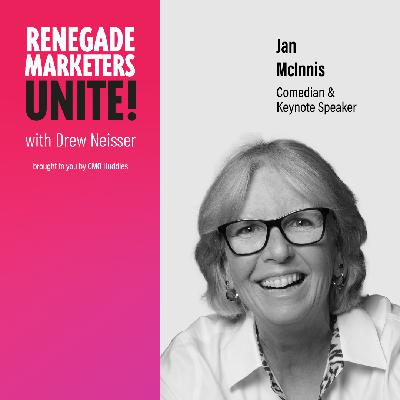
Do humor and serious leadership belong in the same room? Most leaders default to staying "professional" and miss one of the simplest ways to build connection and improve communication. In this episode of Renegade Marketers Unite, Drew Neisser talks with Jan McInnis about how leaders can use humor effectively—without telling jokes or trying to be someone they're not. The conversation reframes humor from something perceived as risky to something practical: A tool leaders can use to make teams more comfortable, conversations more effective, and workplaces a little more human. What You'll Learn: Why humor can make leaders more human and approachable Why humor makes leaders more approachable How humor can acknowledge tension without derailing the moment When humor helps, and when it can backfire How small moments of levity can improve communication across teams The takeaway: Humor isn't about being funny. It's about being human. If your meetings feel a little too stiff—or your communication isn't landing the way it should—this episode offers a simple place to start. For full show notes and transcripts, visit https://renegademarketing.com/podcasts/ To learn more about CMO Huddles, visit https://cmohuddles.com/
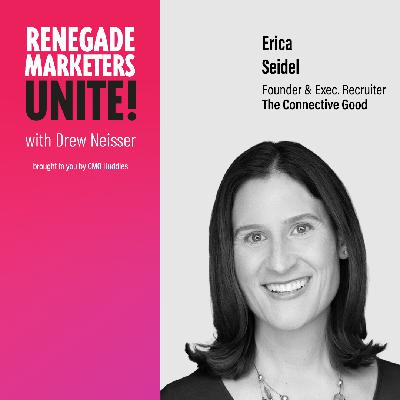
A tough CMO job search can mess with your confidence fast. The search runs longer than expected. A role looks right on paper, then gets murkier as the conversations unfold. The company says it wants growth, but the real issue may be churn, product, or a CEO still figuring out what kind of marketing leader the business needs. That's what makes this market hard. You are not only trying to tell a strong story about yourself. You are also trying to judge whether the opportunity in front of you is one you can win in. Executive recruiter Erica Seidel, founder of The Connective Good, has a front-row seat to how CMO hiring is working right now. In her conversation with Drew, she gets into what CEOs say they want versus what they are really hiring for, how to frame your story when growth is hard to prove, and how to spot the signals that a role may be shakier than it first appears. What You'll Take Away: Why every hire is a set of tradeoffs and how to position yourself What CEOs mean when they ask for a "growth partner" Why business context matters as much as headline results How AI fluency is showing up in CMO hiring How to shape your story before others define your narrative Signals to Read: If the role is built for growth or cleanup What a CEO's reaction to pushback reveals If the job spec reflects reality or an "11 out of 10" wish list If the company can make tradeoffs How culture and pace show up before day one If your CMO job search has you questioning your story, your fit, or your instincts, this episode will help you get more confident on all three. For full show notes and transcripts, visit https://renegademarketing.com/podcasts/ To learn more about CMO Huddles, visit https://cmohuddles.com/
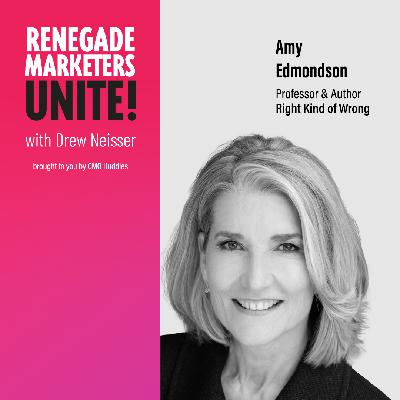
Too many companies treat every failure the same. That makes people more cautious, more guarded, and less willing to take the smart risks innovation requires. Amy Edmondson argues that not all failures deserve the same label. Some are preventable. Some come with complexity. Then there is intelligent failure, the kind that comes with thoughtful experimentation in new territory and produces the learning that moves innovation forward. In this episode, Drew Neisser brings in Harvard Business School professor Amy Edmondson, author of Right Kind of Wrong, to look at what leaders need to do if they want teams experimenting and learning in unfamiliar territory. For Amy, that starts with a clear goal, a bet no bigger than necessary, and the kind of questions that create enough psychological safety for people to share what they're seeing early. So even when the result falls short, the learning is still useful. What You'll Take Away: The difference between preventable, complex, and intelligent failure Why intelligent failure belongs in new territory What makes an experiment smart, small, and worth running Why high achievers often need a better frame for failure How playing not to lose distorts innovation What This Asks of Leaders: Stop treating every miss as proof someone messed up Make the goal clear before the experiment starts Keep the bet no bigger than necessary Ask questions that invite candor instead of caution If your team needs a smarter way to think about failure, risk, and learning, this one is worth a listen. For full show notes and transcripts, visit https://renegademarketing.com/podcasts/ To learn more about CMO Huddles, visit https://cmohuddles.com/
Search is starting to behave differently. More buyers are asking AI tools direct questions, getting synthesized answers, and making decisions without following the old click path. That creates a new challenge for marketers. Content now has to be structured to show up in the answer. In this "Drew-on-Drew" episode, host Drew Neisser pulls together what surfaced in recent CMO Huddles Strategy Labs around Answer Engine Optimization (AEO) and focuses on the questions marketing teams are already starting to wrestle with. Which buyer questions should be turned into structured Q&A first? Which strong existing pages are worth updating before you create anything new? And does this sit with SEO, or is AEO becoming part of a broader content conversation? If you've been hearing more about AEO and trying to figure out what deserves attention now, give this one a listen. Drew lays out what's changing, what teams should look at first, and how to get moving! Where To Start: Identify the buyer questions already shaping search behavior Turn those questions into structured Q&A on pages that already perform Add schema before you spend on anything more elaborate Let SEO lead the first pass, then expand if the test shows promise What You'll Take Away: Which questions belong on your site first, including comparisons, "best tool for X," and "how does this work?" Why this is still early, and why benchmarking now matters Why your SEO team can likely own AEO too How to start with strong existing pages instead of building from scratch For full show notes and transcripts, visit https://renegademarketing.com/podcasts/ To learn more about CMO Huddles, visit https://cmohuddles.com/
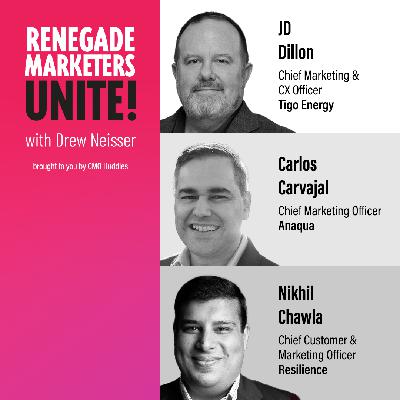
Most companies say they put customers at the center of their business. Few actually operate that way. In this episode of Renegade Marketers Unite, Drew Neisser talks with JD Dillon (Tigo Energy), Carlos Carvajal (Anaqua), and Nikhil Chawla (Resilience) about what it takes to turn customer voice into real organizational change. Together, they unpack what customer-centric leadership looks like in practice—from retention programs and executive briefings to listening to real sales calls and turning customer signals into action across the business. The result is a more operational view of customer obsession, one where the voice of the customer shows up not just in dashboards, but in meetings, decisions, and everyday habits. The big idea: Customer centricity becomes powerful only when it shows up in everyday habits—meetings, messaging, and decisions. If you want to move from customer-aware to customer-obsessed, this episode delivers practical strategies you can apply immediately. What You'll Learn: Why customer obsession must show up in company habits, not just strategy decks How marketing leaders are using customer voice to shape planning and priorities Why stories and quotes from customers often move teams faster than dashboards How narrowing customer centricity to a clear job-to-be-done makes it actionable Why customers should appear in all-hands meetings, planning sessions, and executive briefings How marketing teams can turn customer conversations into a repeatable growth engine This Episode Is For B2B CMOs and marketing leaders who want to move beyond talking about customer centricity and start embedding customer insight into how their organizations actually operate. For full show notes and transcripts, visit https://renegademarketing.com/podcasts/ To learn more about CMO Huddles, visit https://cmohuddles.com/
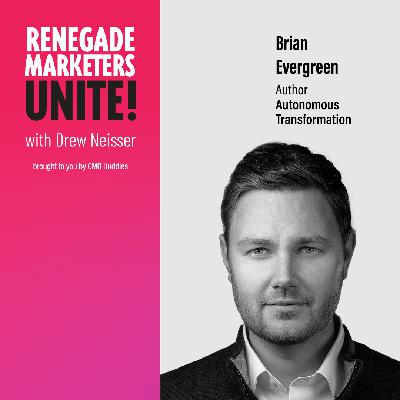
AI is forcing a leadership choice. You can treat it like a stack of use cases and end up with a lot of motion and a little progress. Or you can start with a clear vision of the future you want, make strategy visible, and use that to align decisions across the business. In this episode, Drew Neisser talks with Brian Evergreen, author of Autonomous Transformation, about why the AI conversation so often collapses into tools and use cases, and how leaders can pull it back to vision, outcomes, and the kind of alignment that drives transformation. What you'll take away: Why optimization can keep you busy while you stay stuck How to make a future vision concrete enough to act on What "no strategy without vision" means, and how to spot fake strategy Why leaders default to scorecards, and how it stalls transformation How Brian's "nindrant" separates "we can do" from "we need alignment" Why use case first AI limits gains, and how to shift to value creation Plus: A simple workshop to surface visions before projects A clean split between what marketing can do now and what needs CRO and CFO alignment How to move AI from tool talk to a value creation leadership conversation If you are tired of AI conversations that start with tools and end with small wins, listen to this episode for a vision first approach that changes what you do next. For full show notes and transcripts, visit https://renegademarketing.com/podcasts/ To learn more about CMO Huddles, visit https://cmohuddles.com/
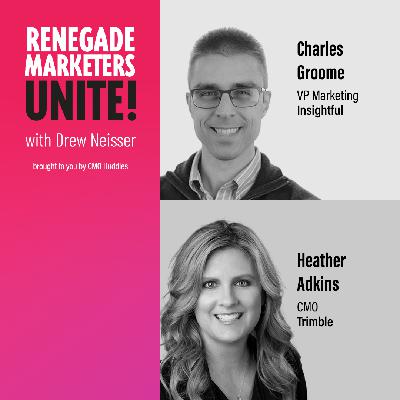
Marketing org design isn't an HR exercise. It determines whether your team spends the year reacting… or actually executing. In this episode of Renegade Marketers Unite, Drew sits down with Charles Groome (Insightful) and Heather Adkins (Trimble) to unpack what a 2026-ready marketing organization really looks like. Spoiler: It's not built around functional silos. Instead, they explore campaign-led team structures, mindset-driven hiring, and operating systems designed for speed, adaptability, and accountability. You'll hear: How Insightful uses an effort + outcomes framework to evaluate performance Why Trimble reorganized around nine global initiatives instead of functional silos The rise of integrated campaign units to tighten alignment How to hire T-shaped marketers who blend storytelling and data Ways to give teams more autonomy without sacrificing accountability How better org design can reduce burnout and increase clarity If your team structure hasn't changed in years, your team may struggle to adapt when the market shifts. This conversation will challenge how you think about structure, talent, and what it takes to build a marketing team that can pivot with confidence. For full show notes and transcripts, visit https://renegademarketing.com/podcasts/ To learn more about CMO Huddles, visit https://cmohuddles.com/
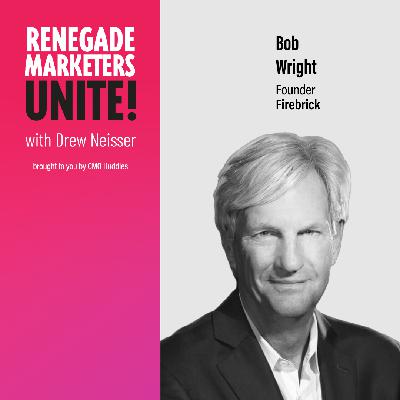
Feature-and-function decks aren't winning anymore. In this episode of Renegade Marketers Unite, Drew sits down with Bob Wright (Firebrick) to break down how B2B CMOs can use positioning to drive growth, shorten sales cycles, and stand out in crowded markets. They unpack why product-first stories fail, how to get to "one voice" across the company, and what it really means to own a key business problem that buyers care about. In this episode: The three biggest positioning mistakes: product-first thinking, misalignment, and no owned problem Creating urgency when "do nothing" is the real competitor Why "why you, why now" matters more than "how it works" When and how to rethink positioning after PLG, acquisitions, or expansion How to stand out in a world of AI sameness Building positions that sales actually uses If your messaging is drifting into "blah blah blah" territory, this episode will help you reset around problems, not products. For full show notes and transcripts, visit https://renegademarketing.com/podcasts/ To learn more about CMO Huddles, visit https://cmohuddles.com/
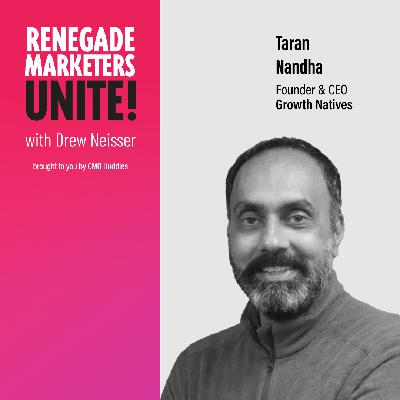
Many CMOs face the same dilemma: You're asked to prove "brand," then told brand tracking is too expensive. So you invest in analyst relations, adjust PR, navigate layoffs, or shift strategy without a reliable way to show how those moves affect market perception. RepuTracker was built to solve that problem. Developed for members of the CMO Huddles Leader program, RepuTracker provides a monthly, evidence-based view of your company's reputation so you can see whether it's rising, slipping, or holding steady, and why. In this episode, Drew is joined by Taran Nandha (Growth Natives) to demo the RepuTracker beta. They show how the tool tracks reputation month to month across multiple signals, then get practical about how to read the output, explain it to leadership, and see whether your moves are showing up in the market. In this episode: How RepuTracker turns scattered public signals into a monthly reputation score with trends and competitor benchmarks. What it measures across key dimensions: Power of voice, awareness, engagement, perception, and employee sentiment. How sources and weighting work behind the scenes across dozens of platforms. How to use trendlines and recommendations to move from "we dipped" to a clear next step. Plus: Why direction over time matters more than one noisy review or spike. How to sanity-check dips using internal context and profile audits. What could come next, from deeper source auditing to tracking visibility in AI search and LLM references. If you're curious how RepuTracker works, what signals it pulls from, and how to interpret the output month to month, this episode is the walkthrough. Learn more about the CMO Startegy Labs ➡️ https://cmohuddles.com/strategy-labs For full show notes and transcripts, visit https://renegademarketing.com/podcasts/ To learn more about CMO Huddles, visit https://cmohuddles.com/
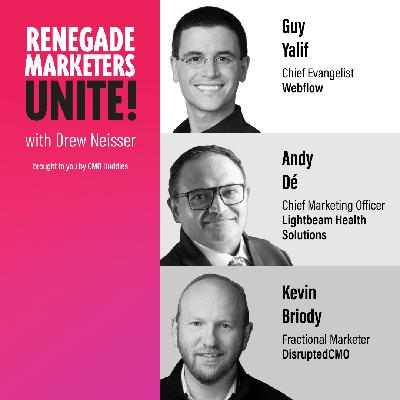
AI is now a standing agenda item. It shows up in QBRs, board packets, and 2026 budget plans with a big expectation stamp on it. CMOs are being asked to operationalize it fast, prove value in workflows, and keep risk, governance, and tool sprawl under control. To get specific about what to prioritize next, Drew brings together Guy Yalif (Webflow), Andy Dé (Lightbeam Health Solutions), and Kevin Briody (DisruptedCMO). Together, they focus on how CMOs can move from scattered experiments to intentional AI adoption across people, process, and technology, and what it takes to make AI a trusted part of how marketing runs. In this episode: Guy shares an AI fluency maturity model and explains why the shift to operational excellence is a change management challenge. Andy breaks down agentic AI and workflow automation with examples from CI, outbound, RFPs, content, and AEO, using "why, what, how, so what." Kevin focuses on the people and platform side, from job anxiety and culture to vendor shakeouts and MarTech-level discipline. Plus: Centering AI plans on people and fluency so it feels additive, not threatening. Using councils, fast-track approvals, and guardrails to scale safely. Balancing efficiency with human experience and customer acceptance. Treating AI tools like core MarTech, with scrutiny around contracts, integrations, and vendor longevity. If you want your 2026 AI plan to feel like a strategic advantage instead of a collection of pilots, this conversation will help you decide what to run, what to scale, and what to skip. Learn more about the CMO Startegy Labs ➡️ https://cmohuddles.com/strategy-labs Check out Firebrick ➡️ https://firebrickconsulting.com/ For full show notes and transcripts, visit https://renegademarketing.com/podcasts/ To learn more about CMO Huddles, visit https://cmohuddles.com/
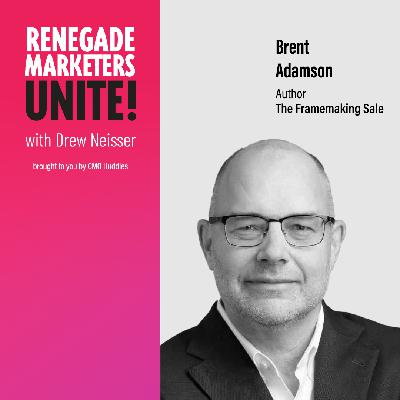
Most marketers worry about whether buyers trust their brand. Brent Adamson, author of The Framemaking Sale, argues that the actual issue sits somewhere else: Buyers do not trust themselves. In this episode, Drew sits down with Brent to challenge three big assumptions: That more supplier trust is the answer, that buyers have a neat journey to map, and that customer centricity is always the right north star. In this episode: Why decision confidence matters more than supplier trust How shifting from "trust us" to "trust yourselves" reshapes GTM How to rethink buyer journeys through the "never again" and spaghetti-bowl lens. Framemaking in practice, from nudges and checklists to maturity models. The three Es, Establish, Engage, Execute, as a shared marketing and sales playbook. Plus: Escaping the smartness arms race by editing content to reduce anxiety and build buyer self-confidence. Turning social proof into a confidence engine, using "other customers like you…" stories. Making content supplier-agnostic, helping buyers ask better questions and weigh tradeoffs. If you want your buyers to trust themselves enough to decide, start here. For full show notes and transcripts, visit https://renegademarketing.com/podcasts/ To learn more about CMO Huddles, visit https://cmohuddles.com/
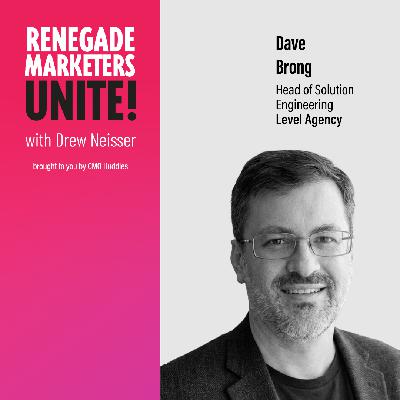
If AI is only helping you write copy, you are leaving real leverage on the table. Every marketing team is buried in invisible busywork; a trail of repetitive, manual steps hiding inside every task. So what happens when you take one of those messy workflows, map every step, and rebuild it? In this episode, Drew talks with Dave Brong (Level Agency) about how CMO Huddles transformed a messy, 10-step post-meeting grind into an automated system that transforms hundreds of conversations into structured insight, searchable intelligence, and real business value. In this episode: How a manual, repetitive workflow became an automated intelligence engine How transcripts, metadata, and semantic search unlock institutional knowledge The reality: Only ±10% of the system relies on AI (code does the heavy lifting) When to use low-code tools vs. engineers for reliability, privacy, and scale Plus: A simple method to audit workflows and spot automation opportunities How to balance build vs. buy for AI workflows How to amplify human judgment instead of replacing it If you are tired of manual follow-up, underused data, and AI hype without impact, this conversation is for you. For full show notes and transcripts, visit https://renegademarketing.com/podcasts/ To learn more about CMO Huddles, visit https://cmohuddles.com/
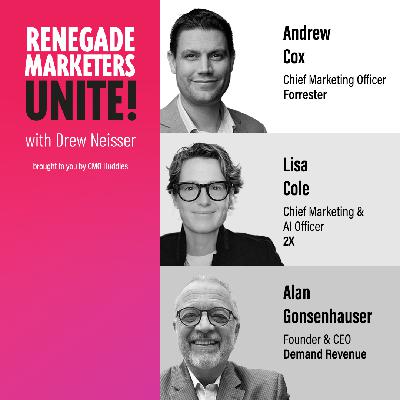
Growth targets keep climbing while cost lines tighten, and planning season starts to feel very personal for CMOs. AI threads through every conversation, zero-based thinking pulls against last year's baseline, and the goalposts never seem to hold still. So the job becomes building a budget you can walk into the room with, own, and defend with conviction. To get there, Drew brings together Andrew Cox (Forrester), Lisa Cole (2X), and Alan Gonsenhauser (Demand Revenue). The conversation centers on tying spend to strategy, translating marketing into CFO-ready terms, and giving AI a role in the plan that the numbers can support. In this episode: Andrew shares Forrester's view on moving past "last year plus X," building budgets around corporate objectives and campaigns, and forcing prioritization. Lisa applies a zero-based mindset to business priorities, uses a 70-20-10 program mix for core, flex, and test, and frames marketing as an ATM of Audience, Trust, and Monetization. Alan outlines the signals of strong and weak budgets, tying the majority of spend to growth campaigns and long-term value plans, and maintaining a year-round working relationship with the CFO. Plus: Keeping tech spend in check, including guidelines for MarTech mix and contract flexibility Positioning brand and PR in financial terms like pipeline influence, win rates, and pricing power Responding to AI efficiency pressure by fixing workflows first and framing value in utilization, speed, and scalability Why the budget should be the numerical expression of strategy, not a defense of legacy spend If you want to walk into your next budget review with a clear story, solid numbers, and conviction, this conversation will help you get there. For full show notes and transcripts, visit https://renegademarketing.com/podcasts/ To learn more about CMO Huddles, visit https://cmohuddles.com/
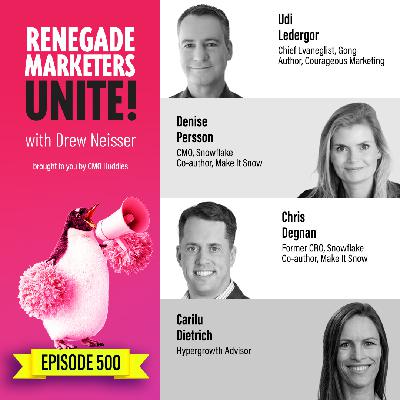
Nine years in. 500 episodes later. Hundreds of CMOs on the mic. A deep well of marketing wisdom for anyone brave enough to draw from it. This milestone episode is a celebration of the bold B2B ideas, experiments, and hard-earned lessons that have filled the show from day one. Thank-you to every marketer who has listened, shared, and dared to try something new because of what they heard here. Recorded live at the 2025 Super Huddle, Drew's conversations with Udi Ledergor, Denise Persson and Chris Degnan, and Carilu Dietrich anchor this milestone episode. In this episode: Udi shares how Gong pulled off a Super Bowl spot on a regional budget, aimed it at VPs of Sales, and tracked impact in traffic, conversations, and pipeline. Denise and Chris explain how a CMO and CRO stayed aligned through four CEOs at Snowflake and evolved the story from "cloud data warehouse" to "data cloud," all in lockstep. Carilu shows how Lovable is building a movement with real users as influencers, a CEO who lives on social, and a speed-first mindset tuned to the pace of AI and customer buzz. Plus: Why a "crazy ideas" budget creates room for standout plays that still satisfy the CFO How empathy for sales and shared ownership of the number strengthen CRO-CMO alignment How CEO-led social, customer stories, and edutainment power modern B2B brands What it takes to move at AI speed while keeping product value and customer love at the center If you want a concentrated hit of CMO-level courage, alignment, and playmaking, this milestone episode is your highlight reel. For full show notes and transcripts, visit https://renegademarketing.com/podcasts/ To learn more about CMO Huddles, visit https://cmohuddles.com/
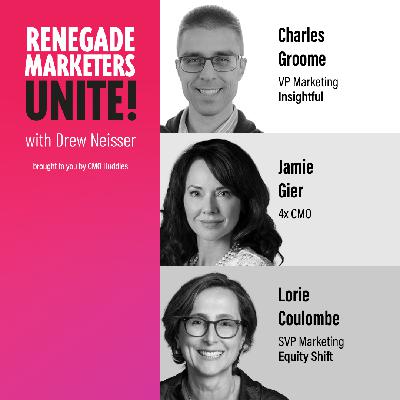
Events sit at the crossroads of joy and heartburn for B2B marketers. The magic of getting customers together in real life is real, and so is the pain when sales skips the pre-work and ROI gets fuzzy. With every dollar under scrutiny, CMOs are treating events as strategic bets that have to earn their spot on the plan. In this episode, Drew talks with Charles Groome (Insightful), Jamie Gier, and Lorie Coulombe (Equity Shift) about how they decide which events to do, design experiences people remember, and turn field time into pipeline. They cover event portfolios, sales pre-work, and the simple tools that keep everyone aligned before, during, and after the show. In this episode: Charles sorts events into three buckets, leans into a listening circuit with smaller meetups, and looks at target-account impact to decide where bigger bets belong. Jamie frames events around getting discovered, creating memorable experiences, and driving deals, with customers on stage and pods focused on key accounts. Lorie sets clear goals for each event, does deep homework on audiences and geographies, and locks in sales pre-work and follow-up expectations. Plus: Build an event portfolio that blends big shows, listening trips, CABs, and customer moments. Use themes, news hooks, and customer voices to stand out in crowded halls and drive recall. Align sales and marketing via pods, shared KPIs, and simple scoreboards. Tighten spend with regional focus, partner co-hosting, and clear criteria. If events are on your 2026 budget and you want them to pay in pipeline, this episode will help you pick, plan, and prove them with more confidence. For full show notes and transcripts, visit https://renegademarketing.com/podcasts/ To learn more about CMO Huddles, visit https://cmohuddles.com/

AI is now part of the job, whether your team feels ready or not. Some folks jump in with prompts and pilots; others stay on the sidelines while the pace keeps picking up. How do you turn that mix into a team that understands AI, uses it well, and gets stronger with every experiment? Drew talks with Jakki Geiger (Arango), Betsy Daitch (Canoe Intelligence), and Grant Johnson (Chief Outsiders) about what it takes to uplevel AI skills across marketing. They get into hiring for AI-forward talent, picking use cases that matter, and tracking progress so experiments turn into repeatable, results-focused habits. In this episode: Jakki hires AI-forward talent, builds digital twins for leaders, and kicks off AI projects from SDR pilots to sales enablement knowledge bases. Betsy uses Gemini, an "Upleveling Marketing Efficiency" tracker, and QBR AI projects to lift adoption across product, growth, and corporate marketing. Grant sets AI proficiency goals, runs workshops, and assigns ownership so each marketing function keeps building capability over time. Plus: How to create a safe space for AI experimentation anchored to clear business goals Ways to narrow use cases so pilots stay manageable and show impact Why documentation, ownership, and simple workflows keep AI programs alive How CMOs can model AI use and report progress in language the C-suite cares about Tune in if you are serious about raising your team's AI game and want practical ways to build confidence, capability, and momentum. For full show notes and transcripts, visit https://renegademarketing.com/podcasts/ To learn more about CMO Huddles, visit https://cmohuddles.com/
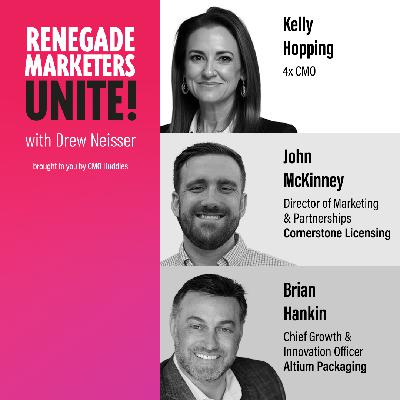
GenAI now sits inside content workflows, SDR outreach, and competitive intelligence. Marketing teams are seeing real wins and real growing pains, and the open question is where to focus next. To answer that, Drew brings together Kelly Hopping, John McKinney (Cornerstone Licensing), and Brian Hankin (Altium Packaging) to share the AI plays they are running right now and how they're leading the charge. Here's how: In this episode: Kelly shows how AI weaves through content, SDR workflows, web chat, product work, and SEO, plus how OKRs and certifications lift AI fluency across the team. John uses AI agents for competitor tracking, outbound support, and coding, and treats AI as a sparring partner for strategy before it reaches the C suite. Brian runs an AI campaign engine that builds multi-touch programs in minutes and tracks lifts in engagement, qualified leads, proposals, and wins. Plus: How AEO connects to SEO and what needs to shift for LLM-driven discovery How leaders model AI use with internal knowledge bases and cross-functional pilots How to structure AI readiness Where CMOs can start Tune in if you want AI use cases you can put to work now and a clearer view of where to point your team next. For full show notes and transcripts, visit https://renegademarketing.com/podcasts/ To learn more about CMO Huddles, visit https://cmohuddles.com/
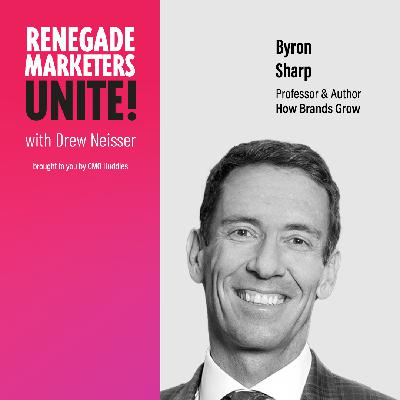
When it comes to marketing, everyone has opinions—but few have proof. That's where Professor Byron Sharp steps in. In this episode, Drew sits down with the globally renowned marketing scientist and author of How Brands Grow to unpack what B2B marketers are getting wrong, what they should measure instead, and why focusing only on in-market buyers is a recipe for decline. Byron drops truth bombs on: Why mental availability drives physical availability (not the other way around) How B2B marketers are shooting themselves in the foot with fluffy brand campaigns What to measure if you want to track real progress Why B2B growth takes time—and how to prove it's working Plus, why CMOs should stop pretending that awareness is enough and start earning a place in buyers' brains before they're ready to buy. Whether you're defending your brand budget to a CFO, fighting for longer-term investment, or just trying to grow your share of voice without blowing it all in Q1—this episode delivers the mental fuel (and science) to make your case. To hear the rest of this CMO Huddles Bonus Huddle, visit CMO Huddles Hub on YouTube. For full show notes and transcripts, visit https://renegademarketing.com/podcasts/ To learn more about CMO Huddles, visit https://cmohuddles.com/
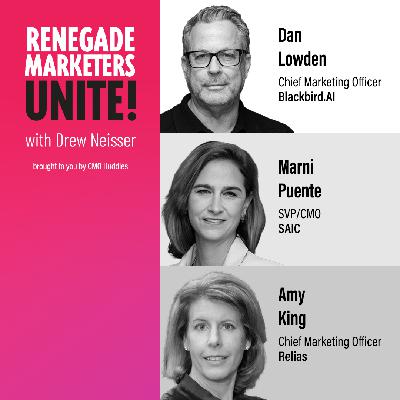
Recruiting great marketers is tough work. Sustaining performance, growth, and energy over time demands deliberate choices. Those choices shape the culture, the pace, and the results your team can sustain through whatever comes next. To see how this plays out across very different orgs, Drew talks with Dan Lowden (Blackbird.AI), Marni Puente (SAIC), and Amy King (Relias) about the teams they've built and the systems that keep them performing. They break down who they hire first, how they set structure and expectations, and how coaching, intelligent failure, and AI-supported workflows help people grow and stay motivated. In this episode: Dan builds a lean, senior, hands-on startup team and fosters a test-and-learn culture where people move fast, try new things, and learn together. Marni reshapes a communications-heavy function into a modern marketing org, adding commercial and demand capabilities and aligning work to OKRs and transparent dashboards. Amy leads a marketing reset at Relias, rebuilding leadership and structure, positioning marketing with sales and client care, and modeling vulnerability and continuous learning through change. Plus: Why AI committees, battle buddies, and shared learning loops turn hesitation into confident adoption How OKRs, scorecards, and focused dashboards clarify priorities and tie marketing to revenue outcomes Where intelligent failure helps teams stop low-value work, share lessons, and build trust How competency assessments, surveys, and development plans nurture top performers and future leaders If you're building, inheriting, or leveling up a marketing team, this episode gives you a ton of moves to help it perform, grow, and stay together. For full show notes and transcripts, visit https://renegademarketing.com/podcasts/ To learn more about CMO Huddles, visit https://cmohuddles.com/
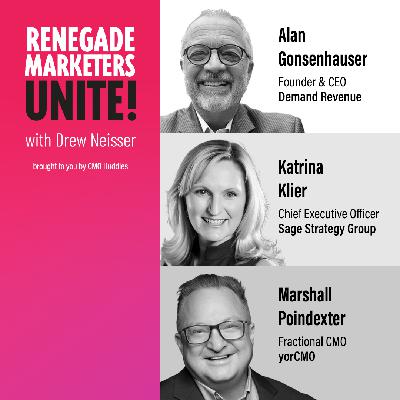
Plenty of CMOs reach a point where the fractional model starts to look… intriguing. A little more freedom, a little less 24/7 pressure, and a whole lot of variety. In this episode, Drew brings together three former full-time CMOs who now serve as full-time fractionals: Alan Gonsenhauser (Demand Revenue), Katrina Klier (Sage Strategy Group), and Marshall Poindexter (yorCMO). They get into what it really takes to succeed in the role, from setting expectations with CEOs and boards to choosing the right clients, managing time and scope, and knowing when the fractional model fits and when it is time to move on. In this episode: Alan builds trust fast with structured discovery across leaders and the board, using "three magic wishes" to surface priorities before acting. Katrina ties marketing priorities to financial and board targets so strategy supports existing growth and margin commitments. Marshall differentiates fractional work from consulting, using a simple framework and 90-day sprints to drive execution through in-house teams or agencies. Plus: Narrowing your niche so you attract clients where you create outsized value How to set scope, cadence, and availability so part-time does not quietly become full-time Using process, sprints, and metrics to stay focused when new requests pop up Planning the transition, from mentoring the incoming full-time CMO to creating a clean off-ramp Tune in if you are considering going fractional, hiring a fractional CMO, or just trying to understand how this model fits into the modern CMO career. For full show notes and transcripts, visit https://renegademarketing.com/podcasts/ To learn more about CMO Huddles, visit https://cmohuddles.com/

Comments

Download from Google Play

Download from App Store
 United States