


 Claim Ownership
Horsemanship From Ginny
Subscribed: 0Played: 0
Subscribe

© Yasmin Morgan-Kay
Description
This podcast is simply gong to be my thoughts an opinions on horse training, current affairs in the horse world, as much as I keep up with anyway, guests, from well known professionals to amateurs.
Follow me on my podcasting journey, this is all very new to me and currently I record them on my iphone so bare with if they're not the best, but I am constantly improving my setups.
I'll talk about projects I'm currently working on, horses I have in the past or am currently working with, issues I face whie training them, problem solve them, and odten times I'm just going to be recording my random thoughts and ideas I have while travelling around between clients.
14 Episodes
Reverse
This episode is my opinion on ex racehorses.While I really do like the ex racers, and they're always very interesting horses to work with, and I understand that there are plenty of ex racers that go onto live fantastic lives outside of racing, many of them just don't unfortunately. Many of them end up in homes that are ill equiped to handling them, not educated enough to understand how deep rooted their understanding of life differs to how the average horse owner keeps their horses, and often times under funded to be able to look into potential health issues they have, or get the consistent professional help in order to improve their beaviour once health issues have been ruled out. The majority of people who buy ex racers, buy them because they're cheap. While they may well be cheap to purchase initially, owning them and caring for them properly is far from cheap. They're prone to vices that are often either caused by health issues that are ignore because "that's just how some of them are" or they cause health issues which only get noticed when it causes noticiably serious issues, such as colic or ulcers. Ex racers are stereotypically difficult horses to own and care for, while there are plenty of outliers, its the owners of these outliers that claim these stereotypes as lies. They're not lies, and you telling people your good doer, with good feet, and donkey like personalility is the norm only puts more horses into homes that aren't suitable.I'm regularly being called out to help with ex racers, and while some owners give their lives and their bank accounts to these animals to do the very best by them, many people will tell me they "just want them to hack out" or "just want them to stop rearing in the school" or insert almost any behaviour into that slot, and when I tell them it's not as simple as just riding them through the naughtiness, more often than not I'm met with "I can't afford" or "I don't want" and unfortunately, when you took on an ex racer, you took on the cost and training time it takes to get these horses right. When purchasing an ex race horse you should be considering these things, and if you don't, you shouldn't have one. It's that simple.
In this episode I'm talking about the word "should"Now it might seem a bit much to talk for nearly 17 minutes about 1 word. But language and how we use it is really important. So today I'm talking about why the word "should" is osmething you should avoid. It helps no one, not you. not your horse, and certainly not clients.
In this episode I'm talking about the time I worked with a Paralympic rider.The thing I learnt while working with her, the diffiuclties I had working with her, dissapointments I felt, thing I really enjoyed while working with her and the experience I got working with the horses she gave me the opportunity to work with and learn from. Regardless of anything I'll always be grateful to Bert and the things she taught me, the horses she gave me access to work with and the opportunities I had.
In this episode I'm talking about the difference between hot horses and stressed horses.So do hot horses exists? Or are people just passing off high levels of stress and excusing it with "it's just a hot horse"?I talk about how these horses are created, from breeding to ridden work. I talk about the horses we lose to stress and poor practices that are normal in the horse world when they shouldn't be. Explosive horses should NOT be normal, whether it's how they've been bred, raised, trained or physical pain that the horses are going though.Being able to recognise pain in horses shouldn't be as hard as it is. Being able to tell the diference between a disregulated horse emotionally and whether the horse has kissing spines should be easy to do, because disregulation in horses shouldn't be as common as it is. I shouldn't have a job fixing as many horses as I do. Horses should be set up to win in life, the number of horses that don't make it to maturity either due to behavioural issues, or behaviour induced injuries is astounding, and it shouldn't be happening.
Horses that retire are often in their late teens early 20's and sometimes late 20's. Why should be lose all that learned knowledge to a retirement field or retirement livery?More horses that retire should end up raising young horses. Rather than purchasing a weanling to pair with the filly/colt you're weaning, you should be putting that youngster in with an older horse. We don't leave toddlers to raise toddlers and we shouldn't be leaving foals and yearlings to raise foals and yearlings. None of them have any understanding of the world, how to behave around other horses, how to behave around people. Furthermore, most retired horses when I've met them, often look very defeated, like they've lost their purpose in life. Rather than retiring them completely, they should still have a job, and in my opinion, the best job for these horses would be to raise the next generation of horses.I would have far less horses to work with if more horses were raised around a good variety of different horses, mixed ages groups, mixed sexes, mixed personalities. Horses should be Raising Horses!
I know this might be a strange title from someone who works using natural horsemanship methods.I've come to this conclusion from working with many different horses and creating these problems in my own horse in the past. In this podcast I talk about the issues that natural horsemanship can cause, and how to prevent them. Natural horsemanship is largely a training methods designed to train effective working horses on ranches, meaning there are gaps when it comes to training horses using natural horsemanship methods for English riding. This isn't to say it cannot and should not be used when training horses for English riding, it just means that adjustments need to be made to the methods to suit English riding. There is absolutely nothing wrong with that, and with the adjustments made, natural horsemanship, in my opinion, is the best way to train well rounded, relaxed and happy horses across the disciplines.
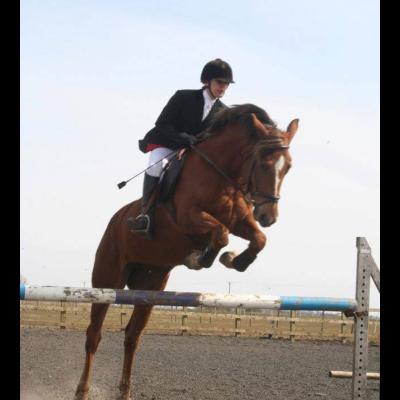
In this episode I am talking about Ginny and why I named my business after her. I talked about her a lot in the "My Journey" Episode but I didn't go into much detail when I talked about some of the things she put up with from me, the guilt I feel surrounding her, where she is now, what my logo means, and how I came to the decision to name the business Horsemanship from Ginny, often creating confusion surrounding my name and people thinking I'm called Ginny.Ginny has had a huge influence in my life and still does, even now, 15 years after I first met her, I can look back on my life, and still go through things in my ife, and the people who re the most important to me in my life, she is still a direct link as to why they're in my life and how much of an impact she has had over me and will continue to have over me throughout my life as I continue on this journey.I will be forever grateful for this mare coming into my life, despite the neglect she went through due to my ingnorance and lack of funds to really be able to look after her properly. She never asked for much, just to be treated fairly and I often fell shirt of that, which I will always feel sorry for, but the lessons I learned from her I take forward in my life, in my personal relationships, in my training and relationships with the horses I own now, and the clients horses I get the pleasure to work with thanks to the path this very special mare sent me on.
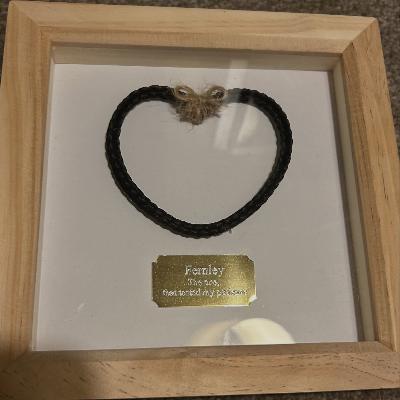
In this Episode I'm talking about Fernley. A beautiful bay Gelding who really struggled with a lot in his life.From loading, to general handling, which would bleed into his ridden work. He has some health issues in his life which made life harder for him, and quite sadly lead to his death.Thank you to Beth who gave me permission to tell Fernley's story, while I could talk for hours and hours about Fernley and all the things he found difficult and how he had to learn pretty much everything from scratch again, that horse tried his heart out for me and tried his absolute hardest for me everytime.Fernley was easily the hardest horse I've met in my life to work with, but the physical issues he had made it hard to know why he was so difficult until it was too late unfortunately.RIP FernleyThe One, That Tested My Patience
While watching videos of many of the trainers that are out there, you might've heard the phrase "Make the wrong thing hard and the right thing easy".But what does that actually mean?Well that's what I talk about in this episode, giving several examples, reasons why it works, ways it can be done wrong, and why it doesn't mean simply beating on a horse, kicking or pulling them about. Why it's not about removing choice from your horse, but it actually gives them a choice to make, while guiding them to do the things we want them to do.
In this episode I talk about associative learning.I talk about what associative learning is, how it works and why it's important to understand when working with horses.I talk about the power of associative learning, the speed of it, and how it creates strong emotional memories. The pros and cons to associative learning and a few examples of how you can create poor associations without even meaning to.
In this episode, I talk about the Four Quadrants of Training.While to actually train a horse you know need to know these terms perfectly, and training animals isn't as simple as knowing them and following them to a tee, understanding the difference between them is really important. Their uses, what they do, and personally, I don't think it's something talked about enough in horse training. It gets talked about and argued about a lot amongst dog trainers, largely to be pedantic to win an argument that has no foundation and to try and get one up on someone that is having disagreements online. The terminology itself isn't that important. It what they mean and what it does in your training, understanding reinforcements and punishments and how they work is very important for understanding what you are doing and what you hope to achieve with your horse. Horse training is an art, everyone does it differently, everyone disagrees, but most people regardless of whether you agree with what they are doing or not is at least trying to do what is best for the horse.Regardless of what training methods people use, they will be using at least parts of the four quadrants of training.
In this episode I'm going to be talking about using treats during training with horses.A strangely contrivesial topic in the horse world, and somethig I used to be very strongly against.I'm going to be talking about Positive reinforcement, the issues that can arrise with it, which are largely why horse people are still so stead fast against using treats for training. I talk about how to prevent these issues, and things to think about when using treats in order to make sure you don't face these problems, as preventing issues is far easier than fixing them.
So buckle in if you're into long podcasts, because they're what I plan to do!This podcast is just an explaination of where I come from. What I've done through my life, and how I've got to where I am now.Through my time with Ginny, how I came to use natural horsemanship as my main way of working with horses. The ups and downs I've had working on different yards, life situations that impacted how I was working with horses, my time away from horses and what I learned working with different animals, leading to how I found my way back to horses, and where I am now.I do go off on a few tangents, but unfortuneately, that's who I am as a person, and my mind is often times all over the place when I'm not concentrating on a horse in front of me.If you enjoy the podcast, I'd really appreciate a like and a comment.Any questions you have will be answered in my fortnightly Live Q&A's, avaliable to my patreon members!Well, I hope you enjoy listening to me ramble on!
This is just a little introduction into who I am, what I do and a general idea for what this podcast will be.These podcasts will largely be a place for me to put all my thoughts about training, issue that are curently going on in the hore world, my opinions on them, and I eventually plan to get guests onto the podcast from profressionals in the industries, to complete novices asking the silly questions that more advanced people might not think to ask, or think to explain to people as it may seem obvious.I'll be offering up chances for people to ask some questions, which I will go through and answer on Q&A Podcasts, and as I get better at doing this, I'll start to add some videos to the podcasts, but for now, these will be audio's only.This is basically just a place for me to share my random thoughts and opinions, not all of them will be fully thought through, so for anyone who's interested in listening to what I hve to say, follow along, if you're not, hey ho, I'm still gonna just post my thoughts.
Comments


Download from Google Play

Download from App Store
 United States