DiscoverThe Resolution Room
The Resolution Room
Claim Ownership

The Resolution Room

Author: Lowe Insights Consulting

Subscribed: 7Played: 5
Share

Description

Welcome to The Resolution Room™

This is a space where conflict isn’t the end of the story—it’s the beginning of something deeper. Hosted by Dr. Nashay Lowe, founder of Lowe Insights™, this series explores how we move from chaos to clarity, break generational patterns, and use adversity as fuel for both personal and collective evolution. Each micro-episode delivers short, focused insights designed to turn tension into transformation. In just a few intentional minutes, you’ll gain practical tools, meaningful perspective, and grounded strategies for growth. In a world that often rewards avoidance, outrage, and quick fixes, The Resolution Room invites us back to our shared humanity. By hearing from experts, storytellers, and everyday people across cultures and industries, we remember that conflict is universal...and so is our capacity to learn from it. These conversations remind us that we’re far more connected than divided, and that clarity, connection, and consistency aren’t just ideals; they’re lifelong skills we can strengthen at any stage of our personal or professional journey.


Learn more at www.loweinsights.com and if this space speaks to you, please follow, share, and review the podcast! Your support helps more people find the conversations that make resolution possible.


Hosted on Acast. See acast.com/privacy for more information.

48 Episodes
Reverse
In this conversation, Dr. Jason Smith, the department chair for Human Performance and Sports Science at Tennessee State University, shares his insights on leadership, education, and career development. He introduces the concept of the 'Eight P's' of leadership, which include policy, procedure, professionalism, productivity, passion, purpose, pride, and positivity. Dr. Smith emphasizes the importance of teaching professionalism and soft skills to students, guiding them through career transitions, and fostering an inclusive environment in academia. He discusses the realities of the job market and the significance of mentorship and networking in helping students navigate their career paths. The conversation concludes with reflections on conflict resolution and the application of the Eight P's beyond academia.Key TakeawaysTeaching professionalism and soft skills is crucial for student success.Career development should start early in students' academic journeys.Networking and internships are key to career transitions.Understanding job market realities helps students set realistic expectations.Diversity and inclusion are essential in academic environments.Positive engagement can significantly impact student motivation.Conflict resolution requires open communication and accountability.Mentorship plays a vital role in guiding students' career paths.The Eight P's can be applied in various aspects of life beyond academia.About Dr. Jason SmithMy name is Jason Smith, and my story is deeply rooted in Nashville, TN. Growing up in a diverse, multicultural environment gave me a unique perspective and the ability to connect with people from all walks of life.My Journey & PhilosophyFor twelve years, I had the privilege of serving as a coach and Athletic Director within the Metropolitan Nashville Public School System. That time was foundational, not just for my career, but for me as a person. Building lasting relationships with my student-athletes taught me the true meaning of empathy and strength, and it cemented my core belief in servant leadership.My goal has always been to light a fire in people, not under them. My passion is empowering future teachers, coaches, and mentors to find their own paths to success.A Decade at TSU & Looking ForwardIn 2012, I brought this passion to the collegiate level at Tennessee State University, and it's been an incredible decade of growth! Here, I've focused on providing strategic leadership and building a vibrant, collaborative community among our students, staff, and academic departments. As the Department Chair of the Human Performance and Sport Sciences and my extensive background as a coach and athletic director, combining administrative leadership with my passion for student success. Whether on or off campus, my mission is to create programs that foster success for everyone.I'm still bringing a full tank of positive energy to every teaching and learning environment, and I couldn't be more excited to continue creating opportunities for the next generation.Contact: https://www.linkedin.com/in/dr-jason-smith-7b6b8290/🌟 Rate  🙆🏾‍♀️ Join the Community 🛍️ Shop ☕ 1:1 Sessions 🎤 Speaking Requests: https://www.loweinsights.com🎶 Music License: YHLX3CWSWGWNCJZT Hosted on Acast. See acast.com/privacy for more information.
In this conversation, Bernie Youngblood discusses the evolving landscape of corporate culture, emphasizing the importance of wellness as a foundational element rather than a mere perk. He explores the impact of COVID-19 on work dynamics, the necessity of integrating kindness and empathy into leadership, and the role of AI in innovation. Youngblood also highlights the significance of emotional intelligence and trust within teams, advocating for a cultural transformation that prioritizes human connection and long-term commitment over short-term metrics.Key TakeawaysWellness should be seen as infrastructure, not a perk.COVID-19 has changed the perception of the traditional work model.AI's success relies on the human element for creativity and innovation.Creating a culture of kindness is essential for employee retention.Fortune 500 companies can learn from smaller organizations and startups.Building trust within teams requires moving past hierarchy and titles.Emotional intelligence is crucial for effective leadership.Cultural transformation takes time and consistency.Metrics should reflect real human impact, not just numbers.Leaders should actively show appreciation to their teams. About Bernie YoungbloodThis episode’s guest is Bernie Youngblood, CEO of ThinkPartners and host of the "Unboxing the Office Podcast," where he explores the intersections of culture, connection, and creativity inside the modern workplace. Bernie’s a lifelong entrepreneur with a passion for helping leaders see beyond the spreadsheets—into the human systems that make organizations thrive. Through ThinkPartners, he works with companies and creators who believe business can be both purposeful and profitable. His approach blends strategy, storytelling, and heart, all rooted in one belief: clarity and empathy aren’t soft skills—they’re leadership essentials.Contact: https://linktr.ee/bernieyoungblood🌟 Rate  🙆🏾‍♀️ Join the Community 🛍️ Shop ☕ 1:1 Sessions 🎤 Speaking Requests: https://www.loweinsights.com🎶 Music License: YHLX3CWSWGWNCJZT Hosted on Acast. See acast.com/privacy for more information.
Why are so many teams stuck in reaction mode? Why do so many leaders confuse managing tasks with actually leading people? In this episode, Dr. Nashay Lowe sits down with organizational change strategist Alexis Felton, founder of Alter EQ, to unpack the hidden costs of values-misaligned leadership—and why most workplace friction isn’t a skills gap, it’s a care gap. Together, they explore the psychology of resistance, the emotional toll of misalignment, and the simple but radical truth that leadership begins with how you show up, not what you know. From corporate burnout to authentic connection, this conversation reframes change management as a human practice: one built on empathy, intentionality, and the courage to lead with care—even when it’s inconvenient. If you’ve ever felt like you’re constantly putting out fires, questioning your impact, or wondering why good ideas stall inside good organizations, this episode will help you reset your definition of leadership—from control to compassion, and from reaction to rhythm.Key TakeawaysAuthenticity is crucial for effective leadership.Genuine care involves listening and responding to employees' needs.Balancing professionalism with personal connection enhances workplace culture.Vulnerability in leadership fosters trust and collaboration.Feedback should be viewed as a gift, not criticism.Emotional intelligence is as important as technical competence in leadership.Creating a supportive environment encourages open communication.Resistance to change often stems from a lack of ownership.Engagement surveys are only valuable if acted upon.Personalizing leadership approaches can improve team dynamics.About Alexis FeltonGlobal Program Leader with a proven record of driving strategic initiatives and building high-performing cross-functional teams in fast-paced environments. Expertise spans Project & Portfolio Management (PPM), change management, and delivering transformative solutions that enhance customer engagement. Strong communicator committed to inclusive leadership and continuous improvement.At Smartsheet, I'm a Sr. Solutions Specialist, PPM & Transformation, where I've driven GTM initiatives that influenced over $100M in ARR through compelling use case demonstrations. I empower cross-functional teams to elevate solutions and solve complex customer challenges, enhancing Smartsheet's PPM credibility. I've also executed Customer Success programs with 90%+ CSAT.With an MSOD (4.0 GPA) and PgMP, PMP, and Six Sigma Green Belt certifications, I bring a strong theoretical and practical foundation to program leadership. I'm passionate about leveraging my skills to drive organizational success through strategic partnerships and a focus on continuous improvement. Proud board member of Black at Smartsheet, championing inclusivity.🌟 Rate  🙆🏾‍♀️ Join the Community 🛍️ Shop ☕ 1:1 Sessions 🎤 Speaking Requests: https://www.loweinsights.com🎶 Music License: YHLX3CWSWGWNCJZT Hosted on Acast. See acast.com/privacy for more information.
In this conversation, Radhika Dutt shares her journey from engineering to becoming a thought leader in product management and organizational culture. She discusses the pitfalls of metric-driven approaches, the importance of focusing on long-term vision over short-term goals, and introduces her OHLs framework as a healthier alternative to traditional OKRs. Through personal anecdotes and professional insights, Radhika emphasizes the need for curiosity-driven leadership and the significance of creating an environment of psychological safety within teams.Key TakeawaysRadhika Dutt emphasizes the importance of vision over mere metrics.Metrics can lead to performance theater, obscuring real impact.Curiosity-driven leadership fosters better problem-solving.Personal stories can illustrate the impact beyond metrics.The OHLs framework offers a new approach to goal setting.Vision debt can demoralize teams and hinder progress.Reflecting on experiences is crucial for learning.Creating psychological safety encourages open communication.Balancing KPIs with long-term vision is essential.Asking the right questions can transform team dynamics.About Radhika Dutt Radhika Dutt is the author of Radical Product Thinking: The New Mindset for Innovating Smarter which has been translated into Chinese and Japanese. The methodology she introduced in her first book is now used in over 40 countries. She is an entrepreneur, speaker, and product leader who has participated in five acquisitions, two of which were companies that she founded. She is currently Advisor on Product Thinking to the Monetary Authority of Singapore (Singapore’s central bank and financial regulator), and does consulting and training for organizations ranging from high-tech startups to multinationals on building radical products that create a fundamental change. Radhika has built products in a wide range of industries including broadcast, media and entertainment, telecom, advertising technology, government, consumer apps, robotics, and even wine. She graduated from MIT with an SB and M.Eng in Electrical Engineering, and speaks nine languages. Radhika is now working on her second book – it’s about why goals and targets backfire and what actually works. Helpful Links: LinkedIn profileRadhika’s WebsiteRadical Product Thinking (website for the methodology and Radhika’s first book)Speaker reelLinks to the OHL framework/ toolkit🌟 Rate  🙆🏾‍♀️ Join the Community 🛍️ Shop ☕ 1:1 Sessions 🎤 Speaking Requests: https://www.loweinsights.com🎶 Music License: YHLX3CWSWGWNCJZT Hosted on Acast. See acast.com/privacy for more information.
In this conversation, Dr. Nashay Lowe explores the concept of fresh starts and resolutions, questioning their effectiveness in facilitating real change. She emphasizes that true transformation comes not from declarations but from the systems and environments we create around ourselves. By examining the difference between wanting change and designing for it, she highlights the importance of supportive structures that can sustain us through challenges. Dr. Lowe also critiques the glamorization of change, advocating for a more honest approach that acknowledges our imperfections and the realities of life. Ultimately, she encourages listeners to build systems that support their growth, even on imperfect days.Key TakeawaysThe illusion of a fresh start can be comforting but often leads to familiar patterns.Real change requires supportive environments and consistent habits.Resolutions place too much emphasis on a single decision rather than ongoing effort.Wanting change is different from designing for it; systems are crucial.Most people struggle not due to lack of willpower but because of inadequate structures.Systems help reduce friction and make desired behaviors easier to achieve.Change is often unremarkable and requires consistent effort rather than dramatic breakthroughs.Building systems for the person you actually are is essential for sustainable growth.Expecting change to feel exciting can hinder its sustainability.Meaningful change comes from a steady relationship with supportive systems.🌟 Rate  🙆🏾‍♀️ Join the Community 🛍️ Shop ☕ 1:1 Sessions 🎤 Speaking Requests: https://www.loweinsights.com🎶 Music License: YHLX3CWSWGWNCJZT Hosted on Acast. See acast.com/privacy for more information.
Every film begins with a story — and so does every company.In this cinematic conversation, Dr. Nashay Lowe sits down with filmmaker and creative strategist Cherise Lesesne to explore how storytelling and direction can transform the way we lead. From defining a clear vision to casting the right team and setting the emotional tone, Cherise unpacks how the best directors — and leaders — bring stories to life that people actually want to be part of. Together, they reveal how creativity, clarity, and compassion can reshape the cultures we build, one scene at a time. Key TakeawaysLeaders are storytellers, crafting narratives for their teams.Language and tone significantly impact team dynamics.Effective teams require a mix of personalities and skills.Conflict can be a catalyst for growth and improvement.Directing is about inspiring others, not micromanaging.Character development is crucial for team success.Setting the right tone can influence team morale.Reframing challenges can turn fear into focus.Leadership should be iterative and adaptable.Understanding and empathy are key to effective leadership.About Cherise LesesneCherise Lesesne is a product strategist, writer, and filmmaker whose work bridges storytelling, culture, and social analysis. She explores the power of narrative to decode how film, television, and media mirror societal systems and human behavior. She is also a finalist for TEDx U Street Women to deliver a speech regarding how people should take advantage of technology and screentime by thinking critically about the messages present in film and TV. Through her media platform Chaos In My Cup, Cherise weaves together essays, cinematic storytelling, and cultural critique that challenge audiences to think critically about identity, power, and belonging. Her background in product strategy informs her creative approach—merging analytical precision with emotional depth to craft stories that inspire reflection, connection, and change.🌟 Rate  🙆🏾‍♀️ Join the Community 🛍️ Shop ☕ 1:1 Sessions 🎤 Speaking Requests: https://www.loweinsights.com🎶 Music License: YHLX3CWSWGWNCJZT Hosted on Acast. See acast.com/privacy for more information.
In this episode, Dr. Nashay Lowe explores three topics funneling to on shared lesson: 1) myth of perfect timing, emphasizing that waiting for the right moment often keeps us stuck. She discusses 2) how scars can become beauty marks, shaping our depth and leadership, and 3) shares insights from her travels on how perspective shifts when we step outside our comfort zones. The episode highlights that growth doesn't arrive polished but is lived through experiences.Key Takeaways: The myth of perfect timing often keeps us stuck.Scars can become beauty marks, shaping our depth.Travel shifts our perspective and assumptions.Growth doesn't arrive polished; it's lived.Readiness is a decision, not a feeling.Waiting too long has a cost on our dreams.Starting messy is still starting.Momentum teaches what preparation can't.Scars are evidence of resilience and growth.Travel deepens empathy and responsibility.🌟 Rate  🙆🏾‍♀️ Join the Community 🛍️ Shop ☕ 1:1 Sessions 🎤 Speaking Requests: https://www.loweinsights.com🎶 Music License: YHLX3CWSWGWNCJZT Hosted on Acast. See acast.com/privacy for more information.
In this conversation, Sandra Martinez shares her journey as a humanitarian worker, discussing her experiences in conflict-affected areas and the importance of resilience and transitional justice. She emphasizes the need for emotional health, community support, and self-care in humanitarian work, while also addressing the distinction between survival and resilience. Sandra reflects on personal stories that highlight the power of collective resilience and the necessity of creating supportive systems for individuals and communities.Key TakeawaysSandra's journey into humanitarian work began during her master's program in 2014.Resilience involves not just enduring hardship but also transforming that experience into strength.Transitional justice aims for truth, accountability, and non-repetition of past violations.Survival mode can mask deeper trauma and hinder true resilience.Glorifying endurance can overlook the emotional toll of hardship.Creating safe spaces for grief is essential for healing and resilience.Collective resilience involves shared care and community support.Leadership that prioritizes compassion can shift individuals from survival to resilience.Self-care is crucial for humanitarian workers to effectively support others.Small actions can foster a culture of resilience in any community.About Sandra MartinezPolitical Scientist and Master in International Affairs with over seven years of international experience in human rights, peace, and protection across challenging regions in Africa and Latin America. I've worked with international organizations, specializing in providing strategic advice on crisis response, conflict resolution, and the implementation of projects with a focus on gender and inclusion.Website: https://www.linkedin.com/in/sandramartinezr/🌟 Rate  🙆🏾‍♀️ Join the Community 🛍️ Shop ☕ 1:1 Sessions 🎤 Speaking Requests: https://www.loweinsights.com🎶 Music License: YHLX3CWSWGWNCJZT Hosted on Acast. See acast.com/privacy for more information.
Dr. Nashay Lowe shares insights from her experience in facilitating conversations across various industries, emphasizing the importance of understanding the unspoken dynamics in a room, the power of honest voices, and the patterns of conflict. She highlights how subtle shifts can indicate a change in group dynamics and the lessons learned from facilitating discussions that foster understanding and engagement.Key TakeawaysThe room has a tone and posture before anyone speaks.Good facilitation starts the moment you enter the room.Silence can indicate calculation rather than resistance.Honest voices can shift the entire room's energy.Conflict often stems from differing definitions and stakes.Recognizing subtle shifts can enhance group participation.Facilitation is about guiding and protecting conversations.Groups long to be understood and taken seriously.Creating safety allows for deeper engagement.Conversations can change how individuals interact with the world.🌟 Rate  🙆🏾‍♀️ Join the Community 🛍️ Shop ☕ 1:1 Sessions 🎤 Speaking Requests: https://www.loweinsights.com🎶 Music License: YHLX3CWSWGWNCJZT Hosted on Acast. See acast.com/privacy for more information.
In this episode, Dr. Nashay Lowe interviews Priscilla Adebayo, a PhD candidate in International Conflict Management, about her work with refugee women. They discuss the resilience and agency of refugees, particularly women, in the face of forced displacement and conflict. Priscilla shares her personal journey and research, emphasizing the importance of storytelling, community, and finding purpose in suffering. The conversation highlights the challenges refugees face, the power of resilience, and the need for a supportive framework to help them rebuild their lives.Key TakeawaysResilience is about finding purpose in suffering.Refugee women face unique challenges in displacement.Community support is crucial for refugee integration.Storytelling helps refugees reclaim their narratives.Priscilla Adebayo's framework aids refugee healing.Cultural barriers impact refugee experiences in the US.Refugees need to be seen as agents, not victims.Language barriers hinder refugee integration.Resilience involves courage and grit to move forward.Healing requires addressing psychological trauma.About Priscilla AdebayaoPriscilla Adebayo is a passionate leader and social entrepreneur dedicated to empowering women and youths. With over a decade of cumulative experience in non-profit leadership/administration, law, academic research, conflict resolution and coaching, Priscilla skillfully integrates her expertise to drive meaningful change. Priscilla is known for her ability to design, fund, implement, monitor, and evaluate projects, driving sustainable solutions that enhance organizational missions and deliver measurable results. Her collaborative leadership style fosters team development and promotes engagement.Website: https://sa4refugeewomen.comContact: https://www.linkedin.com/in/priscilla-adebayo-91062b141/🌟 Rate  🙆🏾‍♀️ Join the Community 🛍️ Shop ☕ 1:1 Sessions 🎤 Speaking Requests: https://www.loweinsights.com🎶 Music License: YHLX3CWSWGWNCJZT Hosted on Acast. See acast.com/privacy for more information.
Dr. Nashay Lowe explores the essence of public speaking, emphasizing that it's not about confidence or performance but about alignment and authenticity. She shares personal experiences, including a TEDx pitch and a talk at Webster University Geneva, illustrating how vulnerability and presence can transform speaking into a powerful tool for connection and reflection.Key Takeaways:Public speaking is more about alignment than performance.Authenticity requires vulnerability and fear.Fear indicates that your voice matters in the space you're entering.Speaking can reflect possibilities and inspire others.The impact of a message often goes beyond the speaker's intentions.Humanity in delivery resonates more than polished technique.Presence and connection are more valuable than performance.A speaker's voice can become a mirror, reflecting both expertise and humanity.People remember how you made them feel, not just the content.Your voice can reveal possibilities for both the audience and yourself.🌟 Rate  🙆🏾‍♀️ Join the Community 🛍️ Shop ☕ 1:1 Sessions 🎤 Speaking Requests: https://www.loweinsights.com🎶 Music License: YHLX3CWSWGWNCJZT Hosted on Acast. See acast.com/privacy for more information.
In this conversation, Rich Ellis, a health coach from Auckland, New Zealand, discusses the intricate connections between physical health and workplace wellbeing. He emphasizes the importance of understanding individual needs in health interventions, the impact of workplace culture on employee health, and the necessity of consistency in health transformations. Rich also highlights the role of emotional intelligence in managing workplace dynamics and offers practical techniques for stress management. The discussion culminates in reflections on self-awareness and the importance of treating every interaction as an opportunity for growth and learning.Key TakeawaysHealth interventions must consider individual circumstances.Workplace culture significantly impacts employee wellbeing.Emotional intelligence is crucial for effective leadership.Consistency is key in health transformations.Sleep is foundational for overall health and performance.Intrinsic motivation drives sustainable change.Self-awareness helps in managing workplace conflicts.Curiosity fosters better workplace relationships.Every interaction is an opportunity for learning.Leaders must address toxic behaviors promptly.About Rich EllisRichard has worked in the exercise industry for 11 years and has worked with a diverse range of people over that time. He is an advanced holistic movement coach and mentor. He has a special interest in working with weight loss clients and those who suffer from fatigue. He uses a range of specific tests which allows clients to see the status of their internal health in black and white. He works with clients to develop a plan to deliver ultimate health and energy – giving people the freedom to do whatever they want.Website: https://www.linkedin.com/in/richellis/🌟 Rate  🙆🏾‍♀️ Join the Community 🛍️ Shop ☕ 1:1 Sessions 🎤 Speaking Requests: https://www.loweinsights.com🎶 Music License: YHLX3CWSWGWNCJZT Hosted on Acast. See acast.com/privacy for more information.
In this conversation, Dr. Nashay Lowe introduces the concept of Provention, a philosophy that goes beyond traditional prevention methods by focusing on designing systems that prevent conflict from arising in the first place. She emphasizes the importance of understanding the underlying human needs that drive conflict and advocates for a shift in mindset from reactive measures to proactive design. Through the Low Insights approach, organizations can build cultures that foster open dialogue, trust, and collaboration, ultimately leading to sustainable resolution and transformation.Key TakeawaysProvention is a deeper philosophy than prevention.Real peace comes from designing conditions that prevent conflict.Conflict is often a symptom of unmet human needs.Prevention focuses on systems thinking and root causes.Building capacity is more important than fixing problems.Prevention turns conflict work into culture work.Leaders should redesign systems to prevent recurring issues.Sustainable resolution is relational, not reactive.Transformation should not depend on crisis.Prevention is about understanding and meeting human needs.Disclaimer: This post contains affiliate links. If you make a purchase, I may receive a commission at no extra cost to you.300 Mindful Worksheets: These Mindfulness Worksheets offer practical tools to cultivate focus, calm, and clarity each day.🌟 Rate  🙆🏾‍♀️ Join the Community 🛍️ Shop ☕ 1:1 Sessions 🎤 Speaking Requests: https://www.loweinsights.com🎶 Music License: YHLX3CWSWGWNCJZT Hosted on Acast. See acast.com/privacy for more information.
In this conversation, Alfredo Borodowski, an expert in positive psychology, discusses the importance of flourishing in both personal and professional contexts. He highlights the cultural differences in leadership styles between South America and the United States, the emotional toll of leadership in the age of AI, and the significance of psychological capital in organizations. Alfredo shares his personal journey of overcoming adversity and emphasizes the need for strengths-based leadership and the importance of finding purpose in one's work. He concludes with practical advice for leaders to foster a positive workplace culture and achieve peak performance.Key TakeawaysPositive psychology is key to flourishing.AI introduces new challenges of uncertainty and anxiety.Cultural differences affect leadership styles and communication.Psychological capital is crucial for organizational performance.Strengths-based approaches can significantly enhance team dynamics.Resilience is about bouncing back and learning from challenges.Purpose drives clarity and fulfillment in leadership.Success should align with personal strengths and values.Every failure presents an opportunity for growth.Leaders should focus on character strengths to build strong teams.About Alfredo BorodowskiAlfredo Borodowski, PhD, MSW, is a keynote speaker, executive coach, and author of The Human Upgrade: The New Leadership for the AI Revolution. He helps organizations and leaders reach peak performance through Positive Psychology, resilience, and purpose. Alfredo has advised CEOs and executives from companies including Motorola, Lenovo and leading law firms across the Americas. Once paralyzed by mental illness, he rebuilt his life through the science of Positive Psychology, transforming adversity into strength. With over 30 years of experience as a rabbi, philosopher, and corporate consultant, Alfredo blends science, soul, and storytelling to help leaders turn toxic cultures into thriving ones — and rediscover the power of purpose in the age of AI.  Website: https://www.linkedin.com/in/alfredo-borodowski/🌟 Rate  🙆🏾‍♀️ Join the Community 🛍️ Shop ☕ 1:1 Sessions 🎤 Speaking Requests: https://www.loweinsights.com🎶 Music License: YHLX3CWSWGWNCJZT Hosted on Acast. See acast.com/privacy for more information.
In this short yet impactful conversation, Dr. Nashay Lowe explores the concept of gratitude, emphasizing its role as a grounding practice rather than a mere performance. She discusses how gratitude helps us recognize the quiet support in our lives, especially during challenging times, and offers a reflective practice to deepen our appreciation for those who contribute to our growth.Key TakeawaysGratitude is a practice that helps us notice support.It's about recognizing what sustains us beneath the surface.Gratitude is less about listing blessings and more about recognition.Even in difficulty, something is carrying you forward.Gratitude often whispers, and we need to pause to hear it.There are quiet parts of our lives that sustain us.Gratitude becomes powerful during transitions and grief.It provides a lens to see resilience amidst pain.A simple gratitude practice can deepen appreciation.Gratitude is a conversation, not a performance.Disclaimer: This post contains affiliate links. If you make a purchase, I may receive a commission at no extra cost to you.300 Mindful Worksheets: These Mindfulness Worksheets offer practical tools to cultivate focus, calm, and clarity each day.Mindful Living Journal: The Mindful Living Journal helps you slow down, track growth, and bring mindfulness into each day.🌟 Rate  🙆🏾‍♀️ Join the Community 🛍️ Shop ☕ 1:1 Sessions 🎤 Speaking Requests: https://www.loweinsights.com🎶 Music License: YHLX3CWSWGWNCJZT Hosted on Acast. See acast.com/privacy for more information.
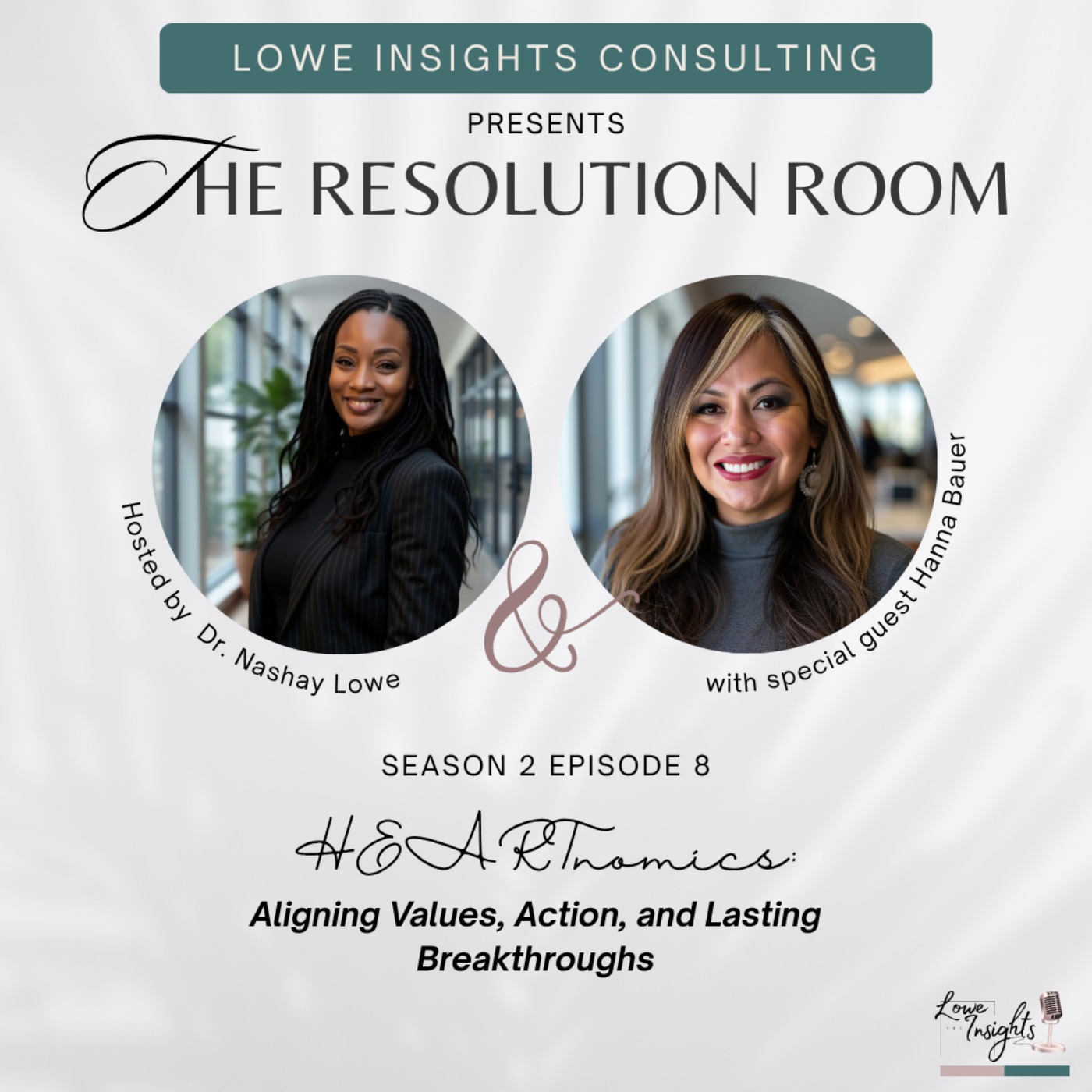
In this conversation, Dr. Nashay Lowe and Hanna Bauer explore the intersection of leadership, emotional intelligence, and organizational culture. They discuss the importance of leading with love, the concept of 'Heartnomics' which merges emotional and operational aspects of leadership, and the necessity of aligning personal and professional values. The dialogue emphasizes the role of empathy in leadership, the challenges of navigating conflict, and the importance of maintaining a values-driven culture, especially during times of crisis. Hannah shares insights on practical frameworks and tools for leaders to foster growth and transformation within their organizations, ultimately highlighting the need for authentic connections and self-awareness in effective leadership.Key TakeawaysLeading with love is essential for effective leadership.Heartnomics combines emotional intelligence with operational excellence.Values in action can transform team dynamics.Emotional dynamics are crucial for leadership success.Integrating personal values into professional settings enhances leadership.Conflict is an opportunity for leaders to shine.Empathy and accountability must coexist in leadership.Choosing the right tools is vital for team success.Aligning individual tasks with the organizational mission fosters engagement.Cultural change requires more than just check-box exercises.About Hanna Bauer Founder, HEARTnomics™ | Transformation Through Love and ExcellenceLeaders today are expected to deliver more with less, adapt to constant change, and still protect their people and themselves. Hanna Bauer makes that possible.Founder of HEARTnomics™, she helps leaders achieve transformation through love and excellence — valuing people while driving measurable performance. A former CEO, Board Chair, and Executive Director with advanced expertise in leadership systems and operational excellence, Hanna equips leaders to strengthen culture, boost engagement, and thrive under pressure without burning out.Website: www.HEARTnomics.comDisclaimer: This post contains affiliate links. If you make a purchase, I may receive a commission at no extra cost to you.Levelhead Course is a course that helps you manage stress, strengthen focus, and lead with clarity.🌟 Rate  🙆🏾‍♀️ Join the Community 🛍️ Shop ☕ 1:1 Sessions 🎤 Speaking Requests: https://www.loweinsights.com🎶 Music License: YHLX3CWSWGWNCJZT Hosted on Acast. See acast.com/privacy for more information.
In this conversation, Dr. Nashay Lowe explores the complexities of receiving feedback, addressing why it often feels personal and painful. She discusses the psychological and physical responses to feedback, the narratives we create around criticism, and offers practical tools for staying grounded during feedback sessions. Ultimately, she reframes feedback as an opportunity for connection and growth, emphasizing that it is not a reflection of our worth but a chance to learn and evolve.Key TakeawaysFeedback often feels personal due to our internal narratives.A fixed mindset makes feedback feel like a reflection of our worth.Our past experiences shape how we interpret feedback.Self-compassion can help mitigate harsh self-criticism.Pausing before responding can help calm our nervous system.Naming our reactions creates emotional distance from feedback.Asking for examples can clarify the intent behind feedback.Feedback can be seen as a bridge rather than a verdict.We can choose how to respond to feedback, even when uncomfortable.Feedback can deepen our capacity to learn and connect.🌟 Rate  🙆🏾‍♀️ Join the Community 🛍️ Shop ☕ 1:1 Sessions 🎤 Speaking Requests: https://www.loweinsights.com🎶 Music License: YHLX3CWSWGWNCJZT Hosted on Acast. See acast.com/privacy for more information.
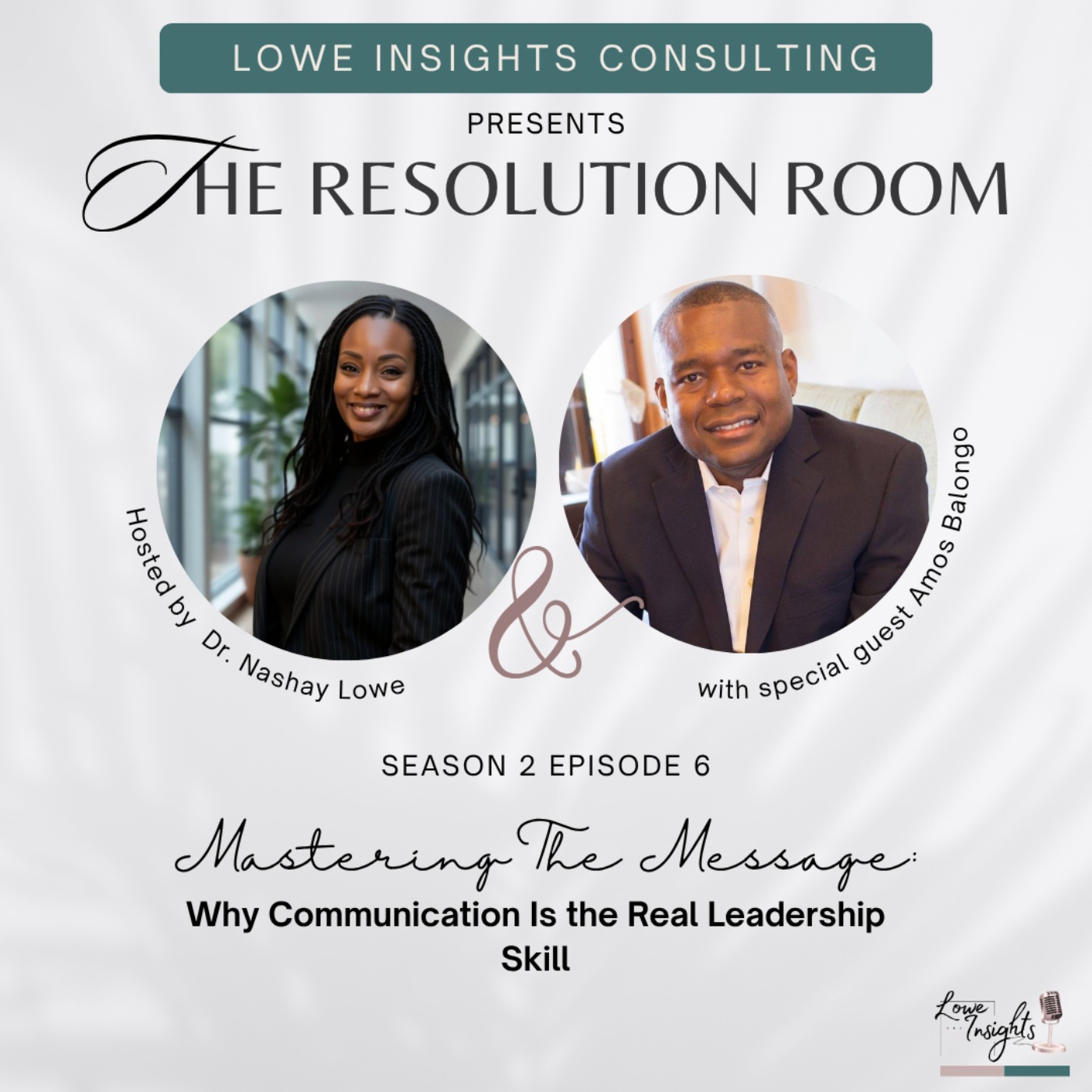
In this conversation, Amos Balongo and Dr. Nashay Lowe explore the critical role of communication in leadership. They discuss how effective communication can differentiate great leaders from the rest, the importance of connecting with people, and overcoming public speaking fears. Dr. Lowe shares insights from her work with youth empowerment initiatives, including Camp Ohana and innovative programs like the Ukulele Orchestra and Youth Aviation. The discussion also touches on the significance of early voice development in youth, the shift from reactive to intentional communication, and the importance of active listening in organizations.Key TakeawaysEffective communication is essential for impactful leadership.Connection is key to successful communication.Public speaking fears can be overcome with practice.Empowering youth through community initiatives is vital.Small impacts can lead to significant change over time.Teamwork and communication are intertwined in success.Early exposure to communication helps youth develop their voice.Leaders must shift from reactive to intentional communication.Active listening is crucial for organizational health.Resolution in leadership requires consensus and genuine connection.About Amos BalongoAmos Balongo is a dynamic keynote speaker and communication coach with wide and wealthyexperience helping leaders find their voice and own their impact. With a deep rooted passionfor human connection, Amos has been a Corporate Motivational speaking sensation since moving to the United States from Africa. He has presented at several Leadership conferences and summits and traveled to over 32 countries motivating and transforming Leaders with his message. Website: https://amosbalongo.com/Disclaimer: This post contains affiliate links. If you make a purchase, I may receive a commission at no extra cost to you.300 Mindful Worksheets: These Mindfulness Worksheets offer practical tools to cultivate focus, calm, and clarity each day.We want to acknowledge a few minor audio issues at the start of this episode. Thankfully, they’re brief and don’t take away from the depth and quality of the conversation.🌟 Rate  🙆🏾‍♀️ Join the Community 🛍️ Shop ☕ 1:1 Sessions 🎤 Speaking Requests: https://www.loweinsights.com🎶 Music License: YHLX3CWSWGWNCJZT Hosted on Acast. See acast.com/privacy for more information.
In this conversation, Dr. Nashay Lowe explores the pervasive sense of urgency in modern life, examining its roots, costs, and the importance of slowing down. She discusses how urgency often masks deeper issues and how it can lead to disconnection from ourselves and others. Dr. Lowe emphasizes the need for intentionality and the power of reclaiming our inner rhythm to make more thoughtful decisions and foster better relationships.Key TakeawaysUrgency is often a protective mechanism.Constant urgency can lead to burnout and disconnection.Slowing down allows for more thoughtful responses.Discomfort can provide valuable information.Intentionality is key to meaningful actions.Our internal rhythm is crucial for clarity.Rushing decisions often leads to regret.Taking a moment to pause can enhance decision-making.Urgency can diminish empathy and perspective-taking.Compassion is needed for our urgency-driven behaviors.🌟 Rate  🙆🏾‍♀️ Join the Community 🛍️ Shop ☕ 1:1 Sessions 🎤 Speaking Requests: https://www.loweinsights.com🎶 Music License: YHLX3CWSWGWNCJZT Hosted on Acast. See acast.com/privacy for more information.
In this conversation, Adam O'Connor, the Chief Commercial Officer at Gear Inc., shares his journey from working at a hotel front desk to leading a global outsourcing company. He discusses the pressures of sales, the importance of cultural competence in managing global teams, and how empathy and trust play crucial roles in leadership. Adam reflects on his evolving definition of success, the need to unlearn control, and what it means to find resolution as a leader.Key TakeawaysAdam O'Connor is the Chief Commercial Officer at Gear Inc.He travels extensively for work, about nine months a year.Sales pressure is constant, requiring effective prioritization.Started his career at a hotel before moving into sales.Closed a significant deal early in his sales career.Gear Inc. operates in 24 countries and offers services in 75 languages.Leadership requires grounding and understanding of team dynamics.Cultural competence is essential in global business interactions.Success is defined by helping others achieve their goals.Finding personal resolution is key to effective leadership.About Adam O'ConnorAdam O’Connor is the Chief Commercial Officer at Gear Inc., where he leads international sales strategies, drives revenue growth, and builds key partnerships. With over a decade of experience in global sales, business development, and offshoring, he has helped organizations scale operations and improve customer engagement across North America, Europe, and the Asia-Pacific region. Prior to Gear Inc., Adam held senior leadership roles at Cloudstaff, including Chief Revenue Officer and Chief Sales & Marketing Officer, where he played a key role in expanding BPO and offshoring solutions. His expertise spans finance, social media, travel, manufacturing, and content moderation. A strong advocate for global talent and operational efficiency, Adam regularly speaks on international sales, outsourcing trends, and building resilient, high-performing teams in today’s digital-first world. Please note: At the time of recording, Adam served as Chief Commercial Officer at Gear Inc. Since then, he has transitioned out of that role following internal restructuring within the company. While details cannot be shared until Gear Inc. issues a formal press release, the organization has encouraged us to share this conversation in recognition of the meaningful work Adam contributed during his tenure.Disclaimer: This post contains affiliate links. If you make a purchase, I may receive a commission at no extra cost to you.GoHighLevel is a recommended tool that streamlines client management, helping you grow with focus.🌟 Rate  🙆🏾‍♀️ Join the Community 🛍️ Shop ☕ 1:1 Sessions 🎤 Speaking Requests: https://www.loweinsights.com🎶 Music License: YHLX3CWSWGWNCJZT Hosted on Acast. See acast.com/privacy for more information.
loading
Comments 
loading