


 Claim Ownership
Gifted Talks Fundraising
Subscribed: 1Played: 1
Subscribe

© Gifted Philanthropy Ltd
Description
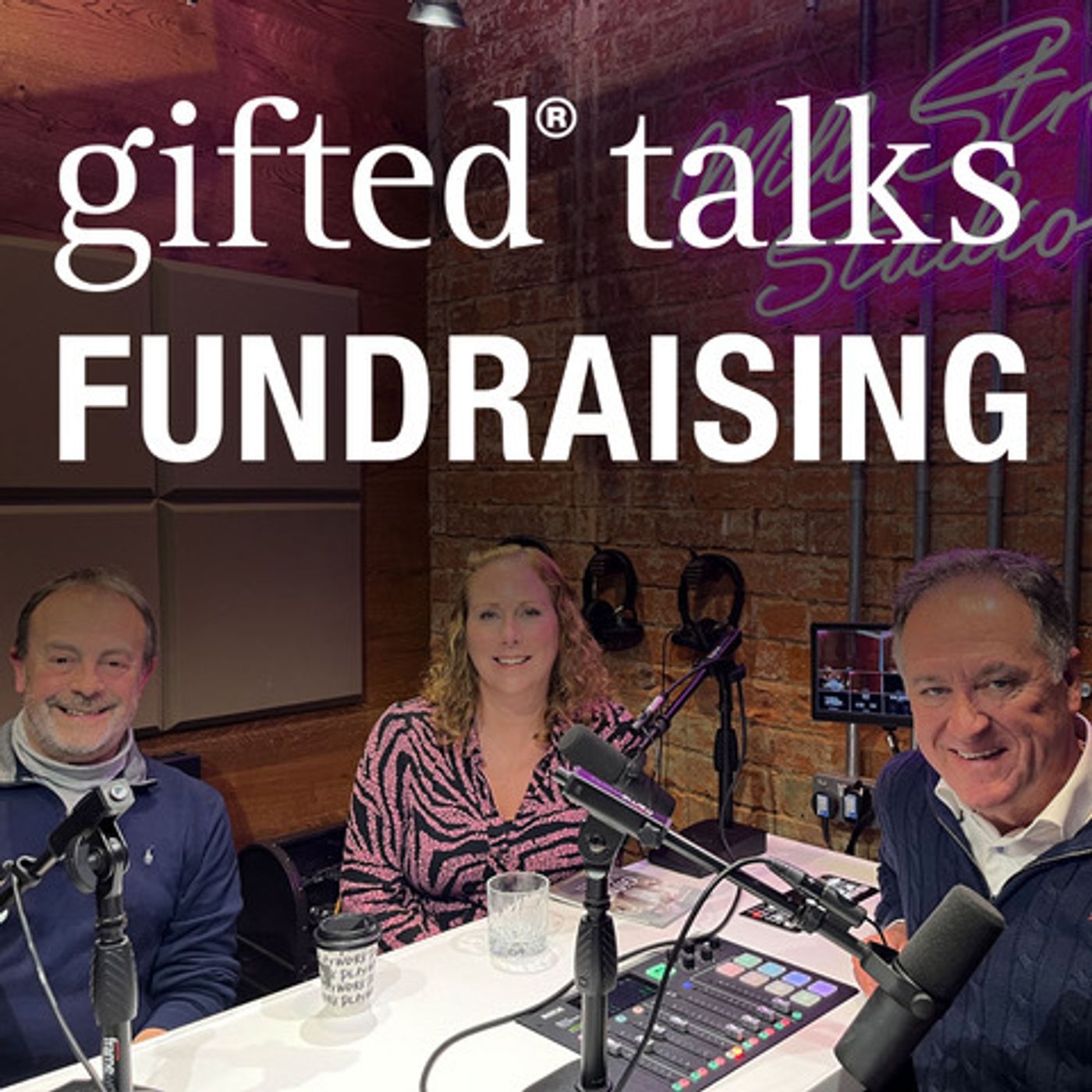
Gifted Directors Amy Stevens, Chris Goldie and Andrew Day share their extensive fundraising experience, reflecting on current challenges and emerging opportunities across the Third Sector.
These candid "kitchen table" conversations offer practical insights and helpful tips on a range of fundraising topics.
Please send your questions or suggestions for future discussion topics to:
enquiries@giftedphilanthropy.com.
These candid "kitchen table" conversations offer practical insights and helpful tips on a range of fundraising topics.
Please send your questions or suggestions for future discussion topics to:
enquiries@giftedphilanthropy.com.
10 Episodes
Reverse
In this episode, we review the Development Plan and the elements to incorporate when building your road map to fundraising success: • Created through an objective and comprehensive strategic review / audit.• Gives confidence and focus for internal team, as well as key volunteers and funders.• Enables the development programme to progress, even when circumstances change.
In this episode, we discuss how best to make the tough decisions around funding your development team:
• Focusing on how to generate the best return on investment, not just managing cost.
• Using KPI's to make sure your development programme is on track to deliver the philanthropic income required.
• Consistent performance over time should generate returns 2.5 to 4 times the sums invested, with direct costs often being met entirely by Gift Aid reclaims.
In this episode, we discuss the Campaign Manager and the vital role that they play in successful fundraising:
• How to recruit, motivate and measure the performance of a good Campaign Manager.
• What the partnership with volunteer leadership looks like.
• Being the "Insistent Voice" - focusing on what's important, and not just urgent.
In this episode, we discuss some of the most common fundraising myths encountered, including :
• The misconception that companies and grantfunders will be the biggest givers.
• That the campaign leaders only need to give time.
• Launching ambitious development programmes without making a commensurate investment in effective campaign management.
In this episode, we discuss how Leadership by example is the single most important factor that effects fundraising success:
• The power of the 'join me' message.
• Leadership giving is not about the size of the gift, but the collective response made by the Board and also the staff.
• How to motivate leadership to not only give time, but money too.
In this episode, we discuss how a Communications Plan is the 'engine room' of an effective fundraising strategy:
• Understanding what comms tools to use for each of the three fundraising platforms.
• Going beyond simply asking for money, to designing comms that foster relationships and reinforce positive responses.
• Sharing the mechanics of effective fundraising communications and how best to measure performance to build a better plan?
In this episode, we discuss how the Prospect Evaluation & Rating process can:
• Power your capital fundraising campaign, starting at the feasibility study.
• Prioritise your urgent asks, by assessing your Givers capacity, interest, access and propensity to make the gifts needed to win.
• Resolve how much money to ask each prospect to give.
In this episode, we discuss how to create a Legacy Giving programme:
• Today, 78% of UK wealth is held by 'baby boomers', with £5b forecast to be given away by 2050.
• Short-termism in fundraising planning, by putting off a proactive legacy campaign, will cost your charity many future major gifts.
• "These are the most unforgettable people you may never have met"
In this episode, we discuss how to turn the season of 'good cheer' into fundraising success:
• Being clear about the objectives for your Christmas Campaign.
• When is the best time to engage your prospects? Are Christmas Cards worth the effort?
• Keeping the engagement personal, and meaningful.
In this episode, we discuss how the bursaries at independent schools:
• Have a powerful fundraising case.
• Are grounded in a long history of educational philanthropy.
• Not only transform the prospects for specific children, but strengthen the overall school culture.
Comments

Download from Google Play

Download from App Store
 United States