


 Claim Ownership
The CEO Project Podcast
Subscribed: 29Played: 880
Subscribe

© The Lazy CEO Podcast (c) 2022
Description
Want to build a great business? The CEO Project Podcast and host Jim Schleckser brings proven tools and techniques to scale your business. Each episode dives deep into a critical business topic for CEOs of mid to large-sized firms.
170 Episodes
Reverse
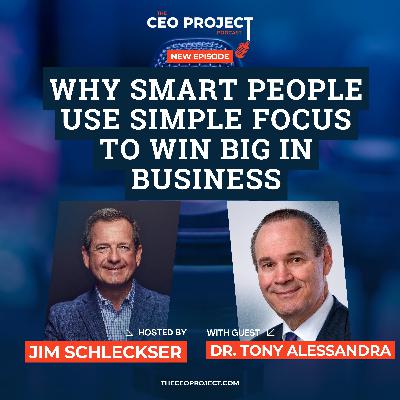
Are you overcomplicating your path to growing your business worth—when the real advantage might come from a simple focus on people, not processes? If you've ever struggled to align your team, improve sales conversations, or make better leadership decisions, this episode hits close to home. You're constantly balancing performance, personalities, and priorities—and it's easy to get lost in complexity. What you'll hear here is how simplifying your approach—especially through understanding people—can unlock better results faster. By listening, you'll gain: A clearer way to use personality insights to improve communication, sales, and team performance A practical framework for building stronger, more balanced teams that actually work well together A mindset shift toward simplicity, practicality, and focus that cuts through noise and drives better decisions Hit play now to discover how a simple focus on understanding people can immediately improve how you lead, sell, and grow your business. Check out: 00:06:30 – Tony's early door-to-door sales story and how it shaped his career in selling and communication 00:18:45 – The pivotal moment he chose simplicity, practicality, and focus as his core philosophy 00:32:10 – How assessments (like DISC) can transform team performance and decision-making in real business scenarios About Dr. Tony Alessandra Dr. Tony Alessandra has a street-wise, college-smart perspective on business, having been raised in the housing projects of NYC to eventually realizing success as a graduate professor of marketing, Internet entrepreneur, business author, and hall-of-fame keynote speaker. He earned a BBA from Notre Dame, an MBA from the Univ. of Connecticut and his PhD in marketing in 1976 from Georgia State University. Tony is Founder & Chairman of Assessments 24x7 LLC, a company that offers a variety of online assessments, including the widely used DISC profile, the Emotional Intelligence 360 assessment, the Motivators (Values/PIAV) assessment, and several 360º leadership and sales-effectiveness assessments.
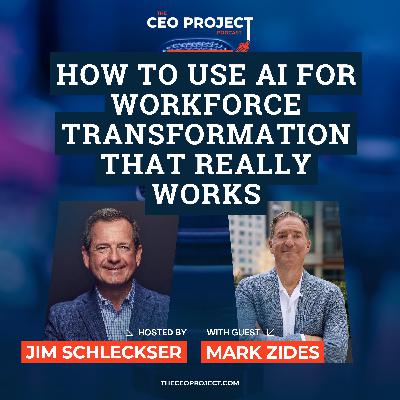
What if the biggest risk in workforce transformation isn't AI replacing people—but leaders failing to adapt fast enough? If you're leading a company today, you're navigating one of the fastest workplace shifts in decades. AI is putting data, insights, and answers at everyone's fingertips, which means the traditional leadership playbook is quickly becoming outdated. In this episode of The CEO Project, you'll hear why workforce transformation isn't just about adopting new technology—it's about changing how you lead, communicate, and motivate teams in a world where analytics are instant but human leadership matters more than ever. By listening to this episode, you'll learn how to: Understand how AI is reshaping leadership expectations and what workforce transformation means for CEOs today. Adapt your leadership style so you can move faster, make better decisions, and lead teams effectively in an AI-driven workplace. Balance data, technology, and human intuition to motivate teams and stay competitive as the pace of change accelerates. Play the episode now to discover how forward-thinking leaders are navigating workforce transformation—and why the CEOs who adapt fastest will gain the biggest advantage. Check out: 06:40 – Why many young professionals enter the workforce unprepared and the practical career habits leaders should be teaching the next generation. 16:10 – The core idea behind Rewired Leadership: how AI is forcing leaders to rethink how they make decisions, motivate teams, and communicate. 23:30 – Why empathy, intuition, and human leadership skills are becoming more valuable as AI makes analytics and information instantly available. About Mark Zides Mark Zides is a seasoned business leader, CEO, investor, and leadership advisor with more than 35 years of experience helping organizations perform at a high level as leadership, strategy, talent, and artificial intelligence continue to converge. A two-time bestselling author of The #PACE Process for Early Career Success and Rewired Leadership™, Mark focuses on the human side of AI-driven transformation. His work challenges a common assumption in the market—that better technology automatically produces better outcomes. Instead, he argues that sustained performance comes from leaders who think clearly, listen deeply, and make better decisions as AI becomes more embedded in how work gets done.
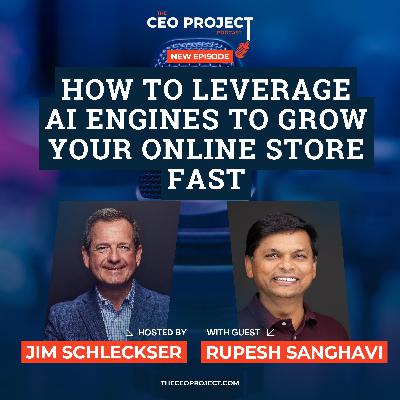
What if AI engines could drive 10–15x more traffic to your online store—and most businesses don't even realize it's happening yet? If you run an online store or sell products through e-commerce channels, AI engines are quickly becoming the new gateway to customer discovery. Instead of relying solely on traditional search or marketplaces, companies are now seeing massive traffic surges simply by optimizing their sites for how AI answers questions and recommends products. In this episode, you'll hear how one e-commerce CEO is leveraging AI engines to dramatically increase visibility—and how you can apply the same ideas to grow your own online store. By listening, you'll discover how to: Position your website so AI engines recommend your products when customers ask buying questions. Use simple AI-driven content strategies—like FAQs and structured answers—to dramatically increase organic traffic. Navigate the rapidly changing e-commerce landscape where AI, Amazon advertising, and global competition are reshaping growth. Play the episode now to learn how CEOs can tap into AI engines to unlock the next wave of online store growth. Check out: 03:45 – From One Used Book to a Global E-Commerce Business Rupesh shares how a single online sale sparked the idea that eventually grew into a company partnering with over 1,500 brands across 40+ countries. 10:40 – How AI Engines Are Driving Massive Website Traffic A deep dive into how optimizing websites for AI-driven questions—through FAQs and structured content—can generate dramatic traffic increases. 22:15 – The Two Big Changes Reshaping Amazon Sellers Rupesh explains how advertising and Amazon's AI tools are changing the rules of visibility—and why brands must adapt quickly to stay competitive. About Rupesh Sanghavi Rupesh Sanghavi is the founder and CEO of Ergode, an e-commerce-first, omni-channel brand growth company that has partnered with over 1,500 brands, expanded reach to 40+ countries, and acquired over 15 consumer brands. His entrepreneurial journey began with reselling a single used book and has since grown into leading a global portfolio of businesses across categories. Under his leadership, Ergode has scaled into a trusted name with 18+ years of experience, 96% lifetime positive feedback, and a 250+ member workforce worldwide. Twice a finalist for the EY Entrepreneur of the Year, Rupesh is known for blending resilience and vision with a hands-on, relatable style. Outside of business, he writes a blog called Cloverbites, where he shares reflections on leadership and life. An avid traveller who has visited 100+ countries, he draws inspiration from diverse cultures and experiences that shape both his business outlook and personal growth.
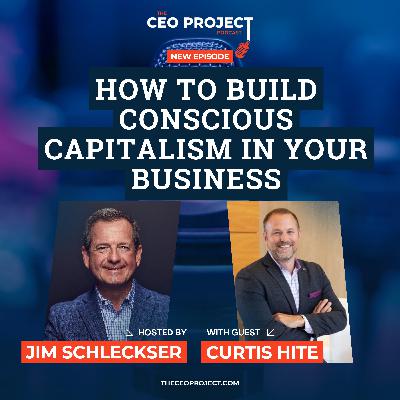
Are you building a profitable company — or a business that actually proves capitalism can be a force for good through conscious capital? As a CEO, you feel the tension every day: grow the business, deliver profit, develop your people — and do it in a way that's socially responsible and sustainable. Meanwhile, capitalism itself faces a perception problem. Your employees want meaning. Your customers expect integrity. And the market punishes anything that smells short-term or exploitative. In this episode of The CEO Project, you'll explore how conscious capital isn't about soft ideals — it's about building a company that earns trust, scales profitably, and strengthens its moral authority to exist. By listening, you'll learn how to: Build a high-growth company rooted in trust behaviors that actually change stakeholder perception Balance profit and purpose without falling into coercive "check-the-box" stakeholder models Lead through crisis with accountability and culture intact — even when tough financial decisions must be made Press play now to discover how conscious capital can help you grow your business and elevate its impact — without sacrificing performance. Check out: 06:45 – The Perception Problem in Business Curtis shares the eye-opening CEO summit moment that exposed the trust gap in the IT industry — and why changing perception became his company's mission. 18:30 – Conscious Capitalism vs. Stakeholder Capitalism A powerful breakdown of classic capitalism, stakeholder models, and the "big tent" philosophy of conscious capital — including why inspiration beats coercion. 32:15 – Leading Through Crisis Without Losing Culture A real-world example of navigating COVID, protecting profitability, and strengthening trust when 90 executives voluntarily gave up compensation to keep the company strong. About Curtis Hite Curtis Hite is the CEO of Improving – an international software consulting and training company which he founded in 2007. With a focus on Conscious Capitalism, the company has grown to 2000+ employees across 19 offices and greater than $280 million in revenue. Improving has been named 15 times to the Inc. 500/5000, consistently being recognized as one of the fastest growing privately held companies in the U.S. The company has also received more than 100 local and national best place to work recognitions.
Are you leaving deals on the table because your LinkedIn presence isn't backed by proven strategies that actually build credibility and authority? If you're leading a company, driving growth, or building your personal brand, LinkedIn isn't optional anymore—it's where buyers, partners, recruits, and even AI engines go to decide if you're legit. And here's the problem: what used to work on LinkedIn (post and hope, chase likes, blast press releases) doesn't work now. The platform has shifted. Reach is down. Algorithms are smarter. And if you're not showing up as a true topic authority, you're invisible—sometimes before you even get the meeting. This episode breaks down what's actually happening behind the scenes and how you can adapt using proven strategies that align with the new AI-driven reality. By listening, you'll discover how to: Position yourself (and your company) as a credible topic authority that LinkedIn's algorithm wants to reward Create content that sparks real conversations instead of getting ignored or "thumbed" into oblivion Leverage your team to multiply reach and influence without relying on expensive ads or outdated tactics Hit play now and learn the proven strategies that will help you turn LinkedIn from a passive profile into a powerful growth engine for your business. Check out: 08:45 – The moment Richard explains why LinkedIn completely changed its algorithm in 2025—and how it now evaluates your credibility before showing your content to anyone. 18:30 – A powerful breakdown of why company pages struggle with reach and how to use your people (not just your brand page) to multiply authority and visibility. 33:15 – The eye-opening shift from selling to humans to selling to AI engines—and what that means for your LinkedIn content and overall digital strategy. About Richard Bliss Richard Bliss is the CEO of BlissPoint Consulting and author of Digital-First Leadership, He helps C-suite executives and sales teams transform digital hesitancy into market authority. He is a global speaker across 22 countries, and former Army Artillery Officer. Richard builds scalable influence systems that turn leaders into recognized voices in their markets. Your LinkedIn presence should work harder than you do — building authority, attracting opportunities, and making you top of mind in your market. Richard works with executives who understand that in the 21st century, influence isn't just earned in the boardroom — it's built in the feed.
If mastering negotiation could instantly increase your business worth, how differently would you handle your next deal? You negotiate every day—whether you call it that or not. From acquisition offers and partnership terms to real estate, compensation, and vendor contracts, you're constantly shaping outcomes that affect your company's growth and long-term business worth. The problem? Most leaders treat negotiation like a tug-of-war over price. In this episode, you'll learn why mastering negotiation is really about leverage, psychology, timing, and knowing when to walk away. By listening, you'll gain: A smarter framework for mastering negotiation that goes beyond price and focuses on leverage, certainty, and deal structure Proven tactics like "never go first," strategic silence, and the flinch to strengthen your position without creating conflict A clearer understanding of motivation and timing so you can spot desperation, avoid overpaying, and protect your business worth Press play now to sharpen your negotiation edge—and make your next deal one that compounds your business worth instead of quietly eroding it. Check out: 07:45 – Leverage Changes Everything A practical breakdown of how leverage actually works in real deals—foreclosures, timing pressure, experience, and certainty of close—and why price is rarely the most important factor. 18:30 – The Power of Walking Away A sharp discussion on why the best negotiators are willing to walk, how desperation shifts leverage, and why "who comes back first" often determines who really has the power. 29:10 – The Flinch, Silence & Controlling the Pen Tactical gold: how to use silence to make the other party negotiate against themselves—and why drafting the agreement gives you structural control over the deal. About Onyi Odunukwe Onyi Odunukwe is CEO of Glo Tanning Centers, Inc. His specialties are: Marshaling limited resources to the most productive uses with the aim of creating maximum value for the company's stakeholders. Developing and cascading the organization's strategy/mission statement to the lower-ranking staff, and implementing appropriate rewards/recognition and coaching/corrective practices to align personnel with company goals. Planning by prioritizing customer, employee, and organizational requirements. Maintaining and monitoring staffing, levels, Knowledge-Skills-Attributes (KSA), expectations and motivation to fulfill organizational requirements. Driving performance measures for the operation (including a consideration of efficiency versus effectiveness), often in the form of dashboards convenient for review of high level key indicators
What if improving front line performance—not more marketing or new leads—was the fastest way to grow your business worth? If you're feeling pressure to grow revenue while controlling costs, this episode speaks straight to that tension. You'll hear how leaders in hospitality use front line performance, personalization, and smart systems to capture revenue that's already there—while creating better customer experiences and stronger loyalty. The same thinking applies to any business with customer-facing teams and real growth goals. What you'll gain from listening: How front line performance directly impacts revenue and loyalty, without turning your team into pushy salespeople What it really takes to evolve from a services model to SaaS, while keeping your culture and your people intact Where AI disruption actually adds value today, helping managers coach better and make faster, data-driven decisions Play the episode to spot practical front line performance ideas you can use right now to increase revenue and strengthen your business worth. Check out: ~10:30 – Unlocking revenue through front line performance Where the conversation digs into how connecting frontline teams to real guest needs drives incremental revenue without hurting the experience—and why this applies far beyond hospitality. ~28:00 – AI disruption that actually works at the front line A practical discussion on how AI is being used to analyze performance data, deliver coaching insights, and improve results—without replacing people or overcomplicating the system. ~44:00 – The real challenge of moving from services to SaaS A candid breakdown of the cultural and identity shifts required to transition from a services model to SaaS, including what leaders often underestimate and how to bring the team along. About Geoffrey Toffetti Geoffrey Toffetti is the CEO of Frontline Performance Group (FPG), based in Florida. The firm partners with over 2,500 hotels across 120+ countries, helping them drive millions in incremental revenue. His personal journey in hospitality started humbly, as a car valet at a Florida hotel. Today, Geoffrey leads FPG, where they work with top brands like Hilton, Marriott, and Hyatt, among others. He has guided the company through strategic growth, including the acquisitions of the company's primary competitors—Drake Beil in the U.S. and TSA Solutions in Asia, the latter during the height of the COVID-19 crisis. Geoffrey can share insights on conversion from a services business to SaaS, global expansion, leading a remote workforce, how leaders can build resilience by making bold yet calculated decisions, staying agile in unpredictable markets, and building a corporate tribe rather than a team. FPG is always pushing forward and he excited to say their next bold move is just around the corner.

Is your business worth more than your physical inventory… because of the digital assets you don't even realize you own? If you're like most CEOs, you've delegated websites, domains, ad accounts, logins, and even AI tools to other people—and assumed everything was automatically "yours." But this episode is a wake-up call: your digital assets are some of the most valuable (and vulnerable) parts of your business, and losing control of them can create chaos during growth, vendor changes, or a future sale. Paige Wiese breaks down how to protect what you've built before it becomes a costly blind spot. By listening, you'll walk away with: A clearer understanding of what counts as critical digital assets—from domains and hosting to analytics, SaaS tools, and intellectual property Practical questions to ask vendors and agencies so you don't get locked out of accounts you paid for A smarter way to prepare your company for scaling, exiting, or AI disruption by organizing and safeguarding your digital footprint Hit play now to learn how protecting your digital assets today can increase your business worth tomorrow—and save you from painful surprises later. Check out: 5:40 – The most important questions to ask before hiring an agency Paige explains how CEOs can avoid losing ownership of domains, ad accounts, and logins right from the start. 12:15 – The hidden danger of email and asset transfer during an exit or sale A practical discussion on why business emails, history, and contacts become a major issue when transitioning ownership. 21:30 – How AI tools are becoming the newest digital asset risk Paige shares why companies need policies around AI accounts now—before employees unknowingly train tools on proprietary data. About Paige Wiese Paige Wiese (W-ee-s) is the founder and CEO of Tree Ring Digital, a top-ranked Denver-based marketing agency that develops high performance websites and digital marketing strategies for businesses nationwide. Under her leadership, Tree Ring Digital has helped thousands of businesses across industries streamline their online presence, protect their digital assets, and achieve healthy growth through data-driven marketing strategies. During her sixteen years in the industry, Paige realized that digital asset management often exists in a knowledge silo, leaving companies unprepared for growth or transition. This led her to develop a proprietary digital asset management service that tracks and protects a company's crucial data points, protecting brands and maintaining legacies.
Are your current growth strategies actually increasing your business worth—or are hidden constraints quietly keeping you stuck as your company scales? If you're feeling stretched thin, hitting growth ceilings, or wondering why scaling feels harder than it should—this episode is for you. Carl Gould breaks down the real stages of business growth and the predictable pinch points that trip up founders, especially as AI disruption accelerates change and raises the bar for how companies scale, systemize, and create long-term value. By listening, you'll walk away with: A clear framework for identifying exactly where your business is stuck—and what that says about your next growth move Practical insight into how to shift from founder-driven hustle to scalable systems without killing momentum A sharper understanding of how to build a company that's not just growing, but increasing in enterprise value and exit readiness Hit play now and steal proven growth strategies that help you scale smarter, protect your time, and build a business that's actually worth more at every stage. Check out: [~12:30] – Carl explains why most founders get stuck in Stage 3 and how ego and control quietly cap business growth [~28:45] – A clear breakdown of systems vs. flexibility—and why consistency (not creativity) is what actually scales companies [~47:10] – The moment your business becomes a true asset, including the leadership shifts that dramatically increase business worth About Carl Gould Carl Gould is a globally recognized authority on business growth and entrepreneurship who built three multi-million-dollar companies by age 40. He is the Chief Growth Advisor at 7 Stage Advisors and has mentored the launch and scaling of over 5,000 businesses, with his methodologies now used in 35 countries and by more than 7,000 certified coaches worldwide. A multi-award-winning author and speaker, Carl co-authored Blueprint for Success with Stephen R. Covey and Ken Blanchard and wrote the bestselling The 7 Stages of Small Business Success. Known for his high-energy, real-world approach, he has delivered over 1,200 keynote speeches and lectures at institutions including MIT and Rutgers.
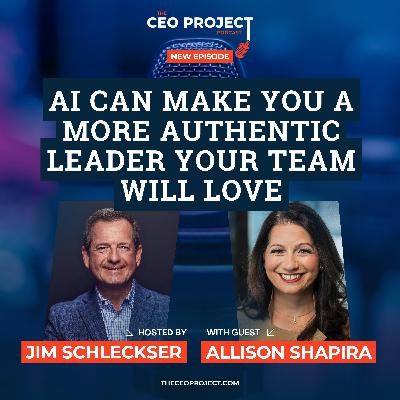
Is your business worth more when AI writes faster—or when you show up as an authentic leader your team actually trusts? You're under constant pressure to communicate clearly, move quickly, and keep up with AI without losing your voice in the process. In this episode, Jim Schleckser talks with Allison Shapira about the real tension leaders face today: using AI to gain efficiency while still sounding human, credible, and genuinely connected to the people who matter most. By listening, you'll gain: Clear guidance on how to use AI to strengthen your voice instead of diluting it as an authentic leader Insight into why AI-generated communication can quietly erode trust—and how to prevent it Practical ideas for balancing speed, clarity, and culture in leadership communication Hit play to discover how leading with authenticity—while using AI wisely—can increase trust, impact, and the long-term value of your business. Check out: 08:45 – Allison explains why AI-written emails can quietly destroy trust—and how leaders can spot when efficiency starts replacing authenticity. 22:10 – A practical breakdown of how to "train" AI to reflect your voice, values, and lived experience as an authentic leader. 41:30 – A cautionary story about leaders trusting AI over their team—and what it signals about culture, credibility, and leadership judgment. About Allison Shapira Allison Shapira is an executive advisor, Harvard lecturer, keynote speaker, bestselling author, and trained opera singer who helps senior leaders speak with confidence, clarity, and authenticity—especially in high-stakes, high-visibility moments. Since 2003, she has advised leaders from prime ministers to Fortune 50 executives and has designed leadership communication programs that drive trust, alignment, and measurable results. An entrepreneur and global expert in leadership and communication, Allison brings over two decades of experience to every engagement. Her practical frameworks integrate cutting-edge AI tools to help executives sharpen their message, amplify their voice, and Speak With Impact℠. An adjunct lecturer at the Harvard Kennedy School since 2015, her work has been featured in The Wall Street Journal, Bloomberg, The New York Times, and Harvard Business Review. She is the author of three books: the Washington Post best-seller Speak with Impact: How to Command the Room and Influence Others (HarperCollins Leadership), the companion e-guide Speak with Impact VIRTUALLY, and her newest book, AI for the Authentic Leader: How to Communicate More Effectively Without Losing Your Humanity (Spa Creek Press).
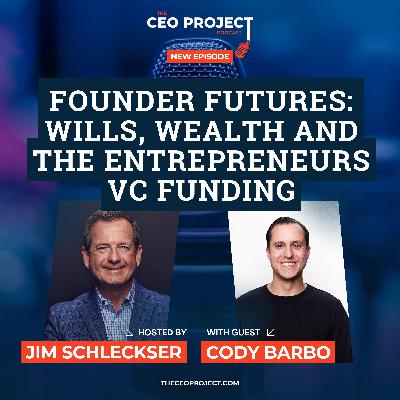
Have you thought about what your founder futures look like if you're suddenly not here—and whether your business worth is actually protected? You spend your time thinking about growth, valuation, exits, and risk—but many founders avoid the uncomfortable questions about legacy, control, and continuity. This episode connects estate planning to founder futures, showing how personal preparedness, governance decisions, and AI disruption all shape what really happens to the value you've built when circumstances change. By listening, you'll gain: A practical framework for protecting your founder futures by understanding how estate plans, healthcare directives, and digital assets prevent chaos for your family and your company. Clear insight into scaling a venture-backed platform the right way, including term sheets, preference stacks, board control, and why "IPO-ready" thinking matters more than chasing an IPO. A CEO's perspective on AI disruption and defensibility, including how category leaders must rebuild for an AI-native future before competitors force the change. Press play and learn how to safeguard your founder futures while building a company—and a legacy—that holds up under real-world pressure. Check out: ~06:30–09:30 Why estate planning matters even if you "don't have much" Cody explains why wills, healthcare directives, and digital assets matter regardless of net worth—and why certainty beats assumptions for families and founders. ~32:00–38:00 Venture capital reality: term sheets, preferences, and board control A candid CEO-to-CEO discussion on VC tradeoffs, preference stacks, governance, and why founders must be willing to walk away from bad terms. ~1:07:00–1:14:00 AI disruption and rebuilding to protect the business Cody outlines why AI is both the biggest threat and opportunity, and how Trust & Will is thinking about becoming AI-native before a challenger forces the change. About Code Barbo Cody Barbo is the Co-Founder & CEO of Trust & Will, the leading digital estate planning platform in the U.S., trusted by over one million families. Since launching in 2017, Trust & Will has modernized legacy planning with simple, secure, and attorney-approved online solutions tailored to state-specific laws. Under Cody's leadership, the company has raised over $75 million in funding, and its customers report more than $100 billion in estate assets on the platform. Trust & Will supports 20,000+ financial advisors and 200+ banks and enterprise partners, including AARP, Fifth Third Bank, UBS, and USAA. Recently, the company introduced EstateOS, the first intelligent estate planning platform designed to revolutionize legacy planning through embedded AI guidance, streamlined workflows, and enhanced collaboration between families and financial professionals. Trust & Will was recognized on the Inc. 5000 list for the second consecutive year in 2024. Cody was named an EY Entrepreneur Of The Year® 2023 Pacific Southwest Award Winner and regularly contributes to Forbes, Fast Company, and Inc. He is passionate about leveraging technology to transform estate planning from a transactional task into a deeply meaningful and personal experience.
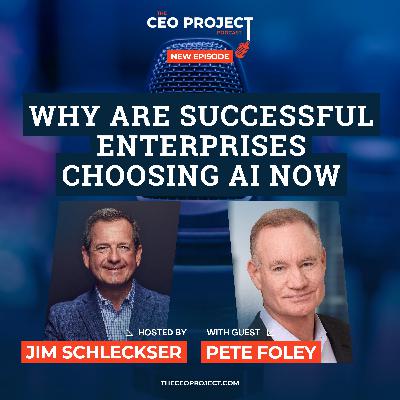
Is your company's "AI disruption" happening with you—or quietly without you… and putting your business worth at risk? If you're leading a mid-to-large company right now, you're probably feeling two pressures at the same time: move faster with AI and don't blow up the business while you do it. Because AI isn't a future trend anymore—it's already being built, tested, and used across departments, geographies, and teams (often without a single unified view). And that creates a real leadership headache: how do you scale AI for competitive advantage while still keeping guardrails in place? In this episode, Jim Schleckser talks with Pete Foley (CEO of ModelOp) about what happens when AI spreads "like wildfire" inside an organization—and how to regain control without killing momentum. You'll walk away with: A practical way to get visibility into AI across your organization so you know what models exist, what they're doing, and where the biggest risks are hiding. A framework for putting governance and guardrails in place without slowing innovation—so you can move faster than competitors and sleep at night. A clearer path to scaling AI investments into real business outcomes (revenue, cost reduction, risk control) instead of letting models sit stuck in limbo for 9–12 months. Hit play now to learn how to build AI guardrails that protect your brand and accelerate results—so you can boost business worth before the market decides who survives the disruption. Check out: [02:10] "In five years, there'll be two kinds of companies…" — Jim frames the stakes of AI disruption and why ignoring it threatens long-term survival and business worth. [10:45] The real AI bottleneck: why models take 9–12 months to reach production — Pete explains what's slowing companies down and why that pace won't survive the next wave. [23:30] The "air traffic controller" approach to AI governance — visibility, risk assignment, guardrails, and real-time monitoring so AI can scale without chaos. About Pete Foley With more than 25 years of executive and entrepreneurial experience in enterprise software and a track record of successful business exits, Pete Foley's leadership gives ModelOp customers, partners and employees a high level of trust and confidence in the company and its future. Prior to co-founding ModelOp, Pete held several chief executive roles, including CEO of RingCube Technologies, a desktop virtualization software solution provider acquired by Citrix in 2011; CEO of PortAuthority Technologies, a provider of data leak protection systems, from 2005 through its acquisition by Websense in 2007; and CEO of Infoblox (BLOX) from 2002 through 2005. In addition, Pete was the Executive Chairman of Graphite Systems, a low latency, flash-based big data appliance that was acquired by EMC, from 2012 to 2015.
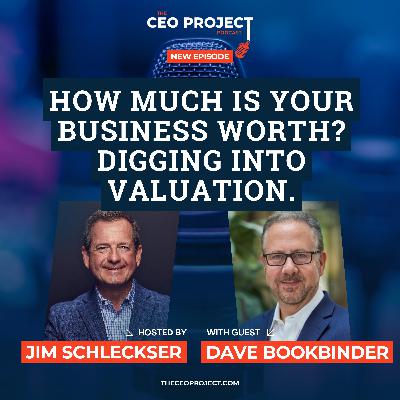
Ever catch yourself wondering, "What is my business worth—like, the real number, not the cocktail-party guess?" If your business represents the majority of your net worth (and for most CEOs, it does), not knowing your true valuation is risky. You could be planning an exit, thinking about succession, considering a partnership change, or even just trying to make smarter growth decisions—but without a real valuation framework, you're basically relying on back-of-the-napkin math. In this episode, you'll get a clear, CEO-friendly breakdown of how valuations actually work and what drives value up (or quietly drags it down). You'll walk away with: A practical understanding of the real valuation methods (market comps, public peer multiples, discounted cash flow, and when asset-based valuation applies) so you can stop guessing and start thinking like an investor. A sharper perspective on what increases or decreases your company's value—especially risk factors like customer concentration, shaky financials, key-person dependency, and unreliable forecasts. A clearer playbook for "valuation readiness" so you can improve value before a buyer, a partner, or the IRS forces the question. Press play now and steal the same valuation lens buyers use—so you can protect your wealth, reduce risk, and increase what your business is worth before the next big decision hits. Check out: 0:03:10 — The 3 main ways your business is valued (market comps, public peer multiples, and discounted cash flow—plus why valuation is forward-looking). 00:10:55 — How to value intangible assets like patents and trademarks (including the "relief from royalty" method that's surprisingly practical). 00:22:40 — The biggest value drivers you can actually control (clean financials, forecasting confidence, reducing key-person risk, and de-risking the business for buyers). About Dave Bookbinder Dave Bookbinder is a corporate finance executive with a focus on business and intangible asset valuation. Known as a collaborative consultant, Dave has served thousands of client companies of all sizes and industries. Dave has conducted valuations of the securities and intangible assets of public and private companies for various purposes including acquisition, divestiture, financial reporting, stock-based compensation, fairness and solvency opinions, reorganizations, recapitalizations, estate planning, S-Corp. conversion, exit strategy, and succession planning.
Have you ever bailed on a "seat at the table" moment because imposter syndrome convinced you you didn't belong? This episode is basically a reality check for that spiral. If you've ever walked into a room of bigger titles, bigger experience, bigger confidence—and immediately started listing all the reasons you're "not enough," Megan Reilly's story will feel uncomfortably familiar (in the best way). She breaks down what imposter syndrome costs you, how to stop self-eliminating, and how to stay in the game long enough to actually grow—whether you're building a company, scaling a team, or just trying to lead without burning yourself out. What you'll walk away with A simple way to quiet imposter syndrome when you feel outmatched—so you stay in the room and find your value instead of fleeing. A scrappy growth mindset you can copy (no perfect plan required): how momentum, feedback, and "green lights" can guide your next move. A healthier approach to scaling in real life by recognizing seasons—so you can build something meaningful without feeling like you're failing at everything else. Press play and borrow Megan's mindset reset for imposter syndrome—so the next time you get the opportunity, you take the seat and don't look back. Check out: 10:00 – The imposter syndrome turning point Megan tells the D1 basketball walk-on story and the moment she quit—then reframes it into her core lesson: why imposter syndrome makes you walk away from rooms you've already earned entry into. 25:00 – From "side gig" to real business The shift from teaching dance as a flexible college job to realizing, "Wait, this actually works," and how trusting momentum (not a formal plan) led to massive growth. 50:00 – Scaling, seasons, and not doing it all at once A candid conversation about building a 70-location franchise while raising kids—and why recognizing life seasons is critical to sustainable leadership and sanity. About Megan Reilly Megan Reilly started as an entrepreneur at age 19 and over the last two decades has built an international franchise, received multiple offers on Shark Tank, started a top 12 podcast, and ignited crowds all around the country as a keynote speaker. Megan is the creator and host of one of the Top 12 Parenting Podcasts on Apple Podcasts, Who Is Your Momma Podcast, where she speaks to the mothers of some of the world's most successful, CEOs, athletes, and entertainers. Megan speaks to organizations all across the country, sharing the lessons she has learned from more than 20 years as a thriving entrepreneur.
What if the expertise that makes your company valuable today could be replicated—or even surpassed—by AI within a year? If you're running or leading a business, you're already feeling the pressure: AI disruption is moving faster than your operating model can adapt. This episode helps you understand why the ground is shifting so quickly, what it means for the expertise inside your organization, and how you can stay ahead instead of getting blindsided by competitors who adopt AI more strategically and more rapidly. You'll walk away with clarity on: How AI is lowering the cost of expertise—and what that means for your competitive advantage. A practical way to rethink your business and operating model so you can adopt AI at an exponential pace, not a linear one. How to help your team embrace AI without fear by understanding new working modes like centaurs, cyborgs, and self-automators. Hit play now to learn the specific mindset and moves CEOs are using to turn AI disruption into a strategic edge. Check out: 06:45 — How Karim shifted from open-source innovation to AI This is where Karim explains the surprising path from crowdsourcing and NASA experiments to machine-learning breakthroughs—and why those early signals showed him AI would reshape business, not just technology. 22:10 — The big insight: AI is lowering the cost of expertise A must-hear moment. Karim explains why AI isn't just another tool—it fundamentally changes what expertise means within a company — and why CEOs need to view their business as a "bundle of expertise" being rewired. 36:55 — The three ways humans actually work with AI This section introduces centaurs, cyborgs, and self-automators—and what these modes reveal about adoption, resistance, identity, and where value will come from as AI accelerates. About Dr. Karim Lakhani Karim R. Lakhani is the Dorothy & Michael Hintze Professor of Business Administration at the Harvard Business School. He specializes in technology management, innovation, digital transformation and artificial intelligence (AI). His innovation-related research is centered around his role as the founder and co-director of the Laboratory for Innovation Science at Harvard and as the principal investigator of the NASA Tournament Laboratory. Karim is known for his original scholarship on open source communities and innovation contests and has pioneered the use of field experiments to help solve innovation-related challenges while simultaneously generating rigorous research in partnership with organizations like NASA, Harvard Medical School, The Broad Institute, TopCoder, The Linux Foundation and various private organizations. His digital transformation research investigates the role of analytics and artificial intelligence (AI) in reshaping business and operating models. This research is complemented through his leadership as co-founder and chair of the The Digital, Data, and Design (D^3) Institute at Harvard and as co-founder and co-chair of the Harvard Business Analytics Program, a university-wide online program transforming mid-career executives into data-savvy leaders.

Ever feel like you want to embrace AI, but it is moving so fast? What you just learned is already outdated—and you're worried your competitors might be pulling ahead while you're still figuring it out? This episode is basically a reality check for you as a leader: AI isn't a "someday" thing anymore. It's here, it's democratized, and it's about to split industries into the "haves" who use it to accelerate growth and the "have-nots" who get left behind. If you're trying to grow a mid-to-large company, keep your team relevant, and avoid getting blindsided by tools your people are already experimenting with, this conversation meets you right where you are. You'll hear why AI-first thinking isn't hype—it's how you protect your business and unlock more creativity, speed, and capacity across every function. By listening, you'll walk away with: A clear, CEO-level way to think about AI as a multiplier, not just an efficiency tool—so you can free your team from the mundane and push more energy into innovation and growth. Practical guidance on adopting AI without freezing up, including how to handle the very real fear of job disruption by leveling up faster instead of resisting change. Concrete, cross-functional use cases you can copy immediately, from smarter customer and HR communications to rapid code generation, finance/M&A insight spotting, legal review, and hiring support—plus the "hybrid model" mindset to keep humans in the loop where it matters. Hit play now and steal these AI-first leadership moves so you can get ahead of the curve this quarter—not six months from now when the gap is harder to close. Check out: 04:30 — "AI will split the world into haves and have-nots" Jim tees up the urgency, and Eric immediately reinforces that this divide is coming in months, not years. 12:00 — "AI as the 5th tectonic tech shift + democratization" Eric walks through the internet → PC → web → iPhone → GenAI progression, and why democratized access changes everything for CEOs. 27:30 — "AI-first mindset + real business use cases (HR, finance, legal, hiring)" The conversation shifts into practical deployment: AI-first workflows, hybrid human+AI supervision, and concrete examples like HR response automation, M&A insight spotting, and interview-transcript evaluation. About Eric Vaughan Eric Vaughan is a globally sought-after speaker and pioneer of AI-driven digital clones, leading IgniteTech's AI-first transformation and reinventing products, services and the workforce while shaping the future of enterprise AI. He's known for launching two innovative AI products in just ten months and steering the high-profile acquisition of Khoros. Eric founded and led three successful software companies and managed over 50 major M&A deals. He's also a regular writer, tech educator and passionate runner who has completed 50 marathons and more than 50 ultramarathons.
Ever feel like your "new product" ideas stall out — not because they're bad, but because the team can't stay aligned long enough to bring them to life? If you're trying to grow in a world of constant AI disruption, you can't afford ideation that dies in committee or teams that melt down under pressure. This episode hits the real blocker most CEOs run into: brilliant people get promoted, but nobody ever taught them how to lead, think clearly under stress, or build a team that can take an idea from "interesting" to "in market." You'll hear how misdefined problems, ego-driven leadership habits, and check-the-box people programs quietly slow your growth — and what to do instead. A practical way to spot why ideas aren't turning into products (hint: it's usually a problem-definition gap, not a talent gap). A clearer read on your own leadership wiring — what's hardwired, what's learned, and how that mix impacts trust, communication, and execution. Simple, high-leverage moves to elevate your team's thinking so you can stop living in the tactical weeds and lead more strategically. Hit play now and steal Curtis Sprouses' tools for sharpening your team (and your own leadership) so your next big idea actually makes it to market — with fewer headaches and better results. Check out: 06:30 — The perfectionist founder example + why EQ can cap your growth Curtis walks through the real profile of a biotech CEO (high dominance, extreme perfectionism, low emotional intelligence) and shows how that combo derails fundraising, trust, and team performance — even when talent is off the charts. 18:45 — "Do you want to be remembered as the leader who grew people… or the one everyone avoided?" Curtis shares a sharp coaching story about a long-tenured exec who'd been rewarded for harsh habits for decades — and the one reframing that finally got him to shift how he led (with ripple effects at work and home). 28:00 — The #1 fatal flaw: CEOs define the problem wrong Curtis explains the "pressure vs. problem" distinction and gives a quick diagnostic (person vs. process vs. resources vs. priorities). This is the core "aha" for why teams spin and boards get frustrated. About Curtis Sprouse Curtis Sprouse is the founder of EurekaConnect and the Institute for Biomedical Entrepreneurship (IBE), where he helps leaders and teams outperform through strategic behavioral programs. With over 5,000 professionals coached and 200+ biomedical innovations advanced, Curtis specializes in turning science and technology into viable, impactful ventures. His programs have helped companies raise tens of millions in capital and bring real products to market. Curtis speaks on leadership, team building, personal development, and the future of business and society.
What if the real competitive edge in your company isn't another strategy shift—but your human sustainability as a leader? You're expected to perform like a high-level athlete: stay sharp, set direction, handle pressure, and keep your team moving—often while AI disruption speeds everything up. But here's the catch: if your internal system is running at red line, your decision-making, culture, and results eventually pay the price. In this episode, Jim Schleckser talks with Pearce Cucchissi, a former Army Ranger turned executive performance coach, about how leaders build the stamina, clarity, and resilience to thrive long-term—without burning out or becoming the bottleneck themselves. By listening, you'll gain: A fresh way to think about leadership as human sustainability—how to keep your mind and body durable enough for the pace you're running. Tools to identify "people bottlenecks" on your team, including what's really behind wrong-person/wrong-seat issues. A practical, data-informed approach (like psychometric assessments) to reduce stress deltas, improve fit, and increase longevity for you and your leaders—especially during growth or acquisitions. Press play to learn Pearce's battle-tested methods for building human sustainability into your leadership—so you can win the long game with more energy, focus, and staying power. Check out: 04:30 – "Business athlete" framing Jim and Pearce connect elite athletic performance to executive leadership—stamina, mental state, keeping score, and bringing the team along. 12:40 – Operator syndrome → CEO burnout bridge Pearce explains "operator syndrome" (stuck in fight-or-flight) and why the same pattern shows up in CEOs, athletes, and PE-backed exec teams. 24:10 – Psychometric delta + right person/right seat The Culture Index / psychometric "delta" idea: how to spot misalignment, stress, disengagement, and predict longevity—plus what to do with hotspots on a leadership team. About Pearce Cucchissi Pearce is a former military special operator who brings battlefield-tested strategic thinking and elite team dynamics to the boardroom. As the founder of Built to Evolve, he helps executives and teams unlock peak performance through a cutting-edge blend of neuroscience, psychology, and physiology. His mission is to create business athletes, leaders with the stamina, clarity, and resilience to thrive under pressure and deliver maximum positive impact. Pearce has worked with top-tier organizations including Citibank, The Las Vegas Raiders, and Charter Communications. Today, he advises executives within Private Equity-backed portfolio companies, where the stakes are high and the mental toll is real. His coaching style is direct, data-driven, and deeply human, balancing performance optimization with personal well-being to ensure leaders are built to evolve, not burn out.
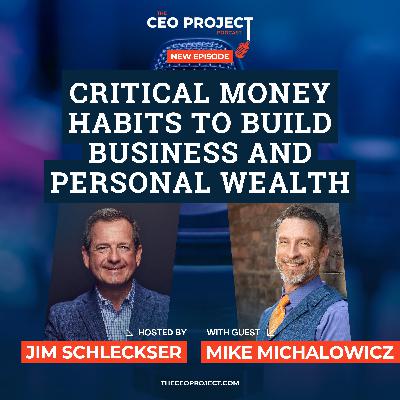
Do you ever wonder why, no matter how much your business grows, your personal finances still feel out of control? If you've ever felt like your success at work doesn't translate to financial peace at home, this episode is your wake-up call. Jim Schleckser sits down with money expert and bestselling author Mike Michalowicz—creator of Profit First—to talk about why most people, even entrepreneurs, struggle with money and how simple behavior shifts can create real financial freedom. In this episode, you'll discover: How to "pay yourself first" in a way that guarantees profit instead of hoping for it. The behavioral money trap that keeps even smart business owners broke—and how to intercept it. A simple system to reduce financial stress for you and your employees, leading to happier, more productive teams. Hit play now to learn Mike's practical, life-changing approach to mastering your money habits—and start keeping more of what you earn today. Check out: [08:45] – The "Profit First" Mindset: Mike explains how reversing the traditional approach to profit—taking it off the top instead of waiting until the end—can transform how you run your business. [22:10] – The Behavioral Intercept: A powerful discussion on why most people fail with budgets and how simple systems at the bank level can automatically change your financial behavior for good. [39:25] – Redefining Retirement: Jim and Mike challenge the traditional idea of retirement and explore how to plan for a meaningful, flexible, and financially confident future. About Mike Michalowicz Mike Michalowicz is the entrepreneur behind four multi-million-dollar companies and the author of bestselling business books including Profit First, Clockwork, The Pumpkin Plan, and All In. His newest book, The Money Habit, is a groundbreaking approach to personal finance. The television host of The 4 Minute Money Maker and a former columnist for The Wall Street Journal, Mike now travels the world helping individuals grow thriving businesses and live richer lives.
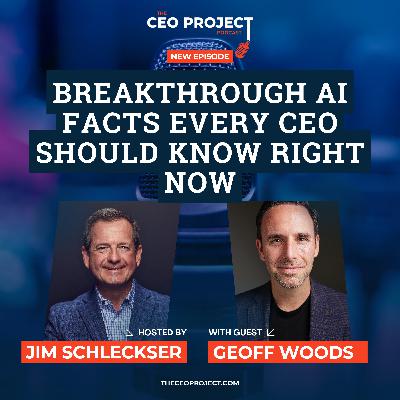
Are you ready to face the AI facts about what it really takes to lead in the age of disruption? If you're a CEO or senior leader trying to navigate the chaos of AI transformation, this episode is your roadmap. Jim Schleckser sits down with Geoff Woods, bestselling author of The AI-Driven Leader, to reveal the hard truths and surprising opportunities behind AI adoption. You'll see how Geoff went from leading a global industrial powerhouse to helping executives turn AI into their ultimate competitive advantage. You'll discover how to: Use AI as a thought partner to sharpen strategy and decision-making. Separate hype from the AI facts that actually drive performance and growth. Lead your team through change with clarity, confidence, and purpose. Listen now to uncover the AI facts that can transform how you think, lead, and compete in the years ahead. Check out: [00:10:45] – The Skill That Changes Everything: Geoff shares the career-defining advice that led him to focus on mastering skills that stay valuable no matter how technology evolves—setting the stage for his journey into AI leadership. [00:38:20] – The "AI Boardroom" Breakthrough: Hear how Geoff helped a CEO save his executive team's jobs by using AI to simulate board members' personalities and predict meeting outcomes—a real-world example of AI as a strategic thought partner. [01:12:05] – The 100x Value Lesson: Geoff reveals how his assistant used AI to multiply her impact and redefine her role, illustrating what it means to become an AI-driven leader instead of just an AI user. About Geoff Woods Geoff Woods is the #1 international bestselling author of The AI-Driven Leader, host of the AI-Driven Leader podcast and the Founder of AI Leadership where he empowers leaders to harness AI, escape operational overwhelm, and think strategically to accelerate growth. As the former Chief Growth Officer of Jindal Steel & Power, his guidance helped their market cap grow from $750 million to over $12 billion in four years. He also co-founded the training and consulting company behind The ONE Thing, where he coached and advised companies with annual revenues from $10 million to $60 billion.

Comments

Download from Google Play

Download from App Store
 United States