


 Claim Ownership
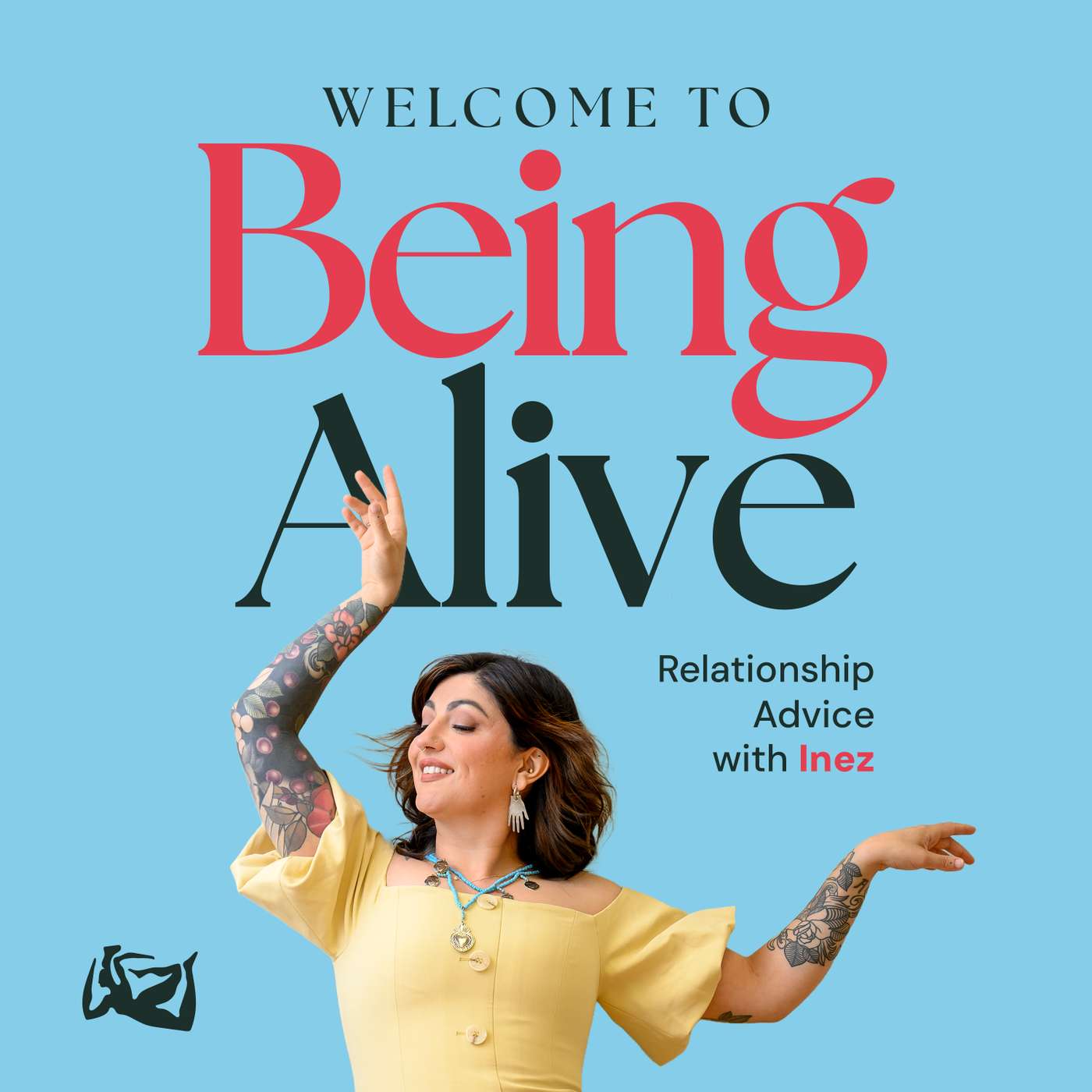
 Welcome To Being Alive
Welcome To Being AliveSubscribed: 2Played: 4
Subscribe

© 2025 Inez Cordoba
Description
A podcast about the messy, beautiful, and occasionally heartbreaking world of relationships. I'm your host, Inez Cordoba, a couples therapist and certified sex therapist. I've spent thousands of hours helping couples and now I get to be in conversation with you. Here's how it works. You send in your anonymous relationship questions, and I'll give you earnest and compassionate insight that's grounded in psychotherapy. Each episode we'll wander through the stories you send in and together make meaning about what it really means to feel alive in your closest relationships.
2 Episodes
Reverse
Betrayal is one of the most painful things a couple can face. The shock, the rage, the sleepless nights, and the impossible question: do we stay or do we go? In this episode, couples and sex therapist Inez Cordoba, LICSW, CST responds to an anonymous question from a woman navigating the aftermath of infidelity while raising a new baby with the partner who hurt her.This episode is not about whether she should have stayed. It's about what staying actually looks like, and what real healing requires from both people.Inez walks through the full arc of betrayal recovery, from the disorienting crisis phase, through the decision point, into the re-bonding stage and the harder work that comes after: re-individuation, rebuilding trust through separateness, and learning to talk about the past without criticism and contempt destroying what's been rebuilt.📖 Resources mentioned in this episode:State of Affairs: Rethinking Infidelity by Esther Perel. Best for making meaning of a past betrayal or understanding infidelity more broadly. Not recommended in the immediate aftermath, when emotions are too raw to intellectualize.Not Just Friends: Rebuilding Trust and Recovering Your Sanity After Infidelity by Shirley P. Glass. Inez's go-to recommendation once the initial crisis has stabilized and a couple is ready to start piecing things back together.Tell Me No Lies by Ellen Bader, Peter Pearson, and Judith D. Schwartz. Best suited for the later stages of recovery, when a couple is looking ahead and asking how to build a relationship robust enough to hold real honesty.🕐 Episode Chapters:0:00 — Podcast Intro1:10 — Welcome to Episode 22:15 — Today's Theme: Betrayal3:15 — Recommended Resources8:20 — The Question Revealed10:45 — Opening Your Heart to Possibility14:20 — Stage 1: Crisis Phase17:15 — The Role of Shame19:35 — Avoiding Isolation21:35 — Stage 2: Decision Point24:25 — Moving Forward Together25:45 — The Re-Bonding Phase27:30 — Re-Individuation Work29:50 — The Growth Edge33:45 — Why Separateness Can Build Trust36:20 — Revisiting the Betrayal37:25 — The Four Horsemen in Betrayal39:25 — Mutuality41:30 — The Work for the Betrayed Partner43:10 — Agency vs. Victimhood46:25 — Realistic Timeline for Healing48:35 — Closing Thoughts48:50 — OutroThis episode explores:The three phases of betrayal recovery and what each one actually demands of both partnersWhy the crisis phase is so disorienting, and why the person who caused the betrayal often makes things worse by minimizing or deflectingHow shame isolates the betrayed partner at the exact moment they most need supportThe re-bonding phase: why staying intensely close feels safe but cannot be the final destinationWhy re-individuation (rebuilding a separate sense of self) is where real trust actually beginsHow conflict avoidance contributes to betrayal, and what it looks like to heal that patternThe "mutuality" framework from Terry Real, and why both partners have to hold it in order to growWhy righteous anger, however justified, can stall the healing process if it never softensWhat a realistic timeline for recovery actually looks like (hint: it's measured in years, not months)Questions this episode answers:Can a relationship actually survive infidelity?What are the stages of healing after a betrayal?Why does the person who cheated keep getting defensive instead of taking accountability?How do you rebuild trust after being lied to?What is re-individuation and why does it matter after an affair?How long does it take to recover from infidelity?What if I'm too angry to do the emotional work my therapist is asking of me?Have your own question about betrayal, trust, or infidelity? Every betrayal story is different. The more detail you share, the more personalized Inez's insight can be. Submit your anonymous question at welcometobeingalive.comWelcome to Being Alive is a podcast about the messy, beautiful, and occasionally heartbreaking world of relationships. Couples therapist and certified sex therapist Inez Cordoba, LICSW, CST has spent thousands of hours helping couples and now gets to be in conversation with you. Around here, we're making sense of love, one tangent at a time.Follow us: Instagram | Facebook | Spotify | Apple Podcasts | Amazon Music @welcometobeingalive on all platformsThe show is brought to you by Cordoba Couples Therapy: www.cordobacouplestherapy.comSponsored by the Northampton Center for Couples Therapy, where loving well is an art, and getting there is a science. Visit www.northamptoncouplestherapy.com to learn more.And a big thank you to From the Woods for our theme song: Apple Bottom Boogaloo. Check out: www.fromthewoodsmusic.comCreators & Guests
Adam Braunschweig - Composer
Inez Cordoba - Host
Joel Martinez Lopez - Editor
Click here to watch a video of this episode.
Click here to view the episode transcript.
If you've ever felt like you're the only one really holding your shared life together, managing, anticipating, delegating, and still being the one who notices when you're out of milk, this episode is for you.Division of household labor is one of the most common things couples bring into the therapy room, and one of the most emotionally complicated to unpack. In this first episode, couples and sex therapist Inez Cordoba, LICSW, CST responds to an anonymous question from a wife of ten years who has tried everything (chore charts, team meetings, direct conversations, even yelling) and still can't seem to make things more equitable at home.Inez walks through the full picture: what's really going on beneath the surface of these arguments, why chore lists alone will never be enough, and what a more honest, vulnerable conversation between partners could actually look like.📖 Resource mentioned in this episode: Fair Play by Eve Rodsky (NYT Bestseller), and the companion Fair Play Deck, a couples conversation card deck for prioritizing shared responsibilities. A great place to start if you want a neutral third party to guide the conversation.🕐 Episode Chapters:0:00 — Podcast Intro1:10 — Today's Theme: Division of Labor4:07 — Recommended Resource: Fair Play5:52 — Getting Into the Conversation6:24 — The Question Revealed8:27 — Individual vs. Relational: Which is it?10:08 — Individual Factors to Consider (depression, ADHD, chronic illness)11:59 — Gender Roles & Upbringing14:00 — Habits & Circumstance: How the status quo gets set15:18 — Relational Dynamics: How couples enable imbalance together16:39 — The Manager Dynamic18:30 — The Mutuality Myth: Why equality is actually more work20:25 — The Outlier Couple23:15 — Circling Back to the Question24:56 — Emotional Impact Matters26:42 — The Vulnerable Conversation28:53 — Beyond Chore Lists: What a sustainable solution looks like30:13 — Small Changes Over Time & the Long Game33:30 — Breaking It Down into Sizable Chunks34:35 — Closing Thoughts35:02 — OutroThis episode explores:Why unequal division of labor persists even in couples who genuinely love each otherThe invisible mental load and what it really costs the partner who remembers, plans, and delegates everythingHow individual factors like ADHD, depression, or chronic illness can quietly contribute to the imbalanceHow gendered expectations and upbringing shape who does what at home, often without either partner realizing itThe "manager dynamic," where one partner becomes the household CEO and resentment builds on both sidesWhy true mutuality requires compromise and negotiation, not just more effort from one personWhat the emotional conversation needs to look like before the chore chart conversationWhy small, specific changes over time beat a total household overhaulQuestions this episode answers:Why does my partner never notice what needs to be done around the house?How do I talk to my partner about unequal household labor without it turning into a fight?What is the mental load and why does it cause so much resentment in relationships?Are chore charts and to-do lists actually useful, or just a band-aid?Why does it feel like I'm the only adult in my household?How long does it really take for a couple to change an imbalanced dynamic?Have a question about division of labor, or anything else in your relationship? This conversation is just getting started. Write in with the specific details of how this shows up in your relationship, and Inez can offer more personalized insight. Submit your anonymous question at welcometobeingalive.comWelcome to Being Alive is a podcast about the messy, beautiful, and occasionally heartbreaking world of relationships. Couples therapist and certified sex therapist Inez Cordoba, LICSW, CST has spent thousands of hours helping couples and now gets to be in conversation with you. Around here, we're making sense of love, one tangent at a time.Follow us: Instagram | Facebook | Spotify | Apple Podcasts | Amazon Music @welcometobeingalive on all platformsThe show is brought to you by Cordoba Couples Therapy: www.cordobacouplestherapy.comSponsored by the Northampton Center for Couples Therapy, where loving well is an art, and getting there is a science. Visit www.northamptoncouplestherapy.com to learn more.And a big thank you to From the Woods for our theme song: Apple Bottom Boogaloo. Check out: www.fromthewoodsmusic.comCreators & Guests
Inez Cordoba - Host
Adam Braunschweig - Composer
Joel Martinez Lopez - Editor
Click here to watch a video of this episode.
Click here to view the episode transcript.
Comments


Download from Google Play

Download from App Store
 United States