DiscoverA Book Like No Other
A Book Like No Other
Claim Ownership

A Book Like No Other

Author: Aleph Beta

Subscribed: 166Played: 2,422
Share

Description

A Book Like No Other is a chance to learn alongside Aleph Beta Founder and Lead Scholar, Rabbi David Fohrman, a master close reader of Torah, as he embarks on his most far-reaching and in-depth explorations. Each season is a stand-alone journey into a different Torah text. Our only goal: reading the Torah carefully, on its own terms, and following wherever that leads. Together, we'll unwrap remarkable patterns and surprising connections that lie just beneath the Torah's surface, revealing the beauty and insight that truly make the Torah a book like no other.


A Book Like No Other is a project of Aleph Beta, a Torah media company dedicated to spreading the joy and love of meaningful Torah learning worldwide. A Book Like No Other is made possible through the generous support of Shari and Nathan Lindenbaum. For our full library of over 1,000 videos and podcasts, as well as bonus content for Book Like No Other, please visit www.alephbeta.org.

22 Episodes
Reverse
The Manna, Part 3

The Manna, Part 3

2026-02-1001:00:18

A bizarre moment in the Manna story occurs when the Jews lament that they should have been killed in Egypt by “the hand of God.” Was this a hand that benevolently pulled the Jews out of Egypt, or that hand that smote the Egyptian firstborn? How do we teach our children the truth of that fateful night of the Exodus? Our season finale tackles the big questions of food, trauma, and the Exodus. We love to hear from you! Click here to share your thoughts, insights, questions, and reactions by voic...
The Manna, Part 2

The Manna, Part 2

2026-02-0344:26

In this episode Rabbi Fohrman puts the bitter herbs - maror - under a microscope. Why do we need to hold onto a reminder of our slavery, during a Passover seder that represents freedom? Drawing from a principle of teshuvah - repentance, our hosts carve out an incredible principle in human psychology and what it takes to heal from trauma. Can't Skip the Bitter (to Get to the Sweet) (Verse 1) In Egypt the bread held the taste of our tears Sourdough—you couldn't tell where it stopped&n...
The Manna, Part 1

The Manna, Part 1

2026-01-2742:27

Could the flavor of Biblical food teach us about the Exodus? This new season kicks off with an unbelievable connection between how the Israelites ate manna in the desert, and how they ate their Passover meal before leaving Egypt. The secret lies in how each meal affected our tastebuds. You'll have to taste it to believe it! For more of the parallels we discovered, check out this chart. We love to hear from you! Click here to share your thoughts, insights, questions, and reactions by voi...
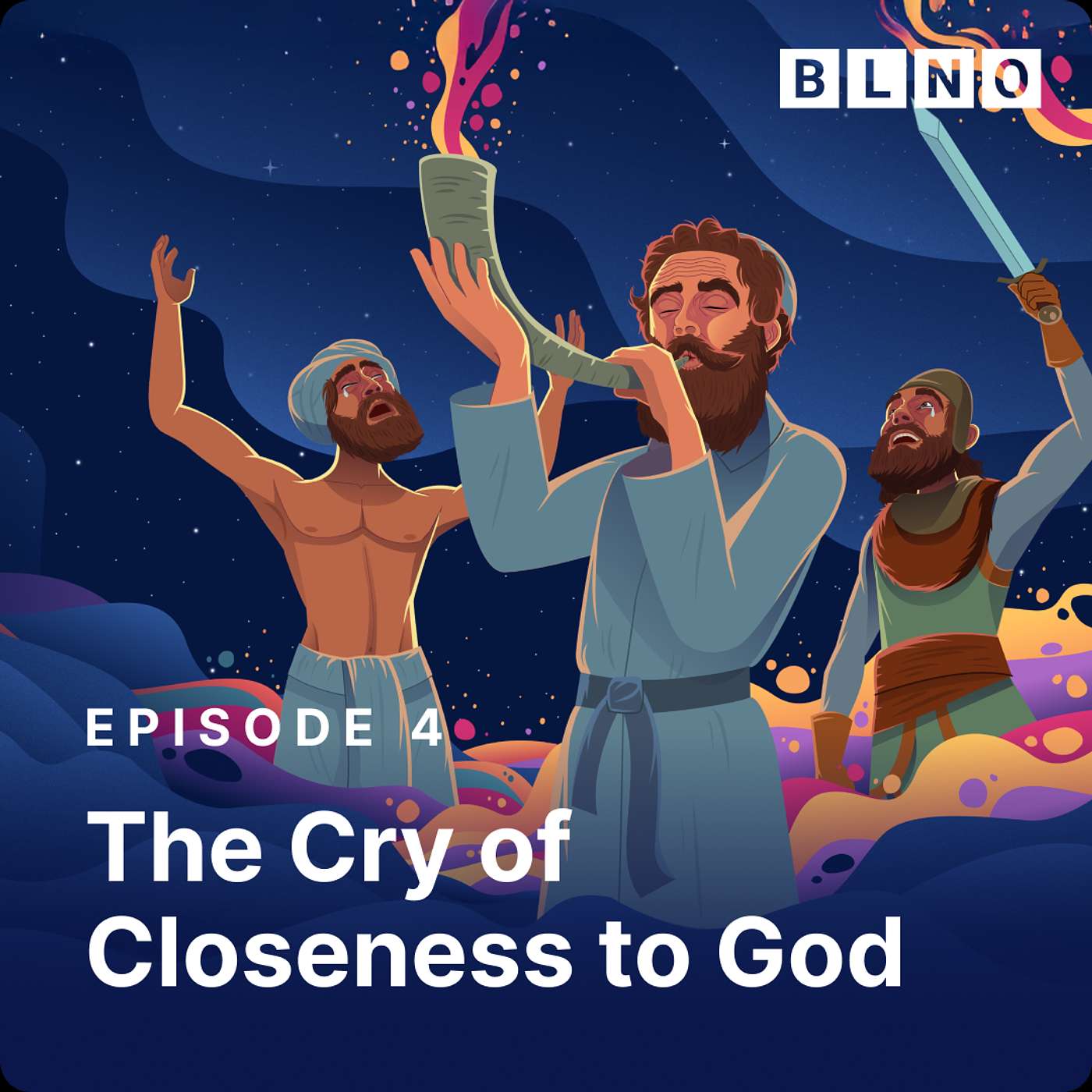
This series finale literally has everything: a sweeping historical narrative, a textual thread that binds the Exodus to Sinai and beyond, and a gobsmacking conclusion to the question: what am I meant to feel when I hear the shofar on Rosh Hashanah? You can find the textual chart referenced in this episode by clicking here. We love to hear from you! Click here to share your thoughts, insights, questions, and reactions by voice note, or send us an email at info@alephbeta.org. A Book Like No Ot...
In our quest to discover the meaning behind the shofar blast, we continue to mine the Exodus story for a deeper meaning behind God's empathy, and why it was so important to communicate that message to Moses, to the enslaved Israelites, and to Pharoah himself. To watch the course on the Three Lies of the Exodus mentioned in the episode, you can watch it on the Aleph Beta site here: https://members.alephbeta.org/playlist/moses-exodus-miracles We love to hear from you! Click here to share your...
To get to the bottom of the shofar's secret, we need to travel back to the Exodus story. Looking closely, we can see that Moses' encounter with God at the burning bush was more than just a long job negotiation. God was trying to convey something extremely important. So important, in fact, that He encoded it into His own name. We love to hear from you! Click here to share your thoughts, insights, questions, and reactions by voice note, or send us an email at info@alephbeta.org. A Book Like No...
You sit in shul. The shofar blows. What do you feel? You may not want to admit it, but for many of us the answer is: nothing. For a long time, that’s how Imu felt also. Until a chance observation, one historic Erev Rosh Hashana, sparked a conversation with Rabbi David Fohrman that would change everything. Come along on this deep dive through the Torah, revealing a hidden story from the Burning Bush to Mount Sinai to the walls of Jericho—that will finally make the shofar blast truly mean...
After thoroughly dissecting every verse of Shir HaMaalot, the season finale attempts to put all the pieces back together. The first three verses were about moving from dreams to true joy; the second three were about Joseph and Jacob's saga. Could both of these themes somehow be related? We love to hear from you! Click here to share your thoughts, insights, questions, and reactions by voice note, or send us an email at info@alephbeta.org. A Book Like No Other is a product of Aleph Beta, and m...
Do you really know what Joseph's dream of the wheat sheaves was about? We'll bet you missed something big. And perhaps, so did Joseph. See how the ambiguity of the dream presents Joseph with a choice: am I destined for power, or for benevolence? We love to hear from you! Click here to share your thoughts, insights, questions, and reactions by voice note, or send us an email at info@alephbeta.org. A Book Like No Other is a product of Aleph Beta, and made possible through the generous support ...
The beginning and end of Shir HaMaalot discuss dreams and sheaves of wheat. Where have we heard this before? Rabbi Fohrman and Imu explore the clear parallels between this chapter or tehillim and Joseph - a dreamer and a captive. They discuss Joseph's outpouring of tears, compared to Jacob's persistent weeping, and offer a consoling message that the tears we spill for those we mourn may not be in vain. We love to hear from you! Click here to share your thoughts, insights, questions, and react...
This season's focus is on Tehilim (Psalm) 126, otherwise known as Shir HaMaalot. You know, the one that Jews sing before bensching on Shabbat and festivals. This short but powerful poem tells us that when the redemption comes we will be "like dreamers." But is this a good thing? What if our dream state prevents us from coming to terms with the actual redemption? And if so, how do we "wake up"? Listen to this entertaining but groundbreaking investigation of a familiar text. We love to hear fro...
PLEASE FILL OUT OUR SURVEY: https://bit.ly/BLNOlistenersurvey In the season finale, Rabbi Fohrman and Imu explore the final commandment—“Thou shalt not covet”—through the emotional reunion of Jacob and Esau. As they unpack the psychological wounds left by their father’s perceived favoritism, a deeper truth emerges: healing comes not from acquiring more, but from seeing the divine in one another. Through a close reading of the text, they reveal how these once-bitter rivals move beyond envy, of...
PLEASE FILL OUT OUR SURVEY: https://bit.ly/BLNOlistenersurvey What drives someone to steal? And why does the Bible warn so strongly against false testimony? In this episode, Rabbi Fohrman and Imu Shalev examine how the story of Jacob, Rachel, and Lavan provides surprising insight into the psychology behind the 8th and 9th commandments. From Rachel's theft of her father's idols to Lavan's self-righteous covenant at Gal'ed, this episode reveals how our deepest pains can lead to actions that ult...
PLEASE FILL OUT OUR SURVEY: https://bit.ly/BLNOlistenersurvey Continuing their journey through the Ten Commandments, Rabbi Fohrman and Imu examine murder and adultery through the lens of the Genesis Deception story. They unpack why Esau—usually painted as the bad guy—holds back from killing Jacob even when he knows exactly where to find him, giving us a fresh take on "Do not murder." Then they explore how Laban's meddling in Jacob's marriage to Rachel offers a surprising spin on adultery—show...
PLEASE FILL OUT OUR SURVEY: https://bit.ly/BLNOlistenersurvey Continuing their analysis of the Ten Commandments through Genesis 27, Rabbi Fohrman and Imu focus on two pivotal commands: Shabbat and honoring one's parents. They begin by uncovering surprising connections between Rebecca's plea for Jacob's safety and the concept of divine rest. How does Jacob's exhausting fourteen-year labor under Lavan transform our understanding of Shabbat? And what can this teach us about finding true rest in ...
PLEASE FILL OUT OUR SURVEY: https://bit.ly/BLNOlistenersurvey Picking up from last week's cliffhanger, Rabbi Fohrman and Imu tackle an uncomfortable and paradoxical question: How can a perfect being—God—choose vulnerability? This unsettling concept seems to be at the heart of the parallels they uncover between Genesis 27 and the Revelation narrative. By analyzing the blast of the shofar at Sinai alongside Esav’s anguished cry, they explore what it means for God, the perfect being, to open Him...
What if the Torah provides its own commentary on its most pivotal moments? In this episode, Rabbi Fohrman and Imu continue uncovering a striking web of connections between Jacob’s deception in Genesis 27 and the Revelation at Sinai in Exodus 19. As they explore these interwoven parallels, they reveal a profound shift in roles—Father becoming Son, Son becoming Father—and examine how God’s choice to reveal Himself through cloud and sound echoes Jacob’s own veiled encounter with Isaac. But these...
What if one of the Torah's most troubling stories - Jacob deceiving his father to get a blessing - is actually the key to understanding why God chose the Jewish people? In this episode, Rabbi Fohrman and Imu make a surprising discovery: the story of Mount Sinai mirrors Jacob's deception in unexpected ways. But rather than just repeating a tale of favoritism, God transforms it into something beautiful: a story about being chosen not for power, but to bring blessing to all nations. Ready to see...
At the heart of Judaism's chosenness lies an unexpected twist that few have noticed. Rabbi Fohrman stumbles upon a shocking connection between two of the Bible's most pivotal moments - one that completely transforms our understanding of what it means to be chosen. This discovery not only challenges centuries of religious interpretation but might just change how you see your own relationship with God. For more on Rabbi Fohrman's reading of the deception story, see this essay from his book Gene...
Come spend Tisha B'Av with us! We’re going to be having a live online event in the afternoon. It’s a chance to join hundreds of Jews from around the world to learn together, connect and make this day about community instead of being alone. Click here to learn more. We love to hear from you! Click here to share your thoughts, insights, questions, and reactions by voice note, or send us an email at info@alephbeta.org. A Book Like No Other is a product of Aleph Beta, and made possible thr...
loading
Comments (4)

1FLOCK1SHEPHERD

This a highly fascinating series, deeply thought provoking with enough to keep the listener intrigued and engaged each episode. Tons of parallelism (echoes) are presented in a very unique style of Torah study combined with a high audio production quality.

Jan 8th
Reply

John Rabb

I don't know if you will actually see this comment. I am not Jewish, but in recent years, through my own faith walk, I have begun studying Torah from a new perspective. I have read a couple of Rabbi Fohrman's books. Plus, I have listened to Marty Solomon, and he frequently references Rabbi Fohrman's teachings. To my point, this podcast had been very enlightening, and this story specifically has been amazing. Thank you for sharing.

May 1st
Reply

Jay

Amazing episode, very insightful points made about the trees in the garden!!!

Feb 7th
Reply (1)