


The Global List Podcast
Subscribed: 1Played: 23
Subscribe

Description
Hosted by David Solomon Bassiouni, The Global List features unexpected journeys with leaders, thinkers and innovators worldwide. From Business to Climate Change to Geopolitics, we aim to provide timely insights into the key issues and topics shaping the world -- by connecting with and learning from leading experts and voices. Each episode features a new destination/country.
25 Episodes
Reverse
On June 17, 1971, President Nixon officially declared the "war on drugs". Now, 55 years removed, 10 presidents later, and with over $1T spent, that war is still ongoing, and demand continues to surge in line with trafficking, crime, and violence. What do we need to understand about the nature of the "war on drugs" and the organizations involved in narco- and human trafficking? Why is it important to view "cartels" as complex adaptive systems instead of cartels? What is the blindspot in the U.S. "kingpin" strategy? How is the trafficking landscape changing, and how is technology re-shaping the approach on both sides? What are we missing in the overall analysis, and how can we separate fact from fiction? Our guest is Dr. Guadalupe Correa-Cabrera, Professor at the Schar School of Policy and Government, George Mason University, a leading expert on cartels and transnational crime, and the author of Los Zetas Inc.: Criminal Corporations, Energy, and Civil War in Mexico and (forthcoming) Cartels Inc: A "New Generation" of Criminal Networks.
In the early morning hours of January 3rd, 2026, a U.S. military operation in Caracas, Venezuela, ended with the capture of Nicolás Maduro. Now, one month later, we face many questions. What is really happening in Venezuela right now, and what does the future hold? What is the U.S. endgame and what are the pitfalls? What do we need to understand about the situation on the ground in terms of the political and security landscape? What internal dynamics should we keep in mind? What is the legacy of Hugo Chávez and chavismo, and how will that clash with the Trump administration's "Donroe" (Monroe) Doctrine? Our guest is Dr. Pablo Ribeiro Uchoa from the UCL Institute of the Americas – a Venezuela expert with a PhD in political science who has studied Chávez's Bolivarian revolution, examining themes of nationalism, militarism/militarization, the military ethos, and the military's role and relationship with broader society.
Welcome to part 2 of the "Drone Wars" episode — a deeper dive into drones and the future of warfare. In the Ukraine-Russia War, we are witnessing the real-time and devastating impact of drones. We are also witnessing considerable innovation and tactical adaptation. So, how are drones changing the battlespace, and how will they impact the future of warfare beyond the conflict? How are drones reshaping military strategy, tactics, and operations? What is the significance of Operation Spiderweb, and how are both sides innovating in the sky and underwater? What is happening on the ground in Ukraine right now, and what critical factors do we need to know? We spoke to Dr. Marina Miron, a military expert at King's College, to gain deeper insights and technical analysis to understand the broader implications for the conflict, Europe, NATO, and the world — part 2 of 2.

Drones are redefining the battlefield and redefining war. In the Ukraine-Russia War, we are witnessing the real-time and devastating impact of drones. We are also witnessing considerable innovation and tactical adaptation. So, how are drones changing the battle space, and how will they impact the future of warfare beyond the conflict? How are drones reshaping military strategy, tactics, and operations? What is the significance of Operation Spiderweb, and how are both sides innovating in the sky and underwater? What is happening on the ground in Ukraine right now, and what critical factors do we need to know? We spoke to Dr. Marina Miron, a military expert at King's College, to gain deeper insights and technical analysis to understand the broader implications for the conflict as well as Europe, NATO, and the world. Part 1 of 2.
Welcome to season 3! The word "nuclear" can seem frightening. But maybe it's time to unpack it. Right now, we are in the midst of a Nuclear Renaissance as we witness the emergence of small modular reactors, micro-reactors, new power stations, hyperscalers – emerging to meet ever-increasing energy demands, the rapid surge of data centers due to Artificial Intelligence (AI), and, most importantly, the challenges posed by climate change. So, is it time to "go nuclear?" Is nuclear energy part of the answer? What are the key challenges and opportunities? Which critical innovations are underway? Join us for the first episode of season 3 – an engaging and insightful conversation with Seth Grae, the CEO and Chairman of Lightbridge Corporation, which specializes in the development of advanced nuclear fuel technology.
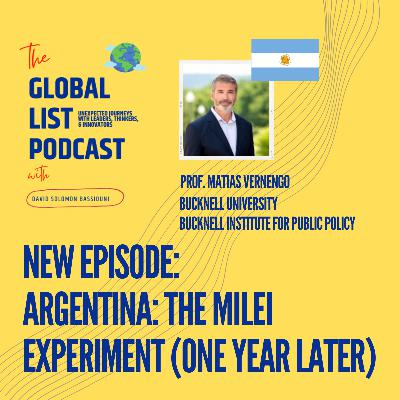
Javier Milei swept into the Argentinian Presidency on the back of a populist and popular yet controversial movement. But what has happened so far (one year in) and what does the future hold? How does Milei's economic prescription fit in the political and economic history of Argentina? What lessons can we draw for Argentina, South America and the United States as Trump prepares to take office? What is the best and worst case scenario and what trends are taking shape right now? Join us for an in-depth conversation with Prof. Matías Vernengo, Full Professor at Bucknell University, and the Director of the Bucknell Institute for Public Policy (BIPP).
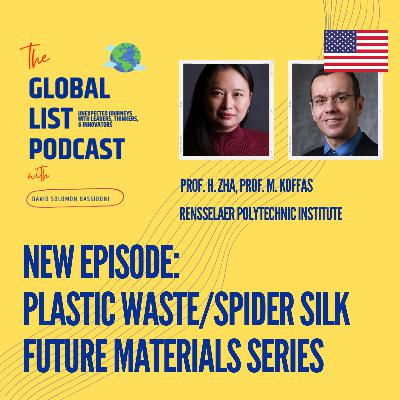
We produce over 400m tonnes of plastic waste every year but what if you could convert that waste into ecofriendly spider silk and other materials? What if you could engineer a bacteria to digest and transform polyethylene plastic waste – the kind used in many single-use items – into a high-value protein product? This isn't science fiction – it's actual science. Join us for an informative and engaging conversation with Prof. Helen Zha and Prof. Mattheos Koffas (Rensselaer Polytechnic Institute) to learn more about their groundbreaking research. This is part of The Global List Podcast's ongoing "Future Materials" series which examines innovative & sustainable breakthroughs in materials science, biomaterials, bioengineering, biotechnology and nanotechnology.
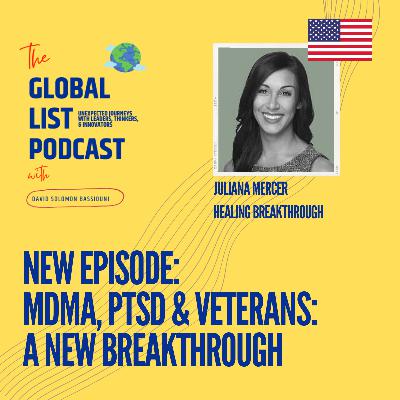
MDMA has emerged as a highly effective treatment for PTSD and one organization is leading the way. In this insightful and uplifting conversation, we speak with Juliana Mercer, the Director of Public Policy for the nonprofit organization Healing Breakthrough, which advocates for system-wide adoption of MDMA-Assisted Therapy in the U.S. Department of Veterans Affairs. Join us for a very special episode of The Global List Podcast and find out how MDMA is helping veterans to manage and overcome PTSD, and what it means for therapy in general. May is Mental Health Awareness Month.
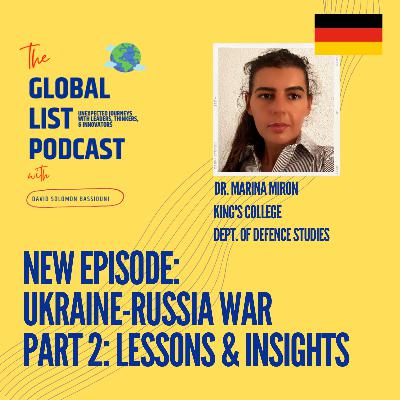
The Ukraine-Russia War, the largest armed conflict in Europe since WW2, will reach the 2-year mark on February 24, 2024. It's a critical milestone to assess the overall progress and what lies ahead. We flew to Berlin for another in-depth and engaging conversation with Dr. Marina Miron of King's College (London). We covered a wide range of topics including Ukraine's 2023 counteroffensive (what went right/wrong), the key lessons learned, relative strengths and weaknesses, strategic and tactical factors, the rapid advances in drone warfare, NATO's challenges and opportunities, PMCs and the overall outlook for 2024. We also discuss Russia's broader war and multipronged effort in geopolitical realignment, information/cyber warfare and active measures. This is a conversation you need to hear.

Join us for a special, holiday-themed episode of The Global List Podcast as we travel around the world – from Germany to Spain to Scotland to the Bahamas – to find the most interesting Christmas traditions, intriguing characters and fascinating customs. Our special guest is Alex Palmer, the author of the New York Times Bestseller "The Santa Claus Man: The Rise and Fall of a Jazz Age Con Man and the Invention of Christmas" as well as "The Atlas of Christmas: The Merriest, Tastiest, Quirkiest Holiday Traditions from Around the World". So grab some eggnog (or mulled wine), sit back and get ready for a Christmas journey unlike any other.
How do you tackle Misinformation, Disinformation, and Malinformation in the age of Artificial Intelligence, Social Media, and Hyper Partisanship? What tools can be used to fight "Information Disorder"? Why is Finland unique in this respect and how can you effectively teach digital & media literacy? Join us as we travel to Spain for an illuminating conversation with Dr. Kari Kivinen, one of the leading global experts on Misinformation & Disinformation. Dr. Kivinen is the former Secretary-General of the European School system and the ex-Head of the French-Finnish School of Helsinki where he championed the Finnish Curriculum, which teaches students how to identify Misinformation, Disinformation and Propaganda from the primary school level.
More than ever before, global companies are forced to deal with critical issues in the supply chain such as forced labor and conflict minerals. For example, the average smartphone contains more than 40 different minerals including four "conflict minerals" (tin, tantalum, tungsten, gold). Cobalt, a critical component in lithium-ion batteries, is mostly produced in the Democratic Republic of Congo (DRC), which has struggled with periodic violence and human rights abuses. So, how can companies (especially manufacturers) guarantee responsible sourcing, gain visibility into the supply chain, effectively manage risks and ensure sustainability? How can they keep up with emerging regulations as well as stakeholder expectations? As part of our "Sustainable Business" series, we traveled to Washington D.C. and the DRC to speak with Jamie Wallisch of Assent on the key trends, challenges, and opportunities.
How do you get inside the mind of an extremist? What are the building blocks of radicalization and what does de-radicalization look like? How is technology fueling extremism and what's behind current trends in global and domestic terrorism? In this first episode of season 2, we fly to London for an eye-opening conversation with Prof. Peter Neumann, Professor of Security Studies at the Department of War Studies, King's College, and founder of the International Centre for the Study of Radicalisation. It has been 22 years since the tragic September 11th attacks and launch of the Global War on Terror but there are old challenges and new threats to contend with – abroad and at home. Join us as we dig deeper into a complex topic that affects us all.
The global water crisis is inextricably linked to climate change and it is intensifying. Currently, 771 million people in the world (1 in 10) lack access to clean water. By 2050, five billion people will face water shortages. So, can you "harvest" water to meet growing demand? How exactly can you "grow" H2O? It is an intriguing concept and the perfect topic for the season 1 finale of The Global List Podcast. This time around, we travel to Melbourne, Australia, to sit down with Terry Paule, Co-Founder and CEO of Botanical Water Technologies. Join us for an informative and thought-provoking conversation and find out why global water security is so critical; how Botanical Water Technologies is tackling the water crisis from India to California; and get the story behind the world's first blockchain water trading platform.
The world of cryptocurrency continues to draw a lot of interest as well as controversy. But it is time to go beyond sensational headlines for some clear-minded, expert analysis. What are the mechanics of the blockchain infrastructure? What does decentralization mean? How did the banking crisis influence crypto's emergence and how has crypto evolved over the years? What will drive mainstream adoption and which new innovations are on the horizon? In this episode of The Global List, we travel to England for an informative conversation with Prof. Christopher Carr, a Lecturer based at the University of Exeter, specializing in cryptography and blockchain technology.
Lithium has emerged as the "metal of the future". It is the critical component in lithium-ion batteries, powering everything from smartphones to Electric Vehicles (EVs). The low-carbon future requires lithium. But which countries are poised to lead the way in lithium mining and what are the challenges and opportunities? Can supply keep up with rising demand? What does the future hold and who will lead the lithium revolution? Chile, which holds the world's largest lithium reserves, is the first stop in our new "Future Metals" series. We flew to Santiago for an informative conversation with Daniel Weinstein, Partner at Urzua Abogados, covering Chile's lithium potential, mining experience, unique advantages, and a little-known Cold War regulation that holds the key to the future.
This is the second part of our interview with Dr. Marina Miron from King's College (Defence Studies Department – Centre for Military Ethics) focusing on the military dimension of the Ukraine-Russia war. This part of our conversation focuses on the critical, next phase of the war and includes an analysis of tank warfare & air warfare; NATO's ability to support Ukraine and adapt to the varied needs on the ground; the changing contours of the battlefield in East and South Ukraine; the critical window between now and the delivery of new weapons; and the key geopolitical and economic factors in the background. What role can Leopard 2 tanks play in the months ahead? Can fighter jets be deployed effectively? What are the pros and cons? What are the realistic expectations? Listen to this episode and find out what.
This marks the start of a new series focused on the military, political and humanitarian dimensions of the Ukraine-Russia War. In this series opener focused on the military dimension, we spoke with Dr. Marina Miron from King's College (Defence Studies Department – Centre for Military Ethics). This in-depth conversation covers a wide range of topics including contrasting modes of military leadership; early expectations versus outcomes; the critical reasons behind Ukraine's performance; Russia's under-performance and lingering issues; NATO's role, challenges and lessons learned; cyber/information warfare; the ever-changing battlefield & weapons; the geopolitical "war beyond the war"; and the key factors to consider in the critical, next phase.
Did you know that Silicon Valley isn't the world leader when it comes to startups? In this latest episode of The Global List Podcast, we travel to Israel for an informative, in-depth conversation with Oded Agam, the Co-Founder and Managing Partner of NextLeap Ventures. You will find out how and why Israel earned the title of "Startup Nation" – with more startups per capita than anywhere else in the world. You will also find out why Israel's entrepreneurial culture has generated so many startups and unicorns; how military service contributes to innovation & startup success; and why business and technology can also serve as a bridge to peace and progress.

The Amazon Rainforest is the world's most important and diverse ecosystem – representing 10% of known species and 34m people. On average, a "new" species of animal or plant is discovered in the Amazon every 3 days. So, what's it like to find the largest tree in the Amazon and how can technology, particularly LiDAR, enhance biodiversity, forest management, and conservation? In this latest episode of The Global List Podcast, we venture deep into the Amazon for an illuminating conversation with Prof. Eric Bastos Görgens. In 2019, it was Prof. Görgens' group of Brazilian and British researchers who located the largest tree in the Amazon, 88 meters (289ft) high. Since then, the research project has mapped even more of the Amazon using the latest in LiDAR and drone technology as well as innovative research methods.

Comments

Download from Google Play

Download from App Store
 United States