


 Claim Ownership
MindTwist: Psychological Thriller Writing Tips
Subscribed: 3Played: 1
Subscribe

© Manuel Sabater Romero
Description
MindTwist is a weekly podcast about psychological horror, unreliable minds, and the stories that ruin your sleep in slow motion.
Hosted by indie author Manuel Sabater Romero, each episode dives into a specific aspect of horror craft – memory, setting as villain, fractured identity, the quiet kind of dread – and shows how those ideas appear in his novels JULIA, 705, and THE WALK.
Expect short, focused episodes with a mix of:
• Writing tips for horror and psychological thrillers
• Deep dives into unr
Start here → https://mindtwistbooks.com
SUBSCRIBE: https://www.youtube.com/@MindTwistBooks
Hosted by indie author Manuel Sabater Romero, each episode dives into a specific aspect of horror craft – memory, setting as villain, fractured identity, the quiet kind of dread – and shows how those ideas appear in his novels JULIA, 705, and THE WALK.
Expect short, focused episodes with a mix of:
• Writing tips for horror and psychological thrillers
• Deep dives into unr
Start here → https://mindtwistbooks.com
SUBSCRIBE: https://www.youtube.com/@MindTwistBooks
19 Episodes
Reverse
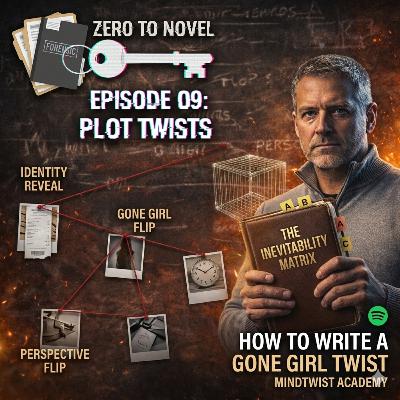
Most writers treat plot twists like fireworks—brief flashes of light that disappear. But a professional psychological thriller uses a twist as a restructuring event. In Episode 09, we break down the Inevitability Matrix to help you build a story that reaches backward and rewrites the meaning of every previous scene.In this episode, you’ll learn:The Exclusive Interaction Rule: How to handle identity reveals without cheating.Moral Inversion: Using the "Justification Filter" to turn your hero into a villain.The Double-Meaning Scene: Writing dialogue that functions in two separate realities at once.Hidden Motivations: Why "agency horror" is more effective than simple mystery.World Fracture: How to plant "artifacts" that quietly violate the rules of your story’s reality.Homework: Pick your engine, write your reveal, and map your clues. Class is in session.https://www.youtube.com/@MindTwistBookshttps://www.mindtwistbooks.com/
Most unreliable narrators don’t fail because the twist is predictable. They fail because the lie is cheap.In this episode of Zero to Novel (MindTwist Academy), we build the unreliable narrator the right way: not as a gimmick, but as load-bearing architecture. In a real psychological thriller, unreliability is survival. It’s the only way your protagonist can live inside the reality they’ve created—until the truth becomes too expensive to avoid.In this episode you’ll learn:The Wound → Distortion rule: why the narrator’s trauma or pathology must require the lieTwo core narrator types: the Calculated Manipulator vs the Broken ObserverStructural Deception: how format (timelines, gaps, perspective mechanics) reinforces the lie without “cheating”Voice-level tells: over-explanation, glaring omission, and register slips that make the reader feel cleverThe Reliability Erosion Cycle: mapping credibility → cracks → defensive pivot → spiral → collision across your beatsHomework: Identify your protagonist’s wound, then write one paragraph where they describe something that makes them look bad—but rewrite it so they become the victim. Post it in the comments. Make the reader complicit.Website: https://mindtwistbooks.comYouTube: https://www.youtube.com/@MindTwistBooks#MindTwistAcademy #ZeroToNovel #UnreliableNarrator #PsychologicalThriller #ThrillerWriting #WritingCraft #StoryStructure #DarkFiction #AuthorPodcast #WritingTips
Most writers treat setting like wallpaper—pretty details, weather, a quick tour of the room. That’s why so many psychological thrillers lose tension in Act One: the “world” never pushes back.In this episode of Zero to Novel, we build the setting the way thrillers require it: as an antagonist. Not a backdrop—an organism that watches the protagonist, constricts their options, and turns “safe” spaces into traps.You’ll learn:Setting as Antagonist: how environment attacks psychology, not just bodiesThe Sensory Breach: how to use smell, sound, and touch to hit the nervous system (not just the eyes)Atmospheric Pressure System: how to evolve a location from Safe → Uncanny → Suffocating across the novelPressure Engineering: constraint points that shrink exits without cheap tricksHomework: Do a Room Audit on the scene you’re avoiding—strip passive sight, add one sensory breach, define the constraint, and tilt the “safe” details into threat.Website: https://mindtwistbooks.comYouTube: https://www.youtube.com/@MindTwistBooks#MindTwistAcademy #ZeroToNovel #PsychologicalThriller #WritingPodcast #WritingTips #ThrillerWriting #DarkFiction #StoryStructure #Worldbuilding #Atmosphere #AuthorTips
Most psychological thrillers don’t fail at the beginning — they die in the middle. Not because “nothing happens”… but because the story stops tightening.In Episode 06, I’m giving you the Paranoia Escalation Engine — a 3-gear system that dismantles your protagonist’s sanity without relying on chase scenes or constant attacks.You’ll learn:Gear One: The Polite Pushback — how etiquette and social rules stop your protagonist from actingGear Two: The Echo — repeating-with-variation that creates proof vs doubt (and makes them look unstable)Gear Three: The Isolation — credibility collapse that turns allies into a “care team” and leaves them alone in a crowdThe False Floor — the rhythm that gives a win, then weaponises it to drop them even deeperHow to build evidence traps, a suspicion web, and a midpoint pivot that escalates meaning—not just eventsHomework (The Bridge Burn):Write your midpoint scene where your protagonist loses their strongest ally—not because they die, but because they stop believing them. Add a public outburst, make the antagonist respond with kindness, and complete the credibility collapse.Follow the show — Episode 07 is where we pay this off with a climax that doesn’t cheat.Explore more:📚 Website: https://mindtwistbooks.com🎥 YouTube: https://youtube.com/@MindTwistBooks
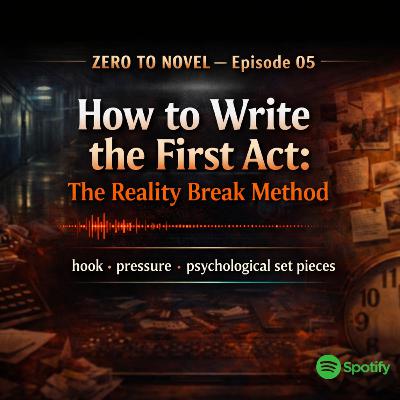
Most psychological thrillers don’t fail because the idea is weak — they fail because Act One doesn’t fracture reality in the right order.In Episode 05 of Zero to Novel, I break down the Reality Break Method: a step-by-step way to design a first act that feels deniable at first… then tightens into doubt, pressure, and isolation until the reader can’t look away.You’ll learn:How to open with a hook that threatens identity, not just safetyHow to plant a deniable intrusion (the “wrong detail” readers can’t stop thinking about)How to write polite pressure scenes where someone seems helpful… while quietly controlling the situationHow to build a social echo (people repeating the same reality back at your protagonist)How to escalate an isolation gradient (exits closing without a single locked door)How to ignite obsession and land your Act One point-of-no-return without action fillerIf you want an Act One that breaks your hero’s reality — and makes the middle inevitable — this is the blueprint.Subscribe to MindTwist Books for the full Zero to Novel workshop: youtube.com/@MindTwistBooksMy books here: https://www.mindtwistbooks.com/ourbooks
Most psychological thrillers don’t fail at the start — they collapse in the middle. In this episode of ZERO TO NOVEL, you’ll learn the 15-Beat Sheet built for psychological pressure, not action set-pieces. We break down how to escalate doubt, shrink options, design a midpoint reversal, trigger credibility collapse, and deliver a final reveal that feels inevitable — not random.You’ll also get the Pressure Ladder (what to tighten next when you’re stuck) and a live example mapping a premise to all 15 beats.Homework: Write your premise in one sentence, fill all 15 beats (one line each), and post your midpoint reversal: “Halfway through, the protagonist learns ___, which changes the meaning of ___.”Watch it here: https://www.youtube.com/@MindTwistBooksMy books here: https://www.mindtwistbooks.com/
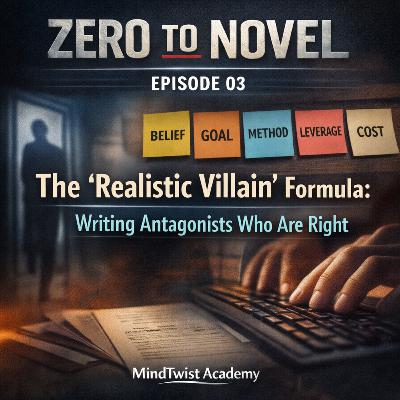
Most writers build villains like props—an evil look, a threat, a dramatic moment. But psychological thrillers don’t collapse because the plot is weak. They collapse because the antagonist isn’t real.In Episode 03 of Zero to Novel, you’ll learn how to engineer a villain (or opposing force) who doesn’t need to “do evil things” to feel terrifying—because they believe they’re right. They have a rational belief, a specific goal, and a calm method that tightens scene by scene until the protagonist can’t tell whether they’re being helped… or handled.You’ll get a practical framework you can use in any thriller:Belief → Goal → Method → Leverage → CostAnd you’ll learn how to turn that into pages that crackle with predator–prey tension: polite conversation with teeth, information as power, and forced choices where every option serves the antagonist.Inside this episode:The rule that makes villains feel human (and therefore scarier)The difference between “antagonist” and “villain” (and why it matters)The three dominant antagonist types: Intimate / Institutional / InternalA step-by-step build method to design your antagonist in minutesScene tools for Silence-of-the-Lambs style tension: information imbalance, polite traps, forced choicesHomework included: write your villain’s belief sentence, define what they want, choose their method, identify their leverage, and name the one truth they’ll never admit—because that’s where their mask will crack.MindTwist AcademySubscribe on YouTube for the full Zero to Novel series https://www.youtube.com/@MindTwistBooksOur books here: https://www.mindtwistbooks.com/
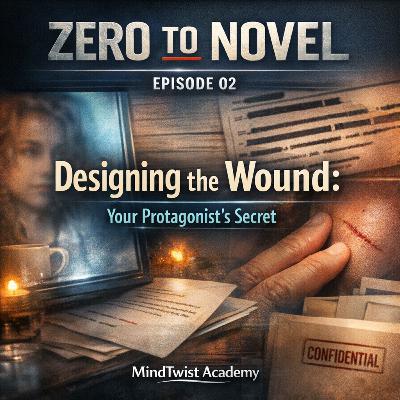
Most psychological thrillers don’t fail because the plot is weak. They fail because the protagonist has no psychological engine.In Episode 02 of Zero to Novel, you’ll learn how to design the one element that makes tension inevitable: the Wound—the hidden damage that warps how a character interprets reality, makes them choose the wrong thing under pressure, and forces the truth to leak out at the worst possible time.You’ll build the Wound Triangle step-by-step:Wound (Damage): what hurt themLie (Belief): what they concluded to surviveMask (Coping): how they present themselves so nobody sees the woundThen we go deeper into identity-threatening secrets, the flaw patterns that create believable spirals, and the villain blueprint that turns conflict personal: a villain (or system) who knows exactly where to cut—and uses “help” as a weapon.By the end, you’ll have a repeatable character tool you can apply to any thriller, plus clear homework to lock your protagonist, secret, and antagonist into one tight psychological trap.MindTwist AcademySubscribe on YouTube for the full Zero to Novel series https://www.youtube.com/@MindTwistBooksOur books here: https://www.mindtwistbooks.com/
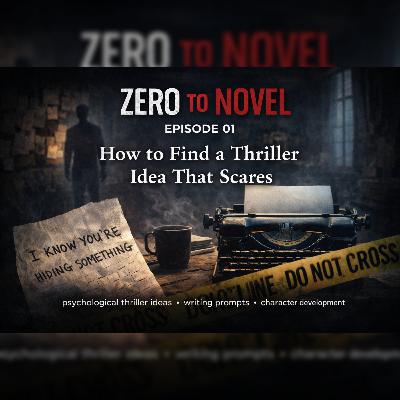
Zero to Novel is a 12-episode workshop where we build a psychological thriller from scratch—idea to final twist.In Episode 1, you’ll learn how to find a thriller idea that actually scares you (not just a “cool situation”). I’ll walk you through the Scare Test, the 3 Fear Engines, and the Premise Formula so you can generate psychological thriller ideas fast—and turn them into a book you can actually write.What you’ll get in this episode:The Scare Test: Identity • Doubt • EscalationThe 3 Fear Engines: Memory Betrayal • Control Theft • Self as Threat7 reliable sources of thriller ideas (that don’t feel generic)The Premise Formula you’ll use for the entire course12 writing prompts + homework to lock your idea in placeSubscribe to follow the full Zero to Novel course: new episodes build on the last.

Most writing advice tells you what to add. This episode is about what to stop doing. In the world of psychological thrillers, tension isn't built—it’s managed. If you lose control of the "Trust → Doubt → Dread" pipeline, your story collapses into noise.Host Manuel S. Romero breaks down the 7 fatal habits that turn high-stakes mysteries into predictable disappointments. From the "Villain Monologue" to the "New Info" twist, learn how to protect the reader’s belief long enough to break it properly.Key Takeaways:Why "explanation" is the enemy of horror.How to fix a passive protagonist.The difference between "Loud" and "Quiet" unreliability.Mastering the "surprising yet inevitable" ending.Stop making these mistakes and start writing stories that hit like 'The Walk' territory.

In this MindTwist Podcast episode, we discuss the golden rule of "storytelling": a great plot twist must be both surprising and inevitable, leaving the audience questioning their initial "narrative" assumptions. We offer practical "writing advice" on how to craft these moments, focusing on techniques like using "red herrings" with purpose and employing an unreliable narrator, essential "writing tips" for anyone creating "psychological thrillers."MindTwist Books explores psychological horror, liminal fear, and stories where reality bends. Subscribe for new episodes and craft breakdowns.Read My Psychological Thriller books: https://www.mindtwistbooks.com#writingtips #plottwist #storytelling #psychologicalthriller #creativewriting #MindTwistBooks #authortube #writingtips #horrorwriting #writingcommunity
In this MindTwist episode I break down 5 psychological thriller tropes that always work – not because they’re trendy, but because they’re human. We dig into quiet versions of the unreliable narrator, the ordinary detail that turns into evidence, environmental gaslighting, the past leaking back in fragments, and the small, chilling moment of recognition before a twist lands.I’ll show you how to use each trope without feeling cliché, with practical examples you can drop straight into your own scenes, plus a short reading where reality “corrects” itself and an everyday object becomes evidence.If you’re writing psychological horror or dark suspense, this episode will give you concrete tools to make your stories more unsettling.👉 Follow the MindTwist Podcast on Spotify for weekly episodes and readings from Julia, 705, and The Walk.
In this MindTwist episode, Manuel Sabater Romero (author of Julia, 705 and The Walk) dives into “remembering houses” – settings that feel like they’re watching your characters without ever saying the house is alive.You’ll learn how to:Use archive, mirror, and judge settings in psychological horrorTurn a single loaded detail into a silent witnessMake corridors feel longer and rooms more hostile with the shifting routeUse one-sided conversations so characters react as if the building has spokenIncludes a short reading where a hallway, a bruised doorframe and a knocking pipe quietly accuse the main character.👉 Follow the MindTwist Podcast on Spotify for new psychological horror episodes every week.
In this episode of MindTwist, Manuel Sabater Romero (author of Julia, 705 and The Walk) dives into the kind of inner voice that doesn’t quite sound like your character—the echoes, intrusions and masks that live inside their head. You’ll learn practical horror-writing techniques for putting those “imported” thoughts on the page using bracketed whispers, brutal corrections and hijacked paragraphs, and hear a short scene where an extra voice quietly slips in and changes everything. If you want to turn ordinary internal monologue into a weapon for psychological dread, this one’s for you.
In this episode of MindTwist, we dive into one of the most powerful tools in psychological horror and thriller writing: the unreliable narrator. Not the cartoonish liar, but the character whose version of events is emotionally true for them… and dangerously misleading for the reader.I break down what “unreliable” really means from a writer’s point of view, and share three practical tricks you can start using straight away:• The Edited Scene – what your narrator “forgets” to mention the first time.• The Tilted Emotion – when the facts are right, but the feelings are wrong.• The Broken Clock – using time, tech, or data to quietly argue with your narrator.Then I read a scene from my novel The Walk, where a simple tunnel inspection goes wrong the moment time and technology stop agreeing with the protagonist. We’ll unpack why that moment works, and how you can use the same principles in your own stories to move the ground under your reader’s feet without shouting “twist” too early.If you write psychological thrillers or horror and you love messing with your reader’s head, this one’s for you.
Memory doesn’t just fade in psychological horror — it lies back.In this episode of MindTwist, Manuel breaks down how to use unreliable memory as a weapon on the page: how to turn forgotten moments, distorted recall and “I’m sure it happened like this…” into pure psychological dread.You’ll learn:Why memory should be treated as an active, shifting narrativeHow to use false or “edited” memories to break a character’s identityThree practical techniques to twist memory without confusing the readerThen, Manuel reads a scene from his psychological thriller JULIA — the attic moment with the photograph that shouldn’t exist — to show those ideas in action.💀 If you write (or love reading) psychological horror, this one’s for you.📚 Books mentioned: JULIA, 705, The Walk🔗 Grab the books and more at: mindtwistbooks.com/ourbooks
Some houses don’t keep ghosts. They keep habits.In this mini horror story from MindTwist, Sarah Winters brings home an antique mirror from an old estate sale… and discovers her reflection has plans of its own. What starts as a beautiful Victorian piece quickly becomes a doorway into something patient, watching, and very, very real.If you like psychological horror, unsettling objects, and stories that make you side-eye your own reflection, this one’s for you.Title: “The Mirror House”Written & narrated by Manuel Sabater.🎧 New micro horror stories coming soon — follow the podcast so you don’t miss the next one.
Some places don’t haunt you. They study you.In this episode of MindTwist, we explore three ways to turn setting into the villain — without using a single ghost. From shrinking rooms to looping roads and whispering houses, discover how to write locations that watch, trap, and remember.🎙️ Plus: a reading from JULIA, where the attic stops watching... and starts acting.🕯️ This week’s question:What’s scarier — a house that remembers, or a house that forgets?Leave a comment, and I might read it in the next episode.📚 Books mentioned: JULIA, 705🖤 MindTwistBooks.com
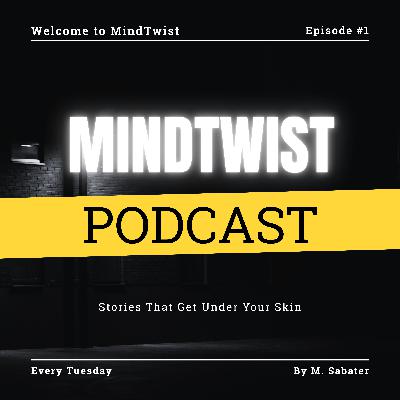
Welcome to MindTwist — a podcast about psychological thrillers, unreliable minds, haunted places, and slow-burn dread that lingers after lights-out.In this premiere episode:What really makes a place feel haunted?How setting becomes the villain — and why it works.A reading from JULIA, my psychological thriller about a memory that won’t stay buried.Plus: your chance to weigh in on next week’s question…If you love tension that creeps, not jumps — you’re in the right place.🎙 Hosted by Manuel Sabater📚 MindTwist Books | British indie psychological horror & thrillers📖 Read 705: www.amazon.co.uk/dp/B0FHDSTBVG🖤 All links, books & updates: mindtwistbooks.com🗝️ Listener question:What unsettles you more — mirrors that show you a second too late, or doors that lock from the inside?
Comments


Download from Google Play

Download from App Store
 United States