


 Claim Ownership
nature being
Subscribed: 0Played: 0
Subscribe

© triciafrench
Description
nature being is a space to micro-dose ecological psychology / ecopsychology. to remember we are mammals sharing a more-than-human world. to attune, listen, and explore what it means to be a body in a living world; where we porously exchange nutrients, ideas, and curiosities. a space to reunite psychology and ecology, which have always belonged together.
to slow down. drop in. and sense deeply. as beings, of nature, with nature being.
tricia french, M.A is the host of nature being. an ecological psychologist and graduate of viridis graduate institute.
to slow down. drop in. and sense deeply. as beings, of nature, with nature being.
tricia french, M.A is the host of nature being. an ecological psychologist and graduate of viridis graduate institute.
9 Episodes
Reverse

this episode explores what it means to be a mammal…beyond language, culture, and these screens we're all so glued to. Inspired by Bad Bunny’s superbowl halftime show (yes, inspiration comes from every angle).we dive into the nuerological/biology of PLAY, CARE with a guest apparance of eros, drawing on the deeply moving, massively important work of neuroscientist and truly curious, incredible being: Jaak Panksepp. from tickled and giggling rats to mammals in spandex and polyester, we explore how nervous systems learn to regulate, how joy and relational energy flow, and what happens when a culture forgets to play. how do we inhabit the biology of care? how do we remember circuits of love, joy, and play are available to all of us, we just have to be willing to feed them.the host, tricia french, is a graduate of Viridis Graduate Institue. mammals that help guide her sensing, and immersed her in the study of CARE, PLAY and eros are:Lori Pye Robin Saltonstall Stephen BuhnerJaak Panksepp
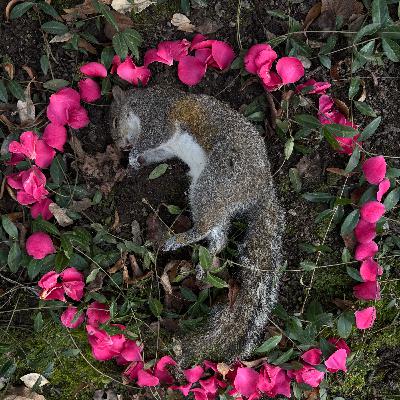
An episode exploring how we stay in conversation with life when death looks back. An encounter with a squirrel invites questions of care, loss, and ethical tensions we are living with.These episodes are guided by ecological psychology. Inviting grief, and what it means to remain soft, sensing, and relational in an unsedimented world. I have created a space for any questions/curiosities/feelings/feedback here:https://www.thewildthreshold.com/nature-being-podcastor via IG @naturebeingpodtricia french is the host of Nature Being and is a graduate of Viridis Graduate Institute.
what happens when intelligence isn’t something we possess, but something we participate in?this episode begins with Donna Haraways "it matters what thoughts think thoughts"...what kind of thinking is shaping our thoughts and our world before we’re even aware of it?psychology and ecology entangle as we explore intelligence beyond the human brain as relational, distributed, ecological knowing. encountering beings who have been thinking with earth far longer than we have. we question the stories we’ve normalized and as always invite more questions. if brilliance destroys ecosystems, is it still brilliant? who or what gets excluded when intelligence is defined only by human achievement? what happens when intelligence is severed from relationship, care, and belonging?ecological psychology reminds us none of us can be psychologically well on an unwell planet.perhaps the most intelligent thing we can do now is listen to our bodies, to other species, and to Earth herself.references:Donna Haraway book staying with the trouble plastic in bird bellies:https://www.bbc.com/future/article/20230531-the-photo-that-changed-the-worlds-response-to-the-plastics-crisisseismic airgun sounds:https://earthjustice.org/video/underwater-seismic-airgunsinfinite gratitude to Dr. Lori Pye and Viridis Graduate Institue for this education.
This episode of nature being is an invitation to step away from polished outcomes and into process. With Beethoven as a muse and guide to live as a messy, living mammal. This episode explores creativity, ecology, and energy as ongoing exchange rather than perfected product and reflects on western culture’s fixation on results (often erasure or conceling the mess behind so much of what we often admire) with the many unseen forces that shape bodies, music, and environments alike. Like most exposides here, this is not a solution-driven experience but a spacious, invitational one. Exploring how we might sense differently, honor irregularity, and remember ourselves as ecological beings living within larger, often unseen, currents.thank you to viridis graduate institute for educating me on mess and entanglment and Frans de Waal for shared attunment with all primates and inspiring this episode.Music: Beethoven — Symphony No. 5 in C minor, Op. 67Performance: Davis High School Symphony OrchestraLicense: Public Domain (CC Public Domain Mark 1.0), via Musopen
What if darkness isn’t something to avoid but what makes life and any flourishing possible, on earth and in our psyche? This episode explores psychological composting: the necessary process of breakdown, decay, and renewal within the psyche. Drawing from ecological psychology and the living intelligence of soil, worms, fungi, and darkness itself, we're invited to tend what we’ve buried; grief, old identities, unresolved hurts, cultural conditioning and allow them to transform rather than harden into inner strata.This is an invitation to return to the dark as ecology. Learning to trust cycles of descent and renewal. To remember, we are permeable, sensing beings living with a more-than-human world.thank you do the life work of Dr. Lori Pye for extensive teachings into the world of both ecological an psychological composting taught @ https://viridis.edu.
This episode explores what it means to be a human animal in a modern world that overwhelms our still very ancient, sensitive nervous systems. We look at how constant stimulation and individualization can pull us away from deep mammalian needs we’re still wired for. Like touch, attunement, connection, ecology, and meaning.With reflections on grief, instinct, and the emotional lives of other species, we examine how loss impacts the body, why our bonds run so deep, and how much we share with the more-than-human world, while questioning the idea of human exceptionalism. We consider how widening our sense of relationship can reconnect us to aliveness, belonging, and each other.Sharing the concept of circumambulation the slow, circular process of returning to what pulls us in and what matters, the episode invites a gentler way of understanding our experiences. Instead of expecting or forcing clarity or control, we can learn to circle, revisit, and sense from many angles, honoring what reveals itself over time.A subtle reminder to remember ourselves as ecological beings: feeling organisms on a changing planet, shaped by cycles, complexity, and interdependence. By paying attention, grieving openly and honestly, and staying close to the living world, we participate in a shared evolution... to listen, to notice, to relate... to circumambulate.(Thank you to Robin Saltonstall, the inner mammal whisperer and Dr. Lori Pye for teaching and inspiring this episode)
nature being is a space to micro-dose ecological psychology. to remember that we are mammals sharing a more-than-human world. to attune, listen, and explore what it means to be a body in a living world; where we porously exchange nutrients, ideas, and curiosities. a space to reunite psychology and ecology.teachers cited in this epside are Dr. Lori Pye and Robin Satonstall and where it all began @ viridis graduate institute https://viridis.edutricia french, M.A is the host of nature being. an ecological psychologist and graduate of viridis graduate.
a continued opening to nature being, where we’re invited to remember ourselves as ecological, mammalian beings living in deep relationship with a living earth, contemplating the body, brain, heart, microbiome, and inherited cultural stories. this episode explores ecological psychology as something ancient, deeply relational, and always alive within us.to slow down, question myths of separation, and reconsider what it means to live with the living world rather than above it. to reconnect with our animal bodies and the multispecies planet we are of.thank you to the brilliant ecology of robin saltonstall (a teacher) for the 'mammal hands' journey. and always, the ecosystem of viridis graduate institue as a whole (Dr. Lori Pye) without whom none of this would be possible, and some favorite north star(s)... adam phillips (paraphrased here, highly recommend his books) iain mcghilchrist (can't recommend his podcast enough if you want a deep dive into hemispheric action "the channel mcghilchrist").

nature being is a space to micro-dose ecological psychology. to remember that we are mammals sharing a more-than-human world.to attune, listen, and explore what it means to be a body in a living world; where we porously exchange nutrients, ideas, and curiosities.a space to reunite psychology and ecology, which have always belonged together. to slow down. drop in. and sense deeply.as beings, of nature, with nature being.tricia french, M.A is the host of nature being. an ecological psychologist and graduate of viridis graduate institute.
Comments


Download from Google Play

Download from App Store
 United States