


 Claim Ownership
Eating at a Meeting
Subscribed: 7Played: 12
Subscribe

© Tracy Stuckrath, thrive! meetings & events
Description
Eating at a Meeting explores a variety of topics on food and beverage (F&B) and how they impact individual experience and inclusion, sustainability, culture, community, health and wellness, laws and more.
The mission of Eating at a Meeting is to share authentic stories that illustrate the financial, social, emotional, and mental impact food and beverage have on individuals, organizations, and the earth. I see it being threefold:
● Help individuals and organizations understand how F&B
impacts employee, customer and guest experience, the
planet and the bottom line.
● Help those growing, producing, preparing, and serving
F&B understand the duty of care they hold in food safety
and inclusion as well as the opportunity they have to
create experiences that are safe and inclusive.
● Support those with dietary needs by gathering their
insight on eating at a meeting with dietary needs,
helping them better advocate for themselves and
educating them on the processes found on the other
side of the kitchen door.
The mission of Eating at a Meeting is to share authentic stories that illustrate the financial, social, emotional, and mental impact food and beverage have on individuals, organizations, and the earth. I see it being threefold:
● Help individuals and organizations understand how F&B
impacts employee, customer and guest experience, the
planet and the bottom line.
● Help those growing, producing, preparing, and serving
F&B understand the duty of care they hold in food safety
and inclusion as well as the opportunity they have to
create experiences that are safe and inclusive.
● Support those with dietary needs by gathering their
insight on eating at a meeting with dietary needs,
helping them better advocate for themselves and
educating them on the processes found on the other
side of the kitchen door.
356 Episodes
Reverse
When you're in Philly for PCMA Convening Leaders, you don't just grab a cheesesteak and call it a day. You pay attention to the food culture, the people behind it, and the stories that shape the city. And I couldn't leave town without sitting down with one of the catering chefs doing exactly that. This week on Eating at a Meeting Podcast LIVE, I'm talking with Chef Adam DeLosso, Executive Chef and COO of 12th Street Catering—and this conversation goes far beyond what's on the plate. Adam and the team at 12th Street believe great event food is about connection just as much as cuisine. Designing menus where every guest feels welcome without extra effort isn't a "nice to have" for him—it's the standard. That mindset shows up everywhere: how his team supports guests with complex dietary needs, how they approach staff training and labeling, and how they think about sustainability and responsibility. We talk about what it really means to build safe, sustainable, and inclusive food experiences into events so seamlessly that guests simply feel cared for. Adam shares the story of creating a carbon-neutral menu before the industry was ready—and why that moment still shapes how he approaches innovation today. We also dig into 12th Street's Meals With a Mission philosophy and partnerships with Trellis for Tomorrow and Philabundance, showing how catering can nourish communities, not just attendees. If you plan events, this matters. Food is where trust, risk, inclusion, and brand values all collide—and Adam offers a real-world look at how thoughtful leadership turns those moments into WOW experiences. Because when food is done with care and creativity, it doesn't just feed people. It brings them together. What does "every guest feels welcome" look like at your events?
Imagine sitting down at an event, ready to enjoy dessert… and realizing the kitchen can't tell you what's in it. Tracy is joined by internationally recognized vegan pastry chef, cookbook author, and culinary educator Fran Costigan to talk about what should be one of the easiest wins in event food and beverage: designing menus that respect both people and ingredients. Fran has spent decades teaching chefs—many of them in traditional kitchens—how to create plant-based desserts that are stunning, delicious, and practical to execute. And here's the truth she keeps proving: most kitchens already have what they need. What's missing is the mindset, the training, and the commitment to transparency. We dig into: • Why hotel and catering pastry teams still treat vegan (and dairy-free) desserts like a "special request" • How to build one great dessert for everyone instead of creating multiple "separate but sad" options • The real issues with hidden ingredients (hello, seasoning mixes with wheat flour) and why labeling matters • Smarter sweeteners and why "dairy-free" doesn't always mean safe • Practical swaps and techniques chefs can use right now—without reinventing their pantry • Why gluten-free isn't automatically "healthier," and what planners should understand when designing menus
Last year, Les Dames NC selected Food Connection as one of three beneficiaries of our annual holiday cookie sale—and this conversation is exactly why. This is the third interview in my series spotlighting organizations that are feeding our communities with food that already exists… including food coming straight from events, catering kitchens, and conference centers. I'm sitting down with Marisha MacMorran, Executive Director of Food Connection, an Asheville-based nonprofit that rescues surplus prepared food and redistributes it to neighbors across Western North Carolina. This isn't about scraps or leftovers—it's about smoked brisket, roasted vegetables, crab cakes, veggie couscous… food that was cooked with care and deserves a second purpose. Food Connection connects those with too much food to those without enough—keeping hundreds of tons of fresh food out of landfills while delivering hundreds of thousands of heat-and-serve meals with dignity and choice. If you've ever wondered what should happen to food after an event—or how your F&B decisions can support the communities we host meetings in—this is a conversation you'll want to be part of. Because feeding people is about more than food. It's about connection, dignity, and showing up for one another. What questions do you have about rescuing surplus food from events?
When I first toured the Javits Center rooftop farm back in October 2022, I walked past rows of lettuce, herbs, and apple trees on top of a convention center, tasted apples the chef had just brought down from the orchard, and went home with honey from the hives above the show floor. That visit completely changed how I think about what event food can do. Now I'll be talking with Yashi Dadhich, Director of Energy & Sustainability at the Javits Center, about how a convention center best known for massive trade shows is also growing tens of thousands of pounds of produce on its roof—using it first to feed attendees and staff—and then donating the surplus to help nourish their neighbors. From a one-acre rooftop farm and greenhouse to partnerships with organizations like Rethink Food and local pantries, Javits has built a food donation program that connects: � Farm-to-table menus for events � Rescued prepared food and ingredients after events � Community impact, feeding New Yorkers facing food insecurity � Sustainability goals, including waste reduction and energy savings For those of us planning meetings and events, this is a powerful blueprint for turning "leftovers" into impact—without sacrificing service, safety, or the bottom line. We'll talk about: � How their rooftop farm and kitchens are designed to reduce waste and maximize donation � What it takes to build strong food-rescue partnerships � How planners can plug into donation systems when they book a venue like Javits � Why feeding your community should be part of your event success metrics If you've ever looked at what's left on the buffet and thought, there has to be a better way, you'll want to join this conversation with Yashi and bring your questions about working with venues on food donation and rescue. What do you want to know about donating event food or partnering with venues on food rescue?
When Kerry Washington recently shared on Jimmy Kimmel Live that she often eats in bathrooms at high-profile events because her food allergies aren't taken seriously, the allergy community felt it. And when FARE posted that clip, Jo Frost — who lives with life-threatening anaphylaxis herself — commented, "hear you and see you @kerrywashington DITTO." That one word — DITTO — carried decades of lived experience. In this episode of Eating at a Meeting LIVE, Jo and I talk about what it really means to navigate everyday life — restaurants, airplanes, school cafeterias, and event spaces — when a trace amount of nuts, shellfish, or airborne particles can shut down your body. Jo has survived more anaphylactic shocks than she's willing to count. She's been dismissed in restaurants, pushed back on by airline crews, and told "it should be fine," even when the stakes were life or death. She's also been sounding the alarm for years, insisting that ignoring anaphylaxis is as dangerous as "putting a loaded gun in my face." If you plan menus, host families, work in hospitality, or manage any food service environment, Jo's perspective is essential. Her story echoes what millions live with — and what our industry must do better. Every Guest Matters. 🩷 Every Meal Matters.
As 2025 closed, Tracy dedicated three episodes to something that matters deeply: the organizations feeding people who need it most. And we're starting with one that's rewriting what community feeding can look like in Florida. When the Orange County Convention Center in Orlando, FL shared that one of the larger food donation charities they work with was The Freedom Tour, I knew the story would be powerful. What I didn't expect was just how vital their work is to Polk County families. Back in 2016, when The Freedom Tour began, more than 100,000 county residents — including nearly one in four children — were food insecure. Today, the numbers remain high: 113,000 people and more than 33,000 children still face inconsistent access to food. That's over 20% of kids in the county. That's the reality Bobby Williams walks into every day. This week on Eating at a Meeting LIVE, I'm talking with Bobby Williams, founder of The Freedom Tour — an operation that began under a carport and now moves millions of pounds of food every month through mobile pantries, school partnerships, and statewide relief efforts. And for those of us planning meetings and events, this isn't just inspiring — it's instructive. Because your surplus food can become support. Because your leftovers can become lifelines. Because partners like this make donation safe, simple, and deeply impactful. This conversation kicks off a month-long spotlight on organizations that feed communities with dignity, creativity, and heart. Because every meal can make a difference — even the ones we don't serve.
When your food allergy becomes the reason you have to walk out of your own professional presentation, something is deeply broken. That's exactly what happened to Christina LiPuma, MPH, RDN, CDCES, when she had a severe allergic reaction at a national nutrition conference. The culprit? A mislabeled "curry bowl" and a series of "I don't think so" answers that should never have been good enough. You ask if a dish contains peanuts. "I don't think so," says one staffer. "Pretty sure it doesn't," says another. Minutes later, your throat tingles, your heart races—and you realize what "pretty sure" can cost. This week on Eating at a Meeting Podcast LIVE, I'm talking with Christina—Registered Dietitian, Certified Diabetes Care & Education Specialist, and former Policy Associate at the Center for Science in the Public Interest—about what happens when event dining fails, and how we can make it right. We'll discuss: 🥗 Why food labeling isn't just a safety measure—it's an inclusion issue. 🧾 How simple policy changes can prevent harm and build trust. 👩🏽🍳 What planners, venues, and caterers can do before the first meal is served. Christina's perspective as both a public health advocate and someone living with a severe food allergy brings a powerful, personal dimension to this conversation about responsibility, training, and transparency in event dining. Because no attendee should have to choose between eating lunch and staying safe.
Imagine a world where every guest at your event—or every diner at a restaurant—can open a menu and instantly see what's safe for them to eat. No guessing. No anxiety. No risk. That's the world Dylan McDonnell, founder and CEO of Foodini , is helping to build. Diagnosed with celiac disease at age 10, Dylan knows firsthand what it feels like to sit at a table and wonder if what's being served will make you sick. That experience inspired him to launch Foodini, a dietary-intelligence platform using AI and dietitian-led data to make ingredient transparency effortless—for both guests and kitchens. Now, as California implements SB 68, the nation's first allergen-disclosure law for restaurants, Dylan's advocacy and innovation are shaping a safer, more informed dining future. Together, on this week's Eating at a Meeting Podcast LIVE we're unpacking: 🍽️ How ingredient transparency is redefining hospitality and guest trust ⚖️ What new allergen-disclosure laws mean for restaurants, caterers, and venues 💡 Why technology is the missing ingredient in safe, inclusive dining 📊 How clear data reduces liability, waste, and confusion behind the scenes Because every menu tells a story—and it's time that story included everyone. Join us LIVE for this conversation about safety, technology, and the future of dining transparency.
What happens when hospitality stops being about service—and starts being about care? That's the question I'm exploring this week on Eating at a Meeting Podcast LIVE with Lindsay Martin-Bilbrey, CMP, CEO of Nifty Method Marketing + Events and longtime event strategist, chef, and hashtag#eventprof who's worn just about every hat in the business. From executive kitchens to corporate boardrooms, Lindsay knows the difference between a meal that's memorable and one that's merely managed. To her, safe, sustainable, and inclusive food and beverage experiences aren't separate goals—they're the natural outcome of a culture built on care, communication, and connection. Together, we'll talk about what it takes to create culinary ecosystems where: ▶︎ Teams are trained and empowered—not just compliant. ▶︎ Sustainability includes people as much as the planet. ▶︎ Inclusion starts long before the menu is printed. Lindsay will share lessons from her time leading both event agencies and restaurant kitchens—why aligning front- and back-of-house teams is the key to guest trust, how authentic sustainability impacts revenue, and what it looks like when care becomes a business strategy. Because the guest experience only works when the team experience does too. Join the conversation that connects it all—from the first site visit to the final plate.
What if one simple shift could make your event meals more inclusive, sustainable, and even more crave-worthy? This week on Eating at a Meeting Podcast LIVE, I'm talking with Chef Kent Buell , Culinary Director, and Taylor Flores , Corporate Engagement Manager at Greener by Default — a nonprofit that helps organizations make plant-based meals the default while still preserving diners' freedom to choose meat or dairy. From behavioral science to buffet design, Kent and Taylor are redefining what "sustainable dining" looks (and tastes) like. Their approach shows that changing how food is presented — not just what's served — can drastically reduce carbon emissions and food waste without sacrificing satisfaction. We'll dish on: 🌱 Why "defaulting green" matters more than ever 🍲 How menu wording and placement (hello, tasty titles!) influence choices 🍛 Simple strategies for event pros to flip menus plant-forward 🥗 Why flavor, not force, drives real change in how we eat Whether you're planning a plated gala, corporate lunch, or multi-day conference, this conversation will show you how to make every bite count — for your guests and for the planet. Because sustainability isn't a restriction. It's a recipe for better events.

In this episode, Tracy chats with Flora Munro, Head of Events, Scotland at 2B UK, live from the IMEX America show floor to explore how Scotland's hospitality, food, and culture create unforgettable event experiences. From castle-sourced venison and hand-dived scallops cooked straight from the sea to whisky tastings (and a spirited debate about haggis and HP "brown" sauce), Flora shares how Scottish culinary traditions are being reimagined for modern meetings and incentives. They also discuss how Scotland leads with inclusion—where accommodating dietary needs is second nature—and sustainability, with menus planned months in advance and ingredients locally sourced to minimize waste and celebrate the land's abundance. Whether you're planning your next incentive trip or dreaming of dining with a view of Edinburgh's Royal Botanic Garden, this episode is a delicious reminder that in Scotland, every meal tells a story—and, as Flora says, "every meal should be devoured."
Recorded live from the 100% Pure New Zealand booth at IMEX America, this episode of Eating at a Meeting explores how Aotearoa is redefining event dining through connection, culture, and conscious hospitality. Host Tracy Stuckrath sits down with Lauren Blakey from the New Zealand International Convention Centre and Natalie Fulton, CMP from Tourism New Zealand to uncover how Māori traditions of kai and kōrero (food and conversation) are inspiring authentic event experiences rooted in wellness, sustainability, and inclusion. From carbon net-zero venues and reusable cup programs to zero-proof wines and allergen-aware menus, discover how New Zealand's food and beverage philosophy is creating meaningful change—one meal at a time. 🎧 Tune in to learn how to: • Design events that connect culture, cuisine, and community • Integrate sustainability and ethical sourcing into F&B programs • Foster inclusive, wellness-focused dining experiences for every guest Watch the LIVE episode on YouTube or listen now on Apple Podcasts and Spotify.
At IMEX, I sat down with Catherine Chaulet, CEO of Global DMC Partners, to explore how food and beverage trends are transforming incentive travel and global meetings. From Paris to Portugal to Maryland crab cakes 🦀, our conversation revealed how food connects people to place — and how rising costs, changing expectations, and sustainability goals are reshaping what's on the menu. Key takeaways: 💡 Budget realities: Food and beverage inflation continues to outpace other event costs. Building strong relationships with chefs helps planners stretch dollars while delivering quality experiences. 🍹 Less alcohol, more inclusion: The mocktail movement is growing, proving that connection doesn't require cocktails — just creativity. 🌍 Food as culture: From harvesting honey to cooking couscous in Morocco, attendees want interactive, meaningful dining experiences that celebrate local traditions and stories. Catherine said it best: "Every meal should connect you to appreciate a culture."
What if the most innovative ideas in event catering weren't happening in the boardroom — but below the house? This week on Eating at a Meeting Podcast LIVE, I'm talking with Executive Chef Rientz Mulder of RAI Amsterdam, a culinary pioneer proving that sustainability and large-scale events can thrive on the same plate. For more than 30 years, Rientz and his Basement Chefs have been feeding millions — literally — while championing regional sourcing, food circularity, and plant-based creativity. From transforming nearly-expired bananas into banana bread for the staff café, to launching a fully plant-based restaurant at GreenTech that wowed international guests, their kitchen has become a model for what responsible event dining looks like in action. We'll chat about: 🥗 Why hybrid and plant-based menus are the new standard for inclusivity and sustainability ♻️ How RAI's "Heartwarming Amsterdam" concept connects guests to the region and reduces CO₂ emissions 👨🍳 The power of collaboration — between chefs, planners, and local producers — to create memorable, meaningful food experiences Rientz's motto says it all: "Only the unthinkable is impossible—just do it!" Join us to hear how one convention center's underground kitchen is inspiring the future of food for meetings and events — proving that what's made below the house can lift the whole industry up.
Imagine arriving at an event and knowing exactly what's on your plate—before you even step into the event venue. No guessing. No awkward questions. No fear of being left out. That's the vision behind Maritz 's new Event Menus. Designed to provide attendees a clear view of meal options—including key dietary restrictions and allergens—these digital menus help guests plan with confidence while making food an integrated part of the event experience. On next week's Eating at a Meeting Podcast LIVE, I'm talking with Emily Thibodeau, CMP, CITP, Vice President of Event Management, and Katie Rennegarbe, CIS , Manager of Technology Solution Design at Maritz. Together, we'll explore: ▶︎ How Event Menus are changing the way attendees interact with F&B ▶︎ Why visibility into dietary options builds trust and belonging ▶︎ How tech + hospitality can work hand-in-hand to create safer, more inclusive experiences ▶︎ What planners can learn from building accessibility into menu design from the start Emily brings her expertise in event management strategy, while Katie—deeply involved in the tech behind Event Menus—will share how Maritz brought this innovation to life. Food is one of the most human parts of an event. Let's talk about how digital solutions can make it safer, smarter, and more inclusive.
When you think of Toronto, what comes to mind? For many, it's the city's skyline, but for those of us planning events—it's the table. And few people know that table better than Trevor Lui. At IMEX, I'll be sitting down with Trevor—award-winning restaurateur, chef, author of Double Happiness Cookbook, co-founder of Quell Now Inc. (an agency advancing BIPOC food & drink talent), and the current Board Chair of Destination Toronto for a special Tuesday episode of Eating at a Meeting Podcast LIVE. With more than 20 years producing thousands of event experiences, he's shaping how destinations—and their food cultures—can be leveraged to create truly inclusive events. Toronto is one of the most multicultural cities in the world, but as Trevor says, diversity doesn't automatically mean inclusion. We'll explore how tapping into local communities, choosing partners who embody DEI, and rethinking destination selection can transform your event from "checking the box" to creating meaningful, authentic guest experiences. Join us as we discuss: 🍁 Why Toronto's food scene is a model for cultural authenticity 🥘 How destinations can influence DEI outcomes for events 📊 The tools and benchmarks planners can use to measure inclusion 🌎 What it looks like to connect global attendees with local culinary voices If food is culture—and events are connection—then every destination has the power to set the stage for belonging. Will your next menu reflect that?

What we put on the table does more than feed guests — it fuels their energy, focus, and capacity to belong. That's the perspective Yush Sztalkoper, CMP, founder of NeuroSpark+, brings to this special episode of Eating at a Meeting Podcast LIVE from IMEX America in Las Vegas. With two decades in corporate events and her lived experience with ADHD and parenting a twice-exceptional child, Yush knows that inclusion isn't just about access to the room — it's about access to regulation, energy, and choice once you're there. For neurodivergent attendees, food is a nervous system intervention. When menus lack labels, variety, or whole-food options, you're not just excluding diets, you're excluding capacity. Designing meals for nourishment is designing for belonging. In our conversation, we'll explore: ▶︎ Why whole foods, clear labeling, and variety unlock authentic participation ▶︎ How circadian rhythms and meal timing support energy throughout long event days ▶︎ The role of protein-forward, minimally processed choices in regulating the nervous system ▶︎ Why training staff in neutral language — "We've got options for everyone" — builds inclusion ▶︎ How normalizing opt-outs reminds us: food is optional, belonging isn't For event planners and hospitality pros, this episode is a call to action: inclusion doesn't just live in your registration system — it lives on your menus and in the way your team serves them.
Have you ever thought of the kitchen as a place of calm, clarity, and connection? I'm thrilled to sit down with my friend and chef, Naina Bhedwar, next week on the Eating at a Meeting Podcast to talk about her new program, "Feed Your Peace." Naina has always been my go-to when it comes to Indian cuisine (I met her years ago at The Cook's Warehouse in Atlanta where I worked her classes). But now, she's blending her background in psychology, counseling, and cooking to create something truly powerful: a way to bring mindfulness into one of the most ordinary—and essential—parts of our lives, the kitchen. "Feed Your Peace" isn't just about recipes. It's about using cooking as a tool to: 🥗 Reawaken your senses and return to balance 🥘 Melt resistance with presence and awareness 🥚 Discover practical spirituality woven into daily routines 🍰 Transform meals into moments of connection and creativity For event professionals, this conversation matters. Because food at events isn't only fuel—it's an opportunity to create belonging, ease anxiety, and bring people back to themselves in the middle of hectic schedules. What Naina is teaching in her workshops can change not just how we cook at home, but how we design food experiences for our guests. I can't wait for you to hear her story and her vision for bringing peace to the plate.
Every plate we serve carries a climate cost—and every decision we make about food has the power to change that story. This week on Eating at a Meeting Podcast LIVE, I'm joined by Anya Doherty, environmental scientist and founder of Foodsteps, to talk about the role food plays in tackling climate change. Anya's research at the University of Cambridge helped lead the largest experimental trial on carbon labelling for food—and revealed that labels alone weren't enough. Real transformation happened when chefs, procurement teams, and food leaders saw the data behind their decisions and acted on it. Now, as corporate clients increasingly demand emissions data, the food industry faces new urgency—and opportunity. Anya brings her global experience working with businesses serving hundreds of millions of meals annually to unpack what that means for all of us. Together, we'll explore: ▶︎ The key challenges food companies face in reducing emissions today—and how to drive meaningful action. ▶︎ The myths about food sustainability that are holding the industry back. ▶︎ Why supply chain transparency isn't as simple as many believe. ▶︎ How reducing food emissions can strengthen both the bottom line and guest experiences. As we recognize Climate Week in New York, this conversation is a reminder that food is one of the most powerful levers we have to protect the planet—and that safe, sustainable, and inclusive dining should be the default, not the exception.
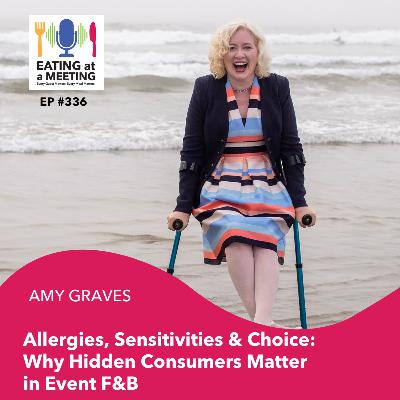
When you've lived with food allergies, you see the world differently. Labels become puzzles. Menus become risk assessments. And too often, meals become moments of exclusion. That's the reality Amy Graves captures in her new book, "The Hidden Consumer: Uncovering the Power of Health-Conscious Buyers." It's more than her story—it's a call to businesses, brands, and yes, event planners, to stop overlooking the people whose choices are shaped by health concerns, allergies, and sensitivities. Amy and I first talked last year about her journey and why she founded Hidden Consumers Consulting. Since then, she's taken her advocacy further—bringing data, strategy, and storytelling together in a book that's already creating buzz. Why this matters for event professionals: ▶︎ Hidden consumers aren't niche anymore. They're your attendees, your sponsors, your staff. ▶︎ Inclusion isn't just about space and seating—it's about food, labels, and the confidence to eat safely. ▶︎ Thoughtful F&B isn't just hospitality—it's a business advantage. On the next Eating at a Meeting Podcast LIVE, we'll explore what Amy has learned since we last spoke, what surprised her while writing this book, and how her insights can transform the way we think about menus, catering, and guest experience. Because every time someone skips a meal, sits out at a banquet, or feels invisible at your event, it's a missed opportunity—for connection, trust, and belonging. Are you ready to see the hidden consumer at your table?

Comments

Download from Google Play

Download from App Store
 United States