


 Claim Ownership
Catalyst by Camber Creek
Subscribed: 0Played: 0
Subscribe

© Camber Creek
Description
Camber Creek invests in entrepreneurs who are reshaping entire industries.
Our podcast Catalyst features interviews with leaders of this caliber in the startup world and far beyond. These are conversations that spark something, insights from some of the most interesting people we’ve met and want to get to know, leaders we admire, business executives, and diverse experts with something to say about why the world should be just a little bit different. But they don't stop at ideas; they have the know-how to make it happen.
www.cambercreek.com
19 Episodes
Reverse
Whatever industry you’re in, there’s probably a specialist media outlet that you consult on a regular basis. You’re familiar with what they write, but what does that publication look like on the inside? How do they define you, their audience? And what is it you should know to improve the likelihood that they’ll highlight your company?As President of HW Media, Diego Sanchez has answers to all of these questions for one of the most important publications in the housing industry, HousingWire. Housing is such a big topic and growing even bigger given the current affordability crisis. So Diego could go after a large, broad audience. But that’s not what HousingWire is doing at all.Diego and his team care most about a group of industry leaders and insiders that, if put in one place, would constitute a mid-sized US city. This approach is targeted, thoughtful, and may be a model for how to break through an incredibly noisy information environment.1:30 Diego outlines his early career in investment banking at Credit Suisse and the skills he developed there along with his time at Microsoft.7:20 Defining HousingWire’s core audience: 200,000–250,000 high-value professionals10:45 HousingWire’s revenue model. Striving to become the “Bloomberg of housing.”17:30 Integrating AI into products to enhance analysis and user experience22:30 The trade-offs between investing in editorial content versus product development26:30 How private equity ownership influences HousingWire’s strategy27:10 HousingWire’s four core user personas: C-suite executives, capital markets leaders, homebuilders, and top-producing agents and loan originators.32:30 Advice for professionals pitching stories to HousingWire35:20 Will HousingWire branch out into multifamily?39:35 Housing policy is hardly ever in the news as much as it is now. And that's not necessarily a good thing.43:15 Are industry awards programs pay to play? Why HousingWire is not incentivized to play that game.
Does this sound familiar? You’re on a phone call. You tell the person on the other end that you're really craving barbecue for dinner, and within minutes, one of the apps you use serves you an ad for brisket. Or worse yet, you're not even on your phone when you say this, but the ad still finds you.By some estimates, more than half of Americans believe their smartphones are spying on them, recording every word they say. To be clear, there’s no evidence that this is true, but the suspicion persists. Digital advertising can feel creepy.Jeremy Hlavacek feels your pain. He’s run programmatic advertising operations for big companies like The Weather Channel, IBM’s Watson division, and Experian. An industry veteran, Jeremy has advice for entrepreneurs thinking about how to get their companies noticed, and he believes there’s a big difference between what advertising platforms can do and what they should do.3:00 Jeremy describes his entry into the early internet era and how digital advertising emerged as a new career path.4:10 Smartphones are not listening to users, but highly accurate predictions are driven by vast amounts of behavioral data.5:05 How modern digital advertising uses demographic data and AI to target consumers far more precisely than traditional media.6:00 Predictive algorithms have become so effective that they can feel invasive, even when they are not.8:10 The rapid evolution of major tech platforms like Google, Amazon, and Facebook and their growing predictive power.10:10 The rules that govern digital advertising.11:40 Everyday digital interactions, like web browsing and app usage, generate valuable consumer data.15:20 There are many more companies tracking you than you might think.18:00 You can opt out from a lot of this.20:30 Can digital marketing change human behavior?26:00 Advertising has shifted away from traditional content-based media into platforms like search and commerce.32:20 Companies like Walmart are building their own advertising capabilities through acquisitions, partnerships, and internal development.35:20 Products like ChatGPT attract attention and inevitably create opportunities for advertising.39:10 How venture-backed startups can avoid wasting money on digital ads.
Bruce Toll, working with his brother Robert, built Toll Brothers from two houses in Pennsylvania into one of the largest home builders in America, which today has a $15 billion market capitalization.We wanted to find out how he managed this, because housing is a very local product. Most local developers don't become regional players, and practically no one reaches national scale. But Bruce Toll just keeps going.Real estate has been his base. However, he also has large positions in healthcare, natural resources, and even produced more than 100 films.During this conversation with Camber Creek General Partner Jeffrey Berman, it became clear that Mr. Toll invests as much in people as he does in businesses. His relationships open unexpected opportunities and new spaces where he can build.1:20 Learning the business from his father2:37 Founding Toll Brothers and building the first two homes outside of Philadelphia6:00 Early growth happened organically. It was not the result of a deliberate scaling strategy.8:00 Abundant labor and strong housing demand in the 1960s made it relatively easy to assemble construction teams.12:25 His father tells him to build more upscale homes because they’ll face less competition in that part of the market.14:29 How housing design preferences have evolved18:51 Pioneering uses of modular construction processes22:21 Supply chains are now global, not just domestic.25:10 The advantages of working with family.26:20 Why Toll Brothers went public and what that enabled29:35 Stepping away from day-to-day leadership of Toll Brothers and focusing on a wide array of other ventures through his family office, BET Investments32:25 Producing more than 100 films through a partnership with Sidney Kimmel.36:35 Bruce Toll talks about the industries he would pursue if he were starting out today
Before he founded what became one of the larger independent organic food companies in Southern Ontario, Canada, Ran Goel was not overly occupied with food trends. He started paying attention when he realized what we eat is a gateway to many other things he cares about, like land use, health, and addressing income inequality.1:26 Ran’s unexpected transition from Wall Street lawyer to leader in the organic food space3:10 Ran came to see food as a lever for addressing climate change, biodiversity loss, and human rights concerns.9:05 Fresh City Farm’s early days as an urban farm and the tangible seed-to-table experience that shaped the company’s ethos.11:20 The evolution from Fresh City Farm to Mama Earth Organics16:10 Why Mama Earth Organics believes vertical integration is necessary—for now19:05 What is the value proposition of organic and locally sourced food?25:40 Why food has become intertwined with identity and self-expression over the past two decades27:45 Mama Earth’s own evolution from a slightly paternalistic model to a more inclusive, less judgmental brand29:20 Would scaling organic and local food nationwide inevitably make it more expensive?32:40 AI and robotics could lower food production costs.34:00 Today’s food systems favor shelf-stable, highly processed products.36:15 But cultural norms are powerful. There has been a positive shift in consumption patterns, including declining red meat, sugary drink, and alcohol consumption.38:00 Can you make money in this business?39:50 Community contributions, public goods, and the cumulative impact of small, consistent actions
In the early days of the mobile web, when Harley Miller decided he wanted to focus on consumer businesses—after many investors felt they’d been burned by brands that failed—he faced criticism. Then he made a whole lot of money with companies like Delivery Hero, HelloFresh, and The Farmer’s Dog, just to name a few.Some look at the millions of customer transactions it would take before a consumer brand could produce the kind of returns that would justify venture capital funding as too risky and too much of a long shot. But what Harley sees in all those numbers is data, which, if studied, can make a company’s growth potential clear.He explained his approach to Camber Creek General Partner Jeffrey Berman and Head of Platform Lionel Foster.1:45 Harley’s first business: Camp Harley Baseball6:35 Harley describes his decade at Insight Partners and why he chose to focus on consumer internet investing despite skepticism from traditional enterprise software investors.7:27 How the rise of mobile transformed consumer categories from transactional novelties into durable, high-frequency digital businesses.9:15 The “Google toothbrush rule”, a heuristic for identifying businesses with habitual, recurring customer behavior.12:35 Is great consumer investing more mathematical (market size and frequency) or subjective (founder quality and vision).13:30 Harley explains his “race versus jockey” framework, balancing total addressable market with founder obsession and execution.16:20 Building a fund within a fund17:15 Left Lane uses granular customer data to evaluate product-market fit earlier and more empirically than most venture investors.19:15 Spinning out of Insight in 2019, receiving track-record attribution and a significant anchor commitment21:50 Raising Left Lane’s $630 million debut fund and navigating deployment through COVID and the zero-interest-rate era.22:45 Raising a $1.4 billion second fund, adapting to market corrections, and maintaining discipline after pandemic-era exuberance.25:00 Finding “unfair” customer acquisition advantages, like Ryan Serhant’s personal brand and Bilt’s multifamily channel partnerships.33:30 Kings League, a global seven-on-seven soccer league co-founded by Gerard Piqué that blends sport, streaming culture, and built-in influencer distribution40:05 SERHANT. and the impact of the Netflix series Owning Manhattan on brand equity and distribution.44:30 SERHANT.’s long-term empire-building ambitions and the synergy between Camber Creek’s domain expertise and Left Lane’s consumer lens
In 2013, Jason Green left his position at the White House—a position he had worked most of his life to obtain—to sit with his terminally ill grandmother and be an audience for the stories she knew about their family and the community they all grew up in.If you stop the description there, it may sound quaint and commendable. But what he learned was that the person he thought of as “Sweet Grandma Green” was a community organizer—and a bit of a radical—who helped merge three churches, two white and one Black, shortly after the assassination of Martin Luther King, Jr.Jason thought he would be the family archivist. Instead, he became convinced that the ordinary people he loved and grew up with had something urgent to teach us about the unfinished work of American democracy.His new book is Too Precious to Lose: A Memoir of Family, Community, and Possibility. We spoke a few weeks before its publication.1:18 Jason’s book is about hope rooted in lived experience rather than abstract optimism.2:40 Jason’s multifaceted background and his time in the White House.4:40 Jason recounts working on local and national political campaigns, including witnessing Barack Obama’s 2004 DNC speech and deciding to support his presidential run.6:10 Jason’s uncynical view of politics10:00 Leaving a “good government job”11:00 Money can be a catalyst rather than a corrupting force16:30 The power of intergenerational conversations18:50 Quince Orchard, its farming roots and segregated history21:00 The Black and white Methodist congregations in Quince Orchard lived parallel but largely separate lives for decades.23:00 Economic decline and shrinking membership force the congregations to confront the possibility of merging.24:20 The impact of Martin Luther King Jr.’s assassination27:00 Jason’s initial disbelief upon learning that his own grandmother helped lead what he now recognizes as a radical act of integration29:00 The real miracle was not simply coming together but the decades-long commitment to staying together.36:00 Civic infrastructure and small relational bridges make large-scale reconciliation possible when crises strike.40:00 Jason’s 102-year-old great-uncle still drives weekly to the integrated church.
Energy costs keep rising. In October 2025, at least four states saw utility revenue per kilowatt hour jump more than 20% year over year, and more than 10 states saw increases in the double digits. Most Americans haven’t seen headlines like this since the oil embargo during the Carter administration.Heather Reams knows what it will take to fix this. As President and CEO of Citizens for Responsible Energy Solutions, she leads an effort to find solutions that Republicans can say yes to. She’s a Republican talking to Republicans about meeting others in the middle on issues like climate change and sustainability.The good news is that while bipartisanship is hard, Heather has proof that compromise solutions are more durable. The bad news is that she believes we may need a “do-something moment”—an acute crisis—before there’s enough focus and political will to fix the electricity grid.1:30 The mission of Citizens for Responsible Energy Solutions (CRES). Why engaging Republicans on climate and energy policy is central to durable reform.5:30 Heather has seen Republicans become more willing to acknowledge climate change.6:40 Meeting lawmakers where they are, using state-specific economic and employment realities8:20 Solar and clean energy have gained Republican support in regions where they create local economic benefits.11:43 Advocacy organizations help count votes and build coalitions. 16:40 The US has abundant energy resources but struggles with transmission, permitting, and grid constraints.22:00 In Heather’s view, divided government often produces better bipartisan solutions on major issues.22:30 Energy transmission reform may require compromise on states’ rights and federal authority.23:00 Heather introduces the idea of a “do-something moment,” a crisis forcing policymakers to act27:00 How the business community fits into energy and climate policymaking.35:02 CRES’s biggest accomplishments
ChatGPT is biased. So are Claude, Gemini, Grok, and even non-computer-based reasoning systems—that is, people. Computers have inherited and amplified many of our blind spots.But is it okay to acknowledge that? And if it is, what should we do about it?John Pasmore is answering that question.John is founder and CEO of Latimer, a model that can work on its own or in concert with larger foundation models to create more robust and accurate results for queries that require an understanding of Black history.Latimer has traction with educational institutions and a partnership with Grammarly—early signs of success. But what is the right metaphor for Latimer’s function? If it’s relevant only for specific queries, maybe it’s a microscope. But if foundation models simply aren’t comprehensive enough, then tools like Latimer are more like glasses or contact lenses—something people need to use far more often.Which analogy customers agree with may determine the company’s trajectory.3:20 How dissatisfaction with corporate banking culture motivated John to pursue entrepreneurship full-time. 3:50 Growing a nightlife guide into a profitable print magazine and ultimately leaving banking to focus on media. 6:40 Getting Russell Simmons’ attention and bringing him on as a partner7:30 Present at the creation of hip hop’s boom 12:10 Wanting a deeper understanding of how technology actually works so much that he pursued another degree 15:30 John describes identifying bias in AI as both a moral issue and a commercial opportunity. 20:00 Partnering with universities, including HBCUs, to digitize and activate archival materials22:10 Latimer plans to create a marketplace where content owners can license data on their own terms. 25:00 How Latimer measures and benchmarks bias-reduction in AI outputs. 27:30 Political resistance complicates conversations about bias and inclusivity in AI. 28:30 Latimer’s relevance in healthcare32:30 John explains why he is not interested in selling Latimer to a large tech company. 35:50 John confirms that the company is approaching cash-flow positivity and preparing for a major announcement.
This is a very special episode of Catalyst, one that offers privileged access to information that was not revealed on one of Netflix's most popular shows. Owning Manhattan is a reality TV series about SERHANT., one of the fastest-growing real estate brands on the planet. Season 2 dropped on December 5, 2025, and within days reached Netflix’s global top-10 list.SERHANT. is a Camber Creek portfolio company combining media and technology to drive sales. At first glance, it’s not obvious why a venture capital firm would invest in a company that is the focus of a reality TV show. But SERHANT.’s founder Ryan Serhant explains better than anyone why this makes perfect sense. Most people think a widget—it could be a Corvette, or a toothbrush, even a house—is the product. But for Ryan and his team, attention is the product. Earn people’s focus. Let them in on who you are and what you’re building—and everything, including, potentially, their next home purchase, will flow from that.Camber Creek General Partner Jeffrey Berman led the investment in SERHANT. and is the catalyst for the cliffhanger that ends season 2. He sat down with Ryan in late December to talk about the show, how very real some of those reality TV moments are, and SERHANT.’s future. Should we prepare for Owning Madrid? Or Owning Dubai perhaps?
How much money would you give up to make your job a lot more interesting and fun? A few thousand dollars? Tens of thousands? For Atit Jariwala, the answer might be millions.Atit is the founder and CEO of Bridgeton, a real estate company that creates and manages distinctive properties, including boutique hotels. Each Bridgeton property starts from scratch: a new concept, a new location, and a backstory that informs countless decisions.The effort and resources Bridgeton puts into a single building could easily produce three or four cookie-cutter branded hotels that reliably generate revenue. But Atit thinks that’s boring. And he’s convinced the 1,500 people who work at Bridgeton to do things the hard way—or, as he sees it, the fun way.He spoke with Lionel Foster and Camber Creek General Partner Jeffrey Berman about why it’s worth it.1:15 Atit explains his personal philosophy of building businesses he genuinely enjoys and stepping away when work stops being interesting. 2:05 Bridgeton’s operations include boutique hotels, restaurants, and office buildings 3:10 The difference between true boutique hotels vs. “independent” hotels4:05 Real estate with a point of view 6:44 Atit details Bridgeton’s scale, including roughly $2 billion in assets under management and more than 60 properties. 8:01 Each property is designed to stand on its own with a distinct identity rather than a uniform brand template. 15:00 Atit’s love-hate relationship with online travel agencies (OTAs)16:35 How Bridgeton avoids hospitality’s usually high staff-turnover rate25:30 Many Bridgeton projects are “Mission Impossible” deals that are hard to finance and execute.26:10 Waiting 10 to 15 years before you can break ground 33:30 Atit explains why his “rifle, not shotgun” investment style prioritizes individual properties over portfolio uniformity.42:50 Automation, the future of service work, and the rising value of genuine human hospitality.45:30 Lionel pitches a White Lotus-inspired immersive hotel experience with a live murder mystery.49:40 Atit’s fintech startup, Erithmitic.51:30 Using technology, including artificial intelligence, to modernize underwriting and asset management workflows.53:35 Is Erithmitic a true venture-scale opportunity or a durable cash-flow business?
Brad Hargreaves has built his career and several businesses on learning how to act on feedback about what's working while tuning out everything else. The lessons that helped him make thousands of dollars at a time selling furniture as part of a side hustle when he was an undergrad at Yale also helped him build a company that eventually sold for $412 million. There have been big losses along the way too. Entrepreneurship is a rollercoaster. If it looks like Brad is having fun, and it definitely does, it may be because he's learned to not lose his head during any of the twists and turns.1:00 Brad is a serial entrepreneur 3:31 Discovering Yale’s surplus card catalogs and turning a $50 purchase into a $3,000 eBay sale 8:43 Founding General Assembly. Graduating into the global financial crisis led Brad to identify a gap between overeducated workers and unmet digital skills demand. 11:25 Explosive growth and a lucrative exit 13:38 Brad explains that success comes less from perfect foresight and more from fast iteration and learning from early signals. 17:25 Founding Common: how housing challenges for students and employees inspired the idea behind co-living19:20 Intense investor interest in co-living during the WeWork era and the rapid influx of capital. 21:10 The 2022 sale of Common and its eventual bankruptcy 25:15 What it’s like operating at the red-hot center of intense venture capital attention 29:00 Venture capital is jet fuel. If used incorrectly, you can blow yourself up. 35:15 Major successes and failures can affect your sense of identity. 38:32 How writing and publishing led organically to founding Thesis Driven.40:20 Thesis Driven’s model: audience-first product development across data, education, and capital markets. 44:30 Surpassing $2 million in annual recurring revenue46:10 How “building in public”, in plain view of potential customers, builds trust and engagement

In many industries, top performers make other people far more money than they get to keep themselves. Think about professional athletes—millionaires playing for franchises owned by billionaires.In other fields, the value a top salesperson drives for a brand is often only a fraction of what they earn in commissions. That’s because building and running the infrastructure of a company pulls them away from what they do best.But what if that weren’t the case? What if someone offered all that infrastructure as a service, so you could become the brand, the owner, and your own boss?That’s what Guy Gal, Co-Founder and CEO of Side, is building for real estate agents across the country. Side handles back-office operations and partners with agents on marketing with the explicit goal of empowering agents to build and own their own brands.It may be the largest brokerage you’ve never heard of.Guy discussed all of this with Camber Creek General Partner Jeffrey Berman and Head of Platform Lionel Foster.1:53 A “$24 billion invisible brokerage”3:05 Most productive agents already run businesses but do not own them, because brokerage infrastructure distracts from client service.5:02 How Side collaborates with agents8:07 Side’s unusually high gross margins11:30 Why Side’s churn is so low15:10 Guy says most brokerage-built marketing stacks serve the brokerage’s interests, not the agent’s.18:15 Reducing agent workload and brokerage costs per transaction23:40 Delivering same-day commissions25:30 Guy shares stories of agents completing offers and amendments entirely from their phones while traveling.26:05 Up next: voice-driven contract amendments and hands-free transaction management29:05 Why agents working with Side are notoriously difficult for competitors to recruit 31:20 The two main reasons partners leave Side36:27 Guy explains why Side should be valued as a technology company rather than a traditional brokerage 44:10 Managing customer acquisition costs in a highly fragmented real estate industry 48:00 Why Side chose sustainable growth during market contraction despite pressure to accelerate. 50:35 Jeffrey asks Guy to forecast the future of real estate brokerage over the next decade. 51:25 Guy argues the industry is structurally biased toward part-time agents and explains why that model is breaking down. 52:45 Guy outlines a future with fewer, more professional agents handling more transactions through apprenticeship-style pathways. 54:10 Guy explains how recent rule changes governing commissions may accelerate consolidation toward experienced professionals.
In this episode, we are going to do something extraordinary. We are going to demystify classical music with the help of a Grammy-winning maestro, because Catalyst listeners deserve only the best. James Blachly is an orchestra conductor.He loves the three Bs: Bach, Beethoven, and Brahms. But he's winning acclaim for reintroducing the world to outstanding composers whose scores might literally disintegrate if not for the excavation work he and his collaborators perform. And he's making it okay to dance like a maniac to the Rite of Spring.Any industry like classical music that is designed to consistently produce peak performance can feel imposing. Excellence requires a great deal of effort. But James reminds us that all that effort isn't worth anything unless it builds connections between people.1:15 The surreal experience of winning a Grammy over Zoom2:45 The M word5:10 Elitism within classical music6:00 James is proud to be a bridge into classical music and describes orchestral listening as one of the most profound shared human experiences. 11:30 What hearing a great orchestra in a great hall and attending a Major League Baseball game for the first time have in common 12:40 An orchestral performance is uniquely designed to produce peak human experiences on a regular basis 16:16 Jame’s upbringing. He did not grow up in a castle. 20:28 Experiential Orchestra lives up to its title22:10 The Rite of Spring dance party23:28 A lot of classical music was originally written as dance music, not for passive listening. 27:45 Imagining music from someone else’s ears 28:35 Historical concert practices differed dramatically from today’s expectations. There was food and conversation. Plus: the origin of the encore. 31:36 James’ Grammy-winning work expanding the classical canon. 39:05 Building and maintaining a career as an artist 41:00 Conductors get better with age.43:53 How the Grammy changed James’ career
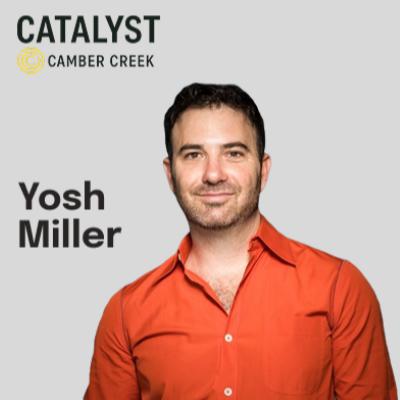
A 529 plan is one of the best financial tools that too few people are using. If you’ve heard of them, then you know they can help families save for children’s higher education. But did you know adults can use them too, that they can cover some K-12 expenses, study abroad, student loans, and support people with disabilities? These incredibly versatile accounts are, sadly, woefully underutilized. That’s in part because finding the best plan for your circumstances can be a pain.In true entrepreneurial fashion, Yosh Miller set out to change this. His company Hadley wants to make 529s as ubiquitous as 401ks. But as you will hear, the bureaucracy and perverse incentives he has to navigate are astounding.1:14 Lionel is a 529 plan geek.3:09 529s might be one of the most powerful yet misunderstood tools in the US tax code. 3:40 Yosh compares 529 plans to Roth IRAs: tax-free growth and tax-free withdrawals with broader eligibility. 5:04 They’re not just a college savings plan. 7:00 Hadley’s origin story8:25 Yosh explains how state-by-state rules create confusion and why many Americans should shop across states for better plans. 11:50 From solving a personal problem to recognizing a systemic, nationwide issue14:20 Yosh highlights the shocking inequity in 529 adoption, noting that the wealthiest Americans dominate participation. 23:00 A newly minted entrepreneur navigates big administrative hurdles 27:05 For Hadley, going through employers is the most efficient go-to-market strategy. 34:20 Yosh shares his guiding principle of “finding the friend in the room” to drive systemic change. 35:19 Lionel explains how a LinkedIn post about 529s led to discovering Hadley and connecting with Yosh 37:20 A specific example of how Lionel uses 529s40:40 Recent policy changes allowing 529 funds to roll into Roth IRAs42:00 The gift that keeps giving: expansions of 529 benefits across multiple federal administrations42:40 Early investor skepticism of Hadley
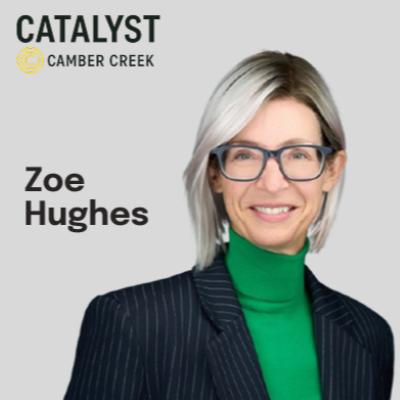
Picture this. You run a conference, a big one. The people who attend your conference represent organizations that collectively manage trillions of dollars in assets, money that supports retirees no less. They come to your event for insight into what they should and should not do, but they won't get much out of that experience unless they can trust each other with what's going well and what's going poorly across massive portfolios.You shape the environment where all of this happens. So what are you gonna do? How do you handle that? Fortunately, your name is Zoe Hughes. And you have earned a lot of people's trust. Zoe is CEO of the Pension Real Estate Association, or PREA for short. She is not an investment professional. Her early career was actually in journalism, which makes sense, because she studies people: how they learn, when and why they're willing to be vulnerable, and how to design spaces that put them at ease, especially when the stakes are high.Zoe spoke with Camber Creek Head of Platform Lionel Foster and Managing Partner Jake Fingert shortly after PREA’s most recent conference.1:28 Why Zoe was initially reluctant to do this interview.2:01 The Pension Real Estate Association's members have trillions of dollars in assets under management3:40 Zoe’s unconventional path to becoming PREA CEO and her work as a journalist.7:14 Zoe and PREA are in listening mode as PREA develops a new three-year strategy.12:00 Why PREA encourages people to run at 6 a.m. during the main day of the conference.14:00 The importance of multi-sensory learning. Expanding beyond panel-only formats.21:41 How better connectivity builds trust.25:00 Real versus performative vulnerability in professional settings. 26:20 How members can become more involved in PREA beyond conferences. 30:00 A behind-the-scenes look at organizing a PREA conference
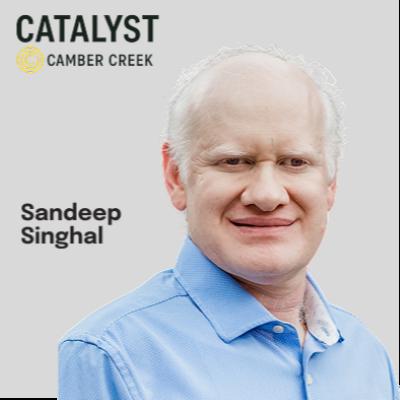
Sandeep Singhal is a computer engineer’s engineer. He’s held big positions at Microsoft, Google, Meta, and now LinkedIn. Since 2022, when the popularity of ChatGPT forced incumbent tech companies to prioritize artificial intelligence, Sandeep has specialized in AI infrastructure — the systems behind the systems that power important products.In this episode, Sandeep talks to Camber Creek Head of Platform Lionel Foster and Partner Alexandra Nicoletti about what it takes to succeed in big tech, why he remains so committed to helping and learning from startups, and who he thinks might become some of the best AI programmers. You’ll never guess what he says, but the answer will make you mad.01:09 Sandeep fell in love with programming in junior high—typing code from magazines3:34 His immediate reaction to trying ChatGPT the day it launched and the changes in Big Tech that followed 9:29 LLMs allow engineers to do more with less—using text-based models rather than massive, specialized data sets 9:52 How do product development and product management happen in the largest technology companies? 12:53 Big Tech has to maintain a startup mentality 14:29 AI-assisted coding tools like Copilot make rapid prototyping dramatically easier, accelerating both big-company innovation and startup development15:11 The constant tension between execution speed and creating space for experimentation 18:20 Sandeep’s days as a founder20:23 His current role running LinkedIn’s core infrastructure23:50 Product vs. technology focus in early-stage startups26:21 Building and maintaining the infrastructure that makes artificial intelligence applications possible 28:28 Sandeep’s favorite AI use cases: AI-assisted coding, workflow automation, and predictive capabilities. 31:09 AI’s predictive power for real estate underwriting 32:49 Sandeep the startup investor and mentor36:54 The risks of AI45:09 AI and the humanities45:49 Why lawyers may become the best programmers
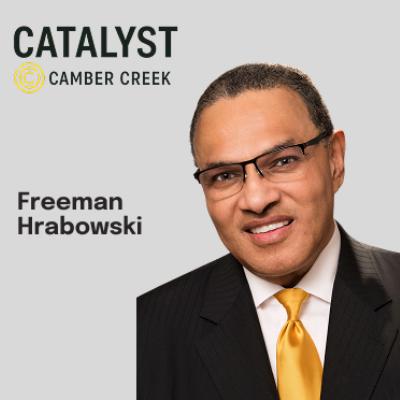
It is possible that Freeman Hrabowski has done more to improve training and access to STEM careers (science, technology, engineering, and math) than anyone else alive at the moment. As President of the University of Maryland, Baltimore County from 1992 to 2022, he co-founded the Meyerhoff Scholars Program, which created resources and a campus environment where underrepresented students could thrive in some of the toughest majors on campus. The techniques that helped future African-American scientists, doctors, and engineers were eventually mainstreamed at UMBC and helped thousands of students of all backgrounds. Inspired by his work, in 2022 the Howard Hughes Medical Institute launched the Freeman Hrabowski Scholars Program to support outstanding researchers, who have strong potential to become leaders in their fields. Access and high achievement. Dr. Hrabowski is a strident advocate for both and has spent his life supporting programs and leaders that combine the two. He came by this commitment honestly–and dangerously–when he was very young. Episode Guide1:15 Growing up as a privileged Black child in segregated Birmingham, where high expectations from family, church, and teachers shaped his identity 3:40 Being inspired by Dr. Martin Luther King, Jr. How his early academic acceleration and love of learning intersected with the realities of segregation. 4:40 The church meeting where he first heard Dr. King call on children to join a children’s march to help integrate schools 6:47 Persuading his initially fearful parents to let him march8:13 Getting trained in nonviolence tactics at age 12 9:26 Confronting Bull Connor 11:20 Five days in jail12:55 Mentoring younger people began early 16:17 His parents’ community leadership22:48 Negotiating with this parents to attend an elite program with white students 23:50 The Meyerhoff Scholars Program, finding and cultivating Black excellence in the sciences 30:00 He has mentored thousands34:00 Hrabowski celebrates success stories like Dr. Kizzmekia Corbett, a Meyerhoff alumna who co-led development of the Moderna COVID-19 vaccine.36:39 Evolving communication tools—TED Talks, social media, and digital platforms—and how Hrabowski thinks about reaching modern audiences.38:00 Staying young means staying connected to younger generations, including his grandson40:41 “The genius of the and versus the tyranny of the or.”43:00 Hrabowski discusses neurodiversity, flexibility in teaching, and how universities must adapt to support all students while navigating cultural and political challenges.45:51 The importance of subtlety, strategy, and “playing chess, not checkers” when advocating within complex systems46:00 How he transitioned out of the UMBC presidency without losing his sense of identity47:34 The Howard Hughes Medical Institute and the $1.5 billion Freeman Hrabowski Scholars Program48:03 His leadership lessons: humility, self-care, and a commitment to helping others
Nearly everyone has had the pleasure of opening—and eating—a fortune cookie. Imagine you open one. One side says love will find you. That’s great. But the other encourages you to find that love at the movies with the latest romantic comedy coming to theaters. Or your fortune is a reminder about the importance of diligence in all your pursuits followed by a nudge to keep your language-learning streak on Duolingo going.These scenarios are not made up. This is happening now because of our guest Shawn Porat and his company OpenFortune. They’re putting very timely, sometimes irreverent, ads inside fortune cookies, working with big brands like Coca-Cola, Cars.com, and many, many others you’ve heard of.How does anyone think to even do that? How long did it take Shawn and team to broker the deals and build out the infrastructure? And what are the chances your next fortune will be one that Shawn’s company wrote?Episode Guide1:40 “I write people’s futures”3:00 The spark for the business was envy3:50 The eight-year process of getting all the necessary deals in place6:55 OpenFortune has advertising rights for 99% of all fortune cookies in the world.7:20 The Capital One campaign that went viral11:15 Funding the business with investors like Henry Silverman, Shaquille O’Neal, Sylvester Stallone, and Gary Vaynerchuk.13:55 Why Shawn did not become a lawyer and his out-of-the-box thinking20:50 Fortune cookies create a unique emotional moment that makes brand engagement more powerful.22:40 Making sure people don’t get sick of OpenFortune’s ads25:35 Becoming part of experiences like F1 races, Madison Square Garden events, and the US Open26:40 Designing ads for fortune cookies is not simple.27:55 Getting customer ad spend right29:55 International expansion opportunities36:55 Using storytelling and real examples — like people winning lotteries from lucky numbers — to make fortunes feel authentic in places outside the US, where the tradition is new
Why is Camber Creek launching a podcast? And what will you love about it?
Comments


Download from Google Play

Download from App Store
 United States