


 Claim Ownership
Tactical Tangents
Subscribed: 485Played: 16,739
Subscribe

© Tactical Tangents 2025
Description
Mike is a police SWAT team member, K9 handler, and tactical medic. Jim is an Air Force pilot with a background in close air support and combat search and rescue. Our goal is to elevate the conversation about all things tactical for public safety, military, and concerned citizens. Join us to hear lessons learned about decision making, critical thinking, problem solving, leadership, and teamwork.
220 Episodes
Reverse

From hostage rescue to burglary alarm calls, dynamic entries to slow and deliberate clearing, CQB and entry tactics have shifted over time—but the risks haven't gone away. It doesn't matter if you're a high-speed tactical operator or a patrol cop on the front lines, clearing structures with guns has some fundamental challenges, and there's no perfect way to do it. This episode explores the tradeoffs behind how we clear structures, why context matters, and what actually improves survivability when everything is working against you. Like what we're doing? Head over to Patreon and give us a buck for each new episode. You can also make a one-time contribution at GoFundMe. Intro music credit Bensound.com

Artificial Intelligence is rapidly reshaping how information is gathered, analyzed, and acted upon in both policing and military operations, and even the private sector. In this episode, we examine the practical implications of AI tools—especially large language models (LLMs)—and how they are already influencing intelligence analysis, operational planning, and day-to-day decision-making across our professions. Mike and Jim explore the promise and limitations of human–machine teaming, the risks associated with data security and data poisoning, and how adversaries can exploit AI systems to manipulate information environments, accelerate decision cycles, and disrupt traditional OODA loops. As tacticians, we also have to consider the threats with AI teaming; deepfakes, synthetic media, and automated influence campaigns can distort perception and undermine trust during critical incidents or conflicts. We focus on practical leadership considerations: when to trust automated tools, how to validate AI-generated information, and how organizations can integrate these technologies without surrendering judgment, sovereignty, or operational advantage. The ultimate goal is to help practitioners understand how AI changes the competitive landscape—and how professionals can adapt without becoming dependent on systems they don't fully control. Links: Great article from Red Beard Tactical on how to use AI to write better OPORDS: https://www.patreon.com/posts/tactics-ai-opord-150850002 Like what we're doing? Head over to Patreon and give us a buck for each new episode. You can also make a one-time contribution at GoFundMe. Intro music credit Bensound.com

In complex environments, effort alone doesn't equal results. Whether you're in uniform or behind a badge, you face the same reality: limited resources, adaptive adversaries, and problems that refuse to stay solved. The difference between activity and impact often comes down to how you see the fight. Mike and Jim break down systems thinking for tacticians — a practical way to understand how outcomes actually emerge inside military and law enforcement environments. Using real-world examples, they explore how feedback loops, incentives, and hidden dependencies shape everything from crime trends to operational tempo. Links: https://sdm.mit.edu/a-systems-analysis-of-tactical-intelligence-in-the-us-army/ https://warroom.armywarcollege.edu/podcasts/warden-five-rings-great-strategists/ - John Warden's "The Enemy as a System" https://www.airuniversity.af.edu/Portals/10/ASPJ/journals/Volume-09_Issue-1-Se/1995_Vol9_No1.pdf https://amzn.to/4smTmEM0 - The Air Campaign: Planning For Combat by John Warden https://amzn.to/3OTgcVQ - Winning in FastTime: Harness the Competitive Advantage of Prometheus in Business and Life - by John Warden https://media.defense.gov/2017/Dec/27/2001861508/-1/-1/0/T_0029_FADOK_BOYD_AND_WARDEN.PDF - John Boyd and John Warden: Air Power's Quest for Strategic Paralysis https://warontherocks.com/2015/09/the-five-ring-circus-how-airpower-enthusiasts-forgot-about-interdiction/ - The Five-Ring Circus: How Airpower Enthusiasts Forgot About Interdiction by Mike Pietrucha Like what we're doing? Head over to Patreon and give us a buck for each new episode. You can also make a one-time contribution at GoFundMe. Intro music credit Bensound.com
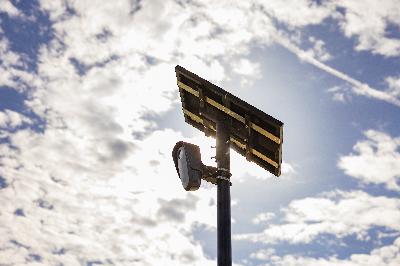
We dive into the real-world implications of living in a sensor-saturated society. From ALPR and private-sector camera networks to open-source data and pattern analysis, modern surveillance isn't just a policy debate — it's a tactical environment. We unpack how integrated surveillance systems create unprecedented investigative power while simultaneously introducing new vulnerabilities for police, military professionals, and everyday citizens. The conversation moves beyond headlines to explore the operational reality: how patterns are built, how they're exploited, and how tacticians can leverage these tools while denying the same advantages to their adversaries. Along the way, we tackle the enduring tension between liberty and security, drawing on insights from history and reminding us that while the technology is new, the dilemma is not. If surveillance is the new terrain, understanding it isn't optional. The question isn't whether the system exists — it's whether it works for you, or on you. Like what we're doing? Head over to Patreon and give us a buck for each new episode. You can also make a one-time contribution at GoFundMe. Intro music credit Bensound.com Photo credit: Flock Safety

Police occupy an uneasy space between the government and the governed—simultaneously a symbol of state power and a human presence in people's daily lives. Sometimes we get a little too PUNISHER SHEEPDOG and we need to chill. Mike and Jim break down the archetypes cops often fall into and discuss how to adjust our approach to be a dynamic leaders. Find all of our episodes, articles, some reading list ideas, and more on our website www.tacticaltangents.com Like what we're doing? Head over to Patreon and give us a buck for each new episode. You can also make a one-time contribution at GoFundMe. Intro music credit Bensound.com
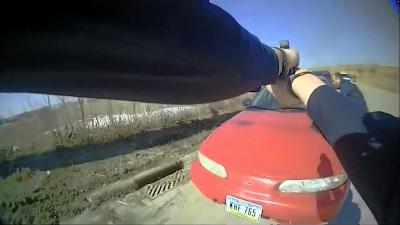
Mike explores a list of pitfalls in law enforcement through the lens of critical thinking and best practices. Among the list are things related to balancing officer safety and legal justification, good tactics and having a perfect plan, communication quirks, arresting and searching people, and ways you might sound like a nerd. Photo Credit from https://youtu.be/vA0P92ddm2A Find us on social media (Facebook/Twitter/Instagram/YouTube) @TacTangents. You can join the conversation in our Facebook Discussion Group. Find all of our episodes, articles, some reading list ideas, and more on our website www.tacticaltangents.com Like what we're doing? Head over to Patreon and give us a buck for each new episode. You can also make a one-time contribution at GoFundMe. Intro music credit Bensound.com

You don't fight in a vacuum—and neither do police officers, soldiers, or federal agents. In this episode, Jim analyzes the newly released 2025 National Security Strategy ( https://www.whitehouse.gov/wp-content/uploads/2025/12/2025-National-Security-Strategy.pdf ) and translates its broad language into practical meaning for people working at the tactical and operational levels. He explains how the NSS communicates priorities across government, how it influences downstream defense and security planning, and how it signals intent to allies, competitors, and adversaries alike. Check out this episode to gain a clearer understanding of how strategic documents shape budgeting, force posture, and mission design over time. We also explore why the NSS matters differently at different ranks and roles, and how leaders can use it to frame decisions, explain priorities to subordinates, and anticipate where institutions are likely to invest (or divest) next. Find us on social media (Facebook/Twitter/Instagram/YouTube) @TacTangents. You can join the conversation in our Facebook Discussion Group. Find all of our episodes, articles, some reading list ideas, and more on our website www.tacticaltangents.com Like what we're doing? Head over to Patreon and give us a buck for each new episode. You can also make a one-time contribution at GoFundMe. Intro music credit Bensound.com
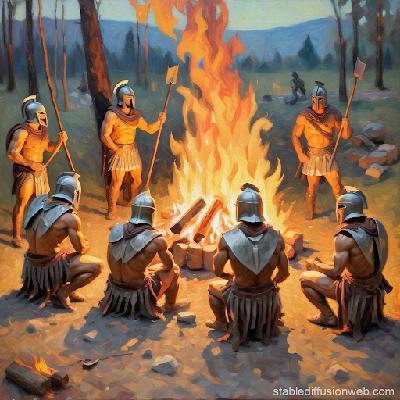
Everyone in a fight has their side of the story. That story is a crafted message that can keep someone in the fight, convince them to stop fighting, and convince bystanders you are the good guy worth helping or the bad guy worth piling onto. Police in America are struggling with an increasingly hostile public narrative that degrades morale, budgets, recruiting, and public cooperation when you need it most. In irregular warfare, the narrative may have more impact than the guided missiles. The conversation focuses on practical storytelling skills leaders need to operate effectively in contested environments. Check out this episode to learn how tactical actions reverberate at the operational and strategic levels, why "neutrality" is often a false posture, and how to communicate facts through compelling, ethical narratives that build credibility rather than erode it. This episode is essential listening for professionals who operate in public-facing roles where perception directly impacts mission success. The History of the Marine Corps: https://www.marines.com/about-the-marine-corps/who-are-the-marines/history.html The History of Special Forces: https://arsof-history.org/history.html#check-sf Storytelling Tactics https://pipdecks.com/products/storyteller-tactics Malcom Gladwell's TED Talk about his book The Tipping Point: https://youtu.be/RmXrwKydM9k The Tipping Point: How Little Things Can Make a Big Difference by Malcom Gladwell - https://amzn.to/48X1gg1 Brian Willis TED talk most dangerous weapon in LE https://youtu.be/qwC-RHsC6gw Find us on social media (Facebook/Twitter/Instagram/YouTube) @TacTangents. You can join the conversation in our Facebook Discussion Group. Find all of our episodes, articles, some reading list ideas, and more on our website www.tacticaltangents.com Like what we're doing? Head over to Patreon and give us a buck for each new episode. You can also make a one-time contribution at GoFundMe. Intro music credit Bensound.com
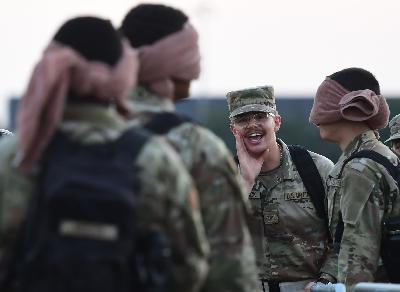
Gaps in knowledge and performance happen naturally, even in high-performing teams. In this episode, Mike and Jim explore why blind spots develop despite good training, smart people, and strong intent. They walk through the realities of cognitive load—how much information a practitioner can realistically retain—and how this affects everything from tactical decision-making to compliance with policy and law. Using examples from aviation, policing, and military training, they illustrate how complexity, fatigue, and skill decay shape performance far more than most would acknowledge. The conversation also addresses how organizations should think about standards, instructor responsibilities, evaluation systems, and the realistic limits of human learning. They highlight tools leaders can use to expose and correct blind spots: independent evaluation, scenario-based application, and deliberate debriefing. Mike and Jim emphasize the importance of professional education, continual reinforcement, and maintaining a baseline that is both realistic and mission-appropriate. Take a moment and ask yourself: Are you tired of always having to work on the lowest common denominator? Do you know what your own weaknesses are and how they can impact you? This episode helps practitioners understand their own limitations, recognize when they need help, and apply structured thinking to improve safety, efficiency, and organizational credibility. UCSD Report: UCSD students can't do basic math: https://senate.ucsd.edu/media/740347/sawg-report-on-admissions-review-docs.pdf The Johari Window: https://en.wikipedia.org/wiki/Johari_window Find us on social media (Facebook/Twitter/Instagram/YouTube) @TacTangents. You can join the conversation in our Facebook Discussion Group. Find all of our episodes, articles, some reading list ideas, and more on our website www.tacticaltangents.com Like what we're doing? Head over to Patreon and give us a buck for each new episode. You can also make a one-time contribution at GoFundMe. Intro music credit Bensound.com
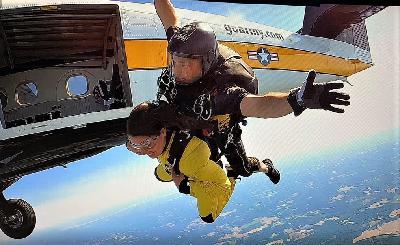
Most of us see ourselves as leaders, but a whole lot goes into "Leadership." One of the most vital aspects of persuasion is the credibility and trust people see in you. Credibility can grow over time, and it can also be spent or wasted. In this episode, Mike and Jim will teach us about building cred with your team, how credibility shapes a leader's ability to influence decisions, maintain team cohesion, and drive mission success. Drawing from research, philosophy, and operational experience, they outline the behaviors that strengthen trust and the missteps that erode it. Strong leadership isn't always about rank or position—it's about credibility. In high-performance teams, the credibility you have determines if you are a true influence on those around you or if you merely hold a title. Pretty good research article on this: https://pmc.ncbi.nlm.nih.gov/articles/PMC9309999/ How to Win Friends and Influence People by Dale Carnegie - https://amzn.to/49llmSO Find us on social media (Facebook/Twitter/Instagram/YouTube) @TacTangents. You can join the conversation in our Facebook Discussion Group. Find all of our episodes, articles, some reading list ideas, and more on our website www.tacticaltangents.com Like what we're doing? Head over to Patreon and give us a buck for each new episode. You can also make a one-time contribution at GoFundMe. Intro music credit Bensound.com
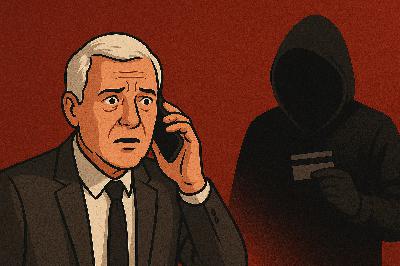
Even the best of us get played from time to time. From an Air Force pilot duped into buying thousands in Sephora gift cards, to clever banking and family scams that nearly fooled even the most skeptical of us, we talk about some of the psychology and tactics behind modern frauds: urgency, authority, distraction, and good old-fashioned trust. We'll look at how scams exploit our problem-solving instincts, how technology has supercharged the game, and why protecting your family from fraud might matter more than protecting them from burglars. Find us on social media (Facebook/Twitter/Instagram/YouTube) @TacTangents. You can join the conversation in our Facebook Discussion Group. Find all of our episodes, articles, some reading list ideas, and more on our website www.tacticaltangents.com Like what we're doing? Head over to Patreon and give us a buck for each new episode. You can also make a one-time contribution at GoFundMe. Intro music credit Bensound.com
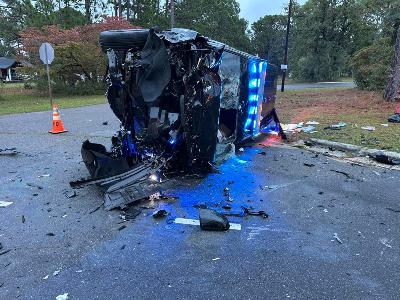
How do you stop a car that doesn't want to stop? If you see a rabbit should you chase the rabbit? We talk about safety and statistics, what factors to weigh the risk versus reward, how policies play into decision making, what the Brits mean when they say "Red Mist," and alternatives to vehicle pursuits including the role of Air Support, PIT, The Grappler, road spikes, surveillance, and intelligence gathering. Find us on social media (Facebook/Twitter/Instagram/YouTube) @TacTangents. You can join the conversation in our Facebook Discussion Group. Find all of our episodes, articles, some reading list ideas, and more on our website www.tacticaltangents.com Like what we're doing? Head over to Patreon and give us a buck for each new episode. You can also make a one-time contribution at GoFundMe. Intro music credit Bensound.com
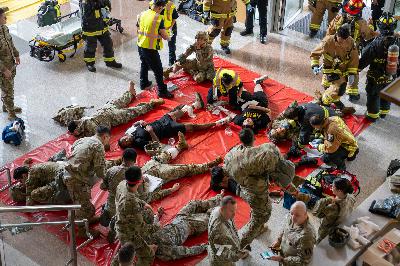
How do you prioritize your attention in a world full of distractions and competing priorities? Most people understand triage as a concept, but are you ready to sort wounded people? Both operationally and in our personal lives, we have to choose what we pay attention to. That is true in everything from time management and budgeting to room clearing and in-flight emergencies. We talk through some models and analogies that might help you find balance in demanding professional settings and time sensitive situations. Find us on social media (Facebook/Twitter/Instagram/YouTube) @TacTangents. You can join the conversation in our Facebook Discussion Group. Find all of our episodes, articles, some reading list ideas, and more on our website www.tacticaltangents.com Like what we're doing? Head over to Patreon and give us a buck for each new episode. You can also make a one-time contribution at GoFundMe. Intro music credit Bensound.com
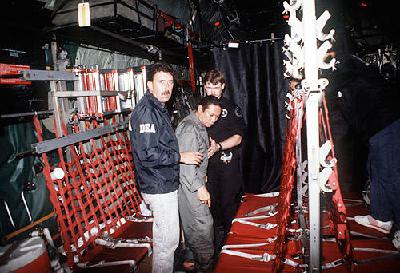
The 1989 invasion of Panama was a quick and violent moment in the drug war. We revisit why we went and how it went down. The hung for Manuel Noriega, the messy Army Ranger airfield seizures, Navy SEAL assaults on escape air and water craft, the Little Bird Hostage Rescue of Kurt Muse, the first combat use of the F-117 (spoiler, it missed), the role AC/DC played at the Vatican Embassy, and like 20 other objectives in a joint US Special Operations and conventional forces endeavor. Links: https://aircommando.org/first-fight-special-tactics-in-panama-1989/ Semi-Official AFSOC History https://www.jcs.mil/Portals/36/Documents/History/Monographs/Just_Cause.pdf Official Military History https://amzn.to/4pFthAj Six Minutes to Freedom by Kurt Muse Find us on social media (Facebook/Twitter/Instagram/YouTube) @TacTangents. You can join the conversation in our Facebook Discussion Group. Find all of our episodes, articles, some reading list ideas, and more on our website www.tacticaltangents.com Like what we're doing? Head over to Patreon and give us a buck for each new episode. You can also make a one-time contribution at GoFundMe. Intro music credit Bensound.com
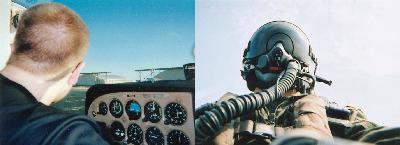
Thinking about joining the Air Force? In this episode, we dig into the real questions behind the glossy recruiting pitch: commissioning sources, officer vs. enlisted life, active duty vs. Guard and Reserve, and what happens when the service downsizes. We'll talk about "up or out," promotions, cross-training opportunities, and the wide range of jobs that don't make the brochure. Is the Air Force really the "softer" service? And are you still cool if you don't fly jets? We share stories, lessons learned, and what you should really know before raising your right hand. Find us on social media (Facebook/Twitter/Instagram/YouTube) @TacTangents. You can join the conversation in our Facebook Discussion Group. Find all of our episodes, articles, some reading list ideas, and more on our website www.tacticaltangents.com Like what we're doing? Head over to Patreon and give us a buck for each new episode. You can also make a one-time contribution at GoFundMe. Intro music credit Bensound.com
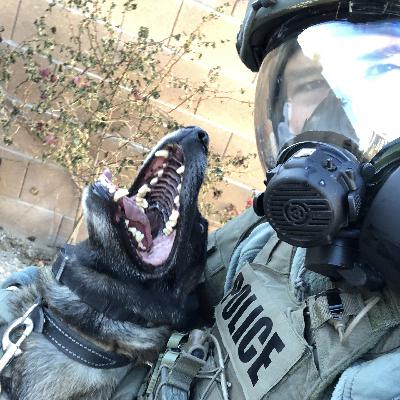
Law Enforcement offers a wide range of career paths—but finding the right fit takes more than just filling out an application. In this episode, Jim interviews Officer Mike about what it's really like to build a career in law enforcement. Should you be a deputy Sheriff or an FBI agent? Do you need a degree? They discuss the pros and cons of different agencies, educational requirements, and how personal history—like prior drug use—can affect hiring. The conversation also covers safety risks, the realities of shift work, and how the job can impact relationships and social life. Whether you're considering a law enforcement career or advising someone who is, this episode offers a candid look at the opportunities and challenges in the field. Find us on social media (Facebook/Twitter/Instagram/YouTube) @TacTangents. You can join the conversation in our Facebook Discussion Group. Find all of our episodes, articles, some reading list ideas, and more on our website www.tacticaltangents.com Like what we're doing? Head over to Patreon and give us a buck for each new episode. You can also make a one-time contribution at GoFundMe. Intro music credit Bensound.com

When is it right to stick to your role—and when do you need to step up and act, even outside your formal job description? Mike and Jim tackle the age-old advice to "stay in your lane" by examining what it truly means in high-stakes environments. From a cop showing up to a burning house to Marines turning wrenches one moment and picking up rifles the next, we break down how flexibility, judgment, and initiative can make the difference between failure and mission success. Drawing on real-world examples like the 2012 Taliban attack on Camp Bastion—where Marine pilots and maintainers dropped tools and returned fire—we ask: Is it always someone else's job, or do high-performing teams blur the lines when the stakes are high? This episode is about knowing your capabilities, understanding your limits, and recognizing when stepping outside your lane is not only appropriate—but necessary. Show notes link: https://amzn.to/40CUBnP - Restricted Data: The History of Nuclear Secrecy in the United States by Alex Wellerstein https://bit.ly/ArmyMDMP - Army MDMP (Military Decision Making Process) Lessons and Best Practices Book https://bit.ly/CENTCOM-Investigation - USCENTCOM Camp Bastion Investigation https://bit.ly/450c2zR - Rochester Business Journal Article Find us on social media (Facebook/Twitter/Instagram/YouTube) @TacTangents. You can join the conversation in our Facebook Discussion Group. Find all of our episodes, articles, some reading list ideas, and more on our website www.tacticaltangents.com Like what we're doing? Head over to Patreon and give us a buck for each new episode. You can also make a one-time contribution at GoFundMe. Intro music credit Bensound.com
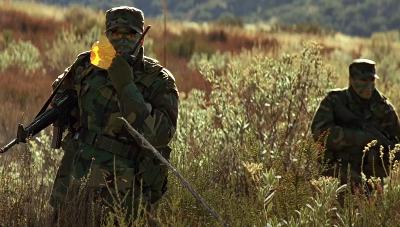
You train like a pro, shoot like a pro—so why fuel like a rookie? Mike and Jim break down practical, no-BS nutrition tips for high-performance days at the range or on duty for the night shift. Whether you're running drills in full kit, qualifying on a tight schedule, or sneaking in a range session on your day off, what you eat (and drink) matters. From no-fridge no-microwave hacks to high-protein gas station snacks, we'll walk you through how to keep your edge when the sun's beating down and there's no fridge in sight. If your job demands readiness, your nutrition should match. Find us on social media (Facebook/Twitter/Instagram/YouTube) @TacTangents. You can join the conversation in our Facebook Discussion Group. Find all of our episodes, articles, some reading list ideas, and more on our website www.tacticaltangents.com Like what we're doing? Head over to Patreon and give us a buck for each new episode. You can also make a one-time contribution at GoFundMe. Intro music credit Bensound.com
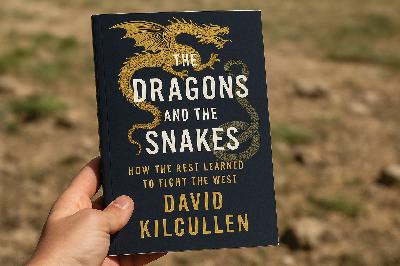
Jim and Mike dig into David Kilcullen's The Dragons and the Snakes to explore how modern adversaries—from rogue states to criminal networks—are adapting faster than ever to Western tactics, tech, and psychology. Drawing from Kilcullen's insights and a CIA review of the book, they unpack the idea that our enemies are evolving because of us—we're shaping their strategy, and sometimes not in the way we want. From guerrilla warfare and liminal conflict to use-of-force doctrine and law enforcement tactics, this episode connects military theory to street-level realities. Are we in a new kind of war without even knowing it? And what are we teaching our opponents every time we act? The Dragons and the Snakes by David Kilcullen - https://amzn.to/3Td5CrM CIA review of the book - https://bit.ly/TheDragonsAndTheSnakes Find us on social media (Facebook/Twitter/Instagram/YouTube) @TacTangents. You can join the conversation in our Facebook Discussion Group. Find all of our episodes, articles, some reading list ideas, and more on our website www.tacticaltangents.com Like what we're doing? Head over to Patreon and give us a buck for each new episode. You can also make a one-time contribution at GoFundMe. Intro music credit Bensound.com
Why do we focus so much on tactics and so little on strategy? In this episode, Mike and Jim tackle the divide between street-level action and big-picture thinking. Drawing on lessons from policing, the military, and community crime prevention, they explore how individual cops, community members, and leaders can influence criminal decision-making—not just react to it. Topics include resource constraints, the Broken Windows theory, and strategies for shifting offender perceptions to prevent crime before it occurs. Find us on social media (Facebook/Twitter/Instagram/YouTube) @TacTangents. You can join the conversation in our Facebook Discussion Group. Find all of our episodes, articles, some reading list ideas, and more on our website www.tacticaltangents.com Like what we're doing? Head over to Patreon and give us a buck for each new episode. You can also make a one-time contribution at GoFundMe. Intro music credit Bensound.com

Comments

Download from Google Play

Download from App Store
 United States