


 Claim Ownership
Beyond the Blueprint - Health Series
Subscribed: 2Played: 81
Subscribe

© 2025
Description
Redefining Healthcare Through Design
Dialogues with HIT professionals, clinical leadership, nursing, and industry innovators on integrating healthcare design into technology deployments to tackle complexity, drive innovation, improve patient care, & foment transformative change.
Dialogues with HIT professionals, clinical leadership, nursing, and industry innovators on integrating healthcare design into technology deployments to tackle complexity, drive innovation, improve patient care, & foment transformative change.
48 Episodes
Reverse
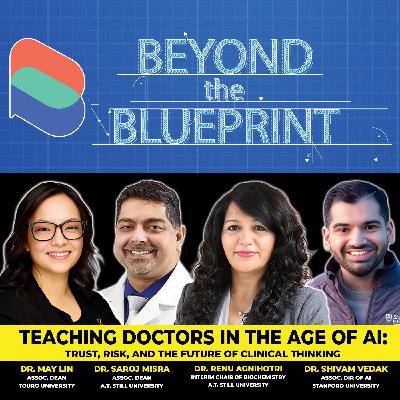
In this episode, we explore how AI is reshaping physician training — and what medical educators must do now to keep pace. Dr. May Lin (Touro University), Dr. Saroj Misra (A.T. Still University), Dr. Renu Agnihotri (A.T. Still University), and Dr. Shivam Vedak (Stanford University) share what's working and what isn't when it comes to preparing residents and medical students to use AI responsibly. From faculty development and inconsistent guidance across clinical sites, to automation bias and the pressure to see more patients faster, the panel examines the hard tradeoffs facing medical education today — and why building critical thinking alongside AI fluency is the only path forward. Key Takeaways Faculty development is critical — attendings must understand AI tools before they can effectively guide trainees. Consistent AI policies across clinical training sites help reduce mixed messages for residents and students. AI should be thought of as augmented intelligence, not a shortcut or replacement for clinical reasoning. Trainees who understand how AI models work are better equipped to recognize when they fail. Automation bias is a real risk — trainees may accept incorrect AI outputs without sufficient scrutiny. Core clinical reasoning skills must be developed independently of AI, especially in early training. Hospital productivity pressures can undermine the thorough, deliberate habits that good training requires. Patients using AI without clinical background face similar — and potentially greater — risks than trainees. The EHR era offers a cautionary tale: physicians must engage early to shape how AI tools are built and deployed. Building a healthy relationship with AI from the start of medical education sets the foundation for safer clinical practice. Episode Highlights 00:00 Intro 02:29 Are We Training Doctors for the World They're Entering? 04:05 Meet the Guests 05:08 Aligning Faculty and Trainees on AI Use 08:36 Moving Beyond the "AI as Cheating" Mindset 10:20 Which AI Tools Show the Most Clinical Promise? 13:05 Building the Right Relationship with AI from Day One 15:27 Why Upskilling the Whole Generation Matters 18:58 Teaching How AI Models Work — and Fail 20:01 The Faculty Development Challenge 20:39 How Do You Know a Trainee Truly Understands? 25:32 Balancing Thoroughness with Hospital Productivity Pressure 27:15 AI Should Improve Care Quality, Not Just Speed 29:32 When Patients Use AI Without Clinical Reasoning 31:15 Dr. Misra's Challenge: Should Any Task Be Off-Limits for AI? 33:18 Renu: The Cognitive Exoskeleton and Productive Struggle 34:33 May: A Ban on Banning AI 36:52 Shivam: Protect the Process of Clinical Reasoning 37:50 Final Thoughts & Closing Guests: Dr. May Lin, Dr. Saroj Misra, Dr. Renu Agnihotri, Dr. Shivam Vedak Host: Gregg Malkary - Lighthouse Healthtech Cohost: Keith Washington - Companions in Courage Foundation Sponsored by: Simplifi Medical Audio/Video: Tim Jones - Health Nuts Media Marketing: Josh Troop - Troop-Creative Learn More at: www.beyond-blueprint.com

In this AMDIS Roundtable, Dr. Eve Cunningham (Cadence), Dr. Howard Landa (Adventist Health), and Dr. Deepti Pandita (UCI Health) explore what it really means to build an AI-ready EHR. Moving beyond features and vendor roadmaps, they examine how data governance, workflow design, and clinical validation shape the physician's day — from inbox overload to exam-room disconnect. Together, they discuss shadow AI, cognitive burden, and the hard tradeoffs between optimizing legacy workflows and redesigning care. Their message is clear: the next generation EHR isn't about adding more technology — it's about restoring clinical cognition and rebuilding trust in how care gets delivered. Key Takeaways Bad data leads to bad AI — governance must come first. AI is math, not magic — noisy and inconsistent data amplify risk. Clinical validation is as important as data hygiene for meaningful AI use. The EHR disrupts connection when clinicians must focus on screens instead of patients. Ambient documentation restores presence but does not yet create a true intelligent clinical partner. Most AI tools solve isolated tasks, not the full end-to-end care workflow. Health systems need internal prompt and AI literacy — clinicians are not trained engineers. Third-party innovation fills gaps, but long contracts slow adaptation. Shadow AI often signals unmet needs, not noncompliance. Governance should enable safe experimentation rather than block innovation. Clinicians remain accountable for AI-driven decisions under current regulations. Patients are rapidly adopting AI tools, often without reliable guardrails. AI's highest near-term value is reducing cognitive and administrative burden. True progress requires redesigning workflows, not endlessly optimizing legacy processes. Leadership prioritization, not technology limits, often slows transformation. The next generation EHR must restore clinical cognition and trust. Episode Highlights 00:00 | The Key to a Successful EHR: Restoring Clinical Cognition 02:36 | When the EHR Slows Care Instead of Supporting It 01:08 | Why This Isn't About Features or Vendor Roadmaps 02:36 | When the EHR Slows Care Instead of Supporting It 03:46 | AI Is Math, Not Magic 04:05 | Data Governance as the Prerequisite for AI 05:23 | Governance + Clinical Validation = Actionable Intelligence 06:44 | The Keyboard Breaks the Sacred Patient Encounter 08:25 | Ambient Tools and the Return of Joy in Medicine 09:19 | The "Intelligence-Ready" EHR Vision 11:10 | Why Clinicians Aren't Prompt Engineers 12:39 | Is Epic Cosmos Ready for Prime Time? 14:01 | Contextual, Specialty-Specific Views at the Point of Care 15:08 | Third-Party Innovation vs EHR Vendor Lag 16:49 | When to Replace vs Layer New AI Tools 18:09 | Shadow AI as a Signal of Unmet Need 19:08 | Enabling Safe Experimentation Through Governance 20:55 | If AI Makes a Mistake, Who Is Liable? 23:35 | Where AI Should Help First: The Patient Journey 25:19 | Patients Are Already Using AI for Medical Advice 27:33 | Cognitive Scaffolding: Removing Clinical Noise 28:31 | Intelligent Synthesis vs Data Mining 29:13 | The Peer Challenge: How Do We Move 2–3x Faster? 30:02 | Leadership Indecision Slows Transformation 30:47 | Stop Optimizing Legacy Workflows 31:46 | Final Message: Technology Isn't the Barrier Anymore Guests: Dr. Eve Cunningham, Dr. Howard Landa, Dr. Deepti Pandita Host: Gregg Malkary - Lighthouse Healthtech Cohost: Keith Washington - Companions in Courage Foundation Sponsored by: Simplifi Medical & Storage Systems Unlimited Audio/Video: Tim Jones - Health Nuts Media Marketing: Josh Troop - Troop-Creative Learn More at: www.beyond-blueprint.com
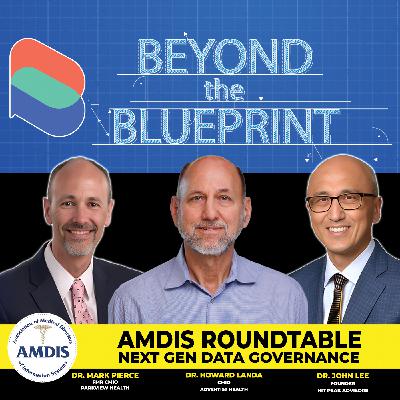
In this AMDIS collaboration, Dr. Mark Pierce (former Parkview Health), Dr. Howard Landa (Adventist Health), and Dr. John Lee (HIT Peak Advisors) examine why data governance is ultimately a patient-care issue, not just an IT function. Drawing on real bedside decisions, EHR transitions, and conflicting metrics, they show how unclear definitions and hidden data create hesitation, workarounds, and loss of clinician trust. Together, they discuss the leadership commitment and investment required to improve data quality, and why clean data is the prerequisite for safe and meaningful AI in healthcare. Key Takeaways Unclear data definitions slow care — clinicians pause, double-check, or guess at the bedside. Data governance is a patient-safety function, not an IT committee exercise. Most data problems are silent — staff create workarounds instead of reporting issues. Different departments define the same metric differently, eroding organizational trust. Leadership wants fast ROI, but governance requires long-term investment and persistence. AI magnifies bad data — clean inputs matter more than advanced algorithms. Use AI first to clean and structure data before deploying clinical AI tools. Start governance with visible problems (e.g., length-of-stay definitions, data sharing). Tie governance efforts to active initiatives to gain momentum and participation. Organizations rarely advertise good governance — you see it in outcomes, not org charts. Clinician trust is fragile; one bad data-driven decision can last for years. Accessible, synthesized data enables faster decisions and real improvement cycles. Episode Highlights 00:00 | Why Data Governance Gets Ignored 02:01 | Data Governance as a Patient-Safety Issue 04:25 | When Data Helps — and When It Slows Care 06:29 | Too Much Information, Not Enough Clarity 09:14 | The "Raiders of the Lost Ark" Data Warehouse Problem 11:04 | Why Leaders Delay Governance Work 13:06 | The Real Investment Required 14:28 | The PD-Not-PDSA Cycle in Healthcare 15:16 | AI Fails Without Clean Data 16:55 | What Breaks When Definitions Differ 18:05 | Bad Data at the Bedside: A Stroke Decision 20:19 | How Trust in Data Is Lost 23:13 | Silent Workarounds Across Hospitals 25:18 | Where Organizations Should Start 27:15 | Making Data Actionable for Clinicians 29:26 | Governance as Organizational DNA 31:24 | Aligning AI Governance With Data Governance 32:13 | Use AI to Clean Data First 34:15 | Bias, Training Data, and Clinical Risk 36:29 | Final Message: When Rules Are Unclear, Care Suffers Guests: Dr. Mark Pierce, Dr. Howard Landa, Dr. John Lee Host: Gregg Malkary - Lighthouse Healthtech Cohost: Keith Washington - Companions in Courage Foundation Sponsored by: Simplifi Medical & Storage Systems Unlimited Audio/Video: Tim Jones - Health Nuts Media Marketing: Josh Troop - Troop-Creative Learn More at: www.beyond-blueprint.com
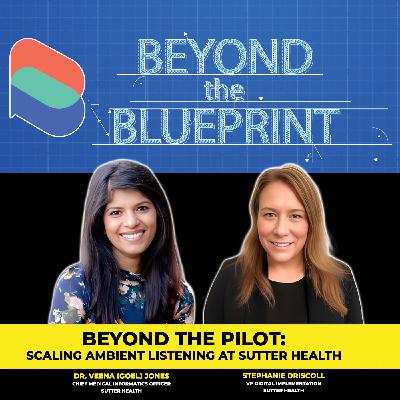
In this episode, we're joined by two leaders from Sutter Health who are scaling ambient listening across their enterprise: Dr. Veena (Goel) Jones, Chief Medical Informatics Officer, and Stephanie Driscoll, Vice President of Digital Implementation. In 2025 alone, Sutter onboarded more than 3,100 clinicians to ambient listening—moving well beyond pilot programs to true system-wide adoption. Together, they share what it takes to make that scale possible, from EHR integration and workflow redesign to governance, training, and change management. Key Takeaways Ambient listening only scales when the EHR foundation is ready. Workflow standardization and template cleanup made enterprise adoption possible. In 2025, Sutter onboarded more than 3,100 clinicians—moving ambient listening beyond pilot and into system-wide infrastructure. AI adoption is operational, not just technical. Governance, enrollment processes, and structured onboarding determined success. Clinicians pulled the technology. Ambient listening spread because it reduced cognitive burden—not because it was mandated. Full Epic integration eliminated friction and accelerated both ambulatory and inpatient adoption. Ambient listening is a gateway. Documentation is just the beginning—queued orders and future AI workflows depend on foundational readiness. Episode Highlights 00:00 | Enterprise Change Management and Ambient Listening 01:30 | Welcome to Beyond the Blueprint 02:30 | Why Ambient Listening Is More Than Hype 03:25 | Meet the Leaders: Sutter Health's AI Scale Strategy 05:00 | Early Physician Reactions: "This Changed My Life" 06:05 | From Pilot to Enterprise Enrollment 07:40 | Standardizing Epic to Prepare for AI 09:20 | Governance, Safety, and Clinical Oversight 11:00 | Integrating Ambient Listening Directly into Epic 13:30 | The Role of the Digital Academy in Scaling Adoption 15:45 | Reducing Cognitive Burden at the Bedside 18:00 | Scaling Across Ambulatory and Inpatient Settings 20:30 | Structured Intake and Monthly Onboarding Waves 23:00 | Protecting Coding Integrity and Revenue Cycle 27:15 | Beyond Documentation: Orders and Workflow Automation 29:00 | Measuring Impact: Charting Time and Pajama Time 31:45 | Why Clinicians Pulled the Technology 34:00 | Preparing the EHR Foundation for Future AI 36:30 | What It Really Takes to Move Beyond the Pilot 38:50 | Closing Thoughts: Ambient Listening as Infrastructure Guests: Dr. Veena (Goel) Jones, Stephanie Driscoll Host: Gregg Malkary - Spyglass Consulting Group Cohost: Keith Washington - Companions in Courage Foundation Sponsored by: Simplifi Medical Audio/Video: Tim Jones - Health Nuts Media Marketing: Josh Troop - Troop-Creative Learn More at: www.beyond-blueprint.com
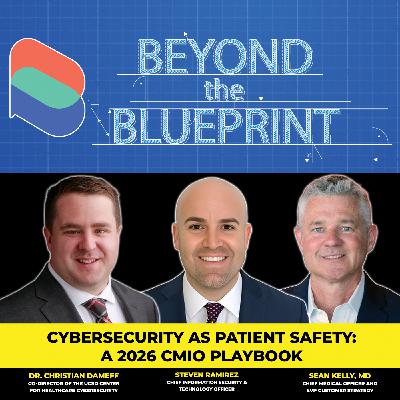
In this episode we're joined by Dr. Sean Kelly (Imprivata), Dr. Christian Dameff (UC San Diego Health), and Steven Ramirez (Renown Health) to explore a critical yet often misunderstood frontier: the intersection of cybersecurity and patient safety. Together, we unpack how clinical leaders can prepare for digital outages, ransomware attacks, and the escalating threat landscape—not as isolated IT events, but as high-stakes clinical disruptions. From real-time decision-making to cultural readiness, this conversation is a practical playbook for CMIOs navigating care delivery in an age where system failures can mean delayed diagnoses, canceled surgeries, and compromised outcomes. Whether you lead tech, safety, or care teams, this episode offers a bold call to reframe cybersecurity as a core component of clinical resilience—and why every hospital needs a downtime plan that actually works. Key Takeaways Cybersecurity is clinical safety. Outages impact real patients—diverting ambulances, delaying chemo, and compromising care at the bedside. Generic downtime plans don't cut it. Too often, they're dusty binders with vague bullet points. Real preparedness requires clinical playbooks tailored to workflows, not just systems. Clinician training must go beyond checkbox compliance. Studies show most phishing training has minimal impact. Real-time, workflow-based education is more effective. Paper downtime isn't intuitive anymore. Many clinicians—especially newer ones—have never documented without digital tools. Drill-based preparedness is critical. Security and speed can coexist. With adaptive tools, it's possible to embed safeguards that protect systems without blocking care delivery. Every department responds differently to cyber events. Cross-functional coordination—especially between IT and clinical ops—is key for effective triage and recovery. Identity is the new perimeter. Over 80% of cyber events stem from compromised credentials. Guardrails and behavior-based analytics are essential. We need to measure what works. Cyber tools should be held to the same evidence-based standards as clinical interventions. CMIOs must bridge the gap. As translators between the boardroom, command center, and bedside, they're uniquely positioned to lead a new model of digital resilience. Episode Highlights 00:00 | Cybersecurity Is Now a Clinical Crisis 01:53 | Welcome to Beyond the Blueprint 02:30 | Why Cyber Threats Are Patient Safety Threats 03:09 | Meet the Panel: Imprivata, UCSD, and Renown Health 04:00 | From IT Problem to Bedside Risk 05:20 | Building Cyber Resilience into Daily Workflow 07:00 | Downtime Plans: Why Most Are Useless 09:30 | Clinical Ransomware Playbooks: A New Standard 11:16 | Preventative Cyber Hygiene and Workflow Mapping 13:10 | Supporting ICU, Dialysis, and Cancer Care During Outages 14:43 | Chain of Command in the First 5 Minutes of a Breach 16:00 | Frontline Leadership: Silos or Shared Command? 17:10 | Why Mid-Acuity Patients Are the Hidden Risk 18:00 | Friction vs. Safety: Rethinking MFA and Access 20:00 | Cross-Functional Models for Risk Escalation 22:00 | Eliminating Email to Reduce Phishing Risk 23:15 | Biometric Access, Passkeys & Adaptive Controls 24:00 | Why You Must Drill Downtime Workflows 26:00 | When to Trigger Paper-Based Systems 27:30 | Cultural Inertia vs. Clinical Necessity 28:45 | Scaling Resilience Across Diverse Hospitals 29:15 | AI Guardrails and Workflow Protections 30:22 | CMIO Challenge Question: Is Training Worth It? 31:55 | Rethinking Evidence in Cyber Tools 33:00 | Training Doesn't Work—But This Might 35:00 | Four Steps to Take in the Next 30 Days 36:15 | Final Takeaway: Don't Be the Dept. of No 38:00 | Closing Thoughts: Cybersecurity Is Patient Care Guests: Dr. Sean Kelly, Dr. Christian Dameff, Steven Ramirez Host: Gregg Malkary - Spyglass Consulting Group Cohost: Keith Washington - Companions in Courage Foundation Sponsored by: Simplifi Medical Audio/Video: Tim Jones - Health Nuts Media Marketing: Josh Troop - Troop-Creative Learn More at: www.beyond-blueprint.com
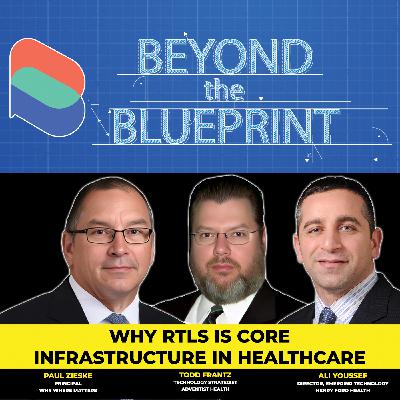
In this episode we're joined by Todd Frantz (AdventHealth), Ali Youssef (Henry Ford Health), and Paul Zieske (Why Where Matters) to explore how next-gen real-time location systems are reshaping care delivery. Together, we dive into the evolution from dots-on-a-map asset tracking to intelligent platforms that drive staff safety, streamline workflows, and generate high-fidelity data for AI. From ED duress alerts to ambient analytics and digital wayfinding, this conversation is a roadmap for health leaders rethinking how hospitals move, sense, and respond in real time. Whether you're planning a new facility or optimizing frontline operations, this episode will change how you think about RTLS—and why it belongs at the center of your infrastructure strategy. Key Takeaways RTLS 2.0 goes beyond asset tracking—it integrates workflow, staffing, and safety data for real-time decision-making. Hospitals lose thousands of staff hours each year searching for equipment, impacting patient care and satisfaction. Successful RTLS adoption requires cultural alignment, transparency, and trust—not just technology deployment. Staff duress alerts and par level management are delivering fast wins and improving frontline safety. Enterprise-wide RTLS platforms unlock more value than siloed deployments—especially when integrated with EHRs and facility systems. High-fidelity location data is foundational for AI-driven insights, workflow automation, and digital twins. The ROI of RTLS includes reduced burnout, improved patient flow, equipment utilization, and faster care team coordination. Integration remains a challenge—vendors must support open standards and shared APIs to break down data silos. RTLS should be treated like core infrastructure—designed into new buildings, not bolted on after. Emerging tech like computer vision will extend RTLS into human activity recognition, situational awareness, and predictive care. Episode Highlights 00:00 | Why RTLS Adoption Starts with Trust, Not Tech 01:53 | Welcome to Beyond the Blueprint 02:30 | From Dots on a Map to Real-Time Intelligence 03:09 | Meet the Panel: AdventHealth, Henry Ford, and Why Where Matters 04:00 | Is RTLS Now Core Infrastructure? 05:09 | The Hidden Costs of Outdated RTLS Platforms 06:02 | Workflow Integration and the Role of Location Data in AI 07:17 | Where Hospitals Miss Safety & Workflow Red Flags 08:14 | Real-Time Context and Robotics Integration 09:00 | The Chessboard Effect: Duress Alerts as a Point of Entry 10:00 | Are Enterprise Standards Emerging Across IDNs? 11:16 | Choosing the Right Tool for the Right Workflow 12:00 | Intelligent Lighting and Digital Front Doors 13:00 | Open Epic and the Rise of Indoor Wayfinding 14:00 | Integrating RTLS into Daily Workflow: It's Cultural 15:00 | When RTLS Fails the First Time—and Why That's Normal 16:15 | The Location Team: A Hidden Implementation Advantage 17:15 | "Blame the Process, Not the People" 18:21 | Safety Stats and Clinician Buy-In for Duress Alerts 19:49 | From Staff to Patient Expectations: The Culture Shift 20:00 | Why RTLS Data Integration Is Still So Hard 21:15 | Strategic Vendor Relationships > APIs Alone 22:45 | Will Epic Open Up? A Look at Market Influence 24:00 | How AI Wrappers Could Solve Interop Gaps 25:15 | The AAA Model: Analytics, Automation, and AI 26:00 | Why You Should Never Throw Away RTLS Data 27:15 | Use Cases for Retrospective AI + Workflow Analysis 28:16 | AI Isn't the Goal—It's a Tool in Your Automation Stack 29:11 | What's Next? Computer Vision & Human Activity Recognition 30:03 | From ORs to Restrooms: Situational Awareness at Scale 31:35 | The Future of RTLS: Friction Reduction + Design Insight 33:57 | Customer Experience in Outpatient and Waiting Areas 34:55 | Final Takeaways: Safety, Trust, and Strategic Deployment Guests: Todd Frantz, Ali Youssef and Paul Zieske Host: Gregg Malkary - Spyglass Consulting Group Cohost: Keith Washington - Companions in Courage Foundation Sponsored by: Simplifi Medical Audio/Video: Tim Jones - Health Nuts Media Marketing: Josh Troop - Troop-Creative Learn More at: www.beyond-blueprint.com
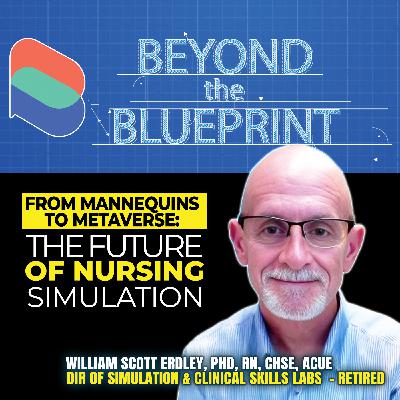
What if the future of nurse training didn't just include mannequins—but holograms, AI conversations, and full-on metaverse environments? In this episode of Beyond the Blueprint, we're joined by Dr. William Scott Erdley, a retired simulation pioneer and former Director of Simulation & Clinical Skills Labs. With decades of experience in nursing education, Dr. Erdley unpacks the evolution of clinical simulation—from standardized patients and mannequin drills to immersive technologies like VR, AI, and even wetware. Together, we explore how simulation builds confidence, strengthens care team collaboration, and prepares clinicians for rare, high-stakes scenarios. And we take a bold look at what's next: from smarter simulators to holographic mentors. Whether you're leading a health system or reimagining nursing education, this episode is a front-row seat to the future of clinical readiness. Key Takeaways Simulation offers high-fidelity, repeatable practice that boosts confidence and reduces clinical error. Nursing simulation now extends far beyond mannequins—into VR, AI-powered patients, and virtual tele-simulations. Standardized patients and realistic role-playing help build empathy, communication, and interprofessional collaboration. OB, neonatal, and code-team scenarios benefit especially from regular simulation refreshers. ROI is seen in fewer adverse events, reduced turnover, improved morale, and onboarding efficiency. Emerging tools like AI and VR are making simulations more accessible and scalable. Simulation is not just about tech—it's about mindset, pedagogy, and patient-centered design. Debriefing is where the deepest learning happens—focus on reflection and resilience, not performance. Academic-medical partnerships can expand access without massive capital investments. The future of simulation is immersive, intelligent, and increasingly personalized. Episode Highlights 00:00 | What Exactly Is Clinical Simulation? 00:29 | Real-World Save: Simulation Training Takes Flight 01:22 | Meet Dr. Scott Erdley: From Logic Tests to Leading Simulation Labs 03:23 | Simulation as Clinical Experience: The Early Days 05:29 | Skills, Communication, and Confidence: Why Sim Matters 06:26 | Learning to Call the Doctor at 2AM 07:13 | Repeatable Scenarios: Standardizing High-Stakes Practice 08:24 | When Simulation Saves Lives—Even at 30,000 Feet 09:18 | 75% of Nursing Programs Now Use Simulation Labs 09:58 | Code Team Drills with Mannequins: Practice Under Pressure 11:16 | OB and Neonatal Use Cases—and Legal Implications 13:52 | Strategic Planning: Why Are You Investing in Sim? 14:32 | Simulation for Onboarding, Oncology, and More 15:35 | ROI: From M&M Rates to Hiring Efficiency 16:20 | Academic Partnerships as an Access Strategy 17:21 | AI and VR: Opening the Simulation Toolbox 18:19 | Conversational AI and Psych Nursing Sim Scenarios 19:26 | Standardized Patients: Humanizing the Training Process 20:45 | Merging AI with Robotics: A Future with Thinking Mannequins 24:11 | From Wetware to Brain Interfaces: A New Era in Care 25:06 | Ready Player One Meets Real-World Nursing 26:02 | Why Debriefing > Critique: Coaching Through Reflection 27:04 | Simulating Conflict: Aggressive Patients, Interdisciplinary Tension 29:18 | Prompt-Based Simulations: A Natural Language Future 30:00 | Final Advice: Simulation as Strategy—and a Whole Lot of Fun Guest: Dr. William Scott Erdley Host: Gregg Malkary - Spyglass Consulting Group Cohost: Keith Washington - Companions in Courage Foundation Sponsored by: Simplifi Medical Audio/Video: Tim Jones - Health Nuts Media Marketing: Josh Troop - Troop-Creative Learn More at: www.beyond-blueprint.com
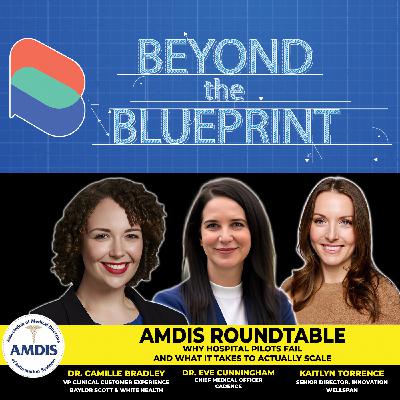
What happens when pilots become more than experiments? In this AMDIS collaboration, Dr. Eve Cunningham (Cadence, formerly Providence), Kaitlyn Torrence (WellSpan, formerly MUSC), and Dr. Camille Bradley (Baylor Scott & White) reveal what separates failed pilots from scalable innovation. Drawing on real-world deployments of virtual care, ambient listening, and decision support tools, this episode dives deep into the operational, cultural, and clinical realities behind adoption. From rebranding "pilots" to building internal trust, the panel offers a blueprint for moving from spark to scale in health system innovation. Together, they explore why scaling digital care requires more than good tech—it demands strong partnerships, clinician champions, and a relentless focus on solving real problems. Key Takeaways Most pilots fail because they aren't designed for scale—think phased deployment, not one-off testing. Rebranding "pilots" as experiments or phase-one initiatives improves credibility and staff buy-in. Clinician champions ("entrepreneurial weirdos") are key to real-world feedback and viral adoption. Operational leaders help navigate workflows, align stakeholders, and ensure accountability at scale. Innovation labs must be tied to informatics and operational realities—not siloed showcases. Health systems need platform partners, not point solutions, to meet long-term strategic goals. Trust, process clarity, and iterative design drive clinical adoption—especially post-EMR trauma. Change management resources are essential; adoption is emotional, not just technical. Prioritization must follow clear goals (e.g., "cut 400,000 admin hours"), not shiny tech trends. Vendors succeed when they understand the system's priorities—and show up ready to co-develop. Episode Highlights 00:00 | Why So Many Pilots Fail 01:14 | Meet the Leaders Scaling Innovation 02:30 | The Pilot Graveyard: When Good Ideas Die 04:17 | Rebranding Pilots as Experiments 06:08 | Finding Your "Weirdos": The Power of Clinical Champions 07:56 | Designing for Process, Not Just Technology 09:34 | Defining the Problem Before Testing a Solution 10:23 | From Frustration to Trust: Winning Clinician Buy-In 12:14 | How Ambient Scribes Went Viral 13:58 | Socializing Tools with Frontline Feedback 15:27 | Why Operational Champions Matter 17:00 | The Role of Communication in Scaling 18:20 | Are Innovation Labs Working—or Just Expensive Showrooms? 20:37 | Partnerships Over Products: Building the Right Ecosystem 22:37 | Creating Safe Spaces to Fail and Pivot 24:10 | Aligning IT, Clinical, and Finance Around a North Star 26:00 | Strategic Prioritization: What Moves Forward and Why 27:44 | Attacking Admin Waste with AI and Clear Goals 29:34 | From Point Solutions to Platform Partners 31:11 | Vendor Advice: Do Your Homework, Bring Specific Value 33:20 | Three Takeaways for Innovation Leaders Guests: Dr. Eve Cunningham, Dr. Camille Bradley, Kaitlyn Torrence Host: Gregg Malkary - Spyglass Consulting Group Cohost: Keith Washington - Companions in Courage Foundation Sponsored by: Simplifi Medical & Storage Systems Unlimited Audio/Video: Tim Jones - Health Nuts Media Marketing: Josh Troop - Troop-Creative Learn More at: www.beyond-blueprint.com
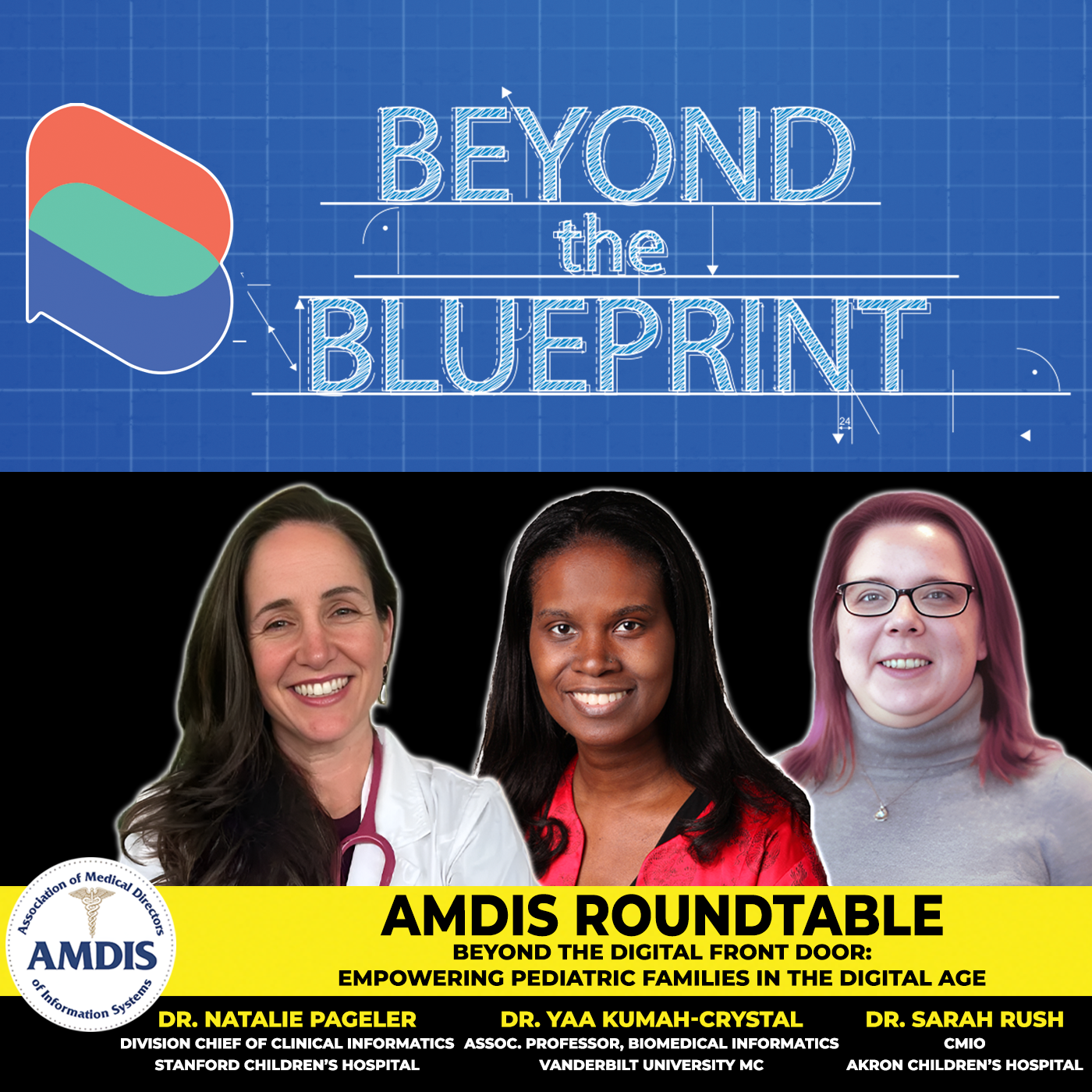
What happens beyond the digital front door? In this AMDIS collaboration, Dr. Yaa Kumah-Crystal, Dr. Natalie Pageler, and Dr. Sarah Rush unpack the complex realities of digital family engagement in pediatric care. From patient portals and teen privacy laws to ambient documentation and AI-enabled translation, this panel explores how hospitals can rebuild trust, reduce barriers, and design systems that truly work for families. Together, they examine cultural readiness, access equity, and why health systems must treat family engagement as both a design challenge and a clinical imperative. Key Takeaways Pediatric digital tools must account for evolving autonomy and privacy needs. Teen portal adoption is still widely misunderstood by patients and staff. Telehealth and virtual quick care reduce burden and boost access. AI tools like ambient scribes and LLMs are reshaping provider-patient connection. Language and literacy remain persistent access barriers. Even tech-savvy families fall through the cracks due to system complexity. Consumer tools and sports analytics offer inspiration for pediatric innovation. True patient-centered care requires redesigning care around family workflows. Success metrics should include trust, connection, and clinical relief—not just logins. Episode Highlights 00:00 | Intro 00:41 | A Mom Uses the Portal—and Reshapes the Encounter 02:25 | ChatGPT in the Stanford ER 04:17 | When Confidential Care Becomes a Privacy Risk 06:09 | Rethinking Telehealth and Access for Families 07:56 | Extending Specialist Reach through Virtual Care 09:34 | Building Digital Trust 13:34 | The Case for Anonymity in Sensitive Teen Encounters 15:10 | ChatGPT vs. Truancy Policies 16:17 | Designing Tech for Younger, Digitally Native Families 18:19 | Change Management Across Literacy and Trust Barriers 21:41 | Why Spanish-Language Portals Still Miss the Mark 23:39 | Legal, Cultural, and Logistical Gaps in Teen Consent 26:30 | Are Providers Ready for Empowered Families? 27:35 | Humanizing Tech: Ambient Scribes and Burnout 29:51 | How to Measure Success Beyond the Click 33:00 | Peer Challenge: Consumer Tools We Should Steal 38:11 | Three Takeaways for Pediatric Hospital Leaders Guests: Dr. Natalie Pageler, Dr. Yaa Kumah-Crystal, Dr. Sarah Rush Host: Gregg Malkary - Spyglass Consulting Group Cohost: Keith Washington - Companions in Courage Foundation Sponsored by: Simplifi Medical & Storage Systems Unlimited Audio/Video: Tim Jones - Health Nuts Media Marketing: Josh Troop - Troop-Creative Learn More at: www.beyond-blueprint.com
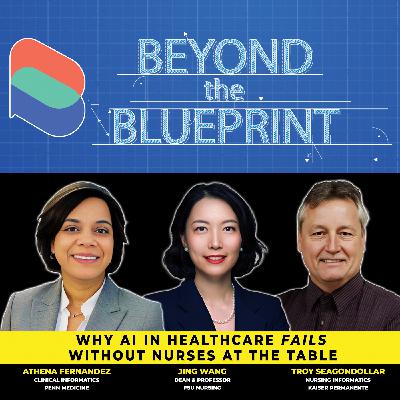
In this episode we explore why so many AI initiatives in healthcare stall—and how nursing leaders can change that. Dr. Jing Wang (FSU Nursing), Athena Fernandez (Penn Medicine), and Troy Seagondollar (formerly Kaiser Permanente) reflect on the current AI landscape and what it takes to make tools truly work for nurses at the bedside. From sepsis prediction models to staffing automation, they share hard-won lessons in AI governance, change management, and clinical trust. Our panel dives into the growing gap between innovation and implementation—and how nurse-led strategies can help close it. Key Takeaways AI projects often fail when nurses are excluded from planning and implementation. Augmented intelligence offers more clinical value than full automation. Nurse informaticists are essential to bridging IT and frontline workflows. Change management begins with bedside relevance, not just executive strategy. Sepsis prediction models reveal the risks of misaligned AI tools. AI should enhance—not replace—clinical judgment. National frameworks can help standardize and scale ethical AI use. Transparency and education are key to building trust in AI systems. Governance structures must include frontline feedback loops. Empowering nurses helps ensure AI improves care, not burdens it. Episode Highlights 00:00 Welcome & Framing the Episode 01:55 Nursing's Role in AI Adoption 04:16 Lessons from Sepsis Prediction Tools 07:41 When Nurses Are Left Out of the Process 09:13 Hidden Costs: Workflow Disruption and Trust Erosion 11:23 Building a Feedback-Driven Governance Model 13:01 National Nursing + AI Framework 15:52 Bridging Academia and Clinical Reality 20:06 Traits of an AI-Savvy Nurse Leader 21:26 How Nurse Leaders Can Get Started 24:46 Artificial vs. Augmented Intelligence in Practice 28:28 The Tsunami of Tools: Change Management in Action 31:15 Building Clinical Trust in AI 34:22 Final Thoughts & Call to Action Guests: Aretha Fernandez Jing Wang Troy Seagondollar Host: Gregg Malkary - Spyglass Consulting Group Cohost: Keith Washington - Companions in Courage Foundation Sponsored by: Simplifi Medical & Storage Systems Unlimited Audio/Video: Tim Jones - Health Nuts Media Marketing: Josh Troop - Troop-Creative Learn More at: www.beyond-blueprint.com
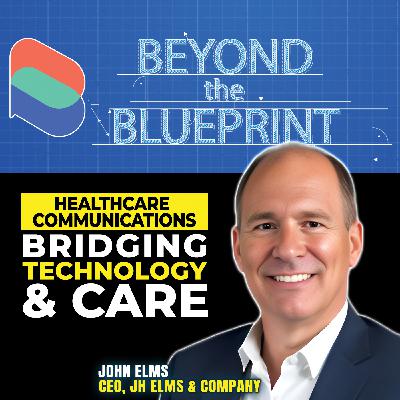
Join us for a conversation with healthcare communications veteran John Elms as he breaks down what it really takes to design digital systems that frontline clinicians will actually use. Drawing on decades of leadership at TigerConnect, Critical Alert, and Spectralink, Elms shares hard-won lessons on user-centered design, project governance, and the hidden costs of fragmented communication tools. We explore a real-world case study that improved patient transport efficiency by 55%, and dive into strategies for aligning IT, operations, and clinical teams around change that sticks. Whether you're driving digital transformation, managing clinical workflows, or evaluating vendor tools, this episode offers a blueprint for building smarter, simpler, and more sustainable communication systems. Key Takeaways Accessing stakeholder input is increasingly challenging due to resource constraints. User-centered design is essential for effective digital transformation in healthcare. Engagement from leadership is crucial for project success. Compliance should focus on adoption and governance rather than oversight. Interoperability is key to integrating new tools into existing workflows. Eliminating redundancies in healthcare technology can improve efficiency. Celebrating successes can enhance team morale and motivation. Resistance to change is a common barrier in healthcare organizations. Measuring task turnaround time can correlate with patient satisfaction. Continuous feedback loops are vital for refining healthcare solutions. Episode Highlights 00:00 Accessing Stakeholder Input in Healthcare 01:07 Introduction to Healthcare Communication Innovations 04:09 User-Centered Design in Digital Transformation 10:13 Case Study: Improving Patient Transport Efficiency 16:43 Cultural Trends in Healthcare Leadership 19:08 Challenges in Implementing Collaboration Tools 24:48 Measuring ROI in Digital Transformation Projects 28:44 Key Takeaways and Closing Remarks Guest: John Elms - JH Elms & Company Host: Gregg Malkary - Spyglass Consulting Group Cohost: Keith Washington - Companions in Courage Foundation Sponsored by: Simplifi Medical & Storage Systems Unlimited Audio/Video: Tim Jones - Health Nuts Media Marketing: Josh Troop - Troop-Creative Learn More at: www.beyond-blueprint.com

Join hosts Keith Washington and Kris Baird for a conversation with Michelle Lingner, FNP-C, RN-BSN, RNFA—a trauma nurse practitioner at ECU Health who's redefining what it means to lead without formal authority. Michelle shares how intentional mindset shifts transformed her from burned out to energized, and how that shift rippled through her entire team. Drawing on her experience in a 1,000-bed Level 1 trauma center, she reveals practical strategies for peer-to-peer influence, closing communication gaps that delay patient care, and choosing positivity even in high-pressure environments. Kris Baird, nurse executive, author, and CEO of the Baird Group, guides the conversation with coaching insights on self-management, creating cultures of feedback, and knowing when toxic team members need to be coached up or moved out. Together, they explore how self-awareness, consistent micro-habits, and simple handoffs can shift culture from the bedside. Whether you're in nursing leadership, healthcare operations, or healthtech innovation, this conversation offers a blueprint for becoming an influencer in your organization—no title required. Key Takeaways You don't need a formal leadership role to positively influence those around you Intentionally showing up with positivity takes less energy than being negative Leading yourself first gives others permission to do the same Simple communication handoffs can reduce patient care delays by hours Small acts of follow-up build your "influencer bank account" Positivity spreads through teams when practiced consistently as a routine Staying curious about what triggers negativity helps shift toxic dynamics Dead weight employees can be influencers too—just in the wrong direction Taking ownership and closing communication loops improves ED throughput Culture change starts with self-awareness and one repeated action Episode Highlights 00:00 Introduction: Leading Without a Title 02:00 Michelle's Role at ECU Health's Level 1 Trauma Center 03:48 Who to Follow: Positivity, Problem-Solvers, and Bridge Builders 04:54 Managing Your Own Mindset: From Burnout to Intentional Leadership 06:48 The Power of Routine: Making Positivity a Practice 08:14 Staying Present in High-Stress Trauma Care 10:25 How One Person's Attitude Shifts an Entire Culture 13:16 Dealing with Toxic Team Members: When to Coach, When to Let Go 17:00 The Communication Gap That Delays Patient Care 20:14 Building Your Influencer Bank Account Through Small Acts 23:29 How Communication Impacts ED Throughput and Bed Availability 25:26 Closing Thoughts: Self-Awareness and Repeated Action 26:00 "When You Lead Yourself First, You Give Others Permission to Do the Same" Guest: Michelle Lingner, FNP-C, RN-BSN, RNFA - ECU Health Host: Keith Washington - Companions in Courage Foundation Cohost: Kris Baird - Baird Group Sponsored by: Simplifi Medical & Storage Systems Unlimited Audio/Video: Tim Jones - Health Nuts Media Marketing: Josh Troop - Troop-Creative Learn More at: www.beyond-blueprint.com
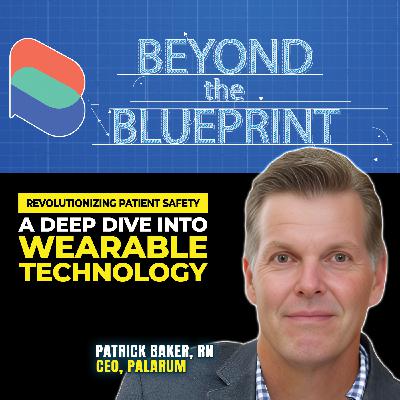
Join us for a conversation with nurse executive and healthtech innovator Patrick Baker shares the story behind Palarum's smart sock—an advanced wearable that's dramatically reducing patient falls without adding to clinical workload. With insights shaped by decades on the frontlines, Baker walks us through how alarm fatigue, design thinking, and data transparency inspired a smarter approach to patient safety. We explore how real-time mobility tracking, clinical workflow integration, and human-centered innovation are shifting the paradigm in hospital care. Whether you're in nursing leadership, patient safety, or digital health innovation, this conversation offers a blueprint for rethinking fall prevention and mobility as a strategic advantage. Key Takeaways Our goal was to reduce patient falls by 20-25%. We've exceeded 40,000 patient days with our socks. We had zero patient falls at Ohio State during the trial. The smart sock alerts nurses when patients get up. We aim to document patient mobility accurately. Every patient gets a pair of socks for safety. The technology helps mitigate hospital costs from falls. Remote monitoring is the future of patient safety. We need to address alarm fatigue in hospitals. Effective fall prevention requires a strategic approach. Episode Highlights 00:00 Introduction to Patrick Baker and Palarum 02:15 From CNO to Inventor: The Origins of the Smart Sock 05:48 Why Traditional Fall Prevention Methods Fail 07:33 The Epiphany Moment: Bed Alarms and Alarm Fatigue 10:45 Building a Smart Sock: Design, Sensors, and Accuracy 13:09 Real-World Results: 60%+ Reduction in Patient Falls 15:32 Clinical Trial Insights and Fall Rate Benchmarks 18:43 The ROI Conversation: Costs, Sitters, and FTEs 21:27 Rethinking Hospital Surveillance Strategies 23:15 The Power of Real-Time Staff Proximity Alerts 25:05 Future Vision: Patient Mobility and EMR Integration 27:18 How to Connect with Palarum and What's Next Guest: Patrick Baker - Palarum Host: Gregg Malkary - Spyglass Consulting Group Cohost: Keith Washington - Companions in Courage Foundation Sponsored by: Simplifi Medical & Storage Systems Unlimited Audio/Video: Tim Jones - Health Nuts Media Marketing: Josh Troop - Troop-Creative Learn More at: www.beyond-blueprint.com

In this episode of Beyond the Blueprint, emergency physician and health IT strategist Dr. John Lee unpacks the systemic failures slowing down our emergency departments—and why AI alone won't fix them. With firsthand insights from the front lines and the boardroom, Dr. Lee makes the case for building data governance and transparency before jumping into artificial intelligence. We explore why foundational analytics matter, what most organizations get wrong about innovation, and how strategic design can reduce ED chaos. Whether you're a CMIO, a health system leader, or innovating in clinical ops, this episode offers a blueprint for smarter, scalable change in acute care. Key Takeaways Organizations often skip foundational analytics for AI. Emergency departments face systemic issues affecting patient care. Cost and care quality are often at odds in healthcare. Data governance is crucial for effective analytics. Change management is essential for technology adoption. Emerging technologies must be integrated into workflows. Strategic planning is often overlooked in healthcare organizations. Transparency in healthcare processes is lacking. Improving ED efficiency requires addressing upstream issues. The future of healthcare will involve augmented intelligence. Episode Highlights 00:00 The Foundation of Healthcare Analytics 04:44 Challenges in Emergency Departments 13:06 The Role of AI in Healthcare 17:14 Future of Augmented Intelligence in Healthcare 23:21 Strategic Planning in Healthcare Organizations 30:04 Final Thoughts on Transformational Leadership Guest: John Lee - HIT Peak Advisors Host: Gregg Malkary - Spyglass Consulting Group Cohost: Keith Washington - Companions in Courage Foundation Sponsored by: Simplifi Medical & Storage Systems Unlimited Audio/Video: Tim Jones - Health Nuts Media Marketing: Josh Troop - Troop-Creative Learn More at: www.beyond-blueprint.com
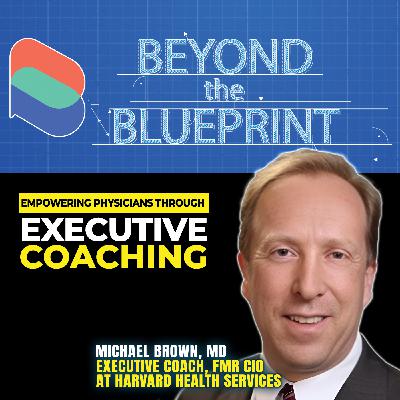
In this episode of Beyond the Blueprint, executive coach and former Harvard Health Services CIO Dr. Michael Brown explores the leadership journey of physicians in today's complex health systems. Drawing on decades of experience in medicine, informatics, and organizational change, Dr. Brown shares how executive coaching can unlock potential, align values with action, and improve outcomes at scale. We unpack the mindset shifts required for physicians stepping into leadership, how to tailor coaching for impact, and why the best athletes—and leaders—never stop evolving. Whether you're a CMIO, a clinical leader, or a founder building physician-centered solutions, this episode offers powerful insights on cultivating leadership by design. Key Takeaways The right question is how and when to present ideas. All physicians inherently hold leadership roles. Leadership skills are crucial for aligning team efforts. Transitioning to leadership involves accepting new responsibilities. Self-doubt is common among new leaders, but can be overcome. Coaching helps individuals recognize their unique strengths. Effective communication is key to leadership success. Coaching should be tailored to individual needs and goals. Measuring the ROI of coaching involves assessing productivity and retention. Technology can both aid and hinder leadership effectiveness in healthcare. Episode Highlights 00:00 The Art of Timing in Communication 01:11 Introduction to Executive Coaching in Healthcare 04:04 The Importance of Leadership Skills for Physicians 05:01 Challenges in Transitioning to Leadership Roles 07:12 Overcoming Self-Doubt in Leadership 10:09 The Role of Coaching in Leadership Development 13:24 Methodology of Effective Coaching 18:51 Aligning Personal Values with Organizational Goals 21:43 The Informal Nature of Coaching 25:03 Real-Life Coaching Success Stories 28:23 Measuring the ROI of Coaching 30:35 Technology's Impact on Leadership in Healthcare Guest: Michael Brown Host: Gregg Malkary - Spyglass Consulting Group Cohost: Keith Washington - Companions in Courage Foundation Sponsored by: Simplifi Medical & Storage Systems Unlimited Audio/Video: Tim Jones - Health Nuts Media Marketing: Josh Troop - Troop-Creative Learn More at: www.beyond-blueprint.com
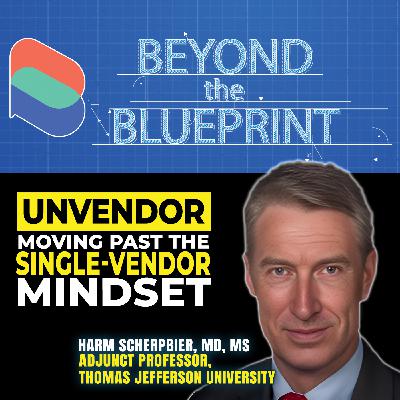
In this episode of Beyond the Blueprint, physician and health IT expert Dr. Harm Scherpbier returns to challenge the status quo of single-vendor EHR ecosystems. Drawing on decades of experience across clinical practice, informatics, and executive leadership, Harm lays out a bold case for a modular IT approach—one that accelerates innovation, enhances clinician experience, and reduces cost. We dive into ambient clinical documentation, API-driven interoperability, and why "roadmap" should be every CIO's red flag. Whether you're a CMIO, a digital health entrepreneur, or a hospital leader navigating transformation, this episode offers strategic insight into building a future-ready, platform-based tech stack—without waiting 18 months. Key Takeaways Roadmap is a trigger word indicating delays in vendor capabilities. Health systems should consider third-party vendors while waiting for vendor roadmaps. Innovation in healthcare IT is essential for adapting to rapid changes. Four reasons to move beyond single vendor systems: innovation, competitiveness, user experience, and cost. CIOs should not be the only ones responsible for IT strategy; it requires a cross-functional approach. Start with easy-to-integrate systems and gradually move towards more complex solutions. Investing in interoperability is crucial for successful IT transformation. Training for end users should be minimal; tools should be intuitive. The future of healthcare IT is a platform-based architecture, not a return to best of breed. Physician entrepreneurs can leverage their unique perspectives to drive innovation. Episode Highlights 00:00 The Roadmap Trigger: A Cautionary Tale 01:00 Welcome to Beyond the Blueprint 01:30 Meet Harm Scherpbier 02:55 The Case for Third-Party Tools in Healthcare 06:55 Four Reasons to Move Beyond Single Vendor Systems 08:12 Going Beyond the CIO 09:27 Practical Steps for Transitioning to Modular Systems 15:06 Strategic Problem Solving in Health IT 20:13 The Future of Health IT: Platform-Based Architecture 22:31 Empowering Physician Entrepreneurs in Healthcare Innovation 27:29 Final Remarks Guest: Harm Scherpbier Host: Gregg Malkary - Spyglass Consulting Group Cohost: Keith Washington - Companions in Courage Foundation Sponsored by: Simplifi Medical & Storage Systems Unlimited Audio/Video: Tim Jones - Health Nuts Media Marketing: Josh Troop - Troop-Creative Learn More at: www.beyond-blueprint.com
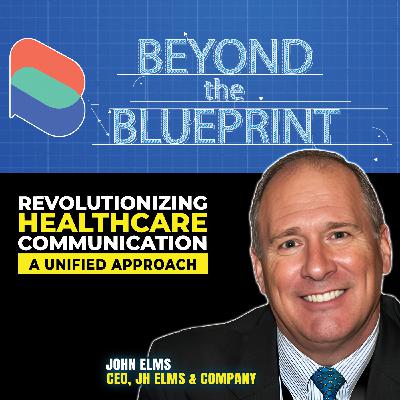
In this episode of Beyond the Blueprint, we sit down with healthtech veteran John Elms to unpack the complexities of clinical communication and workflow orchestration. Drawing from decades of experience and a front-row seat to digital transformation, John explores why care team collaboration remains so fragmented—and what's required to fix it. From HIPAA-induced workarounds and alert fatigue to EHR lock-ins and the lack of federated communication systems, we examine the real-world barriers to connected care. Along the way, we discuss alarm management, platform interoperability, and why frontline clinicians must be empowered to lead workflow redesign. If you're navigating large-scale deployments or grappling with burnout on the floor, this conversation offers sharp insights and a clear call for smarter, clinician-driven solutions. Key Takeaways The federation of communication protocols is essential for effective healthcare communication. Current communication tools are contributing to provider burnout and inefficiencies. Poor communication is a leading cause of medical errors in healthcare settings. Alarm management is a critical area needing continuous improvement to enhance patient safety. Healthcare organizations must rethink their communication strategies to reduce cognitive burden on staff. Integration of communication technologies can streamline workflows and improve care delivery. Understanding the needs of frontline staff is crucial for successful technology deployment. Healthcare IT leaders should collaborate closely with clinical informatics for better outcomes. The market for alarm management solutions is still evolving and requires standardization. A patient-centric approach is necessary for future healthcare innovations. Episode Highlights 00:00 Transforming Healthcare Communication 01:13 Welcome to Beyond the Blueprint 01:45 Meet John Elms 03:09 Today's Agenda 05:31 Biggest Pain Points in Communication 07:07 Top Priorities in Deployment 08:53 Advancements in Alarm Management 12:12 Redesigning Communication Processes 14:07 The Next Wave of Healthcare Technology 17:26 Recommendations for Healthcare Leaders 19:21 Final Remarks Guests: John Elms Host: Gregg Malkary - Spyglass Consulting Group Cohost: Keith Washington - Companions in Courage Foundation Sponsored by: Simplifi Medical & Storage Systems Unlimited Audio/Video: Tim Jones - Health Nuts Media Marketing: Josh Troop - Troop-Creative Learn More at: www.beyond-blueprint.com
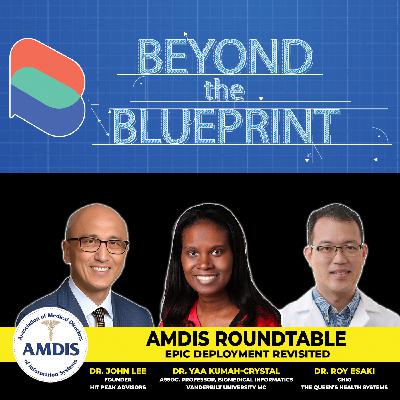
Join us for a candid retrospective on the Epic EHR, recorded in collaboration with AMDIS. In this episode, Dr. Yaa Kumah-Crystal, Dr. Roy Esaki, and Dr. John Lee share lessons learned from the frontlines of digital transformation, from navigating complex governance to managing integration debt and cloud migration risks. They explore why Epic rollouts often go off track, how to balance innovation with standardization, and where leadership must focus to support sustainable success. Our panelists unpack the realities of patient engagement, third-party tools, and cultural readiness—while imagining a more intuitive, voice-driven future for EHRs. Key Takeaways Voice technology could revolutionize interactions with EHR systems. Effective leadership is crucial for successful Epic implementations. Change management is the biggest challenge in EHR deployment. Third-party applications can enhance functionality but introduce risks. Cloud migration offers flexibility but requires careful planning. Patient engagement tools are improving but still need enhancements. Learning from peers can prevent costly mistakes in implementation. Governance and data management are essential for operational success. The Epic community is supportive and collaborative among users. Future developments should focus on voice integration and user experience. Episode Highlights 00:00 Epic Development Wishlist 02:49 Challenges of Epic EHR Implementations 05:01 Is Epic too Complex? 08:47 Integrating 3rd Party Apps with Epic 12:17 Cloud Migration: Opportunities and Risks 15:02 Patient Engagement and Digital Tools 18:02 Generational Attitudes towards Technology 21:09 Leadership Priorities for Epic Implementation 24:40 The Epic User Community 26:56 Future Development Directions for Epic 33:39 Closing Remarks Guests: Dr. John Lee, Dr. Yaa Kumah-Crystal, Dr. Roy Esaki Host: Gregg Malkary - Spyglass Consulting Group Cohost: Keith Washington - Companions in Courage Foundation Sponsored by: Simplifi Medical & Storage Systems Unlimited Audio/Video: Tim Jones - Health Nuts Media Marketing: Josh Troop - Troop-Creative Learn More at: www.beyond-blueprint.com
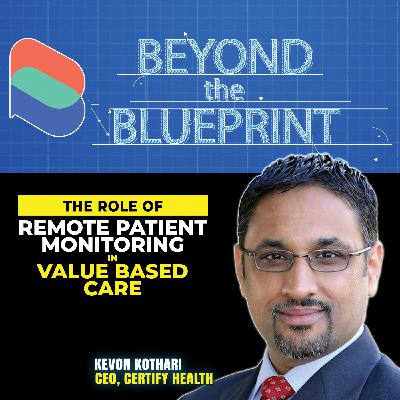
Join us for an insightful conversation with Kevon Kothari, a senior healthcare IT executive and CEO of CERTIFY Health, as we examine the evolving role of digital engagement in transforming care delivery. With experience spanning payers, providers, and startups, Kevon shares a candid perspective on what it takes to scale emerging technologies—from virtual care and remote monitoring to value-based reimbursement models. Whether you're navigating post-discharge workflows or exploring digital-first primary care, this episode delivers actionable insights for health system leaders, IT strategists, and clinicians shaping the future of hybrid care. Key Takeaways Most doctors visits today don't need to be done in person. Digital can help align the mismatch of resources from different provider networks. Changing the paradigm of care delivery is a significant challenge. Creating frictionless workflows for virtual care is essential. The shift to outcomes-based contracts is crucial for technology adoption. CFOs must balance near-term and long-term profitability in healthcare investments. Medicare Advantage is a growing area for innovative care models. CPT codes for digital health are still evolving and underutilized. Access to care is a primary goal of digital health tools. Digital transformation is a key driver for future healthcare delivery. Episode Highlights 00:00 The Shift to Digital Healthcare 02:20 Kevon's Journey in Healthcare IT 03:33 Challenges in Transitioning to Virtual Care 07:41 Operational Challenges of Emerging Technologies 09:40 Financial Justifications for Digital Solutions 11:49 Payer Reimbursement Landscape and Emerging Technologies 14:21 The Evolution of CPT Codes and Financial Impacts 15:05 Future of Healthcare Delivery 20:18 Digital Engagement Tools and Outcome Measurement 23:30 Closing Thoughts on Digital Transformation in Healthcare Guest: Kevon Kothari - CERTIFY Health Host: Gregg Malkary - Spyglass Consulting Group Cohost: Keith Washington - Companions in Courage Foundation Sponsored by: Simplifi Medical & Storage Systems Unlimited Audio/Video: Tim Jones - Health Nuts Media Marketing: Josh Troop - Troop-Creative Learn More at: www.beyond-blueprint.com
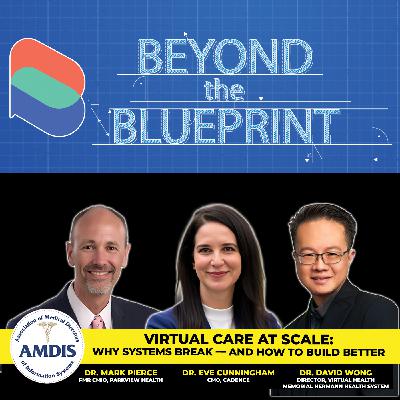
Join us for a dynamic conversation on making virtual care work at scale, recorded in collaboration with AMDIS. In this episode, Dr. Eve Cunningham, Dr. Mark Pierce, and Dr. David Wong share candid insights from the frontlines of telehealth, remote patient monitoring, and digital care delivery. They explore what separates successful programs from stalled pilots, from designing for clinician adoption to tackling process and staffing hurdles head-on. Our panelists discuss sustainable funding models, strategies for reaching underserved communities, and the role of AI in reshaping care delivery. Tune in to learn how leading health systems are closing access gaps, reducing burnout, and building virtual care programs that last. Key Takeaways Virtual care deployment faces significant challenges in technology and process. Funding sustainability is crucial for the success of virtual care programs. Cultural adoption among clinicians varies, with younger doctors more open to virtual care. User-centered design is essential for clinician and patient adoption of technology. Healthcare disparities must be addressed to ensure equitable access to virtual care. AI has the potential to transform virtual care but requires careful integration. Successful virtual care programs often stem from understanding the specific problems they aim to solve. Partnerships and collaboration are key to scaling virtual care effectively. The digital divide presents barriers that need to be navigated for underserved communities. Healthcare leaders must act now to make virtual care a reality for all. Episode Highlights 00:00 Navigating Virtual Care Challenges 02:52 Success Stories in Virtual Care 05:46 Funding and Sustainability in Virtual Care 08:55 Adoption and Cultural Shifts in Healthcare 11:30 Overcoming Technical Barriers 16:30 Addressing Workforce and Process Issues 18:01 Equity and Access in Virtual Care 21:19 Leadership and Governance in Deployment 26:00 Overcoming Digital Divides for Underserved Communities 30:30 Lightning Round - AI in Virtual Care 36:40 Closing Statements Guests: Dr. Eve Cunningham, Dr. Mark Pierce, Dr. David Wong Host: Gregg Malkary - Spyglass Consulting Group Cohost: Keith Washington - Companions in Courage Foundation Sponsored by: Simplifi Medical & Storage Systems Unlimited Audio/Video: Tim Jones - Health Nuts Media Marketing: Josh Troop - Troop-Creative Learn More at: www.beyond-blueprint.com

Comments

Download from Google Play

Download from App Store
 United States