


 Claim Ownership
The IT Experts Podcast
Subscribed: 23Played: 871
Subscribe

Description
The IT Experts Podcast with Ian Luckett, is designed to help ambitious IT/MSP business owners build a profitable tech business.
In this show you will learn the complete tried and tested strategies that are working today as Ian helps techie business owners in the IT / MSP community on a daily basis.
The content of this Podcast is a blend of expert advice and Interviews with some of the most successful people in the industry, offering massive value and a wise range of topics from his MSP profit Builder System.
Whether his guests are experts from large enterprises, established IT/MSP businesses, serial entrepreneurs, or world class techies, they all have great stories and content to share.
So, if you are preparing your IT/MSP business for growth, then we will help by sharing what IS and what ISN'T working in business right now.
Our outcome for you listening to this podcast is that we help you to spend quality time working ON your business rather than being consumed IN it!
In this show you will learn the complete tried and tested strategies that are working today as Ian helps techie business owners in the IT / MSP community on a daily basis.
The content of this Podcast is a blend of expert advice and Interviews with some of the most successful people in the industry, offering massive value and a wise range of topics from his MSP profit Builder System.
Whether his guests are experts from large enterprises, established IT/MSP businesses, serial entrepreneurs, or world class techies, they all have great stories and content to share.
So, if you are preparing your IT/MSP business for growth, then we will help by sharing what IS and what ISN'T working in business right now.
Our outcome for you listening to this podcast is that we help you to spend quality time working ON your business rather than being consumed IN it!
278 Episodes
Reverse
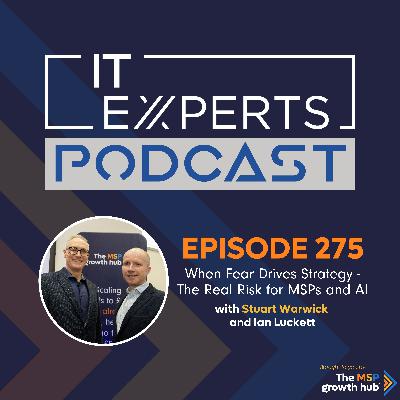
In this episode of The IT Experts Podcast, we explore a topic that many MSP owners are quietly thinking about right now. Is fear driving your strategy when it comes to AI? More specifically, what is the real risk for MSPs and AI, and how should you approach it without getting caught in the noise and hype surrounding the latest tools? AI is everywhere at the moment. Every conference, every vendor conversation and every online discussion seems to revolve around it. For many MSP owners, that constant exposure creates pressure. It can feel like you must adopt every new AI solution immediately or risk being left behind. The conversation we unpack in this episode takes a step back from that pressure and looks at the situation from a more strategic perspective. One of the first things highlighted in the discussion is that the technology itself is not the real issue. AI is powerful and it is evolving quickly. What creates uncertainty for many MSPs is the pace of change combined with the fear of missing out. When every vendor is promoting AI driven products and every industry conversation focuses on automation and intelligence, it becomes easy to believe that your entire business strategy must shift overnight. This is where the conversation around risk for MSPs and AI becomes important. The risk is rarely about the technology itself. The bigger risk often sits inside the MSP business. Many providers are still developing operational maturity, documentation, and clear processes. Without these foundations in place, adopting advanced tools can create complexity rather than progress. Stuart makes an important observation during the episode. AI, when you strip away the hype, is an evolution of automation. The industry has experienced similar shifts before. Cloud computing created the same urgency years ago. Cybersecurity triggered a similar wave of concern. Even the move from break fix to managed services followed the same pattern. Each change brought opportunity alongside fear. Understanding this pattern helps MSP owners think more clearly about the risk for MSPs and AI. The opportunity is real. Automation can improve efficiency, support better service delivery and allow MSPs to add greater value to their clients. The risk appears when businesses rush into tools without the operational structure needed to support them. Another key theme in the conversation is the importance of client relationships. Many MSPs still operate in a reactive model where communication with clients only happens when something breaks. In that situation it becomes difficult to guide clients through strategic changes such as AI adoption. Strong advisory relationships create the foundation for these conversations. When clients trust your insight, they are far more likely to listen when you discuss the opportunities and the Risk for MSPs and AI. The discussion also highlights how operational maturity plays a crucial role in the successful use of automation and AI. Systems, SOPs, and internal processes form the backbone of scalable MSP businesses. Without these structures, introducing sophisticated tools often leads to frustration rather than improvement. AI cannot compensate for missing processes. It amplifies what already exists. I raise another important point around the security implications connected to the risk for MSPs and AI. Many organisations are experimenting with AI tools without fully considering how data flows through those systems. When employees begin connecting tools, sharing information, or integrating external platforms, the potential security exposure increases. MSPs who guide their clients through these risks can create real value by helping them adopt AI responsibly. There is also a commercial opportunity hidden within this challenge. When MSPs understand the risk for MSPs and AI, they are in a position to lead conversations around governance, policy, risk management, and operational efficiency. These are areas where trusted advisers create long term value for their clients. The episode closes with a practical reminder. AI is not something MSPs can ignore. The technology will continue to evolve and the market will move forward. At the same time, reacting from a place of fear rarely produces the right strategy. Progress comes from building strong foundations, understanding your own business readiness and then integrating automation in a way that strengthens your service and your client relationships. When MSP owners approach the risk for MSPs and AI with clarity and structure, the conversation shifts. Instead of chasing the latest tools, you begin to build a strategy that allows your business to grow, adapt and lead clients through the changes that are coming. Make sure to check out our Ultimate MSP Growth Guide, a free guide that walks you through a proven process to take your MSP from stuck to scalable, without working even more hours. It's 44 pages rammed with advice, insights and inspiration to help you decide what support is available to you now if you want to grow and scale your business. Click HERE to get your copy. Connect on LinkedIn HERE with Ian and also with Stuart by clicking this LINK And when you're ready to take the next step in growing your MSP, come and take the Scale with Confidence MSP Mastery Quiz. In just three minutes, you'll get a 360-degree scan of your MSP and identify the one or two tactics that could help you find more time, engage & align your people and generate more leads. OR To join our amazing Facebook Group of over 400 MSPs where we are helping you Scale Up with Confidence, then click HERE Until next time, look after yourself and I'll catch up with you soon!
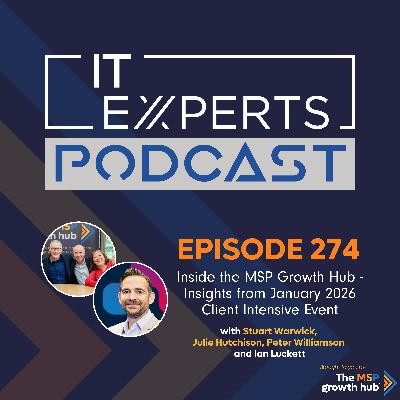
In this episode of The IT Experts Podcast, we take you inside our Client Intensive Event and lift the lid on what really happens when ambitious MSP owners come together to build better businesses. This was our January 2026 Client Intensive Event, and it was the biggest room we have ever had. Over 60 MSP owners and team members gathered for two full days of structured thinking, planning, challenge, and collaboration. It was not a sit back and listen type of event. It was designed to stretch thinking, raise standards, and help every single business owner leave with clarity and a refreshed 16-week plan. The Client Intensive Event is a core pillar of the MSP Scale System. Three times a year, our clients step away from their day-to-day operations and immerse themselves in focused work on the business. The structure is deliberate. We expand thinking through expert led sessions, then channel that insight into practical planning, peer discussion, and clear next steps. Every attendee leaves with an updated 16-week roadmap built around their own business priorities. The theme this time was business maturity. We explored three key areas that underpin sustainable growth. Structural maturity, team and people maturity, and operational maturity. These are not theoretical concepts. They are the foundations that determine whether your MSP can grow with confidence or remains fragile beneath the surface. On the structural side, we focused on governance and risk. Many MSP owners are strong technically and commercially, yet have never formally considered how governance protects value. We explored how to build a practical risk register, how to identify exposure across legal, supplier, regulatory and client concentration risks, and how to put simple mitigation in place. For several business owners, this created real light bulb moments. Scaling with confidence requires knowing your ducks are in a row. When you understand your risks, you make stronger decisions and protect long term value. On the people side, we explored what makes a cohesive team. It is not only about systems and processes. It is also about how people feel inside the business. Trust, accountability, the ability to have difficult conversations, and clarity of expectation all drive performance. When those elements are weak, leaders experience frustration, repeated questions, slow decision making, and high staff turnover. The Client Intensive Event created space for honest reflection. Several owners recognised that team dysfunction often starts with leadership behaviour. That awareness is powerful. When leaders change how they show up, teams respond. Operational maturity formed the third pillar. We examined how margin is often lost in operations rather than in finance. By connecting systems properly and using accurate data from sales, service, projects and finance, MSP owners gain visibility over efficiency and profitability. We drilled into practical examples around help desk structure and the dispatcher role, helping owners see where small operational refinements can unlock meaningful financial impact. For one new client, this approach has already uncovered significant hidden profit within their first 60 days. Beyond the structured content, what continues to define every Client Intensive Event is the community. Observational learning is a powerful force. When MSP owners hear peers tackling similar challenges, sharing openly and supporting one another, confidence rises quickly. Trust builds. Relationships deepen. Competitors become collaborators in the pursuit of higher standards. The energy in the room this time reflected a step change in maturity across the community. One of the most rewarding moments came when we stood at the front for a group photograph and realised how far the community has grown. What started with a simple vision to help more MSP owners scale with confidence has become a room full of experienced leaders committed to doing business better. That growth is not measured only in revenue. It is measured in confidence, clarity and ambition. The Client Intensive Event always concludes with a rebuild of each owner's 16-week plan. Ideas are distilled. Priorities are clarified. Actions are documented. This discipline ensures that inspiration turns into implementation. It prevents overwhelm and replaces it with focused progress. If you are serious about building a business that works for you rather than you for it, stepping into a structured environment like a Client Intensive Event can transform the way you think about growth. Business maturity is not accidental. It is developed deliberately, one focused cycle at a time. At The MSP Growth Hub, our mission remains simple. Help MSP owners accelerate success and scale with confidence. The Client Intensive Event is one of the most powerful ways we do that. Make sure to check out our Ultimate MSP Growth Guide, a free guide that walks you through a proven process to take your MSP from stuck to scalable, without working even more hours. It's 44 pages rammed with advice, insights and inspiration to help you decide what support is available to you now if you want to grow and scale your business. Click HERE to get your copy. Connect on LinkedIn HERE with Ian and also with Stuart by clicking this LINK And when you're ready to take the next step in growing your MSP, come and take the Scale with Confidence MSP Mastery Quiz. In just three minutes, you'll get a 360-degree scan of your MSP and identify the one or two tactics that could help you find more time, engage & align your people and generate more leads. OR To join our amazing Facebook Group of over 400 MSPs where we are helping you Scale Up with Confidence, then click HERE Until next time, look after yourself and I'll catch up with you soon!
In this episode of The IT Experts Podcast, we ask a powerful question. Are you ready to stop being the bottleneck in your MSP and step into true Owner Not Needed leadership? So many MSP owners tell us the same story. They are still the person everything flows through. Every decision lands on their desk. Every problem escalates to them. Every opportunity waits for their approval. They are working eighty or ninety hours a week while the rest of the team finishes at five. And deep down, they are wondering whether the business is working for them, or whether they are working for the business. At The MSP Growth Hub we use the phrase Owner Not Needed. It is not about disappearing. It is about building a business that can grow, perform and create value without being dependent on you for every move. One day you will exit your MSP. Whether that is five years away or fifteen, the value of your business will be shaped by how needed you are. The less dependent it is on you, the stronger the valuation and the more freedom you create along the way. One of the biggest fears around Owner Not Needed is loss of control. Owners worry that if they delegate properly, quality will slip, standards will drop and clients will suffer. The truth is that poor delegation creates risk. Structured delegation reduces it. When you build clarity around roles, responsibilities and expectations, you do not lose control. You create scale. Another common challenge is decision dependency. Your team comes to you with ten-pound tasks. Small decisions. Quick clarifications. Simple approvals. Individually they feel harmless. Collectively they make you the bottleneck. A practical shift is the one three one rule. When someone brings you a problem, ask for one decision, three options and their recommendation. This develops thinking, confidence and ownership. It moves you closer to Owner Not Needed behaviour and further away from reactive firefighting. There is also the emotional side. What happens if the business runs smoothly without you? What happens if the team no longer needs your input every hour? Some owners experience a subtle fear of becoming irrelevant. The shift from technical doer to strategic leader is not easy. What got you here will not get you there. Owner Not Needed requires you to redefine your value. You move from fixing tickets to setting direction. From solving immediate problems to shaping long term outcomes. A practical starting point is to define your thousand pound an hour tasks. These are strategy, leadership, growth planning, financial oversight and culture. If you are spending your week buried in technical work or low value approvals, you are operating far below your true impact level. Owner Not Needed is about elevating your contribution. Delegate the ten-pound tasks. Develop your leadership team to handle the hundred-pound tasks. Protect your time for the thousand-pound decisions that drive growth. Building leaders rather than helpers is another essential shift. Helpers wait for instruction. Leaders take ownership. They understand their numbers. They report performance. They challenge ideas. They contribute to innovation. This requires structure. Clear KPIs. Departmental plans. Individual accountability. Regular one to ones. Without structure, people drift. With structure, they grow. Owner Not Needed thrives in a culture of clarity. Numbers also play a critical role. Many MSP owners cannot confidently say whether they are truly making money. They look at the bank balance and hope. Owner Not Needed demands financial visibility. Know your margins. Know your EBITDA. Share the right metrics with your team. When everyone understands performance, decisions improve and dependency reduces. Staying strategically involved is different from daily firefighting. A weekly cadence focused on progress, priorities and performance replaces reactive noise. Instead of walking around asking how things are going, you review structured updates. Instead of solving every issue, you coach leaders to solve them. This is how Owner Not Needed becomes a lived reality rather than a slogan. The benefits are powerful. Clear head space to think. A capable leadership team making aligned decisions. Consistent delivery without owner interruption. More time with family and friends. Greater flexibility and control over how you spend your time. And when the day comes to sell, a stronger multiplier because the business is not reliant on you. Owner Not Needed is not about stepping away and hoping for the best. It is about intentionally building a structure that allows the business to thrive without constant owner intervention. When you lift yourself out of the bottleneck position, you unlock growth, value and freedom. If this episode has struck a chord, take a moment to reflect. Where are you still the decision maker for something your team could own? What would change if you truly embraced Owner Not Needed thinking? Make sure to check out our Ultimate MSP Growth Guide, a free guide that walks you through a proven process to take your MSP from stuck to scalable, without working even more hours. It's 44 pages rammed with advice, insights and inspiration to help you decide what support is available to you now if you want to grow and scale your business. Click HERE to get your copy. Connect on LinkedIn HERE with Ian and also with Stuart by clicking this LINK And when you're ready to take the next step in growing your MSP, come and take the Scale with Confidence MSP Mastery Quiz. In just three minutes, you'll get a 360-degree scan of your MSP and identify the one or two tactics that could help you find more time, engage & align your people and generate more leads. OR To join our amazing Facebook Group of over 400 MSPs where we are helping you Scale Up with Confidence, then click HERE Until next time, look after yourself and I'll catch up with you soon!
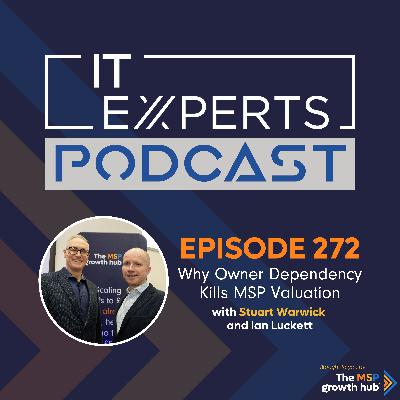
In this episode of The IT Experts Podcast, we explore why owner dependency quietly destroys MSP valuations and what you must do now to build real, transferable value in your business. If you have ever assumed your MSP will sell when the time comes, this conversation may shift your thinking. Stuart and I unpack a hard truth. A business that cannot run and grow without you will always carry risk in the eyes of a buyer. And risk directly impacts MSP valuations. We were prompted to record this episode after a sobering conversation with an MSP owner who had attempted to sell multiple times over several years. Each time, buyers began the process. Each time, due diligence exposed weaknesses. Each time, the deal collapsed. Not because the business was small. Not because there was no demand. The issue was clarity, structure, and owner dependency. The business worked for him. It did not work without him. That distinction is critical. When buyers assess MSP valuations, they are not buying your effort. They are buying sustainable profit. They are buying systems. They are buying a team. They are buying recurring revenue. They are buying predictability. If you are central to sales, delivery, relationships and decision making, the buyer sees fragility. And fragility reduces multiples. We often explain valuation through simple maths. Imagine a one million pound MSP generating two hundred and fifty thousand pounds of EBITDA. At a modest multiple, you may walk away with half a million pounds. After decades of work, that can feel underwhelming. The opportunity lies in understanding that MSP valuations are influenced by clear, controllable drivers. Recurring revenue mix is one of them. Many MSPs above two million pounds in turnover still rely heavily on project income. That may feel exciting and profitable. It also introduces volatility. Increasing recurring revenue from fifty percent to seventy five percent can materially improve how buyers view your stability and future cash flow. Contract length is another lever. Monthly rolling agreements are easy to sell. They also weaken your negotiating position when it comes to MSP valuations. As your confidence grows, building longer term agreements with clients strengthens predictability and reduces perceived risk. Service gross margin is often overlooked. Buyers want to see not only recurring revenue, but recurring margin. They want to understand the efficiency of your service desk and the return generated per technician. Strong revenue per full time employee signals operational maturity. Clean numbers, transparent reporting, and clear profitability remove doubt during due diligence. Then there is client concentration. Over-reliance on one or two major clients creates vulnerability. Strengthening account management, spreading revenue more evenly, and improving client retention all contribute positively to MSP valuations. Yet none of these matter fully if the owner remains the bottleneck. We refer to this as ONN, owner not needed. This does not mean you disappear tomorrow. It means your business can run and grow without your daily involvement. Holidays without disruption are a starting point. True value is created when growth continues even while you step back from delivery. Building towards ONN requires leadership development, documented processes, empowered managers, and consistent rhythm in reporting and accountability. It is straightforward in principle. It is demanding in practice. Letting go, hiring stronger people, and shifting your leadership style takes intention. The encouraging news is that this transformation does not require magic tools or dramatic reinvention. It is disciplined business practice. Clear KPIs. Departmental plans. Regular reviews. Consistent focus on sales, account management, people engagement and margin control. When stitched together, these habits compound. Improving MSP valuations is rarely about chasing a headline multiple. It is about reducing risk and increasing clarity. Buyers walk away when profit is opaque, when dependency is high, and when systems are weak. They lean in when performance is transparent and transferable. For established MSPs already above one million pounds in revenue, a focused three-year commitment to strengthening structure can materially change exit outcomes. For others, it may take longer. The timeline is less important than the decision to begin. Planning for exit today gives you options tomorrow, even if you choose to continue building. There is also a powerful side effect. Businesses that reach a strong ONN position often discover they enjoy the work more. Time increases. Profits rise. Acquisition opportunities become viable. MSP valuations improve not only because you are preparing to sell, but because you are building a stronger company. At some point, every owner will exit. The question is whether you leave with confidence and control, or whether you accept whatever is offered because options have narrowed. Owner dependency is fixable. Transferable value is buildable. MSP valuations are influenced by the decisions you make now. If this episode resonated, start by reviewing your recurring revenue mix, contract structure, service gross margin and leadership depth. Build a plan. Work the plan. Stay consistent. Strong MSP valuations are not accidental. They are earned through structure, discipline and the courage to let go. Make sure to check out our Ultimate MSP Growth Guide, a free guide that walks you through a proven process to take your MSP from stuck to scalable, without working even more hours. It's 44 pages rammed with advice, insights and inspiration to help you decide what support is available to you now if you want to grow and scale your business. Click HERE to get your copy. Connect on LinkedIn HERE with Ian and also with Stuart by clicking this LINK And when you're ready to take the next step in growing your MSP, come and take the Scale with Confidence MSP Mastery Quiz. In just three minutes, you'll get a 360-degree scan of your MSP and identify the one or two tactics that could help you find more time, engage & align your people and generate more leads. OR To join our amazing Facebook Group of over 400 MSPs where we are helping you Scale Up with Confidence, then click HERE Until next time, look after yourself and I'll catch up with you soon!
In this episode of The IT Experts Podcast, I want to speak directly to MSP owners who are getting Groundhog Day vibes from their business. That sense that every week feels the same, the same problems keep resurfacing, and despite working hard, progress feels slow or non-existent. If Groundhog Day vibes are creeping into your MSP, this conversation will resonate deeply. I was joined by Stuart Warwick in the podcast lounge, and we went straight into the reality behind that familiar sigh many MSP owners make. It does not matter what time of year it is. When Groundhog Day vibes show up, it usually means the business has reached a ceiling created by habits, structure, and leadership patterns that once worked and no longer do. We talked about how easy it is to stay busy while staying still. Many MSPs operate in a steady rhythm where the business pays the bills and supports a decent lifestyle. On the surface everything looks fine. Underneath, there is often frustration and a sense that something more was meant to happen by now. When Groundhog Day vibes become normal, it is a sign that the business is not aligned with the original vision that drove you to start. One of the biggest themes in the conversation was owner dependency. Most MSP owners built their business because they love technology and solving problems. Being needed feels good and that feeling can quietly turn into an addiction. Over time, this keeps you trapped in the day to day and limits growth. When Groundhog Day vibes keep returning, it is often because you have not decided what you are willing to let go of. We also spent time talking about the role your team plays. I see this repeatedly inside The MSP Growth Hub. Owners underestimate the capability and appetite of their people. When Groundhog Day vibes take hold, it is often because the team has not been invited into the bigger picture. When you involve them properly, energy changes. Ownership grows. Momentum starts to build in ways that surprise most owners. Stuart shared a simple and practical starting point. Stop and take an honest audit of your business. Look at operations, projects, sales, marketing, finance, billing, and admin. Notice what drains you and what energises you. When Groundhog Day vibes are present, this exercise brings clarity quickly. From there, the work becomes about spending more time on the areas that move the business forward and less time on the tasks that keep you stuck. We also explored leadership and culture. Whether you realise it or not, you set the tone for everything. Your team watches what you prioritise and what you tolerate. When expectations are unclear, people fill the gaps themselves. If Groundhog Day vibes persist, it often points to missing structure, unclear standards, or a lack of shared direction. This is not about blame. It is about growth as a leader. Consistency was another key part of the discussion. Change does not come from motivation alone. It comes from rhythm and follow-through. Write things down. Decide what success looks like. Check in regularly. When MSP owners fall back into old habits, it is usually because progress was not being measured. Groundhog Day vibes thrive in the absence of accountability. We also talked about what life can look like on the other side of this. Progress shows up in numbers, in time, and in satisfaction. Better margins. More space in your diary. Time to think and lead. When owners look back after a year of intentional action, they are often shocked by how much has changed. If Groundhog Day vibes are present today, that future is still available to you. This episode is a reminder that you are not stuck. You are where you are because of past decisions and actions, which means new decisions create new outcomes. Your team can be part of the solution. Structure can work in your favour. Momentum can be rebuilt. You do not have to keep reliving the same week on repeat. Make sure to check out our Ultimate MSP Growth Guide, a free guide that walks you through a proven process to take your MSP from stuck to scalable, without working even more hours. It's 44 pages rammed with advice, insights and inspiration to help you decide what support is available to you now if you want to grow and scale your business. Click HERE to get your copy. Connect on LinkedIn HERE with Ian and also with Stuart by clicking this LINK And when you're ready to take the next step in growing your MSP, come and take the Scale with Confidence MSP Mastery Quiz. In just three minutes, you'll get a 360-degree scan of your MSP and identify the one or two tactics that could help you find more time, engage & align your people and generate more leads. OR To join our amazing Facebook Group of over 400 MSPs where we are helping you Scale Up with Confidence, then click HERE Until next time, look after yourself and I'll catch up with you soon!
In this episode of The IT Experts Podcast, I want to talk to you about something that does not get enough attention in the MSP space, over-reliance on big clients. This is not about fear mongering or pointing fingers. It is about protecting the business you have worked so hard to build and making sure it is resilient, valuable, and able to withstand shocks that are completely outside your control. Over the last few weeks, I have seen several MSP owners lose large clients through no fault of their own. Long standing relationships, solid delivery, and good account management were all in place. Then a corporate buyout happened, private equity stepped in, and overnight the MSP was out. If you have ever experienced this, you know how gutting it feels. This is exactly why over-reliance on big clients is such a serious risk, even when everything appears to be going well. We talk about risk all the time with our clients, cyber risk, security risk, operational risk. Yet many MSPs do not have a proper internal risk register that includes client concentration. If one client makes up more than fifteen to twenty percent of your revenue, that is a risk. If a handful of clients account for half of your income, that risk increases again. Over-reliance on big clients also impacts valuation in a big way. Buyers, banks, and investors all look closely at client concentration when assessing the strength of a business. One of the traps I see MSPs fall into is assuming their biggest clients are their best clients. Size does not equal profitability. Often the largest clients are the noisiest, the most demanding, and the ones that introduce the most scope creep. Project work can hide this reality for a while, creating the illusion of strong performance, while margins quietly erode underneath. This is how over-reliance on big clients becomes both a financial and emotional burden. Contracts are another major factor. Weak renewals, rolling monthly terms, and informal agreements leave you exposed when circumstances change. Strong contracts with clear notice periods, structured SLAs, and defined expectations protect both sides of the relationship. I have seen MSPs completely transform their resilience by moving clients onto longer term agreements, creating stability and confidence even in uncertain markets. I also share practical steps you can take over the next ninety days to reduce over-reliance on big clients. This includes building a healthier pipeline so no single client dominates revenue, strengthening account management across your mid-tier clients, and intentionally growing those relationships instead of focusing all your attention on one whale account. Growth should never come at the cost of balance. Diversification matters too. That might mean going deeper into a vertical you already serve, refining your niche, or improving the mix between recurring revenue and project work. Over-reliance on big clients often creeps in when project revenue masks a lack of predictable monthly income. The managed service model works best when recurring revenue is the foundation. Pricing and packaging play a role here as well. Minimum standards, minimum security, and minimum value help ensure every client contributes fairly. When profitability improves, cash reserves improve, and cash gives you breathing space. It is not about comfort, it is about protection. Finally, I talk about the importance of proper account management that does not sit solely with the owner. When relationships and value delivery are embedded into clear processes, the business becomes stronger and less dependent on any one person or client. This shift is critical if you want to scale with confidence and reduce over-reliance on big clients in a sustainable way. I will leave you with a simple challenge. Review your top ten clients, look honestly at your concentration risk, and choose one action you can take in the next seven days to make your MSP safer, stronger, and more resilient. Over-reliance on big clients is not a failure. It is a signal. And with the right structure in place, it is a risk you can actively reduce. Make sure to check out our Ultimate MSP Growth Guide, a free guide that walks you through a proven process to take your MSP from stuck to scalable, without working even more hours. It's 44 pages rammed with advice, insights and inspiration to help you decide what support is available to you now if you want to grow and scale your business. Click HERE to get your copy. Connect on LinkedIn HERE with Ian and also with Stuart by clicking this LINK And when you're ready to take the next step in growing your MSP, come and take the Scale with Confidence MSP Mastery Quiz. In just three minutes, you'll get a 360-degree scan of your MSP and identify the one or two tactics that could help you find more time, engage & align your people and generate more leads. OR To join our amazing Facebook Group of over 400 MSPs where we are helping you Scale Up with Confidence, then click HERE Until next time, look after yourself and I'll catch up with you soon!
In this episode of The IT Experts Podcast, I sit down with leadership coach Julie Hutchison to explore what it really takes to supercharge your MSP by growing future leaders from within your existing team. This is a topic that comes up time and time again with MSP owners who want to scale with confidence and stop being the bottleneck in their own business. The conversation is practical, honest, and rooted in what we see working every day inside The MSP Growth Hub. I speak to many MSP owners who understand that leadership matters, yet feel unsure about what to do once they spot someone with potential. Growing future leaders is not about handing out titles or sending someone on a course and hoping it sticks. It is about creating the right environment where people can step up, build confidence, and perform in a way that supports the direction of the business. Julie shares insights from the work she has been doing with multiple cohorts of future leaders inside The MSP Growth Hub. One thing becomes clear very quickly. Learning only works when it is applied. Information without implementation leads to frustration. Confidence grows when people are given space to practise, reflect, and talk through the real situations they face inside their MSP each week. We spend time talking about the role of the business owner in this process. Growing future leaders does not mean stepping away or leaving people to figure it out alone. It means changing how you show up. As owners, we need to be clear on vision, expectations, and outcomes, while allowing future leaders the freedom to find their own way of delivering results. When the outcomes are clear and the guardrails are in place, leaders can act without fear of being micromanaged or overruled. Another key theme is safety. When someone moves from a technical role into leadership, they are being asked to think and behave differently. They need room to make mistakes, have honest conversations, and understand the impact they have on others. Without a safe environment, confidence drops and progress slows. With the right support, growing future leaders becomes one of the most powerful drivers of performance, communication, and team engagement. Julie introduces a simple analogy that really resonates. Future leaders need to be at least in the front passenger seat of the business. They understand where the business is going and help navigate the route. When owners constantly grab the wheel or dismiss input, those leaders slowly disengage and retreat. Growing future leaders requires trust, coaching, and a willingness to let go of doing everything your own way. We also talk about mindset. Leadership is not about creating mini versions of yourself. It is about being clear on outcomes and allowing different styles and approaches to work. When owners focus on results rather than methods, leaders gain confidence and ownership. This shift is essential if your MSP is going to grow beyond your personal capacity. Communication comes up repeatedly throughout the episode. Julie explains how leadership success often comes down to how conversations are handled. Understanding what drives people, approaching difficult conversations with confidence, and being willing to adjust your own behaviour has a direct impact on performance. When leaders change how they show up, the response from the team changes too. This episode is a reminder that growing future leaders is one of the most valuable investments you can make as an MSP owner. It reduces pressure, increases resilience, and creates a business that can scale with confidence. With the right structure, support, and mindset, leadership development becomes a strategic advantage rather than a risk. Make sure to check out our Ultimate MSP Growth Guide, a free guide that walks you through a proven process to take your MSP from stuck to scalable, without working even more hours. It's 44 pages rammed with advice, insights and inspiration to help you decide what support is available to you now if you want to grow and scale your business. Click HERE to get your copy. Connect on LinkedIn HERE with Ian and also with Stuart by clicking this LINK And when you're ready to take the next step in growing your MSP, come and take the Scale with Confidence MSP Mastery Quiz. In just three minutes, you'll get a 360-degree scan of your MSP and identify the one or two tactics that could help you find more time, engage & align your people and generate more leads. OR To join our amazing Facebook Group of over 400 MSPs where we are helping you Scale Up with Confidence, then click HERE Until next time, look after yourself and I'll catch up with you soon!
In this episode of The IT Experts Podcast, we dig into why building a real Sales Run Rate is one of the most important disciplines an MSP can put in place if it wants predictable, sustainable growth. Too many MSPs set big revenue goals without ever breaking them down into something tangible, measurable, or shared across the team. This conversation is about changing that pattern and replacing hope with clarity. I am joined by Stuart Warwick to explore why Sales Run Rate often gets ignored, even though it sits at the centre of confident decision making. Many MSP owners talk about wanting to reach one million or two and a half million in revenue, yet very few can clearly explain what needs to happen month by month to get there. Without a Sales Run Rate, goals remain emotional and aspirational rather than practical and achievable. The discussion opens by addressing a common frustration. MSPs are busy. They are deep in delivery, firefighting, and client work, which means long term planning often gets pushed aside. Sales Run Rate forces you to stop, step back, and look at the building blocks that sit underneath growth. When you understand what revenue needs to be added each month, each week, and even each day, the mountain suddenly feels climbable. Stuart explains that Sales Run Rate is not about chasing endless new logos. It is about understanding all the components that make up growth. New business plays a part, yet so does revenue from existing clients, projects, hardware refreshes, and improved account management. When MSPs break their numbers down properly, they often realise that a large percentage of growth is already happening inside the client base they have today. A key theme in the episode is confidence in numbers. Many MSP owners avoid their financials because they feel overwhelming or unclear. Sales Run Rate connects sales activity directly to budgets, forecasts, and real outcomes. Once the numbers make sense, confidence grows. With confidence comes better decisions, whether that is hiring, investing in systems, or planning for the future. The conversation also highlights the power of involving the whole team. Sales Run Rate is not owned by one person. When the goal is broken down and shared, support teams, engineers, and account managers can all see how their daily actions contribute. Listening for opportunities, asking better questions, and helping clients make informed decisions becomes part of normal service delivery rather than something labelled as selling. We also talk about how this shift changes culture. Sales stops being a dirty word and starts becoming a shared responsibility rooted in helping clients get the most from technology. When teams understand the impact of small actions repeated consistently, momentum builds. Progress becomes visible, measurable, and something worth celebrating each month. The episode also touches on long term outcomes. A clear Sales Run Rate supports healthier margins, stronger service delivery, and a more valuable business. MSPs that understand their numbers are better positioned to reduce risk, diversify revenue, and prepare for eventual exit if that is part of their plan. Growth stops being accidental and starts becoming intentional. This conversation is a reminder that Sales Run Rate does not need to be complex. It needs to be visible, realistic, and reviewed regularly. When MSP owners take the time to break goals down, communicate them clearly, and review progress with the team, growth stops feeling like guesswork and starts feeling manageable. If you want to take control of your growth rather than hoping for it, this episode will help you rethink how you approach revenue, planning, and team involvement. Sales Run Rate is not about pressure. It is about clarity, rhythm, and building a business that works for you. Make sure to check out our Ultimate MSP Growth Guide, a free guide that walks you through a proven process to take your MSP from stuck to scalable, without working even more hours. It's 44 pages rammed with advice, insights and inspiration to help you decide what support is available to you now if you want to grow and scale your business. Click HERE to get your copy. Connect on LinkedIn HERE with Ian and also with Stuart by clicking this LINK And when you're ready to take the next step in growing your MSP, come and take the Scale with Confidence MSP Mastery Quiz. In just three minutes, you'll get a 360-degree scan of your MSP and identify the one or two tactics that could help you find more time, engage & align your people and generate more leads. OR To join our amazing Facebook Group of over 400 MSPs where we are helping you Scale Up with Confidence, then click HERE Until next time, look after yourself and I'll catch up with you soon!
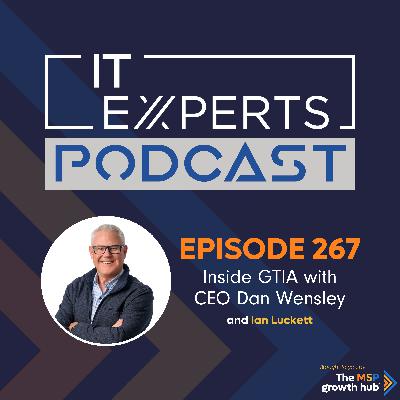
In this episode of The IT Experts Podcast, I sit down with Dan Wensley, CEO of GTIA, to go under the hood of an organisation that plays a far bigger role in our industry than many MSPs realise. This conversation is about community, leadership, and why staying connected to the wider channel is no longer optional if you want to build a business that lasts. Dan Wensley brings over 30 years of experience across the IT services industry, and that depth shows throughout the discussion. We talk about his journey through the channel, from the early reseller days, through solution providers, and into the managed services world most of us operate in today. What stood out for me is how clearly Dan connects those past transitions with what MSPs are facing right now. This is not theory. It is perspective earned through lived experience. A big part of our conversation centres on GTIA itself. Dan Wensley explains what the Global Technology Industry Association really is, why it exists, and how it supports MSPs around the world. What makes GTIA different is its position as a non-profit, member focused organisation. There is no product to sell and no commercial agenda to push. Instead, the focus is on research, education, and providing a neutral space where MSPs, vendors, and industry leaders can come together and learn from each other. We spend time talking about community and why it matters so much in this industry. I have always believed the MSP channel is unique in its willingness to share, collaborate, and support one another, and Dan reinforces this from a global perspective. The MSPs who succeed are rarely the ones trying to figure everything out on their own. They are the ones who stay curious, ask questions, and learn alongside their peers. GTIA exists to enable exactly that, without bias and without noise. Another theme that came up strongly is time. Many MSP owners tell me they are too busy to attend events or get involved in industry groups. Dan Wensley understands that pressure and challenges the idea that education is something you can put off. With the pace of change accelerating, especially with AI now influencing every part of the channel, staying informed has become part of the job. Dan makes it clear that learning does not only happen on a stage. It happens through conversations, shared insight, and exposure to different ways of thinking. We also talk about the future shape of the MSP model. Dan Wensley shares his view that customer success will be the defining factor moving forward. MSPs who focus on outcomes rather than tools, and who sit alongside their clients as true partners, will be the ones who stand out. Asking customers what success looks like and then delivering against that consistently is still the most reliable way to build trust and long-term relationships. Risk and change naturally come up in the conversation. Drawing on lessons from earlier industry shifts, Dan Wensley talks about the importance of defining the path, not only the destination. Too many MSPs aim for the end state without thinking through the steps needed to get there. Whether it is AI, security, or operational change, progress comes from doing the right things in the right order. We also touch on the GTIA Foundation and the role it plays in giving back. Dan shares how member led philanthropy allows GTIA to support education, access to technology, and community initiatives worldwide. It is a reminder that this industry has an opportunity to make a meaningful impact beyond commercial success. This episode is ultimately about staying connected. Dan Wensley leaves us with a clear message. Stay inquisitive. Stay educated. Stay involved. For MSP owners who want to build resilient businesses and remain relevant in a fast-moving market, this conversation offers both reassurance and direction. Connect with Dan Wensley through his LinkedIn by clicking HERE. You can also visit their website and learn more about GTIA by clicking HERE. Make sure to check out our Ultimate MSP Growth Guide, a free guide that walks you through a proven process to take your MSP from stuck to scalable, without working even more hours. It's 44 pages rammed with advice, insights and inspiration to help you decide what support is available to you now if you want to grow and scale your business. Click HERE to get your copy. Connect on LinkedIn HERE with Ian and also with Stuart by clicking this LINK And when you're ready to take the next step in growing your MSP, come and take the Scale with Confidence MSP Mastery Quiz. In just three minutes, you'll get a 360-degree scan of your MSP and identify the one or two tactics that could help you find more time, engage & align your people and generate more leads. OR To join our amazing Facebook Group of over 400 MSPs where we are helping you Scale Up with Confidence, then click HERE Until next time, look after yourself and I'll catch up with you soon!

In this episode of The IT Experts Podcast, we focus on one clear outcome, helping you build a practical MSP growth plan for 2026 in the next 30 minutes. Stuart and I recorded this right at the start of the year because this is the moment when MSP owners finally get space to think. Not space to dream or hope, although to decide. The goal of this conversation is simple, to replace short lived motivation with real momentum through structure, clarity, and commitment. At the start of every new year, it is easy to feel energised. New year, new goals, new intentions. The problem is that motivation fades quickly once the pressure returns. What actually carries you forward is momentum, and momentum only exists when there is substance behind it. A strong MSP growth plan gives that substance. Without it, you risk repeating the same patterns and getting the same results, even when your ambition is higher. We see this every December. MSP owners tell us they are not doing another year like the last one. They have had time over Christmas to reflect while walking the dog, spending time with family, or stepping away from the noise of the business. That reflection is valuable, although only if it leads somewhere. An MSP growth plan turns reflection into action and gives you a clear direction instead of frustration. The first step we talk through is getting clear on the destination. We encourage you to define what success really looks like three to five years from now. Not in vague terms, although in practical ones. What role do you want to play in the business. How involved do you want to be day to day. What values do you want the business to stand for as it grows. When this is clear, decisions become easier and distractions lose their pull. Your MSP growth plan needs a destination before it can define a route. From there, we move into structure. The structure that got you here will not get you where you want to go next. That includes your role, your team, and how accountability works. Many MSP owners stay trapped in technical delivery long after the business needs them elsewhere. A proper MSP growth plan forces you to look honestly at where you add the most value and what needs to change to remove you as the bottleneck. We also talk about investing ahead of growth. Waiting until things feel comfortable often keeps you stuck. Progress comes from deliberate decisions, not from hoping things will improve. Bringing in the right people, especially experienced technical or leadership hires, creates the space you need to focus on higher value work. This is how growth becomes intentional rather than accidental. Sales, marketing, and account management play a central role in any MSP growth plan. High performing MSPs understand that trust takes time to build. Consistency matters more than bursts of activity. Getting clear on your target market, showing up regularly, and having proper conversations with existing clients unlocks both new opportunities and hidden value that already exists in your business. Accountability is the final piece. A plan without measurement will drift. We talk openly in this episode about the need for clear expectations, meaningful numbers, and regular review rhythms. This applies to your team and to you as the owner. External accountability keeps you moving forward when energy dips and distractions creep back in. Momentum is protected when someone is there to challenge you and keep you aligned to the plan. We close the episode by reminding you that growth should feel energising. When structure replaces chaos, teams become more engaged, confidence increases, and the numbers start to reflect the progress you are making. A well-built MSP growth plan creates sustainable progress that supports the business and the life you want it to fund. If you want help applying this properly, we are running a live working session on February designed to help you build your MSP growth plan step by step, with clarity you can use immediately. You can register for the session HERE. Make sure to check out our Ultimate MSP Growth Guide, a free guide that walks you through a proven process to take your MSP from stuck to scalable, without working even more hours. It's 44 pages rammed with advice, insights and inspiration to help you decide what support is available to you now if you want to grow and scale your business. Click HERE to get your copy. Connect on LinkedIn HERE with Ian and also with Stuart by clicking this LINK And when you're ready to take the next step in growing your MSP, come and take the Scale with Confidence MSP Mastery Quiz. In just three minutes, you'll get a 360-degree scan of your MSP and identify the one or two tactics that could help you find more time, engage & align your people and generate more leads. OR To join our amazing Facebook Group of over 400 MSPs where we are helping you Scale Up with Confidence, then click HERE Until next time, look after yourself and I'll catch up with you soon!
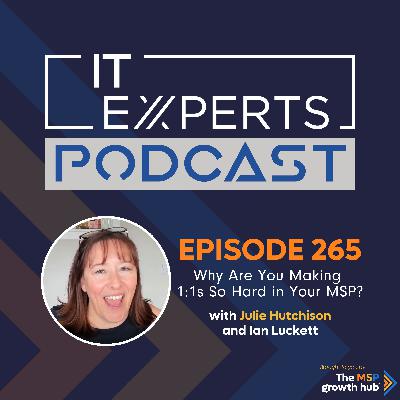
In this episode of The IT Experts Podcast, I dig into one of the most misunderstood leadership habits inside MSPs, the one to one. I am joined by Julie Hutchinson, and together we explore why MSP 1:1s so often feel heavy, awkward, or avoidable, and what is really going on beneath the surface when leaders say they do not have time for them. This conversation is about stripping away complexity and bringing the focus back to clarity, trust, and leadership rhythm inside growing MSPs. I speak to MSP owners and leaders every week who know that MSP 1:1s matter. They understand the theory. They know they should be happening regularly. Yet in practice, these meetings are often the first thing to be cancelled, rushed, or turned into task updates that add little value. Julie and I unpack why this happens so often. It is rarely a diary problem. More often it comes down to discomfort, uncertainty, and a lack of structure. When leaders are unsure what good looks like, avoidance quickly becomes the default. Throughout the episode, I come back to a simple truth. MSP 1:1s are not about tasks. They are about people. When leaders turn one to ones into performance interrogations or reactive problem-solving sessions, trust slowly erodes. Team members become guarded. Leaders feel drained. The meeting becomes something to get through rather than something that creates progress. Julie shares how this shows up again and again in MSPs where growth has outpaced leadership capability, leaving managers unsure how to hold effective people conversations. I also share why MSP 1:1s work best when they are treated as a leadership habit rather than a management tool. Consistency matters more than perfection. A regular rhythm creates psychological safety. Over time, people stop bracing themselves and start opening up. This is where real issues surface early, before they turn into disengagement, performance dips, or people quietly checking out. I see this constantly with MSPs who come to us thinking they have technical problems, when what they really have are unresolved people issues that better one to ones could have surfaced sooner. A big part of the conversation is about ownership. Julie challenges the idea that leaders need to carry the entire meeting. Effective MSP 1:1s are a shared responsibility. When team members are encouraged to bring topics, reflect on their own progress, and talk openly about what they need, the dynamic shifts. The meeting becomes lighter, more focused, and far more productive. Leaders stop feeling like they are dragging information out of people and start having proper conversations instead. We also talk openly about the emotional side of MSP 1:1s. Many leaders avoid them because they fear difficult conversations. I am very clear on this point. Avoiding these conversations does not remove the difficulty, it delays it. When feedback is withheld, frustration builds on both sides. When issues are named early, with care and clarity, relationships strengthen. The confidence to do this well comes from practice and from having a simple structure to lean on. Another important insight we explore is that MSP 1:1s are not the place to fix everything. They are the place to notice patterns. I explain how leaders can listen for themes across multiple one to ones and then address systemic issues elsewhere, rather than trying to solve every problem in isolation. This reduces pressure on the meeting and helps leaders think more strategically about their teams and their business. Julie also shares practical guidance on what good actually looks like. MSP 1:1s should feel human. They should create space for personal check in, professional development, and honest dialogue. When leaders show up with curiosity rather than judgement, trust grows naturally. Over time, these meetings become one of the strongest tools an MSP has for retaining good people, developing future leaders, and maintaining momentum through change. We close the conversation with a reminder that leadership is learned through doing. Nobody starts out brilliant at MSP 1:1s. The leaders who improve are the ones who commit to the rhythm, reflect on what is working, and stay open to feedback themselves. When one to ones are done well, they stop being hard work and start becoming one of the most rewarding parts of leading an MSP. If you want to strengthen your leadership rhythm and make MSP 1:1s simpler and more effective, this episode will give you clarity, reassurance, and practical next steps you can apply straight away. Make sure to check out our Ultimate MSP Growth Guide, a free guide that walks you through a proven process to take your MSP from stuck to scalable, without working even more hours. It's 44 pages rammed with advice, insights and inspiration to help you decide what support is available to you now if you want to grow and scale your business. Click HERE to get your copy. Connect on LinkedIn HERE with Ian and also with Stuart by clicking this LINK And when you're ready to take the next step in growing your MSP, come and take the Scale with Confidence MSP Mastery Quiz. In just three minutes, you'll get a 360-degree scan of your MSP and identify the one or two tactics that could help you find more time, engage & align your people and generate more leads. OR To join our amazing Facebook Group of over 400 MSPs where we are helping you Scale Up with Confidence, then click HERE Until next time, look after yourself and I'll catch up with you soon!
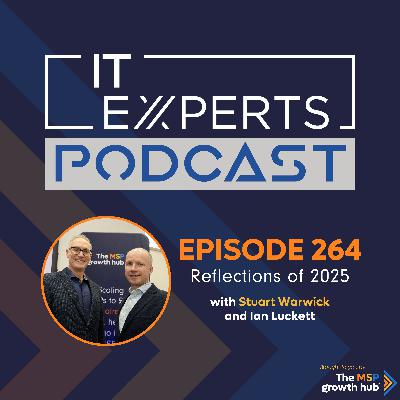
In this episode of The IT Experts Podcast, Ian Luckett and Stuart Warwick sit down to share their Reflections of 2025, looking back on a year that has been full of growth, challenge, learning, and perspective. This is a candid and human conversation, where business lessons blend naturally with life lessons, offering MSP owners space to pause, reflect, and reset as another year comes to a close. The conversation opens with a shared acknowledgement of how quickly the year has passed and how important it is to take time to reflect before rushing into planning the next chapter. These Reflections of 2025 are not about performance for the sake of it. They are about understanding what truly mattered, what created momentum, and what quietly drained energy along the way. Ian and Stuart explore the idea that businesses exist to serve life, not the other way around, and that clarity often comes from slowing down rather than pushing harder. On a personal level, both hosts share openly about significant moments from the year. Stuart reflects on the long and emotional journey of moving house after many years, using it as a reminder that worthwhile outcomes often come with frustration, uncertainty, and moments where it feels easier to give up. The lesson is simple and powerful. If something feels right, staying with it and trusting the process often matters more than speed. These Reflections of 2025 highlight how resilience is built through lived experience, not theory. Ian shares deeply personal insights around family, vision, and legacy. One of the most meaningful parts of his year has been the progress made toward creating an assisted living home for his son. What began as a vision shared with clients and peers has slowly taken shape through conversations, introductions, and aligned support. This journey reinforces a theme that runs throughout the episode. When you are clear on what matters and willing to speak it out loud, the right people often appear at the right time. Reflections of 2025 show that vision creates movement long before results are visible. Professionally, the discussion turns to the evolution of The MSP Growth Hub and the lessons learned from working closely with MSP owners throughout the year. Ian reflects on how challenging sales and marketing have felt at times, particularly as buyer behaviour continues to shift. Funnels dried up during parts of the year, engagement patterns changed, and familiar tactics stopped delivering the same results. Rather than seeing this as failure, these Reflections of 2025 frame it as feedback. Listening more closely to clients, paying attention to how people are buying, and staying consistent with helpful content has proven more valuable than chasing quick wins. Stuart shares his professional highlight of the year, which has been building greater scalability and resilience into the Growth Hub. Expanding the team, strengthening delivery frameworks, and creating clearer structures has allowed more MSPs to be supported without Ian and Stuart becoming bottlenecks. These Reflections of 2025 underline an important truth for MSP owners. Sustainable growth comes from systems, people, and rhythm, not heroic effort. Both hosts speak about the privilege of watching clients grow not only in revenue, but in confidence, clarity, and leadership. Seeing MSP owners pay off debt, hire with confidence, improve cash flow, and regain control of their time has been one of the most rewarding outcomes of the year. These Reflections of 2025 remind listeners that numbers matter, though personal growth and resilience often come first. The conversation also explores frustration. Ian and Stuart are honest about wanting to help more people and feeling impatient at times with the pace of impact. There is recognition that consistency matters deeply, whether in marketing, leadership, or personal health. Stopping and starting creates drag, while steady effort compounds quietly over time. Reflections of 2025 reinforce that progress rarely comes from dramatic change. It comes from repeated, intentional action. Health and wellbeing feature strongly in the closing reflections. Stuart shares lessons learned from supporting family through illness and recovery, highlighting the importance of strength, resilience, and looking after yourself long before you need to. Ian echoes this, reflecting on how physical health underpins the ability to show up for family, business, and life. These Reflections of 2025 gently remind listeners that success without health is fragile. As the episode closes, Ian and Stuart thank listeners for their continued support and trust. The podcast exists to help MSP owners feel less alone, gain clarity, and make better decisions. These Reflections of 2025 are an invitation to pause, take stock, and move forward with intention into the year ahead. Make sure to check out our Ultimate MSP Growth Guide, a free guide that walks you through a proven process to take your MSP from stuck to scalable, without working even more hours. It's 44 pages rammed with advice, insights and inspiration to help you decide what support is available to you now if you want to grow and scale your business. Click HERE to get your copy. Connect on LinkedIn HERE with Ian and also with Stuart by clicking this LINK And when you're ready to take the next step in growing your MSP, come and take the Scale with Confidence MSP Mastery Quiz. In just three minutes, you'll get a 360-degree scan of your MSP and identify the one or two tactics that could help you find more time, engage & align your people and generate more leads. OR To join our amazing Facebook Group of over 400 MSPs where we are helping you Scale Up with Confidence, then click HERE Until next time, look after yourself and I'll catch up with you soon!
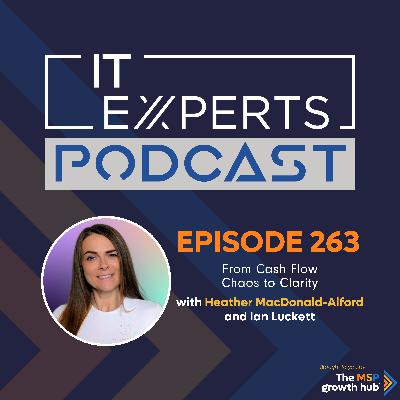
In this episode of The IT Experts Podcast I sit down with the brilliant Heather Macdonald-Alford from Counting Creators to explore how MSP owners can move from cash flow chaos to real clarity. This is a subject close to my heart because so many great MSPs work incredibly hard without truly understanding what their numbers are telling them. Heather Macdonald-Alford brings a level of honesty, energy and practical insight that cuts through the noise and helps owners see their finances in a completely fresh way. As we open the conversation I share a view that I see often inside The MSP Growth Hub. Most MSP owners do not really have a finance problem, they have a visibility problem. They look at their bank balance and assume it reflects performance. They tell themselves the numbers will make more sense when they have more time. They hope that the year end will reveal something encouraging. Heather Macdonald-Alford explains how this pattern keeps people overwhelmed and how clarity is always closer than they think when they start looking at the right information. Throughout the episode I hear again why so many MSPs believe they are doing well when the detail tells a different story. Heather Macdonald-Alford works with MSPs every day and sees the same issue repeating itself. Busy owners who care deeply about their clients still find they are undercharging, over delivering and carrying clients who take too much time for too little return. When she talks about profitability by service it becomes obvious why this is such a powerful starting point. When you know the true performance of each service, you can see instantly where the pressure sits and where value is being eroded. It changes the way you think about growth. One of my favourite sections in this conversation is when we talk about time tracking. Many MSP owners treat it as a chore and some even resist it. I have seen this in my own clients and I know how quickly it can become a cultural issue. I share exactly how we approach it in our own business and Heather Macdonald-Alford reinforces the point with real clarity. Time tracking is not about checking up on people. It is about giving the business the insight it needs to make good decisions. When your team understand that it protects them as much as it protects the business the entire dynamic shifts. We then explore the difference between profit and cash which is something that catches MSPs out repeatedly. I have had many conversations with owners who believe they have had a strong month then realise they have large commitments that sit outside the profit and loss. Heather Macdonald-Alford explains why so many owners look at the numbers mid-month, see more money than expected and start making decisions that create stress later on. She gives a clear and simple habit that every MSP can adopt straight away. Review your numbers to the most recently closed month. Not to date. Not part way through. Once that habit forms the risk of being blindsided drops dramatically. There is also a moment where I offer a long overdue apology for a comment I once made about bookkeeping. I share openly that it was a mistake and Heather Macdonald-Alford brings both humour and depth to the correction. Bookkeeping is not a low value task. It is a growth lever. When the right people manage the numbers the business gains clarity, rhythm, and confidence. When the wrong people manage the numbers, the business loses visibility, and the owner loses control. Heather explains how to spot the difference and what good financial support should look like. As we bring the episode to a close, I ask Heather Macdonald-Alford for the three actions she recommends every MSP owner takes. Her answers are simple and powerful. Block time every month to review your numbers. Ensure the right people are doing the right financial tasks. Be selective about events and ideas so you stay focused on the actions that genuinely move the business forward. These principles echo what we teach inside The MSP Growth Hub and they create structure around financial clarity that helps owners grow with confidence. For any MSP owner who wants more control, more insight, and more confidence in their numbers, this episode will give you practical steps that you can use straight away. When you understand your numbers, you lead your business with greater certainty and you create a path that supports both growth and quality of life. Connect with Heather Macdonald-Alford through her LinkedIn by clicking HERE. You can also visit their website and learn more about Counting Creators by clicking HERE. Make sure to check out our Ultimate MSP Growth Guide, a free guide that walks you through a proven process to take your MSP from stuck to scalable, without working even more hours. It's 44 pages rammed with advice, insights and inspiration to help you decide what support is available to you now if you want to grow and scale your business. Click HERE to get your copy. Connect on LinkedIn HERE with Ian and also with Stuart by clicking this LINK And when you're ready to take the next step in growing your MSP, come and take the Scale with Confidence MSP Mastery Quiz. In just three minutes, you'll get a 360-degree scan of your MSP and identify the one or two tactics that could help you find more time, engage & align your people and generate more leads. OR To join our amazing Facebook Group of over 400 MSPs where we are helping you Scale Up with Confidence, then click HERE Until next time, look after yourself and I'll catch up with you soon!
In this episode of The IT Experts Podcast we explore why transparency in leadership plays such an important role in creating a confident and high performing team inside your MSP. The conversation opens with the truth many owners recognise. Leaders often hold information close because they feel unsure about what to share. When you move from the early survival stage of running your MSP into a growth stage, you realise that the team need more clarity, more context, and a clear view of how the business works. This is where transparency in leadership becomes a genuine accelerator for engagement and performance. Ian and Stuart explore the common fear that many owners experience when the subject of financial openness comes up. There is a feeling that people might judge you for the revenue or the bank balance or even assume you can offer pay rises every time numbers increase. When transparency in leadership is missing, the owner ends up carrying most of the weight alone. The team remain in the dark and make up their own stories about how the business is performing. When you introduce a simple rhythm of sharing the right information with the team, the atmosphere changes. People understand how the business works, why certain decisions are made and how their daily actions influence the results. Stuart talks about how many MSPs begin with a lifestyle mindset and then evolve into a growth focused business. As this shift happens, the owner needs greater leverage across the team. The only way to create leverage is to help your people understand what they are contributing to. They do not need a detailed profit and loss. They need clarity. They need to understand the vision, the values, and the purpose of the business. They need to see how their role supports the goals of the company. Transparency in leadership helps them see that connection clearly. A key point raised in the episode is the importance of education. You cannot walk into a Monday stand up and announce that you are suddenly talking about numbers. You ease the team into it. You tell the story of why the business exists and what it is there to deliver. You explain why profitability matters for job security, growth, bonuses, new equipment, and new opportunities. When you frame your message through a story rather than a spreadsheet, people lean in. Transparency in leadership creates a sense of belonging rather than pressure. The conversation also highlights the practical side of sharing numbers. You pick three or four simple metrics that matter. These could be customer satisfaction scores, service gross margin, the value of monthly quotes raised by the service desk or age debtors. You then update the team regularly and show them how their work influences these figures. When people see progress, they feel motivated. When numbers slip, they understand where focus is needed. This rhythm of transparency in leadership builds accountability without creating fear. Ian and Stuart share examples of how service desks often create thousands of pounds worth of quotes without recognising that they are contributing to sales. When you show them this, they sit up straighter because they realise they are part of something larger. That awareness strengthens culture, confidence, and teamwork. It also encourages healthier conversations about how projects deliver margin, how time is used, and where improvements can be made. Everything becomes lighter because the team understand what success looks like. As the episode closes, the message becomes clear. If you hold all the numbers close, the business slows down. People guess what is important. They guess what success looks like. They guess what they should prioritise. That kind of guesswork never scales. When you embrace transparency in leadership, you gain momentum. You create clarity. You show people how they can help move the business forward. This opens the door for stronger culture, aligned behaviour, and a shared sense of progress. Make sure to check out our Ultimate MSP Growth Guide, a free guide that walks you through a proven process to take your MSP from stuck to scalable, without working even more hours. It's 44 pages rammed with advice, insights and inspiration to help you decide what support is available to you now if you want to grow and scale your business. Click HERE to get your copy. Connect on LinkedIn HERE with Ian and also with Stuart by clicking this LINK And when you're ready to take the next step in growing your MSP, come and take the Scale with Confidence MSP Mastery Quiz. In just three minutes, you'll get a 360-degree scan of your MSP and identify the one or two tactics that could help you find more time, engage & align your people and generate more leads. OR To join our amazing Facebook Group of over 400 MSPs where we are helping you Scale Up with Confidence, then click HERE Until next time, look after yourself and I'll catch up with you soon!
In this episode of The IT Experts Podcast, we explore one of the most common questions MSP owners face, how to charge more without losing clients. Ian is joined by Justin Neale from Value Alchemists, a specialist in value-based pricing who works closely with MSP leaders who want to increase margins, strengthen client loyalty and feel more confident about the prices they set. This conversation brings a welcome sense of clarity to a topic that often feels heavy for business owners, and it explains why price increases can become a natural and healthy part of running a modern MSP. Ian and Justin Neale begin by unpacking the fear that stops many MSPs from reviewing their pricing. Many owners worry that even a small increase will shake client relationships or trigger a wave of cancellations. Justin Neale explains that this feeling is normal for business owners, although the reality is far calmer than the story they tell themselves. He highlights how remaining static with prices can damage credibility, weaken perceived value and make an MSP look like the budget option without ever intending to. He walks through the idea of the premium pricing paradox, a pattern he sees across the industry where higher prices often result in stronger client loyalty because the shift signals confidence, quality and leadership. Ian and Justin take the discussion into the world of value. They explore why MSPs struggle to move away from selling deliverables and why so many owners feel attached to long lists of tools, subscriptions and platforms. Justin Neale explains that MSPs are experts in their craft, so they naturally focus on technology. Clients do not make decisions this way. Clients want outcomes, protection, time savings, security and clarity. When MSPs step back and look at what a client is really trying to achieve, the entire pricing conversation becomes simpler. The MSP begins to position a complete solution rather than a menu of choices, and the client feels understood rather than overwhelmed. A key part of the episode focuses on confidence. Ian shares a story about belief and how vital it is for an MSP owner to feel certain that their service improves the lives of their clients. This leads to a powerful section in which Justin Neale explains how MSPs can build internal confidence by digging deeper into the value they already create. Many MSPs have clients who have scaled successfully, saved money, increased productivity or avoided significant risk because of the work done behind the scenes. When an MSP reconnects with these stories, they often gain the certainty they need to approach pricing with more structure and leadership. The conversation then moves to practical action. Justin Neale introduces the idea of customer scoring, a method that removes emotion from pricing decisions and helps MSPs understand which clients value them most. By using a simple scoring model, MSP owners can identify the clients who love working with them, spot those who are price sensitive and plan price increases with confidence. The aim is never to keep every client forever. The aim is to build a client base that aligns with the service, values and direction of the business. Healthy attrition is part of this process, and both Ian and Justin reinforce that stronger clients create stronger margins, which in turn create more stable and meaningful long-term relationships. Ian and Justin then explore how client journeys shape value. Many MSPs operate in a reactive cycle where they solve issues as they arise. Justin Neale encourages owners to look at the complete customer journey and identify patterns that signal a deeper problem or a chance to improve the client experience. When MSPs understand the journey from the client's perspective, they make better decisions, improve service flow and create opportunities to add value without increasing workload. This mindset also helps owners feel more comfortable with premium positioning because the service becomes clearly aligned with outcomes. The episode rounds off with a practical summary. The message is clear. MSPs who want to charge more need to stop selling lists and start selling outcomes. They need a pricing rhythm that feels calm, confident and predictable. They need to understand their ideal clients and build their service around the problems they can solve. And above all, they need the courage to lead the conversation on value rather than waiting for clients to raise it. Ian closes the show with the reminder that every MSP can take steps to increase margins without creating disruption when they approach pricing with confidence, clarity and a focus on outcomes. With guidance from experts like Justin Neale, the path becomes much clearer and far more achievable. Connect with Justin Neale through his LinkedIn by clicking HERE. You can also visit their website and learn more about Value Alchemists by clicking HERE. Make sure to check out our Ultimate MSP Growth Guide, a free guide that walks you through a proven process to take your MSP from stuck to scalable, without working even more hours. It's 44 pages rammed with advice, insights and inspiration to help you decide what support is available to you now if you want to grow and scale your business. Click HERE to get your copy. Connect on LinkedIn HERE with Ian and also with Stuart by clicking this LINK And when you're ready to take the next step in growing your MSP, come and take the Scale with Confidence MSP Mastery Quiz. In just three minutes, you'll get a 360-degree scan of your MSP and identify the one or two tactics that could help you find more time, engage & align your people and generate more leads. OR To join our amazing Facebook Group of over 400 MSPs where we are helping you Scale Up with Confidence, then click HERE Until next time, look after yourself and I'll catch up with you soon!
In this episode of The IT Experts Podcast, Ian Luckett and Stuart Warwick explore why getting to "no" faster strengthens the way you grow your business. This conversation brings real clarity to the habits that shape confident decision making, especially when you want to build a cleaner and more focused MSP sales pipeline. You will hear why many owners feel weighed down by slow moving leads, how that drains energy, and how simple shifts in the way you qualify can transform the shape of your growth rhythm. Ian and Stuart open with a truth that every MSP will recognise. Sales always sounds simple from the outside, yet the reality feels very different when you are the one carrying the pressure. The MSP sales pipeline often feels full, although most owners know it is filled with names that are unlikely to convert. The desire to keep every lead alive comes from a natural fear of scarcity. When you have a smaller base of clients, each opportunity feels precious. The irony is that this mindset creates friction and slows you down, because you spend time speaking to the wrong people for too long. Ian and Stuart talk about the emotional weight of this and how freeing it can be when you learn to release poor fits earlier. Stuart shares a story from early in his career which shaped the way he thinks about conversations. He describes reading every sales book he could find and learning one lesson that has stayed with him for decades. The quicker you reach a clear decision, the easier sales becomes. When someone is not the right fit, the next suitable opportunity is already on its way. The MSP sales pipeline becomes stronger when you remove those who do not align with your pricing, your standards or your approach. This mindset gives owners permission to be open, direct, and decisive. It also removes the fear of missing out, because clarity creates space for better prospects. The conversation moves to confidence. Both hosts explain how confidence is one of the most attractive qualities in any sales process. Prospects want an expert who stands tall, explains things clearly and leads with structure. Ian talks about how this shows up at events and networking conversations. When you know your value, you ask better questions and you guide the discussion in a way that respects your time and theirs. The MSP sales pipeline works best when you feel comfortable enough to ask whether the person in front of you is a right fit now, rather than keeping them in the wings hoping they return one day. Scripts and prepared questions play a powerful role here. Ian and Stuart highlight how simple prompts can uncover intent quickly. Asking whether something is a now decision or a later decision helps you avoid months of soft chasing. Many MSP owners avoid clarity because they fear hearing something they do not want to hear. Ian compares this to checking your financials. You may feel anxious about seeing the detail, although seeing the truth always helps you make stronger decisions. The MSP sales pipeline becomes healthier when you know where each conversation sits. The episode also explores how targeting sharpens every stage of sales. When you understand your ideal client profile, you know who you serve best and why. This shapes your questions, your positioning and your confidence. Stuart talks about specialists who focus on accountants or professional services and how this improves every conversation. When your targeting is precise, you get to yes faster without forcing anything. The MSP sales pipeline fills with people who already understand your relevance, which shortens the sales cycle and lifts conversion rates. Toward the end of the episode, both hosts underline the importance of consistency. When you have a steady rhythm of leads, qualification feels lighter. You feel less attached to every single conversation. This freedom helps you sound clearer, gain trust, and hold stronger boundaries. You say no with ease when someone is not right. This shapes a high-quality MSP sales pipeline that contains engaged prospects who value your advice and want to move forward. This episode equips you with a practical and confidence building way of thinking about sales. It encourages you to take control, ask better questions, and give your future clients the experience they need from the moment they meet you. When you embrace this approach, you create clarity, shorten your sales cycle and grow with far more ease. Make sure to check out our Ultimate MSP Growth Guide, a free guide that walks you through a proven process to take your MSP from stuck to scalable, without working even more hours. It's 44 pages rammed with advice, insights and inspiration to help you decide what support is available to you now if you want to grow and scale your business. Click HERE to get your copy. Connect on LinkedIn HERE with Ian and also with Stuart by clicking this LINK And when you're ready to take the next step in growing your MSP, come and take the Scale with Confidence MSP Mastery Quiz. In just three minutes, you'll get a 360-degree scan of your MSP and identify the one or two tactics that could help you find more time, engage & align your people and generate more leads. OR To join our amazing Facebook Group of over 400 MSPs where we are helping you Scale Up with Confidence, then click HERE Until next time, look after yourself and I'll catch up with you soon!
In this episode of the IT Experts Podcast, I sit down with the brilliant Marcus Sheridan to unpack one of the biggest questions on every MSP owners mind how to attract endless customers into your MSP in a world that has completely changed the way it buys. This conversation is all about practical action. Marcus and I explore what is really going on in the heads of your buyers, why they now arrive eighty percent of the way through their buying journey before they ever speak to you, and how you can position your MSP as the firm that AI tools and humans are both recommending. If you are serious about growth and you want to understand how The MSP Growth Hub thinking lines up with the They Ask You Answer and Endless Customers approach, this episode will keep you thinking for a very long time. Marcus starts by calling out what most MSP owners already feel, even if they have not put words to it. Your prospects are now digital first buyers. They want to feel informed, confident, and in control long before they ever book a call. They research on their own, they consume content at volume, they use AI tools, and they are desperate to avoid making a poor decision. The key insight is simple. You need to win the eighty percent of the journey that happens before the contact form. If that learning happens on someone else's site, or inside someone else's content, then that other provider will gain first contact, first conversation and very often the client. At The MSP Growth Hub we see this play out all the time when owners tell us that new clients feel like they already know us, because they have listened to the podcast, downloaded the Ultimate MSP Growth Guide, or spent time inside our content before any sales conversation takes place. From there Marcus shares the five subjects that every serious buyer researches and that very few MSPs address clearly enough. Pricing and costs, problems and fears, comparisons, reviews including the negative ones, and who is the best at solving a particular problem. Every time a business leader searches for things like best MSP for professional services or reviews of local IT providers, AI and search tools are looking for helpful, honest content that actually answers the question. The MSP Growth Hub approach lines up with this perfectly. Your content has one main job. It needs to educate, de-risk and build trust. We spend time in the episode on the topic that makes most MSPs uncomfortable, the money conversation. Marcus explains that the first question any buyer has is roughly what is this going to cost and that this question acts as the gateway to the rest of the journey. When a website hides pricing, visitors feel frustrated, click away within seconds and carry on searching until they find a provider who will help them understand the drivers of cost and value. That insight alone, if applied with a bit of courage, can transform how your MSP generates leads. Marcus then shares examples from his own swimming pool company, where a single pricing article that explained what affects the cost of a pool, without giving a rigid one size fits all number, has generated tens of millions in revenue. The lesson for MSPs is clear. You do not need to publish a fixed price list for everything, you need to educate. Explain what drives the investment up or down, why some providers appear cheaper, why others charge more, and what a typical client might expect over the life of the relationship. When you do this openly, you stop commoditising your services, because somebody who reads that kind of content now understands value properly. Tools like pricing estimators and self-service assessments are going to become standard in the MSP space. Marcus talks about how adding a pricing estimator to a site can multiply inbound leads and why early adopters in our industry will gain a massive advantage before this becomes normal. Inside The MSP Growth Hub, we are already seeing appetite from MSP owners to build these types of tools into their marketing and sales funnels, as they realise that buyers expect to get useful answers without needing a call every time. We also explore how AI will shape who is recommended and who gets ignored. For years the game has been about keeping Google and the human buyer happy. Now AI tools are becoming the layer that sits between the question and the supplier. If your MSP is not producing clear, honest, useful content that addresses the real questions buyers are asking, there is a risk that AI simply does not see you as the expert to recommend. Marcus shares a practical tool at aitrustsignals.com that scores how likely AI is to recommend you, and this lines up perfectly with The MSP Growth Hub philosophy that your digital presence is no longer optional. It is a core asset in your valuation and your growth plan. For MSP owners who feel overwhelmed at the thought of producing content, Marcus strips away the complexity. He explains how his custom tools inside ChatGPT can generate powerful customer focused titles for your blogs and videos and then gives a very simple rhythm. Take one title a day, pull out your phone, open with a natural question that your client would ask, and answer it in the same way you would if you were sitting with them in a cafe. One take, no over editing, then hand it to someone who can upload and post it across your platforms. Ten minutes a day used in this way can position you as a trusted voice in your niche. At The MSP Growth Hub we are always reminding clients that they do not need television studio production to build trust. They need consistency, clarity, and a focus on the questions that actually keep their clients awake at night. We round off the conversation by talking about team involvement and the link between content, sales, and leadership. Marcus reinforces a message that we share regularly inside The MSP Growth Hub. Everyone in the business is part of sales and marketing. Subject matter experts on the service desk, in projects, security and account management all hold knowledge that your buyers need to see and hear. A simple monthly rhythm where marketing interview these experts, record short sessions, and turn them into articles, videos, and posts can transform your authority in the market. We also touch on the health of sales cultures in MSPs and why regular sales training, strong discovery skills, and a consultative approach will always matter, even as AI and self-service tools advance. If you want to take the ideas from this episode and apply them to your own MSP, The MSP Growth Hub has a suite of resources designed to help you build trust, educate your market and generate more of the right leads. Start by grabbing the Ultimate MSP Growth Guide which helps you decide what type of support you need and when. Then take the MSP Mastery quiz which will give you a rapid scan of your business and highlight the one or two areas that will unlock more time, more engaged people, and more high-quality opportunities. As Marcus says in the show, your responsibility as an owner is to stay forward thinking, lean into these changes and lead your market rather than sit on the sidelines. You can connect with Nicola Moss on her LinkedIn HERE. Make sure to check out our Ultimate MSP Growth Guide, a free guide that walks you through a proven process to take your MSP from stuck to scalable, without working even more hours. It's 44 pages rammed with advice, insights and inspiration to help you decide what support is available to you now if you want to grow and scale your business. Click HERE to get your copy. Connect on LinkedIn HERE with Ian and also with Stuart by clicking this LINK And when you're ready to take the next step in growing your MSP, come and take the Scale with Confidence MSP Mastery Quiz. In just three minutes, you'll get a 360-degree scan of your MSP and identify the one or two tactics that could help you find more time, engage & align your people and generate more leads. OR To join our amazing Facebook Group of over 400 MSPs where we are helping you Scale Up with Confidence, then click HERE Until next time, look after yourself and I'll catch up with you soon!
In this episode of the IT Experts Podcast, we explore why so many MSPs hit a ceiling when it comes to growth and how shifting your marketing mindset from activity to strategy can unlock the next level of success. I'm joined by THE Nicola Moss, a seasoned marketing leader and founder of The Fractional Marketeer, who works with MSPs to bring structure, credibility and clear direction to their marketing efforts. Nicola has spent years leading marketing functions inside MSPs, so she knows first-hand the challenges that owners face when they try to move from tactical marketing, emails, webinars, and social posts to a true strategic approach that builds long-term business value. At The MSP Growth Hub, we see this all the time. Many owners tell us they are doing "some marketing" but feel it's not getting traction. They're sending emails, posting online, maybe running the odd event, but it all feels disconnected. Nicola explained that this is where most MSPs sit for far too long, often because marketing isn't their happy place. It feels complicated, time-consuming, and expensive. But as Nicola reminded us, what got you here won't get you there. The habits that got an MSP to a few million in revenue are rarely the ones that will take it beyond that point. To grow, you need to think differently. Nicola talked about the moment when MSPs start to realise they need a more cohesive approach. That's when things start to feel messy. There's often a marketing assistant, a digital agency, maybe a salesperson, but no one is joining the dots. It becomes fragmented, and without a guiding hand, you end up with activity without impact. This is where having a clear marketing strategy connected directly to your business goals becomes essential. At The MSP Growth Hub, we help MSPs connect the dots between their commercial plan and their marketing focus. Nicola shared that one of the biggest mindset shifts for MSPs is to start viewing marketing not just as lead generation, but as a way of building transferable value. She made the point that every MSP will eventually exit their business, whether through sale or succession, and that marketing has a direct influence on valuation. A well-defined brand, a consistent message, and clear differentiation all make the business more attractive to both clients and buyers. We also explored the question of what an effective marketing team should look like. Nicola explained that in smaller MSPs, marketing often starts with an outsourced agency or a junior hire handling basic digital tasks. But as the business grows, it becomes important to have someone internal who understands the company, its values and its customers. Eventually, that person needs strategic guidance to connect all the moving parts: sales, operations, and growth priorities. This is where bringing in a fractional CMO or senior marketing lead can make a huge difference. At The MSP Growth Hub, we often encourage MSPs to grow their own internal marketing resource but to support them with strategic oversight. Nicola's experience as a fractional CMO mirrors this. She shared how her clients benefit from having someone who isn't just managing an agency but is actually embedded in the business, aligning marketing to outcomes such as revenue growth, client retention, and brand credibility. A major part of the discussion was about measurement. Marketing can feel hard to measure, especially when some activities build awareness and trust over time. Nicola acknowledged that not everything can be tracked to a spreadsheet, but revenue growth, margin contribution, and progress against the business plan are strong indicators that marketing is doing its job. She also pointed out that marketing and sales should share the same growth targets. Success comes when both teams work together, not in silos. Another powerful insight came when we talked about the middle of the funnel: the stage between awareness and conversion. Many MSPs are active at the top of the funnel, creating blogs or posting on LinkedIn, and they get referrals at the bottom, but there's a big gap in the middle. Nicola explained that this is where educational webinars, customer advocacy, and community engagement play a huge role. Case studies, client stories and thought leadership all help to build trust and credibility before a sales conversation even begins. As we wrapped up, Nicola left us with an important reminder. Marketing isn't a nice-to-have. It requires investment, consistency and strategic thinking. The MSPs that succeed are those that move beyond scattergun activity and focus their marketing around clear objectives that support the overall business plan. When marketing, sales and leadership are aligned, growth becomes predictable and sustainable. At The MSP Growth Hub, we see this shift in action every day. The MSPs that take a more strategic view of their marketing see stronger lead flow, better client retention and ultimately higher valuations when it's time to sell or seek investment. Nicola's insights show that this level of clarity doesn't come from doing more, it comes from thinking smarter, aligning your message with your market, and building a marketing function that truly drives the business forward. If you're ready to step back and look at your marketing through a more strategic lens, this episode with Nicola Moss is one you won't want to miss. It's a reminder that sustainable growth starts with focus, alignment, and a plan that connects marketing directly to your MSP's long-term goals. You can connect with Nicola Moss on her LinkedIn HERE. Make sure to check out our Ultimate MSP Growth Guide, a free guide that walks you through a proven process to take your MSP from stuck to scalable, without working even more hours. It's 44 pages rammed with advice, insights and inspiration to help you decide what support is available to you now if you want to grow and scale your business. Click HERE to get your copy. Connect on LinkedIn HERE with Ian and also with Stuart by clicking this LINK And when you're ready to take the next step in growing your MSP, come and take the Scale with Confidence MSP Mastery Quiz. In just three minutes, you'll get a 360-degree scan of your MSP and identify the one or two tactics that could help you find more time, engage & align your people and generate more leads. OR To join our amazing Facebook Group of over 400 MSPs where we are helping you Scale Up with Confidence, then click HERE Until next time, look after yourself and I'll catch up with you soon!
In this episode of the IT Experts Podcast, I sat down with the brilliant Fiona Challis to separate reality from the noise and give MSP owners a practical route to value. We opened with a simple viewpoint. AI is not a magic fix and it is not a toy to chase. It becomes powerful when it sits on top of clear processes, clean data, and a focused plan. That theme runs through the whole conversation with Fiona Challis, who has spent recent years enabling partners around enterprise AI and then translating that experience for the MSP world. The result is a set of grounded lessons that help you create capacity, improve client experience, and grow revenue without creating chaos. We began with the service desk, because it is where most MSPs feel the pain. Fiona Challis drew a helpful line between automation and AI. Many teams still have a backlog of simple automations available inside the tools they already pay for. Tidy those first to free time and reduce firefighting. Once the ground is set, AI can handle a large slice of tier one demand through voice agents and smart triage. A well-trained voice agent can answer calls, qualify the user, create a ticket with the right context, and get it to the correct queue. That single move lowers the noise floor and gives engineers the space to do higher value work. The critical point is that none of this works without basic workflows, decent documentation, and accurate data. Garbage in leads to poor outcomes. A little discipline in process creates a lot of value once you layer in AI. Sales and marketing came next. Many MSP owners dislike this part of the job and often push it to the bottom of the to do list. AI can carry a heavy load here when used thoughtfully. Fiona Challis explained how an AI SDR can answer inbound calls at all hours, qualify interest, book meetings straight into your calendar, and route non buyers to relevant assets that nurture interest. That removes delay and prevents lead leakage. On outbound and account development, an AI analyst agent can sweep your CRM and contracts to surface missed opportunities across your existing base. We discussed one real world example where this activity revealed more than six hundred thousand pounds of potential from accounts that were already paying the MSP. That kind of return changes the shape of the quarter and gives your team a clear priority list. Tool choice came up, and we gave a steer that saves time. Do not buy software based on headline price. Measure tools by the hours they give back, the improvement in client experience, and how they help your team perform. Money can be earned again. Time cannot. If one platform removes half of your tier one traffic or cuts proposal cycle time in half, that platform pays for itself many times over. We then tackled client offerings, with a special focus on Microsoft Copilot. Many MSPs sell the licence and stop there, which leaves clients confused and creates security risk from ad hoc use of multiple AI tools. The fix is simple and valuable. Adopt Copilot inside your own MSP first and create one or two internal champions. Capture the time saved and the outcomes you achieve. Lead with those use cases in your conversations. Follow that with a paid AI or Copilot readiness assessment that checks data hygiene, permissions, workflows, and change readiness. Fiona Challis has seen MSPs charge meaningfully for this assessment, then package remedial work to clean data, lock down access, and prepare the environment. Once the foundations are set, run a 30-day adoption pilot that targets a visible quick win, like meeting summaries with actions, agent setup for routine tasks, or document drafting for proposals. After the pilot, move into an acceleration phase that adds leaderboards, prompt packs, training rhythms, and light gamification to drive real adoption. The message is simple. You are not selling a licence. You are guiding a transformation that raises productivity, revenue, and experience for users and clients. A question many owners ask is who delivers all of this. The pathway is not heavy. Your AI SDR filters interest and books the right conversations. Your internal champions run the readiness assessment with a clear checklist. Your engineers deliver the remediation as projects with defined outcomes. Your client success rhythm then tracks adoption and wins. That repeatable sequence turns Copilot from an unprofitable add on into a profitable solution stack that protects your base and attracts buyers who value progress. Throughout the episode, Fiona Challis emphasised a steady cadence. Create a two-year roadmap across four quadrants, service operations, sales, marketing, and client offerings. Pick one quick win every 30 to 90 days. Implement, measure, and move to the next win. That rhythm stops the noise, builds confidence, and compounds results. It also positions you as a managed AI provider in the eyes of your clients. You become the partner who assesses readiness, remediates risk, aligns workflow, and accelerates adoption with measurable impact. AI becomes a growth engine when it sits on top of simple process, clean data, and a plan your team can follow. Start inside your business. Automate what you can. Deploy AI where it makes a dent in time and quality. Use AI to make sales and marketing consistent so that your calendar fills with qualified meetings. Become your own best Copilot case study, sell the readiness assessment, deliver the remediation, and lead a visible 30-day pilot that wins hearts and minds. Keep going with an acceleration pack that keeps adoption rising every week. That is the path to scale with confidence. You can connect with Fiona Challis on her LinkedIn HERE. Make sure to check out our Ultimate MSP Growth Guide, a free guide that walks you through a proven process to take your MSP from stuck to scalable, without working even more hours. It's 44 pages rammed with advice, insights and inspiration to help you decide what support is available to you now if you want to grow and scale your business. Click HERE to get your copy. Connect on LinkedIn HERE with Ian and also with Stuart by clicking this LINK And when you're ready to take the next step in growing your MSP, come and take the Scale with Confidence MSP Mastery Quiz. In just three minutes, you'll get a 360-degree scan of your MSP and identify the one or two tactics that could help you find more time, engage & align your people and generate more leads. OR To join our amazing Facebook Group of over 400 MSPs where we are helping you Scale Up with Confidence, then click HERE Until next time, look after yourself and I'll catch up with you soon!
Ian begins by reflecting on how mindset shapes outcomes. He shares how his own transformation began during long commutes to Heathrow Airport years ago, when he discovered the power of self-belief through learning from leaders like Tony Robbins. That journey sparked a shift in perspective, from being an employee to building a business owner mindset. The lesson is simple but profound: your body listens to what your mind tells it. If you believe you can achieve something, you probably will. If you believe you cannot, that becomes your reality too. Many MSP owners, as Ian points out, didn't plan to become business leaders. Most began as technicians who happened to grow into ownership. They excel at problem-solving for clients but often struggle to apply the same logic to their own growth. The result is self-doubt, limited belief, and a feeling of being stuck. Ian reminds listeners that personal growth must come before business growth. This is why The MSP Growth Hub focuses heavily on developing leadership confidence alongside commercial strategy. As Ian says, "We help businesses grow, but we have to grow you first." He challenges MSP owners to recognise how their words shape their world. The language they use, especially the quiet, internal language, determines what they act on and what they avoid. Phrases like "I don't have time," or "I'm not cut out for leadership," are not statements of fact but instructions to the brain that shut down opportunity. Replacing them with more empowering language such as "I need to prioritise my thousand-pound tasks" immediately shifts focus from limitation to action. A key insight Ian shares is that environment matters just as much as mindset. The people you surround yourself with influence your standards, your energy, and your belief in what's possible. He reminds MSPs that they become the average of the five people they spend the most time with. If you constantly engage with people who complain about what cannot be changed, you absorb that energy. Surround yourself instead with people who inspire you, who push boundaries, and who live by example. This is the community The MSP Growth Hub strives to create: one built on encouragement, accountability, and shared ambition. Ian also reflects on the role of leadership in overcoming self-doubt. Many MSP owners still hold on to the idea that they must do everything themselves. This belief not only causes burnout but also prevents the team from stepping up. He encourages owners to delegate more, even if that means allowing others to complete tasks to 80 percent of your standard. Good is often good enough when it frees up your time to focus on strategic, high-value work. A business grows faster when the owner stops being the bottleneck. He highlights the importance of language within leadership. The way an MSP owner communicates sets the tone for the whole organisation. Team members mirror what they see. If the leader walks in with low energy or frustration, the team absorbs it. But if the leader models calm confidence, focus, and positivity, that mindset ripples through the business. Ian uses the concept of the "shadow of the leader" to describe this effect and urges MSP owners to become conscious of the influence they carry every day. Practical tools also come into play. Ian recommends using DISC profiling to understand how different personalities work and communicate within a team. Knowing who thrives on detail, who leads naturally, and who needs space to create helps prevent tension and improves collaboration. He also advises journaling weekly wins as a habit. This reflection process helps leaders recognise how far they've come, reinforces confidence, and resets their mindset for the next challenge. Throughout the episode, Ian brings together mindset and action in a way that is both motivational and practical. He reminds MSP owners that affirmations and belief alone are not enough. They must be followed by structure, discipline, and consistent action. Change begins by catching negative language in the moment and reframing it into something constructive. It continues through small daily habits that reinforce confidence and leadership presence By the end of the episode, the message is clear: change your language, change your business, change your life. Belief fuels behaviour, and behaviour drives results. Every MSP owner has the potential to lead with strength and clarity, but it starts with internal dialogue. The silent language you use can either keep you stuck or propel you forward. This episode is a reminder that success begins between your ears. When you build a habit of positive language, surround yourself with the right people, and empower your team to take ownership, you create the foundation for sustainable MSP growth. Whether you are aiming for your first million or scaling towards five, the mindset principles shared here are the groundwork for everything that follows. Make sure to check out our Ultimate MSP Growth Guide, a free guide that walks you through a proven process to take your MSP from stuck to scalable, without working even more hours. It's 44 pages rammed with advice, insights and inspiration to help you decide what support is available to you now if you want to grow and scale your business. Click HERE to get your copy. Connect on LinkedIn HERE with Ian and also with Stuart by clicking this LINK And when you're ready to take the next step in growing your MSP, come and take the Scale with Confidence MSP Mastery Quiz. In just three minutes, you'll get a 360-degree scan of your MSP and identify the one or two tactics that could help you find more time, engage & align your people and generate more leads. OR To join our amazing Facebook Group of over 400 MSPs where we are helping you Scale Up with Confidence, then click HERE Until next time, look after yourself and I'll catch up with you soon!

Comments

Download from Google Play

Download from App Store
 United States