


 Claim Ownership
National Parks Traveler Podcast
Subscribed: 330Played: 12,710
Subscribe

© Copyright 2005-2022 - National Parks Traveler
Description
National Parks Traveler is the world's top-rated, editorially independent, nonprofit media organization dedicated to covering national parks and protected areas on a daily basis.
Traveler offers readers and listeners a unique multimedia blend of news, feature content, debate, and discussion all tied to national parks and protected areas.
Traveler offers readers and listeners a unique multimedia blend of news, feature content, debate, and discussion all tied to national parks and protected areas.
379 Episodes
Reverse
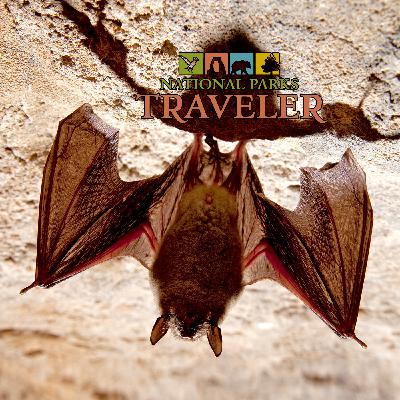
A growing majority of bat species are in serious trouble, largely because of white nose syndrome, a deadly fungal disease that resembles a white fuzz on infected bats. As the disease has spread across the country, it's decimated bat populations – killing upwards of 99 percent of some populations – and turned up in many national parks. As part of the National Parks Traveler's Threatened and Endangered Species Project, contributing writer Kim O'Connell has been looking into the situation with bat species.
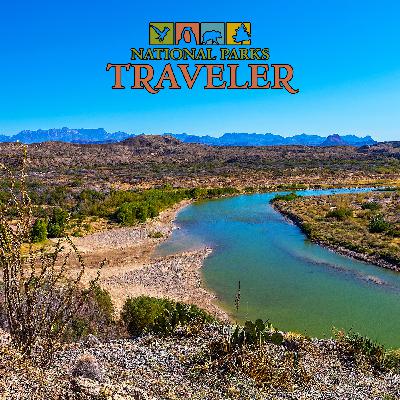
Big Bend National Park lately has drawn a lot of national attention, and not in a good way. Recently the U.S. Customs and Border Patrol announced that it wanted to build some sort of border wall along all or part of the 118 miles of border the national park shares with Mexico. Is that a good idea? Will it adversely impact the park? Can it even be done? To discuss those and other questions, our guest today is Bob Krumenaker, whose long Park Service career included a stint as Big Bend's superintendent. Bob also is chair of the Keep Big Bend Wild organization that is pushing to see a large portion of the park designated as official wilderness.
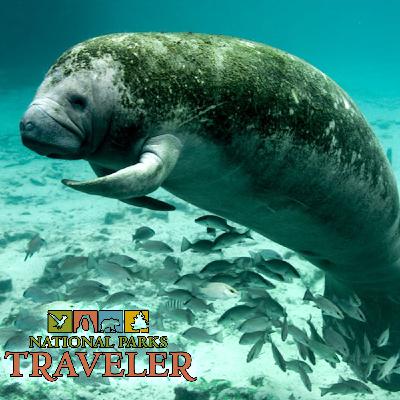
To put some perspective on the National Parks Travelers' monthslong coverage of threatened and endangered species, we're going to go back in time a bit today to replay a podcast in which we discussed the ESA — and possible changes to it — with Jake Li, a vice president with Defenders of Wildlife, and Stephanie Adams, director of wildlife at the National Parks Conservation Association.
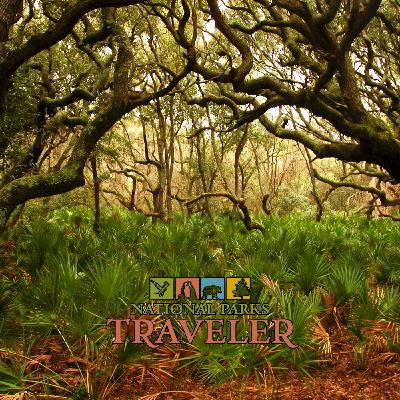
At Cumberland Island the National Park Service currently is crafting a visitor use management plan that critics say poses a great threat to the national seashore's official and potential wilderness. To get an understanding of what's at risk, we've invited Jessica Howell-Edwards, the executive director of Wild Cumberland, which advocates for the seashore's wilderness area and ecosystems, to join us.
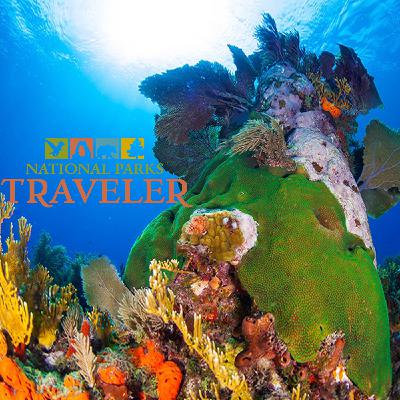
The Florida Reef stretches from Biscayne National Park south past Everglades National Park and down to Dry Tortugas National Park in Florida. It's roughly 350 miles long, and is the only coral reef in the continental United States. When it comes to reefs around the world, the Florida Reef is the third largest. But, unfortunately, it's under a lot of pressure. It's dealing with pollution, ocean warming, damage inflicted by anchors, and disease. Perhaps the most serious disease infecting the reef is Stony Coral Tissue Loss Disease, which can be fatal to corals. Our guest today is Beth Firchau, who works for the Association of Zoos and Aquariums. Part of her role is to manage the association's safe coral program, and part of her role is AZA's coordinator for the Florida Reef Tract Rescue Program. And part of her work involves a network of aquariums across the United States that are holding samples of corals from the Florida Reef.
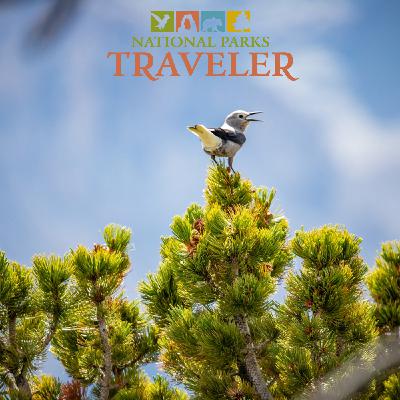
Whitebark pines are a Western icon that the National Park Service has designated as a "vital sign" species because they are critical to ecosystem functions. But they are at risk of extinction due to climate change, beetles, and a fatal fungus from Eurasia. Our guest today is Dr. Elizabeth Pansing, the director of forest and restoration science for American Forests, a nonprofit organization that strives to create healthy and resilient forests. This program was made possible in part by the Park Foundation.
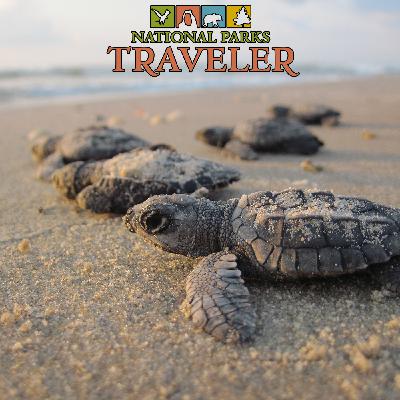
What is the fate of the critically endangered Kemp's Ridley Sea Turtle? This smallest of the sea turtle species glides among the sea grasses and coral reefs of the Gulf of Mexico, and nests predominantly along the shores of Mexico, with a growing number of turtles nesting on Padre Island National Seashore in Texas. Hopes for this sea turtle's recovery weigh heavily on the national seashore's programs and budgeting, which are also threatened and endangered. Dr. Donna Shaver, one of the world's foremost sea turtle experts, nurtured the seashore's sea turtle science program for the past 22 years. However, for the past five years she's been battling to save the program, and her position, at Padre Island National Seashore. National Park Service officials would not allow us to discuss the plight of the Kemp's Ridley Sea Turtle with Dr. Shaver. Instead, the Traveler's Lynn Riddick talks this week with research scientist Nathan Putman. He's involved in studies of the Kemp's Ridley to understand more about this intriguing species.
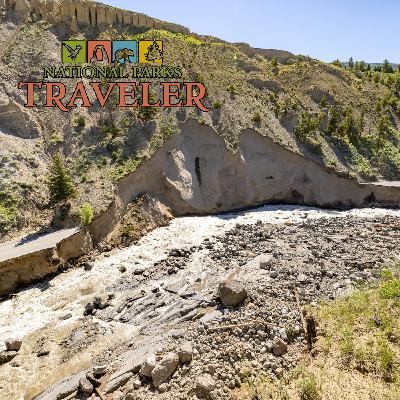
During a typical summer day at Yellowstone National Park roughly 3,000 vehicles enter through the North Entrance and head down to Mammoth Hot Springs so their passengers can begin their park adventure. Up until June 2022 their route took them along the Gardner River. But that all changed on June 13, 2022, when a once-in-500-years rainstorm, falling on top of snow cover, sent waters rampaging down the Yellowstone, Lamar, and Gardner rivers. Those flood waters took out sections of both the northeast and north entrance roads in the park. While the gaps in the Northeast Entrance Road were patched relatively quickly, the North Entrance Road through Gardiner Canyon remains closed to traffic. Instead, vehicles are temporarily using the Old Gardiner Road, a stagecoach route that was relatively quickly rehabilitated to handle vehicle traffic. Since the flood, the National Park Service has been looking for a permanent route from Gardiner Montana, to Mammoth Hot Springs that would avoid going all the way through the Gardiner Canyon. Yellowstone Superintendent Cam Sholly joins us today to explain the decision-making that has gone into finding that route.
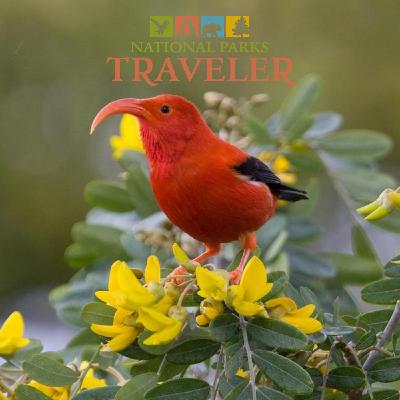
A dramatic battle is being waged on the flanks of Halealakā National Park to save rare Honeycreeper birds that exist only in Hawaii. It's believed that the 50-odd known living or extinct species of honeycreepers all evolved from a single colonizing ancestor that arrived on Hawaii, the world's most remote island group, some three to five million years ago. Threats to the birds began to surface around 500 A.D., when Polynesian colonists began to settle on the Pacific island chain. They began to clear most of the low elevation forests, inadvertently eating away at the birds' habitat. It's also thought that the Polynesians introduced the Pacific Rat to the islands, a predator that ate the birds' eggs. The arrival of Europeans in the late 18th century accelerated the destruction of the birds' forest habitat. Along with loss of habitat, the honeycreepers are falling victim to avian malaria, which is carried by mosquitoes, and which is almost always fatal to the birds. Today only 17 species of honeycreepers survive in the state, some with fewer than 500 birds remaining, and it's believed that many will be pushed to extinction within a decade if nothing is done. In a bid to slow, if not reverse, the spread of avian malaria, the Maui Forest Bird Recovery Project is working to disrupt the reproduction of mosquitoes. Traveler associate editor Rita Beamish and Editor Kurt Repanshek recently sat down with Dr. Hanna Mounce, program director of the project, to learn about its work.
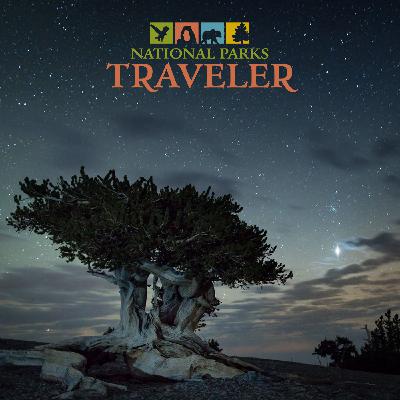
This year, 2025, likely will go down as the most transitional for the National Park Service. We've seen the loss of nearly a quarter of the permanent workforce, efforts to whitewash history in some parks, and the loss of a grand lodge to wildfire. The past 12 months have been full of news impacting the National Park Service and national parks, not all of it good. It's been a somewhat tumultuous year, leaving many wondering what the new year will bring for the parks and their employees. To help us look back over the past 12 months, we've invited Kristen Brengel, the senior vice president for government affairs at the National Parks Conservation Association, to join us.
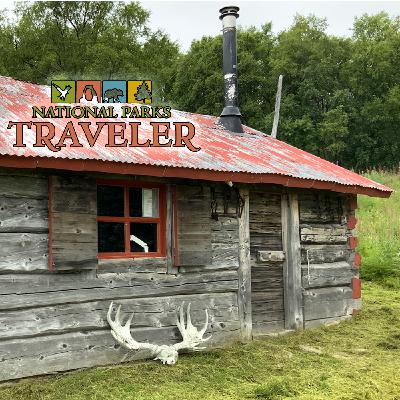
A century of seasons has worn the appearance of the log cabin Roy Fure built in present-day Katmai National Park and Preserve in Alaska, but his care of the small cabin, and later National Park Service restoration efforts, have enabled it to stand the test of time. Dovetail-notched spruce logs still sit tightly together, the corrugated metal roof Fure replaced his sod roof with in 1930 and painted red could use a new coat of paint, but otherwise looks rainproof, and the windmill he erected to generate electricity still stands tall. Across the 85+ million-acre National Park System there are tens of thousands of historic structures — 19th-century homesteads, Civil War structures, Civil Rights facilities, presidential homes, artworks and more — but not all receive the same treatment as Fure's cabin. • At Oregon Caves National Monument and Preserve in Oregon, the historic, and once charming, Chateau with 23 rooms has been closed since 2018 due to structural issues and a lack of funding to address them. • In Kansas, the Park Service last year gained title to the First Baptist Church at Nicodemus National Historic Site, but a lack of funding has left the 118-year-old house of worship boarded up. • At Gettysburg National Military Park the David Wills house, where President Lincoln spent the night before delivering his address, has been closed since fall 2024 when a water line burst and flooded the structure. Those are just a very small handful of historic structures in the National Park System that are among thousands competing for scarce rehabilitation dollars. To discuss the situation across the park system we've invited Pam Bowman, the senior director of government relations at the National Trust for Historic Preservation.
After more than 50 years as one of the country's landmark environmental laws, the Endangered Species Act has gone from one of the most popular measures before Congress to one fueling demands that it be revised, if not discarded. The National Parks Traveler is reviewing the Endangered Species Act's work and its record, spotlighting individual species that it's protected, those that it failed, and those that it recovered. The monthslong series comes as ESA champions worry that the push to weaken the law could consign countless animals and plants to the growing list of flora and fauna that, like the Passenger pigeon, are now found only in books and online. The National Park System seems to be the perfect background to explore these questions, as its lands are supposedly the best preserved on the federal landscape. I recently interviewed two wildlife advocates — Jake Li, a vice president with Defenders of Wildlife who spent time working in the Environmental Protection Agency and U.S. Fish and Wildlife Service before joining the advocacy group, and Stephanie Adams, director of wildlife at the National Parks Conservation Association. Though the interviews were done separately, the questions were largely the same. What follows is a merging of those two conversations.
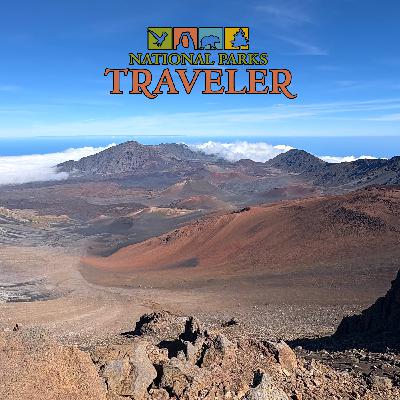
Haleakalā National Park is deceptively wonderful and rich in biodiversity. But if we're not careful, we could lose some of that biodiversity. Located on the island of Maui in Hawaii, the first thing you notice about this national park is its towering dormant volcano, Haleakalā, which rises from sea level to more than 10,000 feet. While many visitors simply want to head to the top of the volcano to peer into its crater or enjoy a colorful sunrise or sunset, if you take a little time to get to know this park you'll be amazed by what doesn't first come into sight. For instance, there are more than 300 plant and animal species endemic to Haleakalā — found nowhere else in the world — and many species that are being threatened or endangered with extinction. Kurt Repanshek headed to Haleakalā this past week with Special Projects Editor Patrick Cone and Assistant Editor Rita Beamish to learn more about the park and its rare and unique species.
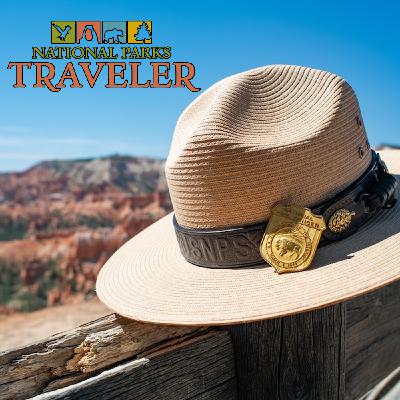
It's Thanksgiving Weekend, usually interpreted as a bountiful time of year when we can all sit back and be thankful. But can many who work for the National Park Service feel thankful in the wake of the staff reductions this year? This year has been hard on the Park Service, what with the loss of roughly a quarter of the full-time workforce and questions around how the agency has long interpreted history. But the Park Service has long struggled with its operations. Funding and staffing never seem to have met the needs of the Park Service to manage its far-flung collection of more than 400 units. We're going to explore the funding and staffing issue of the agency today with John Garder, the senior director of budget and appropriations for the National Parks Conservation Association.
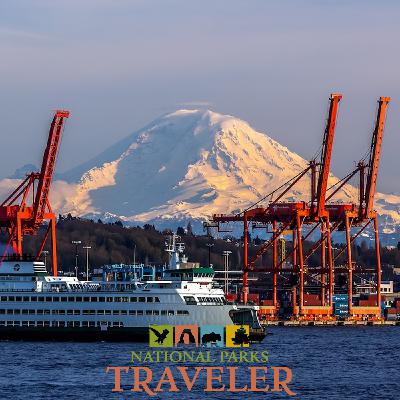
Gazing up at mountains from their valleys down below, it's hard, if not impossible, to detect any change on the top of the mountains. But change is ongoing, especially in recent history as the climate continues to warm. From Tacoma or Seattle in Washington state, the snowy summit of Mount Rainier National Park appears unchanged from how it's always looked. Snowy. But is that truly the case? What would you think if someone told you the top of the summit no longer is 14,410 feet high, that the high point of the park has actually shrunk? Our guests today are Eric Gilbertson, a mechanical engineer and mountaineer from Seattle University, and Scott Hotaling, a watershed sciences professor from Utah State University, who have measured the thickness of the ice cap on the summit of Mount Rainier. What they have to say may surprise you.
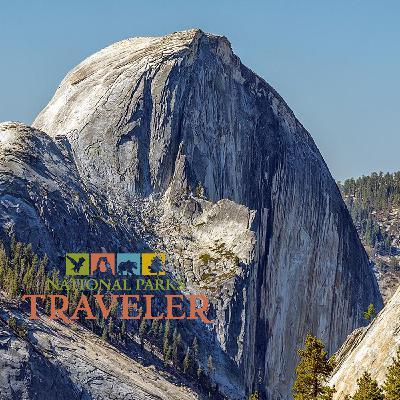
The government shutdown has been record-setting in terms of its length. So, too, has been the time that many employees of the National Park Service have been furloughed without pay. How has the shutdown affected the parks, and how have the friends groups that support the parks responded? We're going to discuss that today with Chris Lenhertz from the Golden Gate Conservancy, Jacki Harp from Smokies Life, Eric Stiles from Friends of Acadia, and Cassius Cash from the Yosemite Conservancy.
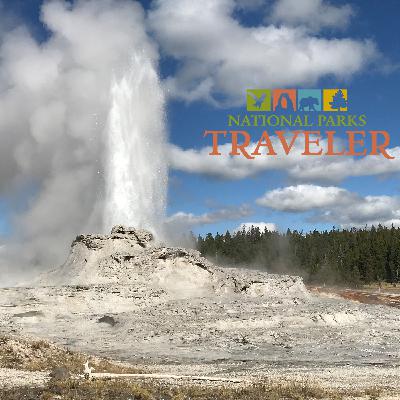
What is a "typical" day at the National Parks Traveler like? When you surf over to the website there's always content there, ready to update you on news from around the National Park System. How is it generated, and who generates it? Editor Kurt Repanshek and Contributing Editor Kim O'Connell dive into the logistics of running a news operation that's focused on national parks and protected areas.
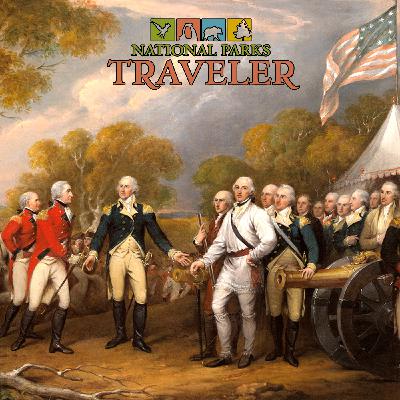
Though the Revolutionary War didn't officially end until September 1783 with the signing of the Treaty of Paris, a key turning point in the war for independence occurred six years earlier in a small corner of today's New York state. The Battle of Saratoga stretched out from September 19 until October 7, 1777, and marked the first time the British Empire had been forced to surrender. British General John Burgoyne had stretched his forces too thin in marching down from Canada with the intent of capturing Albany and wound up with huge losses in his army of nearly 7,000. His defeat at the hands of Major General Horatio Gates and General Benedict Arnold greatly raised American hopes to gain independence and convinced France to come to the colonials' aid. The story of how the British surrender came about is told at Saratoga National Historical Park near today's Stillwater, New York. To help us better understand the battles, we're joined today by Lauren Roberts, the historian at Saratoga County, New York, and Traveler Contributing Editor Kim O'Connell, who recently visited the historical park.

The federal government is shut down, but the national parks – most of them, anyway – are open. Back during his first term in office President Donald Trump also kept the parks open during the government shutdown that stretched from the end of 2018 into early 2019. That led to some vandalism to the parks and damage to some park resources. How are things going this shutdown? To explore that question, our guest today is Kristen Brengel, the senior vice president of government affairs with the National Parks Conservation Association.
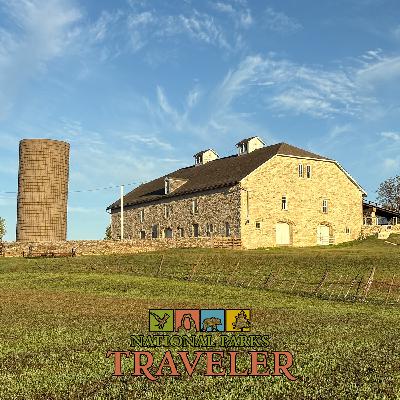
Kansas is a big place, and not one particularly well-known for national park destinations. But that doesn't mean you should overlook the Sunflower State. In the closing days of September, as the country seemed destined for a government shutdown, the Traveler's Kurt Repanshek and Patrick Cone headed into Kansas to visit some of the parks there to better understand their role in the National Park System. And we were not disappointed. Back in 2022 Kurt made a similar trip, and stopped at Tallgrass Prairie National Preserve in the Flint Hills of central Kansas. During that stop Ranger Eric Patterson gave Kurt a wonderful tour of the preserve and explained its history. Eric has moved on, but during Kurt and Patrick's recent visit Heather Brown, the preserve's chief of interpretation, sat down with them to discuss the preserve in general and the tallgrass prairie specifically. During their swing through Kansas, Kurt and Patrick also headed to Nicodemus, a well-off-the-beaten path destination in the National Park System, one so far off the beaten path that the state of Kansas does Nicodemus National Historic Site a tremendous disservice by providing very little signage showing you how to get to Nicodemus. But stay determined and you can find the site. While the Park Service only claims five buildings at Nicodemus, and only two are open, the history of how the townsite was founded in post-Civil War America by more than 300 previously enslaved peoples is an uplifting history of self-determination, grit, and perseverance. What follows are two conversations they had with rangers – before they were furloughed when the government shut down – at the two sites, LueCreasea Horne Horn at Nicodemus National Historic Site and Heather Brown at Tallgrass prairie.

Comments

Download from Google Play

Download from App Store
 United States