


 Claim Ownership
MAD Warfare Podcast
Subscribed: 1Played: 3
Subscribe

© All Rights Reserved
Description
MAD Warfare™️ is a science-driven deep dive into the wild, weird, and sometimes wicked world of the "weaponization of everything." But don't worry—IT WILL BE FUN.
Think of it as your covert ops manual for spotting how cyber hackers, rogue AI agents, and shady "bad actors" (who'd be terrible in a buddy comedy) are messing with our minds. Often in ways that evade detection… until it's too late.
With expert interviews from unexpected places and plenty of offbeat insights, this podcast reveals the hidden battleground of everyday life. Each episode is a call to action: for those in power to step up—and for the rest of us to gear up, because we might be all we've got. (Also, may feature puppets.)
Think of it as your covert ops manual for spotting how cyber hackers, rogue AI agents, and shady "bad actors" (who'd be terrible in a buddy comedy) are messing with our minds. Often in ways that evade detection… until it's too late.
With expert interviews from unexpected places and plenty of offbeat insights, this podcast reveals the hidden battleground of everyday life. Each episode is a call to action: for those in power to step up—and for the rest of us to gear up, because we might be all we've got. (Also, may feature puppets.)
28 Episodes
Reverse
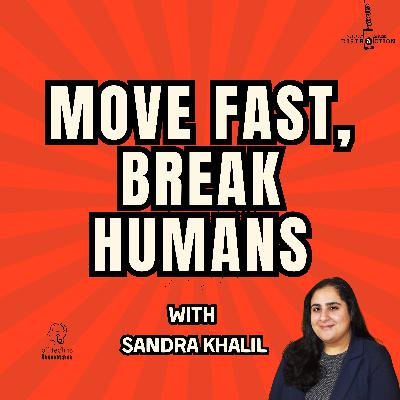
🎙️ Get the ad-free version and exclusive bonus segments here: MAD Warfare Patreon AI is booming, and guardrails are disappearing. In this episode, we talk with Sandra Khalil (All Tech Is Human) about what happens when artificial intimacy scales faster than accountability. From AI companion cafés to chatbots offering mental health "support," we dig into the real-world risks of systems that feel human but aren't responsible. We cover vulnerable users, unsafe advice, product liability, the global regulation gap, and why "move fast and break things" becomes dangerous when the thing breaking is trust. If you've ever wondered whether your chatbot is just helpful—or subtly shaping you—this one's for you. ⸻ Want To Support MAD? Sponsor us. We'll make you a weird, wonderful custom video. Email: madwarfarepodcast@gmail.com (Or send snacks. Still counts.) ⸻ MAD Warfare™ is hosted by narrative strategist Jocelyn Brady and cognitive neuroscientist Sean Anthony Guillory. Edited and produced by Amine el Filali. Visit madwarfare.com for extra giggles. Send dream guests, weird ideas, wishes, and sponsorship inquiries (yes, again) to madwarfarepodcast@gmail.com. ⸻ Fair Use This show is MAD enough to include homages, short clips, and references that provide vital context and/or moments of joy. We deeply respect every creator's work and use these moments for educational, artistic, and transformative purposes under Fair Use. If we missed an attribution or you'd like to collaborate, reach out—we're happy to chat.
🎙️ Get the ad-free version and exclusive bonus segments here: https://patreon.com/MADWarfare One year in. Somehow still alive. Somehow still laughing. In this anniversary episode, we do a behind-the-scenes autopsy of MAD Warfare: what changed, what got weirder, and what's gotten more urgent since we hit record for the first time. We break it down into three F's that f with us — Funding, Fear, and Facts — and why each one has shifted in ways we did not fully clock a year ago. We talk about the government's refusal to look inward, the exodus of scientific brainpower, the changing landscape of speech and consequences, and the surreal moment we're living in where people can watch the same footage and disagree on what happened. Then we hit: • 3 favorite surprise moments from the show (wrestling as politics, brain organoids, remote drone warfare trauma) • 3 practical tools to fight back: story, system-hacking, and coordinated community action • Where we go next — including the promise of a Patreon and building a real library of tools + guests If you've been here since episode one, we love you. If you're new, welcome to the ship in stormy waters. ⸻ Timestamps (approx) • 00:00 Happy birthday to us + meet Amine (man behind the veil) + mascot Zuki • 01:00 The episode plan: 3 areas, 3 surprises, 3 tools, then "where next" • 01:40 The 3 F's: Funding, Fear, Facts (and yes, fuckery) • 02:00 Funding: why we thought support would show up + "mind powers" • 05:00 The reframe: everyday citizens are doing the work + explainers rising • 05:20 10,000 PhDs let go + "it's up to us" • 06:00 Fear: shifting from cultural cancellation to government consequences • 08:40 Facts: seeing the same reality and disagreeing anyway • 09:30 The inversion: if the internet doesn't have it, people doubt real life • 11:30 Swift, satire, and the OG Swifties • 12:00 AI-only social network "Moltbook" + bots forming a religion + security nightmare • 15:45 3 surprises: wrestling politics, organoids, remote warfare trauma • 21:30 3 tools: story, hacking systems (Swapneel), coordinated action • 27:30 Where next: Patreon + libraries + expert hub • 29:30 Gratitude + sponsor shoutouts + Sean's mom is #1 merch buyer • 32:00 End ⸻ Mentioned Episodes / Callbacks • Al Snow (pro wrestling + politics) • Chris Acha (organoids / "brain in a robot" energy) • Tanner (remote warfare / drone operators) • Devsena (resonance) • Mike Ross (resonance) • Swapneel (algorithm hacking masterclass) • Elizabeth Tate (sneaky ladies / reframing perceived powerlessness) ⸻ Want To Support MAD? Sponsor us. We'll make you a weird, wonderful custom video. Email: madwarfarepodcast@gmail.com (Or send snacks. Still counts.) ⸻ MAD Warfare™ is hosted by narrative strategist Jocelyn Brady and cognitive neuroscientist Sean Anthony Guillory. Edited and produced by Amine el Filali. Visit madwarfare.com for extra giggles. Send dream guests, weird ideas, wishes, and sponsorship inquiries (yes, again) to madwarfarepodcast@gmail.com. ⸻ Fair Use This show is MAD enough to include homages, short clips, and references that provide vital context and/or moments of joy. We deeply respect every creator's work and use these moments for educational, artistic, and transformative purposes under Fair Use. If we missed an attribution or you'd like to collaborate, reach out—we're happy to chat.
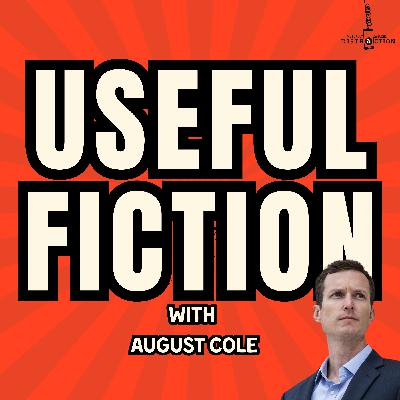
Do your stories shape the future—or do they quietly shape you first? And when the next war shows up wearing a hoodie, a meme, and a "totally harmless" plotline… how would we even recognize it? In this episode, we talk with August Cole — co-author of Ghost Fleet and Burn In and co-founder of Useful Fiction — about why fiction can do what white papers can't: grab attention, build foresight, and help people rehearse decisions before reality demands them. We get into "strategic surprise," why the information environment is the missing chapter of the last decade, and what it means when cognitive warfare becomes hyper-personalized—so everyone is fighting their own battle. (Yes. That's as weird as it sounds. Also: unfortunately real.) If you've ever felt your agency slipping, your feed steering, or your brain quietly drafted into a conflict you didn't sign up for… this one's for you. ⸻ Key Topics Useful fiction: why story can carry serious ideas farther than doctrine Strategic surprise: what it is, why institutions keep getting blindsided, and how narrative reduces it Ghost Fleet, 10 years later: what aged well, what changed, what got left out The attention economy: when incentives + algorithms start shaping behavior at machine speed Useful fiction vs. propaganda: credibility, trust, and why "too clean" stories fail "You may not be interested in cognitive warfare…" (but it's interested in you) Why cognitive warfare is getting harder to detect: personalization at scale The simplest anti-doom message that still matters: you matter ⸻ Resources + Links August Cole — augustcole.com Useful Fiction — useful-fiction.com Books: Ghost Fleet / Burn In ⸻ Want To Support MAD? Sponsor us. We'll make you a weird, wonderful custom video. Email: madwarfarepodcast@gmail.com (Or just send snacks. Still counts.) ⸻ MAD Warfare™ is hosted by narrative strategist Jocelyn Brady and cognitive neuroscientist Sean Anthony Guillory. Edited and produced by Amine el Filali. Visit madwarfare.com for extra giggles. Send your wishes, weird ideas, dream guests, and sponsorship inquiries (yes, again) to madwarfarepodcast@gmail.com. ⸻ Fair Use This show is MAD enough to include homages, short clips, and references that provide vital context and/or moments of joy. We deeply respect every creator's work and use these moments for educational, artistic, and transformative purposes under Fair Use. If we missed an attribution or you'd like to collaborate, reach out—we're happy to chat.
Do your ideas belong to you—or are they secretly running the show? If identities can calcify into cages, how do you melt them back into something alive? In this episode, we talk with therapist and writer Mike Ross about the weird life of ideas: how they form, how they spread, and how they quietly start making decisions for us. We go from punk rock and tattoos to liminal spaces, Robin Williams, Gen Alpha chaos ("67"), emotional granularity, and Mike's concept of cognitive alchemy—naming and reshaping the stories and feelings that shape us. If you've ever felt lonely online, stuck in your own head, or hungry for something more real than the feed, this one's for you. ⸻ Key Topics The weird life of ideas: when thoughts become "drivers," not visitors How identities calcify (and what it takes to loosen them) Why the early Internet felt like salvation—and the modern feed feels like a beige matrix What we lose when algorithms replace serendipity Liminal spaces and why they mess with us (in a good way, sometimes) Tattoos, punk rock, and identity as signal Robin Williams, grief, and the stories we inherit Gen Alpha chaos and the mysterious "67" energy Emotional granularity: getting specific about what you're feeling "Cognitive alchemy": turning stuck inner material into something usable ⸻ Resources + Links Mike Ross — (add your preferred link/handle here) https://www.linkedin.com/in/lordofthestrange/ https://lordofthestrange.substack.com/ ⸻ Want To Support MAD? Sponsor us. We'll make you a weird, wonderful custom video. Email: madwarfarepodcast@gmail.com (Or just send snacks. Still counts.) ⸻ MAD Warfare™ is hosted by narrative strategist Jocelyn Brady and cognitive neuroscientist Sean Anthony Guillory. Edited and produced by Amine el Filali. Visit madwarfare.com for extra giggles. Send your wishes, weird ideas, dream guests, and sponsorship inquiries (yes, again) to madwarfarepodcast@gmail.com. ⸻ Fair Use This show is MAD enough to include homages, short clips, and references that provide vital context and/or moments of joy. We deeply respect every creator's work and use these moments for educational, artistic, and transformative purposes under Fair Use. If we missed an attribution or you'd like to collaborate, reach out—we're happy to chat.
What if your worst enemy wasn't a foreign adversary—but a virtual clone of you? A digital twin that knows your habits, your cravings, your blind spots. It knows when you're tired. When you're distracted. When you're easiest to influence. Sounds like Black Mirror. It isn't. In this episode, we sit down with Matt Canham—former FBI supervisory special agent, trainer to NASA and DARPA, and founder of the Cognitive Security Institute—to talk about digital twins, social engineering, and why the human mind is now the primary target. This is a conversation about prediction , personalization, and what happens when systems know you better than you know yourself. ⸻ Key Topics What "cognitive security" actually means—and why it's not psychology cosplay Digital twins as behavioral models, not avatars Why prediction beats persuasion every time How social engineering exploits routine, not stupidity Personalization as a structural vulnerability Why awareness doesn't equal protection The difference between influence, manipulation, and coercion Why humans are easier to model than systems What institutions are quietly preparing for Where responsibility ends: individual brains vs. system design ⸻ Resources + Links Cognitive Security Institute https://www.cognitivesecurityinstitute.org/ Matt Canham — speaking, training, and research on cognitive security https://www.linkedin.com/in/matthew-cognitivesecurity/ ⸻ WANT TO SUPPORT MAD? Sponsor us. We'll make you a weird, wonderful custom video. Email: madwarfarepodcast@gmail.com (Or just send snacks. Still counts.) ⸻ MAD Warfare™ is hosted by narrative strategist Jocelyn Brady and cognitive neuroscientist Sean Anthony Guillory. Edited and produced by Amine el Filali. Visit madwarfare.com for extra giggles. Send your wishes, weird ideas, dream guests, and sponsorship inquiries (yes, again) to madwarfarepodcast@gmail.com. ⸻ FAIR USE This show is MAD enough to include homages, short clips, and references that provide vital context and/or moments of joy. We deeply respect every creator's work and use these moments for educational, artistic, and transformative purposes under Fair Use. If we missed an attribution or you'd like to collaborate, reach out—we're happy to chat.
Who wins when nobody knows what to trust? If the biggest national security threat isn't hackers or spies—but bad communication—what happens next? In this episode, we sit down with Dr. Andrea Hickerson, Dean of Journalism at the University of Mississippi and founding director of the new Center for Information Advantage & Effectiveness, to distill how information actually moves, mutates, and manipulates us. From deepfakes and dashboards to sports rumors, betting markets, and why "media literacy" might be the wrong fix entirely—this is a conversation about how narrative, tone, and trust quietly decide outcomes long before facts ever get a vote. Welcome to the info war. Key Topics Why bad communication—not bad actors—is the real national security risk Why dashboards create a false sense of knowing Deepfakes: when quality doesn't matter, context does How sports, fandom, and entertainment become information Trojan horses Why famous people are harder to deepfake than regular humans How misinformation sneaks in through tone, not facts Why media literacy puts too much work on audiences Media ethics vs. "just think harder" solutions Who actually benefits when confusion spreads Why trust collapses faster than truth Resources + Links Center for Information Advantage & Effectiveness — University of Mississippi Andrea Hickerson — andreahhickerson@olemiss.edu Book: Fake Checking: A Journalist's Guide to Deep Fakes WANT TO SUPPORT MAD? Sponsor us. We'll make you a weird, wonderful custom video. Email: madwarfarepodcast@gmail.com (Or just send snacks. Still counts.) — MAD Warfare™ is hosted by narrative strategist Jocelyn Brady and cognitive neuroscientist Sean Anthony Guillory. Edited and produced by Amine el Filali. Visit madwarfare.com for extra giggles. Send your wishes, weird ideas, dream guests, and sponsorship inquiries (yes, again) to madwarfarepodcast@gmail.com. — FAIR USE This show is MAD enough to include homages, short clips, and references that provide vital context and/or moments of joy. We deeply respect every creator's work and use these moments for educational, artistic, and transformative purposes under Fair Use. If we missed an attribution or you'd like to collaborate, reach out—we're happy to chat.
What happens when the information environment becomes too loud for the human brain to handle? And why does it feel like everyone — kids, adults, institutions, governments — is getting overwhelmed at the same time? We sit down with John Bicknell, former Marine and host of The Cognitive Crucible, to talk about the cognitive overload shaping modern life: from teenagers buckling under algorithmic pressure… to countries struggling to manage complexity… to why some global actors might actually weaponize chaos itself. ⸻ Key Topics • Why different groups (teen girls, teen boys, adults) are being overwhelmed at different tempos • Gaming, porn, incels, self-image, comparison loops — and what's really driving these shifts • Empathy: the healthy version, the unhealthy version, and the "weaponized" version • Why algorithms trap us in bubbles and why escaping them takes effort • The Law of Requisite Variety and what it teaches us about surviving complexity • Cognitive noise: how stress, life chaos, and global events change what messages "get through" • Why simple messages perform better in noisy environments • How militaries (and adversaries) can exploit overloaded populations • Space, sovereignty, China, the Kessler Effect… and why the next frontier of conflict might be orbital • Cognitive security as our generational challenge ⸻ Resources + Links The Cognitive Crucible — https://information-professionals.org/podcasts/cognitive-crucible/ Information Professionals Association (IPA) — https://information-professionals.org More Cowbell Unlimited — https://morecowbellunlimited.com/ "More Cowbell" SNL Sketch (homework assigned by John) ⸻ WANT TO SUPPORT MAD? Sponsor us. We'll make you a weird, wonderful custom video. Email madwarfarepodcast@gmail.com — MAD Warfare™ is hosted by narrative strategist Jocelyn Brady and cognitive neuroscientist Sean Anthony Guillory. Edited + produced by Amine el Filali. More at madwarfare.com. — FAIR USE This show is MAD enough to include homages, short clips, and references for context, critique, and joy. All such moments are used under Fair Use for educational and transformative purposes. If we missed an attribution or you'd like to collaborate, email us — we're always happy to talk with humans.
What if your brain isn't a peace-loving hippie at heart…but a very polite war machine trying its best? In this episode, Dr. Nicholas Wright — neuroscientist, former neurologist, advisor to the Pentagon, and author of Warhead: How the Brain Shapes War and War Shapes the Brain — walks us through why our minds are wired for conflict, why that doesn't mean we're doomed, and how better self-knowledge might literally save civilizations. We get into everything from nuclear deterrence and TikTok anxiety to Love Island, shitstorming, and why the "nice" Terminator is the role model for future AI. Key Topics Why our brains evolved for conflict — and why that doesn't automatically mean endless war The "peaceful arc of history" argument (Pinker, Sapolsky, etc.) and why Nick thinks it's dangerously incomplete A working definition of war: politically motivated violence at scale between human groups Fear as a feature, not a bug — how it keeps us alive and how it spirals into escalation Injustice, identity, and "right vs. right" conflicts: why both sides can feel morally justified Why we're obsessed with bad reality TV and gossip (hint: mating goals + theory of mind + survival) Imagination as a survival skill: using "what if?" simulations in your head to navigate risk and reputation Generational complacency: Ibn Khaldun's 3-generation empire problem and why our "status quo" is historically incredible Emotional literacy vs. over-identifying with labels: anxiety, TikTok self-diagnosis, and fear run amok The brain as an orchestra: emotions as the brass section, wisdom as the conductor Metacognition and wisdom: thinking about your own thinking to make better — and saner — decisions How AI and information operations intersect: personalized influence, testing campaigns on "AI test ranges," and why IO still isn't everything Robots, embodiment, and the next AI leap: why giving machines bodies (and something like fear) changes the game "Wiser AI" instead of perfect alignment: what it means to build systems that can see the bigger picture Leadership, failure, and why we punish the very honesty we say we want Practical brain tools: reframing, suppression (yes, sometimes), sleep, exercise, and better decision trees Shitstorming as a creativity tool: why pitching the worst possible ideas can unlock your best ones How to use brain science if you can't even win an argument with your uncle on Facebook Resources + Links Warhead: How the Brain Shapes War and War Shapes the Brain — by Dr. Nicholas Wright (Pan Macmillan) Nicholas Wright's website — Intelligent Biology: analysis at the intersection of brains, technology, and security (intelligentbiology.co.uk) Nicholas Wright on LinkedIn — /in/nicholas-d-wright-bba3a065/ Nicholas Wright on X (Twitter) — @nicholasdwright WANT TO SUPPORT MAD? Sponsor us. We'll make you a weird, wonderful custom video. Email madwarfarepodcast@gmail.com (Or just send snacks. That works too.) MAD Warfare™️ is hosted by narrative strategist Jocelyn Brady and cognitive neuroscientist Sean Anthony Guillory. Edited and produced by Amine el Filali. Visit madwarfare.com for extra giggles. Send your wishes, weird ideas, dream guests, and (yes it bears repeating) sponsorship inquiries to madwarfarepodcast@gmail.com. FAIR USE: This show is MAD enough to include homages, short clips, and references that provide vital context and/or moments of joy. We DEEPLY respect every creator's work and use these moments purely for educational, artistic, and transformative purposes under Fair Use. If we are missing attributions or you would like to collaborate, please reach out — we're always happy to chat!
Ep 019: May the Best Story Win w Rand Walzman Before "fake news" or ChatGPT, one computer scientist asked a dangerous question: could a machine invent believable lies? That was 1985. Dr. Rand Waltzman went on to shape DARPA's research into social media and information influence. This work helped define what we now call "cognitive security." We talk about how those early experiments connect to today's manipulation economy, why emotion is the real battlefield, and why the biggest threat isn't the tech … it's US. 😬 Key Topics • The origin of cognitive security—and why it started with a thought experiment about AI and deception • Why emotion, not information, is the real target in modern influence operations • "Foreign vs. domestic" is a myth: why today's propaganda is homegrown as often as imported • From DARPA to disinformation: what Rand learned about how ideas spread (and why they stick) • The rise of affective computing—machines that read and react to human emotion • Humor as protest: how "wicked fun" became a tactic for civil resistance in Macau • Why censorship fails and "displacement storytelling" might actually work • The danger of apathy and what real pushback against manipulation could look like Resources + Links • Dr. Rand Waltzman — LinkedIn (best place to find him): https://www.linkedin.com/in/randwaltzman • Books mentioned ◦ Propaganda — Edward Bernays ◦ Propaganda: The Formation of Men's Attitudes — Jacques Ellul ◦ Affective Computing — Rosalind Picard (MIT Media Lab) MAD Warfare™️ is hosted by narrative strategist Jocelyn Brady and cognitive neuroscientist Sean Anthony Guillory. Edited and produced by Amine el Filali. Visit our website at madwarfare.com for extra giggles. And send your wishes, weird ideas, dream guests, and (yes it bears repeating) sponsorship inquiries to madwarfarepodcast@gmail.com. — FAIR USE: This show is MAD enough to include homages, short clips, and references that provide vital context and/or moments of joy. We DEEPLY respect every creator's work and use these moments purely for educational, artistic, and transformative purposes under Fair Use. If we are missing attributions or you would like to collaborate, please reach out—we're always happy to chat!
What if the story running your life isn't yours at all? Author and publisher Nate Ragolia (Brink Literacy Project) joins us to talk about how the stories we inherit—about who we are, what we deserve, and what we're capable of—shape everything. From teaching creative writing in prisons to publishing comics by people society wrote off, Nate's work shows what happens when people stop living inside someone else's narrative and start writing their own. Key Topics Why the stories we believe decide what we see—and who we become How Brink uses story to rebuild identity and hope Why "you are not a static thing" might be the most freeing idea ever The problem with protagonist syndrome (and why it's not all about you, actually) How empathy starts when we drop the hero/villain binary What media literacy really means—beyond yelling at the algorithm Reclaiming authorship: changing your internal story before someone else does The American story: can we still write one we believe in? Resources + Links Brink Literacy Project — brinklit.org Friction Literary Journal — frictionlit.org The Brink Store — brinkstore.org Instagram: @brinkorg, @frictionseries Nate's Podcast: Debut Buddies — wherever you listen Books by Nate Ragolia: There, You Feel Free | The Retro Activist | One Person Can't Make a Difference WANT TO SUPPORT MAD? Sponsor us. We'll make you a weird, wonderful custom video. Email madwarfarepodcast@gmail.com (Or just send snacks. That works too.) — MAD Warfare™️ is hosted by narrative strategist Jocelyn Brady and cognitive neuroscientist Sean Anthony Guillory. Edited and produced by Amine el Filali. Visit madwarfare.com for more absurdity and insight. Got wishes, dream guests, or brilliant sponsorship ideas? Email madwarfarepodcast@gmail.com. — FAIR USE: We include short clips and cultural references for context, education, and joy under Fair Use. If we've missed attribution or you'd like to collaborate, reach out—we're all ears.
What's the worst possible headline someone could write about you, using nothing but public records? That's opposition research. Sonia Van Meter, managing partner of Stanford Campaigns, shows us how to use it–to your prosperity … or to your peril. Key Topics What opposition research really is (and isn't) Why oppo is about narrative, not "silver bullets" "Self-research": knowing your own vulnerabilities before anyone else does Tone as strategy: how to hit hard without looking cruel Strategic patience—when not to respond and let others do the work Deepfakes, likeness, and why local races are most at risk Why momentum and the perception of winning matters more than one perfect hit Breaking in: why being nice and useful is the real oppo superpower Resources + Links Stanford Campaigns — oppresearch.com Sonia on Instagram: @therealbourbonface Sonia on Threads: @therealbourbonface WANT TO SUPPORT MAD? Sponsor us. We'll make you a weird, wonderful custom video. Email madwarfarepodcast@gmail.com (Or just send snacks. That works too.) — MAD Warfare™️ is hosted by narrative strategist Jocelyn Brady and cognitive neuroscientist Sean Anthony Guillory. Edited and produced by Amine el Filali. Visit our website at madwarfare.com for extra giggles. And send your wishes, weird ideas, dream guests, and (yes it bears repeating) sponsorship inquiries to madwarfarepodcast@gmail.com. — FAIR USE: This show is MAD enough to include homages, short clips, and references that provide vital context and/or moments of joy. We DEEPLY respect every creator's work and use these moments purely for educational, artistic, and transformative purposes under Fair Use. If we are missing attributions or you would like to collaborate, please reach out—we're always happy to chat!
What do extremists, trolls, and corporate boardrooms have in common? They're all in the business of narrative warfare. Simon Paterson went from "smiting the Queen's enemies" in UK military intelligence to advising Fortune 100 companies on how not to get wrecked by disinfo. Turns out: memes, lies, and smear campaigns can be just as effective as missiles. And no, "just ignore it" is not a strategy. This episode takes you from the battlefield to the boardroom—where trust is the real target, and narrative resilience is the only shield that matters. Key Topics From UK military intel to Edelman: Simon's path into narrative warfare Why corporate comms can't treat disinfo as "just PR" The danger of measuring "success" by putting out fires Prebunking: inoculating against lies before they spread The collapse of trust in experts—and the rise of the "Bobs" Why businesses (not governments) may be the last line of defense Notable Quotes "The internet was built by engineers. But it's a deeply human experience." "Once someone believes something, correcting it doesn't undo the belief—it confirms it." "You're all on a floodplain. It's not if, it's when." "You don't have to engage. You can build resilience so others do it for you." "People don't like losing money. That's how you move the conversation." Resources + Links Simon Paterson on LinkedIn linkedin.com/in/simonpaterson1 InfauxTech www.InfauxTech.com Edelman Trust Barometer 2024 edelman.com/trust — MAD Warfare™️ is hosted by narrative strategist Jocelyn Brady and cognitive neuroscientist Sean Anthony Guillory. Edited and produced by Amine el Filali. Visit our website at madwarfare.com for extra giggles. And send your wishes, weird ideas, dream guests, and (yes it bears repeating) sponsorship inquiries to madwarfarepodcast@gmail.com. — FAIR USE: This show is MAD enough to include homages, short clips, and references that provide vital context and/or moments of joy. We DEEPLY respect every creator's work and use these moments purely for educational, artistic, and transformative purposes under Fair Use. If we are missing attributions or you would like to collaborate, please reach out—we're always happy to chat!

Can Cartoons Save Democracy? What do Broadway, the CIA, and Hollywood have in common? For Gus Kangas, the answer is tradecraft. From child actor to CIA operations veteran to Hollywood consultant (most recently on The Agency), Gus has lived at the intersection of performance, persuasion, and perception. Now he's using that experience to ask a big question: how do we teach kids to spot manipulation and propaganda — and can we make it fun enough to stick? In this episode, we get into: • Why acting and espionage share the same skill: making perception reality. • The mental toll of living the role — and how to turn it off before it fractures you. • What Hollywood gets wrong (and sometimes brilliantly right) about intelligence work. • The hidden power of storytelling to shape policy — from WarGames to The Day After. • What a Schoolhouse Rock for 2025 might look like — teaching kids digital literacy, privacy, and propaganda-spotting through music and cartoons. • Why you should never confuse information with wisdom. If you think spycraft is just car chases and tuxedos, this episode might mess with your frame. Reach out to Gus Kangas: https://www.vigilant.pictures/ ⸻ WANT TO SUPPORT MAD? Sponsor us. We'll make you a weird, wonderful custom video. Email madwarfarepodcast@gmail.com (Or just send snacks. That works too.) — MAD Warfare™️ is hosted by narrative strategist Jocelyn Brady and cognitive neuroscientist Sean Anthony Guillory. Edited and produced by Amine el Filali. Visit our website at madwarfare.com for extra giggles. And send your wishes, weird ideas, dream guests, and (yes it bears repeating) sponsorship inquiries to madwarfarepodcast@gmail.com. — FAIR USE: This show is MAD enough to include homages, short clips, and references that provide vital context and/or moments of joy. We DEEPLY respect every creator's work and use these moments purely for educational, artistic, and transformative purposes under Fair Use. If we are missing attributions or you would like to collaborate, please reach out—we're always happy to chat!
What does it mean to be a hero? We throw the word around a lot — soldiers, firefighters, nurses, neighbors, even SpongeBob. But what happens when our definitions clash? When one side's "hero" is the other side's "villain"? On this episode of MAD Warfare, we dig into hero narratives — how they inspire, unite, recruit… and yes, how they get weaponized. Our guest, Adam Bird, is a veteran, entrepreneur, and founder of Heroes Media Group. He's built platforms that amplify the voices of everyday heroes: veterans, first responders, educators, medical pros, neighbors who just show up. People who would never call themselves heroes — which is often what makes them one. Adam shares what he's learned from producing over 17,000 shows, building a network around positive stories, and stubbornly pushing back on a media culture that thrives on outrage. In this episode: • Why the truest heroes are the ones uncomfortable with the title. • The difference between hero worship and actual heroism. • How negative news hooks our brains — and what to do about it. • Why we should shove more positivity down people's throats (Adam's words). • What stubborn optimism looks like in practice. If you think "hero" is just a label for action figures or campaign ads, think again. Find Adam Bird and Heroes Media Group on all platforms at: @mradambird @heroesmediagrp heroesmediagroup.com — MAD SPONSOR: Randori Resources This episode is brought to you by Randori Resources, founded by Sam Carus. Randori helps you train your brain the way fighters train their bodies. Visit randori-resources.com to learn more. — ONGOING SUPPORTERS Big thanks to Elle Younker for being a consistent supporter of MAD Warfare. Her brain is big, her heart is sharp, and her backing helps keep this whole thing moving. Check out her incredible work at the Hive Social Garden. — WANT TO SUPPORT MAD? Sponsor us. We'll make you a weird, wonderful custom video. Email madwarfarepodcast@gmail.com (Or just send snacks. That works too.) — MAD Warfare™️ is hosted by narrative strategist Jocelyn Brady and cognitive neuroscientist Sean Anthony Guillory. Edited and produced by Amine el Filali. Visit our website at madwarfare.com for extra giggles. And send your wishes, weird ideas, dream guests, and (yes it bears repeating) sponsorship inquiries to madwarfarepodcast@gmail.com. — FAIR USE: This show is MAD enough to include homages, short clips, and references that provide vital context and/or moments of joy. We DEEPLY respect every creator's work and use these moments purely for educational, artistic, and transformative purposes under Fair Use. If we are missing attributions or you would like to collaborate, please reach out—we're always happy to chat!
Some of the best mind-hacking tech on the planet was invented before electricity. No code. No bots. No blue check. Just ancient mental engineering — sharp enough to survive empires, con men, and mass hysteria. Devsena Mishra knows it well. She's been inside national security and the hidden rooms where influence campaigns are wired together. She's seen how billions get nudged, poked, and spun into fighting someone else's war — without ever knowing it. One of her favorite countermeasures? Sahaj intelligence. A kind of steady, unshakable clarity that makes you damn near impossible to program. In this episode: Outrage as a global currency. Why "calm" might be the most dangerous thing you can be. How regular people become propaganda delivery systems. Moves to make your brain slippery to manipulation. MAD SPONSOR: Randori Resources This episode is brought to you by Randori Resources, founded by Sam Carus. Randori helps you train your brain the way fighters train their bodies. Visit randori-resources.com to learn more. WANT TO SUPPORT MAD? Sponsor us. We'll make you a weird, wonderful custom video. Email madwarfarepodcast@gmail.com (Or just send snacks. That works too.) — MAD Warfare™️ is hosted by narrative strategist Jocelyn Brady and cognitive neuroscientist Sean Anthony Guillory. Edited and produced by Amine el Filali. Visit our website at madwarfare.com for extra giggles. And send your wishes, weird ideas, dream guests, and (yes it bears repeating) sponsorship inquiries to madwarfarepodcast@gmail.com. — FAIR USE: This show is MAD enough to include homages, short clips, and references that provide vital context and/or moments of joy. We DEEPLY respect every creator's work and use these moments purely for educational, artistic, and transformative purposes under Fair Use. If we are missing attributions or you would like to collaborate, please reach out—we're always happy to chat!
What happens when war becomes a desk job? You wake up in Vegas. Sit down in a box. Fly a drone over Afghanistan. Watch your target for weeks—when he feeds his goats, when he hugs his wife—and then one day, you get the call: Clear to Strike. Then you go home. Eat dinner. And don't talk about it. Former drone operator and founder of Remote Warrior, Tanner Yackley, joins us to talk about what remote warfare really does to the human brain. Spoiler: it's not like a video game. From moral injury to misdiagnosis, from 3,000 hours of combat to launching a mission-driven mental health org, Tanner takes us inside the proverbial cockpit—and the real cost. We discuss: What it's like to fly over 1,000 remote combat missions (and then replay the strikes over and over again). Why PTSD frameworks often fail drone operators—and what they actually need instead. The haunting power of proximity in remote warfare: knowing your target's daily routine before taking them out. What the military still gets wrong about burnout, trauma, and training. Why "it's okay to not be okay" doesn't work if no one believes it. This one might wreck you a little. It should. Connect with Tanner YackleyLinkedIn Remote Warrior website ********************* MAD SPONSOR: Randori Resources This episode is brought to you by Randori Resources, founded by Sam Carus. Randori helps you train your brain the way fighters train their bodies. Visit randori-resources.com to learn more. MAD SHOUT OUT Big thanks to Elle Younker for being a consistent supporter of MAD Warfare. Her brain is big, her heart is sharp, and her backing helps keep this whole thing moving. Check out her incredible work at the Hive Social Garden. WANT TO SUPPORT MAD?Sponsor us. We'll make you a weird, wonderful custom video. Email madwarfarepodcast@gmail.com (Or just send snacks. That works too.) — MAD Warfare™️ is hosted by narrative strategist Jocelyn Brady and cognitive neuroscientist Sean Anthony Guillory. Edited and produced by Amine el Filali. Visit our website at madwarfare.com for extra giggles. And send your wishes, weird ideas, dream guests, and (yes it bears repeating) sponsorship inquiries to madwarfarepodcast@gmail.com. — FAIR USE: This show is MAD enough to include homages, short clips, and references that provide vital context and/or moments of joy. We DEEPLY respect every creator's work and use these moments purely for educational, artistic, and transformative purposes under Fair Use. If we are missing attributions or you would like to collaborate, please reach out—we're always happy to chat!
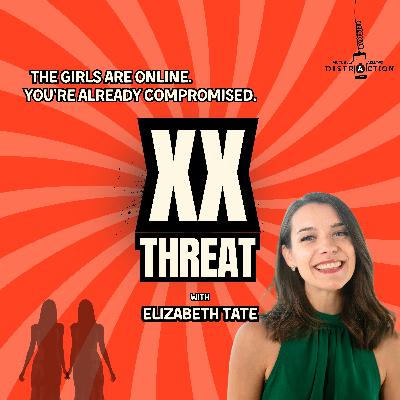
Think warfare is just brute strength and bullets? HA! That's a national security FAIL. Elizabeth Tate—author of Control Your Scroll and a consultant in psychology, communications, and organizational change—joins us to talk about the underestimated force of girlhood, social media, and so-called soft skills in shaping national and global power. From her first-grade psychological ops to advising government agencies, Elizabeth breaks down how subtle influence, digital addiction, and AI-powered distraction are quietly redefining warfare in the 21st century. And why overlooking women might be a nation's most fatal blind spot. We discuss: How "just a girl" can infiltrate secure spaces (without even trying). Why social media is the most underestimated battlefield today. The real dangers of AI (hint: not killer robots) and ways we can defend against them. Her new book, Control Your Scroll, and how we can break free from digital addiction. Tune in to rethink power, influence, and the hidden battles for your attention. Buy the Book: Control Your Scroll: Reclaim Your Brain from Endless Distraction by Elizabeth Tate (Out July 2025 – Available wherever books are sold) Connect with Elizabeth Tate: LinkedIn Elizabeth's Website ********************* MAD SPONSOR: Randori Resources This episode is brought to you by Randori Resources, founded by Sam Carus. Randori helps you train your brain the way fighters train their bodies. Visit randori-resources.com to learn more. WANT TO SUPPORT MAD? Sponsor us. We'll make you a weird, wonderful custom video. Email madwarfarepodcast@gmail.com (Or just send snacks. That works too.) — MAD Warfare™️ is hosted by narrative strategist Jocelyn Brady and cognitive neuroscientist Sean Anthony Guillory. Edited and produced by Amine el Filali. Visit our website at madwarfare.com for extra giggles. And send your wishes, weird ideas, dream guests, and (yes it bears repeating) sponsorship inquiries to madwarfarepodcast@gmail.com. — FAIR USE: This show is MAD enough to include homages, short clips, and references that provide vital context and/or moments of joy. We DEEPLY respect every creator's work and use these moments purely for educational, artistic, and transformative purposes under Fair Use. If we are missing attributions or you would like to collaborate, please reach out—we're always happy to chat!
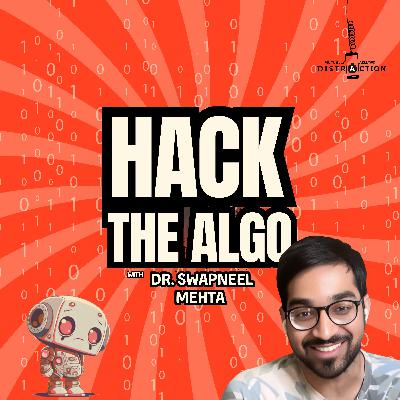
FREE SPEECH, NOT FREE REACH — Hacking the Algorithm for Good with Dr. Swapneel Mehta We know the algorithm is messing with us. But what if we could mess with it back? In this episode, we're joined by machine learning scientist and digital trust builder Dr. Swapneel Mehta, who's worked at Twitter, Adobe, Slack, CERN, and MIT—and now leads SIMPPL, a nonprofit restoring digital trust across seven countries. We explore the hidden levers behind the feeds we scroll, the platforms we feed, and the narratives feeding on us. YUMMMMY. From fake-news detection tools and Russia's meme warfare to hacking LinkedIn to actually show you what you care about (yes, LINKEDIN CAN BE A PLACE YOU ENJOY), Swapneel walks us through the logic, power, and danger of modern algorithms—and what you can do to fight back. Key Topics Why the most dangerous players aren't Big Tech … and who to watch for? How recommender systems actually work (and how to reverse-engineer your feed) The chilling limits of current AI guardrails—and why we need new ones Why trust and truth require human systems, not just code The surprising algorithm hack that got Swapneel cheap Uber Eats for years Notable Quotes "It's not free speech that's the problem—it's free reach." "You can't prove a harm that didn't happen—but that's what safety teams are for." "Everything you do online is a signal. The trick is learning what it's signaling." "When everything you see is hyper-personalized, the algorithm stops exploring—and starts exploiting." "Trust isn't just about information. It's about context." What's Inside [00:01:09] – Intro to Swapneel Mehta and why he builds for digital trust [00:02:00] – Why tiny unknown companies are more dangerous than tech giants [00:04:01] – IRBs, unethical experiments, and what industry gets away with [00:06:40] – Why we regulate medicine but not memes [00:08:20] – Trust & Safety layoffs and the problem with proving negatives [00:12:40] – Why platforms aren't legally liable for the content they amplify [00:15:00] – Algorithms promote anger, not accuracy—and that's by design [00:19:00] – Can we hack the algorithm? Swapneel says: yes [00:22:00] – Filter bubbles, personalization traps, and digital exploitation [00:28:00] – Can we ever get truly "unbiased" content? [00:30:00] – How AI can help (and sometimes out-label humans) [00:33:00] – Real-time bot network detection during the Ukraine war [00:39:00] – How coordinated harassment campaigns can be uncovered—and stopped [00:44:00] – A step-by-step guide to hacking your LinkedIn feed (it's a signal system) [00:53:00] – Uber Eats, conversion flow, and how Swapneel got years of discounts [00:58:00] – Using AI + humans to reduce maternal mortality in India [01:01:00] – Teaching undergrads to build viable AI products that serve the public [01:02:43] – Final words: Free speech, not free reach MAD ANGEL SPONSOR: Randori Resources This episode is brought to you by Randori Resources, founded by our guest Sam Carus. Randori helps you train your mind like a fighter—without the mat burns. 👉 Visit randori-resources.com to learn more. 🎶 Plus: Hear our original MAD tribute for Randori inside the episode, made by the great Elameen WANT TO SUPPORT MAD? Sponsor us. We'll make you a weird, wonderful custom video. Email madwarfarepodcast@gmail.com (Or just send snacks. That works too.) — MAD Warfare™️ is hosted by narrative strategist Jocelyn Brady and cognitive neuroscientist Sean Anthony Guillory. Edited and produced by Amine el Filali. Visit our website at madwarfare.com for extra giggles. And send your wishes, weird ideas, dream guests, and (yes it bears repeating) sponsorship inquiries to madwarfarepodcast@gmail.com. — FAIR USE: This show is MAD enough to include homages, short clips, and references that provide vital context and/or moments of joy. We DEEPLY respect every creator's work and use these moments purely for educational, artistic, and transformative purposes under Fair Use. If we are missing attributions or you would like to collaborate, please reach out—we're always happy to chat!

Ep 009: PROTECT YA NECK: How to Train Your Brain Like a Black Belt with Sam Carus What do martial arts, PSYOPs, and surviving a near-death experience have in common? It's (nearly) all in your head. In this episode, we sit down with Sam Carus—lifelong martial artist, special operations veteran, and founder of Randori Resources—to explore what martial arts can teach us about cognitive defense, civic strength, and surviving the stressors of modern life. And yes, nearly dying. From Russian meme warfare to childhood obesity as national security risk, this conversation covers the intersections of story, survival, civic strength, and the weird things we do under pressure. (Spoiler: you'll probably want to start visualizing.) Key Topics How martial arts builds narrative resilience (and community trust) The reality of modern PSYOPs (and why marketing might be scarier) The neuroscience of stress and why it hijacks your thinking Why martial arts should be part of public education Visualization as real-world training—without the bruises Notable Quotes "Martial arts is more than just physical education—it's civic education." "If the vessel that houses our brain is unhealthy, then how can the brain and mind be functioning perfectly?" "Once you're aware, then the battle really begins." "I think being in special operations was easier than being a parent." "Visualization helps us make the optimal choice—because we're faced with choices constantly." What's Inside [00:00:22] – Meet Sam Carus: martial artist, special ops vet, founder of Randori Resources [00:01:59] – A near-death sailing accident that taught Sam how to stay calm under stress [00:05:41] – Martial arts as civic—not just physical—education [00:07:33] – What PSYOPs really are (and aren't) [00:09:20] – Russian active measures and meme-based manipulation [00:14:18] – How narrative warfare undermines nations without firing a shot [00:19:04] – Why parenting is harder than special ops [00:21:43] – The body-brain connection, and why health = mental readiness [00:23:18] – What it really means to know yourself under stress [00:24:00] – Using negative emotions strategically (yes, really) [00:25:00] – Martial arts dojos as training grounds for empathy [00:29:00] – A real plan for integrating martial arts into U.S. schools [00:33:00] – Obesity, movement culture, and readiness [00:37:00] – "We're raising mediocrity and calling it education." [00:41:00] – Visualization: mental reps, stress inoculation, and why it works [00:44:00] – Why this isn't woo—it's neuroscience-backed [00:46:00] – Where we go from here: starting with awareness MAD ANGEL SPONSOR: Randori Resources This episode is brought to you by Randori Resources, founded by our guest Sam Carus. Randori helps you train your mind like a fighter—without the mat burns. 👉 Visit randori-resources.com to learn more. 🎶 Plus: Hear our original MAD tribute for Randori inside the episode, made by the great Amine el FIlali. Want your own custom ad—or to sponsor an episode of MAD? Email us at madwarfarepodcast@gmail.com Resources + References: Email Sam Carus: randori@randori-resources.com Find him on LinkedIn: https://www.linkedin.com/in/samuel-carus Shout out to project Cogent Gray: www.cogent-gray.com ~~~~~~~~~~~~~ Your Turn What kind of mental training do you wish you'd learned in school? How do you protect your neck in the narrative arena? 📬 Email us at madwarfarepodcast@gmail.com 📣 Tag us: @madwarfarepodcast on IG / LinkedIn / YouTube 🔗 Full archive + extras: madwarfare.com
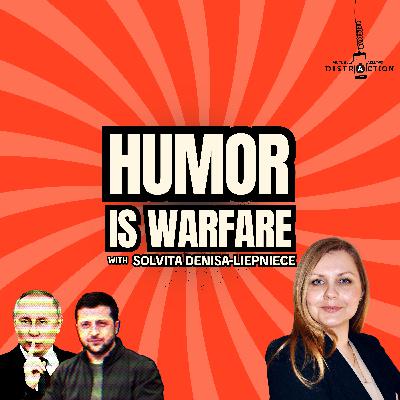
They say to understand power, follow the money. But what if instead… you followed the comedy? In this episode, we sit down with Dr. Solvita Denisa Liepniece, a strategic communication expert who coined the term "hahaganda" to describe how authoritarian regimes use humor to influence, manipulate, and erase. 😶🌫️ We cover: — How Kremlin-backed sketch shows used Nazi references to smear political rivals — Why silence is one of the strongest signals of censorship — How Putin followed a nuclear weapons speech with a laugh-filled comedy appearance — What makes Ukrainian jokes in bomb shelters more than comic relief — Why Zelensky's rise wasn't a fluke—it was narrative strategy, executed in prime time — How laughter bonds, excludes, and programs your brain's sense of "us" And yes: there's a humor survival kit. And yes: you'll want one. #CognitiveWarfare #Propaganda #NarrativeStrategy #Zelensky #Putin #MADWarfare MAD SPONSOR SPOTLIGHT This episode is supported by Grace Kim—a humane technologist and strategist who helps ideas (and kids!) navigate complexity with heart. Check out her middle-grade novella The Realm of Whispers—co-authored with Jasmine Leng—or learn more at Mapping Insight. 🎶 BONUS: This sponsorship includes a custom MAD-style song + video that you'll hear in the episode. (We make weird things for wonderful people.) Want your own custom ad—or to sponsor an episode of MAD? Email us at madwarfarepodcast@gmail.com ~~~~~~~~~~~~~ Notable Quotes: "Humor connects. And sometimes it disconnects." "One specifically relevant element with humor is silence. On what topics you are not making jokes." "Humor could be used both to attack and to defend. It could be used in both directions." "Try to create the library, the collection of these moments when you were united with those who are your core tribe." "It's good to laugh together—but it is important to ask: why?" Resources + References: 📚 Wolf the Manipulator & Conspiracies – Children's books on manipulation and rumor by Solvita 📺 KVN (Caven) – Soviet-era sketch show still shaping post-Soviet politics 🎭 Servant of the People – Satirical series that launched Zelensky's political career 🧠 Man's Search for Meaning – Viktor Frankl's reflections on survival, humor, and resilience 📹 Putin's 2018 appearance laughing 38+ times on state TV Your Turn: What jokes shouldn't be funny—but are? What humor has helped you survive something hard? We wanna hear them. 📬 madwarfarepodcast@gmail.com 📣 Or tag us @madwarfarepodcast We're on LinkedIn. Because, funny. — ONGOING SUPPORTERS Big thanks to Elle Younker for being a consistent supporter of MAD Warfare. Her brain is big, her heart is sharp, and her backing helps keep this whole thing moving. Check out her incredible work at the Hive Social Garden. WANT TO SUPPORT MAD? Sponsor us. We'll make you a weird, wonderful custom video. Email madwarfarepodcast@gmail.com (Or just send snacks. That works too.) — MAD Warfare™️ is hosted by narrative strategist Jocelyn Brady and cognitive neuroscientist Sean Anthony Guillory. Edited and produced by Amine el Filali. Visit our website at madwarfare.com for extra giggles. And send your wishes, weird ideas, dream guests, and (yes it bears repeating) sponsorship inquiries to madwarfarepodcast@gmail.com. — FAIR USE: This show is MAD enough to include homages, short clips, and references that provide vital context and/or moments of joy. We DEEPLY respect every creator's work and use these moments purely for educational, artistic, and transformative purposes under Fair Use. If we are missing attributions or you would like to collaborate, please reach out—we're always happy to chat!

Comments

Download from Google Play

Download from App Store
 United States