


 Claim Ownership
African History and its Discontents
Subscribed: 1Played: 0
Subscribe

Description
Redefining African History from African perspectives
25 Episodes
Reverse

When most people think about Africa’s economic history, they jump straight to colonialism, poverty, or “emerging markets.” But the story is far older, far more complex, and much harder to squeeze into a simple headline.Today’s episode unpacks how historians actually write Africa’s economic history, and how ideas about Africa’s development have shifted over the last century—from serving European empires to today’s more nuanced, data‑driven perspectives.
This episode aims to reveal how a patchwork of treaties and conquests turned the Gold Coast into a formal Crown Colony.Show why British officials saw the territory as a testing ground for new ideas about ruling African societies.
This episode aims to assess John Dunn’s main arguments in the “Conclusion” to West African States.Explore how colonial legacies, patronage politics and leadership choices shape responsibility for post‑colonial outcomes.Introduce the idea of political agency and counterfactual thinking (“things could have been different”) as tools for analysing African politics today.
This episode aims to examine how European colonial powers transplanted their educational and cultural traditions to colonized regionsExplore the lasting impact on African and Indian universities and cultural institutionsDiscuss the tensions between indigenous traditions and imposed European systemsHighlight examples of cultural adaptation and resistance in Ghana and India
This episode aims to explore why writing a single, unified history of religion in West Africa is historically and methodologically difficult.Highlight how African religious experience has been shaped by indigenous traditions, Islam, and Christianity across different regions and time periods.Encourage listeners to question simplistic narratives about “African religion” and to see West Africa as religiously diverse and dynamic

This episode explores the evolution of Pentecostal and Black church music in Ghana and the US, highlighting US influences from the 1970s onward.Examine how music fosters congregational participation, blending African traditions with gospel styles to address youth disengagement. Compare music ministry concepts, choir organization, and worship dynamics between Ghanaian Pentecostal churches and US Black churches for a deeper appreciation of cross-cultural spiritual expression.

Today’s episode aims to show how to study African Traditional Religion with respect and method, and why earlier approaches often failed
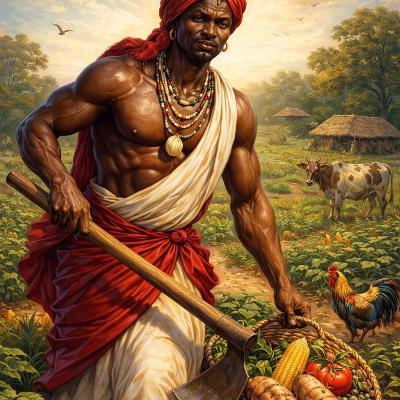
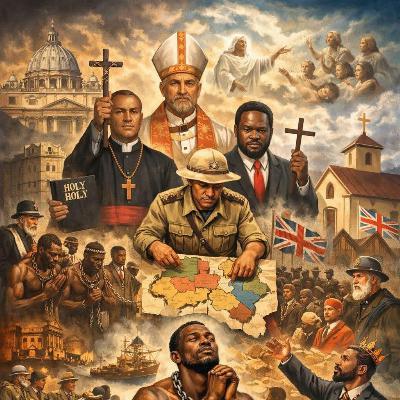
Welcome to today’s episode, “Rethinking the Slavery Blame-Game: Africans, Eurocentrism, and Historical Truth.”In this conversation, the focus is on one tough question: who bears responsibility for the Atlantic slave trade, and how has history tried to push most of the blame onto Africans themselves?This episode engages with the ideas of Professor Kwabena Akurang‑Parry, a distinguished scholar of Africana Studies and World History, who wrote a powerful rejoinder to journalist Enimil Ashon and to Harvard Professor Henry Louis Gates Jr. on slavery, blame, and reparations.The aim is not to deny African participation in the Atlantic slave trade, but to challenge lazy narratives that make Africans the main culprits while minimizing European and American responsibility and erasing African resistance.
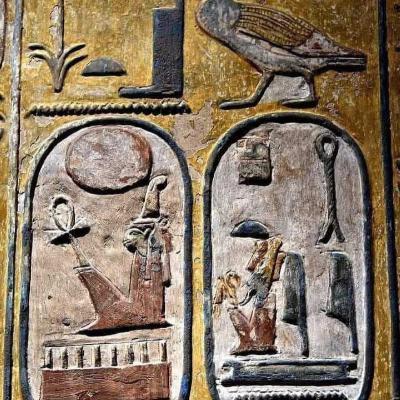
Imagine a white couple on a penthouse roof, martinis in hand, looking out over a city skyline. Beneath them, in the distance, the ghetto smolders in the night air. One turns to the other and says: “How can I be responsible for the ghetto? I’ve never even been there.” That cartoon, described in the symposium Black Studies in the University, captures the vast gap in understanding between white and Black America.This episode asks a hard question born in that gap: What makes the study of the Black experience not only morally urgent, but intellectually valid as a field of knowledge in the university?
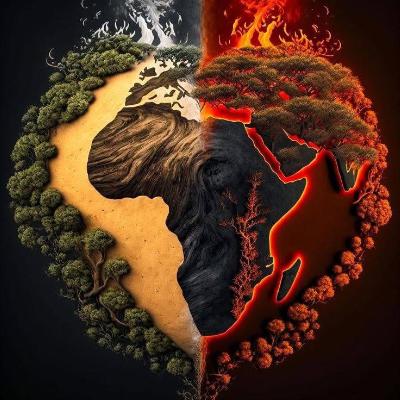
Welcome to today’s episode, “Gold, God, and Empire: Africa and the First Global Age.” In this story, Africa is not a distant backdrop but a centre-stage player in the rise of the modern world. European ships, African empires, merchants, slaves, and kings all collide in a chain of events that begins on the Atlantic coast and ends in the creation of a truly global economy.Over the next ten minutes, you will hear how Portugal’s experiments in navigation opened new sea routes, how African states like Mali, Songhay, Kongo, and Benin responded, and how the demand for gold and slaves transformed societies on both sides of the Atlantic. This is a journey from caravels and crusades to sugar plantations and slave ships—and the African voices often left out of the textbook version of events.

In this episode, we explain how European forts along Ghana’s coast developed from the 16th to the 19th century.Show how different European powers (Portuguese, Dutch, British, Danish, Swedish, Brandenburgers) competed and cooperated through these forts.Connect key forts named in the text (Elmina, Cape Coast, Christiansborg, Ussher, James Fort and others) to present‑day Ghanaian towns and heritage tourism.Encourage listeners to think critically about slavery, trade and resistance around these coastal castles.

This is “Voices of Memory,” the podcast where history is not just dates and documents, but living stories carried in people’s hearts.Today’s episode dives into a fascinating preface from an early history of the Gold Coast and Ashanti, written in the shadow of colonial rule and grounded in African traditional narratives.[archive]Across these pages, the author wrestles with a simple question: can you write a nation’s history without silencing the people whose stories built it?
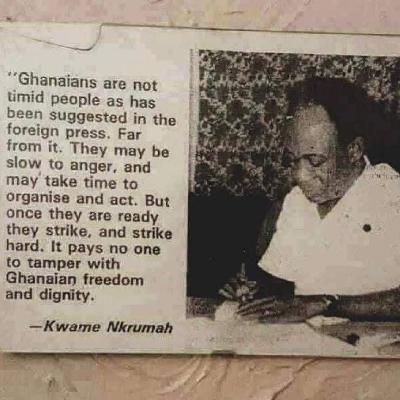
You are listening to “Voices of Liberation”, the podcast where historic speeches from Africa’s independence era meet today’s conversations.In this episode, the focus is on Osagyefo Dr. Kwame Nkrumah’s address to the 11th Party Congress of the Convention People’s Party, held in Kumasi on 28th July 1962.This was not just another political gathering; it was, in Nkrumah’s own words, a dividing line between the past and the future of Ghana’s revolution.
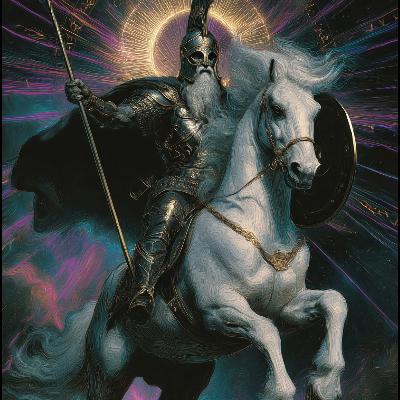
In this episode, we will dive into how population change, slavery, and agriculture reshaped parts of Africa in the 1800s. We also describe major African political movements, including Shaka’s state-building and West African jihads. We also outline how European powers moved from coastal trade, to anti slavery patrols, to full-scale exploration and colonisation.

Welcome to African History and its Discontents. I am Dr Christopher Appiah-Thompson, and am thrilled to embark on this journey with you-a journey into the layered complexities of Africa’s history and its pivotal role in shaping our world today.
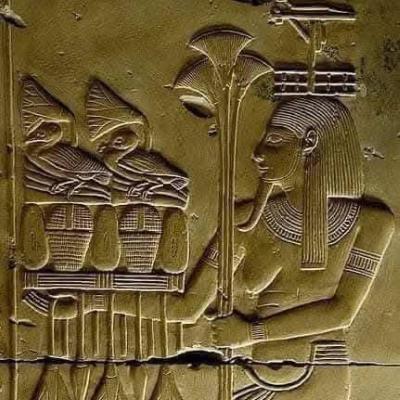
Welcome to today’s episode. We will explore the mysteries emanating from the Ancient Egyptian funerary practices and beliefs systems.

Welcome, dear listeners, to another episode of ‘Oceans of Insight’. Today, we are diving deep into a topic that is as vast as the waters we are discussing—the maritime interests of African nations and how their unique geographical positioning influences global ocean governance.

Welcome to our podcast! Today we are diving deep into US foreign policies towards Africa in the Post-Cold War era.
Welcome to today’s episode of ‘Voices of our Time’, where we explore the intricate tapestry of social issues shaping our world today.
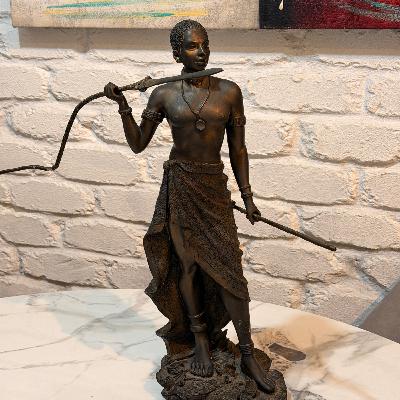
Welcome back to our podcast, where today we are exploring some of the fundamental concepts of statehood and sovereignty in Africa, particularly through the fascinating case study of South Sudan’s independence.

Comments

Download from Google Play

Download from App Store
 United States