


 Claim Ownership
Memory and Valour
Subscribed: 5Played: 39
Subscribe

© Samantha L.G. McCrea
Description
Memory and Valour is a Canadian military history podcast exploring the human stories of the Canadian Expeditionary Force in the First World War (WW1). Through authentic diaries, letters, and archival research, each episode brings listeners into trench warfare, shell shock, conscription, battlefield tactics, and the lived experience of Canadian soldiers on the Western Front.
This is Canadian WW1 history beyond the textbook — focused on courage, sacrifice, memory, and the families forever changed by war.
Follow Memory and Valour for immersive Canadian First World War storytelling.
This is Canadian WW1 history beyond the textbook — focused on courage, sacrifice, memory, and the families forever changed by war.
Follow Memory and Valour for immersive Canadian First World War storytelling.
23 Episodes
Reverse
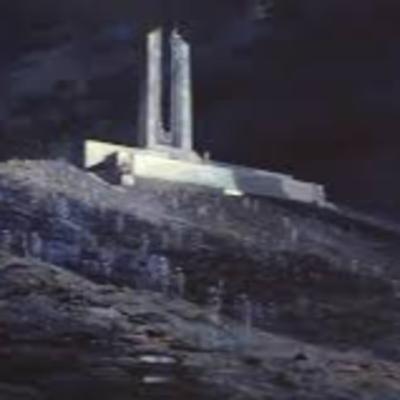
April 9th, 1917—Canada stepped onto the world stage at Vimy Ridge.For the first time, all four divisions of the Canadian Expeditionary Force advanced together in a single, coordinated assault—executed with precision, preparation, and discipline that set them apart on the Western Front.In this episode of Memory and Valour, we go beyond the familiar story to explore how Vimy Ridge became more than a battlefield victory, it became a defining moment in Canada’s national identity.From the meticulous planning and creeping barrage to the soldiers who carried the attack forward across the ridge, this is the story of how legend was forged on April 9th, 1917. Follow Memory and Valour on Spotify so you never miss an episode, and help keep these stories alive.Because where memory endures, valour lives on.
1915 is the year the war stopped being an "adventure".What began as a war of movement and expectation hardened into something far more brutal: static trench lines, failed offensives, and a battlefield dominated by machines rather than men.From the costly assaults at the Battle of Neuve Chapelle and Battle of Festubert… to the devastating lessons of the Battle of Loos, we trace how Allied strategy struggled and often failed to keep pace with a rapidly evolving war.These were battles marked by early promise and ultimate frustration. Gains were measured in yards. Losses were counted in thousands. And again and again, soldiers were sent forward into conditions that technology had already rendered deadly.For the Canadian Expeditionary Force, 1915 was not a year of triumph; it was a brutal education. One that would shape how they fought, endured, and ultimately succeeded in the years that followed.This episode explores the collapse of illusion, the rise of industrialized killing, and the human cost of a war that no longer followed the rules.Because before there was victory…there was 1915.Follow Memory and Valour and listen now.Because where memory endures… valour lives on.
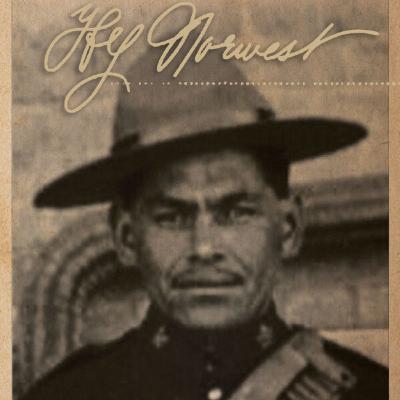
When the First World War erupted in 1914, Canada answered the call without hesitation. But among those who stepped forward were men who, under Canadian law, were not even recognized as citizens.In this episode of Memory and Valour, we uncover the powerful and often overlooked story of Indigenous men who volunteered to serve in the Canadian Expeditionary Force. Drawn from communities across the country from the plains of Alberta to the forests of Ontario, these soldiers fought in some of the war’s most brutal battles, including Ypres, Vimy Ridge, and Passchendaele.They served as snipers, scouts, and front-line infantry. Many displayed extraordinary skill and courage under fire. Many never returned home.And yet, their service existed within a profound contradiction.
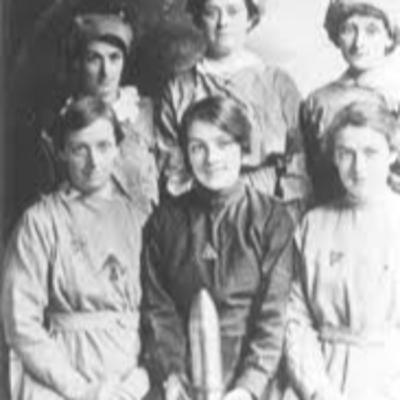
In 1916, an explosion tore through the Barnbow Munitions Factory in Leeds, killing 35 women in an instant.They were known as the Barnbow Lasses. Young workers fueling the First World War from the factory floor… until disaster struck.For decades, the truth of what happened that night was softened, reshaped, and in some cases, silenced entirely.In this episode of Memory and Valour, I sit down with author Antony J. Bell to explore the Barnbow explosion and the story of his own ancestor, Sarah Ann Jennings; one of the women killed. Drawing from his book A Penny a Shell, we uncover how memory, grief, and family history intersect with one of Britain’s deadliest wartime industrial disasters.
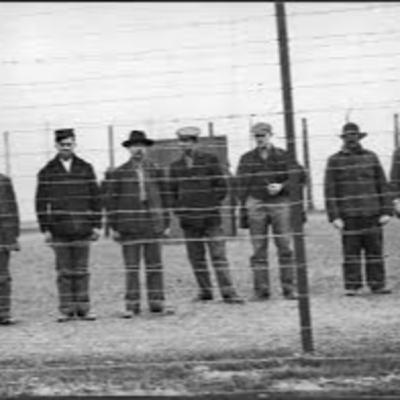
During the First World War, Canadian POWs faced starvation, forced labour, and brutal marches in German camps, while thousands of civilians in Canada — many Ukrainian and German immigrants — were imprisoned as “enemy aliens.” Through diaries, letters, and rare firsthand accounts, this episode uncovers the parallel worlds of captivity that shaped Canada’s WWI story. “We were not soldiers, yet we lived behind barbed wire.”
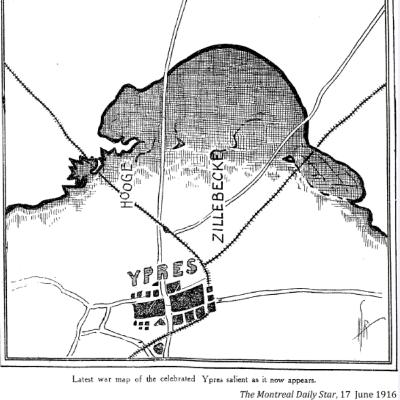
On June 2, 1916, the ground beneath Canadian soldiers at Mount Sorrel exploded. German mines and artillery shattered the front line near Ypres, killing hundreds in minutes and throwing the Canadian position into chaos.After weeks of preparation, German forces opened a massive artillery bombardment against the Canadian lines. Beneath the trenches, carefully planted mines detonated, tearing apart the front and killing or burying hundreds of soldiers in seconds. The attack shattered the Canadian position on Hill 62 and the slopes of Mount Sorrel.In the chaos that followed, Canadian forces regrouped under intense pressure. Within days, they launched a determined counterattack to reclaim the shattered ground.The Battle of Mount Sorrel became a brutal test of leadership, resilience, and the growing reputation of the Canadian Corps on the Western Front.
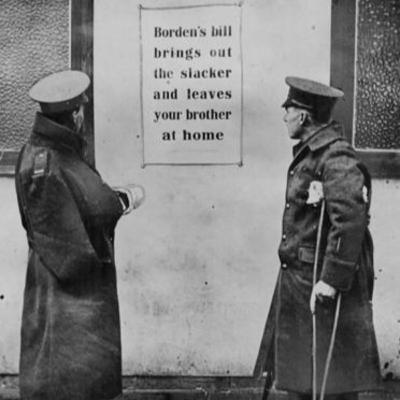
In 1917, as Canadian soldiers bled at Vimy Ridge and endured the mud of Passchendaele, the war exploded at home.With First World War casualties mounting and enlistment collapsing, Prime Minister Robert Borden introduced conscription. The result was the Canadian Conscription Crisis of 1917; one of the most divisive moments in our history.Riots in Quebec City.English and French Canada set against each other.Families fractured.A nation pushed to the brink.The First World War didn’t just test Canada on the Western Front. It tested whether the country could survive itself.In this episode of Memory and Valour, we examine how conscription reshaped Canadian politics, unity, and identity and why its echoes still matter today.
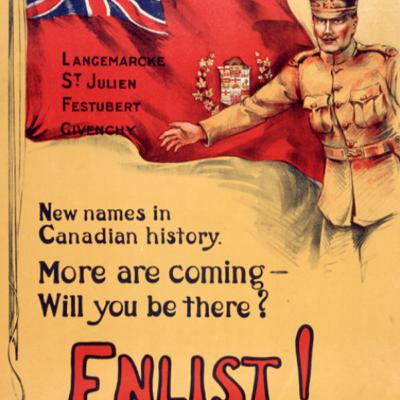
By 1918, the Canadian Corps had earned a reputation across the Western Front: shock troops.They were chosen for some of the most difficult assaults of the First World War — at Vimy Ridge, Passchendaele, Amiens, and during the Hundred Days Offensive. British command relied on them for complex, coordinated attacks. German sources warned of their aggressiveness.A narrative took hold: that Canadians were uniquely ruthless.But was that reputation earned on the battlefield — or constructed in memory?In this episode of Memory and Valour, we examine:How the Canadian Corps became known as “shock troops” in WW1What German reports actually said about Canadian soldiersThe scholarship of Dr. Tim Cook on battlefield effectivenessWhether Canada’s First World War reputation reflects tactical innovation, myth, or something more uncomfortable.This is a deep dive into the Western Front, the reality of industrialized war, and the thin line between discipline and ruthlessness.Follow Memory and Valour for more historically rigorous explorations of Canada’s First World War history.
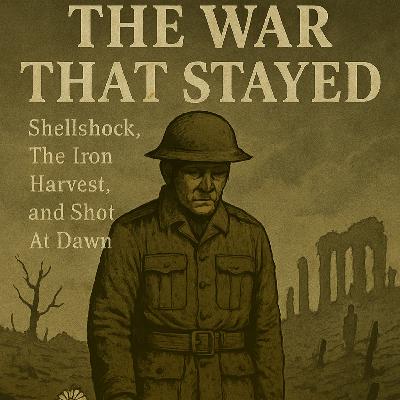
When the guns fell silent in 1918, the war did not end for thousands of Canadian soldiers. In this episode, we explore shell shock during the First World War and how it reshaped the lives of those who returned home carrying invisible wounds. Through personal accounts, medical responses, and shifting public attitudes, we examine how Canadians struggled to understand trauma in an era before PTSD had a name. The War That Stayed reveals how the psychological toll of WWI lingered long after the battlefield, and how its legacy still shapes our understanding of mental health today.
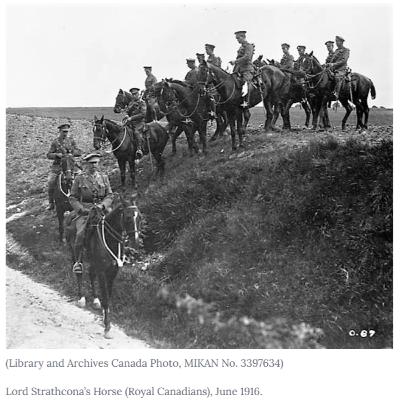
In a war defined by trenches, machine guns, and industrial slaughter, Canada sent horsemen into the storm. This episode follows the Canadian Cavalry Brigade from the mud of the Western Front to the desperate charge at Moreuil Wood; an action often remembered as one of the last great cavalry charges in history. It’s a story of soldiers caught between eras, fighting a modern war with the tools of an older one, and proving that courage and adaptability could still shape the battlefield. Step into the saddle and ride through the final days of cavalry warfare in the Great War.
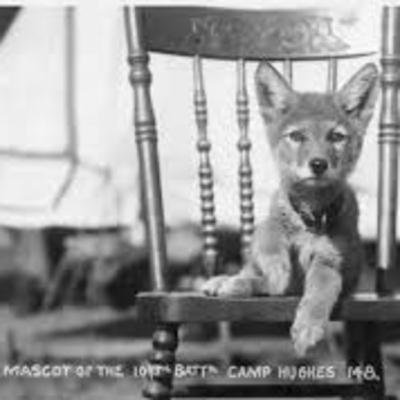
The 107th Battalion — known as The Timberwolves — was one of the most remarkable and overlooked units in Canada’s First World War history. Made up largely of First Nations soldiers, these men brought extraordinary skill, resilience, and cultural strength to a war that demanded everything from them… and then asked for more.In this episode, we uncover the story Canada rarely tells: how Indigenous soldiers carved roads through the impossible, built the very infrastructure of the Western Front, and fought with a loyalty that was never fully returned at home. Through history, testimony, and truth, we explore who the Timberwolves were, what they endured, and why their legacy matters now more than ever.This is the story of courage in the shadows, and the fight to bring it into the light.
 1
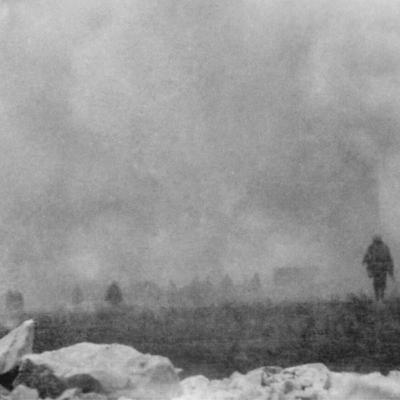
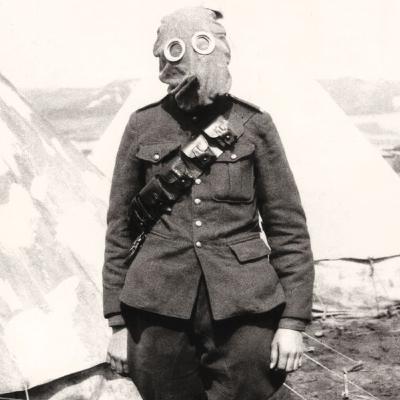
1When the air turned poisonous, the Canadians didn’t retreat; they stood and fought.This episode dives into the first poison‑gas attack at Ypres and the brutal legacy it left behind. From the shock of the green cloud to the lifelong scars of gas exposure, we follow the Canadians who faced a weapon the world had sworn never to use. A visceral journey into terror, survival, and the moment modern war crossed a line it could never uncross.
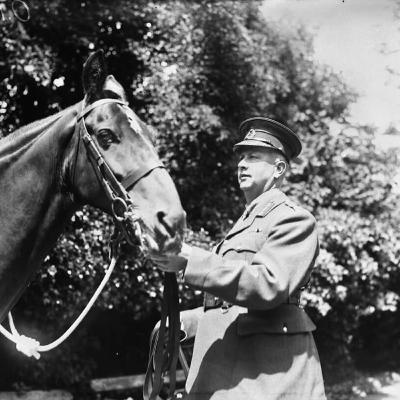
Four snapshots from Canada’s Great War: the lost Levi Cottage Cemetery now buried within Tyne Cot; Sir Arthur Currie’s fraught rise to knighthood; the deadly work of CEF runners threading messages through chaos; and the 107th Battalion, the Timberwolves, carving identity in the mud of the Western Front. A brief episode with the weight of a century behind it.
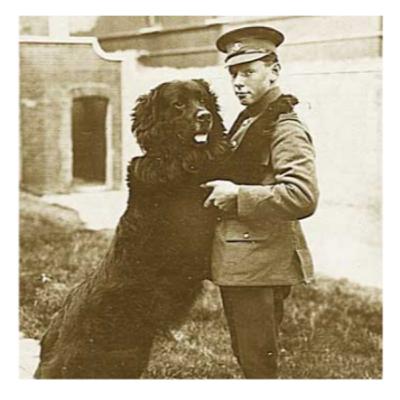
Beaumont‑Hamel marked one of the darkest moments in Newfoundland’s history. On the morning of July 1, 1916, the Newfoundland Regiment advanced across open ground during the first day of the Battle of the Somme, straight into unbroken German fire. Within minutes, the unit was devastated, suffering catastrophic losses that echoed across every community back home. Beaumont‑Hamel became a symbol of extraordinary courage, profound sacrifice, and a tragedy that shaped Newfoundland’s identity for generations.
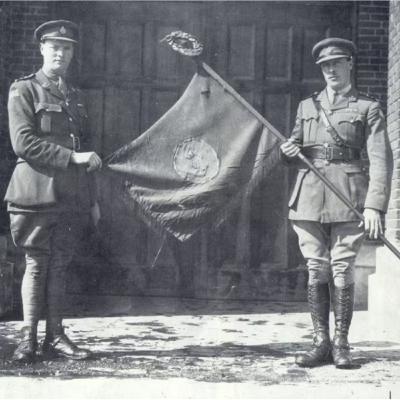
From Frezenberg to Kapyong, the Second World War, and the Medak Pocket to Afghanistan; this episode explores the courage, identity, and legacy of the Princess Patricia’s Canadian Light Infantry. Featuring the incredible story of Major Mike Levy.Once a Patricia, Always a Patricia is a tribute to more than a century of service, sacrifice, and identity, and to the enduring spirit that binds Patricias long after the fighting ends.
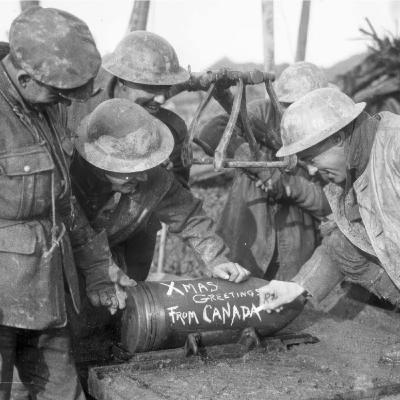
In December 1914, British and German soldiers stepped out of their trenches to share songs, handshakes, and a brief moment of humanity in the frozen silence of No Man’s Land. This episode explores the Christmas Truce through the voices of the men who lived it; a fragile flicker of peace that stayed with them for the rest of their lives.
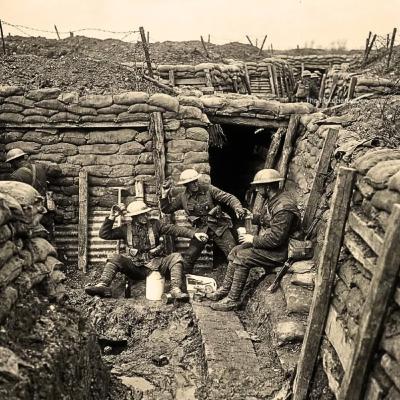
In this episode, we step inside the trenches of the Western Front, where soldiers lived every day with mud at their boots, fear in their lungs, and the constant thunder of artillery overhead. Through their routines, their hardships, and the rare moments of fragile humanity, we explore what life was truly like for the men who endured one of the harshest environments of the First World War.From stand‑to at dawn to long nights of labour, from lice and rats to letters from home, this episode brings you into the world in which they survived, one day at a time.
In this episode of Memory and Valour, we confront one of the darkest legacies of the First World War: soldiers executed by firing squad. Beyond Vimy Ridge and Passchendaele lies another roll call—twenty‑five Canadians condemned for “cowardice,” “desertion,” or “disobedience.”Through voices like Private Walter Underwood and Medical Officer Maberly Esler, we uncover the machinery of discipline, from Field Punishment Number One to the ultimate sanction of execution. Were these acts of necessity, or miscarriages of justice?Step into the trenches, hear the men who lived under the shadow of discipline, and remember those who were shot at dawn.www.memoryandvalour.ca
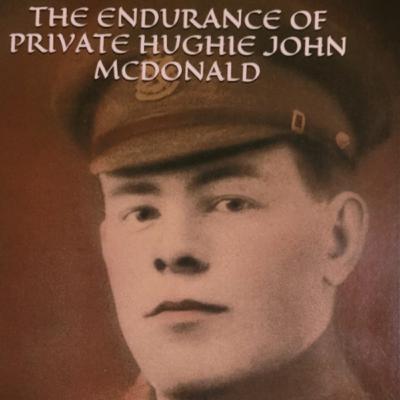
In this episode, we shine a light on the extraordinary story of Private Hughie John McDonald of the 49th Battalion, Edmonton Regiment. He was a courageous runner who survived the First World War, and was awarded the Military Medal for his bravery in the Battle of Passchendaele. His legacy lives on not only through history but also through the book I've written about his remarkable journey.To bring his story closer to the present, I sit down with his grandson and namesake, John McDonald, who shares personal reflections, family memories, and what it means to carry forward such a powerful legacy. Together, we explore the resilience, sacrifice, and humanity behind one soldier’s experience in the Great War.This episode blends historical insight with heartfelt family connection; an intimate look at how one man’s bravery continues to inspire generations.
Step into the haunting silence of No Man’s Land—the deadly stretch between opposing trenches in World War I. In this episode, we explore the hauntings, human stories, and lasting symbolism of this desolate battlefield. From the soldiers’ daily struggles to the eerie myths that grew out of the mud and wire, discover how No Man’s Land became both a physical space of terror and a powerful metaphor for conflict, survival, and the human spirit.

Comments

Download from Google Play

Download from App Store
 United States