


 Claim Ownership
Chinese Learning Podcast | HSK 3 (Season 1)
Subscribed: 27Played: 124
Subscribe

© 2025
Description
Are you learning Chinese at an HSK 3 level?
With Hanyu Chinese School’s podcasts, you can improve your listening skills through real-life dialogues and deepen your understanding of Mandarin grammar and culture.
Practice anytime, anywhere — and take your Chinese to the next level.
Want to go further?
Join the #1 online academy for learning Mandarin: https://www.hanyuchineseschool.com/en/
With Hanyu Chinese School’s podcasts, you can improve your listening skills through real-life dialogues and deepen your understanding of Mandarin grammar and culture.
Practice anytime, anywhere — and take your Chinese to the next level.
Want to go further?
Join the #1 online academy for learning Mandarin: https://www.hanyuchineseschool.com/en/
20 Episodes
Reverse

️ Do Chinese students really start school at 7AM? In this episode, you’ll learn how to use 除了…以外…都… and 除了…以外…也/还… to express exceptions and add information naturally in Mandarin.
Through a clear HSK3-level dialogue, we explore real school life in China and Taiwan — early mornings, long study hours, and after-school classes — while helping you master one of the most useful grammar patterns for everyday communication.
What you’ll learn• Grammar: how to use 除了…以外…都… (except…) and 除了…以外…也/还… (in addition…). • Practical usage: express exceptions and add extra information naturally. • Real context: common situations from school life and daily routines. • Cultural insight: why education plays such a central role in Chinese-speaking societies.
️ Key examples• 除了上学以外,还要去补习。 Besides school, you also have to attend extra classes.
• 除了一个同学以外,大家都来了。 Everyone came except one classmate.
• 除了学习钢琴以外,我还学打羽毛球。 Besides learning piano, I also play badminton.
ChallengeWrite a sentence using 除了…以外… in the comments. We’ll help you improve it.
At Hanyu Chinese School, we take pride in offering a unique approach to language learning. What makes our school special? Here are some highlights:
Online Campus: The best virtual campus. Access study materials, interactive exercises, and additional resources from anywhere, anytime.
Private Teachers: Our highly trained teachers provide personalized classes with an individual approach.
Trial Classes: Not sure if this language is for you? Try our trial classes! Immerse yourself in the language and discover if it’s the right choice for you.
Hanyu Blog: Every week, we publish informative and entertaining articles to help you improve your understanding of the language and culture.
Learn more languages with Trainlang!
Visit our websites and start your language journey today

Why are so many young Chinese choosing not to have children? In this episode, we explore one of the most talked-about social trends in modern China while you learn a highly practical grammar structure: 一边…一边…
This structure allows you to express doing two things at the same time — something you’ll use constantly in real conversations. We break it down step by step so you can understand it clearly and start using it naturally.
What you’ll learn• Grammar: how to use 一边…一边… to describe simultaneous actions. • Practical usage: everyday sentences you can use immediately. • Comparisons: how this structure differs from similar patterns in Mandarin. • Real context: examples at HSK3 level to help you sound more natural.
️ Key examples from the episode1) 我一边跑步,一边听播客。 Wǒ yìbiān pǎobù, yìbiān tīng bōkè. I run while listening to podcasts.
2) 我一边等公交车,一边刷手机。 Wǒ yìbiān děng gōngjiāochē, yìbiān shuā shǒujī. I scroll on my phone while waiting for the bus.
Cultural insightWe also explore a major shift in Chinese society:• Why many young people are choosing not to have children • Economic pressure and changing lifestyles • The long-term effects of the One-Child Policy • Why policies have changed… but mindsets haven’t
ChallengeWrite a sentence using 一边…一边… in the comments. We’ll help you correct it.
At Hanyu Chinese School, we take pride in offering a unique approach to language learning. What makes our school special? Here are some highlights:
Online Campus: The best virtual campus. Access study materials, interactive exercises, and additional resources from anywhere, anytime.
Private Teachers: Our highly trained teachers provide personalized classes with an individual approach.
Trial Classes: Not sure if this language is for you? Try our trial classes! Immerse yourself in the language and discover if it’s the right choice for you.
Hanyu Blog: Every week, we publish informative and entertaining articles to help you improve your understanding of the language and culture.
Learn more languages with Trainlang!
Visit our websites and start your language journey today

Would you try century egg, duck blood, pig brain… or bird’s nest? In this episode, we explore 5 surprising Chinese foods while you learn one of the most useful grammar points in Mandarin: directional complements (来 / 去 / 过来 / 过去).
But this episode isn’t just about “unusual food”. It’s about understanding how culture shapes taste, daily habits… and even the way people speak.
Today you’ll learn how to describe movement naturally in Chinese: bringing things closer, moving away, or talking about direction in real-life situations. These structures are essential if you want to sound more natural and go beyond textbook Chinese.
What you’ll learn• Grammar: how to use 来 / 去 and compound complements like 过来 / 过去. • Practical usage: describe movement, direction, and actions in everyday conversations. • Real context: a dialogue at HSK3 level with natural expressions. • Culture: a closer look at Chinese food culture and why some dishes may seem surprising from a Western perspective.
ChallengeWould you try any of these foods? And can you write a sentence using 来 or 去? Leave it in the comments and we’ll help you improve it.
At Hanyu Chinese School, we take pride in offering a unique approach to language learning. What makes our school special? Here are some highlights:
Online Campus: The best virtual campus. Access study materials, interactive exercises, and additional resources from anywhere, anytime.
Private Teachers: Our highly trained teachers provide personalized classes with an individual approach.
Trial Classes: Not sure if this language is for you? Try our trial classes! Immerse yourself in the language and discover if it’s the right choice for you.
Hanyu Blog: Every week, we publish informative and entertaining articles to help you improve your understanding of the language and culture.
Learn more languages with Trainlang!
Visit our websites and start your language journey today
Chapters
(00:00:15) - Beef and Eggs, Stinky tofu and Pork(00:02:25) - Directional Complementations in Chinese(00:09:00) - Manager Wang's illness(00:10:44) - Three types of Chinese food(00:15:29) - Chinese Basics(00:21:33) - Directional Completions

Start learning Chinese today with a free trial class: https://www.hanyuchineseschool.com/en/
Learn How to Use 才 (cái) and 就 (jiù) Naturally in Chinese | HSK 3
In this episode, we break down two small but powerful words in Mandarin: 才 (cái) and 就 (jiù). Both relate to time, but they express very different meanings and attitudes.
You’ll learn how 就 is used when something happens earlier, faster, or more easily than expected, while 才 is used when something happens later than expected, often with a sense of surprise or even complaint.
These are everyday words that native speakers use constantly — and mastering them will make your Chinese sound much more natural.
But that’s not all We also explore a cultural topic that often surprises learners:Why do Chinese people sometimes ask very direct questions about your salary or personal life?
Understanding this will help you not only speak better Chinese, but also interpret real conversations more accurately.
What You’ll Learn in This Episode:✅ The difference between 才 and 就 in real-life contexts ✅ How to express expectations about time naturally ✅ Common mistakes learners make and how to avoid them ✅ Cultural insight into direct communication in China
Practice Challenge:How would you say: “He arrived very early” and “He only arrived now” in Chinese?Write your answers in the comments and test your understanding.
At Hanyu Chinese School, we take pride in offering a unique approach to language learning. What makes our school special? Here are some highlights:
Online Campus: The best virtual campus. Access study materials, interactive exercises, and additional resources from anywhere, anytime.
Private Teachers: Our highly trained teachers provide personalized classes with an individual approach.
Trial Classes: Not sure if this language is for you? Try our trial classes! Immerse yourself in the language and discover if it’s the right choice for you.
Hanyu Blog: Every week, we publish informative and entertaining articles to help you improve your understanding of the language and culture.
Learn more languages with Trainlang!
Visit our websites and start your language journey today

In this episode, we tackle one of the most important — and often confusing — grammar structures at HSK 3 level: the 把 (bǎ) sentence.
Instead of learning it in isolation, you’ll see how 把 is actually used in real life — especially during one of the busiest times of the year: preparing for Chinese New Year.
Through clear explanations, practical examples, and a natural dialogue, you’ll learn how to use 把 to talk about:
• Moving objects • Changing situations • Completing tasks • Getting things done properly
You’ll understand why 把 focuses on the result or impact of an action, and how this structure helps you sound more natural and more advanced in Mandarin.
What You’ll Learn in This Episode:✅ The basic 把 + object + verb + complement structure ✅ When and why Chinese speakers use 把 ✅ Common verbs that frequently appear in 把 sentences ✅ Typical mistakes learners make (and how to avoid them) ✅ Cultural insight into Spring Festival preparation traditions
Cultural Insight:Before Spring Festival, families clean the house, decorate with red couplets, prepare food, and organise everything for the new year. This is exactly the kind of context where 把 sentences appear naturally in daily conversation.
Practice Challenge:How would you say: “Please put the red decorations on the door” using 把?Write your answer in the comments and try building your own example sentence.
At Hanyu Chinese School, we take pride in offering a unique approach to language learning. What makes our school special? Here are some highlights:
Online Campus: The best virtual campus. Access study materials, interactive exercises, and additional resources from anywhere, anytime.
Private Teachers: Our highly trained teachers provide personalized classes with an individual approach.
Trial Classes: Not sure if this language is for you? Try our trial classes! Immerse yourself in the language and discover if it’s the right choice for you.
Hanyu Blog: Every week, we publish informative and entertaining articles to help you improve your understanding of the language and culture.
Learn more languages with Trainlang!
Visit our websites and start your language journey today

比 & 没有 | How Chinese People Compare Things | Spring Festival & the Lunar Calendar | HSK 3
In today’s episode, we focus on two essential comparison structures in Mandarin: 比 (bǐ) and 没有 (méiyǒu). These patterns are everywhere in everyday conversations and are key to sounding natural at HSK 3 level.
You’ll learn how to compare people, time, and situations clearly and confidently. For example:Busier than before More stressful than last year Not as big as someone else’s
We’ll also show you how to say “much more” and “a little more” in a natural way, and how to avoid common comparison mistakes learners often make.
But grammar is only half the story In the cultural section, we explore something many Western learners don’t fully understand:
Why doesn’t Chinese New Year follow the Western calendar?
We explain:What 农历 (the lunar calendar) really is Why the date of Spring Festival changes every year How the lunar calendar is still used today for festivals, birthdays, and important life decisions And why understanding this helps you follow real Chinese conversations more easily
What You’ll Learn in This Episode:✅ How to use A 比 B + adjective correctly ✅ How to express “much more” and “a little more” naturally ✅ How to say “not as… as…” using 没有 ✅ Common comparison mistakes and how to fix them ✅ A clear cultural explanation of Spring Festival and the lunar calendar
Practice Challenge:Create your own sentence using both 比 and 没有 and write it in the comments.
At Hanyu Chinese School, we take pride in offering a unique approach to language learning. What makes our school special? Here are some highlights:
Online Campus: The best virtual campus. Access study materials, interactive exercises, and additional resources from anywhere, anytime.
Private Teachers: Our highly trained teachers provide personalized classes with an individual approach.
Trial Classes: Not sure if this language is for you? Try our trial classes! Immerse yourself in the language and discover if it’s the right choice for you.
Hanyu Blog: Every week, we publish informative and entertaining articles to help you improve your understanding of the language and culture.
Learn more languages with Trainlang!
Visit our websites and start your language journey today
Chapters
(00:00:19) - Comparing in Chinese(00:07:54) - Our Dialogue(00:10:12) - How Chinese New Year and Spring Festival are marked(00:12:47) - The Chinese New Year and the calendar(00:19:53) - Chinese New Year traditions and rules(00:22:24) - Together Chinese Profills(00:23:27) - How to Compare Things Naturally Using Bee and Mayo

The More… The More… (越…越…) | Why Do Chinese People Love Square Dancing? | HSK 3
In today’s episode, we explore one of the most natural and powerful sentence structures in Mandarin: 越…越… (“the more… the more…”).
This pattern is used constantly in real Chinese and helps you describe how two things change together over time. It’s especially common when talking about work, study, emotions, habits, and daily life.
You’ll hear clear and practical examples such as:The more you work, the more tired you feel.The more happily you study, the faster you improve.
You’ll also learn when to use 越…越… and how it differs from 越来越, so you won’t confuse the two.
But that’s not all In our cultural segment, we dive into a phenomenon that surprises almost every foreigner in China: 广场舞 (square dancing).
Why do people gather to dance in public squares at night?Why is the music often so loud?And why is this activity about much more than exercise?
What You’ll Learn in This Episode:✅ How to use 越…越… naturally in conversation ✅ The key difference between 越…越… and 越来越 ✅ Real-life examples at HSK 3 level ✅ Cultural insight into China’s square dancing tradition ✅ How grammar and social habits reflect real life in China
Cultural Insight:Square dancing in China is not just about movement. For many people, it’s about community, routine, friendship, and staying active. It’s a way of using public space very differently from what many Westerners are used to.
Challenge for You:Can you create your own sentence using 越…越…?Write it in the comments and practise thinking directly in Chinese.
At Hanyu Chinese School, we take pride in offering a unique approach to language learning. What makes our school special? Here are some highlights:
Online Campus: The best virtual campus. Access study materials, interactive exercises, and additional resources from anywhere, anytime.
Private Teachers: Our highly trained teachers provide personalized classes with an individual approach.
Trial Classes: Not sure if this language is for you? Try our trial classes! Immerse yourself in the language and discover if it’s the right choice for you.
Hanyu Blog: Every week, we publish informative and entertaining articles to help you improve your understanding of the language and culture.
Learn more languages with Trainlang!
Visit our websites and start your language journey today

Eating Culture in China | 一样 vs 不一样 | HSK 3
In today’s episode, we explore Chinese eating culture and learn how to compare things naturally using 一样 (the same) and 不一样 (different).
Have you ever wondered how Chinese meals differ from Western food habits? From shared dishes and round tables to street food markets and luxury banquets, food culture in China is full of unique traditions. In this lesson, you’ll discover how to describe similarities and differences clearly in Mandarin — not just about food, but about habits, people, cities, and daily life.
What You’ll Learn in This Episode:✅ How to use 一样 to say “the same” in natural sentences ✅ How to use 不一样 to express differences ✅ Sentence patterns for making comparisons in everyday conversations ✅ Cultural insights into Chinese dining habits and table culture
Cultural Note:In China, meals are often shared. Instead of ordering one dish per person, people usually order several dishes for the whole table. Eating together is about connection, not just food.
Question for You:How would you say in Chinese: “Chinese food and Western food are different”?Write your answer in the comments and we’ll check it.
Mini Challenge:Create your own sentence using 一样 or 不一样. For example:我们的想法不一样。(Our ideas are different.)
这两家餐厅一样好吃。(These two restaurants are equally delicious.)
At Hanyu Chinese School, we take pride in offering a unique approach to language learning. What makes our school special? Here are some highlights:
Online Campus: The best virtual campus. Access study materials, interactive exercises, and additional resources from anywhere, anytime.
Private Teachers: Our highly trained teachers provide personalized classes with an individual approach.
Trial Classes: Not sure if this language is for you? Try our trial classes! Immerse yourself in the language and discover if it’s the right choice for you.
Hanyu Blog: Every week, we publish informative and entertaining articles to help you improve your understanding of the language and culture.
Learn more languages with Trainlang!
Visit our websites and start your language journey today
Chapters
(00:00:11) - How Food Live Streams work in China(00:02:58) - Chinese Keyword(00:09:16) - Eating Show(00:12:53) - China's Food Entertainment(00:16:45) - Comparing Chinese and Life in 2020

又 vs 再 Explained + Why Chinese People Always Say “Just One More Episode” | HSK 3
In today’s episode, we break down one of the most confusing but most common grammar points for HSK3 learners: 又 (yòu) vs 再 (zài). Both are translated as “again” in English, but in Mandarin they are used very differently depending on time.
You’ll learn how to talk naturally about actions that happened again in the past, and actions you plan or expect to do again in the future. This distinction is essential for sounding clear and natural in everyday Chinese.
But that’s not all We also dive into a very real part of modern Chinese life: the “再看一集” (“just one more episode”) culture. From long TV dramas to short videos and mini-dramas, we explore why people always say they’ll stop watching… and then end up watching more. If you’ve ever said “just one more”, this episode will feel very familiar
What You’ll Learn in This Episode:✅ The difference between 又 (past repetition) and 再 (future repetition)✅ How to choose the right word based on time and context✅ Common mistakes learners make with 又 and 再✅ Real-life examples you can use immediately✅ Cultural insight into binge-watching habits in China
Cultural Note:In China, phrases like 再看一集 (“watch one more episode”) or 再刷一下 (“scroll a bit more”) are everywhere. With short video apps and mini-dramas, stopping is often harder than starting.
Question for You:How would you say in Chinese: “I want to watch it one more time”?Write your answer in the comments and we’ll check it.
Mini Challenge:Create your own sentence using 又 or 再. For example:他昨天又迟到了。(He was late again yesterday.)
我们下次再见。(We’ll meet again next time.)
Learn Chinese the smarter wayAt Hanyu Chinese School, you can learn Mandarin with top private tutors and access a complete online campus with transcripts, webinars, flashcards, and interactive tools to help you progress step by step.
At Hanyu Chinese School, we take pride in offering a unique approach to language learning. What makes our school special? Here are some highlights:
Online Campus: The best virtual campus. Access study materials, interactive exercises, and additional resources from anywhere, anytime.
Private Teachers: Our highly trained teachers provide personalized classes with an individual approach.
Trial Classes: Not sure if this language is for you? Try our trial classes! Immerse yourself in the language and discover if it’s the right choice for you.
Hanyu Blog: Every week, we publish informative and entertaining articles to help you improve your understanding of the language and culture.
Learn more languages with Trainlang!
Visit our websites and start your language journey today
Chapters
(00:00:00) - Foreign Words for Travel(00:04:19) - Using SO-both and = again in Chinese(00:06:41) - TRAVEL WITH VICKY(00:10:12) - Chinese Cultural Content(00:16:19) - How to watch Chinese TV in the dark(00:17:31) - How to Plan Your Day

Learn 对…感兴趣 in Chinese + Why Winter Vacation Isn’t Really a Break in China | HSK 3
In today’s HSK3 episode, you’ll learn how to naturally express interest and lack of interest in Mandarin using one of the most practical everyday structures:对……有兴趣 / 感兴趣 / 不感兴趣
This pattern is essential for talking about hobbies, studies, work, plans, and daily preferences. You’ll see how Chinese speakers really use it in conversation to say what they like, what they don’t care about, and what truly interests them.
But that’s not all We also explore a cultural topic that surprises many learners: winter vacation in China. Why do so many students still attend school, tutoring classes, or study for hours during 寒假? How long is winter vacation really? And why do many parents think, “The holiday is so long, it would be a waste not to study”?
This episode combines clear grammar explanations, real dialogue, and insight into modern Chinese education and family life — exactly how Mandarin is used in the real world.
What You’ll Learn in This Episode:✅ How to use 对…感兴趣 to talk about interests naturally ✅ How to say you’re not interested in something politely ✅ Real-life examples you can use immediately ✅ Cultural insight into Chinese winter vacation and study culture
Cultural Note:For many Chinese families, winter vacation isn’t about resting — it’s a chance to get ahead. Extra classes, homework, and exam preparation are common, especially in competitive school systems.
Question for You:How would you say in Chinese: “I’m very interested in learning Chinese”?Write your answer in the comments and we’ll check it.
Mini Challenge:Create your own sentence using 对…感兴趣 or 不感兴趣. For example:我对历史很感兴趣。 (I’m very interested in history.)
他对运动不太感兴趣。 (He’s not very interested in sports.)
At Hanyu Chinese School, we take pride in offering a unique approach to language learning. What makes our school special? Here are some highlights:
Online Campus: The best virtual campus. Access study materials, interactive exercises, and additional resources from anywhere, anytime.
Private Teachers: Our highly trained teachers provide personalized classes with an individual approach.
Trial Classes: Not sure if this language is for you? Try our trial classes! Immerse yourself in the language and discover if it’s the right choice for you.
Hanyu Blog: Every week, we publish informative and entertaining articles to help you improve your understanding of the language and culture.
Learn more languages with Trainlang!
Visit our websites and start your language journey today
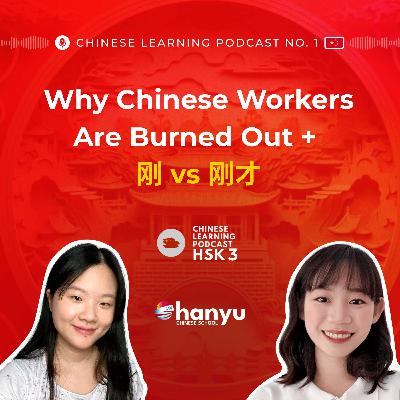
Learn 刚 vs 刚才 in Chinese + 内卷 & 摸鱼 Explained!
In today’s episode, we break down one of the most confusing time expressions for HSK3 learners: 刚 (gāng) vs 刚才 (gāngcái). You’ll learn how to talk naturally about things that just happened, with clear examples you can start using in real conversations immediately.
But that’s not all We also dive into modern Chinese work culture, explaining two internet buzzwords that are everywhere in China today: 内卷 (nèijuǎn) and 摸鱼 (mōyú). Why do people complain about the never-ending competition at work? And why is “slacking off” suddenly not as bad as it seems? We explain it all with humour and real-life examples.
What You’ll Learn in This Episode: ✅ The difference between 刚 and 刚才 and how to use them in context ✅ How to describe recent events naturally in Mandarin ✅ The meanings of 内卷 and 摸鱼 in modern Chinese work culture ✅ Cultural insights: why slacking off (摸鱼) is becoming acceptable in some contexts Fun Fact: Did you know that in Chinese, 内卷 (nèijuǎn) refers to the phenomenon of excessive competition, especially at work, while 摸鱼 (mōyú) is used to describe “slacking off” during work hours? These terms are often used in discussions about the pressures of modern life in China.
Question for You: How would you say: “I just finished my work” in Chinese? Write your answer in the comments and we’ll help you with corrections!
Mini Challenge: Create your own sentence using 刚 or 刚才. For example: • 我刚吃完饭。 (“I just finished eating.”) • 刚才我去买东西了。 (“I just went to buy something.”)
At Hanyu Chinese School, we take pride in offering a unique approach to language learning. What makes our school special? Here are some highlights:
Online Campus: The best virtual campus. Access study materials, interactive exercises, and additional resources from anywhere, anytime.
Private Teachers: Our highly trained teachers provide personalized classes with an individual approach.
Trial Classes: Not sure if this language is for you? Try our trial classes! Immerse yourself in the language and discover if it’s the right choice for you.
Hanyu Blog: Every week, we publish informative and entertaining articles to help you improve your understanding of the language and culture.
Learn more languages with Trainlang!
Visit our websites and start your language journey today
Chapters
(00:00:09) - Why Chinese Workers Are Burned Out(00:02:36) - Gan Tai and Kansai(00:09:30) - China's Working Culture(00:14:50) - Moyu and Nature(00:19:57) - How to Make a Sentence in Chinese(00:21:09) - kan and kansai for daily conversation

Learn 越来越 in Chinese + North vs South China Lifestyle Differences | HSK3
In today’s HSK3 episode, we’ll teach you how to use 越来越 (yuè lái yuè) to talk about gradual changes in Mandarin. This very common structure is perfect for describing trends, emotions, habits, and changes in society or daily life.
You’ll learn how to form sentences like “Life is getting harder” or “More and more people care about health,” and understand how 越来越 focuses on the process of change over time rather than immediate results.
In our cultural segment, we explore the intriguing differences between Northern and Southern China. From food preferences such as 南米北面 (rice in the south, noodles in the north), to differences in portion sizes, flavors, and eating habits, you’ll see why life in China can feel very different depending on whether you’re in the north or the south.
What You’ll Learn in This Episode: ✅ How to use 越来越 to express gradual changes ✅ How to describe trends and ongoing shifts in Mandarin ✅ The key differences between Northern and Southern China’s food culture ✅ Real-life examples to help you use 越来越 in conversations
Fun Fact: Did you know that food is one of the biggest lifestyle differences between North and South China? In the north, people typically prefer noodles, while in the south, rice is the staple food.
Question for You: How would you say “The weather is getting colder” in Chinese? Write your answer in the comments and we’ll help you check it!
Mini Challenge: Create your own sentence using 越来越. For example: • 我越来越喜欢学习中文。 (“I’m getting more and more into learning Chinese.”) • 生活越来越困难了。 (“Life is getting harder.”)
At Hanyu Chinese School, we take pride in offering a unique approach to language learning. What makes our school special? Here are some highlights:
Online Campus: The best virtual campus. Access study materials, interactive exercises, and additional resources from anywhere, anytime.
Private Teachers: Our highly trained teachers provide personalized classes with an individual approach.
Trial Classes: Not sure if this language is for you? Try our trial classes! Immerse yourself in the language and discover if it’s the right choice for you.
Hanyu Blog: Every week, we publish informative and entertaining articles to help you improve your understanding of the language and culture.
Learn more languages with Trainlang!
Visit our websites and start your language journey today

Learn 着 (zhe) as an Adverbial Complement + Pet-Friendly Cinemas in China | HSK3
In this HSK3 episode, we’ll teach you how to use 着 (zhe) to form adverbial complements in Mandarin. This structure helps you describe how an action happens by adding context or an ongoing state. For example, “working while listening to music” or “studying while drinking coffee.”
You’ll also learn how to build natural sentences with the pattern V + 着 + V, and understand the difference between this structure and 一边…一边… so you’ll know when to use each one correctly.
Plus, in our cultural segment, we explore a surprising trend in China: pet-friendly cinemas! Yes, in some Chinese cities, you can watch movies like Zootopia (疯狂动物城) while bringing your dog or cat with you. We’ll discuss why this trend exists, how it works, and what it reveals about modern urban life and pet culture in China.
What You’ll Learn in This Episode: ✅ How to use 着 (zhe) as an adverbial complement to describe actions in progress ✅ The key differences between V + 着 + V and 一边…一边… ✅ Real-life examples you can use in conversations ✅ Cultural insight: the pet-friendly cinema trend in China and what it says about pet culture
Fun Fact: Did you know that pet-friendly cinemas in China are becoming more popular, where moviegoers can enjoy a film while spending time with their furry friends? This is a growing trend in many urban areas.
Question for You: How would you say in Chinese: “He is eating while watching TV”? Write your answer in the comments and we’ll check it!
Mini Challenge: Create your own sentence using 着 (zhe). For example: • 我一边听音乐一边工作。 (“I work while listening to music.”) • 我坐着喝咖啡看书。 (“I sit and drink coffee while reading a book.”)
Learn Chinese the smarter way At Hanyu Chinese School, you can learn Mandarin with top private tutors and access the best online Chinese learning platform in Spanish. Our platform offers hundreds of tools, weekly group webinars, flashcards, and interactive games to make learning personalized and effective.
At Hanyu Chinese School, we take pride in offering a unique approach to language learning. What makes our school special? Here are some highlights:
Online Campus: The best virtual campus. Access study materials, interactive exercises, and additional resources from anywhere, anytime.
Private Teachers: Our highly trained teachers provide personalized classes with an individual approach.
Trial Classes: Not sure if this language is for you? Try our trial classes! Immerse yourself in the language and discover if it’s the right choice for you.
Hanyu Blog: Every week, we publish informative and entertaining articles to help you improve your understanding of the language and culture.
Learn more languages with Trainlang!
Visit our websites and start your language journey today
Chapters
(00:00:10) - How to Bring a Pet to the Movies(00:01:44) - Using Adverbial Complements(00:07:39) - Speech Regression(00:09:43) - Cinema for Pets in China(00:14:23) - Drinking Coffee While Studying(00:15:00) - How to make a Chinese sentence in 3 seconds(00:16:16) - Adverbial Complements

Master 又…又… Sentences + China’s Food Delivery & Online Shopping Wars | HSK 3
In today’s episode, we dive into the super versatile structure 又…又… (yòu… yòu…), which is used to describe two qualities at the same time, such as “both big and clean” or “both cheap and tasty.” We’ll also introduce a variation, 又…又不… to express contradictions — a must-know for natural conversations!
In our cultural segment, we explore one of the most exciting aspects of modern Chinese life: food delivery (点外卖) and online shopping (网购). From the fierce competition between Meituan and Ele.me, to the rise of Taobao, JD.com, and Pinduoduo, you’ll learn why delivery in China is cheaper and faster than almost anywhere else. Plus, we’ll compare China’s delivery scene with Taiwan, where services are often pricier due to higher platform and restaurant fees.
What You’ll Learn in This Episode: ✅ How to use 又…又… to describe two qualities at once ✅ How to use 又…又不… to show contradictions ✅ Practical examples from real-life situations you can use immediately ✅ Cultural insights: why Chinese food delivery apps are so cheap and competitive ✅ Fun comparison: the price gap between delivery in mainland China and Taiwan
Fun Fact: Some Chinese food delivery promotions are so cheap that people joke it’s “cheaper than cooking at home!”
Question for You: How would you say in Chinese: “He is both tall and handsome”? Write your answer in the comments and we’ll check it!
Mini Challenge: Make your own sentence using 又…又… or 又…又不…. For example: 今天又冷又下雨。 (“Today is both cold and rainy.”)
他又想有钱,又不想工作。 (“He wants money but doesn’t want to work.”)
At Hanyu Chinese School, we take pride in offering a unique approach to language learning. What makes our school special? Here are some highlights:
Online Campus: The best virtual campus. Access study materials, interactive exercises, and additional resources from anywhere, anytime.
Private Teachers: Our highly trained teachers provide personalized classes with an individual approach.
Trial Classes: Not sure if this language is for you? Try our trial classes! Immerse yourself in the language and discover if it’s the right choice for you.
Hanyu Blog: Every week, we publish informative and entertaining articles to help you improve your understanding of the language and culture.
Learn more languages with Trainlang!
Visit our websites and start your language journey today

In today’s episode, we focus on a very practical grammar structure: 地方 + Verb + 着 + Object. This pattern is used to describe the state or position of things in a place, and it’s essential for everyday Chinese. You’ll learn how to say natural sentences like “There’s a book on the table” or “There aren’t any fruits in the fridge,” just like native speakers do.
In the cultural segment, we explore how people travel in China today. Why do many still choose 跟团旅游 (group tours), while younger travellers prefer 自驾游 (self-driving trips)? We’ll also introduce the apps Chinese travellers really use, such as 高德地图 (Gaode Maps) for navigation, 抖音 (Douyin) to check real videos of destinations, and 小红书 (Xiaohongshu) to find the best photo spots, angles, and poses. Some attractions even create special 网红拍照点 (internet-famous photo spots) just for Xiaohongshu users.
What You’ll Learn in This Episode:✅ How to use 地方 + Verb + 着 + Object to describe where things are✅ How to form negatives with 地方 + 没 + Verb + 着 + Object✅ Common verbs used with 着, such as 放着, 坐着, 挂着, 住着✅ Cultural insights into group tours vs. road trips in China✅ Bonus: the most popular travel apps used by Chinese travellers
Fun Fact:China is one of the few countries where tourist attractions actually build 网红拍照点 — photo spots designed specifically so visitors can recreate trending Xiaohongshu photos.
Question for You:How would you say in Chinese: “There’s a cat lying on the sofa”?Write your answer in the comments and we’ll check it.
Mini Challenge:Create your own sentence using today’s grammar structure. For example:墙上挂着一张地图。(There’s a map hanging on the wall.)
公园里站着很多人。(There are many people standing in the park.)
At Hanyu Chinese School, we take pride in offering a unique approach to language learning. What makes our school special? Here are some highlights:
Online Campus: The best virtual campus. Access study materials, interactive exercises, and additional resources from anywhere, anytime.
Private Teachers: Our highly trained teachers provide personalized classes with an individual approach.
Trial Classes: Not sure if this language is for you? Try our trial classes! Immerse yourself in the language and discover if it’s the right choice for you.
Hanyu Blog: Every week, we publish informative and entertaining articles to help you improve your understanding of the language and culture.
Learn more languages with Trainlang!
Visit our websites and start your language journey today

Master 还是 vs. 或者 in Chinese + Live-Stream Shopping | HSK 3
In today’s episode, we break down one of the most confusing pairs in Mandarin: 还是 (háishi) and 或者 (huòzhě). Both translate as “or” in English, but they’re used in very different situations. You’ll learn when to use 还是 in questions where someone must choose, and when to use 或者 in statements where you’re simply listing options.
In the cultural segment, we explore the booming world of 直播带货 (zhíbò dàihuò), or live-stream shopping. From influencers who can sell thousands of products in minutes, to farmers selling fruit directly from their orchards, and even scandals involving fake goods, this phenomenon has become a key part of modern Chinese consumer culture.
What You’ll Learn in This Episode:✅ The difference between 还是 (used in questions with choices) and 或者 (used in statements with options)✅ How to avoid common mistakes when saying “or” in Chinese✅ Practical, everyday examples you can start using immediately✅ Cultural insights into live-stream shopping and the influencer economy in China
Fun Fact:Li Jiaqi (李佳琦), known as the “Lipstick King,” once sold around 15,000 lipsticks in just five minutes during a live-stream. That’s the power of 网红经济, China’s influencer-driven economy.
Question for You:How would you say in Chinese: “Do you want to drink coffee or tea?”Write your answer in the comments and we’ll check it.
Mini Challenge:Create your own sentence using 还是 or 或者. For example:你想去北京还是上海?(Do you want to go to Beijing or Shanghai?)
明天我可以坐地铁或者打车去上班。(Tomorrow I can take the subway or a taxi to work.)
At Hanyu Chinese School, we take pride in offering a unique approach to language learning. What makes our school special? Here are some highlights:
Online Campus: The best virtual campus. Access study materials, interactive exercises, and additional resources from anywhere, anytime.
Private Teachers: Our highly trained teachers provide personalized classes with an individual approach.
Trial Classes: Not sure if this language is for you? Try our trial classes! Immerse yourself in the language and discover if it’s the right choice for you.
Hanyu Blog: Every week, we publish informative and entertaining articles to help you improve your understanding of the language and culture.
Learn more languages with Trainlang!
Visit our websites and start your language journey today
Chapters
(00:00:13) - Grammar Today: Both Means or(00:01:21) - Chinese Dialogue(00:04:42) - Hua Zh(00:07:40) - Live Stream Shopping or Online Shopping?(00:09:50) - China's Live-Stream Shopping(00:15:27) - How to Make a Chinese Sentence(00:16:34) - China's Live-Stream Shopping

In today’s episode, we explore a new and very useful meaning of 会 (huì). You may already know 会 as “to know how to” (ability) or “will” (future), but here you’ll learn how 会 is used to express possibility — what will probably happen in a given situation.
You’ll see clear, real-life examples such as:“If you don’t eat breakfast, you’ll probably feel hungry.”“It’s very cold, you’ll probably catch a cold.”
In the cultural segment, we dive into some of the most surprising and unusual jobs in China. From hiring a handsome guy to go hiking with you (帅哥陪你爬山), to paying someone to stand in line for you, to professional bridesmaids, these jobs reflect the speed, creativity, and pressures of modern Chinese society.
What You’ll Learn in This Episode:✅ The three main uses of 会: ability, future, and possibility✅ How to use 会 to mean “will probably…” in daily conversations✅ Why adding 的 at the end makes sentences sound more natural✅ Common mistakes learners make with 会 and how to avoid them✅ Cultural insights into random jobs in China and what they reveal about society
Fun Fact:In China, you can actually pay someone to wait in line for you. When a new iPhone is released, “professional line-standers” queue all night while their clients stay at home and sleep.
Question for You:How would you say in Chinese:“If you don’t study, you’ll probably fail the exam”?Write your answer in the comments and we’ll check it.
Mini Challenge:Create your own sentence using 会 to express possibility. For example:别吃太多,你会不舒服的。 (Don’t eat too much, you’ll probably feel unwell.)
明天会下雨的。 (It will probably rain tomorrow.)
At Hanyu Chinese School, we take pride in offering a unique approach to language learning. What makes our school special? Here are some highlights:
Online Campus: The best virtual campus. Access study materials, interactive exercises, and additional resources from anywhere, anytime.
Private Teachers: Our highly trained teachers provide personalized classes with an individual approach.
Trial Classes: Not sure if this language is for you? Try our trial classes! Immerse yourself in the language and discover if it’s the right choice for you.
Hanyu Blog: Every week, we publish informative and entertaining articles to help you improve your understanding of the language and culture.
Learn more languages with Trainlang!
Visit our websites and start your language journey today
Chapters
(00:00:00) - Hanging Chinese School Podcast(00:03:34) - The Meaning of Hui (Probability) in Chinese Language(00:08:50) - Visit China in 2019(00:11:53) - The Most Random Jobs You Can Find in China(00:15:56) - Hiring a Partner(00:18:57) - How to Pass a Chinese Class in 2 Minutes!(00:20:11) - Coming soon: Choosing Your Life

Learn Rhetorical Questions in Chinese + Viral Food on Douyin | HSK3 Podcast
Do you know how to use rhetorical questions in Chinese? In this episode, you’ll learn how the structure 能不…吗? works and why it makes your Mandarin sound more natural, expressive, and emphatic. These aren’t real questions — they’re a way to say “Come on, it’s obvious!” You’ll be able to say things like: “You didn’t eat. How could you not be hungry?” “It rained all night. How could the streets not be wet?”
We’ll also explore the world of viral food trends on Douyin (Chinese TikTok): from the beautiful-but-wobbly strawberry tower (草莓塔) to the dramatic ten skewers (十只烤串). These foods aren’t just snacks — they’re tied to dating culture, social media trends, and modern youth life in China.
What You’ll Learn in This Episode:✅ How to use 能不…吗? to form rhetorical questions in everyday conversations ✅ The difference between a real question and a rhetorical one ✅ Useful examples you can apply immediately ✅ Cultural insight: how Douyin’s viral food shapes dating, trends, and social pressure in China
Fun Fact:Did you know many people buy the strawberry tower *just* to take photos? Online jokes say it often collapses before you even reach home — the classic “looks amazing online, reality not so much.”
Question for You:How would you say in Chinese: “It’s raining outside today, how could you play basketball?” Write your answer in the comments!
Mini Challenge:Create your own rhetorical question using 能…吗? Examples:你昨天没睡觉,今天能不困吗? (“You didn’t sleep yesterday. How could you not be tired today?”)
天气这么冷,不穿外套能不感冒吗? (“It’s so cold. How could you not catch a cold without a coat?”)
At Hanyu Chinese School, we take pride in offering a unique approach to language learning. What makes our school special? Here are some highlights:
Online Campus: The best virtual campus. Access study materials, interactive exercises, and additional resources from anywhere, anytime.
Private Teachers: Our highly trained teachers provide personalized classes with an individual approach.
Trial Classes: Not sure if this language is for you? Try our trial classes! Immerse yourself in the language and discover if it’s the right choice for you.
Hanyu Blog: Every week, we publish informative and entertaining articles to help you improve your understanding of the language and culture.
Learn more languages with Trainlang!
Visit our websites and start your language journey today
Chapters
(00:00:00) - Chinese Language, Grade 3, HSK3 Podcast(00:03:09) - Rhetorical Questions in Chinese(00:08:09) - Probability Grammar(00:11:31) - Viral Chinese Food Trends(00:17:10) - How to write your own sentence in Chinese(00:18:37) - Rhetorical Questions and Cultural Topics

In today’s episode, you’ll master how to use 一…也/都…不/没 and 一点儿也不 to express emphatic negatives like “not even one” or “not at all” in Chinese. You’ll learn to construct real-life sentences such as “I didn’t bring even one yuan” or “I’m not tired at all,” and discover how these structures can make your Mandarin sound more natural and impactful.
We also dive into the fascinating world of bike-sharing in China (共享单车). From the rise of Ofo and Mobike, to the iconic bike graveyards of abandoned bikes, and the modern services like Meituan Bike and HelloBike fully integrated into China’s super apps, we cover it all.
What You’ll Learn in This Episode: ✅ How to use 一 + measure word + 也/都 + 不/没 + Verb to emphasise “not even one” ✅ How to use 一点儿 + 也/都 + 不 + Adjective to say “not at all” ✅ The difference between 不 and 没 in this structure ✅ Common mistakes learners make and how to avoid them ✅ Cultural insights: the rise, fall, and rebirth of bike-sharing in modern China
Fun Fact: Did you know that in some Chinese cities, there were once huge piles of abandoned bikes known as “bike graveyards”? These became a symbol of both China’s tech boom and the challenges of rapid expansion.
Question for You: How would you say “He didn’t drink even one cup of tea” in Chinese? Write your answer in the comments, and we’ll check it for you!
At Hanyu Chinese School, we take pride in offering a unique approach to language learning. What makes our school special? Here are some highlights:
Online Campus: The best virtual campus. Access study materials, interactive exercises, and additional resources from anywhere, anytime.
Private Teachers: Our highly trained teachers provide personalized classes with an individual approach.
Trial Classes: Not sure if this language is for you? Try our trial classes! Immerse yourself in the language and discover if it’s the right choice for you.
Hanyu Blog: Every week, we publish informative and entertaining articles to help you improve your understanding of the language and culture.
Learn more languages with Trainlang!
Visit our websites and start your language journey today

 2
2 Master verb + 好 & 还没 + 好 in Chinese + Discover Ink Wash Painting | HSK3
In this episode, you’ll learn how to use verb + 好 and 还没 + 好 to express when something is completed — or when it isn’t finished yet. These structures are perfect for daily situations like “I’ve finished packing” or “I haven’t booked the hotel yet,” and they help make your Chinese sound much more natural.
We also explore the world of 水墨画 (ink wash painting), one of China’s most iconic traditional arts. Discover why blank space matters as much as the ink, how artists use water and brushstrokes to express emotion, and what the “Four Treasures of the Study” really are.
What You’ll Learn in This Episode: ✅ How to use verb + 好 to express completion ✅ How to use 还没 + 好 to say something isn’t finished yet ✅ The difference between 完 and 好 (and how to avoid mixing them up) ✅ A common mistake to avoid: 还没…好了 ✅ Cultural insights into the philosophy and tools of ink wash painting
Fun Fact: In Chinese painting, empty space is called 留白 (liúbái). It isn’t “empty” at all — it represents water, sky, air, or even emotion. The silence is part of the art, a major contrast with traditional Western styles.
Question for You: How would you say “Have you finished doing your homework?” in Chinese? Write your answer in the comments and we’ll check it!
At Hanyu Chinese School, we take pride in offering a unique approach to language learning. What makes our school special? Here are some highlights:
Online Campus: The best virtual campus. Access study materials, interactive exercises, and additional resources from anywhere, anytime.
Private Teachers: Our highly trained teachers provide personalized classes with an individual approach.
Trial Classes: Not sure if this language is for you? Try our trial classes! Immerse yourself in the language and discover if it’s the right choice for you.
Hanyu Blog: Every week, we publish informative and entertaining articles to help you improve your understanding of the language and culture.
Learn more languages with Trainlang!
Visit our websites and start your language journey today
Comments


Download from Google Play

Download from App Store
 United States