


 Claim Ownership
Pivot Parenting: Expert Tips for Navigating Teen and Tween Challenges
Subscribed: 43Played: 1,781
Subscribe

© 2022 Heather Frazier
Description
Welcome to Pivot Parenting, the podcast designed to help you thrive in the ever-changing landscape of raising teens, tweens and young adults. Hosted by Heather Frazier, a triple-certified life coach and mother of four, this show is your go-to resource for expert advice, practical strategies, and compassionate support.
Each episode dives deep into the complex world of adolescent development, tackling everything from effective communication and setting boundaries to managing emotional turbulence and fostering independence. Heather draws from her extensive experience to offer insights into the latest parenting trends, research-backed methods, and real-life stories that resonate with parents everywhere.
Whether you're struggling with your teen's mood swings, navigating the complexities of social media, or simply looking to strengthen your family bonds, Pivot Parenting provides the tools you need to pivot from frustration and uncertainty to confidence and connection. Our goal is to equip you with the knowledge and skills to not only survive but thrive during these pivotal years.
Join us as we explore topics like building trust with your teens, dealing with peer pressure, helping them with mental illness challenges, understanding the teenage brain, and much more. With a focus on empathy and resilience, Heather guides you through the highs and lows of parenting, helping you find peace of mind and joy in the journey.
Subscribe now and become part of our community of parents who are dedicated to raising happy, healthy, and well-adjusted young adults. Don't miss out on essential parenting wisdom that will empower you to create a nurturing and supportive home environment. Pivot Parenting—because every moment is an opportunity to grow and connect with your kids when you're confident in your parental abilities.
Each episode dives deep into the complex world of adolescent development, tackling everything from effective communication and setting boundaries to managing emotional turbulence and fostering independence. Heather draws from her extensive experience to offer insights into the latest parenting trends, research-backed methods, and real-life stories that resonate with parents everywhere.
Whether you're struggling with your teen's mood swings, navigating the complexities of social media, or simply looking to strengthen your family bonds, Pivot Parenting provides the tools you need to pivot from frustration and uncertainty to confidence and connection. Our goal is to equip you with the knowledge and skills to not only survive but thrive during these pivotal years.
Join us as we explore topics like building trust with your teens, dealing with peer pressure, helping them with mental illness challenges, understanding the teenage brain, and much more. With a focus on empathy and resilience, Heather guides you through the highs and lows of parenting, helping you find peace of mind and joy in the journey.
Subscribe now and become part of our community of parents who are dedicated to raising happy, healthy, and well-adjusted young adults. Don't miss out on essential parenting wisdom that will empower you to create a nurturing and supportive home environment. Pivot Parenting—because every moment is an opportunity to grow and connect with your kids when you're confident in your parental abilities.
311 Episodes
Reverse

Our teen is grumpy, we find something we sished didn't exist, we are angry, frustrated and just want to fix it all. What parents may not realize is that they're parenting out of disregulation and that often causes it's own set of problems. While we may not associate LOVE and REGULATION with each other, they go hand in hand- listen in as I explain how. To more fully understand, embrace and implement what I teach, book a free Discover Your Disconnection Pattern call with me. There is a solid reason you're feeling stuck, broken, or are hurting. I will help you discover it so that you can heal it. I firmly believe that your weaknesses can become your strength. Let me show you how. xoxo

If we want our kids to be okay with their imperctions, not beat themselves up, and expect others to treat them with respect, there is a practice we parents need to improve- self love. Our kids learn how to see themselves by how we see ourselves. It is a common misconception that if we think we're awsome, we're proud. Not always so- listen in as I explain the difference between perfectionism and self love- this is a concept that will bless you and your childrens lives forever! I reference one of my favorite presentations on love by Adam Miller at FaithMatters. 10/10 recommend Love is a Law not a Reward To more fully understand, embrace and implement what I teach, book a free Discover Your Disconnection Pattern call with me. There is a solid reason you're feeling stuck, broken, or are hurting. I will help you discover it so that you can heal it. I firmly believe that your weaknesses can become your strength. Let me show you how. xoxo

Welcome to the new Pivot Parenting series on LOVE! I love love, and over the next several episodes, I'll be focusing on different aspects of how we love ourselves, our teens, our partners, and our families. They all intersect. After more than six years of coaching, I see the patterns, dysfunction, and healing that love is deeply involved in. Love needs very specific nutrients to grow. Today, I'm talking about what must come first if we want to nurture real love: safety. Don't scroll away assuming this doesn't apply to you. It does. We are all flawed. We all mess up. And sometimes we unintentionally create hurt in our teen-parent relationships. If you have ever: Dismissed, downplayed, or gotten defensive about your teen's criticism, this is for you. Wondered why your kids won't talk to you, this is for you. Behaved in ways you regretted later, this is for you. Felt triggered by your kids, this is for you. Tried your hardest and still felt like you're falling short in connection, this is for you. I'm not here to beat you up for your mistakes. I love you. Truly. I want you to create a safe space—for yourself and for your kids. Love is the solution. Listen in while I explain. To more fully understand, embrace, and implement what I teach, book a free Discover Your Disconnection Pattern call with me. There is a solid reason you're feeling stuck, broken, or are hurting. I will help you discover it so that you can heal it. I firmly believe that your weaknesses can become your strength. Let me show you how. xoxo
Many parents interpret their teen's behavior as disrespect—but what if your child is actually trying to answer a deeper question: Do I belong here? When we get triggered, our brains can quickly jump to worst-case assumptions about our teenagers—their attitude, their silence, their choices. That's where the biggest disconnects happen, and it's often not about defiance at all. It's about misunderstanding what teens need as they navigate identity, independence, and connection. In this episode, Dr. Kelly and I unpack some of the most common parenting pitfalls that create tension at home—and how to avoid them. We talk about how to stay calm in the moments that matter most, what's really going on developmentally with teens, and practical strategies you can start using today to build more trust, communication, and emotional safety in your relationship. Want personalized insight into what's happening in your family? Schedule your Discover Your Pattern of Disconnection call with Heather. About my Guest: Dr. Kelly Flanagan is an award-winning author, international speaker, concierge coach, and licensed clinical psychologist with two decades of expertise in interpersonal relationships. His thought leadership has been featured in The 5 Love Languages, the TODAY Show, Reader's Digest, HuffPost, and Success Magazine. Kelly's two non-fiction books, Loveable and True Companions, debuted as #1 New Releases in Interpersonal Relations, and his national bestselling first novel, The Unhiding of Elijah Campbell, has earned multiple literary awards. Kelly is a sought-after international speaker who counts the Green Bay Packers amongst his audiences. The proprietary frameworks in his next book, The Road Less Triggered: Turning Conflict into Connection with a Single Choice, will take the connection in your relationships to levels that traditional communication strategies can't touch. You cacn find Dr Kelly here: Book: https://roadlesstriggered.com Community: https://drkellyflanagan.substack.com Website: https://drkellyflanagan.com Facebook: https://www.facebook.com/drkellyflanagan Instagram: https://www.instagram.com/drkellyflanagan/ LinkedIn: https://www.linkedin.com/feed/

This is the last episode in this six-part series—and honestly, it's the one that puts it all together and matters most. Because at some point, every parent hits the wall. You've tried the consequences, the talks, the reminders, the worrying, the hoping they'll grow out of it. And you're left thinking, Why isn't this working? What am I missing? Here's the hard but hopeful truth: the change you're waiting for doesn't start with your teen. It starts with you. In this episode, I talk about the shift that finally brings relief—the moment you stop trying to manage your teen's behavior and start understanding what's happening inside you instead. That's where the cycle begins to break. That's where connection starts to come back. Not someday. Now. If you've been stuck in the same arguments, the same hurt feelings, the same distance, this conversation will help you see why—and what's actually within your power to change. You don't have to keep guessing. And you don't have to do this alone. Book a free "Discover Your Disconnection Pattern" call with me. We'll spend 45 minutes looking at what's really going on in your relationship with your teen and identify the pattern that's keeping you stuck—so you can finally move forward with clarity and peace.

Instant Relief Hack: Conflict Doesn't Mean Something Is Broken A few years ago, my son walked out of the room mid-conversation and wouldn't come back. I remember standing there, heart pounding, replaying every word. I'm just trying to help. But whatever I meant to do… it wasn't working. For a long time, I treated moments like that as proof that something was wrong. Wrong with me. Wrong with him. Wrong with our relationship. But what if tension doesn't mean failure? What if conflict isn't a sign your family is broken? In this episode, I'm sharing the reframe that gave me instant relief in the middle of parenting turbulence—and why so many parents misinterpret normal developmental friction as something catastrophic. We'll talk about why healthy families still clash, why transitions (especially the teen years) feel so destabilizing, and how two people who deeply love each other can accidentally collide in ways that look like rejection. If you've ever thought, "Good families don't fight like this" or "We shouldn't be struggling this much," this episode will shift how you see what's happening in your home. The conflict isn't the problem. It's the pattern underneath it. And once you see it, everything changes. If you're ready to understand your specific disconnection pattern and get personalized support, book a free Discover Your Disconnection Pattern call. You don't have to keep guessing. Let's figure it out together.

Few things hurt like this: the child who once couldn't get enough of you now barely looks up from their phone. Doors are closed. Eye rolls are constant. And somewhere deep down, a quiet fear creeps in—Did I lose them? In this episode, we're talking about one of the most misunderstood parts of parenting teens: their push for independence. So many parents experience it as rejection, disrespect, or loss—when in reality, something very different may be happening beneath the surface. I share a client story that perfectly captures this moment, and a perspective that completely changes how parents understand distance, detachment, and emotional growing pains during the teen years. If you've ever wondered whether your teen's need for space means you did something wrong—or if the closeness you once had is gone for good—this episode will bring relief, clarity, and a much-needed reframe. Because the goal was never to keep a child. It was to raise a strong, functioning adult who still wants a relationship with you. If you're feeling disconnected and want help understanding what's actually happening in your relationship, I'd love to support you. Book a free Discover Your Disconnection Pattern consult call here

This one is tender. And it's personal. So I'm going to be gentle with you. Most of us are constantly looking around—at social media, neighbors, family members, even our own kids—to figure out if we're doing okay. If we're good parents. If we're worthy of the life and relationships we want. Sometimes that shows up as a quiet comparison. Your sibling's kid just won a game. A friend posts about their teen's big achievement. And suddenly you're wondering what that says about you… and your child. And without realizing it, we tighten our grip. More reminders. More checking. More "I'm just trying to help." In this episode, I talk about one of the hardest beliefs for parents to face: that the control we use to try to keep our kids safe, successful, and on track may actually be creating the resistance and distance we're desperate to fix. This isn't about blame. It's about relief. If you're exhausted from being the homework police, the room inspector, the phone monitor—and secretly wishing you could just be their parent again—this conversation will help you see what's really happening underneath the struggle. I share a client story that stopped me in my tracks, and a truth that changed everything for her relationship with her teen. Once you see it, you can't unsee it. If closeness feels harder the more you try… this episode is for you. If you'd like to take this even deeper, and at an accelerated rate, book a free Discover your Disconnection Pattern call.

What if the thing you've been waiting for your teen to do… isn't actually the thing that has to happen first? Most parents live in a quiet, exhausting loop of "If they would just…" If they would just try harder. If they would just care. If they would just stop lying, yelling, shutting down, or blowing everything off. We keep waiting for them to change so things can finally calm down. And somehow, the longer we wait, the worse it gets. In this episode, I share the belief that flipped everything on its head for me — and for hundreds of parents I've coached. It's one simple shift. One step. And it's more powerful than consequences, lectures, or waiting for a breakthrough that may never come. This is the moment where parents stop feeling held hostage by their teen's moods… and start finding peace now, not someday. If you're stuck in the same arguments, the same emotional ping-pong, the same painful patterns that never seem to resolve, this episode will show you a completely different way forward. You don't need them to change first. And once you hear why, you won't un-see it. To work through this transition together, book a free Discover Your Disconnection Pattern call. xoxo

Welcome to a six part series, outlining the exact process to shift your parental struggles to find the connection with your teen. Today we begin with step 1: Your Future Doesn't Have to Look Like Your Past Have you ever caught yourself thinking, "This is just what our relationship will be"… or bracing with "Here we go again" when the same fight starts up for the hundredth time? A lot of parents quietly start believing the story that nothing can ever change. That they're too burnt out, too set in their ways, too far gone to fix what feels broken. I believed that story too—until something shifted that gave me my power back. In this episode, I'm sharing why your future with your teen does not have to look like your past, and how real, lasting change is possible no matter how long things have been hard. If you're stuck in the same emotional loops, repeating the same arguments, or feeling disconnected from the kid you love, this conversation will meet you right where you are. Ready to change the pattern? Book a free Discover Your Disconnection Call and let's talk about what's actually happening in your relationship with your teen—and what can shift from here.

Tea time! This weeks episode is unique in that I've have direct feedback from teens on hurtful parenting behaviors. I was told things that they would never tell you- does any of it fit your parenting patterns? Listen to find out. "Why do my parents think this way and are so bothered by me?" "What can be said to make you(my parents) like me more?" "I am not build-a-bear. If you can't accept your kids how they are, then don't have them." "My mom told me I was a brat" These are a few things that were shared with me. It broke my heart and I want to support these kids by supporting you. Lets wrap a blanket of grace and love around each other as we look at ways we may be harming our relationships, our teens self-esteem, and our own souls. It's not about having to be perfect or feel ashamed for harmful words spoken, it's about embracing the courage to own our hurtful behaviours and change them. If your child doesn't confide in you, shuts down when you try to correct them, thinks you're the worst, and it feels like you're losing them, this episode could be for you. As always, I'm here to support you. If you want to speak one on one about your parenting pains and struggles, I am available right HERE. Lets discover your parenting disconnection pattern together so that we can reverse things before it gets worse. xoxo

In this episode, we're talking about one of the most common (and sneakiest) patterns in parenting: assuming the worst. I see it all the time. And yes—I do it too. It shows up in the little moments. Like when your teen doesn't answer your text for an hour and your brain instantly goes to: They're ignoring me. They're mad at me. They've been kidnapped. (Meanwhile, their phone is dead and they're happily eating nachos with friends.) Or when they sigh at something you said and suddenly you're spiraling into, They don't respect me. They hate living here. This entire family is falling apart. …all because your kid was annoyed that the Wi-Fi glitched for three seconds. We assume the worst because we care deeply—and because our brains are wired for threat detection, not nuance. But when we let that pattern run unchecked, it blows up in our face. It turns small moments into big conflicts. It makes us withdraw, overreact, lecture, or resent. And it teaches our teens that we see them as a problem instead of a person. In this episode, we'll talk about: A better understanding (and more grace) for when and why we—and our teens—jump to worst-case assumptions. How this plays out in real time inside family relationships, so you can spot the pattern before it becomes a full emotional landslide. What to do instead—the exact strategies that strengthen trust and connection rather than eroding it. If you've ever gotten mad at your teen for something that was only happening inside your own imagination… this episode will help. Want support applying these tools in your own home? Book a free Peaceful Parenting Strategy Call HERE and let's talk about what's happening with your teen and how to shift the dynamic for good. xoxo

If you've ever thought, "I just want to love my kid and have them let me!" — this episode is for you. Many parents find themselves chasing their teen's affection, bending rules, overgiving, or trying to buy closeness with gifts and favors — all in the name of love. But instead of feeling more connected, they end up tied in emotional knots, walking on eggshells, and quietly wondering why they're getting less respect, fewer conversations, and more distance. It's painful, confusing, and it can make even the most devoted parent feel rejected. In this episode, I'm unpacking why we fall into the over-loving parent trap — that deep desire to be needed, appreciated, and close — and what actually works to build trust and lasting friendship with your teen. You'll learn how to: Recognize when love crosses into emotional dependence Stop chasing affection and start leading with calm confidence Create connection that lasts without begging for attention Love your teen in ways that invite respect, not resistance If you're tired of giving everything and getting silence in return, I've got you. This episode will help you shift from exhausted and overlooked to peaceful, confident, and genuinely connected. Ready to find peace in your parenting? Book a free Peaceful Parenting Strategy Call HERE
Your motivated kid turned into a teenager who doesn't care about anything. Now what? It's heartbreaking watching your once-enthusiastic child become indifferent to grades, goals, relationships - everything that used to matter to them. You're probably wondering if you did something wrong, if it's just a phase, or if there's any way back to the kid you remember. In this eye-opening interview, we dig into the real story behind teenage apathy and what parents can actually do about it. What We Cover: The fear driving both you and your teen (and why it paralyzes everyone) How the way you see yourself as a parent shapes everything Why how you view your apathetic teen matters more than you think Where your actual power lies as a parent (hint: it's not where you've been focusing) Practical ways to support your teen without enabling or pushing them away The difference between giving up and letting go Perfect for Parents Who: Have a teen who seems to care about nothing Feel powerless watching their child drift through life Wonder if their once-driven kid will ever find motivation again Are tired of nagging, bribing, and consequences that don't work Want to support their teen without losing their minds This isn't about quick fixes or forcing motivation. It's about understanding what's really happening and finding your role in the healing process. Because sometimes the best thing you can do is get out of your own way. Ready to see your apathetic teen - and yourself - differently? About my guest: In 1996, Alma Galván's world changed when both of her children were diagnosed with severe autism, ADHD, and sensory processing disorder. When doctors told her to institutionalize her son and move on with her life, she chose a different path—and began a journey that would transform thousands of lives. After seven years of research, Alma discovered powerful, science-backed techniques that dramatically improved her children's brain development. Within months, they made more progress than they had in years. Other parents noticed and began asking for help—leading Alma to create BrainWorx, a program that has now helped thousands of families overcome anxiety, overwhelm, distractibility, foggy thinking, and more. Her core discovery: movement changes the brain, and more brain function creates more ease in life. Alma is especially passionate about helping individuals who are looking for a solution that addresses the foundation and feel they have internal roadblocks. Her approach integrates brain development and emotional healing, creating a synergistic effect that accelerates growth and transformation. In December 2024, Alma survived a life-threatening aneurysm. Even while unconscious, her body continued to do small movements that she had practiced for years—evidence of how deeply they were woven into her. This is a part of why she and her doctors think she has recovers in a miraculous way. That experience deepened her devotion to this work, which she now continues through BrainWorx and Alma Integration, with even greater clarity, compassion, and purpose. Website: https://brainworxinc.com/ Instagram: http://instagram.com/brainworxinc Facebook: http://facebook.com/brainworxinc Youtube: https://www.youtube.com/channel/UCsvIkOSoJR9nwUSLfh9gieA
If you're a parent who lies awake at night mentally running through worst-case scenarios, overthinking every decision your teen makes, or trying to prevent every possible meltdown, mistake, or danger—you're not alone. Parental worry is universal. And it's exhausting. In this episode, I'm breaking down why we worry, what it's actually doing inside our brains and bodies, and how that worry—despite our best intentions—often lands with our teens as pressure, distrust, or emotional distance. We'll talk about the psychology behind parental anxiety, how teens interpret our constant checking-in, hovering, or "just making sure," and why your worry doesn't create safety—it creates stress. For both of you. Most importantly, I'll walk you through what to do instead. You'll learn skills that lead to real connection, calmer communication, and deeper trust, even in the moments that feel the most uncertain. This is about becoming the steady, grounded parent your teen can actually come to—not hide from. If you're ready to move from fear to confidence, and from constant worry to a relationship grounded in love and clarity, this conversation will help you get there. Want support applying this in your home? Book a free Peaceful Parenting Strategy Call with me and let's talk through exactly what's happening with your teen

Nagging your teen never works—but what if you had a framework that did? In this episode of Pivot Parenting, I sit down with author and parenting expert Marielle Melling to talk about how parents can finally get on the same page with their kids without the endless power struggles. We unpack why nagging backfires, how to soothe the discomfort that keeps families from healthy communication, and the secret to meeting everyone's needs in ways that actually strengthen family bonds. Marielle also walks us through her key questions that help parents see themselves and their teens more clearly—so that everyone feels heard, valued, and supported. If you're ready to stop nagging and start connecting, tune in now—and don't forget to book your free Peaceful Parenting Call, where we'll create your personalized strategy for parenting with peace and confidence. About my guest: Marielle Melling helps you create extraordinary relationships with your kids, yourself, and others in our disconnected world. She teaches a holistic, research-backed, and life-tested approach to strong relationships that last, including a healthy dose of fun. With a degree in health education and years of studying, writing, and coaching about parenting, Marielle's genuine warmth and teaching style hit home. She's the founder of Extraordinary Family Relationships and the Mom Spot Membership. Marielle is also the author of Peace amidst the Mayhem and The BUT Book. This mom of five is on a mission to bring more health, peace, and joy to the world one family relationship at a time. You can find her at: https://yourEFR.com https://instagram.com/extraordinary.relationships https://facebook.com/yourEFR/

Today I'm talking with Jason Reid about one of the hardest parts of parenting: having real, honest conversations with our kids about the things nobody wants to bring up. The messy things. The scary things. The things we hope aren't happening—but often are. Jason shares his family's story of losing his 14-year-old son to suicide, and the gained wisdom he's sharing with all of us. He reveals the number one mistake we simply cannot afford to make as parents, and how small shifts in our conversations can genuinely protect our kids. This isn't an episode about fear—it's about clarity, courage, and the kind of connection that makes all the difference. We talk about how to support our kids through their struggles without pretending we have it all together, and how to keep it real with our own emotions in the process. If you're wanting practical, compassionate guidance for navigating hard conversations, strengthening trust, and being a safe place for your teen when life gets heavy, this episode will meet you right where you are. About my guest: Jason Reid is a partner at CEO International, where he coaches CEOs on how to be successful. He co-founded National Services Group, which employs 2500 people across three brands nationwide. He is a leader, entrepreneur, and family man. Following the loss of his 14-year-old son to suicide in 2018, Jason started the foundation TellMyStory.org, a nonprofit organization built to educate and empower parents by sharing the best and latest resources they need to identify and understand how to support their children's mental health struggles. Through its sister organization, Mental Wellness Media, it helps generate awareness through powerful media projects that compels parents and kids to better communicate and share their stories. Jason has shared his experience in two TEDx talks, the documentary films Tell My Story, What I Wish My Parents Knew and Tell My Story's other educational programs.
Teenagers today are more "connected" than ever—and also more alone than ever. In this episode, I break down what researchers are calling a teenage loneliness epidemic and how it's quietly shaping our kids' emotional, social, and spiritual health. Large global studies show that about 1 in 9 adolescents worldwide report feeling lonely "most of the time" or "always." Long-term data also shows that by 2018, high loneliness levels in adolescents had nearly doubled compared to 2012. In the U.S., young people hold some of the highest loneliness rates of any age group, with one national report showing 61% of young adults experiencing "serious loneliness." We'll also get into the conversation around a "male loneliness epidemic." Some recent findings show men ages 15–34 report higher day-to-day loneliness than women the same age, even though overall, large-scale research suggests gender differences in loneliness are actually quite small. So what does that mean for your son—or your daughter? In this episode, I talk about: What's really driving the rise in teen loneliness (and why it's not as simple as "social media = bad"). How our parental habits—pace, expectations, emotional modeling—can unintentionally deepen the problem or help solve it. Practical, realistic ways to create connection with teens who seem withdrawn, prickly, or hard to reach. How boys and girls experience loneliness differently, and what each needs from the adults in their lives. How to offer yourself compassion as you learn new ways of showing up for your teen. This isn't about guilt. It's about naming what's real, supporting families with compassion, and giving you tools that bring connection back into the relationship. I'd love to chat with you about how this is playing out in your home. Book a free call HERE References 1. World Health Organization (WHO). (2021). Adolescent mental health: Global prevalence of loneliness in 13–17 year olds. https://www.who.int/publications 2. López Steinmetz, L. C., et al. (2021). Loneliness among adolescents across 37 countries: Trends from 2000–2018. Journal of Adolescent Health, 69(6), 993–1002. https://doi.org/10.1016/j.jadohealth.2021.08.009 3. Harvard Graduate School of Education: Making Caring Common Project. (2021). Loneliness in America: How the pandemic has deepened an epidemic of loneliness and what we can do about it. https://mcc.gse.harvard.edu 4. Cigna. (2020). U.S. Loneliness Index: Gen Z and young adults experience the highest loneliness levels. https://www.cigna.com 5. Gallup. (2023). Men report higher rates of daily loneliness than women in many age groups. https://news.gallup.com 6. Maes, M., Van den Noortgate, W., & Goossens, L. (2016). Gender differences in loneliness across the lifespan: A meta-analysis. European Journal of Personality, 30(1), 70–85. https://doi.org/10.1002/per.2034

Purity culture isn't the opposite of sin—it's the counterfeit of real purity, emotional maturity, and healthy sexuality. In this episode, we unpack how purity culture quietly slips into our parenting, our faith conversations, and our expectations of teens… and how to replace it with something actually healing. We'll cover five practical steps that help your teen build healthy sexuality, spiritual resilience, emotional wellbeing, and genuine self-trust—without shame, fear, or pressure. You'll walk away with: A clear understanding of how purity culture harms both boys and girls emotionally, spiritually, and developmentally. Five actionable ways to support your teen in forming healthy, grounded sexuality rooted in connection and worthiness. Tools to model emotional maturity and normalize curiosity, agency, boundaries, and self-expression. Shame-free approach for talking about bodies, relationships, desire, and consent. A grounded roadmap for raising teens who feel confident, connected, spiritually anchored, and safe being themselves. If you're ready to parent with more peace, confidence, and connection—and less fear and control—I'd love to help you get there. Book a free Peaceful Parenting Strategy Call here
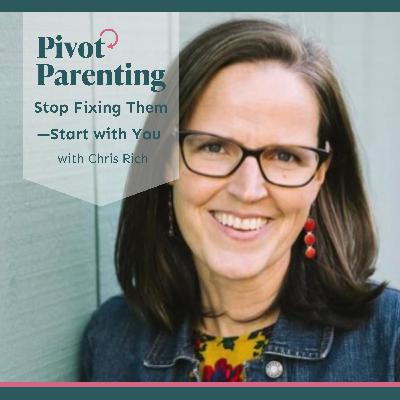
If you've ever thought, "Why do my teen's moods control the whole house?"—this episode is for you. Instead of doubling down on control (which never works), I'll walk you through how to regulate yourself first, so you can actually connect with your teen and get real results. Here's what you'll walk away with: 3 steps to ground yourself fast (including Chris's "Safety Sequence" you'll want in your back pocket forever). Why high emotions = low intelligence, and how to flip the script in heated moments. How to retrain your brain so you see possibilities instead of just problems. The secret to creating peace in your home—even when your teen is tired, stressed, or flat-out pushing your buttons. Parenting isn't about "fixing" your teen—it's about showing up as the parent you'll be proud of. Book your free Peaceful Parenting Strategy Call today and let's create a plan that finally works for your family. About my Guest: Chris Rich is a certified life coach, corporate mental health presenter, and host of The Mixed Faith Relationship Podcast. She specializes in helping individuals strengthen connection, resilience, and emotional well-being—especially when navigating the challenges of faith shifts and family dynamics. Chris combines her professional training with her lived experience in a mixed faith family to offer practical tools, compassion, and hope. www.chrisrichcoaching.com chrisrichcoaching@gmail.com Host of The Mixed Faith Relationship Podcast @chrisrichcoaching Instagram Subscribe to Mixed Faith Friday Emails

Comments

Download from Google Play

Download from App Store
 United States