


 Claim Ownership
Workplace Entanglement
Subscribed: 14Played: 63
Subscribe

© 10X Pod Group
Description
Step inside the shadowy corridors of the corporate world with Workplace Entanglement, the podcast that uncovers the steamy affairs, jaw-dropping crimes, and cutthroat greed lurking behind office doors. From shocking betrayals and high-stakes corruption to the lies and mistreatment that shatter lives, each episode dives deep into the scandals that turn ordinary workplaces into hotbeds of drama. Whether it’s stolen fortunes, forbidden romances, or power plays gone wrong, Workplace Entanglement exposes the untold stories of ambition, deceit, and survival in the workplace. Buckle up—it’s not just business, it’s personal. Hosted on Acast. See acast.com/privacy for more information.
85 Episodes
Reverse

A high-performing Italian professional enters a discreet workplace affair with a senior colleague, believing mutual consent and silence will protect them both. When she attempts to end the relationship, affection turns into control, subtle threats, and professional retaliation. What follows is not a public scandal but a quiet war of documentation, HR maneuvering, and legal pressure. As lawyers replace lovers, the company distances itself, prioritizing reputation over truth. The affair ends not with closure, but with a settlement that protects the system and scars everyone involved.

The Boss Who Needed Validation follows a White French woman navigating a Paris consulting firm under a newly promoted White French male boss whose leadership depends on constant affirmation. What begins as subtle emotional management turns into quiet retaliation when she stops feeding his ego. As praise dries up, her work is undermined, her visibility erased, and her credibility questioned. The story exposes how emotional dependency at the top can become a weapon—and how punishment doesn’t always arrive loudly, but methodically.

The Employee Who Knew Too Much follows a white Danish woman working inside a modern Copenhagen logistics tech firm as she watches an unremarkable male colleague rise to power without talent, authority, or results—only secrets. By quietly collecting damaging information on executives, managers, and coworkers, he becomes untouchable, protected by the very people he could expose. As the narrator realizes how deeply leadership depends on his silence, she must choose between integrity and survival inside a system that rewards leverage over honesty.

The Office Divorce follows a senior female employee who witnesses a high-level executive marriage collapse and slowly consume the company they lead. As two powerful executives weaponize meetings, promotions, restructures, and silence against each other, the workplace becomes a battlefield disguised as professionalism. Careers are advanced or destroyed not by merit, but by proximity to revenge. The narrator survives inside the fallout, watching neutrality fail and power choose sides. What begins as a private separation becomes a corporate civil war with lasting damage.

A White Irish consultant is privately mentored by a powerful White Irish partner who builds her confidence, blurs boundaries, and then punishes her career when she refuses his advances—until she documents the pattern, faces a hollow HR process, and ultimately resigns to reclaim her peace.

In a modern Stockholm office obsessed with culture and wellbeing, a newly hired operations professional is quietly targeted by a charismatic internal power broker known for knowing too much. What begins as warmth and mentorship slowly turns into surveillance, reputation damage, and psychological pressure as private insecurities are weaponized and spread. As whispers replace facts and concern becomes control, the narrator realizes the most dangerous people in workplaces don’t attack openly—they smile while they collect leverage. This is a story about information as currency, softness as strategy, and the cost of trusting the wrong woman.

A senior manager’s generosity begins as quiet appreciation and slowly transforms into a form of ownership. What starts with small, seemingly harmless gifts becomes a calculated system of control, obligation, and retaliation when boundaries are finally enforced. This episode explores how power hides behind politeness, how gratitude can be weaponized, and how saying no too late can provoke cruelty disguised as professionalism. Told from the inside, this is a story about gifts that were never free—and the cost of trying to give them back.

In a high-pressure corporate department led through intimidation, a White Polish woman recounts how fear was used as a management strategy to maintain control, silence complaints, and enforce obedience. As public humiliation becomes routine and employees adapt to survive, one quiet analyst finally breaks under the weight of sustained psychological pressure, confronting their manager in front of the entire team. Her defiance exposes the fragile machinery of fear that kept the department functioning—and leaves lasting consequences for everyone who stayed silent.

A senior professional becomes entangled in a private relationship with a powerful supervisor after he implies that intimacy and loyalty will lead to a long-awaited promotion. Nothing is ever promised on paper, but everything is clearly understood behind closed doors. As months pass and the promotion never materializes, the relationship shifts from desire to obligation. What once felt consensual begins to feel transactional. When the truth finally surfaces, she must confront the cost of believing in an unspoken deal—and the quiet consequences that follow.

A White Dutch woman escapes a damaging workplace affair through a corporate transfer, believing distance will end the power imbalance. Instead, she discovers that influence travels faster than people, as her former superior quietly undermines her reputation from afar. In a new office meant to offer safety, she realizes she has not escaped him at all—only changed the battlefield.

The Boss Who Loved Broken Employees is a first-person account of a Scottish woman who slowly realizes her boss is most attentive when she is exhausted, overwhelmed, and vulnerable. What begins as mentorship and protection quietly transforms into dependency, control, and emotional captivity. The story exposes how power can hide behind praise, how resilience can be weaponized, and how burnout becomes a management strategy. This is not a story about overt abuse, but about subtle erosion—where support turns conditional and survival replaces ambition. It’s a portrait of a workplace that feeds on fragility and a woman who must reclaim herself before disappearing entirely.

A seasoned Italian professional reports unwanted advances by a respected male colleague, believing the system will protect her. Instead, the company closes ranks, reframes her complaint as a performance issue, and quietly isolates her until she becomes expendable. What begins as a moment of courage turns into a lesson in how institutions punish disruption. This story exposes the hidden cost of speaking up in workplaces that value comfort over truth.

A white German operations lead discovers that her calm, methodical manager has been secretly recording their workplace interactions under the guise of “accountability.” What begins as a subtle discomfort escalates into a realization that she—and others—have been systematically archived as leverage. As power tightens and institutions protect themselves, she must choose between exposing the truth or preserving her own survival. This episode explores surveillance, consent, and how control can be weaponized quietly inside professional spaces.

A white French professional reports inappropriate workplace behavior, expecting clarity and protection, but instead finds herself subjected to an HR process that quietly turns her into the suspect. What begins as a formal complaint devolves into a dissection of her clothing, tone, and perceived intentions. The meeting meant to resolve harm instead reinforces it, revealing how corporate systems can weaponize neutrality and procedure to preserve power. By the end, the violation isn’t just what happened—it’s how she was made to question herself for speaking up.

In The Assistant Who Ran the Office, a senior professional slowly realizes that real power doesn’t always sit in the corner office. A seemingly invisible assistant controls access, information, and influence with surgical precision, reshaping careers without ever raising her voice. As meetings disappear and decisions happen without her, the narrator watches her authority erode in silence. What begins as subtle inconvenience becomes deliberate exclusion. This is a story about gatekeeping, quiet retaliation, and how unchecked proximity to power can quietly end a career.

The Night Shift Affair follows a white Hungarian woman working overnight in a corporate office who begins a secret relationship with a white Hungarian male colleague. What starts as quiet proximity and unspoken desire in an empty building becomes a double life defined by touch at night and distance by day. When a photograph captures their intimacy outside the office, the illusion of control collapses. Power shifts, silence hardens, and consequences arrive without confrontation. The story lives in the tension between darkness that protects and daylight that exposes.

A seasoned Romanian professional joins a modern consulting firm led by a charismatic manager who prides himself on hiring only women. What first appears progressive slowly reveals a disturbing pattern of private meetings, conditional mentorship, and promotions tied to male approval. As younger female employees adapt to survive, the narrator watches ambition become currency and silence become strategy. When she refuses to participate, she is quietly pushed to the margins. The story exposes how power can disguise itself as opportunity—and how systems don’t need explicit abuse to cause lasting harm.

A routine performance review turns into something far more dangerous when professional praise is quietly paired with personal expectations. As boundaries are tested behind closed doors, success becomes conditional, and refusal carries consequences no policy is willing to name. What begins as mentorship slowly reveals itself as leverage, forcing one woman to decide what she’s willing to lose to keep her integrity intact

In a modern Prague consulting firm, a White Czech woman watches as intimacy quietly becomes a form of workplace currency. Access, protection, and career survival are no longer earned solely through performance, but through unspoken personal exchanges with those in power. As colleagues trade closeness for advancement, those who refuse are slowly isolated, scrutinized, and punished. The narrator finds herself trapped between awareness and survival, forced to navigate a system where silence has a price and refusal makes you visible. What begins as subtle favoritism hardens into an economy of leverage, leaving lasting damage long after the key players move on.
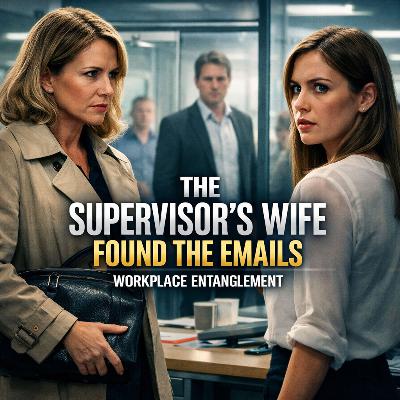
A White Welsh woman recounts the moment her private email relationship with her married supervisor is exposed when his wife confronts her publicly at work. What unfolds is not just personal humiliation, but a revealing look at how workplaces protect authority, reframe accountability, and quietly reposition women as problems to be managed rather than harms to be addressed.

Comments

Download from Google Play

Download from App Store
 United States