


 Claim Ownership
Food For You and the Planet
Subscribed: 0Played: 4
Subscribe

© 2024
Description
Food For You and the Planet is a fresh new podcast created by Healthy PlanEat that explores healthy and environmentally sustainable food solutions. Food For You and the Planet is hosted by Rosemary Ostfeld, PhD.
41 Episodes
Reverse
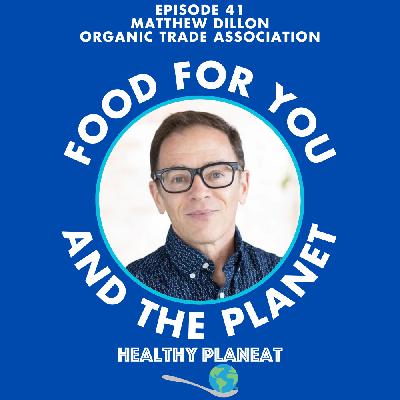
Matthew Dillon is the co-CEO of The Organic Trade Association. Matthew was raised in an agricultural family and community in Nebraska and has held diverse roles in organic food and farming, working from seed to shelf. He headed Abundant Life Seed, one of the first certified seed companies in the U.S. and founded Organic Seed Alliance. He worked for over ten years at Clif Bar & Company in several roles including Vice President of Impact and Government Affairs. He most recently served as Chief Sustainability Officer for organic poultry producer Farmer Focus. As co-CEO for OTA, Matthew oversees the organization's public relations, policy agenda, member engagement and fundraising. TOPICS EXPLORED 0:00 – 0:20 – Introduction 0:20 – 1:15 – Matthew Dillon's bio 1:15 – 3:04 – What is the Organic Trade Association? 3:04 – 4:57 – How did the Organic Trade Association get started and how has it evolved over the years? 4:57 – 9:09 – Why is organic agriculture important? 9:09 – 15:23 – Why should small and medium farms become USDA certified organic and what are some of the challenges they face? 15:23 – 18:04 – Can you tell me about the Organic Trade Association's role as a National Partner for the U.S. Agriculture Department's (USDA) Transition to Organic Partnership Program (TOPP) and how it helps farms transition to organic practices? 18:04 – 26:56 – What are some of the challenges related to domestic and international organic agriculture? 26:56 – 32:12 – What are some of the key findings of the 2026 Organic Trade Association Organic Market report including market trends and global trade dynamics? 32:12 – 40:36 – How is the regenerative agriculture movement similar or different from the organic agriculture movement? 40:36 – 43:13 – What are some of the biggest things the Organic Trade Association is working on this year, and how can people become involved? 43:13 – 46:20 – What do you see as the future of the organic agriculture movement? 46:20 – 47:16 – Things to share and wrap up ORGANIC TRADE ASSOCIATION: https://ota.com/ RESOURCES Organic 101: https://ota.com/organic-101 Organic Trade Association Resources: https://ota.com/resources Organic Trade Association Membership: https://ota.com/membership FOOD FOR YOU AND THE PLANET PODCAST INFORMATION Apple Podcasts: https://podcasts.apple.com/us/podcast/food-for-you-and-the-planet/id1739416396 Spotify: https://open.spotify.com/show/7pkAIuXxl9dzD48b7qMOL1 RSS: https://feeds.libsyn.com/506343/rss Podcast Instagram: @foodforyouandtheplanet TAGS Food Environment Health Podcast Sustainability Farms Farming Organic Organic Agriculture USDA Certified Organic Organic Trade Association
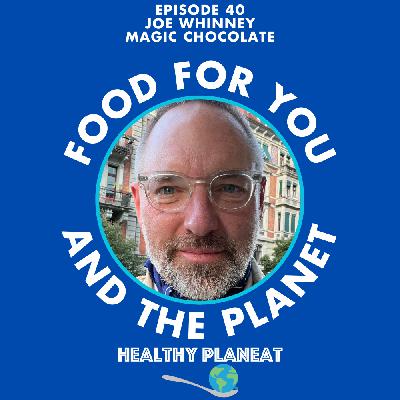
Joe Whinney is the CEO and Co-Founder of Magic Chocolate. Joe Whinney is the former CEO and co-founder of Theo Chocolate, the first 100% organic and fair-trade chocolate company in the US and he is now the CEO and co-founder of Magic Chocolate, the world's first Regenerative Organic Certified chocolate bar. TOPICS EXPLORED 0:00 – 0:23 – Introduction 0:23 – 1:00 – Joe Whinney's bio 1:00 – 3:20 – What is Magic Chocolate and how did it begin? 3:20 – 5:26 – How did you become interested in making chocolate? 5:26 – 7:23 – How can entrepreneurship help foster a more compassionate and just world? 7:23 – 9:12 – What are some of the social and environmental challenges in the chocolate industry? 9:12 – 11:10 – How does Magic Chocolate aim to address some of these social and environmental issues? 11:10 – 12:47 – How do you source the ingredients for your chocolate, and how does that differ from the way most chocolate companies source their ingredients? 12:47 – 14:36 – Can you tell me a little bit about plant-based or vegan chocolate? 14:36 – 16:48 – What are some of your favorite things about Magic Chocolate? 16:48 – 19:24 – What do you see as the future of sustainable food and farming? 19:24 – 21:32 – Things to share and wrap up MAGIC CHOCOLATE: https://magicchocolate.com/ RESOURCES https://magicchocolate.com/collections/chocolate-bars https://magicchocolate.com/collections/new-truffle-bars FOOD FOR YOU AND THE PLANET PODCAST INFORMATION Apple Podcasts: https://podcasts.apple.com/us/podcast/food-for-you-and-the-planet/id1739416396 Spotify: https://open.spotify.com/show/7pkAIuXxl9dzD48b7qMOL1 RSS: https://feeds.libsyn.com/506343/rss Podcast Instagram: @foodforyouandtheplanet TAGS Food Environment Health Podcast Sustainability Farming Regenerative Regenerative Farming Regenerative Organic Certified Cocoa Chocolate Magic Chocolate
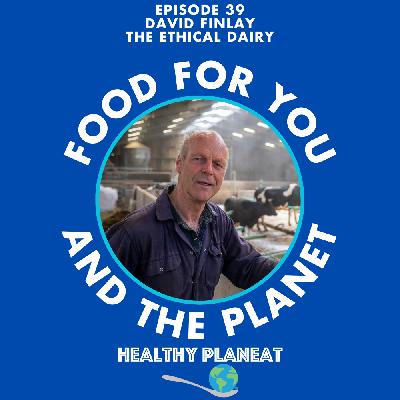
David Finlay is the owner and co-founder of The Ethical Dairy which he co-founded with his late wife Wilma. David Finlay is renowned for his innovative and sustainable approach to dairying. As an early adopter of organic farming, he has led the movement in Scotland and the UK, integrating agroecological practices, renewable energy solutions, and forward-thinking dairying systems, such as cow-calf contact dairying. His commitment to sustainability is evident through his work on soil and pasture management, wind turbines, and biodigesters, winning him multiple accolades, including the 2006 BBC Farmer of the Year Award. TOPICS EXPLORED 0:00 – 0:22 – Introduction 0:22 – 1:08 – David Finlay's bio 1:08 – 1:43 – What is The Ethical Dairy and how did it begin? 1:43 – 2:47 – How did you become interested in sustainable food and agriculture? 2:47 – 3:44 – Why are organic and regenerative farming practices important? 3:44 – 5:20 – How were animals traditionally raised prior to the industrialization of the agriculture industry? 5:20 – 6:04 – How are most dairy farms operated now? 6:04 – 8:17 – What does having an "ethical dairy" mean to you, and how do dairy cows and calves live on your farm? 8:17 – 10:08 – Can you tell me about the book you wrote with your wife and the film about your farm? 10:08 – 12:59 – Why did you make the decision to have calves stay with their mothers and what benefits could there be to farmers who may want to try this? 12:59 – 14:40 – Can you tell me about the EU funded project called Transform Dairy? 14:40 – 17:10 – If other farmers around the world were to try to have an ethical dairy like yours, what steps would you recommend they take to help them on the ethical dairy path? 17:10 – 18:20 – What do you see as the future of ethical and sustainable food and farming? 18:20 – 19:22 – Things to share and wrap up THE ETHICAL DAIRY CO: https://theethicaldairy.co.uk/ A DAIRY STORY BOOK: https://theethicaldairy.co.uk/our-book A DAIRY STORY FILM: https://adairystory.com/ RESOURCES The pioneering dairy farmer keeping calves with their mothers: https://www.bbc.com/news/articles/cly452540dzo Transform Dairy Net: https://transformdairynet.eu/ FOOD FOR YOU AND THE PLANET PODCAST INFORMATION Apple Podcasts: https://podcasts.apple.com/us/podcast/food-for-you-and-the-planet/id1739416396 Spotify: https://open.spotify.com/show/7pkAIuXxl9dzD48b7qMOL1 RSS: https://feeds.libsyn.com/506343/rss Podcast Instagram: @foodforyouandtheplanet TAGS Food Environment Health Podcast Sustainability Farming Dairy Scotland The Ethical Dairy Ethical Dairy Cheesemaking A Dairy Story
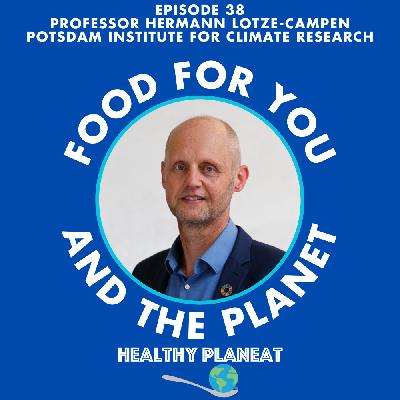
Professor Hermann Lotze-Campen, is Co-Author of the EAT Lancet Commission, an agricultural economist and Head of Research Department 2 "Climate Resilience" at the Potsdam Institute for Climate Impact Research, and Professor of Sustainable Land Use and Climate Change at Humboldt University in Berlin. Professor Hermann Lotze-Campen grew up on a farm in Northern Germany and studied Agricultural Sciences and Economics at the University of Kiel and the University of Reading in England, where he graduated with a Master's degree in Agricultural Economics. For his doctoral studies he studied in Kiel, at the University of Minnesota in the USA and at Humboldt-University in Berlin, where he received his Ph.D. in Agricultural Economics. In 2001, Hermann joined the Potsdam Institute for Climate Impact Research, where he developed a global land use modelling framework for assessments of the interplay between climate impacts, global food and bioenergy demand, agricultural land and water use, trade, and the environment. TOPICS EXPLORED 0:00 – 1:47 – Introduction 1:47 – 3:03 – What is The EAT Lancet Commission? 3:03 – 4:06 – How did you become interested in sustainable food and agriculture? 4:06 – 5:31 – Why was the EAT Lancet Commission created? 5:31 – 6:50 – What types of scientists have served on the EAT Lancet Commission? 6:50 – 9:42 – What is the Planetary Boundaries Framework and how is it related to our food and agriculture system? 9:42 – 12:05 – What were the key findings of the first 2019 EAT Lancet Commission report? 12:05 – 14:31 – What is the Planetary Health Diet? 14:31 – 17:41 – What are some examples of Planetary Health Diet meals? 17:41 – 22:10 – Can you tell me more about the justice element which was incorporated into the new 2025 EAT Lancet Commission and some of those key findings? 22:10 – 24:39 – What are some of the key barriers towards achieving healthy and environmentally sustainable food systems and how can they be overcome? 24:39 – 27:55 – How can society effectively transition to healthy and environmentally sustainable food systems? 27:55 – 30:44 – What do you think will be the future of healthy and sustainable food? 30:44 – 33:06 – Things to share and wrap up POTSDAM INSTITUTE FOR CLIMATE RESEARCH: https://www.pik-potsdam.de/en/home EAT FORUM https://eatforum.org/ RESOURCES The EAT Lancet Commission 2025 Report: https://www.thelancet.com/commissions-do/EAT-2025 Our Cultures Our Meals Cooking for Planetary Health: https://eatforum.org/campaign/our-cultures-our-meals-cooking-for-planetary-health/ FOOD FOR YOU AND THE PLANET PODCAST INFORMATION Apple Podcasts: https://podcasts.apple.com/us/podcast/food-for-you-and-the-planet/id1739416396 Spotify: https://open.spotify.com/show/7pkAIuXxl9dzD48b7qMOL1 RSS: https://feeds.libsyn.com/506343/rss Podcast Instagram: @foodforyouandtheplanet TAGS Food Environment Health Podcast Sustainability EAT Forum EAT Lancet Commission Potsdam Institute for Climate Research Planetary Health Diet
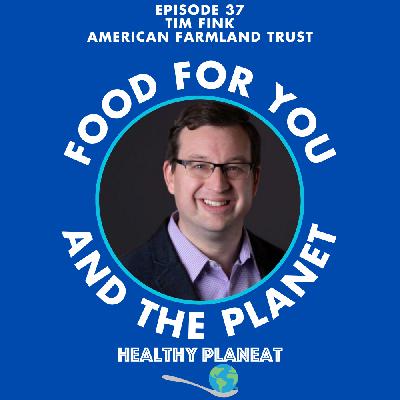
Tim Fink is the Vice President of Policy at the American Farmland Trust. Tim develops the American Farmland Trust's overall policy direction and strategies and coordinates federal and relevant state policy work in close collaboration with American Farmland Trust national initiative leaders, regional directors, and partners. Before joining AFT, Tim was the director of research and policy analysis at the Supporters of Agricultural Research (SoAR) Foundation, where he advocated for increases in USDA's Agriculture and Food Research Initiative, fundraised for the National Academies' "Science Breakthroughs 2030" project, and led the development of a series of Farm Bill Research Policy Recommendations endorsed by 66 organizations. Tim has extensive experience in politics, including five political campaigns and as a legislative assistant to the chair of the House Energy Committee for Iowa's General Assembly. Tim holds a master's degree from Harvard and a Bachelor of Arts from Luther College. TOPICS EXPLORED 0:00 – 1:58 – Introduction 1:58 – 3:21 – What is The American Farmland Trust and what type of work does it do? 3:21 – 4:25 – How did you become interested in sustainable food and agriculture? 4:25 – 5:48 – How does the American Farmland Trust work to protect land? 5:48 – 7:24 – What are some of the greatest challenges related to protecting American Farmland? 7:24 – 9:37 – How can we preserve farmland and make sure that it transitions to the next generation of farmers? 9:37 – 11:15 – How has the amount of land owned by small farmers changed in recent decades? 11:15 – 12:26 – What are some things the average person could do to help conserve American Farmland? 12:26 – 14:13 – How does the American Farmland Trust advance farming practices that prevent erosion and rebuild soil health? 14:13 – 15:16 – Why are practices that prevent soil erosion and rebuild soil health important? 15:16 – 16:36 – How does the American Farmland Trust help keep farmers and ranchers in business? 16:36 – 18:30 – What are some of the key quantifiable impacts the American Farmland Trust has had? 18:30 – 19:33 – What do you think are the most important things for society to do to shift towards sustainable food, agriculture, and farming systems? 19:33 – 19:51 – Things to share and wrap up AMERICAN FARMLAND TRUST INFORMATION https://farmland.org/ RESOURCES About The American Farmland Trust: https://farmland.org/about History of The American Farmland Trust: https://farmland.org/history Prosperity Partners: https://farmland.org/partners American Farmland Trust Impact: https://farmland.org/impact Donate to the American Farmland Trust: https://farmland.org/give FOOD FOR YOU AND THE PLANET PODCAST INFORMATION Apple Podcasts: https://podcasts.apple.com/us/podcast/food-for-you-and-the-planet/id1739416396 Spotify: https://open.spotify.com/show/7pkAIuXxl9dzD48b7qMOL1 RSS: https://feeds.libsyn.com/506343/rss Podcast Instagram: @foodforyouandtheplanet TAGS Food Environment Health Podcast Sustainability America American Farms Farmland Preservation Preserving American Farmland American Farms American Farmland American Farmland Trust
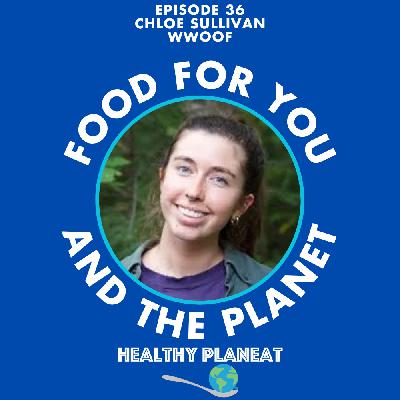
Chloe Sullivan is the PR and Communications Manager at Federation of World Wide Opportunities on Organic Farms (WWOOF) Organisations. Chloe Sullivan is the PR and Communications Manager for the Federation of WWOOF Organisations (FoWO). Her journey with WWOOF began in 2021 as a WWOOFer. After transformative experiences on organic farms in Denmark, the Netherlands, and the US, Chloe was inspired to share the WWOOF experience with others. She started sharing about her experience on social media, which led to a connection with the WWOOF Canada team and an opportunity to become more involved with Federation of WWOOF Organisations. Eventually, Chloe took on the role of PR Manager for WWOOF, where she continues to be inspired by the transformative impact WWOOF has on people's lives and the incredible community it fosters. TOPICS EXPLORED 0:00 – 1:42 – Introduction 1:42 – 2:16 – What is WWOOF and what type of work does it do? 2:16 – 3:37 – How did you become interested in helping people have opportunities on organic farms? 3:37 – 5:41 – What is the history of WWOOF and how did it start? 5:41 – 6:50 – How are organic farms that are part of the WWOOF network selected? 6:50 – 8:39 – How does WWOOF work? 8:39 – 9:15 – What are some of the countries where people can have opportunities on organic farms? 9:15 – 10:03 – Can you share some examples of organic farms people have worked on? 10:03 – 12:00 – What could a day be like for someone who is having an opportunity on an organic farm? 12:00 – 14:21 – Farming can be hard work. What happens if someone isn't enjoying their organic farm opportunity? 14:21 – 17:19 – How do WWOOF opportunities help prepare people if they would like to one day own or operate an organic farm? 17:19 – 19:45 – What are some of the facts and figures related to people who WWOOF going on to own or operate their own organic farm? 19:45 – 22:00 – Can you share some testimonials you've heard from people who have participated in WWOOF? 22:00 – 2:40 – Things to share and wrap up WORLD WIDE OPPORTUNITIES ON ORGANIC FARMS (WWOOF) INFORMATION https://wwoof.net/ RESOURCES How WWOOF Works: https://wwoof.net/howitworks/ Choose Your WWOOF Destination: https://wwoof.net/#destination WWOOF USA Future Farmer Program: https://info.wwoofusa.org/blog/2025/01/04/futurefarmerprogram/ WWOOF USA Impact 2024 Report: https://impact.wwoofusa.org/ WWOOF App: https://wwoof.net/news/introducing-the-first-ever-wwoof-app/ FOOD FOR YOU AND THE PLANET PODCAST INFORMATION Apple Podcasts: https://podcasts.apple.com/us/podcast/food-for-you-and-the-planet/id1739416396 Spotify: https://open.spotify.com/show/7pkAIuXxl9dzD48b7qMOL1 RSS: https://feeds.libsyn.com/506343/rss Podcast Instagram: @foodforyouandtheplanet TAGS Food Environment Health Podcast Sustainability Organic Organic Farms Organic Farming World Wide Opportunities on Organic Farms WWOOF
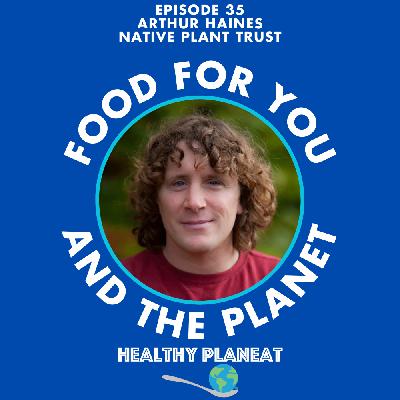
Arthur Haines is a Senior Research Botanist at The Native Plant Trust. Arthur is a plant biologist specializing in the taxonomy and identification of New England tracheophytes. He is the senior research botanist for Native Plant Trust and author of Flora Novae Angliae published by New England Wild Flower Society and Yale University Press, and several other books, including Flora of Maine, A New Path, and Ancestral Plants (a two-volume set on edible, medicinal, and useful plants). In addition to his work studying advancement in plant systematics, Arthur is an administrator for the Go Botany and Plant Share websites and a Flora of North America regional reviewer. TOPICS EXPLORED 0:00 – 1:27 – Introduction 1:27 – 2:15 – What is The Native Plant Trust and what type of work does it do? 2:15 – 5:10 – How did you become interested in native plants, foraging, and become a senior research botanist at The Native Plant Trust? 5:10 – 8:10 – What are some of the native plants that are common in different regions, including New England? 8:10 – 9:51 – Can you tell me about the New England Wild Flower Society's Flora Novae Angliae you completed and how people can use it? 9:51 – 14:01 – What are examples of your favorite edible native plants? 14:01 – 15:49 – What is foraging? 15:49 – 18:32 – How can people learn how to forage? 18:32 – 20:28 – What are your favorite things about foraging? 20:28 – 24:03 – What do you think will be the future of foraging? 24:03 – 27:25 – How have these populations of native plants changed over time with industrial agriculture, invasive species, and other challenges? 27:25 – 28:55 – Can you tell me about your book Ancestral Plants: A Primitive Skills Guide to Important Wild Edible, Medicinal, and Useful Plants of the Northeast? 28:55 – 32:40 – What are some of the benefits of native plants? 32:40 – 34:39 – How can people grow native plants in their gardens or communities? 34:39 – 36:45 – What are some things you wish everyone knew about native plants and foraging? 36:45 – 38:41 – Things to share and wrap up NATIVE PLANT TRUST INFORMATION https://www.nativeplanttrust.org/ ARTHUR HAINES INFORMATION https://www.arthurhaines.com/ RESOURCES Native Plants for Your Garden: https://www.nativeplanttrust.org/for-your-garden/ Go Botany Plant Identification: https://gobotany.nativeplanttrust.org/ New England Wild Flower Society's Flora Novae Angliae: https://yalebooks.yale.edu/book/9780300171549/new-england-wild-flower-societys-flora-novae-angliae/ FOOD FOR YOU AND THE PLANET PODCAST INFORMATION Apple Podcasts: https://podcasts.apple.com/us/podcast/food-for-you-and-the-planet/id1739416396 Spotify: https://open.spotify.com/show/7pkAIuXxl9dzD48b7qMOL1 RSS: https://feeds.libsyn.com/506343/rss Podcast Instagram: @foodforyouandtheplanet TAGS Food Environment Health Podcast Sustainability Native Plants Foraging Native Plant Trust
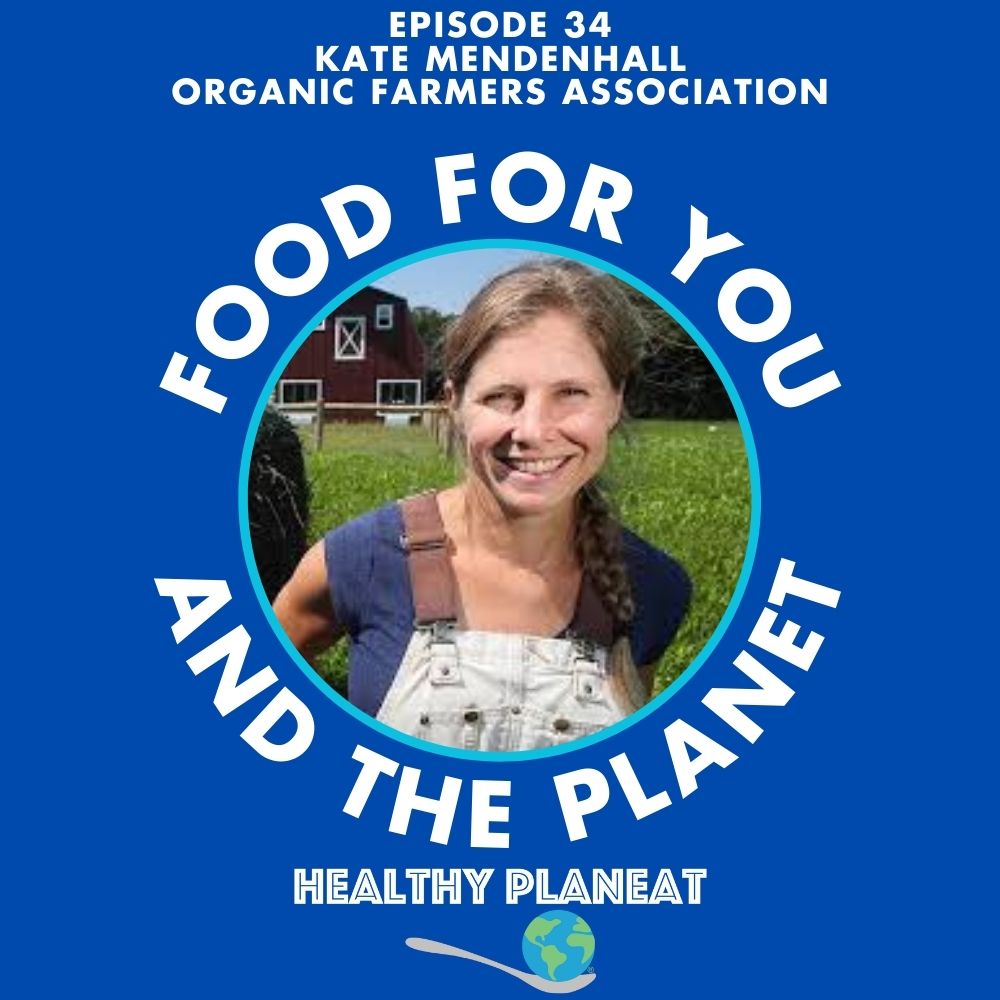
Kate Mendenhall is the Executive Director of the Organic Farmers Association. Kate Mendenhall has served as the Executive Director of Organic Farmers Association since it was founded in 2016. Before OFA, she built a career working with organic farmer organizations from California (CUESA & PAN), New York (NOFA-NY), and Iowa (IOA) getting to know what organic farmers need to be successful in different regions and markets. She now lives in her hometown of Okoboji, Iowa where she balances running a small diversified organic livestock farm, raising two kids, and leading OFA. Her nationwide experience and dedication to organic farmers throughout her career make leading the Organic Farmers Association her dream job and she is a fierce advocate for what organic farmers need and want from the ground up! TOPICS EXPLORED 0:00 – 1:38 – Introduction 1:38 – 2:35 – What is the Organic Farmers Association and what type of work does it do? 2:35 – 5:34 – How did you become interested in sustainable food and agriculture and become the Executive Director of the Organic Farmers Association? 5:34 – 8:43 – Can you tell me a little bit about how you implement organic practices on your farm? 8:43 – 10:50 – What are some of the challenges and benefits of becoming USDA Certified Organic? 10:50 – 13:28 – Can you tell me about the USDA National Organic Program and why the National Organic Program is important? 13:28 – 16:09 – There are some people who are critical of USDA Certified Organic and believe it should be stronger. What would you say to people who may be hesitant about getting certified or considering dropping certification? 16:09 – 18:16 – Can you tell me about the educational work the Organic Farmers Association does? 18:16 – 19:36 – The Organic Farmers Association has farmers circles – what are they and how can they benefit farmers? 19:36 – 21:40 – What are some examples of Organic Events the Organic Farmers Association helps coordinate? 21:40 – 22:51 – Can you tell me about the Organic Voice magazine? 22:51 – 26:08 – Can you tell me about the advocacy work the Organic Farmers Association does and some of the recent outcomes? 26:08 – 29:33 – What are some of the main challenges for the organic agriculture movement in the US right now? 29:33 – 30:39 – What can everyday people do to grow the organic agriculture movement? 30:39 – 32:16 – What are your hopes for the future of the organic movement? 32:16 – 32:45 – Things to share and wrap up ORGANIC FARMERS ASSOCIATION INFORMATION https://organicfarmersassociation.org/ RESOURCES Organic Career Network: https://organiccareernetwork.org/ Organic Farmers Association Policy Positions: https://organicfarmersassociation.org... Organic Voice Magazine: https://organicfarmersassociation.org... FOOD FOR YOU AND THE PLANET PODCAST INFORMATION Apple Podcasts: https://podcasts.apple.com/us/podcast... Spotify: https://open.spotify.com/show/7pkAIuX... RSS: https://feeds.libsyn.com/506343/rss Podcast Instagram: @foodforyouandtheplanet TAGS Food Environment Health Podcast Sustainability Farms Farmers Farming Organic USDA Certified Organic Organic Farmers Association
Sally McGee is the Director of Climate and Strategic Initiatives at the Nature Conservancy and Leader of the Shellfish Growers Climate Coalition. Sally McGee works for the Nature Conservancy where she is the Director of Climate and Strategic Initiatives for the Global Aquaculture Program. Her areas of focus include the Shellfish Growers Climate Coalition, Sustaining Oyster Aquaculture and Restoration (SOAR), and projects focused on seaweed cultivation. Sally also developed, owned, and operated an oyster farm, Sixpenny Oysters, in Noank, Connecticut. Previously, Sally was TNC's Northeast Marine Program Director and focused on wild harvest fisheries and marine spatial planning. She was also a voting member of the New England Fishery Management Council, which governs wild harvest fisheries out to 200 miles offshore. Sally received her bachelor's degree in economics from Smith College and her master's degree in marine affairs from the University of Rhode Island. She also worked in the U.S. House of Representatives on natural resource, climate, and agriculture issues. Sally is a certified master gardener and volunteers in her local giving garden growing produce for food-insecure people in southeastern Connecticut. TOPICS EXPLORED 0:00 – 2:06 – Introduction 2:06 – 4:51 – What is the Shellfish Growers Climate Coalition and what type of work does it do? 4:51 – 7:25 – How did you become interested in the ocean and sustainable aquaculture? 7:25 – 9:55 – Can you tell me about your time spent as the owner and operator of Sixpenny Oysters? 9:55 – 11:30 – What are some of the challenges shellfish growers currently face? 11:30 – 13:35 – What are some of the environmental benefits of shellfish in general? 13:35 – 16:00 – What are some of the environmentally sustainable practices shellfish growers use? 16:00 – 17:43 – How does the Shellfish Growers Climate Coalition work with key stakeholders beyond shellfish growers such as wholesalers, retailers, restaurants, and gear manufacturers? 17:43 – 19:14 – Are there any ways you recommend people eat shellfish? 19:14 – 22:42 – Can you share an example of innovative techniques sea farmers have used to grow shellfish and seaweed together? 22:42 – 25:06 – What are some examples of educational outreach shellfish growers and storytellers have done to build awareness about the benefits of shellfish growing? 25:06 – 27:23 – What do you think the future of sustainable food from the ocean will look like? 27:23 – 28:23 – Things to share and wrap up SHELLFISH GROWERS CLIMATE COALITION INFORMATION https://www.nature.org/en-us/what-we-do/our-priorities/tackle-climate-change/climate-change-stories/shellfish-growers-climate-coalition/ RESOURCES Against the Tide Trailer: https://youtu.be/9h0RQ0K8rrk?si=eA-TSehGfIWzXOQo Heard on the Half Shell – Shellfish Growers Share Their Voice: https://youtu.be/PUCbJL5rjvA?si=-5Jfh_S9r8MZ76Cn Supporting Oyster Aquaculture and Restoration (SOAR): https://www.nature.org/en-us/what-we-do/our-priorities/provide-food-and-water-sustainably/food-and-water-stories/oyster-covid-relief-restoration/ FOOD FOR YOU AND THE PLANET PODCAST INFORMATION Apple Podcasts: https://podcasts.apple.com/us/podcast/food-for-you-and-the-planet/id1739416396 Spotify: https://open.spotify.com/show/7pkAIuXxl9dzD48b7qMOL1 RSS: https://feeds.libsyn.com/506343/rss Podcast Instagram: @foodforyouandtheplanet TAGS Food Environment Health Podcast Sustainability Aquaculture Clams Climate Mussels Oysters Sea Farmers Shellfish Shellfish Growers Shellfish Growers Climate Coalition
Abby Barrows is the Owner and Operator of Deer Isle Oyster Company and microplastics research scientist. Abby Barrows grew up and currently lives on an island off the coast of Maine. The ocean has been her passion driving her personal and professional path. She holds a Bachelor of Science from the University of Tasmania and a Master of Philosophy in Human Ecology from the College of the Atlantic. Directing microplastics research since 2012, she initiated the first baseline data map of microplastic pollution distribution in Maine. She concluded her work as the Principal Investigator for the Global Microplastics Initiative with Adventure Scientists. Through the help of citizen scientists, they compiled one of the largest global datasets on every ocean and continent in the world, enabling a rare glimpse at the extent of plastic contamination in remote, understudied ocean and fresh waters. Her interests are in research, oyster and seaweed farming, field methodology, education, disruptive innovation, and utilizing scientific data to drive policy and legislation to reduce single-use plastic locally and globally. TOPICS EXPLORED 0:00 – 1:46 – Introduction 1:46 – 2:40 – How did you become interested in the ocean? 2:40 – 4:44 – Can you tell me about your career path including your microplastics research? 4:44 – 6:29 – How did you make the leap into microplastics research and what were some of the big findings that you discovered? 6:29 – 9:06 – When did you first become interested in aquaculture and how did you start Deer Isle Oyster Company? 9:06 – 11:36 – Can you tell me a little about where you farm your oysters and what makes that location unique? 11:36 – 13:50 – What are some of the interesting characteristics about the oysters you grow? 13:50 – 17:07 – What do you wish people knew about oysters and aquaculture in general? 17:07 – 18:20 – What are some of your favorite ways to eat oysters? 18:20 – 21:48 – I understand you've been working to reduce plastic in the oyster farming industry. Can you tell me a little bit about this work? 21:48 – 24:12 – What are some of the challenges you face as an oyster farmer and may shellfish growers face in general and how can they be overcome? 24:12 – 25:50 – What are some of the ways you have worked to increase awareness about oyster farming? 25:50 – 27:02 – Things to share and wrap up DEER ISLE OYSTER CO AND ABBY BARROWS INFORMATION https://www.deerisleoysterco.com/ https://abbybarrows.com/ RESOURCES Antarctica: At the Intersection of Technology and Climate Action: https://www.youtube.com/watch?v=lCCMekuepeg Mushroom buoys could be contender in fight to reduce ocean plastics in Bangor Daily News: https://www.bangordailynews.com/2022/04/20/down-east/mushroom-buoys-ocean-plastics-joam40zk0w/ To cut ocean plastic pollution, aquaculture turns to renewable gear in Civil Eats: https://civileats.com/2022/06/27/to-cut-ocean-plastic-pollution-aquaculture-turns-to-renewable-gear/ The Maine microplastics researcher reenvisioning aquaculture in Down East: https://downeast.com/land-wildlife/microplastics-aquaculture-maine/ Aquaculture and the plastic problem in edible Maine: https://www.ediblemaine.com/stories/aquaculture-and-the-plastic-problem/ FOOD FOR YOU AND THE PLANET PODCAST INFORMATION Apple Podcasts: https://podcasts.apple.com/us/podcast/food-for-you-and-the-planet/id1739416396 Spotify: https://open.spotify.com/show/7pkAIuXxl9dzD48b7qMOL1 RSS: https://feeds.libsyn.com/506343/rss Podcast Instagram: @foodforyouandtheplanet TAGS Food Environment Health Podcast Sustainability Aquaculture Oysters Plastic
Michael Mazourek, PhD, is an Associate Professor in the School of Integrative Plant Science, Plant Breeding and Genetics, and Horticulture. Michael Mazourek, PhD, is the Calvin Knoyes Keeney Associate Professor of Vegetable Breeding at Cornell University. Michael is a breeder of peas, beans, squash, cucumbers and peppers and has released numerous cultivars and breeding materials that are shared by small, regional seed companies and incorporated into breeding program of the world's largest seed companies. Michael's specialty is biochemical genetics in vegetables; he explores the diverse phytochemistry that plants use to repel pests and herbivores, reward and nourish pollinators and seed dispersers and cope with environmental stresses, with a goal of harnessing to maximize nutrition and sustainability. Michael shares the craft of plant breeding with students at Cornell, through grower conferences and field days. TOPICS EXPLORED 0:00 – 1:52 – Introduction 1:52 – 3:44 – Can you give me a short overview of your plant science research at Cornell University? 3:44 – 6:26 – How did you become interested in plant science, food, and agriculture? 6:26 – 8:16 – What is the history of plant breeding? How and why did it begin? 8:16 – 9:55 – Why is plant breeding important? 9:55 – 14:25 – What are some of the methods for breeding plants? 14:25 – 17:22 – How does the type of breeding you do differ from genetically modified organisms (GMOs), or work done using CRISPR? 17:22 – 18:52 – What are some of the types of plants you have bred? 18:52 – 23:41 – What are some ways plants can be bred for great flavor? Can you give some examples of varieties you've created? 23:41 – 26:44 – How have you worked with local growers to breed plants? 26:44 – 29:00 – How can plants be bred to be more disease resistant? 29:00 – 30:40 – How can plants be bred to be more resistant to extreme weather events such as droughts or floods? 30:40 – 34:24 – What do you see as the future for organic, open-pollinated plant breeding? MICHAEL MAZOUREK AT CORNELL UNIVERSITY INFORMATION https://cals.cornell.edu/michael-mazourek RESOURCES Maz Lab Seeds: https://www.instagram.com/mazlabseeds/ FOOD FOR YOU AND THE PLANET PODCAST INFORMATION Apple Podcasts: https://podcasts.apple.com/us/podcast/food-for-you-and-the-planet/id1739416396 Spotify: https://open.spotify.com/show/7pkAIuXxl9dzD48b7qMOL1 RSS: https://feeds.libsyn.com/506343/rss Podcast Instagram: @foodforyouandtheplanet TAGS Food Environment Health Podcast Sustainability Agriculture Organic Plant Breeding Seeds
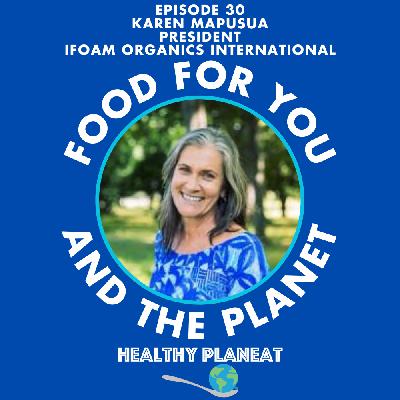
Karen Mapusua is the President of IFOAM Organics International. Founded in 1972, IFOAM Organics International is a membership-based organization working to bring true sustainability to agriculture across the globe. The mission of IFOAM Organics International is to lead change, organically. Its goal is the broad adoption of truly sustainable agriculture, value chains and consumption in line with the principles of organic agriculture. Through its work, it builds capacity to facilitate the transition of farmers to organic agriculture, raises awareness of the need for sustainable production and consumption, and advocates for a policy environment conducive to agro-ecological farming practices and sustainable development. It has over 700 members in over 100 countries. Karen Mapusua is President of IFOAM Organics International and is the Director of the Land Resources Division of the Pacific Community based in Fiji providing scientific and technical support in agricultural development, serving 22 Pacific Island states. She has a background in NGO capacity building and management and has worked in rural development in the Pacific islands region for close to 20 years with a focus on organic agriculture as a path to social and economic development. She co-founded the Pacific Organic & Ethical Trade Community (POETCom) and was extensively involved in developing the Pacific Organic Guarantee Scheme and developing alternative forms of certification that empower farmers. TOPICS EXPLORED 0:00 – 1:36 – Introduction 1:36 – 2:49 – What is the IFOAM Organics International and what type of work does it do? 2:49 – 4:42 – How did you become interested in sustainable food and agriculture? 4:42 – 6:31 – What inspired you to co-found the Pacific Organic & Ethical Trade Community and how did that lead you to the work you do today at IFOAM? 6:31 – 8:00 – Why is organic farming important for people and the environment? 8:00 – 9:41 – Can you tell me more about the IFOAM Regional bodies and the work that they do? 9:41 – 10:51 – Can you tell me more about the IFOAM Organic Ambassadors? 10:51 – 11:59 – What is the Organic Guarantee System and why is it important to clearly define what organic farming is and what it is not? 11:59 – 13:44 – What are some of the challenges related to transitioning to organic practices? 13:44 – 15:05 – What is organic group certification and how can it benefit farmers? 15:05 – 16:46 – What are some of the key outcomes of IFOAM Organics International's work? 16:46 – 18:37 – What are some of the most inspiring examples of organic farms you have seen around the world? 18:37 – 21:41 – I read that one of Fiji's islands went 100% organic – how did this come about and what are some of the key things that can be learned so other places can transition to 100% organic? 21:41 – 23:51 – What would you recommend to cities, regions, or countries that would like to set goals related to organic food and agriculture? 23:51 – 25:06 – What are your hopes for the future of the organic movement? 25:06 – 26:20 – Things to share and wrap up IFOAM ORGANICS INTERNATIONAL INFORMATION https://www.ifoam.bio/ RESOURCES Definition of Organic Agriculture: https://www.ifoam.bio/why-organic/organic-landmarks/definition-organic Global Organic Market Overview: https://www.ifoam.bio/global-organic-market-overview IFOAM Family of Standards 2025: https://www.ifoam.bio/ifoam-family-standards-2025 Elevating Truly Regenerative Agriculture – A Statement from the Organic Movement: https://www.ifoam.bio/elevating-truly-regenerative-agriculture-statement-organic The Role of Smallholders in Organic Agriculture: https://www.ifoam.bio/role-smallholders-organic-agriculture Smallholder Group Certification for Organic Production & Processing: https://www.ifoam.bio/smallholder-group-certification-organic-production How Governments Can Recognize and Support Participatory Guarantee Systems: https://www.ifoam.bio/how-governments-can-recognize-and-support-participatory FOOD FOR YOU AND THE PLANET PODCAST INFORMATION Apple Podcasts: https://podcasts.apple.com/us/podcast/food-for-you-and-the-planet/id1739416396 Spotify: https://open.spotify.com/show/7pkAIuXxl9dzD48b7qMOL1 RSS: https://feeds.libsyn.com/506343/rss Podcast Instagram: @foodforyouandtheplanet TAGS Food Environment Health Podcast Sustainability Agriculture Organic IFOAM IFOAM Organics International Regenerative Agriculture Regenerative Organic Agriculture Smallholder Farmers
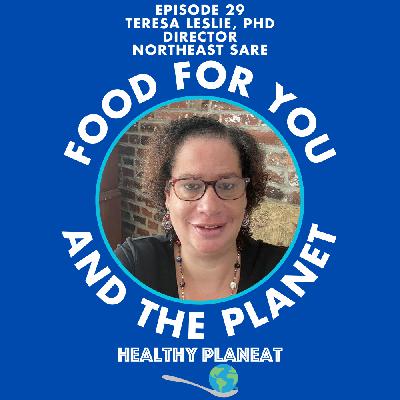
Teresa Leslie, PhD, Director of the Northeast Sustainable Agriculture Research and Education Program. Teresa holds a doctorate in medical anthropology from the University of Massachusetts Amherst, a master's degree in medical anthropology from the University of South Carolina and a bachelor's degree in anthropology from Howard University. She has experience cultivating relationships with diverse stakeholder groups to create innovative, evidenced-based policy and practice solutions. Founded in 1988, USDA's Sustainable Agriculture Research and Education (SARE) is a farmer-driven research and knowledge-sharing program that encourages farmers, ranchers, educators and researchers who are passionate about innovating to experiment and make growing food more rewarding for themselves, the environment and their communities. The Northeast Sustainable Agriculture Research and Education (SARE) Program offers grants and education to farmers, educators, service providers, researchers and others to address key issues affecting the sustainability of agriculture throughout the Northeast. The program serves Connecticut, Delaware, Massachusetts, Maryland, Maine, New Hampshire, New Jersey, New York, Pennsylvania, Rhode Island, Vermont, West Virginia, and Washington, D.C. The program is administered by Northeast SARE's host institution, the University of Vermont. TOPICS EXPLORED 0:00 – 1:11 – Introduction 1:11 – 4:14 – What is the Northeast SARE Program and what type of work does it do? 4:14 – 5:45 – How did you become interested in sustainable food and agriculture? 5:45 – 8:49 – What are some of the key topics Northeast SARE is focused on? 8:49 – 10:36 – What are some examples of impactful research that has been funded by Northeast SARE and what have some of the key findings been? 10:36 – 13:19 – What are some ways you think agriculture can support communities? 13:19 – 17:08 – Why is it important to build local and regional food systems and how can Northeast SARE support that work? 17:08 – 19:36 – One challenge farmers face is climate change. What can be done to help farmers with this? 19:36 – 22:08 – Is there anything else you would like to share about Northeast SARE's grants, training opportunities, and resources? 22:08 – 25:01 – What are some of the greatest challenges and benefits related to achieving sustainable food and agriculture systems? 25:01 – 27:16 – What do you think is the future of sustainable agriculture? 27:16 – 28:15 – Things to share and wrap up NORTHEAST SARE INFORMATION https://northeast.sare.org/ RESOURCES SARE: https://www.sare.org/ 30 Years of SARE: Our Farms, Our Future: https://www.sare.org/resources/30-years-of-sare/ SARE Funded Projects: https://projects.sare.org/search-projects/ SARE Resources and Learning: https://northeast.sare.org/resources/ Northeast SARE Grants: https://northeast.sare.org/grants/ FOOD FOR YOU AND THE PLANET PODCAST INFORMATION Apple Podcasts: https://podcasts.apple.com/us/podcast/food-for-you-and-the-planet/id1739416396 Spotify: https://open.spotify.com/show/7pkAIuXxl9dzD48b7qMOL1 RSS: https://feeds.libsyn.com/506343/rss Podcast Instagram: @foodforyouandtheplanet TAGS Food Environment Health Podcast Sustainability Agriculture USDA SARE Northeast SARE
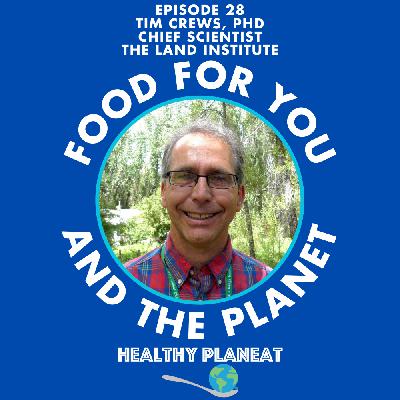
Tim Crews, PhD, is the Chief Scientist and Director of the International Initiative at The Land Institute. Tim is at The Land Institute because, in his words, "the work is the most focused and far-reaching of any organization I know. It promises to transform agriculture from being an ecological liability to an asset." Tim first visited The Land Institute in 1981 after reading New Roots for Agriculture as an undergraduate majoring in agroecology at the University of California-Santa Cruz. Over the next three decades, he pursued a doctorate degree at Cornell, carried out a post-doc fellowship at Stanford, and developed an agroecology program at Prescott College in Northern Arizona. But all along, he continued to track the work of The Land Institute and, in 2000, began to collaborate directly. In 2012, Tim joined the staff as director of research and an ecologist. He helps facilitate and coordinate the research efforts of his colleagues and conducts work on the ecosystem functions performed by soils. The Land Institute is a 501(c)(3) non-profit research organization based in Salina, Kansas, that was founded in 1976. The Land Institute co-leads the global movement for perennial, diverse, truly regenerative agriculture at scale. Our work, led by a team of plant breeders and ecologists in multiple partnerships worldwide, is focused on developing perennial grains, pulses, and oilseed-bearing plants to be grown in ecologically intensified, diverse crop mixtures known as perennial polycultures. The Land Institute's goal is to create an agriculture system that mimics natural systems to produce ample food and reduce or eliminate the negative impacts of agriculture. Through transdisciplinary research and collaborations, The Land Institute builds learning communities to help society cross the threshold into diverse, perennial grain agriculture. TOPICS EXPLORED 0:00 – 1:54 – Introduction 1:54 – 3:38 – What is The Land Institute and what type of work does it do? 3:38 – 6:04 – How did you become interested in sustainable agriculture? 6:04 – 7:26 – What types of research efforts do you lead at The Land Institute? 7:26 – 11:02 – What are some of the greatest challenges related to achieving sustainable agriculture systems? 11:02 – 15:39 – What are perennial crops and why are they important? 15:39 – 22:32 – What are some of the main perennial crops you study and how can they be incorporated into sustainable agriculture systems? 22:32 – 29:04 – How do you do this plant breeding and how does that differ from Genetically Modified Organisms (GMOs)? 29:04 – 30:41 – What is the Global Inventory Project? 30:41 – 31:48 – What is ecological intensification? 31:48 – 33:09 – What is perennial polyculture? 33:09 – 37:20 – How do perennial crops improve soil health? 37:20 – 41:05 – How does soil health relate to climate? 41:28 – 44:55 – How are perennial crops being incorporated into foods? 44:55 – 48:22 – What do you think the future of perennial crops and how people use them will entail? 48:22 – 50:04 – What do you think are the most important things for society to do to shift towards sustainable agriculture systems? 50:04 – 51:50 – Things to share and wrap up THE LAND INSTITUTE INFORMATION https://landinstitute.org/ RESOURCES Ecological Intensification and Perennial Polyculture: https://landinstitute.org/our-work/ecological-intensification/ Perennial Grain Crops: https://landinstitute.org/our-work/perennial-crops/ Perennial Percent: https://kernza.org/perennial-percent/ The Global Inventory Project: https://landinstitute.org/our-work/new-roots-international/global-inventory-project/ The Land Institute's International Initiative: https://landinstitute.org/our-work/new-roots-international/ Research and Scientific Publications: https://landinstitute.org/learn/research-and-scientific-publications/ FOOD FOR YOU AND THE PLANET PODCAST INFORMATION Apple Podcasts: https://podcasts.apple.com/us/podcast/food-for-you-and-the-planet/id1739416396 Spotify: https://open.spotify.com/show/7pkAIuXxl9dzD48b7qMOL1 RSS: https://feeds.libsyn.com/506343/rss Podcast Instagram: @foodforyouandtheplanet TAGS Food Environment Health Podcast Sustainability Agriculture Soil Health Soil Carbon Soil Carbon Sequestration Regenerative Agriculture Regenerative Farming Kernza Perennial Crops Perennial Grain Crops Perennial Percent The Land Institute
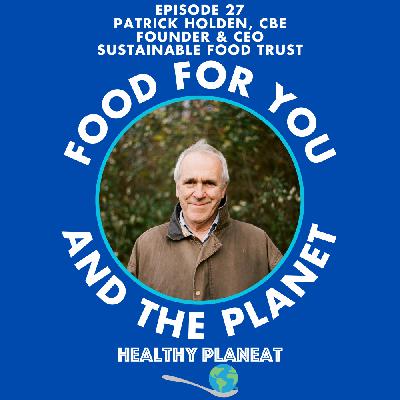
Patrick Holden, CBE, is the Founder and CEO of the Sustainable Food Trust. Patrick Holden is the founder and CEO of the Sustainable Food Trust, whose mission is to work internationally to accelerate the transition towards more sustainable food and farming systems. Between 1995 and 2010, he was Director of the Soil Association, the UK organic advocacy and certification organisation, where he played a leading role in developing the organic standards and market. He currently leads a task force on measuring land use sustainability for the Sustainable Markets Initiative (SMI), established by the then Prince of Wales in 2020. Patrick trained in Biodynamic farming at Emerson College and has farmed for over 50 years on a 300-acre mixed organic dairy holding, now the longest established organic dairy farm in Wales, producing a raw milk cheddar from the milk of 85 Ayrshire cows. He received a CBE for services to organic farming in 2005 and is Patron of the UK Bio-dynamic Agriculture Association. He became an Ashoka fellow in 2016 and was awarded an honorary doctorate for his international work in sustainable agriculture by the University of Wales Trinity St David in 2022. The mission of the Sustainable Food Trust is to accelerate the transition to sustainable food systems, inspired by our philosophy of the interconnectedness of the health of soil, plants, animals and people. Our vision is for future food and farming systems which nourish the health of people and planet and are equitable and accessible to all. TOPICS EXPLORED 0:00 – 2:09 – Introduction 2:09 – 6:14 – What is the Sustainable Food Trust and what type of work does it do? 6:14 – 8:07 – How did you become interested in sustainable food? 8:07 – 11:28 – What led you to create the Sustainable Food Trust? 11:28 – 13:37 – Who are some of the key people and organizations involved with the Sustainable Food Trust as strategic partners or other levels of involvement? 13:37 – 17:29 – What are some of the major challenges related to shifting to a sustainable food system? 17:29 – 22:12 – What is the Sustainable Markets Initiative and what are some of its key impacts? 22:12 – 25:02 – What is the Global Farm Metric and how was it developed? 25:02 – 27:03 – How does the Sustainable Food Trust work to create an informed body of public opinion to drive change? 27:03 – 30:54 – What are some of the key findings of the Sustainable Food Trust report A Good Life and A Good Death: Relocalising Farm Animal Slaughter? 30:54 – 35:13 – What are some of the key findings of the Sustainable Food Trust report Feeding Britain from the Ground Up? 35:13 – 37:40 – What are some of the most memorable moments of your career so far? 37:40 – 39:47 – What do you think are the most important things for society to do to shift towards healthy and environmentally sustainable food systems? 39:47 – 40:31 – Things to share and wrap up SUSTAINBLE FOOD TRUST INFORMATION https://sustainablefoodtrust.org/ https://www.sustainablefoodalliance.org/ RESOURCES Beacon Farms: https://sustainablefoodtrust.org/our-work/beacon-farms/ Feeding Britain: https://sustainablefoodtrust.org/our-work/feeding-britain/ Global Farm Metric: https://www.globalfarmmetric.org/ Local Abattoirs: https://sustainablefoodtrust.org/our-work/local-abattoirs/ Measuring Sustainability: https://sustainablefoodtrust.org/our-work/measuring-sustainability/ Sustainable Livestock: https://sustainablefoodtrust.org/our-work/sustainable-livestock/ Sustainable Markets Initiative: https://www.sustainable-markets.org/ True Cost Accounting: https://sustainablefoodtrust.org/our-work/true-cost-accounting/ FOOD FOR YOU AND THE PLANET PODCAST INFORMATION Apple Podcasts: https://podcasts.apple.com/us/podcast/food-for-you-and-the-planet/id1739416396 Spotify: https://open.spotify.com/show/7pkAIuXxl9dzD48b7qMOL1 RSS: https://feeds.libsyn.com/506343/rss Podcast Instagram: @foodforyouandtheplanet TAGS Food Environment Health Podcast Sustainability Agriculture Sustainable Food Trust
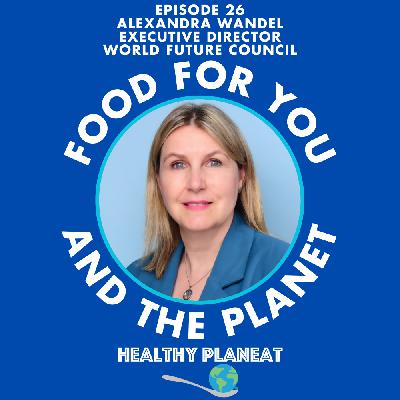
Alexandra Wandel is the Chair, Management Board of the World Future Council. Alexandra Wandel was appointed Development Director to prepare the Founding Congress of the World Future Council in 2006 and has chaired the Management Board since 2018. The Management Board is in charge of foundation management, representation, Council Liaison and resource mobilization. Since 2010 she has set up partnerships for the Future Policy Award with fourteen UN agencies on topics such as biodiversity, forests, oceans and coasts, desertification, agroecology and rights of children and youth. The World Future Council is committed to a healthy planet with just and peaceful societies now and in the future. It identifies, develops, examines and disseminates future-oriented solutions to current challenges that humanity is facing and celebrates them with its unique Future Policy Award every two years. The Council consists of 50 outstanding global change makers from civil society, science, politics and business. It determines the agenda of the organization's work and develops statements on it. The Council members meet annually at the World Future Forum to discuss the most pressing challenges and solutions to them. Jakob von Uexkull, the founder of the Alternative Nobel Prize, founded the World Future Council in 2007. TOPICS EXPLORED 0:00 – 1:23 – Introduction 1:23 – 2:05 – What is the World Future Council and what type of work does it do? 2:05 – 3:08 – How did you become interested in a career in environmental sustainability? 3:08 – 4:02 – Who are some of the key partners of the World Future Council and how do they all work together? 4:02 – 5:37 – Who are some of the members of the Council and how are they selected? 5:37 – 7:20 – What is the World Future Policy Award and how does the Award work? 7:20 – 9:40 – What are the main topics and projects the Council has worked on? 9:40 – 10:38 – Within the Ecosystems and Livelihoods topic, Scaling Up Agroecology is a focal point for the Council. How would you define agroecology and why is it important for sustainable food systems? 10:38 – 12:15 – What are some of the Scaling Up Agroecology projects the Council is involved with? 12:15 – 13:38 – Can you tell me about the Himalayan Agroecology Initiative? 13:38 – 15:37 – Can you tell me about The Kambashu Institute? 15:37 – 18:33 – What are some of the things you think are most important for society to shift towards healthy and environmentally sustainable food systems? 18:33 – 19:41 – Things to share and wrap up WORLD FUTURE COUNCIL INFORMATION https://www.worldfuturecouncil.org/ RESOURCES World Future Policy Award: https://www.worldfuturecouncil.org/world-future-policy-award/ World Future Council Ecosystems and Livelihoods Information: https://www.worldfuturecouncil.org/ecosystems-and-livelihoods/ World Future Council Future Generations: https://www.worldfuturecouncil.org/future-generations/ FOOD FOR YOU AND THE PLANET PODCAST INFORMATION Apple Podcasts: https://podcasts.apple.com/us/podcast/food-for-you-and-the-planet/id1739416396 Spotify: https://open.spotify.com/show/7pkAIuXxl9dzD48b7qMOL1 RSS: https://feeds.libsyn.com/506343/rss Podcast Instagram: @foodforyouandtheplanet TAGS Food Environment Health Podcast Sustainability Agriculture Agroecology World Future Council World Future Policy Award
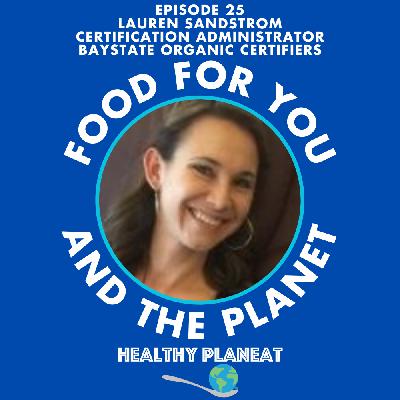
Lauren Sandstrom is a Certification Administrator at Baystate Organic Certifiers. Lauren joined Baystate Organic Certifiers 10 years ago as a Certification Specialist and then became a Certification Administrator in 2016. Prior to her position at Baystate, Lauren was a certification reviewer for another certification agency accredited to the USDA totaling 15 years' experience regulating the USDA Organic Regulations. Lauren also has a certificate as a crop and livestock inspector through the International Organic Inspectors Association. Lauren grew up on a Certified Organic Farm in Central New York and knows the labor of love that organic food production is. Lauren is honored to have participated in the growth of organic food production over the last decade and a half and is looking forward to seeing the program continue to develop and support certified organic food production. Baystate Organic Certifiers is a USDA National Organic Program accredited certifying agency providing organic certification to farm and processing operations throughout the continental United States. The foundation of Baystate, a 501(c)(3) non-profit, is to make organic certification accessible, affordable and timely to anyone that wants to participate in the program. Baystate strives to not create any new barriers to certification and not overregulate farms and processors beyond the regulations outlined by the USDA National Organic Program. In 2014, Baystate certified 300 organic farms and processing facilities and had 6 employees. Today, Baystate certifies over 700 certified organic operations with an additional 50 new operations in the pipeline to be in next few weeks and a staff of 18 people. TOPICS EXPLORED 0:00 – 1:51 – Introduction 1:51 – 2:20 – What is Baystate Organic Certifiers and what type of work does it do? 2:20 – 3:13 – How did you become interested in a career in sustainable food and agriculture? 3:13 – 4:28 – What is the National Organic Program and how did it begin? 4:28 – 5:15 – What were some of the key reasons why a National Organic Program was created? 5:15 – 6:24 – How were the USDA Certified Organic standards initially created and how are updates made? 6:24 – 7:48 – What are some of the core criteria for USDA Certified Organic? 7:48 – 10:43 – The term "regenerative agriculture" is becoming quite popular. Why is it important to continue to focus on USDA Certified Organic? 10:43 – 12:09 – How can organizations like Regenerative Organic Alliance which use USDA Organic Certification as their foundation be helpful for the organic movement? 12:09 – 13:09 – What role do certifiers such as Baystate Organic Certifiers play in the USDA Certified Organic certification process? 13:09 – 18:37 – What are some common misconceptions about USDA Certified Organic that farmers may have? 18:37 – 20:44 – What are some of the actual fees for a farm certifying through Baystate Organic Certifiers? 20:44 – 22:27 – What are some common misconceptions about USDA Certified Organic that everyday people may have? 22:27 – 24:37 – What are some of the benefits of becoming a USDA Certified Organic for farmers? 24:37 – 26:50 – What are some of the benefits of purchasing food that is USDA Certified Organic for everyday people and the planet? BAYSTATE ORGANIC CERTIFIERS INFORMATION https://baystateorganic.org/ RESOURCES Baystate Organic Certifiers Certification Information: https://baystateorganic.org/certification/ USDA National Organic Program: https://www.ams.usda.gov/about-ams/programs-offices/national-organic-program Organic Certification Cost Share Program: https://www.fsa.usda.gov/resources/programs/organic-certification-cost-share-program-occsp FOOD FOR YOU AND THE PLANET PODCAST INFORMATION Apple Podcasts: https://podcasts.apple.com/us/podcast/food-for-you-and-the-planet/id1739416396 Spotify: https://open.spotify.com/show/7pkAIuXxl9dzD48b7qMOL1 RSS: https://feeds.libsyn.com/506343/rss Podcast Instagram: @foodforyouandtheplanet TAGS Food Environment Health Podcast Sustainability Agriculture Organic Organic Certification Organic Certifiers USDA Certified Organic
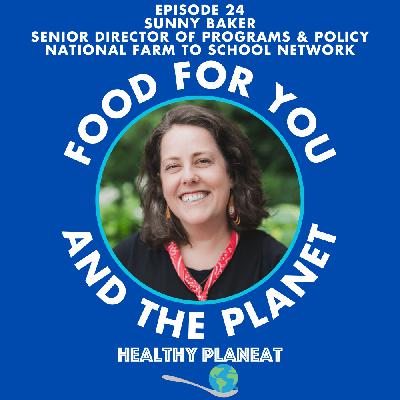
Sunny Baker is the Senior Director of Programs and Policy at the National Farm To School Network. For over 14 years, Sunny has worked to lead school food reform and create a new culture of regionally-based eating. Originally from St. Louis, Sunny grew up with a deep appreciation for the natural world and a strong desire to make a positive impact on her community, values shaped by her Jewish identity. One of Sunny's most notable accomplishments was her work growing the farm to school movement in Mississippi, featured at TedXManhattan in 2014. She established Good Food for Oxford Schools and co-founded the Mississippi Farm to School Network during her decade in the state. Sunny's career has led her to make meaningful connections between food systems and food justice work, which she sees as a crucial component of racial and economic justice. She believes every child has a right to nourishing, culturally appropriate food at school, regardless of their income, race, or geographic location. She is a frequent speaker at conferences and events, where she shares her expertise on topics such as food sovereignty and the future of school food. A graduate of Hendrix College, Sunny is now located in Little Rock, Arkansas. The National Farm To School Network has a vision of a strong and just food system for all, and we seek deep transformation toward this vision through farm to school – the ways kids eat, grow, and learn about food in schools and early care and education settings. TOPICS EXPLORED 0:00 – 2:02 – Introduction 2:02 – 3:18 – What is The National Farm To School Network and what type of work does it do? 3:18 – 4:39 – How did you become interested in a career in sustainable food and agriculture? 4:39 – 6:43 – When did the National Farm To School Network begin and what are some key moments in its history as an organization? 6:43 – 10:56 – How did the school lunch program begin and why? 10:56 – 14:06 – What are some things about the school lunch program that the average person may not know or may find surprising? 14:06 – 16:47 – What are some of the challenges with the current school lunch program? 16:47 – 21:12 – What type of work is the National Farm to School Network doing to create universal values aligned School Meals? 21:12 – 23:37 – How does Early Childhood Education fit in with school lunch programs? 23:37 – 26:30 – What type of work is the National Farm to School Network doing in collaboration with Native communities? 26:30 – 28:07 – How does the National Farm to School Network support food producers? 28:07 – 30:37 – What are some of the greatest challenges with getting local food into school lunch programs? 30:37 – 33:28 – What are some of the greatest lessons you've learned while advocating for farm to school? 33:28 – 35:54 – Things to share and wrap up NATIONAL FARM TO SCHOOL NETWORK INFORMATION https://www.farmtoschool.org/ RESOURCES School Meals Who's At The Table: https://www.farmtoschool.org/universal-school-meals How Do Different Local Food Purchasing Initiative Models Effect Participant Spending On Local Food: https://cdn.prod.website-files.com/5c469df2395cd53c3d913b2d/66f191be552b31347565af6d_LFPI%20Model%20Analysis%20Document%209.20.24.pdf The Benefits Of Local Food Purchasing Initiatives: https://cdn.prod.website-files.com/5c469df2395cd53c3d913b2d/665ddf814fda261f05e0e260_Benefits%20of%20LFPIs%20-%205.6.2024.pdf FOOD FOR YOU AND THE PLANET PODCAST INFORMATION Apple Podcasts: https://podcasts.apple.com/us/podcast/food-for-you-and-the-planet/id1739416396 Spotify: https://open.spotify.com/show/7pkAIuXxl9dzD48b7qMOL1 RSS: https://feeds.libsyn.com/506343/rss Podcast Instagram: @foodforyouandtheplanet TAGS Food Environment Health Podcast Sustainability Agriculture Farm To School National Farm To School Network

Holly Arbuckle is the CEO and Co-Founder of Singing Pastures. Holly and her husband John own and operate Singing Pastures. John is a 9th generation farmer from the Midwest. They saw a gap in the market because there were a lot of grassfed beef sticks, but no pasture-raised pork. They started a brand in 2016 with no initial investment. Holly owns 51% of the company and is the CEO who runs the brand while her husband is the primary farmer and COO. Their current home farm is in Maine. Singing Pastures produces high-quality pork Snack Sticks and Salami. Singing Pastures believes delicious food starts with healthy land. Pasture Raised Pork is the foundation. Their pork is raised in lush, grassy pastures on family farms with no added hormones or antibiotics. They use time honored traditional methods to craft amazingly delicious snacks. TOPICS EXPLORED 0:00 – 1:19 – Introduction 1:19 – 2:28 – What is Singing Pastures and what types of products does it create? 2:28 – 4:17 – How did you and your husband become interested in a career in sustainable food and agriculture? 4:17 – 6:14 – How did you and your husband start Singing Pastures? 6:14 – 10:31 – What types of sustainable agriculture practices do you implement on your farm? 10:31 – 14:55 – You are working with Ag Allies to monitor bird populations on your farm. Can you tell me a little bit about that collaboration and the transformation that has taken place on your farm as you've pasture-raised your livestock? 14:55 – 18:38 – What are the diets of the animals on your farm? 18:38 – 21:41 – Can you tell me about the products you create? 21:41 – 24:44 – What makes your products unique? 24:44 – 26:37 – You are part of a team that was recently selected for a Sustainable Agriculture Research and Education grant. Can you tell me a little bit about the research that grant will fund? 26:37 – 29:09 – What are some of the ways you were able to fund the growth of your business? 29:09 – 31:35 – How did you scale up production to make your products available nation-wide? 31:35 – 34:46 – What are some of the challenges you encountered on your journey and how did you overcome them? 34:46 – 37:03 – What are some of the greatest lessons you've learned from growing your business? 37:03 – 38:34 – Things to share and wrap up SINGING PASTURES INFORMATION https://singingpastures.com/ RESOURCES Stone Barns 2024 SARE Grant on Grain and Vegetable Production in a Rotationally-Grazed, Pasture-Dominant Ley System – Implications for Soil Health, Soil Microbiome, and Forage: https://projects.sare.org/sare_project/FNE24-081/ Singing Pastures 2017 SARE Grant on Nutrient Density Profiles for Conventional vs Pasture-Raised Pork: https://projects.sare.org/sare_project/fnc17-1067/ Singing Pastures 2012 SARE Grant on The Cheapest Way to Produce the Best Egg: Comparing how Different Supplemental Feeds Affect the Cost and Nutrient Density of Eggs from Heritage and Hybrid Pastured Hens: https://projects.sare.org/sare_project/fnc12-844/ FOOD FOR YOU AND THE PLANET PODCAST INFORMATION Apple Podcasts: https://podcasts.apple.com/us/podcast/food-for-you-and-the-planet/id1739416396 Spotify: https://open.spotify.com/show/7pkAIuXxl9dzD48b7qMOL1 RSS: https://feeds.libsyn.com/506343/rss Podcast Instagram: @foodforyouandtheplanet TAGS Food Environment Health Podcast Sustainability Agriculture Pasture Raised

Ryan Zinn is the Regenerative Projects Manager at Dr. Bronner's. Ryan focuses on Dr. Bronner's international supply chains and farmer training. He has worked in the food and farm justice movement at home and abroad for 20 years, including with such organizations as the Center for International Law, Friends of the Earth-Paraguay, Global Exchange and the Organic Consumers Association. Dr. Bronner's was founded in 1948 by Emanuel Bronner, a third-generation master soapmaker from a German-Jewish soapmaking family. He used the labels on his superb ecological soaps to spread his message that we must realize our transcendent unity across religious & ethnic divides: "We are All-One or None!" Still family-owned and run, Dr. Bronner's honors its founder's vision by making socially & environmentally responsible products of the highest quality—and by dedicating our profits to help make a better world. All-One! TOPICS EXPLORED 0:00 – 1:08 – Introduction 1:08 – 3:00 – What is Dr. Bronner's and what types of products does it create? 3:00 – 5:05 – How did you become interested in a career in sustainable agriculture and food systems? 5:05 – 7:34 – What inspired the Dr. Bronner's team to look more closely at how the raw materials in their products are being produced? 7:34 – 10:57 – How does Dr. Bronner's create socially and environmentally sustainable supply chains? 10:57 – 16:03 – What are some of the raw materials you source and where are they sourced from? 16:03 – 23:48 – How do certification programs such as USDA Certified Organic, Roundtable on Sustainable Palm Oil Certified, Regenerative Organic Certified, or Fair Trade help people and businesses understand how products are created? 23:48 – 27:54 – What do you think companies can do to source more certified raw ingredients and what can customers do to make sure the products they are buying are certified? 27:54 – 30:09 – How have you developed partnerships with farms and other key stakeholders? 30:09 – 32:02 – Has Dr. Bronner's experienced an increase in customer support due to its genuine focus on creating socially and environmentally sustainable supply chains? 32:02 – 35:43 – Why is it important for people and businesses to pay attention to how things they buy are made? 35:43 – 37:37 – What are some ways people can create a more socially and environmentally sustainable world? 37:37 – 38:15 – Things to share and wrap up DR. BRONNER'S INFORMATION https://www.drbronner.com/ RESOURCES Dr. Bronner's Building Equitable Supply Chains: https://www.drbronner.com/blogs/our-suppliers/building-equitable-supply-chains Dr. Bronner's Projects and Partnerships: https://www.drbronner.com/blogs/our-suppliers/projects-and-partnerships Dr. Bronner's Annual Report: https://www.allone.report/2024 Dr. Bronner's Honor Thy Label Book: https://www.penguinrandomhouse.com/books/622437/honor-thy-label-by-gero-leson-foreword-by-david-bronner/ FOOD FOR YOU AND THE PLANET PODCAST INFORMATION Apple Podcasts: https://podcasts.apple.com/us/podcast/food-for-you-and-the-planet/id1739416396 Spotify: https://open.spotify.com/show/7pkAIuXxl9dzD48b7qMOL1 RSS: https://feeds.libsyn.com/506343/rss Podcast Instagram: @foodforyouandtheplanet TAGS Food Environment Health Podcast Sustainability Agriculture Supply Chains Organic Fair Trade Regenerative Organic Certified Dr. Bronner's

Comments

Download from Google Play

Download from App Store
 United States