


 Claim Ownership
Federal Tech Podcast: for innovators, entrepreneurs, and CEOs who want to increase reach and improve brand awareness
Subscribed: 8Played: 60
Subscribe

© 2024
Description
The federal government spends $90 billion on technology every year.
If you are a tech innovator and want to expand your share of the market, this is the podcast for you to find new opportunities for growth.
Every week, Federal Tech Podcast sits down with successful innovators who have solved complex computer system problems for federal agencies. They cover topics like Artificial Intelligence, Zero Trust, and the Hybrid Cloud. You can listen to the technical issues that concern federal agencies to see if you company's capabilities can fit.
The moderator, John Gilroy, is an award-winning lecturer at Georgetown University and has recorded over 1,000 interviews. His interviews are humorous and entertaining despite handing a serious topic.
The podcast answers questions like . . .
How can software companies work with the federal government?
What are federal business opportunities?
Who are the cloud providers who work with the federal government?
Should I partner with a federal technology contractor?
What is a federal reseller?
Connect to John Gilroy on LinkedIn
https://www.linkedin.com/in/john-gilroy/
Want to listen to other episodes?
www.Federaltechpodcast.com
If you are a tech innovator and want to expand your share of the market, this is the podcast for you to find new opportunities for growth.
Every week, Federal Tech Podcast sits down with successful innovators who have solved complex computer system problems for federal agencies. They cover topics like Artificial Intelligence, Zero Trust, and the Hybrid Cloud. You can listen to the technical issues that concern federal agencies to see if you company's capabilities can fit.
The moderator, John Gilroy, is an award-winning lecturer at Georgetown University and has recorded over 1,000 interviews. His interviews are humorous and entertaining despite handing a serious topic.
The podcast answers questions like . . .
How can software companies work with the federal government?
What are federal business opportunities?
Who are the cloud providers who work with the federal government?
Should I partner with a federal technology contractor?
What is a federal reseller?
Connect to John Gilroy on LinkedIn
https://www.linkedin.com/in/john-gilroy/
Want to listen to other episodes?
www.Federaltechpodcast.com
286 Episodes
Reverse
Connect to John Gilroy on LinkedIn https://www.linkedin.com/in/john-gilroy/ Want to listen to other episodes? www.Federaltechpodcast.com The good news is that federal security measures are preventing successful attacks; the bad news is that adversaries are examining every nook and cranny of a federal system and increasingly targeting the browser itself as an attack vector. During the interview, Scott "Monty" Montgomery gives a quick overview of Enterprise Browsers and Secure Enterprise Browsers. After all, browsers have been around since 1994. It may be the only application ubiquitous on home-based machines and in enterprise systems. They were not designed for security; they were intended to open the internet to the World Wide Web, full of images, links, and audio. Malicious actors did not have to focus on an app with limited use; by targeting a browser, they have almost unlimited targets to attack. Montgomery mentions the increase in browser-based attacks. In fact, they increased by 198% in the second half of 2023. Scott explains that phishing persists because people are curious or fearful, leading them to click on malicious links. A Secure Enterprise Browser can help prevent many common phishing exploits. Additionally, an SEB can support policies and controls. This means that an SEB fits completely with any current Zero Trust initiatives across all agencies. Beyond that, SEBs can be configured to manage legacy systems and even operate in low-bandwidth environments.
Connect to John Gilroy on LinkedIn https://www.linkedin.com/in/john-gilroy/ Want to listen to other episodes? www.Federaltechpodcast.com Every federal agency prepares a backup strategy to protect data. This is a rigorous endeavor in which teams practice what to do in the event of a breach or system failure. However, nobody really has a plan for a temporary federal shutdown. Any political pundit worth his salt knows there will be another federal shutdown sometime in the future. It is reasonable to consider automation to see how it can be used to bridge services during a temporary shutdown. David Grundy is the Public Sector CTO for Tines. He has decades of experience in and outside the federal government. He highlights the challenges of human-centered workflows. For example, just because the staff is reduced does not mean attackers will take the day off. Adversaries work 365 days a year and are immune to political infighting. Based on David Grundy's experience, an agency should start with visibility to know which workflows exist. From there, document processing can be detailed, enabling scaling. During the interview, Grundy shares his experience in a federal agency that had to make digital transitions while complying with federal regulations. He is optimistic that operational resilience can be achieved through initiative-taking by all federal agencies.
Connect to John Gilroy on LinkedIn https://www.linkedin.com/in/john-gilroy/ Want to listen to other episodes? www.Federaltechpodcast.com In a recent report from Microsoft, they share that foreign adversaries are increasing attacks on American infrastructure. One variation is that they will not penetrate systems and attack, but they will steal credentials and install code to act in stealth mode. This code can hide for years and be deployed when the antagonist wants. Today, we sat down with Travis Roseik from Rubrik to try to find some options for defending against this hidden attack. Let us say an agency has improved its resistance to foreign attacks. This is satisfactory progress, but what happens in a situation where the malicious code was planted prior to the increased defense. Further, during the interview, Roseik states that companies may be able to leverage AI to improve defense, nation states will be using that same AI to improve attack methods. If malicious code is within the walls of an organization, whether by AI or user error, Roseik makes the point that a defensive posture may not be enough in today's sophisticated world of attack. He recommends moving from a defensive approach to an initiative-taking threat hunting strategy. Even if Zero Trust and threat hunting fail, the best response is to have immutable backups. For example, if a breach occurs and the system recovers quickly, then the attackers will go after more vulnerable targets. The conversation underscores the urgency for organizations to adapt and innovate to counteract these threats.
Connect to John Gilroy on LinkedIn https://www.linkedin.com/in/john-gilroy/ Want to listen to other episodes? www.Federaltechpodcast.com The federal government recognizes that threats are multiplying at an exponential level. In fact, in October 2025, CISA released a free vulnerability scanner, and 10,000 organizations have signed up. Today, CISA is at its current capacity. Today, we examine solutions from a successful startup called CrunchAtlas. One of the co-founders, Ben Fabrelle, will share with the audience his experience in threat hunting in the federal government and why he combined with another veteran to form a company that can assist in threat intelligence, data analysis, and automation. During the interview, Fabrelle says that CrunchAtlas likes to attack "wicked" complex problems. One of the most complicated problems the federal government has is identifying threats in a world where the DoD is being attacked by malicious actors every day. Fabrelle suggests that the solution is a persistent cyber-hunt platform. It can search for threats in a wide range of environments. This means it can be deployed on-prem, in the cloud, or in an air-gapped environment. The founders view that a platform approach is the best way to scale against these adversaries. One of the key differentiators for CrunchAtlas is its ability to operate in the cloud, on-prem, and even in an air-gapped environment. In fact, their offering's code stack, from design, operates in an air-gapped environment. Automation in this kind of environment will allow for a reduction in false positives, which will, in turn, reduce fatigue and decrease the need for human threat hunters.
Ep. 281 How Zero Trust Automation Helps Federal Agencies do More with Less Connect to John Gilroy on LinkedIn https://www.linkedin.com/in/john-gilroy/ Want to listen to other episodes? www.Federaltechpodcast.com As this interview was recorded, the federal government was in the middle of a shutdown. Hundreds of pundits have given interviews about the politics of the situation; very few have looked at the impact on cybersecurity during a phase of workforce reduction. Today, we sat down with Gary Barlet, the Public Sector CTO at Illumio, to see whether Zero Trust can help the federal government bridge this short personnel gap. Barlet begins by giving an overview of Zero Trust and automation. Rather than having human beings vet entry into federal systems, the concept is to use an automated process that reviews credentials and decides on permission. Barlet emphasizes the importance of Zero Trust in automating security tasks and maintaining operational resilience, especially with reduced staff. He continues to mention several other benefits of Zero Trust in a federal environment. Compliance: A well-thought-out Zero Trust architecture will enable managers to collect data to demonstrate policy enforcement. Legacy: One can effectively take existing systems and "ring fence" them off. This approach creates hundreds and hundreds of rings of defense. Design: During the interview, Gary recommends that you have a handle on the real traffic to reduce complexity. That way, when policies change, the rules can adapt to the environment. Maturity Level: Although CISA has a maturity level for Zero Trust. Barlet distills down some of the requirements for which efforts can be applied to sensitive systems. He suggests focusing on security, not necessarily on a grade. Additionally, he addresses the challenges of managing complex, hybrid environments and the emergence of shadow AI models, stressing the need for robust policies and controls.
Connect to John Gilroy on LinkedIn https://www.linkedin.com/in/john-gilroy/ Want to listen to other episodes? www.Federaltechpodcast.com Today, we sat down with Chris Wysopal from Veracode to talk about how to leverage the power of AI to increase productivity in federal systems. It seems like every headline you read talks about AI speeding up the process of writing code. However, there may be mixed messages here. Wysopan read some academic reports that talked about vulnerabilities being introduced in human code as well as AI code. Because this has been a concern for a while, He initiated the Gen AI Code Security report. They examined a wide range of LLMs to get a fair overview. They discovered 45% introduced vulnerabilities. What is even more shocking is this is similar to the rate from regular, old, garden variety software developers. You can get more details from the Veracode's 2025 Gen AI Code Security Report. It details methodology and notes despite improvements in syntax; security remains a concern. When he presented at a recent Billington Cyber Summit, he was deluged with people interested in problems with AI generated code. The overview is Implement a centralized risk management approach to prioritize and address the most critical vulnerabilities.
A recent study from Carnegie Mellon University is titled "AI Agents Fail at Office Tasks Nearly 70% of the Time." Federal agencies are adopting Agentic AI for the efficiency it can deliver. Unfortunately, many do not realize that Agentic AI is prone to operational risks, ranging from technical glitches to legal complications to accidental database deletion. When Agentic AI causes problems at a federal agency, there can be lives at stake. Today, we sat down with Travis Rosiek, Rubrik's Public Sector Chief Technology Officer. During the interview, he explores the federal challenges of implementing Agentic AI, building an Agentic AI inventory, and making Agentic AI visible, auditable, and reversible. CHALLENGES Everyone —from a systems administrator to an agency administrator —knows that data must be backed up. However, very few understand that Agentic AI is a collection of agents that can be attacked, just like a database. Rubrik offers the capability to reassure users that Agentic AI can be reversed if malicious actors enter the picture. STARTING POINT Most cybersecurity professionals agree that one starts by understanding a system's apps, data, and connections. Five years ago, it was easy; getting a grasp on what Agentic AI connects to is a much more intangible concept. During the interview, Travis Rosiek unpacks Rubrik's history and its unique ability to understand complex systems. CAREFUL In a rather shocking statement, Rosiek says one should approach introducing technology with the assumption that it will fail. This is not a pessimistic approach, but a nuanced understanding of how complexities in current systems can lead to unintended consequences. Rosiek advises starting with the end goal in mind, planning for worst-case scenarios, and building trustworthy AI architectures to mitigate risks and ensure reliable operations.

Connect to John Gilroy on LinkedIn https://www.linkedin.com/in/john-gilroy/ Want to listen to other episodes? www.Federaltechpodcast.com Elastic has been around since 2012 and has been gradually gaining traction in the commercial world. In fact, Elastic has recently signed agreements with Nvidia and Google to improve integration with its distributed search analysis. All this assists with AI search and observability. Today, we sat down with Chris Thompson from Elastic to highlight how commercial success can be applied to the federal world. Looking back at his decades of work with federal agencies, he sees one of the problems in acquisition. In a world of rapid change, it is challenging to acquire technology that can keep pace with the fast pace of change. During the interview, Thompson discusses a recent strategic agreement developed by Elastic working with the GSA and other companies. This streamlines the process of providing technology to federal professionals. This agreement accomplished several tasks at once: >>It leverages the GSA's collective buying power. Rather than negotiating separate prices for dozens of agencies, it has substantial discounts with all the major cloud providers. >>> It reduces duplication. We know several federal agencies are facing similar tech challenges. Rather than duplicating requirements gathering and testing before making a purchase, the GSA approach eliminates this duplicative process. >>With numerous AI tools flooding the market, this agreement enables the accelerated use of these tools. >> When you have standardized contracts, enhanced security is typically the result. No contract is perfect, and people who have developed this agreement know it is a living document that can flex and adapt to technical situations as they arise. GSA officials have stated this is an evolving approach, giving it the ability to adapt to innovative technology, new companies, and a rapidly changing cyber threat.
Connect to John Gilroy on LinkedIn https://www.linkedin.com/in/john-gilroy/ Want to listen to other episodes? www.Federaltechpodcast.com MongoDB has spent years earning a formidable reputation in the developer world; today, we will unpack some of its capabilities for project managers and federal leaders so they can understand where MongoDB may fit in their stack. Conventional wisdom is that MongoDB is a flexible open-source database. Although that is true, this does not do justice to some characteristics that will appeal to the federal audience. ONE: An agency may have restrictions on where the cloud is not suitable for storage. Because of its ability to use flexible, JSON-like documents, MongoDB has listened to those needs and can have storage in many varying regions. In fact, we have seen a movement to move cloud applications back on premises. MongoDB provides flexibility for working in both hybrid and on-premises environments. TWO: Most readers have studied encryption and think of it primarily as data at rest. Cloud storage transitions have forced a method where data is encrypted during transit. MongoDB can take encrypted data and search while it remains encrypted. Some will describe encryption at rest, in transit, and now, data in use. THREE MongoDB has listened to the federal community and is offering something called MongoDB Atlas for Government. It is a secure, fully managed cloud database service for U.S. Government agencies to modernize applications and oversee sensitive data. During the interview, Ben Cephalo revealed the effort MongoDB is making to serve federal agencies that require FedRAMP high capabilities.
Connect to John Gilroy on LinkedIn https://www.linkedin.com/in/john-gilroy/ Want to listen to other episodes? www.Federaltechpodcast.com Many listeners have become so familiar with AI that they may have assumed it has been around for decades. Today, we sat down with Will Angel from Excella to explore the application of AI to federal technology from a more nuanced perspective. We dive into three main aspects of AI: challenges of integrating AI services, Model Context Protocol, and security considerations with agentic systems. Challenges: No company has grown as fast as ChatGPT; in fact, it is the fastest-adopted consumer application in history. Today, it has an estimated eight hundred million weekly users. This has attracted developers who work on federal projects. Wil Angel recommends careful consideration of people arbitrarily porting data to or from products like ChatGPT because it can compromise data security. MCP In certain circles, the term "Model Context Protocol" is used constantly. It has become so popular that people do not realize it was just coined by Anthropic in November of 2024. During the interview, Angel presents variations on MCP for software development and warns about the hype surrounding the relatively new standard for AI systems. Agentic AI Autonomous systems have been the holy grail for every software developer. The promise of Agentic AI is so powerful that some have jumped into applications without a more prudent approach. When a series of tasks is assembled, unintended consequences can come into play. It is one thing in the commercial world to reveal essential data; it is a completely different situation when the DoD is dealing with life and death situations. Angel predicts significant changes in AI over the next few years, with large language models revolutionizing software systems.
Connect to John Gilroy on LinkedIn https://www.linkedin.com/in/john-gilroy/ Want to listen to other episodes? www.Federaltechpodcast.com Sometimes, the plow must go deeper. Current approaches to Zeer Trust implementation can leave gaps in security. Today, we sat down with Akamai's Mike Colson to discuss the concept of combining Identity Credential Access Management with Least Permissive Trust. Setting the stage, Mike Colson details some of the challenges in the varying kinds of Zero Trust that are being applied in the Federal Government. The standard way of implementing ICM can result in assigning more resources than necessary, leading to permission creep and inflexible permission. Over provisioning: The amount of data being created is almost impossible to manage. A person may be given access to a data set they are not permitted to see. A "just in time" permission structure would help avoid that situation. Stale: Just because a person has access to a data set on a Tuesday does not mean he has access on a Wednesday. People can leave the workforce, be reassigned, or change roles. Access must be constantly updated. Static: Ron Popiel made the phrase, "Set it and forget it," memorable. Unfortunately, this approach can lead to a permission structure that may limit access to key data. This may be considered under-provisioning, potentially leading to time delays in obtaining key information. Colson took the listeners through several iterations of access control, including Role-Based Access Control and Attribute-Based Access Control. On top of these old favorites, Colson discussed what may be called Context-Based Access Control, or what he calls Least Permissive Trust. Least permissive trust is a concept Colson outlined, which uses user behavior, device health, and contextual factors to grant permission dynamically. The conclusion is simple: not all Zero Trust is created equal.
Connect to John Gilroy on LinkedIn https://www.linkedin.com/in/john-gilroy/ Want to listen to other episodes? www.Federaltechpodcast.com The impact of AI in software development in the federal government is so pervasive that, in July of 2025, the President of the United States released a White House AI Action Plan. Today, we sat down with Bob Stevens from GitLab to put this development into perspective, examine some use cases, and suggest methods that federal agencies can use to prepare for this technological shift. What precipitated the initiative is the recognition that change is occurring so rapidly in the world of software development that the federal government must adapt more quickly than in the past, or it will be vulnerable to cyberattacks. Stevens notes that the federal government has been targeting modernization, producing software faster, and being more efficient, for a decade. AI will help them get there, with some possible cost reduction. For example, in the past, a vulnerability may have taken weeks to discover. Utilizing AI allows federal software developers to reduce that discovery to minutes. That ties in with one essential element in the White House initiative: security. In fact, one of the pillars of the Action Plan is titled "Promoting Secure-by-Design AI Technologies and Applications." Stevens has been involved in federal software development for decades and thinks that a platform approach best serves the essential objectives of this Action Plan. The conversation concludes with the potential for AI to streamline government processes and improve operational efficiency. If you are interested in learning more about the economics of this approach, you can download The Economics of Software Innovations: $750 billion Opportunity at a Crossroads.
Fraud rates in the public sector are estimated at 20%, compared to 3% in the private sector. Some estimate the loss to the federal government at over $500 billion. Today, we sat down with Haywood Talcove, the CEO of LexisNexis Special Services. He presents listeners with shocking statistics on fraud, shares personal stories, and offers suggestions to help taxpayers overcome this loss of money. FRAUD Talcove begins by noting the fraud rate in the federal government before COVID was a paltry 0.1%. No news there. However, during the COVID-19 pandemic, federal employees were legally obligated to disperse funds promptly. They became more concerned about sending out money than maintaining precise accounting. PERSONAL STORY During the interview, Talcove recounts the story of how a bank teller defrauded his mother. He details the frustration in just trying to uncover the fraud. After many attempts, he collaborated with local police to discover the method of the attack. SOLUTIONS The fact of the matter is that an employee of AMEX has a strong interest in preventing fraud. In contrast, many in the federal government are more concerned about compliance with directives than avoiding loss. NIST has a recent update standard, NIST SP 800-64 Digital Identity Guidelines, but criminals move faster than federal regulations can keep up. The solution is obvious: to improve data sharing between government agencies. Next, learn from the private sector how to identify and stop fraud more effectively. What can a consumer do? · One credit bureau freeze closed. · Two informed delivery post offices · Three county alerts on title · Four text messages alert any transaction -- know quickly.
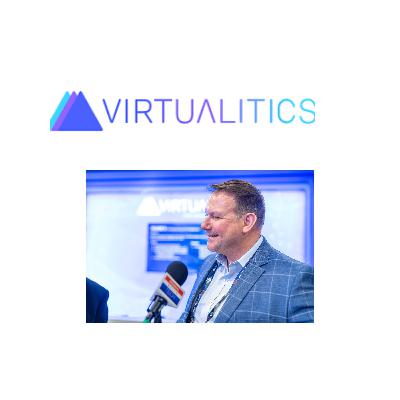
Connect to John Gilroy on LinkedIn https://www.linkedin.com/in/john-gilroy/ Want to listen to other episodes? www.Federaltechpodcast.com We are recording this at the Air Force Air, Space, & Cyber Conference. During the second day of the conference, General B. Chance Saltman, Chief of Space Operations at the Space Force, talked about a "focus on readiness." Our guest, Rob Bocek from Virtualitics begins the interview by talking about the concept of readiness being applied to AI. In fact, Bocek recently did an in-depth discussion of this topic at a conference he led titled The Frontiers of AI for Readiness. Today, we combine some of the lessons learned from that gathering with some of the goals and aspirations that were given at presentations at this year's Air Force Air, Space, & Cyber Conference. In a wide-ranging interview, Bocek comments on topics like guardrails, leadership, procurement, and collaboration. GUARDRAILS Even the casual observer will notice that AI will have an impact on the DoD. However, the DoD deals with life and death decisions daily and cannot be subject to data poisoning and LLM attacks. During the interview, Bocek commented on implementing guardrails when experimenting with AI. LEADERSHIP In the corporate world, leaders will justify a blind jump into AI with assertions like, "if they don't jump in, their competitors will." The DoD deals with much more than a profit and loss statement. Military leaders must step up with understanding the positives and negatives of AI, and lead technology experts into correct implementations. PROCUREMENT When General B. Chance Saltman was presenting nobody in the audience thought he would include acquisition reform as one of his three main points. He reinforced the concept of living in a contested world where adversaries can adapt quickly, and the American military cannot be held back by antiquated procurement processes. Listen to the podcast to get an idea of some of the solutions available for federal leaders trying to use AI in a responsible manner.
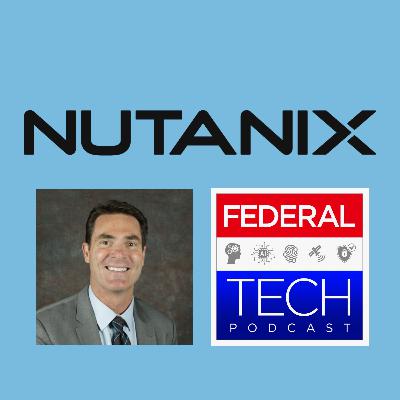
Connect to John Gilroy on LinkedIn https://www.linkedin.com/in/john-gilroy/ Want to listen to other episodes? www.Federaltechpodcast.com Ten years ago, Nutanix exploded on the federal scene. By now, just about every listener has heard of Nutanix partnering with the federal government in a wide range of projects. Today, an update with Greg O'Connell from Nutanix. He demonstrates how federal agencies can leverage Nutanix's experience to achieve mission success across various cloud environments. During the interview, O'Connell gives a basic comparison of multi-cloud vs. hybrid cloud. From his perspective, a multi-cloud environment includes one or more public cloud providers. A hybrid cloud enables a system that combines on-premises infrastructure with public cloud services. This allows a single, integrated environment, providing more control over access, compliance, and ability to connect with legacy systems. Existing applications and data always present a challenge in moving to the scalability and flexibility of the cloud. Nutanix brings to federal technology its ability to work with legacy systems in a system that has been evaluated over time. Most federal leaders may wonder what is taking place in other agencies. To that end, Nutanix provides an annual report on cloud activities. The 7th Annual Nutanix Enterprise Cloud Index Report highlights that 94% of US government entities utilize AI, but 76% require infrastructure improvements. Liten to this podcast to get an update on innovation from Nutanix and download the report to gain a better understanding of activities in the federal tech community.
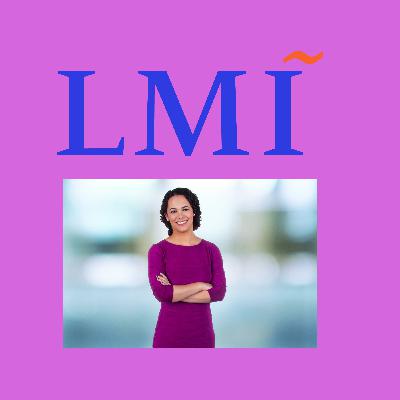
Connect to John Gilroy on LinkedIn https://www.linkedin.com/in/john-gilroy/ Want to listen to other episodes? www.Federaltechpodcast.com Most listeners are familiar with LMI as a sixty-year-old nonprofit, providing logistics management services and related research to the federal government. Today, LMI is a for-profit organization that leverages its decades of experience to gain a competitive advantage in understanding use cases where AI can reduce costs, enhance security, and facilitate the analysis of unstructured data. An engagement with LMI does not begin with clients explaining federal regulations; it starts with mission-ready products and platforms that are built on a deep understanding of the need for trust, transparency, and compliance. During the interview, Bettina Koleda explains that the federal government is getting pressured to do more with less. Additionally, because of the importance of the data inherent in many federal applications, users must trust that the data is not being compromised in any manner. LMI has developed a platform called LIGER that combines the need for reduced costs while maintaining compliance. Bettina Koleda explains how it can help translate mission goals into software requirements and continuously refine solutions through feedback from federal agencies. Kaleida is optimistic about the future of AI, believing it can help solve significant global issues if managed effectively.
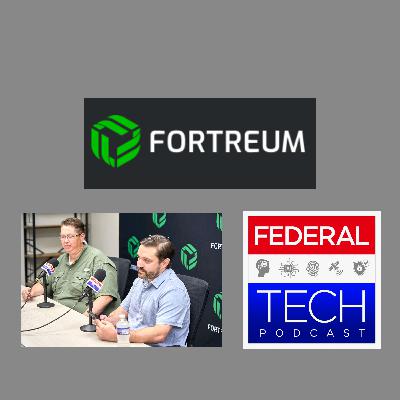
Connect to John Gilroy on LinkedIn https://www.linkedin.com/in/john-gilroy/ Want to listen to other episodes? www.Federaltechpodcast.com It is difficult to pinpoint an exact number, but some statistics show an executive is five times more likely to be attacked than a regular employee. It makes sense. If you receive a suspicious email from a fellow employee, do not respond. However, if you receive an email from the CEO, you are more likely to react more aggressively. In today's interview, Richard Fleeman and Ricky Freeman from Fortreum Labs discussed the increased risk executives face, citing a 74% human error rate in breaches. How do malicious actors get personal information on an executive? Sometimes, leaders are too active on social media and, for example, post when they are on vacation. If an employee gets fooled, he may transfer assets online. Okay, we know ransomware is on the rise drastically, and companies are vulnerable – what can an executive do to prevent this activity? Richard Fleeman observes that once the money is transferred, it is exceedingly difficult to find a resolution. He suggests that prevention is the best approach. Start with social media and see if you are revealing your email or confidential information. Some call this oversharing. Multi Factor Authentication is a terrific way to limit access to your accounts. People often use the same password. Humans tend to repeat passwords. "Password spraying" can be used to break into accounts. Fortreum offers a service to help executives avoid these common pitfalls. They can start with publicly available data and then move onto the dark web. Ricky Freeman notes that attacks like the OMB breach often result in data for sale on the dark web. He has developed tools that enable the scraping of the dark web to determine if an executive can compromise sensitive information. Hard to expunge – easier to opt out Dark web. Even if your compromised information is extant on the dark web, you may not be able to do anything about it. Fortreum's services include manual testing, attack surface analysis, and dark web scraping to identify vulnerabilities and provide recommendations. You can get an idea of your vulnerability by taking advantage of guides to see if you are exposed.

Connect to John Gilroy on LinkedIn https://www.linkedin.com/in/john-gilroy/ Want to listen to other episodes? www.Federaltechpodcast.com The federal government manages a great deal of sensitive information that it is reluctant to share with other agencies or organizations. However, isolation means important decision-making data can be inadvertently withheld from leaders. The simple term "collaborate" can be easily applied in a classroom. Still, it becomes almost impossible with petabytes of data that have varying levels of security, such as classified, secret, and top secret. Even if the puzzle of sharing data is solved, the issue of data classification changes and data being attacked with malicious code remains. Sean Berg is the CEO of Everfox, a company that has spent the last twenty-five years solving this data problem by using cross-domain technologies. During the interview, Sean Berg discusses the role of AI in ensuring data integrity, the challenges posed by legacy systems, and the critical nature of data management in national security and digital transformation. Sean Berg moves beyond Cross Domain Solutions to Everfox's Content Disarm and Reconstruct (CDR) technology. With this approach, the document is opened and examined for malicious code, then copied. CDR is a tool for ensuring data integrity and preventing malware infiltration, allowing for safe and secure collaboration between federal entities.
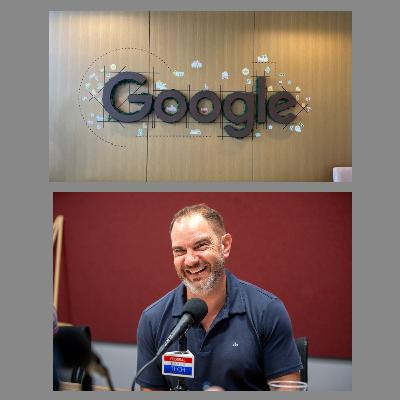
Connect to John Gilroy on LinkedIn https://www.linkedin.com/in/john-gilroy/ Want to listen to other episodes? www.Federaltechpodcast.com Sometimes, a company becomes so large that it is difficult to be specific about how it can help any organization, especially one as vast as the federal government. Today, we sit down with Ron Bushar, Chief Information Security Officer & Managing Director – Google Public Sector. We address many of the significant concerns federal technology leaders have regarding topics such as cloud-native, edge computing, and Zero Trust. This is a rudimentary overview of working with Google Public Sector. If you would like to connect in more detail, you can attend the free Google Public Sector event in late October. The focus will be on the investments Google Public Sector has made in AI and security. Ron Bushar begins the discussion by highlighting the benefits of transitioning to cloud-native applications. Modern applications demand availability anytime and anywhere. Emphasizing applications that can leverage the cloud provides scalability and security that are often lacking in older systems. Furthermore, when one combines cloud-native with AI, the result is a lighter-weight platform that can be used worldwide to support missions. This "anywhere" concept encompasses areas of the world that require remote access, which is increasingly referred to as edge computing. Google has provided international access since its early years, and it has the capability that can allow federal technology to be connected at the edge. Most federal security conversations today involve the concept of Zero Trust. Ron Bushar makes the point that Google was a pioneer in Zero Trust. Listen to the interview to hear about · 70% discount · Agentic AI · Hardening of Google · Gemini and federal applications Even better, attend the Google Public Sector event on October 29, 2025.
Connect to John Gilroy on LinkedIn https://www.linkedin.com/in/john-gilroy/ Want to listen to other episodes? www.Federaltechpodcast.com Virtualitics, a company spun out of Caltech and NASA JPL in 2016, focuses on applying advanced AI to mission-critical challenges, including asset availability, personnel readiness, and supply chain optimization. During the interview, Rob Bocek, Chief Revenue Officer at Virtualitics, provides listeners with insight into how his company can enhance Air Force readiness while ensuring explainability and democratizing AI. Sometimes, AI is described as a "black box" where one pours in data and out pops an answer. In a life-or-death scenario that many military organizations face, this arbitrary approach will not suffice. As a result, solutions provided by Virtualitics, document the process carefully. Listening to the customer is key to understanding supply chain problems. Rob Bocek details how his team will get close to the end user. This can be a "democratic" approach where a wide variety of input is absorbed. Virtualitics aims to identify the root causes of pain and determine what specifically needs to be solved. He highlights their ability to detect anomalies, optimize training pipelines, and anticipate equipment failures. Once these preliminaries are brought together, the most tremendous success will be accomplished when leadership takes risks. Looking ahead, Virtualitics is hosting the Frontiers of AI for Readiness Summit at Caltech to convene DoD leaders, academics, industry, and investors. Bocek emphasizes partnerships across technology providers, cloud platforms, and startups as essential to scaling AI solutions and accelerating the DoD's adoption.

Comments

Download from Google Play

Download from App Store
 United States