


 Claim Ownership
Flavortone
Subscribed: 12Played: 296
Subscribe

Description
Flavortone is a music commentary podcast hosted by Nick Scavo and Alec Sturgis.
67 Episodes
Reverse
Alec and Nick take a step back from their recent concentration on digital media technologies to stage a literary review of "the audience" as an evolving element in the material, cultural and epistemological formations of music. The episode tracks a historical arc of pre-modern power dynamics, industrial modernity and popular music, Fluxus' reframing of the co-consitutive role of audiences and a return to questions about the algorithmic base of digitally mediated, contemporary audiences. Topics include, Handel's Messiah, Jazz music, early commercial music's racialized categories, critical histories of power and participation, questions of counter-culture and authenticity in the audience, global music circulation as a reflection of geopolitics, the demands on and discomforts of the audience, the rituals, presence and temporalities of attendance, theoretical treatment of the audience as material, audiences during the holiday season and the re-problematization of music that is demanded of audiences in the TikTok ecology, in order to resist the stripping of music's depth and texture.
Alec and Nick discuss the algorithm as a mysterious force within the production and consumption of music. Despite being used daily in our various contendings with digital platforms and culture, the term is often misunderstood. The conversation loosely defines the term as "some kind of procedure," embarking on a survey of chance (Cage), serialism (Schoenberg), Bach & Hindustani classical music, scales and modes, The League of Automatic Music Composers, Laurie Spiegel, newer electronic music, and more—as well as philosophical debates between form and process. Is an algorithm a dialectic? Do algorithms produce form, or does form precede an algorithmic process? Ultimately, the discussion draws latent comparisons to the idea of musical truth and an algorithm itself, and outlines a reversal of algorithm as a set of procedures that would create and bring music into a being, to a process that now entraps and contains it. The episode concludes with a discussion of algorithms that bring us to a contemporary visual culture of music, tying in The Velvet Underground & Warhol, Rosalía, Björk, and more.
Alec and Nick finally discuss the processes of music consumption and distribution through smart phones, and the means of production of "sounds" on TikTok, Instagram Reels, and other video sharing social media platforms. Picking up a quandary from past episodes about digital music, the duo ask if TikTok sounds are, in fact, music—and conduct an inquiry into the form and processes that TikTok sound sharing has redefined in our musical lives and experiences. Spanning Phonk music, millennial woop glockenspiel music, Gen Z bed room folk, 80s Muzak commercial music, and more, the conversation analyzes a dark Dostoevskyian worldview of new commercialized music on smart phones—and how this underpins a capitalized sadness enframing the music's focus on the daily grind, the hustle, and success. The episode reviews new populisms, cultures of embarrassment and professionalization, Alec's practice of dredging the depths of Spotify, "out of timeness" and "out of tuneness," the haunting quality of various sonic spaces on the phone, and a comparison between the social experience of cell phone music and Opera. The episode serves as an initial material and cultural review of algorithms future episodes may expand upon.
Alec and Nick examine the emergence and proliferation of digital music technology in the 1980's as it maps onto a "solo-doloistic" turn in our increasingly individualistic music listening and production habits. First discussing this transition through the lense of conceptual innovations by Robert Ashley and other Sonic Arts Union composers, the episode charts commercial and cultural implications for digital media distribution on CD, .MP3 and so on, and constructs a historical arc for the relationship of experimentalists to this technological paradigm. Topics include: personalized media experience, television, Yasunao Tone, George Lewis' jazz to computational music arc, sampling, Noise, tech complacency, electronic music sub-genre accession and the creative thresholds of digital workstations and resulting aesthetic commonality across genre.
![Episode 63: Ill-Tempered Clavier [PATREON PREVIEW]](https://s3.castbox.fm/b5/e4/7f/ca41548477f7413a350fc867fe85d95cc6_scaled_v1_400.jpg "Episode 63: Ill-Tempered Clavier [PATREON PREVIEW]")
Alec and Nick complete a series of discussions on foundational music discourses — classical music, sound systems, and in this episode: musical temperment. Defining temperement as the organization of the acoustic harmonic series, applied in performance, engineering and musical epistemology, the conversation expands on historical nuances in the aesthetic, technological and cultural implications of this evolving theoretical construction over time. Anchored with a comparison of J.S. Bach's equal tempered proof-of-concept — "Well-Tempered Clavier" (1722) — and LaMonte Young's 1964 rebuttal in just intonation, "The Well-Tuned Piano" (1964), the discussion extends the broad history of temperement into the realm contemporary music and inquires into the affect of digital sound production on this discourse. Topics include: Pythagoras, autotune, Vincenzo Galelei, Harry Partch, John Cage's works for prepared piano, the evolution of the western orchestra, Indian classical music, Noise, and more.
Alec and Nick take up sound systems as a point of entry into the discussion of technological and cultural evolutions of listening. The episode explores a range of material, social and philosphical contexts for musical mediatization including Dub sound systems, the contemporary DJ, musique concrete and multichannel acousmonia, and the production of a pure abstract music via word scores and other speculative music forms. The conversation touches on the concept of shizophony, similarities between audiophile and classical music paradigms, the social contract of witnessing sound dissemination as an acoustic phenomenon, Henry Flynt's "concept art" notion of constitutive dissociation and personal reflections on the good old days — presenting stereo sound art at the local bar and grill. Ultimately, the discussion asks: in what way does the material dissemination of sound consitute the cultural dimensions of listening?
![Episode 61: Music & The Miraculous [PATREON PREVIEW]](https://s3.castbox.fm/c6/ae/df/0444ad702cbff12ed6b72d7c15d835f73e_scaled_v1_400.jpg "Episode 61: Music & The Miraculous [PATREON PREVIEW]")
Alec and Nick pull another unreleased conversation from the archive, recorded one year ago, discussing the "the miraculous" as a concept within music. The episode traces an idea of the miraculous as an occurrence in time that pulls you outside of an expected context, going beyond the perimeter of what is anticipated or even possible in that given moment. Questions around unrepeatable music, the unexplainable nature of the world, computation, chance and musical time, and more are discussed. What are the musical boundaries that define the orderliness of our experience of music? What are musical situations that could pull us out of this order? Improvised, determinate, and indeterminate music, Loren Connors, planes of consistency in technology, DJ culture and classical music are discussed.
![Episode 60: On Turning Up [PATREON PREVIEW]](https://s3.castbox.fm/e5/e5/7c/ae215999de1a071ef3f90dfe04b73f3d09_scaled_v1_400.jpg "Episode 60: On Turning Up [PATREON PREVIEW]")
Alec and Nick revisit an unreleased podcast from the archive, recorded one year ago, discussing the concept and experience of Turning Up. The episode reprises the idea of the Dionysian in terms of consumption of music, ideas, substances and social activity as these mingle within the interior life and institutional forms of attending, listening, partying, producing and performing. The conversation asks questions about the utility of lit music events, fleeting public sounds, the script of turning up, uncoordinated and novel excitements, and the Apollonian state of Turning Down. Topics include MoMA PS1's Warm Up summer series, turning up in experimental music, and an extended discussion of the tension between aesthetic excitation and the pursuit of truth-value in Callahan and Witscher's "Think Differently" album and 2024 release show.
Alec and Nick return to podcasting to discuss their special respective connections to classical music. The conversation employs a back-to-basics overview of the form: what is classical music? What is NOT classical music? What was and is it? Taking a zoomed-out approach, the episode spans the culture, mechanics, operations, and evolution of classical music: arriving at an assessment of the "audacity of its form" in relationship to the dysfunction and cosmopolitanism of contemporary society. Johann Sebastian Bach, Igor Stravinsky, Richard Strauss, Maurice Ravel, Erik Satie, John Cage, Morton Feldman, Wolfgang Amadeus Mozart, and even … Béla Fleck & the Flecktones are all mentioned.
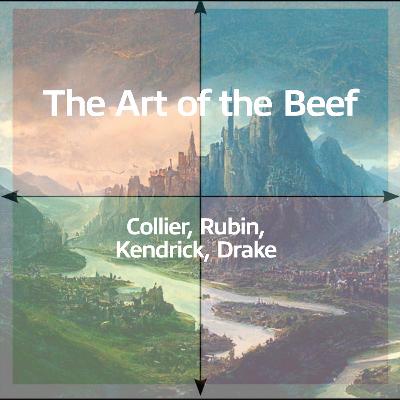
After witnessing a TikTok "beef" between the "Mozart of Gen Z" Jacob Collier and Rick Rubin, Alec and Nick take up "des arts de boeuf" as a space to discuss the implicitly disagreeable nature of musical aesthetics. The conversation uses these two maestro's different perspectives to inquire into the role of the audience and its relationship to creativity, musical genius and virtuosity, and the underlying political assumptions evident in their arguments. More, the two discuss the act of a "beef" or disagreement as an illuminating tension that highlights core hypocrisies, embarrassments, and ironies within our aesthetics and politics. Irony is discussed as a dominating "coin of the realm" in which true untruths are exchanged with untrue truths — a continuum that develops into political binaries of liberalism and fascism, and the nature of aesthetic and political revolution. The conversation also uses this as a foil to discuss the recent full course Beef of Drake versus Kendrick Lamar, and questions the musical "avant-garde" as a progressive medium for art or politics.
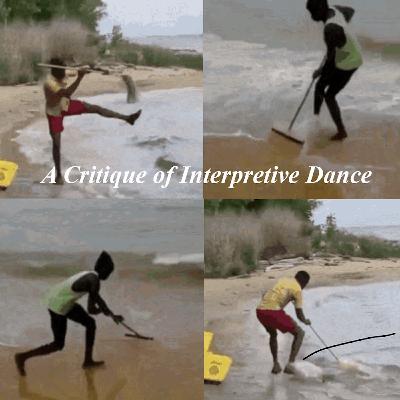
In a novel departure from their "special relationship" to classical and experimental music, Alec and Nick take up the topic of Interpretive Dance as a discursive foil to their ongoing inquiries into music. The duo give bewildered accounts of the aesthetic experience of interpretive and experimental dance performances—and ask basic questions: are music and dance the same thing? Sibling rivals? Two towers? Or, why does interpretive dance often evoke laughter, humiliation, or come across as potentially overstated and ridiculous? How would would you choose to express yourself through dance? The conversation also recounts comfortable and joyous experiences of dancing and probes critical assumptions and entrenchments within the music/dance dichotomy. The conversation touches on John Cage and Merce Cunningham, The Club, musical theater, Yvonne Rainer, Simone Forti, ethnomusicological accounts of movement and music, improvised music, ballet and classical music, music and dance's extensions into visual culture, Kim Gordon's new album, and more.
Listen up daddios: in this episode, Alec & Nick take out the bindle-sticks and jugs of wine for a gone reflection on the lingering cultural legacies of bohemianism in the 21st century. Jumping into the Beat generation and mid-20th-century music as a starting point, the discussion focuses on how avant-gardes and countercultures oscillate into and back out of mainstream cultural resonance; and, how the social aesthetics of online media consumption have transformed the dynamic interplay of commerce and liberatory expression. Topics include relational aesthetics, adolescent literary tastes, generational culture wars, Soundcloud's next gen, Nietzsche, Kerouac's "On the Road" and autofiction, the hybridity of classical and novel forms in Indie music, the Verismo Opera of Puccini, Julia Holter, Pitchfork's integration into GQ, participatory art, recent MOMA PS1 presentations of Rirkrit Tiravanija's work, Baudelaire and distinctions between Cyber- vs. Crypto- bohemianism.
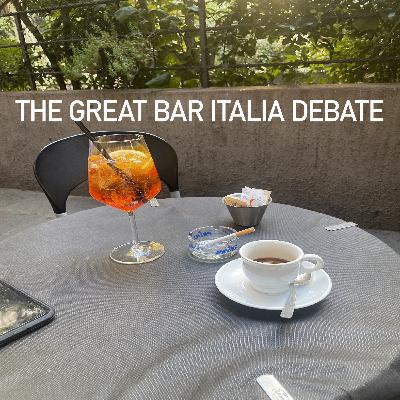
In this special edition, Alec and Nick open the Flavortone vault to present The Great Bar Italia Debate — a lost episode from the summer of 2023, presented here in timely coincidence with the London group's recent Crack profile. The debate poses questions about musical style, local vs. global cultural and community dynamics and politics of taste along the well-established axis of London and NYC's cultural exchange. Taking up discussion of "the band" as a conceptual and presentational format, rather than as a presumptive participatory vehicle, the episode examines the alternative forms of consumption, exchange and imaginative role-play, which Bar Italia's approach invites. Topics include the question: "Do we like this?," the band's 2023 quasi-residency of multiple NYC concerts, transatlantic indie rock history, Dean Blunt, and Thomas Turino's cultural framework for "presentational" (as opposed to "participatory") music.
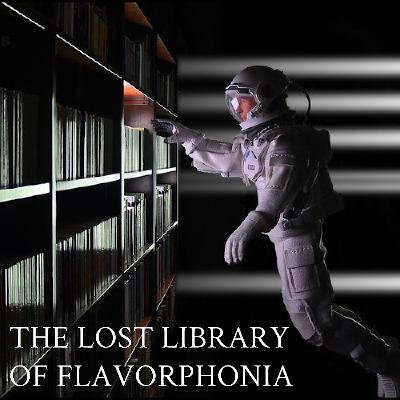
After a long and unanticipated hiatus from podcasting, Alec and Nick return to take a long hard look in the mirror … only to inquire why exactly they possess the impulse to use music as an aesthetic, philosophical, social, cultural, and political measure of the world. The conversation uses the metaphor of the library to chart an interrogation into where music culture, discourse, and practice is at at the dawn of 2024. The episode questions contemporary music culture's relationship to the history of 20th century experimental music, the legacy of John Cage and Sylvere Lotringer's view of him as "The American Philosopher," historically "legitimatizing" the disparate internet music culture of the 2010s, music culture's production of "reliable disappointments," year end list-making, holy and sacred music, and more.
Alec and Nick reconvene to discuss concepts of "tradition" and "futurity" as they relate to music. Picking up on our ceaseless cultural pull toward both the past and future, the conversation focuses on how contemporary's music's impulse to represent history and postulate a future for itself has developed its own kind of suspended, tense aesthetic condition. The conversation touches on Benedict Anderson's "Imagined Communities," Bang on Can's Longform Festival, Accelerationism vs. "trad" culture, neorationalist philosophy, ethical and/or relativist music appreciation, Sylvere Lotringer, The Beats, Post-Internet Art, the problems of using collapse as a vision of the future, the dubious quest for authenticity—and music as a special annex for the quandaries of what's behind us and what's to come.
![Episode 50: Captain's Log, Transcendental [PATREON PREVIEW]](https://s3.castbox.fm/01/f4/20/da717a9ab95fe380929ff34a8deca7b8b9_scaled_v1_400.jpg "Episode 50: Captain's Log, Transcendental [PATREON PREVIEW]")
In this 50th episode of Flavortone, Alec and Nick settle deep in cups of "earl grey, hot" from the replicator for an entry into the Star Ship Flavorphonia Captain's Log. Citing Star Trek's Captain Jean-Luc Picard, the duo take this ancient maritime convention of record keeping at sea to trace various other epistemic fault-lines in the practice and theory of notation. The duo consider the "log" as a mundane account which transcends its quantitative form in generating unanticipated moral and aesthetic inventories. Branching from this analysis, the broader discussion includes consideration of a tweet by Holly Herndon on the stakes of creative work alongside AI, Deleuze & Guattari's emphasis on expression dictating methods, the holodeck and other utopian imaginaries in Star Trek, the notation practice of Pascale Criton, the Ryan Trecartin film "center jenny" (2013), Anthony Braxton, the daily-life "logging" involved in gardening, cooking, home-improvement, and more.
Alec and Nick pull back the Flavortone curtain and take up influential sitcom Frasier to discuss the decorum of Foibles as a primary engine of music. Known as a minor weakness or eccentricity in one's character, or the weaker part of a sword blade—the conversation uses the Foible to explore wide-ranging commentary on Christianity, the trial of Socrates, sites of contested authorship in American minimalism, Rip Van Winkle sleeping through the Revolutionary War, comedy, Fluxus, the work of Torn Hawk, and more. Ultimately, the duo asks: is the foible of a blade actually the avant-garde? Are the aesthetics of experimental music actually defined and determined by the foible? And, is the foible a primary site for our social life and shared narratives of music? The discussion ends with Alec and Nick sharing anecdotes of their own personal foibles in the realm of music: including getting embarrassingly wasted at Cecil Taylor's birthday party, abandoning one's post as a handbell choir director in Ohio, and the foible masterclass of co-running a DIY music space in the early 2010s.
Alec & Nick take to the proverbial skies with this discussion around the dreaming and engineering feats which make possible the various metaphorical and real forms of Flight. Diverting from some of FT's established conversations dealing with cultural and musical wreckage, this episode looks into moments of lift and inspiration, as supported by efforts of imagination, study and experimentation. The discussion ranges from a consideration of passive and active flight, the commercial airline experience, musical tuning systems and just intonation, the tensions inherent in human progress, the journals of Leonardo DaVinci, synthesis and synthesizers as instruments of belief and knowledge, Buckminster Fuller's "Great Pirate" paradigm, Evagrius Ponticus' "Demon Pilot," and more.
![Episode 47: Thus Shook Zarathustra's Groove Thing (Politics & Poetry) [PATREON PREVIEW]](https://s3.castbox.fm/bd/9e/6c/1c8a9508a91122518df3dbc54fa54b97c3_scaled_v1_400.jpg "Episode 47: Thus Shook Zarathustra's Groove Thing (Politics & Poetry) [PATREON PREVIEW]")
Following on from Flavortone's previous episode exploring Excellence, Alec and Nick pick up Charles Keil & Steven Feld's "Music Grooves" to discuss "the Groove" as a political concept that illustrates musical discrepancy and assembly. The episode continues a "back to basics" and "first principles" line of inquiry, approaching essential ethnomusicological ideas such as "Participatory Discrepancy" that describe how a simultaneity of difference can give music its power and meaning. The conversation also discusses riffs and phrases, contrasts the Groove to Attali and Nieztche's ideas of carnival and the Dionysian, creates a comparison between "literary" and "linguistic" musical orientations, re-discusses "Agave Expressionism," and ultimately describes how the Groove offers an alternate perspective of sound beyond the universalism of western art music and institutional major histories.

In this year end reflection, Alec and Nick discuss the folkloric figure of Pinocchio—a "constantly lying wooden marionette," whose dual consciousness (as both an abject dummy and an aspiring human) suggests a parable for understanding musical problems of "liveness" and "deadness" and the puppetry of musical commodification. Taking up Carlo Collodi's late 19th century series "The Adventures of Pinocchio" as a text that precodes social and political movements in the 20th century—including local and global perspectives of artisan class-politics, Marxism, Italian unification, and fascism—the conversation follows into an analysis of the puppet-like dramaturgy of musical political economies. Matters at hand include civic responsibility, deception, education, fatalism, and the recent factions within consumer-level breakthroughs in AI technology as a tool in Gepetto's impoverished workshop, or, as a set of masks in the commedia dell'arte of digital production. In the end, the duo prescribe the entirety of musical commodification as a Pinocchio Story that proclaims "how funny I was when I was a puppet! And how happy I am now to have become a nice-a boy!"

Comments

Download from Google Play

Download from App Store
 United States