


 Claim Ownership
Writers of Silicon Valley
Subscribed: 109Played: 1,462
Subscribe

Description
UX writing. Content design. Call it whatever you want: words and content are more important to good design and technology than ever. The words, phrases, and sentences you see in a user interface don't just appear there. They are written. Carefully crafted. This podcast is about the people who write those words, who design experiences with words, and who combine the power of language and technology.
56 Episodes
Reverse
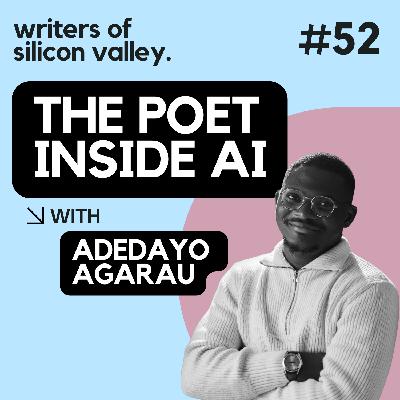
🎧 Start listening on Apple Podcasts, Spotify, subscribe on YouTube, or wherever you get your podcasts. Get 20% off workshops and courses at UX Content Collective. For content designers who want to upgrade their thinking, check out Advanced UX Content for Product. Adedayo Agarau is a poet, a Stanford Wallace Stegner Fellow, and a content designer who has worked on AI search at Google and on Grok at XAI. He came to content design through web writing, a Nigerian fintech startup, a browser company, and an MFA at Iowa - not the path anyone would have predicted, and exactly the kind of path that produces someone worth listening to. We talk about what it actually means to design for a large language model: how personality gets built, why guide rails are a writing problem, why the distinction between an ideal response and just a response is what separates well-designed AI from the rest...and why content designers are the best ones to do this type of work. What we talked about: ✅ How Adedayo discovered poetry through a Nigerian social app ✅ What it was like contributing to AI-powered Google Search ✅ Designing voice, tone, and personality for Grok ✅ Why the X algorithm amplifies shock value and what that does to content designers ✅ Why AI hype creates both overclaiming and unhealthy skepticism ✅ What engineers actually want from content designers when building AI systems ✅ The case for treating data as content, not just content as data ✅ Why designing an AI agent is fundamentally the same as writing a character Where to find Adedayo: Website LinkedIn Github Get 20% off workshops and courses at UX Content Collective. For content designers who want to upgrade their thinking, check out Advanced UX Content for Product.
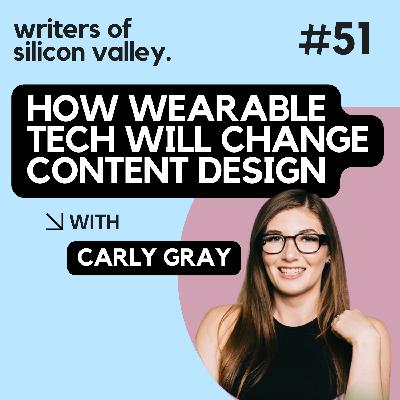
Want to learn how to use AI to build with other content designers? Join the Content Design AI Accelerator. Applications open until January 30. Why wearable tech will change content design Smart glasses and wearable devices have been "just around the corner" for years. But quietly, that's starting to change. In this episode, I speak with Carly Gray, a content designer who's spent years working on AR and wearable products, including smart glasses at North and Meta. While much of the industry debates AI and screens, Carly has been designing content for products where there's little or no screen at all. We talk about what changes when content moves off phones and into the physical world, why wearables raise entirely new design and ethical challenges, and what content designers need to start learning now if they want to stay relevant as new platforms emerge. What we talked about: ✅ How Carly moved from technical writing into content design for AR and smart glasses ✅ Why smart glasses are different from VR, and why wearability matters more than novelty ✅ Designing content with extreme space constraints (or no screen at all) ✅ Using sound, voice, and companion apps to communicate when text isn't an option ✅ Why "designing for the bystander" is as important as designing for the user ✅ What wearable tech reveals about the future skill set of content designers ✅ Why conversation design and systems thinking matter more in emerging platforms Where to find Carly: Website: carlygray.ca LinkedIn: Carly Gray Twitter: @carlygray

 1
1THANK YOU FOR 50 EPISODES! This is the 50th episode of Writers of Silicon Valley. Thank you for listening all this time - through my bad editing skills, a three year break, and me saying "absolutely" a lot. It means so much that you'd tune in once, let alone 50 times. So thank you :) As an extra 'thank you' I'm offering 35% off Advanced UX Content for Product at UX Content Collective. Use PODCAST35 at checkout :) Here's to 50 more. Content design for AI agents Christopher Greer has been creating cool content design resources for years, but his latest is a real accomplishment: a Claude Skill that hooks into Figma and critiques UX writing. It turns out Chris is quite optimistic about the state of the content design market. We talk about his work at Stripe, what it actually means to design content for AI agents and internal systems - not chatbots for end users, but the infrastructure, context, and governance that sit behind them. Chris shares how content design skills translate directly into agent design, why context management is now a core capability, and how content designers can scale their influence by working closer to engineering and systems. What we talked about: ✅ Why content design skills map closely to designing AI agents and systems ✅ Context management, "context rot," and why structure matters more than prompts ✅ How content designers can scale influence through internal tools and governance ✅ Working as a content designer inside an engineering-led company like Stripe ✅ What Chris learned building and open-sourcing a Claude skill for UX writing critique ✅ Why GitHub and version control are becoming practical skills for content designers ✅ The risks AI poses to junior roles, and the strategic work that won't disappear ✅ Why qualitative judgment, taste, and human evaluation still matter Where to find Chris: LinkedIn Chris's blog Chris's Claude Skill

👉 Get up to 35% off everything at UX Content Collective until December 16! It's the end of the year, which means it's time for a little reflection. I've picked 5 clips from the most popular episodes of the year. Have a wonderful end of the year / holiday season, and I'll see you all in 2026. Any suggestions, interview ideas? Hit me up at patrick@uxcontent.com.

Do you enjoy the podcast? Please leave a review! 👉 Buy Margo's book, "Good Job", at her website 👉 Our new course, Advanced UX Content for Product, is out! Use PODCAST20 to get 20% off. 👉 Sign up to our UX writing newsletters How to ace your design interview Interviews are horrible. No one likes them. But does it have to be that way? Margo Stern's new book, Good Job, takes on design interviews - both for candidates and for the people creating the interview process. She goes into great detail about how to actually ace a design interview, and for hiring managers, how to design an interview process that treats people like human beings. We delve into all sorts of great discussions about interviews. How to ace them, what they get wrong, and what companies need to do to make the interview process better for designers. Enjoy! What we talked about: ✅ Why interviewing is a separate skill from doing the job ✅ How candidates can prepare through self‑reflection, rehearsal, and storytelling ✅ Why the STAR method works (and why most people use it badly) ✅ The real reason case studies fall flat and how to make yours a story, not a status report ✅ How to research a company without crossing the line into oversharing ✅ The advantages extroverts have in interviews and how introverts can level the field ✅ How candidates can show genuine interest without being performative ✅ How to read red flags in interview processes (ghosting, unclear expectations, chaotic loops) ✅ The danger of applying to too many jobs and why "less, but better" works for both sides ✅ The key questions both candidates and interviewers should ask Where to find Margo: 📖 Margo's website Do you enjoy the podcast? Please leave a review! 👉 Our new course, Advanced UX Content for Product, is out! Use PODCAST20 to get 20% off.
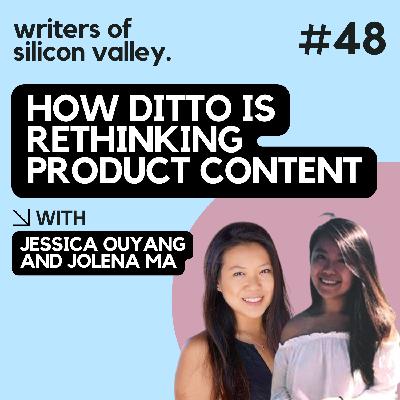
Do you enjoy the podcast? Please leave a review! 👉 Our new course, Advanced UX Content for Product, is out! Use PODCAST20 to get 20% off. 👉 Sign up to our UX writing newsletters Ditto 2.0 is here, and wants you to rethink product content Five years ago, Ditto launched as one of the first tools built specifically for managing product copy at scale. Now? It's powering content systems for some of the biggest design teams in tech and it just relaunched with a major update. In this episode, I catch up with co-founders Jess and Jo about what they've learned since founding Ditto, what it's like to rebuild a product from the ground up, and why strong content systems are more essential than ever especially in the age of AI. Learn what these founders are hearing from the heads of design teams about content, why systems thinking is more important than ever, and why they're optimistic about the future of content design. What we talked about: ✅ How Ditto's vision has changed (and stayed the same) ✅ Why rebuilding the product from scratch was the right call ✅ What they've learned from working with dozens of enterprise teams ✅ How to support content systems in companies with messy, legacy infrastructure ✅ What sales has taught them about communicating the value of content ✅ How AI is shaping expectations—and where it actually adds value ✅ Why more content designers should think like founders Where to find Ditto: 📖 Ditto Do you enjoy the podcast? Please leave a review! 👉 Our new course, Advanced UX Content for Product, is out! Use PODCAST20 to get 20% off.
Do you enjoy the podcast? Please leave a review! 👉 Our new course, Advanced UX Content for Product, is out! Use PODCAST20 to get 20% off. Should content designers care about "vibe coding"? AI prototyping has taken the design world by storm. Replit, Cursor, Lovable, Figma Make...all of them are certainly very cool. But do they actually change the way we design? And if they do, should we even care? David Hamilton joins me to talk about it. What we talked about: ✅ Designing content for cars across screens, systems, and contexts ✅ The stakes of language in safety-critical interfaces ✅ Why consistency across app and vehicle language really matters ✅ How content designers can shape AI systems ✅ What "vibe coding" is and why content still plays a key role ✅ Why the last 5% of polish is the new differentiator ✅ The importance of taste, trust, and systems thinking Where to find David: 📖 LinkedIn 📖 David's Substack Do you enjoy the podcast? Please leave a review! 👉 Our new course, Advanced UX Content for Product, is out! Use PODCAST20 to get 20% off.

Do you enjoy the podcast? Please leave a review! 👉 Our new course, Advanced UX Content for Product, is out! Use PODCAST20 to get 20% off. 👉 Check out the Content Design Salary Survey When words make or break the player experience Most content designers work in apps, websites, and services. But what happens when your product is a massive open-world RPG or a competitive shooter? In this episode, I talk with Ben Moran, a UX writer who's worked on AAA video games, about the unique challenges of designing language for games. From menu systems and HUD elements to skill trees and settings, we explore how content design in games is a constant balancing act between immersion and usability. We also talk about the differences between "content design" in the gaming industry (quests, story content) versus UX writing for UI, and why game studios are missing opportunities when they don't bring dedicated UX writers onto their teams. What we talked about: ✅ How Ben transitioned from product design and copywriting into UX writing for games ✅ The difference between content design for quests and UX writing for UI ✅ Immersion vs. usability: why both matter, and how to find the balance ✅ Deciding when to name things in a game (and when not to) ✅ Making complex systems like skill trees, armor upgrades, and settings feel approachable ✅ Why players will tolerate complexity in gameplay, but not in basic navigation ✅ The missed opportunity when studios don't hire UX writers ✅ Lessons from games that can inspire innovation in digital products Where to find Ben: 📖 LinkedIn 📖 Ben's article on UX writing in video games Do you enjoy the podcast? Please leave a review! 👉 Our new course, Advanced UX Content for Product, is out! Use PODCAST20 to get 20% off. 👉 Check out the Content Design Salary Survey
Do you enjoy the podcast? Please leave a review! 👉 Our new course, Advanced UX Content for Product, is available for preorder. Order and get 25% off, plus 30% off another course or workshop. 👉 Get 25% off all courses and workshops at UX Content Collective Navigate AI with clarity, not panic There's a lot of noise about AI right now. It's going to replace us. It's going to revolutionize everything. It's the best thing since sliced bread or the beginning of the end. In this episode, Andrew Stein, a content design leader and thoughtful skeptic, helps us cut through the noise. We talk about what AI actually means for content professionals, how to spot the hype, and what it looks like to respond with nuance instead of fear. This isn't an AI doomscroll. It's a clear-eyed look at the choices ahead of us—and why content designers are uniquely positioned to ask the right questions. What we talked about: ✅ Why skepticism is a healthy response to AI ✅ What content design still does better than AI (by a long shot) ✅ The pressure to "prove your value" in the age of automation ✅ How to have thoughtful conversations about AI at work ✅ Why embracing complexity is part of the job now ✅ The difference between curiosity and panic ✅ Where content strategy still shines no matter the tools ✅ Why being critical of tech isn't being anti-tech Where to find Andrew: 📖 LinkedIn 👉 Our new course, Advanced UX Content for Product, is available for preorder. Order and get 25% off, plus 30% off another course or workshop. 👉 Get 25% off all courses and workshops at UX Content Collective
Do you enjoy the podcast? Please leave a review! 👉 ATTEND OUR MAJOR COURSE ANNOUNCEMENT ON MAY 6. REGISTER HERE. 👉 Get 20% off courses and workshops at UX Content Collective with PODCAST20. Staying hopeful, getting hired, and embracing the hustle The job market for content designers hasn't been easy—and it's even harder when you're trying to break into the field for the first time. But if there's anyone who knows how to stay resilient through the process, it's Casey Webb. In this episode, Casey shares her journey from marketing to UX content design—navigating layoffs, contracts, full-time roles, and everything in between. She talks candidly about building confidence, managing rejection, and why being coachable has been her secret weapon in landing roles at companies like Wells Fargo, Warner Bros. Discovery, eBay, and Indeed. If you're job searching right now, or just feeling uncertain about your next move, this episode is for you. What we talked about: ✅ How Casey transitioned from marketing into content design ✅ The ups and downs of job hunting over the last few years ✅ Why the expectations for content designers have changed ✅ The importance of business impact and strategic thinking in portfolios ✅ How to deal with contradictory interview feedback ✅ Why the "one yes" mindset can help you push through ✅ Tips for preparing for interviews and asking smart questions ✅ Why reaching out and building a network really works ✅ How to show up with humility and curiosity—on and off paper ✅ Staying grounded when the job search gets tough Where to find Casey: 📖 LinkedIn 👉 ATTEND OUR MAJOR COURSE ANNOUNCEMENT ON MAY 6. REGISTER HERE. 👉 Get 20% off courses and workshops at UX Content Collective with PODCAST20.
Listen on: Apple Podcasts | Spotify Do you enjoy the podcast? Please leave a review! 👉 Get 25% off courses and workshops through April 6, 2025 at UX Content Collective. 👉 Check out Victor's Substack, Footbridge 👉 Victor's piece on content design that sparked this conversation Rethinking influence, resentment, and the future of content design It's easy (and often correct) to blame external factors for why content design doesn't get the respect it deserves. But what if some of our biggest challenges are ones we've created ourselves? In this episode, Victor Beigelman, a longtime content designer at Meta, joins us for a candid conversation about how content designers might be getting in their own way. From clinging too tightly to writing as a core identity to unintentionally acting like the "language police," Victor lays out a case for humility, adaptability, and product thinking as paths forward. If you've ever felt stuck in your content career, questioned your influence, or wondered what's next for the discipline - this one's for you. What we talked about: ✅ How acting like the "language police" hurts your credibility ✅ Why content design isn't always seen as essential and how to change that ✅ What it means to be a "full-stack content designer" ✅ How to work more strategically with product and design partners ✅ Why style guide debates don't move the needle ✅ How to build influence through collaboration not control ✅ Where content designers can lead in AI, AR/VR, and new interfaces ✅ The role of humility in building long-term impact Where to find Tom: 📖 LinkedIn 📖 Substack – Footbridge Enjoying the podcast? 👉 Leave a review and share this episode with your network! 👉 Get 25% off courses and workshops through April 6, 2025 at UX Content Collective.
Listen on: Apple Podcasts | Spotify Do you enjoy the podcast? Please leave a review! 👉 Get 20% off courses and workshops at UX Content Collective. Just use the code PODCAST20 at checkout. 👉 Check out "Articulating Design Decisions" Mastering the art of defending your designs As a content designer, you've probably been asked, "Why did you use that word?" or "Why does this need to change?" Defending design decisions can be tough. Especially when feedback comes from stakeholders who might not fully understand content strategy. In this episode, Tom Greever, author of "Articulating Design Decisions", shares his framework for explaining and defending design choices with confidence. We talk about how to avoid common pitfalls, navigate stakeholder relationships, and build influence through persuasion, not confrontation. If you've ever struggled with defending your work or felt sidelined in design discussions, this episode will give you the tools to communicate your decisions clearly and build credibility. What we talked about: ✅ Why content designers struggle with defending decisions more than visual designers ✅ How to explain design choices without getting defensive ✅ How to anticipate stakeholder objections and respond effectively ✅ The role of confidence, persuasion, and relationship-building in design ✅ How to handle feedback that feels personal (without losing confidence) ✅ How to influence without authority and earn a place in strategic conversations ✅ Why writing things down is the best way to clarify your own thinking Where to find Tom: 📖 LinkedIn 📖 Website 📖 Book: "Articulating Design Decisions" Enjoying the podcast? 👉 Leave a review and share this episode with your network! Get 20% off UX Content Collective courses with code PODCAST20.

Listen on: Apple Podcasts | Spotify Do you enjoy the podcast? Please leave a review! Get 20% off courses and workshops at UX Content Collective. Just use the code PODCAST20 at checkout. The rise of UX writing in India UX writing is still a young discipline in India, but it's growing—fast. In this episode, Sidika Sehgal shares what's happening on the ground: the demand for UX writers, why hiring is so challenging, and how localization is reshaping product experiences in one of the world's most diverse markets. Sidika, a content designer at Rubrik, has seen the industry evolve over the past few years. She explains why tech investment in India is booming, what's still holding UX writing back, and why the lack of senior UX writers is creating an uphill battle for many in the field. From the challenges of hiring UX writers in India to the unique role language and localization play in product design, this conversation dives deep into the realities of being a UX writer in an emerging market. What we talked about: ✅ The rise of UX writing in India and why the field is growing fast ✅ How India's tech industry is shifting from outsourcing to full-scale product teams ✅ The biggest challenges for hiring UX writers in India ✅ Why UX writing salaries are finally catching up to product design salaries ✅ The role of localization—why Indian products often use a mix of English + regional languages ✅ The unique UX challenges in India, from smartphone adoption to non-intuitive UI patterns ✅ How UX writers in India are figuring things out without senior mentors ✅ The lack of specialization—why India doesn't yet have growth writers, conversation designers, or accessibility specialists ✅ Why companies need to hire for potential, not just experience ✅ The future of UX writing in India—what's needed for it to grow Where to find Sidika: 📖 Sidika's article on UX Writing in India 📖 Sidika on LinkedIn 📖 UX Content Collective – Courses & Workshops Enjoying the podcast? 👉 Leave a review and share this episode with your network! Get 20% off UX Content Collective courses with code PODCAST20.

Listen on: Apple Podcasts | Spotify Do you enjoy the podcast? Please leave a review! Get 20% off courses and workshops at UX Content Collective. Just use the code PODCAST20 at checkout. From layoff to leadership: How Cara Lam rebuilt her career Getting laid off is tough—but for content designers on work visas, it can feel like everything is on the line. When Cara Lam lost her job at Instagram during the wave of tech layoffs, she had just 60 days to figure out her next move or leave the country. What followed was a relentless job search, rejections, and a journey of self-discovery. In this episode, Cara shares how she bounced back, the lessons she learned from her time at Meta, Venmo, NBC Universal, and Silicon Valley Bank, and why content designers need to embrace strategy, research, and resilience to stand out in today's job market. If you've ever struggled with layoffs, job hunting, or making your content career more sustainable, this conversation is packed with real talk, tactical advice, and industry insights you won't want to miss. What we talked about: ✅ How Cara moved across Australia, Japan, Hong Kong, and the US—and stumbled into content design ✅ What it's really like working at Instagram/Meta as a content designer ✅ The hackathon project that could have changed Instagram Stories forever ✅ How financial UX writing is different from other industries—and why it matters ✅ What it feels like to get laid off at a big tech company ✅ Job hunting after a layoff—how to survive endless rejections ✅ The power of referrals, LinkedIn outreach, and strategic networking ✅ How contract work helped Cara get back into the industry ✅ Interviewing like a pro—portfolio tips that helped her land a job ✅ Why every content designer should think like a business strategist Notable quotes: 💬 "Your job can be taken away, but your skills and passion can't." — Cara Lam 💬 "If you want to get hired, show that you understand how content affects business outcomes." — Cara Lam Where to find Cara: 🔗 LinkedIn 📸 Instagram: @thecaraadventures Enjoying the podcast? 👉 Leave a review and share this episode with your network! Get 20% off UX Content Collective courses with code PODCAST20.

Listen on: Apple Podcasts | Spotify Do you enjoy the podcast? Please leave a review! Get 20% off courses and workshops at UX Content Collective. Just use the code PODCAST20. Burnout isn't just a buzzword—it's a reality for many of us working in UX and tech. The long hours, the shifting priorities, the constant pressure to prove our value… it all adds up. And if you're not careful, it can take a serious toll. Yvonne Xiao has been there. She's worked at companies like Microsoft and Uber, navigating the highs and lows of content design in fast-paced environments. But instead of letting burnout define her career, she's figured out how to manage it—by setting boundaries, redefining success, and embracing a more sustainable approach to work. In this episode, we talk about how to recognize burnout before it's too late, the mistakes we all make when trying to "push through," and why setting boundaries isn't just about saying no—it's about knowing your worth. If you've ever felt drained by your work or wondered how to make content design (or any job in tech) actually sustainable, this one's for you. What we talked about: How Yvonne transitioned from film school to content design The early signs of burnout and how to recognize them in yourself The biggest mistakes content designers make when trying to manage burnout Why setting boundaries is hard—but necessary—for long-term career success How imposter syndrome fuels burnout (and how to reframe it) The importance of community, mentorship, and knowing you're not alone How to build a career in UX without letting it consume your identity Notable Quotes: "Your self-worth isn't tied to your job. You're so much more than the work you do." "The cringe factor is real, but you just have to post it. Nobody's going to remember it tomorrow." "Burnout doesn't happen overnight. It's layers of ignoring your own needs until it's too late." Where to Find Dave: LinkedIn YouTube Instagram TikTok

Listen on: Apple Podcasts | Spotify Do you enjoy the podcast? Please leave a review! Get 20% off courses and workshops at UX Content Collective. Just use the code PODCAST20. Content design has some growing up to do. Whether it's the things we talk about at conferences, or even the aspects of our job that we *think* are important (but really aren't), we need to see some change. Dave Connis, Lead Content Designer at OutSystems, has embraced systems thinking and he wants you to as well. Go beyond the deliverables we're used to (tone, style guides, etc) and start thinking about how to connect the elements of your product in a bigger picture. Dave brings a refreshing, no-nonsense approach to content design. From his experience working with developers to his cutting-edge ideas about content ecosystems, this conversation is packed with actionable insights and (yes) spicy takes. If you're tired of surface-level debates about microcopy and want to get into the heart of what makes content design impactful, this one's for you. What we talked about: Why content designers need to stop sweating the small stuff (looking at you, Oxford comma) How systems thinking can revolutionize content design The overlooked value of string files and content architecture Why tone isn't everything — and what actually drives user success How to think about the "jobs" your content is doing The intersection of technical writing and UX writing: what each discipline can learn from the other Why content design needs to push for industry-wide innovation Notable Quotes: "Stop arguing about sentence case and start building better systems." — Dave Connis "Tone isn't the goal. Getting the user to their goal is." — Dave Connis "Every piece of content in your UI has a job. Figure out what it is." — Dave Connis Where to Find Dave: LinkedIn: Dave Connis Instagram Website

Listen on: Apple Podcasts | Spotify Do you enjoy the podcast? Please leave a review! We're proud to announce Maring's new course at UX Content Collective: Fundamentals of Support Content. Get it now for 25% off! If you've ever found yourself frustrated by terrible help center content, you're not alone. Most of it sucks. But why? That's why I'm excited to share this conversation with Maring Eberlein. Maring is a support content expert with a deep understanding of what makes help centers effective — and what makes them fail. She's worked with companies large and small, transforming their support content from "just get it done" projects into real strategic assets. We get into everything from why so much support content is subpar to how companies can stop playing catch-up and start building better self-serve experiences for their users. If you've ever wondered how support teams, content designers, and technical writers can work together more effectively, this episode is for you. What we talked about: Why most support content sucks — and how to make it better The difference between support content and technical writing Why support content should be an asset, not an afterthought How to "train" your users to find answers on their own What companies get wrong about chatbots and AI-driven support The rise of structured content and why support teams should embrace it Practical ways support teams and content teams can work together Notable quotes: "Support content isn't a cost — it's an asset. But most companies don't realize that until it's too late." "Users don't want to watch a 4-minute video when 3 clear steps would do the job." "If your help center looks like a mess, it tells me your product might be too." Where to find Maring: LinkedIn Fundamentals of Support Content course Maring's website

Listen on: Apple Podcasts | Spotify Do you enjoy the podcast? Please leave a review! Canva is a true (Aussie) tech success story, and the content design practice there is no small reason why. One of the people leading that practice is Sally, Head of Content Design at Canva. Sally and I dive into how Canva has built one of the strongest content design practices in the world, why leadership is about more than managing people, and what content designers need to do to grow their careers. We also discuss why content design in Australia often feels a few steps behind the global stage and what Canva is doing to set an example. This was such an honest and motivating conversation, and I think it'll resonate with anyone working in content or design, especially those navigating fast-paced environments. Timestamps: (0.52) Content design at Canva (4.28) Sally's work experience and history (8.30) Growing Canva's content design team (10.44) How Canva content designers approach AI (13.20) How Sally helps lead and develop her team (23.00) How leaders should prioritize (26.20) What Sally looks for when hiring (29.20) How to navigate change as a leader (32.50) Sally's biggest leadership challenges (38.15) The importance of culture and values (43.30) Psychological safety in teams (48.20) What the industry needs to change What we talked about: How Sally helped build a 30-person content design team at Canva Why content drives the first impression users have of Canva The four pillars of growth for content designers at Canva Balancing leadership with staying connected to the craft How Sally helps content designers focus on impact, not volume The emotional side of change and why people feel loss more than gain Why diversity in hiring goes beyond skills to mindset and adaptability Navigating the challenges of a fast-growing company culture Notable Quotes: "Content drives the first impression of Canva. We have a lot of responsibility to make sure that's a good one." — Sally "There's no such thing as time management, only choice management." — Sally (AI): "If we focus too much on the loss, we'll never realize the gains." — Sally Where to Find Sally: LinkedIn

Listen on: Apple Podcasts Spotify Do you enjoy the podcast? Please leave a review! A few weeks ago I made a post on LinkedIn that caused a little bit of a stir. I said that content designers need to do more in considering how content supports the greater product ecosystem...and why that lack of curiosity might be holding them back. In essence, I was asking: which is more important - product or content? I got a lot of great responses, but Scott Kubie's was one that stood out to me. His view was that my assessment of the situation was a little upside down, and that we should talk about it. So I did. Scott and I agree that content designers need to think bigger, but we're coming at this from slightly different directions. This episode, we hash it out. I hope you enjoy it - it was a productive, pleasant, and deep conversation that really left me with a better understanding of Scott's position. What we talked about: Why Scott thinks content people are "playing small" — and what they can do about it What "content" actually is The real role of content in a product The difference between interface copy and content that truly drives value Why structured content and content operations are the future Scott's candid thoughts on how to navigate industry challenges and thrive The content "death star": Notable quotes: "Content is what people are there for… not just the words on the screen." "There's a massive opportunity available to any product manager who wants to pick it up and run with it, which is to start thinking about your content ecosystem." Resources Mentioned: Apple's Human Interface Guidelines Where to find Scott: LinkedIn Scott's website Listeners get 20% off podcasts and workshops at UX Content Collective! Just use PODCAST20 at checkout

Listen on: Apple Podcasts Spotify Do you enjoy the podcast? Please leave a review! Having trouble letting go? Deiadora Blanche (Airbnb, Coursera) can help. In this episode, we dive deep into the idea of ego detachment — letting go of personal attachment to the work we do. Deiadora shares her journey from business consulting to content strategy, and how she's learned to balance personal growth with professional success. We also chat about thinking like a CEO, even when you're not in leadership, and how content professionals can create their own success by setting metrics and driving results. Plus, Deiadora shares some incredible insights about AI content strategy — why we need to engage with it, not fear it. If you're curious about how to stay grounded in your work, navigate high-pressure environments, or just want to hear some practical advice on building a successful content strategy career, this episode is a must-listen. What we talked about: Deiadora's path from business consulting to content design Why detaching from your ego can make you a better content designer How to set metrics for your team and think like a CEO Using mindfulness to step back and make better decisions How content professionals can lead without a formal title Practical tips for using AI in content strategy Why letting go of attachment to outcomes helps you succeed Notable quotes: "Stop being so attached to the work—it's not about you. It's about what the user needs." "When you step away and detach from the ego, you can make better decisions." "Thinking like a CEO is essential, even when you're an individual contributor. Own the work, don't wait for direction." Where to find Deiadora: Deadorable Life The Quantum CEO Podcast LinkedIn Listeners get 20% off podcasts and workshops at UX Content Collective! Just use PODCAST20 at checkout


Download from Google Play

Download from App Store
 United States
awesome podcast 👍 I'm really loving this.. please make more episodes