


 Claim Ownership
The Cash Flow Academy Show
Subscribed: 3,249Played: 57,790
Subscribe


© 2026 www.TheCashflowAcademy.com
Description
The Cash Flow Academy Show with Andy Tanner teaches investors how to generate consistent cash flow from the stock market using proven strategies built on financial education, not speculation.
Andy Tanner, Rich Dad's Advisor on Paper Assets and author of 401(k)aos and Stock Market Cash Flow, challenges traditional Wall Street thinking and shows you how to take control of your retirement using options, dividends, and intelligent portfolio management.
If you're tired of:
• Watching stock prices and feeling anxious
• Depending solely on a 401(k)
• Hoping long-term growth solves everything
• Conflicting advice from financial media
This show offers a different path.
Unlike conventional advice focused on buying and hoping, The Cash Flow Academy teaches active investing strategies designed to create income, reduce risk, and build financial confidence.
Topics include:
• Options trading strategies
• Cash-flow investing
• Retirement income planning
• Portfolio protection
• Market analysis
• Financial education and investor psychology
Whether you're new to investing or looking to refine advanced strategies, this podcast will help you think differently about money, markets, and control.
Subscribe and learn how to make your money work for you.
Andy Tanner, Rich Dad's Advisor on Paper Assets and author of 401(k)aos and Stock Market Cash Flow, challenges traditional Wall Street thinking and shows you how to take control of your retirement using options, dividends, and intelligent portfolio management.
If you're tired of:
• Watching stock prices and feeling anxious
• Depending solely on a 401(k)
• Hoping long-term growth solves everything
• Conflicting advice from financial media
This show offers a different path.
Unlike conventional advice focused on buying and hoping, The Cash Flow Academy teaches active investing strategies designed to create income, reduce risk, and build financial confidence.
Topics include:
• Options trading strategies
• Cash-flow investing
• Retirement income planning
• Portfolio protection
• Market analysis
• Financial education and investor psychology
Whether you're new to investing or looking to refine advanced strategies, this podcast will help you think differently about money, markets, and control.
Subscribe and learn how to make your money work for you.
296 Episodes
Reverse
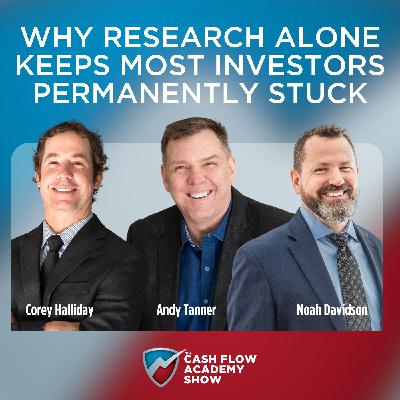
At some point, every investor faces the same moment: You stop researching and start doing. In this episode of the Cash Flow Academy podcast, Andy, Noah, and Corey unpack why months of studying, paper trading, and analyzing often lead to the same outcome: no action, no assets, and no real experience. The conversation explores the psychology behind hesitation — not just fear of losing money, but fear of being wrong. They explain why waiting for certainty is a losing strategy, why successful investors focus on process instead of prediction, and how overthinking can become its own form of financial risk. You'll also hear why mentorship shortens the learning curve, how small trades build real confidence, and why cash may feel safe while quietly losing value over time. This episode is not about reckless action or blind risk-taking. It's about understanding that investing skill is developed through participation, adjustment, and experience — not endless preparation. Want to Learn More? – Explore free education and tools at cashflowbonus.com to strengthen your investing foundation – Keep building your financial education at yourinvestingclass.com
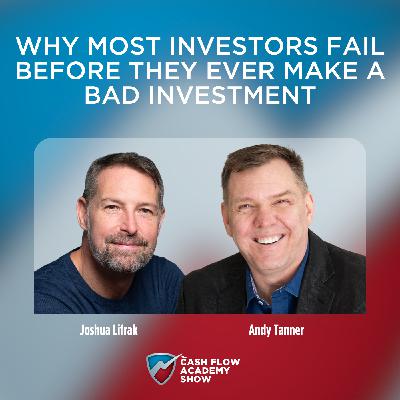
Long before people lose money in the market, they lose control of themselves. In this episode, Andy Tanner sits down with performance coach and author Joshua Lifrak to explore why investing is ultimately a mental game. Drawing from his experience working with professional athletes, executives, and the Chicago Cubs organization during their championship run, Joshua explains why resilience is not a personality trait. It's a trainable skill. They discuss why the brain is wired for survival instead of growth, how fear disguises itself as logic, and why most people react emotionally instead of responding intentionally. This episode is about becoming the kind of person who can think clearly, recover quickly, and make better decisions when uncertainty shows up — because it always does. Want to Learn More? – Explore free education and tools at cashflowbonus.com to strengthen your investing foundation – Keep building your financial education at yourinvestingclass.com
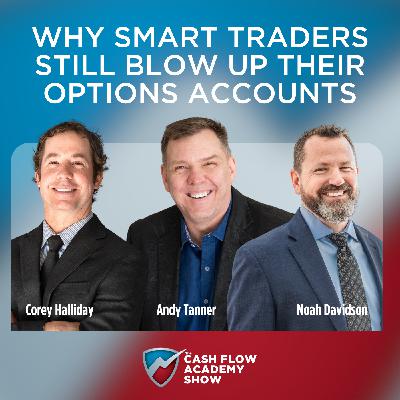
High probability doesn't mean low risk. That one misunderstanding is behind more blown accounts than any bad strategy, and it's a lot easier to fall into than most traders realize. This episode breaks down why traders lose big on options even when the odds look good — and what's really going on when a trade that "should have worked" takes out a significant chunk of an account. Andy, Noah, and Corey cover position sizing, the psychology of loss aversion, and why the recovery instinct after a bad trade often leads to even bigger mistakes. If you've ever thought "one good trade will fix this," this episode will change how you think about risk — and about what it actually takes to last in this market. Want to Learn More? – Explore free education and tools at cashflowbonus.com to strengthen your investing foundation – Keep building your financial education at yourinvestingclass.com
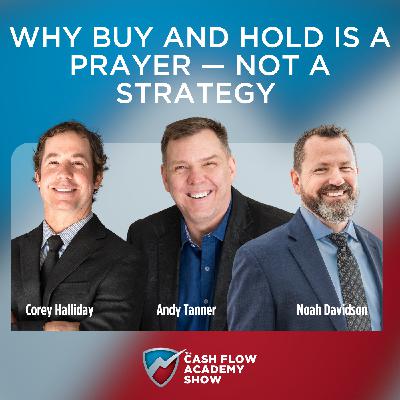
In this episode, we challenge the idea that "buy and hold" is a strategy at all. Left unchecked, it often becomes passive hope — a reliance on time without a process for managing what happens along the way. We break down what experienced investors actually do differently. They don't just hold. They evaluate. They adapt. They manage risk continuously. You'll hear why even Warren Buffett doesn't follow a blind holding rule, how fundamentals—not price—should drive decisions, and why separating investing from trading is critical for clarity and discipline. We also explore a more practical framework:
What makes an asset worth holding?
When should you reconsider?
How do you protect downside without abandoning long-term ownership? This isn't about abandoning patience. It's about redefining it. Because time in the market only works if what you own continues to deserve your time. Want to Learn More? – Explore free education and tools at cashflowbonus.com to strengthen your investing foundation – Keep building your financial education at yourinvestingclass.com
Does more money mean more wealth? It feels obvious. Bigger balances, higher prices, stronger currencies — that must mean progress. But that assumption quietly distorts how people think about investing, risk, and the economy. In this episode, Andy Tanner and economist Ryan Young dismantle the idea that money itself is wealth. They explain why currency is only a measuring tool — and how confusing the measurement with the thing being measured leads to poor decisions at both the personal and policy level. The conversation goes deeper than definitions. It connects monetary policy, inflation, trade, and technological change into a single framework: real wealth is created by goods, services, and productive ideas — not by expanding the money supply. They also explore a tension most investors ignore. On one side, AI and technology are creating powerful deflationary forces. On the other, fiscal policy continues to expand debt in ways that may be unsustainable. Both forces matter. But they don't affect wealth the same way. This episode won't tell you where markets are going. It will clarify what actually drives value — and why understanding that distinction changes how you invest, allocate, and think long term. Want to Learn More? – Explore free education and tools at cashflowbonus.com to strengthen your investing foundation – Keep building your financial education at yourinvestingclass.com.
The average investor believes reacting to market movement is rational. When prices fall, you sell. When they rise, you buy. It feels responsible. It feels disciplined. But that instinct is exactly what creates poor outcomes. In this episode, the discussion challenges a deeply held assumption: that emotional reactions to market events are logical simply because they feel justified. War headlines, oil spikes, and sharp market swings create a narrative that seems clear. Yet by the time most investors act, the opportunity is often already gone. You'll hear how market cycles reflect human behavior more than fundamentals—and why fear of loss and fear of missing out quietly drive the worst decisions. The conversation reframes volatility, not as danger, but as a predictable expression of crowd psychology. The episode also introduces a more grounded approach. One built on cash flow, asset ownership, and understanding value independent of price. Instead of reacting to headlines, experienced investors prepare for them. This is not about predicting markets. It's about recognizing patterns that don't change—especially human behavior—and using that awareness to make better decisions over time. Want to Learn More? – Explore free education and tools at cashflowbonus.com to strengthen your investing foundation – Keep building your financial education at yourinvestingclass.com.
Most investors see stock buybacks as a simple bullish signal. Companies are confident. Prices go up. Everyone wins. That belief is incomplete. In this episode, we unpack what buybacks actually represent beneath the surface—and why they may matter far more than most investors realize. Yes, buybacks can support share prices. But more importantly, they reduce the number of ownership opportunities available in the market. Fewer shares. Concentrated ownership. Less access. This isn't just about individual stocks. It's about a structural shift. As companies generate more cash and rely less on external capital, they are actively reclaiming ownership from the public. At the same time, technological efficiency—especially AI—is reducing the need for labor while increasing the value of ownership. The result? A widening gap between those who own productive assets and those who rely on earned income. This episode explores why many investors are optimizing for the wrong thing, how buybacks signal a deeper transition in the economy, and what it means to "participate" in business at the lowest—and most powerful—level. Because the real question isn't whether buybacks are bullish. It's whether you're on the side selling ownership—or accumulating it. Want to Learn More? – Explore free education and tools at cashflowbonus.com to strengthen your investing foundation – Keep building your financial education at yourinvestingclass.com.

Most people believe more education leads to better outcomes. More courses. More information. More credentials. But if that were true, far more people would be getting the results they're chasing. The problem isn't access to knowledge. It's misunderstanding what education is supposed to do. In this episode, Andy Tanner and Joseph Pine challenge a deeply held assumption: that learning alone creates progress. They argue that education without transformation is incomplete—and often misleading. You'll hear why information doesn't change behavior, why most people focus on what they want to have instead of who they need to become, and how real value—both in business and investing—comes from guiding transformation, not delivering content. They also explore a larger shift happening in the economy: from selling products and services to creating experiences—and ultimately, enabling personal transformation. This isn't about motivation. It's about structure. What does a true transformation look like?
Why do most businesses stop short of delivering it?
And how can you position yourself—not just to learn—but to change? If you've ever felt stuck despite knowing more, this conversation will explain why. Want to Learn More? – Explore free education and tools at cashflowbonus.com to strengthen your investing foundation – Keep building your financial education at yourinvestingclass.com.
Will the dollar fall? Will gold rise? Will crypto replace everything? Most investors spend their time trying to predict the future of money. That instinct feels rational—but it points your attention in the wrong direction. In this episode, Andy Tanner sits down with economist Barry Eichengreen to challenge a deeper assumption: that currency is the primary driver of wealth. It isn't. Currency is the medium. The real question is what produces value inside that system. Through the lens of monetary history—from early coinage to modern central banking—they unpack what actually gives a currency strength: institutions, trust, trade relationships, and political stability. But more importantly, they separate two ideas most investors blend together—income and denomination. Because even if you earn consistently, the currency you earn in still matters. The conversation reframes a common investing mistake: optimizing for what money will do instead of what your assets produce. It also highlights a more durable approach—building ownership in income-generating assets while staying aware of the currency risks surrounding them. This is not about predicting whether the dollar, gold, or crypto wins.
It's about understanding why that may be the wrong question to begin with. Want to Learn More? – Explore free education and tools at cashflowbonus.com to strengthen your investing foundation – Keep building your financial education at yourinvestingclass.com.
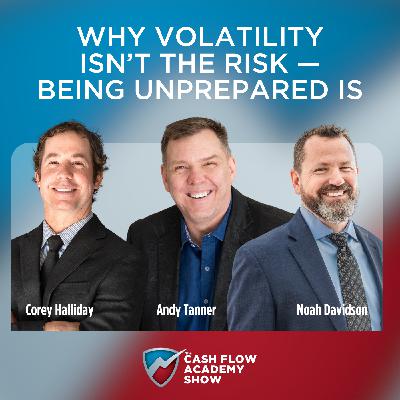
When markets swing, headlines turn dramatic. Wars escalate. Oil spikes. The VIX jumps. And suddenly everyone wants to know the same thing: What should I do right now? But that question reveals the real problem. In this episode of the Cash Flow Academy podcast, Andy Tanner, Noah Davidson, and Corey Halliday explain why volatility itself isn't dangerous. What's dangerous is arriving unprepared. Most investors only pay attention when markets become emotional. By then, they're reacting instead of positioning. They're asking for predictions instead of building a plan. Experienced investors approach it differently. They prepare long before the headlines arrive. They own assets designed to perform through cycles. They understand how volatility affects option premiums, insurance pricing, and cash flow opportunities. And when markets move, they already know how to respond. The conversation breaks down how volatility creates opportunities across multiple outcomes — not just one prediction about where prices will go. From oil and gold to defensive stocks and options strategies, the discussion shows how preparation turns uncertainty into an advantage. This isn't about guessing the future. It's about building the knowledge and positioning that allows you to benefit when markets become unpredictable — instead of being surprised by them. Want to Learn More? – Explore free education and tools at cashflowbonus.com to strengthen your investing foundation – Keep building your financial education at yourinvestingclass.com.
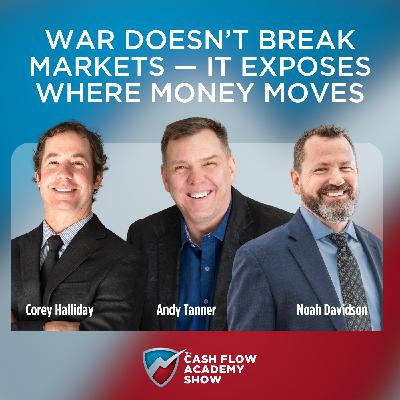
Most investors assume war is catastrophic for markets. Missiles launch. Headlines turn urgent. The instinct is to sell, hide in cash, and wait for the uncertainty to pass. But markets rarely work that way. War doesn't usually destroy markets. It redistributes capital inside them. In this episode, Andy Tanner, Noah Davidson, and Corey Halliday unpack how experienced investors think during geopolitical conflict. Instead of reacting to headlines, they focus on how money rotates between sectors — energy, defense, commodities, and volatility itself. You'll hear why oil often moves first, how insurance pricing in the VIX reveals market fear, and why defense and infrastructure companies quietly benefit when global tensions rise. More importantly, the conversation challenges a deeper assumption: that dramatic events require dramatic portfolio changes. In reality, many of the biggest investing mistakes happen when investors confuse noise with systemic risk. War may dominate the news cycle, but markets tend to process it quickly. The real advantage comes from staying calm, understanding sector rotation, and managing risk while others react emotionally. This episode is not about predicting conflicts or picking sides. It's about understanding how capital behaves when uncertainty rises — and how disciplined investors position themselves when the world gets loud. Want to Learn More? – Explore free education and tools at cashflowbonus.com to strengthen your investing foundation – Keep building your financial education at yourinvestingclass.com.

Most investors think the biggest mistake in crypto is missing the upside. It's not. The real mistake is concentration. In this episode, Andy Tanner sits down with Sir John Hargrave, author of The Intelligent Crypto Investor, to unpack what most people get wrong about Bitcoin and digital assets. Many investors either dismiss crypto entirely or bet far too much on it. Both reactions are emotional. Neither is strategic. Crypto isn't a replacement for productive assets. It doesn't generate cash flow the way businesses or real estate can. And it was never designed to solve retirement income on its own. But that doesn't mean it doesn't belong in a portfolio. John explains why crypto should be treated less like a lottery ticket and more like a volatile tech stock. They discuss position sizing, diversification, and why 2–10% exposure may be more rational than going all-in. You'll also hear how to evaluate crypto projects using principles borrowed from traditional value investing — focusing on people, profits, and price. This is not a prediction episode, it is a positioning episode. If you're crypto curious but cautious, this conversation will help you think clearly about where digital assets fit — and where they don't — in a long-term strategy. Want to Learn More? – Explore free education and tools at cashflowbonus.com to strengthen your investing foundation – Keep building your financial education at yourinvestingclass.com.
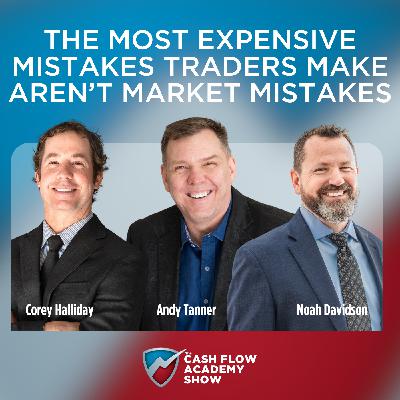
Most investors think their biggest losses come from bad picks. They don't. They come from blind spots. In this episode, Andy Tanner, Corey Halliday, and Noah Davidson unpack the psychological traps that quietly sabotage traders and investors. Sunk cost fallacy. Anchoring to past prices. Averaging down to "get back to even." Overconfidence disguised as conviction. These aren't strategy problems. They're belief problems. You'll hear why price alone tells you nothing about value. Why holding a loser to avoid admitting you're wrong is often the costliest decision you can make. And why the real edge in trading isn't prediction — it's risk management. The conversation moves beyond tactics and into self-awareness. Because markets don't just test your capital. They test your identity. Are you managing risk — or defending your ego?
Are you following a plan — or reacting to discomfort? This episode isn't about a new indicator or a better entry signal. It's about understanding how your own thinking can distort decision-making — and how disciplined investors structure their process to prevent small errors from becoming permanent damage. The market is rarely the enemy. Unexamined assumptions are. Want to Learn More? – Explore free education and tools at cashflowbonus.com to strengthen your investing foundation – Keep building your financial education at yourinvestingclass.com.
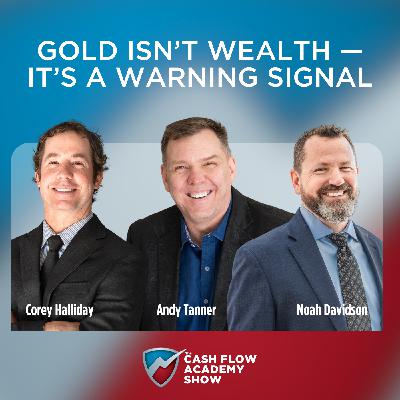
Most people think rising gold prices mean opportunity. They see a chart going vertical and assume it's time to buy. But gold doesn't surge because the economy is thriving. It surges when confidence is cracking. In this episode, Andy, Corey, and Noah unpack what gold's recent move is really signaling — and why chasing it for growth may miss the point entirely. Gold is not a cash-flowing asset. It doesn't innovate. It doesn't expand margins. It doesn't pay dividends. It sits. So why are sovereign nations accumulating it? Why are futures markets squeezing? And what does that tell us about currency confidence, debt levels, and global positioning? We break down the difference between owning bullion as insurance and owning mining companies as productive assets. We explore why volatility creates opportunity in options markets. And we challenge the assumption that price alone equals value. This isn't a conversation about predictions or targets.It's about positioning. When gold rises, the question isn't "How high will it go?" The better question is, "What is the market afraid of — and how should a disciplined investor respond?" Gold isn't wealth. It's information. And how you interpret it determines whether you react emotionally — or allocate strategically. Want to Learn More? – Explore free education and tools at cashflowbonus.com to strengthen your investing foundation – Keep building your financial education at yourinvestingclass.com.
Most investors believe their biggest risk is market performance. If they diversify correctly and stay invested long enough, everything should work out. That belief is comforting. And incomplete. Markets don't fail portfolios nearly as often as behavior does. Investors exit at the wrong time. Advisors rebalance too late. Risk is misunderstood until it shows up all at once. By then, decisions are driven by emotion, not design. In this episode, Andy Tanner sits down with Phillip Toews, author of The Behavioral Portfolio, to challenge the idea that better forecasting or higher returns solve investor problems. They don't. Portfolio structure does. Phillip explains why traditional models like the 60/40 portfolio were never designed for real human behavior — especially during extended downturns, rising-rate environments, or retirement distribution phases. He outlines why most investors are unprepared for how deep losses can actually go, and how that lack of preparation leads to perfectly timed mistakes. This conversation isn't about predicting crashes or chasing performance. It's about understanding history, accepting uncertainty, and building portfolios that account for both economic reality and psychological limits. If you've ever wondered why disciplined plans fall apart at the worst possible moments, this episode reframes the problem — and offers a clearer way to think about risk, preparation, and long-term decision-making. Want to Learn More? – Explore free education and tools at cashflowbonus.com to strengthen your investing foundation – Keep building your financial education at yourinvestingclass.com.
Most investors believe their biggest risk is market performance. If they diversify correctly and stay invested long enough, everything should work out. That belief is comforting. And incomplete. Markets don't fail portfolios nearly as often as behavior does. Investors exit at the wrong time. Advisors rebalance too late. Risk is misunderstood until it shows up all at once. By then, decisions are driven by emotion, not design. In this episode, Andy Tanner sits down with Phillip Toews, author of The Behavioral Portfolio, to challenge the idea that better forecasting or higher returns solve investor problems. They don't. Portfolio structure does. Phillip explains why traditional models like the 60/40 portfolio were never designed for real human behavior — especially during extended downturns, rising-rate environments, or retirement distribution phases. He outlines why most investors are unprepared for how deep losses can actually go, and how that lack of preparation leads to perfectly timed mistakes. This conversation isn't about predicting crashes or chasing performance. It's about understanding history, accepting uncertainty, and building portfolios that account for both economic reality and psychological limits. If you've ever wondered why disciplined plans fall apart at the worst possible moments, this episode reframes the problem — and offers a clearer way to think about risk, preparation, and long-term decision-making. Want to Learn More? – Explore free education and tools at cashflowbonus.com to strengthen your investing foundation – Keep building your financial education at yourinvestingclass.com.

Most investors still treat gold like a lottery ticket and cash like a safety blanket. They watch gold make new highs and assume it's finally "working." They sit on piles of cash and feel conservative and responsible. Both instincts are dangerously backwards. In this episode, Andy Tanner, Corey Halliday, and Noah Davidson reframe gold's real job in your life. Gold is not a growth engine. It's insurance. Its rising price is less a reason to celebrate and more a signal about what's happening to your currency, your grocery bill, and your future purchasing power. You'll hear why "cash is a loser" in an inflationary system that must keep printing, why gold bugs get one thing right and one thing very wrong, and why owning productive assets often beats hoarding metal — even when gold is surging. They also break down the practical side: physical gold vs ETFs, miners vs metal, and how options on gold-related assets can create cash flow while you quietly accumulate your hedge instead of chasing headlines. This is not about gold predictions. It's about understanding what gold, cash, and real assets are each designed to do — so you can position yourself like an owner, not a spectator.

You've been told elections, central banks, and headlines are what move markets. But what if most of your financial future was locked in the day people were born… or never born at all? In this episode of the Cash Flow Academy, Andy Tanner sits down with demographer Kenneth Gronbach, author of Upside: Profiting from the Profound Demographic Shifts Ahead, to show why economics is really a subset of demographics — not the other way around. They unpack how a "missing" Generation X quietly crushed entire industries like motorcycles and jeans, why China and Japan are aging into economic dead ends, and why immigration is actually propping up labor, consumption, and tax bases in the Americas. You'll hear how massive Baby Boomer wealth, delayed Millennial family formation, and Latino population growth are converging into powerful tailwinds for specific sectors like housing, healthcare, autos, and local services. More importantly, you'll learn how to think: where demand is mathematically guaranteed to rise, where it's destined to fall, and why "policy plus demographics gives you the future." This conversation won't tell you what stock to buy next. It will give you a clearer map of who will be working, earning, spending, and needing care over the next several decades — so you can position your portfolio with intention instead of reacting to the latest headline.
Most people still believe their job is their security. A steady paycheck feels like stability. Skills feel like protection. And adapting to new technology feels like the answer. But what if the real shift isn't about jobs disappearing… it's about labor itself losing value? In this episode, Andy Tanner, Noah Davidson, and Corey Halliday unpack a deeper implication of AI that most investors are missing. Using Salesforce as a real-world example, they explore why profitable companies are cutting thousands of jobs—not to survive, but because they no longer need the labor. That changes the equation. This isn't creative destruction. It's substitution at scale. And when companies redirect billions away from wages and into stock buybacks, they're signaling something critical: ownership is becoming more valuable than participation. You'll learn why traditional advice around income and career security may be incomplete, how shrinking share float quietly shifts wealth toward owners, and why many investors are optimizing for the wrong variable entirely. This is not a prediction about markets or timelines. It's a framework for thinking clearly about where value is moving—and what that means for your position in the system. Want to Learn More? – Explore free education and tools at cashflowbonus.com to strengthen your investing foundation – Keep building your financial education at yourinvestingclass.com
Rates go up, inflation goes down. That's the story we've been told. But what if that explanation is incomplete—and in some cases, backwards? In this episode, Andy Tanner sits down with Dr. John Cochrane to challenge one of the most widely accepted ideas in modern finance. They unpack why inflation may have less to do with central bank policy and more to do with something far less discussed: government debt and credibility. If inflation were simply a matter of interest rates, it would already be solved. Instead, this conversation reframes inflation as a question of trust. Do markets believe future obligations will be honored without devaluing the currency? And what happens when that belief starts to crack? You'll hear why rising interest rates can actually worsen the problem they're meant to fix, how fiscal policy quietly drives price levels, and why historical examples—from the U.S. to Europe—point to the same underlying dynamic. This is not about predictions or politics. It's about understanding the structure beneath inflation—and why most investors may be watching the wrong lever entirely. Want to Learn More? Visit cashflowbonus.com to access free investing resources, including the ebook and action items discussed in this episode.


Download from Google Play

Download from App Store
 United States
Do you have a CPA Firm in Kenya? If not, do you have one in an African country near Kenya
Everyone should hear this episode.