


 Claim Ownership
Genetic Frontiers
Subscribed: 6Played: 25
Subscribe

© 2024-2025
Description
A podcast about the promise, power, and perils of genetic information (geneticfrontiers.org)
16 Episodes
Reverse
Emily Klancher Merchant, PhD, author of "Breeding for IQ" in the Los Angeles Review of Books, talks about how "intelligence—not race—has always been at the center of American eugenics." She cautions that "eugenics does not work by breeding smarter humans;" no technology has been shown to do this but the widespread, American belief that intelligence is primarily genetic is allowing governments to shirk responsibility for ameliorating social inequality and promote projects that favor those who are already priviliged. Full episode transcript at: https://www.geneticfrontiers.org/transcript-ep-15 GUEST BIO Emily Klancher Merchant, PhD, is a historian of science, technology, and medicine, focusing on the human sciences in the United States since World War I. She is Associate Professor of Science and Technology Studies at the University of California at Davis. RESOURCES https://www.emilyklancher.com/ Emily Klancher Merchant. Building the Population Bomb. Oxford University Press. 2021. Emily R. Klancher Merchant. "Breeding for IQ." Los Angeles Review of Books. August 22, 2024. Elizabeth Catte. Pure America. Arcadia Publishing. 2021. Molly Ladd-Taylor. Fixing the Poor. John Hopkins University Press. 2020.
Nathaniel Comfort, PhD, author of The Science of Human Perfection: How Genes Became the Heart of American Medicine and a forthcoming biography on James Watson, talks about medical genetics and eugenics as "two sides of the same coin," and cautions that there is no simple, bright line between the two pursuits. KEY TOPICS Reading from The Science of Human Perfection: How Genes Became the Heart of American Medicine by Nathaniel Comfort, PhD How should clinicians and prospective parents think about the argument that there is no bright line between genetic interventions to relieve suffering v. human engineering or population improvement? What are the contingent problems created between distinguishing between genetic interventions for a fatal disease v. a non-fatal disease? How did the end of World War II and the dropping of the atomic bombs rejuvenate Americans' interest in science and genetic disease? How do we talk about genetics today in a way that embraces the actual complexity of the science? In the current moment of sea change, what is the cultural authority of science in the United States? Discussion of Dr. Comfort's new biography of James Watson, his enormous contributions to the field of human genetics and also his downfall. Check out this episode & all Genetic Frontiers episodes. Have a story about how genetic information has changed your life? We invite you to talk about it through The TellMe Project.
Summary Alexandra Minna Stern, PhD, author of Proud Boys and the White Ethnostate talks about how the American far right views genetics, genetic technologies, eugenics, and science and the emerging political threat of 21st century eugenics ideology and policies. Episode Transcript available at: https://www.geneticfrontiers.org/transcript-ep-12 Key Topics How does the American far right view genetics and genetic technologies? What is the history of the American pursuit of choosing smarter children? What has science shown us about the relationship of heredity and intelligence? How does the idea of eugenics influence the current administration? How does the American far right use the concept of time? What is the metapolitic? How does it influence our political future? Resources Alexandra Minna Stern. Proud Boys and the White Ethnostate: How the Alt-Right is Warping the American Imagination. Beacon Press. 2019. The Natal Conference 2025 Southern Poverty Law Center. Profile: Charles Murray. Accessed July 18, 2025. Feb. 18, 2025. Fact Sheet: President Donald J. Trump Expands Access to In Vitro Fertilization (IVF). Available at: whitehouse.gov. Accessed July 18, 2025. C-span clip from Health and Human Services Secretary Kennedy News Conference on Autism Rates. Accessed July 18, 2025 Autism Society. Statement on Robert F. Kennedy Jr.'s Comments Regarding the Cause of Autism and Misleading Deadline. Accessed July 18, 2025 Lisa Ko. Unwanted Sterilization and Eugenics Programs in the United States. Independent Lens blog on PBS.org. January 29, 2016 Buck v. Bell | 274 U.S. 200 (1927) Sterilization and Social Justice Lab Genetic Frontiers. Episode 6: The Eugenesis of Genetic Counseling with guest, Alexandra Minna Stern, PhD. Alexandra Minna Stern. Telling Genes: The Story of Genetic Counseling in America. John Hopkins University Press: 2012.

Part of Genetic Frontiers Season 2: Genetics in American Politics & Culture, Sue Currell, PhD, discusses the disturbing echoes of eugenic thinking in American politics today. She calls eugenics "the backbone of political control and a progressive meritocracy," and argues that "grip of eugenic ideas on American politics today is a political failure to imagine a world where value is not profit." Visit geneticfrontiers.org to hear more episodes on the promise, power, and perils of genetic information. KEY TOPICS Reading of excerpts from "This May Be the Most Dangerous Thing Donald Trump Believes": Eugenic Populism and the American Body Politic. How should we understand the administration's agenda to "forge a society that is colorblind, merit-based, and only has two genders" in light of the eugenic history of the United States? How are you making sense of this focus on the gender binary, and whether it has a relationship to eugenic ideologies? From what you know about the history of efficiency in the United States, how are you thinking about the new Department of Government Efficiency? What is the story we're being fed by politicians? And what is the real story? How would you describe Trump's relationship to disability rights? Can you talk about the complicated histories of eugenics and abortion rights and how you think this is influencing America today? How do you think clinicians and scientists should be thinking about the role of science, in particular genetics, in America today? Read full transcript of this episode here.
Timnit Gebru, PhD, AI expert, advocate, and founder of the Distributed AI Research Institute (DAIR) and Émile P. Torres, PhD, a philosopher, discuss how eugenic ideologies are influencing Silicon Valley and driving the push for artificial general intelligence. They talk about how eugenic thinking pervades American culture, including Big Tech and medicine, and is foundational to the worldviews of some of the powerful people in the United States today. KEY TOPICS Introduction to main idea of TESCREAL paper: the cultural push to develop artificial general intelligence is undergirded by eugenic thinking Dr. Timnit Gebru discusses her intellectual journey of tackling bias and discrimination in technology and becoming a vocal critic of Big Tech Review of the core ideas of the philosophies in the TESCREAL bundle (Transhumanism, Extropianism, Singularitarianism, Cosmism, Rationalism, Effective Altruism, and Longtermism) Concrete examples of how TESCREALism is playing out in the United States today Why is it important to interrogate "the why" in our efforts to build artificial general intelligence? How does the TESCREAL framework serve as a jumping off point for taking a critical eye towards genetics and genomics research? Dr. Timnit Gebru & Dr. Émile P. Torres discuss their greatest fears about the future of eugenic thinking in American culture Thought experiment: how could knowing our likely date of death and cause of death from birth change our relationship to mortality?
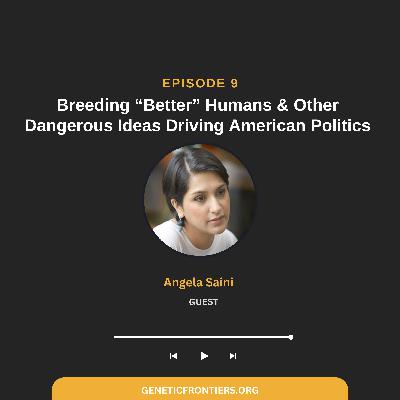
A conversation with an award-winning science journalist and author, Angela Saini, about the alluring but dangerous pursuit of "improving" the human species through genetics and how it's driving American politics and policy today. TOPICS The ideology of eugenics is fundamentally driven by a pursuit that can seem deceptively desirable: the "improvement of the human species." What does it really mean to "improve" people? How does the pursuit of perfection drive eugenic thinking? How are you thinking about efforts today to scrub scientific research of engagement with gender and race? Across human history how have people thought about biological sex gender and social roles? What did DNA testing bring to the conversation about how patriarchy spread? What do you think medical and genetics professionals should really be paying attention to in terms of how science, in particular genetics, is being discussed today culturally and politically? How does taking a long view of human history inform how you're thinking about the political moment we're living through right now? Do you think the left / progressives have a cohesive story that people want to hear? For episode show notes and resources go to: https://www.geneticfrontiers.org/episode9-angela-saini
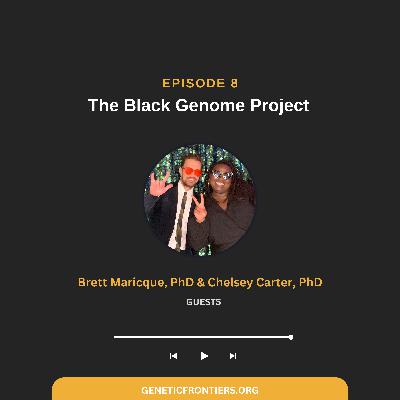
In this episode, Chelsey Carter, PhD, and Brett Maricque, PhD, founders of the Black Genome Project (https://www.blackgenomeproject.org/) talk about their work to understand how Black communities value their genomes and genetic data, how genetic research is impacting Black communities in St. Louis, and whether genomic sequencing is valuable for everyone. TOPICS Introduction to the Chelsey Carter, PhD; Brett Marique, PhD, and the Black Genome Project Discussion of how the Black Genome Project is collaborating with the Black community in St. Louis, its local nature, and how the team is collecting data Discussion of how the Black Genome Project is using storytelling, focus groups, structured surveys and why they chose this approach What has been the most powerful part of what have you heard from the Black community in St. Louis? How do you approach people as an expert in their own lived experience within healthcare and genetics? How can the Black community exercise agency over their genetic information? Discussion about understandings about nature v. nature and genetic literacy How do you talk about ideas like rejecting race as biology, race as a social construct, racism underlying health disparities and the need to diversify genomic data sets? Where the Black Genome Project is headed in the future
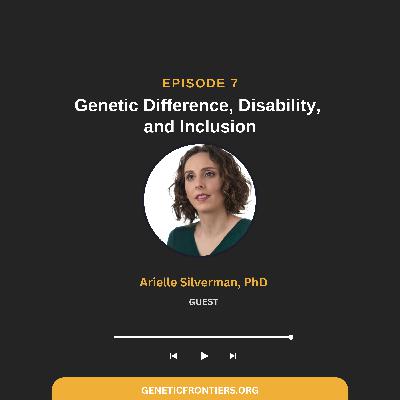
In this episode, Arielle Silverman, PhD, Director of Research for the American Foundation for the Blind, discusses genetic difference and disability, including her own congenital blindness and the need to move towards a more inclusivity-focused mindset. She shares insights from her book Just Human: The Quest for Disability Wisdom, Respect, and Inclusion as well as her research. KEY TOPICS Introduction to genetic difference & disability, Dr. Arielle Silverman, Director of Research for the American Foundation for the Blind [00:00 - 4:15] Excerpt from Arielle Silverman's book, Just Human: The Quest for Disability Wisdom, Respect, and Inclusion [4:15 - 8:33] Can you talk about your research on disability simulation exercises and emotional perspective taking? [8:34 - 13:30] Do you think true empathy building exercises are even possible for better understanding the experiences of people living with disability and difference? [13:30 - 15:07] What are the five stages of inclusion related to people with disabilities or difference that you write about in your book? [15:07 - 20:24] How do you think we can shift people's mindset around inclusion? [20:24 - 22:24] What do you wish people and clinicians understood better about your lived experience as a blind woman, advocate, and researcher? [22:24 - 25:14] Given that genetic screening and testing has become a standard of care in prenatal medicine, how do you think genetic counselors should approach prospective parents when talking about the wide variety of genetic differences and disabilities? [25:15 - 29:55] Could you describe the differences between how a blind person and a sighted person does complex math? [29:56 - 35:15] Do you consider being blind a form of neurodivergence since your brain is doing the same things, but just going about it differently? [35:16 - 36:43] Can you talk a little bit about that work and your views about how we can better support kids with disabilities? [36:44 - 39:37] Wrap up [39:37- 41:08]
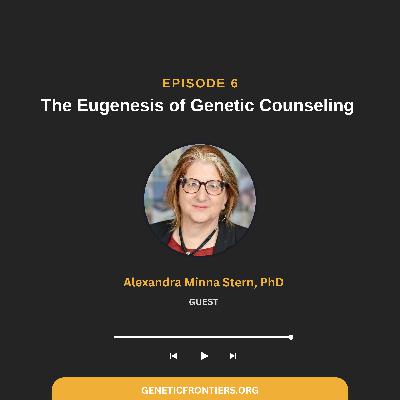
Eugenics is at the core of the emergence of the genetic counseling profession. In this episode, Alexandra Minna Stern, PhD, the Humanities Dean at UCLA, a historian, and researcher, discusses how this entanglement casts a long shadow over the profession and offers important historical context for some of the present day challenges facing the fields of genetics and genomics. KEY TOPICS Introduction to the Professor Alexandra Minna Stern and background on the genetic counseling profession and the eugenics movement [0:00 - 04:05] Reading of excerpt from Telling Genes the Story of Genetic Counseling in America [04:05-11:01] Why did you choose to tell this history of genetic counseling? And how did you reconstruct it? [11:02-12:55] Can you describe what you call the eugenesis of the genetic counseling profession, and how you think it influences the practice of medicine and genetics today? [13:56 - 19:50] How prevalent were eugenics views among the genetics profession as a whole? How did eugenics affect research priorities or funding? [19:51 - 25.03] How would you describe overall the relationship of the genetic counseling profession to race historically and in current day practice, given that the genetic counseling profession today is overwhelmingly white? [25:03- 29:39] Can you talk a little bit about the work you do in the lab around forced sterilizations? And also your research into this topic? [29:39- 35:21] What types of people were targeted with forced sterilization? Where were they performed? [35:22 - 43:08] Historically, how have you seen genetic counselors or geneticists contribute to this reductionist thinking about people living with genetic difference? And on the flip side, how have some medical professionals worked to expand the profession's approach to genetic difference in disability? [43:08-54:12] Wrap up [54:15-56:40]
"Informed consent" has long been held up as the gold standard of patient care in Western medicine. In this episode of Genetic Frontiers, Blair Stevens, MS, CGC, Director of Prenatal Genetic Counseling Services at McGovern Medical School at UTHealth Houston talks about what informed consent means when it comes to making hundreds of choices about genetic testing around pregnancy. She also discusses the computer module a team at UTHealth Houston created to support prenatal genetic decision-making and the genetic counseling process. KEY TOPICS Introduction to the history of informed consent [0:00-3:03] Background on prenatal genetic testing [3:03-5:45] Introduction to Blair Stevens, CGC and her work at UTHealth Houston [5:45-6:59] Why did the UTHealth Houston team build a computer module to support genetic counseling? And how does it work? [07:00 - 9:18] What percentage of patients are using the computer module? And which ones? [9:18- 10:51] What does meaningful, informed consent really means in the setting of prenatal genetic counseling? [10:52 - 13:07] With the menu of prenatal genetic testing options ever expanding, how does that change decision making? [13:08-15:57] How has offering patients a menu of options in prenatal genetic testing affected the experience? [15:57 - 18:08 ] What are some of the different ways people deal with genetic information when they're trying to expand their families? [18:09 - 19:55] Do we need to make a larger cultural shift around ideas of genetic difference and disability? [19:55 - 22:23] Discussion of genetic underpinnings of many common or chronic illness and what those mean for prenatal care [22:24 -:24:12] What do you see as the future in terms of full genome sequencing and prenatal genetic decision-making? [24:12 - 26:24] What would it mean for their lives going forward if we start sequencing all people or many people when they are newborns? [26:24 - 30:44] Discussion of how knowing your genetic health risks could affect your insurability & wrap-up. [30:44 - 33:08]
Episode Summary In this episode, Lisa Schlager, the Vice President of Public Policy at FORCE, a national advocacy organization, discusses genetic testing, prevention, treatment, and legal protections for people at risk for hereditary cancer. KEY TOPICS Introduction: concerns of people at risk of hereditary cancer; FORCE, a national advocacy organization; and Lisa Schlager, VP of Public Policy at FORCE [00:00 - 3:15] Tell us about your personal journey with hereditary cancer, and how you got involved in advocacy work? [3:15 - 11:23] What is GINA, the Federal Genetic Information Nondiscrimination Act, and what protections does it offer–and fail to offer—for people living at risk of genetic disease? [11:23-14:01] How FORCE is advocating with state legislatures to expand anti-discrimination protections beyond those offered by federal law? [14:01 - 16:50] What are some specific examples of issues you're working on at FORCE to help make sure that people living at risk of hereditary cancer get the healthcare they need? [16:50 - 20:01] What does Medicare cover when it comes to genetic testing for hereditary cancer? [20:02 - 22:06] Why is it so important for healthcare providers and people to understand if they have a risk of developing hereditary cancer? [22:07 - 24:50] What are some resources for people who are concerned that cancer in their family could be hereditary? [24:50 - 26:33] What can healthcare providers do to help people understand and respond to the potential inherited risks of cancer? [26:34 - 30:53] Wrap-up [30:54 - 32:18]
Episode Summary In this episode, Kendra Schaa, ScM, LGC, a prenatal genetic counselor at a major medical center talks about the importance of the therapeutic model in meeting patients where they are. She also discusses how prenatal genetic counseling is influenced by the profession's roots in biology over psychology, the skyrocketing number of genetic tests, and the overturning of Roe v. Wade. Full episode & transcript at: https://www.geneticfrontiers.org/episode3-kendra-schaa KEY TOPICS Introduction to personal story of prenatal genetic counseling and history of genetic counseling profession How does genetic counseling's roots in the field of biology more than psychology or therapeutic counseling influence the profession today? How does the genetic counseling interaction need to change? With so many genetic tests out there, how do you think genetic counselors can best support patients to decide what tests are right for them? What tools do you think genetic counselors need? Can you talk a little bit about Allay Life and your focus on providing therapeutic support to people during their reproductive journey? As a genetic counselor, what do restrictions on women's rights to choose when to terminate a pregnancy mean for how you counsel them? How do you think genetic counselors can be champions of the future of genetics in medicine? Resources Monthly Peer Supervision Groups hosted by Allay Life. Allay Life: Light in the Unexpected Pregnancy Journey. Allay Life. Finding Your Way After Unexpected News in Pregnancy Workbook. Schaa KL, Biesecker BB. Where is the "counseling" in prenatal genetic counseling? Patient Educ Couns. 2024 Jul;124:108278. doi: 10.1016/j.pec.2024.108278. Epub 2024 Mar 29. Masha Gessen. Blood Matters: From Inherited Illness to Designer Babies, How the World and I Found Ourselves in the Future of the Gene. 2008. Seymour Kessler. Genetic Counseling, Psychological Dimensions. 1979.
In this episode of Genetic Frontiers, Katie Lee Hornberger, a certified genetic counselor with the Seattle Sperm Bank talks about how genetic testing has shaken up the sperm banking industry. DNA testing has changed everything, forcing the industry to move from a paradigm that prized anonymity towards one of greater transparency about biological relationships, genetic risks, and family medical history. Go to episode details on Genetic Frontiers at: https://www.geneticfrontiers.org/episode2-katie-lee-hornberger KEY TOPICS Introduction to the sperm banking industry Introduction to Katie Lee Hornberger, CGC How has genetic testing changed the sperm banking industry? What types of genetic or health conditions rule out a person's ability to be a donor? Do you test donors for CADASIL, for example? If you don't, how do you explain to potential recipients that donors may have unknown genetic risks? How would you describe the culture of risk within the gamete donor community? Not allowing some groups of men to donate sperm could be viewed as discriminatory or eugenic, so why do sperm banks have these limitations in place and what they mean for families who are using sperm to form their families? Given our ever-changing understanding of people's genetic risks, what do you see as the future of spermaking and sperm donation? Following the legal trend towards greater openness and transparency in sharing genetic and medical information with donor-conceived people, what does this mean practically for places like the Seattle Sperm Bank? What, if any, relationship do sperm bank recipients continue to have with the sperm bank after donation? Do sperm banks conduct a genetic screening on sperm bank recipients, ie, the women who use sperm donations to try to conceive? How does the sperm bank handle the situation when a donor-conceived child is later found to have a genetic condition? How are sibling limitations supposed to work? Wrap-up Resources Genetic Counseling, Fertility, & Miscarriage Awareness | Katie Lee CGC Katie Lee, CGC Talks Miscarriage and Fertility - YouTube Peter Boni. Uprooted: Family Trauma, Unknown Origins, and the Secretive History of Artificial Insemination. Green Leaf Book Press, 2022. Homepage - We Are Donor Conceived American Society of Reproductive Medicine. Guidance regarding gamete and embryo donation. 2021.
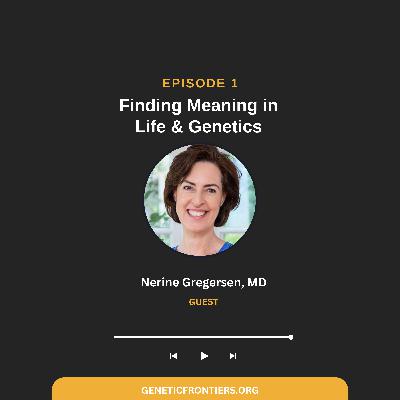
In this episode, Nerine Gregersen, MD, a former pediatrician, clinical geneticist, and logotherapist, discusses how learning genetic information about oneself can have profound emotional and existential impacts. She talks about how logotherapy, a form of psychotherapy that emphasizes finding meaning as people's primary motivation, can help support people navigating difficult diagnoses or profound life shifts triggered by genetic discoveries. Go to episode details on Genetic Frontiers.

In this episode of Genetic Frontiers, host, Susanna Smith, MPH, shares her personal story of living as a previvor of an incurable, genetic disease, which is part of the impetus for the podcast and at the center of a book she is working on. Get episode details on Genetic Frontiers.
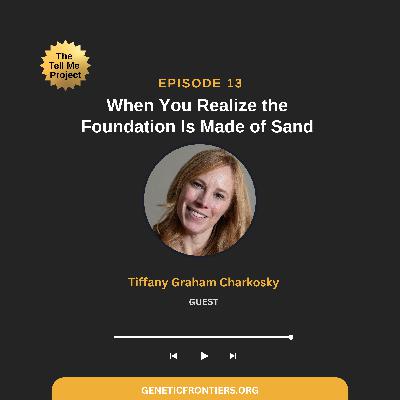
In this open and vulnerable conversation, host Susanna Smith talks with Tiffany Graham Charkosky, author of Living Proof: How Love Defied Genetic Legacy, about their shared experiences of living with genetic risks, in Tiffany's case Lynch syndrome and in Susanna's case CADASIL. They chat about the unique psychological state of living for decades as a healthy person who is also at risk of a serious disease, their feelings of guilt, responsibility, and shame, and the spaciousness that can be found in contemplating your own death. Resources Tiffany Graham Charkosky. Living Proof: How Love Defied Genetic Legacy. Little A Publishing. 2025. Tiffany Graham Charkosky. Why I'm Participating in a Cancer Vaccine Trial. Oprahdaily.com. Sept. 29, 2025. https://tiffanygrahamcharkosky.com Brought to you by The Tell Me Project.
Comments

Download from Google Play

Download from App Store
 United States