


 Claim Ownership
Showroom Theory
Subscribed: 0Played: 0
Subscribe

© Showroom Theory
Description
Showroom Theory is a podcast about the emotional, aesthetic, and cultural architecture of modern ceremony.
Hosted by Chelsea Jackson - creative strategist, former bridal operations executive, and one of the most trusted voices in contemporary bridal commentary - this series explores why we wear what we wear to say 'I do,' and what those choices reveal about beauty, identity, and belonging.
Each episode blends cultural analysis, fashion history, psychology, and personal insight to investigate the deeper questions shaping today’s bridal world:
Why do certain aesthetics rise when they do?
What does ceremony symbolize in a post-Pinterest era?
How does a wedding function as a moment of self-construction, performance, or lineage?
And what does modern bridal style say about the culture producing it?
Some weeks, Chelsea offers a solo, audio-essay exploration - part research, part storytelling, part creative excavation. Other episodes feature thoughtful conversations with designers, stylists, and founders redefining the future of bridal.
This is a show for anyone curious about the intersection of fashion, identity, culture, and ritual - whether you’re a bride, a creative founder, a designer, or someone fascinated by how beauty becomes meaning.
Showroom Theory doesn’t just talk about weddings.
It decodes the stories we tell through what we choose to wear when we’re most ourselves.
showroomtheory.substack.com
Hosted by Chelsea Jackson - creative strategist, former bridal operations executive, and one of the most trusted voices in contemporary bridal commentary - this series explores why we wear what we wear to say 'I do,' and what those choices reveal about beauty, identity, and belonging.
Each episode blends cultural analysis, fashion history, psychology, and personal insight to investigate the deeper questions shaping today’s bridal world:
Why do certain aesthetics rise when they do?
What does ceremony symbolize in a post-Pinterest era?
How does a wedding function as a moment of self-construction, performance, or lineage?
And what does modern bridal style say about the culture producing it?
Some weeks, Chelsea offers a solo, audio-essay exploration - part research, part storytelling, part creative excavation. Other episodes feature thoughtful conversations with designers, stylists, and founders redefining the future of bridal.
This is a show for anyone curious about the intersection of fashion, identity, culture, and ritual - whether you’re a bride, a creative founder, a designer, or someone fascinated by how beauty becomes meaning.
Showroom Theory doesn’t just talk about weddings.
It decodes the stories we tell through what we choose to wear when we’re most ourselves.
showroomtheory.substack.com
14 Episodes
Reverse
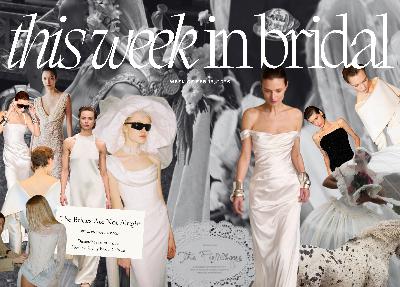
This week, the visual language of bridal felt sharper. More intentional. Less apologetic.If the past few years were defined by softness and diffusion, this moment feels sculptural. Directed. Awake. There’s a new clarity emerging across fashion and culture, and (as it so often does) it’s bleeding into ceremony.Brides are feeling it.The Year of the Fire Horse EnergyIn Chinese zodiac tradition, the Fire Horse is associated with independence, intensity, charisma, and an unwillingness to live quietly.It is an energy of self-authorship. Not one of compliance, tradition, or performance. And it’s an energy brides are bringing into 2026.In bridal terms, this translates to:• decisive aesthetic choices• a rejection of “safe” silhouettes• individuality over consensus• ceremony as identity declaration (instead of social obligation)The Fire Horse bride is all about expressing who exactly they’re becoming in this transition. And the industry is beginning to respond.NYFW Bridal Signals: Form Over FantasyFashion month is upon us, and this week, the NYFW runways delivered a quiet but decisive aesthetic shift.I paid special attention to the architecture, restraint, and sculptural presence in pieces that could easily transition from RTW to ceremony looks. Below are the silhouettes that felt most resonant for ceremony:The Looks That Stopped MeKhaite: Lace reinterpreted through restraint and contrast. A utilitarian cut and reserved application removes sweetness and introduces tension. This is romance… edited.Calvin Klein Collection: Minimalism with emotional intelligence. Clean lines, controlled volume, and quiet authority. This bride would be anti-performative, calm, assured, and uninterested in excess.Cult Gaia: A true hero gown - monumental pleating and sculptural volume on a silhouette that feels ceremonial in the truest sense. A garment made for witnessing.Colleen Allen: Textural transparency that feels intimate offers heirloom energy without the nostalgia. This is a dress that feels lived in before it’s ever been worn.Area: This is for the edgy, Toni Maticevski-loving bride. Graphic sculptural folds and movement that feels architectural. An art object, not just a dress, that frames the body.Christian Siriano: A lace coat dress that merges textured tailoring with romance. This is bridal power dressing, and I just might be a C.S. convert.What Connects ThemAcross designers, the through line this NYFW season is unmistakable:• sculptural structure• emotional restraint• tactile materials• architectural volume• ceremony over costumeWe’re watching RTW move away from fantasy, and I’m curious how long it’ll take bridal to catch up. TBH, I’m not yet ready to let go of the ornamental opulence of last bridal season. We’ll find out in April! Cool Bride Energy Right NowEmerging designers continue to subvert the bridal system with capsule drops and innovative messaging that offer a raw look into the BTS of wedding fashion. The lens is distinctly editorial, strong, and alive outside of the aisle.The “cool bride” is no longer a niche; she’s the cultural center. And she needs a new name. Bridal Fatigue Is Real… and CulturalAcross TikTok, Substack, and group chats, brides are speaking openly about exhaustion.Not the inherent exhaustion that comes from planning logistics, but burnout from navigating expectations.The modern bride is negotiating:• family projection• aesthetic pressure• undue influence• financial reality• the performance of joyThe wedding has become both an intimate ritual and a public artifact, and many women feel the weight of being its curator.What we’re seeing now is a shift from silence inside the system to vocal critique. The future bride isn’t opting out of ceremony, she’s redefining it. Starting with a Substack article. What This Week RevealsThere was something new circling the bridalsphere this week. The feeling was less about pleasing and more about clarity.If the Fire Horse represents self-possession, this moment in bridal reflects exactly that.The bride of 2026/2027 is stepping forward into her own tradition - awake, intentional, and fully herself.Thanks for reading! Subscribe for free to receive new posts and support my work.Sources & CreditsChinese Zodiac & Fire Horse SymbolismInterpretations of the Fire Horse draw from traditional Chinese zodiac teachings regarding elemental cycles, personality archetypes, and cultural associations with independence, intensity, and self-determination.Cultural Commentary on Bridal Fatigue & ExpectationOngoing discourse observed across contemporary media ecosystems, including this Substack article and @carodeery and @leefromamerica.New York Fashion Week Fall 2026 CollectionsRunway imagery and collection references sourced from:* New York Fashion Week official coverage* WWD runway archives* Designer presentations include Christian Siriano, AREA, Calvin Klein Collection, Khaite, Colleen Allen, Schiaparelli, and Cult Gaia.Industry Trend Context & Bridal Market ObservationsInsights informed by ongoing bridal market analysis, showroom and retail behavior, luxury consumer trend reporting, and independent research conducted through Showroom Theory’s framework. Featuring discussions about The Own Studio, Maison Takarah, The Fall Bride, and Bon Bride.Featuring work by Jordy Arthur VaesenEditorial Analysis & InterpretationAll cultural interpretation, bridal trend synthesis, and ceremonial framing by Showroom Theory. This is a public episode. If you would like to discuss this with other subscribers or get access to bonus episodes, visit showroomtheory.substack.com
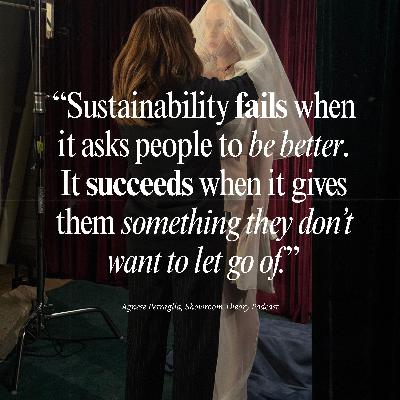
Long before a wedding gown is chosen, there’s this feeling. An instinct. It appears in fragments - the movement of fabric in a photo, the memory of a garment once loved, the quiet recognition that a life is about to change. It belongs to the bride’s interior life, not to trend cycles or the visual shorthand that now shapes bridal culture.But the journey toward the dress rarely starts there. It begins with exposure: curated imagery, algorithmic aesthetics, and the quiet accumulation of expectations about what a bride should look like and how she should choose.Even sustainability, once rooted in personal values or ecological awareness, now arrives as another metric to satisfy. Another way to get the moment “right.”No wonder so many brides feel overwhelmed before they begin.Designers and vendors, too, are navigating the same landscape of expectation - absorbing trend demand in real time, translating cultural signals into offerings, and feeling pressure to get the moment “right” for an audience that extends far beyond the room itself. Many are doing so while attempting to create without waste or unnecessary environmental impact, balancing aesthetic desire with material responsibility in an accelerated culture that rarely slows long enough to accommodate either.The Illusion of Getting It RightFor designers like Agnese Petraglia, an Italian-born Londoner whose emerging brand Medusa London centers ethical sourcing, fair wages for artisans, and GOTS-certified materials, it becomes clear that perfection in sustainability is less a destination than it is an illusion.In the first moments of an emphatic conversation between two like-minded strangers, Agnese offers me a reframing that quietly rearranges the conversation:The idea she directs me toward is not an abandonment of sustainability, but a shift in how we understand impact.Fashion has trained us to think in terms of carbon footprints: emissions, waste, resource use, supply chains, factory conditions. These metrics matter. They illuminate real environmental consequences and force an industry built on acceleration to confront its material cost.But carbon isn’t the only trace a garment leaves behind.The Artistic FootprintThere’s also an artistic footprint to consider: the imprint of human labor, skill, and imagination; the preservation of techniques that might otherwise disappear; the economic ecosystems sustained through craft; the stories carried forward through material knowledge; time-weathered hands passing muscle memory to novice sewers.When a garment is constructed with care (and chosen with care), it leaves evidence of relationship rather than material acquisition.Of course, this distinction doesn’t absolve the bridal fashion industry of environmental responsibility. But it does complicate the idea that sustainability can be reduced to a single measure of harm avoided.A garment produced with low impact but no emotional longevity risks becoming disposable in a different way. A garment that endures - one that is altered, reworn, inherited, or remembered - resists the cycle of replacement that drives over consumption in the first place.To think only in terms of carbon is to measure what is removed.To consider the artistic footprint is to recognize what is preserved.When emotional longevity is the goal, sustainability and life beyond the aisle become inevitable consequences. Longevity, in this sense, is more powerful than material purity.The Loss of IntimacyFurther into our call, Agnese and I circle similar concerns for the bride navigating this tension while moving through an inherently emotional moment.For much of modern bridal history, the wedding dress wasn’t merely an aesthetic consideration. It was a collaboration between hands and body, between craft and occasion, between the material world and personal meaning. And I think we’re beginning to return to that… slowly.Once upon a time, the wearer understood where the fabric of their wedding gown came from, who shaped it, and how it was constructed. The garment entered the ceremony already embedded with intention.Instead, today’s bride encounters this process as a transaction. Dresses are scrolled, saved, compared, and evaluated through a pocket-sized screen before they are ever experienced in motion. The pace of material acquisition has reshaped our expectations of how garments enter our lives, and bridal has not been immune to this acceleration.The result is both aesthetic fatigue and a loss of intimacy.Intimacy, in this context, isn’t sentimentality, but familiarity with process. It’s material knowledge. It’s the ability to see the hands behind the dress and recognize the care embedded within it.Without this connection, the dress risks becoming just another object acquired rather than a ritual artifact encountered.When Connection ReturnsBut when connection returns, something shifts.In quieter studio spaces (those like Medusa London, for example), far from trend language and body governance, conversations begin not with silhouettes but with questions: What do you love? What feels like you? What are you drawn to outside of weddings entirely?At this slower pace, brides sometimes discover they aren’t searching for a dress at all, but for permission - permission to step outside expectation and move toward recognition.A space without rules allows someone to meet themselves again.In this atmosphere, with Agnese’s latest collection, ‘Madame Medusa," on the racks, materials begin to matter differently. Not as markers of virtue, but as conduits of relationship. Understanding how a fabric is woven, where it’s sourced, who handles it, and who shapes it transforms the garment from product to narrative. The dress becomes legible not only as an image, but as a process. One that invites care and encourages legacy.Sustainability, reframed in this way, shifts from obligation to attachment.What we care for, we keep. What we feel connected to, we are reluctant to discard. The sense that a garment holds memory, meaning, and presence often determines longevity more powerfully than composition.Designing for a Life Beyond the AisleThis shift is visible in an ever-growing interest in garments designed to live beyond the ceremony. In 2026, designer vintage is having a major windfall, the post-event resale business is booming, and more brands are building circular ecosystems for made-to-order gowns. Toward the end of the previous year, more than 15 major fashion brands launched priorietery resale programs, including bridal retailer Anna Bé, who publicly announced plans to build its own circular ecosystem (The Ceremony Index, 2006). Looks that transform, that can be reworn, that become heirlooms, or that are altered and adapted for future life are beginning to eclipse beautiful but static garments.Circularity, in this context, doesn’t begin after the ceremony. It begins at the moment of choosing - when a garment is selected not only for a single day but for its capacity to remain meaningful afterward. And Agnese is designing with this already in mind.The wedding dress becomes less a single-use object and more a ceremony artifact: a vessel of memory, a marker of transition, a piece capable of carrying its story forward.The Return of the Human ElementAt the same time, a quieter shift is occurring around the journey to the aisle itself. Brides increasingly seek spaces that feel slower and more communal. Small gatherings in studios. Conversations over tea. Shared admissions of overwhelm. Relief in discovering that others feel the same uncertainty. Coincidentally, Agnese hosts three or four of these events per year in her London studio space, and I’ve already placed my bid for an invite.These events are a return to human presence where the digital community has proven insufficient. And while similar moments don’t solve overwhelm for brides, they soften it.They remind us that the ceremony isn’t a performance to be perfected, but a transition to be witnessed. That choosing can be slow. That recognition can take time. That meaning accumulates through attention rather than acceleration.What RemainsIf sustainability is to become more than a buzzword in the bridal lexicon, it may require the entire industry to adopt this shift in perspective - away from moral correctness and toward connection; away from purity and toward relationship; away from acquiring less and toward choosing with greater care.Long after the ceremony ends, what remains is rarely the image. It’s the memory of how the moment felt. The weight of fabric on the body. The recognition of oneself in motion. The quiet knowledge that the garment carried meaning beyond the day it was worn.Perhaps the question then is not whether a choice is perfect.Perhaps the more enduring question is whether it is lasting.Thanks for reading! Subscribe for free to receive new posts, support my work, and listen to The Showroom Theory Podcast wherever you get your episodes. This is a public episode. If you would like to discuss this with other subscribers or get access to bonus episodes, visit showroomtheory.substack.com
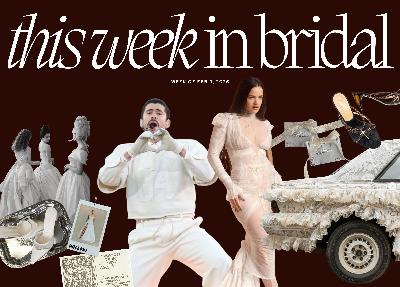
This week, to me, bridal felt like it was having a cultural reckoning. There was a palpable undercurrent of tension between ritual and rip-off, craft and churn, and the visual of sacred white vs. factory-milled satin.This Week in Bridal is having a glow up. A dedicated weekly podcast episode really digging into the themes, weddings, and bridal-related news from the past week, a corresponding Substack roundup, and more ways for us to chat about all things bridal style, structure, and story.Let’s begin where no one expected to begin: the Super Bowl…The Wedding Seen ‘Round The WorldWhile organized sports may not be my arena, weddings most certainly are. During Bad Bunny’s history-making, tear-jerking halftime performance on Sunday, a real couple was married in front of the world.The ceremony - from vows to cake to dress - unfolded live within one of the most commercialized spectacles on earth.And it made perfect sense.Weddings are ritual containers. The Super Bowl is cultural theater. To stage one inside the other is to insist that love still carries narrative weight.It felt inevitable that Bad Bunny’s team would use this platform to center love in all of its messy, chaotic, ritualized, culturally rich reality - a public statement layered with meaning:* That love is stronger than hate, echoing what Benito’s 13-minute performance set out to prove to a captive global audience.* That raw human emotion and ritual transcend culture, politics, and division.Even broadcast.Even commodified.The symbolism worked.Which says something about where we are culturally.Rosalía, Duende, and the Sacred FeminineRosalia’s February Vogue cover, in a profile by Abby Aguirre, introduces an artist constructing identity through intellectual pursuit, sacred texts, and feminist lineage.In this era, her white reads less bridal and more liturgical. But wholly inspiring either way.It’s sainted women, ritual dress, and devotional symbolism.Jean Paul Gaultier lace-up corset gloves (Spring 2004)Alexander McQueen rosary heels (Spring 2003)White Gucci at her Barcelona Lux listening partyA nod to Spanish legacy with Cortana’s Lirio gown& the list goes onThese aren’t just styling choices made by a team with endless access and archival resources; they’re references with meaning. Invocations. Rosalia’s visual theology.She speaks often of duende - the flamenco term for an ineffable emotional force, an unteachable intensity that arrives from somewhere deeper than technique.And increasingly, brides are chasing that same force. Hell, so am I.Not prettiness.Not Pinterest perfection.But emotion.Narrative charge.A sense of something sacred moving through the body.Because the modern bride is trying to feel transcendent, not to look beautiful. Atelier Caravaggio & Ballet RomanticismA BTS-geared shoot from Atelier Caravaggio felt like backstage at the ballet: drapery, corsets, mannequins, and hands pinning fabric.Marie Antoinette.Swan Lake.Degas’s dancers caught mid-adjustment, backstage at the ballet.And this visual language is everywhere in bridal right now. I keep noticing Rococo powdered silhouettes, opulent, 18th-century panniers and corseted waists, tulle layered like stage costumes, and the general resurgence of romantic longing. We can’t escape it, and this doesn’t appear to be accidental nostalgia.It reflects a broader shift away from minimalist modernism and toward early-era femininity - when dress wasn’t just clothing, but spectacle, ritual, and social theater.And ballet offers a particularly potent metaphor: discipline disguised as grace, structure concealed within softness, emotion expressed through movement rather than words.Brides are no longer interested in looking effortless; they’re interested in inhabiting a role… if only for a day.This shoot feels less like bridal imagery and more like a rehearsal of the aesthetic. Visibility of craft has become part of the bridal aesthetic.Gowns + styling @ateliercaravaggio Concept + Photography @jennifermoher Hair + makeup @beauty.confidante Backdrop draping @decordistrictco Video @__fieldwork__ Studio @__fieldwork__Arts & Crafts RevivalInstagram creator Camille Lenore recently revisited the original Arts & Crafts movement, a late 19th-century reaction to industrial mass production, suggesting we may be witnessing a modern resurgence.Led by figures like William Morris (a personal favorite), the movement sought dignity in handmade labor and pushed back against mechanized sameness by re-centering craft, material honesty, and human touch.Sound familiar?Today’s brides are crocheting veils, embroidering handkerchiefs, handwriting seating cards, and making ceremony details by hand.Not simply to conserve budget but to reclaim authorship over their journeys. To participate in ceremony tangibly rather than passively consuming it.In an era defined by digital speed and algorithmic duplication, weddings remain one of the last socially protected spaces for slow fashion and intentional making. And what better way to slow time and to mark its significance than to make something yourself?Meshki Bridal & The Great PretendersMeshki’s new fast-fashion bridal collection entered the market this week at accessible price points (the “Willow” off-shoulder satin gown retailing around $600), but, predictably, the silhouettes felt unmistakably derivative and disappointing. The overall effect suggested replication rather than reinterpretation.Of course, accessibility isn’t the issue here. Bridal has long needed more inclusive price points and entryways, but accessibility without point of view is just duplication at scale.The marketing followed suit: templated reels, interchangeable styling, algorithm-friendly visuals that could belong to any brand in any feed (and they DO right now - a different rant for a different time). The emotional charge, the sense of narrative, craft, or POV was conspicuously absent.Fast fashion entering bridal isn’t new. What’s notable is its acceleration and the speed at which wedding aesthetics are now being translated into disposable trends. When wedding dress design begins to mirror the churn rate of RTW microtrends, something deeper than aesthetics is at risk.Because when ceremony is treated like content, ritual risks becoming costume.The ThroughlineThis week revealed a distinct tension:Handmade vs. mass-producedSacred vs. speedDuende vs. dupesBridal isn’t just about dresses; it’s about how we choose to ritualize love in a time of industrial sameness. And right now, the most compelling stories belong to those choosing craft.Thanks for reading! Subscribe for free to receive new posts and support my work.Sources & CreditsRosalía Vogue Cover Interview by Abby AguirreRosalía Lux Barcelona Listening Party (Vogue México)Meshki Bridal Collection LaunchAtelier Caravaggio Campaign@madebyhanteal (Instagram)Camille Lenore on Arts & Crafts@stefaniemwedding Engagement Editorial This is a public episode. If you would like to discuss this with other subscribers or get access to bonus episodes, visit showroomtheory.substack.com
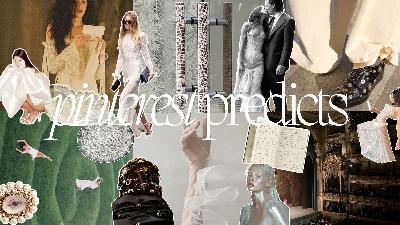
Editor’s note: This essay accompanies a solo episode of the Showroom Theory podcast exploring the cultural signals inside Pinterest Predicts 2026. While the episode moves through specific aesthetics and explains why they’re resonating right now, this piece steps back to examine what the report is actually measuring and where creative industries, especially bridal, tend to misread the data.In the podcast episode, I spend time inside the specific aesthetics that are lighting up Pinterest right now (opera, lace, landscape, symbolism) and what they reveal culturally. This essay is concerned with the structural mistake we keep making when we treat those signals as instructions rather than inquiries.By the end of 2025, it felt like everyone had become a trend forecaster.Every media outlet, every brand account, every creative director with a Canva login (including me) was publishing some version of what’s next. Trend reports multiplied. Aesthetics were named, packaged, flattened, and circulated at breakneck speed. And while none of this is new, the volume reached a tipping point.I don’t think the problem is trend fatigue. I think it’s misinterpretation.In creative industries, trend reports are increasingly treated like creative briefs: what’s in, what’s out, what we should be making now. Screenshots have replaced thinking and data has become a directive. And somewhere along the way, we stopped asking what this information was actually measuring.Pinterest Predicts is a useful place to pause - not because it tells us what’s coming, but because it reveals where the industry keeps making the same old mistakes.Desire Is Not ReadinessPinterest Predicts is built on searches and saves. Not purchases or public declarations or decisions. It tracks curiosity, attraction, and private rehearsal.And that distinction matters more than we admit.When someone searches poet aesthetic, saves images of lace-heavy silhouettes, or pins mythic landscapes, they are not saying, “This is what I will choose.” They’re saying, “This is something I’m circling. Something I’m quietly trying on.”Pinterest captures desire in its earliest, least formed state. It records the moment before language, before confidence, before commitment.And yet, year after year, the industry reads its data as if it represents market readiness.That leap - from interested in to prepared to build around - is where things tend to go a bit sideways.What Pinterest Actually MeasuresPinterest is often discussed as social media, but it functions more like a private rehearsal space than a public stage. There is no immediate audience, no feedback loop, no pressure to signal coherence or taste…Which makes for behavioral changes.On public platforms, taste is performed. But on Pinterest, desire is rehearsed.Searches function like quiet questions: Could this be me? Could this belong to my life? They’re speculative inquiries, not declarative statements. They reflect attraction without obligation.This makes Pinterest far less useful as a predictor of what people will adopt publicly, and far more useful as a record of what they are emotionally testing.In other words, Pinterest tells us what people are drawn to, not what they are ready to commit to.Where Bridal Gets It WrongThis distinction matters everywhere, but I think it becomes especially visible in bridal (of course).Weddings have a unique way of compressing identity, ritual, money, visibility, and permanence into a single decision-making window. The stakes are high and the pressure to “get it right” is intense. As such, the gap between private longing and public presentation is often widest here.Bridal trend adoption tends to assume that desire = demand. If enough people are saving something, the thinking goes, the industry should produce more of it. But what the bridal community fails to identify, is that saving isn’t choosing. Searching isn’t deciding.What we get instead is aesthetic whiplash.Designers chase signals that haven’t yet stabilized, retailers overcorrect before it’s necessary, the media amplifies before meaning has the time to settle, and brides are shown versions of trends they were merely curious about - not yet ready to live inside.The result is confusion, not innovation.The Contradiction Inside Pinterest PredictsRead carefully, Pinterest Predicts is full of signals that point toward containment rather than novelty.Across various whimsical categories, people are drawn to structure, texture, pacing, and emotional density. Opera, heirlooms, lace, landscape, symbolic adornment: these aren’t just aesthetics, they’re systems that hold feeling.But, as we’re so apt to do, the industry often treats them as surface-level trends or things to replicate visually rather than understand functionally.This is where we find contradiction. People are searching for forms that can hold emotion, while the industry responds by producing more images. More inspiration and moodboards. What’s being missed is the actual work required to translate desire into readiness.Desire Needs Translation, Not AccelerationThere’s a difference between wanting something and being able to choose it.Pinterest Predicts shows us the former while bridal keeps designing for the latter as if they’re the same.Translation takes time. It requires guidance, framing, and emotional scaffolding. It asks creatives to slow down rather than rush to produce. To sit with ambiguity instead of resolving it immediately into product.Of course this feels uncomfortable in an industry optimized for speed and visibility. But skipping this step doesn’t make the desire disappear, it just leaves people (read: brides) feeling under-supported in their decisions.Further, this isn’t solely a bridal problem so much as a creative-industry reflex - mistaking early attraction for readiness to act.Not Nostalgia… DiscernmentThe signals we see in this report are often mislabeled as nostalgia, but that framing misses the point. I don’t think this is a retreat into the past, rather it’s discernment under pressure.People are borrowing emotional technologies from ritual to craft to symbolism and structure, because they offer stability in moments of saturation. These forms help people orient themselves when everything else feels loud, fast, and exposed.Seen from this vantage point, Pinterest Predicts isn’t forecasting cultural regression. It’s documenting a greater hesitation. Widespread curiosity. The liminal space between attraction and commitment.The TakeawayPinterest Predicts doesn’t tell us what people are ready to buy, wear, or build their lives around. It tells us what they are quietly testing before they decide who they are willing to become.The mistake would be treating desire as instructions to follow.Our greatest opportunity as a creative industry lies in learning how to translate longing into readiness… with care, context, and time.If the last decade rewarded performance, the next one will reward those who understand the difference between being drawn to something and being prepared to live inside it.And if I never see (or make) another trend report, maybe I’ll be all the better for it.Thanks for reading! Subscribe for free to receive new podcast episodes, essays, and support my work. This is a public episode. If you would like to discuss this with other subscribers or get access to bonus episodes, visit showroomtheory.substack.com
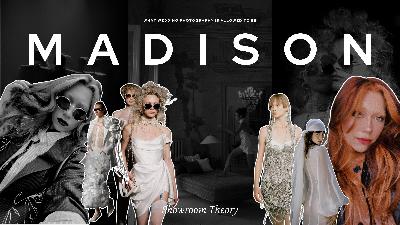
The Lie We Tell About Wedding PhotographyThe wedding industry has been misleading us about photography. Not because it minimizes the medium, quite the opposite, but because it narrows it. Oversimplifies it. Prescribes it. In weddings, photography is treated as sacred, indispensable, and non-negotiable. And yet, within that reverence, there’s an astonishing amount of policing. The right kinds of photos. The right style. The correct visual grammar required for a wedding to be legible to publishers, platforms, and the broader bridal gaze. A checklist of must-snap shots masquerading as taste.It’s not that couples don’t care about photography… they care deeply. Wedding photography sits squarely alongside the dress in terms of emotional hierarchy. Photographs are the artifact meant to outlive the day itself. The proof that something meaningful occurred. And because they carry so much weight, just as we always do, we’ve quietly turned photography into a performance of correctness. What began as preservation has become prescription.Timelessness, in this context, is rarely about time. It’s about compliance.Feral by DesignWhat photographer Madison Aycoth does, both in weddings and in her work capturing traditional (albeit avant-garde) fashion, is refuse compliance.Self-proclaimed “equal parts catharsis and catastrophe,” Madison shifts between fashion and weddings with a fluency that makes some people uneasy. Not because she lacks seriousness in either world, but because she refuses to hierarchize them. She’s spent years photographing backstage at fashion shows, inside compressed, high-adrenaline environments where emotion runs just beneath the surface and time collapses into urgency. These are spaces defined by movement, instinct, and proximity - where the final image isn’t about polish so much as presence. And in fashion, you learn quickly that perfection is rarely the point. Feeling is.She brings this training into weddings without softening it. Not as provocation, and not as aesthetic rebellion, but as a different way of seeing. Madison approaches weddings not as a sequence to be managed or a checklist to be completed, but as temporary worlds - emotionally charged, physically demanding, often unruly in the way meaningful rituals tend to be. Her instinct isn’t to tidy that reality into something more palatable, but to stay with it long enough for something honest to surface. Madison’s work resists the industry’s default grammar not because she’s rejecting weddings, but because she’s taking them seriously on their own terms. That seriousness, about emotion, about presence, about what images are capable of holding, is what makes her work feel disruptive in a space so unnervingly obsessed with visual correctness.Proof Versus InterpretationWedding photography has learned to confuse proof with care. The rules flatten experience into evidence, insisting that emotion be legible, orderly, and complete. But weddings themselves are rarely any of those things. They are feral. Physical. Unruly. Full of sweaty dancing, ugly crying, and the unguarded seconds when composure drops and something true slips through.Photography, in other spheres, has long been allowed to sit with that discomfort. Fashion understands blur, shadow, and tension not as flaws but as language. It allows images to unsettle before they reassure, to withhold explanation, to make the viewer pause rather than immediately admire. Beauty, in that world, doesn’t announce itself politely.“Fashion is inherently very experimental… weddings are inherently incredibly safe and at the risk of also staying mildly performative.” - Madison AycothWhen that mindset enters weddings, even quietly, the images begin to ask something different of us. To feel first. To sit with what’s unresolved. To experience the photograph not as confirmation of the event, but as its own encounter.When couples set out to find a photographer among the endless swell of “Best Of” articles, they’re often searching for someone who can best immortalize a day they’ve poured everything into: money, energy, time, negotiation, tension… often more than they can budget on all fronts. They want to know none of it was wasted. That it all counted. In this way, photography becomes a form of insurance.But an editorial, emotion-led approach to photography doesn’t always uphold that desire. It doesn’t promise completeness. It doesn’t guarantee that everything will look “right.” Instead, it offers something riskier yet far more rewarding: a mirror. An interpretation. Art where documentation once stood. Light becomes architecture. Shadows carry meaning. Off-kilter posing reveals something truer than symmetry ever could.Of course, this is where the anxiety enters. Because interpretation cannot be controlled in the same way as proof can.Letting the Day HappenMadison spoke to me a few weeks ago about encouraging the couples that come to her (most of them already familiar with her style and therefore more inclined to experiment) to take risks. To abandon the self-imposed timeline. To let the day unfold rather than forcing it into the familiar order. To accept photographic evidence not as a checklist of manufactured moments, but as its own art form - one that responds to what actually happens, not what was planned to happen.She’s uninterested in industry approval. In clout. In cliques. In fact, Madison takes pleasure in shaking things up:… One of my favorite things to do is like kind of ruffle feathers a little bit in the bridal industry… But you think it’s cool. You don’t know why you think it’s cool yet, but you do think it’s cool… It’s the same for my work in wedding photography. It’s like, “Oh, you think it’s cool, but you don’t understand why you think it’s cool.” And for me, that was what I wanted because I still was able to get you to think about it. - Madison AycothWhat matters to her is the work. Being a conduit for it. Consequently, her world-building is quiet but total: the way she finds shadow by being fully present, the way music guides the emotional register she wants both models and couples to inhabit. A playlist becomes a moodboard for feeling, not aesthetics. Sound shaping sight. Rhythm guiding memory.The Fashion/Wedding Divide Is a Convenient FictionThe harsh contrast the industry typically draws between the fashion world and the wedding world is largely a facade. Both industries traffic in the same materials: desire, identity, ritual, aspiration. Both rely on image-making to construct meaning. The insistence on separating them serves less to protect tradition than to mitigate risk.Fashion photography is allowed abstraction because it’s not burdened with legacy. Weddings are denied it precisely because they are.On runways and in cramped backstage dressing rooms, emotions are allowed to be messy. Human. Chaotic. The chaos itself is an essential part of the full experience, and capturing it becomes a way to share both the glamour and behind-the-scenes choreography that’s otherwise unseen to the voyueristic eye. But in weddings, this same swirl of activity (preceding an eerily similar walk down the aisle) is forbidden. To crystallize it ina photo is to betray the illusion of perfection, serenity, and beauty of the most orchestrated perfect day in a couple’s lives. Photography itself doesn’t change based on subject matter. It remains interpretive, selective, and subjective… or it can, if we allow it.What changes is the permission we grant it.What We’re Actually Afraid OfI think what we’re actually afraid of is being seen as ‘other.’ Of constructing a ritual that doesn’t quite fit the box a decade of hyper-visible weddings has built for us. We’re afraid art will capture something unflattering in all its messy, chaotic humanness. Afraid that we’ll be ugly criers - and that this will be what’s remembered, preserved in evidence, rather than carefully staged invitation suites or the perfunctory bouquet shot.We’re afraid of losing narrative control.But it’s worth asking what we truly want to immortalize on film. What we want to hold in our hands fifty years from now. Because long after the bridal industrial complex has crumbled, these rituals will still have happened. They are our histories. Our legacies. To reduce them to curated photo dumps optimized for approval is not preservation. It’s a kind of lie.Who Benefits From the FearNot to tiptoe too closely to anarchy, but the industry benefits from this fear because it keeps us consuming. Comparing. Scaling up. Bigger, better, more viral weddings require more money, more resources, more investment. This is a sixty-six-billion-dollar industry in the U.S. alone. It thrives on legibility. On repetition. On images that perform well in public.The punk, the homemade, the pared back threaten that economy. They resist optimization. They don’t always translate cleanly to platforms designed for sameness.Fear keeps the loop intact.Photography as InterruptionPhotography could interrupt this loop - not by abandoning documentation, but by refusing adherence. By making room for experimentation, tension, darkness, truth. By borrowing not fashion’s aesthetics, but its permission structure. Its willingness to let images be felt before they are understood.You only need glance at Madison’s work (spanning “a collection of uninterrupted wedding moments” to “all things bridal, runway, and editorial”) to observe this tension in action. If weddings are one of the last places we still allow ourselves to feel sincerely, then it’s our responsibility to inhabit that sincerity fully. To let it be shaped by the moment rather than managed by expectation. We have so few remaining spaces for this kind of embodied presence now - call it breath-work, call it surrender, call it being human without polish - that policing it feels like a cultural failure.This isn’t a call to stop photographing weddings. Quite the opposite. It’s a call to document them with abandon. To allow photography to function not
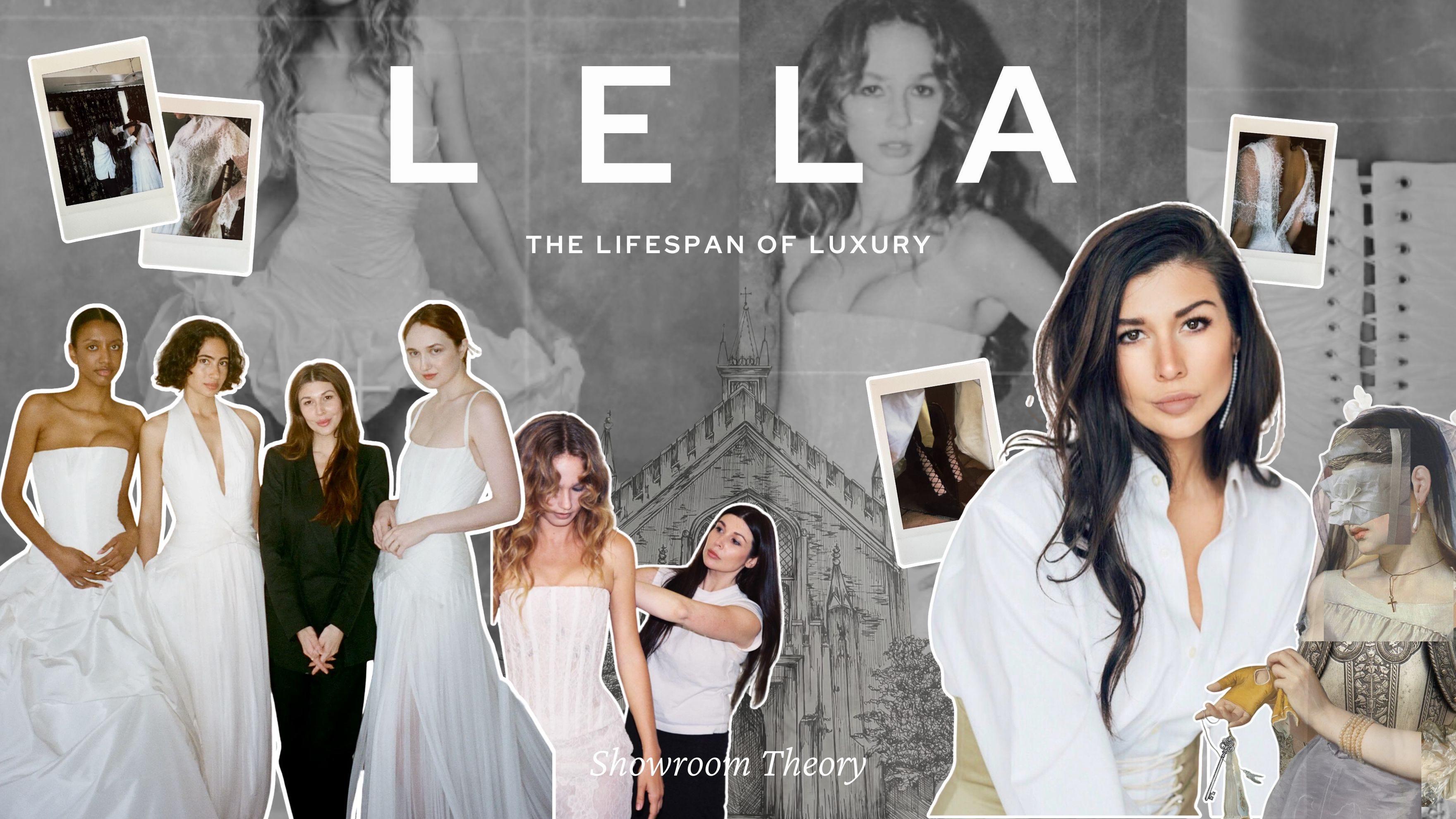
Editor’s Note:This conversation with Lela Orr unfolds at a moment when luxury, fashion, and bridal are quietly renegotiating their values. What emerges isn’t simply a profile of a designer, but a broader inquiry into what luxury is becoming: slower, more intimate, more durable. This accompanying essay explores those shifts - the rise of slow design as cultural resistance, the return of ceremony in consumption, and the role bridal continues to play in shaping identity - through the lens of a changing industry.Luxury is in the middle of an identity crisis. For most of the last century, the market, including bridal, has been structured around acquisition and display. Objects as proof. Ownership as status. Newness was the engine, and disposability was the cost.But revolution arrives slowly. Lela Orr, a Louisiana native and the founding designer of Ferrah, is building a bridal atelier around a reframing of value that quietly challenges the industry’s operating system. With a deep reverence for nostalgia, her home state as the primary horseman of inspiration, and a commitment to circular fashion, she prioritizes not materials, not virality, not visibility, but what survives us.She explains it without hesitation:“We only work with 20 brides right now… because I feel a big sense of responsibility with these dresses. They have to be made beautifully, but also made to last.”It is a striking statement in an industry built on speed. And it cuts directly to the heart of a broader shift unfolding inside luxury, one that is easy to sense but harder to articulate. Of course, Orr names it cleanly:“The most profound shift in luxury comes not from what things are even made of, but what happens throughout their lifespan.”In other words, luxury is no longer just about what we buy. It’s about what we keep, care for, and pass down. What Lela describes, and what I am increasingly seeing across the most thoughtful corners of bridal, is something fundamentally subversive:Luxury as stewardship.Luxury as continuity.Luxury as memory work.Slow Design as RebellionFashion has trained its insiders to equate growth with acceleration: more releases, shorter cycles, larger numbers. Bridal may not follow the same seasonal cadence as ready-to-wear, but the pressure remains. Be more efficient. Expand faster. Appear everywhere.For decades, the production model has rewarded scale and punished restraint. But Orr’s studio runs in the opposite direction.Every Ferrah gown is made in-house, with alterations included and fittings unhurried. No piece leaves the New Orleans atelier without already belonging to the body it was designed for.When I told Orr during our conversation that designing this way had begun to feel like “a form of rebellion,” she laughed.“I love being a rebel.”But what Lela’s really rebelling against isn’t the industry itself; it’s the cultural assumption that faster and bigger are inherently better. That growth must come at the expense of care. That meaning can survive mass production.Over the last two bridal seasons, I’ve listened as whispers of Ferrah’s work have circulated through the buying community, stirring the industry the way Louisiana wind lifts Spanish moss. I have had more than one conversation about what a coup it would be to secure Farrah as an exclusive made-to-order partner. The urgency is driven by two forces: genuine excitement around a designer fluent in both intention and aesthetic intelligence, and the mounting pressure retailers feel to invest in brands moving against the prevailing grain.Ferrah’s refusal to organize around speed is not nostalgic. It’s structural.And it works.In a culture built on viral hauls and ten-second trend cycles, steadiness has become foreign. We no longer recognize slow, considered framing. That doesn’t trouble Orr. She caps production at twenty brides not because demand is low - it’s not - but because the work demands it. Every decision is governed by longevity rather than throughput.That’s a radical choice in a system that measures success by scale and it’s quietly defiant in an industry addicted to velocity. It suggests that luxury’s future, and the future of bridal, may depend less on spectacle and more on stewardship.The Ceremony of Making Things LastIn bridal, this philosophy finds its most natural home.For decades, fashion has conditioned us to think of garments as temporary. Replaceable. Seasonal. Disposable. Bridal remains one of the few categories where permanence is not only possible, it’s expected.“That linear take-make-waste model that defined fashion for so long is yielding to something more elegant… which is like circular fashion. I’m making something that’s going to become a family heirloom,” says Orr.An heirloom not as aesthetic, but as a future-oriented object.One that assumes memory and anticipates inheritance.That’s not retail, it’s ceremony.Joy as a Design ValueAnother shift unfolding alongside this structural change is the elevation of emotional experience as a legitimate design outcome. For decades, fashion evaluated success through visual metrics: silhouette, sell-through, status. How a garment felt on the body was secondary. To its credit, in bridal, that hierarchy is inherently inverted. Even in bridal, where emotional stakes are higher, joy is still rarely treated as a primary design value. Yet joy is precisely what many brides are seeking: physical ease, emotional safety, self-recognition. These aren’t abstract ideals. They’re measurable outcomes that determine whether a gown truly transforms its wearer.Not transformation through spectacle, but alignment through experience.That does not negate beauty, craftsmanship, sex appeal, luxury, silhouette, or structure. But joy, the lived internal experience of the wearer, has quietly slipped from the center of design.“Joy in dressing and joy for such a special day… that’s why I do what I do. It begins when you come to the atelier and lasts until you wear it on your wedding day. When people put things on and say they feel happy, or comfortable, or glowing… I’m like, yes. That’s the moment.”In Ferrah’s work, joy isn’t simply decorative, it’s functional. Against all ‘snatched to the gods’ odds, even the idea of support operates on two levels. Lela unabashedly prioritizes the comfort of her brides. She’s often shocked to hear that clients are surprised at Ferrah’s balance between literal structural support (corsets) and ease of movement.But to me, it’s clear that ‘support’ functions as a double entendre inside this atelier.it’s It’s engineered through breathability, yes, but there is also emotional support: trust, collaboration, and the rare experience of leaving an atelier both physically and psychologically held. Brides depart with a snatched waist and an expanded sense of self.Bridal as Identity TransformationBridal is often dismissed as frothy, decorative, commercial. Anyone who has stood in a fitting room with a woman crossing that threshold knows better.What distinguishes bridal from most of fashion is not only longevity, but its proximity to identity transformation.Bridal garments are worn at a threshold moment. They participate in the reorganization of self. They become part of how the wearer understands who she is before and after the ceremony.As I found myself saying during my conversation with Orr:“The garment, the dress, the designer becomes almost a witness to that transformation.”This is why bridal cannot be reduced to product. It’s infrastructure for becoming.The dress does not create the change. But it holds it.It becomes the physical record of becoming. Ephemera for metamorphosis.What Survives UsWhat Lela is building with Farrah, and what many emerging designers are quietly constructing alongside her, is not simply a brand. It is a revolutionary contract between maker and wearer.One that prioritizes care over churn.Memory over momentum.Presence over production.Luxury is not evolving toward spectacle, it’s evolving toward permanence.Toward objects that learn our names (and our children’s names). Toward garments that absorb our most tender moments. Toward a future in which what matters most is not what we consume, but what we choose to carry forward.The most meaningful luxury isn’t defined by what we accumulate. It’s defined by what lingers. And for some, what lingers just happens to have a corset.Thank you so much for reading! Subscribe for free to receive new articles and support my work. It means the world! This is a public episode. If you would like to discuss this with other subscribers or get access to bonus episodes, visit showroomtheory.substack.com
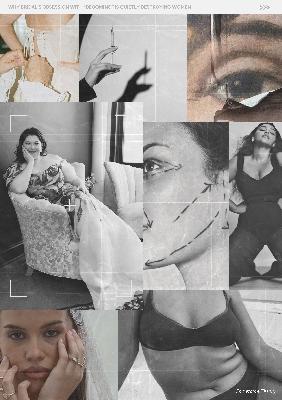
This essay is a companion to Episode 7 of the Showroom Theory podcast, a conversation with LA-based bridal stylist Alysia Cole about visibility, authorship, and refusing the makeover machine. The ideas here expand on that conversation and push it further - into culture, commerce, and what the next era of bridal could become.Bridal culture doesn’t just sell dresses. It sells the idea that a woman must optimize herself before she is worthy of being seen. This essay unpacks the psychological, cultural, and economic cost of that lie and imagines what a more humane future of bridal could look like.There’s a lie at the center of modern bridal culture that no one names directly, but nearly everyone feels. It’s the belief that a woman must become someone else in order to deserve being seen. To deserve feeling beautiful.Not simply styled.Not simply celebrated.But improved, optimized, corrected, and refined until she’s finally worthy of her own visibility.As is the way with most untruths, this lie doesn’t announce itself loudly. Instead, it disguises itself as care. As preparation. As responsibility. As “wanting the best for yourself.” Wanting to show up as the “best version of yourself” for your partner.Somewhere along the way, the wedding industry stopped helping women celebrate who they are and started teaching them who they’re supposed to become.But beneath the language of glow-ups, routines, and transformations is a moral architecture that teaches women something far more insidious:You are not yet ready.The Economy of “Not Yet”At the heart of it, the wedding industry no longer revolves around choosing a dress.It revolves around managing a body, a face, a self.Entire economies have been constructed around the period between engagement and wedding day: weight loss programs, injectables, whitening treatments, skincare regimens, hormone resets, aesthetic procedures, detoxes, bootcamps, anti-bloat protocols, anti-aging rituals.Each one framed as optional but each felt as required.Make no mistake - this isn’t neutral commerce. This is an economy built on withholding permission. You’re allowed to be radiant, but not yet. You’re allowed to feel confident, after the work. You’re allowed to be seen, once you fix this. Fix you.We call it preparation. But what it actually produces is delay. Delayed joy, delayed belonging, delayed self-acceptance.The message becomes internalized long before the wedding arrives: there’s a version of you that deserves celebration, and the version standing here now is not her.When Care Becomes ControlOf course, there’s nothing inherently wrong with wanting to feel beautiful, especially on your wedding day. And there’s nothing shameful about grooming, styling, enhancing, or experimenting. The danger begins when care mutates into control.Care says: you deserve gentleness in this season.But control says: you’re not allowed to arrive as you are.The bridal system increasingly mistakes the second for the first.It confuses discipline with devotion, optimization with self-respect, and perfection with meaning.A woman’s love, her commitment, her ritual, her future, her body - all become potential sites of management. Not so she may feel held, but so she may feel acceptable.The Moralization of the BrideWhat makes this lie so powerful is that it’s not merely aesthetic. It’s moral.The bride is praised not just for how she looks, but for how well she mastered herself (her consumption, her movement, her investment) in order to look that way.The “good bride” is organized, restrained, composed, and improved. The “good bride” disciplines her body and her emotions. The “good bride” treats her wedding as proof of maturity, worth, and personal growth.And from that vantage point, we’re no longer witnessing women mark a life transition, we’re watching them audit themselves.Essentially, bridal culture has turned selfhood into a performance of readiness.The Stylist Who Refuses the Makeover ScriptI recently spent an hour in conversation with Alysia Cole, an LA-based bridal stylist whose entire practice quietly defies the makeover narrative.Her clients don’t come to her for style correction, they come for permission. Not permission to look a certain way, not on her watch, but permission to stop performing readiness. To step fully into themselves, their styles, and their identities - just as they are now, without first earning visibility. She describes her most important role not as shaping bodies, but as witnessing self-trust: standing beside brides and grooms while they choose what already feels true, even when it contradicts the scripts they’ve absorbed from tradition, family, algorithms, or the industry itself.In a system that profits from perpetual “almost,” her work operates on a radically different economy: arrival.The Cost of Being the ‘Plus-Size Voice’There’s an additional burden Alysia carries that rarely gets named. Because she works visibly, and because her work refuses the industry’s default body narrative, she’s often flattened into a role: the voice of the curve bride.It’s a category that pretends to be honorific while functioning as containment. It reduces a multidimensional human - a stylist, artist, business owner, cultural worker, mother, theorist of joy and permission - into a single representational function.And more dangerously, it allows the industry to outsource its conscience.Instead of dismantling the makeover logic at scale, the system points to one person and says: See? We’re addressing it.But this isn’t true representation. It’s guilt delegation.It also quietly demands a kind of forced optimism. The “inclusive voice” is expected to remain palatable, grateful, positive, and endlessly hopeful.But what the industry needs is not positivity. It’s neutrality.Neutrality that says:this body is not a statement.this client is not a movement.this existence does not require justification.This framing is not hypothetical. Alysia’s most visible media features often position her as a spokesperson for size inclusivity rather than as a full-spectrum stylist and cultural worker. Her voice is routinely activated when the industry wants to discuss bodies, but far less often when it wants to discuss taste, authorship, narrative, ritual, or the deeper psychological structures of bridal identity.This is how othering operates in contemporary bridal culture: through selective amplification. A person is welcomed into the conversation only along the axis that feels safe, legible, and containable. Everything else about their work becomes secondary… even invisible.Until bridal culture relearns neutrality, and until bodies are no longer assigned symbolic labor, inclusion will remain a performance rather than a reality.The Psychological Cost of Conditional VisibilityWhile there’s certainly an argument for the second look as vehicle for expanded self authorship, the rise of second looks might not simply be about fashion. If we truly sit with transformation culture and bridal expectations, the second look could be seen as multiplicity under pressure. It points to women attempting to escape the narrowness of a single assigned self. One dress becomes a verdict.So they create another.And another.All the while trying to outrun the idea that one version of them must represent the whole.At the same time, algorithmic culture intensifies the comparison loop. Every body is measured. Every wedding is ranked. Every bride is evaluated against thousands of curated ideals. And in 2025, I think it’s safe to assume that some of those ideals are wholly unattainable - that is to say, completely fabricated by AI.The result isn’t inspiration, it’s surveillance. And when surveillance becomes internalized, a woman begins policing herself long before anyone else does.What the Alternative Already Looks LikeWhat Alysia is building isn’t a niche philosophy. And I’m hopeful that it’s a preview of what’s to come. Her clients aren’t searching for the best version of themselves. They’re searching for the most honest one. And, as Alysia relayed to me between shared tears about raising girls who will one day inhereit our beauty hangups, the relief is immediate.When the requirement to improve dissolves, something else becomes possible for women: presence, risk, play, authorship, joy. The kind of joy you feel when you talk to Alysia. Full. Embodied. Contagious.This is not rebellion for its own sake. It’s cultural correction covertly hidden inside the seams of wedding gowns. The Collapse of the Makeover NarrativeFor some, the lie’s no longer holding.You can see it in the aesthetics emerging in direct contradiction of industry standards: the unruly, the irreverent, the queer, the uncorrected, the ceremonial, the strange, the intimate, the handmade, the unfixed.Designers abandoning polish for meaning.Brides rejecting refinement for authorship.Communities building rituals instead of checklists.A new ethic is forming beneath the noise. It doesn’t ask: “How do I become better?”It asks: “How do I become more honest?”Presence Over PerfectionAlysia tells me that what women are actually seeking in this season - in the transition from single human to married human - is not transformation. They’re really just seeking permission.Permission to feel at home in their bodies.Permission to celebrate without apology.Permission to be seen without earning it first.After all, control promises certainty but presence offers something rarer: belonging. And belonging is what gives a wedding its meaning.Not the perfection of the dress.Not the optimization of the body.Not the mastery of the plan.But the quiet, radical act of showing up intact.The Future of BridalThe most subversive bridal choice in the coming years will not be a silhouette, a trend, or a new approach to dressing. It’ll be this:Refusing the lie that you must become someone else before your life can be celebrated.Arriving as you are.Not as a project.Not as a promise of improvement.But as a person, already wholly worthy of w
Alignment Without Articulation Is IncompleteThere’s a particular story told to women, founders, and creative people of all creeds about what growth is supposed to look like.That story basically says, ‘if you’re truly mature, truly grateful, truly aligned, your wanting should soften into patience.’ Your edges should eventually smooth out. Your ambition should become quieter, more contained, more presentable.We call it composure.We call it professionalism.We call it wisdom.But over the past year, I’ve been circling something in my mind that refuses to stay quiet:Alignment without articulation is incomplete. Clarity that remains internal doesn’t build a life; it becomes a private coping mechanism. And in the creative industries, that distinction matters more than we admit.The Myth of Silent GrowthWe’ve built a culture that doles out rewards, especially to women, for becoming adept at absorbing pressure.We praise composure, reward capability, and admire operators who make things run smoothly without needing very much in return. We confuse this refusal to ask for more with strength.In fashion, in bridal, and in creative work more broadly, this shows up everywhere.The assistant who never complains.The stylist, intern, and photographer who absorb unpaid labor “for the exposure.”The designer who keeps her margins thin so she can remain “easy to work with.”The creative director who softens her voice so the rest of the room doesn’t feel threatened.Silence masquerades as humility, but in reality, it’s often fear wearing a respectable costume.There is a particular strain of “good girl” adulthood that looks like this: you do the work, you exceed expectations, you never ask for too much, and you remain endlessly digestible.And when you finally outgrow the room you’re in, when you finally realize the seat at the table you occupy isn’t actually yours, you’ve already convinced yourself that growth should happen quietly. Without disruption. Without new language. Without asking anything of the world around you.I’ve heard “build it in silence” more times than I can count. But silent growth is a misnomer. Nothing meaningful evolves without first being named.Wanting Is Not GreedSomewhere along the way, culture began treating wanting as a moral failure.As if seeking clarity about what comes next somehow erases gratitude for everything that came before. As if building something meaningful means you should never ask it to expand, to shift, or to transform.In bridal especially, this belief is ubiquitous - boutiques stay loyal to brands that no longer serve their clients because “we’ve always done it this way.” Designers accept broken wholesale models because questioning them feels ungrateful. Creatives flatten their voices to remain palatable in rooms that were never built to hold them fully.But wanting is not greed. Wanting is information.It tells you where your energy is moving. It reveals what’s no longer sufficient. It marks the edge of the work you’re being invited into next.When we suppress wanting, we don’t become more grounded, we become less honest.And this suppression shows up everywhere. In founders who stay stuck in outdated business models because “this is how it’s always been done.” In creatives who flatten their voices to remain palatable. In women who confuse self-containment with self-respect.Desire isn’t the opposite of contentment. It’s the engine of becoming.Articulation Is InfrastructureThere’s a phrase I can no longer ignore:Closed mouths don’t get fed.And I’m not entirely sure where that soundbite came from, where I heard that motivational poster copy wrapped in self-awareness. But it’s always there - silently shaping the way my brain matures and metabolizes and navigates everything I’m building right now.It’s inelegant.It’s blunt.It makes us uncomfortable.But I think it’s also the secret architecture behind every creative ecosystem that actually functions:When a designer finally names the kind of work they want to create.When a retailer articulates the client it’s truly built for.When a creative stops waiting for permission and states their vision plainly.I’ve come to realize that articulation is not about demanding outcomes.It’s about making direction visible.When you name what you’re building, you allow opportunity to respond. You allow others who think and feel and build the same way to find you. You allow systems, resources, and structures to form around your work.This is as true in creative industries as it is in personal life. When desire remains unspoken, everything else is left to chance.We cannot build futures on implication alone, no matter how much easier or more palatable that is. Gatekeeping thrives on implication. But growth requires language.The Cultural Cost of SilenceThe longer I spend in creative and fashion spaces, the more I see how silence quietly erodes innovation. Entire segments of fashion and bridal are stagnating, not because of a lack of talent, but because too many people have been trained to keep their dissatisfaction polite. We’re too intimidated ot timid to say:“This isn’t working.”“This doesn’t feel true anymore.”“We can imagine something better than this.”But silence doesn’t preserve stability; it preserves decay.Every cultural shift that matters begins with the formation of language. And every personal shift begins with naming what you truly need in order to grow.Choosing Over WaitingOf course, there’s room for the grand version of manifestation. But there’s also a quieter version of hope that rarely gets talked about.It doesn’t look like aesthetic manifestation boards or reinvention eras, nor does it require burning everything down (no matter how badly we might want to burn it to ash and start over).It looks like choosing.Choosing clarity.Choosing precision.Choosing to stop outsourcing your future to circumstance.Choosing to stop mistaking patience for postponement.The most meaningful transformation of my past year wasn’t becoming someone new. It was finally listening to who I already was underneath the noise.The lesson I’m taking with me into 35 is this: growth doesn’t have to be dramatic to be real. Sometimes it’s simply the decision to say the thing you have been circling for years.Hope doesn’t need to be loud to be powerful.Sometimes it looks like finally speaking. Sometimes it looks like trusting that wanting more does not negate gratitude. Sometimes it looks like building the infrastructure your future requires.And sometimes, the bravest thing you can do is stop waiting to be chosenand start choosing.Thanks for reading! Subscribe for free to receive new posts and support my work. This is a public episode. If you would like to discuss this with other subscribers or get access to bonus episodes, visit showroomtheory.substack.com
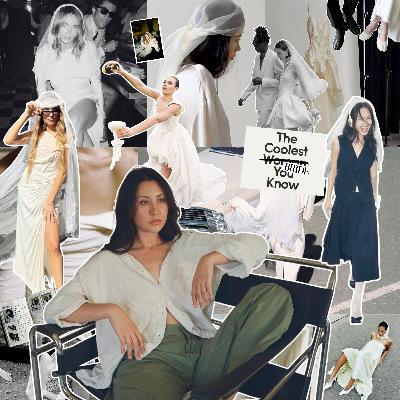
Editor’s Note: This essay accompanies this week’s episode of the Showroom Theory Podcast, featuring Kennedy Bingham of Gown Eyed Girl. While the conversation explores bridal through Kennedy’s voice and lived experience, this piece widens the lens - examining authorship, aesthetics, and power in an industry shaped by visibility and constraint. The episode and this essay are meant to stand independently. Together they trace the same question from different angles: who gets to decide what bridal is, and who it’s for.After a decade in this industry, I’ve come to know that there is a specific kind of panic that often materializes in bridal. It’s a tricky panic - one that seldom announces itself.It hides under competence.Under preparation.Under the language of inspiration.It looks, deceptively, like a woman who’s done her research. She arrives with screenshots of TikTok videos (many of them likely featuring Kennedy Bingham, creator and founder of Gown Eyed Girl - a digital platform and styling business with an audience of over 1.2 million followers), a meticulous fantasy spread of gowns she’s tried on (ranked by wearability), and a file of saved silhouettes pulled from recent runways.The average bride now metabolizes thousands of wedding images before ever stepping into a fitting room. Pinterest reports that wedding-related searches even begin 12-18 months before engagement for many users. She knows the words. She knows the trends. She can tell you exactly what she doesn’t want.And then, somewhere between the third fitting and the seventh mood board revision, something cracks. She realizes she doesn’t actually know what she likes.Not because she is shallow or lacks taste.Not because she is incapable of deciding.But because most brides don’t begin this process with desire.Instead, they begin with constraint.Family expectations. Budgets. Timing. Cultural norms. Designer availability. Social media. Trend cycles. Geography - especially for those navigating what I’m now referring to as ‘bridal deserts.’ The pressure to look right, not just beautiful. The invisible audience in her head, for whom she has been rehearsing this day for years.This is what we call choice. But it’s really something closer to negotiation.And the real question a bride is trying to answer is rarely what dress do I like?It’s: who gets to author me in this moment?Enter: the bridal stylist. When “Cool” Became a Survival StrategyThink pieces already exist in Refinery29, Brides, and The Cut about Kennedy’s unique approach to bridal. One of my favorites is titled “How a Gown Eyed Girl Got Married: The vision was weirder, weirder, weirder" because it succinctly captures her willingness to move against the grain in an industry enamored with setting and following trends.Kennedy is one of the few bridal stylists whose platform grew not by selling fantasy, but by interrogating it. Her rise coincided with a moment when bridal content began shifting from inspiration toward commentary - and many people were unprepared for that transition. Unlike most viral bridal creators, she didn’t build her audience by positioning herself as aspirational. She built it by being legible, opinionated, and willing to articulate what the industry typically keeps private.On a call between friends (and all of you) Kennedy voiced a quiet truth I’ve been circling for months: somewhere along the way, bridal became obsessed with being cool.Not meaningful.Not intimate.Not reverent.Cool.Cool is a deceptively expensive goal because it requires an equal and opposite condition. If something is cool, something else must be uncool. If one bride is cool, someone else becomes the cautionary tale. The same logic applies to designers, vendors, stylists, and social media mavens.It’s no longer countercultural.It’s no longer cultivated over time.It’s no longer punk.Cool is algorithmic - pre-approved by platforms, optimized for legibility, and rewarded with visibility. It promises safety: you will not be mocked, you will not regret this, you will not look back on your wedding photo dump and cringe.In an attention economy, cool isn’t about status. It’s about risk management, and this is why brides and designers chase it so desperately.Not because they want to be admired, but because they are afraid of getting it wrong.Afraid of being behind.Afraid of misreading the moment.Afraid of choosing something that won’t survive the archive.Cool promises protection, but it quietly narrows the range of what’s socially permissible. “The Cool Girl Monologue” from the book Gone Girl by Gillian FlynnThe Grief No One NamesIf you look hard enough at the bride’s thought process when choosing a gown, you’ll notice that under bridal indecision lies grief.Grief for a time when intuition felt trustworthy, for rituals that once came with shared meaning, for a cultural map that used to exist, and for all of the other forks in the road you could have traveled - the other bride archetypes they could have embodied.There’s no longer a “default” bride, once clad in the standard strapless gown. Every choice feels like a referendum on identity.In earlier eras, weddings were governed by norms you could accept or reject: the traditional bride, the shabby-chic bride, the anti-bride. Today, there is no consensus to push against… only infinite options and no clear authority.Unless you count Kennedy (which I unabashedly do).Her authority doesn’t come from distance or abstraction. It comes from proximity: years spent in fitting rooms, mediating between brides and their mothers, budgets, bodies, relationships, and lots of expectations.Brides aren’t overwhelmed because they have too many dresses to choose from.They’re overwhelmed because they’re being asked to self-author inside a system that punishes missteps.The loss they’re grieving isn’t the dress.It’s the loss of shared understanding.Authorship vs. PerformanceI often describe weddings as the highest form of self-expression - a view Kennedy shares. But in practice, what many brides are actually doing is performance.Performance asks: How will this be received?Authorship asks: Is this true?Performance curates legibility.Authorship seeks coherence.Performance manages an audience.Authorship listens to the soul.This is why a bride can stand in a dress that fits perfectly and still feel wrong. The mirror reflects beauty, but not recognition. The body knows when it hasn’t played a role in decision-making.And in bridal, whether from the bride or from the designer, performance is rewarded more than authorship. The more legible the choice or offering, the more praise it receives. The quieter, stranger, more personal choices require confidence that the system doesn’t help scaffold.On the Gendered Burden of Decision-MakingWe tell women, “It’s your day,” and then hand them the full burden of decision-making, emotional diplomacy, and meaning-mining. Bridal panic isn’t just aesthetic, it’s foundational. Decisiveness is demanded without authority. Confidence is expected without support.This is why so many brides feel alone even when surrounded by people, and why partnership matters here not as romance, but as infrastructure.A partner who shows up as an anchor, one who treats the wedding as shared emotional labor rather than a solo project, fundamentally changes the experience. When that support is absent, the bride becomes the sole author, editor, producer, and publicist of the event - an impossible workload for even the most Pinterest-educated among us. No amount of saved folders can compensate for bridal burnout.Cool is not neutralThe problem with organizing bridal around “cool,” Kennedy and I lament, is not that the concept itself is shallow. It’s that coolness creates hierarchy.The moment an industry chases cool, it begins to define what is not. And what is labeled “uncool” is rarely neutral. It is often coded - by race, by body, by class, by queerness, by ability.The uncool bride isn’t a real person.She’s a warning label. A myth designed to other.Once an industry accepts that myth, it begins to marginalize people who were never allowed to feel effortlessly “in.”This is why the rise of the cool bride was not a harmless aesthetic shift of the early 2000s. It was a structural one.Bridal’s Validation ProblemKennedy jokes that bridal doesn’t need to be liked by RTW. Yet it keeps looking sideways, waiting for approval, translating itself through red carpets and fashion weeks as if legitimacy must be granted from elsewhere. But this is a misread of power.To those of us ingrained in its machinations, bridal isn’t adjacent to fashion. It’s adjacent to meaning. It’s one of the only wardrobe categories where symbolism, identity, family dynamics, and embodiment collide in a single moment.Its strength isn’t trend fluency.It is emotional gravity.When bridal and its designers, retail leaders, and taste-makers forget this, it begins to chase relevance instead of resonance.It tries to sit at the cool table while ignoring the table full of people who are already there for it.A Quieter Form of ResistanceResistance doesn’t always look rebellious. Sometimes it looks quiet.For brides, it looks like choosing how you want to feel, not how you want to be perceived, releasing the need to be universally understood, or making a decision that belongs to you, even if it confuses someone else.For the bride who feels lost, here’s a gentler place to start:Stop asking, what do I like?Ask instead: What do I want to feel like?Choose three words. Not aesthetic ones. Nervous-system words.Grounded.Magnetic.Untouchable.Tender.Defiant.Held.Then let those words filter everything else.Taste isn’t something you prove.It’s something you inhabit.The same applies to designers. Create from your nervous system, not the cool ideal - and your people will find you.For Kennedy, a fashion-savvy stylist who once hoped to work in archival preservation at a storied fashion house, but instead critiques (and sometimes participates in) the industry’s most
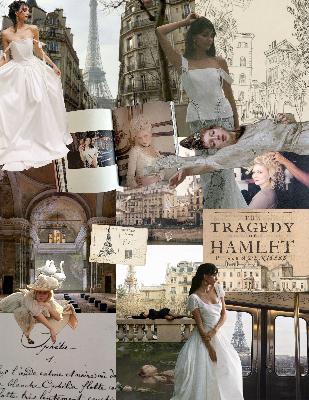
There’s a moment in bridal every once in a while where the energy shifts - not because someone published a revolutionary trend report, and not because the industry has declared a silhouette du jour, but because someone releases a collection that feels like a counterspell. A soft refusal. A reminder that weddings, at their best, are meant to be enjoyed, not optimized.And For Love’s Creative Director, Angel Spendlove, has attempted to cast that very spell with the line’s newest collection, The Lovers Part II, and her approach is less about “what’s trending” and more about what still feels true.It’s not an overly splashy collection, not in the way we often use that word. It doesn’t posture. It doesn’t appeal to the algorithm. It doesn’t try to be the most viral thing in the room. What it does instead, and what feels quietly radical right now, is reclaim narrative inspiration and love as legitimate design principles.And in 2025’s wedding landscape, narrative inspiration and love have strangely become subversive.The Industry Drift Toward PerformanceBridal has always been shaped by culture, we know this, but the current cultural climate (hyper-documented, hyper-performative, hyper-referential) pushes brides into an unprecedented level of self-surveillance.Weddings have evolved from “rituals of union” into:* aesthetic declarations,* algorithms to appease,* trend cycles to keep up with,* and content opportunities to maximize.We are watching brides try on 50, 75, even 100 gowns in pursuit of the dress that will photograph well, read well, and trend well. TikTok is flooded with “all the dresses I tried and didn’t buy.” Wedding planning has become both a public performance and a personal Rorschach test - a way of asking, “How do I want to be seen?”And because of that, the market has responded with armor:* corsetry,* bone structure,* dark romance,* theatrical silhouettes,* gowns that wear the woman rather than the other way around.This isn’t meaningless. Fashion always reflects the tension of its era. We’ve talked about this return to structure before and how it emerges when culture feels chaotic. Excess emerges when people feel uncertain. Control shows up in clothing when control is missing elsewhere.But the cost is that we’ve drifted, slowly, collectively, away from the softness and joy that made the wedding ritual compelling in the first place.Which is why collections like The Lovers Part II matter. They interrupt the drift.They remind us that the opposite of performance isn’t minimalism - it’s presence. It’s inspiration. It’s personal narrative and Sofia Coppola with your girlfriends in Paris.Joy as Creative RebellionWhat struck me most about Angel’s approach this season wasn’t the Marie Antoinette references or the ballet lineage or the narrative scaffolding of Shakespearean lovers…It was the worldview behind it all.A woman designing from:* an intact sense of wonder,* a long marriage she’s still in love with (the goal!),* a relationship to movement rather than rigidity,* and a refusal to produce from fear, fatigue, or trend pressure.There’s something rare, almost endangered, about a designer who isn’t creating inside the narrow corridors of urgency and content demand. A designer who still subscribes to delight as a provocation.And, of course, it made me think of Sofia Coppola’s Marie Antoinette, not only because of Angel’s love for the film and its direct influence on the collection, but because it’s a landscape where historical accuracy is less important than emotional truth. Where excess is reimagined not as a spectacle, but as an expression of youth, joy, and the desire to feel alive in a world that constantly misunderstands your heart.Angel’s collection carries shades of that sensibility:* a pink cake crumbling in real time,* the looseness of movement,* the unselfconsciousness of play,* gowns that encourage movement and joy.It’s bridal design in conversation with maidenhood, imagination, and the parts of womanhood that aren’t optimized for public consumption.In and of itself, that feels like resistance.The Countercurrent: Designing for Real Bodies, Not Imagined AudiencesOne of the most striking tensions in today’s bridal landscape is the gap between how brides want to feel and how they believe they must appear.You hear it in appointments:* “I love it, but is it trending?”* “Will this photograph well?”* “Everyone online seems to be doing X. Should I try X too?”And what designers like Angel (and a handful of other independents) are doing this season is gently re-steering the ship. Not through manifesto, but through practice. Through collections that are wearable, emotional, and human-scaled.In an era where so much design is about sculpting the body into a spectacle or snatching the bride into oblivion, Angel is designing with a dancer’s understanding of:* anatomy,* breath,* posture,* physical freedom.You feel it in the lines, the scoops (strategically dipped for optimal pirouettes), the movement of the skirts. You feel it in the lack of anxiety in the gowns. You feel it in the lack of apology for choosing a shocking pink in a sea of ivory.There’s something inherently hopeful about garments that assume the woman will live in them. That she’ll love in them.The Industry Could Use a Season of RestOne of my favorite moments in our conversation was Angel saying she was entering her “season of rest,” now that her collection is out in the world. Not as a collapse or retreat, but as a deliberate creative boundary.The bridal industry does not have many models of sustainable pacing. We’re conditioned toward:* seasonal grind,* year-round production,* no creative incubation,* no pause,* no silence,* no off-season for the imagination.We reward designers who keep producing, keep showing, keep churning - and then quietly lament when their work starts to feel derivative or hollow.So when a designer opts out of the expected schedule, or presents in Paris instead of at New York Bridal Fashion Week, or allows herself to design late or in a burst, it represents a kind of systemic refusal.It raises the question:What would bridal look like if the industry allowed designers to rest, instead of demanding they constantly perform?I suspect we’d get more work like this:Collections with oxygen in them. Collections that are invitations, not auditions. Collections that don’t just mirror culture but shift it.The Real Rebellion: Weddings That Feel AliveToward the end of our conversation, Angel said something that’s stayed with me:“A marriage is not a wedding. The wedding is just the first day of supposedly forever.”This makes me think about the women designing the gowns (and sometimes men, but at its core, this is an industry of women supporting women), not just those wearing them - how the emotional health of this industry shapes the emotional experience of brides.If designers are exhausted, over-scheduled, trend-choked, and algorithmically driven, the gowns will carry that energy.If designers are rested, inspired, and connected to their own joy and narrative imagination, the gowns will carry that energy too.We underestimate the spiritual transfer that happens in artistic work.Brides feel it. Stockists feel it. The industry feels it.Joy isn’t frivolous. It’s a quiet act of cultural reorientation.And in a season of spectacle, competition, and performative taste, joy begins to look like something else entirely:A rebellion.A reminder.A return.And maybe… the beginning of where modern ceremony goes next.Thanks for reading! Subscribe for free to receive new posts and support my work. This is a public episode. If you would like to discuss this with other subscribers or get access to bonus episodes, visit showroomtheory.substack.com
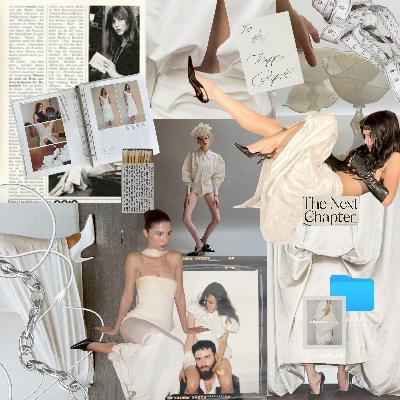
Scarcity, identity, enclothed cognition, and the cultural scripts that shape modern weddings.There’s a moment in almost every bridal appointment when the bride goes quiet. She knows the dress fits. She knows it looks beautiful. But something in the cells of her body does not recognize herself in it.It’s the pause before the panic - the quick collapse inward, where logic loses to a kind of ancient emotional memory. The common belief is that brides spiral because they’re afraid of choosing something unflattering. Of choosing the “wrong” dress. But that’s such an oversimplification - that’s not the real fear. Brides are afraid of choosing something that signals they do not belong to the category of good taste.In the fashion community, taste has always been framed as an aesthetic preference. And “good taste,” as we’ve been conditioned to understand it, isn’t a neutral concept. It’s a social gatekeeping mechanism that’s been handed down. To have good taste means you belong to the group whose preferences are seen as correct. And in bridal, those preferences have been shaped by decades of beauty ideals (Eurocentric, whiteness, thinness), class signaling, and cultural scarcity packaged up and presented to us as timelessness and masquerading as preference.The pressure to choose “right” is not about silhouette, it’s about signaling that you understand the invisible rules.In fashion communities, taste gets treated as innate - like a built-in talent, or a personal instinct. But in reality, taste is simply a performance of belonging. Pierre Bourdieu wrote about this in Distinction (1979), where he argued that taste is not a matter of individual choice but of cultural training. It’s the way we learn to recognize which objects, aesthetics, and references signal status.In bridal, those signals are extremely narrow, especially now, in the era of social media and the creator economy. Clean lines. Restraint. Monochrome neutrality. Architectural silhouettes at certain price points. The “correct” version of minimalism that reads ‘quiet luxury,’ not the kind that reads straightforward. But it’s not taste, it’s cultural conditioning.And because these signals appear again and again and again in fashion media, Pinterest boards, designer campaigns, and algorithmic feedback loops, they start to feel universal.Taste is scarcity, not aestheticsWhen we talk about good taste in bridal, what we’re really talking about is scarcity. Which aesthetics are allowed to be seen as correct. Which bodies are approved by society as conventionally attractive (and therefore acceptable). Which silhouettes are considered elegant and of-the-moment. Which brides are granted the label of timeless.This is the same scarcity logic that drives quiet luxury discourse on TikTok, the ‘girl dinner’ phenomenon, and even the trend of clean girl minimalism. Our culture loves a stripped-back aesthetic because it’s harder to “get wrong,” and therefore it becomes a proxy for morality.Minimalism becomes moralized. Maximalism becomes risky. Color becomes suspect. Volume becomes “too much.” This is how taste gets moral weight. It rewards safety. It rewards staying small.The paradox here?Some of the most iconic bridal moments in history (Lady Diana, Bianca Jagger, Priscilla Presley, Solange, Zoe Kravitz) were maximalist, contextual, and completely of their moment. Yet brides today are told to hide in neutrality so they won’t “look dated.”Dated to whom?By what standard?Under what gaze?This is why film weddings age so differently. The Sofia Coppola bride ages beautifully because she is contextual. The Hallmark bride ages like an AI composite of “neutral correctness.”One represents style.One represents taste.Style has staying power because it’s specific, but taste has staying power because it’s boring.Style is different. Style requires self-knowledge.Where taste requires approval, style requires self-exploration and archeology. (Sidenote: Did you know I originally wanted to be an archeologist a la Indiana Jones?! Instead, I’m uncovering bridal myths.) Style is the culmination of cultural literacy, context, identity, risk. You have to excavate yourself.Your cultural references.Your cinematic language.Your era.Your personal politics.Your relationship to femininity, sexuality, power, and tradition.And this is exactly why brides feel liberated when they finally choose a gown that mirrors their inner world rather than the world they think they are supposed to belong to.The idea of the “timeless bride” might be the biggest myth of all. The classic bride of the 1980s - puff sleeves, maximalist volume, cathedral veils - believed they were choosing something that would last forever. Today, we call that dated. Every decade defines its own timelessness, so the question then becomes: Who benefits when women are told to choose a dress with no point of view, simply so they cannot be criticized later?The cultural climate always shapes the dressWe’re living in a moment of economic and political uncertainty, algorithmic fatigue, constant and unrestricted access to information, aesthetic saturation, climate anxiety, cultural instability, nostalgia loops, and, if my late-night doomscrolling has anything to say about it, many more plagues of the modern human condition. But historically, periods of unrest produce the most interesting stylistic reactions. Think post-war Dior. Think punk emerging during Thatcherism. Think the rise of the Japanese avant-garde during economic collapse. And I truly believe this is why sculptural gowns, baroque motifs, heirloom embroidery, and maximalist silhouettes are resonating again. They all share one quality: a desire for embodiment in an age of overwhelm. Because brides are choosing pieces that feel powerful, expressive, and anchored in meaning. Vintage is surging because brides want continuity and objects that feel anchored. They want lineage. They want garments that feel grounded in a story. In a time when everything cycles in and out of trend in 16 seconds, permanence feels radical. A dress with history feels grounding. A garment that predates the algorithm feels like a refuge.It’s the same reason we’re seeing the rise of analog photography, heirloom jewelry redesign, bookshelf wealth, the rise of self-led intellectualism, and the return of print magazines. All of these are symbolic rebellions against a culture that constantly demands reinvention.Vintage isn’t nostalgia. It is resistance. These choices aren’t random; they’re cultural responses.The psychology behind the “this feels like me” momentThere’s a sociological concept that I learned in school, and I keep returning to it recently: ‘enclothed cognition.’ This is basically the idea that clothing doesn’t just express identity, but rather it’s a vehicle for activating identity and actively shaping it. The garment turns on the psychological traits associated with the role and makes them real for the wearer.You put on a military uniform, and you activate the traits of a soldier.Put on priest robes, and you activate the sacred caretaker.Put on a school uniform, and you activate a studious self.Put on a wedding dress, and you activate the bride.Our bodies read symbolism before our brains do. And that’s why a dress can be beautiful but feel wrong. This is why stylists talk about the “shift,” or the moment that a bride stands differently, breathes differently, speaks differently. It is not magic. It’s psychological activation. A wedding dress isn’t just an outfit. It is a psychological event.And it has to match the identity you are stepping into, not the identity the culture prefers, or there’s a huge cognitive disconnect.Where intimacy meets performanceIn the bridal industry, I think we’re watching two forces collide in real time: visibility and vulnerability. Privacy and performance. The wedding as a sacred ritual and the wedding as a content machine. The algorithm elevates highly aestheticized weddings, and because that’s what gets airtime, that’s what we think weddings should look like.It’s the Eras Tour effect.The Sofia Richie effect.The WeWoreWhat effect.The influencer-industrial complex effect.And don’t get me wrong, this isn’t inherently bad. Humans have always performed rites, ceremonies, and milestones in community. What’s changed is the size of the community - from 150 guests (on the larger side) to potentially millions on TikTok.But there’s also a counter-movement happening as an undercurrent in the industry. More private ceremonies, more secret elopements, more meaning-driven rituals untethered from the feed. Privacy has become a form of luxury, and I’m telling anyone who’ll listen to elope.Privacy has become a luxury good.Weddings aren’t simply celebrations any longer. They’re cultural artifacts. They reveal what people want to express, what they want to protect, and what they are negotiating with the world around them.Bridal is the clearest mirror of our cultural anxieties and aspirationsIf you zoom out, weddings show us everything:Who we think we should be.Who we want to be seen as.Who we fear becoming.What we value.What we reject.How we negotiate identity under surveillance.How women navigate beauty politics, body politics, and cultural expectations.How taste polices belonging.How style liberates it.Taste tries to control identity.Style tries to express it.And every bride lives right inside that pocket of tension.This is why these conversations about taste, scarcity, identity, and intimacy matter. Because bridal is one of the few cultural spaces left where all of these things collide at once. It gives us a clean, high-definition view of how culture shapes women, and how women push back. And when brides choose a dress, they aren’t just choosing fit and fabric, they’re choosing what world they want to step into next.If this resonated, share it with someone who loves discussing the deeper meaning behind weddings. This is the work I adore. You can find me on Instagram at @chelsea_eileen_jackson and @sh
There’s a reason bridal feels different right now, and it’s not because we collectively woke up craving oversized veils and Rococo-level ornamentation. The recent surge in maximalism, romance, applique, pearlwork, and exaggerated femininity isn’t a spiritual or cultural awakening. It’s the algorithm.In this episode, we break down how TikTok, Pinterest, and the content economy have become the new tastemakers for modern ceremony. Bridal trends today don’t emerge from ateliers, archives, or even influence cycles in ready-to-wear - they’re produced, rewarded, and recycled through platforms that rely on novelty, pattern recognition, and emotional shorthand to keep us scrolling.This is the real reason we’re seeing the pendulum swing away from minimalism. The algorithm got bored.What We ExploreThe rise of maximalismNot because brides rediscovered their inner historical-romance heroine, but because scroll fatigue demanded something visually louder. Detail, texture, applique, and “nostalgia-forward” ornamentation photograph better, hold attention longer, and differentiate in an oversaturated feed.The performance of femininity onlinePearls, tulle, lace, rosettes, sculptural veils - these aren’t random comebacks. They’re part of a broader rediscovery of femininity that aligns with what the algorithm rewards: softness, nostalgia, tactility, and emotional immediacy.How TikTok & Pinterest became the new bridal industryWith TikTok alone hitting 3.2 billion monthly views on wedding content, the FYP has replaced the boutique as the first touchpoint for inspiration. Brides feel like they’re choosing intuitively, but most are following paths pre-shaped by what has recently gone viral.The homogenization problemWhen one dress explodes (hello basque waist), designers feel pressure to re-create it, boutiques feel pressure to stock it, and brides feel pressure to try it. That’s algorithmic natural selection, not personal style.Why minimalism “died” onlineMinimalism once embodied precision, proportion, and architectural restraint. But stripped of its context and flattened into thumbnails, it lost its nuance. The feed needed something new, and maximalism filled that vacuum.Key IdeasMaximalism is a response to content saturation, not cultural renaissanceTikTok and Pinterest now shape bridal taste more than traditional fashion cyclesBridal aesthetics are becoming more uniform due to algorithmic patterningOversized veils, heavy detail, and pearlwork hold attention better in a fast scrollVirality creates pressure loops for designers, boutiques, and bridesThe rediscovery of femininity is partly aesthetic, partly digital strategyVisual differentiation is now a survival tactic in the algorithm economyIf you're thinking about your own ceremony style, or you're inside the bridal industry and want to understand what’s actually shaping the modern bride, this episode is for you. This is a public episode. If you would like to discuss this with other subscribers or get access to bonus episodes, visit showroomtheory.substack.com
Welcome to the first full episode of Showroom Theory! Recording this one felt like putting a stake in the ground. Not because I’m trying to define bridal culture, but because I’m finally giving language to things I’ve felt for years, working behind the scenes.I’ve always believed bridal deserves a deeper conversation than it gets. Not just:“What dress is trending?” But:Why does this choice feel so personal?Why does it matter so much?Why does it feel like a tiny piece of autobiography?This episode is my attempt to answer that.Most people think the wedding dress is a frivolous purchase. But if you’ve ever been in a fitting room when a bride sees herself clearly for the first time, you know it’s not about the dress.It’s about self-construction. Self-permission. Self-mythology.And in Episode 1, I talk about how bridal is one of the few remaining ritual spaces where adults step into a liminal moment - a psychological threshold - and ask:“Who am I becoming?”One of my favorite things about this episode is unpacking the symbolic vocabulary inside bridal style.A-line vs. column isn’t just fit.Corsetry vs. cloud volume isn’t just a trend.Silk vs. tulle isn’t just fabric.All of these choices communicate:continuity or rebellionsoftness or structurelineage or reinventiontradition or self-authorshipWhen someone says, “I want a timeless dress,” they rarely mean “simple.” They usually mean, “I want to recognize myself in this moment.” When someone says, “I want drama,” they don’t mean theatrical. They mean, “I want to be felt.”Weddings as transformation, not performanceChoosing what you wear to be witnessed in is an act of authorship. It’s why people cry in fittings - not because of the dress, but because of the meaning attached to being seen.Bridal fashion evolves slowly because it’s meaning-drivenI didn’t want Episode 1 to be a thesis. I wanted it to be a mirror. A place to recognize that:your gown choice is never “just a dress,”your aesthetic desires are data,and the ceremony moment is more than a Pinterest board. It’s self-construction, ritual, and meaning-making.If you’ve ever felt that bridal deserves a more generous, more intelligent, more curious conversation, you’re my people. Thank you for being here at the beginning. 🎧If you enjoy it, hit subscribe, share it with a friend, or leave a note in the comments. Your support this early in the journey means more than you know.xx Chelsea This is a public episode. If you would like to discuss this with other subscribers or get access to bonus episodes, visit showroomtheory.substack.com
Welcome to Showroom Theory, a podcast about the emotional, aesthetic, and psychological layers of modern ceremony.I’ve spent more than a decade inside the world of luxury bridal - in fittings, in ateliers, in the quiet rooms where women meet themselves in the mirror. And the more time I spent there, the more I realized something no one was really saying out loud:Bridal isn’t just an industry.It’s an emotional climate.A cultural text.A place where identity, beauty, lineage, and personal mythology quietly collide.Thanks for reading Showroom’s Substack! Subscribe for free to receive new posts and support my work.Showroom Theory is my attempt to unpack all of that.It’s not a vendor-advice show.It’s not wedding planning tips.It’s not “10 trends to watch.”It’s an audio essay series about why we wear what we wear to say I do - and what that choice reveals about who we are.Why I Created This PodcastFor years, I felt like there was a deeper conversation happening inside bridal that no one had the language for. We talk about silhouettes, fabric, and “flattering cuts,” but not about:* why brides crave structure in one season and softness in the next* why modern weddings feel both intimate and performative* why certain aesthetics rise when they do* why choosing a wedding look feels so personal, vulnerable, and symbolic* how ceremony becomes a form of self-portraitureI wanted a place to explore all of that thoughtfully, creatively, and without rushing.What You’ll Hear in Showroom TheoryEach episode is crafted like a mini audio essay: part cultural commentary, part fashion analysis, part psychology-of-beauty deep dive. Some episodes will be solo explorations. Others will be conversations with designers, stylists, and founders shaping the future of bridal.We’ll talk about:* identity* aesthetics* belonging* structure vs softness* personal mythology* the hidden labor behind beauty* cultural weather patterns* the emotional stakes of choosing a gownIf you’ve ever felt like bridal deserved a more nuanced, thoughtful conversation, this podcast is for you.The Heart of Modern CeremonyWeddings are not just celebrations.They are moments of self-construction.They are one of the few remaining rituals where we consciously decide how we want to be witnessed - by our partners, our families, our communities, and our future selves.This podcast is here to explore the layers beneath that moment.If you’re new here… welcome.If you’re a designer in your “what now?” era, a stylist craving deeper language, a bride orbiting the emotional universe of ceremony, or someone simply fascinated by the psychology of beauty - you’re in the right place.🎙 Listen to the teaserMore episodes are on the way.I’m so glad you’re here.xx ChelseaThanks for reading Showroom’s Substack! Subscribe for free to receive new posts and support my work.Tags:bridal culture, modern ceremony, identity & aesthetics, fashion psychology, cultural commentary, meaning-making, Chelsea Jackson, Showroom Theory Podcast This is a public episode. If you would like to discuss this with other subscribers or get access to bonus episodes, visit showroomtheory.substack.com
Comments

Download from Google Play

Download from App Store
 United States