


The Innovation Show
Subscribed: 615Played: 25,273
Subscribe


© The Innovation Show
Description
A Global weekly show interviewing authors to inspire, educate and inform the business world and the curious. Presented by the author of "Undisruptable", this Global show speaks of something greater beyond innovation, disruption and technology. It speaks to the human need to learn: how to adapt to and love a changing world. It embraces the spirit of constant change, of staying receptive, of always learning.
743 Episodes
Reverse

Framing is a cognitive muscle we can strengthen to improve our lives, work and future. Today's book shows us how." We heartily welcome back the author of "Framers: Make Better Decisions In The Age of Big Data", Kenneth Cukier Find Kenneth here: http://www.cukier.com @kncukier https://www.economist.com/books-and-arts/2021/05/11/imaginative-framing-is-the-key-to-problem-solving

Framing is a cognitive muscle we can strengthen to improve our lives, work and future. Today's book shows us how." We welcome the author of Framers: Make Better Decisions In The Age of Big Data Kenneth Cukier Find Kenneth here: http://www.cukier.com @kncukier https://www.economist.com/books-and-arts/2021/05/11/imaginative-framing-is-the-key-to-problem-solving
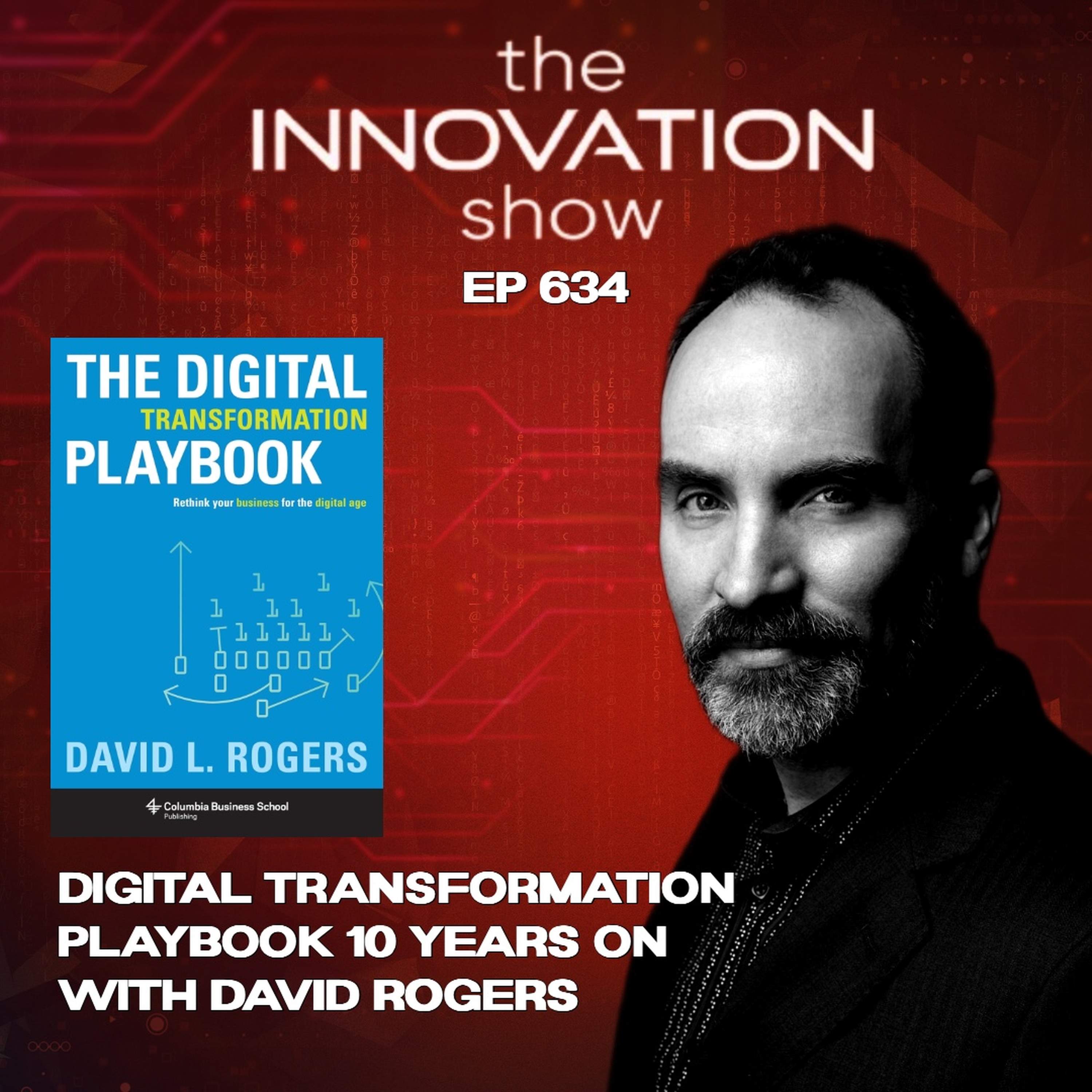
This week's guest is David Rogers, Columbia Business School professor and author of Digital Transformation Playbook. We discuss digital transformation strategy, AI in business, disruptive innovation, platform business models, network effects, and leadership in the age of AI. If you're navigating digital transformation or AI strategy, this episode is essential listening. 00:00 Introduction and Sponsor Message 00:35 Meet the Digital Transformation Expert 01:38 Impact of the Digital Transformation Playbook 05:40 Evolution of Digital Transformation 07:24 The Role of AI in Digital Transformation 09:21 Frameworks and Theories of Disruption 09:38 The Story of Encyclopedia Britannica 16:59 Understanding Business Disruption 24:44 Disruptive Business Model Map 33:12 Understanding Network Effects 34:41 Same Side vs. Cross Side Network Effects 38:01 The Challenge of Competition in Platform Businesses 42:21 The Importance of Platform Business Models 46:13 Four Types of Platform Businesses 49:19 Platform Business Model Map 54:28 Value Train Analysis 01:02:22 The Evolution of Digital Transformation Find David: https://davidrogers.digital/about/

"I don't like J work." That was Andy — a top serial innovator at SAIC — telling his manager Dennis what he needed to be protected from. J work, in Andy's field of computational electromagnetics, is the imaginary part of a number. To Andy, it meant the imaginary work: staff meetings, budget reviews, formal reporting. Dennis's job was to keep him in real work. Most managers do the opposite. In part three of our Serial Innovators series, Bruce Vojak closes the loop. After two episodes on who serial innovators are and how they navigate the politics, this one is about how organisations find them, develop them — and how managers can stop accidentally driving them out the door. Bruce is co-author of Serial Innovators: How Individuals Create and Deliver Breakthrough Innovations in Mature Firms (with Ray Price and Abby Griffin), founder of Breakthrough Innovation Advisors, and former Associate Dean for Administration at the University of Illinois College of Engineering. In this conversation, Bruce reveals: • Why mechanistic, CV-screening HR processes — and now AI-powered hiring filters — systematically screen out your future innovators • The four engagement filters that actually identify a serial innovator: how they engage with problems, projects, business, and people • The five core traits — systems thinking, above-average (but not extreme) creativity, innate curiosity, deep-expertise intuition, and the intrinsic drive to make things better • Why π-shaped (pi-shaped) workers — broad across domains AND deep in multiple specialisms — beat T-shaped specialists • Why innovators spot innovators — and why your best HR move is letting your existing serial innovators sit in on hires • The career-phase development model: hard problems early, breadth via exposure, apprenticeship over mentorship, and burnout as a real risk if you don't choose your battles • Golden handcuffs — and the "fur-lined mousetrap" most serial innovators eventually walk into • The Dennis-and-Andy story at DEMACO/SAIC — and what Dennis did right that almost every other manager gets wrong • The pheasant hunting in Iowa metaphor — why over-managed budgets leave no nesting ground for the future of your business • The five things a manager has to do — air cover, patience, running interference, no bureaucratic J work, no daily progress reports • Why phase-gate control is the slow death of breakthrough innovation • Where Bruce respectfully diverges from Clay Christensen on whether innovation can survive inside the organisation — or has to be spun out • The incentive traps that quietly destroy serial innovators — and why "I'm doing what's best for the company and you're giving me crap for it" is the line every serial innovator says to themselves at least once Chapters: 00:00 Executive Innovator Balance 00:37 Sponsor Message 01:03 Serial Innovators Intro 01:08 HR Screening Problem 03:02 Four Engagement Filters 04:46 Engaging With Problems 05:28 Projects Tenacity 06:29 Business Mindset 07:16 People And Customers 08:33 Research Method War Room 10:46 Five Core Traits 12:12 Innovators Spot Innovators 14:05 Career Phases 0 To 10 17:06 Hard Problems Early 17:58 Apprenticeship Model 18:52 Burnout And Choosing Battles 22:33 Innovator Versus Inventor 24:24 Nurturing Through Exposure 27:05 Budget Barriers Story 29:59 AI Hiring And Hidden Signals 31:44 HR Triads And Policy Limits 33:04 Golden Handcuffs Risk 34:34 Managing For Impact Setup 35:52 Relational Management Style 37:41 Innovation As Dance 38:09 Incentives And Motivation 40:51 Demco SAIC Case Study 44:08 Pheasant Metaphor Budgets 47:12 Avoiding J Work 49:55 Manager Air Cover Tips 52:03 Phase Gates And Control 55:53 Ego And Incentive Traps 59:54 Christensen Inside Vs Spinout 01:03:58 Pi Shaped Innovators 01:08:16 No Excuses Innovation Preview 01:11:33 Wrap Up And Where To Find About Bruce Vojak Bruce is co-author of Serial Innovators and Innovation Code, founder of Breakthrough Innovation Advisors, and former Associate Dean for Administration at the University of Illinois College of Engineering. He advises executive teams and boards on how to find, support and unleash serial innovators inside mature firms. Website: https://breakthrough-innovation-advisors.com Book: Serial Innovators: How Individuals Create and Deliver Breakthrough Innovations in Mature Firms About The Innovation Show The Thinkers50-recognised podcast hosted by Aidan McCullen — 2025 Thinkers50 Innovation Award recipient, keynote speaker, author of Undisruptable — where square pegs find their place in a world of round holes. Conversations with the world's leading authors, scientists and practitioners on disruption, innovation, transformation, leadership, AI, creativity and the ideas shaping tomorrow. About the host Aidan McCullen is the 2025 Thinkers50 Innovation Award recipient, host of The Innovation Show, and author of Undisruptable (Wiley). Learn more or enquire about booking him for a keynote: https://theinnovationshow.io/about-aidan-mccullen/ Subscribe to the Thursday Thought on Substack for a chance to win a copy of Serial Innovators, with thanks to Kyndryl: https://thethursdaythought.substack.com Follow and listen: Website: https://theinnovationshow.io About the host: https://theinnovationshow.io/about-aidan-mccullen/ Apple Podcasts: https://podcasts.apple.com/ie/podcast/the-innovation-show/id1148455669 Spotify: https://open.spotify.com/show/63nFKf4bsSWo3W72gWtOsK?si=b62d9614237c4450 YouTube: https://www.youtube.com/c/theinnovationshow LinkedIn: https://www.linkedin.com/in/aidanmccullen

"I see dead people." That was Nancy Dawes' answer when Bruce Vojak asked her how she did it. The chemical engineer who took Olay from a dying brand to a billion-dollar product line wasn't being mysterious — she was telling him she saw patterns no-one else did. And the real burden, she realised, wasn't seeing them. It was getting an entire organisation to see them too. In part two of our Serial Innovators series, Bruce Vojak returns to unpack the chapter most innovators learn the hard way: the politics. In over 90% of a mature firm, resources, people and management attention are locked onto today's products. Breakthrough innovation has to fight all of it — for capital, for headcount, for strategic oxygen — and that fight is political by design. Bruce is co-author of Serial Innovators: How Individuals Create and Deliver Breakthrough Innovations in Mature Firms (with Ray Price and Abby Griffin), founder of Breakthrough Innovation Advisors, and former Associate Dean for Administration at the University of Illinois College of Engineering. In this conversation, Bruce reveals: The Galileo scenario — why a serial innovator looks at the same data as everyone else and sees a completely different solution Why politics loses its negative meaning the moment you realise it is the only way to actually serve the customer Strategic coherence vs tactical coherence — and the one question to ask before you push any breakthrough idea into your firm "Crossing the bridge" from the naïve view (invention is sufficient, the manager will recognise it) to political pragmatism The four elements of trust — competence, reliability, openness, concern — that buy a serial innovator the right to be heard Why every breakthrough story Bruce found came from an emergent team, not a pre-formed innovation team The "Stone Soup" model of recruiting allies one favour at a time The Disneyland queue problem of selling internally — you think you've got buy-in, and then there are ten more people behind the next corner Soft influence (planting seeds, telling stories, "people tolerate my conclusions but act on their own conclusions") and hard influence (data, prototypes, signed purchase orders, customer pull-through) "The best marketing research is a signed purchase order" — the line Bruce still uses as a filter today Buckminster Fuller's outlaw quote, and his trim tab metaphor — how one person, properly placed, can move the whole ship Chuck House's HP defiance and the line that captures every serial innovator who ever risked their job for the work: "I wasn't trying to be defiant. I just wanted a success for HP. It never occurred to me it might cost me my job." 00:00 Sponsor Message 00:25 Why Breakthroughs Stall 01:15 Meet Bruce Vojak 02:36 Seeing Hidden Patterns 06:14 Innovation Lenses 09:28 Strategic vs Tactical Coherence 10:37 Reframing Politics 11:57 QWERTY Switching Costs 14:27 Owning the Political Work 18:00 Trust and Early Wins 21:14 Crossing the Bridge 30:04 Convincing Many Stakeholders 31:40 Engaging Allies Slowly 33:01 Emergent Teams Not Assigned 38:21 Innovation as Team Sport 39:10 Positioning for Strategy Fit 43:26 Too Many Innovators 44:38 Proof via Purchase Orders 46:25 Outlaw Area and Trim Tab 50:17 Politics Navigation Diagram 53:15 Manager Perspective Teaser 55:46 Wrap Up and Sponsor About Bruce Vojak Bruce is co-author of Serial Innovators and Innovation Code, founder of Breakthrough Innovation Advisors, and former Associate Dean for Administration at the University of Illinois College of Engineering. He advises executive teams and boards on how to find, support and unleash serial innovators inside mature firms. Website: https://breakthrough-innovation-advisors.com Book: Serial Innovators: How Individuals Create and Deliver Breakthrough Innovations in Mature Firms About The Innovation Show The Thinkers50-recognised podcast hosted by Aidan McCullen — author of Undisruptable, keynote speaker and former pro athlete — where square pegs find their place in a world of round holes. Conversations with the world's leading authors, scientists and practitioners on disruption, innovation, transformation, leadership, AI, creativity and the ideas shaping tomorrow. This series is brought to you by Kyndryl, who run and reimagine the technology systems that drive advantage for the world's leading businesses. Kyndryl helps leaders harness AI-powered consulting and managed-service capability for smarter decisions, faster innovation and lasting competitive edge. Learn more about Kyndryl and the Kyndryl Institute at https://www.kyndryl.com. Subscribe to the Thursday Thought on Substack for a chance to win a copy of Serial Innovators, with thanks to Kyndryl: https://thethursdaythought.substack.com Follow and listen: Website: https://theinnovationshow.io Apple Podcasts: https://podcasts.apple.com/ie/podcast/the-innovation-show/id1148455669 Spotify: https://open.spotify.com/show/63nFKf4bsSWo3W72gWtOsK?si=b62d9614237c4450 YouTube: https://www.youtube.com/c/theinnovationshow LinkedIn: https://www.linkedin.com/in/aidanmccullen
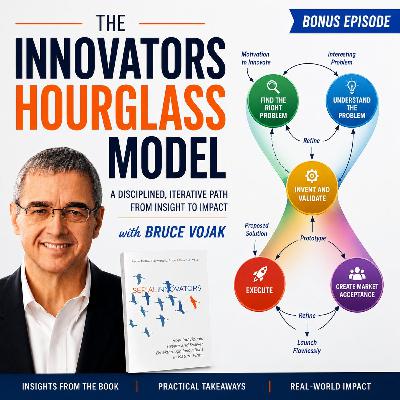
Most companies think innovation is a straight line. Bruce Vojak spent years studying the people who prove otherwise. Bruce Vojak is co-author of Serial Innovators: How Individuals Create and Deliver Breakthrough Innovations in Mature Firms (Oxford University Press). In this bonus episode of The Innovation Show, he joins Aidan McCullen for a focused look at the Hourglass Innovation Model — the descriptive framework that maps how serial innovators actually move from an interesting problem to a flawless product launch. In this conversation, Bruce reveals: Why the Hourglass Model is descriptive, not prescriptive — and why that matters How serial innovators often redefine the problem before they solve it The Tom Osborne story — how reframing a feminine hygiene brief from diaper to garment changed everything Why serial innovators can appear completely unproductive for months — and why that is actually the work How they were practising customer empathy and design thinking before those ideas had names Why Execute — the stage most firms obsess over — is just one of five tasks How to use the model as an honest self-diagnostic: am I doing these things, or is it really the organisation? Chapter topics 00:00 Hourglass Model Intro 00:31 Stage Gate vs Hourglass 01:15 Redefining the Problem 04:16 Pragmatism and Empathy 06:27 Deep Dive Understanding 07:49 Experiment and Iterate 08:39 Nonlinear Flow Explained 10:02 Org Maturity and Politics 11:47 Normalize and Self Assess 12:53 Wrap Up and Sponsor About The Innovation Show The Innovation Show with Aidan McCullen is the Thinkers50-recognised podcast where square pegs find their place in a world of round holes. Conversations with world-class authors, scientists, and practitioners on disruption, innovation, leadership, and the ideas shaping tomorrow. About Bruce Vojak Bruce is co-author of Serial Innovators and Innovation Code, founder of Breakthrough Innovation Advisors, and former Associate Dean for Administration at the University of Illinois College of Engineering. He advises executive teams and boards on how to find, support and unleash serial innovators inside mature firms. Website: https://breakthrough-innovation-advisors.com LinkedIn: https://www.linkedin.com/in/bvojak/ Book: Serial Innovators: How Individuals Create and Deliver Breakthrough Innovations in Mature Firms https://amzn.to/4f7Y85q This episode is brought to you by Kyndryl, who run and reimagine the technology systems that drive advantage for the world's leading businesses. Learn more at https://www.kyndryl.com. Subscribe to the Thursday Thought on Substack for a chance to win a copy of Serial Innovators, with thanks to Kyndryl: https://thethursdaythought.substack.com Listen and follow: https://theinnovationshow.io Apple Podcasts: https://podcasts.apple.com/ie/podcast/the-innovation-show/id1148455669 Spotify: https://open.spotify.com/show/63nFKf4bsSWo3W72gWtOsK?si=b62d9614237c4450 YouTube: https://www.youtube.com/c/theinnovationshow LinkedIn: https://www.linkedin.com/in/aidanmccullen
"These are the most important people you've never heard of." After interviewing more than 50 serial innovators inside the world's largest mature companies, Bruce Vojak knows something most boards don't: a tiny minority of people — roughly 1 in 500 inside a large firm — quietly create the breakthrough products that fund everything else. They have no formal mandate. They are often almost fired. And without them, the S-curve flatlines. Bruce is co-author of Serial Innovators: How Individuals Create and Deliver Breakthrough Innovations in Mature Firms (with Ray Price and Abby Griffin), founder of Breakthrough Innovation Advisors, and a former engineering executive who has spent over a decade studying how breakthrough innovation actually happens inside big organisations. This is part one of a multi-part series with host Aidan McCullen on Bruce's life's work. In this conversation, Bruce reveals: Why the humble carrot peeler is the clearest example of how innovation redefines the basis of competition How Tom Osborne at Procter & Gamble almost lost his job twice — before launching the billion-dollar Always Ultra brand The Tom Osborne quote every product team should hang on the wall: his products were "love letters to his customers" Why it is not marketing, it is "customering" — and why customer-driven beats market-driven every time The three roles inside the stage-gate process — inventor, champion, implementer — and why serial innovators play across all three Why stage-gate is brilliant for incremental innovation and lethal for breakthrough work The MP5 model: motivation, personality, perspectives, preparation, process and politics — what serial innovators bring vs. what they develop Why the politics is the work — and why pushing the boulder up the hill is Sisyphean by design The hiring insight that changes everything: "I want people who want to do the work innovators do, not people who want to be an innovator" How Iain McGilchrist's master and emissary, Charles Handy's S-curves and Thomas Kuhn's paradigms all converge inside one good innovator Why early success is a curse — and what to do when your organisation has forgotten how it found its first product Chapters: 00:00 Why Serial Innovators Matter 00:31 Sponsor and Series Setup 01:11 Meet Bruce Vojak 02:45 Defining Innovation 04:08 Carrot Peeler Breakthroughs 05:54 Market Expansion Examples 07:56 What Is a Serial Innovator 08:44 Hiring and Spotting Innovators 10:32 Curse of Early Success 15:19 Punished for Innovating 17:34 Tom Osborne at P&G 19:53 Digging Deep for Insight 22:18 Bootlegging to Launch Ultra 27:25 When Innovators Check Out 33:17 Incremental vs Breakthrough 36:04 S Curves and Culture Tension 42:03 Stage Gate vs Iteration 43:24 Switch to Video and Diagrams 44:30 Stage Gate Overview 45:09 Stage Gate Basics 46:58 Innovation Roles Explained 48:21 Serial Innovators Across Roles 50:34 Customer Driven Discovery Loop 53:37 Seeing Patterns Metaphors 55:13 Motivation And Role Friction 01:02:50 MP5 Model Origins 01:04:33 Traits Motivation Politics 01:16:07 Innovation Process Diagram 1.7 01:21:57 Wrap Up Sponsor Outro About Bruce Vojak Bruce is co-author of Serial Innovators and Innovation Code, founder of Breakthrough Innovation Advisors, and former Associate Dean for Administration at the University of Illinois College of Engineering. He advises executive teams and boards on how to find, support and unleash serial innovators inside mature firms. Website: https://breakthrough-innovation-advisors.com LinkedIn: https://www.linkedin.com/in/bvojak/ Book: Serial Innovators: How Individuals Create and Deliver Breakthrough Innovations in Mature Firms https://amzn.to/4f7Y85q About The Innovation Show The Thinkers50-recognised podcast hosted by Aidan McCullen — author of Undisruptable, keynote speaker and former pro athlete — where square pegs find their place in a world of round holes. Conversations with the world's leading authors, scientists and practitioners on disruption, innovation, transformation, leadership, AI, creativity and the ideas shaping tomorrow. This series is brought to you by Kyndryl, who run and reimagine the technology systems that drive advantage for the world's leading businesses. With a unique blend of AI-powered consulting built on unmatched managed-service capability, Kyndryl helps leaders harness technology for smarter decisions, faster innovation and lasting competitive edge. Learn more about Kyndryl and the Kyndryl Institute at https://www.kyndryl.com. Subscribe to the Thursday Thought on Substack for a chance to win a copy of Serial Innovators, with thanks to Kyndryl: https://thethursdaythought.substack.com Follow and listen: Website: https://theinnovationshow.io Apple Podcasts: https://podcasts.apple.com/ie/podcast/the-innovation-show/id1148455669 Spotify: https://open.spotify.com/show/63nFKf4bsSWo3W72gWtOsK?si=b62d9614237c4450 YouTube: https://www.youtube.com/c/theinnovationshow LinkedIn: https://www.linkedin.com/in/aidanmccullen
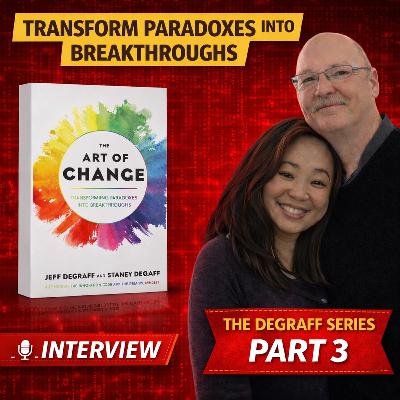
"Organisations love innovation, but they hate their innovators." Jeff and Staney DeGraff return to The Innovation Show to close out Aidan McCullen's DeGraff trilogy with their book The Art of Change. Their argument is direct: change rarely fails because of bad strategy or weak execution. It fails because leaders bring the wrong mindset — treating change like a linear project when change is actually a paradox to be held. In this conversation, Jeff and Staney reveal: Why the man who saved Operation Warp Speed got passed over for promotion — and what his story tells every innovator about the cost of being right The Jonas Salk warning every change-maker should hear: they won't notice, then they'll say you're doing it wrong, then they'll call you unprofessional, then they'll take credit for your work Why apathy and alignment are the deadliest signs in any organisation The seven core paradoxes of change — and the four-step paradox mindset cycle that breaks the deadlock Why facts don't change minds (the Harriet Beecher Stowe story Lincoln told to prove it) How Sears actually invented the digital economy and how mindset cost them the future Why "deviance first, alignment later" is the funnel every leader gets backwards The CIO joke that isn't funny: Career Is Over as soon as you take the job Why the first pancake is never a good pancake — and what FAIL really stands for Chapters: 00:00 Innovation in the AI era 01:03 Sponsor and book intro 01:40 Why change fails 02:36 Trilogy origins 06:12 Paradox and mindset 07:58 Why organisations punish their innovators 10:28 Luis, Rapid X, and Operation Warp Speed 16:52 Meaning over happiness 18:06 Time, not targets 19:45 The paradox mindset cycle 24:34 Marriage and money paradox 28:15 Conflict fuels change 32:27 Missed futures examples 36:44 Practice beats theatre 38:04 Builders versus bureaucrats 41:05 Skin in the game 42:35 Blocked by superiors 43:45 Leaders spot talent 44:49 Disruptors and failure 48:05 Boundaries create freedom 51:43 Innovation needs hideouts 53:59 Stories build culture 59:45 The seven paradoxes explained 01:07:38 Deviance, then alignment 01:13:10 The paradox mindset cycle 01:18:26 Final takeaways and wrap About Jeff and Staney DeGraff Jeff DeGraff is the "Dean of Innovation" — Clinical Professor of Management at the Ross School of Business, University of Michigan, founder of the Innovatrium, and author of multiple bestselling books on creative leadership. Staney DeGraff is co-founder of the Innovatrium and Jeff's longtime collaborator. Together they've worked with half the Fortune 500 on what it actually takes to make change stick. 📘 The Art of Change — https://amzn.to/48mhX54 🌐 https://jeffdegraff.com About The Innovation Show The Innovation Show with Aidan McCullen is the Thinkers50-recognised podcast where square pegs find their place in a world of round holes. Each week, Aidan sits down with world-class authors, scientists, and practitioners to call out the "Emperor is naked" moments and explore disruption, transformation, leadership, and the ideas shaping tomorrow. Connect 🌐 https://theinnovationshow.io 📨 Substack (and a chance to win a copy of The Creative Mindset): https://thethursdaythought.substack.com 🎧 Apple Podcasts: https://podcasts.apple.com/ie/podcast/the-innovation-show/id1148455669 🎧 Spotify: https://open.spotify.com/show/63nFKf4bsSWo3W72gWtOsK?si=b62d9614237c4450 🔗 LinkedIn: https://www.linkedin.com/in/aidanmccullen Sponsor This series is brought to you by Kyndryl. Learn more about Kyndryl and the Kyndryl Institute at https://www.kyndryl.com. #ParadoxMindset #JeffDeGraff #TheArtOfChange #Innovation #ChangeManagement #Leadership #TheInnovationShow #AidanMcCullen #Thinkers50 #InnovationPodcast #LeadershipPodcast #DisruptionTheory
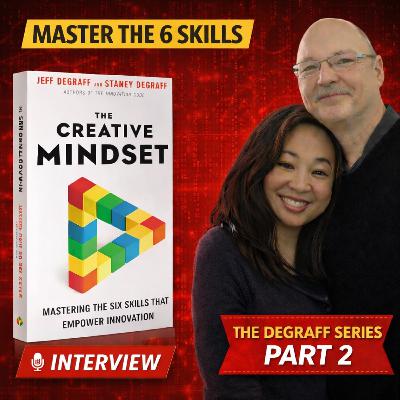
Description: Creativity isn't reserved for geniuses—it's a skill you can learn, practice, and compound over time. In this episode of The Innovation Show, Aidan McCullen sits down with Jeff and Staney DeGraff to explore their practical framework for everyday creativity: the C.R.E.A.T.E. method. Based on decades of research and real-world application, they break down how innovation actually happens—not through lightning bolts, but through small, iterative wins. From clarifying the real problem to evaluating ideas effectively, this conversation reframes creativity as a disciplined, learnable process. Sponsored by Kyndryl, this episode also includes a giveaway for subscribers. What You'll Learn: Why creativity is a learnable skill (not a talent) The power of small wins and iterative thinking How to identify the real problem before solving it Techniques like SCAMPER, analogies, and storyboarding Why evaluation—not ideation—often determines success How constraints and failure fuel innovation The C.R.E.A.T.E. Framework: Clarify – Define the real problem through iteration Replicate – Reapply ideas across domains Elaborate – Generate ideas using creative techniques Associate – Connect ideas through analogy and systems thinking Translate – Turn ideas into compelling stories Evaluate – Select the best ideas using structured methods Timestamps: 00:00 Sponsor and Giveaway 00:45 Creativity as Learnable Skill 04:59 Find Your Creative Rhythm 11:11 Constraints and Small Wins 20:57 Clarify the Real Problem 25:25 Replicate and Reapply Ideas 29:01 Elaborate With Wordplay 36:43 Associate Through Analogies 40:43 Translate Into Story 46:09 Evaluate Ideas Wisely Featured Book: The Creative Mindset by Jeff & Staney DeGraff Find the DeGraffs: https://jeffdegraff.com Aidan McCullen is a Thinkers50 Innovation Award winner, keynote speaker Ireland, and host of The Innovation Show—the only podcast ever to receive a Thinkers50 award.

What if the real driver of innovation isn't alignment—but conflict? In this episode of The Innovation Show, Aidan McCullen is joined by Jeff and Staney DeGraff, co-authors of The Innovation Code, to explore a powerful idea: innovation emerges from the tension between opposing perspectives—not from consensus. Drawing on decades of research and real-world application, they introduce four archetypes that shape how individuals and organisations innovate: The Artist (creation & ideas) The Engineer (process & execution) The Athlete (performance & results) The Sage (values & culture) Each brings strengths—and blind spots. The key? Not eliminating conflict—but orchestrating it. In this episode: Why alignment can actually kill innovation The role of constructive conflict in high-performing teams How different mindsets clash—and why that's essential The lifecycle of innovation and who leads at each stage Why organisations fail when they can't change their worldview How to build cultures of adaptability and reinvention Featured Book: The Innovation Code by Jeff & Staney DeGraff Find the DeGraffs: https://jeffdegraff.com Aidan McCullen is a Thinkers50 Innovation Award winner, keynote speaker Ireland, and host of The Innovation Show—the only podcast ever to receive a Thinkers50 award.
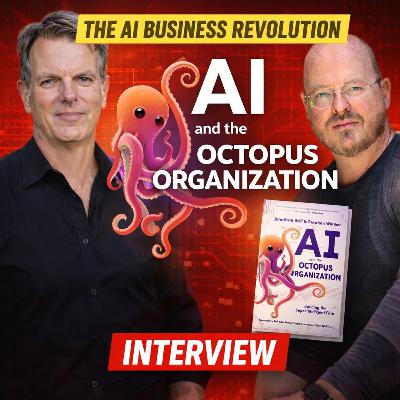
AI is triggering a "big bang" in how organizations operate—and those that adapt fastest will win. In this episode, Stephen Wunker and Jonathan Brill explore the concept of the Octopus Organization, where intelligence is distributed, decisions happen at the edge, and workflows—not jobs—are automated. Drawing on biology, they explain how autonomy, governance, and visibility can coexist to unlock speed, resilience, and innovation. The discussion dives into overcoming organizational debt, avoiding groupthink and analysis paralysis, and shifting from rigid hierarchies to adaptive "kill web" structures. Real-world examples—from L'Oréal's rapid product cycles to AI-powered patent creation at Deep Invent—highlight how companies are already transforming. This episode is essential listening for leaders looking to redesign their organizations for the AI era.

How do you negotiate firmly, fairly, and effectively — without becoming a jerk? In this episode of The Innovation Show, Aidan McCullen speaks with Barry Nalebuff — Yale professor, entrepreneur, and author of Split the Pie — about a principled approach to negotiation built around one simple idea: identify the pie, the extra value created only when both sides reach agreement, and split it equally. Rather than relying on pressure, posturing, or arbitrary bargaining, Barry shows how negotiation can become a logical, ethical, and data-driven process. Drawing on cooperative game theory and real-world business experience, he explains why most people misunderstand what is actually being negotiated — and how that confusion leads to bad deals and bad relationships. The conversation includes examples from: Barry's mother buying her rented home, Coca-Cola's acquisition of Honest Tea, a negotiation with a domain-name squatter, grant funding and workload-sharing examples, lease-breaking, tax-loss mergers, and everyday fairness disputes. This is a practical episode for founders, executives, investors, academics, negotiators, and anyone who wants to create better outcomes through principle instead of power plays. What you'll learn in this episode: What Barry Nalebuff means by "the pie" Why fairness starts with understanding the real source of value How to negotiate without aggression or manipulation Why principles beat arbitrary numbers How game theory can improve business and life decisions How to avoid accepting less than your fair share Timestamps 00:00 Sponsor Message 00:28 Negotiation Without Jerk 01:50 Split The Pie Idea 03:29 Dollar Bill Example 05:15 Mom House Deal 11:49 Talmud Cloth Principle 14:22 Honest Tea Coke Bottles 17:16 Coke Buyout Terms 22:02 Domain Troll Negotiation 27:33 Holding Firm on Fairness 28:36 Principles Over Arbitrary Numbers 31:17 Anju and Bharat Interest Puzzle 35:35 Power and Hidden Pie Ethics 37:23 Game Theory and Spock Logic 42:09 Sisyphus Grant Split Example 48:46 Breaking the Lease Loss Pie 52:01 Mergers Tax Losses and Equality 53:12 Fairness Equity and Negotiation Ethics 56:28 Where to Find Barry 57:29 Sponsor and Sign Off

What if Nokia saw the iPhone coming and still couldn't stop it? In this episode, strategy professor Timo Partanen, former Nokia market intelligence leader (2001–2009), reveals what was really inside Nokia's internal iPhone threat briefing presented to senior leadership. Nokia had tracked Apple for years. They saw the signals like touchscreen innovation, strategic hires, and shifting user expectations. The iPhone's hardware wasn't the surprise. The real shock was Apple's ecosystem. From its exclusive partnership with Cingular (AT&T) to alliances with Google and Yahoo, Apple didn't just launch a product, it launched a new business model. One that exposed Nokia's blind spot: a hardware-first culture in a platform-driven world. We explore why clear warnings didn't lead to action, how strategy broke down between leadership and execution, and what today's companies can learn about disruption, partnerships, and transformation. This is a story about missed shifts, internal friction, and the difficulty of turning insight into impact.

How did Nokia survive one of the most dramatic collapses in business history? In this episode, we explore the hidden driver of strategy under pressure: emotion. Drawing on research based on 100+ interviews inside Nokia between 2007 and 2013 , INSEAD's Quy Huy and Aalto University's Timo Vuori join Aidan McCullen to explain how large organizations can execute radical pivots—not just through analysis, but through structured emotion regulation. We unpack how Nokia moved from denial, fear, and rigid thinking to a disciplined, data-driven, and emotionally aware strategy process that enabled it to exit mobile phones and rebuild around networks and 5G. You'll learn: Why strategy fails when emotions go unmanaged How boards can shape better decisions by regulating—not suppressing—emotion The role of consultants, teams, and partners in expanding strategic thinking Why discussing failure systematically leads to better outcomes How to design strategy processes that work under uncertainty This is not just a story about Nokia—it's a blueprint for any organization navigating disruption, uncertainty, and high-stakes decisions. Sponsored by Kyndryl – helping the world's leading organizations modernize and run mission-critical systems for smarter decisions and lasting competitive advantage.

Most people believe the iPhone killed Nokia. But the real story behind Nokia's collapse is far more complex — and much more human. At its peak Nokia controlled nearly 50% of the global mobile phone market and had over one billion customers. Yet within a few years the company lost the smartphone war as Apple and Google reshaped the industry. In this episode we continue our deep dive into the research of Quy Huy and Timo Vuori, whose study reveals how fear inside Nokia distorted communication and decision-making. Senior leaders felt intense pressure from competitors and investors, while middle managers feared delivering bad news. The result was silence, denial, and what the researchers call "collective lies." We explore how Nokia became trapped by its Symbian platform, how short-term financial pressures undermined long-term innovation, and why leadership dynamics and organizational culture can determine the fate of even the most dominant companies. The lesson: strategy often fails not because of technology — but because leaders stop hearing the truth.

Nokia didn't lose the smartphone battle because it lacked smart people or a strategy deck. It lost because fear and shared emotions quietly reshaped attention, filtered information, and weakened truth-telling. Quy Huy (INSEAD) and Timo Vuori (Aalto University)—authors of the 2016 research on Nokia's collapse—explain how leaders hid emotions behind "technology and finance talk," how dissent was punished, and how misaligned fearformed: executives feared competitors and shareholders while middle managers feared their bosses. We connect the dots to psychological safety, power traps, poker-face leadership, burnout, and what this teaches leaders facing AI disruption today. Find Quy https://www.insead.edu/faculty-personal-site/quy-huy https://knowledge.insead.edu/strategy/nokias-reinvention-was-emotionally-driven Find Timo https://research.aalto.fi/en/persons/timo-vuori/ https://adaptivevolcano.com/about
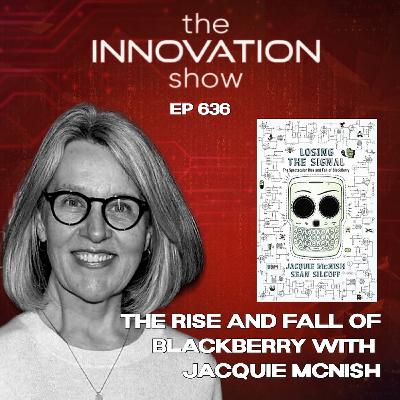
BlackBerry once ruled the business world. Presidents, CEOs, and Wall Street relied on its encrypted devices. Then the iPhone arrived — and everything changed. In this episode, Jacquie McNish, co-author of Losing the Signal, unpacks the untold story behind: • The improbable rise of Research In Motion • The 2011 global outage crisis • The NTP patent war • 9/11 and encrypted messaging dominance • The internal fracture between Mike Lazaridis and Jim Balsillie • The Storm failure • The QNX pivot and BlackBerry's second act A fascinating case study in leadership psychology, technological disruption, and strategic inflection points. This is a masterclass in: Innovation Leadership Disruption Scaling culture Strategic blindness Corporate inflection points 📘 Book: Losing the Signal by Jacquie McNish & Sean Silcoff https://amzn.to/4tVBHWk 🎙 Hosted by Aidan McCullen Aidan McCullen is a Thinkers50 Innovation Award winner, recognised for his contribution to global innovation practice through The Innovation Show. Aidan is a Global and Irish Keynote speaker recognized for his engaging storytelling style and his bestselling book Undisruptable: A Mindset of Permanent Reinvention. The Innovation Show remains the only podcast ever to receive a Thinkers50 award, and Aidan is only the second Irish person—after Charles Handy—to be honoured. #BlackBerry #Innovation #BusinessStrategy #TechHistory #Leadership #StartupLessons #iPhone #Apple #Entrepreneurship #Disruption
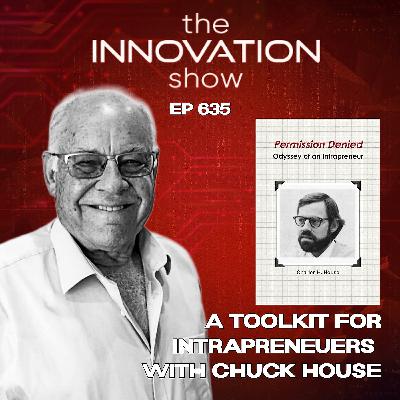
Why does corporate innovation fail so often — even with talented teams and strong ideas? In this episode of The Innovation Show with Aidan McCullen, intrapreneur and innovation veteran Chuck House returns to explain why innovation dies when projects, programs, and strategy aren't clearly connected — and why executives often misjudge innovation timelines because they're optimizing established businesses. Chuck breaks down the 4 intrapreneur traits (curiosity, perspective, resilience, and comfort with data) and the overlooked career skill that makes or breaks intrapreneurs: managing down AND managing up. Learn how to build team trust, navigate organizational politics, make "invisible work" visible, and persuade decision-makers to keep the right bets alive. He also challenges traditional project review approaches (IRR, cost/schedule targets, early sales projections) and introduces his practical alignment tool: the Return Map — a living, cross-functional view that integrates investment, revenue, and profit over time, assigns accountability across functions, and forces iterative re-forecasting as reality changes (slips, market windows, manufacturing costs, and sales forecasts). In this episode Why innovation feels like "snakes and ladders" inside large organisations Steve Jobs as a blueprint: iPod → iTunes → iPhone as a strategic cycle Managing up: credibility, trust, and navigating corporate politics Why HQ metrics can kill risky projects too early Brunnergrams vs strategy: what engineering tracking misses How Return Maps improve alignment, accountability, and forecasting Teaser: a future conversation with Kodak digital camera inventor Steve Sasson Sponsor: Kyndryl
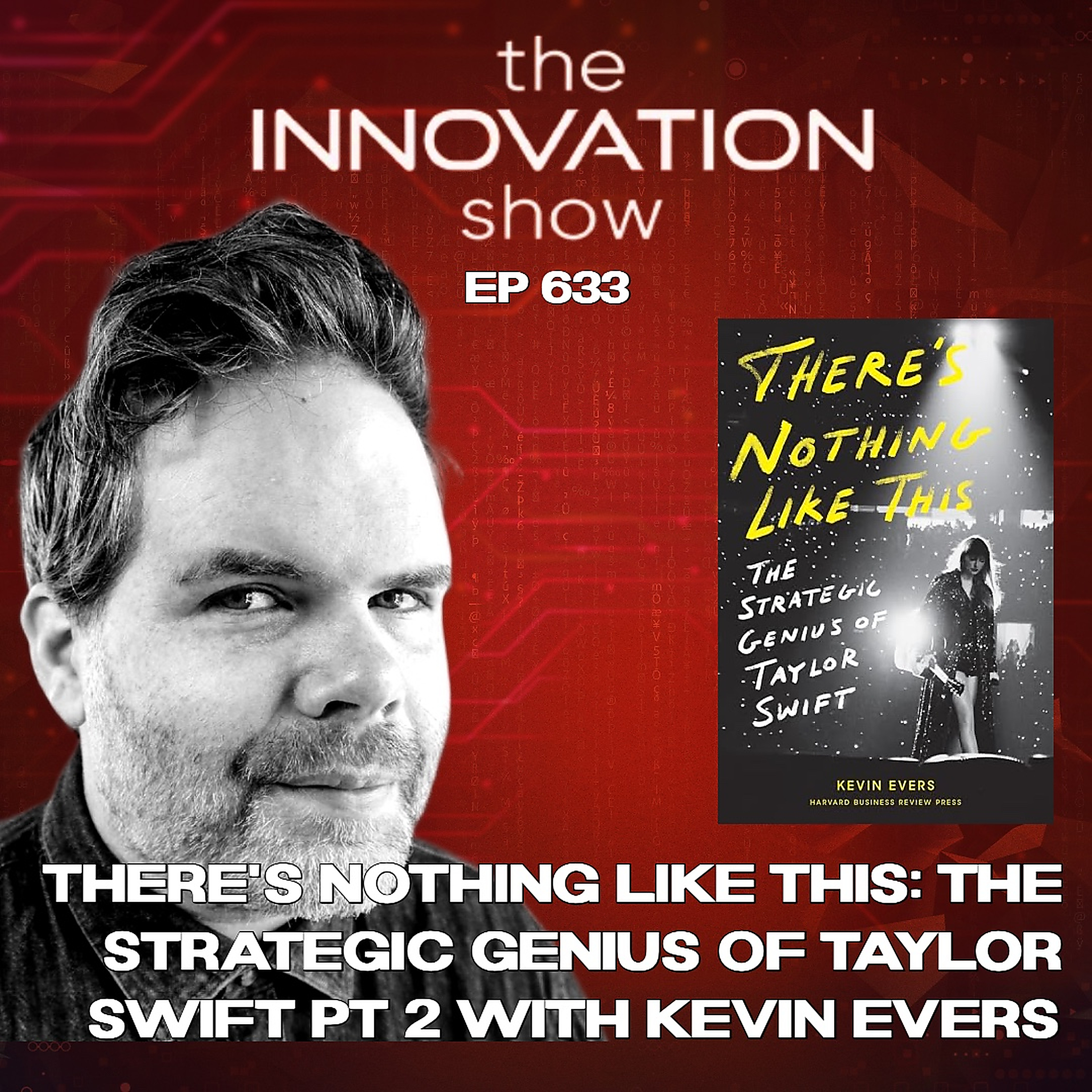
In this episode, we explore the strategic brilliance of Taylor Swift with Kevin Evers, author of There's Nothing Like This. From genre-shifting reinventions to billion-dollar tours, Taylor's evolution isn't just musical—it's a masterclass in brand, resilience, and audience engagement. 🎯 We cover: The pivot from country to global pop dominance How Taylor handled public backlash & the Kanye/Kardashian controversy Her savvy response to the streaming revolution Ownership battles over her masters and how it reshaped the industry Building the Eras Tour as a pinnacle of fan-first strategy What businesses can learn from Taylor's "anti-fragile" mindset Whether you're a fan, a founder, or fascinated by the music business, this is a powerful look at how strategy meets stardom. 🔗 Learn more about Kevin's book: nothinglikethisbook.com 🎧 Subscribe and leave a review to support the show! https://thethursdaythought.substack.com
In this episode, Aidan McCullen welcomes Kevin Evers, editor at Harvard Business Review Press and author of There's Nothing Like This: The Strategic Genius of Taylor Swift. Together, they explore how Taylor Swift built not just a music career—but a global business empire. From fearless reinvention and blue ocean strategy to her mastery of fan engagement and brand evolution, Taylor Swift's rise is a masterclass in innovation, leadership, and vision. Learn how her career mirrors the strategic moves of top businesses, and what leaders, entrepreneurs, and creators can take away from her story. Tune in for: The psychology and strategy behind Swift's career decisions How she shaped fan culture and digital engagement Lessons in brand authenticity, creative growth, and leadership What businesses can learn from Swift's reinvention and market disruption Whether you're a Swiftie, strategist, or business leader, this episode offers sharp insights into how to turn art into lasting impact. Find Kevin: https://www.nothinglikethisbook.com

Comments

Download from Google Play

Download from App Store
 United States