


 Claim Ownership
Coffee and Cree
Subscribed: 4Played: 5
Subscribe

© Bill LeBlanc - Rellik
Description
Coffee and Cree is a weekly Cree language podcast offering a fun and interactive way to learn the Cree language. Rellik is joined by a weekly guest to discuss new words, themes, terminology and grammar in nehiyawewin.
Inquiries/guests/advertise on Coffee and Cree: coffeeandcree@gmail,com
12 Episodes
Reverse
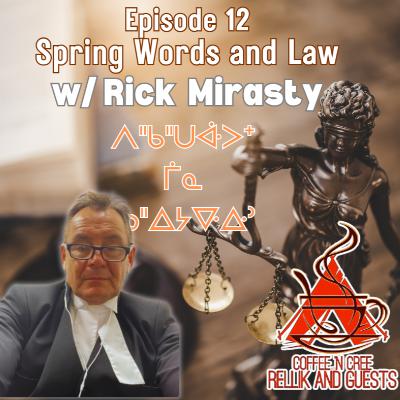
Rick Mirasty is a fluent Cree-speaking criminal defense lawyer based from Big River, Saskatchewan. Rick calls Alberta home and has practiced Law throughout the province and is known for his work in criminal defense, often advocating for Indigenous clients.Rick has been described as a "road warrior" for his extensive legal work in rural communities.Rick has openly shared his personal journey of resilience, overcoming challenges in his early education to practice law for over 20 years.In this weeks episode, he joins Rellik to teach some some words related to spring time, including weather related terms, spring cleaning and more. He also shares some personal stories from growing up and spending time in the local swimming pond to mentions of other fames members of Indigenous law in Alberta.
In this weeks episode we are joined again by Les Skinner. Les is a Cree Teacher with the Canadian Native Friendship Centre as well as the Edmonton Public Libraries.and online classes. Les also teaches nēhiyawēwin classes through Concordia University and Grant Macewan University.Les has been teaching the Cree classes for over ten years, after attending them himself to regain his language.He aims to create a community among the students, as well as preserve the language and the traditional knowledge it holds.anohc kâ-ispayik itwēwina - This weeks wordsSâkahikan - LakeSîpiy - RiverNipimohtân sisonê sâkahikanihk - I walk beside the lakeNipakâsimon - I SwimWâpos - rabbitTâpakwân - snarenitâpakwâhâw Wâpos - I snare a rabbititê kâ-mâtâhat wâpos, tâpakwê - Where you track a rabbit, set a snarePihêwak - prairie chickensNanâtohk - different kinds, variety ofPaskwâwi - plains, prairieOskâhtak - jack pineWîhkasin - it tastes goodimâcihowin - way of livingMêskanâs - small road, small pathNîpisîs - small willow, willow branchOskan - boneOskon - liverNiwîkin - I live / resideWîki - homekapêsiwinKatawasisin - it is beautifultahkâyâw - it is cold weatherMihta - pieces of wood (plural)Iskotêw - fireKotawân - campfireKotawânâpisk - a stoveNitâskatahimihtân - I chop fire wood ( Independent)Ê-tâskatahimihtêyân - as I am chopping firewood (conjunct)Ninikohtân - alt verb for saying it I chop / gather / prepare firewoodKîskipocikan - a hand sawNikîskipocikân - I am sawing woodPôna - build a fire ( command)Nipônên - I build a fireMihca - kindling , small pieces of woodWâskahikan - house, cabinmistiko-Wâskahikan - A log cabin
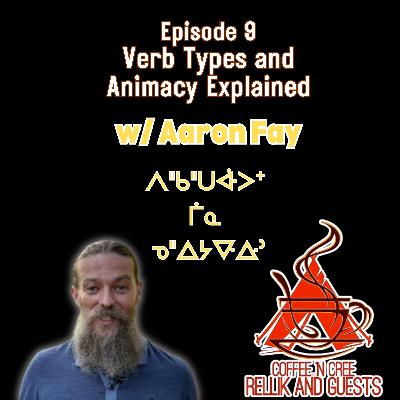
Aaron Fay is a Cree language learner with Metis roots in Saskatchewan. Aaron is an advocate for the Cree language and has garnered much notoriety through his social media presence and online learning via Tiktok.He currently calls West Kelowna his home but spent much of his life between Edmonton and Rocky Mountain House.Aaron is also the developer of Kiyanaw.net ( translates to “all of us” ), a website dedicated to learning the Cree language containing tools and resources.Aaron joins us to give an in depth breakdown of VII, VAI and VTI's and also go into detail regarding animacy within the Cree language.
Aaron Fay (@otipeyimisow) joins us for back-to-back episodes to continue where we left off.In this weeks episode we take an in-depth look at VTAs ( Animate Transitive Verbs ) and also go over some examples, while creating simple sentences combines VTA's and VAIs. We also go over some key survival phrases that you can use in everyday conversations with fluent speakers, which were first created by Wayne Jackson.
Wayne Jackson is a Cree language teacher from Good Fish Lake First Nation and has also taught at University of Blue Quills.An advocate for the Cree language, he has also created language immersion class and is passionate about preserving nêhiyawêwin. Wayne is also an accomplished musician, performing under the name W.T. Goodspirit and has numerous albums recorded in the Cree language.Wayne joins us to teach us words we can use in the work place.
Rebecca George hails from Big Island Lake, Saskatchewan.Rebecca has taught in different schools in her home community to different grades and levels.She learned to speak nehiyawewin in the home around her Mother and Grandmother.She joins Rellik to teach us words related to time and frequencies of time. Not only will you work your way around a clock, but learn how to say words like soon, later, today, tomorrow and so many more!
In this weeks episode we are joined by Deloris Rain, a fluent Cree speaker and teacher from Maskwacîs, AB. Deloris teaches us the fundamental phonetic sounds in nêhiyawêwin, some great conversational terms we can use in our daily speaking and also treats us to a traditional teaching and story of wîsahkêcâhk. Deloris is available to teach the Cree language in person in both individual, and classroom settings and has plans to create audio lessons for home study learners.
Dan Cardinal is a Cree language teacher who has taught with many schools throughout Alberta including St. Josephs High School, Ben Calf Robe, Concordia University, CNFC, Red Deer College and Portage College . Dan also spent many years as the Vice President of the Metis Nation of Alberta. Dan continues to be a strong advocate for preserving the Cree language since the 1980's.This weeks vocabulary āsay – already, without delaymīna – andkitatamiskâtin – I greet you , ki (t) atamiskât innamōya nantāw -I am not bad, I am fineninanāskomon ē-nitomiyan ōta kā – pē- piksweyan – I am grateful you invited me here to speaktāpwē – it is truenīsta mīna – me alsonimiywêyihtên – I am happyāsay mīna – and , alreadyê-wâpamitân – I am seeing younīsta – me alsotāpwē – it is trueanohc – today , miyo kīsikāw – it is a good dayanohc yîkwaskwan – it is cloudy todayapisis yîkwaskwan – a little bit cloudywāpahki apisis kā-yīkwaskwan – tomorrow it will be a little cloudykimiwan – rain, it is rainingmitoni – very , much , a lotmistahi – very much , a lot , greatlymitoni mistahi kimiwan – it is raining heavilykîwê-sîkipêstâw – it is down pouringaya – ah , well, hmmēwako – this , thatkimiwanayāw – it is raining there , misponayâw – it is snowing thereninisitohtên – I understandapisis kimiwan – a little rainkimiwanis – a little rainmispon – falling snow , there is snow fallingmisponayaw – it is snowy (flurries)kōna – snow ( on the ground )mistahi ē-mispon – it is snowing alotē-pimohtēyān ē-misponayaw – I am walking as it is snowingê-kiskinwahamâkêyân nêhiyawêwin – I am teaching Cree languagekiskinwahamâkan – studentnikiskinwahamâkân – i teachniyānan askiy – 5 yearswâwâskêsiw sâkahikan – Lac la Biche (Elk Lake) wâhyaw – far away mekwac – right now, currentlyka-otâkosik – in the eveningnikotwāsik tipahikan – six o’ clockayinānēw tipahikan – eight o’clock isiyihkâtêw – it is called thismīhcet – many , alotôma niya nikî-pê-ohpikin – ” where I grew up”ôcênâs – town , village , settlementtānisi isiwepan ? – How is the weather ?Tānisi kīsik kīsikak ? – How is the sky today ?anohc kisāstēw – today the weather is hotanohc kisin – today is coldekwa mīna – and alsoka kītwan – you will sayanohc tahkāyāw – today is very coldkisē – pīsim – january , cold month , great monthmāyi – kīsikāw – it is a bad daymāyi – prefix for badmiyo – prefix for badmiyo kīskikāw – it is a good daykīsikāw – day timetipiskāw – night time, eveningpīsim – the sunkīsikaw pīsim , the suntipiskāw pīsim – the moontahkāyāw ōma ka ōtakosīhk – it is cold this eveningyōtin – it is windyanohc yōtin – today it is windyyōtinisin – a little bit windy (diminutive)mitoni yōtin – very windymistahi yōtin – very windy , big windēkotē – over theretānisi isiwepan ēkotē ? – How is the weather over thereōta miyo kīsikāw māka yīkwaskwan – here it is a good day but it is cloudymistahi nimiywêyihtên – I am very happy , I am very gladē – wī – atoskēmak- my co worker i would work withacimo – tell me a storymawisowin – picking berrieskayās ka miywāsin – it was good back long agoayisiyiniwak – people ( plural)ê-wîcihitok – we would help each othernohkompam ka kīwē oho sīpiy – my late grandma lived in owl riverekosi maka – that is all
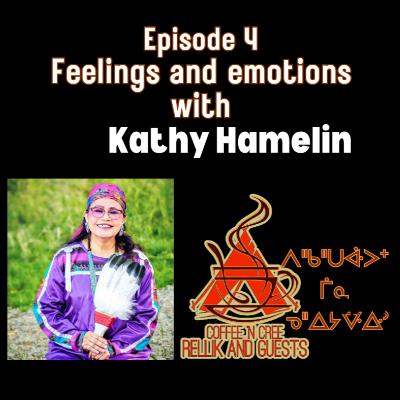
Originally from the Peace River region of Treaty 8, Kathy is a Cree language teacher with the Learning Centre in Edmonton and has contributed greatly to the community as not only a teacher but also an advocate seeking justice for the homeless and First Nations women, people and youth.Kathy Hamelin joins Rellik to teach us some feelings and emotions. In this weeks episode, we also discuss tense markers, personal pronouns and learn a few morphemes.
Neil Redcrow is a cree language enthusiast and teacher through acimowin opaspiw Society.Neil is from Onihcikiskwapiwinihk (Saddle Lake, AB) but currently residing in Amiskwaciy Waskahikan (Edmonton.)Neil is also heavily involved within cultural and language projects.As a husband and father, Neil Joins us for an episode dedicated to parenting words and positive words of affirmation to teach our children.We also introduce pre verbs like nitaw (go) and pê (come) and revisit personal pronouns.
Les Skinner joins Rellikf or this weeks episode of Coffee and Cree.Les is a Cree Teacher with the Canadian Native Friendship Centre as well as the Edmonton Public Libraries.and online classes. Les also teaches nēhiyawēwin classes through Concordia University and Grant Macewan University.Les has been teaching the Cree classes for over ten years, after attending them himself to regain his language.He aims to create a community among the students, as well as preserve the language and the traditional knowledge it holds.Les teaches us words related to hunting and the bush, teaches us how to hunt and shares a memorable encounter with a skunk!
Dorothy Thunder joins us for our inaugural episode of Coffee and Cree. Dorothy Thunder is a Plains Cree (nêhiyawiskwêw) from Little Pine First Nation, Saskatchewan and full-time Cree instructor in Faculty of Native Studies at the University of Alberta. She is a Language Keeper, educator, and an Aboriginal woman who practices the traditional way of life. In this episode Dorothy teaches us words related to the fall season and also touches on animacy, diminutives, personal pronouns, VAI verbs and conversational departing phrases.
Comments


Download from Google Play

Download from App Store
 United States